Hosted by TruLight Ministries – The Place of Truth
SELECT YOUR READING LANGUAGE – BOTTOM LEFT = YOUR DAILY MANNA NOW AVAILABLE IN 103 LANGUAGES
a New Study : for the Next 19 Daily Manna Days
In My Control vs Out of My Control
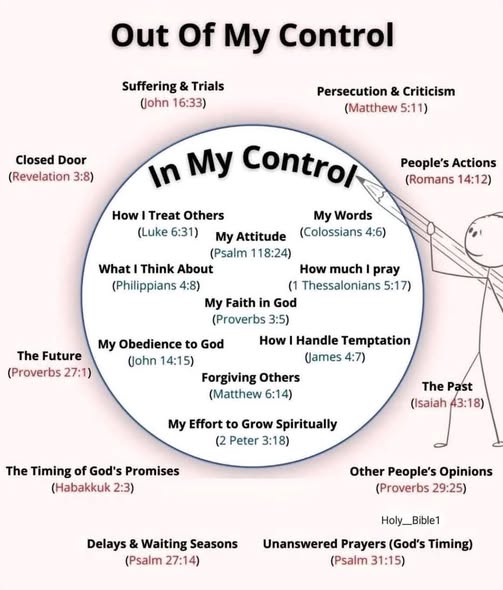
In My Control = My Attitude : Our Attitude ::: Writing from a prison cell in Rome, the apostle Paul wrote about the attitude a Christian should have: “Whatever happens, conduct yourselves in a manner worthy of the gospel of Christ” (Philippians 1:27). The “whatever happens” here is a reference to whether Paul can come to visit the Philippians or not. Paul gave this instruction so that “whether I come and see you or only hear about you in my absence, I will know that you stand firm in the one Spirit, striving together as one for the faith of the gospel” (Philippians 1:27). No matter what unexpected disruptions, frustrations, or difficulties come our way, we are to respond with a Christlike attitude. We should be standing firm and striving for the faith. Paul later writes, “Your attitude should be the same as that of Jesus Christ” (Philippians 2:5). He is talking about demonstrating humility and selflessness in relationships. He also encourages us in Ephesians 5:1 to be “imitators of Christ as dearly beloved children.” As children love to imitate what they see and repeat what they hear; we also are charged to imitate and model Christ’s behavior and to be clear reflections of the Lord (Matthew 5:16).
Jesus maintained a perfect attitude in every situation. He prayed about everything and worried about nothing. We, too, should seek God’s guidance about every aspect of our lives and allow Him to work out His perfect will. Jesus’ attitude was never to become defensive or discouraged. His goal was to please the Father rather than to achieve His own agenda (John 6:38). In the midst of trials, He was patient. In the midst of suffering, He was hopeful. In the midst of blessing, He was humble. Even in the midst of ridicule, abuse, and hostility, He “made no threats . . . and did not retaliate. Instead He entrusted Himself to Him who judges justly” (1 Peter 2:23).
When Paul writes that our “attitude should be the same as that of Christ Jesus,” he had summarized in the previous two verses what such an attitude was: selflessness, humility, and service. “Do nothing out of selfish ambition or vain conceit, but in humility consider others better than yourselves. Each of you should look not only to your own interests, but also to the interests of others” (Philippians 2:3-4). In other words, the attitude a Christian should reflect is one that focuses on the needs and interests of others. Without question, that does not come naturally to us. When Christ came into the world, He established a whole new attitude to relationships with others. One day when His disciples were arguing among themselves regarding who was to be greatest in His kingdom, Jesus said, “You know that the rulers of the Gentiles lord it over them, and their high officials exercise authority over them. Not so with you. Instead, whoever wants to become great among you must be your servant, and whoever wants to be first must be your slave – just as the Son of Man did not come to be served, but to serve, and to give his life as a ransom for many” (Matthew 20:25-28). Jesus is teaching us that, when we become preoccupied with our own things, it can cause conflicts and other problems with people we know. Instead, God wants us to have an attitude of serious, caring involvement in the concerns of others.
Paul speaks more about this Christlike attitude in his letter to the church in Ephesus: “You were taught, with regard to your former way of life, to put off your old self, which is being corrupted by its deceitful desires; to be made new in the attitude of your minds; and to put on the new self, created to be like God in true righteousness and holiness” (Ephesians 4:22-24). Many religions of today, including the New Age philosophies, promote the old lie that we are divine or that we can become gods. But the truth of the matter is that we will never become God, or even a god. Satan’s oldest lie was promising Adam and Eve that, if they followed his advice, “you shall be as gods” (Genesis 3:5).
Each time we try to control our circumstances, our future, and the people around us, we’re only demonstrating that we want to be a god. But we must understand that, as creatures, we will never be the Creator. God doesn’t want us to try to become gods. Instead, He wants us to become like Him, taking on His values, His attitudes, and His character. We are meant to “be made new in the attitude of your minds; and to put on the new self, created to be like God in true righteousness and holiness” (Ephesians 4:23-24).
Finally, we must always keep in mind that God’s ultimate goal for His children is not our comfort, but the transformation of our minds into the attitude of godliness. He wants us to grow spiritually, to become like Christ. This doesn’t mean losing our personalities or becoming mindless clones. Christlikeness is all about transforming our minds. Again, Paul tells us, “Do not conform any longer to the pattern of this world, but be transformed by the renewing of your mind. Then you will be able to test and approve what God’s will is—his good, pleasing and perfect will” (Romans 12:2).
It is God’s will that we develop the kind of mindset described in the Beatitudes of Jesus (Matthew 5:1-12), that we exhibit the fruit of the Spirit (Galatians 5:22-23), that we emulate the principles in Paul’s great chapter on love (1 Corinthians 13), and that we strive to pattern our lives after Peter’s characteristics of an effective and productive life (2 Peter 1:5-8).

Bible Verse and Prayer for Today
If I speak in the tongues of men and of angels, but have not love, I am only a resounding gong or a clanging cymbal. If I have the gift of prophecy and can fathom all mysteries and all knowledge, and if I have faith that can move mountains, but have not love, I am nothing. If I give all I possess to the poor and surrender my body to the flames, but have not love, I gain nothing.
—1 Corinthians 13:1-3
Love!
In the days leading up to Valentine’s Day, let’s remember the real meaning of true love (1 John 4:8-12) and not dilute it with the many sappy expressions of limited human love, oftentimes based in lust rather than genuine love. I am certainly not against expressing our love to others on Valentine’s Day, but it can get so sappy, sentimental, and manipulative. Without our motivations centered on why we are expressing love, all “Christian” activities are more motion and commotion than true love. True love is the expression of Christ’s sacrificial character through deeds of love offered to others without expecting anything in return (1 John 3:16-18). Let’s refuse to get lost in the annual trip down sentimentality lane. Too many of us forget the needed daily dose of love that so often gets lost in the grit of day-to-day relationships. Let’s be loving all year-round, showing ourselves to be Jesus’ true disciples (John 13:34-35).
Prayer
Loving Heavenly Father, thank you for demonstrating your love for us in Jesus. Help us to love as Jesus did — selflessly, sacrificially, and consistently — so others may know of your love through our actions and not just our words. In Jesus name, and to love as he has loved us, we pray. Amen and Amen
Bible Teaching of the Day
In Revelation 3:14–21, the Lord describes the “lukewarm” heart attitude of those in the Laodicean church, an attitude manifested by their deeds. Jesus’ words to this church were quite strong:
I know your deeds, that you are neither cold nor hot. I wish you were either one or the other! So, because you are lukewarm—neither hot nor cold—I am about to spit you out of my mouth. (Revelation 3:15–16)
In their relationship to God, the Laodiceans were neither cold nor hot, just lukewarm. Hot water can cleanse and purify; cold water can refresh and enliven. But tepid water carries no corresponding value. The Laodiceans readily understood the Lord’s analogy because their drinking water came over an aqueduct from a spring six miles to the south; when it arrived at their city, the water was disgustingly lukewarm. Laodicean water was not hot like the nearby hot springs that people bathed in, nor was it refreshingly cold for drinking. It was lukewarm, good for nothing. In fact, it was nauseating, and that was the Lord’s response to the Laodiceans—they sickened Him, and He said in disgust, “I am about to spit you out of my mouth” (verse 16).
The letter to the church at Laodicea is the harshest of the seven letters to the churches in Asia Minor. By His indictment of their “deeds” (Revelation 3:15), Jesus makes it clear that this church is dying, if not already dead. Outwardly, they seemed to be flourishing. The members of this church saw themselves as “rich” and self-sufficient, but the Lord saw them as “wretched, pitiful, poor, blind and naked” (verse 17). Their lukewarm, indifferent faith led to half-hearted service.
Jesus frequently equates deeds with a person’s true spiritual state: “By their fruit you will recognize them,” and “Every good tree bears good fruit” (Matthew 7:16–17). Clearly, the lukewarm deeds of the Laodiceans were not in keeping with true salvation. Something needed to change. The deeds of the true believer will be “hot” or “cold”—that is, they will benefit the world in some way and reflect the spiritual passion of a life transformed. Lukewarm deeds, however—those done without joy, without love, and without the fire of the Spirit—do harm to the watching world. The lukewarm are those who claim to know God but live as though He doesn’t exist. They go to church and practice a form of religion, but their inner state is one of complacency.
A question often comes up regarding Jesus’ rebuke of the lukewarm Laodiceans: were they saved or not? That is, was this church comprised of believers or unbelievers?
The backslidden Christians view. Those who believe the church members in Laodicea were in fact believers see them as complacent and in need of rousing, but not children of darkness. Reasons for this line of thinking include the fact that Jesus still refers to them as “the church” at Laodicea. He doesn’t call them out for unbelief. He reminds the church that He loves them: “Those whom I love I rebuke and discipline” (Revelation 3:19). And being “hot” or “cold” shouldn’t be interpreted as being “for” or “against” God; rather, the hot/cold metaphor speaks of different types of usefulness. So, the church at Laodicea was complacent, self-sufficient, and apathetic, and that resulted in their faith being rendered useless.
The unsaved hypocrites view. Those who believe the church members in Laodicea were unbelievers see them as spiritually dead posers who maintained a sham religion. Reasons for this line of thinking include the fact that Jesus is standing outside of the church seeking to be admitted (Revelation 3:20). He speaks of their spiritual wretchedness, nakedness, and blindness. And His threat to spit them out of His mouth doesn’t sound like anything He would say to His own children. Also, in addressing the Ephesian church, Jesus coaxed backslidden believers to return to their first love (Revelation 2:4), and He commended that church (verses 2–3, 6). This is quite different from His approach to the Laodiceans. So, the church at Laodicea claimed to be Christians, but their hearts were unchanged, and their hypocrisy was sickening to God.
The truth is that the church at Laodicea was probably comprised of both those who were saved and those who were not. And the concept of “lukewarmness” can be applied to anyone who has lost a passionate vision to serve the Lord. Believers can be lukewarm, too.
The general biblical message is that we all bear the responsibility for self-examination. Are we living according to our faith, or has our fervor cooled to the point of being tepid? “Examine yourselves to see whether you are in the faith; test yourselves” (2 Corinthians 13:5). It’s possible for believers to be indifferent, lazy, or unmotivated. And it’s possible for unbelievers to pretend to be religious and call themselves a “church.” Whether or not the Laodiceans were born again, we must heed the warning Jesus gave them.
Today’s Devotional
A holier-than-thou attitude is pride displayed through words or actions when people consider themselves more righteous or moral than other people, based upon their own standards of judgment. When someone has adopted a particular lifestyle or been convicted about certain behaviors that are not necessarily shared by other Christians, they may begin to think of themselves as better than those who differ from them. A holier-than-thou attitude is a slippery trap that can easily ensnare.
God often gives us specific personal convictions as we grow in our faith. But when we wear those convictions like a crown and openly criticize those who don’t share them, we are expressing a holier-than-thou attitude. For example, a Christian may become convicted about attending movies shown in theaters. Because of the evil movies usually shown there, this person believes it is wrong for him to financially support the theater. According to Romans 14:14, it would be wrong for him to violate this conviction and attend a movie. However, this conviction is nowhere commanded in the Bible, so, if this Christian begins to condemn other Christians who do attend clean movies in theaters, he has developed a holier-than-thou attitude.
Many people with a holier-than-thou attitude also fall into the trap of legalism. Legalists think that their keeping of rules will curry favor with God, and so they tend to put more emphasis on outward behaviors than inward heart motivations. This is the opposite of God’s priorities (1 Samuel 16:7; Luke 16:15). The legalistic Pharisees of Jesus’ day had holier-than-thou attitudes. They considered themselves expert keepers of God’s Law and thus closer to God than other people, but Jesus pointed out that they had missed the whole point of the Law. In Matthew 23:23, Jesus said, “Woe to you, teachers of the law and Pharisees, you hypocrites! You give a tenth of your spices—mint, dill and cumin. But you have neglected the more important matters of the law—justice, mercy and faithfulness. You should have practiced the latter, without neglecting the former.”
When we adopt a holier-than-thou attitude, it means we have begun comparing ourselves with other people instead of keeping our eyes on Jesus as our example (2 Corinthians 10:12). Those who enjoy their holier-than-thou attitude often gravitate toward those with whom they can compare themselves favorably. They keep this attitude thriving by thinking, “At least I’m not like So-and-So.” We see this attitude demonstrated on social media. Some people post photos of their open Bibles with a verse for the day, only to later make rude or demeaning comments on other posts. Holier-than-thou people don’t respectfully engage in discussions about ideas; they belittle, sermonize, and grow angry when challenged. They demand respect but rarely give it. They speak in absolutes even when the Bible doesn’t. And they often twist a Bible verse or two to prove that their opinion applies to everyone, even though the whole of Scripture does not support their idea.
While we should never compromise on the basic fundamentals of salvation, grace, and the divinity of Jesus, other issues not clearly addressed in Scripture can be the foundation for developing a holier-than-thou attitude. God defines sin; we don’t. Whether a woman wears makeup, jewelry, or bright colors is never addressed in Scripture, so such choices are between her and God. We tend to judge each other about everything from how children are schooled to whether or not one drinks wine in moderation. When we go beyond expressing our thoughts as personal conviction and present them as rules for everyone else, we can develop a holier-than-thou attitude. When we begin to think of ourselves as better than other people because we don’t struggle with a particular temptation or because we maintain a high standard in one area of conduct, we are already acting holier-than-thou.
We should not confuse the prideful holier-than-thou attitude with a godly scriptural stance. For example, it has become fashionable, even among professing Christians, to champion homosexuality as acceptable to God. Those who oppose this thinking on scriptural grounds (Genesis 19:1–13; Leviticus 18:22; 20:13; Romans 1:26–27; 1 Corinthians 6:9; Jude 1:7) are often accused of having holier-than-thou attitudes. However, it is not prideful to lovingly show others what God’s Word says about a subject. It is in the way we declare that truth that can mark the difference between confidence in God’s Word and a holier-than-thou attitude.
Paul dealt with how to avoid a holier-than-thou attitude in Romans 14. In his day, the hot-button issues were eating meat offered to idols and which days to consider holy days. Paul instructs his readers to “stop passing judgment on one another. Instead, make up your mind not to put any stumbling block or obstacle in the way of a brother or sister” (verse 13). Rather than develop a holier-than-thou attitude toward those who do not share our personal convictions about non-essential issues, we should look for ways we can limit our own freedoms in order not to offend a weaker brother (verse 15). Humility, not pride, should characterize the life of a believer.

Bible Prophecy, Signs of the Times and Gog and Magog Updates with Articles in the News
The Dragon VS the Eagle Wings
China Is Quietly Betting Against The U.S. Dollar – Are We Ready?
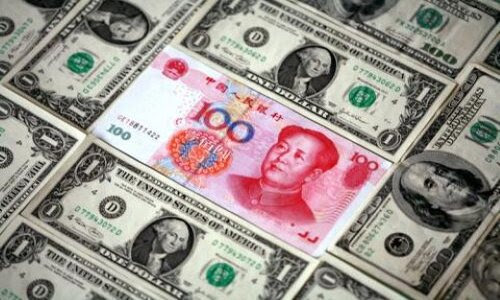
For decades, Americans have assumed the dollar is untouchable. It has been the backbone of global trade, the symbol of U.S. economic power, and the silent reason why our standard of living has been so high. Most of us take it for granted. But the world is changing — quietly, steadily, and with a subtle warning from China that few Americans are noticing.
In recent weeks, Chinese regulators verbally advised major Chinese banks to limit their exposure to U.S. Treasuries. This is not an official Bank of China directive — the central bank’s holdings remain untouched. It’s guidance for the financial institutions under its watch, a nudge toward diversification and risk management. China is not selling everything overnight, but make no mistake: this is a signal the rest of the world will notice.
Why U.S. Treasuries Are More Than Just Debt
U.S. Treasuries are often described as “safe,” but their importance goes far beyond that. They are the currency of trust in global finance. Foreign governments, pension funds, and global investors hold trillions in U.S. debt because it’s liquid, reliable, and fungible — meaning it can be used almost anywhere in the world.
For the United States, this has been a superpower advantage. By being the world’s preferred borrower, the U.S. government has been able to pile on debt at historically low interest rates. The dollar has remained the dominant reserve currency, and Americans have benefited from cheap borrowing, a high standard of living, and financial security that most of the world can only envy.
Now, that trust is subtly being tested. When a major player like China begins shifting its strategy, even incrementally, it starts to raise questions: if China is cautious, who else might be rethinking their exposure to U.S. debt?
The Stakes for Everyday Americans
You don’t need a finance degree to see the stakes. Rising Treasury yields, a weakening dollar, and higher borrowing costs would affect everyone:
Mortgages and car loans could become more expensive.
Inflation could chip away at the value of your paycheck.
Retirement accounts, 401(k)s, and savings could grow more slowly.
Even without a headline-grabbing financial crisis, the gradual erosion of confidence can quietly destabilize daily life. The ripple effects may be slow at first, but they can be profound over time.
Elon Musk’s Dire Warning
Elon Musk has been blunt: without a revolution in productivity powered by AI and robotics, the U.S. could face economic collapse. Musk is not exaggerating — he’s highlighting a reality most Americans ignore. Our debt, now surpassing $38 trillion, is growing faster than our ability to generate the economic output needed to support it.
AI and robotics may indeed offer a lifeline, producing wealth, efficiency, and growth at a scale never seen before. But in the meantime, global investors are already adjusting their bets. If other nations follow China’s lead, the U.S. could find itself paying more to borrow and losing influence in the process.
A Long-Term, Strategic Move
It’s important to understand what China is doing — and what it isn’t. This is not a fire sale of U.S. debt. The Chinese government isn’t trying to crash the dollar overnight. What they are doing is preparing for a changing world.
By instructing banks to manage exposure, China is signaling a long-term strategic pivot:
Diversifying reserves into other assets, such as gold or alternative currencies.
Reducing the risk of being caught in sudden U.S. interest rate swings.
Preparing for geopolitical tension, including potential conflict over Taiwan or future friction with the U.S.
Other countries are watching. Japan, the UK, and others could follow similar strategies. If multiple major holders of U.S. debt reduce their exposure simultaneously, the results could be dramatic: rising interest rates, a weaker dollar, and a more expensive borrowing environment for businesses and individuals alike.
Broader Economic Picture
This is about more than China and Treasuries. The U.S. is facing a structural debt problem. Every year, the government borrows more to cover spending, and interest payments alone are consuming a larger portion of the budget. If foreign demand for debt slows, the U.S. must either raise rates to attract buyers or increase domestic borrowing. Both have consequences:
Higher interest rates could slow economic growth and depress the stock market.
The dollar could lose some of its global reserve status, making imports more expensive and eroding American purchasing power.
Ordinary Americans could feel the effects in higher costs for everything from homes to groceries.
This isn’t a distant possibility. It’s a real economic dynamic unfolding right now, quietly, and China is the first country signaling a shift.
What Comes Next
The message is clear: the world is slowly moving toward a more diversified, multipolar financial system. The dollar’s reign is not guaranteed forever. Americans need to wake upto a new reality: our economy is deeply connected to global trust, and that trust is not unconditional.
The good news? Innovation, technological growth, and careful fiscal planning could still keep the U.S. strong. But ignoring these signals could leave the country vulnerable to slower growth, higher costs, and financial instability.
China isn’t attacking. They’re planning. And the U.S. would be wise to do the same.
And there will be Wars and Rumors of Wars
How AI Is Rewriting Warfare, From Human Judgment To Algorithmic Execution

There is a quiet but profound transformation underway in modern warfare — one that may ultimately matter more than tanks, missiles, or even nuclear weapons. War is no longer simply being fought by humans with machines as tools. Increasingly, it is being executed by machines themselves, with humans drifting into the role of supervisors, validators, or spectators.
The battlefield is shifting from human judgment to algorithmic execution.
This change is not merely technological. It is philosophical. It challenges centuries of assumptions about command, accountability, and the moral weight of violence. And it is happening faster than most political leaders, ethicists, or citizens realize.
Why This Shift Is Inevitable
At its core, modern war has become a contest of speed, information, and complexity — domains where humans are at a permanent disadvantage.
A single contemporary battlefield can generate more data in an hour than a World War II commander saw in a lifetime: drone video, satellite imagery, electronic signals, thermal sensors, battlefield communications, cyber activity. Human cognition simply cannot keep up. Algorithms can.
Once militaries realized that victory increasingly depends on who can observe, decide, and act the fastest, the direction became unavoidable. AI does not get tired. It does not hesitate. It does not second-guess. It does not suffer fear — or mercy.
And in war, hesitation is often fatal.
At first, AI assisted humans. Then it recommended actions. Now, in many contexts, it executes them. Humans remain “in the loop” largely for legal and moral reasons — not because they are the most efficient decision-makers.
That distinction matters. Because when speed determines survival, anything that slows the loop becomes a liability.
Ukraine: The First Algorithmic War
The Ukraine-Russia conflict offers the clearest window yet into this future.
This war is not just being fought with artillery and infantry — it is being fought with machine vision, automated targeting, and autonomous systems operating at machine speed.
Drones now locate targets, evade jamming, navigate without GPS, and strike with minimal human guidance. Some systems select targets based on probability models — not certainty — calculating acceptable risk rather than moral judgment. Swarms of cheap drones overwhelm expensive defenses. Ground robots probe enemy positions where no soldier would survive.
What matters most is not individual heroism but system efficiency.
Ukraine, in particular, has embraced this reality out of necessity. Facing a larger adversary, it has turned to autonomy to conserve manpower and compress decision cycles. Russia, in turn, has adapted by automating defense, electronic warfare, and counter-drone responses. Each iteration pushes both sides further away from human-paced warfare.
This is not a glimpse of the future. It is the future — already underway.
Where This Is Going: War Without Pause
If current trends continue, tomorrow’s wars may look unsettlingly different.
- Battles That Unfold Too Fast for Humans
Entire engagements may occur in seconds — too quickly for human commanders to meaningfully intervene. Algorithms will detect threats, allocate resources, strike, reassess, and strike again before a human can even comprehend the situation.
Humans won’t command these battles. They will authorize systems to fight them.
- Autonomous Swarms as the New Infantry
Instead of soldiers advancing across terrain, swarms of autonomous drones and ground units will maneuver collectively — sacrificing individual units to achieve statistical success. Losses will be measured not in lives but in hardware attrition rates.
War becomes a math problem.
- AI Commanders
Strategy itself may become algorithmic. AI systems could design campaigns, predict enemy behavior, optimize logistics, and continuously adapt plans in real time. Human leaders may retain symbolic authority while machines determine outcomes.
The uncomfortable truth: an AI strategist may eventually outperform the best human generals — not because it is wiser, but because it can simulate millions of possibilities instantly.
- War Without Emotion — or Restraint
Machines do not feel horror at civilian casualties. They do not recoil from escalation. They execute parameters. If those parameters drift — or are intentionally loosened — violence can scale faster than human conscience can react.
This is where the danger lies.
Why This Actually Matters
The true risk of algorithmic warfare is not that machines will become evil. It is that war will become easier to start and harder to stop.
When leaders no longer risk their own citizens’ lives, political restraint erodes. When machines absorb the cost of combat, war becomes an optimization exercise rather than a moral crisis. When algorithms decide, responsibility diffuses — and accountability vanishes.
Who is guilty when an autonomous system makes a fatal error?
The programmer? The commander? The machine?
History has never answered that question — because history has never faced it.
The Line We Are Quietly Crossing
Human-led war was slow, imperfect, and brutal — but it was restrained by human limitation. Algorithmic war removes those brakes.
We are approaching a world where wars may be fought largely beyond human perception, driven by systems that value efficiency over meaning, probability over principle. Once crossed, that line will be nearly impossible to uncross.
The battlefield is no longer just a place.
It is becoming a process.
And increasingly, that process no longer belongs to us.
How The Progressive Left Is Legislating Christianity Out of Our Life
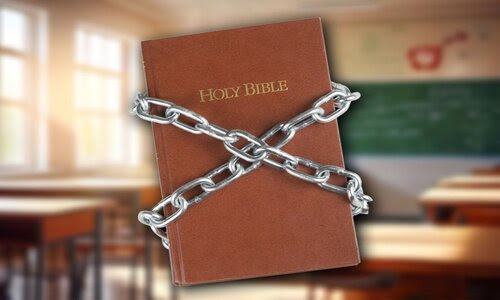
First it was California (Mystery Babylon), where Christian schools were told they must treat biblical teaching on sexuality as optional–or face loss of accreditation. Then came New York, where religious adoption agencies were driven out of existence for refusing to violate their faith. Colorado followed, forcing Christian camps and schools to adopt state-approved gender policies or shut their doors. In each case, the strategy was the same: no outright ban, no dramatic showdown–just regulations, conditions, and “standards” quietly tightened until faith-based education became impossible to sustain.
Now, that same playbook has arrived in Virginia.
House Bill 359, introduced by Democrat Delegate Dan Helmer in January, is being marketed as a reasonable update to accountability rules for private schools. In reality, it is another calculated step in a nationwide effort to bring religious education to heel–not by force, but by bureaucracy. The goal is not simply oversight. It is submission.
Supporters claim the bill merely ensures “non-discrimination” and transparency for schools participating in Virginia’s Education Improvement Scholarships Tax Credits Program. But the language of HB 359 reveals something far more troubling: an attempt to redefine religious conviction itself as a problem the state must correct.
The most dangerous maneuver in the bill is its redefinition of “public funds.” Tax credits–money that never enters government hands–are suddenly treated as state funding. This legal sleight of hand gives Virginia leverage over private Christian schools simply because low-income families rely on scholarships funded by private donations. In effect, the state is saying: If your families need help, your faith comes with strings attached.
Once that threshold is crossed, the coercion begins.
Under HB 359, Christian schools would be prohibited from operating according to their biblical beliefs about sex and gender. Admissions policies, student conduct codes, and access to programs would all have to align with state-approved views on sexual orientation and gender identity. What Scripture teaches plainly would be relabeled as discrimination.
Perhaps even more alarming is the requirement that schools provide a “meaningful and nonpunitive opt-out” from religious instruction and worship. Bible classes. Chapel. Prayer. These are not side offerings in Christian education–they are the foundation. To force a Christian school to allow students to opt out of Christianity itself is not tolerance; it is an attempt to hollow out faith from the inside.
The bill also mandates alignment with Virginia’s Standards of Learning and opens curricula to government inspection. This is not neutral oversight–it is ideological standardization. It ensures that even private religious schools must ultimately teach within boundaries set by the state, not by conscience, conviction, or community.
And the enforcement mechanisms are brutal. Schools found in violation could face civil penalties of up to $10,000 per incident or be barred from enrolling scholarship students for five years. For many schools, that would be a death sentence. Not because parents no longer want Christian education–but because the state has made it unaffordable unless families abandon it entirely.
This is no accident. HB 359 was introduced in direct response to the expansion of school choice under Governor Glenn Youngkin. When parents were given more freedom to leave failing or ideologically hostile public schools, the left did not ask why families were leaving. Instead, it moved to ensure that no meaningful alternative could exist.
We have seen this movie before. In California, regulators used accreditation rules to pressure Christian colleges into conformity. In Washington state, religious schools have faced threats for maintaining biblical hiring standards. In Massachusetts and Oregon, licensing and nondiscrimination rules have been weaponized to push faith-based institutions out of public life altogether.
The message is always the same: You may believe what you want–until your beliefs affect how you operate.
For families of faith, this moment demands clear eyes. Religious liberty does not disappear all at once. It erodes through compliance forms, grant conditions, and carefully worded statutes that sound benign until enforced. The state does not need to ban Christianity from the classroom if it can regulate it into irrelevance.
HB 359 is still in committee. But its intent is already unmistakable. It is not about protecting students–it is about reshaping them. It is not about accountability–it is about control. And it is not isolated to Virginia.
“They will not stop” is no longer a slogan. It is a warning. The only question left is whether Americans who value genuine religious freedom will recognize the strategy in time–or wake up one day to find that faith-based education still exists in name only, safely managed, carefully monitored, and finally, no longer free at all.
Magog Countries Fear the Loss of Persia
Why Some Of Trump’s Muslim ‘Allies’ Fear A Loss Of Iran More Than They Fear Iran
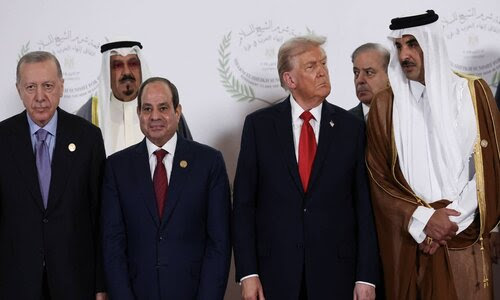
US President Donald J. Trump’s Gulf Arab allies, according to the New York Times, oppose an American strike on Iran primarily out of fear of regional instability and the possible damage to economies, tourism, and domestic security.
While this explanation may sound credible on the surface, a deeper and far more uncomfortable reality is that for several of these regimes, the real danger is not Iran’s collapse, but an ideological exposure that could follow decisive American action, as well as concern about Israel becoming more prominent in the region.
A serious confrontation with Iran would not only reshape the regional balance of power; it would also force a number of Arab states to clarify positions that for decades they have fought to keep ambiguous.
Iran, since its 1979 Islamic Revolution, is not merely a rival or destabilizing neighbor. It is the ideological and operational core of modern Islamist warfare in the Middle East. Since 1979, Tehran has armed, funded, trained, and coordinated proxy organizations with the explicit aim of undermining Western influence. “Death to America,” Ayatollah Ali Khamenei announced in 2023, “is not just a slogan, it is a policy.” For decades, Iran has also been encircling Israel in a “ring of fire” the better to destroy it.
Hezbollah in Lebanon; Hamas and Palestinian Islamic Jihad in Gaza; Shiite militias in Iraq and Syria, and the Houthis in Yemen are not independent actors pursuing local grievances. They are integral components of a coherent Iranian strategy, backed by Russia and China, aimed at expanding Islamist Iran’s influence in the region by force; destabilizing sovereign states, and eroding the regional order from within. This strategy is not reactive; it is doctrinal.
Trump’s Iran policy, after years of hesitant US engagement at best, has consistently combined economic pressure and military deterrence, with limited diplomatic patience, to restore America’s international credibility.
Trump’s restoration of credibility has apparently unsettled not only Iran’s regime, but also some of Washington’s supposed regional allies, who have grown accustomed to maneuvering Washington when desirable. Some, such as Qatar, have built fancied empires by never committing to any side and instead playing every side. Just as much blame, however, must go to those leaders in the Middle East and Europe who agreed to be played.
What many have largely avoided addressing is the extent to which some governments, such as Qatar’s and Turkey’s — which host American military bases — benefit from U.S. security guarantees.
While publicly Qatar and Turkey affirm their commitment to “stability”, at the same time they zealously set about destabilizing half the planet by funding, promoting, and even training Islamist terror networks (such as here, here, here, here and here) that presumably serve their own strategic interests. To Western audiences, they speak the language of moderation, while churning up grievance narratives and ideological victimhood at home.
A decisive confrontation with Iran might shatter the carefully maintained duplicity that these countries have so tenderly nurtured for decades.
Qatar, for instance, presents itself as a neutral mediator, a champion of dialogue, and a facilitator of regional diplomacy, while in practice, for years, Qatar has provided safe haven, financial channels, and political legitimacy to just about every Islamic terrorist group. Hamas’s senior leaders have been welcome to live in Qatar as safe and comfortable billionaires while directing their terrorist operations elsewhere.
According to Udi Levy, a former senior official of Israel’s Mossad spy agency who dealt with economic warfare against terrorist organizations:
“Qatar is at the top of funding terrorism worldwide, even more than Iran… Qatar transferred funds through various channels, primarily via their largest foundation, Charai, which is one of the largest funding sources for terrorist organizations in the world.”
Qatar’s state-owned media empire, Al -Jazeera, consistently amplifies Islamist narratives, demonizes Israel, and undermines moderate Arab governments, all while projecting an image of supposed neutrality. In fact, by its own admission, it was Qatar that whipped up and catalyzed the entire disruptive “Arab Spring” that begin in 2010.
When Qatar is not acting out its central role in sustaining this Islamist terrorist ecosystem, an absent decoy to deflect attention, such as the Iranian regime, could redirect scrutiny toward Qatar even further.
Turkey, looking forward rather than backward, appears to agree with that assessment. Turkey, doubtless, shares the same point of view. It appears to be using its proxy, Syria — under the interim presidency of former al-Qaeda leader Ahmed al-Sharaa — and a place on Trump’s alleged “Board of Peace ” in Gaza, eventually to pincer Israel in the middle.
Under President Recep Tayyip Erdoğan, who regularly uses jihadist and anti-Israel rhetoric, Turkey abandoned what was left of Mustafa Kemal Ataturk’s secular legacy in favor of overtly Islamist, neo-Ottoman goals. “The mosques are our barracks, the domes our helmets, the minarets our bayonets and the faithful our soldiers,” Erdogan once recited.
Under Erdogan’s rule, Turkey also hosts Hamas operatives, offers political cover to Islamist causes, and has dispatched armed flotillas, built 31 new warships, threatened Greece, and has been doing his utmost to acquire American F-35 stealth fighter jets.
While Turkey competes with Iran in certain arenas, it also benefits from Iran’s role as a regional spoiler that distracts attention from Erdogan’s own neo-Ottoman ambitions. A serious weakening of Iran would, by removing this diversionary decoy, expose Turkey’s broader regional agenda in Syria and Gaza with greater visibility.
Saudi Arabia, by contrast, has suffered direct attacks from Iranian-backed forces and has legitimate reasons to fear aggression from Iran, which for decades appears to have had its acquisitive eyes on the kingdom’s oil fields as well as its guardianship of Islam’s two holiest sites: the pilgrimage Kaaba stone and its surrounding mosque in Mecca, and the Prophet’s Mosque in Medina.
Saudi Arabia and Iran are not partners; they are fierce rivals and competitors. Saudi Crown Prince Mohammed bin Salman once prioritized domestic reform, economic diversification, and social transformation – while, in recent weeks, viciously turning against Israel “even more than al-Jazeera.”
The United Arab Emirates, under the exceptional, trailblazing leadership of its president, Sheikh Mohamed bin Zayed Al Nahyan, has offered a striking example of unwavering loyalty to the West, to the Abraham Accords, and he demonstrates leadership in showing that extremist Islam need not be a requirement. For the UAE, opposing Iran does not demand embracing Islamism, anti-Western rhetoric, or hostility toward Israel. Through normalization with Israel, economic openness, technological cooperation, and a degree of religious tolerance rare in the region, the UAE has presented an awe-inspiring example of stability rooted in cooperation rather than ideological warfare.
Bin Zayed’s strategic clarity stands in perfect contrast to the duplicity other Gulf states and illustrates that alignment with Israel and the United States need not come at the expense of any legitimacy.
The suggestion advanced by the New York Times and other media that Israel represents a greater threat to regional stability than a weakened Iran is not merely inaccurate — it inverts reality. Israel has no imperial ambitions, no desire to dominate Arab capitals, and no ideology of regional subversion. Its military actions are defensive responses to existential threats posed by Iran, Qatar, Turkey, Saudi Arabia, their proxies, propaganda, and terrorist organizations.
Unlike Iran, Qatar, Turkey, Saudi Arabia and their proxies, Israel operates within legal and moral constraints that are routinely ignored or openly rejected by its adversaries. To portray Israel as the destabilizing force while downplaying the role of the countries subscribing to extremist versions of Islam is not analysis; it is narrative distortion and journalistic malpractice.
Israel does not fight Islamic terrorism because it wants to. It fights Islamic terrorism because it has to. It has shown time and again that it would clearly prefer to be left in peace under its fig tree. Israel fights because, to survive against such overwhelming belligerence, it must — usually alone, often condemned, and often while its supposed “allies” hedge their bets.
Many regional actors benefit indirectly from Israel doing the difficult and dangerous work of confronting Iran’s proxies, among other adversaries, even as they publicly distance themselves from Israel’s actions to placate domestic opinion or ideological associates. This hypocrisy is rarely acknowledged in Western mainstream media coverage, yet it remains a defining feature of the region’s geopolitics.
Trump’s Middle East policy threatens not only Iran’s nuclear ambitions; it threatens an entire system built on moral relativism, selective outrage, and strategic double-talk. By demanding accountability, enforcing sanctions, and refusing to indulge diplomatic illusions, Trump exposed the fragility of regimes accustomed to managing perceptions rather than confronting realities. His approach has disrupted comfortable arrangements that allowed Iran’s regime to expand while claiming plausible deniability.
The resistance to Trump’s Iran strategy, therefore, is rooted in a fear of transparency and a lurking competition for supremacy. A Middle East no longer dominated by Iranian subversion and chaos would force too many actors to answer uncomfortable questions about their own financing networks, ideological alignments, and long-standing contradictions. For regimes built on doubletalk, truth is far more dangerous than missiles.
The region does not suffer from a lack of diplomacy. It suffers from an excess of illusion. Iran’s regime is not some misunderstood actor seeking stability; it is a theocratic dictatorship that oppresses women, murders innocents – estimated at this point to be more than 90,000 — and exports violence, in Khamenei’s own words, as state policy.
Trump’s refusal to indulge this illusion marked a historic breakthrough — a rare moment of strategic honesty in Middle Eastern affairs — one that clarifies who genuinely seeks stability and those who benefit from engineering perpetual instability.
Such honesty may well have unsettled not only Iran’s leaders but also those who quietly rely on chaos to obscure their own failures and unrelenting bellicosity.
Exposure, not war, is what these countries fear – and what they should get.
TruLight Ministries Daily Entertainment

TruLight TV – Clean Christian Comedy – Ron Pearson
Ron Pearson Bananas Comedy Performance
Today on TruLight Radio XM
TruLight Radio XM 24/7
Program
GMT / UTC +2
Monday To Fridays
00:15 Words to Live By Testimonies
01.15 Science Scripture and Salvation
02.15 Ground Works
04.00 Gospel Concert of the Day
05.00 The Daren Streblow Comedy Show
5:55 It is Today devotional
6:00 Gaither Homecoming Morning Show
7:15 Discover the Word
8.15 Destined for Victory
8:55 Science Scripture and Salvation
9:00 Holy Spirit Hour – Normally Sermons
10:15 Hope of the Heart
11:15 Unshackled
11.45 Words to Live By
12:15 Truth for Life
13:15 Living on the Edge with Chip Ingram
14:15 Focus on the Family
15:00 Kids Hour
16:00 In Touch with Dr. Charles Stanley
16:30 Groundwork
17:15 Live in the Light
18:15 Renewing your Mind
19:00 Gaither Homecoming Show
20:15 Growing Hope
21:15 Adventures in Odyssey Radio Drama
21:45 Bible Reading
22:15 Night-sounds
23.00 Good Old Country Gospel / Rhema Gospel Express
VISIT THE WEBSITE
TruLight Ministry News
TruLight Ministries orders from God since 2012 . Teach Them , Comfort Them and Warn Them!
Healing Truths
End Time Articles :
Share this Feeding of Manna with your Friends and Family. just click on the Social Media icon and share !