Hosted by TruLight Ministries – The Place of Truth
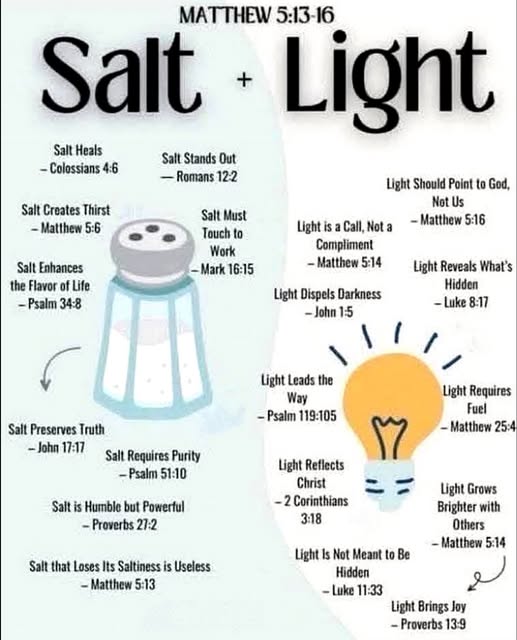
Jesus described His followers as the salt of the earth in Matthew 5 as part of His Sermon on the Mount: “You are the salt of the earth. But if the salt loses its saltiness, how can it be made salty again? It is no longer good for anything, except to be thrown out and trampled underfoot” (verse 13).
There were two purposes for salt in the first century—preserving food and enhancing flavor. Both of those purposes may apply here, or Jesus may have been speaking in a more general sense.
By using this salt metaphor, Jesus may have meant that His disciples are called to be “preservatives” in the world, slowing down the advancement of moral and spiritual decay. Psalm 14:3 says, “All have turned away, all have become corrupt; there is no one who does good, not even one.” Believers are to preserve truth and goodness in a fallen world.
Salt was also used as a flavor enhancer. Jesus may have been instructing His disciples to “enhance” the flavor of life in this world—enriching its goodness and making God’s work stand out from the normal way of doing things. “But love your enemies, do good to them, and lend to them without expecting to get anything back. Then your reward will be great, and you will be children of the Most High, because he is kind to the ungrateful and wicked” (Luke 6:35). As believers behave in ways that reflect God’s nature, they accentuate the difference that Jesus makes in one’s life.
Since Jesus’ exact meaning is not specified, perhaps He was not pointing to one specific application, but to salt in a general sense of value and usefulness. In those days, salt was a valuable commodity (the word salary comes from an ancient word meaning “salt-money”). Perhaps Jesus was telling His disciples how important their ministry would be.
Of course, the value of salt lies in its effect on its surroundings. Salt makes an impact. After telling His disciples that they are the salt of the earth, Jesus goes on to say, “But if the salt loses its saltiness, how can it be made salty again? It is no longer good for anything, except to be thrown out and trampled underfoot.” Can salt become less salty? Strictly speaking, no. Sodium chloride is a stable compound and can’t become less of itself. What was Jesus saying then? There are several possibilities:
1) Jesus may have been referring to the “salt” that was collected from the Dead Sea by evaporation. The substance resembled pure salt, but it wasn’t effective for preservation or for seasoning.
2) Jesus could have been referring to the rock formations in which people would store their meat. Once the salt leached out of the rocks, the rocks were no longer effective to preserve the meat.
3) Others have speculated that Jesus was referring to the salt blocks that bakers used in their ovens. Eventually the heat would make these salt blocks useless.
4) Yet others think Jesus was referring to a saying of the time: “Can salt lose its saltiness?” It’s a rhetorical question because salt can’t become less salty. True disciples of Jesus cannot lose their saltiness. They are new creations and completely changed. Someone who is an imposter cannot become salty again. The imposters are to be “thrown out and trampled underfoot” because they have no effectiveness.
How does Jesus’ statement about the salt of the earth apply to us today?
Matthew 5:13 tells us that we are valuable in our role as disciples of Christ. God uses us to impact the people around us. Whether we are slowing down the moral decay or enhancing the spiritual “flavor” of the world, God has created us to be a positive impact. As followers of Christ, we are called to be different and to live righteous lives.
Jesus het Sy volgelinge in Matteus 5 as die sout van die aarde beskryf as deel van Sy Bergpredikasie: “Julle is die sout van die aarde. Maar as die sout sy sout verloor, hoe kan dit weer sout gemaak word? Dit is nêrens meer goed voor nie, behalwe om weggegooi en onder voete vertrap te word” (vers 13).
Daar was twee doeleindes vir sout in die eerste eeu—om voedsel te bewaar en geur te verbeter. Beide hierdie doeleindes kan hier van toepassing wees, of Jesus het dalk in ‘n meer algemene sin gepraat.
Deur hierdie soutmetafoor te gebruik, het Jesus moontlik bedoel dat Sy dissipels geroep word om “bewaarmiddels” in die wêreld te wees, wat die vordering van morele en geestelike verval vertraag. Psalm 14:3 sê: “Almal het hulle afgewend, almal het verdorwe geword; daar is niemand wat goed doen nie, selfs nie een nie.” Gelowiges moet waarheid en goedheid in ‘n gevalle wêreld bewaar.
Sout is ook as ‘n smaakversterker gebruik. Jesus het moontlik Sy dissipels opdrag gegee om die smaak van die lewe in hierdie wêreld te “versterk” – om die goedheid daarvan te verryk en God se werk te laat uitstaan bo die normale manier van dinge doen. “Maar julle moet julle vyande liefhê en goed doen aan hulle en aan hulle leen sonder om iets terug te verwag. Dan sal julle loon groot wees, en julle sal kinders van die Allerhoogste wees, want Hy is goedhartig oor die ondankbares en goddeloses” (Lukas 6:35). Wanneer gelowiges optree op maniere wat God se natuur weerspieël, beklemtoon hulle die verskil wat Jesus in ‘n mens se lewe maak.
Aangesien Jesus se presiese betekenis nie gespesifiseer word nie, het Hy dalk nie na een spesifieke toepassing gewys nie, maar na sout in ‘n algemene sin van waarde en nuttigheid. In daardie dae was sout ‘n waardevolle kommoditeit (die woord salaris kom van ‘n antieke woord wat “soutgeld” beteken). Miskien het Jesus vir Sy dissipels gesê hoe belangrik hul bediening sou wees.
Natuurlik lê die waarde van sout in die effek daarvan op sy omgewing. Sout maak ‘n impak. Nadat Hy vir Sy dissipels gesê het dat hulle die sout van die aarde is, gaan Jesus voort om te sê: “Maar as die sout sy southeid verloor, hoe kan dit weer sout gemaak word? Dit is nêrens meer goed vir nie, behalwe om weggegooi en onder die voete vertrap te word.” Kan sout minder sout word? Streng gesproke, nee. Natriumchloried is ‘n stabiele verbinding en kan nie van homself minder word nie. Wat het Jesus toe gesê? Daar is verskeie moontlikhede:
1) Jesus het moontlik verwys na die “sout” wat deur verdamping uit die Dooie See versamel is. Die stof het soos suiwer sout gelyk, maar dit was nie effektief vir preservering of vir geurmiddels nie.
2) Jesus kon verwys het na die rotsformasies waarin mense hul vleis sou bêre. Sodra die sout uit die rotse uitgeloog het, was die rotse nie meer effektief om die vleis te preserveer nie.
3) Ander het gespekuleer dat Jesus verwys het na die soutblokke wat bakkers in hul oonde gebruik het. Uiteindelik sou die hitte hierdie soutblokke nutteloos maak.
4) Ander dink weer dat Jesus verwys het na ‘n gesegde van daardie tyd: “Kan sout sy southeid verloor?” Dis ‘n retoriese vraag, want sout kan nie minder sout word nie. Ware dissipels van Jesus kan nie hul southeid verloor nie. Hulle is nuwe skeppings en heeltemal verander. Iemand wat ‘n bedrieër is, kan nie weer sout word nie. Die bedrieërs moet “uitgegooi en onder die voete vertrap word” omdat hulle geen effektiwiteit het nie.
Hoe is Jesus se stelling oor die sout van die aarde vandag op ons van toepassing?
Matteus 5:13 sê vir ons dat ons waardevol is in ons rol as dissipels van Christus. God gebruik ons om die mense rondom ons te beïnvloed. Of ons nou die morele verval vertraag of die geestelike “geur” van die wêreld verbeter, God het ons geskep om ‘n positiewe impak te hê. As volgelinge van Christus word ons geroep om anders te wees en regverdige lewens te lei.

Bible Verse and Prayer for Today
When anxiety was great within me, your consolation brought joy to my soul.
—Psalm 94:19
God is our comforter, sustain-er, and Lord. Only his gracious presence and tender blessings can bring consolation and comfort to our restless and discouraged souls. Let’s turn our hearts toward God, honestly confessing our sins, sorrows, and anxieties. Let’s ask him to restore our passion, joy, and confidence in our salvation. As the apostle Paul told the Philippians when he wrote them from prison:
Prayer
Almighty Shepherd, I need your consolation in my soul. The noise and confusion of my thoughts weary my spirit. The burdens and concerns I feel for others weigh down my heart. Please minister to me through your Comforter, the Holy Spirit. I need your comfort and peace to quieten my anxieties and worries. I ask for your presence and your grace to restore the joy of my salvation. I invite the Holy Spirit to work your comfort, peace, and joy into the fabric of my being. In Jesus’ name, I ask for your help in finding grace in all I think, feel, and do. Amen and Amen
Bybel Vers en Gebed vir Vandag
Toe angs groot in my was, het u vertroosting vreugde aan my siel gebring.
—Psalm 94:19
God is ons trooster, onderhouer en Here. Slegs sy genadige teenwoordigheid en teer seëninge kan vertroosting en vertroosting aan ons rustelose en mismoedige siele bring. Laat ons ons harte na God wend en eerlik ons sondes, hartseer en angs bely. Laat ons Hom vra om ons passie, vreugde en vertroue in ons verlossing te herstel. Soos die apostel Paulus vir die Filippense gesê het toe hy hulle vanuit die tronk geskryf het:
Gebed
Almagtige Herder, ek het u vertroosting in my siel nodig. Die geraas en verwarring van my gedagtes vermoei my gees. Die laste en bekommernisse wat ek vir ander voel, belas my hart. Bedien my asseblief deur u Trooster, die Heilige Gees. Ek het u vertroosting en vrede nodig om my angs en bekommernisse stil te maak. Ek vra vir u teenwoordigheid en u genade om die vreugde van my verlossing te herstel. Ek nooi die Heilige Gees uit om u vertroosting, vrede en vreugde in die weefsel van my wese te bewerk. In Jesus se Naam vra ek vir u hulp om genade te vind in alles wat ek dink, voel en doen. Amen en Amen.
Bible Teaching of the Day
In Matthew 5:13, Jesus says to His disciples, “You are the salt of the earth. But if the salt loses its saltiness, how can it be made salty again? It is no longer good for anything, except to be thrown out and trampled underfoot.” Salt was an important commodity in the ancient world. Salt that had lost its saltiness would be worthless, just another mineral.
Salt was primarily used to preserve food and enhance flavor. It was also used during religious sacrifices. For example, in Leviticus 2:13, the Israelites were instructed to season their grain offerings with salt: “You shall season all your grain offerings with salt. You shall not let the salt of the covenant with your God be missing from your grain offering; with all your offerings you shall offer salt” (ESV). Salt was a purifying and preserving agent.
When Jesus refers to His disciples as “the salt of the earth” (Matthew 5:13), He is saying that they preserve the earth from spiritual and moral decay. Just as salt prevents food from spoiling, believers must prevent moral decadence in the world through holy conduct. Philippians 2:14–15 says, “Do everything without grumbling or arguing, so that you may become blameless and pure, ‘children of God without fault in a warped and crooked generation.’” Then you will shine among them like stars in the sky.” Believers must exemplify pure and holy conduct, reflecting the holiness of God in the world. In doing so, they are the “salt of the earth.”
Salt also enhances the flavor of food, making it more enjoyable. Believers are called to enhance the lives of others, bringing grace and truth through their words and actions. Colossians 4:6 says, “Let your speech always be gracious, seasoned with salt, so that you may know how you ought to answer each person” (ESV).
In the latter part of Matthew 5:13, Jesus says, “But if the salt loses its saltiness, how can it be made salty again? It is no longer good for anything, except to be thrown out and trampled underfoot.” It is possible for believers to lose their distinctiveness from the world and influence in the world. Believers should be in the world, but not of the world (John 17:16). Moreover, believers should influence the world for good rather than evil. If we fail to be distinct from the world, then we are like salt that has lost its saltiness. Salt that is no longer salty has lost its prime distinctive; its whole reason for existence is gone.
The loss of saltiness, then, represents a significant decline, in which believers become indistinguishable from the world. This makes our witness ineffective and fruitless. Considering Jesus’ warning in Matthew 5:13, believers must remain connected to Christ, who will ensure that we never lose our saltiness. Later, Jesus taught His disciples about the importance of abiding in Him: “Abide in me, and I in you. As the branch cannot bear fruit by itself, unless it abides in the vine, neither can you, unless you abide in me. I am the vine; you are the branches. Whoever abides in me and I in him, he it is that bears much fruit, for apart from me you can do nothing” (John 15:4–5, ESV).
Just as salt has many benefits (preservation, purification, and seasoning), believers influence the world for good. We must preserve the world from spiritual and moral decay, pursue the holiness of God, enhance the lives of those around us with gracious speech and actions. All the while, we must maintain a distinct identity from the world by remaining connected to Christ. In doing so, we will not be like salt that has lost its saltiness.
Bybel Lering vir die Dag
In Matteus 5:13 sê Jesus vir Sy dissipels: “Julle is die sout van die aarde. Maar as die sout sy southeid verloor het, hoe kan dit weer sout gemaak word? Dit is nêrens meer goed vir nie, behalwe om weggegooi en onder die voete vertrap te word.” Sout was ‘n belangrike kommoditeit in die antieke wêreld. Sout wat sy southeid verloor het, sou waardeloos wees, net nog ‘n mineraal.
Sout is hoofsaaklik gebruik om kos te preserveer en geur te verbeter. Dit is ook tydens godsdienstige offers gebruik. Byvoorbeeld, in Levitikus 2:13 is die Israeliete opdrag gegee om hul graanoffers met sout te geur: “Jy moet al jou graanoffers met sout geur. Jy mag die sout van die verbond van jou God nie by jou graanoffer laat ontbreek nie; by al jou offers moet jy sout bring” (ESV). Sout was ‘n reinigende en preserveermiddel.
Wanneer Jesus na Sy dissipels verwys as “die sout van die aarde” (Matteus 5:13), sê Hy dat hulle die aarde teen geestelike en morele verval bewaar. Net soos sout verhoed dat kos bederf, moet gelowiges morele verval in die wêreld voorkom deur heilige gedrag. Filippense 2:14–15 sê: “Doen alles sonder murmurering of teëspraak, sodat julle onberispelik en rein kan wees, kinders van God sonder gebrek in ‘n verdraaide en krom geslag.’” Dan sal julle onder hulle skyn soos sterre aan die hemel.” Gelowiges moet suiwer en heilige gedrag toon en die heiligheid van God in die wêreld weerspieël. Deur dit te doen, is hulle die “sout van die aarde”.
Sout verbeter ook die smaak van kos en maak dit aangenamer. Gelowiges word geroep om die lewens van ander te verbeter deur genade en waarheid deur hul woorde en dade te bring. Kolossense 4:6 sê: “Laat julle woord altyd aangenaam wees, met sout besprinkel, sodat julle kan weet hoe julle elkeen moet antwoord” (ESV).
In die laaste deel van Matteus 5:13 sê Jesus: “Maar as die sout sy sout verloor, hoe kan dit weer sout gemaak word? Dit is nêrens meer goed vir as om dit buite gegooi en onder die voete vertrap te word nie.” Dit is moontlik vir gelowiges om hul onderskeidendheid van die wêreld en invloed in die wêreld te verloor. Gelowiges behoort in die wêreld te wees, maar nie van die wêreld nie (Johannes 17:16). Boonop behoort gelowiges die wêreld ten goede eerder as ten kwade te beïnvloed. As ons nie daarin slaag om van die wêreld onderskei te word nie, dan is ons soos sout wat sy southeid verloor het. Sout wat nie meer sout is nie, het sy primêre onderskeidendheid verloor; sy hele rede vir bestaan is weg.
Die verlies aan southeid verteenwoordig dus ‘n beduidende agteruitgang, waarin gelowiges ononderskeibaar word van die wêreld. Dit maak ons getuienis ondoeltreffend en vrugteloos. In die lig van Jesus se waarskuwing in Matteus 5:13, moet gelowiges verbind bly aan Christus, wat sal verseker dat ons nooit ons southeid verloor nie. Later het Jesus Sy dissipels geleer oor die belangrikheid daarvan om in Hom te bly: “Bly in My, en Ek in julle. Soos die loot geen vrugte kan dra van sy eie as dit nie in die wingerdstok bly nie, so julle ook nie as julle nie in My bly nie. Ek is die wingerdstok, julle is die lote. “Wie in My bly en Ek in hom, hy dra veel vrug, want sonder My kan julle niks doen nie” (Johannes 15:4–5).
Net soos sout baie voordele het (bewaring, suiwering en geurmiddels), beïnvloed gelowiges die wêreld ten goede. Ons moet die wêreld van geestelike en morele verval bewaar, die heiligheid van God nastreef, die lewens van diegene rondom ons verbeter met aangename woorde en dade. Terselfdertyd moet ons ‘n onderskeidende identiteit van die wêreld handhaaf deur aan Christus verbind te bly. Deur dit te doen, sal ons nie soos sout wees wat sy southeid verloor het nie.
Today’s Devotional
Jesus Christ began His great Sermon on the Mount by teaching the Beatitudes, a list of blessings that define the inner character of a genuine servant of God (Matthew 5:1–12). These verses also illustrate God’s kingdom principles, which are directly opposite of the world’s value system. To the casual listener, this countercultural teaching could suggest that Christ expects His disciples to withdraw from the world. But in Matthew 5:13–16 Jesus follows up immediately with an illuminating segment, leaving His true followers with no doubt as to His intended meaning: “You are the light of the world. A city set on a hill cannot be hidden” (verse 14, NASB95).
Jesus compared Christians to a city on a hill that cannot be hidden because kingdom people are meant to be a beacon in the night, providing spiritual light to a lost and dying world. Jesus said in John 9:5, “While I am in the world, I am the light of the world.” To His disciples, He explained, “I am the light of the world. Whoever follows me will never walk in darkness, but will have the light of life” (John 8:12). Jesus is the light that illuminates our lives. Everyone who puts their faith and trust in Him “will no longer remain in the dark” (John 12:46).
As long as we live on this earth, we are meant to have an influence on the people around us. The apostle Paul taught, “For you were once darkness, but now you are light in the Lord. Live as children of light” (Ephesians 5:8).
The purpose of light is to give direction by making it possible to see. At night, a city on a hill shines its light in all directions from an elevated position. The light can be seen far and wide, illuminating the way for many travelers and showing them which way to go. Jesus said, “I am the way and the truth and the life. No one comes to the Father except through me” (John 14:6). Toward Jesus, and ultimately into a relationship with God the Father, is the direction in which people ought to walk.
The apostle John said of Jesus, “In him was life, and that life was the light of all mankind. The light shines in the darkness, and the darkness has not overcome it” (John 1:4–5). As Christians we are to make the light of truth visible—by sharing the gospel of salvation in Jesus, and through the way we live our lives—thereby providing direction and guidance for those who are lost and living in darkness.
Isaiah foresaw the coming of Jesus Christ as the dawning of a great light seen by “people walking in darkness . . . those living in the land of deep darkness” (Isaiah 9:2; cf. Matthew 4:16). Saul of Tarsus had been walking in profound spiritual darkness, persecuting Christians. When Jesus Christ appeared to him, Saul saw “a light from heaven, brighter than the sun, blazing around me” (Acts 26:13).
The Lord allowed Saul to remain temporarily blinded by the light, as a symbol of his sightless spiritual state. That day God told Saul, “I have appeared to you to appoint you as a servant and as a witness of what you have seen and will see of me. I will rescue you from your own people and from the Gentiles. I am sending you to them to open their eyes and turn them from darkness to light, and from the power of Satan to God, so that they may receive forgiveness of sins and a place among those who are sanctified by faith in me” (Acts 26:16–18). From the moment God removed the blinders from his eyes, Saul began to preach the truth that Jesus is the Son of God (Acts 9:17–31).
Saul, who later went by the name of Paul, went on to become one of Christianity’s most zealous messengers. Everywhere he went, Paul taught Christians to “live clean, innocent lives as children of God, shining like bright lights in a world full of crooked and perverse people” (Philippians 2:15, NLT).
The Christian life is meant to have a visible impact and not to be lived in secret, hidden from the world. Jesus said, “No one lights a lamp and then puts it under a basket. Instead, a lamp is placed on a stand, where it gives light to everyone in the house. In the same way, let your good deeds shine out for all to see, so that everyone will praise your heavenly Father” (Matthew 5:15–16, NLT). There is no such thing as covert Christianity or clandestine discipleship.
Paul advised Timothy, “Never be ashamed to tell others about our Lord” (2 Timothy 1:8, NLT). We must not hide our devotion to Christ. Instead, we are to remain humble while doing everything we can to attract, influence, and guide others toward the truth: “For the Lord gave us this command when he said, ‘I have made you a light to the Gentiles, to bring salvation to the farthest corners of the earth’” (Acts 13:47, NLT).
When we live as true disciples of Jesus Christ, obeying the principles of God’s kingdom, we become like a city on a hill that cannot be hidden. In fact, as new creatures in Christ (2 Corinthians 5:17), it is now part of our nature as kingdom servants to be the light in the world. The light we shine does not come from us but instead is a reflected light coming from our source—“the Lord, who is the Spirit” (2 Corinthians 3:18).
Vandag se Bemoediging
Jesus Christus het Sy groot Bergpredikasie begin deur die Saligsprekinge te leer, ‘n lys van seëninge wat die innerlike karakter van ‘n ware dienaar van God definieer (Matteus 5:1–12). Hierdie verse illustreer ook God se koninkrykbeginsels, wat direk teenoor die wêreld se waardestelsel is. Vir die gewone luisteraar kan hierdie teenkulturele lering daarop dui dat Christus verwag dat Sy dissipels hulle van die wêreld sal onttrek. Maar in Matteus 5:13–16 volg Jesus onmiddellik op met ‘n insiggewende segment, wat Sy ware volgelinge sonder twyfel laat oor Sy bedoelde betekenis: “Julle is die lig van die wêreld. ‘n Stad wat op ‘n berg lê, kan nie weggesteek word nie” (vers 14, NASB95).
Jesus het Christene vergelyk met ‘n stad op ‘n berg wat nie weggesteek kan word nie, want koninkryksmense is bedoel om ‘n baken in die nag te wees wat geestelike lig aan ‘n verlore en sterwende wêreld verskaf. Jesus het in Johannes 9:5 gesê: “Solank Ek in die wêreld is, is Ek die lig van die wêreld.” Aan Sy dissipels het Hy verduidelik: “Ek is die lig van die wêreld. Wie My volg, sal nooit in die duisternis wandel nie, maar sal die lig van die lewe hê” (Johannes 8:12). Jesus is die lig wat ons lewens verlig. Elkeen wat hul geloof en vertroue in Hom plaas, “sal nie meer in die duisternis bly nie” (Johannes 12:46).
Solank ons op hierdie aarde leef, is ons bedoel om ‘n invloed op die mense rondom ons te hê. Die apostel Paulus het geleer: “Want vroeër was julle duisternis, maar nou is julle lig in die Here. Leef soos kinders van die lig” (Efesiërs 5:8).
Die doel van lig is om rigting te gee deur dit moontlik te maak om te sien. In die nag skyn ‘n stad op ‘n heuwel sy lig in alle rigtings vanaf ‘n verhewe posisie. Die lig kan wyd en syd gesien word en verlig die weg vir baie reisigers en wys hulle watter pad om te gaan. Jesus het gesê: “Ek is die weg en die waarheid en die lewe. Niemand kom na die Vader behalwe deur My nie” (Johannes 14:6). Na Jesus toe, en uiteindelik in ‘n verhouding met God die Vader, is die rigting waarin mense behoort te wandel.
Die apostel Johannes het van Jesus gesê: “In Hom was die lewe, en die lewe was die lig van die hele mensdom. Die lig skyn in die duisternis, en die duisternis het dit nie oorweldig nie” (Johannes 1:4–5). As Christene moet ons die lig van die waarheid sigbaar maak – deur die evangelie van verlossing in Jesus te deel, en deur die manier waarop ons ons lewens lei – en sodoende rigting en leiding te bied vir diegene wat verlore is en in duisternis leef.
Jesaja het die koms van Jesus Christus voorsien as die aanbreek van ‘n groot lig wat gesien word deur “mense wat in duisternis wandel … dié wat in die land van diep duisternis woon” (Jesaja 9:2; vgl. Matteus 4:16). Saulus van Tarsus het in diep geestelike duisternis gewandel en Christene vervolg. Toe Jesus Christus aan hom verskyn het, het Saulus “’n lig uit die hemel gesien, helderder as die son, wat om my geskyn het” (Handelinge 26:13).
Die Here het toegelaat dat Saulus tydelik deur die lig verblind bly, as ‘n simbool van sy siglose geestelike toestand. Daardie dag het God vir Saulus gesê: “Ek het aan jou verskyn om jou as ‘n dienaar en as ‘n getuie aan te stel van wat jy gesien het en van My sal sien. Ek sal jou red uit jou eie volk en uit die heidene. Ek stuur jou na hulle om hulle oë oop te maak en hulle van die duisternis tot die lig te bekeer en van die mag van die Satan tot God, sodat hulle deur die geloof in My vergifnis van sondes en ‘n erfdeel onder die geheiligdes kan ontvang” (Handelinge 26:16–18). Van die oomblik dat God die oogklappe van sy oë verwyder het, het Saulus die waarheid begin verkondig dat Jesus die Seun van God is (Handelinge 9:17–31).
Saulus, wat later onder die naam Paulus gegaan het, het een van die Christendom se ywerigste boodskappers geword. Oral waar hy gegaan het, het Paulus Christene geleer om “skoon, onskuldige lewens te lei as kinders van God, wat skyn soos helder ligte in ‘n wêreld vol krom en perverse mense” (Filippense 2:15).
Die Christelike lewe is bedoel om ‘n sigbare impak te hê en nie om in die geheim, weggesteek van die wêreld, geleef te word nie. Jesus het gesê: “Niemand steek ‘n lamp op en sit dit dan onder ‘n maatemmer nie. In plaas daarvan sit ‘n lamp op ‘n staander, waar dit lig gee aan almal in die huis. Laat net so julle goeie dade skyn sodat almal julle hemelse Vader kan prys” (Matteus 5:15–16). Daar is nie so iets soos verborge Christendom of klandestiene dissipelskap nie.
Paulus het Timoteus aangeraai: “Moet jou nooit skaam om ander van ons Here te vertel nie” (2 Timoteus 1:8). Ons moenie ons toewyding aan Christus wegsteek nie. In plaas daarvan moet ons nederig bly terwyl ons alles in ons vermoë doen om ander te lok, te beïnvloed en na die waarheid te lei: “Want die Here het ons hierdie opdrag gegee toe Hy gesê het: ‘Ek het jou ‘n lig vir die heidene gemaak om verlossing te bring tot in die uithoeke van die aarde’” (Handelinge 13:47, NLT).
Wanneer ons as ware dissipels van Jesus Christus leef en die beginsels van God se koninkryk gehoorsaam, word ons soos ‘n stad op ‘n heuwel wat nie weggesteek kan word nie. Trouens, as nuwe skepsels in Christus (2 Korintiërs 5:17), is dit nou deel van ons natuur as koninkryksdienaars om die lig in die wêreld te wees. Die lig wat ons skyn, kom nie van ons af nie, maar is eerder ‘n weerkaatste lig kom van ons bron—“die Here, wat die Gees is” (2 Korintiërs 3:18).
The Collectors of Manna – Women of the Word // Gaarders van Manna – Vroue van die woord

Dilize Light has Managed a TruLight Ladies Group on Telegram for the Past 6 Years and from Today . she will be Sharing her Manna with the Ladies in The TruLight Daily Manna Platform . Dilize is the only Daughter of Pastor Dirk and has been part of the Ministry since the age of 11 . Dilize is also the Radio Host for the Popular TruLight Top 10 that airs on TruLight Radio XM saturdays at 17h00′
Dilize Light bestuur die afgelope 6 jaar ‘n TruLight Damesgroep op Telegram en van vandag af sal sy haar Manna met die Dames deel op die TruLight Daaglikse Manna-platform. Dilize is die enigste dogter van Pastoor Dirk en is deel van die bediening sedert die ouderdom van 11. Dilize is ook die radio-aanbieder vir die gewilde TruLight Top 10 wat Saterdae om 17:00 op TruLight Radio XM uitgesaai word.
Onstuitbaar:
Kom wat wil ! Buig of bars ! Ek het al met mense te doen gekry wat hierdie houding huldig, as hulle n moontlikheid sien om iets winsgewends aan te pak. Hulle gebruik al hulle fondse om dit gedoen te kry. As n bewys dat so n houding moontlik verkeerd kan wees, roep ek n donkie as my getuie n donkie wat aan n man met die naam Bileam behoort het.
N Koning het aan Bileam n opdrag gegee wat finansiëel baie voordelig sou wees, en toe gaan vra Bileam God se toestemming om die opdrag te aanvaar (NUM 22). Toe God nee sê het die Koning se verteenwoordigers met nog beter aanbiedinge gekom. Omdat Bileam gedink het die Here sou miskien van opinie verander, het hy Hom weer gevra. God het toe toestemming gegee, maar met streng voorwaardes. Maar God was nie ingenome met die gedagte dat Bileam wel gegaan het nie toe plaas Hy n engel in Bileam se pad. Bileam kon nie die engel sien nie. Maar sy donkie wel. Die donkie weier toe om verder te gaan. Toe word Bileam kwaad, omdat die donkie sy pad versper het.
Bileam se verhaal toon aan ons dat nie elke struikekblok noodwendig oorkom moet word nie. sommiges is deur God daar geplaas, om te verhinder dat ons iets dwaas moet doen. Indien ons planne verhinder word, moet ons nie sommer aanneem dat dit Satan is nie. Dit mag God wees wat ons wil verhinder om n fout te begaan.
Laat U wysheid my altyd lei.
Ek kan my eie insig nie vertrou.
God se wysheid word gegee aan die wat nederig daarvoor vra.
Unstoppable:
Come what may! Bend or break! I have dealt with people who hold this attitude when they see a possibility of doing something profitable. They use all their funds to get it done. As proof that such an attitude could possibly be wrong, I call as my witness a donkey that belonged to a man named Balaam.
A king gave Balaam a commission that would be very financially advantageous, and then Balaam went to ask God’s permission to accept the commission (NUM 22). When God said no, the king’s representatives came with even better offers. Thinking that the Lord might change his mind, Balaam asked Him again. God then gave permission, but with strict conditions. But God was not pleased with the thought that Balaam had gone, so He placed an angel in Balaam’s path. Balaam could not see the angel. But his donkey could. The donkey then refused to go any further. Then Balaam became angry because the donkey blocked his path.
Balaam’s story shows us that not every obstacle needs to be overcome. Some are placed there by God to prevent us from doing something foolish. If our plans are thwarted, we should not simply assume that it is Satan. It may be God who wants to prevent us from making a mistake.
Let Your wisdom always guide me. I cannot trust my own understanding.
God’s wisdom is given to those who humbly ask for it.

TruLight Ministries Daily Entertainment
TruLight TV – Popcorn and MOVIE TIME – THE BIBLE COLLECTION: THOMAS
Today on TruLight Radio XM
TruLight Radio XM 24/7
Program
GMT / UTC +2
Monday To Fridays
00:15 Words to Live By Testimonies
01.15 Science Scripture and Salvation
02.15 Ground Works
04.00 Gospel Concert of the Day
05.00 The Daren Streblow Comedy Show
5:55 It is Today devotional
6:00 Gaither Homecoming Morning Show
7:15 Discover the Word
8.15 Destined for Victory
8:55 Science Scripture and Salvation
9:00 Holy Spirit Hour – Normally Sermons
10:15 Hope of the Heart
11:15 Unshackled
11.45 Words to Live By
12:15 Truth for Life
13:15 Living on the Edge with Chip Ingram
14:15 Focus on the Family
15:00 Kids Hour
16:00 In Touch with Dr. Charles Stanley
16:30 Groundwork
17:15 Live in the Light
18:15 Renewing your Mind
19:00 Gaither Homecoming Show
20:15 Growing Hope
21:15 Adventures in Odyssey Radio Drama
21:45 Bible Reading
22:15 Nightsounds
23.00 Good Old Country Gospel / Rhema Gospel Express
VISIT THE WEBSITE
https://TruLightRadioXM.org.za
TruLight Ministry News
TruLight Ministries orders from God since 2012 . Teach Them , Comfort Them and Warn Them!
////////////
TruLight Ministries opdrag vanaf God sedert 2012. Leer hulle, Troos hulle en Waarsku hulle!
Share this Feeding of Manna with your Friends and Family. just click on the Social Media icon and share !