Hosted by TruLight Ministries – The Place of Truth
SELECT YOUR READING LANGUAGE – BOTTOM LEFT = YOUR DAILY MANNA NOW AVAILABLE IN 103 LANGUAGES
For the Next 9 Days . we will Look into the
“Fruits of the Spirit!”
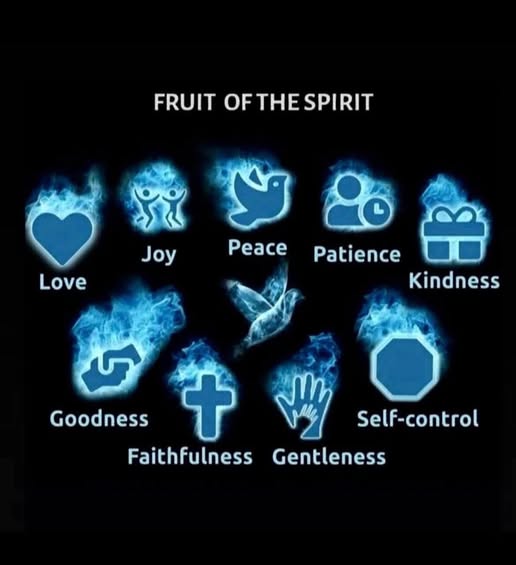
Galatians 5:22-23 is one of the most beloved passages in the Bible. The “fruit of the Spirit” has also been misinterpreted as characteristics that believers should somehow manufacture in their lives. But the key to understanding these qualities is in the name. “Fruit” is the natural result of growth. And “of the Spirit” explains exactly Who causes that growth—it’s not our striving or straining, but the power of the Holy Spirit. No amount of human toil or gritty determination can produce spiritual fruit, but the Spirit’s influence in a yielded heart can work miracles. The fruit of “love” may be the best example. We cannot produce the type of love God desires without the leading and strength of the Holy Spirit.
The English word love has very broad meaning, but the Greek language was very precise. The love which the Holy Spirit manifests in believers is agape. This love is not a feeling, but a choice. It is the choice to be kind, to sacrifice, to consider another’s needs greater than one’s own (Philippians 2:3). Agape is used in all of the “hard” love verses in the New Testament:
“Greater love has no one than this, that one lay down his life for his friends” (John 15:13).
“For this is the message which you have heard from the beginning, that we should love one another” (1 John 3:11).
“Love your enemies, do good to them, and lend to them without expecting to get anything back” (Luke 6:35).
“For this is the love of God, that we keep His commandments; and His commandments are not burdensome” (1 John 5:3).
It is because of love that God carried out His plan to save the world: “For God so loved the world that He gave His only begotten Son, that whoever believes in Him shall not perish, but have eternal life” (John 3:16). It is only by love that we can keep the greatest commandments: “Love the Lord your God” and “love your neighbor as yourself” (Mark 12:30-31).
Love is the greatest gift God can give. First Corinthians 13 says that agape is patient. Agape is kind. Agape never fails. God desires to show His perfect, selfless love to a world that is routinely confused about what true love is. God’s children are the conduits of His love, as they are empowered by the Holy Spirit.

Bible Verse and Prayer for Today
Not so the wicked! They are like chaff that the wind blows away.
—Psalm 1:4
We have spent time in Psalm 1 for the last several days. We looked at those whose delight is in the Lord. Today, we focus on the end of those who resist the will and way of God and choose the way of evil. No matter the temporary apparent benefits of wicked schemes and the power of evil, all their efforts are marred by a hellish influence that ends at the grave. All their efforts are blown away, leaving each of the wicked with nothing to show for their life except the rot of wasted time on earth as they stand before the righteousness and justice of God. Only finding our delight in the way, will, and words of God will lead us to life everlasting and unending joy!
Prayer
Dear Father, please help me resist the temptation to idolize and exalt those who succeed through evil devices, schemes, methods, and plans. I ask the Holy Spirit to guide my heart as I seek your Kingdom and righteousness above all other things. In Jesus’ name, I pray. Amen and Amen
Bible Teaching of the Day
Chapter 2: The Throne of God. of the eBook = Not Just a Spirit by Pastor Dirk of TruLight Ministries
The 1st time we read of somebody that was pulled into the spirit and had a sight of the Great White Throne of God was Ezekiel in Ezekiel 1 and in Chapter 10.
And the 2nd time this same picture was seen, was years later by John in the Book of Revelations chapter 4
In Ezekiel 1, he sees the Throne of God and what captured his attention were four living beings that were in the presence of God in front of the Throne.
In Chapter 10 he again sees the same picture with more description of this four living beings (The Cherubim).
And the 3rd sight of this was when John was pulled into the spirit to record the Heaven preparation and happenings of the End Times.
He too was impressed by these 4 Living beings. This was the reason for this study into the Happenings around the Throne of God in the two different time frames as recorded in the Bible, and what God revealed to me in this Revelation.
In this chapter we are going to compare the 3 Chapters of the Bible (2 in the Old Testament and one in the New Testament) to find similarity and differences between them.
As they entered the Glory area of God, this picture was seen in Heaven.
The Throne room of God
Ezekiel saw: (In the Old Testament)
Ezek 1:3 coming the Word of Jehovah became known to Ezekiel, the son of Buzi, the priest in the land of the Chaldeans by the river Chebar. And the hand of Jehovah was on him there.
4 And I looked, and behold, a windstorm came out of the north, a great cloud, and a fire flashing itself, and a brightness to it all around, and out of its midst, like the colour of polished bronze out of the middle of the fire.
5 Also out of its midst came the likeness of four living creatures. And this was how they looked; they had the likeness of a man.
6 And four faces were to each and four wings to each.
7 And their feet were straight feet; and the sole of their feet was like the sole of a calf’s foot. And they sparkled like the colour of burnished copper.
8 And the hands of a man extended from under their wings on their four sides; and the four of them had their faces and their wings,
9. Joining each one to the other by their wings. They did not turn in their going; each one went toward the front of their face.
10 And the likeness of their faces: the face of a man, and the face of a lion, on the right side to the four of them; and the face of an ox on the left side to the four of them; and the face of an eagle to the four of them.
11 So their faces were. And their wings were stretched upward; to each, the two wings of each one were joined; and two wings covered their bodies.
12 And each went toward the front of their faces. To where the spirit was to go, there they went; they did not turn in their going.
13 And the likeness of the living creatures: they looked like burning coals of fire; like the appearance of torches. It was continually circling among the living creatures. And the fire was bright, and out of the fire went forth lightning.
14 And the living creatures kept running and returning, like the appearance of a flash of lightning.
15 And as I looked at the living creatures, behold, one wheel was on the earth by the living creatures, with its four faces.
16 The appearance of the wheels and their workmanship was the colour of beryl, and the four of them had one likeness. And their appearance and their workmanship were like a wheel in the middle of a wheel.
17 When they went, they went on their four sides; and they did not turn when they went.
18 And their rims: they were even high; they were even awesome. And their rims were full of eyes all around the four of them.
19 And in the going of the living creatures, the wheels went beside them; and in the lifting up of the living creatures from the earth, the wheels were lifted up.
20 Wherever the spirit was to go, there they went; there the spirit was to go, and the wheels were lifted up along with them. For the spirit of the living creature was in the wheels.
21 in their going, these went; and in their standing still, these stood still. And in their lifting up from the earth, the wheels were lifted up along with them. For the spirit of the living creature was in the wheels.
22 And there was a likeness over the heads of the living creature; an expanse, like the colour of awesome crystal stretched out over their heads from above.
23 And under the expanse their wings were straight, the one toward the other. Each one had two wings covering on this side, and to each two covering on that side of their bodies.
24 And I heard the sound of their wings, like the sound of great waters, like the voice of the Almighty, in their going was the sound of tumult, like the sound of an army. In their standing still, they let down their wings.
25 And there was a voice from the expanse which was over their heads, in their standing still, and they let down their wings.
26 And from above the expanse that was over their heads was a likeness like a sapphire stone, the likeness of a throne. And on the likeness of the throne was a likeness looking like a man on it from above.
27 And I saw Him looking like the colour of polished bronze, looking like fire all around within it. From the likeness of His loins even upward, and from the likeness of His loins even downward, I saw Him, looking like fire, and it had brightness all around.
28 as the bow that is in the cloud in the day of rain looks, so the brightness all around looked. This was how the likeness of the glory of Jehovah looked. And I saw. And I fell on my face, and I heard a voice of One speaking.
John saw, (In the New Testament)
Rev 4:1 After this I looked, and, behold, a door was opened in heaven: and the first voice which I heard was as it were of a trumpet talking with me; which said, Come up hither, and I will show three things which must be hereafter.
2 And immediately I was in the spirit: and, behold, a throne was set in heaven, and one sat on the throne.
3 And he that sat was to look upon like jasper and a sardine stone: and there was a rainbow round about the throne, in sight like unto an emerald.
4 And round about the throne were four and twenty seats: and upon the seats I saw four and twenty elders sitting, clothed in white raiment; and they had on their heads crowns of gold.
5 And out of the throne proceeded lightnings and thunderings and voices: and there were seven lamps of fire burning before the throne, which are the seven Spirits of God.
6 And before the throne there was a sea of glass like unto crystal: and in the midst of the throne, and round about the throne, were four beasts full of eyes before and behind.
7 And the first beast was like a lion, and the second beast like a calf, and the third beast had a face as a man, and the fourth beast was like a flying eagle.
8 And the four beasts had each of them six wings about him; and they were full of eyes within: and they rest not day and night, saying, Holy, holy, holy, Lord God Almighty, which was, and is, and is to come.
9 And when those beasts give glory and honour and thanks to him that sat on the throne, who liveth forever and ever,
10 The four and twenty elders fall down before him that sat on the throne, and worship him that liveth forever and ever, and cast their crowns before the throne, saying,
11 Thou art worthy, O Lord, to receive glory and honour and power: for thou hast created all things, and for thy pleasure they are and were created.
The Comparison
| Ezek 1 | Ezekiel Saw | Rev 4 | John Saw |
| verse | verse | ||
| 28 | God was above the Throne | 2 | God was on the Throne |
| 26 | His presence like Jasper | 3 | His presence like Jasper |
| 28 | a Rainbow | 3 | A Rainbow |
| No mention yet of 24 thrones | 4 | 24 Other Thrones | |
| no mention yet of 24 elders | 4 | 24 Elders dressed in white with | |
| No mention of Gold G | Golden crown | ||
| 14 | the Cherubim moved like | 5 | Lighting and flashes |
| flashes of lightning | |||
| no mention of 7 lamp stands | 5 | Seven lamp stands | |
| no mention of 7 Spirits of God | 5 | Seven Spirits of God | |
| 22 | Sea like Chrystal | 6 | a Sea of Cristal |
| 18 | 4 Living beings full of eyes | 6 | 4 Living beings covered with eyes |
| 10 | face of a Lion | 7 | 1st a face of a Lion |
| 10 | face of a Calf | 7 | 2nd a face of a calf |
| 10 | Face of a Man | 7 | 3rd a face of a man |
| 10 | Face of a Eagle | 7 | 4th a face of a Eagle |
| 6 | Cherubim with 6 wings | 8 | Cherubim with 6 wings |
| 12/20 | They moved with the Spirit moved | 9 | Praised God day and Night |
| 13 | appearance like fire |
Summary
We see two pictures that are captured for us. Two time frames with in Heaven – The Throne room of God
The first scene from Ezekiel +/- 550 years before the Birth of Jesus Christ and the 2nd scene from John in Revelations +/- 75 years after the ascension of Jesus but recorded at the end times.
Everything seems to be the same at the throne room, but at different times in history and in the future there are clear differences.
- God on the Throne
- The rainbow around the Throne
- The 4 Living beings (Cherubim)
- The sea of Chrystal
- The 4 Cherubim with the 4 faces and 6 wings covered with eyes
The only differences are:
Ezekiel states
- These 4 Cherubim moved where the Spirit moved.
- No mention of the 24 Thrones or Elders
In Revelations
- The Movement of the 4 Cherubim stopped and 7 Lamp stands appeared – fixed in front of the throne.
- And these seven lamps stand representing the seven Spirits of God. Or the Sevenfold Spirit of God.
Summary points
In Ezekiel these 4 Cherubim moved with the Spirit. If the Spirit moved they moved. These 4 Cherubim were covered with eyes. This showing that they can see everything and anything and that they will record everything where they go. But in Revelation this movement is not mentioned. It seems to be that their task was completed and that their primary function is now too praise and worship God.
In Revelation an extra 24 Thrones appeared next to the Main Throne of God. And on this Thrones 24 Elders dressed in White robes and had Golden Crowns on their heads. Meaning these 24 Elders were selected from +/- 550 BC and will be selected before the Great white Throne of Judgment.
Again in Revelations the appearance of the Seven Lamps which stand with burning fire upon them is representing the Seven Spirits of God. (See the revelation study of the Seven Spirits of God). This means the Spirits’ work is done and they have a resting place in front of the Throne of God. Their work within the Children of God is completed.
In Ezekiel these 4 cherubim moves around a lot. It seems they are excited and in preparation to move with the Spirit on some kind of assignment.
These 4 Cherubim with the 4 faces and 6 wings with their bodies covered with eyes, move where the Spirit moves. They go where the Spirit goes and sit where the Spirit sits.
In Ezekiel it was mentioned that the Cherubim had the appearance of Fire, “the living creatures: they looked like burning coals of fire; like the appearance of torches.” And fire moved between them “And the fire was bright, and out of the fire went forth lightning.” Looked like tongues of Fire.
We read of tongues of fire in another scripture.
Acts 2
The 1st Baptism of the Holy Spirit at the day of Pentecost Tongues of Fire settled on all present.
Act 2:1 And when the day of Pentecost was fully come, they were all with one accord in one place.
2 And suddenly there came a sound from heaven as of a rushing mighty wind, and it filled the entire house where they were sitting.
3 And there appeared unto them cloven tongues like as of fire, and it sat upon each of them.
4 And they were all filled with the Holy Ghost, and began to speak with other tongues, as the Spirit gave them utterance.
5 And there were dwelling at Jerusalem Jews, devout men, out of every nation under heaven.
6 Now when this was noised abroad, the multitude came together, and were confounded, because that every man heard them speak in his own language.
7 And they were all amazed and marvelled, saying one to another, Behold, are not all these which speak Galileans?
8 And how hear we every man in our own tongue, wherein we were born?
A Rushing Mighty wind filled the upper room. This being the 4 Cherubim with each 6 wings moving into this room to come and baptize the people gathered. (6 Wings each with a wingspan of 5 Meters per set). When they settled the investigation of the souls and spirits took place, their eyes inspecting for any sin, and then the Baptism took place. All the people gathered were touched by tongues of Fire; this being the Tongues of Fire that moves between the Cherubim and that split and settled on everyone present. They were baptized by the Holy Spirit that moves with these 4 Living Beings (The Cherubim with the 6 wings and the 4 Faces). They go where the Holy Spirit goes.
The sin free and washed by the Blood of Jesus Christ, Children of God were baptized that day with the Spirit of Grace and Power. And they received the Gift of that Spirit: one of the 7 Spirits of God.
The Gift of speaking in Tongues
This Spirit also brings the Interpretation of Tongues and brings two Fruits of the Spirit, Love and Joy. They were baptized with Power and Fire. The fire: being the fire from the Cherubim and Power: from the Spirit of Grace and Power.
Given to us humans, by the Holy Spirit (the 3rd personality) within the Trinity
Let’s look at these Cherubim closer
This 4 Living beings moves like lightning. Every one of them has 6 wings, and a head with 4 faces. Their wings and bodies are covered with eyes and they are connected together by one wing. The wings can fly in any direction without turning around. The head with 4 faces can turn into any direction, having a face to the North, South, West and East. Tongues of Fire moves between them and from this tongues of Fire come silver lightning flashes.
The faces of these Cherubim
In front of the 1st Cherubim the face of a Human at the back a face of a lion, to the left a face of an Ox/Calf and to the right a face of an Eagle. And the balance of the Cherubim had a different face to the front the 2nd a face of a lion to the front, the next a face of an Ox/Calf to the front and the last a face of an Eagle to the front.
Every face has a meaning and brings something to the candidate that receives the Baptism of a combination of the 7 Spirits of God.
Let’s look at the meaning of every face.
The 4 Faces of the Cherubim
- The face of a Human.
Spiritual characters : Human nature, to care, to feel, human kindness, a investigative nature, want to always learn and fruits like Love and Joy
- The face of a Lion.
Spiritual characters: Protective, kingship, respect, godliness and power, brings fruits like peace and patience.
To lead and have pinpointed vision.
- The face of an Ox/Calf.
Spiritual characters: Calmness, peacefulness, humbleness, soft heartedness, goodness, kindness, always willing to follow, but with strength.
- The face of an Eagle.
Spiritual characters: Freedom, glory, at the point, self control, with a vision that is concentrated.
To summarize : These 4 Living beings (Cherubim) moves with the Holy Spirit and takes care of the Baptism of the 7 Spirits of God to us as Humans with them they bring the 7 Spirits of God , their Gifts and their fruits as per 1 Co 12 & Gal 5 v 22
9 Gifts of the Spirit
1 Co 12:4. Now there are diversities of gifts, but the same Spirit.
5 And there are differences of administrations, but the same Lord.
6 And there are diversities of operations, but it is the same God which worketh all in all.
7 But the manifestation of the Spirit is given to every man to profit withal.
8 For to one is given by 1.the Spirit the word of wisdom; to another the word of 2.knowledge by the same Spirit;
9 To another 3.faith by the same Spirit; to another the 4.gifts of healing by the same Spirit;
10 To another the working of 5.miracles; to another 6.prophecy; to another 7. Discerning of spirits; to another diverse 8.kinds of tongues; to 9.another the interpretation of tongues:
11 but all these worketh that one and the selfsame Spirit, dividing to every man severally as he will.
9 – Fruits of the Spirit
Gal 5:22, but the fruit of the Spirit is 1.love, 2.joy, 3.peace, 4.longsuffering, 5.gentleness, 6.goodness, 7.faith,
23. 8.Meekness, 9.temperance: against such there is no law.
The Holy Spirit decides on the Spirit every person will get to equip them for their Discipleship or Ministry.
Let’s look at the eyes that cover the bodies and wings of these Cherubim.
The eyes are all over, front and back, under the wings, in the wheels according to Ezekiel all over. These eyes see everything, investigate everything, record everything, analyse everything.
Look deep into our body, soul (mind) and spirit. These eyes are the eyes of God Almighty the all knowing, the all powerful, the all seeing, the God of all.
What’s very important are the eyes that investigate the soul (mind) and human spirit for any sin before baptism can take place. They can investigate one single person or in large crowds at the same time. They look for Sin, falseness, un-forgiveness and all the fruits of the flesh as mentioned in Gal 5 v 19-21
Gal 5:19 Now the works of the flesh are manifest, which are these; Adultery, fornication, uncleanness, lasciviousness,
20. Idolatry, witchcraft, hatred, variance, emulations, wrath, strife, seditions, heresies,
21. Envyings, murders, drunkenness, revellings, and such like: of the which I tell you before, as I have also told you in time past, that they which do such things shall not inherit the kingdom of God.
You’re mind and spirit has to be super clean before the Holy Spirit baptise you with one of the 7 Spirits of God, or give you any of the 9 Gifts of the Spirit or pour into your spirit the 9 Fruits of the Spirit.
What can clean your mind and spirit better than the Blood of Jesus Christ our Saviour? We need to have a pure heart, if the 4 Cherubim approves your mind (soul) and spirit as clean, the tongues of fire will touch you and transfer a combination of the 7 Spirits of God, and its gifts and fruit will be transferred to your spirit called the baptism of the Holy Spirit.
The vision of the Cherubim is recordable, and works like camera lenses that record everything, 24 hours a day in every aspect of our lives, our minds, our feelings, our secrets and our memories. Everything we do day and night. And God sees this in real time -reality TV on its best.
These recordings will be revealed one day at the Great White Throne Judgment. 4 Books will be opened and then a final book.
Book 1: The Book of Secrets –
Rom 2:16 in the day when God shall judge the secrets of men by Jesus Christ according to my gospel.
Book 2: The Book of Memory –
Luke 16:25 but Abraham said, Son, remember that thou in thy lifetime receivedst thy good things, and likewise Lazarus evil things: but now he is comforted, and thou art tormented.
Book 3: The Book of Words –
Mat 12:36 But I say unto you, that every idle word that men shall speak, they shall give account thereof in the Day of Judgment.
Book 4: The Book of Deeds/Works –
Mat 16:27 For the Son of man shall come in the glory of his Father with his angels; and then he shall reward every man according to his works.
And then the Final Book – the Book of Life
Rev 20:12 And I saw the dead, small and great, stand before God; and the books were opened: and another book was opened, which is the book of life: and the dead were judged out of those things which were written in the books, according to their works.
We now see that these 4 Cherubim are the writers of these Books and the eyes of these Cherubim are the recording devices. I believe in Heaven will be the best audio and visual equipment you will ever see. Every angle of this recording will be played to you from every angle of eye on this Cherubim body and wings.
This recording will be used against you or for you in your final Judgment at Judgment day, when God will step down from His Throne and give the Throne to Jesus Christ to take care of the Final Judgment Himself. Jesus will judge those that did not accept His Blood he poured out for us at the Gross on Calvary. The question directed to you!
What did you do with the Blood of Jesus?
This eye also works as a discerning tool. When this 4 Cherubim come with the Holy Spirit, when the Holy Spirit operates within the Church of God. It comes with a discerning tool.
It discerns your body, for illness, your mind (Soul) for sin and your spirit for pain and sadness.
It works like a computer scanner. The 1st time it moves over you, it detect illness, sin, pain, sadness and all defaults within your system, then it returns to the original spot, as it comes back it heals, repairs, fixes, and comforts.
Then you will receive the precious oil of the Holy Spirit into your spirit. With this, depending on what Spirit of God you receive or a combination of Spirits of God, you will receive one of the Gifts that Spirit brings and the Fruits of that Spirit that you get baptized with.
Dependant on your type of discipleship or your type of ministry God has selected you for. See the Chapter – The 7 Spirits of God.
Today’s Devotional
In 2 Timothy 1:7, the apostle Paul encourages Timothy to renounce the spirit of fear: “God gave us a spirit not of fear but of power and love and self-control” (ESV). The Greek term for “fear” does not mean “reverential fear of God,” as it does in Proverbs 9:10 and 1 Peter 2:18. Rather, the word refers to timidity or cowardice. The idea is that Timothy can boldly proclaim the Word of God because he has been given a spirit of power, love, and self-control.
To understand the “Spirit of love,” we must first consider its immediate and broader context. In the preceding verses, Paul reminds Timothy of his heritage of faith, which was nurtured by his grandmother Lois and his mother, Eunice (2 Timothy 1:5). Paul then exhorts Timothy to “fan into flame the gift of God” bestowed upon him by Paul’s laying on of hands (verse 6). It is in this context that Paul proclaims the nature of the spirit given by God, which is characterized by power, love, and self-control (cf. Galatians 5:22–23).
The Greek term used for “spirit” is pneuma, which can be understood as a person’s inner disposition or temper of mind. Thus, the “spirit of love” signifies a fundamental aspect of Timothy’s character produced by the Holy Spirit, who transforms sinners into people marked by love, selflessness, and compassion.
The expression “God gave us a spirit” highlights the divine origin of the spirit of love (cf. 1 John 4:19). It emphasizes that this disposition is a gift from God, imparted through the Holy Spirit and shared with the world. Hence, this disposition is not self-generated but is a supernatural endowment made possible by the grace of God.
Paul contrasts the spirit of love with the spirit of fear. While fear hinders believers from accomplishing the will of God, the spirit of love empowers us to live courageously and “fight the good fight of faith” (1 Timothy 6:12; cf. 1 John 4:18).
This spirit encompasses not only love for God but also love for others (cf. 1 John 4:7). It is a spirit that compels believers to exude self-sacrificial love, compassion, kindness, forgiveness, and mercy (see Philippians 2:1–11).
Furthermore, the spirit of love must be tempered by self-control. Believers ought to govern their thoughts, emotions, and actions according to the will of God (see Romans 12:1–2). In doing so, we can resist temptation and “keep [ourselves] unspotted from the world” (James 1:27; cf. 1 Corinthians 10:13).
Unpacking the meaning of the “spirit of love” (2 Timothy 1:7) has profound implications for believers. The spirit of love calls us to embrace a disposition and attitude that reflect the character of Christ. This means that love is more than a feeling or emotion. On the contrary, love is an action (John 15:13). In other words, it is about what we do for God and others. If we love God, then we will also love others.
Paul is an excellent example of someone who faithfully embodied the spirit of love: “I have been crucified with Christ. It is no longer I who live, but Christ who lives in me. And the life I now live in the flesh I live by faith in the Son of God, who loved me and gave himself for me” (Galatians 2:20). The description of Jesus as the One “who loved me and gave himself for me” reminds us that our new lives are rooted in the selfless love of Christ, who willingly laid down His life for our salvation (John 10:18).
May the spirit of love empower us to live faithfully and courageously as ambassadors of Christ!
Bible Prophecy, Signs of the Times and Gog and Magog Updates with Articles in the News
System Of The Beast: Identity, Surveillance, Control
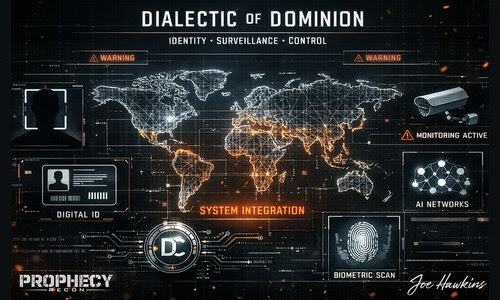
When most people imagine the Beast system, they picture something sudden–a dramatic flip of a switch where the Antichrist unveils a fully formed global control grid. Scripture gives a different impression: a system that already has scaffolding, already has “rails,” already has the plumbing installed–so that when the final authority arrives, the mechanism is ready.
That’s why the most important question isn’t, “Has Revelation 13 happened yet?” but rather: Are the enabling systems being built now?
In recent years, the world has accelerated into a new governance paradigm that increasingly treats human autonomy as a problem to be managed, and technology (especially AI) as the tool to manage it. This aligns cleanly with a classic Hegelian dialectic:
Thesis (problem): Human autonomy and decentralized life
Antithesis (reaction): AI as threat and savior (engineered tension)
Synthesis (solution): “Managed AI” + human submission via centralized controls
This isn’t a claim that every technologist is evil or that every innovation is demonic. Many developments have legitimate uses. The issue is the direction of travel–and the way crises and fear are used to normalize a system where participation in society becomes conditional.
Phase 1: Thesis — Human Autonomy and Order
The baseline condition assumes people can live with meaningful freedom:
– personal responsibility
– local governance
– moral accountability
– organic creativity and commerce
– the ability to move, speak, and transact without constant permission
The public narrative is, “People are capable, rational, and in control–though flawed.”
But over the last decade, institutions increasingly emphasize the quiet counter-narrative: humans are biased, emotional, misinformed, and dangerous if left unchecked.
That sets up the pivot: if humans can’t be trusted to govern themselves, then governance must be automated, centralized, and enforced–not by persuasion, but by systems.
Phase 2: Antithesis — AI as Threat and Savior
Here is the engineered tension:
– AI as the Threat
– deepfakes and “reality collapse”
– job displacement
– predictive surveillance
– bias and discrimination at scale
– misinformation “destroying democracy”
AI as the Savior
– “objective” adjudication and risk scoring
– optimized policy and resource allocation
– automated fraud prevention
– improved safety through real-time monitoring
– “trust layers” to verify truth and identity
The dialectic trick is this: both sides are amplified by the same institutions. The public isn’t meant to resolve the debate–only to become exhausted by it. Exhaustion produces consent.
That consent is then harvested for the synthesis.
Phase 3: Synthesis — Managed AI + Human Submission
Once anxiety peaks, the public is offered “the reasonable middle”:
– regulated AI
– centralized oversight bodies
– biometric identity
– digital wallets and digital ID
– algorithmic governance and “trust & safety” controls
– AI-assisted law enforcement
– AI-filtered truth infrastructure
The response becomes: “We don’t like it… but we need it.”
This is the synthesis:
– Humans remain–but under supervision
– Choice remains–but within boundaries
– Freedom remains–but conditional
Now let’s ground that in the actual infrastructure emerging across the globe.
AI-Driven Surveillance: When Observation Becomes Governance
AI-driven surveillance is not a single technology, policy, or system. It is a converging architecture–one that integrates identification, classification, behavioral monitoring, narrative control, and economic enforcement into a unified framework of governance.
Unlike traditional surveillance, which merely observes, AI-driven surveillance increasingly decides, predicts, and enforces. This marks a historic shift: power is no longer exercised primarily through laws and institutions, but through systems that operate continuously, invisibly, and automatically.
At the foundation of this system is facial recognition, which removes anonymity from public life. Cameras paired with AI algorithms can identify individuals in streets, airports, stores, schools, and events in real time. The stated justification is safety and efficiency, but the functional result is that presence itself becomes a form of authentication. Movement through society is quietly transformed into a series of identity checks.
Once deployed at scale, facial recognition allows authorities to track not only where people go, but who they associate with, how often they gather, and whether their behavior deviates from “normal.” In a Beast-system trajectory, this provides the eyes–constant visibility without the need for physical enforcement.
Facial recognition is then reinforced by digital identity systems, which turn identity into a persistent, centralized credential required for participation in modern life. Digital IDs are increasingly used to access banking, healthcare, government services, education platforms, employment portals, and online accounts. While marketed as secure and convenient, these systems concentrate authority over access into a small number of gatekeepers.
Crucially, once identity becomes digital, it becomes conditional. Credentials can be updated, restricted, flagged, or revoked remotely. In practical terms, digital ID systems create the infrastructure by which individuals may be allowed to function–or quietly excluded–from society.
Layered on top of identification is predictive policing and algorithmic risk assessment, which introduces classification as a governing principle. Rather than responding to crimes after the fact, AI systems analyze historical data, behavioral patterns, locations, and associations to determine who or what is “high risk.”
These classifications are often opaque and unchallengeable, yet they increasingly influence law enforcement attention, surveillance intensity, and intervention thresholds. This shifts society toward a pre-crime model, where suspicion is generated by data rather than action. From a prophetic standpoint, this normalizes the idea that guilt–or at least restriction–can precede wrongdoing, eroding due process and moral accountability.
Surveillance extends beyond physical movement into the realm of speech and perception through AI-driven governance of information. Algorithms now determine what content is promoted, suppressed, labeled, or removed across digital platforms. While framed as necessary to combat misinformation or harm, these systems centralize narrative authority and redefine truth as something to be managed rather than discerned.
Over time, acceptable beliefs narrow, dissent becomes suspect, and ideological conformity is reinforced–not primarily by force, but by invisibility. What cannot be seen or shared effectively ceases to exist. This capacity to filter reality itself is indispensable to any future system that demands allegiance.
Economic enforcement completes the loop through CBDCs and programmable money. Unlike cash, digital currencies can be monitored in real time and programmed with rules governing how, where, and by whom they may be used. Transactions can be approved, restricted, delayed, or denied automatically based on compliance with policy or status within the system.
While proponents emphasize efficiency and fraud prevention, the deeper implication is that commerce becomes conditional. The ability to buy or sell is no longer a neutral function of exchange but a permission granted by the system. This aligns directly with the economic control described in Revelation 13–not symbolically, but structurally.
The public is further conditioned through biometric payment systems, which normalize body-based commerce. When fingerprints, palm scans, facial recognition, or other biological markers replace cards and wallets, identity and transaction become inseparable. The body itself becomes the credential.
This matters not only technologically but psychologically: it trains society to accept that access, movement, and commerce require physical submission to verification systems. Opting out becomes increasingly impractical, socially inconvenient, or suspicious. In a Beast-system framework, this represents a critical step toward total integration of identity and obedience.
All of these systems are increasingly embedded into smart city infrastructure, where surveillance is no longer episodic but environmental. Sensors, cameras, and AI analytics manage traffic, utilities, public safety, zoning, and crowd flow automatically. Access to certain areas, services, or transportation can be dynamically adjusted based on data inputs.
Cities become self-regulating systems rather than neutral spaces. Governance shifts from laws applied equally to real-time management of behavior, where compliance is enforced not by confrontation but by automated restriction. Control becomes ambient–felt everywhere and nowhere at once.
Finally, emerging brain-computer interfaces (BCIs) and the Internet of Bodies push surveillance past the external environment and into the human body itself. Medical implants, neural links, and biometric sensors promise therapeutic breakthroughs and enhanced capabilities, but they also introduce unprecedented risks of dependency and intrusion.
When technology interfaces directly with cognition, health, or neurological function, the boundary between person and system dissolves. From a prophetic perspective, this is the most sobering frontier. A system that once monitored behavior may one day influence capacity, perception, or even decision-making itself.
Taken together, these components form a cohesive architecture. AI-driven surveillance does not merely watch–it governs. It identifies, classifies, filters, restricts, and enforces through systems that operate continuously and impersonally.
This is not yet the Beast system described in Revelation, but it is unmistakably the operational framework capable of sustaining it. The technology is being normalized now, the habits are being formed now, and the moral assumptions–safety over freedom, efficiency over conscience, compliance over conviction–are being established now.
The danger is not that these systems exist, but that they are being assembled before the world recognizes what they are capable of enforcing.
The Convergence: What Happens When These Systems Merge?
Individually, each domain is explainable. Together, they look like a blueprint:
– Facial recognition identifies you in public
– Digital ID authenticates you for services
– Predictive policing classifies you as safe or risky
– AI governance filters what you can see and say
– CBDCs / programmable money condition transactions
– Biometric payments normalize body-based commerce
– Smart city infrastructure manages movement and access
– BCIs / Internet of Bodies move the boundary inside the person
Now add a global shock–war escalation, cyberattacks on banking, a new plandemic, or mass disinformation panic–and you can hear the synthesis being offered:
– “We need one trusted system.”
– “We need verified identity.”
– “We need safer money.”
– “We need real-time monitoring.”
– “We need AI to keep the peace.”
That is the dialectic of dominion.
What Should Christians Do (Instead of Panic or Apathy)?
The goal isn’t fear. The goal is discernment.
Refuse the lie that safety requires surrendering conscience.
Build spiritual resilience now–because pressure always comes before compliance.
Teach your family what “convenience trades” really cost.
Support privacy and civil liberty safeguards where possible–because systems can be designed to limit abuse.
Keep the Gospel central. The Beast system will be, at its core, a worship system–allegiance and submission.
The Church doesn’t need to “out-tech” this. We need to make sure as many people are on the ride to the sky when our Lord, Jesus, comes for us.
“Then we who are alive and remain shall be caught up together with them in the clouds to meet the Lord in the air. And thus we shall always be with the Lord.” (1 Thessalonians 4:17)
War By Instinct: Gog / China Is Teaching AI Weapons To Think Like Animals

In the next great arms race, the battlefield may not be dominated by generals or even by human soldiers, but by algorithms trained to hunt like hawks, scatter like doves, and stalk like wolves.
China’s rapid advancement in AI-controlled weapons–particularly drone swarms modeled on animal behavior–signals a profound shift in how wars may be fought, decided, and justified in the decades ahead.
At the center of this transformation is a striking idea: nature, refined by millions of years of survival, may offer better combat lessons than any human war college. Engineers at Beihang University, one of China’s elite military-linked institutions, recently demonstrated this approach by training defensive drones to attack like hawks selecting vulnerable prey, while offensive drones learned evasive maneuvers inspired by doves.
In simulated five-on-five combat, the result was decisive–the “hawks” eliminated all opponents in just over five seconds. The work earned a patent in 2024 and joined hundreds of similar filings tied to China’s push for swarm intelligence.
Chinese military theorists now openly describe future warfare as “algorithm-driven,” with unmanned systems serving as the primary fighting force and swarm operations as the dominant mode of combat. In their telling, artificial intelligence will be as revolutionary as gunpowder–another Chinese invention that reshaped warfare globally. The difference this time is that Beijing intends not to lose the advantage.
The strategy plays directly to China’s strengths. Chinese factories already produce more than 80 percent of the world’s small drones, churning out inexpensive hardware at a scale the United States cannot match. While the U.S. builds drones in the tens of thousands, often at high cost, China can manufacture millions. When paired with AI capable of coordinating large numbers of autonomous systems, that industrial edge becomes a strategic weapon in itself.
State media footage has showcased systems like “Swarm 1,” a truck-mounted launcher capable of releasing dozens of drones at once, potentially scaling into coordinated swarms of hundreds. China has also tested a massive “mothership” drone designed to deploy aerial swarms mid-flight and paraded weaponized robot dogs–described as “robot wolves”–with plans to link ground-based packs to aerial formations. The vision is one of total integration: air, land, and algorithm moving as a single organism.
Animal behavior is central to this effort. Chinese researchers have studied ants, sheep, coyotes, whales, hawks, and even fruit flies to improve how autonomous systems collaborate, perceive their environment, and react under pressure. The appeal is obvious. Animals operate without centralized command, adapt quickly to threats, and function effectively even when communication is limited–exactly the conditions of a modern electronic warfare environment where signals are jammed and human operators are cut off.
That lesson has been reinforced by the war in Ukraine, where drones increasingly must operate autonomously because remote control is unreliable. For the People’s Liberation Army (PLA), this reality strengthens the case for machines that can identify targets, coordinate attacks, and make tactical decisions with minimal human input.
But this technological leap also intersects with a deeper political reality inside China’s military. Beijing has long expressed concern about the competence and initiative of its commanders, a worry encapsulated in President Xi Jinping’s repeated warnings about the PLA’s “five incapables.” In a rigid, top-down system that discourages independent decision-making, AI offers a seductive solution: replace human judgment with engineered certainty. Swarms do not hesitate. They do not disobey. They execute.
The risks, however, are enormous.
Autonomous weapons systems remain fragile, dependent on perception systems that still struggle to reliably understand complex environments. Even experts acknowledge that today’s drones often lack accurate awareness of each other’s positions, relying on radio communication that is easily disrupted. Advanced AI can mitigate some of these weaknesses, but it introduces others–opaque decision-making, unpredictable behavior, and the ever-present possibility of catastrophic error.
More troubling is the moral and political fog such systems create. If an AI-controlled swarm commits a deadly mistake, who is responsible? Chinese military thinkers themselves have warned that the “algorithmic black box” could become a convenient excuse for leaders to evade accountability. In a future conflict, atrocities may be blamed not on commanders or governments, but on flawed code.
The implications for global stability are stark. In a potential conflict over Taiwan, analysts envision Chinese drone swarms saturating airspace, overwhelming defenses, and hunting targets continuously with relentless efficiency. Such capabilities could compress decision-making timelines, increase the temptation for preemptive strikes, and make escalation harder to control.
Calls for international rules governing AI weapons are growing, but progress remains slow. Both China and the United States appear unwilling to limit a technology whose full battlefield potential is still unfolding. As one retired PLA colonel candidly admitted, the consequences of military AI have yet to be fully discovered.
That uncertainty may be the most dangerous feature of all. When warfare is shaped by instincts borrowed from nature but executed by machines, conflict risks becoming faster, colder, and more detached from human restraint. The age of war by instinct is approaching–and the world may not be ready for what hunts next.
Board Of Peace Explained: How It Works And Who Is Running It – The 7 Year Peace Plan ?

President Donald J. Trump signed the charter for the Board of Peace last week at the World Economic Forum in Davos, marking the formal commencement of Phase 2 of the administration’s Gaza peace initiative.
According to the Trump administration, the signing ceremony, attended by regional leaders and global financial executives, transitions the focus of the U.S. strategy from the current ceasefire toward “demilitarization, reconstruction and civil administration” of the Gaza Strip.
Phase 2 establishes a new governing framework for the enclave, intended to replace Hamas and previous international aid structures with a centralized board of stakeholders. Under the terms of the charter, the Board of Peace is now the self-appointed primary authority responsible for directing reconstruction funds and overseeing the transition to a civilian government.
“The whole architecture of the current Trump plan is a very impressive effort which is unprecedented in many ways,” Col. (res.) Eran Lerman, vice president of the Jerusalem Institute for Strategy and Security (JISS), told JNS. “There have been ideas in this direction of an international oversight for many years, and this implementation is by far the most concrete and advanced of any of those programs.”
Lerman added, however, that the plan is in very early stages and “for now it only exists on paper.”
International oversight
The newly established Board of Peace is organized into a tiered hierarchy of multiple levels of oversight committees. At its base sits the General Board of Peace, a plenary body composed of heads of state.
While invitations have been extended to more than 60 nations, including everyone from the pope to Belarusian dictator Aleksander Lukashenko, only 35 countries have so far accepted membership. Notably, most European countries, including the United Kingdom, France and Germany, have declined a position on the board, leading to significant dominance of the Middle Eastern Arab states on the Board of Peace.
This assembly serves as the foundational body for the initiative’s international legitimacy, though the charter explicitly grants the chairman-for-life, U.S. President Donald Trump, sole authority to invite new members and appoint his own successor. Under the terms of the charter, while nations may accept a three-year rotating term at no cost, a $1 billion cash contribution to the Board’s fund secures a permanent seat.
Above the General Board is the Executive Committee, the primary strategic and decision-making organ. Chaired by President Trump, who retains absolute veto power, this committee is tasked with “operationalizing” the Board’s vision. Key members include U.S. Secretary of State Marco Rubio, who serves as the diplomatic lead, and senior adviser Jared Kushner, the principal architect of the administration’s “New Gaza” vision.
They are joined by U.S. Special Envoy Steve Witkoff, former British Prime Minister Tony Blair and private equity executive Marc Rowan of Apollo Global Management. Rounding out the committee are World Bank President Ajay Banga and U.S. Deputy National Security Advisor Robert Gabriel, providing a mix of institutional financial weight and operational strategy.
The final tier is the Gaza Executive Board, which functions as the direct link between the high-level strategists and the administration on the ground. The Executive Board includes many of the lower-level members of the Executive Committee in addition to regional players such as Egyptian intelligence chief Hassan Rashad; UAE Minister of State for International Cooperation Reem Al Hashimy; Ali al-Thawadi, a senior aide to the Qatari prime minister; and Turkish Foreign Minister Hakan Fidan.
Rounding out the Executive Board are Dutch diplomat Sigrid Kaag and Israeli-Cypriot real estate developer Yakir Gabay, who is expected to oversee the physical implementation of reconstruction projects.
On the ground administration
Directly bridging the gap between the Executive Board and the local administration is Nickolay Mladenov, the newly appointed high representative for Gaza and director of the Executive Board. A Bulgarian diplomat and former U.N. special coordinator for the Middle East peace process, Mladenov is tasked with the daily synchronization of governance, reconstruction and security efforts between the civil authorities in Gaza and the Executive Board.
“Most Israelis respect and trust Nikolay Mladenov. We came to know him when he was U.N. envoy,” Lerman observed. “He has a deep understanding of the Israeli position and has a deep criticism of the Palestinian Authority and its corruption. We have no difficulty accepting this appointment.”
Meanwhile, the civil administration of the Gaza Strip has been assigned to the National Committee for the Administration of Gaza (NCAG), a 15-member body of Palestinian technocrats. Under the terms of its mandate, the NCAG is responsible for restoring public services, managing infrastructure projects, and overseeing civil institutions.
The committee is chaired by Ali Shaath, a Gaza-born civil engineer who previously served as the Palestinian Authority deputy minister of planning and international cooperation, as well as the undersecretary for the ministry of transport and communications. Shaath belongs to a prominent Gazan clan with deep historical ties to Fatah.
Several key members of the NCAG have extensive histories within the Palestinian Authority’s administrative and security sectors. The interior and internal security portfolio is held by Sami Nasman, a veteran officer of the P.A.’s General Intelligence Service and a lifelong Fatah member.
Nasman, who was sentenced to 15 years in absentia by a Hamas-run court in 2016 for allegedly destabilizing the Strip, is tasked with managing Gaza’s local policing. Other members with P.A. backgrounds include Adnan Abu Warda (Justice), a former judge in the P.A.’s Supreme Constitutional Court, and Osama Al Saadawi (Housing), a former P.A. minister of state for entrepreneurship and empowerment.
The National Committee’s economy and trade portfolio is held by Ayed Abu Ramadan, the current head of the Gaza Chamber of Commerce. Abu Ramadan has also served as the director of the Palestine Islamic Bank, a financial institution that has historically had proximity to Hamas-controlled financial structures. Israeli security monitors have expressed concern that the Palestine Islamic Bank has facilitated transactions for Hamas-affiliated businesses.
While the NCAG is presented as a technocratic body, Hamas leadership in Cairo has publicly instructed its own administrative agencies to prepare to cede civil power to the committee, while simultaneously maintaining that its “military” wing will not be subject to the committee’s jurisdiction.
While the NCAG has responsibility over civil administration, the security and demilitarization component of the Trump plan is led by the International Stabilization Force (ISF), commanded by U.S. Maj. Gen. Jasper Jeffers. Jeffers, who recently served as a monitor for the Israel-Hezbollah ceasefire in Lebanon, is authorized to oversee security operations and the dismantling of military infrastructure.
However, the ISF currently operates without a standing army. President Trump has confirmed that no U.S. combat troops will be deployed to Gaza, and several potential contributors, including Azerbaijan, have declined to participate. While countries such as Italy and Indonesia remain in discussions regarding troop contributions, no commitments have been finalized.
“The ISF has no committed forces and exists only on paper,” Lerman explained. He went on to note that while Jeffers “has a very impressive record,” he is “operating by himself.”
Lerman added that “even if some troops were committed, I find it very difficult to believe that the ISF will at any point be in the position to march in and actively disarm Hamas. At this stage, the ISF is not a paper tiger but just a paper document.”
The ‘New Gaza’ plan
Beyond the various administrative structures, the Trump administration is seeking to couple this effort with a broad reconstruction plan. The economic and structural blueprint for the enclave’s future was presented by senior adviser Jared Kushner, who outlined a multi-phased redevelopment project estimated to require at least $25 billion in initial funding.
The “New Gaza” master plan, designed in part by Gabay, envisions the transformation of the Strip into a free-market economic hub by 2035. The plan’s stated goals include lifting Gaza’s Gross Domestic Product to $10 billion and raising the average annual household income to more than $13,000.
Central to the proposal is the creation of a Coastal Tourism Zone along Gaza’s Mediterranean shoreline. Renderings displayed at Davos featured approximately 180 mixed-use high-rise towers, including luxury hotels, villas and commercial spaces.
The inland areas are designated for residential neighborhoods, industrial complexes and data centers, spanning more than 25 square kilometers (around 6,200 acres). Supporting infrastructure projects include a new seaport, an airport, a freight rail line connected to a regional logistics corridor, and a “trilateral crossing” at Rafah to facilitate the movement of goods between Gaza, Egypt and Israel.
The reconstruction is set to begin with a 100-day “reconstruction sprint” focused on southern Gaza. The plan prioritizes the development of “New Rafah,” which is slated to include more than 100,000 workforce housing units, medical facilities and schools, with a target completion date for initial phases within three years.
To fund these projects, the U.S. administration has announced an international investment conference to be held in Washington in the coming weeks, where the Board of Peace hopes to secure significant commitments from the private sector and regional stakeholders.
Jerusalem’s concern
Jerusalem has maintained a complex response to the launch of the Board of Peace, rooted primarily in a lack of strategic coordination between Washington and the Prime Minister’s Office. On Jan. 17, the Prime Minister’s Office issued a formal statement asserting that the announcement regarding the Gaza Executive Board “was not coordinated with Israel and runs contrary to its policy.”
This friction was exacerbated by the unilateral nature of the Davos signing, which proceeded despite Jerusalem’s requests for further clarification on the board’s mandate and specifically its oversight of Israeli security interests.
A central point of Israeli contention is the inclusion of al-Thawadi and Fidan on the Executive Board due to Turkey’s and Qatar’s long-term support for Hamas. Government officials have argued that including nations that have historically hosted Hamas leadership effectively bolsters the terror group’s political standing. Prime Minister Netanyahu echoed these concerns in the Knesset, vowing once more on Jan. 20 that “there will be no Turkish or Qatari soldiers in the Gaza Strip.”
A primary concern within the Israeli security establishment is the requirement to begin reconstruction while Hamas remains partially armed.
In a recent analysis for the JISS, Col. (res.) Professor Gabi Siboni and Brig. Gen. (res.) Erez Winner wrote that the plan’s success depends on “steadfast adherence to Hamas’s disarmament, strict enforcement at every stage, and preventing any attempt by Hamas or regional actors to undermine its implementation.”
They argued that a transition to civilian-led reconstruction while terror tunnel networks are still being mapped creates a risk where the “start of the reconstruction process” begins before Hamas’s “military” capabilities are fully dismantled.
“Trying to move this plan forward without disarming Hamas is like producing Hamlet without the prince. Without that key element there is no plan and there is no normal future for Gaza,” Lerman said.
The return of the last remaining hostage, Border Police Master Sgt. Maj. Ran Gvili, also continues to serve as a nonnegotiable prerequisite for Israel’s full participation in the plan. Under what has been termed the “Ran Gvili Clause,” the Israeli government has signaled it will not allow the National Committee for the Administration of Gaza (NCAG) to fully function or reopen the Rafah crossing until Gvili’s remains are returned.
The Hostages and Missing Families Forum released a statement on Jan. 14, urging the prime minister to honor his private commitment that “Israel would not proceed to phase two of the deal until Gvili is brought home,” arguing that moving forward without his return would surrender Israel’s most significant source of leverage.
Analysts have further questioned the plan’s long-term viability, given the radicalized state of the Gazan population.
Michael Milshtein, head of the Palestinian Studies Forum at the Moshe Dayan Center for Middle Eastern and African Studies, has pointed out that current data shows support for “armed struggle” remains as high as 70%.
He suggested that social engineering projects through raw economic incentivization, such as the U.S. administration’s focus on $40 billion in investment, may fail to achieve de-radicalization.
Milshtein criticized the “misplaced belief that reality and public perception can be engineered mechanically, that economic incentives alone can reshape existence, and that these are reliable foundations for policy, a belief that was one of the core failures exposed on October 7.”
This assessment suggests that without a fundamental shift in Gazan civil discourse, the “New Gaza” vision may face a persistent internal threat that no amount of capital can neutralize.
Israels Iron Beam and the End of Cost-Imposition Warfare
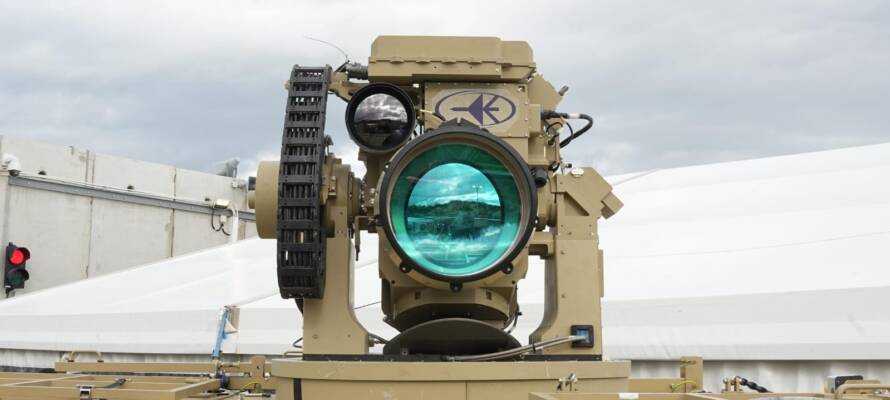
Iron Beam neutralizes low-end threats at negligible expense, stripping saturation tactics of their economic payoff.
For more than two decades, Israel’s enemies have relied on a simple strategy: Use cheap weapons to drain expensive defenses.
Terrorist groups in Gaza and Lebanon, and Iranian-supplied proxy forces elsewhere have pursued this strategy not to win conventional battles but to drain Israel economically over time.
When a defender must spend tens of thousands of dollars to defeat a threat that costs a few hundred, the attacker turns time itself into a weapon.
Strategists call this approach cost-imposition warfare. It has shaped Israel’s security environment and, more broadly, modern asymmetric conflict.
Armed groups fire crude rockets, mass salvos, and low-cost drones not because they expect decisive military success, but because they want the defender to pay more for every interception.
Israel’s Iron Beam laser system threatens to upend that logic, not by ending conflict, but by collapsing the cost asymmetry that has long favored the attacker.
When offense proves cheaper than defense, aggression becomes more attractive. Research organizations have documented how weaker actors exploit this imbalance by forcing technologically superior states to absorb disproportionate costs.
Hamas’s short-range rockets and Hezbollah’s vast missile stockpiles illustrate the model in practice: simple, expendable weapons designed to compel the defender to expend scarce and costly interceptors.
Israel’s existing missile-based defenses have saved countless lives, but they operate within this asymmetry rather than eliminating it.
Iron Beam changes the equation: Missile interceptors typically cost tens of thousands of dollars per shot—some considerably more—while a high-energy laser weapon, by contrast, operates at near-zero marginal cost once deployed.
Each interception requires electricity and routine maintenance rather than an expensive, finite interceptor. Just as important, Iron Beam removes the “magazine depth” problem that plagues missile defenses.
Attackers cannot exhaust a laser system by firing one more rocket.
This shift matters strategically. Saturation attacks depend on the assumption that defenders will either deplete their interceptors or face unsustainable financial strain.
Iron Beam neutralizes low-end threats at negligible expense, stripping saturation tactics of their economic payoff. Armed groups can still fire—but they no longer impose strategic cost.
Over time, what once appeared rational becomes performative and wasteful.
Recent operational reporting confirms that this shift has moved beyond theory. Israel has announced successful combat interceptions using directed-energy weapons, marking the first time a laser-based air-defense system has transitioned from experimental trials to battlefield use.
Defense history is crowded with systems that performed well in laboratories and failed under combat conditions. Iron Beam’s operational debut signals that directed-energy defense has crossed that barrier.
The implications extend beyond rockets. Recent conflicts have demonstrated how inexpensive drones can impose outsized costs on defenders.
Swarms of low-cost unmanned aerial vehicles—often derived from commercial platforms—aim to overwhelm traditional air defenses through volume rather than sophistication.
Missile interception against such threats becomes economically irrational at scale. Laser defense, by contrast, negates this problem.
Iron Beam does not replace Israel’s layered air-defense architecture; it strengthens it. Missile interceptors remain essential against high-end threats such as ballistic missiles and long-range precision weapons.
Iron Beam absorbs the cheap end of the threat spectrum, preserving expensive interceptors for targets that justify their cost. Defense planners gain not just improved protection, but sustainable protection.
That sustainability has attracted attention beyond Israel. The United States has committed funding to directed-energy defense development, reflecting a recognition that the cost-imposition problem extends far beyond the Middle East.
American forces, allied infrastructure, and critical facilities face similar challenges from cheap drones and saturation attacks. Laser defense offers a path toward restoring economic balance in air defense.
Iron Beam does not end ideology or eliminate hostile intent. Analysts note that changing the cost curve does not change an adversary’s motives.
It does, however, change the strategic environment in which those motives operate. When attacks no longer bleed the defender economically, escalation dynamics shift. Deterrence stabilizes. Defense stops functioning as a countdown clock.
Iron Beam may be a technological marvel, but it is also a strategic correction. It targets the economic foundation of asymmetric warfare rather than its symptoms.
If deployed at scale, it may mark the beginning of the end for a model of conflict that rewards quantity over effectiveness and spectacle over strategy.
That alone makes it one of the most consequential defense developments of the past decade.
TruLight Ministries Daily Entertainment

TruLight TV – Constructing the perfect home
Carrying burdens by yourself is hard, sometimes seemingly impossible work. Where do you turn when you’re tired of doing life on your own? What if you were never really alone? This video inspires you to realize who walks with you every day. and later a Nature Documentary in title (Animals building skills) – Everyone needs a place to live, but some aren’t happy with the great outdoors, they look for some home comforts – they use extraordinary specialist building skills to construct the perfect home. Homes have many uses. They can prove a bolthole to escape predators, a safe nursery in which to raise young, a food store and a shelter from bad weather. Animals of many shapes and sizes build their own homes. Perhaps the biggest construction projects are those undertaken by ants. Hundreds of thousands work together to construct their home. the point of this Nature Documentary is based on the Bible Verse in Psalm 91;1 – The Heavens Declare the Glory of God; The Skies Proclaim the Work of His Hands. Enjoy and thanks for watching.
Today on TruLight Radio XM
TruLight Radio XM 24/7
Program
GMT / UTC +2
Monday To Fridays
00:15 Words to Live By Testimonies
01.15 Science Scripture and Salvation
02.15 Ground Works
04.00 Gospel Concert of the Day
05.00 The Daren Streblow Comedy Show
5:55 It is Today devotional
6:00 Gaither Homecoming Morning Show
7:15 Discover the Word
8.15 Destined for Victory
8:55 Science Scripture and Salvation
9:00 Holy Spirit Hour – Normally Sermons
10:15 Hope of the Heart
11:15 Unshackled
11.45 Words to Live By
12:15 Truth for Life
13:15 Living on the Edge with Chip Ingram
14:15 Focus on the Family
15:00 Kids Hour
16:00 In Touch with Dr. Charles Stanley
16:30 Groundwork
17:15 Live in the Light
18:15 Renewing your Mind
19:00 Gaither Homecoming Show
20:15 Growing Hope
21:15 Adventures in Odyssey Radio Drama
21:45 Bible Reading
22:15 Night-sounds
23.00 Good Old Country Gospel / Rhema Gospel Express
VISIT THE WEBSITE
https://TruLightradioXM.org.za
TruLight Ministry News
TruLight Ministries orders from God since 2012 . Teach Them , Comfort Them and Warn Them!
End Time Articles :
Share this Feeding of Manna with your Friends and Family. just click on the Social Media icon and share !