Hosted by TruLight Ministries – The Place of Truth
SELECT YOUR READING LANGUAGE – BOTTOM LEFT = YOUR DAILY MANNA NOW AVAILABLE IN 103 LANGUAGES
The Fruits of the Spirit – Day 4

PATIENCE
There are two Greek words translated as “patience” in the New Testament. Hupomonē means “a remaining under,” as when one bears up under a burden. It refers to steadfastness in difficult circumstances. Makrothumia, which is used in Galatians 5:22, is a compound formed by makros (“long”) and thumos (“passion” or “temper”). “Patience” in Galatians 5:22 literally means “long temper,” in the sense of “the ability to hold one’s temper for a long time.” The KJV translates it “longsuffering.” A patient person is able to endure much pain and suffering without complaining. A patient person is slow to anger as he waits for God to provide comfort and punish wrongdoing. Since it is a fruit of the Spirit, we can only possess makrothumia through the power and work of the Holy Spirit in our lives.
Patience comes from a position of power. A person may have the ability to take revenge or cause trouble, but patience brings self-restraint and careful thinking. Losing patience is a sign of weakness. We are patient through trying situations out of hope for a coming deliverance; we are patient with a trying person out of compassion. We choose to love that person and want what’s best for him.
As the Spirit produces patience in us, He is making us more Christlike. Second Thessalonians 3:5 speaks of the “patience of Christ” (ASV). Christ is even now patiently awaiting the completion of the Father’s plan: after Jesus “had offered for all time one sacrifice for sins, he sat down at the right hand of God. Since that time he waits for his enemies to be made his footstool” (Hebrews 10:12-13). We should be patient, even as He is patient.
God is patient with sinners. Romans 2:4 says that God’s patience leads to our repentance. Romans 9:22 points out that only God’s patience prevents Him from destroying “the objects of his wrath.” Paul glorifies the Lord for His “unlimited patience” that saved him, “the worst of sinners” (1 Timothy 1:16). Peter highlights the patience of God in 1 Peter 3:20, pointing out that God had immense patience with the evil people of Noah’s day, delaying judgment as long as possible (Genesis 6). Today, “our Lord’s patience gives people time to be saved” (2 Peter 3:15, NLT).
James urges believers to be patient and not to complain as we wait for Jesus to return. James holds up the prophets as models of patience (James 5:7-11). The Old Testament prophets ceaselessly spoke God’s Word to unheeding and abusive audiences. Jeremiah was thrown into a cistern (Jeremiah 38:1-16), Elijah was so worn out from his fight with Jezebel that he wanted to die (1 Kings 19:1-8), and Daniel was thrown into the lion’s den—by a king who was his friend (Daniel 6:16-28). While God delayed judgment, Noah prophesied of the coming destruction, and in 120 years did not have a single convert (2 Peter 2:5).
The opposite of patience is agitation, discouragement, and a desire for revenge. God does not want His children to live in agitation but in peace (John 14:27). He wants to dispel discouragement and replace it with hope and praise (Psalm 42:5). We are not to avenge ourselves; rather, we are to love others (Romans 12:19; Leviticus 19:18).
God is patient, and His Spirit produces the fruit of patience in us. When we are patient, we leave room for God to work in our hearts and in our relationships. We lay down our schedule and trust in God’s. We thank the Lord for what and whom He’s brought into our lives. We let God be God.

Bible Verse and Prayer for Today
For the Lord God is a sun and shield; the Lord bestows favor and honor; no good thing does he withhold from those whose walk is blameless.
—Psalm 84:11
Isn’t it wonderful that God doesn’t hold back on his goodness? The Father loves to give his children gifts. These gifts are all-encompassing. These gifts are gladly given. How do I know? Three ways:
God has repeatedly blessed us.
We can see what God has done to bless his people throughout the centuries.
God’s Scriptures promise this to be true.
God does not withhold from us! But what happens if we are not blameless? None of us are blameless on our own, yet in Christ, God sees us as his blameless children if we keep pursuing Jesus. As we do, the Lord blesses us with grace upon grace (John 1:16)
Prayer
Father, thank you for the many blessings you have poured into my life. I want to list several that are on my heart today. (Make a list of things you are thankful for and share them with God as we pray.) Most of all, Father, thank you for the gift of your Son and my Savior who allows me to come before you “holy in [your] sight, without blemish and free from accusation.”* I get to come before you confidently, knowing I will receive your gracious gifts and loving promises. In Jesus’ name, I rejoice as I pray to you. Amen and Amen
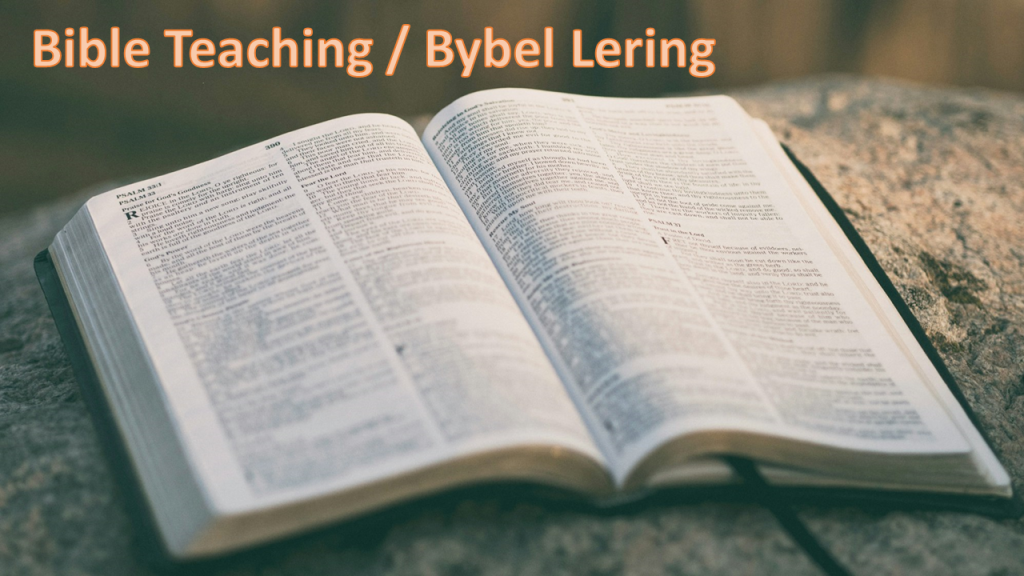
Bible Teaching of the Day
The book of James opens by addressing the topic of suffering. James encourages his believing readers to “consider it pure joy” when they face circumstances in life that test their faith (James 1:2). They can regard their sufferings with joy because they know that afflictions due to their faith produce endurance (James 1:3). This is pretty straightforward: when believers continue in faith amid opposition, they are building up perseverance. However, James then says something confusing. He urges his readers to “let patience have its perfect work, that you may be perfect and complete, lacking nothing” (James 1:4, NKJV).
As we study what it means to let patience have its perfect work, it is important to define our terms. The word traditionally translated “patience” does not mean “passive tolerance,” but “active perseverance.” According to many scholars, the idea is that someone remains consistent through opposition or continues despite the difficulty. A good example is Hebrews 12:1, where the same word is used to describe the way believers “run the race” of faith. The image of a runner is not one of resignation but of intentionality, enduring the pain to reach a preestablished goal. In the same way, as the believer perseveres through trials, he grows in endurance and determination (James 1:3).
So, what does it mean to “let patience [endurance, steadfastness] have its perfect work”? Faithful endurance has an end goal: perfection, completeness, wholeness. Endurance makes us spiritually mature. Notice that it is not the suffering that produces the maturity, but the act of endurance. The believer is commanded to “let patience have its perfect work,” which shows that our response matters. Consistency in life, even in the face of trials, is what produces Christian maturity, not just suffering.
James does not give a timeline on this perfection or maturity. Based on the Greek words, it could be referring to maturity in this life or eschatological perfection, and scholars are split on the issue. In much of the New Testament, and later in James, the good outcome produced by endurance is associated with eternal life or the return of Jesus (1 Peter 1:7; James 1:12; Romans 5:3–4). It is possible that James is referring here to our eternal future with God, which gives us hope for the present (1 Thessalonians 1:3). As we endure trials and continue to follow God, we are letting steadfastness have its perfect work, which will ultimately be eternal perfection.
How do we do this? How do we “let patience have its perfect work”? First, we can endure trials, turning to God for strength and hope during painful times (James 1:2, 12). As mentioned, endurance is not passive but active: we should live the same way during times of persecution and affliction as we do during times of safety and comfort. This means not lashing out at those who oppress us or changing our walk with God to avoid discomfort (Matthew 16:24–26; Romans 12:17–21). By enduring and not interfering, we allow patience to have its perfect work.
Second, we can ask God for wisdom. The next verse of James instructs believers to ask God for wisdom, who graciously gives to everyone who asks (James 1:5). Wisdom and Christian maturity are associated in several other passages, and we need God’s wisdom to endure opposition (1 Corinthians 2:6; Colossians 1:28). As we persevere in trials and ask God for wisdom, we will experience the spiritual growth Paul talks about in Romans 5:3: “We also glory in our sufferings, because we know that suffering produces perseverance; perseverance, character; and character, hope.”
Today’s Devotional
John records in his Revelation of Jesus Christ the things that he had seen, the things that were then, and the things that would take place after those things (Revelation 1:19). As he writes about the events in the latter part of the period called the tribulation, John describes two kinds of people, those who follow the beast and those who are faithful to Jesus Christ. It is in this context that John writes, “Here is the patience of the saints” (Revelation 14:12, KJV).
The tribulation period is revealed using a number of different terms in Scripture: Jacob’s distress (Jeremiah 30:7), the seventieth seven (Daniel 9:24–27), the tribulation (Matthew 24:15–22), and the Day of the Lord (1 Thessalonians 5:2–10; 2 Thessalonians 2:2–5). As John narrates this cataclysmic time, he describes a series of angels and their messages. One proclaims an eternal gospel for all who live on the earth (Revelation 14:6–7), another declares the fall of Babylon the Great (Revelation 14:8), and a third angel announces that anyone who worships the beast and takes his mark will encounter God’s wrath eternally (Revelation 14:8–11). Immediately after this pronouncement of judgment, John observes that “here is the patience of the saints.” He identifies the saints as “the people of God who keep his commands and remain faithful to Jesus” (Revelation 14:12).
Throughout Scripture, justification before God—righteousness—is always and only by faith in Him (e.g., Habakkuk 2:4; Genesis 15:6; John 6:47; Hebrews 11:6; etc.). In each era or administration, God has engaged people in a different way, but He has always commanded them to believe in Him. Recall that God walked with Adam in the garden, and God spoke directly to Abraham. God spoke to many people in many different ways but most recently has spoken through His Son (Hebrews 1:1–2). Abraham believed in the Person he knew as Yahweh (Genesis 15:6) and who later came to earth as a man named Jesus (Luke 1:31–35; Philippians 2:6–8). In the latter days of the tribulation, people will still be commanded to believe in Jesus, and those called saints (or holy ones) will obey by having faith or belief in Jesus (Revelation 14:12b). John notes that here is the patience or perseverance of the saints, referencing the saints’ steadfastness in refraining from worshiping the beast (the Antichrist) and taking his mark (the mark apparently being the definitive sign of Antichrist worship).
We do not believe the “saints” with the patience or perseverance in the tribulation are the church. Earlier in the book of Revelation, John describes the activities of the churches, and it is notable that they are part of the “things which are” (Revelation 1:19, KJV), and they are described and exhorted specifically in chapters 2—3. In Revelation 4:1, John opens by saying, “After these things,” and the church is not mentioned again until we see them returning with Christ in Revelation 19:14. This is consistent with the idea that the event often referred to as the rapture will take place before the beginning of the Day of the Lord (see John 14:2–3; 1 Corinthians 15:50–52; 1 Thessalonians 4:13–17; 2 Thessalonians 2:2–3).
With the church era complete before Revelation 4:1, and the Day of the Lord described after that, it is evident that the saints commended for their patience in Revelation 14:12 are saved during the tribulation. During that period of time, people who believe in Jesus will have a very difficult time. The world will be governed by the Antichrist, who will demand worship and severely persecute anyone who believes in Jesus (Revelation 13). Perhaps because of the extreme difficulty, there is a special blessing promised to those who believe in Jesus during that time, and they will receive rest from their labors when they die (Revelation 14:13). It seems that this is what John refers to as the patience, steadfastness, or perseverance of the saints (Revelation 14:12). The faith of these tribulation-era believers in Jesus Christ will cost them dearly while they are on the earth, and their end will most likely be martyrdom.

Bible Prophecy, Signs of the Times and Gog and Magog Updates with Articles in the News
Scientists reset the Doomsday Clock to 85 seconds before midnight. But God, not man, controls the end.

Humanity stands 85 seconds from annihilation, according to the Bulletin of the Atomic Scientists, which moved the infamous Doomsday Clock forward by four seconds on Tuesday—the closest it has been to midnight in its nearly 80-year history. The group of scientists cited nuclear proliferation, climate change, biotechnology risks, and artificial intelligence as accelerating threats. Alexandra Bell, president and CEO of the Bulletin, declared: “The risks we face from nuclear weapons, climate change and disruptive technologies are all growing. Every second counts and we are running out of time.”
The scientists blamed what they called a “failure of leadership” worldwide, noting that Russia, China, the United States, and other major powers have become “increasingly aggressive, adversarial, and nationalistic” rather than reversing course toward cooperation. The Bulletin proposed solutions including cooling the nuclear arms race, addressing biosecurity threats, pushing for renewable energy, and regulating AI in military systems.
The Doomsday Clock, established in 1947 by researchers who participated in the Manhattan Project, serves as a metaphor warning the public about catastrophic threats from unchecked technological advances. Midnight represents Earth’s total destruction. The clock began at seven minutes to midnight in 1947 and has been adjusted 24 times—eight times backward, 16 times forward. The furthest from midnight was 17 minutes in 1991. Since 2007, the clock has incorporated climate change alongside nuclear weapons. It reached 90 seconds to midnight in January 2023, largely due to Russia’s war on Ukraine, and remained there in 2024, citing the October 7, 2023, Hamas terrorist attack on Israel and the war in Gaza.
Israel365 News spoke to Rabbi Yitzchak Batsri, a noted Kabbalist from Jerusalem, who dismissed the global threats driving the scientists’ calculations. “While the world exists, it is through God’s mercy and not because of our merit. Therefore, until God’s mercy ends, the world cannot end, no matter what men do. Men simply do not have the power to destroy God’s creation against His will,” he said.
Rabbi Batsri addressed what Jewish sources teach about the end of the world. “The Rambam writes that the world will never be destroyed. But the Talmud says in Tractate Sanhedrin that the world will exist for 6,000 years, and in the 7,000th year it will be destroyed, as prophesied in Isaiah 2:11, ‘And the LORD alone shall be exalted in that day’.”
The rabbi explained the apparent contradiction. “The Rambam explains that in the 7,000th year, there will be only a partial destruction of the world, that evil will be destroyed and only good will remain. Other sages understand this to mean that there will be complete destruction. According to all opinions, until the year 7,000 by the Hebrew calendar, there can be no total destruction, only in certain countries or regions.”
“And even when the world ends, the souls of those who follow God will remain here, flying above the earth, as it is written in Isaiah 40:31, ‘But they that wait for the LORD shall renew their strength; they shall mount up with wings as eagles’ (Isaiah 40:31),” Rabbi Batsri said. “So even when this world is destroyed, there will be a place above the earth, a different kind of existence.”
Rabbi Yosef Berger, whose family traces its lineage to King David and who serves as a member of the nascent Sanhedrin—an attempt to reestablish the Biblically mandated court of 71 elders—was skeptical of the scientists’ assessment.
“The scientists are trying to figure out what the sages and the Bible already wrote about,” Rabbi Berger said. “But the scientists are getting it all wrong. They think they have the power to destroy the world and the power to stop the end of the world from coming. They have neither.”
“God created the world and he will bring the Messiah in its proper time,” he pointed out.
The rabbi cited Talmudic descriptions of conditions preceding the end of days. “The Bible says that in the sixth year of the Shemittah (sabbatical cycle) voices will cry out to warn the Messiah is coming,” Rabbi Berger said. “This will presage wars and when the Shemittah ends, the Messiah will reveal himself.”
“The world will certainly end, and in this they are correct,” Rabbi Berger said. “But the problem with this scientific clock is that it does not take into account Man’s relationship with God, which is an essential element to the end-of-days. How it happens and exactly when is dependent on our teshuva (repentance).”
“If the last possible date for Moshiach (Messiah) arrives with only the righteous praying, it will come as the scientists said; with a horrible bang,” Rabbi Berger elaborated.
“God created the world, and He will choose when to end it. We are partners in this process but not the masters.”
“This is what the scientists are sensing. They haven’t done any experiments or have any empirical data, so they don’t really ‘know’ what they are talking about. But any person who is in touch with his neshama (soul) can tell that the Messiah is imminent. So many rabbis and hidden mystics are, to an unprecedented degree, saying so, and world events just confirm what we can sense and what we know if we connect current events to what we know from the Bible.”
“But there is one thing the scientists have never said, and that is how to prepare for the end that they are predicting,” he remarked. “The Bible did write about this as well and it is very simple. Any person who believes in the prophecies as they are written in the Bible will begin preparing now by increasing in charity and acts of lovingkindness. The Prophets make it clear that the focus will be on Jerusalem and Israel.”
The scientists offer technical solutions—nuclear dialogue, biosecurity agreements, renewable energy investments, AI regulation. The Sages offer something else entirely: teshuva, prayer, and recognition that the Master of the Universe, not man’s technology, determines when the clock strikes midnight.
Israel could strike Iran before US, says retired IDF general

Iran is preparing its proxy forces for new war with Israel, forcing the IDF to face threats on multiple fronts if the US strikes Iran, former IDF general warns.
Israel may strike Iran before the United States, a retired senior Israeli military officer said this week, warning that Iranian proxy forces will likely be used to attack Israel from multiple fronts if and when a war does break out between Israel and Iran.
On Wednesday, Brigadier General (Res.) Amir Avivi, the head of the Habithonistim security advocacy group, took part in a conference hosted by the Israel Hayom newspaper on the future of northern Israel.
During the conference, Avivi said that while media attention has focused on the possibility of a war sparked by an American attack on Iran, Israel could also deliver the first blow.
“There could be a preemptive Iranian strike. We see the government and the security brass warning Iran,” Avivi said. “It is possible that we will launch an attack before the Americans do.”
Israel, he continued, is concerned by Iranian efforts to rebuild its proxy forces, including Hezbollah, and may strike if it feels that time is on Iran’s side.
In the event that war breaks out in the region, either as a result of strikes by Israel, the United States, or as due to an Iranian attack, Israel will likely face another multi-front conflict,” Avivi added.
“Iran is moving its proxies to ensure they do not face us alone. We hear in the discourse that they are weighing this option. Therefore, the probability of a major attack in Iran coinciding with fire from additional sectors is very high. The IDF is not attacking in Lebanon constantly for no reason.”
However, should war break out and Hezbollah join in against Israel, the IDF will respond with overwhelming force “until they collapse,” Avivi claimed.
TruLight Ministries Daily Entertainment

TruLight TV : Popcorn & Movie Time – Always a Winner
A girl transfers to a Christian school for her senior year determined to repeat as state golf champion. As she begins that quest, she is greatly affected by her golf Coach and comes to learn what is really most important in life.
Today on TruLight Radio XM
TruLight Radio XM 24/7
Program
GMT / UTC +2
Monday To Fridays
00:15 Words to Live By Testimonies
01.15 Science Scripture and Salvation
02.15 Ground Works
04.00 Gospel Concert of the Day
05.00 The Daren Streblow Comedy Show
5:55 It is Today devotional
6:00 Gaither Homecoming Morning Show
7:15 Discover the Word
8.15 Destined for Victory
8:55 Science Scripture and Salvation
9:00 Holy Spirit Hour – Normally Sermons
10:15 Hope of the Heart
11:15 Unshackled
11.45 Words to Live By
12:15 Truth for Life
13:15 Living on the Edge with Chip Ingram
14:15 Focus on the Family
15:00 Kids Hour
16:00 In Touch with Dr. Charles Stanley
16:30 Groundwork
17:15 Live in the Light
18:15 Renewing your Mind
19:00 Gaither Homecoming Show
20:15 Growing Hope
21:15 Adventures in Odyssey Radio Drama
21:45 Bible Reading
22:15 Night-sounds
23.00 Good Old Country Gospel / Rhema Gospel Express
VISIT THE WEBSITE
https://TruLightRadioXM.org.za
TruLight Ministry News

TruLight Ministries orders from God since 2012 . Teach Them , Comfort Them and Warn Them!
TruLight Ministries Radio Drama’s – Listen Today !
https://www.thegospeltruth.net.za/radio-dramas
END TIME ARTICLES
Share this Feeding of Manna with your Friends and Family. just click on the Social Media icon and share !