Hosted by TruLight Ministries – The Place of Truth
SELECT YOUR READING LANGUAGE – BOTTOM LEFT = YOUR DAILY MANNA NOW AVAILABLE IN 103 LANGUAGES
For the Next 2 Days . we will Look into the
“Fruits of the Spirit!”
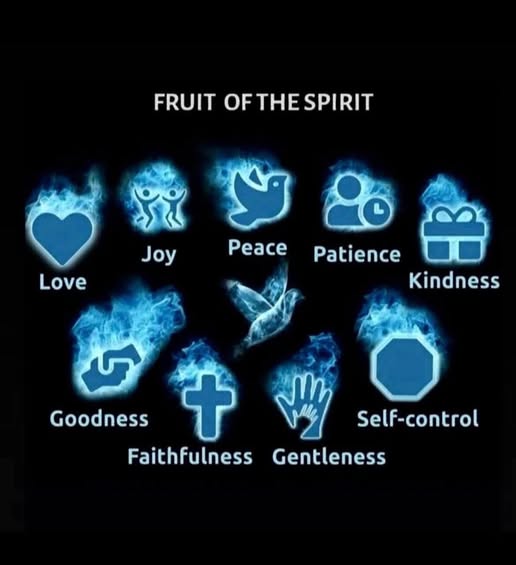
GENTLENESS = Galatians 5:22-23 says that the Holy Spirit works in us to be more like Christ (Ephesians 4:14-16), and part of the fruit, or results, of that work is gentleness. Gentleness, also translated “meekness,” does not mean weakness. Rather, it involves humility and thankfulness toward God, and polite, restrained behavior toward others. The opposites of gentleness are anger, a desire for revenge, and self-aggrandizement.
It takes a strong person to be truly gentle. Henry Wadsworth Longfellow gives us a wonderful illustration of gentleness in “The Village Blacksmith.” In the poem, the main character is described thus:
“The smith, a mighty man is he,
With large and sinewy hands;
And the muscles of his brawny arms
Are strong as iron bands.”
However, in church, as he hears his daughter singing a hymn, the smith is overcome with emotion, “And with his hard, rough hand he wipes / A tear out of his eyes.” This is gentleness. Might restrained. Humility and grace.
God wants us to give Him control of our lives. Relying on our own logic, we have no impetus to submit to God’s leadership. With the wisdom given to us by the Holy Spirit, however, we begin to see why we should completely submit to God as Lord of our lives. Human power under human control is a half-broken weapon in the hands of a child. But gentleness places our strength under God’s guidance; it is a powerful tool for God’s kingdom.
Every person is powerful. We can speak words that influence others; we can act in ways that help or hurt; and we can choose what influences will inform our words and actions. Gentleness constrains and channels that power. To be gentle is to recognize that God’s ways and thoughts are high above our own (Isaiah 55:9). It is to humbly realize that our worldviews are shaped by exposure to sin and the misinterpretation of experience. It is to accept God’s worldview, reflecting truth about the spiritual and the material worlds.
It is to our advantage to have a gentle attitude toward God because He is omniscient and we are not. “Where were you when I laid the foundation of the earth?” God challenges Job. “Tell Me, if you have understanding” (Job 38:4). God knows everything of the past, present, and future (1 John 3:20); we can’t even get the weather forecast right. Like a petulant teenager to his parents, we may cry out, “You just don’t understand!” but God does understand, more than we could possibly know (Psalm 44:21).
When we are filled with the Spirit’s fruit of gentleness, we will correct others with easiness instead of arguing in resentment and anger, knowing that their salvation is far more important than our pride (2 Timothy 2:24-25). We will forgive readily, because any offense toward us is nothing compared to our offenses against God—offenses He’s already forgiven (Matthew 18:23-35). Competition and sectarianism will disappear, as the goal becomes less about ourselves and more about preaching the gospel (Philippians 1:15-18). John the Baptist was a fiery preacher, yet he evinced true gentleness when he said, “[Jesus] must become greater; I must become less” (John 3:30).
Gentleness also means giving up the right to judge what is best for ourselves and others. God is not as concerned with our comfort as He is concerned with our spiritual growth, and He knows how to grow us far better than we do. Gentleness means that we accept that the rain falls on the evil and the just and that God may use methods we don’t like to reach our hearts and the hearts of others.
Finally, to live in a spirit of gentleness toward God is to accept His judgment on people and issues. We tend to think it is gentle to go easy on people and try to justify actions that God has called sin. Or to let someone continue in sin without speaking the truth. But Paul says, “If anyone is caught in a trespass, you who are spiritual restore such a one in a spirit of gentleness” (Galatians 6:1). This doesn’t mean to be so soft that the sinner doesn’t realize he’s sinned. It means to confront the brother in a manner that is in line with Scripture—to be mild, loving, encouraging, and clear about the holiness that God calls us to.
Jesus gave us the perfect picture of gentleness: “See, your king comes to you, gentle and riding on a donkey” (Matthew 21:5), and now He offers us His gentleness as a gift. If we allow the Holy Spirit to lead us, we will be filled with fruit of gentleness.

Bible Verse and Prayer for Today
I love you, O Lord, my strength. The Lord is my rock, my fortress and my deliverer; my God is my rock, in whom I take refuge. He is my shield and the horn of my salvation, my stronghold.
—Psalm 18:1-2
We sing it, and we say it in our public prayers: “Father, God, we love you.” But notice the beginning phrase of our verse very carefully. “I love you, O Lord…” Even in public, community worship, we are taught the importance of a personal expression of love to God. When is the last time you told the Creator of the universe, “I love you! I love you, O Lord my strength.”
Prayer
Father in heaven, I love you. I love you because you are more than worthy of my love. I love you because you have first loved me. I love you because you sent your son to be my big brother and friend,* who paid the price for my adoption into your family. I love you because of your faithfulness. I love you because you have permitted me in your grace to love you. In the name of Jesus, my brother and friend, I love you and thank you, and cannot wait to see you face-to-face and tell you, with all of my heart, “I love you!” Amen and Amen
Bible Teaching of the Day
God deals graciously with us when we sin, and we ought to do the same with fellow believers. The apostle Paul informs spiritually mature Christians of their responsibility to look out for those who are struggling with sin and respond appropriately, with gentleness, humility, and grace: “Brothers and sisters, if someone is caught in a sin, you who live by the Spirit should restore that person gently. But watch yourselves, or you also may be tempted” (Galatians 6:1).
Paul directs his counsel to “you who live by the Spirit,” meaning Christians who “walk by the Spirit” (Galatians 5:16), “keep in step with the Spirit” (Galatians 5:25), and thus manifest the fruit of the Spirit in their daily lives. That fruit includes “love, joy, peace, forbearance, kindness, goodness, faithfulness, gentleness and self-control. Against such things there is no law” (Galatians 5:22–23).
In the next breath, Paul urges, “Carry each other’s burdens, and in this way you will fulfill the law of Christ” (Galatians 6:2). The law of Christ is to “love your neighbor as yourself” (Galatians 5:14; see also 1 John 4:21). Bearing one another’s burdens incorporates restoring a brother gently when he is suddenly tripped up and falls into sin. We are to respond graciously, patiently, and kindly as we fulfill our obligation to love one another as Christ loved us (John 13:34). Similarly, Paul taught the Romans, “We who are strong ought to bear with the failings of the weak” (Romans 15:1; Proverbs 16:18).
Paul warns, “Be careful not to fall into the same temptation yourself” (Galatians 6:1, NLT). Our gentleness ought to flow from the knowledge that none of us is above falling (Romans 3:23; Proverbs 24:16). “If you think you are standing strong, be careful not to fall,” insisted Paul (1 Corinthians 10:12, NLT). We must treat fellow believers as we would want to be treated ourselves if we were caught in sin (Matthew 7:12).
The phrase caught in sin implies being overtaken suddenly or taken by surprise. Paul refers to sin that isn’t premeditated or deliberately pursued. When evil ensnares a fellow believer, we are to restore that brother or sister gently. The original Greek verb translated as “restore” here means “to correct, or repair, as in mending what was torn or putting back together what was broken.” A fallen Christian is like a ripped net that must be woven back together or a fractured bone that must be reset.
Christ often demonstrated how to restore a brother gently. One of the most poignant examples was when the scribes and Pharisees dragged before Him a woman who had been caught in the act of adultery (John 7:53—8:11). The harsh attitude of the self-righteous religious leaders contrasted sharply with the gentleness and compassion of Jesus. The duplicitous Pharisees wanted the woman stoned to death, but Jesus answered, “All right, but let the one who has never sinned throw the first stone!” (John 8:7, NLT). Rather than condemn the woman, Jesus gently restored her, saying, “Go now and leave your life of sin” (verse 11).
A rigid or legalistic attitude toward a Christian brother or sister who sins will likely do more damage than good. Instead of helping to bear the burden, the legalist offers a heavy yoke (Acts 15:10). Jesus said of legalists, “They crush people with unbearable religious demands and never lift a finger to ease the burden” (Matthew 23:4, NLT).
Because God has shown us overwhelming grace and mercy, we ought to restore a brother gently if he sins, just as we would want to be reinstated. The apostle Peter stresses, “Above all, maintain an intense love for each other, since love covers a multitude of sins” (1 Peter 4:8, HCSB). The God of all mercy and comfort calls us to heal the hurting, mend the broken, and relieve the afflicted with the same comfort God has lavished on us (2 Corinthians 1:3–7).
Today’s Devotional
In the Sermon on the Mount, Jesus opens with a series of statements known as the Beatitudes. The third Beatitude is “Blessed are the meek, for they will inherit the earth” (Matthew 5:5). Jesus’ words echo Psalm 37:11, which says, “The meek will inherit the land and enjoy peace and prosperity.” What does it mean that the meek are “blessed”?
First, we must understand what it means to be blessed. The Greek word translated “blessed” in this verse can also be translated “happy.” The idea is that a person will have joy if he or she is meek. The blessedness is from God’s perspective, not our own. It is a spiritual prosperity, not necessarily an earthly happiness.
Also, we must understand what “meek” means. The Greek word translated “meek” is praeis and refers to mildness, gentleness of spirit, or humility. Other forms of this Greek word are used elsewhere in the New Testament, including James 1:21 and James 3:13. Meekness is humility toward God and toward others. It is having the right or the power to do something but refraining for the benefit of someone else. Paul urged meekness when he told us “to live a life worthy of the calling [we] have received. Be completely humble and gentle; be patient, bearing with one another in love” (Ephesians 4:1–2).
Meekness models the humility of Jesus Christ. As Philippians 2:6–8 says, “[Jesus], being in very nature God, did not consider equality with God something to be used to his own advantage; rather, he made himself nothing by taking the very nature of a servant, being made in human likeness. And being found in appearance as a man, he humbled himself by becoming obedient to death—even death on a cross!” Being “in the very nature God,” Jesus had the right to do whatever He wanted, but, for our sake, He submitted to “death on a cross.” That is the ultimate in meekness.
Meekness was also demonstrated by godly leaders in the Old Testament. Numbers 12:3 says that Moses “was very meek, more than all people who were on the face of the earth” (ESV).
Believers are called to share the gospel message in gentleness and meekness. First Peter 3:15 instructs, “Always be prepared to give an answer to everyone who asks you to give the reason for the hope that you have. But do this with gentleness and respect.” The KJV translates the word for “gentleness” here as “meekness.”
Someone who knows Christ as personal Savior will be growing in meekness. It may seem counterintuitive, but Jesus’ promise stands—a meek person will be happy or blessed. Living in humility and being willing to forego one’s rights for the benefit of someone else models the attitude of Jesus Christ. Meekness also helps us to more effectively share the gospel message with others. Striving for power and prestige is not the path to blessedness. Meekness is.

Bible Prophecy, Signs of the Times and Gog and Magog Updates with Articles in the News
USA and Israeli navies conduct planned Red Sea drill.

In recent weeks, Washington has increased the movement of military assets into the Middle East, expanding both defensive and offensive capabilities.
Israeli naval vessels on Sunday conducted a joint exercise with a U.S. Navy destroyer, as part of ongoing cooperation between the Israeli Navy and the U.S. 5th Fleet in the Red Sea arena.
The American destroyer docked at the port of Eilat as part of a “pre-planned, routine visit,” according to the Israel Defense Forces. The exercise “highlights the close cooperation between the two navies and the respective militaries,” the IDF stated.
The USS Delbert D. Black arrived at Eilat on Friday, as Washington continues to reposition military assets across the region amid rising tensions with Iran.
U.S. warships routinely operate in the Red Sea, though port calls in Eilat are relatively rare and typically reflect heightened coordination between the two countries.
In recent weeks, Washington has increased the movement of military assets into the Middle East, expanding both defensive and offensive capabilities.
The USS Abraham Lincoln and its carrier strike group entered the Middle East region on Monday “to promote regional security and stability,” U.S. Central Command stated.
TruLight Ministries Daily Entertainment

TruLight TV – Carman Hymn Special
Old Video = Quility not that Good – But This timeless beauty of classic hymns resonates deeply within us, evoking a range of emotions that connect us to our spiritual roots. These cherished melodies, often passed down through generations, carry profound messages of hope, love, and faith. Each note and lyric has the power to stir our souls, reminding us of the values and beliefs that shape our lives. Whether sung in a place of worship or enjoyed in quiet reflection, these hymns create a sense of community and belonging, drawing us closer to one another and to something greater than ourselves. Their enduring nature speaks to the universal human experience, making them a cherished part of our cultural and spiritual heritage.
Today on TruLight Radio XM
TruLight Radio XM 24/7
Program
GMT / UTC +2
Monday To Fridays
00:15 Words to Live By Testimonies
01.15 Science Scripture and Salvation
02.15 Ground Works
04.00 Gospel Concert of the Day
05.00 The Daren Streblow Comedy Show
5:55 It is Today devotional
6:00 Gaither Homecoming Morning Show
7:15 Discover the Word
8.15 Destined for Victory
8:55 Science Scripture and Salvation
9:00 Holy Spirit Hour – Normally Sermons
10:15 Hope of the Heart
11:15 Unshackled
11.45 Words to Live By
12:15 Truth for Life
13:15 Living on the Edge with Chip Ingram
14:15 Focus on the Family
15:00 Kids Hour
16:00 In Touch with Dr. Charles Stanley
16:30 Groundwork
17:15 Live in the Light
18:15 Renewing your Mind
19:00 Gaither Homecoming Show
20:15 Growing Hope
21:15 Adventures in Odyssey Radio Drama
21:45 Bible Reading
22:15 Night-sounds
23.00 Good Old Country Gospel / Rhema Gospel Express
VISIT THE WEBSITE
https://TruLightradioXM.org.za
TruLight Ministry News

TruLight Ministries orders from God since 2012 . Teach Them , Comfort Them and Warn Them!
Healing Truths
End Time Articles :
Share this Feeding of Manna with your Friends and Family. just click on the Social Media icon and share !