Hosted by TruLight Ministries – The Place of Truth
SELECT YOUR READING LANGUAGE – BOTTOM LEFT = YOUR DAILY MANNA NOW AVAILABLE IN 103 LANGUAGES

Key Gospel Themes for 2026
- Peace in the Midst of the Storm: God offers a deep, lasting peace beyond worldly anxieties, a refuge found in His presence, even as global challenges arise.
- Breaking Barriers & Open Doors: A year for divine intervention, where God opens opportunities and shifts systems, but believers must walk in faith to receive them.
- Discernment & Authentic Fruit: With much noise (including AI), focus on Jesus’s true character and the “fruit” (actions, relationships, discipleship) as the real measure of faith, not just words.
- Walking with Jesus & Kingdom Living: The official theme that highlights a personal journey with Christ, applicable broadly as a call to discipleship and service.
- Overcoming Offense: A strong warning against becoming easily offended; remaining un-offendable is crucial to avoid being swayed by deception and to serve God’s true purposes.
- New Beginnings & Completing the Work: A reminder that God’s grace provides fresh starts, and He will complete the good work He started in believers, urging perseverance.
- Voice & Dominion: Believers are called to use their God-given voice to break cycles of fear and delay, exercising spiritual authority to see God’s will manifest.
Sample Verses & Applications for 2026
• Jeremiah 29:11: Trust God’s hopeful plans for your future, not striving to control everything.
• Matthew 6:33: Make seeking God’s Kingdom your top priority for life to fall into place.
• Philippians 4:6-7: Combat anxiety with prayer, thanksgiving, and trust in God’s peace.
Overcoming Offense – focuses on responding to hurt with faith, not bitterness, by forgiving quickly, giving it to God (not seeking personal revenge), and recognizing offense as a spiritual trap, emphasizing love, humility, and trust in God to heal and empower you to overcome challenges and grow spiritually. Key themes include: offenses will come (Luke 17:1), letting God be your avenger (Romans 12:19), forgiving seventy times seven (Matthew 18:22), and choosing love over resentment, as seen in biblical examples like David or Job.
Key Points & Concepts
Spiritual Growth: Overcoming offense builds spiritual strength, allowing you to grow and help others find freedom.
Offense as a Trap: The Greek word for offense, scandalon, means a trap; Satan uses it to bring bitterness, resentment, and spiritual stagnation.
The Inevitability of Offense: Jesus taught that offenses will come, but woe to those who cause them (Luke 17:1).
Forgiveness is Key: Forgive quickly and completely (70×7), as unforgiveness hardens the heart and hinders spiritual growth.
Let God Handle It: Don’t seek personal revenge; give the situation to God and trust Him to bring justice and healing (Romans 12:19), a concept often illustrated by David’s response to humiliation.
Love & Humility: Choose love (patient, kind, not touchy/resentful) and humility (Romans 12:1-2), focusing on God’s glory rather than self-recognition.
Trying to not take offense is like trying to not think about elephants. If someone says, “Don’t think about elephants,” we automatically think about them. If we focus on trying not to take offense, we will keep thinking about the offense. This principle applies to just about any sin a person can commit. When we focus on a behavior, even in an attempt to eliminate it, the result is more of that behavior. This is just how our minds work. Thankfully, there is another, better way to address this problem.
People are lured and enticed into sin as a result of desire—wanting is the beginning of sinning (James 1:14). Every sin or bad behavior begins with desire. Desire itself is not bad; there are many good desires. But the desires that lead to sin are wrong desires, the desires based in false perspectives and misplaced expectations about others and ourselves. To eliminate a bad behavior, we must first discover the desire behind it.
For many people, the tendency to take offense at little things is rooted in a false perspective of security. We all desire security and safety; we desire the good opinion of others. We secure those good opinions with performance: what we do, how we speak, how we dress, how we express ourselves, etc. When our security is based on our performance, we may feel threatened when someone expresses something negative about us. The natural response to that threat is to take offense or become angry. Even a casual, flippant, or offhand remark can gnaw at us and steal our peace. The way to prevent taking offense is to address our desire for security. As long as feelings of security are rooted in ourselves, the tendency to take offense, even at the little things, will exist. If, however, our feelings of security are not rooted in ourselves or our performance, our perspective will change and our response to the actions and comments of others will become more balanced.
Remember the acronym COP.
Cover. Twice in the book of Proverbs, we are told to “cover” offenses (Proverbs 10:12; 17:9). The covering of offense is related to love. First Peter 4:8 says, “Love covers over a multitude of sins”—and that “multitude” would have to include small slights. In any relationship, there are many irksome things that should just be “covered” for the sake of love. By covering an offense, or not revealing it to others, we are empathizing with the offender and extending the benefit of the doubt. Perhaps he did not mean what he said; perhaps we misunderstood. Perhaps the offender was having a bad day or wasn’t thinking straight. Covering the offense of another helps us, too. Remember the elephant? When we focus on the needs of the person who offended us, we no longer think about how offended we feel.
Overlook. “A person’s wisdom yields patience; / it is to one’s glory to overlook an offense” (Proverbs 19:11). Forgiveness is an honorable thing. When you cover an offense, you give grace and empathy to the offender. When you overlook an offense, you choose to give something valuable to yourself—the reminder that your security is not based on others’ opinions of you but on the security you have in Christ (see Ephesians 1:5–7).
Pray. Jesus told His disciples on multiple occasions that if they prayed for anything in His name (or, according to His will) they would have what they asked for. Do you believe that God wants you to be angry with others, or forgiving of them? Do you believe that your security is in Him, rather than in yourself? If you pray consistently, asking Him to help you not take offense, He will answer that prayer. If you ask Him to remind you of His secure and steadfast love, He will answer that prayer. You can confidently pray for help in every offending situation (Hebrews 4:16).
In Bethany, as Jesus was reclining at a table, a woman entered the room with an alabaster jar of fine perfume. The woman broke the container and anointed Jesus’ head with the fragrant ointment (Mark 14:3). Immediately, she was criticized; in fact, “they rebuked her harshly” (verses 4–5). The woman could have taken offense at their words. It would have been natural for her to react in kind. But she didn’t have to. Jesus came to her defense: “Leave her alone” (verse 6). The woman’s love of Christ and her meek response to an offense were honored, and “wherever the gospel is preached throughout the world, what she has done will also be told, in memory of her” (verse 9).
To sum up, when we take offense, it is because someone has hurt us or frightened us. God has given us two ways to deal with the offense. First, by remembering that the other person also has things that hurt and frighten him. When we love the offender and focus on his needs (cover and overlook), we will no longer notice the offense. Second, by remembering that, when we belong to Christ, we are fundamentally secure in Him; we do not need to react and defend ourselves, because He has promised to defend us (Isaiah 35:3–4). When we struggle to trust Him or to believe that we are secure in Him, all we need to do is pray for the strength to do so, and we know that He will answer (John 14:13–14).

Bible Verse and Prayer for Today
The Son is the radiance of God’s glory and the exact representation of his being, sustaining all things by his powerful word. After he had provided purification for sins, he sat down at the right hand of the Majesty in heaven.
—Hebrews 1:3
Some talk about “Mother Nature,” but Christians should realize that Scripture identifies Jesus as the power behind the order and processes of our universe and the One Who sustains our world with his powerful word. Not only did he save us by the sacrifice on the Cross, but he now sustains our universe with his powerful words of loving grace. He sustains us spiritually through his words of teaching. And this Word, who speaks to us and to our universe, is the essence of God himself. He purified us from our sins, failures, and shortcomings while he was on earth and now reigns in glory until he returns to take us home!
Prayer
Please be with me, Almighty God, as I commit to live for you based on Jesus’ words. Please help me as I seek to understand it and apply Jesus’ teaching to my daily life. More than that, dear Father, please help me come to know you and your will through Jesus’ words and his actions while on earth. In Jesus’ name, I pray. Amen and Amen
Bible Teaching of the Day
Proverbs 19:11 teaches, “A person’s wisdom yields patience; / it is to one’s glory to overlook an offense.” To “overlook” an offense is to take no notice of wrongs done against oneself, to refuse to retaliate or seek revenge, to let affronts go, or, in a word, to forgive.
First, we can observe that the first half of the proverb focuses on self-control. The ESV puts it this way: “Good sense makes one slow to anger.” The NLT says, “Sensible people control their temper.” Patience, being slow to anger, and self-control are good virtues to possess. Patience and self-control are listed as part of the fruit of the Spirit (Galatians 5:22–23), an essential part of the Christian’s lifestyle. Our responses are to be reasonable and measured. We should increasingly grow in our ability to control ourselves when angry and overlook offenses when we can.
Second, we know that anger itself is not wrong but rather how we express it. James 1:19–20 states, “Everyone should be quick to listen, slow to speak and slow to become angry, because human anger does not produce the righteousness that God desires.” Offenses do come, and there are times when anger is called for, but anger should not be our first response in any given situation. Our goal is to control our expression of anger and, when possible, overlook an offense.
Third, the Bible calls us to not be easily angered. God Himself is “slow to anger” (Nahum 1:3), and we should be, too. A “slow fuse” is the product of wisdom and love. First Corinthians 13:5 says that love “is not easily angered, it keeps no record of wrongs.” To aid us in developing this type of self-control, we can also carefully choose our friends: “Do not make friends with a hot-tempered person, / do not associate with one easily angered” (Proverbs 22:24). Those who are easily angered show a lack of self-control.
Fourth, God considers it a “glory” to overlook an offense. In other words, overlooking a wrong done to oneself is a sign of maturity and grace. Forgiving others is worthy of respect. It is a triumph for us to forgive and to take no notice of injuries and offenses. Jesus taught, “If your brother or sister sins against you, rebuke them; and if they repent, forgive them. Even if they sin against you seven times in a day and seven times come back to you saying ‘I repent,’ you must forgive them” (Luke 17:3–4). Of course, God has forgiven our sins, for Christ’s sake; for us to forgive others, for Christ’s sake, is a glorious thing.
Other proverbs also express this theme. Proverbs 17:9 notes, “Whoever would foster love covers over an offense.” Proverbs 10:12 says, “Love covers over all wrongs.” We also see this virtue lived out in David’s story. He refused to retaliate against King Saul, although the king was trying to kill him (see 1 Samuel 24:5–7). And David chose to overlook the curses (and other things) that Shimei hurled at him (2 Samuel 16:5–14).
“A person’s wisdom yields patience; / it is to one’s glory to overlook an offense” (Proverbs 19:11). Stating this verse conversely provides this paraphrase: “A person’s folly yields impatience; / it is to one’s shame to refuse to forgive.” Forgiveness is graceful; revenge is disgraceful.
Overlooking an offense does not negate justice. It doesn’t mean we turn a blind eye to sin or pretend that evil doesn’t exist. It means we are willing to forgive, especially when the offense is directed toward us. It means we refuse to hold grudges. There are many trifling things that could bother us, but by the grace of God we let them slide. There are other, not-so-trifling things that could harm us, but by the grace of God we determine to forgive. And there are situations that require a quick, decisive response, but by the grace of God we are slow to anger even as we stop the wrongdoing.
How is this overlooking of an offense accomplished? From a human standpoint, it is impossible. But God’s Spirit at work in the life of a believer offers the power to forgive any wrong. Jesus taught us to pray like this: “Forgive us our debts, as we also have forgiven our debtors” (Matthew 6:12). We forgive because we have been forgiven, knowing that all have sinned and fall short of God’s glory (Romans 3:23). In wisdom we know what requires a response and what does not. In patience we turn the other cheek (Matthew 5:39). In love we choose to overlook the insults, slurs, and slights that come our way.

Today’s Devotional
Complaining can mean different things in different contexts. Those who complain could be expressing grief or sorrow or accusing someone of an offense. In that context, there is nothing overtly sinful about complaining. As long as the expression of grief or accusation of wrongdoing conforms to biblical guidelines, the complaint is appropriate. After all, the Bible contains a book called Lamentations, and many of the psalms contain “complaints”—utterances of grief over a dire situation. However, complaining can also take the form of fault-finding, murmuring, griping, or grumbling, in which case it is wrong.
A complainer who is sinfully grumbling is showing discontentment with his lot in life. Complaining is certainly not a fruit of the Spirit (Galatians 5:22–23); a complaining spirit is, in fact, detrimental to the peace, joy, and patience that come from the Spirit. For the Christian, complaining is destructive and debilitating personally and serves to make one’s witness to the world more difficult.
The Bible gives several examples of those who complained. Adam, after he and Eve disobeyed God, complained to God that “the woman you put here with me . . . gave me some fruit from the tree, and I ate it” (Genesis 3:12). In this way, Adam blamed Eve and, indirectly, God for his sin.
While in the wilderness, the Israelites under Moses complained often. Less than three months after leaving Egypt, they were complaining that they were starving to death in the desert. Their complaint included the foolish wish to have remained slaves in Egypt: “The whole community grumbled against Moses and Aaron. The Israelites said to them, ‘If only we had died by the Lord’s hand in Egypt!’” (Exodus 16:2–3; cf. Numbers 14:2). Although their complaint was leveled at their human leaders, Moses informed them that they were actually murmuring against God: “You are not grumbling against us, but against the Lord” (Exodus 16:8). The Israelites’ complaining was linked to disobedience and a lack of faith: “They grumbled in their tents and did not obey the Lord” (Psalm 106:25).
The psalmists wrote out their complaints to God. One example is Psalm 12:1–2: “No one is faithful anymore; those who are loyal have vanished from the human race. Everyone lies to their neighbor; they flatter with their lips but harbor deception in their hearts.” The prophets also expressed the grief of personal pain (e.g., Jeremiah 20:7–8; Micah 7:1–2). Such complaints were not sinful, however, because they were taken to God in a prayer for help.
Those who heard Jesus’ teaching that He was the bread of life come down from heaven had a hard time reconciling that truth with their knowledge of His upbringing, and they grumbled as a result (John 6:41). Jesus told them, “Stop grumbling among yourselves” (John 6:43). The Greek word translated “grumbling” indicates they were murmuring and muttering to themselves. According to Strong’s Concordance, the word was used “generally of smoldering discontent.”
Believers are not to smolder in their discontent. They are not to grumble or complain. A person who refuses to complain will stand out in a world full of complainers: “Do everything without grumbling . . . , so that you may become blameless and pure, ‘children of God without fault in a warped and crooked generation.’ Then you will shine among them like stars in the sky” (Philippians 2:14–15, referencing Deuteronomy 32:5). Our acts of kindness to others should always be done without complaining: “Offer hospitality to one another without grumbling” (1 Peter 4:9).
A complaining spirit reveals a lack of trust in God. Has not God provided in the past? Will He not faithfully provide now and in the future? Can we not trust Him to know what we need and to provide it in His time? Our circumstances, however bad they may be, are known to God, and He is in control of them.
Whenever we are tempted to complain, we should go to the Lord first. We should learn to cast all our cares on Him, knowing that He cares for us (1 Peter 5:7). To overcome the habit of complaining, we should pray for God’s help, remember the Lord’s goodness (Psalm 105:5), “give thanks in all circumstances” (1 Thessalonians 5:18), and “rejoice always” (1 Thessalonians 5:16). It’s impossible to complain while rejoicing.
As we keep studying the Word of God, praying, and enjoying fellowship with other believers, our complaining and grumbling will grow less and less. We will begin to allow our difficult circumstances to produce something other than grumbling within us. Whining will fade away. We will learn to “count it all joy . . . when [we] meet trials of various kinds, for [we] know that the testing of [our] faith produces steadfastness” (James 1:2–3, ESV).

TruLight Ministries Daily Entertainment
TruLight TV – Navigating the Conflict of Wants vs. Responsibilities
Do you often feel the tension between doing what you want to do and what you know you should do? In what areas of your life do you feel that tension the most often? How do you respond? In this message, Dr. Stanley discusses the importance of our priorities and the impact they can have on our decisions.
Today on TruLight Radio XM
TruLight Radio XM 24/7
Program
GMT / UTC +2
Monday To Fridays
00:15 Words to Live By Testimonies
01.15 Science Scripture and Salvation
02.15 Ground Works
04.00 Gospel Concert of the Day
05.00 The Daren Streblow Comedy Show
5:55 It is Today devotional
6:00 Gaither Homecoming Morning Show
7:15 Discover the Word
8.15 Destined for Victory
8:55 Science Scripture and Salvation
9:00 Holy Spirit Hour – Normally Sermons
10:15 Hope of the Heart
11:15 Unshackled
11.45 Words to Live By
12:15 Truth for Life
13:15 Living on the Edge with Chip Ingram
14:15 Focus on the Family
15:00 Kids Hour
16:00 In Touch with Dr. Charles Stanley
16:30 Groundwork
17:15 Live in the Light
18:15 Renewing your Mind
19:00 Gaither Homecoming Show
20:15 Growing Hope
21:15 Adventures in Odyssey Radio Drama
21:45 Bible Reading
22:15 Nightsounds
23.00 Good Old Country Gospel / Rhema Gospel Express
VISIT THE WEBSITE
https://TruLightRadioXM.org.za

BIBLE PROPHECY IN THE NEWS
SIGNS OF THE TIMES
GOG AND MAGOG UPDATE
Articles in the News
Israel on high alert for Iranian attack amid widening protests
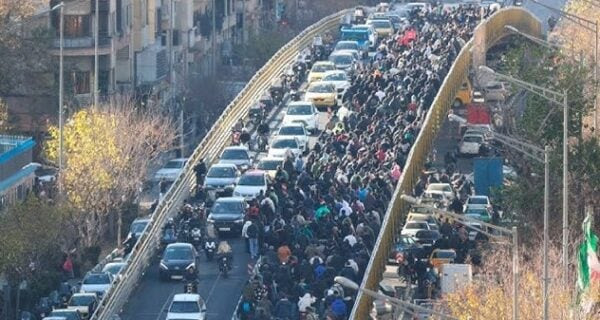
Israel is on high alert in case Iran launches a surprise missile attack as internal protests against the regime intensify and spread to more than 20 cities, The Jerusalem Post reported Thursday.
Although Iran was significantly weakened by Israel’s 12-day Operation Rising Lion in June and has little desire to initiate another round of hostilities, Israeli officials said the ayatollahs may feel “cornered,” the report said, as the economic crisis that sparked the protests continues to deepen.
Totalitarian regimes that feel threatened have historically sought to redirect public anger toward an external enemy, potentially creating a “rally around the flag” effect.
On Wednesday, the fourth consecutive day of protests against the ayatollahs, the first fatality was reported: a member of the Basij militia, a feared volunteer force that often uses violence to suppress dissent.
Iranian media said the man was killed when demonstrators threw stones in the city of Kuhdasht in southwestern Lorestan province.
The district’s deputy governor said 13 members of the security forces were also injured in the clashes.
Video circulating online showed a police vehicle being pelted with stones before fleeing protesters.
Basij forces were also targeted in western Hamedan province, where protesters in one city overran the militia’s headquarters and set it ablaze while reportedly chanting, “Death to [Supreme Leader Ali] Khamenei.”
Also in Hamedan, protesters located an Iranian intelligence hideout Wednesday night, “set it on fire, and, according to some claims, released civilians who were being held captive by Iranian intelligence,” Abu Ali Express reported Thursday.
Numerous videos posted on social media have shown dozens or hundreds of defiant demonstrators in important cities such as Tehran, Shiraz, Kermanshah and Yazd marching toward riot police and chanting that they are “without honor,” presumably for supporting the regime.
Another slogan, heard in Dorud, was “Neither Gaza nor Lebanon, my life for Iran,” reflecting anger over the regime’s spending billions of dollars on military and economic aid abroad rather than prioritizing its own citizens.
Authorities have so far refrained from firing on crowds, instead using nonlethal methods such as tear gas and water trucks to disperse demonstrators.
Four University of Tehran students arrested during protests Tuesday were even released later that night, according to the school.
Students — a key force in previous anti-regime protests — have joined the demonstrations in many cities, especially in the capital.
The unrest began when merchants in Tehran’s bazaars went on strike over runaway inflation that has caused the Iranian rial to lose nearly half its already diminished value in 2025.
The currency is being unofficially traded at about 1.4 million rials to the dollar, making it extremely difficult for ordinary Iranians to make a living.
A severe water crisis, caused by decades of mismanagement, had already left the public on edge during the long summer.
Iran’s leadership has publicly acknowledged the economic crisis and has so far struck a conciliatory tone, saying it is willing to meet protest leaders to hear their complaints.
Officials warned, however, that any attempt to “exploit the demonstrations to implement plans of foreign elements will be answered accordingly.”
Trump gives Israel green light to attack Hezbollah as deadline passes

The deadline set by the White House for Lebanon to demonstrate it has made significant progress in disarming the Hezbollah terror organization passed overnight, amid reports that President Donald Trump has given Israel a green light to launch a major military operation against the Iranian-backed terror group.
The US had repeatedly warned Beirut that failure to demilitarize Hezbollah and other armed groups in Lebanon would likely result in the renewal of Israeli military operations across Lebanon against the Shi’ite terror group.
The Trump administration set a deadline of Dec, 31 for Beirut to lay out a clear timetable for dismantling Hezbollah’s military infrastructure and arsenal, and to show progress demonstrating its commitment to upholding the terms of the November 2024 ceasefire deal and the 2006 United Nations Security Council Resolution 1701.
Trump did not discuss Hezbollah at length during a press conference Monday ahead of his meeting with Israeli Prime Minister Benjamin Netanyahu, but did say the group was “behaving badly.”
“We’re gonna see about that,” Trump said when asked whether Israel “should strike Hezbollah.”
“We’ll see about it. The Lebanese government is at a little bit of a disadvantage, if you think about it with Hezbollah, but Hezbollah has been behaving badly, so we’ll see what happens.”
The Jerusalem Post quoted a source who said that during their Monday meeting, Trump gave Netanyahu a green light to take action against Hezbollah.
“If the Lebanese army doesn’t succeed in disarming them, and Israel believes an action is the necessary thing to do,” then the US will back Israeli action in Lebanon, Trump was quoted as saying during the meeting.
A report by the Lebanese Al Joumhouria newspaper suggested that Trump has likely already approved expanded Israeli operations against Hezbollah.
Earlier this month, the IDF reported that as of December 15, Hezbollah has violated the November 2024 truce over 1,900 times.
While the IDF has regularly struck Hezbollah terrorists in southern Lebanon, since the ceasefire went into effect, strikes on targets north of the Litani, including in Beirut, have been rare.
Trump says US is ‘locked and loaded’ to retaliate if Iranian protesters are killed

Responding to ongoing anti-regime protests in Iran, U.S. President Donald Trump warned that if demonstrators are killed, the United States will retaliate.
On Truth Social, he wrote, “If Iran shoots and violently kills peaceful protesters, which is their custom, the United States of America will come to their rescue,” Trump said. “We are locked and loaded and ready to go.
“Thank you for your attention to this matter! President DONALD J. TRUMP,” he added.
Four people were reported killed in Iranian protests in several cities on Thursday.
Iranian authorities were swift to respond to the president’s threat.
“Any interventionist hand that attacks Iran’s security under any pretext whatsoever will be exposed to a response,” Ali Shamkhani, an adviser to the supreme leader, wrote on X. “Iran’s security is a red line.”
Tensions between Iran on one side and the United States and Israel on the other have been high, as Israeli Prime Minister Benjamin Netanyahu met with Trump at his resort in Mar-a-Lago and discussed potential Israeli strikes to prevent Iran from rebuilding its ballistic missile and nuclear capabilities.
President Trump and Prime Minister Netanyahu both described the 12-day confrontation with Iran in June as a major success, though Netanyahu has said additional strikes may still be required to prevent Tehran from restoring its military capabilities.
Trump said after the meeting that the United States would again dismantle Iran’s nuclear program if Tehran attempts to rebuild it, while adding that he would prefer to reach a nuclear agreement with the Islamic Republic.
A U.S. official said Trump would likely support a “second round” of strikes if Washington determines that Iran is taking concrete and verifiable steps to revive its nuclear program, though defining what constitutes reconstitution would be a central point of contention.
Iranian President Masoud Pezeshkian responded to news of the talks in an X post: “Answer of Islamic Republic of Iran to any cruel aggression will be harsh and discouraging.”
https://web.facebook.com/reel/2205201693248729
TruLight Ministry News

TruLight Ministries orders from God since 2012 . Teach Them , Comfort Them and Warn Them!
Doctrine of Demons – Teaching for the Christian , Discerning the spirits
Share this Feeding of Manna with your Friends and Family. just click on the Social Media icon and share !