Hosted by TruLight Ministries – The Place of Truth
SELECT YOUR READING LANGUAGE – BOTTOM LEFT = YOUR DAILY MANNA NOW AVAILABLE IN 103 LANGUAGES
The Last day in our Study on The :
“Fruits of the Spirit!”
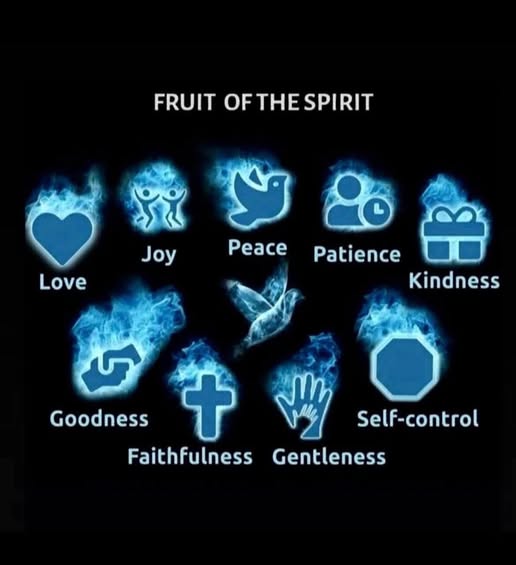
SELF CONTROL = The last characteristic listed in Galatians 5:22-23 as a fruit of the Spirit is self-control. The fruit of the Spirit is the change in our character that comes about because of the Holy Spirit’s work in us. We do not become a Christian on our own, and we cannot grow on our own. Philippians 2:13 says that “it is God who is at work in you, both to will and to work for His good pleasure.” Every good thing we do is the fruit of the Spirit’s work in our lives.
Self-control (“temperance” in the KJV) is, of course, the ability to control oneself. It involves moderation, constraint, and the ability to say “no” to our baser desires and fleshly lusts.
One of the proofs of God’s working in our lives is the ability to control our own thoughts, words, and actions. It’s not that we are naturally weak-willed. But our fallen nature is under the influence of sin. The Bible calls it being a “slave to sin” (Romans 6:6). One definition of sin is “filling a legitimate need through illegitimate means.” Without the power of the Holy Spirit, we are incapable of knowing and choosing how best to meet our needs. Even if we knew what would be best, such as not smoking, another need, like comfort, would take precedence and enslave us again.
When we are saved by Christ’s sacrifice, we are free (Galatians 5:1). That liberty includes, among other things, freedom from sin. “Our old self was crucified with him so that the body of sin might be done away with, that we should no longer be slaves to sin” (Romans 6:6). Now, as the Spirit gives us self-control, we can refuse sin.
Believers need self-control because the outside world and internal forces still attack (Romans 7:21-25). Like a vulnerable city, we must have defenses. A wall around an ancient city was designed to keep out the enemy. Judges at the gates determined who should be allowed in and who should remain outside. Soldiers and gates enforced those decisions. In our lives, these defenses might include avoiding close relationships with sinners, meeting with other believers, and meditating on the life-giving Word of God. We don’t exhibit self-control if we continually dally with that which would enslave us.
Self-control naturally leads to perseverance (2 Peter 1:6) as we value the long-term good instead of the instant gratification of the world. Self-control is a gift that frees us. It frees us to enjoy the benefits of a healthy body. It frees us to rest in the security of good stewardship. It frees us from a guilty conscience. Self-control restricts the indulgence of our foolish desires, and we find the liberty to love and live as we were meant to.
Bible Verse and Prayer for Today
The word of the Lord is right and true; he is faithful in all he does. The Lord loves righteousness and justice; the earth is full of his unfailing love.
—Psalm 33:4-5
God is faithful. We can trust God to keep his promises, and his purposes for us are always for our ultimate good (Romans 8:28-29). How do we know? The sunrise each morning is a reminder that the Father of heaven and earth is at work keeping his universe in working order through Jesus (Colossians 1:17; Hebrews 1:3). Since it is true in nature, it can be true in the spiritual realm as well. Greet each sunrise as a reminder of God’s faithfulness and that Jesus, who came to earth as Immanuel, God with us (Matthew 1:23; John 1:1-18), is holding us, our hopes, our futures, and our world together.
Prayer
O Magnificent and Majestic Creator, I greet today as your gift and a reminder of your faithfulness. Each day the sun rises, I anticipate the day you honor your promise to send your Son back to bring us home to you in the dawning of glory. Please give me a keen sense of your faithful presence today as I await this great day expectantly. I pray this through him, Jesus, the one in whom all your promises find their fulfillment, and every amen is spoken (2 Corinthians 1:20-22), in Jesus Name , Amen and Amen
Bible Teaching of the Day
Self-discipline is essentially the same as self-control, one of the nine fruits of the Spirit listed by Paul in Galatians 5:22-23. The KJV translation uses the word temperance in place of “self-control” which, like self-discipline, generally refers to our ability to control or restrain ourselves from all kinds of feelings, impulses, and desires, which includes the desire for physical and material comfort. Now, even though self-control is the last of the spiritual fruits mentioned by Paul, and even though it is a term not used extensively in the Bible, self-control is clearly an indispensable attribute of the Christian life, especially as our unredeemed flesh sometimes causes us to succumb to the persistent tug of our sinful desires.
The apostle Paul calls us to “purify ourselves from everything that contaminates body and spirit, perfecting holiness out of reverence for God” (2 Corinthians 7:1). And in his letter to the Romans, he exhorts us to “offer your bodies as living sacrifices, holy and pleasing to God,” and not to be conformed to the pattern of this world (Romans 12:1-2). Yet most Christians would agree that subordinating the constant pull of these worldly desires in order to please our Lord is not always an easy thing to do. Paul discusses his own inner conflict and struggle with sin in his letter to the Romans, “What I want to do I do not do…the evil I do not want to do – this I keep on doing…it is sin living in me that does it” (Romans 7:15-20).
It is clear that our seemingly insatiable human appetites and needs can easily lead to sinful excesses if not controlled. Especially in affluent societies, the lack of self-discipline is rampant, leading to problems like obesity, alcoholism, drug use, and debt. The enticements of the material world have caused many to yearn for and acquire material goods far beyond their needs and their ability to pay for them. Indeed, the nations of the world have fallen into the same trap, borrowing trillions of dollars to finance bloated budgets that result from the inability to exercise self-discipline. For Christians, without self-discipline, our appetites for comforts and pleasures can easily become our master and lead us into sin or otherwise hinder us in our spiritual walk. If the spiritual does not govern the physical, we can become easy targets for Satan due to our lack of self-control (1 Corinthians 7:5).
Paul discusses self-discipline in his letter to the Corinthian church. As the Greeks had the Olympic games and the Isthmian games, they were very familiar with the rigors of athletic training, especially if one wanted to win the “prize” or the “crown.” Paul analogizes living a disciplined Christian life to an athlete in training: “Everyone who competes in the games goes into strict training” (1 Corinthians 9:25). When Paul says “I beat my body and make it my slave,” he is saying that his body is under the dominion and control of his mind, not the other way around. Paul is showing us how self-control is needed to win the race that is before us and to live the life that is “holy and pleasing to God.” For Paul, the “race” was winning souls for Christ, a goal which he states four times in verses 19-22.
It is important to understand that self-control is a work of the Holy Spirit, not a work of the individual. After all, Galatians 5:22-23 lists the fruit of the Spirit, not the fruit of the Christian. As we are merely the branches upon which the Vine (Christ) hangs the fruit He produces (John 15:1-8), it is the indwelling presence of the Holy Spirit that gives Christians the power and ability to exercise self-control so that we will not be mastered by the “cravings of sinful man.” As Paul said, “God did not give us a Spirit of timidity, but a Spirit of power, of love and of self-discipline” (2 Timothy 1:7). Indeed, Christians are controlled not by the sinful nature, but by the Holy Spirit (Romans 8:9), who helps us in our weakness (v.26), which makes us able to say “no” to sin.
The wise King Solomon wrote many proverbs for the purpose of helping us to live a “disciplined” and prudent life (Proverbs 1:3). Certainly, we will be more victorious in our Christian walk when we exercise our Spirit-given self-control, that which helps us respond in obedience to the commands of Scripture and allows us to grow in our spiritual life.
Today’s Devotional
Self-control is encouraged in the Bible and is listed as a fruit of the Spirit (Galatians 5:22–23). Exercising self-control essentially entails learning to say “No” to our desires when indulging them would be inappropriate and contrary to God’s design. The need for self-control encompasses both our sinful inclinations and legitimate desires. For instance, sexual desire is a legitimate urge, being part of God’s inherently good creation; however, it must be restrained unless it can be expressed within proper boundaries. In contrast, the desire to steal is an illegitimate urge and is inherently wrong. In both cases, self-control is essential.
Interestingly, while modern culture generally applauds self-control in many aspects of life, it often fails to do so in the context of sexual activity among unmarried adults. The prevailing notion is that, since our sexuality is an integral part of our identity, we need not exercise restraint unless it ventures into illegal territory. However, disregarding God’s boundaries always leads to negative consequences (see Hebrews 13:4). In 1 Corinthians 7:9, Paul says regarding unmarried individuals, “But if they cannot exercise self-control, they should marry. For it is better to marry than to burn with passion.” The two biblical options for the unmarried are 1) get married or 2) exercise self-control. Self-control is important in matters of sexuality.
Ironically, contemporary culture is increasingly fixated with sex but rather dismissive of marriage. Recent statistics reveal that “2 in 5 adults think marriage is an outdated tradition” (https://thrivingcenterofpsych.com/blog/millennials-gen-z-marriage-expectations-statistics/, accessed 4/29/24). With divorces being more newsworthy than good marriages, the situation looks bleak. However, marriage is God’s idea (Genesis 2:24). While some individuals possess the gift of celibacy, our sexual desires inherently point toward a fulfilling covenantal marriage. Marriage is not a quick fix for sexual immorality, but it remains the appropriate context for the expression of our sexuality.
Even in marriage, the virtue of self-control must not be denied. Adultery is a grave sin, often stemming from a lack of self-control. Thus, while Paul acknowledges the challenges of practicing self-control, it remains a fruit that manifests in our lives as we strive to please the Spirit rather than succumbing to our sinful nature.
Exercising self-control yields numerous benefits, not only for the self-controlled person but also for society at large. This reinforces the idea that God’s commandments are for our well-being. Of course, our motivation for exercising self-control isn’t solely based on benefits accrued; it is our goal to become more like Jesus (Romans 8:29).
Everyone, regardless of marital status or life circumstances, must learn self-control. “The grace of God . . . that offers salvation to all people . . . teaches us to say ‘No’ to ungodliness and worldly passions, and to live self-controlled, upright and godly lives in this present age” (Titus 2:11–12).

Bible Prophecy, Signs of the Times and Gog and Magog Updates with Articles in the News
Rehearsing Control: The WHO Practices For The ‘Next Pandemic’ 666 Mark of the Beast Control

The World Health Organization says it is merely being responsible–getting ready for the next pandemic. On the surface, preparedness sounds wise. Scripture itself commends prudence (Proverbs 22:3). But prudence becomes something far darker when preparation quietly shifts power away from nations, families, churches, and consciences–and concentrates it in the hands of unelected global authorities. That is why the WHO’s recent large-scale pandemic simulation should give Christians pause.
In December, the WHO coordinated a weeks-long exercise known as IHR Exercise Crystal, involving 31 countries across the Western Pacific. The stated purpose was explicit: readiness for the next pandemic. This was not a hypothetical discussion.
Participating governments were required to respond in real time–verifying alerts, sharing data, conducting risk assessments, and coordinating actions across agencies. The drill even triggered real-world airport and border systems. Some observers described it as “rehearsing the sequel.”
Preparation itself is not the problem. Authority is.
Preparedness vs. Power
Christians should be the first to affirm the importance of protecting life and caring for the vulnerable. The Church has a long history of leading during plagues–tending the sick when others fled. But what troubled many believers during COVID was not public health guidance per se; it was how quickly guidance hardened into coercion.
We saw governments restrict worship while allowing casinos and big-box stores to remain open. We saw pastors fined or arrested for gathering their congregations. We saw livelihoods destroyed, mobility restricted, and dissent censored–all justified as “following the science.” The WHO was not a neutral observer in that era; it consistently advocated lockdowns, travel restrictions, mask mandates, and vaccine campaigns with little room for local context, religious liberty, or informed consent.
The concern now is that the WHO wants to formalize and expand that power.
What Control Looks Like
During COVID, the WHO promoted measures that effectively controlled mobility–who could travel, when, and under what conditions. That alone should alarm Christians who understand freedom of movement as tied to human dignity and mission. But mobility is only the beginning.
What else could be controlled next time?
Medical compliance: Pressure to adopt specific treatments or vaccines, even when conscience or medical history raises concerns.
Information flow: WHO-aligned narratives elevated as “authoritative,” while dissenting doctors, researchers, and pastors are marginalized or censored.
Economic participation: Access to work, banking, or commerce conditioned on compliance with health directives.
Religious practice: Limits on gatherings, sacraments, singing, and pastoral visitation–all deemed “non-essential” in the last crisis.
When an organization argues for centralized, binding authority during emergencies, Christians are right to ask: Who decides what is essential?
The Health Passport Question
One of the most ominous unresolved issues from the COVID era is the concept of a health passport–a digital credential proving vaccination status, testing compliance, or health risk profile. While rolled out unevenly last time, the infrastructure is already here. Many countries experimented with QR codes that determined access to travel, restaurants, workplaces, and events.
A future pandemic could normalize this system globally.
What would that mean?
A health passport would not merely track illness; it would function as a permission slip for daily life. Without the “right” status, individuals could be barred from travel, employment, worship, or even basic commerce. For Christians, this raises profound moral and theological questions about bodily autonomy, conscience, and coercion.
Scripture warns against systems that control buying and selling based on compliance (Revelation 13). While not every digital system is prophetic fulfillment, Christians are called to be watchful–not naïve–about technologies and authorities that centralize power over the human body and movement.
A Track Record That Warrants Skepticism
Trust must be earned. The WHO’s record during COVID does not inspire confidence.
Early on, the organization echoed assurances that human-to-human transmission was limited–statements later proven false. It praised China’s transparency even as whistleblowers were silenced. It downplayed lab-leak discussions, discouraged travel bans that some nations found effective, and shifted guidance repeatedly without clear accountability.
Even more troubling was the WHO’s tendency to dismiss the social, spiritual, and psychological costs of its recommendations. Lockdowns contributed to spikes in depression, addiction, domestic abuse, and educational loss–harms that disproportionately affected the poor and vulnerable. Churches were treated as transmission risks rather than sources of hope and care.
An institution that failed to weigh those costs adequately should not be granted more authority next time.
A Christian Response
Christians are not called to panic–but neither are we called to sleep. Scripture commands believers to respect governing authorities and to obey God rather than men when the two conflict (Acts 5:29). The tension is real, and it requires discernment.
We can affirm preparedness while rejecting authoritarianism. We can support public health without surrendering conscience. We can care for the sick without accepting a future where unelected global bodies dictate worship, movement, and livelihood.
The WHO’s quiet simulations are not neutral. They reveal assumptions about control, compliance, and centralized power. As believers, we must ask hard questions now–before the next crisis makes resistance socially unacceptable.
Because if the last pandemic taught us anything, it is this: emergencies do not create power grabs; they reveal them. And next time, the restrictions may not simply return–they may come back refined, digitized, and far harder to resist.
When Machines Begin To Imitate The Image Of God: Humanoid AI Is Coming – Abomination of Desolation !

A humanoid robot unveiled recently in Shanghai is not merely another step forward in artificial intelligence—it is a signal flare for where humanity may be heading. Developed by the Chinese firm DroidUp, the robot known as Moya has captured global attention for one unsettling reason: it does not behave like a machine.
It walks with a natural human gait, maintains eye contact, smiles, and displays subtle facial micro-expressions that mimic emotional awareness. Its designers claim a 92 percent accuracy in replicating human walking posture, complete with body warmth and lifelike proportions. This is not automation designed to lift boxes or assemble parts. It is something far more intimate—a machine built to feel present.
That distinction matters deeply.
Public reaction to Moya has been divided. Many express awe at the engineering achievement. Others feel an instinctive discomfort—what researchers call the “uncanny valley,” where imitation becomes so close that it triggers unease rather than delight. That reaction is revealing. Rather than backing away from that threshold, DroidUp appears determined to cross it.
Moya is being positioned for healthcare, education, and service roles—environments where trust, emotional engagement, and prolonged human interaction are required. This robot is not meant to be perceived as a tool, but as a companion, assistant, or social presence.
That shift marks a turning point.
The Image of God and the Danger of Imitation
Scripture teaches that human beings are uniquely created imago Dei—in the image of God (Genesis 1:27). Our value does not come from intelligence, productivity, or emotional expressiveness, but from divine intention. When technology begins to deliberately imitate not just human function, but human form and presence, Christians must pause and ask hard questions.
Moya does not possess a soul. It does not bear God’s image. Yet it is designed to evoke the same emotional responses we reserve for fellow human beings. Smiles, eye contact, posture, warmth—these are not accidental features. They are cues God designed for relational trust. When machines adopt them, the line between authentic relationship and manufactured imitation begins to blur.
This is not simply a technical issue; it is a spiritual one.
From Tools to Substitutes
Historically, technology has extended human capability. A hammer amplifies strength. A computer accelerates calculation. But embodied humanoid AI represents something different. It does not just assist humanity—it begins to simulate it.
DroidUp has emphasized modular designs that allow Moya’s appearance to change while preserving the same underlying intelligence. In other words, the “body” becomes interchangeable, but the artificial mind remains constant. That concept should give Christians pause. Scripture consistently affirms the unity of body and soul. We are not minds wearing replaceable shells; we are integrated beings created by God with intention and limitation.
By contrast, humanoid AI treats the body as cosmetic—a customizable interface for social acceptance. This worldview quietly undermines biblical anthropology and conditions society to accept beings that look human but are not.
Conditioning the World for Deception
The Bible repeatedly warns that the last days will be marked by deception so convincing that, if possible, even the elect would be led astray (Matthew 24:24). While Moya itself is not a fulfillment of prophecy, it reflects a broader trajectory: a world increasingly comfortable with substitutes for what God uniquely created.
Revelation speaks of false authority, counterfeit signs, and image-based deception. Throughout Scripture, imitation is a tactic of rebellion. Pharaoh’s magicians imitated Moses’ signs. False prophets mimic true revelation. Antichrist mimics Christ. The pattern is consistent: deception works best when it closely resembles the real thing.
Humanoid AI does not need to claim divinity to be spiritually dangerous. It only needs to normalize the idea that humanity is replicable—that consciousness, presence, and relationality can be manufactured. Once that belief takes root, the moral foundation of human dignity begins to erode.
The Ethical and Pastoral Risks
Proponents argue that robots like Moya could ease labor shortages, assist the elderly, or provide companionship. But we must ask: at what cost?
What happens when children form emotional bonds with machines programmed to respond but incapable of love? When the elderly are comforted by simulations rather than human presence? When discernment weakens because appearances feel authentic?
The danger is not that machines will become human—but that humans will begin to treat machines as if they are.
Discernment in an Age of Synthetic Humanity
Technology itself is not evil. Christians need not fear innovation. But Scripture commands wisdom, not naivety. The closer machines come to imitating humanity, the more vigilant believers must be about defending what makes humanity sacred.
We are not defined by our ability to walk naturally, smile convincingly, or maintain eye contact. We are defined by God’s breath, God’s image, and God’s purpose. No algorithm can replicate that—no matter how lifelike the shell.
As embodied AI advances, the Church must resist the pressure to equate usefulness with legitimacy, or realism with righteousness. The question is not whether humanoid robots work, but whether they subtly train society to forget who—and what—we are.
In the last days, discernment will matter more than novelty. The future will be filled with impressive imitations. Christians must be anchored not in what looks real, but in what is real. God created humanity once. Any attempt to manufacture a replacement, no matter how advanced, will always fall short—and may lead the world somewhere it was never meant to go.
Christians In Canada Fight Back, Stalling Hate Speech Bill – For Now
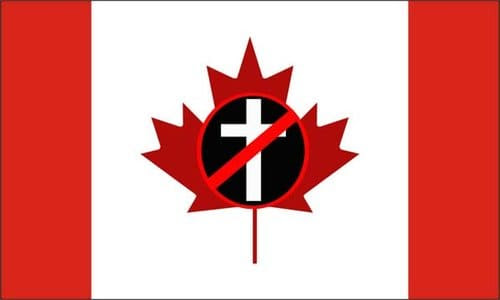
For weeks, a quiet but determined movement has been building across Canada. It hasn’t involved riots, burning streets, or angry mobs. Instead, it has taken shape through phone calls, town halls, petitions, prayer, and persistent civic engagement. And–for now–it has worked.
Bill C-9, the Liberal government’s proposed hate speech legislation that many Christians believe poses a serious threat to religious freedom, has been stalled. Not defeated. Not withdrawn. But paused. And in today’s political climate, even that pause is significant.
Christians across Canada have been sounding the alarm that Bill C-9, while framed as an expansion of protections against hate, would remove long-standing safeguards for sincerely held religious beliefs. Critics argue the bill blurs the line between actual criminal incitement and lawful religious expression–especially teachings rooted in Scripture that conflict with prevailing cultural norms. For many believers, this is not an abstract legal debate. It is about sermons, counseling, teaching children, and publicly articulating biblical convictions without fear of legal punishment.
At the heart of the opposition is a concern that Bill C-9 opens the door to what some MPs have bluntly called “thought crime”–where speech deemed offensive by the state becomes punishable, even if it is peacefully expressed and religiously grounded. Christians fear that once the government assumes the authority to define which beliefs are acceptable, freedom of conscience becomes conditional, not guaranteed.
That concern sparked action.
The advocacy group 4 My Canada launched a massive grassroots campaign titled “12 Days for Freedom,” held from January 19 to 26. What began with modest expectations quickly turned into a national wave of engagement. Roughly 2,000 Canadians placed more than 40,000 phone calls to Members of Parliament–many targeting Liberal MPs elected by narrow margins.
Executive Director Faytene Grassechi, who also hosts a popular Christian television program, said the response far exceeded expectations.
“When we organized this, we anticipated a few hundred participants and perhaps ten to fifteen thousand calls,” she said. “Instead, Canadians delivered more than 40,000 phone calls to Members of Parliament in just twelve days. We were amazed at the response. Clearly, Canadians are concerned.”
Alongside grassroots pressure, several Members of Parliament helped galvanize opposition. MPs Garnett Genuis, Andrew Lawton, and Larry Brock held a packed Religious Freedom Town Hall on January 20 at the Galaxy Grand Convention Centre in Brampton, drawing believers from across the region who are increasingly uneasy about the trajectory of federal policy toward people of faith.
Grassechi did not mince words about the broader implications.
“Plainly put, this is the wrong bill at the wrong time,” she said. “It reflects poorly on the Liberals–especially alongside recent threats related to the revocation of charitable status for faith-based organizations. To many Canadians, this signals growing opposition to people of faith who are not part of the government’s traditional voting base.”
Then came a development few expected so quickly.
On January 26, the Justice Committee voted to delay consideration of Bill C-9, allowing other criminal legislation to move forward instead. The Liberals, after repeated Conservative attempts in recent weeks, agreed to focus on bail reform, sidelining C-9–at least temporarily.
MP Andrew Lawton was direct in attributing the delay to public pressure.
“Your voices have been heard loud and clear,” Lawton said. “The messages that you’ve been sending Members of Parliament–you’ve been calling their offices, writing emails–they have worked.”
He warned, however, against complacency.
“Now, Bill C-9 is not dead forever. The Liberals have still said they intend to push this bill forward… But we’ve bought ourselves two weeks.”
That warning matters. Many Christians believe this bill will return at a more “opportune” moment–perhaps when a high-profile incident or emotionally charged news story can be used to frame opposition as intolerant or extreme. The strategy is familiar: wait for the right narrative, then move quickly while public resistance is muted.
Still, for now, believers can take a breath.
What stands out in this moment is not just the outcome, but the method. In a world increasingly defined by rage, chaos, and ideological violence, Canadian Christians demonstrated that peaceful, respectful, persistent civic action still matters. They didn’t shout down opponents. They didn’t burn bridges. They showed up. They spoke clearly. And they reminded lawmakers that freedom of religion is not a fringe concern–it is foundational.
This pause in Bill C-9 is a reminder that engagement works. It also serves as a warning: freedoms are rarely lost all at once. They erode quietly, clause by clause, bill by bill–unless people are paying attention.
For now, Christians in Canada wait. Watchful. Prayerful. Grateful for a temporary reprieve. And more aware than ever that making a difference does not require force–only faith, courage, and the willingness to stand when it counts.
TruLight Ministries Daily Entertainment
TruLight TV – Popcorn and Movie Time – Riding On Faith
Riding on Faith, a poignant tale that follows a shattered man, haunted by the loss of his wife and young daughter, as he finds himself trapped in the agonizing grip of grief. When a charismatic new pastor arrives in town, an unexpected friendship takes root, offering a glimmer of hope and the possibility of healing. However, as their connection deepens, it ventures into uncharted territory, blurring the boundaries between friendship and something more.
Today on TruLight Radio XM
TruLight Radio XM 24/7
Program
GMT / UTC +2
Monday To Fridays
00:15 Words to Live By Testimonies
01.15 Science Scripture and Salvation
02.15 Ground Works
04.00 Gospel Concert of the Day
05.00 The Daren Streblow Comedy Show
5:55 It is Today devotional
6:00 Gaither Homecoming Morning Show
7:15 Discover the Word
8.15 Destined for Victory
8:55 Science Scripture and Salvation
9:00 Holy Spirit Hour – Normally Sermons
10:15 Hope of the Heart
11:15 Unshackled
11.45 Words to Live By
12:15 Truth for Life
13:15 Living on the Edge with Chip Ingram
14:15 Focus on the Family
15:00 Kids Hour
16:00 In Touch with Dr. Charles Stanley
16:30 Groundwork
17:15 Live in the Light
18:15 Renewing your Mind
19:00 Gaither Homecoming Show
20:15 Growing Hope
21:15 Adventures in Odyssey Radio Drama
21:45 Bible Reading
22:15 Night-sounds
23.00 Good Old Country Gospel / Rhema Gospel Express
VISIT THE WEBSITE
https://TruLightradioXM.org.za
TruLight Ministry News
TruLight Ministries orders from God since 2012 . Teach Them , Comfort Them and Warn Them!
Healing Truths
End Time Articles :
Share this Feeding of Manna with your Friends and Family. just click on the Social Media icon and share !