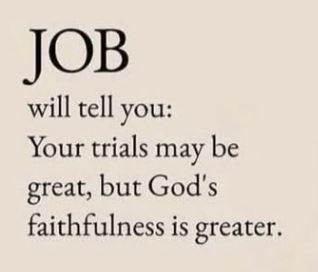
Many places in Scripture extol the faithfulness of God. Lamentations 3:22–23 says, “Because of the Lord’s great love we are not consumed, for his compassions never fail. They are new every morning; great is your faithfulness.” So, what is faithfulness?
The Hebrew word translated “faithfulness” means “steadfastness, firmness, fidelity.” The opposite of being faithful is to be ever-changing or wishy-washy. Psalm 119:89–90 says, “Your word, Lord, is eternal; it stands firm in the heavens. Your faithfulness continues through all generations.” Here faithfulness is equated with God’s Word. God speaks never-ending truth. If God spoke something a thousand years ago, it still stands. He is faithful to His Word, because His Word is an expression of His character. The promises He made still hold true because He does not change (Malachi 3:6). We see this illustrated from a human perspective in a couple married for many years. When the wife lies on her deathbed, her husband sits nearby holding her hand. He won’t leave her, even though she no longer recognizes him. He is faithful to the promises he made to her. In the same way, God remains faithful to His promises, even though we are often unfaithful to Him (2 Timothy 2:13).
We learn to trust the character of a person by getting to know that person. We would not entrust our bank account to a stranger we met in line at the post office—we have no experience with him. We don’t know his character. Before we know God, we are afraid to trust Him. We don’t yet know who He is or what He may do. We learn to trust God by getting to know His character. There are three ways we can get to know Him: studying His Word, reviewing His working in our own lives, and learning to follow His voice.
When we study God’s Word, a pattern emerges. We learn that God never changes and never lies (Numbers 23:19; 1 Samuel 15:29). We learn through Scripture that God has never failed in the past (Isaiah 51:6). He was always true to His Word as He worked in the lives of the ancient Israelites. When He said He would do something, He did it (Numbers 11:23; Matthew 24:35). We begin to build trust upon His proven character. We can trust that God will be true to Himself. He will never cease acting like God. He will never cease being sovereign, being holy, or being good (1 Timothy 6:15; 1 Peter 1:16).
We learn through our own history that He has never failed us, either. One command God often gave the Israelites was: “Remember” (Deuteronomy 8:2; Isaiah 46:9). When they remembered all God had done for them, they could more easily trust Him for the future. We need to intentionally remember all the ways God has provided for us and delivered us in the past. Keeping a prayer journal can help with this. When we recall the ways God has answered our prayers, it equips us to continue asking and expecting answers. When we come to Him in prayer, we know that He always hears us (1 John 5:14; Psalm 34:15). He provides what we need (Philippians 4:19). And He will always make everything work together for our good when we trust Him with it (Romans 8:28). We learn to trust God’s future faithfulness by remembering His past faithfulness.
And we can also learn to trust Him by learning to distinguish His voice from the others that compete for attention. Jesus said, “My sheep hear my voice; I know them and they follow me” (John 10:27). We who belong to Jesus need to cultivate the ability to hear Him. He speaks primarily through His Word, but He can also speak through other people, through circumstances, and through the inner confirmation of the Holy Spirit (Romans 8:16). As we carefully read and meditate upon Scripture, the Holy Spirit often quickens our hearts to a verse or passage and helps us claim it and apply it to our current situation. What the Spirit shows us in His Word is to be taken by faith as His message to us. We build trust by claiming His promises and applying them to our lives.
Above all things, God loves for us to demonstrate faith (Hebrews 11:6). Faith is trusting in the character of God before we see how He is going to work things out. He has given us His Word, and His promises still stand. As we see the ways He brings His promises to fulfillment, our trust in His faithfulness grows. Just as our trust in other people grows with daily interaction, our trust in God grows the same way. We trust Him when we know Him, and to know Him is to trust Him. When we know Him, we can rest in His goodness, even when we don’t understand the circumstances that seem to contradict it. We can trust that God’s plan for us will prevail (Proverbs 19:21). As a child trusts a loving father, we can trust our heavenly Father to always do what is right.
Baie plekke in die Skrif prys die getrouheid van God. Klaagliedere 3:22–23 sê: “As gevolg van die groot liefde van die Here gaan ons nie verteer nie, want sy barmhartigheid vergaan nooit nie. Hulle is elke môre nuut; groot is u getrouheid.” So, wat is getrouheid?
Die Hebreeuse woord wat as “trouheid” vertaal word, beteken “standvastigheid, fermheid, getrouheid.” Die teenoorgestelde van getrou wees, is om voortdurend te verander of wispelturig te wees. Psalm 119:89–90 sê: “U woord, Here, is ewig; dit staan vas in die hemele. U getrouheid duur deur al die geslagte.” Hier word getrouheid gelykgestel aan God se Woord. God spreek nimmereindigende waarheid. As God iets duisend jaar gelede gespreek het, staan dit steeds. Hy is getrou aan Sy Woord, want Sy Woord is ‘n uitdrukking van Sy karakter. Die beloftes wat Hy gemaak het, bly steeds waar omdat Hy nie verander nie (Maleagi 3:6). Ons sien dit vanuit ‘n menslike perspektief geïllustreer in ‘n paartjie wat vir baie jare getroud is. Wanneer die vrou op haar sterfbed lê, sit haar man naby haar en hou haar hand vas. Hy sal haar nie verlaat nie, al herken sy hom nie meer nie. Hy is getrou aan die beloftes wat hy aan haar gemaak het. Op dieselfde manier bly God getrou aan Sy beloftes, al is ons dikwels ontrou aan Hom (2 Timoteus 2:13).
Ons leer om die karakter van ‘n persoon te vertrou deur daardie persoon te leer ken. Ons sou nie ons bankrekening aan ‘n vreemdeling toevertrou wat ons in die ry by die poskantoor ontmoet het nie – ons het geen ervaring met hom nie. Ons ken nie sy karakter nie. Voordat ons God ken, is ons bang om Hom te vertrou. Ons weet nog nie wie Hy is of wat Hy mag doen nie. Ons leer om God te vertrou deur Sy karakter te leer ken. Daar is drie maniere waarop ons Hom kan leer ken: om Sy Woord te bestudeer, om Sy werking in ons eie lewens te hersien, en om te leer om Sy stem te volg.
Wanneer ons God se Woord bestudeer, ontstaan ’n patroon. Ons leer dat God nooit verander nie en nooit lieg nie (Numeri 23:19; 1 Samuel 15:29). Ons leer deur die Skrif dat God nog nooit in die verlede gefaal het nie (Jesaja 51:6). Hy was altyd getrou aan Sy Woord terwyl Hy in die lewens van die antieke Israeliete gewerk het. Toe Hy gesê het Hy sou iets doen, het Hy dit gedoen (Numeri 11:23; Matteus 24:35). Ons begin vertroue bou op Sy bewese karakter. Ons kan vertrou dat God getrou aan Homself sal wees. Hy sal nooit ophou om soos God op te tree nie. Hy sal nooit ophou om soewerein, heilig of goed te wees nie (1 Timoteus 6:15; 1 Petrus 1:16).
Ons leer deur ons eie geskiedenis dat Hy ons ook nooit gefaal het nie. Een opdrag wat God dikwels aan die Israeliete gegee het, was: “Onthou” (Deuteronomium 8:2; Jesaja 46:9). Wanneer hulle alles onthou het wat God vir hulle gedoen het, kon hulle Hom makliker vir die toekoms vertrou. Ons moet doelbewus al die maniere onthou waarop God vir ons voorsien en ons in die verlede verlos het. Om ‘n gebedsjoernaal te hou, kan hiermee help. Wanneer ons die maniere onthou waarop God ons gebede verhoor het, rus dit ons toe om aan te hou vra en antwoorde te verwag. Wanneer ons in gebed na Hom kom, weet ons dat Hy ons altyd hoor (1 Johannes 5:14; Psalm 34:15). Hy voorsien wat ons nodig het (Filippense 4:19). En Hy sal altyd alles ten goede laat meewerk wanneer ons Hom daarmee vertrou (Romeine 8:28). Ons leer om God se toekomstige getrouheid te vertrou deur Sy getrouheid uit die verlede te onthou.
En ons kan ook leer om Hom te vertrou deur te leer om Sy stem te onderskei van die ander wat om aandag meeding. Jesus het gesê: “My skape luister na my stem; Ek ken hulle en hulle volg My” (Johannes 10:27). Ons wat aan Jesus behoort, moet die vermoë kweek om Hom te hoor. Hy spreek hoofsaaklik deur Sy Woord, maar Hy kan ook deur ander mense spreek, deur omstandighede en deur die innerlike bevestiging van die Heilige Gees (Romeine 8:16). Terwyl ons die Skrif noukeurig lees en daaroor mediteer, maak die Heilige Gees ons harte dikwels lewendig tot ‘n vers of gedeelte en help ons om dit op te eis en toe te pas op ons huidige situasie. Wat die Gees vir ons in Sy Woord wys, moet deur geloof as Sy boodskap aan ons geneem word. Ons bou vertroue deur Sy beloftes op te eis en dit in ons lewens toe te pas.
Bowenal hou God daarvan dat ons geloof demonstreer (Hebreërs 11:6). Geloof is om op die karakter van God te vertrou voordat ons sien hoe Hy dinge gaan uitwerk. Hy het vir ons Sy Woord gegee, en Sy beloftes staan steeds. Soos ons die maniere sien waarop Hy Sy beloftes vervul, groei ons vertroue in Sy getrouheid. Net soos ons vertroue in ander mense groei met daaglikse interaksie, groei ons vertroue in God op dieselfde manier. Ons vertrou Hom wanneer ons Hom ken, en om Hom te ken, is om Hom te vertrou. Wanneer ons Hom ken, kan ons in Sy goedheid rus, selfs wanneer ons nie die omstandighede verstaan wat dit blyk te weerspreek nie. Ons kan vertrou dat God se plan vir ons sal seëvier (Spreuke 19:21). Soos ‘n kind ‘n liefdevolle vader vertrou, kan ons ons hemelse Vader vertrou om altyd te doen wat reg is.

Bible Verse and Prayer for Today
Jesus answered, “…whoever drinks the water I give him will never thirst. Indeed, the water I give him will become in him a spring of water welling up to eternal life.”
—John 4:13-14
Water! That precious gift for the tired and thirsty.
Water! That essential refreshing liquid we all need for life.
Water! That spring of living water welling up to eternal life and renewing our spirits.
Jesus offers water we don’t have to carry, find, purify, or resupply. Jesus’ water wells up within us. The Holy Spirit brings us Jesus’ water because we are his disciples who believe in him (John 7:37-39). Jesus’ water gives us eternal life, which begins now, lasts throughout each day we live, and continues forever (John 4:14, 5:24). This water of eternal life is a gift from Jesus, our Lord!
Prayer
Father, I know Jesus sent the Holy Spirit to live in me when I became a Christian, a disciple of my Lord. I ask that my stubborn will and my sinful desires will be overcome with the Spirit’s transforming power so that my life will display the joy and confidence that your refreshing presence brings. In Jesus’ name, and because of his living water, I pray. Amen and Amen
Bybel Vers en Gebed vir Vandag
Jesus het geantwoord: “…elkeen wat die water drink wat Ek hom gee, sal nooit dors kry nie. Maar die water wat Ek hom gee, sal in hom ‘n fontein word wat opborrel tot in die ewige lewe.”
—Johannes 4:13-14
Water! Daardie kosbare geskenk vir die moeg en dorstiges.
Water! Daardie noodsaaklike verfrissende vloeistof wat ons almal nodig het vir die lewe.
Water! Daardie fontein van lewende water wat opborrel tot in die ewige lewe en ons gees vernuwe.
Jesus bied water aan wat ons nie hoef te dra, te vind, te suiwer of aan te vul nie. Jesus se water borrel in ons op. Die Heilige Gees bring vir ons Jesus se water omdat ons sy dissipels is wat in Hom glo (Johannes 7:37-39). Jesus se water gee ons die ewige lewe, wat nou begin, deur elke dag wat ons leef duur en vir ewig voortduur (Johannes 4:14, 5:24). Hierdie water van die ewige lewe is ‘n geskenk van Jesus, ons Here!
Gebed
Vader, ek weet Jesus het die Heilige Gees gestuur om in my te woon toe ek ‘n Christen geword het, ‘n dissipel van my Here. Ek vra dat my hardkoppige wil en my sondige begeertes oorwin sal word deur die Gees se transformerende krag sodat my lewe die vreugde en vertroue sal vertoon wat u verfrissende teenwoordigheid bring. In Jesus se Naam, en as gevolg van sy lewende water, bid ek. Amen en Amen.
Bible Teaching of the Day
Paul often includes a note of thanksgiving in his letters, and 1 Corinthians 1:9 concludes his thanksgiving in his letter to Corinth with these words: “God is faithful, who has called you into fellowship with his Son, Jesus Christ our Lord.” Here, Paul glorifies God for the spiritual blessings and gifts bestowed upon the church of Corinth (verse 7) and affirms his trust in God to uphold them steadfastly until the end (verse 8). In this context, Paul’s trust stems from God’s faithfulness, the solid foundation for all believers.
The Greek word translated as “faithful” is pistos, which also conveys the concept of being trustworthy. Therefore, when Scripture declares that God is faithful, it signifies His trustworthiness. When God makes a promise, it is unwavering. God’s trustworthiness hinges on His attributes, specifically His love, justice, and holiness. He will not break His promise.
The fact that God is faithful is readily seen in the Old Testament. For instance, God promised Abraham, who was initially childless, that “all people on earth will be blessed through you” (Genesis 12:3). Despite seemingly impossible challenges, God fulfilled His promise by giving Abraham Isaac (Genesis 21:12). Through Isaac came Jacob, the forefather of Israelites, through whom the Messiah came, bringing the blessing of salvation to all nations, both Jews and Gentiles (see Galatians 3:6–9).
Another example of God’s faithfulness is His covenant with King David: “Your house and your kingdom will endure forever before me; your throne will be established forever” (2 Samuel 7:16). The Davidic Covenant appeared endangered by Solomon’s unfaithfulness (1 Kings 11:1–13), by Athaliah’s murderous rampage (2 Kings 11:1–3), and the Babylonian exile (2 Kings 24:8–17), but God was faithful. The promise to David is fulfilled in Christ, the Messiah (Luke 1:32–33). These examples prove God’s trustworthiness even when things seem unlikely.
We understand God’s faithfulness more when we know His character, revealed in His Word. Paul boldly proclaimed God’s faithfulness, especially in regards to our salvation. It is due to God’s faithfulness that Paul is assured that “he will also keep you firm to the end, so that you will be blameless on the day of our Lord Jesus Christ” (1 Corinthians 1:8). The church at Corinth faced numerous issues, including sexual immorality (1 Corinthians 5:1–2), factions (1 Corinthians 1:10–13), misunderstandings concerning the resurrection (1 Corinthians 15:12), possible misuse of spiritual gifts (chapter 14), and spiritual immaturity (1 Corinthians 3:1–3). Paul handled these issues, sometimes with stern rebuke, but he never questioned the salvation of the church, and he believed God would sustain them till the end. In the epistle to Rome, Paul expressed a similar sentiment: “For I am convinced that neither death nor life, neither angels nor demons, neither the present nor the future, nor any powers, neither height nor depth, nor anything else in all creation, will be able to separate us from the love of God that is in Christ Jesus our Lord” (Romans 8:38–39).
God’s faithfulness in accomplishing His promises gives us confidence in Him and allows us to join in Jude’s doxology: “To him who is able to keep you from stumbling and to present you before his glorious presence without fault and with great joy—to the only God our Savior be glory, majesty, power and authority, through Jesus Christ our Lord, before all ages, now and forevermore! Amen” (Jude 1:24– 25).
Bybel Lering vir die Dag
Paulus sluit dikwels ‘n dankbetuiging in sy briewe in, en 1 Korintiërs 1:9 sluit sy dankbetuiging in sy brief aan Korinte af met hierdie woorde: “God is getrou, Hy wat julle geroep het tot die gemeenskap met sy Seun, Jesus Christus, onse Here.” Hier verheerlik Paulus God vir die geestelike seëninge en gawes wat aan die kerk van Korinte geskenk is (vers 7) en bevestig sy vertroue in God om hulle standvastig tot die einde toe te ondersteun (vers 8). In hierdie konteks spruit Paulus se vertroue uit God se getrouheid, die vaste fondament vir alle gelowiges.
Die Griekse woord wat as “getrou” vertaal word, is pistos, wat ook die konsep van betroubaarheid oordra. Daarom, wanneer die Skrif verklaar dat God getrou is, dui dit op Sy betroubaarheid. Wanneer God ‘n belofte maak, is dit onwrikbaar. God se betroubaarheid hang af van Sy eienskappe, spesifiek Sy liefde, geregtigheid en heiligheid. Hy sal Sy belofte nie verbreek nie.
Die feit dat God getrou is, word duidelik in die Ou Testament gesien. Byvoorbeeld, God het aan Abraham, wat aanvanklik kinderloos was, belowe dat “al die mense op aarde deur jou geseën sal word” (Genesis 12:3). Ten spyte van oënskynlik onmoontlike uitdagings, het God Sy belofte vervul deur aan Abraham Isak te gee (Genesis 21:12). Deur Isak het Jakob gekom, die voorvader van die Israeliete, deur wie die Messias gekom het, wat die seën van verlossing aan alle nasies, beide Jode en heidene, gebring het (sien Galasiërs 3:6–9).
Nog ‘n voorbeeld van God se getrouheid is Sy verbond met koning Dawid: “Jou huis en jou koninkryk sal vir ewig voor My bestaan; jou troon sal vir ewig vasstaan” (2 Samuel 7:16). Die Dawidiese verbond het in gevaar gestel gelyk deur Salomo se ontrouheid (1 Konings 11:1–13), deur Atalia se moorddadige woedeaanval (2 Konings 11:1–3) en die Babiloniese ballingskap (2 Konings 24:8–17), maar God was getrou. Die belofte aan Dawid is vervul in Christus, die Messias (Lukas 1:32–33). Hierdie voorbeelde bewys God se betroubaarheid selfs wanneer dinge onwaarskynlik lyk.
Ons verstaan God se getrouheid beter wanneer ons Sy karakter ken, soos geopenbaar in Sy Woord. Paulus het God se getrouheid met vrymoedigheid verkondig, veral met betrekking tot ons redding. Dit is te danke aan God se getrouheid dat Paulus verseker word dat “Hy julle ook tot die einde toe standvastig sal bewaar, sodat julle onberispelik kan wees op die dag van onse Here Jesus Christus” (1 Korintiërs 1:8). Die kerk in Korinte het talle kwessies in die gesig gestaar, insluitend seksuele immoraliteit (1 Korintiërs 5:1–2), faksies (1 Korintiërs 1:10–13), misverstande oor die opstanding (1 Korintiërs 15:12), moontlike misbruik van geestelike gawes (hoofstuk 14) en geestelike onvolwassenheid (1 Korintiërs 3:1–3). Paulus het hierdie kwessies hanteer, soms met streng teregwysing, maar hy het nooit die redding van die kerk bevraagteken nie, en hy het geglo dat God hulle tot die einde toe sou onderhou. In die brief aan Rome het Paulus ‘n soortgelyke sentiment uitgespreek: “Want ek is versekerd dat geen dood of lewe of engele of demone of die teenswoordige of toekomstige dinge of enige magte of hoogte of diepte of enigiets anders in die skepping ons sal kan skei van die liefde van God wat daar in Christus Jesus, onse Here, is nie” (Romeine 8:38–39).
God se getrouheid in die vervulling van Sy beloftes gee ons vertroue in Hom en laat ons saamstem met Judas se lofprysing: “Aan Hom wat magtig is om julle van struikeling te bewaar en julle sonder gebrek en met groot blydskap voor sy heerlike teenwoordigheid te stel, aan die enigste God, ons Verlosser, behoort die heerlikheid, die majesteit, die krag en die gesag deur Jesus Christus, onse Here, van alle eeue af, nou en tot in ewigheid! Amen” (Judas 1:24–25).
Today’s Devotional
In Lamentations 3, the prophet Jeremiah is at one of the lowest points in his lifetime. His personal condition parallels that of the nation of Judah. As he witnesses the destruction of his beloved Jerusalem, Jeremiah simultaneously suffers through an excruciatingly painful ordeal. Yet, amid his sorrow and pain, Jeremiah’s hope is renewed as he remembers the faithfulness of the Lord: “Because of the Lord’s great love we are not consumed, for his compassions never fail. They are new every morning; great is your faithfulness” (Lamentations 3:22–23).
Despite experiencing outward affliction and deep inner turmoil, Jeremiah can say of the Lord, “Great is your faithfulness,” because he places his hope and trust in God. This moment is a turning point in Lamentations as Jeremiah begins to declare God’s promises: “‘The Lord is my portion; therefore, I will wait for him.’ The Lord is good to those whose hope is in him, to the one who seeks him” (Lamentations 3:24–25).
“Great is your faithfulness” is Jeremiah’s confession of trust in God. Although cast down for a season, Judah is not utterly cast out. God is disciplining the nation and bringing punishment for her sins but not rejecting her as His covenant people. “For no one is cast off by the Lord forever,” observes the prophet. “Though he brings grief, he will show compassion, so great is his unfailing love. For he does not willingly bring affliction or grief to anyone” (Lamentations 3:31–33). God’s punishment is inspired by His compassion, love, and great faithfulness. The Lord’s mercy would keep the nation from total obliteration (see Deuteronomy 7:8–9). God is bringing grief so that He can restore the people to a right relationship with Him. He will eventually deliver a remnant of Judah who will acknowledge their sins, repent, and trust in Him.
Another scriptural example of a determined, perspective-altering confession of faith is Job’s statement, “Though he slay me, yet will I hope in him” (Job 13:15). Circumstances had grown terribly grim for Job. Still, he trusted in the faithfulness of God (see also Job 1:21). Habakkuk makes a similarly stunning declaration: “Even though the fig trees have no blossoms, and there are no grapes on the vines; even though the olive crop fails, and the fields lie empty and barren; even though the flocks die in the fields, and the cattle barns are empty, yet I will rejoice in the Lord! I will be joyful in the God of my salvation!” (Habakkuk 3:17–18, NLT). When we experience hardship, discipline, and suffering, we ought to joyfully remind ourselves of God’s faithfulness in our lives.
Indeed, the only alternative for believers in desperate times is to trust in God’s great faithfulness. He is our “rock of protection,” “refuge in times of trouble,” “tower of safety,” “shelter for the oppressed,” “helper,” “shield,” “loving ally,” and “savior” (2 Samuel 22:1–3; Psalm 9:9–10; 144:1–2, NLT). We can rejoice in suffering and hold on to hope through discipline because God uses these moments to grow and mature us in the faith (Romans 5:3; James 1:2–4; 1 Peter 4:12–13; Hebrews 12:7; 2 Thessalonians 1:4–5).
No matter how bad things become, we can thank God that they are not worse, for they very well could be. If God dealt with us as our sins deserved, we would be consumed (Psalm 78:38). Instead, He shows us mercy. When God disciplines and corrects us, we can change our outlook by praising Him for the work He is doing in us (see Philippians 1:6). We can put our “hope in the Lord, for with the Lord is unfailing love and with him is full redemption” (Psalm 130:7).
One commentator explains that the “greatness” of God’s faithfulness refers less to magnitude than to multitude: “God’s loyalty far surpasses the multitude of sufferings or sins. His acts of faithfulness abound more than his work of judgment. He will keep his promises to the end, no matter what might occur. . . . This is a God whose covenant love will make all things new; his plentiful faithfulness will accomplish that reality” (Chou, A., Evangelical Exegetical Commentary: Lamentations, Lexham Press, 2014].
The undeniable truth of God’s loyal, abounding, trustworthy, and constant love will transform our perspective and renew our hope, just as it did for Jeremiah and countless other believers. We may endure hardship and discipline for a season, but we can be sure that fresh mercies are available every morning. We can stand on God’s promise that “blessed is the one who perseveres under trial because, having stood the test, that person will receive the crown of life that the Lord has promised to those who love him” (James 1:12). We can fix our eyes on the ultimate source of inspiration—Jesus Christ. He is “the pioneer and perfecter of faith,” who “endured the cross” and “opposition from sinners,” as our example so that we “will not grow weary and lose heart” (Hebrews 12:2–3). Like Jeremiah and so many others before us, let us say of the Lord, “Great is your faithfulness!”
Vandag se Bemoediging
In Klaagliedere 3 is die profeet Jeremia op een van die laagtepunte in sy lewe. Sy persoonlike toestand is parallel met dié van die volk Juda. Terwyl hy die vernietiging van sy geliefde Jerusalem aanskou, ly Jeremia gelyktydig deur ‘n ondraaglik pynlike beproewing. Tog, te midde van sy hartseer en pyn, word Jeremia se hoop hernu terwyl hy die getrouheid van die Here onthou: “Deur die groot liefde van die Here word ons nie verteer nie, want sy barmhartigheid vergaan nooit nie. Dit is elke môre nuut; groot is u trou” (Klaagliedere 3:22–23).
Ten spyte van uiterlike lyding en diep innerlike onrus, kan Jeremia van die Here sê: “Groot is u trou,” omdat hy sy hoop en vertroue in God plaas. Hierdie oomblik is ‘n keerpunt in Klaagliedere wanneer Jeremia God se beloftes begin verklaar: “‘Die Here is my deel; daarom sal ek op Hom wag.’ Die Here is goed vir die wat op Hom hoop, vir die een wat Hom soek” (Klaagliedere 3:24–25).
“Groot is u getrouheid” is Jeremia se belydenis van vertroue in God. Alhoewel hulle vir ‘n tydperk neergewerp is, is Juda nie heeltemal verwerp nie. God dissiplineer die nasie en bring straf vir haar sondes, maar verwerp haar nie as Sy verbondsvolk nie. “Want niemand word deur die Here vir ewig verwerp nie,” merk die profeet op. “Al bring Hy droefheid, Hy betoon medelye, so groot is sy onfeilbare liefde. Want Hy bring nie gewilliglik ellende of droefheid aan enigiemand nie” (Klaagliedere 3:31–33). God se straf is geïnspireer deur Sy medelye, liefde en groot getrouheid. Die Here se genade sou die nasie van totale uitwissing bewaar (sien Deuteronomium 7:8–9). God bring droefheid sodat Hy die volk in ‘n regte verhouding met Hom kan herstel. Hy sal uiteindelik ‘n oorblyfsel van Juda verlos wat hul sondes sal erken, berou sal toon en op Hom sal vertrou. Nog ‘n Skriftuurlike voorbeeld van ‘n vasberade, perspektiefveranderende geloofsbelydenis is Job se stelling: “Al sou Hy my ombring, ek sal op Hom hoop” (Job 13:15). Omstandighede het vir Job verskriklik somber geword. Tog het hy op die getrouheid van God vertrou (sien ook Job 1:21). Habakuk maak ‘n soortgelyke verstommende verklaring: “Al het die vyebome geen bloeisels nie, en daar is geen druiwe aan die wingerdstokke nie; al misluk die olyfoes en lê die lande leeg en kaal; al vrek die kleinvee in die lande en is die veestalle leeg, tog sal ek in die Here juig! Ek sal juig in die God van my redding!” (Habakuk 3:17–18, NLT). Wanneer ons ontbering, dissipline en lyding ervaar, behoort ons onsself met vreugde aan God se getrouheid in ons lewens te herinner.
Inderdaad, die enigste alternatief vir gelowiges in desperate tye is om op God se groot getrouheid te vertrou. Hy is ons “rots van beskerming”, “toevlug in tye van benoudheid”, “toring van veiligheid”, “skuiling vir die onderdruktes”, “helper”, “skild”, “liefdevolle bondgenoot” en “redder” (2 Samuel 22:1–3; Psalm 9:9–10; 144:1–2, NLT). Ons kan ons verbly in lyding en aan hoop vashou deur dissipline, want God gebruik hierdie oomblikke om ons in die geloof te laat groei en volwasse te maak (Romeine 5:3; Jakobus 1:2–4; 1 Petrus 4:12–13; Hebreërs 12:7; 2 Tessalonisense 1:4–5).
Maak nie saak hoe sleg dinge word nie, ons kan God dank dat dit nie erger is nie, want dit kan heel moontlik wees. As God met ons gehandel het soos ons sondes verdien het, sou ons verteer word (Psalm 78:38). In plaas daarvan betoon Hy ons genade. Wanneer God ons dissiplineer en teregwys, kan ons ons uitkyk verander deur Hom te prys vir die werk wat Hy in ons doen (sien Filippense 1:6). Ons kan ons “hoop op die Here plaas, want by die Here is onfeilbare liefde en by Hom is volkome verlossing” (Psalm 130:7).
Een kommentator verduidelik dat die “grootheid” van God se getrouheid minder na omvang verwys as na menigte: “God se lojaliteit oortref die menigte lyding of sondes verreweg. Sy dade van getrouheid is meer oorvloedig as sy oordeelswerk. Hy sal sy beloftes tot die einde toe nakom, ongeag wat mag gebeur. . . . Dit is ‘n God wie se verbondsliefde alles nuut sal maak; sy oorvloedige getrouheid sal daardie werklikheid bereik” (Chou, A., Evangelical Exegetical Commentary: Lamentations, Lexham Press, 2014).
Die onmiskenbare waarheid van God se lojale, oorvloedige, betroubare en voortdurende liefde sal ons perspektief transformeer en ons hoop vernuwe, net soos dit vir Jeremia en tallose ander gelowiges gedoen het. Ons mag dalk vir ‘n tydperk ontbering en dissipline verduur, maar ons kan seker wees dat vars genade elke oggend beskikbaar is. Ons kan op God se belofte staan dat “geseënd is die een wat in beproewing volhard, want nadat hy die toets deurstaan het, sal daardie persoon die kroon van die lewe ontvang wat die Here belowe het aan die wat Hom liefhet” (Jakobus 1:12). Ons kan ons oë vestig op die uiteindelike bron van inspirasie—Jesus Christus. Hy is “die wegbereider en voleinder van die geloof,” wat “die kruis” en “teenstand van sondaars verduur het,” as ons voorbeeld sodat ons “nie moeg word en moed verloor nie” (Hebreërs 12:2–3). Soos Jeremia en soveel ander voor ons, laat ons van die Here sê: “Groot is u getrouheid!”
The Collectors of Manna – Women of the Word // Gaarders van Manna – Vroue van die woord

Kom Ons Wees Beeldraers Van God:
Die verklaring teen die muur van my bank verklaar dat die korporatiewe beginsels in een woord opgesom kan word: hoflikheid. En hoe verfrissend was dit om hoflikheid te vind in die kassier wat my daar met my transaksie gehelp het!
In ‘n harde en onvriendelike wêreld is dit ‘n groot idee om deur hoflikheid gedryf te word. Ons vind hierdie konsep in die apostel Paulus se brief aan sy vriend Titus. Hy het Titus opdrag gegee om sy gemeente te herinner “om van niemand kwaad te praat nie, om rusie te vermy, om sagmoedig te wees en om volkome hoflikheid teenoor alle mense te betoon” (Titus 3:2). Hierdie idee van hoflikheid word ook vertaal as “vredesaam en bedagsaam” (niv) of “alle bedagsaamheid toon” (nasb).
Hoe ons ander behandel, openbaar of ons hulle as beelddraers van God sien of nie. C. S. Lewis het hieroor geskryf in The Weight of Glory: “Daar is geen gewone mense nie,” het hy gesê. “Julle het nog nooit met ‘n blote sterfling gepraat nie.” Lewis het die ewigheid verwag, waar ons óf God se teenwoordigheid sal geniet óf vir ewig van Hom verban sal word. Hy herinner ons dus: “Dit is onsterflikes met wie ons grappe maak, saamwerk, trou, afsny en uitbuit – onsterflike gruwels of ewige prag.”
Mag ons die Gees toelaat om ons in staat te stel om diegene rondom ons te behandel soos wat hulle werklik is – beelddraers van God.
Let’s Be Image Bearers of God:
The statement on the wall of my bank states that the corporate principles can be summed up in one word: courtesy. And how refreshing it was to find courtesy in the teller who helped me with my transaction there!
In a harsh and unfriendly world, it is a great idea to be driven by courtesy. We find this concept in the apostle Paul’s letter to his friend Titus. He instructed Titus to remind his congregation “to speak evil of no one, to avoid quarreling, to be gentle, and to show all courtesy to all men” (Titus 3:2). This idea of courtesy is also translated as “peaceable and considerate” (niv) or “showing all consideration” (nasb).
How we treat others reveals whether or not we see them as image bearers of God. C. S. Lewis wrote about this in The Weight of Glory: “There are no ordinary people,” he said. “You have never spoken to a mere mortal.” Lewis anticipated eternity, where we would either enjoy God’s presence or be forever banished from Him. So he reminds us: “It is immortals we joke with, work with, marry, cut off, and exploit—immortal abominations or eternal splendors.”
May we allow the Spirit to enable us to treat those around us as they truly are—image-bearers of God.

TruLight Ministries Daily Entertainment
TruLight TV :: Popcorn & Movie Time – Power of the Air
An African Missionary shares with a Christian man in the United States how he feels the church in America is in great danger. The Christian is very convicted by what he hears and then sets forth a plan to reach his city with the gospel.
Today on TruLight Radio XM
TruLight Radio XM 24/7
Program
GMT / UTC +2
Monday To Fridays
00:15 Words to Live By Testimonies
01.15 Science Scripture and Salvation
02.15 Ground Works
04.00 Gospel Concert of the Day
05.00 The Daren Streblow Comedy Show
5:55 It is Today devotional
6:00 Gaither Homecoming Morning Show
7:15 Discover the Word
8.15 Destined for Victory
8:55 Science Scripture and Salvation
9:00 Holy Spirit Hour – Normally Sermons
10:15 Hope of the Heart
11:15 Unshackled
11.45 Words to Live By
12:15 Truth for Life
13:15 Living on the Edge with Chip Ingram
14:15 Focus on the Family
15:00 Kids Hour
16:00 In Touch with Dr. Charles Stanley
16:30 Groundwork
17:15 Live in the Light
18:15 Renewing your Mind
19:00 Gaither Homecoming Show
20:15 Growing Hope
21:15 Adventures in Odyssey Radio Drama
21:45 Bible Reading
22:15 Nightsounds
23.00 Good Old Country Gospel / Rhema Gospel Express
VISIT THE WEBSITE
https://TruLightRadioXM.org.za
TruLight Ministry News
TruLight Ministries orders from God since 2012 . Teach Them , Comfort Them and Warn Them!
////////////
Doctrine of Demons – Teaching for the Christian , Discerning the spirits
Share this Feeding of Manna with your Friends and Family. just click on the Social Media icon and share !