Classic Gospel Songs and Performances – I Believe – Best Country – Elvis Presley – Gene Rockwell
The exact phrase spiritual bondage does not appear in the Bible, but Scripture does speak of unbelievers’ being in bondage to sin (Acts 8:23; Romans 6:6, 16, 19; 7:14; 2 Peter 2:19). Jesus said, “Very truly I tell you, everyone who sins is a slave to sin” (John 8:34) and that He came to set us free (verse 32). Evil has a way of taking hold in a person’s life, and bad habits are hard to break. For an unsaved person, sin forms a chain that only the Savior can break.
So, there is some biblical truth in the idea of spiritual bondage. It is possible to “give the devil a foothold” (Ephesians 4:27) by harboring sins like anger in our hearts. However, we should not think of spiritual bondage as Christians being bound by demons. Ministries that focus wholly on breaking demonic bondage often misapply biblical texts to support their teachings. For example, there is a difference between a person who lives according to the flesh (an unbeliever) and one who lives according to the Spirit (a believer), according to Romans 8:5–13. The one is in bondage; the other is not. A believer can be guilty of disobeying God, but he cannot practice disobedience (1 John 3:4–10). That is, a believer is not in bondage to sin. A believer may have a compulsion to steal, and he may even carry out a theft, but he will repent. What a believer cannot do is self-identify as a thief, enjoy being a thief, and feel no remorse. Romans 8 does not support the idea of spiritual bondage for a believer; it simply delineates the difference between a believer and an unbeliever.
There is no doubt that demons oppress and tempt believers, and there are some states of mind that are fertile ground for temptation (Matthew 6:13; 1 Corinthians 7:5; Galatians 6:1). But there is no evidence to suggest that we are in any way bound by demons or rendered helpless in spiritual warfare. A word search for oppression in the Bible reveals that man’s oppression of his fellow man is a far more common problem. Here is the real danger: that we become obsessed with spiritual bondage and with our own inner workings to the point that sin becomes our focus rather than Christ.
The word religion comes from a Latin word meaning “to bind fast.” The idea behind the term religion is that the devotee is bound under an obligation of some sort. Religion can easily turn into a type of spiritual bondage when we allow our fears of hell, judgment, or demonic activity to control us or when we adopt a religious mindset that says, “If I don’t perform such and such a ritual, there will be bad consequences.” This is not biblical truth. “Perfect love drives out fear” (1 John 4:18). We are not saved by rituals we perform; in fact, Jesus said that ritualistic religion does nothing but “load people down with burdens they can hardly carry” (Luke 11:46). Those who believe in Christ are given rest and spiritually protected (Matthew 11:28; Romans 8:37–39; Jude 1:24).
We know that sin is harmful, and some sins are quite habit-forming. But there is nothing in the Bible to suggest that when we sin we are bound by demons or cinched up in spiritual straps.
The fear of God is the beginning of wisdom (Job 28:28; Psalm 111:10; Proverbs 1:7), and trusting God is the way to safety (Proverbs 3:5–6). This may seem counterintuitive. How can we trust the One we fear? What it means is that God—not demons, not other men—has omnipotent power in the universe. He is the King. If we set ourselves against Him, we are putting ourselves in the only real danger that exists. But if we trust Him, we are safe. God’s children are free: “You didn’t receive the spirit of bondage again to fear, but you received the Spirit of adoption, by whom we cry, ‘Abba! Father!’” (Romans 8:15, World English Bible).
Die presiese frase geestelike slawerny verskyn nie in die Bybel nie, maar die Skrif praat wel van ongelowiges wat in slawerny van sonde is (Handelinge 8:23; Romeine 6:6, 16, 19; 7:14; 2 Petrus 2:19). Jesus het gesê: “Voorwaar, voorwaar Ek sê vir julle, elkeen wat sondig, is ‘n slaaf van die sonde” (Johannes 8:34) en dat Hy gekom het om ons vry te maak (vers 32). Die bose het ‘n manier om pos te vat in ‘n persoon se lewe, en slegte gewoontes is moeilik om te breek. Vir ‘n ongeredde persoon vorm sonde ‘n ketting wat net die Verlosser kan breek.
Daar is dus ‘n mate van Bybelse waarheid in die idee van geestelike slawerny. Dit is moontlik om “die duiwel ‘n vastrapplek te gee” (Efesiërs 4:27) deur sondes soos woede in ons harte te koester. Ons moet egter nie aan geestelike slawerny dink as Christene wat deur demone gebind is nie. Bedieninge wat geheel en al fokus op die verbreking van demoniese slawerny, pas dikwels Bybelse tekste verkeerd toe om hul leringe te ondersteun. Byvoorbeeld, daar is ‘n verskil tussen ‘n persoon wat volgens die vlees leef (‘n ongelowige) en een wat volgens die Gees leef (‘n gelowige), volgens Romeine 8:5–13. Die een is in slawerny; die ander is nie. ‘n Gelowige kan skuldig wees aan ongehoorsaamheid aan God, maar hy kan nie ongehoorsaamheid beoefen nie (1 Johannes 3:4–10). Dit wil sê, ‘n gelowige is nie in slawerny aan sonde nie. ‘n Gelowige mag ‘n drang hê om te steel, en hy mag selfs ‘n diefstal pleeg, maar hy sal berou hê. Wat ‘n gelowige nie kan doen nie, is om homself as ‘n dief te identifiseer, dit te geniet om ‘n dief te wees en geen berou te voel nie. Romeine 8 ondersteun nie die idee van geestelike slawerny vir ‘n gelowige nie; dit skets bloot die verskil tussen ‘n gelowige en ‘n ongelowige.
Daar is geen twyfel dat demone gelowiges onderdruk en versoek nie, en daar is sommige gemoedstoestande wat vrugbare grond vir versoeking is (Matteus 6:13; 1 Korintiërs 7:5; Galasiërs 6:1). Maar daar is geen bewyse wat daarop dui dat ons op enige manier deur demone gebind of hulpeloos gemaak word in geestelike oorlogvoering nie. ‘n Woordsoektog vir onderdrukking in die Bybel toon dat die mens se onderdrukking van sy medemens ‘n veel meer algemene probleem is. Hier is die werklike gevaar: dat ons obsessief raak met geestelike slawerny en met ons eie innerlike werkinge tot die punt dat sonde ons fokus word eerder as Christus.
Die woord godsdiens kom van ‘n Latynse woord wat beteken “om vas te bind”. Die idee agter die term godsdiens is dat die toegewyde gebonde is aan ‘n verpligting van een of ander aard. Godsdiens kan maklik in ‘n soort geestelike slawerny verander wanneer ons toelaat dat ons vrese vir die hel, oordeel of demoniese aktiwiteit ons beheer, of wanneer ons ‘n godsdienstige ingesteldheid aanneem wat sê: “As ek nie so en so ‘n ritueel uitvoer nie, sal daar slegte gevolge wees.” Dit is nie Bybelse waarheid nie. “Volmaakte liefde dryf vrees uit” (1 Johannes 4:18). Ons word nie gered deur rituele wat ons uitvoer nie; trouens, Jesus het gesê dat ritualistiese godsdiens niks anders doen as om “mense met laste te belas wat hulle skaars kan dra” (Lukas 11:46). Diegene wat in Christus glo, word rus gegee en geestelik beskerm (Matteus 11:28; Romeine 8:37–39; Judas 1:24).
Ons weet dat sonde skadelik is, en sommige sondes is nogal gewoontevormend. Maar daar is niks in die Bybel wat daarop dui dat wanneer ons sondig, ons deur demone gebind of in geestelike bande vasgekeer word nie.
Die vrees van God is die begin van wysheid (Job 28:28; Psalm 111:10; Spreuke 1:7), en om God te vertrou is die weg na veiligheid (Spreuke 3:5–6). Dit mag dalk teenintuïtief lyk. Hoe kan ons die Een vertrou wat ons vrees? Wat dit beteken, is dat God – nie demone nie, nie ander mense nie – almagtige mag in die heelal het. Hy is die Koning. As ons onsself teen Hom stel, plaas ons onsself in die enigste werklike gevaar wat bestaan. Maar as ons Hom vertrou, is ons veilig. God se kinders is vry: “Julle het nie ontvang ’n gees van slawerny om weer te vrees nie, maar julle het ontvang die Gees van aanneming tot kinders, deur wie ons roep: Abba, Vader!” (Romeine 8:15).
Bible Verse and Prayer for Today
But in fact God has arranged the parts in the body, every one of them, just as he wanted them to be. If they were all one part, where would the body be? As it is, there are many parts, but one body.
—1 Corinthians 12:18-20
The Apostle Paul reminds us that God assigns our roles in the Body of Christ. Several principles interact with God’s choice:
First, be faithful in what God has given us to do — until we are faithful in and with little things, he will not entrust us with big ones (Luke 16:10-13).
Second, if we don’t use what he has given us, it will be taken away from us (Matt. 25:14-30).
Third, we reap what we sow — sinful or irresponsible behavior can create consequences that limit the effectiveness of our service, ministry, and use of our gifts (Galatians 6:7-8).
Bottom line: Let’s be faithful to what God has given us. Let’s serve him when given new opportunities using the gifts he has blessed us with and the opportunities he places before us. Let’s honor him with our choices so that Satan cannot use our failure to interfere with our service to others and our faithfulness to the Lord!
Prayer
Dear Father and Lord of heaven and earth, please help me see my opportunities to serve in your Kingdom using the gifts you have given me. Please grow my effectiveness in your service so that I can bring you glory and bless others. In Jesus’ name, I thank you and pray this. Amen and Amen
Bybel Vers en Gebed vir Vandag
Maar in werklikheid het God die dele in die liggaam, elkeen van hulle, net soos Hy wou hê hulle moes wees, gerangskik. As hulle almal een deel was, waar sou die liggaam wees? Soos dit is, is daar baie dele, maar een liggaam.
—1 Korintiërs 12:18-20
Die apostel Paulus herinner ons daaraan dat God ons rolle in die Liggaam van Christus toewys. Verskeie beginsels tree in wisselwerking met God se keuse:
Eerstens, wees getrou in wat God ons gegee het om te doen – totdat ons getrou is in en met klein dingetjies, sal Hy ons nie met groot dinge toevertrou nie (Lukas 16:10-13).
Tweedens, as ons nie gebruik wat Hy ons gegee het nie, sal dit van ons weggeneem word (Matt. 25:14-30).
Derdens, ons maai wat ons saai – sondige of onverantwoordelike gedrag kan gevolge skep wat die doeltreffendheid van ons diens, bediening en gebruik van ons gawes beperk (Galasiërs 6:7-8).
Slotsom: Laat ons getrou wees aan wat God ons gegee het. Laat ons Hom dien wanneer ons nuwe geleenthede kry deur die gawes waarmee Hy ons geseën het en die geleenthede wat Hy voor ons plaas, te gebruik. Laat ons Hom eer met ons keuses sodat Satan nie ons mislukking kan gebruik om in te meng met ons diens aan ander en ons getrouheid aan die Here nie!
Gebed
Liewe Vader en Here van hemel en aarde, help my asseblief om my geleenthede te sien om in u Koninkryk te dien deur die gawes wat U my gegee het, te gebruik. Laat asseblief my doeltreffendheid in u diens groei sodat ek U verheerlik en ander kan seën. In Jesus se Naam dank ek U en bid dit. Amen en Amen.
Bible Teaching of the Day
Everyone seeks freedom. Especially in the West, freedom is the highest virtue, and it is sought after by all who are, or consider themselves to be, oppressed. But freedom in Christ is not the same as political or economic freedom. In fact, some of the most harshly oppressed people in history have had complete freedom in Christ. The Bible tells us that, spiritually speaking, no one is free. In Romans 6, Paul explains that we are all slaves. We are either slaves to sin or slaves to righteousness. Those who are slaves to sin cannot free themselves from it, but once we are freed from the penalty and power of sin through the cross, we become a different kind of slave, and in that slavery we find complete peace and true freedom.
Although it seems like a contradiction, the only true freedom in Christ comes to those who are His slaves. Slavery has come to mean degradation, hardship, and inequality. But the biblical paradigm is the true freedom of the slave of Christ who experiences joy and peace, the products of the only true freedom we will ever know in this life. There are 124 occurrences in the New Testament of the word doulos, which means “someone who belongs to another” or “bondslave with no ownership rights of his own.” Unfortunately, most modern Bible versions, as well as the King James Version, most often translate doulos as “servant” or “bond-servant.” But a servant is one who works for wages, and who, by virtue of his work, is owed something from his master. The Christian, on the other hand, has nothing to offer the Lord in payment for his forgiveness, and he is totally owned by the Master who bought him with His shed blood on the cross. Christians are purchased by that blood and are the possession of their Lord and Savior. We are not hired by Him; we belong to Him (Romans 8:9; 1 Corinthians 7:4). So “slave” is really the only proper translation of the word doulos.
Far from being oppressed, the slave of Christ is truly free. We have been set free from sin by the Son of God who said, “If the Son sets you free, you will be free indeed” (John 8:36). Now the Christian can truly say, along with Paul, “Through Christ Jesus the law of the Spirit of life set me free from the law of sin and death” (Romans 8:2). We now know the truth and that truth has set us free (John 8:32). Paradoxically, through our bondage to Christ, we have also become sons and heirs of the Most High God (Galatians 4:1–7). As heirs, we are partakers of that inheritance—eternal life—which God confers on all His children. This is a privilege beyond any earthly treasure we could ever inherit, while those in bondage to sin inherit only spiritual death and an eternity in hell.
Why, then, do so many Christians live as though they are still in bondage? For one thing, we often rebel against our Master, refusing to obey Him and clinging to our old lives. We hold on to the sins that once bound us to Satan as our master. Because our new nature still lives in the old fleshly nature, we are still drawn to sin. Paul tells the Ephesians to “put off” the old self with its deceit and corruption and “put on” the new self with its righteousness. Put off lying, and put on truthfulness. Put off stealing, and put on usefulness and work. Put off bitterness, rage, and anger, and put on kindness, compassion, and forgiveness (Ephesians 4:22–32). We have been set free from the bondage of sin, but we often put the chains back on because part of us loves the old life.
Furthermore, often we don’t realize that we have been crucified with Christ (Galatians 2:20) and that we have been reborn as completely new creatures (2 Corinthians 5:17). The Christian life is one of death to self and rising to “walk in the newness of life” (Romans 6:4), and that new life is characterized by thoughts about Him who saved us, not thoughts about the dead flesh that has been crucified with Christ. When we are continually thinking about ourselves and indulging the flesh in sins we have been freed from, we are essentially carrying around a corpse, full of rottenness and death. The only way to bury it fully is by the power of the Spirit who is the only source of strength. We strengthen the new nature by continually feeding on the Word of God, and through prayer we obtain the power we need to escape the desire to return to the old life of sin. Then we will realize that our new status as slaves to Christ is the only true freedom, and we will call upon His power to “not let sin reign in your mortal body so that you obey its evil desires” (Romans 6:12).
Bybel Lering vir die Dag
Almal soek vryheid. Veral in die Weste is vryheid die hoogste deug, en dit word gesoek deur almal wat onderdruk is, of hulself as onderdruk beskou. Maar vryheid in Christus is nie dieselfde as politieke of ekonomiese vryheid nie. Trouens, sommige van die mees hardvogtigste onderdrukte mense in die geskiedenis het volledige vryheid in Christus gehad. Die Bybel sê vir ons dat, geestelik gesproke, niemand vry is nie. In Romeine 6 verduidelik Paulus dat ons almal slawe is. Ons is óf slawe van die sonde óf slawe van geregtigheid. Diegene wat slawe van die sonde is, kan hulself nie daarvan bevry nie, maar sodra ons deur die kruis van die straf en mag van sonde bevry is, word ons ‘n ander soort slaaf, en in daardie slawerny vind ons volledige vrede en ware vryheid.
Alhoewel dit soos ‘n teenstrydigheid lyk, kom die enigste ware vryheid in Christus na diegene wat Sy slawe is. Slawerny het agteruitgang, ontbering en ongelykheid beteken. Maar die Bybelse paradigma is die ware vryheid van die slaaf van Christus wat vreugde en vrede ervaar, die produkte van die enigste ware vryheid wat ons ooit in hierdie lewe sal ken. Daar is 124 kere in die Nuwe Testament waar die woord doulos voorkom, wat beteken “iemand wat aan ‘n ander behoort” of “slaaf sonder sy eie eiendomsreg”. Ongelukkig vertaal die meeste moderne Bybelversies, sowel as die King James-weergawe, doulos meestal as “dienaar” of “slaaf-dienaar”. Maar ‘n dienaar is iemand wat vir loon werk, en wat, op grond van sy werk, iets van sy meester verskuldig is. Die Christen, aan die ander kant, het niks om die Here te bied as betaling vir sy vergifnis nie, en hy is ten volle in besit van die Meester wat hom met Sy gestorte bloed aan die kruis gekoop het. Christene word deur daardie bloed gekoop en is die besitting van hul Here en Verlosser. Ons word nie deur Hom gehuur nie; ons behoort aan Hom (Romeine 8:9; 1 Korintiërs 7:4). Dus is “slaaf” werklik die enigste korrekte vertaling van die woord doulos.
Ver van onderdruk te wees, is die slaaf van Christus werklik vry. Ons is vrygemaak van sonde deur die Seun van God wat gesê het: “As die Seun julle vrygemaak het, sal julle waarlik vry wees” (Johannes 8:36). Nou kan die Christen waarlik sê, saam met Paulus: “Deur Christus Jesus het die wet van die Gees van die lewe my vrygemaak van die wet van sonde en dood” (Romeine 8:2). Ons ken nou die waarheid en daardie waarheid het ons vrygemaak (Johannes 8:32). Paradoksaal genoeg, deur ons slawerny aan Christus, het ons ook seuns en erfgename van die Allerhoogste God geword (Galasiërs 4:1–7). As erfgename is ons deelgenote aan daardie erfenis – die ewige lewe – wat God aan al Sy kinders skenk. Dit is ‘n voorreg bo enige aardse skat wat ons ooit sou kon erf, terwyl diegene wat in slawerny aan sonde is, slegs geestelike dood en ‘n ewigheid in die hel erf.
Waarom leef soveel Christene dan asof hulle nog in slawerny is? Eerstens rebelleer ons dikwels teen ons Meester, weier om Hom te gehoorsaam en klou vas aan ons ou lewens. Ons hou vas aan die sondes wat ons eens aan Satan as ons meester gebind het. Omdat ons nuwe natuur steeds in die ou vleeslike natuur leef, word ons steeds tot sonde aangetrokke. Paulus sê vir die Efesiërs om die ou mens met sy bedrog en korrupsie “af te lê” en die nuwe mens met sy geregtigheid “aan te trek”. Lê leuens af en beklee julle met waarheidsgetrouheid. Lê diefstal af en beklee julle met nuttigheid en werk. Lê bitterheid, woede en toorn af en beklee julle met vriendelikheid, medelye en vergifnis (Efesiërs 4:22–32). Ons is vrygemaak van die slawerny van sonde, maar ons sit dikwels die kettings weer aan omdat ‘n deel van ons die ou lewe liefhet.
Verder besef ons dikwels nie dat ons met Christus gekruisig is (Galasiërs 2:20) en dat ons as heeltemal nuwe skepsels wedergebore is nie (2 Korintiërs 5:17). Die Christelike lewe is een van die dood van die self en die opstanding om “in die nuwigheid van die lewe te wandel” (Romeine 6:4), en daardie nuwe lewe word gekenmerk deur gedagtes oor Hom wat ons gered het, nie gedagtes oor die dooie vlees wat met Christus gekruisig is nie. Wanneer ons voortdurend aan onsself dink en die vlees in sondes oorgee waarvan ons bevry is, dra ons in wese ‘n lyk rond, vol verrotting en dood. Die enigste manier om dit ten volle te begrawe, is deur die krag van die Gees wat die enigste bron van krag is. Ons versterk die nuwe natuur deur voortdurend te voed op die Woord van God, en deur gebed verkry ons die krag wat ons nodig het om die begeerte om terug te keer na die ou lewe van sonde te ontsnap. Dan sal ons besef dat ons nuwe status as slawe van Christus die enigste ware vryheid is, en ons sal Sy krag aanroep om “die sonde nie in julle sterflike liggaam te laat heers sodat julle aan sy begeertes gehoorsaam nie” (Romeine 6:12).
Today’s Devotional
In Galatians 5:1, Paul reminds the Galatian believers that “it is for freedom that Christ has set us free.” Believers’ sins are forgiven on the basis of Christ’s perfect sacrifice. Now believers can live in freedom from the law, and they can live in freedom from the consequences and power of sin. The NLT says, “Christ has truly set us free”; believers are “truly free” to live for the things of God.
The occasion of Paul’s letter to the Galatians was that false teachers had come into the churches there. These teachers promoted legalism and tried to require Christians to observe the Old Testament rules, laws, and ceremonies, especially circumcision (Galatians 2:3–5). Paul, in no uncertain terms, says that “for freedom Christ has set us free” and that Christians should not be placed back under the law’s yoke of bondage (Galatians 5:1). The law’s purpose was to reveal our sinfulness (see Romans 3:20) and to bring us to Christ (Galatians 3:24).
Before Christ’s sacrifice, we lived under bondage to the law (Galatians 4:3). We were burdened by demands we could not keep (Acts 15:10). Christ’s death and resurrection broke our bondage to the law. Jesus’ perfect life and holy sacrifice on the cross was the complete fulfillment of the law, and anyone who trusts in Him for salvation is made right with God. Only Christians have true freedom from the law. John 8:36 confirms, “If the Son sets you free, you will be free indeed.”
In Christ, we are free from the Mosaic Law’s oppressive system, and we are also free from the penalty and power of sin. Before Christ, we lived as slaves to sin (John 8:34). We sought to gratify our desires and lived for ourselves. We were dead in our sins (Colossians 2:13) and were destined to face the consequence of our sin, which is death (Romans 6:23). Yet, when we trusted in Christ for our salvation, our course in life completely changed. We were released from the law’s bondage because for freedom Christ has set us free.
Believers are indwelt by the Holy Spirit and are characterized by a joyous freedom to follow Christ and God’s design for life (Galatians 2:20). The Bible is clear that Christian freedom is not a license to sin. Instead, believers are free not to live for sin and are free to live holy lives in Christ. For this freedom Christ has set us free: to live in relationship to God and others the way He intended (Galatians 5:13). Believers are free to live an abundant life (John 10:10), and we have been given everything we need for life and godliness (2 Peter 1:3).
Jesus did what the law could not do—He took away our sin and saved us, and in doing so He set us free from the penalty and power of sin. For freedom to follow His design of life He set us free. “The law of Moses was unable to save us because of the weakness of our sinful nature. So God did what the law could not do. He sent his own Son in a body like the bodies we sinners have. And in that body God declared an end to sin’s control over us by giving his Son as a sacrifice for our sins. He did this so that the just requirement of the law would be fully satisfied for us, who no longer follow our sinful nature but instead follow the Spirit” (Romans 8:3–4, NLT). Now we who have this freedom can live in God’s ways and love others well in the power of the Spirit (Galatians 5:13–26).
Vandag se Bemoediging
In Galasiërs 5:1 herinner Paulus die Galasiese gelowiges daaraan dat “Christus ons vrygemaak het tot vryheid.” Gelowiges se sondes word vergewe op grond van Christus se volmaakte offer. Nou kan gelowiges in vryheid van die wet leef, en hulle kan in vryheid van die gevolge en mag van sonde leef. Die NLT sê: “Christus het ons waarlik vrygemaak”; gelowiges is “waarlik vry” om vir die dinge van God te leef.
Die aanleiding van Paulus se brief aan die Galasiërs was dat valse leraars in die kerke daar gekom het. Hierdie leraars het legalisme bevorder en probeer om Christene te vereis om die Ou Testamentiese reëls, wette en seremonies na te kom, veral besnydenis (Galasiërs 2:3–5). Paulus sê in geen onsekere terme dat “Christus ons vrygemaak het tot vryheid” en dat Christene nie terug onder die wet se juk van slawerny geplaas moet word nie (Galasiërs 5:1). Die wet se doel was om ons sondigheid te openbaar (sien Romeine 3:20) en om ons na Christus te bring (Galasiërs 3:24).
Voor Christus se offer het ons onder slawerny van die wet geleef (Galasiërs 4:3). Ons was belas deur eise wat ons nie kon nakom nie (Handelinge 15:10). Christus se dood en opstanding het ons slawerny aan die wet verbreek. Jesus se perfekte lewe en heilige offer aan die kruis was die volledige vervulling van die wet, en enigiemand wat op Hom vertrou vir verlossing, word vrygespreek met God. Slegs Christene het ware vryheid van die wet. Johannes 8:36 bevestig: “As die Seun julle vrygemaak het, sal julle waarlik vry wees.”
In Christus is ons vry van die Mosaïese Wet se onderdrukkende stelsel, en ons is ook vry van die straf en mag van sonde. Voor Christus het ons as slawe van die sonde geleef (Johannes 8:34). Ons het daarna gestreef om ons begeertes te bevredig en vir onsself geleef. Ons was dood in ons sondes (Kolossense 2:13) en was bestem om die gevolg van ons sonde, wat die dood is, te dra (Romeine 6:23). Tog, toe ons op Christus vertrou het vir ons verlossing, het ons lewenspad heeltemal verander. Ons is vrygemaak van die slawerny van die wet, want Christus het ons vrygemaak vir vryheid.
Gelowiges word deur die Heilige Gees bewoon en word gekenmerk deur ‘n vreugdevolle vryheid om Christus en God se ontwerp vir die lewe te volg (Galasiërs 2:20). Die Bybel is duidelik dat Christelike vryheid nie ‘n lisensie is om te sondig nie. In plaas daarvan is gelowiges vry om nie vir sonde te lewe nie en is vry om heilige lewens in Christus te lei. Vir hierdie vryheid het Christus ons vrygemaak: om in verhouding met God en ander te lewe soos Hy dit bedoel het (Galasiërs 5:13). Gelowiges is vry om ‘n oorvloedige lewe te lei (Johannes 10:10), en ons is alles gegee wat ons nodig het vir die lewe en godsvrug (2 Petrus 1:3).
Jesus het gedoen wat die wet nie kon doen nie—Hy het ons sonde weggeneem en ons gered, en deur dit te doen, het Hy ons vrygemaak van die straf en mag van sonde. Vir vryheid om Sy ontwerp van die lewe te volg, het Hy ons vrygemaak. “Die wet van Moses kon ons nie red nie as gevolg van die swakheid van ons sondige natuur. Daarom het God gedoen wat die wet nie kon doen nie. Hy het sy eie Seun gestuur in ‘n liggaam soos die liggame wat ons sondaars het. En in daardie liggaam het God ‘n einde aan die sonde se mag oor ons gemaak deur sy Seun as ‘n offer vir ons sondes te gee. Dit het Hy gedoen sodat die regverdige eis van die wet ten volle vir ons vervul kan word, wat nie meer ons sondige natuur volg nie, maar die Gees volg” (Romeine 8:3-4). Nou kan ons wat hierdie vryheid het, in God se weë leef en ander goed liefhê in die krag van die Gees (Galasiërs 5:13-26).

TruLight Ministries Daily Entertainment
TruLight TV – Popcorn & MOVIE TIME – AS I STAND
Devin Wheeler and Matthew Daniels are loving, hard working men who believe in God, family, and helping others. Their lives quickly turn into a search for peace and understanding when a single horrific event impacts everything that they have ever loved. While Devin looks to his faith for strength, guidance, and refuge; Matthew shuns his faith placing blame and demanding answers to the question of if he would love God for nothing.
Today on TruLight Radio XM
TruLight Radio XM 24/7
Program
GMT / UTC +2
Monday To Fridays
00:15 Words to Live By Testimonies
01.15 Science Scripture and Salvation
02.15 Ground Works
04.00 Gospel Concert of the Day
05.00 The Daren Streblow Comedy Show
5:55 It is Today devotional
6:00 Gaither Homecoming Morning Show
7:15 Discover the Word
8.15 Destined for Victory
8:55 Science Scripture and Salvation
9:00 Holy Spirit Hour – Normally Sermons
10:15 Hope of the Heart
11:15 Unshackled
11.45 Words to Live By
12:15 Truth for Life
13:15 Living on the Edge with Chip Ingram
14:15 Focus on the Family
15:00 Kids Hour
16:00 In Touch with Dr. Charles Stanley
16:30 Groundwork
17:15 Live in the Light
18:15 Renewing your Mind
19:00 Gaither Homecoming Show
20:15 Growing Hope
21:15 Adventures in Odyssey Radio Drama
21:45 Bible Reading
22:15 Nightsounds
23.00 Good Old Country Gospel / Rhema Gospel Express
VISIT THE WEBSITE
https://TruLightRadioXM.org.za

GOG AND MAGOG UPDATE
Magog “Iran has not relinquished its aspiration to destroy the State of Israel,” Barnea said.
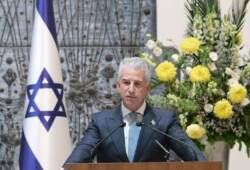
Mossad Director David “Dedi” Barnea issued a sharp warning Tuesday night over Iran’s nuclear ambitions, vowing that Israel will not allow a dangerous nuclear agreement to materialize and will ensure Tehran’s nuclear project is never revived.
Speaking at the Mossad’s annual ceremony honoring outstanding employees, Barnea said that despite severe damage to Iran’s nuclear program, the regime has not abandoned its goal of developing a nuclear weapon.
“Iran has not relinquished its aspiration to destroy the State of Israel,” Barnea said. “It believes it can once again deceive the world and push forward another bad nuclear deal. We did not allow such an agreement to materialize, and we will not allow it to materialize.”
Barnea warned that Iran would accelerate its nuclear efforts the moment circumstances allow. “This is a state that will break forward as soon as it can,” he said. “The idea of continuing to develop a nuclear bomb is still alive in their hearts.”
He stressed that Israel bears responsibility to ensure Iran’s nuclear project, which he said has been “severely damaged,” is never reactivated. That effort, he noted, is being carried out in close coordination with the United States.
Barnea also addressed the broader threat of international terrorism, linking it directly to Iran’s strategic doctrine. “The criminal idea of targeting innocent civilians has always been, and remains, at the foundation of the Iranian regime’s strategy,” he said.
He vowed that Israel would pursue both attackers and those who direct them. “We will find the perpetrators and those who sent them, the Iranians and the jihadists, wherever they flee,” Barnea said. “Justice will be done and will be seen. Light will overcome darkness.”
The remarks were delivered at a ceremony held at the President’s Residence in Jerusalem, where certificates of excellence were awarded to 12 Mossad employees. The event took place on the third night of Chanukah and was attended by President Isaac Herzog, Prime Minister Benjamin Netanyahu, and Barnea.
Barnea also briefly referenced the recent antisemitic terror attack in Sydney, underscoring his warning that global terrorism targeting civilians remains a central tool of Israel’s enemies.
His speech reinforced Israel’s longstanding position that Iran’s nuclear ambitions and its sponsorship of terrorism represent an existential threat, and that Israel will continue acting decisively to defend its citizens and prevent those threats from becoming reality.
TruLight Ministry News
TruLight Ministries orders from God since 2012 . Teach Them , Comfort Them and Warn Them!
////////////
TruLight Ministries opdrag vanaf God sedert 2012. Leer hulle, Troos hulle en Waarsku hulle!
HOEVEEL TYD HET JY NOG NODIG? DEUR PASTOOR DIRK
Doctrine of Demons – Teaching for the Christian , Discerning the spirits
Share this Feeding of Manna with your Friends and Family. just click on the Social Media icon and share !