Hosted by TruLight Ministries – The Place of Truth
Even in The Waiting for answer to Prayer , God is Working on a Plan!
Waiting on God is not only difficult; sometimes it seems impossible. We want things to happen in our own timing, according to our plans. But God doesn’t operate on our schedules, and expecting that He will sets one up for disappointment.
Waiting on God means going without answers to prayer, wondering why the wicked seem to prosper, and having desires delayed and hope deferred. God has a greater perspective of life’s events, and His perspective, plans, and schedules are perfect and holy, because He is perfect and holy. The psalmist tells us, “As for God, His way is perfect” (Psalm 18:30). If God’s ways are “perfect,” then we can trust that whatever He does—and whatever His timing—is also perfect. When we grasp that fact, waiting on God is not only made less difficult, it actually becomes joyful.
The promises of God are clear on this matter—in waiting on God, we find our strength renewed (Isaiah 40:31). But we are human, and we live in a fast-paced culture that demands everything now. That’s one reason why waiting on God is difficult. Sometimes, the prayers we lift up to the Lord of Hosts are answered immediately, and that encourages us to further trust and confidence. However, sometimes the Lord’s answers are delayed. Over a period of time, the Lord tests our faith, and that’s when we can really struggle. We may even start to wonder whether the Lord is really listening to our prayers.
Waiting on God should not cause the believer to doubt or to worry. The apostle Paul exhorts us to not be anxious about anything (Philippians 4:6). The King James Version translates this as the command to be “careful for nothing.” This means we are not to be full of care over anything; we should be mindful of nothing that might cause concern, except to bring it to God in prayer. Anxiety in the believer suggests a lack of faith, and that grieves the Lord (see Matthew 8:26).
Waiting on God can keep us out of trouble. Abraham had God’s promise of a son through whom the covenant would be fulfilled (Genesis 15:4). Abraham and Sarah tried and waited, but they could have no child. Rather than waiting on God and His timing, they unwisely took matters into their own hands, and Ishmael was the result (Genesis 16).
One divine attribute that will enable us to patiently wait on God is His sovereignty. We can have complete confidence in His total, independent control over every creature, event, and circumstance at every moment in history. Subject to none, influenced by none, and absolutely independent, God does what He pleases, only as He pleases, and always as He pleases. Nothing can stay His hand: “I make known the end from the beginning, from ancient times, what is still to come. I say: My purpose will stand, and I will do all that I please” (Isaiah 46:10). Once we better understand God’s sovereignty, coupled with His goodness, waiting for God to act becomes a matter of a child trusting in his father’s faithfulness, sure of his father’s strength.
Waiting on God is never easy, but we wait in the knowledge that God knows our situation, He cares for our needs, and He is good to the end. “Hope deferred makes the heart sick, but a longing fulfilled is a tree of life” (Proverbs 13:12).
Selfs in Die Wag op ‘n Antwoord op Gebed, Werk God aan ‘n Plan!
Om op God te wag is nie net moeilik nie; soms lyk dit onmoontlik. Ons wil hê dinge moet op ons eie tyd gebeur, volgens ons planne. Maar God werk nie volgens ons skedules nie, en verwag nie dat Hy dit sal doen nie, en stel ‘n mens op vir teleurstelling.
Om op God te wag beteken om sonder antwoorde op gebed te gaan, te wonder hoekom die goddelose voorspoedig lyk, en om begeertes uit te stel en hoop uitgestel te hê. God het ‘n groter perspektief op die lewensgebeure, en Sy perspektief, planne en skedules is perfek en heilig, want Hy is perfek en heilig. Die psalmis sê vir ons: “Wat God betref, sy weg is perfek” (Psalm 18:30). As God se weë “volmaak” is, dan kan ons vertrou dat wat Hy ook al doen – en wat ook al sy tydsberekening is – ook perfek is. Wanneer ons daardie feit begryp, word dit nie net minder moeilik om op God te wag nie, dit word eintlik vreugdevol.
Die beloftes van God is duidelik oor hierdie saak – deur op God te wag, vind ons ons krag hernu (Jesaja 40:31). Maar ons is menslik, en ons leef in ‘n vinnige kultuur wat alles nou eis. Dit is een rede waarom dit moeilik is om op God te wag. Soms word die gebede wat ons tot die Here van die Leërskare ophef onmiddellik beantwoord, en dit moedig ons aan tot verdere vertroue en vertroue. Soms word die Here se antwoorde egter vertraag. Met verloop van tyd toets die Here ons geloof, en dit is wanneer ons regtig kan sukkel. Ons kan selfs begin wonder of die Here werklik na ons gebede luister.
Om op God te wag, moet die gelowige nie laat twyfel of bekommerd wees nie. Die apostel Paulus vermaan ons om oor niks bekommerd te wees nie (Filippense 4:6). Die King James-vertaling vertaal dit as die bevel om “oor niks besorg te wees nie”. Dit beteken dat ons nie vol bekommernis oor enigiets moet wees nie; ons moet bedag wees op niks wat kommer kan veroorsaak nie, behalwe om dit in gebed na God te bring. Angs in die gelowige dui op ‘n gebrek aan geloof, en dit bedroef die Here (sien Matteus 8:26).
Om op God te wag, kan ons uit die moeilikheid hou. Abraham het God se belofte van ‘n seun gehad deur wie die verbond vervul sou word (Genesis 15:4). Abraham en Sara het probeer en gewag, maar hulle kon geen kind hê nie. Eerder as om op God en Sy tydsberekening te wag, het hulle onverstandig sake in eie hande geneem, en Ismael was die gevolg (Genesis 16).
Een goddelike eienskap wat ons in staat sal stel om geduldig op God te wag, is Sy soewereiniteit. Ons kan volkome vertroue hê in Sy totale, onafhanklike beheer oor elke skepsel, gebeurtenis en omstandigheid op elke oomblik in die geskiedenis. Onderworpe aan niemand, beïnvloed deur niemand, en absoluut onafhanklik, doen God wat Hy wil, net soos Hy wil, en altyd soos Hy wil. Niks kan Sy hand keer nie: “Ek maak die einde bekend van die begin af, van die ou tyd af, wat nog kom. Ek sê: My besluit sal standhou, en Ek sal doen alles wat My behaag” (Jesaja 46:10). Sodra ons God se soewereiniteit beter verstaan, tesame met Sy goedheid, word die wag vir God om op te tree ‘n saak van ‘n kind wat vertrou op sy vader se getrouheid, seker van sy vader se krag.
Om op God te wag is nooit maklik nie, maar ons wag in die wete dat God ons situasie ken, Hy sorg vir ons behoeftes, en Hy is goed tot die einde toe. “’n Uitgestelde hoop maak die hart siek, maar ’n verlange wat vervul word, is ’n lewensboom” (Spreuke 13:12).

Bible Verse and Prayer for Today
Restore us, O Lord God Almighty; make your face shine upon us, that we may be saved.
—Psalm 80:19
In the days of Jesus’ birth, a group of devout and lowly people called the “pious poor” were looking for God’s redemption of his people. We meet some of them in the first two chapters of Luke’s Gospel — Zechariah and Elizabeth, Anna and Simeon, along with Mary and Joseph. They knew that salvation could not, and would not, come without great cost — not just to themselves, but also to God. Isaiah had prophesied about this redemption in his Servant Songs (Isaiah 53:1-12). They had experienced suffering and hardship in their own history. So with honest hearts, they confessed that they didn’t have the power to bring their own salvation and deliverance. This power had to come from their almighty God. They believed God would release this power for the powerless, yet righteous and devout, people seeking God’s transformation in their lives and waiting for God to console and redeem Israel (Luke 2:25; 24:21). They knew they needed to ask God for it! They knew to seek his face and find his presence in their daily lives. So we join them as we cry out, “Restore us, O Lord God Almighty; make your face shine upon us, that we may be saved.”
Prayer
O Lord, God of heaven and earth, Ruler of all creation, I praise you. I praise you for your power and glory. I praise you for your wisdom and creativity. I praise you for your mercy and righteousness. I praise you, because you alone are worthy of my praise. O Lord, you alone can bring full salvation to me, to the lost, and to my brothers and sisters in need. Please, shine your face upon me. Please, make your presence known in our lives and shine your face upon us. In Jesus’ name, I pray. Amen and Amen
Bybel Vers en Gebed vir Vandag
Herstel ons, o Here God, Almagtige; laat u aangesig oor ons skyn, sodat ons gered kan word.
—Psalm 80:19
In die dae van Jesus se geboorte het ‘n groep vroom en nederige mense, genaamd die “vrome armes”, gesoek na God se verlossing van sy volk. Ons ontmoet sommige van hulle in die eerste twee hoofstukke van Lukas se Evangelie — Sagaria en Elisabet, Anna en Simeon, saam met Maria en Josef. Hulle het geweet dat verlossing nie sonder groot koste kon en sou kom nie — nie net vir hulleself nie, maar ook vir God. Jesaja het oor hierdie verlossing geprofeteer in sy Diensknegliedere (Jesaja 53:1-12). Hulle het lyding en ontbering in hul eie geskiedenis ervaar. Dus het hulle met eerlike harte bely dat hulle nie die mag gehad het om hul eie verlossing en verlossing te bring nie. Hierdie krag moes van hul almagtige God kom. Hulle het geglo dat God hierdie krag sou vrystel vir die magtelose, maar regverdige en vrome mense wat God se transformasie in hul lewens soek en wag dat God Israel sal troos en verlos (Lukas 2:25; 24:21). Hulle het geweet dat hulle God daarvoor moes vra! Hulle het geweet om sy aangesig te soek en sy teenwoordigheid in hul daaglikse lewens te vind. Daarom sluit ons by hulle aan terwyl ons uitroep: “Herstel ons, o Here God, Almagtige; laat u aangesig oor ons skyn, sodat ons gered kan word.”
Gebed
O Here, God van hemel en aarde, Heerser van die hele skepping, ek loof U. Ek loof U vir u krag en heerlikheid. Ek loof U vir u wysheid en kreatiwiteit. Ek loof U vir u genade en geregtigheid. Ek loof U, want U alleen is my lof werd. O Here, U alleen kan volle verlossing bring aan my, aan die verlorenes, en aan my broers en susters in nood. Asseblief, laat u aangesig op my skyn. Asseblief, maak u teenwoordigheid bekend in ons lewens en laat u aangesig op ons skyn. In Jesus se Naam, bid ek. Amen en Amen.
Bible Teaching of the Day
Does God answer prayers?
The short answer to this question is, “Yes!” God has promised that, when we ask for things that are in accordance with His will for our lives, He will give us what we ask for (1 John 5:14–15). However, there is one caveat to add to this: we may not always like the answer.
We pray for a lot of things—some good, some bad, some really pointless. But God listens to all of our prayers, regardless of what we ask (Matthew 7:7). He does not ignore His children (Luke 18:1–8). When we talk to Him, He has promised to listen and respond (Matthew 6:6; Romans 8:26–27). His answer may be some variation of “yes” or “no” or “wait, not now.”
Keep in mind that prayer is not our way of getting God to do what we want. Our prayers should be focused on things that honor and glorify God and reflect what the Bible clearly reveals God’s will to be (Luke 11:2). If we pray for something that dishonors God or is not His will for us, He is unlikely to give what we ask for. God’s wisdom far exceeds our own, and we must trust that His answers to our prayers are the best possible solutions.
Does God answer prayers? – When God says “yes.”
In the first two chapters of 1 Samuel, Hannah prays and asks God to give her a baby. She had been unable to conceive which, in biblical times, was considered a mark of shame for a woman. Hannah prayed fervently—so fervently that a priest who saw her praying thought she was drunk. But God heard Hannah, and He allowed her to give birth to a child.
Jesus said, “Whatever you ask in my name, this I will do, that the Father may be glorified in the Son” (John 14:13). If you have prayed specifically for something and God has granted it to you, then you can be assured that it is His will. Nothing happens without God allowing it to happen (Romans 8:28).
Does God answer prayers? – When God says “no.”
In John 11, Mary and Martha wanted Jesus to heal their dying brother, yet Jesus allowed Lazarus to die. Why did He say “no” to these grieving women who loved Him so much? Because He had greater things planned for Lazarus, things that no one could possibly have imagined.
“No” is one of the hardest answers we can receive. But, once again, it is important to remember that God is all-knowing and is aware of the entire timeline of history. He knows every possible outcome of every possible choice in every possible situation; we do not. He sees the “big picture”; we see a partial brushstroke. Proverbs 3:5 says to “trust in the LORD with all your heart, and do not lean on your own understanding.” When we get a “no” answer, we must trust that whatever we asked for was not God’s will.
Does God answer prayers? – When God says “wait, not now.”
Sometimes hearing “wait” is even harder than hearing “no” because it means we have to be patient (Romans 8:25). While waiting is difficult, we can be thankful God is in control and trust that His timing will be perfect (Romans 12:12; Psalm 37:7—9).
God wants the best for your life. He does not want you to suffer needlessly. Jeremiah 29:11 says, “For I know the plans I have for you, declares the Lord, plans for welfare and not for evil, to give you a future and a hope.” Be patient and know that He is your loving Father (Psalm 46:10).
Abide by Philippians 4:6 as you make your requests to God: “Do not be anxious about anything, but in everything by prayer and supplication with thanksgiving let your requests be made known to God.” Then, when God responds, be prepared to accept His wisdom—whether or not you agree with His answer.
Bybel Lering vir die Dag
Antwoord God gebede?
Die kort antwoord op hierdie vraag is: “Ja!” God het belowe dat wanneer ons vra vir dinge wat in ooreenstemming is met Sy wil vir ons lewens, Hy ons sal gee wat ons vra (1 Johannes 5:14–15). Daar is egter een voorbehoud om hierby te voeg: ons hou dalk nie altyd van die antwoord nie.
Ons bid vir baie dinge – sommige goed, sommige sleg, sommige regtig nutteloos. Maar God luister na al ons gebede, ongeag wat ons vra (Matteus 7:7). Hy ignoreer nie Sy kinders nie (Lukas 18:1–8). Wanneer ons met Hom praat, het Hy belowe om te luister en te reageer (Matteus 6:6; Romeine 8:26–27). Sy antwoord kan ‘n variasie van “ja” of “nee” of “wag, nie nou nie” wees.
Hou in gedagte dat gebed nie ons manier is om God te kry om te doen wat ons wil hê nie. Ons gebede moet gefokus wees op dinge wat God eer en verheerlik en weerspieël wat die Bybel duidelik openbaar dat God se wil moet wees (Lukas 11:2). As ons bid vir iets wat God oneer aandoen of nie Sy wil vir ons is nie, is dit onwaarskynlik dat Hy sal gee wat ons vra. God se wysheid oortref ons eie verreweg, en ons moet vertrou dat Sy antwoorde op ons gebede die beste moontlike oplossings is.
Verhoor God gebede? – Wanneer God “ja” sê.
In die eerste twee hoofstukke van 1 Samuel bid Hanna en vra God om haar ‘n baba te gee. Sy kon nie swanger raak nie, wat in Bybelse tye as ‘n teken van skaamte vir ‘n vrou beskou is. Hanna het vurig gebid – so vurig dat ‘n priester wat haar sien bid het, gedink het sy is dronk. Maar God het Hanna gehoor en haar toegelaat om ‘n kind te baar.
Jesus het gesê: “Alles wat julle in my Naam vra, dit sal Ek doen, sodat die Vader in die Seun verheerlik kan word” (Johannes 14:13). As jy spesifiek vir iets gebid het en God dit aan jou toegestaan het, dan kan jy verseker wees dat dit Sy wil is. Niks gebeur sonder dat God dit toelaat nie (Romeine 8:28).
Verhoor God gebede? – Wanneer God “nee” sê.
In Johannes 11 wou Maria en Marta hê dat Jesus hulle sterwende broer moes genees, maar Jesus het toegelaat dat Lasarus sterf. Waarom het Hy “nee” gesê vir hierdie bedroefde vroue wat Hom so liefgehad het? Omdat Hy groter dinge vir Lasarus beplan het, dinge wat niemand ooit kon dink nie.
“Nee” is een van die moeilikste antwoorde wat ons kan ontvang. Maar weereens is dit belangrik om te onthou dat God alwetend is en bewus is van die hele tydlyn van die geskiedenis. Hy ken elke moontlike uitkoms van elke moontlike keuse in elke moontlike situasie; ons nie. Hy sien die “groter prentjie”; ons sien ‘n gedeeltelike kwasstreep. Spreuke 3:5 sê: “Vertrou op die HERE met jou hele hart en moenie op jou eie insig steun nie.” Wanneer ons ‘n “nee”-antwoord kry, moet ons vertrou dat wat ons ook al gevra het, nie God se wil was nie.
Verhoor God gebede? – Wanneer God sê “wag, nie nou nie.”
Soms is dit selfs moeiliker om “wag” te hoor as om “nee” te hoor, want dit beteken ons moet geduldig wees (Romeine 8:25). Alhoewel wag moeilik is, kan ons dankbaar wees dat God in beheer is en vertrou dat Sy tydsberekening perfek sal wees (Romeine 12:12; Psalm 37:7-9).
God wil die beste vir jou lewe hê. Hy wil nie hê jy moet onnodig ly nie. Jeremia 29:11 sê: “Want Ek weet watter planne Ek vir julle het, spreek die Here, planne van voorspoed en nie van onheil nie, om julle ‘n toekoms en ‘n hoop te gee.” Wees geduldig en weet dat Hy jou liefdevolle Vader is (Psalm 46:10).
Bly by Filippense 4:6 wanneer jy jou versoeke aan God rig: “Moet oor niks besorg wees nie, maar laat julle versoeke in alles deur gebed en smeking met danksegging bekend word by God.” Dan, wanneer God antwoord, wees voorbereid om Sy wysheid te aanvaar – of jy nou met Sy antwoord saamstem of nie.

Today’s Devotional
Many have felt abandoned by God in their times of greatest need, asking God for help but not receiving what was asked for. Does this mean that God doesn’t care or that He is ignoring our cries for help? When we cry out for Him, asking Him to stop the pain and suffering, we are communicating a universal desire to avoid hurt. That is not weakness, but it is human.
The Bible records several testimonies of those who called out to God in a time of need and, at least for a while, were met with silence. Job is the most obvious example, as in his distress he felt as if God were nowhere to be found: “If I go to the east, he is not there; if I go to the west, I do not find him. When he is at work in the north, I do not see him; when he turns to the south, I catch no glimpse of him” (Job 23:8–9). The psalmists also struggled with the feeling that God was not responding to their cries: “Why, LORD, do you stand far off? Why do you hide yourself in times of trouble?” (Psalm 10:1); “How long, LORD? Will you forget me forever? How long will you hide your face from me?” (Psalm 13:1); “Why do you hide your face and forget our misery and oppression?” (Psalm 44:24).
Jesus understands the mindset of not wanting to experience pain and suffering. In the Garden of Gethsemane, just before His arrest, Jesus asked His Father three times, “My Father, if it is possible, may this cup be taken from me. Yet not as I will, but as you will” (Matthew 26:39) (also see Matthew 26:42 and Matthew 20:22). Though He asked for the “cup” to pass, Jesus asked with the condition “if it is possible.” Jesus was in complete submission to God’s will and not His own. If His suffering was a part of God’s will, then He was willing to accept that.
When we cry out, “God, please help me,” God hears us and always responds. He may not respond in the way we wish, but He responds nonetheless. Understandably, when amid the throes of pain, suffering, and grief, it is difficult to see the wider perspective of God’s plan, especially when we receive an answer of “no” or “not now.” But we can trust in God’s sovereignty because we know He is good (Psalm 48:1; 95:3, 6). Even as we go through the trials, God gives grace (2 Corinthians 12:9). After Jesus’ prayer in Gethsemane, “an angel from heaven appeared to him and strengthened him” (Luke 22:43).
Since God is omniscient, He is privy to details we cannot begin to understand. Psalm 147:5 says, “Great is our Lord and mighty in power; his understanding has no limit.” When we cry out to God, “Please help me,” He sees the heart and understands (Hebrews 4:15), and His response will always be out of love (Romans 5:8; Psalm 139:13–16). We can submit to His authority because He is trustworthy. Remember, God broke His silence and revealed Himself to Job in an unmistakable way (Job 38:1).
Jesus assures us that God will only give us what is good and right in Luke 11:11–13, “Which of you fathers, if your son asks for a fish, will give him a snake instead? Or if he asks for an egg, will give him a scorpion? If you then, though you are evil, know how to give good gifts to your children, how much more will your Father in heaven give the Holy Spirit to those who ask him!” The God who keeps track of every sparrow cares about the details of our lives, too (Luke 12:5–6).
Since God knows what is best for our lives, He will not say “yes” to a prayer that goes against what is best. We may not understand or agree with the why of that response, but we can trust that God does and that His actions will redound to His glory and our ultimate good (Psalm 19:7; 2 Corinthians 4:7). Through painful moments in life, we can learn Christlikeness and glorify the Lord with our words and actions even through our suffering (Job 1:22; James 1:2–8; 1 Chronicles 16:28–29).
God responds to every call for help. But whether or not that answer is the one we most desire is up to God. God works for the good of those who love Him (Romans 8:28) and for His glory. We can trust that He will always respond to cries for help in accordance to His good and perfect will. Even when the psalmist was searching for a seemingly absent God, he chose to live by faith: “But I trust in your unfailing love; my heart rejoices in your salvation. I will sing the Lord’s praise, for he has been good to me” (Psalm 13:5–6).
Vandag se Bemoediging
Baie het gevoel dat God hulle in hul tye van grootste nood verlaat het, en God om hulp gevra het, maar nie ontvang het wat gevra is nie. Beteken dit dat God nie omgee nie, of dat Hy ons hulpgeroep ignoreer? Wanneer ons na Hom uitroep en Hom vra om die pyn en lyding te stop, kommunikeer ons ‘n universele begeerte om seer te vermy. Dit is nie swakheid nie, maar dit is menslik.
Die Bybel teken verskeie getuienisse op van diegene wat in ‘n tyd van nood na God uitgeroep het en, ten minste vir ‘n rukkie, met stilte begroet is. Job is die mees voor die hand liggende voorbeeld, aangesien hy in sy benoudheid gevoel het asof God nêrens te vinde was nie: “As ek na die ooste gaan, is Hy nie daar nie; as ek na die weste gaan, vind ek Hom nie. As Hy in die noorde werk, sien ek Hom nie; as Hy na die suide draai, sien ek Hom nie” (Job 23:8–9). Die psalmiste het ook gesukkel met die gevoel dat God nie op hulle hulpgeroep gereageer het nie: “Waarom, HERE, staan U ver weg? Waarom verberg U Uself in tye van benoudheid?” (Psalm 10:1); “Hoe lank, HERE? Sal U my vir ewig vergeet? Hoe lank sal U u aangesig vir my verberg?” (Psalm 13:1); “Waarom verberg U u aangesig en vergeet ons ellende en verdrukking?” (Psalm 44:24).
Jesus verstaan die denkwyse om nie pyn en lyding te wil ervaar nie. In die tuin van Getsemane, net voor Sy arrestasie, het Jesus Sy Vader drie keer gevra: “My Vader, as dit moontlik is, laat hierdie beker van My af weggeneem word; nogtans nie soos Ek wil nie, maar soos U wil” (Matteus 26:39) (sien ook Matteus 26:42 en Matteus 20:22). Alhoewel Hy gevra het dat die “beker” verbygaan, het Jesus gevra met die voorwaarde “as dit moontlik is.” Jesus was in volle onderwerping aan God se wil en nie sy eie nie. As Sy lyding deel van God se wil was, dan was Hy bereid om dit te aanvaar.
Wanneer ons uitroep: “God, help my asseblief,” hoor God ons en reageer altyd. Hy mag dalk nie reageer soos ons wil nie, maar Hy reageer nietemin. Dit is te verstane dat dit moeilik is om die breër perspektief van God se plan te sien te midde van die pyn, lyding en hartseer, veral wanneer ons ‘n antwoord van “nee” of “nie nou nie” ontvang. Maar ons kan op God se soewereiniteit vertrou, want ons weet Hy is goed (Psalm 48:1; 95:3, 6). Selfs terwyl ons deur die beproewinge gaan, gee God genade (2 Korintiërs 12:9). Na Jesus se gebed in Getsemane het “‘n engel uit die hemel aan hom verskyn en hom versterk” (Lukas 22:43).
Aangesien God alwetend is, is Hy bewus van besonderhede wat ons nie kan begin verstaan nie. Psalm 147:5 sê: “Groot is ons Here en magtig in krag; sy verstand is onbeperk.” Wanneer ons na God uitroep: “Help my asseblief,” sien Hy die hart en verstaan (Hebreërs 4:15), en Sy reaksie sal altyd uit liefde wees (Romeine 5:8; Psalm 139:13–16). Ons kan ons aan Sy gesag onderwerp omdat Hy betroubaar is. Onthou, God het Sy stilte verbreek en Homself op ‘n onmiskenbare manier aan Job geopenbaar (Job 38:1).
Jesus verseker ons dat God ons slegs sal gee wat goed en reg is in Lukas 11:11–13: “Wie van julle vaders sal, as sy seun ‘n vis vra, hom in plaas daarvan ‘n slang gee? Of as hy ‘n eier vra, hom ‘n skerpioen gee? As julle dan, al is julle sleg, weet om goeie gawes aan julle kinders te gee, hoeveel te meer sal julle Vader wat in die hemele is, die Heilige Gees gee aan die wat Hom bid!” Die God wat elke mossie dophou, gee ook om vir die besonderhede van ons lewens (Lukas 12:5–6).
Aangesien God weet wat die beste vir ons lewens is, sal Hy nie “ja” sê vir ’n gebed wat teen die beste ingaan nie. Ons mag dalk nie die rede vir daardie reaksie verstaan of daarmee saamstem nie, maar ons kan vertrou dat God dit wel doen en dat Sy dade tot Sy eer en ons uiteindelike beswil sal strek (Psalm 19:7; 2 Korintiërs 4:7). Deur pynlike oomblikke in die lewe kan ons Christus-gelykvormigheid leer en die Here verheerlik met ons woorde en dade, selfs deur ons lyding (Job 1:22; Jakobus 1:2–8; 1 Kronieke 16:28–29).
God reageer op elke hulpgeroep. Maar of daardie antwoord die een is wat ons die meeste begeer, is aan God. God werk tot die beswil van diegene wat Hom liefhet (Romeine 8:28) en tot Sy eer. Ons kan vertrou dat Hy altyd op hulpgeroep sal reageer in ooreenstemming met Sy goeie en volmaakte wil. Selfs toe die psalmis gesoek het na ‘n skynbaar afwesige God, het hy gekies om deur geloof te leef: “Maar ek vertrou op u onfeilbare liefde; my hart juig in u hulp. Ek wil die Here prys, want Hy was goed aan my” (Psalm 13:5–6).

TruLight Ministries Daily Entertainment
TruLight TV – Overcoming Darkness: Journey to Happiness!
Life can seem to be going well until an unexpected event disrupts everything. While we may be caught off guard, God is aware of all situations. We can rely on His omniscience and sovereignty, even amid life’s uncertainties. In today’s lesson from Dr. Charles Stanley, he emphasizes that every command in God’s Word is meant for our safety and well-being. He highlights the need to be ready to resist challenges by donning the full armor of God. Meanwhile, Samira longed for happiness, but she was haunted by a dark presence and unsettling whispers that invaded her space. Just when she felt hopeless, a miraculous event occurred that would change her life dramatically. Watch Samira’s journey to see how Jesus made a pivotal difference in that moment, transforming her life forever.
Today on TruLight Radio XM
TruLight Radio XM 24/7
Program
GMT / UTC +2
Monday To Fridays
00:15 Words to Live By Testimonies
01.15 Science Scripture and Salvation
02.15 Ground Works
04.00 Gospel Concert of the Day
05.00 The Daren Streblow Comedy Show
5:55 It is Today devotional
6:00 Gaither Homecoming Morning Show
7:15 Discover the Word
8.15 Destined for Victory
8:55 Science Scripture and Salvation
9:00 Holy Spirit Hour – Normally Sermons
10:15 Hope of the Heart
11:15 Unshackled
11.45 Words to Live By
12:15 Truth for Life
13:15 Living on the Edge with Chip Ingram
14:15 Focus on the Family
15:00 Kids Hour
16:00 In Touch with Dr. Charles Stanley
16:30 Groundwork
17:15 Live in the Light
18:15 Renewing your Mind
19:00 Gaither Homecoming Show
20:15 Growing Hope
21:15 Adventures in Odyssey Radio Drama
21:45 Bible Reading
22:15 Nightsounds
23.00 Good Old Country Gospel / Rhema Gospel Express
VISIT THE WEBSITE
https://TruLightRadioXM.org.za

BIBLE PROPHECY IN THE NEWS
As soon as God starts throwing Earth with Rocks !!
Bible Prophecy & The Largest Planetary Defense Drill In History

Cross the globe, a quiet but historic exercise is underway–one that reveals both humanity’s remarkable ingenuity and its deep unease about what might come from the heavens. Space agencies from more than 23 nations, led by NASA and the European Space Agency, have launched the largest planetary defense drill in history. It will run through January 2026, using the harmless passage of an unusual visitor–interstellar object 3I/ATLAS–as a full-scale rehearsal for a future threat that may not be harmless at all.
This is not science fiction. It is preparation.
3I/ATLAS, the third interstellar object ever observed passing through our solar system, is expected to make its closest approach to Earth–about 170 million miles–on Friday, Dec. 19. There is no risk of collision. Officials have been clear about that. Yet the interest surrounding this Manhattan-sized comet has been intense, spawning everything from serious scientific analysis to breathless UFO speculation across mainstream media. Strip away the noise, and what remains is telling: the world’s leading space agencies are using this moment to train for a scenario where an object is on a collision course with Earth.
That alone should give us pause.
The objective of the drill is straightforward and sobering–to learn how to detect, track, communicate about, and potentially respond to high-velocity near-Earth objects. Interstellar objects like 3I/ATLAS travel far faster than typical asteroids bound to our solar system. Their speed compresses decision-making timelines and magnifies risk. In other words, if one of these objects were ever aimed at Earth, humanity would have very little time to react.
This reality explains why 3I/ATLAS has generated such controversy and attention. It is not dangerous–but it is revealing. It exposes the fragility of our planet and the limits of our control. Despite all our technological prowess, the truth remains: we live on a small world, moving through a vast and unpredictable universe.
And here is where science and Scripture begin an unavoidable conversation.
The Bible speaks plainly about events yet to come–events involving the heavens themselves. In the Book of Revelation, the Apostle John describes a future time when a “great mountain burning with fire was thrown into the sea,” devastating marine life and commerce (Revelation 8:8). He also writes of a star called Wormwood falling to Earth, poisoning a third of the world’s fresh waters and causing mass death (Revelation 8:10-11).
These are not poetic flourishes about personal hardship. They are descriptions of planetary-scale catastrophe.
From a modern scientific perspective, the effects described in Revelation are strikingly consistent with what astrophysicists say would happen if a large comet or asteroid struck Earth. An ocean impact could generate mega-tsunamis, wipe out coastal regions, disrupt global trade, and devastate marine ecosystems. An impact on land–or an airburst–could inject dust and toxins into the atmosphere, contaminate water sources, trigger global cooling, and collapse food supplies. Science confirms what Scripture has long foretold: such an event would be civilization-altering.
Yet the Bible goes further. It places these cosmic judgments within a specific timeline–the Tribulation period. According to Scripture, this seven-year period begins with the confirming of a global peace agreement, often referred to as a covenant or treaty (Daniel 9:27). Only after that point do the seals, trumpets, and bowls of judgment unfold.
This matters.
The events described in Revelation are not random natural disasters. They are deliberate acts within God’s redemptive plan. They occur not because humanity failed to build sufficient defenses, but because the time has come for divine judgment and ultimate restoration. No planetary defense system–no matter how advanced–will be able to stop what God has decreed.
That truth does not make today’s planetary defense efforts foolish. On the contrary, they reflect humanity’s God-given instinct to preserve life and seek understanding. But they also reveal something deeper: an unspoken awareness that forces exist beyond our control.
3I/ATLAS is not Wormwood. It is not the burning mountain of Revelation. But its arrival–and the global response to it–serves as a reminder. The world is preparing for impacts from the sky, even as it largely ignores the warnings written long ago about what those impacts ultimately mean.
The Bible does not tell us to fear the heavens. It tells us to discern the times.
As nations rehearse for a day when an object might threaten Earth, believers are reminded of a greater truth: history is not drifting aimlessly through space. It is moving on a collision course with prophecy. And when that moment arrives, it will not be stopped by drills, defenses, or technology–but fulfilled exactly as written.
END OF NEWS ARTICLE
PASTOR DIRK SAYS
Biblical Symbolism of Rocks:
In many religious traditions, particularly the Bible, rocks generally symbolize strength, stability, refuge, and God’s steadfast nature. God is often referred to as “the Rock” of salvation and a secure foundation upon which to build one’s life. This makes the image of God throwing rocks, or using them for destruction, especially dramatic and terrifying, as it subverts their usual symbolic meaning of security.
Divine Judgment and Shaking the Earth:
Scripture frequently uses the imagery of God “shaking the earth” to depict moments of divine intervention, judgment, and the end times. During these times, people are described as fleeing to caves and hiding among the rocks from the “terror of the Lord”. The idea of the natural world, including the very ground beneath our feet, being used as an instrument of divine wrath underscores the absolute power and majesty of God during a period of universal upheaval.
The Stumbling Stone:
Another related biblical metaphor is that of Jesus as both the “living Stone” upon which the church is built and a “stumbling stone” or a “rock that makes them fall” for those who reject Him. The idea of a rock “crushing” those upon whom it falls is used as a warning against ignoring God’s message and courting severe judgment.
Both Jesus and John the Revelater Mentioned , Planets falling on Earth during the 2nd Coming of Jesus at the Battle of Armageddon. This can be seen as WHEN God starts throwing Earth with Rocks !! after his 7 Plaques of Wrath just before the 2nd Coming of Jesus.
Mat 24:29 – 31 Immediately after the tribulation of those days shall the sun be darkened, and the moon shall not give her light, and the stars shall fall from heaven, and the powers of the heavens shall be shaken:
And then shall appear the sign of the Son of man in heaven: and then shall all the tribes of the earth mourn, and they shall see the Son of man coming in the clouds of heaven with power and great glory.
And he shall send his angels with a great sound of a trumpet, and they shall gather together his elect from the four winds, from one end of heaven to the other.
Rev 16:15 – 21 Behold, I come as a thief. Blessed is he that watcheth, and keepeth his garments, lest he walk naked, and they see his shame.
And he gathered them together into a place called in the Hebrew tongue Armageddon.
And the seventh angel poured out his vial into the air; and there came a great voice out of the temple of heaven, from the throne, saying, It is done.
And there were voices, and thunders, and lightnings; and there was a great earthquake, such as was not since men were upon the earth, so mighty an earthquake, and so great.
And the great city was divided into three parts, and the cities of the nations fell: and great Babylon came in remembrance before God, to give unto her the cup of the wine of the fierceness of his wrath.
And every island fled away, and the mountains were not found.
And there fell upon men a great hail out of heaven, every stone about the weight of a talent: and men blasphemed God because of the plague of the hail; for the plague thereof was exceeding great.
Please watch this Video in understanding what takes place at the 2nd Coming of Jesus @ the Battle of Armageddon !!
THE EARTH STOPS SPINNING / ROTATING AT THE 2ND COMING OF JESUS
DIE ROTASIE VAN DIE AARDE STOP BY DIE WEDERKOMS VAN JESUS CHRISTUS
SIGNS OF THE TIMES
NOTE : That Trump and His Administration are Christian Zionists and they Push this Doctrine of Demons down Every Christian worldwide s ear Canal.
This the Sign of the Times article for the Day !
Ted Cruz accuses US churches of failing to confront antisemitism

Invoking legacy of the Holocaust, Texas senator warns that the West, including many American churches, is ignoring the surging antisemitism among young people.
American churches are “asleep” at the wheel when it comes to antisemitism, Texas Sen. Ted Cruz claimed while addressing a pro-Israel event last week.
Last Thursday, Cruz spoke at an Israel Allies Foundation event in Washington DC, warning that while antisemitism is on the rise in the US – particularly among young people – American churches appear to be largely “asleep” on the issue.
The Republican lawmaker invoked the legacy of the Holocaust during his speech, calling the sharp rise in antisemitism globally since October 7, 2023 an echo of the “same hatred” that led to the genocide of the 1930s and 1940s.
“We find ourselves facing echoes of the same hatred which fueled the Holocaust,” Cruz said. “The world’s response to the October 7 attacks made clear that the hatred of the Jewish people did not end in 1945. The hatred that fueled the Holocaust is still alive today and is not confined to geography.”
Cruz took aim at Christians promoting super sessionism, also known as “replacement theology,” which argues that the eternal biblical covenant between God and the Jewish people was nullified and replaced with the “new covenant” of Christianity.
“The poison is yielding results, especially among young people. The poison pouring into their ears is twisting their view of the world.”
“The Church is asleep, fueled by a heresy called replacement theology. If we lose this battle, we lose our nation.”
Far-right podcaster Tucker Carlson, who clashed with Cruz in an interview earlier this year, has in recent months openly promoted replacement theology, declaring that there is no longer a “chosen people” of the Bible, adding that Christians have now taken on that role.
PASTOR DIRK SAYS :
The Christian Zionist Believe Systems is a Doctrine of Demons , For God dissolved the Old Covenant – Zionism and Gave us a New Covenant called Christianity , ONE WAY TO GET TO GOD – AND THAT IS THROUGH JESUS . not the Old Covenant included .
The Dual Covenant of the Christian Zionism believe system is Not the way of Salvation , You CAN NOT select Option 1. Zionism or Option 2. Both Christianity and Zionism and switch between the 2 Like you want!
The Trump Administration since their 1st Term pushed the Doctrine of Demons into the lime Light and even more so with the Assassination of Charlie Kirk and now thees shootings in Australia.
XMAS IN ISRAEL = NOTHING TO DO WITH JESUS . ONLY A TOURIST ATTRACTION BY THE ZIONISTS for THEIR CHRISTIAN ZIONIST “FRIENDS”

GOG AND MAGOG UPDATE
Israel, Greece, Cyprus plan joint force to protect from Magog / Turkish aggression

The proposed force would integrate land, air, and naval units and be positioned to respond quickly to security threats and acts of sabotage in the region.
Israel, Greece, and Cyprus are planning to establish a joint rapid-response military force of about 2,500 troops to operate across the eastern Mediterranean, according to a report by the Greek daily Ta Nea.
The proposed force would integrate land, air, and naval units and be positioned to respond quickly to security threats and acts of sabotage in the region, particularly from Turkey.
The framework envisions Israel and Greece each contributing roughly 1,000 soldiers, with Cyprus providing 500.
Operations would be conducted from existing military bases and infrastructure in Israel and Cyprus, as well as from the Greek islands of Rhodes and Karpathos, creating a continuous operational arc across key maritime zones.
Officials involved in the planning say the initiative is driven by growing concern over the vulnerability of critical infrastructure, including offshore energy platforms, undersea pipelines, and electricity cables. Recent incidents in the Baltic Sea, where Chinese and Russian vessels damaged subsea cables and pipelines in what appeared to be deliberate actions, have heightened awareness of similar risks in the Mediterranean.
“A Greek-Israeli rapid reaction force is not an alliance against anyone. It fills a strategic void. From Rhodes to Cyprus and Israel, platforms, pipelines, and electricity cables are exposed,” an official told Ta Nea.
Beyond regional defense, proponents say the force would serve wider European interests by helping secure routes for transporting natural gas and oil from the eastern Mediterranean to Europe.
One official said the region must act proactively rather than waiting for a crisis to force coordination, arguing that a standing joint mechanism would improve early warning, deterrence, and rapid response capabilities.
The official added that the future of the region should be guided by cooperation, interoperability, and international law, not competing territorial claims.
The initiative comes against the backdrop of worsening relations between Israel and Turkey since October 7, 2023. Ankara has imposed a full trade embargo on Israel and stepped up political and rhetorical attacks over Israel’s war with Hamas. Israel has also insisted that Turkey be excluded from the International Stabilization Force expected to secure and administer Gaza under President Donald Trump’s 20-point plan.
At the same time, Turkey has significantly expanded its military capacity. According to the The New Arab, by 2025 approximately 80% of the components required by Turkey’s defense industry were produced domestically, reflecting a sharp increase in self-sufficiency.
While the rapid-response force remains at the planning stage, officials say it reflects a broader shift toward structured regional security cooperation, aimed at protecting shared assets and responding swiftly to emerging threats in the eastern Mediterranean.
Who Will the Peacekeepers Really Watch In Gaza? Israel Has Reason To Worry
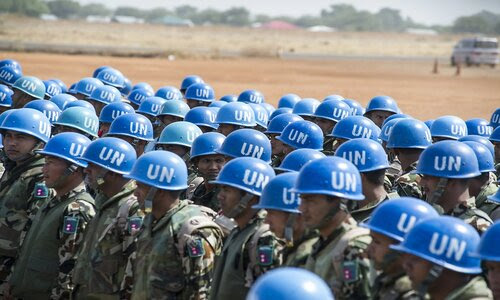
When They say Peace and Security >>>>>>>>>>>>>>>>>
The word peace has a comforting sound. It suggests safety, stability, and an end to bloodshed. But history teaches a harder lesson: when peace is declared without power to enforce it, violence does not disappear—it simply waits. That is the looming danger behind the proposed International Stabilization Force (ISF) outlined in President Donald Trump’s plan to end the Israel–Hamas war. What is being marketed as a peacekeeping solution for Gaza is increasingly shaping up to be something far more troubling for Israel: a monitoring force that restrains Israel’s defenses while leaving Hamas intact.
According to U.S. officials cited by Reuters on December 12, international troops could be deployed to Gaza as early as next month. Yet those same officials made clear the ISF would not fight or disarm Hamas—the very terror organization that launched the October 7, 2023 massacre, murdering more than 1,200 Israelis and foreign nationals and wounding thousands more. That single admission should set off alarm bells across Israel and among anyone who understands counter terrorism realities.
In mid-November, the UN Security Council endorsed Trump’s 20-point “Comprehensive Plan to End the Gaza Conflict,” authorizing a temporary ISF with a sweeping mandate: overseeing borders, providing security, and demilitarizing Gaza. On paper, it sounds robust. In practice, it is already being hollowed out. If the ISF will not disarm Hamas, then demilitarization becomes a slogan rather than a mission.
This is precisely the model Hamas has been demanding—a force that observes but does not enforce. Hamas leaders have repeatedly stated they will not lay down their weapons. Senior leader Khaled Mashaal openly rejected any international force with authority over “the weapons of the resistance.” Egypt, Qatar, and Turkey—longtime Hamas enablers—have echoed this position, insisting the force should merely prevent clashes, not dismantle terror infrastructure. Translation: keep Israel in check while Hamas rearms.
We have seen this movie before, and it ended badly. The United Nations Interim Force in Lebanon (UNIFIL), established in 1978, was tasked with ensuring peace and disarming militant groups. Instead, it presided over one of the most catastrophic failures in modern peacekeeping. Under UNIFIL’s watch, Hezbollah expanded from a lightly armed militia into a terror army with more than 150,000 rockets aimed at Israel. Weapons were embedded in civilian homes, tunnels dug beneath villages, and military sites built near UN posts. UNIFIL did not stop it. It did not dismantle it. It reported—and failed.
As Hussain Abdul-Hussain of the Foundation for Defense of Democracies noted, UNIFIL never engaged Hezbollah in law enforcement or firefights. It searched, reported, and deferred—while Hezbollah used peacekeepers as human shields to deter Israeli action. Israel was forced to watch its northern border transform into a ticking time bomb.
Now that failed model is being dusted off and transported to Gaza.
The situation grows more troubling when examining who is likely to staff this force. Many contributing nations are expected to be Muslim-majority countries whose leaders have already stated they will not “enforce peace” against Hamas. Jordan’s King Abdullah II has flatly refused to send troops, saying peace enforcement is something “nobody will want to touch.” Turkey’s foreign minister openly argued that disarming Hamas should not be the ISF’s first task. Egypt’s foreign minister described the mission as primarily monitoring the ceasefire and borders.
This is not an accusation of religious bias—it is a recognition of political reality. Many Arab and Islamic governments fear domestic backlash if their soldiers confront Hamas. They fear protests, instability, and being branded collaborators with Israel. As a result, the safest path for them is the weakest one: monitoring, humanitarian coordination, and restraint—especially restraint on Israel.
That restraint, however, would come at a devastating cost. Hamas has already demonstrated its strategy: survive, rearm, and strike again. Qatar and Turkey are reportedly floating proposals to store Hamas’s weapons “securely” or transfer them to the Palestinian Authority—temporary solutions designed to preserve Hamas’s influence until political winds shift. Israelis are not paranoid to see this as preparation for another October 7 Called Gog and Magog.
Gaza does not need monitors with clipboards. It needs a force willing to confront terror, seize weapons, destroy tunnels, and end Hamas’s rule decisively. It needs strength—not symbolism. To believe a UN-authorized force will aggressively dismantle a jihadist organization that openly rejects disarmament is not optimism; it is denial.
President Trump often speaks of “peace through strength.” In Gaza, that phrase is not rhetoric—it is reality. Any force unwilling to confront Hamas will inevitably end up doing something else instead: watching Israel, restraining Israel, and judging Israel, while terror quietly regroups.
Peace is not kept by standing between a killer and his victim. It is kept by stopping the killer. Until the international community is willing to do that in Gaza, any so-called peacekeeping force risks becoming exactly what Israel fears most—not a shield against terror, but a spotlight fixed firmly on the Jewish state while its enemies reload in the shadows.
If history is our guide, Israel has every reason to be wary.
TruLight Ministry News
TruLight Ministries orders from God since 2012 . Teach Them , Comfort Them and Warn Them!
////////////
TruLight Ministries opdrag vanaf God sedert 2012. Leer hulle, Troos hulle en Waarsku hulle!
Doctrine of Demons – Teaching for the Christian , Discerning the spirits
Share this Feeding of Manna with your Friends and Family. just click on the Social Media icon and share !