Hosted by TruLight Ministries – The Place of Truth
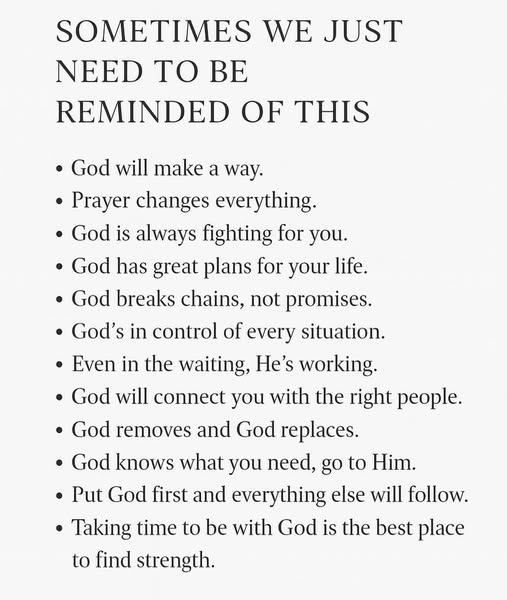
God will Connect You with the Right People
Every generation has its challenges in trying to live the Christian life. Teenagers and young adults may face greater struggles than those in other age categories because new temptations clash with inexperience, and that can translate into disaster. Young people are still learning how to handle the world. Without the wisdom and life experience older generations rely on to overcome temptation, a young person can feel at a loss when pursuing godliness in an ungodly world. However, young people who want to follow Christ can avoid many pitfalls by following a few instructions:
- Recognize that you are in a learning season of life. Our culture praises self-expression and urges the young to voice their opinions at every opportunity. While we all have the right to an opinion, wise young people recognize that they may not have the wisdom that many older people have earned, so they choose to listen and learn. Proverbs 13:20 says, “Whoever walks with the wise becomes wise, but the companion of fools will suffer harm.” Rather than automatically discounting anything the older generation has to say, a young person desiring to live a Christian life will welcome the lessons learned through the experiences of others. By asking questions, challenging assumptions, and comparing ideas with the principles in God’s Word, you will build a foundation for a well-constructed opinion that is worth voicing.
- Remain vigilant over the lust of the flesh and sexual sin (1 John 2:15–16). Young people must learn to handle passions, new feelings, and intense desires as they are in the process of becoming adults. The biological surges can feel overwhelming, especially to young men. Sexual lust can hit with such force that a young person who desires to live for Christ may feel out of control at times. God understands, and He has given detailed instruction in His Word to help keep those passions from ruining your life (1 Corinthians 6:18).
Romans 13:14 says, “Put on Christ and make no provision for the flesh and its lusts.” We “make provision” when we give our weak and sinful flesh more credit than it deserves. When we put ourselves in compromising situations and then expect ourselves to do the right thing at the last minute, we are making provision for our flesh. For example, a young person who attends a party hosted by acquaintances known for their drinking, drug use, and immoral behavior is making provision for the flesh. Intentions of doing the right thing in such a circumstance often get swept away by peer pressure or curiosity about sin. Wise people know their own weaknesses and steer clear of situations that might exploit them.
- Recognize and reject idealistic expectations. Idealism creates unrealistic assumptions that can lead a young person into making poor decisions with lifelong consequences. Idealism about marriage, government, and finances can defeat the Christian life of a young person, as can idealism about the church. Many Christian young people leave the church because it does not live up to their expectations of what “church” should be. When they do so, they unwitting leave themselves open for attack by their enemy, Satan (1 Peter 5:8). God designed Christian fellowship and the preaching of the Word to help shape and mature believers (Hebrews 10:25), and plugging into a local, Bible-teaching church is vital for a young person’s spiritual growth. Any church will have flaws, but God may want to use a youthful perspective to help that church flourish. He will also use the flaws of that church to build character and wisdom into a young person who wants to live a Christian life.
- Study. Study. Study. Paul instructed his protégé Timothy to study diligently so that he would learn to handle the Word of God rightly (2 Timothy 2:15). Our world is starving for truth. God’s Word is the truth it needs (John 17:17). The best way to thwart the enemy’s deception is to study God’s Word for oneself. Read it, listen to it, cross-check one verse against another, seek out teachers who thoroughly know and honor God’s Word, and apply what you learn. A young person who lives faithfully by the principles of God’s Word will gain the wisdom and maturity to impact the world (Psalm 92:12–14).
A young person can live the Christian life the same way an older person does. Christian living begins with a genuine surrender to the lordship of Jesus. It continues with growth as we come to understand who we are in Christ and all that means for our daily lives. We daily submit ourselves to the Lord for His purposes and His pleasure. When we sin, we quickly confess and reject it so that our hearts remain in close connection to God (1 John 1:9). We keep our eyes on Christ and “press on toward the goal to win the prize for which God has called [us] heavenward in Christ Jesus” (Philippians 3:14).
Elke generasie het sy uitdagings om die Christelike lewe te lei. Tieners en jong volwassenes kan groter probleme ondervind as dié in ander ouderdomsgroepe, want nuwe versoekings bots met onervareheid, en dit kan in rampspoed vertaal. Jongmense leer steeds hoe om die wêreld te hanteer. Sonder die wysheid en lewenservaring waarop ouer geslagte staatmaak om versoeking te oorkom, kan ‘n jongmens verlore voel wanneer hulle godsvrug in ‘n goddelose wêreld nastreef. Jongmense wat Christus wil volg, kan egter baie slaggate vermy deur ‘n paar instruksies te volg:
- Erken dat jy in ‘n leerseisoen van die lewe is. Ons kultuur prys selfuitdrukking en moedig die jonges aan om hul menings by elke geleentheid te lug. Terwyl ons almal die reg op ‘n mening het, erken wyse jongmense dat hulle dalk nie die wysheid het wat baie ouer mense verdien het nie, daarom kies hulle om te luister en te leer. Spreuke 13:20 sê: “Wie met die wyse mense omgaan, word wys, maar die metgesel van dwase sal skade ly.” Eerder as om outomaties enigiets wat die ouer geslag te sê het, af te slaan, sal ‘n jongmens wat ‘n Christelike lewe wil lei, die lesse wat deur die ervarings van ander geleer word, verwelkom. Deur vrae te vra, aannames uit te daag en idees te vergelyk met die beginsels in God se Woord, sal jy ‘n fondament bou vir ‘n goed gestruktureerde mening wat die moeite werd is om uit te spreek.
- Bly waaksaam oor die wellus van die vlees en seksuele sonde (1 Johannes 2:15–16). Jongmense moet leer om passies, nuwe gevoelens en intense begeertes te hanteer terwyl hulle in die proses is om volwassenes te word. Die biologiese oplewings kan oorweldigend voel, veral vir jong mans. Seksuele wellus kan met so ‘n krag toeslaan dat ‘n jongmens wat vir Christus wil lewe, soms buite beheer kan voel. God verstaan, en Hy het gedetailleerde instruksies in Sy Woord gegee om te help keer dat daardie passies jou lewe verwoes (1 Korintiërs 6:18).
Romeine 13:14 sê: “Beklee julle met Christus en maak geen voorsiening vir die vlees en sy welluste nie.” Ons “maak voorsiening” wanneer ons ons swak en sondige vlees meer krediet gee as wat dit verdien. Wanneer ons onsself in kompromievolle situasies plaas en dan verwag dat ons op die laaste oomblik die regte ding moet doen, maak ons voorsiening vir ons vlees. Byvoorbeeld, ‘n jongmens wat ‘n partytjie bywoon wat aangebied word deur kennisse wat bekend is vir hul drinkery, dwelmgebruik en immorele gedrag, maak voorsiening vir die vlees. Voornemens om die regte ding in so ‘n omstandigheid te doen, word dikwels meegesleur deur portuurdruk of nuuskierigheid oor sonde. Wyse mense ken hul eie swakhede en bly weg van situasies wat hulle kan uitbuit.
- Herken en verwerp idealistiese verwagtinge. Idealisme skep onrealistiese aannames wat ‘n jongmens kan lei tot swak besluite met lewenslange gevolge. Idealisme oor die huwelik, regering en finansies kan die Christelike lewe van ‘n jongmens verslaan, net soos idealisme oor die kerk. Baie Christen-jongmense verlaat die kerk omdat dit nie aan hul verwagtinge van wat “kerk” moet wees, voldoen nie. Wanneer hulle dit doen, laat hulle hulself onwetend oop vir aanvalle deur hul vyand, Satan (1 Petrus 5:8). God het Christelike gemeenskap en die prediking van die Woord ontwerp om gelowiges te help vorm en volwasse te maak (Hebreërs 10:25), en om by ‘n plaaslike, Bybelonderrigkerk aan te sluit, is noodsaaklik vir ‘n jongmens se geestelike groei. Enige kerk sal foute hê, maar God mag dalk ‘n jeugdige perspektief wil gebruik om daardie kerk te help floreer. Hy sal ook die foute van daardie kerk gebruik om karakter en wysheid in ‘n jong persoon te bou wat ‘n Christelike lewe wil lei.
- Studeer. Studeer. Studeer. Paulus het sy protégé Timoteus opdrag gegee om ywerig te studeer sodat hy sou leer om die Woord van God reg te hanteer (2 Timoteus 2:15). Ons wêreld honger na waarheid. God se Woord is die waarheid wat dit nodig het (Johannes 17:17). Die beste manier om die vyand se misleiding te stuit, is om God se Woord self te bestudeer. Lees dit, luister daarna, vergelyk een vers met ‘n ander, soek onderwysers wat God se Woord deeglik ken en eer, en pas toe wat jy leer. ‘n Jong persoon wat getrou volgens die beginsels van God se Woord leef, sal die wysheid en volwassenheid verkry om die wêreld te beïnvloed (Psalm 92:12–14).
‘n Jong persoon kan die Christelike lewe op dieselfde manier lei as ‘n ouer persoon. Christelike lewe begin met ‘n ware oorgawe aan die heerskappy van Jesus. Dit gaan voort met groei soos ons begin verstaan wie ons in Christus is en alles wat dit vir ons daaglikse lewens beteken. Ons onderwerp ons daagliks aan die Here vir Sy doeleindes en Sy plesier. Wanneer ons sondig, bely en verwerp ons dit vinnig sodat ons harte in noue verbintenis met God bly (1 Johannes 1:9). Ons hou ons oë op Christus en “jaag na die wenstreep, om die hemelse prys te behaal waarvoor God [ons] geroep het in Christus Jesus” (Filippense 3:14).
Bible Verse and Prayer for Today
And everyone who calls on the name of the Lord will be saved. … With many other words he warned them; and he pleaded with them, “Save yourselves from this corrupt generation.” Those who accepted his message were baptized, and about three thousand were added to their number that day.
—Acts 2:21, 40-41
Call on the name of the Lord to save you! Proclaim Jesus as your risen Lord! Share with him in baptism as the first Christians did. Have God add you to his holy people. Know that Jesus will save you from the corruption that plagues our world and so many of our lives. You see, God sent Jesus to save, redeem, restore, and bless us. Share in the joy of that salvation. Don’t wait! Today is the day of salvation! Rejoice in it. Pass it on to others. Christ our King has come to bring his salvation to all of us who will truly believe!
Prayer
Father, thank you for sending Jesus the first time to die for my sins! Thank you for sending Jesus into my heart to comfort and strengthen me as he works in my life! Thank you most of all for my salvation, which will be fully realized when Jesus returns. So, I pray in Jesus’ name, with anticipation. Amen and Amen
Bybel Vers en Gebed vir Vandag
En elkeen wat die Naam van die Here aanroep, sal gered word. … Met baie ander woorde het hy hulle gewaarsku; en hy het hulle gesmeek: “Red julleself uit hierdie verdorwe geslag.” Diegene wat sy boodskap aangeneem het, is gedoop, en omtrent drieduisend is daardie dag by hulle getal gevoeg.
—Handelinge 2:21, 40-41
Roep die Naam van die Here aan om julle te red! Verkondig Jesus as julle opgestane Here! Deel met Hom in die doop soos die eerste Christene gedoen het. Laat God julle by sy heilige volk voeg. Weet dat Jesus julle sal red van die verdorwenheid wat ons wêreld en soveel van ons lewens teister. Jy sien, God het Jesus gestuur om ons te red, te verlos, te herstel en te seën. Deel in die vreugde van daardie verlossing. Moenie wag nie! Vandag is die dag van verlossing! Verbly julle daarin. Gee dit aan ander. Christus, ons Koning, het gekom om sy verlossing te bring aan ons almal wat waarlik sal glo!
Gebed
Vader, dankie dat U Jesus die eerste keer gestuur het om vir my sondes te sterf! Dankie dat U Jesus in my hart gestuur het om my te troos en te versterk terwyl Hy in my lewe werk! Baie dankie vir my redding, wat ten volle verwesenlik sal word wanneer Jesus terugkeer. Ek bid dus in Jesus se naam, met afwagting. Amen en Amen.
Bible Teaching of the Day
Jesus said to seek first the kingdom of God in His Sermon on the Mount (Matthew 6:33). The verse’s meaning is as direct as it sounds. We are to seek the things of God as a priority over the things of the world. Primarily, it means we are to seek the salvation that is inherent in the kingdom of God because it is of greater value than all the world’s riches. Does this mean that we should neglect the reasonable and daily duties that help sustain our lives? Certainly not. But for the Christian, there should be a difference in attitude toward them. If we are taking care of God’s business as a priority—seeking His salvation, living in obedience to Him, and sharing the good news of the kingdom with others—then He will take care of our business as He promised—and if that’s the arrangement, where is worrying?
But how do we know if we’re truly seeking God’s kingdom first? There are questions we can ask ourselves. “Where do I primarily spend my energies? Is all my time and money spent on goods and activities that will certainly perish, or in the service of God—the results of which live on for eternity?” Believers who have learned to truly put God first may then rest in this holy dynamic: “…and all these things will be given to you as well.”
God has promised to provide for His own, supplying every need (Philippians 4:19), but His idea of what we need is often different from ours, and His timing will only occasionally meet our expectations. For example, we may see our need as riches or advancement, but perhaps God knows that what truly we need is a time of poverty, loss or solitude. When this happens, we are in good company. God loved both Job and Elijah, but He allowed Satan to absolutely pound Job (all under His watchful eye), and He let that evil woman, Jezebel, break the spirit of His own prophet Elijah (Job 1–2; 1 Kings 18–19). In both cases, God followed these trials with restoration and sustenance.
These “negative” aspects of the kingdom run counter to a heresy that is gaining ground around the world, the so-called “prosperity” gospel. A growing number of false teachers are gathering followers under the message “God wants you to be rich!” But that philosophy is not the counsel of the Bible—and it is certainly not the counsel of Matthew 6:33, which is not a formula for gaining wealth. It is a description of how God works. Jesus taught that our focus should be shifted away from this world—its status and its lying allurements—and placed upon the things of God’s kingdom.
Bybel Lering vir die Dag
Jesus het in Sy Bergpredikasie (Matteus 6:33) gesê dat ons eers die koninkryk van God moet soek. Die betekenis van die vers is so direk soos dit klink. Ons moet die dinge van God as ‘n prioriteit bo die dinge van die wêreld soek. Dit beteken hoofsaaklik dat ons die verlossing moet soek wat inherent is aan die koninkryk van God, want dit is van groter waarde as al die wêreld se rykdom. Beteken dit dat ons die redelike en daaglikse pligte wat ons lewens help onderhou, moet verwaarloos? Beslis nie. Maar vir die Christen behoort daar ‘n verskil in houding teenoor hulle te wees. As ons na God se sake as ‘n prioriteit omsien – Sy verlossing soek, in gehoorsaamheid aan Hom leef en die goeie nuus van die koninkryk met ander deel – dan sal Hy na ons sake omsien soos Hy belowe het – en as dit die reëling is, waar is die bekommernis?
Maar hoe weet ons of ons werklik eers God se koninkryk soek? Daar is vrae wat ons onsself kan afvra. “Waar spandeer ek hoofsaaklik my energie? Word al my tyd en geld bestee aan goedere en aktiwiteite wat sekerlik sal vergaan, of in diens van God – waarvan die resultate vir ewig voortleef?” Gelowiges wat geleer het om God werklik eerste te stel, kan dan in hierdie heilige dinamiek rus: “…en al hierdie dinge sal ook aan julle gegee word.”
God het belowe om in Sy eie te voorsien en in elke behoefte te voorsien (Filippense 4:19), maar Sy idee van wat ons nodig het, is dikwels anders as ons s’n, en Sy tydsberekening sal slegs af en toe aan ons verwagtinge voldoen. Ons mag byvoorbeeld ons behoefte as rykdom of vooruitgang sien, maar miskien weet God dat wat ons werklik nodig het, ’n tyd van armoede, verlies of eensaamheid is. Wanneer dit gebeur, is ons in goeie geselskap. God het beide Job en Elia liefgehad, maar Hy het Satan toegelaat om Job absoluut te verpletter (alles onder Sy waaksame oog), en Hy het daardie bose vrou, Isebel, toegelaat om die gees van Sy eie profeet Elia te breek (Job 1–2; 1 Konings 18–19). In beide gevalle het God hierdie beproewinge opgevolg met herstel en onderhoud.
Hierdie “negatiewe” aspekte van die koninkryk staan teenoor ’n kettery wat wêreldwyd veld wen, die sogenaamde “voorspoed”-evangelie. ’n Groeiende aantal valse leraars versamel volgelinge onder die boodskap “God wil hê jy moet ryk wees!” Maar daardie filosofie is nie die raad van die Bybel nie – en dit is beslis nie die raad van Matteus 6:33 nie, wat nie ’n formule is vir die verkryging van rykdom nie. Dit is ’n beskrywing van hoe God werk. Jesus het geleer dat ons fokus weg van hierdie wêreld – sy status en sy leuenagtige verlokkings – verskuif moet word en op die dinge van God se koninkryk geplaas moet word.

Today’s Devotional
It is common to hear a Christian say, “I’m putting God first” or to counsel others to “make sure God has first place in your life.” Such expressions are used so often they run the risk of becoming a Christian cliché. But there’s nothing trite about the idea of putting God first; in fact, it’s thoroughly biblical.
Everyone has priorities. We arrange our schedules, budgets, and relationships according to perceived importance. Putting God first means we give Him top priority over everything else. He is the principal figure in our lives and central to all we do and think. When we choose to put God first, we determine that He is more important than any other person, His Word is more valuable than any other message, and His will is weightier than any other imperative.
Putting God first means that we keep the greatest commandment: “Love the Lord your God with all your heart and with all your soul and with all your mind” (Matthew 22:37). In other words, we are totally invested in our relationship with God. Everything we have and everything we are is devoted to Him. We hold nothing back.
Putting God first means we keep our lives free from idolatry in all its forms: “Dear children, keep yourselves from idols” (1 John 5:21). An idol is anything that replaces the one, true God in our hearts. As Gideon demolished the altar of Baal and chopped down the Asherah pole (Judges 6:25–27), we must tear from our hearts anything that lessens our devotion to or reverence of God. As Gideon built an altar to the Lord to replace the idolatrous images, we must dedicate ourselves as “living sacrifices” to God and in that way put Him first (Romans 12:1).
Putting God first means that we strive to follow in Jesus’ steps (1 Peter 2:21). Jesus’ life was characterized by total submission to the Father’s will, service to others, and prayer. In the garden, faced with unthinkable agony, Jesus prayed, “Not my will, but yours be done” (Luke 22:42). That’s putting God first. Jesus’ words, actions, and doctrine all came from the Father (John 5:19; 7:16; 12:49). Jesus glorified the Father in every detail of His life and accomplished all that He has been sent to do (John 17:4).
Jesus taught us to “seek the Kingdom of God above all else” (Matthew 6:33, NLT). That is, we are to seek the things of God over the things of the world. We are to seek the salvation that is inherent in the kingdom of God, considering that of greater value than all the world’s riches combined (see Matthew 13:44–46). The promise associated with the command is that, if we are putting God first, “he will give you everything you need.”
During a time of famine, the prophet Elijah visited a town where he met a widow who was preparing a final meal for herself and her son. Elijah asked her from some bread and water, and the widow explained that she had the resources for one meal only, and after that was gone, she would face starvation. Elijah persisted: “Don’t be afraid. . . . But first make a small loaf of bread for me from what you have and bring it to me, and then make something for yourself and your son” (1 Kings 17:13). In essence, Elijah told her to put God first. By faith, the widow obeyed. She put God first and fed the prophet. And then came the miracle: “There was food every day for Elijah and for the woman and her family. For the jar of flour was not used up and the jug of oil did not run dry” (verses 15–16).
Those who put God first will stand out from the rest of the world. They will obey God’s commands (John 14:15), they will take up their cross and follow Jesus (Luke 9:23), and they will not forsake their first love (Revelation 2:4). They give God the firstfruits, not the leftovers. The Christian life is characterized by moment-to-moment selfless service to God that flows from love for Him and His people. In all things, the believer trusts, obeys, and loves God above all else. Putting God first becomes easier when we take to heart the words of Romans 11:36: “Everything comes from the Lord. All things were made because of him and will return to him. Praise the Lord forever! Amen” (CEV).
Vandag se Bemoediging
Dit is algemeen om ‘n Christen te hoor sê: “Ek stel God eerste” of om ander te raadpleeg om “seker te maak dat God die eerste plek in jou lewe het.” Sulke uitdrukkings word so gereeld gebruik dat hulle die risiko loop om ‘n Christelike cliché te word. Maar daar is niks banaal aan die idee om God eerste te stel nie; trouens, dit is deeglik Bybels.
Almal het prioriteite. Ons rangskik ons skedules, begrotings en verhoudings volgens waargenome belangrikheid. Om God eerste te stel beteken dat ons Hom die hoogste prioriteit bo alles anders gee. Hy is die hooffiguur in ons lewens en sentraal tot alles wat ons doen en dink. Wanneer ons kies om God eerste te stel, bepaal ons dat Hy belangriker is as enige ander persoon, Sy Woord is waardevoller as enige ander boodskap, en Sy wil is gewigtiger as enige ander bevel.
Om God eerste te stel beteken dat ons die grootste gebod onderhou: “Jy moet die Here jou God liefhê met jou hele hart en met jou hele siel en met jou hele verstand” (Matteus 22:37). Met ander woorde, ons is ten volle belê in ons verhouding met God. Alles wat ons het en alles wat ons is, is aan Hom toegewy. Ons hou niks terug nie.
Om God eerste te stel beteken dat ons ons lewens vry hou van afgodery in al sy vorme: “Liewe kinders, wees weg van afgode” (1 Johannes 5:21). ’n Afgod is enigiets wat die een, ware God in ons harte vervang. Soos Gideon die altaar van Baäl afgebreek en die Asjera-paal afgekap het (Rigters 6:25–27), moet ons enigiets uit ons harte skeur wat ons toewyding aan of eerbied vir God verminder. Soos Gideon ’n altaar vir die Here gebou het om die afgodsbeelde te vervang, moet ons onsself as “lewende offers” aan God toewy en Hom op daardie manier eerste stel (Romeine 12:1).
Om God eerste te stel beteken dat ons daarna streef om in Jesus se voetstappe te volg (1 Petrus 2:21). Jesus se lewe is gekenmerk deur totale onderwerping aan die Vader se wil, diens aan ander en gebed. In die tuin, in die gesig gestaar deur ondenkbare lyding, het Jesus gebid: “Laat nie my wil geskied nie, maar u wil” (Lukas 22:42). Dit is om God eerste te stel. Jesus se woorde, dade en leerstellings het alles van die Vader gekom (Johannes 5:19; 7:16; 12:49). Jesus het die Vader in elke detail van Sy lewe verheerlik en alles volbring waarvoor Hy gestuur is (Johannes 17:4).
Jesus het ons geleer om “die koninkryk van God bo alles te soek” (Matteus 6:33). Dit wil sê, ons moet die dinge van God bo die dinge van die wêreld soek. Ons moet die verlossing soek wat inherent is aan die koninkryk van God, en dit van groter waarde ag as al die wêreld se rykdom saam (sien Matteus 13:44–46). Die belofte wat met die opdrag geassosieer word, is dat, as ons God eerste stel, “Hy julle alles sal gee wat julle nodig het.”
Tydens ‘n tyd van hongersnood het die profeet Elia ‘n dorp besoek waar hy ‘n weduwee ontmoet het wat besig was om ‘n laaste maaltyd vir haarself en haar seun voor te berei. Elia het haar gevra vir brood en water, en die weduwee het verduidelik dat sy die hulpbronne vir slegs een maaltyd gehad het, en nadat dit op was, sou sy hongersnood in die gesig staar. Elia het volgehou: “Moenie bang wees nie… Maar maak eers vir my ‘n klein broodjie van wat jy het en bring dit vir my, en maak dan iets vir jouself en jou seun” (1 Konings 17:13). In wese het Elia vir haar gesê om God eerste te stel. Deur geloof het die weduwee gehoorsaam. Sy het God eerste gestel en die profeet gevoed. En toe kom die wonderwerk: “Daar was elke dag kos vir Elia en vir die vrou en haar gesin. Want die meel in die kruik het nie opgeraak nie en die olie in die kruik het nie opgeraak nie” (verse 15–16).
Diegene wat God eerste stel, sal uitstaan van die res van die wêreld. Hulle sal God se bevele gehoorsaam (Johannes 14:15), hulle sal hulle kruis opneem en Jesus volg (Lukas 9:23), en hulle sal nie hulle eerste liefde versaak nie (Openbaring 2:4). Hulle gee God die eerstelinge, nie die oorskiet nie. Die Christelike lewe word gekenmerk deur oomblik-tot-oomblik onselfsugtige diens aan God wat vloei uit liefde vir Hom en Sy mense. In alle dinge vertrou, gehoorsaam en lief die gelowige God bo alles. Om God eerste te stel, word makliker wanneer ons die woorde van Romeine 11:36 ter harte neem: “Alles kom van die Here. Deur Hom is alles gemaak en na Hom sal dit terugkeer. Prys die Here vir ewig! Amen” (CEV).

TruLight Ministries Daily Entertainment
TruLight TV – A Musical Journey of Faith and Belonging
Of all the needs of humanity, the need to belong and be connected might run the deepest. It’s why we fear rejection as much as we do. If you’re struggling with feeling accepted, watch the video to be reminded of God’s perfect love for you. After that, join Josh, Ashley, and their guest, Galloway & Co. A mixture of country and southern gospel, with a little pop thrown in, Murray Galloway & Co.’s unique, rich sound focuses on spreading the Good News of our Lord and Savior, Jesus Christ. With original heartfelt lyrics and inspiring music, you can’t help but feel the flow of anointing in the message that’s brought through song! Enjoy the show!
Today on TruLight Radio XM
TruLight Radio XM 24/7
Program
GMT / UTC +2
Monday To Fridays
00:15 Words to Live By Testimonies
01.15 Science Scripture and Salvation
02.15 Ground Works
04.00 Gospel Concert of the Day
05.00 The Daren Streblow Comedy Show
5:55 It is Today devotional
6:00 Gaither Homecoming Morning Show
7:15 Discover the Word
8.15 Destined for Victory
8:55 Science Scripture and Salvation
9:00 Holy Spirit Hour – Normally Sermons
10:15 Hope of the Heart
11:15 Unshackled
11.45 Words to Live By
12:15 Truth for Life
13:15 Living on the Edge with Chip Ingram
14:15 Focus on the Family
15:00 Kids Hour
16:00 In Touch with Dr. Charles Stanley
16:30 Groundwork
17:15 Live in the Light
18:15 Renewing your Mind
19:00 Gaither Homecoming Show
20:15 Growing Hope
21:15 Adventures in Odyssey Radio Drama
21:45 Bible Reading
22:15 Nightsounds
23.00 Good Old Country Gospel / Rhema Gospel Express
VISIT THE WEBSITE
https://TruLightRadioXM.org.za

BIBLE PROPHECY IN THE NEWS
Are You Paying Attention? – 6 Nations Join Board Of Peace With More To Follow
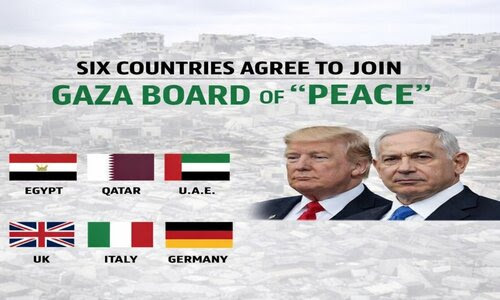
In a televised address to the nation this week, President Trump boldly declared that “we now have peace in the Middle East,” framing the recent ceasefire and diplomatic progress with his ‘Board of Peace’ as a historic moment.
Something unusual is forming in the Middle East. Quietly, deliberately, and with unmistakable international weight, a coalition of nations has agreed–at least in principle–to sit on what is being called a Board of Peace. Its stated purpose is straightforward: to oversee the postwar management of Gaza and guide the region from fragile ceasefire toward something resembling stability. But history tells us that when global powers assemble around Jerusalem and its surrounding territories, the story is never merely administrative.
In a televised address to the nation this week, President Trump boldly declared that “we now have peace in the Middle East,” framing the recent ceasefire and diplomatic progress as a historic moment of reconciliation and stability. Whether one views this as political optimism or a milestone in real terms, the statement underscores the administration’s confidence in this coalition and highlights the symbolic weight of the Board of Peace–even as the practical challenges on the ground remain formidable.
At present, several key nations are understood to have committed to this board, including Egypt, Qatar, the United Arab Emirates, the United Kingdom, Italy, and Germany. Together, they represent regional leverage, European legitimacy, and diplomatic continuity. Their participation does not yet guarantee funding, troops, or long-term enforcement–but it does signal international buy-in. Symbolism matters in diplomacy. So does precedent.
The goal now is expansion. Additional seats are being quietly pursued, with Saudi Arabia at the top of the list. Riyadh’s inclusion would dramatically reshape the board’s influence, signaling Arab-world alignment behind a U.S.-led peace framework. Yet Saudi hesitation is telling. Gaza remains volatile. Hamas has not disarmed. Israeli forces continue to operate amid ceasefire violations. The Saudis appear unwilling to lend their authority until the endgame is clearer–and until the cost of participation is better defined.
Then there is Turkey.
Bringing Ankara into any peace structure presents an entirely different challenge. Turkey’s president has repeatedly issued inflammatory rhetoric toward Israel–language that goes well beyond diplomatic protest. At various points, he has spoken of marching on Gaza, mobilizing an “army of Islam,” and framing the conflict in explicitly religious and civilizational terms. Such statements are not easily brushed aside as domestic posturing. For Israel, Turkey’s involvement in postwar Gaza–especially in any security or stabilization role–is viewed as deeply destabilizing.
Yet pressure is mounting to find a workaround. One proposal being floated is symbolic inclusion: Turkey seated on the Board of Peace, but kept out of boots-on-the-ground command structures. Even this compromise is controversial. Peace is difficult enough without importing leaders whose rhetoric fuels the very fires diplomacy claims to extinguish.
But here is where the conversation becomes far more serious–and far more revealing.
While public attention remains fixed on the high-profile Board of Peace, real authority is quietly shifting elsewhere. A mid-level executive body is being assembled to manage the day-to-day realities of governance, security coordination, reconstruction, and political transition. This group will not make headlines. It will not hold grand summits. But it will shape outcomes.
And that is precisely why it deserves scrutiny.
Who sits on this executive board? What do they believe about sovereignty, borders, religion, and long-term regional order? What assumptions do they hold about Israel, about Palestinian governance, and about the role of international authority in the Holy Land? History shows that transformative agreements are rarely forged in public ceremonies. They are built in committee rooms, drafted by technocrats, and enforced by unelected administrators.
Alongside this executive layer is a proposed technocratic Palestinian governing body tasked with running Gaza’s daily affairs. Again, the question is not merely competence, but ideology. Administration without legitimacy collapses. Peace without moral clarity corrodes.
For those who watch the Middle East through the lens of Scripture, these developments carry unmistakable echoes.
The Bible speaks not of chaos alone, but of carefully constructed peace–agreements brokered by outside powers, covenants strengthened over time, arrangements that appear stabilizing before they unravel. The prophetic language of a covenant being confirmed suggests process, not sudden decree. It implies groundwork laid by one generation and ratified by another.
Is this current framework that covenant? No. Too many pieces are missing. Borders remain undefined. Jerusalem remains unresolved. The nations are not yet aligned. There is no singular, enforceable treaty–only mechanisms, boards, committees, and intentions.
But processes matter.
A peace architecture that normalizes international oversight of Gaza… a regional coalition accustomed to managing Israel-adjacent territory… a growing expectation that lasting stability must come from outside intervention–these are not end-times fulfillments. But they may be precursors.
Scripture cautions us not to rush the timeline. Daniel’s 70th week does not begin because diplomats gather or ceasefires hold. It begins when conditions align with precision. We are not there yet.
Still, the direction is worth watching.
Peace in the Middle East has never failed for lack of ambition. It fails when human authority overestimates its ability to reorder what Scripture says will ultimately be resolved only by divine intervention. Until then, the world will keep building boards, drafting plans, and declaring breakthroughs.
And believers would do well to watch–not with fear, but with discernment.
Because when the world says “peace and security,” history–and prophecy–tell us that vigilance matters more than applause.
SIGNS OF THE TIMES
Rehearsals of the 5th Trumpet
Scientists Sound The Alarm About 3 Major Fault Zones In The United States

Will 2026 be a year of great shaking for the United States? Coming into 2025, I thought that seismic activity would be a major global theme, and that has certainly turned out to be the case. This has been an extremely unusual year for earthquakes along the Pacific Ring of Fire, and volcanoes that have been dormant for ages are suddenly roaring to life all over the world.
Here in the United States, we have been experiencing lots and lots of little earthquakes, but thankfully we have not been hit by a really bad one yet. Will our luck run out in 2026?
According to the Daily Mail, the dozens of earthquakes that have been rattling the New Madrid fault zone since the middle of November are “renewing fears of a catastrophic natural disaster soon”…
A giant seismic zone in the heart of the US has seen dozens of tiny earthquakes break out in the last month, renewing fears of a catastrophic natural disaster soon.
Since mid-November, the US Geological Survey (USGS) has detected at least 38 low-level seismic events along the boundaries of the New Madrid Seismic Zone (NMSZ) in Arkansas, Kentucky, Missouri, and Tennessee.
The threat that the New Madrid fault zone poses should not be underestimated.
In a previous article, I discussed the series of catastrophic earthquakes that occurred along that fault zone in 1811 and 1812. Everyone agrees that they were the most powerful earthquakes in the entire history of the continental United States…
The New Madrid earthquakes were the biggest earthquakes in American history. They occurred in the central Mississippi Valley, but were felt as far away as New York City, Boston, Montreal, and Washington D.C. President James Madison and his wife Dolly felt them in the White House. Church bells rang in Boston. From December 16, 1811 through March of 1812 there were over 2,000 earthquakes in the central Midwest, and between 6,000-10,000 earthquakes in the Bootheel of Missouri where New Madrid is located near the junction of the Ohio and Mississippi Rivers.
In the known history of the world, no other earthquakes have lasted so long or produced so much evidence of damage as the New Madrid earthquakes. Three of the earthquakes are on the list of America’s top earthquakes: the first one on December 16, 1811, a magnitude of 8.1 on the Richter scale; the second on January 23, 1812, at 7.8; and the third on February 7, 1812, at as much as 8.8 magnitude.
Scientists tell us that it is just a matter of time before another great earthquake strikes this region.
Six years ago, the USGS determined that a magnitude 7.7 quake would shake major cities all over the Midwest…
In 2019, USGS scientists modeled what a 7.7 magnitude earthquake would look like if it erupted along the Arkansas-Tennessee border, in an area near Memphis.
The shockwaves of this hypothetical mega quake spread for hundreds of miles, reaching cities including Kansas City, Indianapolis, Louisville, and Birmingham.
Buildings in that area of the country are typically not constructed to withstand an event of that size, and so the USGS is projecting that hundreds of thousands of buildings would be damaged and the economic damage would run into the hundreds of billions of dollars…
Since this region is not well equipped to deal with a massive seismic event, studies of such an earthquake projected that a magnitude 7.7 earthquake would cause over 86,000 injuries or deaths, damage 715,000 buildings, and knock out power to 2.6 million homes.
That report, by the University of Illinois, Virginia Tech, and George Washington University, also estimated that the cost could hit $300 billion directly, with indirect costs due to lost jobs possibly taking the damage to $600 billion.
An earthquake like that could hit us at any time.
But when the “really Big One” finally arrives, it will be much, much worse than the USGS is anticipating.
Experts are also urging us to keep an eye on the Cascadia Subduction Zone.
We are being told that when it finally goes, “the Pacific Northwest could change in a matter of minutes”…
Beneath Cascadia’s forests and coastlines lies a 600-mile fault capable of producing a magnitude-9 earthquake. The last one struck in 1700, shaking the region for minutes and sending a massive tsunami all the way to Japan. Today, nearly 17 million people live on top of the same silent threat. Scientists warn that when it breaks again, the Pacific Northwest could change in a matter of minutes.
The reason why the Cascadia Subduction Zone is so dangerous is because it has the potential to produce “megathrust” earthquakes…
At depths shallower than around 30 km, the two plates of the CSZ are locked together by friction. Strain (deformation) slowly builds as the subduction forces continue to act upon the locked plates. Once the fault’s frictional strength is exceeded, the rocks slip past each other along the fault in a “megathrust” earthquake.
A large enough “megathrust” earthquake could cause a tsunami that is hundreds of feet high to violently slam into the west coast.
In such a scenario, the death toll would likely be cataclysmic.
So that is why any seismic activity in the region gets so much attention.
On Monday, a magnitude 2.9 earthquake not too far away from Seattle caused quite a stir…
Reports of a massive explosion in Washington state sent residents in the Pacific Northwest into a state of confusion Monday morning.
The US Geological Survey (USGS) sent out an alert just before 11.30am ET, warning that an explosion with the force of a magnitude 3.0 earthquake has just taken place near the town of Concrete.
USGS quickly retracted the false explosion warning and reclassified the seismic event as a magnitude 2.9 earthquake, less than 70 miles north of Seattle.
Scientists assure us that a “megathrust” earthquake along the Cascadia Subduction Zone is in our future.
And when it finally occurs, it could also trigger the San Andreas fault system…
Successfully predicting earthquakes sounds like a dark art.
However, new research hints it may be possible: Sediment cores extracted from the Pacific seafloor suggest that two major fault systems along the western coast of the United States and Canada might be partially synchronized. After an earthquake on the southern part of the Cascadia subduction zone, an earthquake soon after on the northern part of the San Andreas fault appears to occur roughly half of the time, the new findings reveal. These results, published in Geosphere, provide evidence of stress triggering, which has long been invoked to explain how activity on one fault might lead to activity on another nearby.
Fault zones persist across wide swaths of our planet, but the one that stretches onshore and offshore from California to British Columbia, Canada, is particularly complex. The vertical strike-slip San Andreas fault, in the south, intersects the Cascadia subduction zone off the coast of Northern California at a point known as the Mendocino Triple Junction.
When the San Andreas fault system finally rips wide open, the geography of the state of California will be permanently altered.
And it won’t just be Southern California that is affected.
Over the past couple of months, Northern California has been getting pummeled by literally hundreds of sizable quakes…
While California ranks second in the US in seismic activity, most quakes are small and go largely unnoticed. That has changed in recent weeks with two swarms impacting the Bay Area: one is east of San Francisco near San Ramon; the other is north of San Francisco near The Geysers.
Over the last 30 days, USGS has reported 1,470 earthquakes around The Geysers; in just the last 7 days, there have been 286. Most of these have been weak, with only 5 earthquakes rated a magnitude 2.0 or higher intensity over the last week. While the volume has been eyebrow raising, the intensity hasn’t.
The opposite has been the case near San Ramon. There, over the last 30 days, there have been 139 earthquakes reported by USGS; over the last 7 days, that number has been 25. But the intensity of these earthquakes have been greater, with 39 rated magnitude 2.0 or greater and 6 rated 3.0 or greater over the last 30 days.
This is definitely not normal.
San Ramon has been getting shaken so frequently that one social media user has compared it to “a massage chair”…
“Wee bit nervous,” one person wrote on Threads, adding that she planned to stock up on water and earthquake supplies.
“San Ramon is basically a massage chair today … but like, the stressful kind,” another person wrote on the social media site. “Dear Earth: we get it, you’re active. You can stop now.”
The Calaveras Fault is a major branch of the San Andreas fault system.
This is the fault that has been causing so much shaking in San Ramon lately, and it has the potential to produce very large earthquakes…
Historically, the southern half of the central segment of the Calaveras Fault has been the most seismically active segment of the fault.
It produced the 6.2 Morgan Hill earthquake in 1984. The 5.9 Coyote Lake earthquake in 1979 ruptured slightly to the south of these other earthquakes.
When you are driving your vehicle and one of those little warning signals on the dashboard lights up, what do you do?
Hopefully you take it to a mechanic or you fix it yourself.
Ignoring a warning signal like that is a really bad idea.
Similarly, the New Madrid fault zone, the Cascadia Subduction Zone and the San Andreas fault system have all been sending us lots of warning signals lately.
Sadly, it appears that most of the population will continue to ignore those warning signals until it is too late.
END OF NEWS ARTICLE
PASTOR DIRK SAYS
The 5th Trumpet is the Ring of Fire that will Erupt that will include Yellowstone that will Sort out Mystery Babylon aka California and Ocean states.
Read these Articles
GOG AND MAGOG UPDATE
Netanyahu ready to tell Trump of Israel’s plans to strike Iran / Magog

While there are concerns that Iran is also seeking to revive nuclear enrichment sites hit by U.S. bombers, Israeli officials believe missile production poses the most immediate danger.
Israeli Prime Minister Benjamin Netanyahu is preparing to brief President Donald Trump on renewed military options against Iran, driven by Israeli assessments that Tehran is accelerating the reconstruction of its ballistic missile program following strikes earlier this year, according to U.S. and Israeli sources cited by NBC.
Netanyahu is expected to raise the issue during a planned meeting with Trump at the president’s Mar-a-Lago residence on Dec. 29.
Israeli officials view Iran’s missile production and air defense recovery as a more urgent threat than its nuclear efforts, which they believe were significantly damaged during U.S. and Israeli operations in June.
According to people familiar with the plans, Netanyahu intends to argue that Iran’s expanding missile capabilities endanger not only Israel but also regional stability and U.S. interests.
He is expected to present a range of options that could include Israeli action alone or varying degrees of U.S. involvement, similar to proposals shared with Trump ahead of the June strikes.
Those operations, known as Operation Midnight Hammer, involved extensive U.S. air and naval assets targeting Iranian nuclear facilities.
At the time, the White House said the campaign had eliminated Iran’s nuclear capacity. “The International Atomic Energy Agency and Iranian government corroborated the United States government’s assessment that Operation Midnight Hammer totally obliterated Iran’s nuclear capabilities,” White House spokesperson Anna Kelly said. “As President Trump has said, if Iran pursued a nuclear weapon, that site would be attacked and would be wiped out before they even got close.”
Israeli officials now assess that Iran is repairing damaged missile infrastructure and attempting to restore advanced air defense systems struck in Israeli operations in April and October 2024.
While there are concerns that Iran is also seeking to revive nuclear enrichment sites hit by U.S. bombers, Israeli officials believe missile production poses the most immediate danger.
Trump, asked this week about a possible meeting with Netanyahu, said discussions had not yet been formally scheduled, though Israeli officials have publicly confirmed the Dec. 29 date.
The Israeli government declined to comment on the substance of the expected talks, and Iran’s mission to the United Nations did not respond to requests for comment.
Unusual air activity detected over Iran as Israeli officials warn Tehran preparing for new war
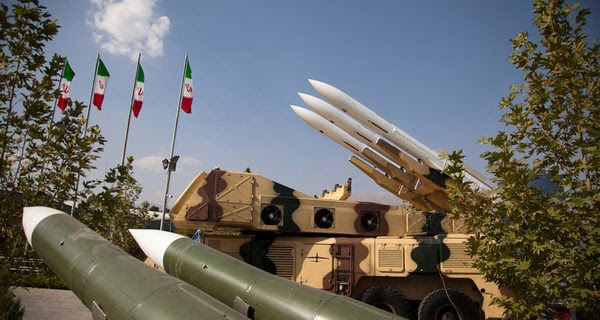
Iran’s paramilitary Islamic Revolutionary Guard Corps is conducting unusual activity, according to a report by Iran International.
In a report published on Saturday, the anti-regime outlet cited multiple sources which said that Western intelligence agencies are monitoring unusual air activity over Iran, including drone and missile activity, along with air defense unit operations on the ground.
Some sources speculated that the movements could be part of a military exercise, though the large scale of the activity has raised concerns.
The report comes amid concerns that Tehran is gearing up for a new round of fighting with Israel, including an expanded ballistic missile campaign against the Jewish state.
Israeli defense officials told Galei Tzahal radio on Sunday that Iran is rapidly working to restore both its defensive and offensive missile capabilities.
Iran, the officials said, is expanding its ballistic missile production operations and refurbishing existing storage facilities.
In addition, the officials warned, Tehran is working to rebuild its air defense network, which was heavily damaged during Israeli strikes in 2024 and further diminished during the June war.
The officials cited in the report emphasize that if and when a new war breaks out between Israel and Iran, it will be “harder and more complex” than the 12-day conflict.
Israeli Prime Minister Benjamin Netanyahu is reportedly planning to present to President Donald Trump several options for a new series of strikes on Iran during his visit to the US later this month.
Netanyahu is expected to meet with Trump at the president’s estate in Mar-a-Lago, Florida after Christmas.
The Israeli premier is expected to highlight Israel’s concerns over Iran’s expanded production of ballistic missiles, and then brief the president on various scenarios for Israeli attacks.
TruLight Ministry News
TruLight Ministries orders from God since 2012 . Teach Them , Comfort Them and Warn Them!
////////////
TruLight Ministries opdrag vanaf God sedert 2012. Leer hulle, Troos hulle en Waarsku hulle!
Doctrine of Demons – Teaching for the Christian , Discerning the spirits
Share this Feeding of Manna with your Friends and Family. just click on the Social Media icon and share !