Hosted by TruLight Ministries – The Place of Truth
SELECT YOUR READING LANGUAGE – BOTTOM LEFT = YOUR DAILY MANNA NOW AVAILABLE IN 103 LANGUAGES
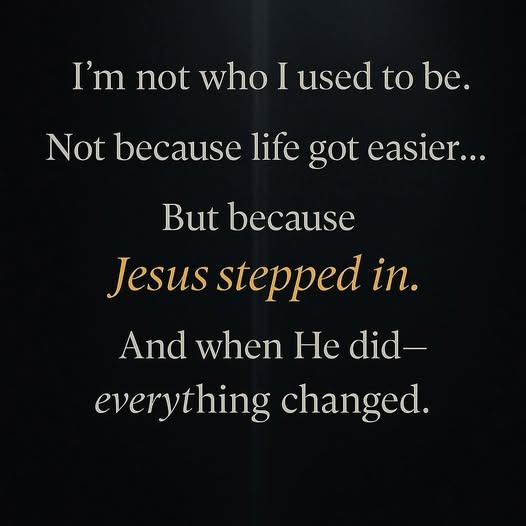
When Jesus steps into Your Life!
Every time a new politician steps into the ring, he promises change. But change can be good or bad. We know we should change oil, lightbulbs, and dirty diapers. And growth requires change. But many people believe we should also change our morals, ethics, and beliefs to accommodate changes in culture. But should everything be open to change? The Bible gives us clear guidelines on what should change and what should stay the same.
“I, the Lord, never change,” God declares in Malachi 3:6. So that’s where we start. Change means a move in another direction. For God to change would mean that He either becomes better or worse, and God is ultimate perfection. He cannot change because He cannot be better than He already is; and He cannot fail or become less than perfect, so He cannot become worse than He is. God’s quality of never changing is called immutability.
God never changes, and nothing about Him changes: His character traits such as love, mercy, kindness, justice, and wisdom always exist in perfection. The methods He uses to deal with human beings have changed through the centuries, but the values and purposes behind those methods did not. For example, under the Mosaic Covenant, God declared that animals sacrificed in the manner He prescribed would atone for the sins of the people (Leviticus 4:23; 9:2–13; Numbers 29:11). Under the terms of the New Covenant, the Son of God Himself became the sacrifice, and the old system, having served its purpose, became obsolete (Luke 22:20; Hebrews 9:11–14). God’s holiness, His wrath against sin, and His extension of mercy did not change, but He did provide a better sacrifice for us: the perfect Lamb of God (John 1:29; Hebrews 10:10). This change from the Old Covenant to the New was needed, and it is wonderful, securing eternal life for those who trust in Christ (John 3:16–18).
God never changes, but people do: our bodies, brains, ideas, and values all change. In fact, God built into us the ability to change. Part of being created in God’s image is that human beings can think, reason, and come to conclusions distinct from physical or material realities (Genesis 1:27).
When God created Adam and Eve, they were perfect, but mutable. Any change they experienced was good, as they tended the garden and learned more of God and of each other. But sin brought about a negative change that altered not only Adam and Eve’s behavior and thinking but also their very nature. As a result, their environment changed, along with all of human history. In our sin, we lost our perfect environment and were left to wrest survival from an unforgiving planet (Genesis 3:17–19). Change had come, and it was not a good change.
Even when mankind fell into sin, God did not change. His love for humanity and desire for fellowship with them remained the same. So He took steps to redeem us from our sin—we are powerless to change ourselves in that regard—and He sent His only begotten Son to save us. Repentance and faith in Christ is God’s avenue of change to restore us to Himself.
Once we are “in Christ,” everything changes. We are born again (John 3:3). Our ideas change. Our perspective changes. Our values and actions change to line up with God’s Word. As the Holy Spirit works within us, we find that “the old has gone, the new is here!” (2 Corinthians 5:17). The Christian life is an ongoing series of changes as we grow in knowledge, faith, and holiness (1 Peter 1:16; Hebrews 12:14). We grow in Christ (2 Peter 3:18), and growth requires change.
Even good changes can be uncomfortable and scary. The Israelites in slavery in Egypt at first resisted Moses’ attempts to free them, believing Moses was a troublemaker who was making things worse for them—indeed, things did get worse before they got better (Exodus 5). At the pool of Bethesda, Jesus found an infirm man who had suffered his condition for a long time. Interestingly, Jesus asked him, “Do you want to get well?” (John 5:6). A strange question with a logical purpose. Before the Lord introduced the man to lifelong change, He wanted to know: do you really want this, or are you more comfortable with your life of begging and living off the charity of others? Are you ready to change?
Some people believe that God’s Word must change or adapt to keep up with the times. However, Jesus strongly validated the Scriptures and called them “truth” (John 17:17). He also said, “For truly I tell you, until heaven and earth disappear, not the smallest letter, not the least stroke of a pen, will by any means disappear from the Law until everything is accomplished” (Matthew 5:18). If God’s character does not change, then His Word does not change. His truth, standards, and way of salvation will never change (John 14:6). Changeable humans do not have the power or authority to change God’s Word, and only the foolish will try.
Change for its own sake is neither good nor bad. It depends on the direction the change takes you. We should be willing to change our minds and our lifestyles when we are shown from God’s infallible Word that we are wrong. We should embrace change, no matter how hard it is, when it comes from God. But we must respect that some things never change and are not meant to: pretending we can change God or His Word to fit our preferences is a dangerous idea and only leads to destruction.

Bible Verse and Prayer for Today
If any of you lacks wisdom, he should ask God, who gives generously to all without finding fault, and it will be given to him.
—James 1:5
Wisdom is that elusive quality we respect in others but find so difficult to develop in ourselves. Yet God promises wisdom to those of us who genuinely ask for it. But remember the secret of A.S.K. asking we learned yesterday — asking, seeking, and knocking. Or better yet, check out what Solomon says about wisdom (Proverbs 2:1-22). Wisdom is ours only if we seek it above all other possessions and value it above all other diversions. God longs to impart it, but there is something about spiritual wisdom that demands we value it before we can receive it.
Prayer
Gracious giver of all good gifts, please bless me with wisdom today. Let me reflect your will and live for your glory in all my decisions — not just today, but moving forward in my life. Let your Kingdom guide my heart as I make my choices and have your Spirit lead me in your ways. I confess, Father, that I cannot guide my own steps without your wisdom and your Holy Spirit to guide me. So grant me wisdom this day. I pray, in Jesus’ name. Amen and Amen
Bible Teaching of the Day
Applying the Bible is the duty of all Christians. If we don’t apply it, the Bible becomes nothing more to us than a normal book, an impractical collection of old manuscripts. That’s why Paul says, “Whatever you have learned or received or heard from me, or seen in me—put it into practice. And the God of peace will be with you” (Philippians 4:9). When we apply the Bible, God Himself will be with us.
The first step toward applying God’s Word in our lives is reading it. Our goal in reading is to get to know God, to learn His ways, and to understand His purpose for this world and for us individually. In reading the Bible, we learn about God’s interactions with humanity throughout history, His plan of redemption, His promises, and His character. We see what the Christian life looks like. The knowledge of God we glean from Scripture serves as an invaluable foundation for applying the Bible’s principles for life.
Our next goal is what the psalmist refers to as “hiding” God’s Word in our hearts: “I have hidden your Word in my heart that I might not sin against you” (Psalm 119:11). The way we “hide” God’s Word in our hearts is by studying, memorizing, and meditating on what we have first read. These four steps—read, study, memorize, and meditate—make it possible to successfully apply the Scriptures to our lives.
Study: While studying certainly involves reading, reading is not the same as studying. To study God’s Word means that we prayerfully devote time and attention to acquiring advanced knowledge on a particular person, subject, theme, passage, or book of the Bible. A multitude of study resources is available, including biblical commentaries and published Bible studies that enable us to feast on the “meat” of God’s Word (Hebrews 5:12-14). We can familiarize ourselves with these resources, then choose a topic, a passage, or a book that piques our interests and delve in.
Memorize: It is impossible to apply what we cannot remember. If we are going to “hide” the Word in our hearts, we have to first get it in there by means of memorization. Memorizing Scripture produces within us a well from which we may continually drink, especially at times when we are not able to read our Bibles. In the same way that we store up money and other earthly possessions for future use, we should “lay up these words of mine in your heart and in your soul” (Deuteronomy 11:18, KJV). Create a plan for the Scripture verses you would like to memorize each week.
Meditate: Writer and philosopher Edmund Burke once said, “To read without reflecting is like eating without digesting.” We cannot afford to “eat” God’s Word without “digesting” it. In the parable of the four soils (Matthew 13:3-9; cf. 18-23), Jesus tells of a sower who goes out to sow seed in his field, only to find that some seeds – the Word of God (Matthew 13:19) – had fallen on “rocky ground, where they did not have much soil, and immediately they sprang up, since they had no depth of soil, but when the sun rose they were scorched. And since they had no root, they withered away” (13:5-6). This, Jesus says, is the person in whom the Word is sown but does not take root (13:20-21).
Psalm 1:2 says that the man who meditates on God’s Word is blessed. Donald S. Whitney, in his book Spiritual Disciplines for the Christian Life, writes, “The tree of your spiritual life thrives best with meditation because it helps you absorb the water of God’s Word (Ephesians 5:26). Merely hearing or reading the Bible, for example, can be like a short rainfall on hard ground. Regardless of the amount or intensity of the rain, most runs off and little sinks in. Meditation opens the soil of the soul and lets the water of God’s Word percolate in deeply. The result is an extraordinary fruitfulness and spiritual prosperity” (pp. 49-50).
If we desire for the Word to “take root” in our lives so that we produce a harvest that pleases God (Matthew 13:23), we must ponder, reflect, and meditate on what we read and study in the Bible. As we meditate, we can ask ourselves some questions:
- What does this passage teach me about God?
- What does this passage teach me about the church?
- What does this passage teach me about the world?
- What does this passage teach me about myself? About my own desires and motives?
- Does this passage require that I take action? If so, what action should I take?
- What do I need to confess and/or repent of?
- What have I learned from this passage that will help me to focus on God and strive for His glory?
Apply: The degree to which we study, memorize, and meditate on God’s Word is the degree to which we understand how it applies to our lives. But understanding how the Word applies is not enough; we must actually apply it (James 1:22). “Application” implies action, and obedient action is the final step in causing God’s Word to come to life in our lives. The application of Scripture enforces and further enlightens our study, and it also serves to sharpen our discernment, helping us to better distinguish between good and evil (Hebrews 5:14).
As a final word, it is important to note that we are not alone in trying to understand and apply God’s Word to our lives. God has filled us with His Spirit (John 14:16-17) who speaks to us, leading and guiding us into all truth (John 16:13). For this reason, Paul instructs believers to “walk by the Spirit” (Galatians 5:16), for He is a very present Help in our time of need (Psalm 46:1)! The Spirit will faithfully guide us into the will of God, always causing us to do what is right (Ezekiel 36:26-28; Philippians 2:13). Who better to teach how to live according to all that is written in the Bible than the One who inspired the Bible to begin with—the Holy Spirit Himself? Therefore, let us do our part by hiding the Word in our hearts and obeying the Holy Spirit as He draws that Word out of us.
Today’s Devotional
Jesus Stepped in . What Happens NEXT ?
Congratulations! You have made a life-changing decision! Perhaps you are asking, “Now what? How do I begin my journey with God?” The five steps mentioned below will give you direction from the Bible.
- Make sure you understand salvation.
First John 5:13 tells us, “I write these things to you who believe in the name of the Son of God so that you may know that you have eternal life.” God wants us to understand salvation. God wants us to have the confidence of knowing for sure that we are saved. Briefly, let’s go over the key points of salvation:
(a) We have all sinned. We have all done things that are displeasing to God (Romans 3:23).
(b) Because of our sin, we deserve to be punished with eternal separation from God (Romans 6:23).
(c) Jesus died on the cross to pay the penalty for our sins (Romans 5:8; 2 Corinthians 5:21). Jesus died in our place, taking the punishment that we deserved. Jesus’ resurrection proved that His death was sufficient to pay for our sins.
(d) God grants forgiveness and salvation to all those who place their faith in Jesus—trusting His death as the payment for our sins (John 3:16; Romans 5:1; Romans 8:1).
(e) The Holy Spirit comes to reside permanently within us at the moment of faith. He assures us of everlasting life. He teaches us God’s Word and empowers us to live according to it.
That is the message of salvation! If you have placed your faith in Jesus Christ as your Savior, you are saved! All of your sins are forgiven, and God promises to never leave you or forsake you (Romans 8:38–39; Matthew 28:20). Remember, your salvation is secure in Jesus Christ (John 10:28–29). If you are trusting in Jesus alone as your Savior, you can have confidence that you will spend eternity with God in heaven!
- Find a good church that teaches the True Bible.
Don’t think of the church as a building. The church is the people. It is very important that believers in Jesus Christ fellowship with one another. That is one of the primary purposes of the church. Now that you have placed your faith in Jesus Christ, we strongly encourage you to find a Bible-believing church in your area and speak to the pastor. Let him know about your new faith in Jesus Christ.
A second purpose of the church is to teach the Bible. You can learn how to apply God’s instructions to your life. Understanding the Bible is key to living a successful and powerful Christian life. 2 Timothy 3:16-17 says, “All Scripture is God-breathed and is useful for teaching, rebuking, correcting and training in righteousness, so that the man of God may be thoroughly equipped for every good work.”
A third purpose of the church is worship. Worship is thanking God for all He has done! God has saved us. God loves us. God provides for us. God guides and directs us. How could we not thank Him? God is holy, righteous, loving, merciful, and full of grace. Revelation 4:11 declares, “You are worthy, our Lord and God, to receive glory and honor and power, for you created all things, and by your will they were created and have their being.”
- Set aside time each day to focus on God.
It is very important for us to spend time each day focusing on God. Some people call this a “quiet time.” Others call it “devotions,” because it is a time when we devote ourselves to God. Some prefer to set aside time in the mornings, while others prefer the evenings. It does not matter what you call this time or when you do it. What matters is that you regularly spend time with God. What events make up our time with God?
(a) Prayer. Prayer is simply talking to God. Talk to God about your concerns and problems. Ask God to give you wisdom and guidance. Ask God to provide for your needs. Tell God how much you love Him and how much you appreciate all He does for you. That is what prayer is all about.
(b) Bible Reading. In addition to being taught the Bible in church, Sunday School, and/or Bible studies – you need to be reading the Bible for yourself. The Bible contains everything you need to know in order to live a successful Christian life. It contains God’s guidance for how to make wise decisions, how to know God’s will, how to minister to others, and how to grow spiritually. The Bible is God’s Word to us. The Bible is essentially God’s instruction manual for how to live our lives in a way that is pleasing to Him and satisfying to us.
- Develop relationships with people who can help you spiritually.
1 Corinthians 15:33 tells us, “Do not be misled: ‘Bad company corrupts good character.’” The Bible is full of warnings about the influence “bad” people can have on us. Spending time with those who engage in sinful activities will cause us to be tempted by those activities. The character of those we are around will “rub off” on us. That is why it is so important to surround ourselves with other people who love the Lord and are committed to Him.
Try to find a friend or two, perhaps from your church, who can help you and encourage you (Hebrews 3:13; 10:24). Ask your friends to keep you accountable in regard to your quiet time, your activities, and your walk with God. Ask if you can do the same for them. This does not mean you have to give up all your friends who do not know the Lord Jesus as their Savior. Continue to be their friend and love them. Simply let them know that Jesus has changed your life and you cannot do all the same things you used to do. Ask God to give you opportunities to share Jesus with your friends.
- Be baptized.
Many people have a misunderstanding of baptism. The word baptize means “to immerse in water.” Baptism is the biblical way of publicly proclaiming your new faith in Christ and your commitment to follow Him. The action of being immersed in the water illustrates being buried with Christ. The action of coming out of the water pictures Christ’s resurrection. Being baptized is identifying yourself with Jesus’ death, burial, and resurrection (Romans 6:3-4).
Baptism is not what saves you. Baptism does not wash away your sins. Baptism is simply a step of obedience, a public proclamation of your faith in Christ alone for salvation. Baptism is important because it is a step of obedience – publicly declaring faith in Christ and your commitment to Him. If you are ready to be baptized, you should speak with a pastor.

Bible Prophecy, Signs of the Times and Gog and Magog Updates with Articles in the News
“We have peace in the Middle East, no one thought that was possible,” Trump proclaimed.

President Donald Trump officially launched the “Board of Peace” at a signing ceremony during the World Economic Forum in Davos, Switzerland on Thursday morning, presenting it as a new U.S.-led vehicle to manage postwar stabilization efforts in Gaza and potentially expand to other global conflicts.
“We have peace in the Middle East, no one thought that was possible,” Trump proclaimed.
The Board of Peace is intended to “promote stability, restore dependable and lawful governance, and secure enduring peace” in conflict zones. Trump first floated the idea in September 2025 and formally announced its creation earlier this month, describing it as a new framework that could operate alongside existing international bodies.
Trump has also said he will personally determine membership, including a proposal to charge $1 billion for permanent seats. The initiative was initially presented as a mechanism to support Gaza’s administration, reconstruction, and economic recovery in the aftermath of the Oct. 7 attacks and the war that followed.
Trump pointed to a phased roadmap that he said was already gaining traction. “Last October we released a plan for an end to the war in Gaza and it was adopted by the Security Council,” he said, adding that the priority now is sustaining the ceasefire and aid flow. “Under phase one we are going to have to very strongly maintain the Gaza ceasefire, and record humanitarian aid. You don’t hear that people are starving anymore.”
He also signaled ambitions beyond Gaza. “I think we can spread out to other things as we succeed with Gaza, we’re going to be very successful in Gaza,” Trump said. “Once this board is completely formed, we can do pretty much whatever we want to do.”
Trump tied the project to Israel’s demand for the return of the final remaining hostage’s remains. “We are committed that Hamas must return that last remaining deceased hostage and that will be the full commitment and we’ll get on to bigger things,” he said. “We’re committed to ensuring Gaza is demilitarized, properly governed and beautifully rebuilt.”
Secretary of State Marco Rubio credited Trump’s approach with achieving what he called a previously unthinkable outcome.
“We are here today because of President Trump’s vision,” Rubio said. He argued that the hostage issue had been viewed as unsolvable without further war. “No one thought that that would ever come to a resolution without more fighting and more bloodshed along the way,” he said, adding that many institutions “were unable to do anything about it.”
Jared Kushner, who has played a central role in Trump’s Middle East policy planning, described the Gaza plan as a single-track strategy with no alternative. “Hamas signed a deal to demilitarize, that is what we are going to enforce,” Kushner said. “People ask us what our plan B is; we do not have a plan B.”
Kushner also laid out an ambitious reconstruction vision, arguing that large-scale development can move quickly if security and governance are established. “There’s a master plan. We’ll be doing it in phases,” he said, projecting workforce housing could be completed “in two or three years,” with a broader “New Gaza” envisioned as a destination for industry and growth.
“Once this starts going, we think there should be 100% full employment, opportunity for everybody there,” Kushner said. “But it all starts with security, and it all starts with governance.”
Trump’s Board of Peace was launched with a roster of participating member states that includes Argentina, Armenia, Azerbaijan, Bahrain, Bulgaria, Egypt, Hungary, Indonesia, Jordan, Kazakhstan, Kosovo, Morocco, Pakistan, Qatar, Paraguay, Saudi Arabia, Turkey, the United Arab Emirates, Uzbekistan, and Israel.
Carrier Strike Group Heads for Middle East as Trump Draws Red Line on Iran

As the Islamic regime faces its most sustained internal unrest since 1979, the president confirmed that a large U.S. naval force is moving toward Iran, making clear that American warnings are no longer abstract.
TRUMP Uses Israel Defense Systems to Shield USA and Claim its American ?
WATCH: Trump’s ‘Golden Dome’ combines all Israeli defense systems into one
President Trump has pledged to build a state-of-the-art air defense system modeled on Israel’s Iron Dome, Arrow and David’s Sling to shield the U.S. mainland from missile threats, with Greenland playing a key strategic role in the plan.
“No Enemy Will Touch Us”: Trump Unveils Plan for U.S. Version of Israeli Iron Dome – claiming Israels Iron Dome as American?
TruLight Ministries Daily Entertainment

TruLight TV : Gaither Gospel Series – Irish Homecoming
This live concert, videotaped at Whitewell Metropolitan Tabernacle in Belfast, is spiced with Celtic sounds. Joy Gardner is joined by an Irish choir on “The Promise” while Larry Ford, who has developed a following in Ireland in recent years, performs “What A Friend We Have In Jesus.” Anthony Burger offers a dazzling piano solo on “Holy, Holy, Holy.” Russ Taff moves close to the audience to sing “Ain’t No Grave” and the Gaither Vocal Band raises the roof on “It Is Finished.”
Today on TruLight Radio XM
TruLight Radio XM 24/7
Program
GMT / UTC +2
Monday To Fridays
00:15 Words to Live By Testimonies
01.15 Science Scripture and Salvation
02.15 Ground Works
04.00 Gospel Concert of the Day
05.00 The Daren Streblow Comedy Show
5:55 It is Today devotional
6:00 Gaither Homecoming Morning Show
7:15 Discover the Word
8.15 Destined for Victory
8:55 Science Scripture and Salvation
9:00 Holy Spirit Hour – Normally Sermons
10:15 Hope of the Heart
11:15 Unshackled
11.45 Words to Live By
12:15 Truth for Life
13:15 Living on the Edge with Chip Ingram
14:15 Focus on the Family
15:00 Kids Hour
16:00 In Touch with Dr. Charles Stanley
16:30 Groundwork
17:15 Live in the Light
18:15 Renewing your Mind
19:00 Gaither Homecoming Show
20:15 Growing Hope
21:15 Adventures in Odyssey Radio Drama
21:45 Bible Reading
22:15 Night-sounds
23.00 Good Old Country Gospel / Rhema Gospel Express
VISIT THE WEBSITE
https://TruLightRadioXM.org.za
TruLight Ministry News
TruLight Ministries orders from God since 2012 . Teach Them , Comfort Them and Warn Them!
The Gospel Truth (introduction video)
The Gospel Truth is a website belonging to true light ministries that offers a variety of resources for spiritual growth. One of the highlights of this website is the collection of e-books available in both Afrikaans and English, all written by Pastor Dirk under the guidance of the Holy Spirit. These books provide valuable insights and teachings for individuals seeking to deepen their understanding of the Gospel.
In this amazing book called Not Just a Spirit, an introduction to the Holy Spirit, it teaches you all about what goes on during the baptism of the Holy Spirit, the ministry of the Spirit, and uncover the significance of the Mark seal of God. It’s a must-read for everyone looking to learn more about the Holy Spirit. Additionally, visitors can access short studies and audio lectures, which further enhance their learning experience. Another noteworthy feature is the light seed page, where users can conveniently download the audio version of the Bible, allowing them to engage with the scriptures in a unique and accessible way.
Come explore the Gospel Truth website, grab a cup of coffee, and discover a source of enlightenment that offers valuable insights and teachings for those looking to enhance their knowledge of the Gospel.
Visit Website – www.thegospeltruth.net.za
TruLight Ministries Radio Drama’s – Listen Today !
END TIME ARTICLES
Share this Feeding of Manna with your Friends and Family. just click on the Social Media icon and share !