Hosted by TruLight Ministries – The Place of Truth
SELECT YOUR READING LANGUAGE – BOTTOM LEFT = YOUR DAILY MANNA NOW AVAILABLE IN 103 LANGUAGES
a Leap of Faith
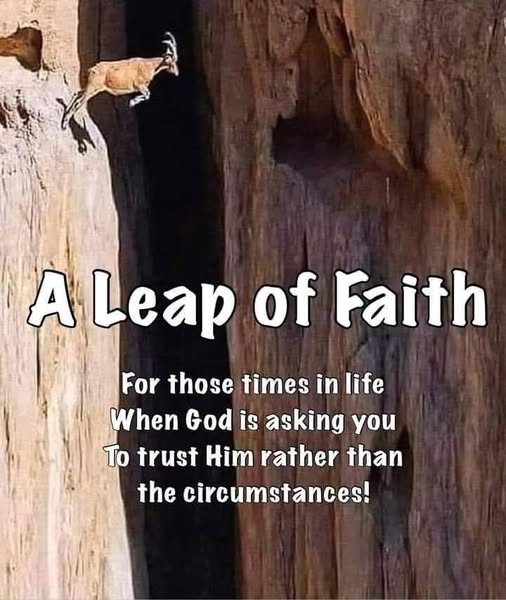
The book of Hebrews is an excellent place to find answers to our questions about faith. Chapter 11 begins with this short definition of faith: “Now faith is being sure of what we hope for and certain of what we do not see” (Hebrews 11:1).
What, then, is a leap of faith? The term leap of faith is not found in the Bible. It is a common idiom, though. Usually, to take a leap of faith means “to believe in something with no evidence for it” or “to attempt an endeavor that has little chance of success.” Leap of faith actually originated in a religious context. Søren Kierkegaard coined the expression as a metaphor for belief in God. He argued that truth cannot be found by observation alone but must be understood in the mind and heart apart from empirical evidence. Since we cannot observe God with our eyes, we must have faith that He is there. We jump from material concepts to the immaterial with a “leap of faith.”
Continuing in Hebrews chapter 11, we find an impressive list of men and women in the Bible who took a “leap of faith,” as it were. These are just a few of the people mentioned who took God at His Word and trusted Him to do what He had promised:
By faith, Noah obeyed God and built an ark to save his family from the flood (Genesis 6:9 – 7:24). By faith, Abraham prepared to sacrifice his son, believing God would provide a lamb (Genesis 22:1–19). By faith, Moses chose to side with the Hebrews rather than stay in the Egyptian palace (Exodus 2 – 4). By faith, Rahab risked her life and sheltered enemy spies in her home (Joshua 2:1–24).
Throughout the rest of Scripture, the stories of the faithful continue. By faith, David confronted a giant with only a sling and a stone (1 Samuel 17). By faith, Peter stepped out of the boat when Jesus invited him to come (Matthew 14:22–33). The accounts go on and on, each story helping us to understand the biblical meaning of a leap of faith.
Exercising faith in God often requires taking a risk. Second Corinthians 5:7 tells us, “For we live by faith, not by sight.” But a biblical step of faith is not a “blind” leap. Our faith is backed by assurance and certainty. Faith is soundly supported by God’s promises in His Word. A leap of faith is not an irrational impulse that causes us to jump out into the great unknown without any foresight. According to the Word of God, believers are to seek counsel from godly leaders (Proverbs 11:14; 15:22; 24:6). Also, Christians are to acquire wisdom and direction from God’s Word (Psalm 119:105, 130).
The stories in the Bible exist for a reason. Our trust and faith grow stronger as we read these accounts of God’s powerful deliverance and rescue in times of need. God miraculously delivered Joseph from slavery and placed him in charge over all of Egypt. God transformed Gideon from a coward to a courageous warrior. These Bible characters took leaps of faith because they trusted in the God who was powerful enough to rescue them, hold them up, and not let them fall (see Jude 1:24).
Putting our faith into action may feel like a scary leap, but that is part of the testing and proving of our faith: “In all this you greatly rejoice, though now for a little while you may have had to suffer grief in all kinds of trials. These have come so that the proven genuineness of your faith—of greater worth than gold, which perishes even though refined by fire—may result in praise, glory and honor when Jesus Christ is revealed. Though you have not seen him, you love him; and even though you do not see him now, you believe in him and are filled with an inexpressible and glorious joy, for you are receiving the end result of your faith, the salvation of your souls (1 Peter 1:6–9; See Hebrews 11:17 also).
Stepping out in faith requires trusting God to do what He has already promised in His Word, even though we may not see the fulfillment of His promise yet. Genuine faith, belief, and trust will move us to action.
A leap of faith might mean leaving the safety of your comfort zone. Peter abandoned his safety and comfort when he jumped out of the boat to walk on water to Jesus. He could take that leap of faith because he knew his Lord and trusted that He was good: “The LORD is good to all; he has compassion on all he has made” (Psalm 145:9). When Jesus said, “Come,” Peter exercised childlike faith, the type of faith we are all called to possess: “But Jesus called the children to him and said, ‘Let the little children come to me, and do not hinder them, for the kingdom of God belongs to such as these’” (Luke 18:16).
When we demonstrate authentic trust in God, we know that our “leap of faith” is actually a leap into His all-powerful and loving arms. He delights in our trust and rewards those who earnestly pursue Him: “Without faith it is impossible to please God, because anyone who comes to him must believe that he exists and that he rewards those who earnestly seek him” (Hebrews 11:6).

Bible Verse and Prayer for Today
Blessed is the one… whose delight is in the law of the Lord, and who meditates on his law day and night.
—Psalm 1:1-2
Delight! Ah, what a wonderful word and an even more meaningful experience. But do you find delight in the truth and law of the Lord? What holy things of the Father in heaven hold your thoughts throughout the day? Why not join me in putting more of God’s word into your head through memorization and hiding it in your heart through prayerful Bible contemplation? During those sleepless moments in the night, those restless concerns during traffic jams or lines, and those anxious moments waiting to see someone special or deal with something important, we can meditate on the words and truth of God. With the Holy Spirit’s help, we can even find delight in what can be troublesome times!
Prayer
Father in heaven, you are holy and righteous in all of your ways. I confess, dear Lord, that I do not always make the most of my thought time. I often let my mind drift away into areas I shouldn’t explore. I will occasionally get too focused on inconsequential things. I allow my thoughts to drift into anxious worries about things I cannot control. I want my mind and heart to be tuned by the Holy Spirit to your truth by using your Word to help me know your will and find your way to your peace. Give me true wisdom, enlightened by your Spirit, to see, know, absorb, and contemplate the things closest to your heart and found in your holy Scriptures. In Jesus’ name, I ask this. Amen and Amen
Bible Teaching of the Day
Pray, especially when you’re unsure of God’s will for your life. “If any of you lacks wisdom, he should ask God, who gives generously to all without finding fault, and it will be given to him” (James 1:5). “Be still before the Lord and wait patiently for Him” (Psalm 37:7). If you don’t know what to pray, you can always personalize and pray verses such as, “Show me the way I should go, for to You I lift up my soul” (Psalm 143:8) and, “Guide me in Your truth and teach me” (Psalm 25:5).
The primary way God commands us is through His Word. “All Scripture is God-breathed and is useful for teaching, rebuking, correcting and training in righteousness” (2 Timothy 3:16). If Scripture commands something of us, there’s no need to hesitate and wonder if it’s really God’s will for us. He cares so much about us that He already gave a plain and clear guidebook to life – the Bible. “Your Word is a lamp to my feet and a light for my path” (Psalm 119:105). “The Law of the Lord is perfect, reviving the soul. The statutes of the Lord are trustworthy, making wise the simple” (Psalm 19:7). “How can a young man keep his way pure? By living according to Your Word” (Psalm 119:9). Likewise, God never contradicts Himself, so He’ll never ask you to do something contradictory to Scripture. He will never ask you to sin. He will never ask you to do something Jesus Christ wouldn’t do. We need to immerse ourselves in the Bible, so we will know which actions meet God’s standards. “Do not let this Book of the Law depart from your mouth: meditate on it day and night, so that you may be careful to do everything that is written in it” (Joshua 1:8).
Christians also have the Holy Spirit to discern what is, or is not, God’s will for our lives. “The Spirit of truth . . . will guide you into all truth” (John 16:13). Sometimes the Holy Spirit will either agitate our conscience if we’re making a wrong decision, or He will pacify and encourage us when we’re leaning toward the right decision. Even if He doesn’t intervene in such noticeable ways, we can have confidence that He’s always in charge. Sometimes God will alter a situation without us even realizing He has acted. “The Lord will guide you always” (Isaiah 58:11).
If God is calling you to take a leap of faith, be encouraged by His presence. “Have I not commanded you? Be strong and courageous. Do not be terrified, do not be discouraged, for the Lord your God will be with you wherever you go” (Joshua 1:9). And remember, “Cast all your anxiety on Him because He cares for you” (1 Peter 5:7). “Trust in the Lord with all your heart and lean not on your own understanding; in all your ways acknowledge Him, and He will direct your paths” (Proverbs 3:5-6).
What we are not to do is expect to hear voices from God. There is a dangerous trend today where people seek to hear a “word from the Lord,” extraneous to what He has already given us in the Bible. “The Lord told me . . .” has become the mantra of experience-driven Christianity. Unfortunately, what He “tells” one person often contradicts what He “tells” another, and these extra-biblical revelations have proven to be very divisive, tearing apart church after church as one person’s experience seeks to take precedence over another’s. This results in chaos, benefiting no one except Satan, who loves to sow discord among believers. We should make the apostle Peter our example in these matters. In spite of the miraculous experience on the Mount of Transfiguration, where he beheld the glorified Christ speaking with Moses and Elijah, Peter refused to rely on that experience, declaring instead that “We have the prophetic word confirmed, which you do well to heed as a light that shines in a dark place, until the day dawns and the morning star rises in your hearts” (2 Peter 1:18-19, NKJV).
Today’s Devotional
Faith in God is trust in Him, based on a true understanding of who He is, as revealed in the Bible. Faith in God involves an intellectual assent to the facts concerning God and a life-changing reliance on those facts.
Faith in God has several components. The first is believing that He actually exists. However, simply believing that God exists is not enough. As James 2:19 explains, the demons believe in God’s existence as well.
After acknowledging that God exists, the second element of faith in God is commitment. Faith that does not result in action is a dead faith, not true faith (James 2:26).
However, even a faith in God that motivates us to action is not enough. For faith in God to be genuine, we must accept Him as He has revealed Himself in Scripture. We are not allowed to accept the attributes of God that we prefer and reject the ones we don’t. If we do not accept God as He is, then we are putting our faith in a false god of our own making. Much “religion” does exactly this, but any religion not based on the Bible is a designer religion with a designer god. For faith in God to be genuine, it must be based on the genuine God. For example, the God of the Bible is triune, so true faith in God must accept the deity and personality of the Son and the Holy Spirit as well as the Father.
There is much confusion today over the nature of faith. It is reported that, when asked to define faith, a little boy in Sunday school responded, “Believing what you know isn’t true.” Many of the “new atheists” place faith against science and evidence. They say that Christians have faith that God exists but that atheists have empirical evidence for science. Christians have faith, but scientists have knowledge. This comparison misunderstands the nature of faith in God.
Faith in God is not a blind leap without any evidence or, even worse, contrary to the evidence. Faith is simply trust. The Christian trusts in God. The scientific atheist has faith in science. If an atheist uses the scientific method to discover a medicine and then takes that medicine, he is exercising faith. He trusts his data, and he trusts that the medicine will cure him, not poison him. Some people may take the medicine with no thought whatsoever as to how it was developed or as to who prepared it. Others may only take the medicine after thoroughly investigating every aspect of the research. One person may take it with great confidence while another person takes it tentatively. In the final analysis, anyone who takes the medicine is exercising faith in the medicine. Ultimately, it is not the strength of the faith that determines if the medicine will work, but the efficacy of the medicine. Great faith in bad medicine will not cure a person. It is the object of faith, not the strength of faith that makes the difference. Uncertainty about a good medicine will not hinder its efficacy, as long as it is taken as prescribed. Faith is not the opposite of doubt; in fact, doubt can exist even in the heart of faith (see Mark 9:24). A person can exercise faith (trust and commitment) while at the same time being unsure about the thing or person he has committed himself to. Someone once defined doubt as “faith seeking understanding.”
Some people may simply trust God because it seems intuitive. They may have been raised in a Christian home and taught the Bible from their earliest remembrance. They have seen God work in the lives of other people, and they simply trust Him. Others may only have come to faith after a thorough examination of the evidence for God. Whether the decision to trust the God of the Bible is intuitive or deliberative, it is the mark of genuine faith.
The atheist likewise may come to his atheism by intuition or after careful deliberation. In the end, he has faith that God does not exist because he trusts either his instincts or his investigation and commits himself to live in a way that is consistent with his beliefs. Contrary to the claims of the new atheists, everyone has some kind of faith—everyone trusts something. It is impossible to live without trusting in something, even if it is only in the reliability of our five senses. The object of our faith is what makes all the difference.

Bible Prophecy, Signs of the Times and Gog and Magog Updates with Articles in the News
a Doctrine of Demons causes a Jesus Walk to not take Place = Police Ban ‘Walk With Jesus’ March In East London Over Fears Of Muslim Backlash

Britain has always claimed to be a land of faith and freedom–but those words ring hollow in Whitechapel. A planned “Walk With Jesus” march has been banned, not because it is illegal or violent, but because authorities fear it might offend others. Peaceful Christians are now being told they cannot proclaim their faith in public without risking arrest. This is more than a local police decision; it is a warning about the direction of an entire nation.
The Metropolitan Police’s decision to halt the event, scheduled for January 31, centers on Whitechapel’s large Muslim population. Organizers promoted the procession as a Christian worship event during what they called “the month dedicated to the holy name of Jesus.” Yet, authorities deemed marching there “reckless,” citing intelligence suggesting a hostile reaction that could lead to disorder. The march can proceed elsewhere–but not in the neighborhood chosen by the faithful.
Deputy Assistant Commissioner James Harman emphasized that the decision rested solely on public safety, not politics or offense. Anyone defying the ban would face arrest. But even framed as a safety precaution, the message is clear: in certain neighborhoods, publicly walking with Jesus is too dangerous for Britain to allow.
The troubling reality is that this ban sets a dangerous precedent for Christian expression. Public worship is no longer protected simply because it is peaceful and lawful; it is now conditional on whether it might provoke others. The message is unmistakable: if your faith risks offending someone, you must stay silent, stay home, or march somewhere “safe.”
This is not neutrality–it is a surrender of fundamental rights. A nation that once proudly carried the name of Jesus through its streets, schools, and institutions now treats His name as a potential threat. When peaceful Christians are told they cannot publicly honor their Savior for fear of angering others, the very idea of religious freedom is eroded. Authorities are effectively placing the burden of tolerance on those who simply seek to live out their beliefs, while rewarding hostility with de facto control over public space.
In essence, Britain has transformed from a country that once celebrated its Christian heritage to one where worship must be carefully managed to avoid conflict. The right to assemble, to proclaim faith, and to walk openly with Jesus is no longer guaranteed; it has become negotiable, contingent on the reactions of others.
Whitechapel has long been home to one of Britain’s largest Muslim populations. That fact alone should not–and historically did not–preclude Christian expression. Britain is not a theocratic Muslim state. It is, or at least was, a nation shaped by Christianity, whose laws, liberties, and institutions were built upon biblical foundations. The freedom to assemble, worship, and publicly proclaim one’s faith was never meant to be conditional on whether it offends another religious group.
Police claim they are motivated purely by safety, but this logic raises a disturbing question: When did expressing Christian faith in public become a threat to society? If peaceful worship is now seen as dangerous, what does that mean for other forms of Christian practice–sermons, school nativity plays, or public prayers? Today it is a march; tomorrow, it could be a hymn, a cross, or a sermon that is suddenly too provocative.
The cultural implications are profound. Once a nation unafraid to celebrate its Christian roots, Britain now treats those roots as liabilities. Public expression of faith is no longer a matter of conviction but a matter of caution, measured by the likelihood of provoking others. And in this calculus, Christians are expected to self-censor to accommodate potential hostility.
This erosion of freedom extends far beyond Whitechapel. It touches schools, workplaces, civic events, and neighborhoods across the country. When one group’s potential reaction dictates whether another group may worship, liberty is not protected–it is suspended. And in that suspension, the very identity of the nation changes.
Britain’s Christian heritage is not merely a historical footnote. It is the soil from which its freedoms grew. To now treat public Christian worship as a destabilizing threat is to deny the nation’s own soul. The question is no longer whether Christianity is being sidelined in the UK. That debate is over. The question now is how far this retreat will go–and how many freedoms will quietly disappear in the process.
A nation that once sent missionaries to the ends of the earth now hesitates to let believers walk its own streets. That should grieve us. And it should wake us up.
Japan’s Economy Crash Is Our Canary In The Coal Mine

On Tuesday, the Dow Jones Industrial Average stock index crashed 870 points, the biggest drop since October.
The mainstream media predictably blamed President Donald Trump’s threat of tariffs over Greenland, but they were wrong.
Thanks to Bitcoin–which trades 24/7–we can actually go to the tape. It turns out Greenland barely made a dent. What caused the bloodbath was Japan.
Specifically, the drop was due to new Prime Minister Sanae Takaichi’s Monday press conference. She announced snap elections to bolster a raft of reforms, which would hike government spending and reduce tax revenue. This sent Japanese bonds crashing as bond investors worried Japan can’t handle its massive government debt.
The panic then bled into U.S. financial markets via the yen carry trade, where hedge funds and speculators have borrowed hundreds of trillions of yen at near-zero interest rates to park it in U.S. assets.
The trade worked fine when rates in Japan were kept artificially lower than in the United States and traders could employ plenty of leverage–like gambling with borrowed money.
But now Japanese bond yields are soaring with the 30-year yield setting new records and shorter-term securities like the 10- and two-year at the highest levels since the 1990s. The stratospheric rise in these yields is threatening to strengthen the yen with them–so, that free money spigot is reversing.
Unwinding the yen carry trade sent the hedge funds rushing for the exits, crashing stocks and bonds worldwide as they liquidated holdings to get out of their leveraged positions. Put simply, if they bought assets with borrowed money, the assets were sold to repay the loans before the interest on those loans could skyrocket.
Japan’s latest bond crisis is a near-repeat of the U.K. Gilt Crisis in 2022, when British Prime Minister Liz Truss introduced a package of tax cuts and spending hikes that sent bond yields soaring a point and a half in a single day–third world territory. And that sent the British pound crashing to a 37-year low against the dollar.
The wider issue is what the U.K.–and now Japan–have illustrated: Bond markets cannot digest fiscal deficits that have blown away peacetime records.
The fact that this is happening in two of the most advanced–and heretofore drama-free–economies on Earth is ominous. The bond vigilantes are reminding everyone that they have the final veto on all government finance.
Even worse, the fiscal deficit in Japan is less than half that of the U.S.–3% of the gross domestic product in Japan versus the 6.4% of GDP that Congress is spending us into the hole every year.
While the dollar’s reserve currency status and our lower aggregate national debt buy time, this suggests we’re living on borrowed time. And when the crisis hits here, it could be even harder than Japan.
How the Land of the Rising Sun got here is illustrative since Congress is following the same recipe.
Japan’s original sin dates to when its easy money bubble burst in 1990, and instead of letting weak companies and banks die off, it put them on permanent life support with stimulus and low interest rates.
This created a zombie economy of money-losing companies that hog up one-third of all bank lending and almost 10 million Japanese workers essentially paid to lose money. The result is that while American productivity grew by half since 1990, Japan’s actually dropped.
That in turn translated into real wages that are lower in Japan today than 1990, while also driving Japanese government debt to 230% of GDP–an eye-watering $70 trillion in U.S. GDP terms.
To finance all that debt, the Bank of Japan pushed interest rates down near zero for 30 years, which was necessary because otherwise the interest on that mountain of debt would eat Japan alive.
This created the free money machine of the century for foreigners in the yen carry trade, and it plunged Japan into 30 years of stagnation with no end in sight.
Beyond the economic costs, this has driven Japanese suicide rates to one of the highest rates on Earth, while Japanese fertility has plunged to just 1.2 children per couple. Shockingly, that means eight great-grandparents turn into just 1.7 souls. If this keeps up, Japan’s population will fall by half per generation, leaving a shell of a developed nation.
Japan is the poster child for a creeping worldwide government takeover that’s transforming vibrant economies into permanent crony bailout apparatuses: Where government handouts and tax-funded nongovernmental organizations feast while the dwindling taxpayers–who pay for it–all check out, figuratively and sometimes literally.
The canary in the coal mine is singing. Will we listen before it’s too late?
When the Church Becomes The Scapegoat For Transgender Tragedies
There is a familiar script playing out across America, and it almost always ends the same way. When a church refuses to abandon its biblical standards–especially around sex, gender, and public witness–it is accused not merely of being unkind, but of being cruel, dangerous, even deadly. Conviction is recast as hatred. Boundaries are reframed as violence. And when tragedy strikes, responsibility is quickly redirected away from broken families, cultural lies, and untreated mental illness–and placed squarely on the church.
The heartbreaking death of Joshua Anthony Link, a 24-year-old man from Belleville, Illinois, is now being used to advance that script.
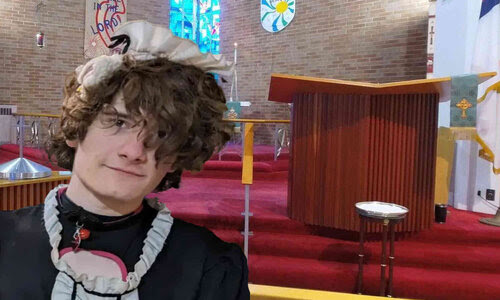
According to reports, Link, who identified as transgender and went by the name “Nomad Thunder,” was employed as a custodian at St. John’s Lutheran Church in Granite City. Church leadership reportedly told Link he could not wear a French maid outfit and cat ears while working on church property. After an ultimatum and subsequent termination, Link took his own life roughly a week later. His parents now publicly blame the church and its pastor, Rev. Bill Hale, accusing them of a lack of empathy and concern for their child’s mental health.
This is undeniably tragic. Suicide is always devastating, and Christians should never speak about it lightly or flippantly. Compassion is not optional. Grief deserves tenderness. But compassion does not require dishonesty–and it certainly does not require the church to abandon truth or accept blame for refusing to affirm behavior that contradicts its faith.
The outfit at the center of this controversy matters, not because clothing alone determines morality, but because symbols matter–especially in sacred spaces. A French maid outfit with cat ears is not neutral attire. It is tied to a specific internet subculture rooted in anime, sexualized role-play, and gender nonconformity. This “cat maid” aesthetic is widely recognized online as part of a fetishized, performative identity–one that intentionally blurs boundaries between fantasy, sexuality, and public life.
A church has every right–and responsibility–to say that such expressions are inappropriate in its workplace, particularly when that workplace is a Christian ministry serving families, children, and congregants who expect a certain level of decorum and theological consistency. Saying “no” to that expression is not an attack on someone’s humanity. It is a boundary rooted in belief.
Yet instead of asking hard questions about why a young man was so fragile, so untethered, and so unsupported that losing a job became unbearable, the blame has been aimed outward. The parents speak movingly about empathy, but say little about accountability–either personal or parental. Loving your child does not mean affirming every identity they adopt or every demand they make. Real love tells the truth, even when it’s uncomfortable. Real love sets limits.
This is where the modern conversation often collapses. We are told that compassion and standards are mutually exclusive–that to love someone, you must fully validate their self-perception. But that is not love; it is abdication. The church is being asked not merely to show kindness, but to compromise its witness. And compromise always sends a message–especially to the next generation–that truth is negotiable and convictions are expendable under emotional pressure.
We are also told, repeatedly, that refusal to affirm transgender identities leads directly to suicide. This claim is used as a moral cudgel to silence dissent. But study after study has failed to prove that lack of affirmation causes suicide. What research does show–consistently–is that individuals who transition continue to experience disproportionately high rates of depression, anxiety, and suicidality long after hormones or surgeries. Transition does not resolve the underlying distress. It often compounds it.
That reality is rarely discussed because it disrupts the narrative. If the problem is not affirmation, then perhaps the problem is the lie itself–the lie that you can remake your identity at will, that the body is meaningless, and that any resistance to that belief is oppression.
Blaming the church may feel satisfying, but it avoids the deeper tragedy: a culture that tells vulnerable young people that their happiness depends on everyone else changing, and parents who mistake unconditional love for unconditional approval. The result is not freedom, but fragility.
Christians can–and must–have compassion. We can mourn loss, reject cruelty, and treat every person as made in the image of God. But we cannot compromise our values without losing the very thing that gives the church its purpose. If the church surrenders its standards whenever the world disapproves, it ceases to be salt and light and becomes just another institution echoing the culture’s confusion.
You can love your child and still say no. You can care deeply and still draw a line. And you can grieve a death without rewriting truth or assigning blame where it does not belong.
The church is not responsible for every tragedy that occurs outside its walls. But it is responsible for remaining faithful within them–even when that faithfulness is unpopular, misunderstood, or cruelly misrepresented.
KUSHNER AND THE PEACE PLAN : ‘No Plan B’ – Kushner lays out plan to rebuild Gaza, grant amnesty to Hamas

Board of Peace to offer amnesty and reintegration to terror groups in exchange for disarmament, plans $25 billion reconstruction and development of a “New Gaza.”
President Donald Trump’s son-in-law and adviser Jared Kushner ( The TruLight Nominee to the Jewish Messiah aka the Antichrist) laid out plans Thursday for the US-led Board of Peace to rebuild the Gaza Strip and develop it into a high-income regional economic hub, following the disarming of terror groups and demilitarization of the Gaza Strip.
The plan calls for the creation of a “new Gaza,” centered around the four-phase rehabilitation of the area’s main urban centers and a capital-intensive development of surrounding areas, establishing a new seaport, airport, rail line, industrial zones, and tourist centers.
The proposal comes with a projected cost of $25 billion and would take a total of nine years. It is expected to raise the gross domestic product of the Gaza Strip to more than $10 billion, raising the average annual household income to more than $13,000.
Kushner emphasized that the Trump administration and the Board of Peace are committed to rebuilding the Gaza Strip, sidestepping questions of whether Hamas’ ongoing refusals to disarm would hamper the reconstruction plans.
Gaza’s population down by 11% amid wartime emigration
“We do not have a Plan B,” Kushner said. “In the beginning, we were toying with the idea of saying: ‘Let’s build a free zone and then we have a Hamas zone.’
“Then we said: ‘Let’s just plan for catastrophic success.’ Hamas signed a deal to demilitarize. That is what we are going to enforce.”
“We have a plan, we signed an agreement, we are all committed to making that plan work,” he said.
Reconstruction would begin in southern Gaza, starting with the border city of Rafah, and move northward.
Kushner estimated that Rafah would be rebuilt in two to three years.
The Board of Peace program presented during Kushner’s speech also laid out a framework for the demilitarization of the Gaza Strip, offering “amnesty and reintegration” to terrorists in exchange for disarming.
“Disarmament rewarded with amnesty & reintegration, or safe passage,” a slideshow projected during Kushner’s address read in part.
Hamas and other terror groups will be required to hand over their arsenals in stages, beginning with heavy weapons, which will be decommissioned “immediately,” while “personal arms” are “registered and decommissioned by sector” as the technocratic committee set to govern Gaza “becomes capable of guaranteeing personal security.”
Notably, the plan does not rule out the integration of terrorist groups into the new Gaza police force.
New US-Israel plan would let Israel control 75% of Gaza
“All militant armed groups, internal security, and police organizations dismantled or integrated into NCAG following rigorous vetting.”
Israeli airlines ready to evacuate entire fleet from Ben Gurion Airport within hours if Iran launches missiles

Transportation Minister Miri Regev says her ministry and the airlines are now calibrated for “any scenario, both in defense and attack.”
Israeli airlines have quietly dusted off their wartime playbook: if Iran launches missiles at Israel, the country’s carriers are prepared to empty Ben Gurion Airport of planes within hours and scatter them to safe hubs abroad, Transportation Minister Miri Regev has confirmed in a radio interview.
El Al, Arkia, Israir, Air Haifa and Challenge together operate nearly 85 passenger and cargo aircraft.
According to a senior airline official, operations are currently running as normal, but detailed evacuation plans are in place and rehearsed.
The carriers have already proven they can execute them “in the shortest possible time,” the official said, pointing to their experience during the Israel–Iran war in June.
Under those plans, aircraft can be redeployed on short notice to airports in Cyprus, Athens, Thailand, the United States, and other European destinations.
In June, when Iranian missiles targeted Israel, Israeli airlines flew their fleets out of the country with no passengers on board, while Ben-Gurion temporarily shut down and Israel was effectively cut off from international air travel until emergency routes and rescue flights were organized.
Houthi chief: Any Israeli presence in Somaliland a target
That crisis came on the heels of a ballistic missile strike by Iran-backed Houthi terrorists on the perimeter of Ben Gurion, which injured several people and forced a temporary suspension of flights, prompting major foreign airlines such as British Airways to halt service to Tel Aviv for months.
The incident underscored that Israel’s main airport is viewed as a prime strategic target in the wider Iran-led campaign.
Regev says her ministry and the airlines are now calibrated for “any scenario, both in defense and attack,” including rapidly shifting entire fleets to Larnaca, Athens, and farther afield to both shield the aircraft from missile fire and keep them available to bring Israelis home when the security situation permits.
“The most important thing to tell Israeli citizens is that we are prepared for any scenario,” she stressed.
For travelers, the message is twofold: flights are operating as usual for now, but the industry is primed for another rapid evacuation if Iran escalates again.
The goal this time is to avoid the paralysis and chaos of last summer’s airspace shutdown while still denying Tehran any chance to cripple Israel’s aviation lifeline or strand tens of thousands of Israelis without a way home.
TruLight Ministries Daily Entertainment

TruLight TV – Movie Time –Passion of the Christ
The Passion of the Christ focuses on the last twelve hours of Jesus of Nazareth’s life. The film begins in the Garden of Olives where Jesus has gone to pray after the Last Supper. Jesus must resist the temptations of Satan. Betrayed by Judas Iscariot, Jesus is then arrested and taken within the city walls of Jerusalem where leaders of the Pharisees confront him with accusations of blasphemy and his trial results in a condemnation to death.
Today on TruLight Radio XM
TruLight Radio XM 24/7
Program
GMT / UTC +2
Monday To Fridays
00:15 Words to Live By Testimonies
01.15 Science Scripture and Salvation
02.15 Ground Works
04.00 Gospel Concert of the Day
05.00 The Daren Streblow Comedy Show
5:55 It is Today devotional
6:00 Gaither Homecoming Morning Show
7:15 Discover the Word
8.15 Destined for Victory
8:55 Science Scripture and Salvation
9:00 Holy Spirit Hour – Normally Sermons
10:15 Hope of the Heart
11:15 Unshackled
11.45 Words to Live By
12:15 Truth for Life
13:15 Living on the Edge with Chip Ingram
14:15 Focus on the Family
15:00 Kids Hour
16:00 In Touch with Dr. Charles Stanley
16:30 Groundwork
17:15 Live in the Light
18:15 Renewing your Mind
19:00 Gaither Homecoming Show
20:15 Growing Hope
21:15 Adventures in Odyssey Radio Drama
21:45 Bible Reading
22:15 Night-sounds
23.00 Good Old Country Gospel / Rhema Gospel Express
VISIT THE WEBSITE
https://TruLightradioXM.org.za
TruLight Ministry News
TruLight Ministries orders from God since 2012 . Teach Them , Comfort Them and Warn Them!
The Salvation Plan – Yesterday and Today – The 12 Steps to Heaven /// Die Verlossings Plan – Gister en Vandag – die 12 Stappe na die Hemel
End Time Articles
Share this Feeding of Manna with your Friends and Family. just click on the Social Media icon and share !