Hosted by TruLight Ministries – The Place of Truth
SELECT YOUR READING LANGUAGE – BOTTOM LEFT = YOUR DAILY MANNA NOW AVAILABLE IN 103 LANGUAGES
For the Next 7 Days . we will Look into the
“Fruits of the Spirit!”

In Romans 12:18, Paul exhorts, “If possible, so far as it depends on you, be at peace with all men.” What a perfect example of our role in the fruit of the Spirit mentioned in Galatians 5:22-23. We are to submit our wills to God’s leading and our actions to God’s Word, but the actual results are up to Him. Only God can create peace through the work of the Holy Spirit. Especially the peace mentioned in Galatians 5—the peace of a harmonious relationship with God.
We are born at war. At birth, our sinful nature has already declared war on God and His truth. Our heart’s desire is to be separated from Him, and if we persist in this desire until death, He will give us what we want.
But God’s methods of warfare are not what we expected. Instead of a battle, He sent us the Prince of Peace (Isaiah 9:6). Jesus’ goal in coming to earth was more than simply to cease hostilities; He came to bring about a full and abiding relationship of restoration and love. The cost of this peace was His life (Isaiah 53:5).
But, just as we cannot force another to be at peace with us, even Jesus’ sacrifice on the cross did not ensure that we would accept His terms of peace. Romans 3:10b-11 explains, “There is none righteous, not even one; there is none who understands, there is none who seeks for God.” None of us can accept Jesus’ offer of peace through our own will and power. Our natural selves do not want it. Only God can lead us to want peace with Him; the Holy Spirit leads us to want Jesus and His message. Once the Spirit draws us, we believe in Jesus, and the peace comes. “Since we have been justified through faith, we have peace with God through our Lord Jesus Christ” (Romans 5:1).
However, the fruit of the Spirit includes a peace that goes beyond that of salvation. It is a sweet relationship. We are called to His presence (Ephesians 2:11-18) and called to be confident in that presence (Hebrews 4:16) because we are His friends (John 15:15). As Isaiah 26:3 says, “The steadfast of mind You will keep in perfect peace, because he trusts in You.”
God’s peace transcends earthly matters, as Philippians 4:4-7 illustrates. Believers are to be “anxious for nothing,” for God promises to “guard your hearts and minds.” It is a peace “which transcends all understanding”; that is, to the worldly mind, such peace is incomprehensible. Its source is the Holy Spirit of God, whom the world neither sees nor knows (John 14:17).
The Spirit-filled Christian has a peace that is abundant, available in every situation, and unlike anything that the world has to offer (John 14:27). The alternative to being filled with the Spirit and His peace is to be filled with alarm, filled with doubt, filled with foreboding, or filled with dread. How much better to let the Spirit have control and perform His work of growing fruit to the glory of God!

Bible Verse and Prayer for Today
Sitting down, Jesus called the Twelve and said, “If anyone wants to be first, he must be the very last, and the servant of all.”
—Mark 9:35
Did you hear that? Last! Last? Nobody likes to be last. When it comes to lines, we all hate to be last! Many of us have a hard time settling for second place, much less last place. Jesus, however, reverses the way the world ranks people (Luke 22:25-27). The person who is most important to him is not the person seeking status, Facebook® likes, a big following on social media, notoriety, or a place of honor at “bigwig” gatherings (events centered on status and influence). The most important person is like Jesus himself: they are willing to give up their rank, status, and place importance to serve the least, last, and lost. Why? Because that’s how Jesus was. For Jesus, being last meant being first in service and first in the eyes of God.
Prayer
Magnificent God, my Savior, you have made the world wonderful for me and have given your Son to redeem me. How can I ever thank you or repay you for your grace and kindness? Help me serve others with grace and kindness just as my Lord did. Please give me eyes to see people as you do, not judging by mere appearances, but valuing and treating people like Jesus did in his earthly ministry. I want to be willing to serve; to be last. So, where you place me (Luke 14:7-14) is in your hands. I pray in the name of the Lord Jesus, the one who washed his disciples’ feet to show them his love and the place of proper importance. Amen and Amen
Bible Teaching of the Day
The letter of James is written to a community of Jewish Christians facing trials, temptations, and internal division. In chapter 3, James focuses on the dangers of the tongue—how words can either bless or curse, build up or destroy. He then pivots to discuss two kinds of wisdom: worldly wisdom, marked by jealousy and selfish ambition, and heavenly wisdom, which is free from self-interest, partiality, and strife (James 3:17). James concludes this section, linking the quality of being a peacemaker with the blessing of producing righteousness: “Now the fruit of righteousness is sown in peace by those who make peace” (James 3:18, NKJV).
Fruit (karpos in Greek) is often used in the Bible as imagery for the results or outcomes of a person’s actions, efforts, character, or spiritual condition. Righteousness in this verse refers to a way of life that aligns with God’s will. It means having right relationships with God and others, demonstrating justice, integrity, and ethical behavior. Thus, the “fruit of righteousness” is the manifestation of a life lived according to God’s standards.
The verb sown relates to planting seeds in the ground in anticipation of growth and a future harvest. The original Greek verb (speiretai) suggests a process of being or becoming cultivated. Righteousness does not simply sprout overnight but is developed and nurtured through intentional actions and attitudes. The figurative “field” in which righteousness is sown is “peace.” This peace (eirēnē) refers to harmonious relations, freedom from disputes, and the absence of war, both between individuals and among communities.
James 3:18 serves as a bridge between the characteristics of true, godly wisdom and its practical application and effects in community life. James asserts that believers who cultivate peace in their relationships (the practical application of wisdom) produce fertile ground from which righteousness grows (the effects of wisdom). Godly wisdom causes us to become “peace loving, gentle at all times, and willing to yield to others. It is full of mercy and the fruit of good deeds. It shows no favoritism and is always sincere” (James 3:17, NLT). Heavenly wisdom results in a harvest of righteousness (see Proverbs 11:30; Galatians 5:22–23), that is, the formation of godly character (Galatians 5:22–23) and obedience to God’s will (Hebrews 12:11).
James explains that “those who make peace” are believers who actively pursue reconciliation, understanding, mercy, goodness, justice, fairness, and sincerity. They don’t just love peace but also invest in creating and maintaining a harmonious environment in which righteousness can flourish. They don’t just avoid conflict but proactively cultivate conditions where healthy relationships can grow. Peacemaking involves forgiveness, honest communication, and sacrificial love. The “fruit” these Christians ultimately reap is right living that honors God and benefits others.
James uses an agricultural metaphor: just as a farmer cannot grow crops in rocky, barren soil, so righteousness cannot thrive in an atmosphere of conflict, envy, and bitterness. Peace is the rich, fertile soil in which righteousness takes root and bears fruit. When a community is characterized by peace—marked by mutual respect, patience, and understanding—it creates space for an abundant harvest of righteousness. A similar agricultural metaphor in wisdom literature may have inspired James: “The one who sows righteousness reaps a sure reward” (Proverbs 11:18).
Righteousness and peace are linked throughout Scripture. The apostle Paul wrote, “For the kingdom of God is not a matter of eating and drinking, but of righteousness, peace and joy in the Holy Spirit” (Romans 14:17). Isaiah affirmed that righteousness yields peace, and peace enables further righteousness: “And the effect of righteousness will be peace, and the result of righteousness, quietness and trust forever” (Isaiah 32:17, ESV). The more we cultivate peace, the more righteousness will grow; the more righteousness manifests, the greater our peace becomes.
Jesus said, “Blessed are the peacemakers, for they will be called children of God” (Matthew 5:9). James echoes Christ’s teaching, showing that peacemaking is central to Christian discipleship. As followers of Christ, we must remember that the fruit of righteousness is sown in peace. Instead of responding to hostility with retaliation or letting grievances fester, let us become peacemakers, addressing others with humility, gentleness, forgiveness, and a desire for resolution and restoration. Righteousness thrives in peace, yielding a harvest of blessings to individuals, churches, and everyone we encounter in our world.
Today’s Devotional
In Romans 15:1–13, the apostle Paul urges Christians in Rome to live together in unity. He presents the example of Jesus Christ, who “didn’t live to please himself” (verse 3, NLT). Jesus came to serve and build up others, accepting both Jews and Gentiles into the family of God. Paul closes this section with a gentle benedictory prayer: “May the God of hope fill you with all joy and peace in believing, so that by the power of the Holy Spirit you may abound in hope” (verse 13, ESV).
Paul knows that living in unity will be challenging for these believers, especially considering the long-held contempt between Jews and Gentiles. If they are to please God and submit to His purpose for the body of Christ, they will need supernatural help. Being filled with the Holy Spirit’s power is their only hope of learning to coexist peacefully and joyfully, loving and serving with people of diverse cultural and racial backgrounds.
Joy and peace in believing are fruits of the Holy Spirit (see Galatians 5:22). Joy describes an emotion of great happiness, delight, and pleasure. Peace is the absence of mental stress and anxiety, primarily a result of having a proper recognition of salvation’s worth (see Romans 5:1). The words translated as “in believing” in Romans 15:13 refer to having faith and trust in Jesus as contained in the content of the gospel. “May the God of hope fill you with all joy and peace as you trust in him,” renders the New International Version. “I pray that God, the source of hope, will fill you completely with joy and peace because you trust in him. Then you will overflow with confident hope through the power of the Holy Spirit,” says Romans 15:13 in the New Living Translation.
The Spirit of God has the power to fill us with “joy and peace in believing” and cause us to “abound in hope,” even when, humanly speaking, we have no hope. Before Christ saved us, we lived in the world “without hope” (Ephesians 2:12). But now that we are born again into God’s family, we have “a living hope” (1 Peter 1:3; see also Romans 5:2; Hebrews 3:6), the “hope of glory” (Colossians 1:27; Philippians 1:21).
Hope is the absolute expectation and belief in the fulfillment of something good. Christian hope is firmly placed in the resurrection of Jesus Christ (1 Corinthians 15:12–28). Since Jesus rose from the dead, we are spiritually alive in Him (currently) and will be raised (in the future) to live with Him forever (Romans 8:34; 1 Corinthians 15:51–58; Colossians 3:1). Why would we waste time divided and discontent in the church when we will spend all eternity worshiping Christ together in heaven?
One commentator writes of the life of faith: “It is a life bright and beautiful; ‘filled with all joy and peace.’ It is to show . . . Christ present, Christ to come. A sacred while open happiness and a pure internal repose are to be there, born of ‘His presence, in which is fulness of joy,’ and of the sure prospect of His Return, bringing with it ‘pleasures for evermore.’ . . . This joy, this peace, found and maintained ‘in the Lord,’ is to pervade all the contents of the Christian life” (Moule, H., “The Epistle of St. Paul to the Romans,” The Expositor’s Bible: Luke to Galatians, ed. Nicoll, W., vol. 5, Expositor’s Bible, 1903, pp. 615–616).
Paul prays for the Romans and all future believers to step back and focus on the bigger picture. Because of our great hope in Jesus, because we have trusted in Him for our salvation, our lives are to be filled to overflowing with joy and peace in believing (Psalm 16:11; Romans 5:1; 2 Corinthians 8:9; Philippians 4:7). Paul wrote, “For the kingdom of God is not a matter of eating and drinking, but of righteousness, peace and joy in the Holy Spirit (Romans 14:17). If we yield to God’s Spirit, He shares all the blessings of joy and peace in believing, and He fills us with hope. Our part is simple—to maintain a relationship of trust in God and to continue believing in Him. We know that His promises are true (Joshua 21:45; Romans 4:20–21; Hebrews 10:23) and that He never fails (Deuteronomy 7:9; Matthew 24:35; John 17:17; Hebrews 13:5).

Bible Prophecy, Signs of the Times and Gog and Magog Updates with Articles in the News
Countdown To Conflict – Iran Threatens To Take Out US Aircraft Carrier
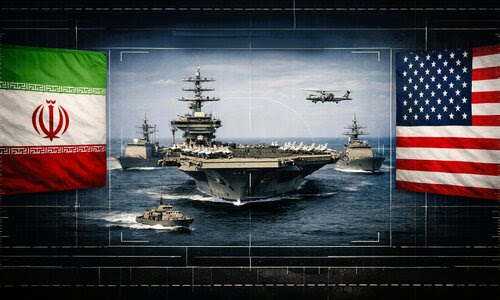
The United States has gathered more firepower in the Middle East than we have ever seen before. It exceeds anything that we witnessed during Operation Desert Storm, it exceeds anything that we witnessed during the war in Afghanistan, and it exceeds anything that we witnessed during the war in Iraq.
That doesn’t necessarily mean that war is imminent. President Trump could ultimately decide not to pull the trigger. But without a doubt, at this moment we are exceedingly close to a cataclysmic showdown in the Middle East.
It is being reported that the USS Abraham Lincoln has officially arrived in the Middle East…
The aircraft carrier USS Abraham Lincoln and its three accompanying warships have sailed into the Middle East region, providing President Trump additional military firepower if he decides to strike Iran.
The USS Abraham Lincoln, which is equipped with Mk 57 Mod3 Sea Sparrow surface-to-air missile launchers and can carry squadrons of bombers and early warning planes, and its strike group are in the U.S. Central Command (Centcom) area, which encompasses the Middle East region, the command confirmed Monday.
The addition of the carrier in the region comes as Trump warned that the U.S. is sending an “armada” toward Iran following nationwide protests in the country, where thousands of demonstrators have been killed by authorities.
Some of us have been carefully tracking the movements of the USS Abraham Lincoln in recent days.
Once the protests in Iran got really crazy, this carrier was redeployed from the Indian Ocean, and it has a maximum capacity of 90 aircraft…
The Nimitz-class aircraft carrier is hauling five squadrons of strike fighters, with a max capacity of 90 aircraft.
These include F/A-18 Super Hornets, F-35 Lightning II stealth fighters and EA-18G Growler radar jammers — along with Osprey tilt-rotor transports and MH-60S Seahawk helicopters.
Of course the USS Abraham Lincoln is not traveling alone.
It is being accompanied by three guided-missile destroyers that are “fully loaded with Tomahawk cruise missiles”…
The Lincoln is not alone; it hunts with a wolfpack. It is flanked by three guided-missile destroyers: USS Spruance, USS Frank E. Petersen Jr., and USS Michael Murphy. These ships are fully loaded with Tomahawk cruise missiles, ready for immediate launch orders.
This battle group is just the latest addition to the growing amount of firepower that the U.S. has accumulated in the region.
If the U.S. attacks Iran, the Iranians have already warned that the USS Abraham Lincoln will be a primary target.
In fact, the Iranians just released a shocking video that simulates what it would look like if an Iranian ballistic missile were to destroy the carrier…
Iran’s state-run Islamic Ideology Dissemination Organization has released a propaganda video that purports to simulate how Iran’s Fattah ballistic missile could split the USS Abraham Lincoln in two in a potential conflict with the US, as the carrier strike group enters Mideast.
They are openly threatening to sink the Abraham Lincoln.
And it appears that they have the ability to do that.
In addition to the various missiles that they possess, the Iranians could also potentially use drones…
Cameron Chell, CEO and co-founder of Draganfly, warned that Iran’s growing reliance on low-cost unmanned systems poses a credible danger to high-value U.S. naval assets, including the USS Abraham Lincoln aircraft carrier strike group.
“Iran’s drone capabilities are worth well into the tens of millions of dollars,” Chell told Fox News Digital.
“By pairing low-cost warheads with inexpensive delivery platforms, essentially remotely piloted aircraft, Iran has developed an effective asymmetric threat against highly sophisticated military systems.”
One drone would not be a problem for the Abraham Lincoln.
But if the Iranians sent hundreds of drones at the Abraham Lincoln all at once, the ship’s defenses could be overwhelmed…
Chell said Iran can launch large numbers of relatively unsophisticated drones directly at naval vessels, creating saturation attacks that could overwhelm traditional defenses.
“If hundreds are launched in a short period of time, some are almost certain to get through,” Chell said.
“Modern defense systems were not originally designed to counter that kind of saturation attack. For U.S. surface vessels operating near Iran, warships are prime targets.”
In addition to missiles and drones, the Iranians also possess large numbers of small attack vessels.
According to Defense News, many of them have now been deployed “across the Persian Gulf, the Strait of Hormuz and the Gulf of Oman”…
Iran has launched its most visible naval mobilization in years across the Persian Gulf, the Strait of Hormuz and the Gulf of Oman, deploying a dense concentration of Islamic Revolutionary Guard Corps (IRGC) vessels as a U.S. carrier strike group advances toward the region. Satellite imagery, maritime tracking data and regional security reporting indicate that Tehran is signaling readiness for confrontation at the world’s most critical energy chokepoint, even as both sides warn of the danger of miscalculation.
Western defense analysts say the IRGC Navy has surged Iranian-flagged ships linked to the Guards into key waterways, including waters adjacent to the United Arab Emirates (UAE) and along the approaches to the Strait of Hormuz. The deployments follow a week of Iranian missile drills involving both ballistic and cruise systems, and come amid sharp rhetoric from senior commanders declaring that Iranian forces are “more ready than ever.”
During the 12-Day War, the Iranians did not hit us with everything that they have got.
This time around, it would be completely different.
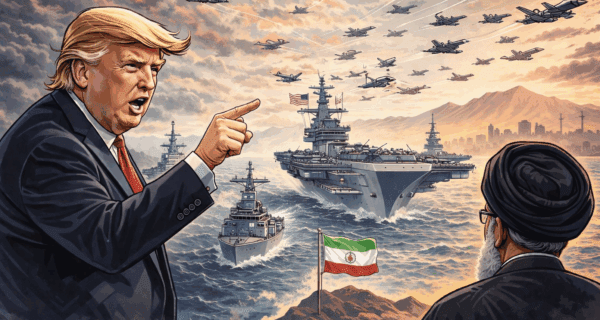
On Saturday, General Mohammad Pakpour warned that Iran has its “finger on the trigger”…
Iran’s Revolutionary Guard commander on Saturday said the country has its “finger on the trigger” at the U.S. after President Trump said an “armada” will head toward the Middle East.
“The Islamic Revolutionary Guard and dear Iran stand more ready than ever, finger on the trigger, to execute the orders and directives of the Commander-in-Chief,” Gen. Mohammad Pakpour said according to Nournews, a news outlet with ties to Iran’s Supreme National Security Council.
And one Iranian official just told Reuters that if Iran is attacked “we will respond in the hardest way possible to settle this”…
Iranian officials said over the weekend that they are prepared to retaliate if attacked by the US.
Speaking to Reuters on condition of anonymity, an official said: ‘This military build-up – we hope it is not intended for real confrontation – but our military is ready for the worst-case scenario. This is why everything is on high alert in Iran.’
He then delivered a warning to Washington, adding: ‘This time we will treat any attack – limited, unlimited, surgical, kinetic, whatever they call it – as an all-out war against us, and we will respond in the hardest way possible to settle this.’
What did he mean by “hardest way possible”?
Was he suggesting that Iran could actually use unconventional weapons?
Let’s hope not.
As I write this, even the slightest miscalculation could set the entire region ablaze.
At this stage, there is even speculation that Iran could launch some sort of a preemptive strike…
Israeli security officials describe Iran as potentially operating under a “use it or lose it” doctrine. Fearing that a sudden U.S. “decapitation strike” could neutralize its missile forces before they are launched, Iranian commanders may be weighing an early salvo against Israel–the United States’ closest regional ally–to ensure retaliation capability.
If the Iranians believe that an attack is inevitable, they may just pull the trigger first.
And Hezbollah is telling us that they will join the fight if war breaks out…
Hezbollah has warned that its enemies will ‘taste the bitterest forms of death’ if Donald Trump strikes its backer, Iran.
Kataib Hezbollah, an Iraqi paramilitary group with links to the better-known Lebanese terror group Hezbollah, issued the fiery warning on Sunday, calling on its fighters to prepare for a possible ‘total war’.
Abu Hussein al‑Hamidawi, the group’s chief, claimed the ‘forces of darkness’ are gathering to destroy Iran, adding: ‘We affirm to the enemies that war against the [Islamic] Republic will not be a walk in the park.
‘But rather, you will taste the bitterest forms of death, and nothing will remain of you in our region.’
Speaking of Hezbollah, the IDF just conducted more than 20 airstrikes on targets in southern Lebanon…
Southern areas of Lebanon were subjected to massive attacks by Israeli Air Force fighter jets, which delivered no less than 23 strikes against ground targets, the news portal Naharnet stated.
Airstrikes were reportedly carried out on the mountainous Jabbur area and the Wadi Barguz gorge, where attempts by militants of the Shiite militia Hezbollah to restore their military infrastructure were recorded.
This should be big news.
Why is the mainstream media in the western world so quiet about this?
We really are on the verge of a cataclysmic showdown in the Middle East.
President Trump warned the Iranians not to kill protesters.
But then the Iranians shut down the Internet for the Iranian population and proceeded to slaughter more than 33,000 protesters…
It comes after it was revealed last night that more than 33,000 protesters had been killed in Iran following the regime’s brutal crackdown on anti-government demonstrations, Time reports, quoting two senior officials working for the country’s Ministry of Health.
The death toll from the anti-government protests, which began on December 28, was previously estimated to be between 16,500 and 18,000.
Alongside the death toll, 97,645 have been wounded, with 30 per cent suffering eye injuries, according to research by Professor Amir-Mobarez Parasta.
We have never seen a slaughter of protesters of this magnitude.
The Iranians clearly crossed the red line that President Trump had established.
Now the U.S. has accumulated an unprecedented amount of firepower in the region, and one expert is warning that “the indicators suggest that planning has moved beyond contingency and into executable readiness”…
A newly circulated strategic assessment by regional military analyst Talal Nahle has intensified speculation that the United States and its allies are nearing a decisive military inflection point with Iran, as unprecedented force concentrations across air and naval domains point to preparations far exceeding a limited or symbolic operation.
The report, updated early Monday following the release of the latest NOTAM (Notice to Air Missions) at 02:31 UTC, highlights what Nahle describes as a “deafening silence” — a lack of change in Iranian firing-zone declarations — combined with a vast and measurable coalition order of battle. Together, the indicators suggest that planning has moved beyond contingency and into executable readiness.
“This is no longer the language of speculation,” Nahle wrote. “It is the language of numbers that do not lie.”
According to Nahle, the U.S. could potentially launch more than 1,000 missiles “in a single or closely sequenced salvo”…
At the center of the assessment is the presence of 1,018 Vertical Launch System (VLS) cells deployed aboard U.S. destroyers and other surface combatants operating within strike range of Iran.
According to the analysis, this configuration provides the U.S. Navy with the ability to launch over 1,000 cruise or air-defense missiles — primarily Tomahawk Land Attack Missiles — in a single or closely sequenced salvo.
Military planners note that such volumes are designed for missile saturation, a doctrine that overwhelms even advanced air-defense networks through sheer scale. In this scenario, Iranian radar installations, air bases, command nodes and missile platforms could be targeted simultaneously across the country, compressing the defender’s response window to minutes.
Now that the USS Abraham Lincoln is in the region, the last piece of the puzzle is finally in place.
If President Trump gives the order, missiles will start flying back and forth all over the Middle East.
For the Iranians, the USS Abraham Lincoln would be a really juicy target.
Could you imagine how the American people would react if images of a burning aircraft carrier suddenly appeared on our television screens?
It would be quite a shock.
We are just inches away from a nightmare scenario, and once the fighting begins nobody is going to be able to stop it.
When Your Movement Requires Permission: The Quiet Rise Of The 15-Minute City

Something profound is changing in how governments think about movement — and most people won’t notice it until it’s already normal.
The idea sounds harmless, even comforting: a city where everything you need is just 15 minutes away. Groceries, schools, parks, healthcare. Fewer cars. Cleaner air. A greener future. Who could argue with that?
But in practice, the emerging reality of so-called “15-minute cities” looks far less like convenience — and far more like permission-based mobility, where governments decide where you may go, when you may go, and how often.
This is no longer theoretical. In parts of Britain, particularly Oxford, policies are being enacted that turn this urban planning concept into something far more troubling: a system that tracks movement, limits travel, and enforces compliance through surveillance and fines — all justified in the name of climate change.
What the 15-Minute City Really Means in Practice
At its core, the 15-minute city model aims to reduce reliance on cars by reorganizing cities into compact zones. Residents are encouraged — and increasingly pressured — to live, work, shop, and socialize within tightly defined neighborhoods.
Oxford’s approach shows how this works on the ground.
The city is being divided into six distinct zones, separated by traffic filters monitored by automated license-plate recognition cameras. These filters restrict when and how private vehicles can pass between zones. Drivers must apply for permits to travel freely beyond their neighborhood.
Residents inside designated zones receive 100 “free” travel days per year — roughly two days per week. Once those days are used, movement across zones triggers fines. People living outside the core area receive just 25 free days per year.
Buses, taxis, emergency services, and certain commercial vehicles move freely. Private citizens do not.
The result is a city where routine mobility is rationed, logged, and enforced by cameras — not police officers, not human judgment, but automated systems.
Supporters frame this as traffic management. Critics see something else entirely: the normalization of permission-based movement.
From Urban Planning to Behavioral Control
This is where the unease begins.
When movement becomes something you must apply for, budget, or justify, it ceases to be a basic freedom and starts to resemble a controlled activity. The infrastructure required to enforce these systems — constant monitoring, centralized databases, automated penalties — does not disappear once installed.
It expands.
Traffic filters today can easily become movement filters tomorrow. What begins as emissions reduction can evolve into behavioral compliance: discouraging certain trips, penalizing others, nudging citizens toward “approved” patterns of life.
The danger is not that governments openly announce authoritarian intentions. The danger is policy drift — small restrictions layered gradually until freedom erodes without a single dramatic moment.
History shows that governments rarely relinquish powers once acquired. Surveillance infrastructure, once built, tends to find new justifications.
A Digital Fence Without Walls
Unlike the Soviet Union’s physical micro-districts, today’s version doesn’t require checkpoints or guards. The boundaries are digital. Invisible. Enforced silently by cameras, algorithms, and fines that arrive in the mail.
There are no walls — yet movement is still constrained.
And unlike past systems of control, modern technology allows authorities to build detailed profiles of individual behavior: where people drive, how often they leave their neighborhood, at what times, and for what duration.
Even if officials insist these systems are limited, temporary, or benign, the architecture they create makes future expansion effortless.
Add digital IDs. Add dynamic pricing. Add social or environmental scoring. Suddenly, access to movement is no longer equal — it’s conditional.
Climate Goals vs. Civil Liberties
Climate change is frequently invoked as the moral shield for these policies. And some environmental concerns are real. But urgency is often the moment when civil liberties are most vulnerable.
When governments frame restrictions as necessary, debate becomes dangerous. Opposition becomes selfish. Skepticism becomes misinformation.
Yet a society that cannot question how power is exercised — especially over something as fundamental as movement — is not a free society.
Cleaner air should not require movement quotas. Sustainability should not depend on surveillance grids. And urban planning should never morph into soft containment.
The Slippery Question We Can’t Ignore
The most important question is not whether today’s 15-minute city policies are authoritarian.
It’s whether they condition citizens to accept a future where freedom of movement is managed rather than assumed.
Once people grow accustomed to asking permission to travel, counting allowed days, and being tracked for “the greater good,” the line between convenience and control becomes dangerously thin.
Cities can be built for people — or they can be built to manage them.
The difference lies not in how close your grocery store is — but in who decides how far you’re allowed to go.
This Is What Modern War Looks Like – When Men Surrender To Machines
War has always been a deeply human endeavor. Fear, courage, exhaustion, survival. For thousands of years, battles were decided by who could march farther, fight harder, and endure longer. But a chilling new moment from the war in Ukraine suggests that era may be ending.
In recently released footage, Russian soldiers are seen doing something unprecedented: they surrender not to enemy troops, but to a machine.
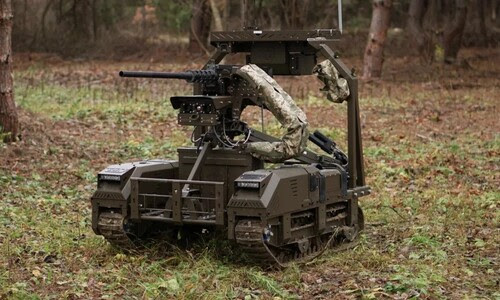
The scene unfolds quietly. A tracked ground combat robot rolls forward through the snow, its mounted machine gun aimed steadily ahead. No shouting. No visible Ukrainian soldiers. Just the mechanical advance of a weapon controlled from afar. One by one, Russian troops emerge from hiding, raise their hands, and drop to the ground. Above them, an aerial drone watches, documenting the surrender from the sky.
No Ukrainian lives are put at risk. No shots are fired. The battlefield decision is made by circuits, cameras, and remote commands.
This is not science fiction. This is modern war.
From Soldiers to Systems
The ground robot involved — a Ukrainian-made reconnaissance and strike platform armed with a remotely operated machine gun — represents a rapidly growing class of weapons systems that blur the line between human command and machine execution. While the robot itself is remotely controlled rather than fully autonomous, its presence alone was enough to compel surrender.
That distinction matters. These machines don’t need to feel fear, fatigue, or hesitation. They don’t panic under fire. They don’t break ranks or lose morale. They advance relentlessly, following commands with mechanical precision — and human beings on the other side know it.
In this encounter, psychological warfare did as much work as firepower. The soldiers weren’t facing another human who might hesitate or negotiate. They were facing a machine that would simply keep moving forward.
The Drone-Dominated Battlefield
Ukraine has become the proving ground for a new style of warfare where drones and robotic systems dominate nearly every layer of combat.
Small aerial drones now scout enemy positions, direct artillery, drop explosives, and even guide surrendering troops. Larger drones conduct long-range strikes once reserved for missiles and aircraft. On the ground, unmanned vehicles clear trenches, deliver supplies, evacuate wounded soldiers, and increasingly, engage the enemy directly.
What makes this shift so profound isn’t just the technology — it’s the scale. These systems are cheaper, faster to produce, and easier to deploy than traditional military hardware. Losses that would once have been devastating are now expected, absorbed, and replaced within days.
War has become iterative. Algorithms learn. Operators adapt. Machines return to the field with updated software, better sensors, and improved targeting.
Distance Without Detachment
One of the most unsettling aspects of this transformation is how it changes the relationship between killing and risk.
The operator of the ground robot that accepted the Russian surrender may have been miles away, sitting behind screens rather than crouched behind cover. The decision-making remains human, but the danger does not.
Supporters argue this saves lives — and they’re right. Fewer soldiers are exposed to direct fire. Fewer families receive knock-on-the-door visits. Machines take the risks humans once had to.
But critics warn that distance can dull restraint. When combat feels more like operating equipment than surviving a firefight, the moral weight of decisions can shift. The battlefield becomes cleaner for one side, infinitely more terrifying for the other.
The Ethics We’re Racing Past
The surrender-to-robot moment forces an uncomfortable question: What happens when machines don’t just fight, but decide?
Today, humans still authorize lethal action. But the trajectory is clear. Systems already track targets, predict movement, and prioritize threats faster than any human can. The temptation to give machines greater autonomy — to speed decision-making, reduce latency, and outmatch the enemy — is enormous.
Once that threshold is crossed, warfare changes in ways we may not fully control. Accountability becomes murky. Errors scale rapidly. And the idea of a human conscience acting as a final brake begins to erode.
A Glimpse of the Future
The image of soldiers surrendering to a robot will likely be studied for decades. Not because it was dramatic — but because it was quiet.
No chaos. No gunfire. Just men recognizing that the old rules no longer applied.
Modern war is no longer only about who has the bigger army or the stronger will. It’s about who controls the smarter machines, the better data, the faster feedback loops. Victory increasingly belongs to those who can remove humans from harm — while placing machines directly in its path.
The battlefield hasn’t become less human. It has become less forgiving.
And as robots roll forward and drones watch from above, one thing is now unmistakably clear:
War has entered an age where surrendering to a machine is not only possible — it may soon be common.
Watch footage of the event here:
The Biblical Relationship Between USA (The Eagle Wings) and Israel (The Women with the 12 Stars around her Head) Daniel Chapter 4 and Revelation Chapter 12:

TruLight Ministries Daily Entertainment

TruLight TV – What Does It Mean To Have Patience!
On Today’s Kids Hour Your preschooler will join Olive on Farmer Fred’s farm as she completes chores, sings, plays games, and learns about the fruit of the Spirit. This week, Olive learns what it means to have patience! and later As Luke says goodbye to his friends at Konnect HQ, Dot refuses to let him leave and goes to great lengths to get him to stay This and plus some stunning gospel kids’ songs. Enjoy!
Today on TruLight Radio XM
TruLight Radio XM 24/7
Program
GMT / UTC +2
Monday To Fridays
00:15 Words to Live By Testimonies
01.15 Science Scripture and Salvation
02.15 Ground Works
04.00 Gospel Concert of the Day
05.00 The Daren Streblow Comedy Show
5:55 It is Today devotional
6:00 Gaither Homecoming Morning Show
7:15 Discover the Word
8.15 Destined for Victory
8:55 Science Scripture and Salvation
9:00 Holy Spirit Hour – Normally Sermons
10:15 Hope of the Heart
11:15 Unshackled
11.45 Words to Live By
12:15 Truth for Life
13:15 Living on the Edge with Chip Ingram
14:15 Focus on the Family
15:00 Kids Hour
16:00 In Touch with Dr. Charles Stanley
16:30 Groundwork
17:15 Live in the Light
18:15 Renewing your Mind
19:00 Gaither Homecoming Show
20:15 Growing Hope
21:15 Adventures in Odyssey Radio Drama
21:45 Bible Reading
22:15 Night-sounds
23.00 Good Old Country Gospel / Rhema Gospel Express
VISIT THE WEBSITE
https://TruLightradioXM.org.za
TruLight Ministry News

TruLight Ministries orders from God since 2012 . Teach Them , Comfort Them and Warn Them!
Today – The Release of the “” The Sheriff of The Church (I Tell You Tru) – Episode 2 – The Roman Catholic Church “” Link below !!
End Time Articles :
Share this Feeding of Manna with your Friends and Family. just click on the Social Media icon and share !