Hosted by TruLight Ministries – The Place of Truth
SELECT YOUR READING LANGUAGE – BOTTOM LEFT = YOUR DAILY MANNA NOW AVAILABLE IN 103 LANGUAGES
a New Study : for the Next 17 Daily Manna Days
In My Control vs Out of My Control
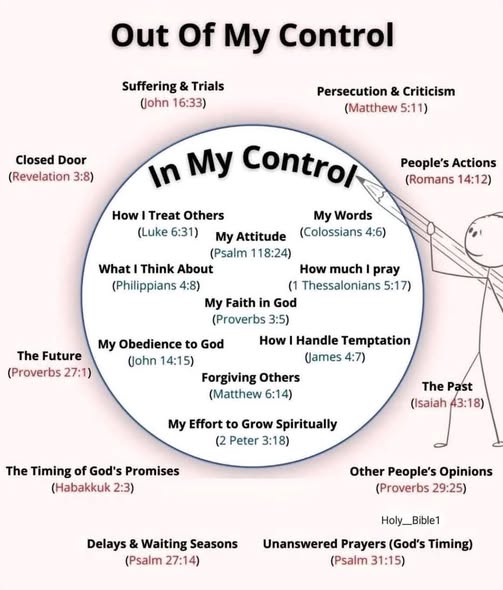
In My Control = How much I pray : How Much We Pray ::: The most basic definition of prayer is “talking to God.” Prayer is not meditation or passive reflection; it is direct address to God. It is the communication of the human soul with the Lord who created the soul. Prayer is the primary way for the believer in Jesus Christ to communicate his emotions and desires with God and to fellowship with God.
Prayer can be audible or silent, private or public, formal or informal. All prayer must be offered in faith (James 1:6), in the name of the Lord Jesus (John 16:23), and in the power of the Holy Spirit (Romans 8:26). As the International Standard Bible Encyclopedia puts it, “Christian prayer in its full New Testament meaning is prayer addressed to God as Father, in the name of Christ as Mediator, and through the enabling grace of the indwelling Spirit” (“Prayer” by J. C. Lambert). The wicked have no desire to pray (Psalm 10:4), but the children of God have a natural desire to pray (Luke 11:1).
Prayer is described in the Bible as seeking God’s favor (Exodus 32:11), pouring out one’s soul to the Lord (1 Samuel 1:15), crying out to heaven (2 Chronicles 32:20), drawing near to God (Psalm 73:28, KJV), and kneeling before the Father (Ephesians 3:14).
Paul wrote, “Do not be anxious about anything, but in every situation, by prayer and petition, with thanksgiving, present your requests to God. And the peace of God, which transcends all understanding, will guard your hearts and your minds in Christ Jesus” (Philippians 4:6–7). Worry about nothing; pray about everything.
Everything? Yes, God wants us to talk with Him about everything. How often should we pray? The biblical answer is “pray without ceasing” (1 Thessalonians 5:17, ESV). We should keep a running conversation going with God all day long. Some find the ACTS formula of prayer helpful, but there is really no special formula for how to pray in the Bible. We should just do it. We can pray under any and all circumstances. Prayer develops our relationship with God and demonstrates our trust and utter dependence upon Him.
Prayer is the Christian’s way of communicating with God. We pray to praise God and thank Him and tell Him how much we love Him. We pray to enjoy His presence and tell Him what is going on in our lives. We pray to make requests and seek guidance and ask for wisdom. God loves this exchange with His children, just as we love the exchange we have with our children. Fellowship with God is the heart of prayer. Too often we lose sight of how simple prayer is really supposed to be.
When we make petitions to God, we let God know exactly where we stand and what we would like to see happen. In our prayers, we must admit that God is greater than we are and ultimately knows what is best in any given situation (Romans 11:33–36). God is good and asks us to trust Him. In prayer, we say, essentially, “Not my will, but your will be done.” The key to answered prayer is praying according to the will of God and in accordance with His Word. Prayer is not seeking our own will but seeking to align ourselves with the will of God more fully (1 John 5:14–15; James 4:3).
The Bible contains many examples of prayer and plenty of exhortations to pray (see Luke 18:1; Romans 12:12; and Ephesians 6:18). God’s house is to be a house of prayer (Mark 11:17), and God’s people are to be people of prayer: “Dear friends, by building yourselves up in your most holy faith and praying in the Holy Spirit, keep yourselves in God’s love” (Jude 1:20–21).
The Holy Spirit inspired Pastor Dirk to Pen down 9 Prescription Prayers for the End Time , This ebooks is avaialble to download for free , avaialble in English and Afrikaans , Plus TruLight Ministries offers a Prayer website called ” House of Prayer ” Links attached :

Bible Verse and Prayer for Today
Love does not delight in evil, but rejoices with the truth. It always protects, always trusts, always hopes, always perseveres.
—1 Corinthians 13:6-7
Life as a follower of Jesus is always about love — loving God and loving others (Matthew 22:36-40), doing the things Paul lists here — not delighting in evil, rejoicing with the truth, protecting, trusting, hoping, and persevering always! Living this always loving way in a fallen world full of self-centered people is a very tough and tall order and sometimes very tough work. Only God is always. But then Christians are fueled to this always kind of love through the Holy Spirit. Paul tells us that “The love of God has been poured out within our hearts through the Holy Spirit who was given to us” (Romans 5:5). No wonder this love, true love, Christian love, loving like Jesus is always love — it is God’s love, demonstrated by Jesus’ sacrifice, and now empowered through us by the Holy Spirit to be delivered to others by grace.
Prayer
Sweet and Glorious God on high, I humble myself before you, recognizing your boundless power to love always. I also recognize the incredible need for this always kind of love in the lives of those around me as I try to love that way with my limited capacity to love in my own strength. So, please pour your Holy Spirit into my heart and fill me with the power to love as you do: always. In Jesus’ sweet name, I pray. Amen and Amen
Bible Teaching of the Day
For the Christian, praying is supposed to be like breathing, easier to do than to not do. We pray for a variety of reasons. For one thing, prayer is a form of serving God (Luke 2:36-38) and obeying Him. We pray because God commands us to pray (Philippians 4:6-7). Prayer is exemplified for us by Christ and the early church (Mark 1:35; Acts 1:14; 2:42; 3:1; 4:23-31; 6:4; 13:1-3). If Jesus thought it was worthwhile to pray, we should also.
Another reason to pray is that God intends prayer to be the means of obtaining His solutions in a number of situations. We pray in preparation for major decisions (Luke 6:12-13); to overcome demonic barriers (Matthew 17:14-21); to gather workers for the spiritual harvest (Luke 10:2); to gain strength to overcome temptation (Matthew 26:41); and to obtain the means of strengthening others spiritually (Ephesians 6:18-19).
We come to God with our specific requests, and we have God’s promise that our prayers are not in vain, even if we do not receive specifically what we asked for (Matthew 6:6; Romans 8:26-27). He has promised that when we ask for things that are in accordance with His will, He will give us what we ask for (1 John 5:14-15). Sometimes He delays His answers according to His wisdom and for our benefit. In these situations, we are to be diligent and persistent in prayer (Matthew 7:7; Luke 18:1-8). Prayer should not be seen as our means of getting God to do our will on earth, but rather as a means of getting God’s will done on earth. God’s wisdom far exceeds our own.
For situations in which we do not know God’s will specifically, prayer is a means of discerning His will (see James 1:5). Prayer was instrumental in the Spirit’s sending of Paul and Barnabas on the first missionary journey (Acts 13:1–3). Solomon asked for “wisdom and knowledge,” and God gave him that and much more (2 Chronicles 1:10–12).
Prayers un-prayed will be prayers unanswered. If the Syrian woman with the demon-influenced daughter had not prayed to Christ, her daughter would not have been made whole (Mark 7:26–30). If the blind man outside Jericho had not called out to Christ, he would have remained blind (Luke 18:35–43). God has said that we often go without because we do not ask (James 4:2). In one sense, prayer is like sharing the gospel with people. We do not know who will respond to the message of the gospel until we share it. In the same way, we will never see the results of answered prayer unless we pray.
A lack of prayer demonstrates a lack of faith and a lack of trust in God’s Word. We pray to demonstrate our faith in God, that He will do as He has promised in His Word and bless our lives abundantly more than we could ask or hope for (Ephesians 3:20). Prayer is our primary means of seeing God work in others’ lives. Because it is our means of “plugging into” God’s power, it is our means of defeating Satan and his army that we are powerless to overcome by ourselves. Therefore, may God find us often before His throne, for we have a high priest in heaven who can identify with all that we go through (Hebrews 4:15-16). We have His promise that the fervent prayer of a righteous man accomplishes much (James 5:16-18). May God glorify His name in our lives as we believe in Him enough to come to Him often in prayer.
Today’s Devotional
God has promised that, when we ask for things that are in accordance with His will for our lives, He will give us what we ask for (1 John 5:14–15). However, there is one caveat to add to this: we may not always like the answer.
We pray for a lot of things—some good, some bad, some really pointless. But God listens to all of our prayers, regardless of what we ask (Matthew 7:7). He does not ignore His children (Luke 18:1–8). When we talk to Him, He has promised to listen and respond (Matthew 6:6; Romans 8:26–27). His answer may be some variation of “yes” or “no” or “wait, not now.”
Keep in mind that prayer is not our way of getting God to do what we want. Our prayers should be focused on things that honor and glorify God and reflect what the Bible clearly reveals God’s will to be (Luke 11:2). If we pray for something that dishonors God or is not His will for us, He is unlikely to give what we ask for. God’s wisdom far exceeds our own, and we must trust that His answers to our prayers are the best possible solutions.
Does God answer prayers? – When God says “yes.”
In the first two chapters of 1 Samuel, Hannah prays and asks God to give her a baby. She had been unable to conceive which, in biblical times, was considered a mark of shame for a woman. Hannah prayed fervently—so fervently that a priest who saw her praying thought she was drunk. But God heard Hannah, and He allowed her to give birth to a child.
Jesus said, “Whatever you ask in my name, this I will do, that the Father may be glorified in the Son” (John 14:13). If you have prayed specifically for something and God has granted it to you, then you can be assured that it is His will. Nothing happens without God allowing it to happen (Romans 8:28).
Does God answer prayers? – When God says “no.”
In John 11, Mary and Martha wanted Jesus to heal their dying brother, yet Jesus allowed Lazarus to die. Why did He say “no” to these grieving women who loved Him so much? Because He had greater things planned for Lazarus, things that no one could possibly have imagined.
“No” is one of the hardest answers we can receive. But, once again, it is important to remember that God is all-knowing and is aware of the entire timeline of history. He knows every possible outcome of every possible choice in every possible situation; we do not. He sees the “big picture”; we see a partial brushstroke. Proverbs 3:5 says to “trust in the LORD with all your heart, and do not lean on your own understanding.” When we get a “no” answer, we must trust that whatever we asked for was not God’s will.
Does God answer prayers? – When God says “wait, not now.”
Sometimes hearing “wait” is even harder than hearing “no” because it means we have to be patient (Romans 8:25). While waiting is difficult, we can be thankful God is in control and trust that His timing will be perfect (Romans 12:12; Psalm 37:7—9).
God wants the best for your life. He does not want you to suffer needlessly. Jeremiah 29:11 says, “For I know the plans I have for you, declares the Lord, plans for welfare and not for evil, to give you a future and a hope.” Be patient and know that He is your loving Father (Psalm 46:10).
Abide by Philippians 4:6 as you make your requests to God: “Do not be anxious about anything, but in everything by prayer and supplication with thanksgiving let your requests be made known to God.” Then, when God responds, be prepared to accept His wisdom—whether or not you agree with His answer.

Bible Prophecy, Signs of the Times and Gog and Magog Updates with Articles in the News
Why Gen Z ‘Nones’ Are Reconsidering Religion

Gen Z is the least religious cohort in American history. 43% of this generation born roughly between 1996 and 2012 identify as religious “nones.” While there have been many reports since Charlie Kirk’s assassination indicating increased interest in religion and increased church attendance, according to statistician Ryan Burge, there is not yet statistical evidence of religious revival among young people.
There is, however, ample evidence that these Zoomers are looking for meaning and willing to reconsider religion. Specifically, though these trends may not be large enough to be captured in statistics, there seems to be a growing interest in more rigorous forms of faith.
In a recent article in Tablet magazine, Ani Wilcenski, a Zoomer herself, examined this phenomenon. While acknowledging that Gen Z is less religious than previous generations, Wilcenski, researched those bucking that trend, including converts to Islam, Jews who are becoming more observant, Latin Mass Catholics, Orthodox Christians, and others who are joining stricter, more traditional religious groups.
According to Wilcenski, Gen Z has been raised with the “illusion of infinite horizons,” and grew up “without sturdy institutions or fulfilling rites of passage.” As a result, for this generation, “everything–career, identity, relationships–unfolds as a series of self-directed experiments,” something that has been labeled “liquid modernity.” Sociologist Zygmunt Bauman coined that phrase to describe the experience of life as unstable and non-permanent, without fixed distinctions, and no foundation for cultivating identity.
The experience of “liquid modernity” is why, according to Wilcenski, the ideological capture of Gen Z has been so comprehensive. For example, nearly one-quarter of the generation identify as LGBTQ, up nearly 20 points from previous generations. Ideology gives the illusion of a solid cause and offers a purpose for life where otherwise there is none.
Of course, that is the role religion traditionally played in Western culture. As Wilcenski noted, the draw of religion is that it provides a firm source of virtue and belonging, focus, and a sense of permanence. That’s what the Zoomers who are exploring more demanding forms of faith are most likely seeking.
As Wilcenski put it,
These faiths don’t adapt to the age–they expect the age to conform to them. Their rituals inconvenience, their authorities override preference, their truths don’t negotiate. And in a society allergic to absolutes, that refusal to dilute themselves holds a powerful magnetism.
As an example, Wilcenski quoted a 23-year-old woman who explained her decision to join a Carmelite monastery in Plough magazine: “I figured if I was going to do something crazy for our Lord I might as well go all in.” Like Wilcenski, the Plough article noted that young women who join strict religious orders are committing to something stable and permanent.
According to Wilcenski, when the Gen Zers turning to religion offer reasons why, they sound more like escapes from modern chaos than declarations of faith…. Their newfound religiosity is less about belief than about orienting life around something ultimate–something greater than the self.
That, of course, also leaves them vulnerable to religious falsehoods. Remember, Wilcenski not only researched conversions to Christianity but also to conservative forms of Judaism and Islam. The desire to escape “liquid modernity” says nothing about the genuineness of any faith that follows. The same motivation can explain the growing number of young men who are embracing political extremism, from Antifa to white nationalism.
It has long been the case that laxer forms of religion have declined while more demanding forms have grown or at least declined more slowly. The divide within this segment of Gen Z seems to be even more pronounced. This group will not be interested in churches that accommodate themselves to American culture. The seeker-sensitive model will not work. It probably never has.
The Church must be countercultural, unapologetic about even the weird things we believe, and unafraid to ask for serious commitment from people. It needs to explore the depths of the Gospel; it must explain life and its meaning, including hard truths about the human condition, rather than offer only shallow therapeutic or pragmatic applications. A church that does this will not only be able to counter destructive ideologies vying for all generations but will also be able to offer meaning and stability to a generation that is looking for both.
Theological Liberalism Has Become A Dangerous Rival To Biblical Christianity

Theologian Al Mohler condemned Kentucky Governor Andy Beshear’s (D) recent use of the Bible on “The View,” presumably to explain why he vetoed legislation banning transgender procedures for minors, and warned that theological liberalism has become a rival religion to biblical Christianity.
“These days, it’s hard to be astounded by something absolutely ridiculous, or worse, coming from an officeholder when it comes to political office,” Mohler, the president of The Southern Baptist Theological Seminary in Louisville, Kentucky, said in a Monday X post.
“And frankly, if you’re coming up with a catalog of stupid things said on programs like ABC’s ‘The View,’ you’d better get ready for a very long list. But I don’t care how long your list is, this one’s going to rank at the top of stupid.”
Mohler went on to show a clip of Beshear’s Monday appearance on “The View,” where the governor claimed his actions in office are driven by his Christian faith. “Most of the decisions I make are based on that Golden Rule that says we love our neighbor as yourself, and that parable [of] the Good Samaritan that says everyone is our neighbor,” he said.
“And so, when I’ve taken actions like vetoing the nastiest piece of anti-LGBTQ legislation that ever came through my state, I described it in those terms. I said my faith teaches me that all children are children of God, and I didn’t want people picking on those kids,” he added to audience applause and approving nods from “The View” co-hosts.
Though Beshear did not specify which legislation he was referring to, Mohler suggested he was likely referencing Senate Bill 150, which banned prescribing puberty blockers and opposite-sex hormones for minors while requiring students in public schools to use the bathroom that aligns with their biological sex. The Kentucky General Assembly overruled Beshear’s veto of the bill in 2023.
Last year, the General Assembly also overruled Beshear’s veto of House Bill 495, which banned taxpayer-funded transgender procedures and rescinded his executive order restricting so-called “conversion therapy.” Beshear accused the legislature at the time of behaving unconstitutionally and promoting “a dangerous and discriminatory practice that has led to the deaths of Kentucky children.”
Noting that Beshear is vague in defining his faith apart from the Golden Rule and the Good Samaritan, Mohler said that the governor epitomizes one of the “two rival religions” that have emerged with opposing views of Scripture and reality.
“You have historic, orthodox biblical Christianity, and you have theological liberalism and whatever it produces next,” explained Mohler, who believes the cultural battles over “the LGBTQ+ revolution” have underlined the differences between the competing faiths “perhaps more than anything else in the modern age.”
“One of them, Christianity, is consistent with creation order and Scripture and the history of the Christian church, and the other one, which, frankly, is a new religion. It’s cut the Bible down to size. It doesn’t begin with Genesis 1, evidently, just the Golden Rule and the Good Samaritan,” Mohler added.
Beshear, who is a member of the liberal mainline Christian Church (Disciples of Christ), has consistently used Christianity to affirm his liberal political positions. During an address to the 2024 Democratic National Convention, he echoed the line he used on “The View” nearly verbatim by appealing to the Golden Rule to suggest those who oppose abortion are lacking “underlying empathy” and not loving their neighbor as themselves.
“How we treat people transcends party lines. It goes right to the heart of who we are. My faith teaches me the Golden Rule — that I am to love my neighbor as myself. And the parable of the Good Samaritan says we are all each other’s neighbors,” Beshear said regarding pro-life policies that he alleged “give rapists more rights than their victims.”
The Family Foundation, a Kentucky-based pro-life nonprofit, accused Beshear at the time of “completely twisting the Scripture to advance and support his radical agenda.”
“To biblically love one’s neighbor, one must desire and act in ways to see our neighbor flourish. Championing the murderous practice of abortion that does not lead to a flourishing life, but rather to the termination of one’s life, is the complete opposite of loving one’s neighbor. Misrepresenting Scripture in this manner must be condemned,” the group insisted.
Before abortion was banned in Kentucky in 2022 upon the overturning of Roe v. Wade, Beshear had also vetoed legislation to restrict abortion, including a 2020 Senate bill to protect infants born alive during an abortion attempt. A similar bill became law without his signature in January 2021.
In his 2025 State of the Commonwealth address, delivered to what NPR affiliate WUKY called “a notably small audience,” Beshear used the Nativity story to admonish Republicans to be “thoughtful” regarding how their legislation might affect the marginalized. He described Mary as “an unwed teenager” who “people in those days would judge, would look down on, would pass legislation against.”
Beshear’s implication prompted outrage from Kentucky state Rep. TJ Roberts, who said in an X post at the time that “Beshear using Mary, the mother of God, to attack pro-life, pro-family, pro-faith, pro-freedom Kentuckians was beyond shameful — outright blasphemous.”
Welcome To The ‘EUSSR’: Unpopular European Regimes Crack Down On Dissent

Governing elites in Europe, in what increasingly appears to be the EUSSR (European Union of Soviet Socialist Republics) race to the bottom, have been growing ever more unpopular. Disapproval ratings are skyrocketing. In France, 77% of the public disapprove of President Emmanuel Macron. In Britain, 68% disapprove of Prime Minister Keir Starmer. In Germany, 64% disapprove of Chancellor Friedrich Merz, and in Spain, 61% have had it up to here with Prime Minister Pedro Sanchez.
In other parts of Europe, such as Germany and France, all sorts of pseudo-legal acrobatics are being generated to prevent political opponents from running for high office.
So, if you are an unpopular regime desperately clinging to power, what do you do? It’s easy! Iran’s ayatollahs, China’s Xi Jinping, Russia’s Vladimir Lenin, Josef Stalin and Vladimir Putin could tell you. You simply crack down — more than ever — on free speech and dissent!
In supposed democracies, this latest “benefit ” to your people – cracking down on dissent “democratically” — means using technology rather than firepower to crush freedom of speech.
Concerning age limits for children, there is a valid argument to be made that leaving the faces of a generation staring at screens all day appears to be impairing not only their education but also their ability to socialize with anyone not an AI chimera, algorithmed to agree narcotically with everything uploaded, including the best ways to how to put their young, ostensibly deficient lives to an end.
As the founder and CEO of Telegram, Pavel Durov wrote on X:
Today, Telegram notified all its users in Spain with this alert:
Pedro Sánchez’s government is pushing dangerous new regulations that threaten your internet freedoms. Announced just yesterday, these measures could turn Spain into a surveillance state under the guise of “protection.” Here’s why they’re a red flag for free speech and privacy:
- Ban on social media for under-16s with mandatory age verification: This isn’t just about kids–it requires platforms to use strict checks, like needing IDs or biometrics….
Danger: This will force over-censorship–platforms will delete anything remotely controversial to avoid risks, silencing political dissent, journalism, and everyday opinions. Your voice could be next if it challenges the status quo….
Danger: Governments will dictate what you see, burying opposing views and creating echo chambers controlled by the state. Free exploration of ideas? Gone–replaced by curated propaganda….
Danger: Vague definitions of “hate” could label criticism of the government as divisive, leading to shutdowns or fines. This can be a tool for suppressing opposition. These aren’t safeguards; they’re steps toward total control. We’ve seen this playbook before–governments weaponizing “safety” to censor critics….
Demand transparency and fight for your rights. Share this widely–before it’s too late.
Durov, incidentally, born in the Soviet Union in 1984 – of all Orwellian dates! – left Russia in 2014 after Russia’s FSB security service demanded that his company, VKontakte, hand over the personal data of Ukrainian Euromaidan protesters and opposition figures, and for refusing to censor posts on his site.
In Spain, in addition to an arguably justified ban on social media for people under 16 years old, Sanchez’s government is introducing a legislative package consisting of five additions to censor speech online.
First, social media platform executives will not just be fined for failing to remove “illegal, hateful or harmful” content from their platforms in a timely way – they will also now face criminal liability, including possible imprisonment. As Durov warns:
“This will force over-censorship–platforms will delete anything remotely controversial to avoid risks, silencing political dissent, journalism, and everyday opinions. Your voice could be next if it challenges the status quo.”
“Sanchez,” Elon Musk said more bluntly, “is the true fascist totalitarian.”
Second, amplifying “illegal” or “harmful” content through the algorithms will become a crime.
“We will turn algorithmic manipulation and amplification of illegal content into a new criminal offense,” Sanchez said. “No more hiding behind code. No more pretending technology is neutral.”
Third, according to Sanchez:
“We will implement a hate and polarization footprint system to track, quantify, and expose how digital platforms fuel division and amplify hate. For too long, hate has been treated as invisible and untraceable, but we will change that.”
The problem, of course, is that usually “hate” is never defined — meaning that anything and everything can be labeled “hate” and often is. Judgments about what constitutes “hate” become entirely subjective and run the danger of existing exclusively “in the eye of the beholder.”
In Sudan, for instance, a British teacher at an elementary school was sentenced to 40 lashes and a term in prison for having allowed her students to name a teddy bear Muhammad. In Iran today, people who protested against the regime are being sentenced to death for “waging war against God.”
The United States officially enshrines freedom of speech in the First Amendment to the Constitution:
“Congress shall make no law respecting an establishment of religion, or prohibiting the free exercise thereof; or abridging the freedom of speech, or of the press; or the right of the people peaceably to assemble, and to petition the Government for a redress of grievances.”
US courts have ruled that only child pornography and immediate, direct and credible threats, as well as a few other limitations, are banned.
Some governing elites in Spain apparently want to ban X there altogether. “The next battle should be aimed at limiting… and likely banning Twitter,” Minister of Youth and Children Sira Rego stated.
Spain’s Deputy Prime Minister Yolanda Díaz, announced that she has left X and that whoever remains on X “is feeding hate policies.”
France is planning a similar move, “to ban minors from Instagram and TikTok,” and Germany is also seriously considering introducing such a ban as well. Germany’s Christian Democratic Union — the conservative party led by Chancellor Friedrich Merz and the largest in the governing coalition — is reportedly set to discuss the issue at its national party congress on February 20-21, 2026.
Denmark, Greece and Britain are also in various stages of either introducing or seriously considering banning X, and European authorities are simultaneously seeking to come up with other ways to close down X.
At the beginning of February, French authorities and European Union police agency Europol raided X’s offices in Paris, over “suspected abuse of algorithms, plus allegations related to deepfake images and wider concerns over posts generated by the platform’s AI chatbot, Grok,” according to Time Magazine.
According to The Telegraph, the raid “was triggered in the first place by an MP in Emmanuel Macron’s centrist party complaining, after Musk’s purchase, that X had ‘reduced diversity of voices’, and a separate complaint that the site hosted ‘nauseating political content'”.
In Britain, according to The Telegraph:
“The Information Commissioner’s Office launched an investigation into deepfakes on X, running in parallel to the Ofcom inquiry into the platform. Liz Kendall, the Technology Secretary, has said the Government will give its ‘full backing’ should the watchdog decide to block access to the site in the UK and accused those opposing the measures of allying with ‘those who think the creation and publication of sexually manipulated images of women and children is acceptable’.”
All this is in addition to a €120 million fine that the European Commission has imposed on X under its “Delete. Silence. Abolish” Digital Services Act.
To the European governments that refuse to acknowledge that many of their citizens are sick and tired of their repressive policies, when the ayatollahs slaughter their citizens in Iran, it is not a pressing problem, but banning X is of the highest priority.
The Eagle Wings sends Another “Ships of Chittim”
Pentagon prepares second aircraft carrier for Middle East deployment

The USS George H.W. Bush has been ordered to prepare for deployment and could soon head to the region.
The Pentagon has instructed a second aircraft carrier strike group to prepare for potential deployment to the Middle East as the U.S. military readies for possible action against Iran, according to three U.S. officials cited by The Wall Street Journal on Wednesday.
According to the report, the USS George H.W. Bush has been ordered to prepare for deployment and could soon head to the region. If deployed, it would join the USS Abraham Lincoln, making it the second U.S. aircraft carrier operating in the Middle East.
The Abraham Lincoln Carrier Strike Group is currently deployed in the U.S. 5th Fleet area of operations and continues to operate in the Arabian Sea, south of Iran.
President Donald Trump said Tuesday that he is weighing sending a second carrier to the region if negotiations with Tehran collapse. “We have an armada that is heading there and another one might be going,” the president said in an interview with Axios.
The report noted that a formal deployment order could be issued quickly. One U.S. official told The Wall Street Journal that the order to deploy could come within hours.
The report comes just as Prime Minister Benjamin Netanyahu concluded a roughly three-hour meeting with Trump at the White House focused on Iran, Gaza, and broader regional developments.
Following the talks, Trump wrote on Truth Social: “I have just finished meeting with Prime Minister Netanyahu, of Israel, and various of his Representatives. It was a very good meeting, the tremendous relationship between our two Countries continues.”
The president clarified that “There was nothing definitive reached other than I insisted that negotiations with Iran continue to see whether or not a Deal can be consummated.”
“If it can,” Trump wrote, “I let the Prime Minister know that will be a preference. If it cannot, we will just have to see what the outcome will be.”
Referring to prior tensions, Trump added: “Last time Iran decided that they were better off not making a Deal, and they were hit with Midnight Hammer — That did not work well for them. Hopefully this time they will be more reasonable and responsible.”
TruLight Ministries Daily Entertainment

TruLight TV – Kingdom Kidz TV = The True Meaning of Loyalty
In the previous episode of “Way out West,” a pompous railroad magnate convinced the mayor of Rowdy Town to compel the townspeople to work on a railroad. The town sheriff, Dallas, and her cousin, Dusty, are determined to find a better life for the people of Rowdy Town and have set off to Tumbleweed Canyon out west. However, Mayor Rowdy is not willing to let them leave so easily and has dispatched a bandit to track them down. Tune in to discover what unfolds! Meanwhile, at Konnect HQ, there’s an exciting new program called “More Loyal, More Prizes!” led by Mike. Everyone at Konnect HQ is now earning points for their loyalty. But does Mike truly understand the essence of loyalty? Join us for an hour of fun-filled entertainment to find out!
Today on TruLight Radio XM
TruLight Radio XM 24/7
Program
GMT / UTC +2
Monday To Fridays
00:15 Words to Live By Testimonies
01.15 Science Scripture and Salvation
02.15 Ground Works
04.00 Gospel Concert of the Day
05.00 The Daren Streblow Comedy Show
5:55 It is Today devotional
6:00 Gaither Homecoming Morning Show
7:15 Discover the Word
8.15 Destined for Victory
8:55 Science Scripture and Salvation
9:00 Holy Spirit Hour – Normally Sermons
10:15 Hope of the Heart
11:15 Unshackled
11.45 Words to Live By
12:15 Truth for Life
13:15 Living on the Edge with Chip Ingram
14:15 Focus on the Family
15:00 Kids Hour
16:00 In Touch with Dr. Charles Stanley
16:30 Groundwork
17:15 Live in the Light
18:15 Renewing your Mind
19:00 Gaither Homecoming Show
20:15 Growing Hope
21:15 Adventures in Odyssey Radio Drama
21:45 Bible Reading
22:15 Night-sounds
23.00 Good Old Country Gospel / Rhema Gospel Express
VISIT THE WEBSITE
TruLight Ministry News
TruLight Ministries orders from God since 2012 . Teach Them , Comfort Them and Warn Them!
Healing Truths
End Time Articles
Share this Feeding of Manna with your Friends and Family. just click on the Social Media icon and share !