Hosted by TruLight Ministries – The Place of Truth
SELECT YOUR READING LANGUAGE – BOTTOM LEFT = YOUR DAILY MANNA NOW AVAILABLE IN 103 LANGUAGES
a New Study : for the Next 5 Daily Manna Days
In My Control vs Out of My Control

Out of My Control = The Past
The apostle Paul challenged himself and all Christians to keep moving forward in the Christian walk of faith: “Brethren, I do not count myself to have apprehended; but one thing I do, forgetting those things which are behind and reaching forward to those things which are ahead, I press toward the goal for the prize of the upward call of God in Christ Jesus” (Philippians 3:13–14, NKJV).
When Paul said he was “forgetting those things which are behind,” he referred to not looking back at past relationships, memories, failures, temptations, or anything that might distract from a single-minded focus on “the upward call of God in Christ.” To inspire his audience, Paul drew on the image of an athlete running a race with uncompromising determination to reach the finish line and win the prize. The New Living Translation renders the passage like this: “I focus on this one thing: Forgetting the past and looking forward to what lies ahead, I press on to reach the end of the race and receive the heavenly prize for which God, through Christ Jesus, is calling us.”
The word forgetting in Philippians 3:13 means “dismissing from the mind or paying no attention to.” To “forget” in this way is to stop dwelling on something. To win the race, a runner must dismiss every distraction from his mind. He must not rehash every early misstep or dwell on the mistakes along his course.
“Forgetting what is behind” is Paul’s way of saying, “Don’t look back! Stop dwelling on the past. Don’t let anything behind you interfere with your present progress or future efforts.” Personal growth as a believer was a constant priority in Paul’s life. He strained with every fiber of his being to keep moving forward to win the prize for which God had called him.
In 1 Corinthians 9:25, Paul compared an athlete’s crown to the believer’s eternal prize: “Everyone who competes in the games goes into strict training. They do it to get a crown that will not last, but we do it to get a crown that will last forever.” Paul kept his eyes trained on the finish line because his whole goal and purpose in life was gaining Christ: “But whatever were gains to me I now consider loss for the sake of Christ. What is more, I consider everything a loss because of the surpassing worth of knowing Christ Jesus my Lord, for whose sake I have lost all things. I consider them garbage, that I may gain Christ” (Philippians 3:7–8).
When it comes to forward motion, our bodies tend to move automatically toward the place where our eyes are directed. A runner who keeps turning back to see what is behind him will lose his race. Understanding this phenomenon, Paul urged believers to stop looking back at the past and stay focused on the future goal. Paul himself was determined to “forget” or “dismiss from his mind” the former way of life when he violently persecuted the church of God and tried to destroy it (Galatians 1:13). He quit dwelling on the hindrances and hurdles of persecution, imprisonment, and abandonment in his past (2 Corinthians 4:8–9; Acts 16:22–40; 23:10; 25:1–12; 28:17–31; 2 Timothy 1:15). Instead, he stretched toward what was ahead of him. He looked forward to heaven, the resurrection of his body, and meeting his Savior face-to-face: “But our citizenship is in heaven. And we eagerly await a Savior from there, the Lord Jesus Christ, who, by the power that enables him to bring everything under his control, will transform our lowly bodies so that they will be like his glorious body” (Philippians 3:20–21).
How do things which are behind us hinder our progress in spiritual growth?
Holding onto emotions like bitterness and unforgiveness can slow us down and even keep us locked in the past. Rehearsing conflicts and rehashing hurtful episodes will only open old wounds. Peter urged us to be done with these things: “So get rid of all evil behavior. Be done with all deceit, hypocrisy, jealousy, and all unkind speech. Like newborn babies, you must crave pure spiritual milk so that you will grow into a full experience of salvation. Cry out for this nourishment” (1 Peter 2:1–2, NLT). Guilt and despair over past sins may also keep us chained to the past. But God does not hold our past sins against us, and neither should we (1 John 1:7–9).
After God delivered Israel from the oppression of slavery, the people looked back longingly to Egypt, but it got them nowhere (Numbers 11:18). “Forgetting those things which are behind” means throwing aside “every weight that slows us down, especially the sin that so easily trips us up” and running “with endurance the race God has set before us. We do this by keeping our eyes on Jesus, the champion who initiates and perfects our faith” (Hebrews 12:1–2, NLT).
The Christian life is lived with our eyes facing forward on Jesus Christ. He is the ultimate priority that makes our lives worth living. Our highest goal is to know Him better, as Paul said: “I want to know Christ—yes, to know the power of his resurrection and participation in his sufferings, becoming like him in his death” (Philippians 3:10).

Bible Verse and Prayer for Today
Whom have I in heaven but you? And earth has nothing I desire besides you. My flesh and my heart may fail, but God is the strength of my heart and my portion forever.
—Psalm 73:25-26
What can truly fulfill and sustain you? Maybe the best way to answer that question is by asking another: What can we keep when our bodies are placed silently in their graves at death? Only our relationship with God, our Christ-like character, and our loving relationships with Jesus’ disciples are permanent. These last beyond the grave. So, if these are lasting, then why would we displace them for anything that isn’t lasting? Earth’s treasures fail, wither, dissolve, and decay. What we have in God is forever!
My flesh and my heart may fail, but God is the strength of my heart and my portion forever.
Prayer
Mighty God of All , Strong One of Israel, Keeper of the Covenant and Fulfillment-Maker of every prophecy, you are my hope, my strength, and my future. I live this day in wide-eyed amazement that the Keeper of the Universe knows my name, hears my voice, and cares for me. Thank you for being my past, my present, and my future. You are the Great I Am. You, O God, are the strength of my heart forever! In the name of Jesus, my Immanuel, I pray. Amen and Amen

Bible Teaching of the Day
The apostle Paul ends a section in Philippians 3 by saying, “One thing I do: Forgetting what is behind and straining toward what is ahead, I press on toward the goal to win the prize for which God has called me heavenward in Christ Jesus” (verses 13–14). Is Paul instructing us to forget everything that ever happened before we met Christ? Is this a command to purge our minds of all memories?
It is important to consider the passage that precedes these words. Paul had just listed all his religious qualifications that, to the Jewish mind, were of supreme importance. He then states, “I consider everything a loss because of the surpassing worth of knowing Christ Jesus my Lord” (verse 8). Paul is making the point that no fleshly accomplishment matters in comparison with knowing Christ and trusting in His righteousness alone for salvation (Ephesians 2:8–9). Regardless of how good or how bad we may have been, we must all come to Christ the same way: humble, repentant, and undeserving of His forgiveness (Romans 5:8; Titus 3:5).
The word forgetting in this passage means “no longer caring for, neglecting, refusing to focus on.” Our memories store millions of pieces of information gained through our senses since birth. Some experiences are impossible to forget, and any effort to forget them only makes them more prominent. Paul is not advising a memory wipe; he is telling us to focus on the present and the future, rather than the past.
It’s easy to “live in the past.” Whether it’s a past victory that our minds continually replay or a past defeat that hangs over us like a shroud, it needs to be left in the past. Nothing hinders present service quite like being mired in another time. Modeling Paul’s forgetfulness means we count the past as nothing. We cut the strings that tie us to that bygone moment. We refuse to allow past successes to inflate our pride. We refuse to allow past failures to deflate our self-worth. We leave it behind and instead adopt our new identity in Christ (2 Corinthians 5:17).
We are not to forget everything, however, in the sense of being oblivious to it. In fact, there are many times God instructs us to remember. In Deuteronomy 9:7, Moses tells the Israelites to “remember this and never forget how you aroused the anger of the Lord your God in the wilderness. From the day you left Egypt until you arrived here, you have been rebellious against the Lord.” We are encouraged to remember all God has done for us (Psalm 77:11; 103:2), others who are suffering for Christ’s sake (Hebrews 13:3; Colossians 4:18), and what we were before Jesus saved us (Ephesians 2:11–12; 1 Corinthians 6:9–11). But the remembering should be to the glory of God and for our spiritual benefit. If we are cleansed by the blood of Christ, then no judgment remains for past failures (Romans 8:1). If God chooses not to remember our past sins (Hebrews 8:12), we can choose to set them aside as well and embrace the future He promises to those who love Him (Romans 8:28; Ephesians 2:10).
Today’s Devotional
Nostalgia is an acute sentimental longing for the past, either one’s own past or a past time in history. Usually, the feeling of nostalgia is accompanied by (or brought on by) the belief that the world was better in a bygone era or that a previous time in one’s life was superior to one’s current situation. A yearning for “the good old days” is a nostalgic feeling, and it’s a normal feeling to have sometimes. In the book of Ecclesiastes, Solomon addresses the comparing of past with present: “Say not, ‘Why were the former days better than these?’ For it is not from wisdom that you ask this” (Ecclesiastes 7:10). Is Solomon saying that nostalgia is unwise or that being nostalgic is wrong? If so, why?
What Solomon seems to be addressing in Ecclesiastes 7:10 is not the feeling of nostalgia per se but the foolish attitude it can sometimes foster. Sometimes we all feel that the past was better in some way than the present. Especially during times of trial, it’s easy for us to remember ourselves as happier or more fulfilled than we are currently. But we tend to have selective memories. Every day has its trouble (Matthew 6:34). Things weren’t quite as rosy as we paint them to be in retrospect.
When a person allows a feeling of nostalgia to consume him, it can lead to all kinds of unhelpful and unfruitful behavior. Living in the past is a form of losing touch with reality. We are called to “make the best use of the time, because the days are evil” (Ephesians 5:16) and to be waiting for the good future God has promised, diligently doing good and seeking peace (2 Peter 3:11–14; Romans 2:7). To dwell on the past or obsess over former days is to yearn for something we can never attain, and that can only end in heartbreak. Better than dwelling in a nostalgic, half-true picture of the past is focusing on God’s work in the present and His rock-solid promises for the future. We have a home in heaven, where, as David puts it, there is “fullness of joy” and “pleasures forevermore” in the presence of God (Psalm 16:5–6, 11).
Nostalgia, the longing emotion, is not sinful—no emotion on its own is sinful. But nostalgia can tempt us to dwell in the past and make us ineffective in the present. Soldiers for Christ do not get “entangled in civilian pursuits,” and this is exactly what happens when we get too wrapped up in asking “why can’t things just be as they used to be?” (see 2 Timothy 2:4). Paul did not waste time reliving “the good old days”; rather, he said, “One thing I do: Forgetting what is behind and straining toward what is ahead, I press on toward the goal” (Philippians 3:13–14). We, too, should engage the present and look forward to the future. We have “a living hope” and “an inheritance that can never perish, spoil or fade . . . kept in heaven for you” (1 Peter 1:3–4).

Bible Prophecy, Signs of the Times and Gog and Magog Updates with Articles in the News
Over the Weekend – The Eagle Wings and The Women with the 12 Stars around her Head attacked Magog !!!
Israel, US Launch Massive Joint Strike Campaign Across Iran
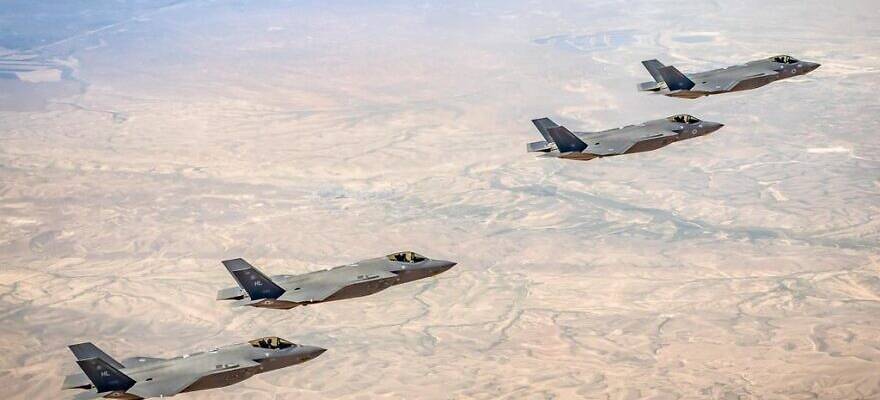
The decision to launch the operation was finalized during Prime Minister Benjamin Netanyahu’s recent visit to Washington.
Israel launched the largest air operation in its history against Iran on Saturday, as approximately 200 Israeli fighter jets carried out a massive coordinated assault targeting missile infrastructure and air defense systems across western and central Iran.
The strikes marked the opening phase of a sweeping joint military campaign conducted in close coordination with the United States, with American and Israeli forces simultaneously targeting key components of Iran’s military and nuclear infrastructure.
Israeli officials said hundreds of precision munitions were dropped on roughly 500 targets identified through extensive intelligence gathering. Among the sites struck were missile storage facilities, production centers, launch systems, and air defense networks designed to protect strategic regime assets.
U.S. forces carried out parallel attacks focused primarily on Iran’s nuclear program and additional targets tied to the Islamic Revolutionary Guard Corps and senior government infrastructure, reflecting a coordinated division of responsibilities between the two allies.
According to a report in The Wall Street Journal, Washington and Jerusalem are preparing for several days of intensive strikes aimed at degrading Iran’s military capabilities and denying the regime the ability to sustain future attacks.
An Israeli official told N12 that the decision to launch the operation was finalized during Prime Minister Benjamin Netanyahu’s recent visit to Washington.
“That was when the decision was made to move forward with the strike,” the official said. “The Iranians were given a final opportunity and destroyed it, as we had anticipated.”
The New York Times reported that under the operational plan presented to President Donald Trump, Israel would lead attacks against Iran’s missile arsenal, storage networks, manufacturing facilities, and launch infrastructure, while the United States would concentrate on nuclear-related targets and strategic regime assets.
IDF Chief of Staff Lt. Gen. Eyal Zamir said the Iranian regime “has not abandoned its vision of advancing a plan to destroy Israel,” warning that Tehran continues to pursue nuclear development while rebuilding its ballistic missile production and funding regional proxy forces.
“Operation Rising Lion proved that this regime is vulnerable,” Zamir said. “For the first time, historic cooperation was created together with the United States military, in which American aircraft delivered a lethal blow to Iran’s nuclear facilities.”
Zamir added that Israeli Air Force pilots are striking “hundreds of targets across Iran, at great risk and in coordination with American strikes,” underscoring the depth of operational integration between the two militaries.
President Donald Trump described the campaign as “massive and ongoing,” calling it the opening phase of a broader effort aimed at dismantling Iran’s military capabilities and nuclear ambitions. In video remarks posted to Truth Social, Trump addressed the Iranian public directly, urging civilians to remain indoors as operations continue.
“The hour of your freedom is at hand,” Trump said. “Stay sheltered. Do not leave your home. It is very dangerous outside.”
Iran’s Red Crescent reported at least 201 people were killed and 747 wounded, stating that attacks impacted 24 provinces across the country.
Israeli military leadership warned the public not to grow complacent as the confrontation escalates.
“We must not underestimate the enemy’s ability to harm us,” Zamir said. “In the coming period, we will face difficult tests.”
The joint operation represents one of the most extensive and direct military partnerships ever carried out between Israel and the United States against Iran, signaling a dramatic escalation with potentially far-reaching regional consequences as the campaign continues.
Khamenei Eliminated as US-Israel Strikes Rock Iran
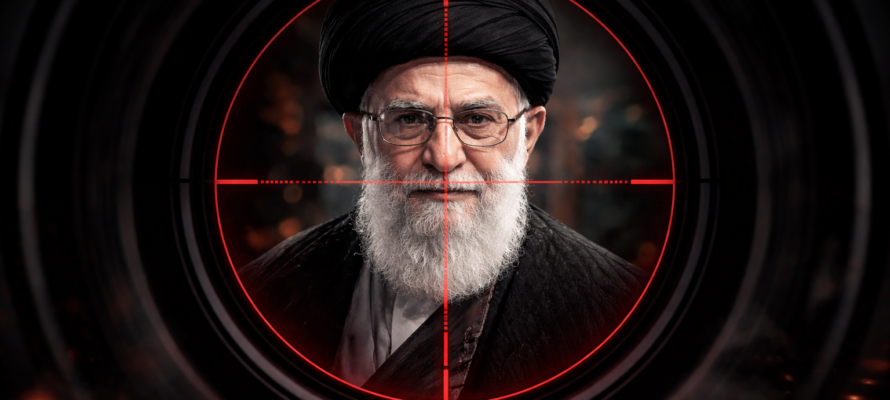
Footage showing Khamenei’s body was presented to Prime Minister Benjamin Netanyahu.
Iran’s Supreme Leader Ayatollah Ali Khamenei was eliminated during the opening phase of the joint U.S.–Israel strike campaign, according to senior Israeli officials cited by local media Saturday night.
A senior Israeli source said Khamenei was killed in the initial wave of attacks, with Israeli officials later updated that his body was recovered from the rubble of a compound heavily damaged in the strikes. Israeli reports further stated that documentation showing Khamenei’s body was presented to Prime Minister Benjamin Netanyahu.
Earlier in the evening, a security source told Israel’s Channel 14 News that “indications are strengthening that Ali Khamenei was eliminated in the opening strike,” as information surrounding his fate emerged during the operation.
In a public statement Saturday night, Prime Minister Benjamin Netanyahu addressed the development, declaring that “the plan to destroy Israel is gone, and there are growing signs that the tyrant Khamenei may also be gone.”
He added: “Soon your moment will come to take to the streets in massive numbers and complete the task of overthrowing the regime of horrors that has made your lives miserable. Help has arrived!”
According to Kan News, explosions were heard near a compound associated with Khamenei roughly half an hour after the Israel Defense Forces announced the start of the operation. Satellite imagery later showed extensive destruction at the site, with heavy smoke rising above the complex.
Kan News further reported that the initial wave of attacks included an apparent attempt to assassinate Iranian President Masoud Pezeshkian, alongside coordinated strikes targeting multiple senior regime figures as part of the joint operation conducted by the IDF and the U.S. military.
Among those targeted were Iranian Defense Minister Aziz Nasirzadeh, Iranian Armed Forces Chief of Staff Abdolrahim Mousavi, and military intelligence chief Saleh Asadi. Israeli assessments cited by Kan News indicate that Islamic Revolutionary Guard Corps commander Mohammad Pakpour was killed in an Israeli strike.
Ali Shamkhani, a close adviser to Khamenei, was also targeted. His condition remains unknown, though information cited by Kan News suggests he was seriously wounded. Shamkhani had recently assumed an additional role as secretary-general of Iran’s National Defense Council.
Earlier, Iran’s Fars News Agency claimed that Khamenei and several senior officials were “safe and unharmed,” statements that now stand in direct contradiction to Israeli confirmations following the strikes.
Khamenei’s elimination marks the most consequential leadership strike in the history of the Islamic Republic and represents a dramatic escalation in the ongoing U.S.–Israel military campaign targeting Iran’s governing and military command structure.
Israel and the US Strike Iran: The Regime That Swore to Destroy Israel Now Fights for Its Own Survival
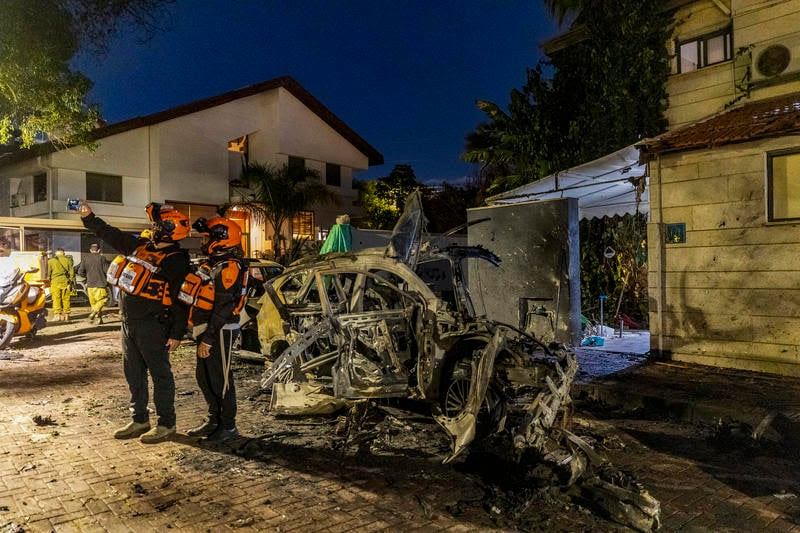
On Saturday morning, as Jews across Israel were preparing for a quiet Shabbat, the air raid sirens that had been silent for months screamed back to life. This time, it was not a warning of incoming fire — it was Israel and the United States announcing to the world that they had struck Iran, hard, in a coordinated assault targeting the Islamic Republic’s military infrastructure, weapons programs, and the very men who have spent decades orchestrating terror against the Jewish people. Operation Aryeh Sho’eg — “Roaring Lion” — had begun.
Operation Roaring Lion
At 8:13 a.m. Saturday, sirens sounded across Israel. Within minutes, reports emerged of strikes across Iran — in Tehran and beyond, in all 24 of the country’s 31 provinces that would eventually report casualties by evening. The operation was a joint one: Israel named it Aryeh Sho’eg — “Roaring Lion.” Washington called its component “Epic Fury.” Cabinet ministers were told the operation was designed to last approximately one week.
IDF Chief of Staff Lt. Gen. Eyal Zamir, who had spent the previous evening at home with his family to avoid tipping off Iranian intelligence, delivered a message to IAF pilots before the first wave: “Saturday dawn, Operation Roaring Lion begins — you are authorized to carry out (the mission), strike your targets — you are making history.”
The initial Israeli strikes reportedly targeted some 30 key regime leaders and military commanders. Among the confirmed killed: Gen. Mohammad Pakpour, commander of Iran’s Islamic Revolutionary Guard Corps, and Defense Minister Aziz Nasirzadeh. Also targeted were IRGC al-Quds Force chief Esmail Qaani, IRGC Air Force chief Majid Mousavi — the man who oversaw Iran’s ballistic missile attacks — and Iranian army chief Sayyid Abdolrahim Mousavi.
Supreme Leader Ali Khamenei himself was targeted. Israeli officials have been widely quoted suggesting he was likely killed. Satellite imagery has shown his compound largely destroyed. Channel 12 reported that Israel, in coordination with the US, dropped approximately 30 bombs on Khamenei’s compound, and that he was underground at the location — but not in the two deepest bunkers, which only American munitions could have penetrated. Iran’s foreign minister Abbas Araghchi stated only that Khamenei is alive “as far as I know” — hardly a definitive denial. Israel’s Kan broadcaster reported indications that Khamenei’s son Mojtaba, widely seen as his heir apparent, was also killed.
US CENTCOM confirmed the joint nature of the operation, stating that “US and partner forces began striking targets at 1:15 am ET to dismantle the Iranian regime’s security apparatus.” Targets included IRGC command and control facilities, air defense capabilities, missile and drone launch sites, and military airfields. The US struck by air and sea — including, for the first time in combat, low-cost one-way attack drones deployed by Task Force Scorpion Strike.
President Trump, in an eight-minute video statement, was blunt: “We are going to destroy their missiles and raze their missile industry to the ground. It will be totally obliterated. We are going to annihilate their navy.” He called directly on members of the IRGC to lay down their weapons and accept full immunity — or “face certain death.” He told the Iranian people: “The hour of your freedom is at hand.”
Prime Minister Netanyahu said the operation was launched “to remove the existential threat” posed by Iran, and to “create the conditions” for Iranians to change their destiny.
Iran Strikes Back — and Falls Short
Iran’s response came fast but was far smaller than anything it launched in June 2025. As of Saturday evening, Iran had launched approximately 200 missiles and UAVs — a number that Tehran itself inflated to 1,200 in domestic media reports, a figure that bears the hallmarks of regime propaganda. The Jordanian military intercepted 49 UAVs and missiles on their own. The IDF shot down more than a dozen drones. Air defense systems intercepted the bulk of the ballistic missiles.
Of the approximately 150 ballistic missiles launched, military assessments indicated only 35 entered Israeli airspace, with the rest intercepted before reaching Israel’s borders. Some missiles were reportedly launched from Lebanese territory, though the IDF later denied that claim. The IDF said it remains on high alert for Hezbollah joining the fight and opening a new front from Lebanon.
Damage on the Israeli home front was limited. Missile shrapnel struck a 20-story building in Tirat Hacarmel, penetrating the 17th floor. One person was lightly injured. A direct hit was reported on a residential building in northern Israel. Magen David Adom treated 89 people total — the vast majority with minor injuries from falling while running to shelters, not from missile impacts. Six were treated for acute anxiety.
Millions of Israelis spent their Shabbat running in and out of bomb shelters as successive barrages triggered sirens across the country. Ben Gurion Airport suspended operations. Hospitals moved into emergency mode. Purim celebrations were canceled. Yet the country held together. In one Tel Aviv synagogue, the congregation continued tefillah — prayer — even as the sirens blared outside.
Iran also launched missiles at American military assets in Saudi Arabia, Qatar, the UAE, Jordan, Kuwait, and Bahrain. CENTCOM confirmed minimal damage to US installations and no American casualties.
The Iranian Red Crescent reported at least 201 killed and 747 wounded across Iran from the Israeli and American strikes by Saturday evening.
A History of Iranian Aggression Against Israel
Iran’s war against Israel did not begin this morning. It has been waged through proxies, ballistic missiles, drones, and terror financing for decades — and it escalated dramatically in the past two years.
On April 13, 2024, Iran launched its first-ever direct attack on Israeli territory from Iranian soil, firing more than 300 ballistic missiles and attack drones at Israel. The assault was largely intercepted through a multilateral defense effort involving Israel, the United States, the United Kingdom, Jordan, and France. Iran claimed it was retaliation for an Israeli airstrike on its consulate in Damascus that killed senior IRGC commanders. Israel, together with its allies, intercepted the vast majority of the projectiles, and damage was minimal.
Six months later, on October 1, 2024, Iran launched a second direct attack — some 180 ballistic missiles fired at Israel, including powerful Fattah hypersonic missiles. Most were intercepted. Two Israelis were lightly wounded. Iran called it retaliation for the killing of Hezbollah chief Hassan Nasrallah and IRGC commander Abbas Nilforoushan.
Then came the June 2025 twelve-day war, in which Iran escalated dramatically — launching large barrages of dozens of missiles at a time in an attempt to overwhelm Israeli air defenses. That conflict ended in a ceasefire, but Iran used the months that followed not for diplomacy but for rearmament. The IDF reports that in the period leading up to this weekend’s operation, Iran had accelerated ballistic missile production to dozens per month, continued fortifying and concealing its nuclear program, and kept financing, training, and arming its proxies on Israel’s borders.
The Islamic Republic never stopped trying to destroy the Jewish state. It simply got more methodical about it.
The Purim Parallel
MK Avigdor Liberman said it plainly: “We overcame Haman, we will overcome Khamenei too.” He was not being poetic. Purim, the festival of Jewish deliverance from the Persian villain Haman who sought to annihilate the Jewish people, begins Monday evening. The timing is not lost on anyone paying attention.
What is unfolding in Iran today has the quality of that kind of moment. Iran has spent decades building an empire of terror designed for one purpose: the annihilation of the Jewish state. It armed Hezbollah. It funded Hamas. It launched four direct attacks on Israeli soil. It raced to build nuclear weapons while its officials openly announced their genocidal intentions. And now, on the Shabbat before Purim, the regime that swore to destroy Israel is watching its own military leadership be eliminated, its compounds reduced to rubble, and its people called to rise up and take their country back.
TruLight Ministries Daily Entertainment

TruLight TV : Survive Our Present Culture
Purchasing a home. Buying a car. These are monumental decisions because they signify ownership. But as believers in Christ, do we own anything? Everything belongs to Christ, and we are the stewards. Watch today’s video to find out why this is significant. and later our sermon today from Dr. Charles Stanley (Surviving Our Present Culture) – Dr. Stanley explains that Christians fall into two categories. There are those who are the committed followers of Jesus and there are those who are carnal and self-centered because they have become entangled by the culture they live in. Learn how to survive our present culture. This plus some great gospel music on today’s show. Enjoy! and Share this Video With your Friends.
Today on TruLight Radio XM
TruLight Radio XM 24/7
Program
GMT / UTC +2
Monday To Fridays
00:15 Words to Live By Testimonies
01.15 Science Scripture and Salvation
02.15 Ground Works
04.00 Gospel Concert of the Day
05.00 The Daren Streblow Comedy Show
5:55 It is Today devotional
6:00 Gaither Homecoming Morning Show
7:15 Discover the Word
8.15 Destined for Victory
8:55 Science Scripture and Salvation
9:00 Holy Spirit Hour – Normally Sermons
10:15 Hope of the Heart
11:15 Unshackled
11.45 Words to Live By
12:15 Truth for Life
13:15 Living on the Edge with Chip Ingram
14:15 Focus on the Family
15:00 Kids Hour
16:00 In Touch with Dr. Charles Stanley
16:30 Groundwork
17:15 Live in the Light
18:15 Renewing your Mind
19:00 Gaither Homecoming Show
20:15 Growing Hope
21:15 Adventures in Odyssey Radio Drama
21:45 Bible Reading
22:15 Night-sounds
23.00 Good Old Country Gospel / Rhema Gospel Express
VISIT THE WEBSITE
TruLight Ministry News

TruLight Ministries orders from God since 2012 . Teach Them , Comfort Them and Warn Them!
The Sheriff of the Church – I Tell You Tru – 6 Episodes Now Availalble
Healing Truths
End Time Articles
Share this Feeding of Manna with your Friends and Family. just click on the Social Media icon and share !