Hosted by TruLight Ministries – The Place of Truth
SELECT YOUR READING LANGUAGE – BOTTOM LEFT = YOUR DAILY MANNA NOW AVAILABLE IN 103 LANGUAGES
a New Study : for the Next 9 Daily Manna Days
In My Control vs Out of My Control
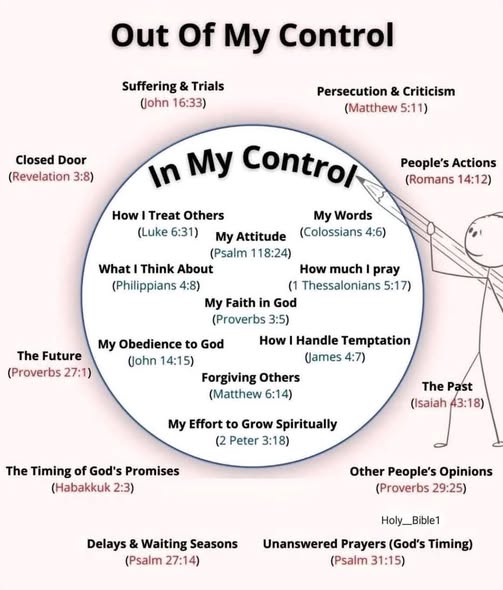
Out of My Control = Glosed Doors
In Isaiah 53, the prophet describes the ordeal of the Messiah who would bear His people’s iniquity and suffer on their behalf (verses 4–6). In the next chapter, Isaiah predicts the coming glory of Jerusalem and the restoration of God’s people, who would know the “everlasting kindness” and compassion of God (Isaiah 54:8). Then, in Isaiah 55, the prophet extends God’s invitation to partake freely of the promised blessings (verses 1–2) and experience God’s “everlasting covenant” (verse 3). This promise of restoration, forgiveness, and blessing would have been especially encouraging to the future generation of battered and bruised Jews returning from their exile in Babylon.
Through Isaiah, God compassionately called the surviving remnant of Israel to spiritual renewal. As part of that renewal, they would have to thoroughly abandon their sinful lifestyles and return to Him to receive the forgiveness the Messiah made possible (Isaiah 53). They would have to “seek the LORD while he may be found; call on him while he is near” (Isaiah 55:6).
Now was not the time for Israel to drag its feet. There would be a window of opportunity and no room for delay. With the instruction to “seek the Lord while He may be found,” Isaiah stressed the urgency and seriousness of God’s summons. The prophet Amos communicated the same sense of urgency, repeatedly issuing the Lord’s appeal to “seek me and live” (Amos 5:4–7, 14–15). Dedicating our lives to the pursuit of God is a matter of life and death. If we procrastinate, the opportunity to respond to His invitation may run out.
This theme of exigency recurs in the Parable of the Great Banquet (Luke 14:12–24) and the Parable of the Wedding Feast (Matthew 22:1–14). Just as Isaiah called the remnant to come to the Lord’s table to eat and drink (Isaiah 55:1–2), Jesus urged His primarily Jewish audience to “eat at the feast in the kingdom of God” (Luke 14:15). Through the parables, Jesus explained that the invited guests rejected the Master’s offer, and thus the door of opportunity was closed to them. Since those invited refused to come, everyone in “the streets and alleys of the town, . . . the poor, the crippled, the blind and the lame” were invited to come and dine (Luke 14:21).
Proverbs 1:20–33 illustrates how God’s patience with fools—those who refuse to listen to the voice of Wisdom—eventually runs out: “I called you so often, but you wouldn’t come. I reached out to you, but you paid no attention. You ignored my advice and rejected the correction I offered. So I will laugh when you are in trouble! I will mock you when disaster overtakes you—when calamity overtakes you like a storm, when disaster engulfs you like a cyclone, and anguish and distress overwhelm you. When they cry for help, I will not answer. Though they anxiously search for me, they will not find me” (Proverbs 1:24–28, NLT).
When we hear the voice of the Lord calling us to seek Him, inviting us to fellowship at His table, we must respond immediately while there is still time. “For God says, ‘At just the right time, I heard you. On the day of salvation, I helped you.’ Indeed, the ‘right time’ is now. Today is the day of salvation” (2 Corinthians 6:2, NLT). We are not promised tomorrow (Proverbs 27:1; Luke 12:16–21). As the psalmist urged, “Therefore let all the faithful pray to you while you may be found” (Psalm 32:6). Jesus taught us to stay focused and seek God’s kingdom before and above all else (Matthew 6:33–34).
Seek the Lord while He may be found means to take up our cross and become His disciple (Mark 8:34) at this very moment, today. The command is accompanied by another command and a promise: “Let the wicked forsake their ways and the unrighteous their thoughts. Let them turn to the Lord, and he will have mercy on them, and to our God, for he will freely pardon” (Isaiah 55:7). We must repent of our sin and return to the Lord right now because there will come a day when our time is up. Scripture tells us to get ready, for the day of the Lord’s return will come suddenly, “like a thief in the night” (1 Thessalonians 5:2; see also 2 Peter 3:10).
While we still have time, before it’s too late, we must seek the Lord. God graciously promises to be found: “You will seek the LORD your God and you will find him, if you search after him with all your heart and with all your soul” (Deuteronomy 4:29, ESV). Over and over throughout the Bible, God calls His people to repent, return to Him, and seek the Lord while He may be found (Deuteronomy 30:2–3; Leviticus 26:40–42; 2 Chronicles 15:4; Jeremiah 29:13–14).

Bible Verse and Prayer for Today
We love because he first loved us.
—1 John 4:19
It’s all very simple. God is love (1 John 4:7-8). He is love’s origin, example, and architect. I love because God loved me first. I know how to love because he has demonstrated it in Jesus. I can love because he made me in his likeness and to share his character, and because God pours his love into my heart through the Holy Spirit (Romans 5:5). He is the fountain, the motivation, and the pinnacle of love. I love because God loves — first, last, and always.
Prayer
God of comfort, God of love, thank you for comforting me with your love. Just as a child learns from parents how to do so many things, I want to learn to love as you do: sacrificially, selflessly, and submissively so that others may know that they do not have to earn your love, only receive it and share it with others. In the name of Jesus, your perfect example of love, I pray. Amen and Amen
Bible Teaching of the Day
If the Door are Closed – Use the Window ! In Noah’s day, when God brought the promised destruction of the earth by water, the floodwaters came from two sources: “All the fountains of the great deep were broken up, and the windows of heaven were opened” (Genesis 7:11, NKJV). When the rain stopped 40 days later, “The fountains of the deep and the windows of the heavens were closed,” and “the rain from the heavens was restrained” (Genesis 8:2, ESV). After that, the floodwaters prevailed over the earth for another 110 days (Genesis 7:24).
The “fountains of the great deep” and “windows of heaven” are metaphors for underground springs gushing up with water and sudden torrential rains falling from above as if floodgates in the sky had opened. The phrase windows of heaven depicts the earth as surrounded and enclosed by a solid vaulted, dome or tent-like structure with openings in it. If the modern-day canopy theory is correct, the floodgates in the sky were more literal than figurative.
Elsewhere in the Bible, “windows of heaven” symbolize God’s way of communicating from heaven and interacting with people on earth. God’s avenue of deliverance for the people of Samaria is pictured as the Lord making windows in heaven (see 2 Kings 7:2, 19). In Psalm 78:23 God references opening “the doors of heaven” to rain down manna in the desert to provide food for the people of Israel (cf. Exodus 16:4).
In Malachi 3:10, God promises to open the windows of heaven and pour out abundant blessings on those who honor and obey Him: “‘Bring all the tithes into the storehouse so there will be enough food in my Temple. If you do,’ says the Lord of Heaven’s Armies, ‘I will open the windows of heaven for you. I will pour out a blessing so great you won’t have enough room to take it in! Try it! Put me to the test!’” (NLT). By contrast, the prophet Isaiah speaks of God’s judgment coming down through the opened windows of heaven (Isaiah 24:18).
At times, the heavens opened, and people saw or heard visions from God (Ezekiel 1:1; Revelation 4:1; 19:11). “After his baptism, as Jesus came up out of the water, the heavens were opened and he saw the Spirit of God descending like a dove and settling on him. And a voice from heaven said, ‘This is my dearly loved Son, who brings me great joy’” (Matthew 3:16–17, NLT; cp. Mark 1:10; Luke 3:21; John 1:51). Just before Stephen was stoned to death, “the heavens opened,” and he saw Jesus standing at the right of God (Acts 7:56). The heavens also opened to reveal a vision to Peter (Acts 10:9–16).
The Hebrew imagery of the “windows of heaven” opening always seems to convey a sense of abundant outpouring, whether in torrents of rain, extreme judgment, plenty of food, or a profusion of blessings. In every instance, God is the One responsible for opening and closing the windows of heaven.
Today’s Devotional
The church at Philadelphia was one of seven churches addressed in Revelation 2—3. The others are the churches at Ephesus, Smyrna, Pergamum, Thyatira, Sardis, and Laodicea. Of the seven only Smyrna and Philadelphia are not rebuked for any shortcomings. Philadelphia is commended most strongly, and Jesus says to the church at Philadelphia, “Behold, I have set before you an open door, which no one is able to shut” (Revelation 3:8, ESV).
The opening to Philadelphia’s letter includes an identification of the Author as holy, true, and having the key of David. He is the One who opens and closes when no one else has that authority (Revelation 3:7). This reference is an affirmation of the Messiah’s identity, first spoken of in Isaiah 22:22, and initially referencing the authority of Eliakim son of Hilkiah, who temporarily had that power. The Messiah would possess the authority permanently. The Messiah says to the church of Philadelphia that He knows their deeds, and He has put before them an open door that no one can shut. Jesus explains why He opens that door: they had a little power, they had kept His word, and they had not denied His name. There is no explanation in the context regarding what door Jesus referenced. But there is biblical precedent for understanding what that open door referred to.
In the Hebrew Scriptures, we find Yahweh granting the authority to open doors (for example, in Isaiah 22:22 to Eliakim and in Isaiah 45:1 to Cyrus). By introducing Himself as the One who opens doors in Revelation 3:7, Jesus affirms His authority. He has the authority to provide the church of Philadelphia the opportunities He desires them to have. The specific door may be a chance for unbelievers in Philadelphia to come to the church and acknowledge that God has loved the believers in Philadelphia (Revelation 3:9). Jesus also references keeping the Philadelphians from the coming hour of testing that was coming to the whole world (Revelation 3:10). Each of these statements presents interpretive challenges, but, in any case, it is evident that the Philadelphian believers’ faithfulness resulted in their receiving some special opportunities given from the One who had the authority to bestow those privileges.
In the New Testament, God provided open doors, as well. In Acts 14:27 the churches gather at Antioch to celebrate God’s opened door of faith for the Gentiles. If the Revelation 3:8 context is related to the Antiochene reference, then perhaps the open door granted was for the proclaiming of the Word of God in Philadelphia.
While we cannot say dogmatically what it means when Jesus says, “I have set before you and open door” to the church at Philadelphia, we can have confidence that the One making the statement has the authority to make it, and that it is likely that the believers in Philadelphia understood the open door before them.
The obvious implication for the believers at Philadelphia was to make the most of the opportunity that open door would provide, and we today ought also to be alert to the stewardships and opportunities that God provides us. We should not waste the open doors that Jesus has opened. We should appreciate that they have come from the One who has authority to provide those opportunities. Because the Lord has provided them, they are important. Let’s make the most of them!
Bible Prophecy, Signs of the Times and Gog and Magog Updates with Articles in the News
Magog / Iran nears major anti-ship missile deal with China
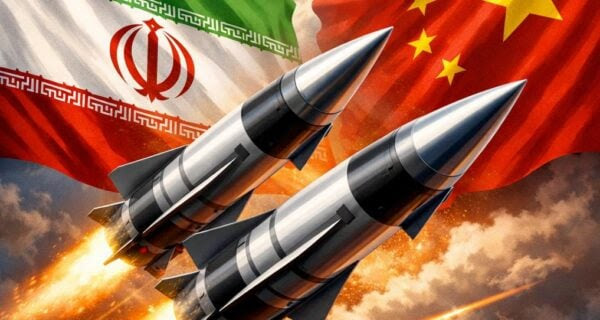
The addition of supersonic anti-ship missiles would represent a major upgrade to Iran’s maritime strike capabilities.
Iran is nearing an agreement with China to acquire advanced supersonic anti-ship missiles, a development that could significantly raise the threat to U.S. naval forces operating in the region, according to a Reuters report citing multiple sources familiar with the negotiations.
The proposed deal involves China’s CM-302 anti-ship cruise missiles, weapons designed to fly low and fast to evade ship defenses.
Defense analysts say the system could complicate naval operations in the Persian Gulf and surrounding waters, particularly as the United States deploys a large concentration of military assets near Iran amid escalating tensions.
The reported purchase comes against a backdrop of increasingly direct Iranian threats targeting American aircraft carriers.
Supreme Leader Ayatollah Ali Khamenei recently dismissed U.S. military warnings, declaring that while an aircraft carrier is “a dangerous tool,” an even more dangerous weapon is one capable of sending it “to the bottom of the sea.”
“The strongest army in the world can sometimes receive such a strong blow that it cannot rise again,” Khamenei said, responding to repeated U.S. statements emphasizing American military superiority.
Explainer: US military buildup and scenarios for war with Iran
According to Reuters, negotiations between Tehran and Beijing have been underway for several years but accelerated following last year’s conflict involving Israel, which left portions of Iran’s military arsenal degraded.
The addition of supersonic anti-ship missiles would represent a major upgrade to Iran’s maritime strike capabilities and could pose a direct challenge to U.S. carrier strike groups operating within range.
The missile discussions are part of a broader effort by Tehran to rebuild and modernize its defenses.
Separate reports indicate Iran has finalized a confidential €500 million weapons agreement with Moscow to acquire advanced “Verba” shoulder-launched air defense systems.
The deal reportedly includes roughly 500 launch units and 2,500 missiles delivered in phases through 2029.
The portable systems are designed to target drones, helicopters, low-flying aircraft, and certain cruise missiles, potentially complicating aerial operations at lower altitudes and strengthening Iran’s layered air defense network.
These military developments coincide with a significant U.S. buildup across the Middle East.
Two American aircraft carrier strike groups, supported by additional warships and hundreds of aircraft, have moved into or toward the region as Washington prepares contingency plans should diplomacy fail.
Despite the rising military posture, diplomatic efforts continue. U.S. and Iranian negotiators are expected to meet Thursday in Geneva for a third round of talks centered on an Iranian proposal aimed at reviving a nuclear agreement.
Explainer: US military buildup and scenarios for war with Iran
U.S. officials have signaled, however, that the window for diplomacy is narrowing rapidly.
President Donald Trump has warned that Tehran must reach an agreement or face severe consequences, raising concerns that stalled negotiations could quickly give way to military confrontation.
With military forces massing and threats escalating on both sides, the reported arms deals add to growing concerns that tensions could soon shift from deterrence to direct confrontation.
Not just nukes: Iran producing ballistic missiles with ‘chemical and biological’ warheads
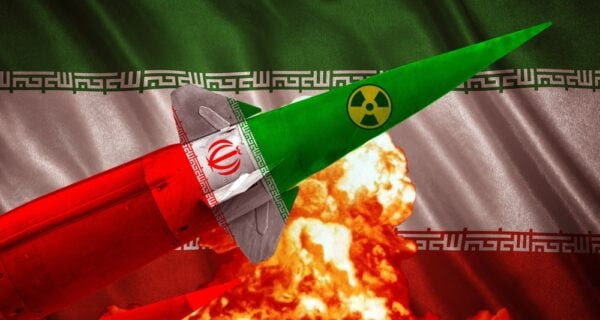
A regime insider told Iran International that the Islamic Republic’s leadership believes “the use of unconventional weapons can be justified in situations of existential threat.”
Iran is producing ballistic missiles armed with “chemical and biological capabilities” in preparation for a military confrontation with the United States and Israel, according to Israeli military adviser Amir Avivi, who told the Washington Free Beacon that such missiles must be “dealt with” in any strike on Iran.
“There is a discussion in the Israeli defense establishment about the possibility of chemical and biological weapons,” Avivi, who served as a brigadier general with the IDF and counsels the Israeli government on defense, told the Free Beacon in an interview Monday.
“We know that they have capability to send a warhead that is chemical.”
For decades, the U.S. government has assessed that Iran is researching and developing chemical agents, specifically “anesthetics used to incapacitate victims by targeting the central nervous system,” according to the Combating Terrorism Center at West Point.
“This is why we want to make sure that any attack on this regime will make sure that all these capabilities are dealt with,” Avivi said.
Report: Iranian government at weakest point since 1979
Avivi’s remarks came after he made a similar assessment at a briefing with the Israel Defense and Security Forum on Monday.
The Islamic Republic is “continuing preparations for war and the production of ballistic missiles, including chemical and biological ballistic missiles, which are very, very dangerous and need to be dealt with,” he said.
Erdogan’s Sunni Noose: Turkey’s Bid to Encircle Israel
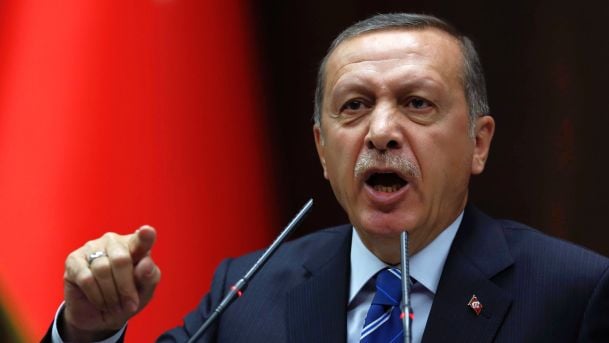
Some analysts describe an emerging “Sunni axis,” or noose, influenced by Muslim Brotherhood ideology, backed by Turkish military power, financed by Qatar and Saudi Arabia, and designed, by expanding into Gaza, to encircle and finish off Israel.
While much of the world’s attention remains fixed on Iran and its Shi’ite axis, another geopolitical realignment is taking shape — more quietly, more pragmatically, and potentially just as consequential for the US, Israel and the Middle East.
Turkish President Recep Tayyip Erdogan has launched an ambitious diplomatic offensive aimed at unifying the Sunni world under Ankara’s leadership.
The objective is not merely reconciliation with former rivals. It is the construction of a Sunni diplomatic and strategic “wall,” or “noose,” around Israel, replacing the Iranian “Shi’ite crescent” with a new configuration of Sunni power.
In early February 2026, Erdogan embarked on a Middle East tour that signaled a turning point. On February 3, he visited Saudi Arabia. On February 4, Egypt. On February 7, Jordan’s King Abdullah II was received in Istanbul. These meetings were not symbolic.
They marked the culmination of a “normalization” process that has been unfolding since 2022, as Turkey repaired relations that were damaged by its earlier ideological support for the Muslim Brotherhood and confrontations with Gulf monarchies.
The Turkish-Saudi reconciliation is particularly significant. Following years of tension after the 2018 murder of journalist Jamal Khashoggi in Istanbul, Ankara and Riyadh have now moved decisively toward strategic cooperation.
Discussions with Saudi Crown Prince Mohammed bin Salman produced major agreements, including a $2 billion Saudi investment in renewable energy projects in Turkey, targeting 5,000 megawatts of solar capacity.
Defense cooperation was expanded to include technology transfers for Turkish drones and air defense systems. Bilateral trade is expected to reach $50 billion.
Erdogan has emphasized “growing strategic trust” in confronting regional instability — from Syria to Gaza. Turkish and Saudi officials increasingly frame Israel as a destabilizing actor in these theaters.
The emerging partnership is not merely economic; it reflects coordinated positioning against perceived external threats, with Israel explicitly cited.
Egypt represents an even more dramatic shift. After a decade of hostility — triggered by Turkey’s support for the Muslim Brotherhood following the 2013 ouster of Egyptian President Mohamed Morsi — Erdogan’s visit to Cairo marked the end of a long freeze.
Turkey and Egypt have now signed a $350 million military framework agreement covering joint weapons production, intelligence sharing, and military exercises. Turkish air defense systems and munitions are slated for delivery, and bilateral trade is projected to reach $15 billion.
Strategically, Egypt’s participation transforms the coalition’s scope. As the guardian of the Suez Canal and a dominant actor in North Africa, Egypt provides logistical leverage capable of influencing maritime routes critical to Israel’s economy.
Discussions between Erdogan and President Abdel Fattah el-Sisi reportedly included Gaza, Syria, and Africa—regions where both countries share concerns over the influence of Israel and the United Arab Emirates.
Jordan, long a security partner of Israel despite persistent political hostility at home, has also been drawn into closer alignment with Turkey.
Joint statements have emphasized peace in Syria and Gaza and highlighted “common concerns” about regional stability. A future Erdogan visit to Amman is under discussion, underscoring Jordan’s integration into Ankara’s growing network.
On February 9, 2026, the foreign ministers of Turkey, Egypt, Indonesia, Jordan, Pakistan, Qatar, Saudi Arabia, and the United Arab Emirates issued a joint communiqué condemning what they called “Israeli expansionist policies in occupied territories” and calling for Islamic unity.
Israeli media outlets such as Ynet interpreted the statement as evidence of a “coalition of interests against Israel,” with Turkey playing the unifying role.
Some analysts describe an emerging “Sunni axis,” or noose, influenced by Muslim Brotherhood ideology, backed by Turkish military power, financed by Qatar and Saudi Arabia, and designed, by expanding into Gaza, to encircle and finish off Israel.
The isolated Turkish-Qatari alignment of 2017–2021 appears to have evolved into a broader strategy of economic and diplomatic influence, channeling of neo-Ottoman ambitions.
A few structural limits do remain. Saudi Arabia acts as the guardian of Sunni Islam’s holiest sites and is unlikely to surrender religious leadership to Ankara. Egypt retains unmatched demographic and military weight in the Arab world.
The UAE, under the impressive leadership of Sheikh Mohamed ben Zayed al Nahyan, pursues a technocratic, anti-political Islam agenda that diverges sharply from Erdogan’s ideological sympathies.
Turkey’s continued affinity for the Muslim Brotherhood remains a source of friction. Coordination may be pragmatic, but ideological fusion is far from complete. Still, the coalition’s ultimate aim, apart from the UAE, unmistakably seems to be “containing” Israel.
Turkey-Israel relations oscillate between harsh rhetoric and pragmatic cooperation. Erdogan has publicly compared Israeli Prime Minister Benjamin Netanyahu to Hitler and accused Israel of Nazi-like policies.
Economic ties, however, persist, and Eastern Mediterranean energy interests have occasionally aligned. Erdogan instrumentalizes the Palestinian cause to bolster his Islamic leadership credentials, even as Ankara avoids direct military confrontation with Israel.
The broader coalition presents more complex dynamics. Saudi Arabia had been in advanced discussions with Washington regarding conditional normalization with Israel. Those talks appear to have stalled or, most probably, collapsed.
Recently, Saudi media have featured openly anti-Israel and antisemitic headlines not seen in years. The kingdom appears to be totally aligning itself with anti-Israel countries such as Qatar and Turkey, while “tensions with the UAE explode.”
Egypt, Israel’s chilly peace partner since 1979, has reportedly expanded military infrastructure in the Sinai Peninsula in ways that should, under the supposed peace treaty, raise serious questions. Jordan continues close coordination with Israel, even as domestic political hostility remains intense.
Would these states risk overt military alignment against Israel? Perhaps not this minute, but Erdogan’s strategy does not require immediate war. It requires gradual encirclement. Nowhere is this more evident than in Africa, especially along the Red Sea coast.
From Libya to Sudan to Somalia, Turkish and Egyptian intelligence services are reportedly coordinating efforts to counter rival influences and restrict Israel’s strategic access.
In Libya, once divided between Turkish-backed Tripoli and Egyptian-supported Marshal Khalifa Haftar, Ankara and Cairo are now aligning to stabilize the country and limit UAE-supported militias perceived as close to Israel.
In Sudan, near Egypt’s southwestern border, the Sudanese civil war continues. Turkey provides logistical and intelligence support, aligning with Saudi Arabia to potentially threaten Israeli access to the Red Sea.
In Somalia, Egypt has increased its military presence to approximately 10,000 troops after Israel’s December 2025 recognition of Somaliland. Turkey maintains its largest overseas military base in Mogadishu, training Somali forces and developing military infrastructure.
A Saudi-Somali defense agreement strengthens this axis, positioning it near the Bab el-Mandeb Strait — a chokepoint vital to global trade and Israeli shipping. The stated objective is securing the Red Sea against “foreign military presence.” The unstated implication is the containment of Israel.
This evolving configuration represents a transformation of what was once considered the “moderate Sunni camp” — historically aligned with the United States and tolerant, if not friendly, toward Israel — into a broader Islamic coalition capable of exerting diplomatic, economic and military pressure.
Israeli analysts increasingly describe it as the replacement of Iran’s Shiite axis with a Sunni bloc influenced by the Muslim Brotherhood.
The ultimate goal appears twofold: diplomatic isolation through forums such as the Organization of Islamic Cooperation, where Turkey advocates economic sanctions, and economic leverage via control of energy routes and maritime corridors.
The coalition presents itself as promoting regional peace. Yet “peace” may translate into the vaporization of Israel, especially should a future Israeli government prove more pliable.
Against this backdrop, Israeli Prime Minister Benjamin Netanyahu has taken a firm stand. On January 19, 2026, addressing the Knesset, he declared unequivocally that there would be “no Turkish or Qatari soldiers in the Gaza Strip.”
His veto came days after the White House announced the creation of a U.S.-supervised “Board of Peace” to oversee Gaza reconstruction, reportedly including Turkish and Qatari representatives such as Foreign Minister Hakan Fidan.
Netanyahu did not hesitate to confront President Donald Trump publicly on the issue. He instructed Foreign Minister Gideon Sa’ar to convey Israel’s objections directly to Secretary of State Marco Rubio.
The disagreement underscored a red line: Israel would determine which international actors, if any, operate in Gaza.
The refusal is consistent with earlier Israeli objections to Turkish military involvement in post-war Gaza planning. Erdogan’s participation in “stabilization” efforts would significantly expand Turkish influence within the emerging Sunni crescent.
Ankara’s well-documented support for Muslim Brotherhood networks — which are Hamas’s patrons, ideologically and financially – should raise obvious concerns.
Netanyahu’s insistence that Israel determine which international actors, if any, operate in Gaza, serves multiple strategic purposes.
It prevents Turkish entrenchment in Gaza, maintains Israeli control over post-war arrangements, and signals to Washington that Israel views Turkish expansionism as a long-term threat transcending personal or political relationships.
Meanwhile, the UAE’s stance for normalization with Israel may clash with Turkey’s drive for dominance. Egypt, having briefly fallen to Muslim Brotherhood rule after the 2011 overthrow of President Hosni Mubarak, remains deeply wary of a Brotherhood resurgence. Riyadh’s ambitions for Sunni leadership compete with Ankara’s neo-Ottoman vision.
Whatever the obstacles, Erdogan’s direction seems clear: a militarily and economically anchored Sunni alignment to constrict Israel’s strategic space. While Iran’s crescent may be weakening under sanctions and internal strain, another structure is rising in its place.
The new structure is not overtly militant. It does not advertise itself as an alliance against Israel. But through energy pacts, defense agreements, intelligence coordination, and multilateral communiqués, it seems clearly to want to reconfigure the regional balance of the Middle East.
The coming years will determine whether this Sunni wall strengthens into a unified front or weakens under competing ambitions. For Israel, complacency is not an option.
The encirclement may no longer be Shiite, but Sunni — and diplomatic, at first, rather than immediately military. In geopolitics, the form of pressure matters less than its cumulative effect.
TruLight Ministries Daily Entertainment

TruLight TV – How Our Decisions Shape Our Lives
Our choices today have a great impact on our future. One of the most important choices we can make is who we choose to serve. Joshua dedicated himself and his household to serving God, a reflection of his trust in God’s faithfulness. Who will you choose to serve today? And later our sermon today from Dr. Charles Stanley (The Bible: More Than a Book): God demonstrates His love and concern for us by bestowing amazing promises and fulfilling them. The Bible is where we can find help for every circumstance of life. That plus a testimony from Sara: presented with the teachings of the Quran and the Bible, Sara had to decide which path she would choose.
Today on TruLight Radio XM
TruLight Radio XM 24/7
Program
GMT / UTC +2
Monday To Fridays
00:15 Words to Live By Testimonies
01.15 Science Scripture and Salvation
02.15 Ground Works
04.00 Gospel Concert of the Day
05.00 The Daren Streblow Comedy Show
5:55 It is Today devotional
6:00 Gaither Homecoming Morning Show
7:15 Discover the Word
8.15 Destined for Victory
8:55 Science Scripture and Salvation
9:00 Holy Spirit Hour – Normally Sermons
10:15 Hope of the Heart
11:15 Unshackled
11.45 Words to Live By
12:15 Truth for Life
13:15 Living on the Edge with Chip Ingram
14:15 Focus on the Family
15:00 Kids Hour
16:00 In Touch with Dr. Charles Stanley
16:30 Groundwork
17:15 Live in the Light
18:15 Renewing your Mind
19:00 Gaither Homecoming Show
20:15 Growing Hope
21:15 Adventures in Odyssey Radio Drama
21:45 Bible Reading
22:15 Night-sounds
23.00 Good Old Country Gospel / Rhema Gospel Express
VISIT THE WEBSITE
TruLight Ministry News

TruLight Ministries orders from God since 2012 . Teach Them , Comfort Them and Warn Them!
Healing Truths
End Time Articles
Share this Feeding of Manna with your Friends and Family. just click on the Social Media icon and share !