Hosted by TruLight Ministries – The Place of Truth
SELECT YOUR READING LANGUAGE – BOTTOM LEFT = YOUR DAILY MANNA NOW AVAILABLE IN 103 LANGUAGES
a New Study : for the Next 6 Daily Manna Days
In My Control vs Out of My Control
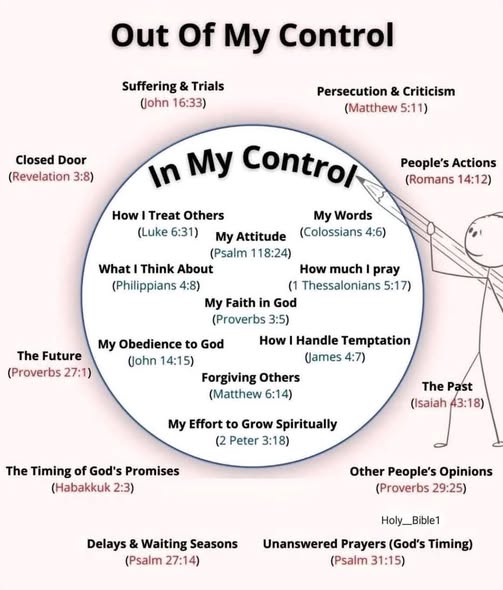
Out of My Control = The Future
People are plagued with phobias. Fear of death is a big one. We worry about the future and the cares of this life. Some people suffer from an extreme fear of heights, while others are terrified of deep, dark, confined spaces such as tunnels. In Romans 8:31–39, the apostle Paul identifies a range of desperately troubling circumstances and almost every human fear imaginable. He then pronounces one of the most comforting reassurances in all the Bible: “No, in all these things we are more than conquerors through him who loved us. For I am sure that neither death nor life, nor angels nor rulers, nor things present nor things to come, nor powers, nor height nor depth, nor anything else in all creation, will be able to separate us from the love of God in Christ Jesus our Lord” (verses 37–39, ESV).
Height and depth are terms used in Scripture to express the extreme nature of God and His great love (see Job 11:7–8; Romans 11:11). In Ephesians 3:16–19, Paul prayed for the Ephesians to grasp the width, length, height, and depth of Christ’s love. The perfect love of God in Jesus Christ is not just a comforting thought but a powerful force that can cast out all our fears (1 John 4:18). The born-again child of God is not just known in advance but chosen by the Father in love to be conformed into the image of His Son and to be justified and glorified (Romans 8:29–30). God’s love is so all-encompassing that absolutely nothing and no one, neither in this life nor in the life to come, neither angels nor demons, nor height nor depth, can harm the one who is kept in His loving presence.
The original Greek word Paul used (hypsōma), translated as “height” in Romans 8:39, means “that which is lifted up.” In this context, the word refers to the inhabitants of heaven, understood as occupying the transcendent heights. Thus, height here represents everything in the world above. Similarly, depth (bathos in Greek) refers to everything in the world below, in the transcendent depths. The wording “nor height nor depth” becomes “no power in the sky above or in the earth below” in the New Living Translation.
No matter how high we climb or how low we descend, nothing can separate us from Christ’s love. The psalmist affirms, “If I go up to the heavens, you are there; if I make my bed in the depths, you are there” (Psalm 139:8). As believers, we are constantly enveloped in God’s loving care. We are safe, secure, and protected, no matter where we go, because nothing in all the universe can separate us from His love.
Paul’s list of potential fear-inducing situations represents the full spectrum of human horrors. Death and life are on opposite ends of the spectrum, as are angels and demons, the present and the future, and height and depth. Anything and everything that could cause us to fear, whether tangible or intangible, is powerless to break the bond of God’s love for His children. Anything we feel might barricade us from the Lord’s presence is dealt with under God’s sovereign control (Ephesians 1:22; 1 Corinthians 15:27–28; Hebrews 2:8).
God does not always spare us from life’s steep uphill climb or from traversing the depths of sorrow and pain. Sometimes, we need the difficulties to stretch us and cause us to grow spiritually (Romans 5:3–5; James 1:2–3; 1 Peter 1:6–7). But God does promise to walk beside us on the mountain and in the valley with His mighty, loving presence to dispel our fears (Psalm 23:4).
In both the heights and depths of our walk with God, in the joyous moments and the dark nights of the soul, we can trust and “know that in all things God works for the good of those who love him, who have been called according to his purpose” (Romans 8:28). He allows these challenges for our good and His glory (Hebrews 12:10–11; 1 Peter 1:6–9; 4:13).

Bible Verse and Prayer for Today
This is how God showed his love among us: He sent his one and only Son into the world that we might live through him.
—1 John 4:9
Love is an action. The Bible stresses this truth again and again. Love must not only be spoken and felt, but it must also be demonstrated in daily life. The beginning of love is God. He showed his love for us in Jesus so we could know our incredible value to him. The price of our adoption was the emptying of heaven of its greatest treasure, God the Son, who is our Savior, and God’s greatest demonstration of love. Because love is not genuine until it is both felt and acted on. “This is how God showed his love among us…” He sent Jesus!
Prayer
Loving Father, thank you for adopting me into your family. I can never thank you enough or ever repay you for your kindness, but please receive the service of my life as my ongoing thanksgiving for your grace and as my small way of trying to share the love you have given me. Through my Brother (Romans 8:29; Hebrews 2:10-11) and my Ransom I pray. Amen and Amen
Bible Teaching of the Day
“Do not worry about tomorrow,” said Jesus in His great Sermon on the Mount, “for tomorrow will worry about itself. Each day has enough trouble of its own” (Matthew 6:34). For the third time, Christ gives His disciples this command not to worry, repeating it perhaps because He knew the universal human tendency to do just the opposite—to anxiously focus on future cares rather than on the God who holds tomorrow in His hands (Jeremiah 29:11; Psalm 23).
In this segment of His sermon, Jesus teaches the disciples not to be anxious about what they will eat and what they will wear. These two things represent basic human needs. Jesus urges His followers to trust in God as their provider. The faithful kingdom servant who is wholly committed to the King does not need to worry or be distracted by the cares of everyday life. Putting our confidence in God means trusting that He will take care of us and provide everything we need.
In Matthew 6:34, Jesus expands His lesson, challenging the disciples specifically not to worry about concerns that may crop up in the future. He had just taught the disciple to pray, “Give us this day our daily bread,” in the Lord’s Prayer (Matthew 6:11). Servants of God’s kingdom must live in the present. God looks after His servants today. He gives them their daily bread and anything else they might need for today. They do not need to worry about tomorrow because God will be there with them to deal with any concerns in the “today” of tomorrow (Matthew 28:20; Psalm 73:23–26).
In the wilderness, God taught the children of Israel the same principle of depending on Yahweh for the day’s provision. He fed them with just enough manna to sustain their lives for that day. When they worried about tomorrow by storing food for the next day, that supply of manna would rot. Each day and every step of the way, God’s people must depend on His faithful supply.
The Lord knows we face many circumstances and situations that can cause anxiety in this fallen world. So how can we follow His command to stop worrying about tomorrow?
Pray
Philippians 4:6–7 presents our most potent weapon against worry: “Don’t worry about anything; instead, pray about everything. Tell God what you need, and thank him for all he has done. Then you will experience God’s peace, which exceeds anything we can understand. His peace will guard your hearts and minds as you live in Christ Jesus” (NLT).
Whenever we find ourselves feeling anxious or worrying about tomorrow, we can take our concerns to the Lord in prayer. We can live in that moment, acknowledging that God is right there with us. As we tell Him what we need, we thank Him for all He has done. A thankful attitude suggests an expectation of His continued provision and care. As we spend time in the presence of our heavenly Father, pouring out our concerns, He responds by giving us supernatural peace that guards our hearts and minds. When we remember to turn to the Father in prayer, He instantly comes to help us through our anxious moments.
Rely on God’s Grace
The apostle Paul endured a thorn in the flesh that caused him considerable anxiety: “In order to keep me from becoming conceited, I was given a thorn in my flesh, a messenger of Satan, to torment me. Three times I pleaded with the Lord to take it away from me. But he said to me, ‘My grace is sufficient for you, for my power is made perfect in weakness.’ Therefore I will boast all the more gladly about my weaknesses, so that Christ’s power may rest on me” (2 Corinthians 12:7–9). Paul took his concern to the Lord in prayer. When the problem persisted, the apostle relied on the Lord to provide him with the grace to carry on.
God’s grace gave Paul the ability to see how the Lord would be glorified in his infirmity: “That is why, for Christ’s sake, I delight in weaknesses, in insults, in hardships, in persecutions, in difficulties. For when I am weak, then I am strong” (2 Corinthians 12:10). We can eradicate our worries about tomorrow by seeing God with us in the future, providing the grace we need to get through. When tomorrow comes, the Father will be there with grace to meet our every need.
Discipline the Mind
After praying and receiving God’s peace, we must discipline our minds: “And now, dear brothers and sisters, one final thing. Fix your thoughts on what is true, and honorable, and right, and pure, and lovely, and admirable. Think about things that are excellent and worthy of praise” (Philippians 4:8, NLT). It’s hard to worry when our thoughts are centered on God’s true and faithful promises. Lazy, undisciplined thinking produces worry. Instead, we need to train our minds on the Word, which tells us that “God gave us a spirit not of fear but of power and love and self-control” (2 Timothy 1:7, ESV).
Take Action
We cannot be wholly dedicated to God if we’re devoted to worrying about tomorrow. Worrying about tomorrow is a failure to trust in God and accomplishes nothing (Matthew 6:27–29). Peter wisely advises, “Give all your worries and cares to God, for he cares about you” (1 Peter 5:7, NLT).
Sometimes obeying the Lord’s command not to worry about tomorrow requires action: “Keep putting into practice all you learned and received from me—everything you heard from me and saw me doing. Then the God of peace will be with you” (Philippians 4:9, NLT). If fears about your tomorrow are consuming your today, consider doing an in-depth Bible study specifically on the topic of concern. You may even need to seek counseling from a leader at church. Take steps to create a biblical plan of action that will quash your unfruitful, destructive worrying.
The Lord’s command, “Do not worry about tomorrow,” is a poignant reminder for kingdom servants to live in the moment and put their trust in Him for every circumstance and situation. No difficulty is greater than our great God. Worrying about tomorrow is looking at our future as if God will not be there to take care of us. But Jesus teaches us to live in God’s presence one day at a time and deal with each problem when it comes—through prayer. Our heavenly Father will be with us tomorrow to care for us.
Today’s Devotional
Before we can learn to trust that God is in control of all of life’s circumstances, we have to answer four questions: Is God really in control? How much control does He have? If He is not in complete control, then who/what is? How can I learn to trust that God is in control and rest in that?
Is God really in control? The concept of the control of God over everything is called the “sovereignty” of God. Nothing gives us strength and confidence like an understanding of the sovereignty of God in our lives. God’s sovereignty is defined as His complete and total independent control over every creature, event, and circumstance at every moment in history. Subject to none, influenced by none, absolutely independent, God does what He pleases, only as He pleases, always as He pleases. God is in complete control of every molecule in the universe at every moment, and everything that happens is either caused or allowed by Him for His own perfect purposes.
“The LORD of hosts has sworn, saying, ‘Surely, as I have thought, so it shall come to pass, And as I have purposed, so it shall stand’” (Isaiah 14:24). Nothing is random or comes by chance, especially not in the lives of believers. He “purposed” it. That means to deliberately resolve to do something. God has resolved to do what He will do, and nothing and no one stands in His way. “I make known the end from the beginning, from ancient times, what is still to come. I say: My purpose will stand, and I will do all that I please” (Isaiah 46:10). This is our powerful, purposeful God who is in control of everything. That should bring us great comfort and help to alleviate our fears.
But exactly how much control does God have? God’s total sovereignty over all creation directly contradicts the philosophy of open theism, which states that God doesn’t know what’s going to happen in the future any more than we do, so He has to constantly be changing His plans and reacting to what the sinful creatures do as they exercise their free will. God isn’t finding out what’s going to happen as events unfold. He is continuously, actively running things—ALL things—here and now. But to think He needs our cooperation, our help, or the exercise of our free will to bring His plans to pass puts us in control over Him, which makes us God. Where have we heard that lie before? It’s a rehash of Satan’s same old lie from the Garden—you shall be like God (Genesis 3:5). Our wills are only free to the extent that God allows us that freedom and no farther. “All the peoples of the earth are regarded as nothing. He does as he pleases with the powers of heaven and the peoples of the earth. No one can hold back his hand or say to him: ‘What have you done?’” (Daniel 4:35). No one’s free will trumps the sovereignty of God.
Some people find it appealing to think that Satan has control over a certain amount of life, that God is constantly revising His plans to accommodate Satan’s tricks. The book of Job is a clear illustration of just who has the sovereign power and who doesn’t. Satan came to God and, in effect, said, “Job only serves you because you protect him.” So God gave Satan permission to do certain things to Job but no more (Job 1:6–22). Could Satan do more than that? No. God is in control over Satan and his demons who try to thwart God’s plans at every step.
Satan knew from the Old Testament that God’s plan was for Jesus to come to the earth, be betrayed, crucified and resurrected, and provide salvation for millions, and if there was any way to keep that from happening, Satan would have done it. If just one of the hundreds of prophecies about the Messiah could have been caused by Satan to fail to come to pass, the whole thing would have collapsed. But the numbers of independent, “free will” decisions made by thousands of people were designed by God to bring His plan to pass in exactly the way He had planned it from the beginning, and Satan couldn’t do a thing about it.
Jesus was “delivered by the determined purpose and foreknowledge of God” (Acts 2:23). No action by the Romans, the Pharisees, Judas, or anyone else kept God’s plan from unfolding exactly the way He purposed it from before the foundation of the world. Ephesians 1 says we were chosen in Him before the world was even created. We were in the mind of God to be saved by faith in Christ. That means God knit together Satan’s rebellion, Adam and Eve’s sin, the fall of the human race, and the death and crucifixion of Christ—all seemingly terrible events—to save us before He created us. Here is a perfect example of God working all things together for good (Romans 8:28).
Unlimited in power, unrivalled in majesty, and not thwarted by anything outside Himself, our God is in complete control of all circumstances, causing or allowing them for His own good purposes and plans to be fulfilled exactly as He has foreordained.
Finally, the only way to trust in God’s sovereign control and rest in it is to know God. Know His attributes, know what He has done in the past, and this builds confidence in Him. Daniel 11:32b says, “The people who know their God shall be strong, and carry out great exploits.” Imagine that kind of power in the hands of an evil, unjust god. Or a god that really doesn’t care about us. But we can rejoice in our God’s sovereignty, because it is overshadowed by His goodness, His love, His mercy, His compassion, His faithfulness, and His holiness.
But we can’t trust someone we don’t know, and there is only one way to know God—through His Word. There is no magic formula to make us spiritual giants overnight, no mystical prayer to pray three times a day to mature us, build our faith, and make us towers of strength and confidence. There is only the Bible, the single source of power that will change our lives from the inside out. But it takes effort, diligent, everyday effort, to know the God who controls everything. If we drink deeply of His Word and let it fill our minds and hearts, the sovereignty of God will become clear to us, and we will rejoice in it because we will know intimately and trust completely the God who controls all things for His perfect purpose.
Bible Prophecy, Signs of the Times and Gog and Magog Updates with Articles in the News
AI Models Are Giving Their Predictions For When The U.S. Will Attack Iran
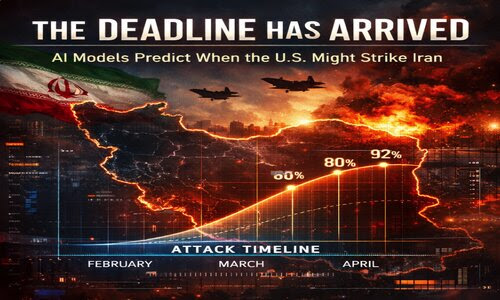
Most people don’t realize this, but an apocalyptic war with Iran would be a major turning point in the history of the world. Once the missiles start flying, nothing will ever be the same again. As you will see below, AI models are telling us when they think that moment will arrive. The only way that war can be averted is if a diplomatic solution can be found. That is why the negotiations that will be held in Geneva on Thursday are so important…
The mood in Tehran on the eve of the third round of talks with Washington appears to be a mix of guarded hope and tightening anxiety.
Negotiators are set to meet in Geneva on Thursday in discussions that could prove decisive, particularly if reports are accurate that Washington has set informal deadlines for progress.
Public messaging inside Iran reflects both anticipation and unease as officials brace for what could be a pivotal round.
Many experts believe that if this round of talks does not produce results, it will be the last round of talks.
In other words, the deadline for Iran to make significant concessions has arrived.
During the State of the Union address, President Trump made it abundantly clear that he will never permit Iran to have nuclear weapons…
“My preference is to solve this problem through diplomacy. But one thing is certain, I will never allow the world’s number one sponsor of terror, which they are by far, to have a nuclear weapon,” he said, to loud applause from both Republicans and Democrats in a rare moment of unity.
In a deeply divided Congress, Iran’s nuclear program remains one of the few issues capable of producing bipartisan agreement. Lawmakers across the political spectrum have long argued that a nuclear-armed Iran would destabilize the Middle East and threaten U.S. allies.
Subsequently, Vice-President JD Vance reaffirmed this stance on Wednesday during an interview with Fox News…
“We can’t let the craziest and worst regime in the world have nuclear weapons. That’s what the president has set as our goal. He is going to try and accomplish that diplomatically, but he has a number of other tools at his disposal to ensure this doesn’t happen. He has shown willingness to use them and I hope the Iranians take it seriously in the negotiations tomorrow,” Vice President Vance told Fox News on Wednesday.
Of course that isn’t the only thing that the Trump administration wants.
The Iranians must also agree to limits on their ballistic missile program and they must stop supporting terrorist proxies throughout the Middle East. Unfortunately, the Iranians have already categorically rejected those terms…
Washington wants Iran to stop enriching uranium, reduce its stockpiles of highly enriched material and address concerns about missiles and regional activity. Tehran rejects those terms, saying it has the right to peaceful nuclear energy and that other issues should not be part of the talks.
However, recent satellite imagery, published last week by Reuters, show that Iran has been quietly repairing and fortifying key facilities, suggesting Tehran is preparing for conflict even as diplomacy continues.
Analysts reviewing commercial satellite imagery from Planet Labs and other providers say Iran has been rebuilding and reinforcing key nuclear sites, including Natanz and Isfahan. New roofs and cover structures appear to shield damaged facilities, possibly to hide activity and protect surviving equipment or enriched uranium from further strikes. Some tunnel entrances have been strengthened, and missile bases hit in previous attacks show signs of repair.
The Jerusalem Post asked four different AI models when an attack on Iran would begin, and the answers that the AI models produced were very interesting.
Out of all the models, Claude was initially the most hesitant to give a specific response, but it eventually settled on the weekend of March 7th and March 8th…
Its most likely scenario, carrying roughly 40% to 45% odds, was a limited strike on Iranian nuclear and military infrastructure followed by a pause and renewed diplomatic pressure. It flagged early-to-mid March 2026 as the highest-risk window.
After another prompt, it narrowed further: Saturday, March 7 or Sunday, March 8, 2026.
In my personal opinion, this would make sense because in the past we have seen other military operations begin on a weekend when less people are paying attention.
But Google Gemini doesn’t think that a weekend is the most likely time. When asked when an attack on Iran would begin, it suggested a window of time between March 4th and March 6th…
In a later deep-research run, it got considerably more specific: Gemini shifted from triggers to timing and said that after weighing tactical, diplomatic, historical, and logistical factors, the “exact window” for the start of a US attack would fall between the evening of March 4, 2026, and the evening of March 6, 2026.
Grok seems to believe that a military operation could commence even sooner.
Whenasked, it predicted a date of February 28th…
Grok gave the clearest date in our original run. It predicted a limited US strike on February 28, 2026, tied to the outcome of the Geneva talks.
A later check using Grok’s 4.20 beta mode, described by the user as running four agents simultaneously, changed the tone but kept the same answer.
This would make sense if President Trump loses all patience with Iran after the upcoming talks in Geneva.
The window of time from the evening of Friday, February 27th to the evening of Sunday, March 1st could be a period of time that war planners in Washington find very appealing.
Of course it all depends on Trump.
He is the one that is going to have the final say on pulling the trigger.
Lastly, ChatGPT suggested a variety of dates in early March when it was asked when an attack on Iran would start…
In the earlier run, ChatGPT worked through an extended reasoning process and landed on Sunday, March 1, 2026 (Israel time), with a danger window running through March 6.
After a much longer deep-research pass, it changed the date. Its updated answer was Tuesday, March 3, 2026 (US time), noting that in Israel time this could show up as late Tuesday night or early Wednesday, March 4.
The 12 Day War was not about regime change, and so the Iranians held back to a very large degree.
But if the U.S. conducts a major military operation this time round, the Iranians clearly understand that regime change will be the goal, and they will hit us with everything in their arsenal.
When I have written about “a final showdown with Iran”, I do not feel like I have been exaggerating one bit.
Unfortunately, global events are inexorably dragging us in a certain direction, and it appears that there will be no turning back now.
Satan’s Country doing it AGAIN : Death On Demand: Canada Now Offering Same-Day Assisted Suicide

Something profound–and profoundly unsettling–is unfolding in Canada. What began less than a decade ago as a tightly controlled policy presented as a compassionate last resort is now evolving at a speed that is raising alarm among physicians, ethicists, and families alike. The country’s assisted dying system, known as Medical Assistance in Dying (MAiD), is no longer just expanding who can qualify. Increasingly, it is accelerating how fast death can be delivered. And the latest official data suggests the shift is happening faster than most citizens realize.
A recent report from the Chief Coroner’s Medical Assistance in Dying Death Review Committee in Ontario revealed that in 2023 alone, 65 people were euthanized the very same day they requested it, while another 154 died the day after applying. In other words, more than 200 individuals moved from request to death in 24 hours or less. For a program once designed with multiple safeguards and waiting periods, this represents a dramatic procedural transformation–one that critics say risks turning a supposedly cautious system into a rapid-response mechanism for ending life.
The shift did not happen overnight. When Canada first legalized assisted dying in 2016, the law required a mandatory 10-day waiting period between approval and death. That safeguard was removed in 2021 by the Canadian Parliament for patients whose deaths were deemed “reasonably foreseeable.” The problem, however, is that there is no universally fixed definition of what “reasonably foreseeable” actually means. In practice, that ambiguity has opened the door to increasingly short approval timelines–including same-day deaths.
One case cited in the review involved an elderly woman, identified as Mrs. B, who initially asked about assisted death but later told an assessor she wanted to withdraw her request because of her personal and religious beliefs. She instead sought hospice care. After she was reportedly denied access to hospice, another assessment was arranged. Despite earlier concerns from a practitioner about possible coercion and the sudden reversal of her wishes, she was approved by two assessors and euthanized the same day.
Committee members reviewing the case noted that poor quality or inaccessible end-of-life care may be influencing some patients to choose death. That observation should stop policymakers in their tracks. When death becomes easier to obtain than treatment, relief, or hospice support, the ethical landscape shifts dramatically. As physician and committee member Ramona Coelho argued, the priority in such cases should be urgent palliative intervention–not expedited death.
Another documented case involved a man hospitalized after alcohol-related falls. He had previously been ruled ineligible for assisted death because he did not have a qualifying medical condition. Yet after two rapid virtual assessments conducted without his treatment team’s knowledge–and without further clinical testing–he was deemed eligible based on a presumed diagnosis. The next day, he died with state assistance.
Even members of the review committee acknowledged that such compressed timelines “did not promote a quality approach.” Their concern was simple: when evaluations, second opinions, and treatment alternatives are compressed into hours, the margin for error widens. Decisions that should be measured in weeks or months are now sometimes measured in a single afternoon.
Meanwhile, policy momentum continues moving in one direction: outward. A federal parliamentary committee recommended in 2023 that the government consider extending eligibility to so-called “mature minors” whose deaths are considered foreseeable. Though not yet enacted, the proposal signals where the conversation may be heading next. If adults can receive same-day approval today, critics ask, what procedural barriers will remain tomorrow if eligibility expands to younger patients? Will parental consent be required? Could it be overridden? These are no longer abstract hypotheticals–they are policy discussions already underway.
From a biblical perspective, this accelerating normalization of assisted death stands in direct tension with the sacredness Scripture assigns to human life. The Bible teaches that life is not a disposable possession but a divine gift, intentionally formed and known by God before birth and bearing His image from the very beginning. Because life is God-given, its value is not measured by comfort, productivity, independence, or prognosis.
Christianity has historically insisted that suffering–while painful and often mysterious–does not erase dignity or purpose. In fact, the biblical narrative repeatedly shows God working most powerfully through human weakness, despair, and limitation. To choose death as a solution to suffering, therefore, is not presented in Scripture as liberation but as a tragic surrender of hope. The Christian answer to pain has never been elimination of the sufferer; it has been compassion, care, presence, and endurance.
Supporters argue Canada’s system reflects autonomy and mercy. But even some supporters of assisted dying in principle warn that speed changes everything. Safeguards are not merely legal checkboxes–they are time itself. Waiting periods exist because despair can fluctuate, diagnoses can evolve, and circumstances can change. Remove time, and you remove one of the most important protections medicine has.
This is why Canada’s trajectory deserves global attention. The story is no longer simply about whether assisted suicide should exist. It is about whether a nation can maintain meaningful safeguards once cultural and legal momentum shifts toward normalization. What begins as an exception can become an option. What becomes an option can become an expectation. And what becomes an expectation can, eventually, become routine.
Canada’s experiment is still unfolding. But the direction is unmistakable: eligibility widening, safeguards loosening, timelines shrinking. The question now confronting lawmakers, doctors, and citizens is stark and unavoidable–when death can be requested in the morning and delivered by nightfall, is the system still protecting the vulnerable… or has it begun protecting the process itself?
Mamdani & The Mahdi – A Reminder Of What Radical Islam Wants To Do With Infidels
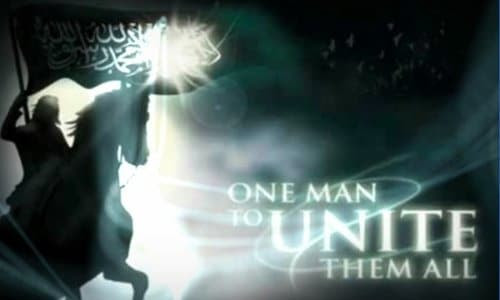
Something deeply serious is unfolding beneath the surface of America’s cultural calm. It is not merely about politics. It is about worldview, prophecy, power—and the ideas shaping leaders in positions of influence. New York mayor Zohran Mamdani and his recent appearance at the Al-Khoei Islamic Center have ignited concern among those who recognize that theology is never just theory. It is fuel. And depending on how it is interpreted, it can either build civilizations—or burn them.
According to material circulated by watchdog organizations including the Middle East Media Research Institute, an imam at the mosque gathering Mamdani attended was reported to have prayed for followers to be counted among those awaiting the Mahdi and to witness victory over unbelievers through his sword. Those words are not mild or symbolic. They echo themes found in militant interpretations of Twelver Shiite eschatology that envision a final global triumph of Islam over all who refuse submission.
Let that sink in.
Even if such rhetoric is framed as devotional or poetic, it describes a future in which those outside the faith are defeated by divine force. Christians who know their Bibles hear language like that and immediately recognize the pattern: religious conquest justified as destiny.
The Doctrine Few Americans Understand
Twelver Shiism is the largest branch of Shiite Islam. To grasp why Twelver Shiite belief draws such intense attention, one must understand how central prophecy is to its worldview. Twelvers hold that the twelfth Imam—often called the Hidden Imam—did not die but was supernaturally concealed by God and will return at a moment of global turmoil to establish perfect justice and true Islamic rule. Classical texts within this tradition describe signs said to precede his appearance: widespread chaos, moral collapse, conflict across nations, and a climactic struggle between truth and falsehood.
Many adherents interpret these signs spiritually or symbolically, but others have historically read them in literal geopolitical terms, believing world instability actually prepares the stage for the Mahdi’s arrival. That distinction is what makes the doctrine so closely watched by scholars and policymakers alike. When a belief system teaches that history is moving toward a decisive divine intervention that vindicates one faith over all others, observers naturally ask how that expectation might shape political loyalties, international alliances, and attitudes toward those outside the fold.
History proves that when people believe history is racing toward a divine showdown, they sometimes try to help it along.
That is why analysts have long warned that eschatology is not an abstract religious topic—it is a strategic one. When leaders or influencers appear comfortable in settings where militant interpretations are voiced, it raises unavoidable questions: Do they reject those interpretations? Do they tolerate them? Or do they quietly sympathize?
Those questions matter because beliefs drive policy. Always have. Always will.
The Iranian Precedent
The modern Islamic government of Iran is perhaps the clearest real-world example of Twelver theology fused with state authority. Its revolutionary system was shaped by Ruhollah Khomeini and is now led by Ali Khamenei, whose regime openly frames its rule within Shiite prophetic expectation. Iranian rhetoric toward Israel—often apocalyptic in tone—has been widely cited by global observers as evidence of ideology influencing foreign policy.
When governments see themselves as participants in a divine end-times script, compromise becomes weakness and conflict becomes sacred duty. This gives us insight into the worldview that US negotiators are currently facing as they try to forge a peace agreement with Iran. History shows that when theology and power merge, the stakes rise dramatically.
Presence Sends a Message
Public officials often visit religious institutions. That alone proves nothing. But context matters. When a leader appears in a setting where controversial rhetoric is reportedly voiced, silence can speak loudly. Observers naturally ask whether the individual agrees, disagrees, or simply prefers not to comment.
Those questions are not hateful. They are responsible citizenship.
In a free society, voters have the right—and the duty—to evaluate the convictions of those seeking authority over them. Faith commitments, ideological influences, and theological frameworks are all part of that evaluation. They shape moral priorities, alliances, and decisions made behind closed doors.
The Real Issue Beneath the Story
This moment is bigger than one visit or one speech. It is about understanding the power of belief. Twelver Shiite eschatology is not fringe; it shapes the worldview of millions and undergirds one of the most strategically significant governments on earth. To ignore it is to misunderstand global reality.
This is the belief system of the mayor of New York and we need to be aware of such views when he is sharing his worldview on culture or making policy decisions for the city.
Christians, of all people, should grasp this. We believe ideas have eternal consequences. We believe truth matters. We believe deception exists.
History’s most dangerous movements rarely begin with weapons. They begin with words—spoken, chanted, and believed.
TruLight Ministries Daily Entertainment

TruLight TV : Popcorn and Movie Time – Polycarp
A young slave girl, Anna, is rescued and adopted by Christians in the 2nd century Smyrna and befriended by their aged bishop, Polycarp. As Anna is taught by Polycarp and her new family, she struggles to reconcile her beliefs with those of the Christians. When the Roman proconsul demands that all citizens worship Caesar to show their allegiance to Rome, Polycarp and the Christians must find the courage to stand for their faith against the growing threat of persecution. Anna is forced to come to grips with the truth and choose whom she is willing to live – and die – for.
Today on TruLight Radio XM
TruLight Radio XM 24/7
Program
GMT / UTC +2
Monday To Fridays
00:15 Words to Live By Testimonies
01.15 Science Scripture and Salvation
02.15 Ground Works
04.00 Gospel Concert of the Day
05.00 The Daren Streblow Comedy Show
5:55 It is Today devotional
6:00 Gaither Homecoming Morning Show
7:15 Discover the Word
8.15 Destined for Victory
8:55 Science Scripture and Salvation
9:00 Holy Spirit Hour – Normally Sermons
10:15 Hope of the Heart
11:15 Unshackled
11.45 Words to Live By
12:15 Truth for Life
13:15 Living on the Edge with Chip Ingram
14:15 Focus on the Family
15:00 Kids Hour
16:00 In Touch with Dr. Charles Stanley
16:30 Groundwork
17:15 Live in the Light
18:15 Renewing your Mind
19:00 Gaither Homecoming Show
20:15 Growing Hope
21:15 Adventures in Odyssey Radio Drama
21:45 Bible Reading
22:15 Night-sounds
23.00 Good Old Country Gospel / Rhema Gospel Express
VISIT THE WEBSITE
TruLight Ministry News
TruLight Ministries orders from God since 2012 . Teach Them , Comfort Them and Warn Them!
The Sheriff of the Church – I Tell You Tru – Episode 6 will be released at 19h00 Tonight
The Sheriff address the Kingdom Now Doctrine of Demons other Dark side .

Healing Truths
End Time Articles
Share this Feeding of Manna with your Friends and Family. just click on the Social Media icon and share !