Hosted by TruLight Ministries – The Place of Truth
SELECT YOUR READING LANGUAGE – BOTTOM LEFT = YOUR DAILY MANNA NOW AVAILABLE IN 103 LANGUAGES
a New Study : for the Next 4 Daily Manna Days
In My Control vs Out of My Control
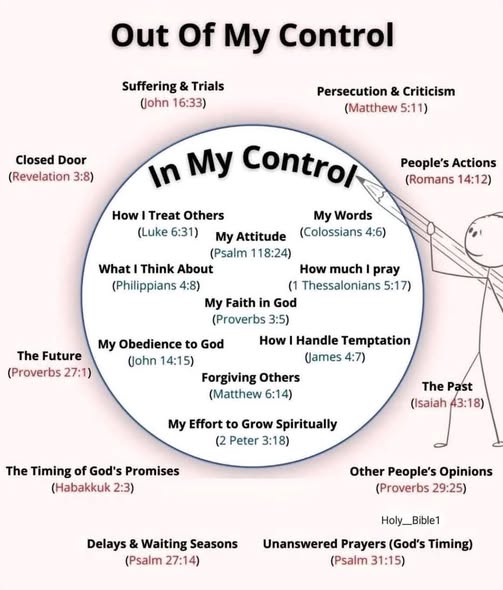
Out of My Control = Other People’s Opinions
If something is objective, it has correspondence with reality. Objective truth is something that is true for everyone, whether they agree with it or not. At one time this was simply called “truth.”
Objective is the opposite of subjective. If a person says, “The 1966 Ford Mustang is the coolest car ever made,” he is making a subjective statement. It is simply the opinion of one person. There is no way to measure that statement against reality; it cannot be evaluated apart from the opinions of other people. Others will either support or oppose the statement depending solely on their own, equally subjective opinions. It’s really impossible to say that a subjective statement is true in any meaningful sense; however, in modern parlance, someone might say, “It is MY truth,” which introduces a brand-new spin on subjectivism. At one time “my truth” would have been more accurately labeled “my opinion.”
An objective statement is factual; it has a definite correspondence to reality, independent of anyone’s feelings or biases. If a person says, “I own a 1966 Ford Mustang,” he is making an objective statement. If that person owns such a car, then the statement is true. If a person does not own such a car, then the statement is false. The truth or falsehood of the claim does not depend upon subjective opinion.
In recent years there has been an attack upon the very concept of objective truth. Things that were once deemed to be objective have been labeled subjective. For instance, the simple statement “God exists” was, in the past, recognized as an objective statement. People might agree or disagree, but everyone considered it an objective statement regarding external reality. Most people agreed with the statement, but even atheists who disagreed treated it objectively—the statement was either true or false.
Within the past thirty years or so, a new response has become popular. Instead of treating the statement “God exists” as an objective statement, many began to treat it as subjective. Instead of agreeing or disagreeing, the response might be something like “That is your truth. God may exist for you, but He doesn’t exist for me.” The focus has changed from objectivity (which seeks correspondence to objects in the real world) to subjectivity (which depends upon the subject who is making the statement). Today it is popular to view all statements regarding religion or theology as simply subjective statements of opinion—and, of course, everyone is entitled to his own opinion.
In more recent years, we have seen subjective opinion elevated to the level of objective truth. If a person embraces “his truth” or “her truth,” then everyone else is supposed to embrace that as “truth” as well—at least in certain “politically correct” matters. We see this in recent developments in transgender issues. For millennia, gender was considered an objective issue—a person was male or female based on a set of external, objective, and verifiable criteria. Now, certain cultural forces are attempting to make gender subjective. A male who decides to be female is simply embracing “his truth” or as the cultural forces would have us say, “her truth.” And even though the transgender person’s gender is “subjective,” his or her subjective truth must be treated as objective, as if it fully conformed to reality. If a person hints that the chosen gender of a transgender person is merely “their truth,” then he has committed an almost unforgiveable sin. The subjective has been elevated to the level of the objective, and the objective has been denigrated to the level of the subjective. The world has been flipped upside down.
But reality has a way of encroaching on people’s opinions. Try as they might, it is impossible for people to get away from the concept of objective truth. A person who says that a person can choose his own gender is, in fact, making an objective statement. That statement is either true or false. The person who makes the statement will not be satisfied if you agree that this is only “their truth.” They will insist that this is an objective statement that is true for everyone. Even the statement “objective truth does not exist” is an objective statement. Those who make it will often try to argue that it corresponds to reality and is therefore objectively true, thus defeating their own argument.
Postmodernism is a philosophical movement that does not deny the existence of objective truth, but it denies that we can ever know it for sure, because we are all swayed by various cultural forces that cloud our judgment. In postmodern thinking, it is only ignorance and pride that allows one to say, “I know this is true.” However, when postmodernists say, “It is impossible to know anything for sure,” they are making an objective statement. If it is impossible to know anything for sure, then it is impossible for them to know that it is impossible.
In short, facts and opinions are different. Objective truth is the opposite of (subjective) opinion. People may argue over whether a particular statement is objective or subjective. If it is objective, they may argue over whether or not it is true. But no matter what, it is impossible to escape the fact that objective truth does exist. At one time, the job of the Christian was to demonstrate the truthfulness of the biblical claims. Now, his job has been made more difficult because, before talking about the truth of the Bible, the Christian must often convince the listener that truth actually exists, especially touching religious claims.

Bible Verse and Prayer for Today
He knows the way that I take; when he has tested me, I will come forth as gold. My feet have closely followed his steps; I have kept to his way without turning aside.
—Job 23:10-11
How we long for Job’s words in this verse to be our true confession. We are not yet gold, but long to be. We are not yet fully following the Lords steps, but are trying to follow faithfully. We have tried not to turn aside from God’s ways, but we sometimes falter. Thank God for his grace until our intentions and desires are fulfilled in our genuine discipleship. Until that day, we pursue Jesus as we seek to reflect his character and compassion, trusting in the Holy Spirit to do the work of transformation (2 Corinthians 3:18) so that the following may be true of us as it was in Jesus:
He knows the way that I take; when he has tested me, I will come forth as gold. My feet have closely followed his steps; I have kept to his way without turning aside.
Prayer
Magnificent Creator and Sustainer of the Universe, I confess my sin and my inadequacies in following your paths completely. Forgive me as I commit my life to serve you in holiness and joy. Thank you for your grace, which covers my sin and perfects in me the character of Jesus through the power of the Holy Spirit. In the name of my Savior, Jesus, I pray. Amen and Amen

Bible Teaching of the Day
We all crave acceptance by others. Babies are socialized by learning to read the cues from those they want to please and adjusting their behaviors accordingly. However, when we seek most of our validation and self-worth from the opinions of other people, we are on the wrong path. Popular opinion changes like the breeze, and when we place too much importance on it, we are setting ourselves up for an endless string of disappointments. As long as we pursue popularity as a means to happiness, we are flirting with idolatry. When we find our personal worth in anything or anyone besides God, we are creating an idol. An idol is whatever or whomever we use to meet deep, heartfelt needs that only God can meet.
The desire to be popular is more than merely wanting others to think well of our character—we should desire to have a good testimony in the world (Philippians 2:15). A focus on popularity is an obsession with self. The craving for popularity is part of the “pride of life” mentioned in 1 John 2:16. It feels good to the ego to consider ourselves popular, and we tend to bask in that feeling rather than deal honestly with ourselves about our own weaknesses. This leads to pride. Pride inflates our view of our own importance and blinds us to our sins and failings (Proverbs 16:18; Romans 12:3). Even when the choice to please others does not involve open disobedience to God, pride is always at the heart of the desire for popularity. And God hates pride (Proverbs 8:13; James 4:6; 1 Peter 5:5).
Popularity is an elusive god that many have chased to their own destruction. King Herod was basking in popularity at the very moment of his ghastly, public death (Acts 12:19–23). False teachers are always popular with the “itching ears” crowd (2 Timothy 4:3). A sad example of choosing popularity over God is found in John 12:42–43: “Many even among the leaders believed in [Jesus]. But because of the Pharisees they would not openly acknowledge their faith for fear they would be put out of the synagogue; for they loved human praise more than praise from God.” Everyone who desires to be popular will have to choose many times between the approval of others and the approval of God. God’s plan for us is often in conflict with the world’s plan for us (1 John 2:15). To be “popular,” we must choose the world. But doing so means Jesus is not Lord of our lives; we are (Luke 9:23).
Galatians 1:10 says, “Am I now trying to win the approval of human beings, or of God? Or am I trying to please people? If I were still trying to please people, I would not be a servant of Christ.” According to this verse, we cannot consistently please both God and the world. The desire for popularity is rooted in our old sinful nature. When we give in to it, we are living “according to the flesh” (Romans 8:5, 12). Even Christian leaders can fall prey to this seductive desire. Teachers or preachers who become intoxicated with their own popularity are at risk. Unchecked, a desire to be popular can lead them to become men-pleasers, teach heresies (2 Peter 2:1), and design their ministries to please the most people (2 Timothy 4:3) rather than remain true to the “whole counsel of God” (Acts 20:27).
Jesus is our model. He was a favorite with both God and man as he grew up (Luke 2:52). But there was never a contest in His mind about which He would choose, and He proved that over and over again (John 8:29; Mark 1:11). He did not let temporary popularity influence Him or dissuade Him from His purpose (John 6:15). He never shied away from the hard truths, even when it meant rejection (John 6:66), threats (John 11:53–54), and, eventually, death (John 19:16).
Jesus gives us a perfect example of the way He wants us to relate to others. We are not here to make a name for ourselves. We are here on assignment from our Heavenly Father (Acts 1:8; Matthew 28:19). People may love us, or they may hate us, but our commitment to our purpose should never waver (Hebrews 12:1–3). When we choose to allow God to define our value rather than other people, we free ourselves to follow everything Jesus calls us to do. He knew it would be hard, but He gave us the best counsel when He said, “Blessed are you when people insult you, persecute you and falsely say all kinds of evil against you because of me. Rejoice and be glad, because great is your reward in heaven” (Matthew 5:11–12).
Today’s Devotional
Understanding what the Bible says about tolerance is crucial for Christians today. Tolerance, as presented in Scripture, is a fundamentally different concept from the tolerance promoted in our society today. While the world advocates for a form of tolerance that demands, without judgment, the acceptance of all lifestyles and opinions as valid, the biblical perspective on tolerance is distinct. The Bible teaches that tolerance is not about accepting all behaviors or positions as valid but about extending patience, love, respect, and compassion toward those we may disagree with.
The Bible teaches tolerance as a virtue (Romans 15:5). Jesus Christ modeled the kind of tolerance He desired His followers to adopt and practice (Mark 9:38–40). Tolerance, from a biblical viewpoint, is the quality of forbearance. It means putting up with a person or a point of view even if we disagree (Ephesians 4:2). The verb tolerate means “to allow without opposing; to acknowledge the right of another to hold contrary opinions” (Grenz, S. J. and Smith, J, T., Pocket Dictionary of Ethics, InterVarsity Press, 2003, p. 120). Christians should seek to be as tolerant as possible so that the loving character of Christ will “shine out for all to see” (Matthew 5:16, NLT).
As Christ’s followers, we cultivate tolerance when we are prepared to love and accept people despite their different viewpoints. However, tolerance does not require Christians to defend or embrace ungodly or unbiblical viewpoints as valid or morally correct. Scripture plainly reveals that some lifestyles and behaviors are sinful and dishonoring to God. A faithful believer who desires to please the Lord and obey His Word will prioritize, maintain, and defend the truth, even when his or her convictions conflict with society’s expectations of tolerance (Acts 5:29).
Jesus did not condemn the woman caught in adultery but accepted her with grace and mercy (see John 7:53—8:11). At the same time, He did not ignore the fact that she was a sinner, nor did He encourage her to continue living in sin. Instead, Christ truthfully addressed her need, offering forgiveness and cleansing. Jesus told the woman to leave her life of sin and walk in a new life of holiness. A Christian can interact peacefully and gently with sinners and be as tolerant of them as possible. Still, he must never stop calling sinful behavior “sin,” nor should he encourage anyone to walk in a lifestyle of sin.
Tolerance is commended within the body of Christ. The apostle Paul wrote, “Accept other believers who are weak in faith, and don’t argue with them about what they think is right or wrong” (Romans 14:1, NLT). Tolerance should be exercised when dealing with immature believers whose faith is weak (Romans 14:2–6; 13-22; 1 Corinthians 8:8–13). Rather than passing judgment on them and condemning them for their weakness, we should come alongside weaker brothers and sisters to help them (Romans 15:1; 1 Thessalonians 5:14; 1 Peter 4:8). We ought to live in such a way that we never cause a fellow believer to stumble or fall.
Jesus demonstrated to His disciples the need for tolerance with children (Matthew 19:13–14) and while serving one another (Mark 9:33–36). Paul encouraged ministers to tolerate other Christian workers, even when their motives might be wrong (Philippians 1:17–18).
The Bible places clear limits on tolerance. Evil and wickedness must never be tolerated (Habakkuk 1:13). There is no room in the church for false teachers or unsound, ungodly teachings (2 John 1:10–11; 2 Thessalonians 2:1–3; 1 Timothy 6:3–5, 20–21; 2 Peter 2:1). Sexual immorality and idolatry should not be tolerated in the body of Christ (1 John 5:21; 1 Corinthians 5:1–5, 11; 6:18–20; 10:7; Revelation 2:14).
Scripture instructs us to practice tolerance while never compromising the truth or relaxing God’s standard of holiness. This balance allows us to see people through the eyes of Jesus and perceive that they are lost, helpless sinners in want of His great compassion, mercy, grace, and forgiveness (Matthew 9:36; Mark 6:34). When we love people like Jesus does, selflessly, we can hear and see their unspoken needs, even if we don’t agree with them.

Bible Prophecy, Signs of the Times and Gog and Magog Updates with Articles in the News
Magog / Iran Has Closed The Strait Of Hormuz, How High Will The Price Of Oil Go?
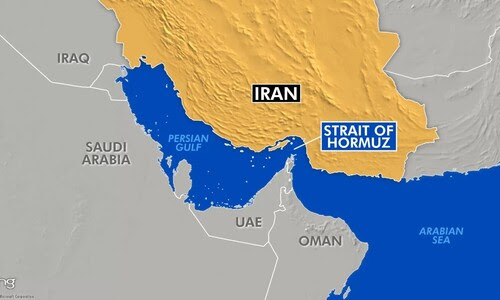
The war with Iran that we have been waiting for is officially here. The U.S. and Israel are absolutely pummeling Iranian military targets, and in return the Iranians are striking targets all over the Middle East. As you will see below, even a British military base in Cyprus has just been hit.
I think that the Iranians were hoping that the unexpected nations that they are targeting would be so traumatized that they would beg the United States to stop the conflict, but instead it seems like almost everyone is uniting against Iran. There is a growing consensus that there is no way that the regime in Iran can remain in place after this, and that means that this war could go on for an extended period of time.
Needless to say, this is not going to be good news for the global economy at all.
Our entire way of life depends upon cheap energy, and nearly a third of all oil that travels by sea must go through the Strait of Hormuz…
Positioned between Oman and Iran, the strait serves as a critical transit route – and potential chokepoint – for global crude, with about 13 million barrels per day moving through it in 2025, equal to approximately 31% of all seaborne oil flows, Kpler data showed.
It links major Gulf producers including Saudi Arabia, Iran, Iraq and the United Arab Emirates to the Gulf of Oman and the Arabian Sea.
Everyone agrees that the closure of the Strait of Hormuz would be a really big deal.
Unfortunately, it appears that the Iranians have already decided to pull the trigger.
It is being reported that the IRGC is warning vessels that the the Strait of Hormuz is now closed…
A European Union naval mission official told Reuters that vessels in the region are receiving marine radio warnings from Iran’s Revolutionary Guard instructing ships not to pass through the Strait of Hormuz.
Apparently there were some tankers that chose not to heed the warnings from the IRGC, and so they got attacked.
The first tanker that got hit by the Iranians was named Skylight…
The first attack against a ship in the Strait of Hormuz occurred on Sunday morning.
Oman’s Maritime Security Centre announced that an oil tanker named Skylight, flying the flag of the Republic of Palau, was targeted around five nautical miles (9.26km) north of Khasab Port.
In a statement shared on X, Oman authorities confirmed that there were 20 crew members on board, including 15 holding Indian nationality and 5 of Iranian nationality, and they were all evacuated.
According to a British news source, other oil tankers were subsequently attacked…
Three British and US oil tankers have been hit in the Gulf and the Strait of Hormuz, Iran has claimed, as Donald Trump claims to have sunk nine of its regime’s warships.
Iran has launched a new round of ship strikes in a brazen retaliation for the US’ devastating “Epic Fury” military operation.
I don’t think that we are going to see much oil get through the Strait of Hormuz for the foreseeable future.
As a result, the price of oil is likely to go much higher.
As I write this article, it has smashed through the $70 barrier, but this is probably just the beginning.
A former White House energy advisor named Bob McNally is warning that if the Strait of Hormuz is closed for an extended period of time it will mean “a guaranteed global recession”…
More than 14 million barrels per day flowed through the Strait in 2025, or a third of the world’s total seaborne crude exports, according to data from energy consulting firm Kpler. About three-quarters of those barrels went to China, India, Japan and South Korea. China, the world’s second-largest economy, receives half of its crude imports from the Strait.
“A prolonged closure of the Strait of Hormuz is a guaranteed global recession,” McNally said.
I believe that he is correct.
The Iranians have large numbers of anti-ship missile launchers dug deep into the cliffs that overlook the Strait.
I am not sure that there will be an easy way to take out those launchers.
So for now the Iranians have the upper hand in the Strait of Hormuz, and one analyst is telling us that “nothing seems to be going through at the moment”…
“Tankers are starting to build by the Strait of Hormuz, but nothing seems to be going through at the moment – tankers are definitely spooked,” said Matt Smith, oil analyst at energy consulting firm Kpler.
If the price of oil rises above 100 dollars a barrel, that will be a real problem.
Unfortunately, some analysts are convinced that is precisely what could happen. Here is one example…
Should Iran succeed in closing the Strait, the implications for the global oil markets could be severe.
“This could present a scenario three times the severity of the Arab oil embargo and Iranian revolution in the 1970s, and drive oil prices into the triple digits, while LNG prices retest the record highs of 2022,” Kavonic noted.
And here is another example…
If access through the strait is limited for an extended period, prices could go “materially above $100/barrel,” said analysts at TD Securities in a March 1 note.
On the other hand, if access through the strait is guaranteed and hostilities cease, the added costs to account for extra risk could evaporate in a matter of weeks, the TD team wrote.
If the war ends quickly, the disruption that we will experience will be fairly minimal.
But if this war persists for some time, everybody is going to feel the pain…
If oil rises and stays there, drivers will feel it quickly at the pump. The national average gasoline price is about $2.98 a gallon but oil at $100 for a few months would drive that up.
The impact would not stop at the gas station. Oil is needed for transportation, shipping, manufacturing, packaging and agriculture. Higher crude prices raise costs for trucking groceries, flying passengers, producing plastics and moving goods around the country.
Theoretically, one of the oil-exporting nations that would be hurt the most by the closure of the Strait of Hormuz would be Saudi Arabia.
But the Washington Post is reporting that Saudi Arabia has been secretly encouraging President Trump to attack Iran…
President Donald Trump launched Saturday’s wide-ranging attack on Iran after a weeks-long lobbying effort by an unusual pair of U.S. allies in the Middle East — Israel and Saudi Arabia — according to four people familiar with the matter, as Israeli and U.S. forces teamed to topple Iranian Supreme Leader Ali Khamenei after nearly four decades in power.
Saudi Crown Prince Mohammed bin Salman made multiple private phone calls to Trump over the past month advocating a U.S. attack, despite his public support for a diplomatic solution, the four people said. Israeli Prime Minister Benjamin Netanyahu, meanwhile, continued his long-running public campaign for U.S. strikes against what he views as an existential enemy of his country.
The combined effort helped lead Trump to order a massive aerial campaign against Iran’s leadership and military, which in its initial hour led to the death of Khamenei and several other senior Iranian officials.
Why would Saudi Arabia do this?
The Saudis know that the closure of the Strait of Hormuz is just temporary.
But their problems with Iran have been going on for a very long time.
Saudi Arabia is the global epicenter for Sunni Islam, and Iran is the global epicenter for Shia Islam.
The Saudis are convinced that Sunni Islam will someday dominate the entire world, and the Iranians are convinced that Shia Islam will someday dominate the entire world.
Most people living in the western world do not realize this.
The global struggle between Sunni Islam and Shia Islam stretches back for many centuries, and now Saudi Arabia senses an opportunity to strike a decisive blow to their mortal enemy.
This also helps to explain why the Iranians have been launching missiles at many of their Sunni neighbors.
The Iranians are not stupid. They can see what is going on and they are very upset about it.
So I can understand why the Iranians have been targeting Sunni countries, but I have no idea why they thought it would be a good idea to hit Cyprus…
The United Kingdom’s Akrotiri air force base in Cyprus has been hit by a drone, the Cyprus Mail learned in the early hours of Monday morning.
Personnel on the bases were informed that a “small drone” had “impacted the airfield” and that the bases’ authorities were responding.
Does Iran actually want to draw as many countries into this war as possible?
It kind of seems as if that is their goal.
Interestingly, multiple rockets were fired into Israel from southern Lebanon just a little while ago.
Many are suggesting that this means that Hezbollah has joined the war.
In response, the IDF is now conducting airstrikes in Lebanon.
We were warned that a conflict with Iran could become a major regional war, and it appears that this is now becoming a reality.
So buckle up and hold on tight, because I think that we are just in the early moments of a really wild ride.
New Zealand War-Game Connects Evangelical Christians To Extremism And Terrorism

This week’s news takes us “across the ditch” to New Zealand. Although our Kiwi cousins rarely generate negative news, particularly since Jacinda Ardern left office, recent military exercises have aroused the interest of believers in the southern hemisphere.
The military exercises in question were conducted in late-2025 and involve a fictional conflict where an armed faction is depicted as emerging from “Christian communities.” The scenario involved use of the training system known as DATE (Decisive Action Training Environment). New Zealand is not the only nation to utilise this system. It is primarily used by the US, Britain, Canada, Australia and New Zealand. According to the Australian Army website, use of the DATE training system enables “an immersive suite of doctrine and tactics, and underpinned by realistic modelling of both the pacing threat and regional operating environments.”
Although most of the training packages involve fictional state actors, the one which caught the interest of Christians involved a fictional non-state actor known as the “Visayan Peoples Front”. According to the training video (which is available for viewing at the Australian Army’s official DATE site) the fictional Visayan Peoples Front is a longstanding separatist insurgency that uses guerilla tactics and criminal activities to resist the ruling fictional government. Amusingly, the training video goes on to state that the Visayan Peoples Front “began as a far-left populist movement” but “over time it devolved into an Evangelical Christian socialist insurgency”.
The target of this so-called insurgency was not only the ruling government but also “the Muslim minority.” In detailing the operational aspect of the Visayan Peoples Front, the video goes on to state that the group “advocates for adherence to conservative Christian values” but also engages in roadside bombings, theft and drug trafficking. Information published at a website aligned with The US Army Training and Doctrine Command (now the US Army Transformation and Training Command), gave further details to the backstory, claiming that the Visayan Peoples Front “demanded the exclusion of Muslims and creation of a Christian nation” and that the group’s “ideology is a strange mishmash of extreme left wing, evangelical Christian, and nationalist separatist” beliefs.
These training scenarios continue to feed into the narrative that conservative Christians are an armed, angry, and apocalyptic gang who need to be treated like every other terrorist organisation. The reality is that underpinning the constant assault on Christianity is the fact that globalists seek to advance the narrative that Christianity is intolerant of global ideas because patriotism is divisive. By doing this, the hope amongst the ruling class is that by equating Christians with fanatics and conspiracy theorists, they will silence and sideline Christians from participating in the political process because Christians are supposedly nefarious, subversive and violent.
In so doing, what they really demand is that Christians operating in civil life must adopt either a secularist or non-threatening religious posture. Because what they want is to ensure that Christianity is either rendered harmless or that it can be harnessed to advance a secularist global agenda. Key to this is their attack on the Bible. You see, in the elitist (and thoroughly neo-Marxist) mindset, if they can convince the world to completely reject the Word of God, then they are able to firmly establish themselves as the ones who may rewrite the script at will.
But to do this, they must aggressively destroy the credibility and influence of Judeo-Christian faith, which insists the true script has already been written and is not only binding but divinely assured. Marxism cannot tolerate rival sovereignties because within the ecosystem of a sovereign rival is a centre of loyalty that threatens their revolutionary aims. This is why power structures which are sympathetic to, or dominated by, Marxist ideology target traditional family structures, churches, and even individual Christians who, in the spirit of Acts 5:29, obey God rather than men. So, how better do you foment distrust of such rivals by connecting their existence to extremism and terrorism?
Although Marxists have deceived themselves into believing they determine their own destiny, in Acts 17:26-28 we read: “And He has made from one blood every nation of men to dwell on all the face of the earth, and has determined their preappointed times and the boundaries of their dwellings, so that they should seek the Lord, in the hope that they might grope for Him and find Him, though He is not far from each one of us; for in Him we live and move and have our being, as also some of your own poets have said, ‘For we are also His offspring.'”
God’s purpose in regulating times and boundaries was so that people would realise His sovereignty and seek Him. However, for those who uphold the Marxist worldview, they not only reject God’s sovereignty, but seek to establish their own in place of God. We know of a prideful creature who adopted that same philosophy, don’t we?
America On Alert: Iran’s Sleeper Cells And The Rising Lone-Wolf Threat
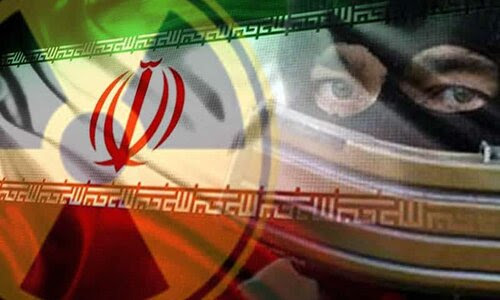
The death of Ali Khamenei may mark the end of one man’s rule–but it could ignite a far more unpredictable and dangerous phase of conflict. Security analysts and intelligence officials are sounding alarms that Tehran’s retaliation may not come only through missiles or proxies abroad, but through something far harder to detect and stop: sleeper cells and radicalized lone actors already living in Western societies.
Former Israeli intelligence chief Yossi Kuperwasser, now affiliated with the Jerusalem Institute for Strategy and Security, warned that dormant operatives linked to Tehran exist “around the globe” and could be activated to strike targets tied to U.S. or allied interests. Having led research for the Israel Defense Forces intelligence division, Kuperwasser’s assessment is not speculation from the sidelines–it reflects decades of watching how state sponsors of terrorism behave after losing key leaders.
His message is blunt: sleeper networks are designed precisely for moments like this. They wait silently for years, blending into communities, building ordinary lives, and then, when triggered, they act. The activation signal could be direct orders, coded online messages, or instructions relayed through intermediaries already embedded in Western countries. According to Julian Richards of the University of Buckingham, such cells can be “virtually impossible to spot” until they move.
European officials share the concern. German lawmaker Marc Henrichmann told Sueddeutsche Zeitung that Iran has repeatedly demonstrated its willingness to conduct operations beyond its borders and that retaliatory attacks inside Western nations “cannot be ruled out.” That is diplomatic language for a deeply unsettling reality: Western intelligence agencies are bracing for impact.
Recent unrest abroad underscores the regime’s reach. In Karachi, Pakistan, a mob of pro-Iran demonstrators stormed a U.S. consulate, vandalizing property and setting fires. Violent protests like these serve two purposes: they signal ideological loyalty and test how quickly crowds can be mobilized when tensions escalate. What looks spontaneous is often anything but.
The Border Question No One Wants to Address
If sleeper operatives already exist in the West, how did they get there? Critics argue that years of porous migration controls in parts of Europe and North America have increased vulnerability to infiltration. While most migrants seek safety or opportunity, hostile regimes need only a handful of determined operatives to exploit gaps. Intelligence services have repeatedly warned that adversarial states study immigration systems carefully, looking for bureaucratic blind spots.
The United States, home to millions of immigrants from across the world–including roughly 2.5 million Shiite Muslims–faces a delicate balancing act: maintaining openness while preventing exploitation. The risk is not the community itself; it is the possibility that a tiny fraction could be coerced, recruited, or radicalized. Two Iranian expatriates in London previously described being pressured during visits back to Iran to perform tasks for the regime, sometimes after authorities temporarily confiscated passports. Such tactics illustrate how intelligence recruitment can occur quietly and coercively.
Lone Wolves: The Hardest Threat to Stop
Even more alarming than sleeper cells are self-radicalized individuals who act without direct orders. Lone-wolf attackers require no network, no funding pipeline, and no logistical chain. All they need is motivation–and geopolitical crises can supply that instantly.
That danger came into sharp focus this week in Austin, Texas, where a gunman opened fire inside a crowded bar, killing two and wounding 14 before police shot him. Investigators say the attacker, identified as a former New York resident originally from Senegal, may have been motivated by U.S. strikes against Iran. Reports indicate he wore a shirt reading “Property of Allah,” possessed a Quran in his vehicle, and allegedly kept images of Iranian leaders and symbols at home. Authorities are examining whether ideological sympathy–not operational direction–drove the violence.
That distinction matters. A centrally coordinated plot can sometimes be intercepted through surveillance or informants. A lone sympathizer radicalized online or through propaganda leaves almost no trail until the moment of attack. That is why counterterrorism experts increasingly view decentralized violence as the defining security challenge of this era.
A Strategy of Asymmetric Revenge
Iran’s leadership has long relied on asymmetric tactics–leveraging groups such as Hezbollah and the Houthis rather than confronting adversaries head-on. Activating sympathizers abroad fits perfectly within that doctrine. It allows Tehran to retaliate without triggering full-scale war, while still inflicting psychological and political damage.
Iran’s foreign ministry has already warned that consequences for Khamenei’s death will “extend to the world.” That statement should not be dismissed as rhetoric. It is consistent with decades of precedent showing that the regime views global reach as a strategic asset, not a last resort.
America on Alert
The FBI has reportedly elevated counterterrorism readiness nationwide, reflecting concern that retaliation could occur on American soil. Such alerts are not issued lightly. They signal credible intelligence indicating heightened risk, even if specifics remain classified.
History shows that moments of geopolitical shock often produce ripple effects far from the battlefield. Assassinations, airstrikes, and regime crises rarely stay contained within national borders. Instead, they reverberate through diaspora communities, ideological networks, and digital spaces where grievances can be amplified and weaponized.
The Real Battlefield Is Psychological
What makes sleeper cells and lone wolves uniquely dangerous is not just their capacity for violence–it is their ability to instill fear. A single attack can alter public perception, polarize societies, and pressure governments into reactive policies. In that sense, the strategic objective is not merely casualties but destabilization.
The West now faces a sobering question: are we prepared for a conflict that may unfold not on distant front lines, but in our own cities, restaurants, and streets?
The answer will depend on vigilance, intelligence cooperation, and a willingness to confront uncomfortable truths about modern security. Because if history has taught us anything, it is this: wars no longer need armies to cross borders. Sometimes, the battlefield is already inside them.
The Window Of Opportunity & The Largest Regime Decapitation In Modern Warfare
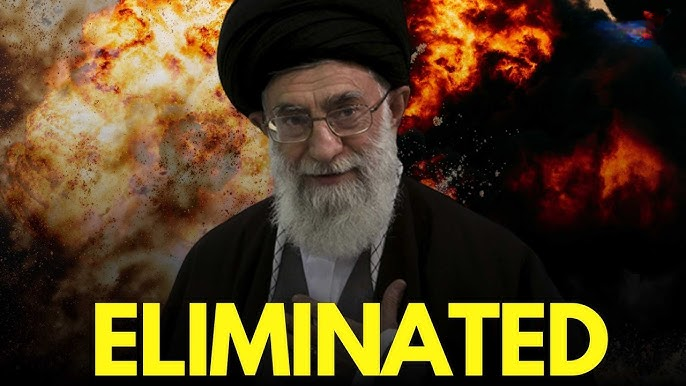
In modern warfare, timing is often measured in weeks or months of planning. But in this case, history may record that a war’s decisive turning point was measured in minutes. “There was a deliberate decision to accelerate the timeline,” one source revealed–a choice that transformed a planned strike into what may become known as the most sweeping leadership decapitation operation of the 21st century. What followed was not just an attack. It was a synchronized geopolitical shockwave that dismantled the upper command of a regime in a single morning.
According to intelligence officials familiar with the operation, the breakthrough came when the Central Intelligence Agency tracked the precise movements of Iran’s supreme leader, Ayatollah Ali Khamenei. For months, analysts had reportedly monitored his travel patterns, communication channels, and security rotations. Then came the critical development: confirmation that Khamenei and dozens of senior officials would gather at a central leadership compound in Tehran on a Saturday morning.
That intelligence created what military strategists call a “fleeting window of opportunity”–the rare convergence of target certainty, operational readiness, and strategic surprise. Originally, planners in both United States and Israel intended to strike under cover of darkness. But with confirmation of the gathering, leaders reportedly made a rapid decision: move now.
The operation launched at approximately 6 a.m. Israel time. Fighter jets armed with precision long-range munitions lifted off. Two hours and five minutes later, missiles slammed into multiple sites across Tehran. One building housed senior national security officials. Another contained Khamenei himself. The speed was staggering–not only in execution, but in consequence.
Iran’s state outlet Islamic Republic News Agency confirmed the deaths of Khamenei and at least two top commanders, while Israeli and U.S. sources claim the toll is far higher. Officials speaking to Fox News said more than 40 senior figures were eliminated in coordinated strikes. If accurate, that number would make the operation one of the most extensive leadership removals ever achieved in a single military action.
Among those reportedly killed were senior figures tied to Iran’s strategic and military infrastructure: the head of its military council, top intelligence officials, defense leadership, and key figures associated with weapons development programs. The Israel Defense Forces stated that locations housing Iran’s political-security elite were deliberately targeted. The message was unmistakable: this was not a warning shot. It was a surgical dismantling.
Even more striking is how thoroughly the leadership hierarchy appears to have been penetrated. Officials told The New York Times that U.S. intelligence possessed “high fidelity” data on Khamenei’s whereabouts–information reportedly refined through surveillance lessons learned during last year’s brief but intense 12-day conflict. That earlier confrontation, once seen as a limited engagement, now appears in retrospect to have been a reconnaissance phase that revealed how Iran’s top leadership moved under pressure.
Critically, analysts say Iran’s own decisions may have amplified the strike’s effectiveness. Despite public signals that war preparations were underway, senior leaders still gathered in a single location–a concentration of command authority that made them uniquely vulnerable. One U.S. defense official described the attack as achieving “tactical surprise” despite Tehran’s heightened alert status.
The scale of loss is difficult to overstate. Military organizations are built on chains of command, institutional memory, and trust networks. Remove dozens of top figures at once, and the system doesn’t just weaken–it risks paralysis. Intelligence insiders say Iran’s senior intelligence ranks were “decimated,” with only one top officer confirmed to have escaped. In strategic terms, that is not merely a battlefield setback; it is structural disorientation.
Adding to the shock was the reported death of former president Mahmoud Ahmadinejad, a polarizing figure long known for incendiary rhetoric against Israel on the world stage. His presence at or near targeted sites, if confirmed, suggests that the gathering was even more consequential than initially believed.
The roots of this operation stretch back further than this week’s headlines. Former officials say the intelligence network used to track Khamenei had existed for years and had already proven capable. In fact, President Donald Trump publicly claimed last year that U.S. intelligence knew where the supreme leader was hiding. What has changed since then, insiders say, is precision: surveillance tools improved, communication intercepts deepened, and predictive modeling sharpened.
In warfare, there are battles–and then there are moments that redefine how wars are fought. This strike may belong to the latter category. Traditional conflicts rely on attrition, territory, and prolonged campaigns. But this operation demonstrated something different: the power of intelligence dominance combined with rapid decision-making. The choice to accelerate the timeline did more than change the hour of attack. It changed the scale of outcome.
Within a single morning, an entire echelon of leadership was erased. Command structures were shattered. Strategic continuity was disrupted. And the psychological effect–both inside Iran and across the region–may prove as significant as the physical destruction.
Wars are often remembered for their longest battles. Yet sometimes they turn on their shortest decisions. In this case, one accelerated timeline may have altered the trajectory of a conflict–and possibly the balance of power in the Middle East–for years to come.
TruLight Ministries Daily Entertainment

TruLight TV : God Works Through You
If you think the only place you can honor God with your gifts and talents is inside the church, think again. Watch this video and be encouraged that God can work through you wherever you are. If you’re careful to leave room for God to lead you day to day, He’ll show up and do wonders in, through, and around you. Today’s guest artist on the Josh and Ashley show the group called Children of the Promise Ministries, a Mother and Sons gospel group from Cedartown, got to share their blessed musical talents on today’s episode! “There’s a difference between singing a song and singing a song to God” – Jacob Shaw (group member) and later Watch Session 4 of the “Start Right Here” Devotional Series! Enjoy and thanks for watching.
Today on TruLight Radio XM
TruLight Radio XM 24/7
Program
GMT / UTC +2
Monday To Fridays
00:15 Words to Live By Testimonies
01.15 Science Scripture and Salvation
02.15 Ground Works
04.00 Gospel Concert of the Day
05.00 The Daren Streblow Comedy Show
5:55 It is Today devotional
6:00 Gaither Homecoming Morning Show
7:15 Discover the Word
8.15 Destined for Victory
8:55 Science Scripture and Salvation
9:00 Holy Spirit Hour – Normally Sermons
10:15 Hope of the Heart
11:15 Unshackled
11.45 Words to Live By
12:15 Truth for Life
13:15 Living on the Edge with Chip Ingram
14:15 Focus on the Family
15:00 Kids Hour
16:00 In Touch with Dr. Charles Stanley
16:30 Groundwork
17:15 Live in the Light
18:15 Renewing your Mind
19:00 Gaither Homecoming Show
20:15 Growing Hope
21:15 Adventures in Odyssey Radio Drama
21:45 Bible Reading
22:15 Night-sounds
23.00 Good Old Country Gospel / Rhema Gospel Express
VISIT THE WEBSITE
TruLight Ministry News
TruLight Ministries orders from God since 2012 . Teach Them , Comfort Them and Warn Them!
Healing Truths
End Time Articles
Share this Feeding of Manna with your Friends and Family. just click on the Social Media icon and share !