Hosted by TruLight Ministries – The Place of Truth
SELECT YOUR READING LANGUAGE – BOTTOM LEFT = YOUR DAILY MANNA NOW AVAILABLE IN 103 LANGUAGES
Key Gospel Themes for 2026
- Peace in the Midst of the Storm: God offers a deep, lasting peace beyond worldly anxieties, a refuge found in His presence, even as global challenges arise.
- Breaking Barriers & Open Doors: A year for divine intervention, where God opens opportunities and shifts systems, but believers must walk in faith to receive them.
- Discernment & Authentic Fruit: With much noise (including AI), focus on Jesus’s true character and the “fruit” (actions, relationships, discipleship) as the real measure of faith, not just words.
- Walking with Jesus & Kingdom Living: The official theme that highlights a personal journey with Christ, applicable broadly as a call to discipleship and service.
- Overcoming Offense: A strong warning against becoming easily offended; remaining unoffendable is crucial to avoid being swayed by deception and to serve God’s true purposes.
- New Beginnings & Completing the Work: A reminder that God’s grace provides fresh starts, and He will complete the good work He started in believers, urging perseverance.
- Voice & Dominion: Believers are called to use their God-given voice to break cycles of fear and delay, exercising spiritual authority to see God’s will manifest.
Sample Verses & Applications for 2026
• Jeremiah 29:11: Trust God’s hopeful plans for your future, not striving to control everything.
• Matthew 6:33: Make seeking God’s Kingdom your top priority for life to fall into place.
• Philippians 4:6-7: Combat anxiety with prayer, thanksgiving, and trust in God’s peace.
New Beginnings & Completing the Work
In the first episode of the television series The Chosen, Mary Magdalene testifies to Jewish religious leader Nicodemus of the absolute transformation she experienced because of knowing Jesus Christ: “I was one way, and now I am completely different. And the thing that happened in between was Him.” This dramatic scene was fashioned on the apostle Paul’s teaching that “if anyone is in Christ, he is a new creation; old things have passed away; behold, all things have become new” (2 Corinthians 5:17, NKJV).
When a person encounters Jesus Christ and surrenders to Him as Lord and Savior, that individual is now “in Christ,” joined to Jesus in His death and resurrection: “We were therefore buried with him through baptism into death in order that, just as Christ was raised from the dead through the glory of the Father, we too may live a new life” (Romans 6:4). We become a whole new creation in Jesus Christ (Galatians 6:15). Our “former way of life,” or “old self,” which was “corrupted by its deceitful desires” (Ephesians 4:22), was “one way,” as Mary put it in the television series. But the “new self” in Christ, “created to be like God in true righteousness and holiness” (Ephesians 4:24), is “completely different.” Scripture says that, when Mary Magdalene encountered Jesus, He cast seven demons out of her (Luke 8:1–3). After being set free, Mary was forever changed into a devoted follower of Christ.
Through union with Jesus Christ, all things have become new for born-again believers. Our old life dominated by sin no longer controls us: “Since we have been united with him in his death, we will also be raised to life as he was. We know that our old sinful selves were crucified with Christ so that sin might lose its power in our lives. We are no longer slaves to sin. For when we died with Christ we were set free from the power of sin. And since we died with Christ, we know we will also live with him” (Romans 6:5–8, NLT).
All things have become new illustrates the beginning of our transformation—our inward renewal and regeneration—that will culminate in the fullness of our salvation to be experienced in eternity. Our Savior’s death and resurrection ushered in a foretaste of an entirely new world still to come: “But in keeping with his promise we are looking forward to a new heaven and a new earth, where righteousness dwells” (2 Peter 3:13). Eventually, everything in creation will be made new (Romans 8:19–20; cf. Isaiah 65:17–25).
Paul explained that the Christian’s new self “is being renewed in knowledge in the image of its Creator” (Colossians 3:10). Through the inner working of the Holy Spirit, believers grow into the image of Christ “with ever-increasing glory” (2 Corinthians 3:18). God promises to give us a new, undivided heart, removing our “heart of stone” and replacing it with a “heart of flesh” (Ezekiel 11:19; 36:26). “And I will put my Spirit in you and move you to follow my decrees and be careful to keep my laws” (Ezekiel 36:27). The changes begin in the heart but then spill out to our behavior (Romans 12:2).
Paul explained that these changes don’t happen through our own force of will and self-effort (Philippians 3:4–9) but through living by faith in Christ: “My old self has been crucified with Christ. It is no longer I who live, but Christ lives in me. So I live in this earthly body by trusting in the Son of God, who loved me and gave himself for me” (Galatians 2:20, NLT).
For believers, all things have become new in us and in our relationships with other people. We now look at unbelievers with compassion, seeing them as Christ saw them—“like sheep without a shepherd” or as lost sinners in need of a Savior (Matthew 9:36). No matter how different they may be, we recognize fellow Christians as part of one united body—the new creation: “There is neither Jew nor Gentile, neither slave nor free, nor is there male and female, for you are all one in Christ Jesus” (Galatians 3:28; see also Romans 12:5).
All things have become new through our union with Christ, and we no longer live for ourselves (2 Corinthians 5:15). To the new creation in Christ, Jesus said, “A new command I give you: Love one another. As I have loved you, so you must love one another. By this everyone will know that you are my disciples, if you love one another” (John 13:34–35). Instead of living to please ourselves, we now live to please Christ, serve Him (2 Corinthians 5:9; 1 Thessalonians 4:1), and look out for the interests of others (Philippians 2:3–4; Galatians 6:2).

Bible Verse and Prayer for Today
He has shown you, O mortal, what is good. And what does the Lord require of you? To act justly and to love mercy and to walk humbly with your God.
—Micah 6:8
God’s desires for us are not hard to discern. He wants to bless us with salvation. The incredible gift of his Son is a powerful testimony to this truth. Yet salvation from sin and death is not something he wants to happen in our lives just once. He wants our lives to reflect his salvation daily and to share that salvation with others by the way we live. When we act justly, pursue mercy in our relationships, and honor him with our worship from humble hearts, then God’s salvation becomes real in our lives and impacts others with his grace. In the language of Jesus, we work for God’s kingdom to come and will be done on earth, and in us, as it is in heaven (Matthew 6:9-10).
Prayer
Almighty and compassionate Father, as I embrace this New Year, help my eyes see what your heart sees. Teach me to hate sin and to be merciful to all who need mercy. Teach me to know truth and act fairly, while hating abuse and exploitation. As I reflect on the great distance between your holy majesty and my inconsistent and flawed character, I ask for the Spirit’s help to fashion me to be more and more like Jesus with greater urgency. Make me wholly your child in word, thought, and deed. I pray this in Jesus’ name and to become more like him. Amen and Amen
Bible Teaching of the Day
The new creation is described in 2 Corinthians 5:17: “Therefore, if anyone is in Christ, he is a new creation; the old has gone, the new has come!” The word “therefore” refers us back to verses 14-16 where Paul tells us that all believers have died with Christ and no longer live for themselves. Our lives are no longer worldly; they are now spiritual. Our “death” is that of the old sin nature which was nailed to the cross with Christ. It was buried with Him, and just as He was raised up by the Father, so are we raised up to “walk in newness of life” (Romans 6:4). That new person that was raised up is what Paul refers to in 2 Corinthians 5:17 as the “new creation.”
To understand the new creation, first we must grasp that it is in fact a creation, something created by God. John 1:13 tells us that this new birth was brought about by the will of God. We did not inherit the new nature from our parents or decide to re-create ourselves anew. Neither did God simply clean up our old nature; He created something entirely fresh and unique. The new creation is completely new, brought about from nothing, just as the whole universe was created by God ex nihilo, from nothing. Only the Creator could accomplish such a feat.
Second, “old things have passed away.” The “old” refers to everything that is part of our old nature—natural pride, love of sin, reliance on works, and our former opinions, habits and passions. Most significantly, what we loved has passed away, especially the supreme love of self and with it self-righteousness, self-promotion, and self-justification. The new creature looks outwardly toward Christ instead of inwardly toward self. The old things died, nailed to the cross with our sin nature.
Along with the old passing away, “the new has come!” Old, dead things are replaced with new things, full of life and the glory of God. The newborn soul delights in the things of God and abhors the things of the world and the flesh. Our purposes, feelings, desires, and understandings are fresh and different. We see the world differently. The Bible seems to be a new book, and though we may have read it before, there is a beauty about it which we never saw before, and which we wonder at not having perceived. The whole face of nature seems to us to be changed, and we seem to be in a new world. The heavens and the earth are filled with new wonders, and all things seem now to speak forth the praise of God. There are new feelings toward all people—a new kind of love toward family and friends, a new compassion never before felt for enemies, and a new love for all mankind. The things we once loved, we now detest. The sin we once held onto, we now desire to put away forever. We “put off the old man with his deeds” (Colossians 3:9), and put on the “new self, created to be like God in true righteousness and holiness” (Ephesians 4:24).
What about the Christian who continues to sin? There is a difference between continuing to sin and continuing to live in sin. No one reaches sinless perfection in this life, but the redeemed Christian is being sanctified (made holy) day by day, sinning less and hating it more each time he fails. Yes, we still sin, but unwillingly and less and less frequently as we mature. Our new self hates the sin that still has a hold on us. The difference is that the new creation is no longer a slave to sin, as we formerly were. We are now freed from sin and it no longer has power over us (Romans 6:6-7). Now we are empowered by and for righteousness. We now have the choice to “let sin reign” or to count ourselves “dead to sin but alive to God in Christ Jesus” (Romans 6:11-12). Best of all, now we have the power to choose the latter.
The new creation is a wondrous thing, formed in the mind of God and created by His power and for His glory.
The apostle Paul opened his letter to the believers in Philippi by explaining that he often thanked God for them in joyful prayer because of their partnership in sharing the gospel. Paul held a special affection for the Philippian church, which he had founded approximately ten years earlier. Now he expressed confidence in God’s continued work in their lives: “I thank my God upon every remembrance of you, always in every prayer of mine making request for you all with joy, for your fellowship in the gospel from the first day until now, being confident of this very thing, that He who has begun a good work in you will complete it until the day of Jesus Christ” (Philippians 1:3–6, NKJV).
Paul had seen firsthand the good work that God had begun in the Philippian believers. In Philippi, on Paul’s second missionary journey, he and his companions encountered Lydia and other women meeting by the riverside for prayer. As Paul preached, Lydia and her household were saved and baptized, and the Philippian church was born (Acts 16:11–15). Later, the Christians in Philippi conducted their house church in Lydia’s home. As the church grew, it became one of the strongest supporters of Paul’s ministry (Philippians 4:10–20).
Paul loved the Philippians deeply and desired to see them continue to grow in Christian maturity and abound in ever-increasing spiritual understanding: “I pray that your love will overflow more and more, and that you will keep on growing in knowledge and understanding. For I want you to understand what really matters, so that you may live pure and blameless lives until the day of Christ’s return. May you always be filled with the fruit of your salvation—the righteous character produced in your life by Jesus Christ—for this will bring much glory and praise to God. so that they will be blameless until the day of Christ” (Philippians 1:9–11, NLT).
At the time of our salvation, God begins His work in us. We are made alive in Christ—regenerated, made new (2 Corinthians 5:17). Then, through an ongoing, lifelong process called sanctification, God finishes, perfects, and completes His work in us. Paul referred to the process when he said, “He who has begun a good work in you will complete it until the day of Jesus Christ” (Philippians 1:6, NKJV). Spiritual growth ought to continue in steadfast believers until the day Jesus Christ returns (2 Peter 3:18; 1 Thessalonians 5:23).
A brief biblical definition of sanctification is “the Holy Spirit’s work of setting believers apart to be made holy or made like God.” Sanctification is a three-phase process. At the moment of salvation, Christians enter positional sanctification. Jesus’ work on the cross is a finished work—believers stand positionally sanctified as though they already are made holy before God, even though they are not yet completely holy in practice: “For by one sacrifice he [Jesus] has made perfect forever those who are being made holy” (Hebrews 10:14).
Progressive sanctification is phase two, in which God, who has begun a good work in us at salvation, continues to transform us into His image, saving us from the practice and power of sin. After the initial cleansing from sin, the committed Christian begins to undergo a daily process of spiritual renewal (Colossians 3:10). The Bible also calls this phase “the sanctifying work of the Spirit,” as the Holy Spirit is the chief agent working in the believer to produce the character of God and the fruit of holiness (1 Peter 1:2; cf. 1 Corinthians 6:11; 2 Thessalonians 2:13; Galatians 5:22–23).
From the moment God begins His good work in us until the day of its completion, the Holy Spirit is chipping away, renovating our character, day by day reforming us into partakers of the holy nature of God. God does the work, but believers are also meant to be active in the process, yielding to the effort (Romans 6:13, 19; 12:1) and pressing on toward the upward call to holiness (Hebrews 12:14; Philippians 3:12–14).
God began a good work in us at salvation and then called us to live out the progressing development of being made into His image. The Christian walk is a pathway of ongoing growth. The journey brings us ever closer to God until His work in us is perfect and complete on “the day of Jesus Christ”—that is, the day of Christ’s return when we see Him (Colossians 3:4; 1 Thessalonians 5:23). Complete sanctification is the third phase, also known as glorification.
From the very beginning, throughout the continuation, and until the final stroke, God is working in us (Philippians 2:13). He is the Master Craftsman who never gives up on us (Ephesians 2:10; 2 Corinthians 1:21–22). The Lord’s salvation, His glorious redemption of His people, will reach its crowning culmination when Jesus Christ returns. Only then will God, who has begun a good work in you, put His finishing touch on you.
Today’s Devotional
“I have finished the race” is the second clause of three within a passage written by the apostle Paul to Timothy: “I have fought the good fight, I have finished the race, I have kept the faith” (2 Timothy 4:7). The apostle wrote these words near the end of his life. These three statements reflect Paul’s struggles in preaching the gospel of Christ and his victory over those struggles.
In the 1st century, the Romans celebrated both the Olympic Games and the Isthmian Games. Competitors would spend up to ten months in arduous physical training. Because the Corinthians were very familiar with these events, Paul used the games as an analogy for a believer’s life of faithfulness. He wrote the church in Corinth saying, “Do you not know that in a race all the runners run, but only one gets the prize? Run in such a way as to get the prize. Everyone who competes in the games goes into strict training. They do it to get a crown that will not last; but we do it to get a crown that will last forever” (1 Corinthians 9:24-25). Paul’s exhortation is that believers should be as focused and dedicated as those ancient runners in the games. Our motivation in serving Christ is much higher; we “run” not for a temporary crown, but for an eternal one.
In his letter to Timothy, Paul is not commending himself for having “run the full distance” (TEV); rather, he is simply describing what the grace of God had enabled him to do. In the book of Acts, Paul says these powerful words: “I consider my life worth nothing to me, if only I may finish the race and complete the task the Lord Jesus has given me—the task of testifying to the gospel of God’s grace” (Acts 20:24).
So, by declaring “I have finished the race,” Paul is telling Timothy that he had put every effort into the work of proclaiming to all the gospel of salvation. He had completed the course set before him; he had left nothing undone. He was ready to cross the finish line into heaven.
In a race, only one runner wins. However, in the Christian “race,” everyone who pays the price of vigilant training for the cause of Christ can win. We are not competing against one other, as in athletic games, but against the struggles, physical and spiritual, that stand in the way of our reaching the prize (Philippians 3:14).
Every believer runs his own race (1 Corinthians 9:24). Each of us is enabled to be a winner. Paul exhorts us to “run in such a way as to get the prize,” and to do this we must set aside anything that might hinder us from living and teaching the gospel of Christ. The writer of Hebrews echoes the words of Paul: “Lay aside every weight, and the sin which so easily ensnares us, and let us run with endurance the race that is set before us, looking unto Jesus, the author and finisher of our faith” (Hebrews 12:1-2).
May we be diligent in our “race,” may we keep our eyes on the goal, and may we, like Paul, finish strong.

Bible Prophecy, Signs of the Times and Gog and Magog Updates with Articles in the News
The Ten Greatest Challenges Facing The Church and Christianity In 2026

In many churches, 2025 looked like a year of cautious optimism. Attendance rose in pockets. Bible sales climbed. Scripture engagement surged online, especially among the young. To some, it felt like the Church was finally turning a corner after years of decline and disruption.
But beneath the surface, something else was happening.
The same year that hunger for God quietly returned, pressure against biblical faith intensified. Technology advanced faster than discernment. Governments watched more closely. Doctrine softened. Persecution raged abroad while the West largely looked away. What appeared to be recovery was, in many ways, preparation for testing.
The Church does not enter 2026 in neutral territory.
It enters carrying unresolved tensions that will no longer remain theoretical.
The Church are Drowning in Doctrines of Demons ! On some pulpits over 5 Doctrines of Demons are Preached , and some contradicting each other!
1. The Erosion of Biblical Authority–From Within the Church Itself
One of the most troubling developments of 2025 was not open hostility to Scripture, but its quiet reclassification. The Bible was increasingly treated as inspirational rather than authoritative–valuable for encouragement, but negotiable when it conflicted with cultural norms.
Sermons avoided entire categories of teaching: judgment, sexual ethics, repentance, exclusivity of Christ. Scripture was quoted selectively, often framed with disclaimers or apologies. In some seminaries and denominations, biblical authority was openly redefined as “community-informed interpretation.”
In 2026, this trend will intensify. Churches will be pressured to explain why they still believe certain passages apply at all. Once Scripture must defend itself before culture, it no longer governs belief–it merely participates in discussion.
A church that loses confidence in Scripture will not be silenced by force.
It will silence itself.
2. Government Monitoring, Surveillance, and the Quiet Redefinition of Acceptable Faith
In 2025, Western governments increasingly expanded digital monitoring under the banners of safety, misinformation control, and extremism prevention. Financial transactions, online speech, and organizational activity became easier to track, analyze, and flag.
While churches were rarely targeted directly, the framework was built. Beliefs on marriage, gender, and life were increasingly categorized as “potentially harmful,” placing biblical conviction closer to regulatory concern. Surveillance does not begin with punishment–it begins with observation.
In 2026, churches may face scrutiny not for criminal behavior, but for ideological alignment. Banking access, nonprofit status, platform visibility, and even insurance coverage could become contingent on compliance. The greatest danger is not persecution–it is preemptive obedience born of fear.
When the state begins to define which beliefs are acceptable, faith becomes conditional.
3. Doctrinal Compromise Disguised as Love and Progress
2025 offered no shortage of examples of doctrinal compromise framed as compassion. Churches hosted drag-themed Christmas celebrations. Others removed references to sin or repentance from liturgy entirely. Some openly rejected biblical teaching on sexuality, hell, or salvation while still calling themselves Christian.
These changes were not presented as rebellion, but as moral growth. Dissent was labeled harm. Faithfulness was reframed as exclusion. Over time, doctrine was not debated–it was replaced.
In 2026, this trend will sharpen. Churches that hold historic Christian teaching will increasingly be portrayed as unsafe spaces. Pastors will be pressured to affirm what Scripture forbids, or risk public backlash and institutional consequences.
Love without truth does not liberate.
It disorients.
4. Cultural Exhaustion and the Temptation to Go Silent
By late 2025, many churches were simply tired. Years of cultural conflict, political volatility, and social upheaval left leaders weary. Silence began to feel like wisdom.
But silence is not neutral. It shapes disciples just as surely as teaching does.
In 2026, exhaustion will tempt churches to avoid difficult topics altogether. Yet congregations formed without clarity will be unprepared for pressure. Retreat does not preserve unity–it postpones reckoning.
A Church that refuses to speak eventually forgets how.
5. Fragmentation Within Christianity Itself
2025 exposed deep fractures within the Church. Social media rewarded outrage over restraint. Leaders attacked one another publicly. Disagreements escalated into accusations of heresy, betrayal, or cowardice.
The result was not clarity, but cynicism.
In 2026, continued fragmentation will weaken the Church’s public witness. A divided body struggles to speak with moral authority. Unity does not require uniformity–but public hostility corrodes trust and confuses truth.
A Church that consumes itself leaves little light for the world.
6. Youth Awakening But Needing Discipleship
One of the most hopeful signs of 2025 was the surge in young people engaging Scripture. Bible apps climbed. Churches reported first-time visitors seeking meaning amid cultural instability.
But curiosity is not formation.
In 2026, without intentional discipleship, this hunger may drift into shallow spirituality, political faith, or emotional burnout. Young believers drawn by crisis must be rooted in theology, Scripture, and discipline–or the moment will fade.
Awakening without grounding creates volatility, not revival.
7. Technology as a Dangerous Substitute–or a Powerful Servant
Technology accelerated dramatically in 2025. AI-generated sermons, automated discipleship tools, livestream-only churches, and visually driven worship experiences became commonplace.
The danger is substitution. When efficiency replaces formation, depth erodes. When algorithms shape theology, the Gospel becomes content rather than truth. Technology can flatten faith into performance and consumption.
Yet technology is not the enemy. In 2025, digital tools also spread Scripture globally, amplified underground churches, connected persecuted believers, and drew seekers who would never step into a sanctuary.
In 2026, the question will not be whether churches use technology–but whether technology serves theology or replaces it.
Tools can extend the Gospel.
They must never redefine it.
8. Escalating Christian Persecution Abroad–and the Global Warning It Sends
Nigeria remained one of the deadliest places in the world to be a Christian in 2025. Churches were attacked, pastors kidnapped, villages destroyed, and believers murdered with little international attention. This was not sporadic violence–it was sustained persecution.
What was most alarming was the global silence.
At the same time, antisemitism surged worldwide–on campuses, in protests, and across digital spaces. Jewish communities faced threats, vandalism, and intimidation. The connection is clear: hostility toward biblical faith is no longer hidden.
In 2026, the Church must recognize that persecution abroad is not distant–it is instructive. Violence begins where belief is dehumanized. Legal pressure often follows where violence is tolerated elsewhere.
Ignoring persecution dulls discernment.
9. Leadership Burnout and the Quiet Collapse of Shepherds
Behind outward growth in 2025 was a hidden crisis: exhausted pastors carrying impossible expectations with little support. Cultural hostility, legal uncertainty, and constant scrutiny drained resilience.
Many simply endured.
In 2026, endurance without restoration may give way to collapse–moral failure, emotional breakdown, or abandonment of ministry altogether. A Church that celebrates growth while neglecting its leaders will eventually lose both.
Healthy churches protect their shepherds.
10. Fear of Man Replacing Fear of God
This is the thread running through every challenge.
In 2025, many churches knew what Scripture taught but chose silence to avoid backlash. What began as caution hardened into habit. Over time, obedience was postponed for safety.
In 2026, the cost of faithfulness will rise. The Church will face moments where obedience carries consequences. Fear of man produces retreat and compromise. Fear of God produces courage and clarity.
Only one sustains the Church.
A Different Kind of Year Ahead
The challenges facing the Church in 2026 are not signs of collapse. They are signs of exposure.
Comfort is ending. Neutral ground is shrinking. The Church will not be judged by its intentions, but by its convictions under pressure.
The future will belong not to the loudest churches–but to the clearest ones.
Not the safest–but the faithful.
And the time to prepare for what lies ahead this year is now.
The Dragon Now Control Silver . What will the Eagle Wings do?
Silver’s Strategic Surge: What It Means For The U.S. Dollar And American Wallets

In 2025, silver quietly became one of the hottest commodities on the planet. Prices have surged to levels not seen in decades, and the reasons go far beyond investor speculation. Behind the headlines lies a story of supply shortages, surging global demand, and geopolitical strategy — a story that could reshape the world economy and touch the average American in ways most don’t yet realize.
Silver isn’t just a shiny metal for jewelry or coins. It is the backbone of modern technology. Solar panels, electric vehicles, advanced electronics, medical devices, and even military systems rely heavily on silver. Every solar panel installed and every EV battery produced consumes silver that cannot be easily replaced. With energy transitions accelerating worldwide and electronics multiplying in homes, factories, and cities, demand for silver is skyrocketing — and supply is struggling to keep up.
But there’s another, more strategic player in this story: China. Starting in 2026, China will enforce strict new rules on silver exports. Only state-approved companies will be allowed to sell refined silver abroad, giving Beijing effective control over who gets access to this vital resource. And even silver mined elsewhere often ends up in Chinese refineries before it can enter the global market, giving China leverage over the entire supply chain. This is no different from what Beijing has done with rare earth materials — the metals behind electronics and defense systems — where it now controls roughly 85% of global supply.
This concentration of power has profound consequences. When supply tightens and demand continues to rise, China effectively becomes the gatekeeper of a metal that drives the modern economy. Prices for silver could continue to climb, affecting everything from the cost of electronics and solar panels to industrial manufacturing around the globe. Americans may not hold silver coins in their wallets, but they already feel the effects in higher prices for products that rely on silver — and this is just the beginning.
Generational Shift In The Church As More Young People Attending Than Seniors
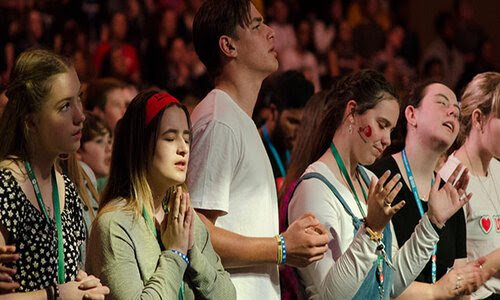
America experienced major changes in the spiritual life of its people in 2025, and the most important of them — the surge in church attendance being led by Gen Zers and Millennials — was also the least expected, according to the Texas-based Barna survey research firm.
Not only are young people leading the growing congregations on Sunday morning, but 2025 is the first time ever since Barna first began tracking such activities that older people are not the most frequently seen people sitting in the church pews, the group found.
“Millennials and Gen Z Christians are attending church more frequently than before and much more often than are older generations. The typical Gen Z churchgoer now attends 1.9 weekend per month, while Millennial churchgoers average 1.8 times, a steady upward shift since the lows seen during the pandemic,” Barna reported in a September 2025 analysis.

2 WEEKS LATER

2 WEEK LATER
What Happened in Venezuela’: Israeli ministers praise US capture of Maduro.

Israeli officials on Saturday welcomed the US operation that ended with the capture of Venezuelan President Nicolás Maduro, praising President Donald Trump for what they described as decisive action against a regime tied to drugs and terrorism.
Foreign Minister Gideon Sa’ar commended the operation, saying it was “led by President Trump, [who] acted as the leader of the free world.” Sa’ar said Israel stood “alongside the freedom-loving Venezuelan people, who have suffered under Maduro’s illegal tyranny,” and welcomed the removal of what he called “the dictator who led a network of drugs and terror.” He added that Israel hoped for the return of democracy in Venezuela and the establishment of friendly relations between the two countries.
“The people of Venezuela deserve to exercise their democratic rights,” Sa’ar said. “South America deserves a future free from the axis of terror and drugs.”
Deputy Foreign Minister Sharren Haskel echoed that message, stressing Israel’s alignment with Washington. “The United States is Israel’s strongest ally. We support America’s right to defend itself and enforce its laws,” she wrote on X. Haskel accused Maduro of leading “a terrorist regime, propped up by Iran,” and said Venezuela had been used “as a platform for Hezbollah’s drug trafficking, money-laundering and terror networks.”
From the opposition, leader Yair Lapid framed the events as a broader warning to Tehran. “The regime in Iran should pay close attention to what is happening in Venezuela,” Lapid wrote, as tensions between Washington and Iran continued on multiple fronts.
The US military action began in the early hours with airstrikes and culminated in the capture of Maduro and his wife, Cilia Flores, Trump said on Truth Social.
He added that both were flown out of Venezuela. Trump has accused Maduro of running a narco-terrorist state, a charge US officials say formed the basis for the operation and subsequent criminal proceedings.
Iran sharply criticized the move. The Iranian Foreign Ministry said the attack constituted “a clear violation of the fundamental principles of the UN Charter and international law,” warning that its implications threatened the international order. Israeli officials, however, portrayed the outcome as a turning point against what they see as an Iran-backed network operating far beyond the Middle East.
TruLight Ministries Daily Entertainment

TruLight TV :Is godly living outdated? & God’s Stunning Creations – THE BIG 5
Today on TruLight TV – Is godly living outdated? There are some messages pushed by believers that don’t align with the way God calls us to live. The lines between Christianity and culture are blurred in our society. Some of the confusion is coming from people we hold in high regard spiritually. While it’s good to have spiritual leaders, not all of them are operating by divine wisdom. Danger alert! Watch today’s video to learn how to spot false coaches and to listen for godly ones. and later a Nature Documentary – The series focuses on committed animal rights activists, who fight for the lives of their charges every day, in diverse protection projects and rescue centres along the South African Garden Route. The majestic “Big 5” (lions, elephants, buffalo, rhinos and leopards) belong to these programmes, as do those in danger of extinction, such as the penguins in the Atlantic and Indian Oceans, the lemurs and primates in Monkey-land, Meerkats & Co in the Tenikwa reception camp, as well as the famous great whites off the coast of Mossel Bay. Spectacular footage of how the helpers often have to work under great danger, taking care of animals both large and small and – wherever necessary – give them a new home. The point of this Nature Documentary is based on the Bible Verse in Psalm 91;1 – The Heavens Declare the Glory of God; The Skies Proclaim the Work of His Hands. Enjoy and thanks for watching.
Today on TruLight Radio XM
TruLight Radio XM 24/7
Program
GMT / UTC +2
Monday To Fridays
00:15 Words to Live By Testimonies
01.15 Science Scripture and Salvation
02.15 Ground Works
04.00 Gospel Concert of the Day
05.00 The Daren Streblow Comedy Show
5:55 It is Today devotional
6:00 Gaither Homecoming Morning Show
7:15 Discover the Word
8.15 Destined for Victory
8:55 Science Scripture and Salvation
9:00 Holy Spirit Hour – Normally Sermons
10:15 Hope of the Heart
11:15 Unshackled
11.45 Words to Live By
12:15 Truth for Life
13:15 Living on the Edge with Chip Ingram
14:15 Focus on the Family
15:00 Kids Hour
16:00 In Touch with Dr. Charles Stanley
16:30 Groundwork
17:15 Live in the Light
18:15 Renewing your Mind
19:00 Gaither Homecoming Show
20:15 Growing Hope
21:15 Adventures in Odyssey Radio Drama
21:45 Bible Reading
22:15 Nightsounds
23.00 Good Old Country Gospel / Rhema Gospel Express
VISIT THE WEBSITE
https://TruLightRadioXM.org.za
TruLight Ministry News
TruLight Ministries orders from God since 2012 . Teach Them , Comfort Them and Warn Them!

Doctrine of Demons – Teaching for the Christian , Discerning the spirits
Share this Feeding of Manna with your Friends and Family. just click on the Social Media icon and share !