Hosted by TruLight Ministries – The Place of Truth
SELECT YOUR READING LANGUAGE – BOTTOM LEFT = YOUR DAILY MANNA NOW AVAILABLE IN 103 LANGUAGES
Key Gospel Themes for 2026
Jeremiah 29:11: Trust God’s hopeful plans for your future, not striving to control everything.
Hope or Optimism ?
Optimism is “the tendency to expect the best possible outcome or to dwell on the most hopeful aspects of a situation.” Optimists usually feel that “good things” will happen in the future or that what they hope and dream for will happen. By nature, most people tend toward either optimism or pessimism, regardless of their relationship with God. Everyone’s glass is either “half full” or “half empty.” So, optimism is not necessarily the same as faith in God. It can be a natural personality trait that has nothing to do with faith.
Worldly optimism is not based on faith in God. Many unbelievers simply refuse to worry because life is more pleasant that way. “Don’t worry; be happy” is their motto. They may place their faith in any number of lesser gods, such as karma, denial, the “universe,” or intentional ignorance. This may work temporarily, but it is a misplaced optimism with no real foundation. Optimistic people find more enjoyment in life and are usually more pleasant to be around because they refuse to worry about things they cannot control. However, simply because a person appears optimistic does not mean that he has great faith in God or that her faith is appropriately placed.
Without realizing it, some Christians also place their faith in a “lesser god” because they have a misunderstanding of faith. They may stubbornly cling to the belief that they will receive whatever they want simply because they believe it hard enough. They take care to appear outwardly optimistic because they fear that “negative confessions” might cancel out their prayer requests. Or they simply cling to the notion that there’s power in positive thinking. This is false optimism because it is not based on the sovereign nature of God but on their own ability to believe hard enough to get what they want. This can lead to confusion and disillusionment with God when their requests remain unfulfilled.
Biblical optimism is the result of faith in the character of God. The Bible refers to this as “hope.” Romans 15:13 says, “May the God of hope fill you with all joy and peace as you trust in him, so that you may overflow with hope by the power of the Holy Spirit.” When we hope in God, we put our trust in His sovereign plan above what our circumstances tell us. Romans 8:23–25 explains it this way: “But hope that is seen is no hope at all. Who hopes for what they already have? But if we hope for what we do not yet have, we wait for it patiently.” Paul is speaking of our future reward and the things that “God has prepared for those who love him” (1 Corinthians 2:9).
Regardless of what may happen in this life, we know that God sees, cares, and will “wipe every tear from our eyes” when we are forever with Him (Revelation 21:4). That confidence can give us an optimistic outlook, even in difficult circumstances. Biblical optimism does not place so much emphasis on earthly events. It can accept difficult circumstances because it believes that “all things work together for good to those who love God and are called according to His purpose” (Romans 8:28). Godly hope looks beyond what we understand to view life from God’s perspective.
God designed us to live with hope. Psalm 43:5 says, “Why, my soul, are you downcast? Why so disturbed within me? Put your hope in God, for I will yet praise him, my Savior and my God.” Optimism is a choice. When we choose to trust God for everything, we can rest in His promises to take care of us the way He sees fit (Philippians 4:19; Luke 12:30–31). We can “cast our care upon him” (1 Peter 5:7), “let our requests be made known unto God” (Philippians 4:6), and accept His “peace that passes all understanding” (Philippians 4:7). Knowing that we have a loving heavenly Father who desires to care for us and provide for us should give every child of God a reason for true optimism (Matthew 6:8; Luke 12:29–31).
Bible Verse and Prayer for Today
Be imitators of God as dearly loved children and live a life of love, just as Christ loved us and gave himself up for us as a fragrant offering and sacrifice to God.
—Ephesians 5:1-2
Imitation is the most sincere form of flattery. So, if we are to sincerely flatter* God, we must choose to have the righteous character, gracious compassion, and faithful love and justice of God in our daily actions. Such imitation may be the most costly form of flattery as well. You see, love for God is never something that occurs just in our minds or our hearts. Love is something we do for another — love demonstrates itself by its actions. John said that we must love in both our deeds and our words (1 John 3:16-18). Love means to give ourselves up — what we want, our rights, our desires — to honor God and serve others (1 John 4:7-10; Philippians 2:1-10). This sacrificial love can change a marriage, a family, a friendship, a fellowship of God’s people, and ultimately the world! as dearly loved children, let’s live a life of love, just as Christ loved us and gave himself up for us!
Prayer
Abba Father, I will never fully understand how you could love me so much that you would allow your son to die for me, as the sacrifice for my sins against you. Please help me love others sacrificially. I know the power to do this is not within me, so please pour your love into my heart through your Holy Spirit (Romans 5:5) so that I can share your love with others. Through Jesus, my brother, my sacrifice, my Savior and my Lord, I pray. Amen and Amen
Bible Teaching of the Day
Faith and hope are distinct yet related. That there is a difference between faith and hope is evident in 1 Corinthians 13:13, “Now these three remain: faith, hope and love. But the greatest of these is love.” Two of the three greatest gifts are faith and hope, listed separately. That faith and hope are related concepts is seen in Hebrews 11:1, “Faith is confidence in what we hope for.”
Faith is a complete trust or confidence in something. Faith involves intellectual assent to a set of facts and trust in those facts. For example, we have faith in Jesus Christ. This means we completely trust Jesus for our eternal destiny. We give intellectual assent to the facts of His substitutionary death and bodily resurrection, and we then trust in His death and resurrection for our salvation.
Biblical hope is built on faith. Hope is the earnest anticipation that comes with believing something good. Hope is a confident expectation that naturally stems from faith. Hope is a peaceful assurance that something that hasn’t happened yet will indeed happen. Hope must involve something that is as yet unseen: “Hope that is seen is no hope at all. Who hopes for what they already have?” (Romans 8:24). Jesus’ return is our “blessed hope” (Titus 2:13)—we can’t see Him yet, but we know He’s coming, and we anticipate that event with joy.
Jesus said He is coming again (John 14:3). By faith, we trust Jesus’ words, and that leads to hope that we will one day be with Him forever. Jesus was resurrected from the dead, “the firstfruits of those who have fallen asleep” (1 Corinthians 15:20). That is the basis for our faith. Then we have Jesus’ promise: “Because I live, you also will live” (John 14:19). That is the basis of our hope.
The relationship between faith and hope can be illustrated in the joy a child feels when his father tells him they are going to an amusement park tomorrow. The child believes that he will go to the amusement park, based on his father’s word—that is faith. At the same time, that belief within the child kindles an irrepressible joy—that is hope. The child’s natural trust in his father’s promise is the faith; the child’s squeals of delight and jumping in place are the expressions of the hope.
Faith and hope are complementary. Faith is grounded in the reality of the past; hope is looking to the reality of the future. Without faith, there is no hope, and without hope there is no true faith. Christians are people of faith and hope. We have “the hope of eternal life, which God, who does not lie, promised before the beginning of time” (Titus 1:2).
Today’s Devotional
No one likes waiting. It feels good to get what we want. But when our expectations are delayed for a long time, we can experience disappointment, disillusionment, and loss of hope. In some cases, prolonged waiting for what we eagerly desire can become such an affliction to us that it differs little from a lingering sickness. This scenario is the exact meaning of Solomon’s words “hope deferred makes the heart sick.”
The term deferred in the passage means “to put off” or “drag out,” as in a long, drawn-out process. Hope deferred can look like many things: a prayer of salvation for a loved one that continues unanswered year after year, an agonizing job search filled with endless interviews and rejections, a long-term battle with cancer, or a heartbreaking string of miscarriages. As we eagerly hope for something important, and it keeps being postponed, the longing we feel can make our heart sick.
The word heart in the passage embodies not only the mental or emotional core but the whole inward person. If something “makes the heart sick,” it causes despair and affliction. The Good News Translation renders the verse like this: “When hope is crushed, the heart is crushed.” Hope deferred can lead to depression, anxiety, and actual physical sickness. When we wait for a good thing for so long that the desire and expectation turns to hopelessness, we can become spiritually dried up and vulnerable to the enemy’s attacks.
The second part of Proverbs 13:12 gives the antithesis of hope deferred: “But a longing fulfilled is a tree of life.” The tree of life represents the renewal of life. When our hopes and desires are fulfilled, we are refreshed. When our prayers are answered, we are encouraged. When we obtain the good thing that we desire, we undergo a reviving of the soul. Solomon reiterates the sentiment in Proverbs 13:19: “A longing fulfilled is sweet to the soul.”
Dashed hopes sicken the heart, and the higher the expectations, the greater the frustration. While getting what we desire can be an excellent thing, we must not allow the pursuit of fulfillment to become a temptation to sin. Waiting is an opportunity to trust God and allow Him to work in our hearts and strengthen our character: “But if we look forward to something we don’t yet have, we must wait patiently and confidently” (Romans 8:25, NLT; see also Romans 5:4). We ought to see these long stretches as opportunities to turn to God and depend on Him in our weakness (Psalm 62:1, 5; 2 Corinthians 12:9–10). Our unfulfilled desires and deferred hopes can lead us to rich encounters with our Savior: “The LORD is good to those whose hope is in him, to the one who seeks him; it is good to wait quietly for the salvation of the LORD” (Lamentations 3:25–26; see also Romans 5:5). The Lord alone is the true fulfillment of our longings.
When hope deferred makes your heart sick, look to Jesus Christ: “And so, Lord, where do I put my hope? My only hope is in you” (Psalm 39:7, NLT). When we place our hope in Christ alone, we won’t be disappointed, for He is “a strong and trustworthy anchor for our souls” (Hebrews 6:19, NLT).
Bible Prophecy, Signs of the Times and Gog and Magog Updates with Articles in the News
Israel’s Military Is Planning For Converging Threats On All Fronts
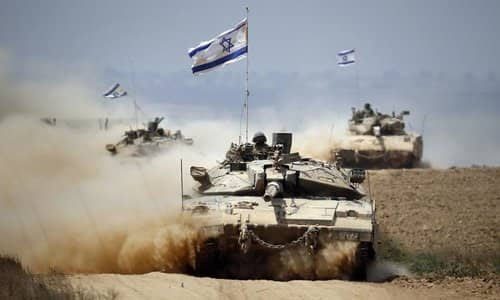
Israel is quietly but unmistakably bracing for something bigger. Not a single-front conflict. Not a limited campaign. But the possibility of a simultaneous, multi-theater war that could stretch from Lebanon to Iran, from Gaza to the West Bank–and potentially beyond. Recent reports that the Israel Defense Forces (IDF) have been ordered to prepare for war on all fronts are not alarmist leaks. They are signals. And they suggest the region may be approaching one of its most dangerous inflection points in decades.
According to Israeli media, the directive comes as part of a four-year strategic plan led by IDF Chief of Staff Eyal Zamir. This is not a reactionary posture. It is a long-range recalibration–one that assumes Israel may soon face coordinated pressure from Iran directly, Hezbollah in Lebanon, Hamas remnants in Gaza, and rising instability in the West Bank. Israeli planners are no longer betting on deterrence alone. They are planning for convergence.
At the center of these preparations is Iran. Tehran is facing widespread unrest driven by hyperinflation, economic collapse, and deep public anger. What began as cost-of-living protests has spread into something more dangerous for the regime–open political defiance. Israeli officials reportedly fear that Iran’s leadership, under siege at home, may choose confrontation abroad as a way to consolidate power and redirect internal rage outward. History offers many examples of regimes doing exactly that.
That concern helps explain reports that one Israeli contingency includes an “explosive operation” targeting Tehran itself. Publicly, Israel has avoided official statements about the protests, wary of triggering Iranian retaliation. But the silence is thin. Israel’s Mossad has openly expressed support for demonstrators online and claims to have operatives embedded among them. Meanwhile, U.S. President Donald Trump has raised the stakes further, threatening military action should Iran intensify its crackdown or accelerate its ballistic missile program.
To Israel’s north, the danger is more immediate and more concrete. Hezbollah remains heavily armed, deeply entrenched, and openly hostile. Despite international resolutions demanding its disarmament, the group has continued to amass a vast arsenal of rockets and precision-guided missiles aimed at Israel’s population centers. Lebanon’s government–paralyzed by political dysfunction–has proven incapable of controlling Hezbollah or preventing it from dragging the country toward war.
Israel has already begun shaping the battlefield. Recent strikes on Hezbollah targets in southern Lebanon, along with attacks on Hamas infrastructure, signal a shift from reactive defense to preemptive action. Israeli planners increasingly view these groups not as separate threats, but as interconnected limbs of Iran’s regional strategy.
One of Israel’s most significant advantages in any coming conflict may be technological. The Iron Beam system–Israel’s emerging laser-based air defense–represents a quiet revolution in warfare. Capable of intercepting rockets, mortars, and drones at the speed of light, Iron Beam promises to neutralize one of Israel’s greatest vulnerabilities: being overwhelmed by sheer volume. In a future war defined by mass rocket fire, this system could prove decisive.
But perhaps the most overlooked–and most dangerous–front is the West Bank. Unlike Gaza, which is geographically isolated and governed by a single militant authority, the West Bank is a densely populated, politically fragmented, and operationally complex environment. Any large-scale Israeli operation there would unfold amid Israeli settlements, Palestinian cities, refugee camps, and overlapping security forces. Militants are embedded within civilian populations, urban terrain is tighter and more vertical, and intelligence challenges are far greater.
Israeli security forces recently foiled an Iranian-backed plot to smuggle large quantities of advanced, “balance-altering” weapons into the West Bank for use in attacks against Israel, underscoring Tehran’s effort to open a new eastern terror front in the area.
A West Bank conflict would not be a contained military campaign. It would risk igniting widespread unrest, triggering lone-wolf attacks, and stretching Israeli forces thin while they are simultaneously engaged elsewhere. Unlike Gaza, where Israel can largely seal borders and control escalation, the West Bank sits at the heart of Israel’s own security and social fabric. Operations there would be slower, messier, and far more politically explosive.
Israel’s preparations reportedly extend even beyond Earth’s surface. Plans to develop capabilities to target satellites and conduct space-based operations reflect how seriously military leaders view the next war. This would not be a conflict confined to borders or battlefields–it would span cyberspace, airspace, and orbit.
Critics warn that preparing for war on all fronts risks making such a war inevitable. But Israeli strategists see the opposite danger. In a region where weakness invites attack, failing to prepare invites catastrophe.
For the average American, this may feel distant. But it shouldn’t. A regional war involving Israel, Iran, and Hezbollah would reverberate through global energy markets, disrupt shipping routes, and pull the United States deeper into Middle Eastern conflict–whether Washington wants it or not.
Israel is not preparing for war because it wants one. It is preparing because the margin for miscalculation is shrinking. In a region where weakness invites attack, readiness becomes survival. The question is no longer whether tensions will rise–but whether diplomacy, deterrence, or disaster will arrive first.
The Middle East is holding its breath. Israel is preparing not to.
After The Silence: Why Venezuelan Christians See Hope After Maduro
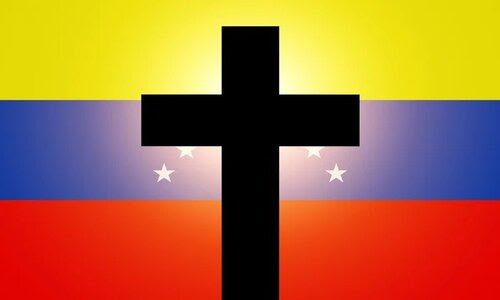
For years, Venezuelan Christians learned how to worship under watchful eyes. Sermons were measured. Humanitarian aid was rationed by permission. Pastors prayed boldly in private and cautiously in public. Under Nicolás Maduro, faith was not outlawed–but it was controlled, monitored, and punished when it refused to kneel. Now, with Maduro captured and removed from power, something unfamiliar is stirring across Venezuela’s churches: hope that religious freedom might finally be more than a whispered prayer.
The persecution of the church in Venezuela was never as openly brutal as in Cuba or Nicaragua, but it was methodical, strategic, and deeply corrosive. Hugo Chávez laid the groundwork by fusing socialism with messianic political language, attempting to replace the moral authority of the church with loyalty to the state.
While he initially courted evangelicals, his embrace quickly soured. National expropriations stripped church-run schools and charities of resources. Government loyalists infiltrated congregations. Chávez’s alignment with Cuba, open hostility toward Israel, and flirtations with Holocaust denial shocked Christian leaders who had once hoped for cooperation.
Maduro perfected this system of pressure. When intelligence surveys revealed that nearly one-third of Venezuelans identified as evangelical–far higher than most official estimates–the regime panicked. That number represented not just faith, but influence. Churches were one of the last functioning civil society institutions in a collapsing nation. At first, Maduro attempted charm: symbolic gestures, Bible distributions, public praise for “patriotic” pastors. But it was a trap. Those who accepted state favor were expected to repay it with silence.
Those who didn’t paid a price.
During the COVID-19 pandemic, the mask fell completely. As hunger spread and hospitals collapsed, churches stepped in with food programs, medicine distribution, and pastoral care. Instead of welcoming help, the regime restricted it. Permits were denied. Aid shipments were blocked. Pastors were warned not to distribute food without state approval. Maduro sought to maintain a monopoly on compassion–presenting the government as the sole provider of relief while portraying independent Christian charity as subversive. Feeding the hungry became a political act.
The legal machinery of repression followed. In March 2021, new “anti-terrorism” regulations forced NGOs and faith-based organizations to submit confidential records: donor identities, beneficiary names, internal plans. In practice, this transformed churches into open books for intelligence services. Many pastors understood what this meant–surveillance, intimidation, and eventual punishment. Some shut down ministries rather than expose vulnerable believers to government scrutiny.
Harassment intensified. According to the U.S. Commission on International Religious Freedom, Venezuelan authorities routinely summoned pastors for questioning, threatened church leaders anonymously, and publicly attacked clergy who criticized corruption or human rights abuses. Religious radio stations faced pressure. Church-run media outlets were monitored. In one chilling example, journalist Carlos José Correa Barros of the Christian radio network Fe y Alegría was detained by masked military personnel in 2025 and disappeared for nine days before his release. The message was unmistakable: even Christian journalism was not safe.
Bureaucracy became another weapon. Religious groups were required to register with the Directorate of Justice and Religion, but approval could take years–or never arrive at all–unless loyalty to the regime was demonstrated. According to USCIRF, some churches waited nearly a decade for recognition. Without registration, churches could not legally operate, own property, or receive aid. Faith was reduced to paperwork, and paperwork was reduced to obedience.
Maduro also wielded Venezuela’s so-called “Hate Law,” a dystopian tool worthy of Orwell’s 1984. Pastors who preached against corruption or spoke about moral accountability risked being accused of inciting hatred. Biblical truth itself became suspect. Corruption could be celebrated. Tyranny could be praised. But repentance was dangerous.
And yet, the church survived.
South African leader demands release of President Maduro to Trump and asks the Security Council to take decisive action
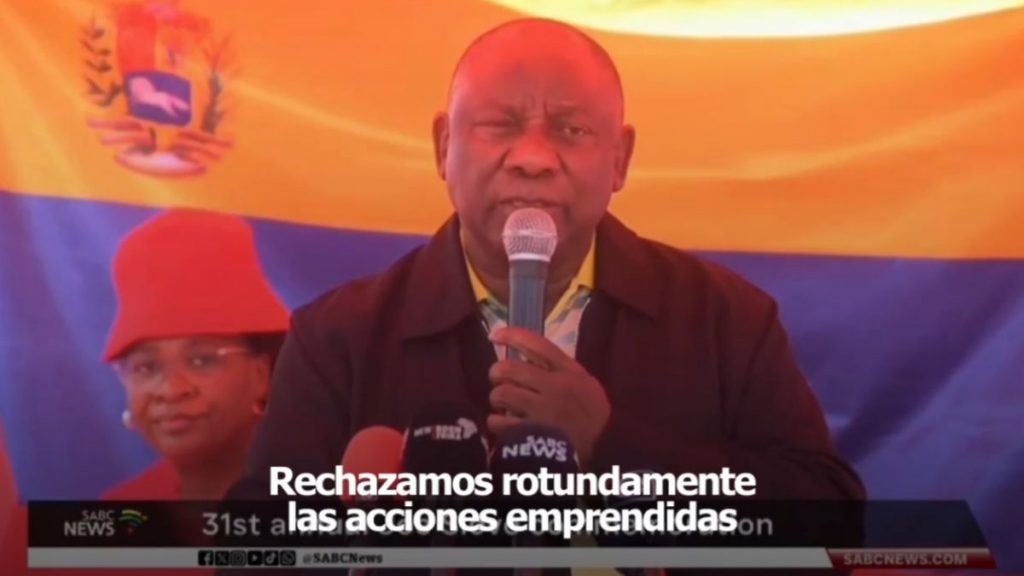
The President of South Africa, Cyril Ramaphosa, demanded that the United States (USA) release the constitutional president of the Bolivarian Republic of Venezuela, Nicolás Maduro, and the first lady Cilia Flores, as well as the cessation of actions and threats that violate the sovereignty and territorial integrity of the Latin American nation.
“In our commitment to international law and the Charter of the United Nations (…) we categorically reject the actions taken by the United States and we stand in solidarity with the people of Venezuela,” said the South African president, who added: “We demand the release of President Maduro and his wife.”
Ramaphosa also reiterated the call to the Security Council of the United Nations (UN) “to take decisive measures in order to fulfill its mandate, promote peace and security and defend the rule of law.”
“We are grateful for South Africa‘s support in defending international legality and for the actions taken in the United Nations Security Council to stop this aggression,” Venezuelan Foreign Minister Yván Gil said on his Telegram channel.
Ai and 1,000 Tasks In A Day: Why Agile Robots Will Reshape Work And War

For most of modern history, robots have been obedient but dumb. They could repeat a task flawlessly, but only if the world never changed. Move an object a few inches. Swap a tool. Introduce clutter. The robot froze. Humans adapted. That gap is why the robot revolution has always felt one breakthrough away — always coming, never arriving.
That gap may finally be closing.
In a quiet but stunning breakthrough, researchers recently demonstrated a robot that learned 1,000 physical, real-world tasks in a single day, using just one human demonstration per task. Not simulations. Not virtual environments. Real objects, real physics, real mistakes. Folding clothes. Placing items. Gripping unfamiliar objects. Tasks that once took weeks or months of training were absorbed in hours.
It wasn’t flashy. But it may be one of the most important moments in modern robotics.
Why this is different from every robot story before it
Most robotics breakthroughs improve precision or speed. This one improves learning — the most human skill of all.
Until now, robots were bad students. They needed endless repetition and massive datasets. Engineers had to anticipate every edge case. That’s why robots lived in factories and nowhere else. The real world is messy. Humans are not.
This new system flips that model. Instead of memorizing movements, the robot learns how tasks work. It breaks actions into phases, recalls relevant experience from past tasks, and applies it to new situations. In other words, it doesn’t just remember — it reasons physically.
That’s the shift.
Once machines can generalize, they stop being tools and start becoming participants.
The moment robots leave the lab
Agile learning changes robotics economics overnight. Training becomes faster. Programming becomes simpler. Hardware suddenly does more with less.
That’s how robots escape controlled environments and move into warehouses, hospitals, construction sites, farms, retail stockrooms, and eventually homes. Not as specialized machines, but as adaptable workers.
The first impact won’t be dramatic. It will be quiet. A robot that used to need weeks of setup now takes a day. One technician replaces three. A night shift becomes automated. A warehouse adds machines instead of people.
Which jobs feel it first
Agile robots don’t eliminate professions — they eliminate tasks. And many jobs are mostly tasks.
Warehouse picking. Inventory handling. Package sorting. Food preparation. Cleaning. Assembly. These roles are already under pressure, but adaptability accelerates the trend.
The surprise comes next. Once robots can learn physical skills quickly, they creep into areas once considered safe: construction assistance, hospital logistics, equipment maintenance, pharmacy prep, even parts of elder care. Humans remain essential — but fewer are needed.
The job market won’t collapse. It will thin.
And thinning is harder to see until it’s already happened.
The military is watching closely
Every technology that reshapes labor eventually reshapes warfare. Robotics is no exception.
Today’s military robots are rigid. They fly preplanned routes. Roll on defined paths. Follow strict rules. That limits their usefulness — and keeps humans in the loop.
Agile learning changes that balance.
Over the next decade, militaries will field machines that learn terrain, adapt tactics, coordinate in swarms, and respond faster than human decision cycles allow. Not humanoid soldiers, but autonomous systems that move, observe, and act with growing independence.
This isn’t about killer robots marching down streets. It’s about speed. Learning speed. Adaptation speed. Decision speed.
And in war, speed is power.
Magog / Iran threatens preemptive strikes amid Israeli, US support for protests
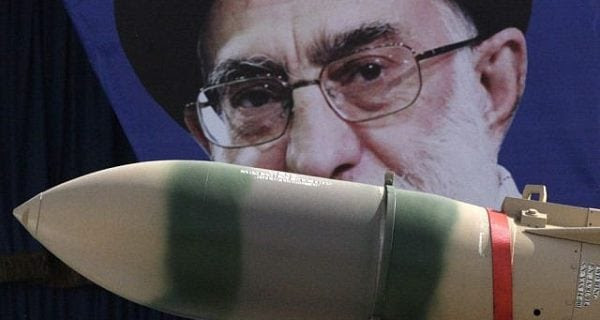
The Iranian government warned Tuesday the Islamic Republic could carry out preemptive strikes if the regime feels threatened, as internal unrest continues to spread across the country.
In a statement issued Tuesday afternoon, Iran’s newly formed Supreme National Defense Council hinted that the regime would not tolerate “hostile behavior” from foreign powers that challenge Iran’s “independence and territorial integrity.”
“Iran’s security, independence, and territorial integrity are red lines that must not be crossed. Any aggression or continued hostile behavior will be met with a decisive and resolute response.”
The council added that Iran’s military may carry out preemptive actions if it believes there are credible “threats” to the regime.
“Within the framework of legitimate self-defense, Iran does not view itself as limited to responding only after an act has occurred. It considers tangible indicators of threats to be part of the security equation.”
The statement, which followed comments by President Donald Trump and Prime Minister Benjamin Netanyahu in support of dissident protesters in Iran, warned that “threatening language” could be construed as “hostile behavior” toward Iran.
“An escalation in threatening language and interventionist conduct that goes beyond verbal posturing may be interpreted as hostile behavior.”
On Monday, Netanyahu warned that Iran would face “severe” consequences in the event of an attack on Israel, while expressing support for anti-regime protesters.
A day earlier, President Trump told reporters on Air Force One that his administration is closely monitoring developments in Iran, adding that the US would strike the regime if protesters are killed.
Over the past nine days, at least 29 people have been killed, with dozens injured and more than 1,200 arrested during demonstrations across 257 locations in 88 cities in 27 of Iran’s 31 provinces.
TruLight Ministries Daily Entertainment

TruLight TV : Music and Ministry: Joseph Habedank’s Journey of Redemption
Discover the one individual in the Bible whom Jesus referred to as “great.” Tune in to today’s video to explore the heart attitude that elevated John the Baptist to this status and learn how we can embody that same greatness. In today’s concert, experience the powerful music of two-time GRAMMY-nominee and three-time DOVE Award-winner Joseph Habedank as he presents I’m Free: Songs That Wrote My Story. His heartfelt performances of tracks like “Why Me Lord,” “Child, You’re Forgiven,” and “He Came Through” reflect his church roots and celebrate his transformative journey from addiction to redemption.
Today on TruLight Radio XM
TruLight Radio XM 24/7
Program
GMT / UTC +2
Monday To Fridays
00:15 Words to Live By Testimonies
01.15 Science Scripture and Salvation
02.15 Ground Works
04.00 Gospel Concert of the Day
05.00 The Daren Streblow Comedy Show
5:55 It is Today devotional
6:00 Gaither Homecoming Morning Show
7:15 Discover the Word
8.15 Destined for Victory
8:55 Science Scripture and Salvation
9:00 Holy Spirit Hour – Normally Sermons
10:15 Hope of the Heart
11:15 Unshackled
11.45 Words to Live By
12:15 Truth for Life
13:15 Living on the Edge with Chip Ingram
14:15 Focus on the Family
15:00 Kids Hour
16:00 In Touch with Dr. Charles Stanley
16:30 Groundwork
17:15 Live in the Light
18:15 Renewing your Mind
19:00 Gaither Homecoming Show
20:15 Growing Hope
21:15 Adventures in Odyssey Radio Drama
21:45 Bible Reading
22:15 Nightsounds
23.00 Good Old Country Gospel / Rhema Gospel Express
VISIT THE WEBSITE
https://TruLightRadioXM.org.za
TruLight Ministry News
TruLight Ministries orders from God since 2012 . Teach Them , Comfort Them and Warn Them!
Doctrine of Demons – Teaching for the Christian , Discerning the spirits
Share this Feeding of Manna with your Friends and Family. just click on the Social Media icon and share !