Hosted by TruLight Ministries – The Place of Truth
SELECT YOUR READING LANGUAGE – BOTTOM LEFT = YOUR DAILY MANNA NOW AVAILABLE IN 103 LANGUAGES
a New Study : for the Next 13 Daily Manna Days
The Symbols of the Word of God
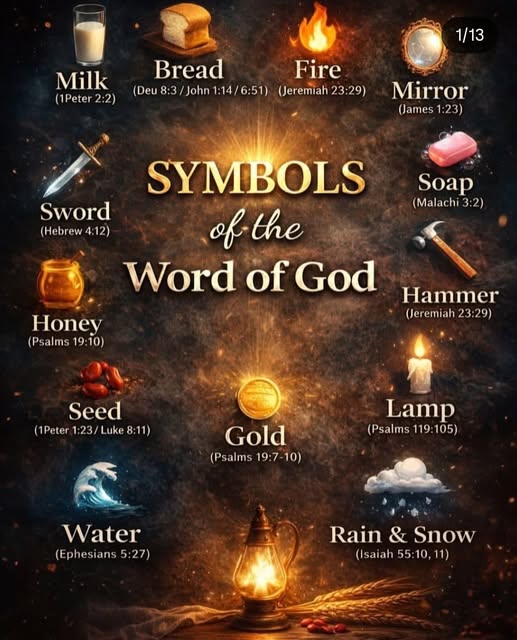
Symbols in the Word of God
The language of the Bible is rich with metaphor. The biblical writers used familiar, everyday objects to symbolize spiritual truth. Symbols are quite common in the poetic and prophetic portions of the Bible. By its very nature, poetry relies heavily on figurative language; when Solomon calls his bride “a lily among thorns” (Song of Solomon 2:2), he is using symbols to declare the desirability and uniqueness of the Shulamite. Prophecy, too, contains much figurative imagery. Isaiah often used trees and forests as symbols of strength (e.g., Isaiah 10:18-19; 32:19). Daniel saw “a goat with a prominent horn between his eyes” who “came from the west . . . without touching the ground” (Daniel 8:5), and we interpret this as a kingdom (Greece) and its king (Alexander the Great) who speedily conquered the world.
Jesus’ teaching was full of symbolism. He presented Himself as a Shepherd, a Sower, a Bridegroom, a Door, a Cornerstone, a Vine, Light, Bread, and Water. He likened the kingdom of heaven to a wedding feast, a seed, a tree, a field, a net, a pearl, and yeast. There are dozens, if not hundreds, of other symbols in the Bible.
Note that a literal interpretation of the Bible allows for figurative language. Here’s a simple rule: if the literal meaning of a passage leads to obvious absurdity, but a figurative meaning yields clarity, then the passage is probably using symbols. For example, in Exodus 19:4, God tells Israel, “I carried you on eagles’ wings.” A literal reading of this statement would lead to absurdity—God did not use real eagles to airlift His people out of Egypt. The statement is obviously symbolic; God is emphasizing the speed and strength with which He delivered Israel. This leads to another rule of biblical interpretation: a symbol will have a non-symbolic meaning. In other words, there is something real (a real person, a real historical event, a real trait) behind every figure of speech.
Here are a few symbols used in the Bible:
Old Testament
Walk with God: To “walk” with someone is to live in fellowship and harmony with him. Since God can only live in a way that reflects His holy character, to “walk with God” is to live according the path He has laid out, to obey Him.
Genesis 5:22; 6:9; Deuteronomy 10:12; Joshua 22:5; 1 Kings 8:23; Micah 6:8
Dust, stars, sand: The Bible often uses these metaphors to represent the number of descendants God promised to Abraham. This would include Abraham’s physical descendants (Jews and Arabs) as well as Abraham’s spiritual progeny (those who live by faith, Galatians 3:7).
Genesis 13:16; 15:5; 26:4; 28:14; 32:12; Exodus 32:13; Isaiah 48:19; Jeremiah 33:22; Hebrews 11:12
Flowing with milk and honey: God often referred to Canaan as “a land flowing with milk and honey.” An abundance of milk and honey was symbolic of lush, fertile farmland, plenty of water, and rich grass for dairy animals and flowers for bees. Milk and honey were two of the most prized foods in Old Testament times, and a land “flowing” with them would be very desirable.
Exodus 3:8; 17; 13:5; 33:3; Leviticus 20:24; Numbers 13:27; 14:8; 16:13, 14; Deuteronomy 6:3; 11:9; 26:9, 15; 27:3; 31:20; Josh. 5:6; Song of Solomon 4:11; 5:1; Isaiah 7:22; Jeremiah 11:5, 32:22; Ezekiel 20:6, 15
Circumcised hearts: Physical circumcision was the sign of the covenant between God and His chosen people, the Jews. It was, of course, an external alteration. What God really wanted, though, was an internal alteration—a spiritual circumcision, as it were. To have one’s heart circumcised was to fully identify with Him. It is not enough to obey His Word on the outside; we must be characterized by His Word on the inside.
Deuteronomy 10:16; 30:6; Jeremiah 4:4
Cedars of Lebanon: In Israel, large trees were hard to come by and very valuable. The cedars in Lebanon grow up to 130 feet tall with trunks up to eight feet in diameter. They were valued for their resin, which Egyptians used in mummification, and wood, which was used to build ships. The cedars are used symbolically in the Bible to represent strength and stature or pride.
Judges 9:15; 2 Kings 19:23; Psalm 29:5; 72:16; 104:16; Song of Solomon 5:15; Isaiah 2:13; 14:8; 37:24; Hosea 14:5-6; Zechariah 11:1
Hearts of stone or flesh: A heart of stone is emblematic of a spiritually dead heart that cannot respond to God’s grace. God promises to remove our heart of stone and replace it with a living, loving heart that can follow Him.
Ezekiel 11:19; 36:26
Ephraim and Judah: In the divided kingdom, the ten tribes in the north were many times collectively called “Ephraim” after the most prominent tribe living there. The tribes in the south were often referred to as “Judah” after the most prominent southern tribe. This particular figure of speech, in which a part is substituted for the whole, is called metonymy.
Isaiah 7:9, 17; 9:21
New Testament
Ramah and Rachel: Ramah was a small town about five miles from Jerusalem. Rachel was one of Jacob’s wives buried near Bethlehem (Genesis 35:19). Ramah mourning and Rachel weeping in the book of Jeremiah are symbols of the sadness experienced when Judah was conquered by Babylon and sent into exile. Matthew quotes Jeremiah and furthers the metaphor, applying it to Herod’s massacre of the babies in Bethlehem. Ramah becomes a symbol of Bethlehem, and Rachel becomes a symbol of the grieving mothers there.
Jeremiah 31:15; Matthew 2:18
Shaking the dust off one’s feet: In New Testament times, a devout Jew would shake the dust off his feet when he left a Gentile city to symbolically cleanse himself of ungodly practices. Jesus told His disciples to do the same if a Jewish household or village rejected the message of the Messiah.
Matthew 10:14; Mark 6:11; Luke 9:5
Whitewashed tombs: A whitewashed tomb is a stone crypt that is clean and well kept on the outside but filled with bones and death. Jesus used this image as a symbol to represent hypocrites—religious people who do not follow God in their hearts.
Matthew 23:27; Luke 11:44
Capstone: A capstone is one of the top stones on a wall. Metaphorically, it is the finishing touch or the crowning achievement. Jesus used this symbol of Himself.
Mark 12:10; 1 Peter 2:6-7
Slave/servant of Christ: The New Testament writers use the idea of being a slave or servant of Christ to symbolize our responsibility to do the will of Christ and not be self-serving. It is sometimes juxtaposed with its alternative of being a slave to sin; a believer is set free from sin and is now led by the Spirit. An indentured servant, after fulfilling his obligation to his master, could volunteer to stay and serve his master for life—a picture of how we serve Christ willingly.
Romans 1:1; Galatians 1:10; Colossians 1:7; 1 Timothy 4:6; Titus 1:1; James 1:1; 2 Peter 1:1; Jude 1:1; Revelation 1:1
Animals
Serpent: Snakes are mentioned many times in the Bible, and never in a positive light. In Genesis and Revelation, the serpent symbolizes Satan. The serpent of Eden is described as crafty—an idea Jesus reiterates in Matthew 10. In Hebrew, the noun for “serpent” is related to the verb for “divining and fortune-telling.”
Genesis 3:1, 14; 49:17; Numbers 21:6; Deuteronomy 32:33; Job 26:13; Psalm 58:4; 91:13; 140:3; Proverbs 23:32; 30:19; Isaiah 14:29; 65:25; Matthew 10:16; 23:33; Luke 10:19; Revelation 12:9, 14, 15; 20:2
Lion: Lions in the Bible can represent power. A lion devours prey and lies down without fear. The Bible compares God (Hosea 5:14), Jesus (Revelation 5:5), and even Satan (1 Peter 5:8) to a lion.
Genesis 49:9; Numbers 23:24; 24:9; Deuteronomy 33:20, 22; 1 Chronicles 12:8; Job 4:10, 11; 10:16; 28:8; 38:39; Psalm 10:9; 91:13; 104:21; Proverbs 19:12; Ecclesiastes 9:4; Isaiah 5:29; 11:6, 7; Jeremiah 2:15, 30; 4:7; 12:8; Ezekiel 1:10; 19:2, 3; 19:6; Daniel 7:4; 2 Timothy 4:17; Revelation 4:7; 9:17; 10:3
Dog: Dogs in Bible times were not cherished family pets. They were mongrels who ran wild and scavenged. Jews often referred to Gentiles as “dogs”—not a complimentary epithet. Jesus’ interaction with the Syro-Phoenician woman in Matthew 15 shows how He ministered to the “dogs” and the children, both.
Exodus 11:7; Deuteronomy 23:18; 1 Samuel 17:43; 24:14; 2 Samuel 16:9; Job 30:1; Psalm 22:20, 16; 59:6; 68:23; Proverbs 26:11; 26:17; Ecclesiastes 9:4; Isaiah 56:11; Jeremiah 15:3; Matthew 7:6; 15:27; Philippians 3:2; Revelation 22:15
Sheep: Sheep are herd animals who are amazingly dependent on a shepherd for their well-being. And they are the animal most used by God to symbolize His followers. Jesus is the Good Shepherd, and we are the sheep who recognize His voice, follow Him, and rely on Him for our safety and provision.
Numbers 27:17; 1 Kings 22:17; 2 Chronicles 18:16; Psalm 23:1; 44:11, 22; 49:14; 74:1; 78:52; 95:7; 119:176; Isaiah 53:6, 7; Jeremiah 23:1; 50:6; Ezekiel 34:11, 12; 34:17; Matthew 9:36; 10:6; 26:31; John 10:11, 16, 26
We interpret the Bible literally, but this this does not mean we ignore symbols and metaphorical language. God’s written communication to the world is a richly textured literary masterpiece and makes full use of the tools of language, including symbolism, metaphor, simile, and motif.

Bible Verse and Prayer for Today
O Lord, you are my God; I will exalt you and praise your name, for in perfect faithfulness you have done marvelous things, things planned long ago.
—Isaiah 25:1
God’s actions are not reactions to current situations, but part of his long-term plan to bring redemption. Yes, he has done marvelous things, both in history and also in our personal histories. God transformed the vile intentions of a mob urged on by evil men and made it into the atoning sacrifice for our sins to display his love, mercy, and grace (Acts 2:22-24; 1 John 2:1-2). He changed the hearts of people who cried “Crucify him!” into people who believed in Jesus, repented of their evil, and were baptized, in faith, at Pentecost (Acts 2:36-41). He turned the ugliness of the cross into an opportunity to fulfill the prophets and redeem us through the resurrection of Jesus from the dead. O Lord, you are my God; I will exalt you and praise your name, for in perfect faithfulness you have done marvelous things, things planned long ago. We join Isaiah to say in reverent admiration: “O Lord, you are my God; I will exalt you and praise your name, for in perfect faithfulness you have done marvelous things, things planned long ago.”
Prayer
Holy God, you surprise me with new wonders and new things daily. Yet deep in my heart, dear Father, I know they are not new to you. Thank you for not making life boring or predictable, so I might thirst after you, the only true and living God, forever fresh, new, exciting, and marvelous. In the name of my Savior, Jesus, I pray. Amen and Amen
Bible Teaching of the Day
The Land of Milk and Honey
The land of Canaan in the Bible refers to the ancient geographical area God promised to give to Abraham and his descendants. It is not merely the land where the Israelites would live, but the sworn inheritance of God’s chosen people: “The whole land of Canaan, where you now reside as a foreigner, I will give as an everlasting possession to you and your descendants after you; and I will be their God” (Genesis 17:8; see also Exodus 6:4; Leviticus 25:38; Deuteronomy 32:49; 1 Chronicles 16:18; Psalm 105:11).
Where is Canaan now? The boundaries of the ancient land of Canaan included territory on the eastern shore of the Mediterranean Sea west of the Jordan River, which today encompasses modern Lebanon, portions of southern Syria, and Israel.
Noah’s grandson was Canaan, the son of Ham, from whom the Canaanite peoples originated (Genesis 9:18). The Canaanite race was cursed probably because of the sin of Ham against his father, Noah (Genesis 9:25–26). The Bible does not specify the sin of Ham (in which Canaan may have been involved), but the act was disgraceful enough for God to pronounce judgment on Canaan’s descendants, the Canaanites.
Canaanite is also a term used to designate the Northwest Semitic languages of the people living in the land of Canaan.
When the Israelites led by Moses arrived at Canaan, they found the inhabitants of the land to be mighty people, giants even, with many large, fortified cities (Numbers 13:28). The Canaanites worshiped numerous foreign deities, and their religion and culture were known to be extremely immoral and wicked (Genesis 10:19; Exodus 13:5; Leviticus 18:27; Judges 1).
Canaan was also an exceptionally fertile region, described in the Bible as “a land flowing with milk and honey” (Exodus 3:17; Numbers 13:27).
In Deuteronomy 7:1, as Israel was poised to take possession of the land of Canaan under Joshua’s leadership, seven separate nations inhabited the region: Hittites, Amorites, Canaanites, Girgashites, Perizzites, Hivites, and Jebusites.
Scripture depicts the people of Canaan as idolatrous and superstitious (Deuteronomy 29:17). God warned the Israelites not to follow in the detestable practices of the Canaanites: “When you enter the land the LORD your God is giving you, be very careful not to imitate the detestable customs of the nations living there. For example, never sacrifice your son or daughter as a burnt offering. And do not let your people practice fortune-telling, or use sorcery, or interpret omens, or engage in witchcraft, or cast spells, or function as mediums or psychics, or call forth the spirits of the dead” (Deuteronomy 18:9–11, NLT; see also Leviticus 18:26).
God’s chosen people were to conquer the Canaanite nations, utterly destroying them and occupying their land. They were to show them no mercy, make no treaties with them, or intermarry with them (Deuteronomy 7:23–24; Joshua 23:12; Judges 2:2). God strictly warned Israel, “Do not bow down before their gods or worship them or follow their practices. You must demolish them and break their sacred stones to pieces” (Exodus 23:24; see also Deuteronomy 7:5, 25).
Moses encouraged Joshua and all of Israel not to fear the Canaanites. The same God that had brought them out of Egypt would take them into the Promised Land: “Be strong and courageous! For you will lead these people into the land that the LORD swore to their ancestors he would give them” (Deuteronomy 31:7, NLT; see also Deuteronomy 7:17–18).
The land of Canaan beautifully signifies the believer’s blessings in Jesus Christ. Some Bible readers mistakenly view Canaan—the Promised Land—as a portrait of heaven. But Christians do not have to go to war to gain entrance into heaven. Conquering Canaan represents living the victorious Christian life, which involves hard-fought battles as well as abundant blessings. Israel’s conquest of the land of Canaan also symbolizes entering into God’s rest, which is the victory won for believers through faith in Jesus Christ (Hebrews 4—5).
Joshua led Israel into the land of Canaan and thus became a type of Christ. It is Jesus who takes believers into the place of spiritual rest and victory and gives them their promised inheritance. As Joshua assigned the tribes of Israel their allotted inheritance of land, so Jesus has granted us our spiritual inheritance (Ephesians 1:3–23).
Today’s Devotional
Repeatedly in the Old Testament, God describes the Promised Land as “a land flowing with milk and honey” (Exodus 3:8; Numbers 14:8; Deuteronomy 31:20; Ezekiel 20:15). This poetic description of Israel’s land emphasizes the fertility of the soil and bounty that awaited God’s chosen people. The reference to “milk” suggests that many livestock could find pasture there; the mention of “honey” suggests the vast farmland available—the bees had plenty of plants to draw nectar from.
In Exodus 3:8, God says to Moses, “I have come down to rescue them from the hand of the Egyptians and to bring them up out of that land into a good and spacious land, a land flowing with milk and honey—the home of the Canaanites, Hittites, Amorites, Perizzites, Hivites and Jebusites.” A couple things to note about this verse:
First, before the plagues, the land of Egypt supported Israel and the Egyptians quite well, yet God called the new land “good and spacious.” The Hebrew word translated “good” means “pleasant, beautiful, and fruitful, with economic benefits.”
Second, simultaneously with promoting the goodness of the land, God mentions the enemies in the land that must be overcome. The nations displaced by Israel from the land “flowing with milk and honey” were significant in number, and they valued that land enough to fight and die for it.
Later, we have the record of the ten faithless spies who were sent into the Promised Land by Moses. The ten spies disagreed that Israel was able to conquer the inhabitants of the land, but they did agree on this: it was a land of flowing with milk and honey. “They gave Moses this account: ‘We went into the land to which you sent us, and it does flow with milk and honey! Here is its fruit’” (Numbers 13:27). The “fruit” the spies showed Moses was a single cluster of grapes that had to be carried on a pole between two men (verse 23). They also brought some pomegranates and figs from Canaan.
It is true that there are areas of very arid land in Israel, but this does not negate the fact that, overall, it is a land flowing with milk and honey. There are many areas of Israel that are extremely fertile and produce many types of fruits and vegetables. The area north of present-day Israel is biblical Mesopotamia, also known as the “Fertile Crescent,” which is just that—fertile (and crescent-shaped). It is also true that the Bible records severe drought and famine in the land of Israel, but those times were connected to God’s judgment on the sinful people (Deuteronomy 11:16–17; 1 Kings 18:1–2, 18).
God’s description of the Promised Land as “a land flowing with milk and honey” is a beautifully graphic way of highlighting the agricultural richness of the land. God brought His people out of slavery in Egypt to a prosperous land of freedom and blessing and the knowledge of the Lord.

Bible Prophecy, Signs of the Times and Gog and Magog Updates with Articles in the News
If Iran Falls, What Happens To The Ezekiel 38 Scenario?

For decades, Bible prophecy teachers have pointed to one of the most dramatic passages in Scripture–Book of Ezekiel chapters 38 and 39–as a roadmap for a future war that would shake the Middle East and the world. The prophecy describes a coalition of nations rising up against Israel in the last days. Among the nations listed is Persia–widely understood to be modern-day Iran–alongside powers commonly associated with Russia and Turkey.
For years, the alignment seemed obvious. Iran’s revolutionary regime openly called for the destruction of Israel. Russia strengthened ties with Tehran and armed its proxies. Turkey drifted further from the West while often criticizing Israel. To many students of prophecy, the stage appeared to be slowly assembling for what is often called the “Ezekiel 38 scenario.”
But geopolitics has a way of complicating even the clearest expectations.
Today, Russia remains bogged down in the war with Ukraine, a grinding conflict that has drained military resources and strategic attention. Meanwhile, a dramatic shift may be unfolding in Iran itself. While the conflict involving Iran is far from finished, it increasingly appears possible–perhaps even likely–that the current regime could fall and be replaced by leaders more friendly toward the West.
If that happens, Christians who closely watch prophecy will have to wrestle with an perplexing question: What happens to the Ezekiel 38 scenario if Iran suddenly becomes pro-Western?
For many prophecy watchers, the idea feels like a wrench thrown into the gears of expectation. If Persia is no longer hostile to Israel, the alignment described in Ezekiel appears, at least temporarily, to drift farther away. A nation once viewed as a central aggressor could suddenly become a reluctant partner of Western powers.
But history–and Scripture–warn believers against assuming that today’s headlines define tomorrow’s prophetic reality.
Even now, the situation remains fluid. Russia (Gog) and Turkey (Magog) have expressed strong opposition to the attacks against Iran and have called for restraint showing they are still very much friends of Iran.
Moments like that may seem small, but they reveal something deeper: alliances in the region are fragile. What looks stable today can fracture tomorrow.
In fact, this kind of instability may actually move the world closer to the conditions described in Ezekiel rather than further away.
The prophecy describes Israel dwelling in relative security before the invasion occurs. The nation is portrayed as prosperous, confident, and somewhat at ease–conditions that historically have rarely existed in Israel’s modern history. Yet if Iran’s current regime were removed and tensions in the region temporarily cooled, Israel might indeed experience a greater sense of security.
Such a shift could paradoxically fulfill another key element of the prophecy: a moment when Israel appears less guarded and more stable than its enemies expect.
For Christians watching these events unfold, the lesson is both humbling and encouraging.
Prophecy has never unfolded according to human timelines.
Consider how believers once struggled with the prophetic promises about Israel itself. For nearly 2,000 years, Christians read passages predicting that the Jewish people would return to their ancient homeland. They read about Israel becoming a nation again, about deserts blooming, about prosperity and military strength.
Yet for centuries, there was no Israel. Many people assumed the prophecies regarding Israel were allegories or to be replaced by the Church.
The Jewish people were scattered across the globe. Empires rose and fell. Skeptics mocked the idea that the ancient nation described in the Bible could ever reappear.
And then, in 1948, the impossible happened.
At the United Nations, the modern state of United Nations recognized the rebirth of Israel in a single historic moment–an event many Christians saw as the fulfillment of biblical prophecy unfolding before their eyes.
Since then, the once-barren land has indeed blossomed. Israel has become a technological powerhouse, a military force, and one of the most dynamic economies in the region. Even discussions about rebuilding the temple–once unthinkable–are now spoken about openly in religious circles.
All of it happened in God’s timing, not humanity’s.
That same principle applies today.
Demographics & Decline – Many Protestant Denominations Will Not Survive
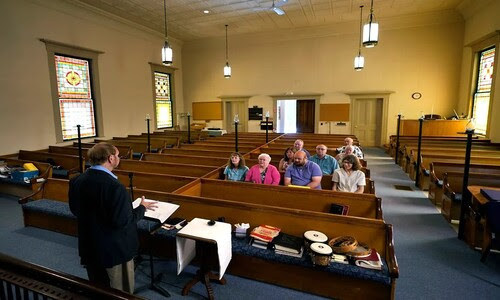
In January, statistician Ryan Burge posted demographic breakdown of 20 Protestant denominations, showing the percentage of “Boomers” in each. Across Protestant denominations, both mainline and evangelical, a disproportionately large number of congregants are in their 60s, 70s, and 80s.
The aging faithful within our congregations are a blessing and an essential resource that is too often overlooked. However, it is also true that within a few decades, much of this cohort will have entered eternity. If Burge’s chart is correct, there will not be enough GenXers, Millennials, and Zoomers to sustain many of these denominations.
The percentages of “Boomers” run from a high of 49% in the liberal Episcopal Church to a low of 24% with the more conservative Church of Christ. With certain exceptions, the more traditional theology and practice a church offers, the less likely they are to age out.
The converse is also true and has been for a while now. So-called mainline denominations have been hemorrhaging numbers for decades. They are also increasingly populated by older and whiter congregants. And it may be too late for them. As Burge put in his new book, The Vanishing Church:
When silver heads outnumber newborn cries in the pews, the local church has likely crossed a point of no return. Without young people, especially young couples, it’s hard to maintain the same level of membership or attendance. But attracting young people to a congregation of baby boomers is an almost impossible task. Thus, it’s unlikely that the mainline will see any kind of resurgence in the decades to come.
Decades ago, many of these denominations chose to accommodate themselves to theological and moral progressivism. In the end, these churches had nothing to offer that could not be heard daily on NPR, and they lost their own reason for being. Why get up on Sunday morning to go to church if you could stay home and hear the same thing without the sermon?
However, mainliners aren’t the only ones facing the demographic winter. Though the top half of Burge’s graph with the worst numbers are churches that mostly lean liberal, a few conservative denominations are not far behind. For example, while the mainline Presbyterian Church of the USA are at 47% Boomer, the conservative Presbyterian Church of America also come in at 47%. Southern Baptists are at 45%. Most nondenominational groups sit at around 40%.
These denominations have not succumbed to the theological liberalism that captivated the mainlines decades earlier and, given the track record, it would not be wise to do so now. Nor is it wise, as some within the more conservative denominations seem tempted to do, to downplay, compromise or water down the moral claims of historic, orthodox Christianity. The church’s strategy should neither be to accommodate to the culture nor to the individual.
In fact, though we are still understanding the “vibe shift of the last couple of years, the churches that have grown and attracted younger generations tended to beclear about Christian doctrine and morality. They didn’t conform to wider culture like the mainliners, and they didn’t do the seeker-sensitive thing so popular forevangelical Protestants. By not bending with the social breeze, more rigorous churches were not tied to the trends that trended away.
This does not necessarily mean every church should return to robes and candles, but it does mean all should get back to the basics of Christian belief and practice, without compromise.
After all, churches are called by Christ to make disciples, not just converts. Discipleship involves seeing all of life as His, and seeing faith as personal but not private. That will mean loving our neighbors and proclaiming the truth. That will mean championing those aspects of God’s design that are under assault. For example, one way to bring more young people into the pews is to stop seeing kids as an optional life choice.
In the end, the churches that belong to Christ will endure. And it will not be because of the winsomeness, cleverness, or relevance of the Christians. It will be because He is faithful to His Bride, faithful to preserve, grow, and even discipline her whenever necessary.
Trump says he must approve the next leader of Persia / Iran / The King of the North

The president pointed to events in Venezuela earlier this year as a model for how Washington might influence political change abroad.
President Donald Trump said Thursday that he must have a role in selecting Iran’s next supreme leader following the assassination of Ayatollah Ali Khamenei, warning that the potential succession of the late leader’s son Mojtaba Khamenei would be unacceptable.
Speaking in a phone interview with Axios, Trump argued that Washington should participate in shaping the leadership transition now unfolding in Iran. Tehran has not yet publicly named a successor, although there is speculation that the slain leader Khamenei’s son Mojtaba may be selected.
Trump dismissed that possibility during the interview.
“They are wasting their time. Khamenei’s son is a lightweight,” Trump said. “I have to be involved in the appointment, like with Delcy [Rodriguez] in Venezuela.”
The president also said he would oppose any candidate who continued the approach associated with Iran’s previous leadership.
“Khamenei’s son is unacceptable to me. We want someone that will bring harmony and peace to Iran,” he said.
Iranian officials have delayed announcing a successor in the days since Ali Khamenei’s killing, fueling speculation about the direction of the transition.
Australian teen arrested for threatening to murder Israeli president
Iranian politicians signaled Thursday that a decision could be revealed soon.
During the interview, the president pointed to events in Venezuela earlier this year as a model for how Washington might influence political change abroad.
After US forces captured Nicolás Maduro, Venezuelan Vice President Delcy Rodriguez assumed power.
Trump later referenced the shift during his State of the Union address, calling Venezuela “our new friend and partner” and saying the United States had received more than 80 million barrels of oil since the operation.
On Wednesday, Trump again praised Rodriguez, stating that “the oil is beginning to flow” following a visit to Caracas by Interior Secretary Doug Burgum and an announcement by Rodriguez about planned reforms to Venezuela’s mining laws.
Tehran warns that it will bomb Israel’s nuclear facility in Dimona if the Islamic regime is threatened.
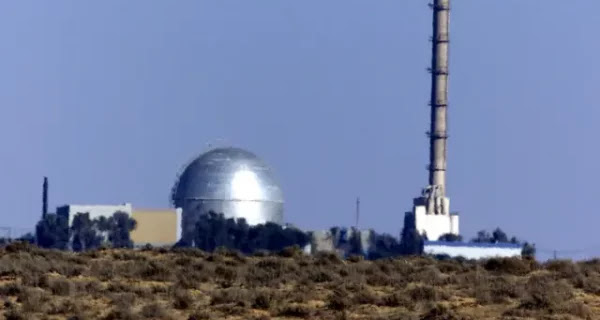
Iran warned Israel and the United States not to attempt to overthrow the Islamic Republic, stating that it will strike Israel’s nuclear research facility in Dimona if the regime is threatened.
On Wednesday, Iran’s semi-official ISNA news outlet published a report citing an Iranian defense official who said that if the US and Israel attempt to topple the Islamic Republic, Iran will strike the Negev Nuclear Research Center in southern Israel.
The NNRC is at the center of Israel’s military nuclear program,and is widely believed to have furnished the fissile material for the IDF’s nuclear warheads.
The Dimona plant is one of the most sensitive facilities in Israel and is defended by an array of air defense systems.
The Iranian military official cited in the ISNA report also warned that if the US and Israel pursue regime change in Iran, Tehran will use its “final effective missiles” to destroy energy infrastructure across the Middle East.
“This is a scenario we have already prepared for,” the official added.
While Israel has openly declared that it seeks to use its air campaign against Iran – dubbed Operation Rising Lion – to facilitate the regime’s overthrow, the Trump administration has given mixed messages on its goals for Operation Epic Fury.
President Donald Trump appeared to signal that the strikes were intended to enable dissidents to topple the government, urging the regime’s opponents on February 28 to seize the opportunity for regime change.
However, days later, Defense Secretary Pete Hegseth pushed back on the idea that the operation was intended to remove the Islamic Republic.
“This is not a so-called regime change war, but the regime sure did change, and the world is better off for it,” Hegseth said.
TruLight Ministries Daily Entertainment

TruLight TV : The Bible Collection: Jeremiah
The film depicts Jeremiah’s journey as a young man chosen by God to deliver a message of repentance to the people of the Kingdom of Judah. Despite facing persecution and rejection from Judean laymen and leaders, Jeremiah remains faithful to his mission, warning of impending disaster if the people do not turn away from their wickedness. Throughout the film, Jeremiah’s faith and courage inspire others to join him in his mission, and his prophetic warnings ultimately prove to be true as Judah falls to the Babylonian Empire. Despite the tragedy that befalls his people, Jeremiah remains steadfast in his faith and trust in God. The film explores themes of faith, obedience, and perseverance in the face of adversity, and highlights the importance of speaking truth to power, even when it is unpopular or dangerous to do so.
Today on TruLight Radio XM
TruLight Radio XM 24/7
Program
GMT / UTC +2
Monday To Fridays
00:15 Words to Live By Testimonies
01.15 Science Scripture and Salvation
02.15 Ground Works
04.00 Gospel Concert of the Day
05.00 The Daren Streblow Comedy Show
5:55 It is Today devotional
6:00 Gaither Homecoming Morning Show
7:15 Discover the Word
8.15 Destined for Victory
8:55 Science Scripture and Salvation
9:00 Holy Spirit Hour – Normally Sermons
10:15 Hope of the Heart
11:15 Unshackled
11.45 Words to Live By
12:15 Truth for Life
13:15 Living on the Edge with Chip Ingram
14:15 Focus on the Family
15:00 Kids Hour
16:00 In Touch with Dr. Charles Stanley
16:30 Groundwork
17:15 Live in the Light
18:15 Renewing your Mind
19:00 Gaither Homecoming Show
20:15 Growing Hope
21:15 Adventures in Odyssey Radio Drama
21:45 Bible Reading
22:15 Night-sounds
23.00 Good Old Country Gospel / Rhema Gospel Express
VISIT THE WEBSITE
TruLight Ministry News
TruLight Ministries orders from God since 2012 . Teach Them , Comfort Them and Warn Them!
Ons Begin , die 1st Mei 2026 . met Ons Predikers Diploma Online Platform – TruTheology.co.za, 36 Vakke met tussen 10 to 15 Lesse per Vak , gelyk staande aan ‘n 3 Jaar Theologie Graad , Die Opleiding is Gratis aan Goedgekeurde Lede en toetse Aanlyn na Elke Les , Jy bepaal die Spoed van jou Studies . As jy belangstel sal registrasies Plaasvind vanaf 1 April 2026 .
We Starting , the 1st May 2026 . with Our Preachers Diploma Online Platform – TruTheology.co.za . 36 Subjects with between 10 to 15 Lessons per Subject , equivalent to a 3 Year Theology Degree , The Training is Free to Approved Members and Tests Online after Each Lesson , You Determine the Speed of Your Studies . If you are interested registrations will take place from 1 April 2026 .
Healing Truths
End Time Articles
Share this Feeding of Manna with your Friends and Family. just click on the Social Media icon and share !