Hosted by TruLight Ministries – The Place of Truth
SELECT YOUR READING LANGUAGE – BOTTOM LEFT = YOUR DAILY MANNA NOW AVAILABLE IN 103 LANGUAGES
a New Study : for the Next 7 Daily Manna Days
The Symbols of the Word of God
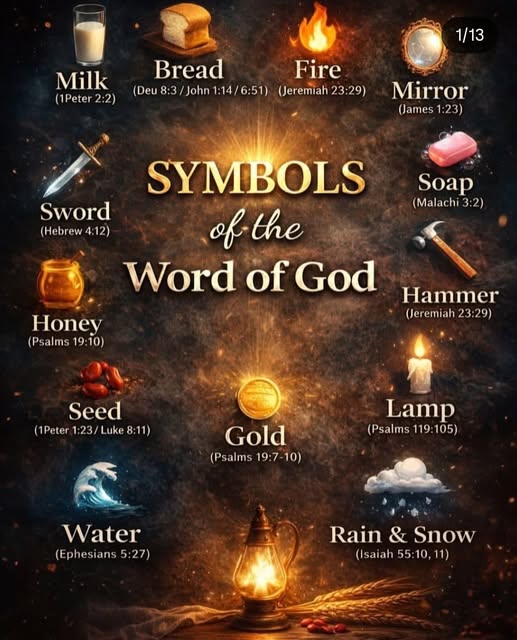
Symbols in the Word of God = Honey
Joshua and Caleb are two Israelite men whose stories offer an example of faithful commitment to the Lord. Both men came out of Egypt with the Israelites through the Red Sea and into the wilderness. Joshua and Caleb were selected along with ten other men to explore the Promised Land and give a report to Moses and the people.
After a 40-day exploration of Canaan, the explorers reported, “We went into the land to which you sent us, and it does flow with milk and honey! Here is its fruit. But the people who live there are powerful, and the cities are fortified and very large. We even saw descendants of Anak there” (Numbers 13:27–28). This report frightened the people (Numbers 13:31–33).
Caleb had a different attitude from the other spies. Verse 30 records, “Then Caleb silenced the people before Moses and said, ‘We should go up and take possession of the land, for we can certainly do it.’” When the people complained that they could not go up to conquer the land, both Caleb and Joshua responded strongly: “Joshua son of Nun and Caleb son of Jephunneh . . . tore their clothes and said to the entire Israelite assembly, ‘The land we passed through and explored is exceedingly good. If the Lord is pleased with us, he will lead us into that land, a land flowing with milk and honey, and will give it to us. Only do not rebel against the Lord. And do not be afraid of the people of the land, because we will devour them. Their protection is gone, but the Lord is with us. Do not be afraid of them’” (Numbers 14:6–9).
God judged the people of Israel by making them wait 40 years to enter the land. He also promised that every person 20 years old or older would die in the wilderness and would not see the land with two exceptions—Caleb and Joshua. Why? “Because my servant Caleb has a different spirit and follows me wholeheartedly, I will bring him into the land he went to, and his descendants will inherit it” (Numbers 14:24; see also verse 30). Verse 38 adds, “Not one of you will enter the land I swore with uplifted hand to make your home, except Caleb son of Jephunneh and Joshua son of Nun.”
This promise came true. After the death of Moses 40 years later, Joshua led the people across the Jordan River into the Promised Land. Caleb received an inheritance in the Promised Land in his old age (Joshua 14).
The faithfulness of Joshua and Caleb teaches us that we are to stand for God even when others will not. When we do, God may choose to bless us in ways that will extend for generations to come.
Bible Verse and Prayer for Today
Then Peter, filled with the Holy Spirit, said to them: “… It is by the name of Jesus Christ of Nazareth, whom you crucified but whom God raised from the dead, that this man stands before you healed. … Salvation is found in no one else, for there is no other name under heaven given to mankind by which we must be saved.”
—Acts 4:10-12
“Jesus! Jesus! Jesus! There’s just something about that name!”* The words to the song are right. Salvation from our broken world and our warped nature is found in no one else except Jesus. He is our Savior because he was willing to come to this world, bear our limitations, endure the shame of the cross, carry the weight of our sin, and then triumph over all of it to bring us grace (Philippians 2:6-11). We wholeheartedly agree: “Salvation is found in no one else”!
Prayer
Through the precious name of Jesus of Nazareth, the Christ, my Lord, I thank and praise you, God Most High. Your love provided the sacrifice for my sin. Your power guaranteed my resurrection from the dead. Your Son’s willingness to spend a lifetime with us has given me a Great High Priest who intercedes with empathy for my struggles (Hebrews 2:14-18; Hebrews 4:14-16). His example shows me your great love. Thank you, O Father! Thank you for being so gracious and giving me such a wonderful Savior. Even the very name of Jesus is precious to me! O praise his name and thank you for his grace. Amen and Amen
Bible Teaching of the Day
Wisdom literature has much to say about the appropriateness and importance of our words. Using concise and elegant language, Solomon extols the value of choosing our words wisely:
“Pleasant words are like a honeycomb,
Sweetness to the soul and health to the bones” (Proverbs 16:24, NKJV).
In the original Hebrew, the adjective translated as “pleasant” here means “gracious, delightful, friendly.” When Solomon wrote this maxim, he did not have words of flattery in mind, but helpful communication that seeks to meet the listener’s need, such as supportive counsel of a godly friend. Pleasant words offer encouragement, comfort, and strength. They are as delightful and desirable as honey from a honeycomb. They uplift and nourish the soul and restore health to a person’s body. Many other proverbs directly link mind, soul, and spiritual health to the well-being of our physical bodies (Proverbs 3:8; 12:4; 14:30; 15:30; 17:22).
Solomon remarks, “It is wonderful to say the right thing at the right time!” (Proverbs 15:23, NLT). Elsewhere, he emphasizes the importance of good counsel like so: “A word fitly spoken is like apples of gold in a setting of silver” (Proverbs 25:11, ESV). In Psalms 19:10, God’s Word is described as “sweeter than honey, than honey from the honeycomb.” For anyone undergoing hardship or affliction, pleasant words are like a honeycomb because they flow with sweet nourishment, “like pure spiritual milk” (1 Peter 2:2), to feed the soul and provide healing to the body. Wise biblical teachers and counselors speak God’s truth carefully and graciously to the delight, benefit, and blessing of others.
According to Proverbs 18:21, our words have “the power of life and death.” What we say can make an impact for good or for evil, for building up or tearing down (James 3:1–8; see also Proverbs 16:27). “With the tongue we praise our Lord and Father, and with it we curse human beings, who have been made in God’s likeness. Out of the same mouth come praise and cursing. My brothers and sisters, this should not be” (James 3:9–10). Throughout the Bible, “the tongue” refers to our spoken words. James stresses the difficulty of taming the tongue and channeling our speech for the good of others and for God’s glory.
Well-chosen words are like a medical prescription for healing a person’s body and soul. “Gentle words are a tree of life,” says the Teacher (Proverbs 15:4, NLT). “The mouth of the righteous is a fountain of life,” affirms Proverbs 10:11. A wise person will use his or her words to bring healing and life to other people (Proverbs 12:18). Wholesome, godly, and pleasant words flowing from our lips like honey from a honeycomb have the power to stimulate mental, physical, and spiritual health.
If we are wise, we will seek the Lord’s help controlling our tongues. We will let our “conversation be always full of grace, seasoned with salt” so we can “know how to answer everyone” (Colossians 4:6). We will choose gracious words that promote healing and life. As Paul taught the Ephesians, we will “let no corrupting talk come out of [our] mouths, but only such as is good for building up, as fits the occasion, that it may give grace to those who hear” (Ephesians 4:29, ESV).
If we truly desire to speak pleasant words like a honeycomb, we must pray like King David, “Set a guard over my mouth, Lord; keep watch over the door of my lips” (Psalm 141:3). Our desire must be, “May the words of my mouth and the meditation of my heart be pleasing to you, O Lord, my rock and my redeemer” (Psalm 19:14, NLT).
Today’s Devotional
In Revelation 10:9, the apostle John asks an angel for the book the angel is holding, and the angel tells John to eat it. What is the little book that John eats (Revelation 10:9), and why is the book significant? The context helps answer those questions.
Revelation 5 presents a scene in heaven of the throne room of God; God has in His right hand a book with seven seals (Revelation 5:1). Jesus is the only one found worthy to open the book and its seals (Revelation 5:6), and when He opens each of the seven seals, there is a corresponding catastrophic judgment event on earth. When the seventh seal is opened, seven trumpets sound, each one beckoning a further judgment. After the sixth trumpet sounds, a strong angel appears, and the angel cried out like a lion’s roar and with thunder (Revelation 10:1–3). As John is about to write down what he heard, he is told not to write the words (Revelation 10:4). The angel then proclaims that there would be no further delay and that “the mystery of God is finished, as He had proclaimed to His servants the prophets” (Revelation 10:7).
Then the voice from heaven prohibiting John from writing what he had heard tells John to “go, take the book which is in the hand of the angel” (Revelation 10:8). John heeds the voice and approaches the angel, requesting to take the book. The angel replies, saying that John should take it and eat it and that it would be sweet in his mouth but would make his stomach bitter (Revelation 10:9). John does eat the book, and it is as the angel said (Revelation 10:10).
This was not the first time a prophet was told to eat a scroll or book. In Ezekiel 2—3 God had a scroll—with words written on front and back just like the book in Revelation—and on this book were written “lamentations, mourning, and woe” (Ezekiel 2:10). God told Ezekiel to eat the scroll, and it was sweet in his mouth like honey (Ezekiel 3:3)—again, just like the book in Revelation. Ezekiel was literally tasting God’s judgment upon Israel and the nations, and John was doing something similar. For centuries up to that point, God had sent His prophets to warn the nations and especially Israel of coming judgments; in Revelation “the mystery of God is finished as He had proclaimed to His servants the prophets” (Revelation 10:7). It appears that the little book that John eats is the book bearing the seals that only the Lamb was worthy to open (as He is the Judge), a book filled with the remaining judgments of God on the nations in fulfillment of the many prophecies He gave during the Old and New Testament eras. Once the final seal had been opened, the judgments in the book were initiated, and the mysteries of God were finished.
In the book of Revelation, God provides a testimony—this one for the churches. The mysteries were now revealed and recorded in the book John wrote. While we aren’t told why the little book that John eats turned his stomach sour, perhaps it was because of what was coming after he ate the book—he had more prophesying to do (Revelation 10:11), and what followed was even worse than what came before. The final judgments in the great tribulation were even more severe. As John recorded the words of the prophecy of the book of Revelation, He records the words of Jesus, who warned that He was the rightful Judge and that He would come suddenly (Revelation 22:12–13). Jesus added that the one who heeds the words of the prophecy of the book of Revelation is blessed.
By reading John’s book we can know how the story will end. How will we prepare? Will we hear and disregard Jesus’ words, or will we heed them and come to Him to take the water of life that costs us nothing (Revelation 22:17)?
Bible Prophecy, Signs of the Times and Gog and Magog Updates with Articles in the News
Peter Thiel Brings Antichrist Lectures To Rome – Where Is The Church?
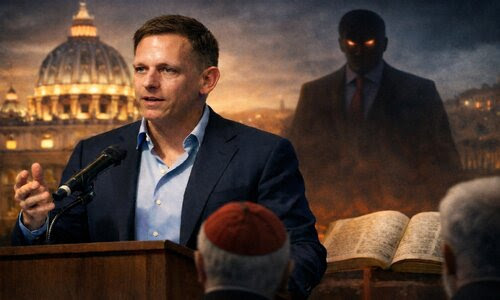
One of the most talked-about events in Rome’s intellectual circles this month is the arrival of Silicon Valley billionaire Peter Thiel, delivering his controversial lecture series on the Antichrist. Following a successful run in San Francisco, Thiel has brought his exploration of one of Christianity’s most enigmatic and feared figures to the heart of Catholic Europe. The lectures, running from Sunday through Wednesday, have sparked both curiosity and criticism, as Catholic universities and organizations have quickly distanced themselves from any official endorsement.
Thiel is no stranger to controversy. Co-founder of PayPal and Palantir Technologies, the data-mining firm assisting U.S. immigration enforcement, Thiel has long been a figure at the intersection of technology, politics, and culture. He was an early supporter of Vice President JD Vance and has cultivated a public persona that blends libertarian politics, technological futurism, and philosophical curiosity.
Among the topics that draw him most is the Antichrist — the prophesied figure in Scripture who opposes Christ — and the broader narrative of Armageddon. In a November essay for the Catholic magazine First Things, Thiel pondered the perennial questions: “Who is the Antichrist? When will he arrive? What will he preach?”
A Fascination That Draws Crowds
Thiel’s lecture series first premiered in San Francisco last September to packed halls and fervent attention from tech and intellectual circles. Attendees were drawn not just by the sensational topic but also by Thiel’s unique approach: combining theology, literature, philosophy, and contemporary politics with insights from historical thinkers like René Girard, Francis Bacon, Jonathan Swift, Carl Schmitt, and John Henry Newman. One promotional note from San Francisco promised discussions “anchored on science and technology” yet steeped in theological and historical reflection.
The Rome iteration follows the same blueprint. Though organized independently by the Vincenzo Gioberti Cultural Association and the Cluny Institute at the Catholic University of America, it retains the invitation-only format and a focus on deep intellectual engagement. The lectures are expected to touch on the Antichrist’s role in human history, the moral and technological dangers of the modern age, and the implications of global political shifts.
Thiel and the Antichrist: Biblical Accuracy or Modern Curiosity?
While Thiel’s interest in the Antichrist is intense, it raises questions about alignment with Biblical teaching. Scripturally, the Antichrist is a figure who will deny Christ, oppose God’s law, and lead many astray in the end times (1 John 2:18, 2 Thessalonians 2:3-4, Revelation 13). Thiel’s concerns about deception, moral decay, and the rise of global powers that act against Christian values resonate with Biblical warnings.
Yet there is an irony that Thiel, an openly gay man whose personal life does not conform to traditional Biblical teaching, has become a public promoter of understanding the Antichrist. Some critics argue this tension underscores the need for discernment: the messenger may not always model the moral clarity of the message.
Adding to the contemporary relevance, speculation about the Antichrist has surged worldwide. In certain Shiite Muslim circles, former President Donald Trump has been the subject of conjecture as a potential end-times figure. For Christians, such speculation underscores the importance of understanding Scripture rather than relying on rumor or political projection.
Catholic vs. Evangelical Perspectives
Thiel’s decision to lecture in Rome is particularly intriguing given the Catholic understanding of the Antichrist. Catholic theology views the Antichrist as both a present and future reality, often emphasizing a more symbolic and spiritual interpretation. Some Catholic scholars see the Antichrist not necessarily as one literal person but as a manifestation of systemic evil and opposition to Christ throughout history.
Evangelical and Protestant traditions, in contrast, generally emphasize a literal, end-times figure whose arrival is imminent and whose actions will be dramatic and unmistakable. According to Revelation 13 and 2 Thessalonians 2, the Antichrist will consolidate political and economic power, perform signs and wonders, and deceive many with persuasive lies. Evangelicals also stress the importance of prophecy and Scripture as a guide to recognizing this figure when he appears.
Key Biblical characteristics of the Antichrist include:
Denial of Christ and opposition to God (1 John 2:22)
Deception of the masses (Matthew 24:24)
Political and economic control (Revelation 13:7-8)
Blasphemy and self-exaltation (2 Thessalonians 2:4)
By these standards, the evangelical lens emphasizes vigilance, scriptural literacy, and a personal faith anchored in Christ as the antidote to deception.
Understanding the Times
The timing of Thiel’s lectures may be more than coincidental. Global unrest, political polarization, and religious speculation have created fertile ground for interest in end-times prophecy. While Thiel’s approach is unorthodox and sometimes ironic given his personal life, it underscores a broader point: Christians must study Scripture diligently to discern truth from conjecture. The Antichrist, according to the Bible, will seek to deceive, and only by knowing God’s Word can believers recognize the signs and remain steadfast.
In a world increasingly dominated by technology, globalist politics, and cultural shifts, the lessons of Thiel’s lectures — whether fully aligned with Scripture or not — serve as a reminder: the battle between good and evil is not merely theoretical. Awareness, discernment, and knowledge of God’s Word remain the essential defense against deception. The arrival of the Antichrist, whether near or distant, is a clarion call for Christians to be vigilant, grounded, and spiritually prepared.
Equally important is the role of churches and pastors in this conversation. The teaching of end-times prophecy is not just a niche topic for intellectuals or commentators — it is a vital aspect of biblical instruction. Christian leaders must courageously speak up, guide their congregations with scriptural truth, and ensure that the narrative of the Antichrist and the last days is taught according to the Bible rather than being shaped primarily by outsiders, political figures, or sensational speculation.
When the platform is left open to popular voices with their own agendas, believers risk confusion and deception; faithful shepherds have a duty to illuminate the path with God’s Word. In light of today’s current events people are hungry and looking for answers. Will the church answer the call?
Scientific Shift Toward God: Why Some Scientists Now See Design In The Universe

For centuries, people have been told that science and belief in God are on opposite sides of a growing divide — that as science uncovers more about the universe, faith becomes less necessary.
But something surprising is happening. Instead of pushing God out of the picture, some modern discoveries in physics, cosmology, and biology are prompting scientists to ask questions that sound remarkably theological — questions about beginnings, purpose, and design.
A striking example of this is the recently released book God, the Science, the Evidence: The Dawn of a Revolution by French researchers Michel‑Yves Bolloré and Olivier Bonnassies. Drawing on contributions from more than twenty scientists, including a Nobel laureate, the book argues that science today — from the Big Bang to the astonishing complexity of life — increasingly points toward a Creator rather than blind chance.
One example the authors highlight is DNA, the molecule carrying the instructions for all life. Its intricate structure and immense information content appear far more like a coded design than something that could easily arise by accident.
This, they argue, challenges the idea that life could have emerged purely through random processes. The book has already sparked conversations worldwide, showing that questions of faith and science are far from mutually exclusive.
The Universe Had a Beginning
One of the most important discoveries in modern science is that the universe didn’t always exist.
For centuries, people assumed the cosmos had always been here. But in the early 20th century, astronomers noticed galaxies aren’t standing still — they’re moving away from each other. The universe is expanding.
This insight led to the idea of the Big Bang — the universe exploding into existence from a single point. Interestingly, the very first person to propose this wasn’t a secular physicist, but a Catholic priest and scientist, Georges Lemaître.
If the universe had a beginning, it naturally raises a question science alone cannot answer: What caused it? Something that begins to exist needs a cause. For many thinkers, this sounds like what people of faith have long called creation.
Even famed physicist Stephen Hawking admitted that the beginning of the universe raises profound questions that go beyond physics and into philosophy and meaning.
The Universe Is Remarkably Well-Balanced
The more scientists study the cosmos, the more they notice something astonishing: the laws of nature seem finely tuned for life.
Physical constants — numbers that govern gravity, atomic interactions, and the expansion of space — are set so precisely that even a tiny variation could make life impossible. Imagine throwing a dart across a football field and hitting a single pixel on a computer screen on the opposite wall — that’s how unlikely this balance appears.
Philosopher of science Robin Collins and others argue that this fine-tuning suggests intention rather than random chance. Even scientists who don’t identify as religious, like cosmologist Paul Davies, have said the universe seems “just right” for life — as if someone had arranged things carefully.
Life’s Complexity Raises Big Questions
The universe isn’t the only place science encounters astonishing design. Life itself is staggeringly complex.
Inside living cells is an intricate web of machines, signals, and processes. Some scientists argue that evolutionary mechanisms alone — random mutation and natural selection — don’t fully explain how such precise systems first arose.
Biochemist Michael Behe introduced the idea of irreducible complexity, the concept that some biological systems only work if all their parts are present at the same time. Imagine building a car engine piece by piece, knowing it only works when complete — and then asking if that could happen by accident. Behe’s work, though controversial, shows that serious scientists are asking questions about life’s origins that remain unresolved.
Voices From Within Science
Some scientists who began skeptical of God have reconsidered their views after studying the universe.
British astronomer Fred Hoyle, once opposed to the idea of a Creator, was stunned by the precise nuclear processes that produce carbon — an element essential for life. He later remarked that the universe looked “as if a super-intellect has monkeyed with physics, as well as with chemistry and biology.”
Astrophysicist Hugh Ross notes that countless factors — planetary positions, gravitational balance, atmospheric composition, and cosmic stability — must align perfectly for life to exist. To him, these alignments suggest purposeful design rather than random chance.
A Growing Conversation
To be clear, none of this is proof in a laboratory sense. Science does not put God under a microscope or test the Creator like it tests gravity.
But what modern discoveries increasingly show is that the universe appears less like a chaotic accident and more like a finely tuned system:
The universe had a beginning.
Its laws are astonishingly precise.
Life depends on a delicate balance of conditions all existing at the same time.
Even some of the most skeptical scientists recognize the universe’s order and complexity as extraordinary.
For centuries, skeptics claimed science would make God unnecessary. Instead, the opposite seems to be happening: as our knowledge expands, so does the sense of mystery — and the evidence of design.
For many scientists today, the greatest discovery isn’t that God has vanished from the universe — it’s that He may have been hiding in plain sight all along.
Beaming Defense: Israel’s Laser Weapon Redefines Air Defense Economics
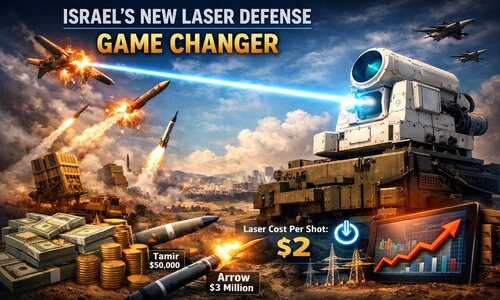
In a conflict increasingly defined by missile salvos, drone swarms, and relentless asymmetric aerial assaults, Israel has quietly fielded a weapon long believed the stuff of science fiction: a high‑energy laser air defense system that is now operational in the field.
Known as Israel’s “Iron Beam,” this directed‑energy weapon has already seen combat use — successfully engaging and shooting down drones and short‑range aerial threats — and represents a strategic shift in how modern warfare is waged and financed.
Unlike traditional missile interceptors — such as the Iron Dome’s Tamir missiles or medium‑range Stunner and Arrow interceptors — which are costly to produce and fire, the Iron Beam operates by focusing a concentrated laser beam on an incoming target, heating it until structural failure occurs. Though limitations remain, particularly in adverse weather conditions and against long‑range ballistic missiles, its performance to date is already reshaping the calculus of air defense economics.
The Economic Imbalance of Missile Defense
For decades, Israel’s layered air defense network — Iron Dome, David’s Sling, and the Arrow systems — has been a cornerstone of national security. They have proven effective in stopping rockets, missiles, and drones launched by hostile actors such as Hezbollah and Iranian proxies, but at a staggering cost.
Analysis of past conflicts shows that Israel’s interception efforts against Iranian drones and missiles can easily run into hundreds of millions of dollars in a single barrage, just in interceptor costs and supporting air operations.
To put this in perspective:
A Tamir interceptor missile fired by Iron Dome can cost on the order of tens of thousands of dollars per shot.
Medium‑range interceptors like Stunner missiles may cost around $700,000 or more each.
Arrow interceptors, designed to counter long‑range ballistic threats, can exceed tens of millions per shot.
In contrast, laser systems like Iron Beam are reported to cost only a few dollars per interception, essentially the cost of the electricity needed to fire the beam — a fraction of a percent of what missiles cost. Even accounting for operational overhead, this disparity is dramatic: potentially a thousand‑to‑one cost advantage in favor of directed‑energy defenses.
This matters because attackers often have the economic advantage. Iran and its allied militias can deploy cheap drones and rockets that cost thousands of dollars or less, forcing Israel to respond with interceptors that cost tens — or hundreds — of thousands of dollars each. The result is a negative cost exchange: every $10,000 projectile from the adversary could cost Israel $100,000 or more to neutralize. The Iron Beam flips that math.
Real‑World Performance and Limitations
Over the past week, as war escalates along Israel’s northern border with Hezbollah and against Iranian‑aligned forces, multiple reports confirm that Israel has actively used laser systems to counter incoming drones and rockets. Although not all details are publicly released due to operational security, Israeli defense sources have stated that the system has successfully downed scores of small aerial threats.
Yet, the technology is not omnipotent. Recent news analysis acknowledges that lasers are still limited by environmental conditions — rain, dust, or smoke can degrade effectiveness — and that they remain primarily a short‑range solution compared with conventional missile systems. Some analysts note that Hezbollah drone swarms have penetrated laser defense coverage, exposing the need for continued refinement and broader deployment.
For now, Iron Beam complements — rather than replaces — existing defenses. It is particularly well‑suited to engage drones, low‑flyers, and short‑range projectiles that would otherwise eat into Israel’s supply of expensive interceptors.
Strategic and Economic Implications
The arrival of operational laser defenses comes at a pivotal moment, as the broader Middle East conflict sees escalating exchanges with Iran’s missile and drone arsenal. Economists and defense strategists alike recognize that cheap, scalable directed‑energy systems could become a global standard for countering aerial threats. Nations from Europe to the United States are watching closely, with several allied militaries expressing interest in similar technology.
Domestically, the shift could ease the financial burden on Israel’s defense budget and reduce reliance on foreign aid for interceptors, freeing up funds for other military needs or domestic investment. More broadly, it could alter how future wars are funded — and fought — when attackers no longer hold the cost advantage.
But the rollout will take time. Expanding coverage, enhancing power outputs to engage longer‑range threats, and refining targeting software are ongoing efforts that may take years to perfect. Yet even in its nascent phase, the Iron Beam’s performance and economics point to a transformational moment in modern defense strategy.
A Beam of Strategic Hope
The operational deployment of Israel’s laser defense system — now proven in live combat — marks one of the most consequential developments in air defense in decades. Economically unbalancing the attacker‑defender dynamic, it offers a glimpse of a future where wars are won not just by firepower, but by smarter, cheaper, and faster shields of light.
Israel’s foes now face a stark reality: the era of costly missile defenses dominating the battlefield economy may be ending — replaced by beams of light that promise security and sustainability for years to come.
TruLight Ministries Daily Entertainment
TruLight TV : Gaither Gospel Series – Live from Toronto
The Gaither Homecoming Tour celebrates its 10th anniversary in a big way by capturing all the sounds and excitement of a concert-in-the-round on video in Live From Toronto.This one-of-a-kind event showcases performances by the Gaither Vocal Band, Ernie Haase & Signature Sound, Russ Taff, Jessy Dixon and many more!
Today on TruLight Radio XM
TruLight Radio XM 24/7
Program
GMT / UTC +2
Monday To Fridays
00:15 Words to Live By Testimonies
01.15 Science Scripture and Salvation
02.15 Ground Works
04.00 Gospel Concert of the Day
05.00 The Daren Streblow Comedy Show
5:55 It is Today devotional
6:00 Gaither Homecoming Morning Show
7:15 Discover the Word
8.15 Destined for Victory
8:55 Science Scripture and Salvation
9:00 Holy Spirit Hour – Normally Sermons
10:15 Hope of the Heart
11:15 Unshackled
11.45 Words to Live By
12:15 Truth for Life
13:15 Living on the Edge with Chip Ingram
14:15 Focus on the Family
15:00 Kids Hour
16:00 In Touch with Dr. Charles Stanley
16:30 Groundwork
17:15 Live in the Light
18:15 Renewing your Mind
19:00 Gaither Homecoming Show
20:15 Growing Hope
21:15 Adventures in Odyssey Radio Drama
21:45 Bible Reading
22:15 Night-sounds
23.00 Good Old Country Gospel / Rhema Gospel Express
VISIT THE WEBSITE
TruLight Ministry News
TruLight Ministries orders from God since 2012 . Teach Them , Comfort Them and Warn Them!
We Starting , the 1st May 2026 . with Our Preachers Diploma Online Platform – TruTheology.co.za . 36 Subjects with between 10 to 15 Lessons per Subject , equivalent to a 3 Year Theology Degree , The Training is Free to Approved Members and Tests Online after Each Lesson , You Determine the Speed of Your Studies . If you are interested registrations will take place from 1 April 2026 .
Healing Truths
End Time Articles
Bonus Teaching for the Child of God !!
TruLight Ministries:
The Current Battle between the Combinations of The 4 Horsemen of the Apocalypse – Revelation 6 Speaks of the 4 Horsemen, The Riders of the 4 Horses. The White, Red, Black and Pale (Light Green in Translation) We at TruLight Ministries Identified the 4 Horses and Horsemen with the Assistance of the Holy Spirit. Zechariah 6 v 1-6 and Revelation 6 v 1-6 , both in the Old and the New Testament . with same chapter and verses amount. mentions the 4 Horses, Zechariah states 4 Horses with wagons and Apostle John in Revelation saw 4 Horses with Riders (Horsemen) . Revelation gives the Character of each Horse and Horsemen and Zechariah Gives the Source and Direction of these Horses. They are mentioned to be Evil Believe Systems, Faiths that bow before satan .
The White Horse – The Believe System of the Holy Roman Empire – The Holy Roman Catholic Church with the White Pope in Control. The Faith of Catholics.
The Red Horse – The Believe System of Communism and Socialism. Red Russia, Red China and Allies. Putin of Russia is the Rider of this Horse
The Black Horse – The Believe System of Capitalism with their god Mammon – The Rider of this faith is the Black Pope, the President of the World, Leader of the Jesuit Order / Illuminati / Free Masons Order.
The Pale Horse (Light Green in Translation) is the Believe System of Islam / Muslim. with The President of Turkey and the Ottoman Empire as the Rider.
Zechariah States that two Combination forms, The White and Black Horses run Together to the North and The Red and Light Green Horse Runs together.
The Combos is The Roman Catholic Church and the Jesuit Order as Combo this include The Order of the Holy Sepulchre (Jewish) Knights that control Israel as a Government on gift from The Templar Knights of England.
The Other Combo is the Red Communist / Socialist Countries and The Arab World. Now known as Gog and Magog that is actually BRICS and their Nations that Joined and are Going to Join.
These two Combination Horse Are Battling it out for Control of the World. Putin and Erdoğan
from turkey on One side. Black Pope and White Pope on the Other side that Includes America and Israel.
They sometimes play Good Cop, Bad Cop, and the world is fooled.
Bible Prophecy confirms, That the Combo of the Red and Light Green. Gog and Magog / BRICS will be illuminated at the Next Bible prophecy that is in line of the End Time – Time line next, At the Gog and Magog last Final Bomb.
The reigning World order will become the Ultimate World order and from their Ranks the Antichrist Aka the Jewish Messiah will be Introduced just after the Last Bomb of Gog and Magog has sorted BRICS and Their Nations as part of them called ” and all thy bands ” in Ezekiel 38 and 39.
Understanding the End Times with Pastor Dirk
The in house Eschatology Teacher of TruLight Ministries.
Share this Feeding of Manna with your Friends and Family. just click on the Social Media icon and share !