Hosted by TruLight Ministries – The Place of Truth
SELECT YOUR READING LANGUAGE – BOTTOM LEFT = YOUR DAILY MANNA NOW AVAILABLE IN 103 LANGUAGES
Key Gospel Themes for 2026
- Peace in the Midst of the Storm: God offers a deep, lasting peace beyond worldly anxieties, a refuge found in His presence, even as global challenges arise.
- Breaking Barriers & Open Doors: A year for divine intervention, where God opens opportunities and shifts systems, but believers must walk in faith to receive them.
- Discernment & Authentic Fruit: With much noise (including AI), focus on Jesus’s true character and the “fruit” (actions, relationships, discipleship) as the real measure of faith, not just words.
- Walking with Jesus & Kingdom Living: The official theme that highlights a personal journey with Christ, applicable broadly as a call to discipleship and service.
- Overcoming Offense: A strong warning against becoming easily offended; remaining unoffendable is crucial to avoid being swayed by deception and to serve God’s true purposes.
- New Beginnings & Completing the Work: A reminder that God’s grace provides fresh starts, and He will complete the good work He started in believers, urging perseverance.
- Voice & Dominion: Believers are called to use their God-given voice to break cycles of fear and delay, exercising spiritual authority to see God’s will manifest.
Sample Verses & Applications for 2026
• Jeremiah 29:11: Trust God’s hopeful plans for your future, not striving to control everything.
• Matthew 6:33: Make seeking God’s Kingdom your top priority for life to fall into place.
• Philippians 4:6-7: Combat anxiety with prayer, thanksgiving, and trust in God’s peace.
Voice & Dominion
The Bible records God speaking audibly to people many times (Exodus 3:14; Joshua 1:1; Judges 6:18; 1 Samuel 3:11; 2 Samuel 2:1; Job 40:1; Isaiah 7:3; Jeremiah 1:7; Acts 8:26; 9:15—this is just a small sampling). There is no biblical reason why God could not speak to a person audibly today. With the hundreds of times the Bible records God speaking, we have to remember that they occur over the course of 4,000 years of human history. God speaking audibly is the exception, not the rule. Even in the biblically recorded instances of God speaking, it is not always clear whether it was an audible voice, an inner voice, or a mental impression.
God does speak to people today. First, God speaks to us through His Word (2 Timothy 3:16–17). Isaiah 55:11 tells us, “So is my word that goes out from my mouth: it will not return to me empty, but will accomplish what I desire and achieve the purpose for which I sent it.” The Bible is God’s Word, and it contains everything we need to know in order to be saved and live the Christian life. Second Peter 1:3 declares, “His divine power has given us everything we need for life and godliness through our knowledge of Him who called us by his own glory and goodness.”
God can also “speak” to us through events—i.e., He can guide us through arranging our circumstances. And God helps us to discern right from wrong through our consciences (1 Timothy 1:5; 1 Peter 3:16). God is in the process of conforming our minds to think His thoughts (Romans 12:2). God allows events to occur in our lives to direct us, change us, and help us to grow spiritually (James 1:2–5; Hebrews 12:5–11). First Peter 1:6–7 reminds us, “In this you greatly rejoice, though now for a little while you may have had to suffer grief in all kinds of trials. These have come so that your faith—of greater worth than gold, which perishes even though refined by fire—may be proved genuine and may result in praise, glory and honor when Jesus Christ is revealed.”
God may sometimes speak audibly to people. It is highly doubtful, though, that this occurs as often as some people claim it does. Again, even in the Bible, God speaking audibly is the exception, not the ordinary. If anyone claims that God has spoken to him or her, always compare what is said with what the Bible says. If God were to speak today, His words would be in full agreement with what He has said in the Bible (2 Timothy 3:16–17). God does not contradict Himself.

Bible Verse and Prayer for Today
Prepare your minds for action; be self-controlled; set your hope fully on the grace to be given you when Jesus Christ is revealed.
—1 Peter 1:13
When Jesus came the first time, he came to reveal God (John 1:18; Hebrews 1:1-3). As wonderful, powerful, and gracious as he was in his earthly ministry, he did not fully reveal all of who he is. Our hope is tied to his return. When he comes this time, he won’t come to reveal God, but to reveal himself — the conquering Lord, the Rider on the white horse, our eternal Savior. Every knee will bow. We will get to see him as he really and fully is — Emmanuel in power and grace, triumphant in every way. When we set our hope on Jesus’ grace at his return, we can be confidently ready for active service to our king today. We can live under his leadership with obedience and praise today because we know that great tomorrow is coming!
Prayer
O Almighty God, I long for the day when I get to see Jesus face to face, coming with the angels in power. Until that time, please fasten my heart in hope to the glory Jesus will share with me on that day, and please empower me to live as one who knows that victory is mine in Jesus beginning today. Jesus, through your powerful name I pray. Amen and Amen
Bible Teaching of the Day
Life is full of decisions that do not have absolute, specific-by-name, how-to directions in the Bible. How many hours a day should my kids spend on screens? Is it okay to play certain video games? Am I allowed to go on a date with a coworker ? Is it okay to miss work because I stayed up too late the night before? We all have notions about the truth, but how do we know for sure that these ideas are coming from God? Am I hearing God? Or am I only hearing myself? Worse yet, am I hearing the temptations of Satan disguised as the leading of the Holy Spirit? Sometimes distinguishing our own ideas from God’s leading is difficult. And what if our urges are actually coming from the enemy of our souls and not from God? How do we “take every thought captive” (2 Corinthians 10:5) when we aren’t sure where the thoughts are coming from?
Most commonly, God communicates through the Bible, His inspired Word, preserved through the centuries for us today. It is through the Word that we are sanctified (John 17:17), and the Word is the light for our path (Psalm 119:105). God can also guide us through circumstances (2 Corinthians 2:12), the promptings of the Spirit (Galatians 5:16), and godly mentors providing wise counsel (Proverbs 12:15). If God wants to speak to us, nothing can stop Him. Here are some ways to discern the source of our thoughts:
Pray
If we are confused about whether or not we are hearing God, it is good to pray for wisdom (James 1:5). (It’s good to pray for wisdom even when we don’t think we’re confused!) We should ask God to make His will known to us clearly. When we pray, we “must believe and not doubt, because the one who doubts is like a wave of the sea, blown and tossed by the wind” (James 1:6). If we have no faith, we “should not expect to receive anything from the Lord” (James 1:7).
Talk to God in prayer and earnestly wait for His answer. However, keep in mind that God doesn’t give us everything we desire, and sometimes His answer is, “No.” He knows what we need at any given time, and He will show us what is best. If God says, “No,” then we can thank Him for the clarity of His direction and move on from there.
Study the Word
The Bible is called “God’s Word” for a reason—it is the primary way God speaks to us. It is also the way we learn about God’s character and His dealings with people throughout history. All Scripture is “breathed out by God” and is the guide for a righteous life (2 Timothy 3:16–17). While we speak to God in prayer, He speaks to us through His Word. As we read, we must consider the words of the Bible to be the very words of God.
Any thought, desire, inclination, or urge we may have must be brought to the Word of God for comparison and approval. Let the Bible be the judge of every thought. “For the word of God is alive and active. Sharper than any double-edged sword, it penetrates even to dividing soul and spirit, joints and marrow; it judges the thoughts and attitudes of the heart” (Hebrews 4:12). No matter how urgent the urge, if it goes against what Scripture says, then it is not of God and must be rejected.
Follow the Holy Spirit’s Leading
The Holy Spirit is God—a divine Being with a mind, emotions, and will. He is always with us (Psalm 139:7–8). His purposes include interceding for us (Romans 8:26–27) and giving gifts to benefit the church (1 Corinthians 12:7–11).
The Holy Spirit wills to fill us (Ephesians 5:18) and produce in us His fruit (Galatians 5:22–25). No matter what decisions we’re making day to day, we can’t go wrong when we exhibit love, joy, peace, etc., to the glory of God. When we have a random thought pop into our heads, we must learn to “test the spirits” (1 John 4:1). Will following this inclination lead to more Christlikeness? Will dwelling on this thought produce more of the fruit of the Spirit in me? The Holy Spirit will never lead us to gratify the sinful desires of the flesh (Galatians 5:16); He will always lead us toward sanctification (1 Peter 1:2). Life on earth is a spiritual battle. The enemy is eager to supply diversions to distract us from God’s will (1 Peter 5:8). We must be vigilant to ensure that what we heed is more than a feeling but is truly from God Himself.
Remember, God wants to show us the right path to take. He’s not in the business of hiding His will from those who seek Him.
Here are some good questions to ask as we examine whether or not we are hearing God: Are the promptings confusing or vague? God is not the author of confusion; He is the bringer of peace (1 Corinthians 14:33). Do the thoughts go against God’s Word? God will not contradict Himself. Will following these promptings lead to sin? Those who “keep in step with the Spirit” have “crucified the flesh with its passions and desires” (Galatians 5:24–25).
In addition, it is good to seek counsel from a Christian friend, family member, or pastor (Proverbs 15:22). Our pastors are there to help shepherd us: “Have confidence in your leaders and submit to their authority, because they keep watch over you as those who must give an account” (Hebrews 13:17).
God does not want us to fail. The more we listen to God, the better we will be at distinguishing His voice from the other noises in our heads. Jesus, the Good Shepherd, gives His promise: “He goes on ahead of them, and his sheep follow him because they know his voice” (John 10:4). Others may speak, “but the sheep [do] not listen to them” (verse 8). The better we know our Shepherd, the less we have to worry about heeding the wrong voice.
Today’s Devotional
“Have confidence in your leaders and submit to their authority, because they keep watch over you as those who must give an account. Do this so that their work will be a joy, not a burden, for that would be of no benefit to you” (Hebrews 13:17). Yes, the Bible clearly states that God gives some individuals spiritual authority over others. There are various levels of authority in any person’s life, and each of these levels may involve different people in different positions of authority. Of course, we must begin with the highest authority, which is God. Genesis 1:1 states, “In the beginning God created the heavens and the earth.” Everything that exists was created by God, and by that fact, God has ultimate authority, or sovereignty, over all things. When Moses delivered the law to the Israelites, God’s sovereign authority was the basis on which they were to submit to it (Deuteronomy 4:39–40).
When Job was wrestling with the problem of pain and suffering in his life, he acknowledged that God made all things, and no one is able to challenge His authority (Job 9:1–12). In the Old Testament, one of the titles reflecting this authority is “the most high God” (Genesis 14:22), and in the New Testament, He is called “Lord of heaven and earth” (Acts 17:24). Jesus Christ, who is God in the flesh, holds all authority (Matthew 28:18) and has distributed some of that authority to various people on earth. Because of our sinful nature, and because of the abuses or failures of authority that we have experienced, most people struggle on occasion with submitting to authorities.
One level of authority that God has granted to men is civil or governmental. Romans 13:1–6 states that “the powers that be are ordained of God.” Whether rulers are believers or not, and whether they recognize it or not, their civil authority is actually a type of spiritual authority, for “they are God’s ministers,” exercising power on God’s behalf. When we resist their authority, we are actually resisting God. The Bible reminds us in Colossians 3:22–24 that our submission and service to human authorities should be done “heartily, as to the Lord, and not unto men.”
Another level of authority established by God is within the home. Ephesians 5:22–24 commands wives to submit to their husbands as they would submit to God, because the husband is the head of the wife, just as Christ is the Head of the church. This ladder of authority is stated again in 1 Corinthians 11:3, showing the woman submitting to the man, who submits to Christ, who submits to the Father. Children are commanded to submit to their parents in Ephesians 6:1, and Colossians 3:20 adds that this is well pleasing to God.
Just as God established authority within civil government and the home, so He established specific authority within the church. As Christians, we are all joint-heirs with Christ (Romans 8:17) and have full access to God by the Holy Spirit (Ephesians 2:18). Though God is no respecter of persons (Romans 2:11), He has chosen to place some in positions of authority for the sake of order and growth (Ephesians 4:11–13). The early church recognized the authority of the apostles and submitted to their teaching and direction (Acts 6:2; 15:2). Next to the apostles in authority were the elders, or pastors, of the churches. As Paul and Barnabas established churches in their missionary journeys (Acts 14:23), they ordained elders in every church. These elders (presbyters) were responsible for teaching (pastoring), supervising (being a bishop), and being examples to the church (1 Peter 5:1–3). As spiritual leaders, these elders have a greater responsibility to God (James 3:1) and must meet the qualifications God has established (Titus 1:5–9; 1 Timothy 3:1–7). Believers are told to acknowledge and respect those who are over them in spiritual matters (1 Thessalonians 5:12–13) and even to support them financially (1 Timothy 5:17–18).
In matters of authority, the underlying guiding principle is submission. First Peter 5:5–6 says, “Young men, in the same way be submissive to those who are older. All of you, clothe yourselves with humility toward one another, because, ‘God opposes the proud but gives grace to the humble.’ Humble yourselves, therefore, under God’s mighty hand, that he may lift you up in due time.” In God’s matchless wisdom, He has chosen some to hold authority and others to be under that authority. Perhaps the most surprising thing is that He has also taught that one of the highest qualifications for those in positions of authority is humility. “If any man desire to be first, the same shall be last of all, and servant of all” (Mark 9:35). This is the example that Jesus, the highest spiritual authority, gave when He became the humblest of all and submitted to die in our place (Philippians 2:7–11).

Bible Prophecy, Signs of the Times and Gog and Magog Updates with Articles in the News
Venezuela, China, And The Oil Beneath It All: The Chessboard Just Tilted
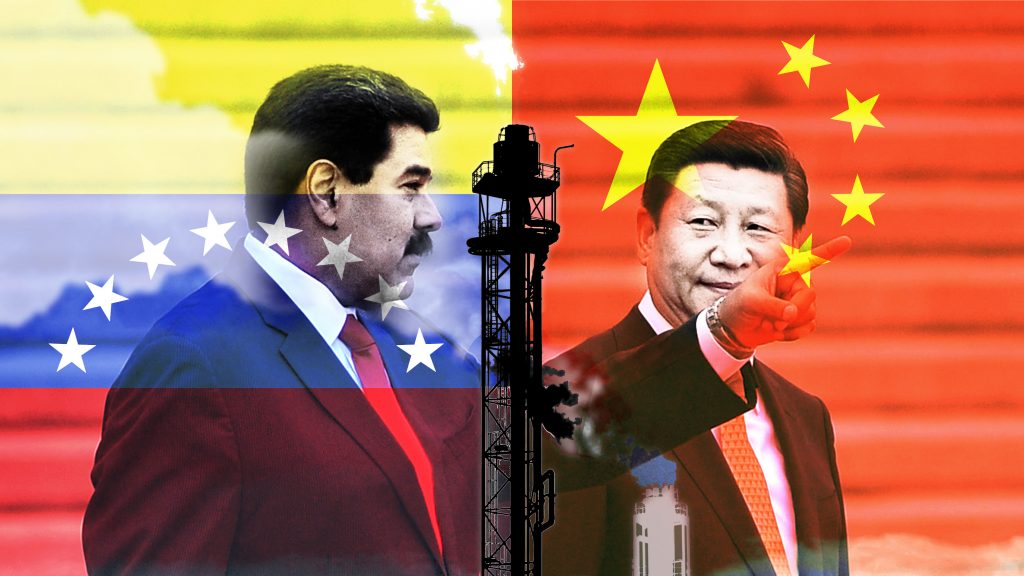
The dramatic events that unfolded in Venezuela over the past few days have stunned the world. The U.S. capture of Nicolás Maduro is already being framed as a decisive moment–either a long-overdue intervention against an autocrat or a dangerous act of imperial overreach. But almost everyone is missing the far larger picture. What just happened in Venezuela is not a regional crisis. It is a geopolitical earthquake. And its shockwaves are already being felt in Beijing and Moscow.
This is not simply about Maduro. It is also about oil, power, precedent–and a global chessboard that just shifted in a way few fully understand.
From Washington’s perspective, Venezuela has long been a strategic prize. It sits atop the largest proven oil reserves on Earth–more than Saudi Arabia–and has spent years drifting into the economic and military orbit of America’s two greatest rivals. The Trump administration has gambled that by removing Maduro and reshaping Venezuela’s government, it can push both China and Russia out of the Western Hemisphere in one bold stroke
But gambles have consequences. And China and Russia are not minor stakeholders being brushed aside. They are furious because they have spent decades–and tens of billions of dollars–building Venezuela into a critical pillar of their global strategy.
Russia’s investment has been overtly military and strategic. Over the past twenty years, Moscow sold roughly $20 billion in weapons to Venezuela and signed a major strategic partnership agreement as recently as May 7th. Venezuela was not just a customer; it was a foothold–a symbol that Russia could project power into America’s backyard.
China’s involvement runs even deeper. Beijing lent Venezuela more than $60 billion through oil-backed loans, turning the country into what many analysts quietly described as a Chinese economic colony. Venezuela became one of China’s most important overseas energy suppliers, with Beijing purchasing more Venezuelan oil than the rest of the world combined.
Tankers carrying Venezuelan crude to China often take convoluted routes, involving ship-to-ship transfers and months-long journeys to obscure the oil’s origin–an extraordinary effort that underscores just how vital those barrels are to China’s long-term energy security.
This is why the timing matters. Just hours before Maduro was captured, Chinese diplomats were meeting with him in Caracas, reaffirming their commitment to a “strategic relationship” and a “multipolar world.” From Beijing’s perspective, this was not just a diplomatic embarrassment. It was a humiliation. A trusted partner was taken out immediately after China publicly reaffirmed its backing.
That context explains the unusually sharp language now coming out of Beijing. China has “strongly condemned” the U.S. action, calling it a blatant violation of sovereignty and international law, and has demanded Maduro’s immediate release. Those demands will be ignored–but the anger will not dissipate.
And here is where the story turns truly dangerous.
Within China, social media commentary is already drawing uncomfortable parallels. The average Chinese citizen does not parse international law or nuanced justifications offered by Washington. They see headlines. They see a superpower using force to remove a government it dislikes. And many are now asking a simple, unsettling question: If the U.S. can do this in Venezuela, why can’t China do the same in Taiwan?
The same logic echoes in Russia, where officials are openly condemning the action as armed aggression and calling for Maduro’s release. From Moscow’s point of view, how can the United States demand restraint or trust in negotiations over Ukraine after demonstrating that sovereignty is conditional when strategic interests are at stake?
Yes, there are differences. The U.S. will argue Maduro was illegitimate, corrupt, and dangerous. China and Russia will argue that such distinctions are irrelevant when force is used to topple a government. Precedent matters–not in law journals, but in public perception. And perception shapes domestic support for future action.
This is why Venezuela matters far beyond Latin America. It sits at the intersection of oil and power. Control over Venezuelan energy flows affects global markets, Chinese supply chains, and Russian influence. By moving decisively, Washington has effectively slapped both Beijing and Moscow in the face–and told them that decades of investment can be erased overnight.
An emergency UN Security Council session has already been called for. There will be speeches, condemnations, and diplomatic theater. But no resolution will undo what has been done. A line has been crossed.
Even if the U.S. Senate votes next week to restrict further military action, the precedent remains. The chessboard has changed. China’s Venezuelan strategy lies in ruins. Russia’s trust in Western diplomacy is further eroded. And the idea that power–not principle–ultimately decides outcomes has been reinforced in the minds of millions.
This is how great-power conflict escalates–not always through immediate war, but through accumulated grievances, perceived hypocrisy, and the slow normalization of force as policy. Venezuela may seem distant. But the ripples now extend to Taiwan, Ukraine, and every contested region where oil, power, and ambition collide.
We are no longer watching isolated crises. We are watching the opening moves of a much larger game. And history suggests that once the board is set like this, retaliation–one way or another–is only a matter of time.
When the Cartoon Ends: Dilbert’s Creator’s Faces Death & Questions Of Eternity

When a man who built a career skewering corporate absurdity suddenly stares down mortality, the punchlines fall away. What remains are the questions that have haunted humanity since the beginning: What happens next? Did my life matter? And is there something — or Someone — beyond this?
Scott Adams, the creator of Dilbert, now paralyzed and battling terminal prostate cancer, has publicly said he plans to convert to Christianity. The announcement, shared candidly with millions, was not wrapped in church language or theological precision. Instead, it came in the voice of a rational skeptic facing the end of his life — thoughtful, respectful, and deeply human.
Adams has long described himself as agnostic, skeptical of certainty itself. But in recent weeks, as his prognosis has turned grim, something has shifted. Conversations with Christian friends, reflections on death, and what he describes as a “risk-reward” calculation have nudged him toward faith. “You’re never too late,” he said, acknowledging both time running out and hope still lingering.
At the heart of Adams’ reasoning is a modern echo of Pascal’s Wager — the idea that when certainty is impossible, belief is the most rational choice. If God exists, the reward is infinite. If He does not, little is lost. For a man whose mind has long wrestled with simulation theory and the nature of reality, Adams sees Christianity as the only worldview that definitively answers the question after death. “Any skepticism I have about reality would be instantly answered if I wake up in heaven,” he said plainly.
For many watching, especially those living with chronic illness or facing their own mortality, Adams’ honesty is striking. He is not posturing. He is not pretending certainty. He is standing at the edge of life and admitting what so many feel but rarely say out loud: I don’t know — but I hope.
And yet, as soon as Adams expressed that hope, the noise began.
Online reactions ranged from encouragement and prayer to theological correction and criticism. Christian thinkers were quick to point out what Adams still misunderstands — namely, that Christianity is not about living a “good life” to earn heaven, nor is salvation a wager hedging cosmic bets. Frank Turek reminded readers that salvation is a gift of grace, not an achievement. Megan Basham gently but firmly emphasized that the Gospel is not about insurance against hell, but about surrender to Christ.
Their critiques are theologically sound. Adams does, indeed, have more to learn about grace. Christianity is not a transaction; it is a transformation. It is not “I win if I’m right,” but “I am saved because I am not.”
But here is the tension worth sitting with: Adams is at the beginning of a journey, not the end. And beginnings are often clumsy.
Scripture itself gives us room for this. The thief on the cross did not have time to master doctrine. He did not parse atonement theories. He simply turned, in desperation and trust, and said, “Remember me.” Jesus did not correct his theology. He offered him paradise.
What nearly derailed Adams, by his own admission, was not doubt — but debate. After the flood of well-meaning messages insisting there is “one right way” to convert, Adams confessed that the arguing almost talked him out of it altogether. That confession should sober the Church.
PASTOR DIRK SAYS . ITS NEVER TO LATE TO FOLLOW THE STEPS 2 HEAVEN
Abraham Accords partners, Israel and Morocco, begin new phase of defense coordination
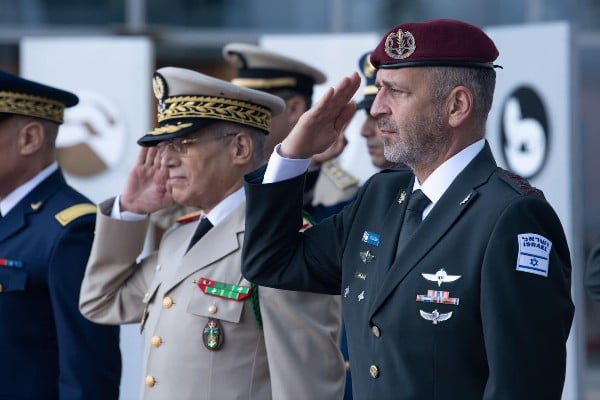
Israel and Morocco agreed this week on a joint military work plan for 2026, formalizing the next stage of defense coordination during a bilateral military forum held in Tel Aviv, the Israel Defense Forces said.
The agreement was finalized at the third meeting of the two countries’ Joint Military Committee, a gathering that coincided with five years since Jerusalem and Rabat normalized relations under the Abraham Accords.
Israeli officials described the session as a practical step toward translating diplomatic ties into sustained security cooperation.
According to the IDF, the Moroccan delegation took part in a series of closed-door professional discussions with senior Israeli officers, alongside briefings and site visits connected to Israel’s defense establishment. The talks were overseen by the IDF Planning Directorate together with the Tevel Division, which manages military relations with foreign partners.
Rather than focusing on tactical coordination, the centerpiece of the visit was a strategic-level forum examining long-term force development and identifying shared priorities for future cooperation.
The IDF said the panel addressed how both militaries assess evolving threats and align planning concepts, with the goal of improving interoperability and mutual understanding.
In parallel with the working sessions, Moroccan representatives toured IDF units and held meetings linked to Israel’s defense industries and operational directorates.
The IDF said these visits were intended to give the delegation direct exposure to Israel’s military capabilities, organizational structure, and planning processes.
Israeli officials framed the meeting as part of a steady deepening of ties that has progressed incrementally since normalization.
The IDF said the Joint Military Committee has become a central mechanism for managing defense relations between the two countries and for setting multi-year agendas rather than one-off engagements.
In its statement, the IDF characterized Morocco as a “key partner for regional stability,” adding that the latest meeting marked another milestone in expanding security cooperation. While no operational details of the 2026 work plan were released, officials indicated that the framework is intended to guide joint activity, consultations, and exchanges over the coming year.
The Tel Aviv meeting follows previous committee sessions hosted alternately by the two sides and reflects an effort to institutionalize military dialogue as diplomatic relations between Israel and Morocco enter their sixth year.
Netanyahu, Trump agree on Iran strike if no deal reached

A Lebanese newspaper aligned with Hezbollah reported Monday that Israeli Prime Minister Benjamin Netanyahu and U.S. President Donald Trump reached broad understandings in their most recent meeting, including a readiness to launch a military strike against Iran if no agreement is reached on their terms, alongside coordinated moves in Gaza and efforts to preserve Lebanese “neutrality.”
According to Al-Akhbar, the information received in Beirut from senior international sources and Western embassies indicates that Netanyahu and Trump agreed on three central tracks: an attack on Iran should it refuse to accept conditions that include a complete halt to its nuclear program and an end to support for regional proxy forces, entry into the next phase of fighting in Gaza, and the maintenance of Lebanese neutrality as long as Hezbollah does not intervene.
The report, which was cited in Israel by Israel Hayom, claims that U.S. officials believe Iran’s acceptance of such terms would not only avert a strike but could also lead to a broader settlement in Lebanon. Conversely, an attack on Iran or a collapse of the regime would have direct consequences for Lebanon, significantly weakening Hezbollah due to its dependence on Tehran.
Al-Akhbar added that the concept of Lebanese “neutrality” is explicitly conditional. Any involvement by Hezbollah in a confrontation would be met with a wide and deep Israeli response targeting the group’s strongholds in Beirut’s Dahiyeh neighborhood and the Bekaa Valley in eastern Lebanon. The paper stressed that neutrality would not mean a halt to ongoing Israeli strikes.
The report also cited a source claiming that Saudi Arabia is intensifying diplomatic efforts with Iran to push it toward an agreement with the West, driven by fears that war or internal chaos in Iran could spill over into the Gulf. Riyadh, according to the source, is concerned that regime collapse could eventually push Tehran into a destabilizing role as a self-appointed “policeman of the Gulf.”
The claims come amid increasingly blunt warnings from Trump in recent days, including his statement that he would “absolutely” back renewed Israeli strikes on Iran’s missile and nuclear programs if Tehran attempts to rebuild them, as well as threats of action if the regime continues to kill protesters as unrest spreads across the country.
TruLight Ministries Daily Entertainment

TruLight TV : Don’t Worry About Tomorrow
God wants us to go to Him with everything on our minds and hearts. He knows this world can be physically, mentally, and emotionally tough, so what’s weighing on you today? Watch this video and experience the peace that comes from giving God your deepest desires and burdens. Today on The Josh and Ashley show, The Mark Dubbeld Family – from Moneta Virginia, are renowned for inspired originally penned songs, family harmony, and a sincere desire to communicate the Gospel through their music and testimony. They have been making a significant impact in Gospel Music and impacting lives with a song to sing, a word to write, and a call to answer. The Family consists of Mark and Janene along with their children, Elena, and Britton. Each of them play an active role in the ministry. Enjoy The Mark Dubbeld Family on today’s show and Listen to some great music. Thanks For watching and Share this Video With your Friends.
Today on TruLight Radio XM
TruLight Radio XM 24/7
Program
GMT / UTC +2
Monday To Fridays
00:15 Words to Live By Testimonies
01.15 Science Scripture and Salvation
02.15 Ground Works
04.00 Gospel Concert of the Day
05.00 The Daren Streblow Comedy Show
5:55 It is Today devotional
6:00 Gaither Homecoming Morning Show
7:15 Discover the Word
8.15 Destined for Victory
8:55 Science Scripture and Salvation
9:00 Holy Spirit Hour – Normally Sermons
10:15 Hope of the Heart
11:15 Unshackled
11.45 Words to Live By
12:15 Truth for Life
13:15 Living on the Edge with Chip Ingram
14:15 Focus on the Family
15:00 Kids Hour
16:00 In Touch with Dr. Charles Stanley
16:30 Groundwork
17:15 Live in the Light
18:15 Renewing your Mind
19:00 Gaither Homecoming Show
20:15 Growing Hope
21:15 Adventures in Odyssey Radio Drama
21:45 Bible Reading
22:15 Nightsounds
23.00 Good Old Country Gospel / Rhema Gospel Express
VISIT THE WEBSITE
https://TruLightRadioXM.org.za
TruLight Ministry News
TruLight Ministries orders from God since 2012 . Teach Them , Comfort Them and Warn Them!
Doctrine of Demons – Teaching for the Christian , Discerning the spirits
Share this Feeding of Manna with your Friends and Family. just click on the Social Media icon and share !