Hosted by TruLight Ministries – The Place of Truth
SELECT YOUR READING LANGUAGE – BOTTOM LEFT = YOUR DAILY MANNA NOW AVAILABLE IN 103 LANGUAGES
a New Study : for the Next 5 Daily Manna Days
The Symbols of the Word of God
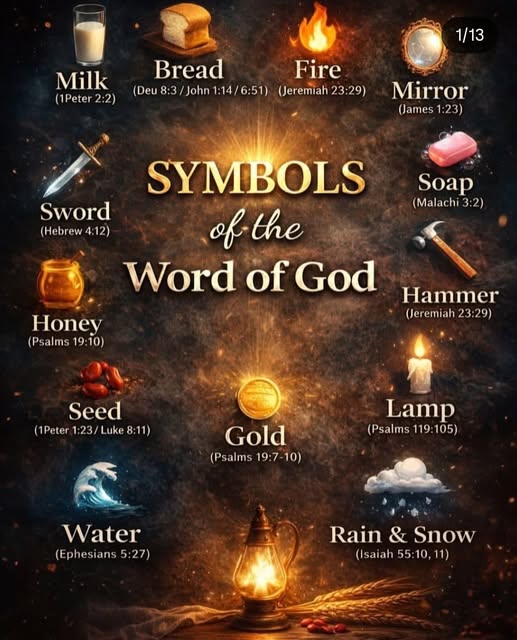
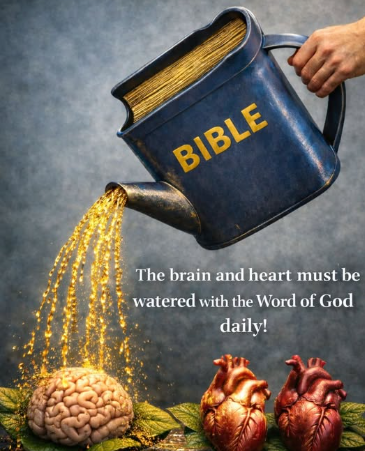
Symbols in the Word of God = Seed
The first thing we notice about this parable is its similarity to the Parable of the Sower in Mark 4:2-9. In some ways, this parable expands on Jesus’ teaching of how the “good soil” (a receptive heart) receives the “seed” (the Word of God).
In the Parable of the Growing Seed, Jesus tells of a man who scatters seed on the ground and then allows nature to take its course. As the man who sowed the seed goes about his business day by day, the seed begins to have an effect. First, the seed sprouts; then it produces a stalk and leaves, then a head of grain, and, finally, fully developed kernels in the head. Jesus emphasizes that all of this happens without the man’s help. The man who scattered the seed cannot even fully understand how it happens—it is simply the work of nature. “All by itself the soil produces” (verse 28).
The parable ends with a harvest. As soon as the grain is ripe, the sickle is employed, and the seed is harvested. This happens at just the right time.
Jesus did not explain this parable, as He did some others. Instead, He left it to us to understand its meaning. Taking the seed to be the Word of God, as in Mark 4:14, we can interpret the growth of the plants as the working of God’s Word in individual hearts. The fact that the crop grows without the farmer’s intervention means that God can accomplish His purposes even when we are absent or unaware of what He’s doing. The goal is the ripened grain. At the proper time, the Word will bring forth its fruit, and the Lord of the harvest (Luke 10:2) will be glorified.
The truth of this parable is well illustrated in the growth of the early church: “I planted the seed, Apollos watered it, but God made it grow” (1 Corinthians 3:6). Just like a farmer cannot force a crop to grow, an evangelist cannot force spiritual life or growth on others.
To summarize the point of the Parable of the Growing Seed: “The way God uses His Word in the heart of an individual is mysterious and completely independent of human effort.” May we be faithful in “sowing the seed,” praying for a harvest, and leaving the results to the Lord!

Bible Verse and Prayer for Today
The Lord is my Shepherd, I shall not be in want. He makes me lie down in green pastures, he leads me beside quiet waters, he restores my soul.
—Psalm 23:1-3
“He restores my soul.”
My, that sounds so good, doesn’t it? But David’s shepherd psalm (Psalm 23:1-6) and Jesus’ promises as our Good Shepherd (John 10:14-15) are far more than sweet religious talk. When we’ve reached that point where we don’t think we can continue, our Shepherd blesses us with the strength so that we can keep on walking. When we’re in a struggle and things are tough, his power upholds us, so we run and not grow weary. When we’re winning victories in his name, we can soar on wings like eagles because he supports and sustains (Isaiah 40:28-31). God the Son is our good Shepherd who loves us, sustains us, nourishes us, stills us, and restores us.
The Lord is my Shepherd, I shall not be in want. He makes me lie down in green pastures, he leads me beside quiet waters, he restores my soul.
Prayer
O Gentle yet mighty Shepherd, please bless me with rest tonight, strength today and for tomorrow, perseverance for my times of trial, and confidence that you are nearby with grace and power to sustain me. In the name of Jesus, my Good Shepherd, I pray. Amen and Amen
Bible Teaching of the Day
The serpent seed doctrine is a belief based on poor biblical interpretation and superstition. It is a primary doctrinal resource for those who want to use Scriptures to justify racial prejudice. The serpent seed doctrine is also closely related to other erroneous beliefs such as the Christian Identity Movement and the Kenite doctrine. Like many false beliefs, it has a built-in defense mechanism; that is, anyone who disagrees with it is accused of being a son of the serpent. One of the most unfortunate problems with the serpent seed doctrine is that it so heavily relies on prejudice and warped biblical interpretation that it can be very difficult to discuss rationally.
Simply stated, the serpent seed doctrine teaches that the sin of Eve was not simple disobedience, but sexual contact with the serpent, and that Cain was the son of Eve and the devil. Cain’s descendants are, according to this idea, the sons of Satan, and this includes most any race or group that the serpent-seed believer chooses to dislike. This idea is rooted in superstitious beliefs and is particularly popular with white supremacists and anti-Semites; the Unification Church also supports this idea. Noted false prophets and false teachers such as Arnold Murray of Shepherd’s Chapel and William Branham espoused the idea. Although an idea should not be criticized when it is wrongly applied, it is appropriate to condemn an idea when it logically leads to sin. A philosophy that teaches that some races or people are universally satanic, like the serpent seed doctrine, is one such philosophy.
Those who support serpent-seed ideas cite many passages in the Bible as proof that their idea is correct. Almost without exception, these “proofs” require an interpretation that is totally inappropriate to the context of the passage. For example, Genesis 3:13 is often cited, with the claim that the word translated “beguiled” in the King James Version really meant “seduced.” Context and scholarship would disagree. Proverbs 30:20 metaphorically compares eating and sexual immorality; this is greatly overstated by the serpent-seed believer as proof that the Fall was sexual. Another passage is the parable of the tares in Matthew chapter 13. Those who believe in the serpent seed doctrine teach that Jesus’ description of the “children of the devil” in this parable is true in a biological sense. Again, only one who is trying to force this belief into the Bible will see it this way; it is not naturally read out of Scripture.
There are literally dozens of places in the Bible where this false idea has been wedged in, yet every single one requires a person to believe in the serpent-seed idea beforehand. Only by reading a passage and saying, “If you assume that the serpent seed doctrine is true, then this means…” can a person support this false philosophy. For this reason, arguing against the serpent seed doctrine can be difficult. Those who believe it interpret Scripture through a sort of “serpent-seed lens,” and are not likely to accept other interpretations, no matter how well supported by context and scholarship.
There are some basic questions and contradictions inherent to the serpent seed doctrine that can be used to demonstrate its lack of truth. For example, Galatians 3:28 clearly states that race and gender have no impact on our standing with God. Second Peter 3:9 says that God wants everyone to be saved, not “everyone but the children of Cain.” Nowhere in Scripture is anyone condemned based on being from Cain’s lineage. Never are we warned about such people by the New Testament writers. Also, there is the question of how or why such persons survived the flood. The doctrine supposes that original sin was sexual, but cannot explain why the whole remainder of the Bible lays out a worldview where the original sin was disobedience, not sexuality.
This philosophy is most unfortunate in that it leads directly and logically to two main problems. Racism is by far the worst; believing that certain races are irredeemable has no positive application. The only possible outcome of such a worldview is prejudice and bigotry. There is also a tendency to dismiss critics of the serpent seed doctrine as being the very “Kenites” the philosophy believes in. Arnold Murray is particularly guilty of this abuse. Fortunately for believers, God has given us a resource in Scripture that can show us the truth. We need only read it with unbiased and open eyes to find true wisdom.
Today’s Devotional
Faith is so vital to the Christian life that Scripture tells us that, without it, it is impossible to please God (Hebrews 11:6). Yet faith is such a powerful gift from God (Ephesians 2:8–9) Christ told His disciples that, with just a tiny measure of it, the size of a mustard seed, they could move mountains. So, what does it mean to have “mustard seed faith”?
We see the reference to “mustard seed faith” twice in Scripture. First, in Matthew 17:20, we see Christ’s disciples unable to exorcise a demon from a young boy, even though Jesus had previously given them the authority to do this very thing (Matthew 10:1). When they inquired of Jesus why they were not able to drive the demon out, the Master replied, “Because you have so little faith. I tell you the truth, if you have faith as small as a mustard seed, you can say to this mountain, ‘move from here to there’ and it will move; Nothing will be impossible for you” (Matthew 17:14–20). Next, in Luke 17:6, Jesus tells His disciples, “If you have faith as small as a mustard seed, you can say to this mulberry tree, ‘Be uprooted and planted in the sea,’ and it will obey you.” By using the uncommonly small mustard seed as an example, Jesus is speaking figuratively about the incalculable power of God when unleashed in the lives of those with true faith.
We know that this statement about moving mountains and uprooting trees by faith is not to be taken literally. The key to understanding the passages is the nature of faith, which is a gift from God. The power of faith reflects the omnipotent nature of the God who bestows faith on His own. The mustard seed is one of the tiniest seeds found in the Middle East, so the conclusion is that the amount of faith needed to do great things is very small indeed. Just as in the parable of the mustard seed (Matthew 13:31–32), Jesus uses rhetorical hyperbole to make the point that little is much when it comes from God. The mustard seed in the parable grows to be a huge tree, representing the tiny beginnings of Christianity when just a few disciples began to preach and teach the gospel. Eventually, the kingdom grew to huge proportions, encompassing the entire world and spreading over centuries.
So, too, does the tiniest bit of faith, when it is true faith from God, grow to immense proportions in the lives of believers and spreading out to influence all they come into contact with. One has only to read histories of the great men of the faith, such as Foxe’s Book of Martyrs, to know that superhuman feats were performed by those whose faith was, at one time, only the size of a mustard seed.

Bible Prophecy, Signs of the Times and Gog and Magog Updates with Articles in the News
Secular Fear Meets Bible Prophecy: One Third Believe The End Is Near

Something remarkable is happening in the public consciousness. In an age defined by technology, scientific advancement, and confidence in human progress, a growing number of people sense that history may be approaching a dramatic turning point. According to a recent study conducted by researchers at the University of British Columbia, nearly one-third of Americans and Canadians believe the world will end within their lifetime.
For many observers, that statistic may sound shocking. But for millions of Christians who have long studied biblical prophecy, the idea that people increasingly sense the world is moving toward some kind of final chapter may not be surprising at all.
For centuries, Scripture has taught that history is not random. The Bible describes a clear beginning, a purposeful unfolding of events, and ultimately a conclusion in which God intervenes decisively in human history. Jesus Himself warned that before the end comes, the world would experience rising turmoil–wars, instability, moral confusion, and distress among nations. Whether people believe in the Bible or not, it is difficult to ignore how often modern headlines seem to echo those warnings.
The new survey found that about 28.9 percent of respondents believe the world will end during their lifetime. Younger participants were even more likely to hold that view. Researchers were interested in how these beliefs shape public attitudes toward global threats such as nuclear conflict, climate concerns, or other large-scale crises.
But the most fascinating element of the study may be what it unintentionally reveals about how people interpret the future.
Participants who believed humans would cause the apocalypse were far more likely to support drastic measures to stop it–including extreme government interventions such as devoting massive portions of national wealth to a single crisis, instituting martial law, or even overthrowing existing political systems. In contrast, those who believed the end would come through divine or supernatural forces were far less likely to support such radical responses.
In other words, the way people think about the end of the world dramatically shapes how they respond to the problems of the present.
For Christians, that distinction matters deeply. Biblical prophecy does not teach that humanity will destroy the world through technology or environmental collapse. Instead, Scripture describes a future in which human rebellion, geopolitical conflict, and spiritual deception intensify until God ultimately intervenes. That message does not produce panic–it produces vigilance.
Interestingly, the survey also highlighted another pattern that aligns with what many pastors already observe. While belief in the end of the world tends to decline as people age in most groups, it does not decline among Evangelical Protestants. In fact, in some cases it increases.
That difference is not rooted in conspiracy theories or cultural pessimism. It is rooted in something far simpler: Evangelical Christians tend to read and study biblical prophecy more frequently than many other groups. For them, the expectation that history is moving toward a divinely appointed conclusion is not speculation. It is part of their theological framework.
But that raises an important challenge for the modern church.
For decades, many pastors and Christian leaders have avoided teaching about prophecy altogether, fearing that it can be controversial or easily misunderstood. Yet the growing cultural fascination with apocalyptic ideas suggests that people are already thinking about the end of the world–just often without a biblical lens.
When secular culture talks about the future, it usually frames the end as pure catastrophe: climate collapse, nuclear devastation, or technological disaster. These narratives offer fear but little hope. The Bible, however, tells a different story.
Yes, Scripture warns of difficult times ahead. It speaks of tribulation, global turmoil, and spiritual conflict. But it also promises something the world’s apocalyptic scenarios never do: redemption. The biblical story does not end with destruction. It ends with restoration, the return of Christ, and the renewal of creation through a new heavens and a new earth.
In that sense, Christians view the end of the world differently than many secular commentators. It is not merely the collapse of civilization. It is the culmination of God’s plan for history.
The rising belief that the world may be nearing its end could easily be dismissed as anxiety or cultural pessimism. But it may also reveal something deeper about the human condition. Even in a secular age, many people instinctively feel that history is moving somewhere–that the story of the world has an ending.
For the church, that awareness presents an opportunity. If nearly a third of people already believe the world may end in their lifetime, then the conversation about the future is already happening.
The question is whether Christians will step into that conversation.
Because when the world begins asking whether the end is near, the church should be ready with an answer–not one of fear, but one rooted in the promises of Scripture. The Bible does not call believers to panic about the future. It calls them to watch, to remain faithful, and to remember that the final chapter of history ultimately belongs to God.
They’re Not Watching You – They’re Just Storing Everything About You

When governments build the infrastructure of control, history tells us exactly what happens next.
Imagine waking up tomorrow to learn that every company you do business with — your phone carrier, your internet provider, your GPS app — has been legally required to store a detailed record of your movements, your devices, and your daily patterns for the past year. Not because you’re suspected of anything. Not because a judge reviewed your case. Simply because you exist, and the government decided your data might be useful someday.
That is not a dystopian thought experiment. That is Canada, today.
Bill C-22, the Lawful Access Act, 2026, compels every electronic service provider in the country to warehouse the metadata of every Canadian citizen — location data, device identifiers, transmission records — for twelve months, pre-packaged and ready for law enforcement retrieval. The government’s own description of its logic is almost admirably candid: build the haystack first, search it later. Every Canadian becomes a potential suspect before a single crime is committed.
Public Safety Minister Gary Anandasangaree assures Canadians there’s nothing to worry about. “It is not about surveillance of Canadians going on about their daily lives,” he said at the bill’s introduction. It is a line as old as the surveillance state itself. Every government that has ever constructed a mass monitoring apparatus has said essentially the same thing. They always mean it — at first.
What the minister didn’t dwell on is the bill’s most quietly alarming provision: the power to issue secret orders forcing technology companies to build and maintain surveillance capabilities for government access. Companies that receive these orders are legally gagged. They cannot tell their customers. They cannot tell the press. The existence of the order itself becomes a state secret. A surveillance architecture operating in legal darkness, with undefined scope, enforced by silence — that is not a public safety tool. That is a blueprint.
The cybersecurity implications are just as troubling as the civil liberties ones. Privacy advocates have warned that forcing companies to engineer surveillance access into their own networks is an invitation to disaster. Once a backdoor is built into a system, it doesn’t stay exclusive to its original architects. Every intelligence adversary, every criminal hacker, every foreign state actor now has a target to aim for. The government has essentially legislated a vulnerability into the foundations of Canadian digital infrastructure and called it a safety measure.
Location data alone — where you sleep, where you worship, which clinic you visit, which rally you attend — assembled over the course of a year, tells a more intimate story about a person than most diaries ever could. Multiply that by 40 million Canadians and you have something that has never existed before in this country: a comprehensive, government-mandated portrait of an entire population, pre-assembled, pre-stored, and waiting.
Americans watching from across the border should resist the urge to feel comfortable. The United States already operates one of the most expansive surveillance programs in the democratic world. Under Section 702 of the Foreign Intelligence Surveillance Act, the government can collect and search the electronic communications of American citizens without a warrant. FBI searches of this data rose 35% in a single year. The haystack already exists — and it is growing.
The pattern is consistent across history. FISA itself was born from the surveillance abuses of the Nixon administration — a law designed to contain government overreach that later became the legal cover for it. The post-9/11 era produced the NSA’s mass domestic wiretapping program, operated in secret for years under a creative reinterpretation of laws that were never meant to permit it. Extraordinary powers, once granted, do not shrink. They normalize.
The most instructive parallel, however, is not historical. It is current and ongoing. China’s surveillance state was not assembled in a single authoritarian stroke. It was constructed incrementally, provision by provision, system by system — each justified with the familiar language of public safety, social stability, and national security.
Today it is a machine that tracks citizens’ movements in real time, restricts travel based on behavior scores, monitors religious practice and political association, and punishes dissent not with the blunt force of a prison sentence alone, but with the quiet suffocation of algorithmic exclusion. Loans denied. Jobs disappearing. Children barred from universities. A life slowly made unlivable by a system that never forgets.
Canada is not China. But Canada is now building the same kind of infrastructure on the same foundational logic: that the state’s need to know supersedes the citizen’s right to live unobserved. The gap between a democratic surveillance apparatus and an authoritarian one is not a wall. It is a change in government.
Ask yourself the question that never gets asked loudly enough: what will those in power do with this system when they encounter people they don’t like? History does not offer reassuring answers. Governments with the tools to monitor dissent have always, eventually, used those tools against it.
Democracies do not fall in a single dramatic moment. They erode through a long sequence of reasonable-sounding decisions — each one a small concession, each one justified by safety, each one making the next concession easier. Bill C-22 is one of those decisions.
Once the haystack is built, it never gets smaller. And once the government decides to look for you in it, there will be nowhere left to hide.
From Church Pews To Courtrooms: How Christians Are Being Labeled Extremists
Not long ago, millions of Americans grew up with a routine that today might sound quaint–Sunday morning church, Sunday evening service, and a midweek Bible study. For many families in the 1980s and 1990s, this rhythm of worship was not unusual. It was simply part of life.
But in parts of the Western world today, the same behavior is increasingly being viewed through a very different lens. In a growing number of legal battles–from Europe to the United States–Christian parents, foster families, and even churchgoers are finding themselves treated not as ordinary citizens exercising religious freedom, but as potential extremists.
The case of Daniel and Bianca Samson in Sweden is perhaps one of the most disturbing examples.
When Church Attendance Becomes “Extremism”
In 2022, Swedish authorities removed the Samson family’s two daughters after an argument common in many households. The couple refused to allow their young daughter to wear makeup or have a smartphone. Upset, the girl reported alleged abuse at school–an accusation she later retracted. Prosecutors investigated and found no evidence of abuse.
One might assume the case would end there. It did not.
Instead, Swedish social services kept the girls in foster care and began labeling the parents “religious extremists.” The evidence cited? The family attended church three times a week and maintained conservative Christian rules in their home.
Nearly four years later, the daughters remain separated from their parents, placed in different foster homes and allowed to see their family only once a month under supervision. The parents have been cleared of abuse and even completed state-mandated parenting training, yet the state still refuses to reunite the family.
In legal filings, the government explicitly pointed to church attendance and faith-based parenting as signs of “religious extremism.”
For millions of Christians worldwide, the implication is chilling: practicing your faith seriously can now be interpreted by the state as a threat.
A Growing Pattern
The Samson case may sound extreme, but it is far from isolated.
For years, Christian foster parents and adoptive families have faced legal barriers if they refuse to affirm gender-transition treatments for children placed in their care. In several jurisdictions, couples have been denied the ability to foster or adopt because they hold traditional Christian views about gender and sexuality.
In states such as New York and Oregon, Christian agencies and foster parents have gone to court after being told they must endorse gender ideology or lose their licenses. Some have won partial victories, but only after years of legal battles that drained resources and placed families under intense scrutiny.
In another case that sparked controversy in the United States, a judge in a custody dispute ruled that a child could not attend a Calvary Chapel church with one parent because the judge labeled the church a “cult” due to its strong biblical teachings about gender, marriage and Jesus being the only path to God.
Think about that precedent for a moment.
A court deciding which church a child may attend–based not on abuse or harm, but on theological disagreement.
If such rulings become normalized, the implications for religious freedom are enormous.
Discrimination in the Workplace and Universities
Beyond custody and adoption battles, Christians have increasingly found themselves in legal conflicts simply for expressing their beliefs.
In the United Kingdom, several cases in recent years have highlighted this tension. One involved a Christian teacher who was disciplined after raising concerns about gender ideology being taught in schools. Another case involved a Christian employee dismissed after expressing traditional views about marriage on social media.
In both cases, courts ultimately ruled aspects of the disciplinary actions were discriminatory, affirming that Christian beliefs deserve legal protection in the public square.
Universities have also become battlegrounds. Christian student groups across Europe and North America have faced derecognition or disciplinary action for requiring leaders to affirm basic Christian doctrines. Some institutions have argued that such requirements violate nondiscrimination policies–even though ideological groups routinely require members to affirm shared beliefs.
In other words, political or ideological conformity is acceptable–unless that ideology is Christianity.
Why Christians Are Being Labeled Extremists
Why is this happening?
Part of the answer lies in the dramatic cultural shift occurring across much of the Western world. Secular progressivism increasingly treats traditional religious belief not merely as outdated, but as inherently harmful.
From this perspective, doctrines about sexuality, gender, and moral authority are viewed as forms of oppression. Parents who teach them are seen not as exercising their rights, but as potentially harming their children.
In this framework, the word “extremism” becomes a convenient label.
But historically, extremism referred to groups advocating violence or the overthrow of democratic institutions. Applying the same term to parents who attend church or limit their child’s smartphone use stretches the definition beyond recognition.
A Warning for the Future
The Samson family’s ordeal raises a profound question for Western democracies:
Who ultimately decides how children are raised–their parents, or the state?
For centuries, the principle of parental authority guided societies across Europe and North America. Governments intervened only in cases of clear abuse or neglect.
But if attending church regularly or teaching biblical values can be interpreted as extremism, that boundary begins to erode.
And once the state assumes the authority to override parents based on ideological disagreement, there is no obvious stopping point.
Today the target may be conservative Christians. Tomorrow it could be any group whose beliefs fall outside prevailing political norms.
Faith Under Pressure
Ironically, many of the practices now labeled “extreme” were once pillars of Western culture. Weekly worship, moral instruction at home, and parental authority over children were not fringe behaviors–they were the foundation of community life.
If those practices are now considered suspicious, it reveals less about Christians than about the cultural transformation occurring around them.
The question facing the West is not merely legal or political. It is civilizational.
Will societies that once championed religious freedom continue to protect it–even when faith contradicts modern ideology?
Or will they quietly redefine devotion as extremism?
For families like the Samsons, the answer to that question is no longer theoretical. It is painfully real.
The Northern Front: Why Israel May Soon Take The War Into Lebanon
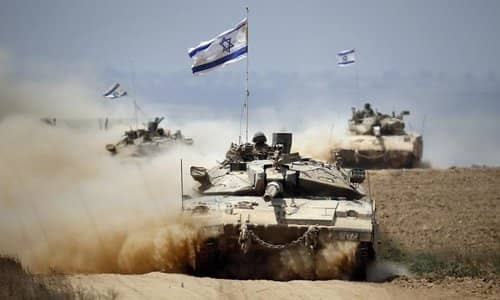
For months, Israel’s northern border has lived under the constant threat of rockets, drones, and missiles fired by Hezbollah. But in recent days, something has changed in the tone coming from Jerusalem. Israeli leaders are no longer speaking merely about retaliation or deterrence. They are speaking about control, security zones, and the possibility of taking the fight directly into Lebanon.
For many Israelis–and for those who support Israel around the world–the shift feels less like escalation and more like inevitability.
Hezbollah has launched its largest rocket barrages since the current phase of the war began, including coordinated attacks that Israeli officials say involved Iranian participation. Hundreds of rockets have targeted communities across northern Israel, sending civilians rushing into shelters and forcing daily life to halt in towns that have already endured more than a year of instability.
Israel’s response has been swift and increasingly decisive. Defense Minister Israel Katz announced this week that he and Prime Minister Benjamin Netanyahu have instructed the Israel Defense Forces (IDF) to prepare for expanded military operations in Lebanon if Hezbollah’s attacks continue.
Katz’s warning was blunt: if Lebanon cannot stop Hezbollah, Israel will.
“If the Lebanese government fails to prevent Hezbollah rocket and drone attacks on Israel, we will take control of the territory and do it ourselves,” he said.
That statement is not simply rhetoric. It reflects a growing consensus within Israel that the status quo along the northern border has become intolerable.
The Broken Ceasefire
After the devastating events of October 7 attacks, Israel spent more than a year fighting Hamas in Gaza while simultaneously enduring Hezbollah attacks from Lebanon. Entire Israeli communities near the border were evacuated for safety, leaving towns that once bustled with families eerily empty.
A U.S.-brokered ceasefire in late 2024 was supposed to bring stability. Under that agreement, Hezbollah forces were expected to withdraw from southern Lebanon while the Lebanese Armed Forces moved in to enforce the arrangement.
But the agreement never fully materialized.
Hezbollah remained entrenched. Missile launchers stayed hidden in villages and hillsides. Drone attacks continued. And Israeli intelligence reports suggested that the Iranian-backed terror group was expanding its capabilities rather than dismantling them.
Now Israeli leaders say the patience of the Israeli public–and the Israeli military–has run out.
“The conclusion is always that what we do not do, no one else will do,” Katz said this week, pointing to Lebanon’s failure to enforce the ceasefire or disarm Hezbollah.
From Israel’s perspective, the situation has become a textbook example of why security cannot be outsourced to international promises.
Hezbollah’s Calculated Gamble
Hezbollah, for its part, appears prepared for escalation.
Its leader, Naim Qassem, has openly declared that the organization is ready for a long war, framing the conflict as an “existential battle.”
The group has already suffered heavy losses. Israeli officials say more than 380 Hezbollah operatives–including key commanders–have been killed since the start of the current campaign known as Operation Roaring Lion. Israeli forces have also targeted hundreds of missile launchers, command centers, and infrastructure sites across Lebanon.
Yet Hezbollah continues firing.
Why?
Because from Iran’s perspective, Hezbollah is not merely a Lebanese militia. It is Tehran’s most powerful proxy army–an advanced missile force positioned directly on Israel’s northern border.
For Iran, Hezbollah serves as both shield and sword.
And that makes the northern front one of the most dangerous flashpoints in the entire Middle East.
Why Israel May Invade
For Israel, the strategic logic behind a possible invasion of southern Lebanon is increasingly clear.
First, Hezbollah possesses an estimated arsenal of tens of thousands of rockets and missiles capable of reaching deep into Israeli territory.
Second, the group has built extensive tunnel networks, fortified villages, and hidden weapons depots near the border.
Third–and perhaps most importantly–Israel has already experienced the consequences of ignoring a growing terror threat.
October 7 changed Israeli strategic thinking permanently.
The doctrine of waiting and containing is now viewed by many Israelis as dangerously naïve. If an enemy openly declares its intention to attack and builds the infrastructure to do so, Israel increasingly believes it must strike first.
That is why discussions in Israeli military circles increasingly center around pushing Hezbollah forces north of the Litani River, creating a deeper buffer zone that would protect Israeli border towns from direct attack.
Reports suggest that Israeli planners are considering precisely such an operation if rocket fire continues.
The Lebanese Government’s Impossible Position
Lebanon itself finds itself trapped in a tragic paradox.
The country’s official government does not fully control Hezbollah, yet it bears international responsibility for the group’s actions.
Even Lebanese President Joseph Aoun has acknowledged the destabilizing role Hezbollah plays, warning that its actions risk collapsing the Lebanese state and dragging the country into catastrophe.
But Lebanon’s weak government lacks the military power to confront Hezbollah directly.
That leaves Israel facing a grim calculation: if Beirut cannot remove the threat, Israel may feel compelled to do it itself.
The Road Ahead
For Israel, the stakes are not theoretical.
They are personal.
They are the families in Kiryat Shmona who cannot return home.
They are the farmers who cannot safely work fields near the border.
They are the children who have spent more time in bomb shelters than playgrounds.
Israel has made it clear: this time there will be no mass evacuation of northern communities.
Instead, the threat will be pushed back.
Whether that requires deeper airstrikes, expanded operations, or a full-scale invasion of southern Lebanon remains to be seen.
But one thing is increasingly clear.
Israel’s leaders believe that the security of their people cannot depend on broken promises or unenforced ceasefires.
And if Hezbollah continues its attacks, the next phase of this war may not be fought from across the border.
It may be fought inside Lebanon itself.
TruLight Ministries Daily Entertainment

TruLight TV : Gaither Vocal Band – Then Came Morning (Live Concert)
Bill Gaither, the founder of one of gospel’s most successful groups, the Gaither Vocal Band, is delighted to showcase his favorite gospel music during “Gaither Gospel Hour”.
Today on TruLight Radio XM
TruLight Radio XM 24/7
Program
GMT / UTC +2
Monday To Fridays
00:15 Words to Live By Testimonies
01.15 Science Scripture and Salvation
02.15 Ground Works
04.00 Gospel Concert of the Day
05.00 The Daren Streblow Comedy Show
5:55 It is Today devotional
6:00 Gaither Homecoming Morning Show
7:15 Discover the Word
8.15 Destined for Victory
8:55 Science Scripture and Salvation
9:00 Holy Spirit Hour – Normally Sermons
10:15 Hope of the Heart
11:15 Unshackled
11.45 Words to Live By
12:15 Truth for Life
13:15 Living on the Edge with Chip Ingram
14:15 Focus on the Family
15:00 Kids Hour
16:00 In Touch with Dr. Charles Stanley
16:30 Groundwork
17:15 Live in the Light
18:15 Renewing your Mind
19:00 Gaither Homecoming Show
20:15 Growing Hope
21:15 Adventures in Odyssey Radio Drama
21:45 Bible Reading
22:15 Night-sounds
23.00 Good Old Country Gospel / Rhema Gospel Express
VISIT THE WEBSITE
TruLight Ministry News
TruLight Ministries orders from God since 2012 . Teach Them , Comfort Them and Warn Them!
We Starting , the 1st May 2026 . with Our Preachers Diploma Online Platform – TruTheology.co.za . 36 Subjects with between 10 to 15 Lessons per Subject , equivalent to a 3 Year Theology Degree , The Training is Free to Approved Members and Tests Online after Each Lesson , You Determine the Speed of Your Studies . If you are interested registrations will take place from 1 April 2026 .
Since 2006, multi-award winning and multi-Dove Award nominated recording artist Tribute Quartet has become one of the country’s most dynamic, beloved and sought after male quartets in all of gospel music. Gary Casto, Josh Singletary, Gus Gaches and Ian Owens have proven to possess a combination of musical talent, warm and engaging personalities, and a focus that has kept them on the path to continued success since their inception. In an ever-changing musical climate, Tribute has remained steadfast in their goal to make music that is both timely and relevant to the current musical scene and their fanbase while propelling their mission to share the Hope of the Gospel.
Healing Truths
End Time Articles
Bonus Teaching for the Child of God !!
Who are the Seed of Abraham ?
The question “who are the seed of Abraham?” can be answered several ways, and it is important to make some distinctions. There is the Seed of Abraham (Seed being singular); there is the seed of Abraham physically (descendants of Abraham according to the flesh); and there is the seed of Abraham spiritually (those who, like Abraham, have faith in God).
The (singular) Seed of Abraham is Christ, as Galatians 3:16, quoting Genesis 12:7, says, “The promises were spoken to Abraham and to his seed. Scripture does not say ‘and to seeds,’ meaning many people, but ‘and to your seed,’ meaning one person, who is Christ.” The passage goes on to explain that an inheritance was promised to Abraham’s Seed (Christ) apart from the Law. Later, the Mosaic Law was introduced, but it did not annul the promises made to Abraham or to Abraham’s Seed (Christ).
Just as Abraham believed God and his faith was counted as righteousness (Genesis 15:6), so are all today who believe in God’s Son justified apart from the Law. In this way, Abraham is the “father” of all who believe (Romans 4:11–17). “If you belong to Christ, then you are Abraham’s seed, and heirs according to the promise” (Galatians 3:29).
Of course, the seed of Abraham can also refer to the Hebrew people who descended from Abraham through Isaac. Still more broadly, the seed of Abraham could include Arabs, who trace their lineage through Ishmael. This is the physical seed of Abraham. The spiritual seed of Abraham (believers in Jesus Christ) is comprised of people of all nationalities and ethnicities.
The Jewish religious leaders of the first century took pride in that they were Abraham’s seed. They saw their physical connection to Abraham as a guarantee of God’s favor. This attitude kept them from seeing their need for repentance of the heart—and brought condemnation from John the Baptist, who warned them to repent. Anticipating their fallback argument that they were the seed of Abraham, John said, “Do not think you can say to yourselves, ‘We have Abraham as our father.’ I tell you that out of these stones God can raise up children for Abraham” (Matthew 3:9).
Jesus dealt with the same issue later. In speaking to the unbelieving Jews, Jesus emphasized their need to receive His words as truth and obey His commands. They replied, “We be Abraham’s seed” (John 8:33, KJV). Jesus then rebukes them for plotting ways to murder Him; their stubborn response was again, “Abraham is our father” (verse 39a). At this, Jesus makes a distinction between the physical seed of Abraham and the true, spiritual seed of Abraham: “If you were Abraham’s children . . . then you would do what Abraham did” (verse 39b). The conversation heats up as the Jews for a third time reference their connection to Abraham: “Are you greater than our father Abraham?” they ask Jesus (verse 53). Jesus provokes them further: “Your father Abraham rejoiced at the thought of seeing my day; he saw it and was glad” (verse 56). The Jews’ are incredulous that Jesus would claim to be a contemporary of Abraham, and that’s when Jesus brings the exchange to a climax with a claim to full deity: “Very truly I tell you, . . . before Abraham was born, I am!” (verse 58). In a fury, the Jews attempted to stone Jesus (verse 59), again proving that being the physical seed of Abraham is not enough—they had to be born again (John 3:3).
Paul sums up the difference between the seeds of Abraham in Romans 2:28–29: “A person is not a Jew who is one only outwardly, nor is circumcision merely outward and physical. No, a person is a Jew who is one inwardly; and circumcision is circumcision of the heart, by the Spirit, not by the written code. Such a person’s praise is not from other people, but from God.”
Share this Feeding of Manna with your Friends and Family. just click on the Social Media icon and share !