Hosted by TruLight Ministries – The Place of Truth
SELECT YOUR READING LANGUAGE – BOTTOM LEFT = YOUR DAILY MANNA NOW AVAILABLE IN 103 LANGUAGES
a New Study : for the Next 6 Daily Manna Days
The Symbols of the Word of God
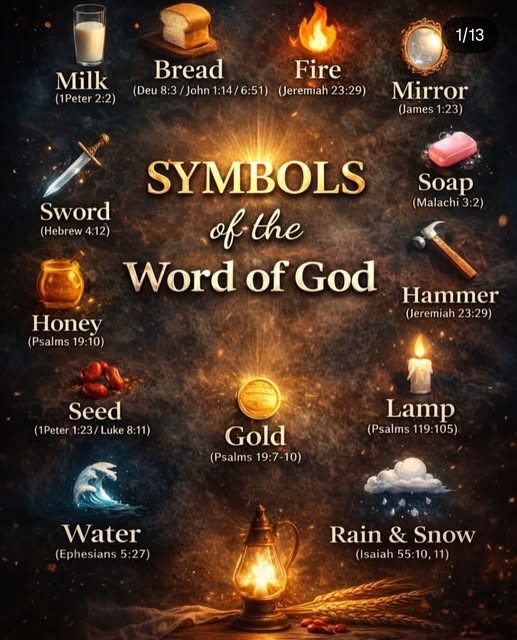
Symbols in the Word of God = Hammer
Use a Hammer on a Heart of Rock !
To better understand the causes and solutions for a hardened heart, it’s important to understand the broad biblical meaning of the word “heart.” The Bible considers the heart to be the hub of human personality, producing the things we would ordinarily ascribe to the “mind.” For example, Scripture informs us that grief (John 14:1); desires (Matthew 5:28); joy (Ephesians 5:19); understanding (Isaiah 6:10; Matthew 13:15); thoughts and reasoning (Genesis 6:5; Hebrews 4:12; Mark 2:8); and, most importantly, faith and belief (Hebrews 3:12; Romans 10:10; Mark 11:23) are all products of the heart. Also, Jesus tells us that the heart is a repository for good and evil and that what comes out of our mouth – good or bad – begins in the heart (Luke 6:43–45).
Considering this, it’s easy to see how a hardened heart can dull a person’s ability to perceive and understand. Anyone’s heart can harden, even faithful Christians’. In fact, in Mark 8:17–19 we see Jesus’ own disciples suffering from this malady. The disciples were concerned with their meager bread supply, and it was clear that each of them had forgotten how Jesus had just fed thousands with only a few loaves. Questioning them as to the hardness of their hearts, Christ spells out for us the characteristics of this spiritual heart condition as an inability to see, understand, hear, and remember. Regarding this last criterion, too often we forget how God has blessed us and what He has done for us. Similar to the disciples in this instance or the Israelites wandering in the wilderness, when a new calamity arises in our lives, our hearts often fill with fear and concern. Sadly, this simply reveals to God the little faith we have in His promise to take care of us (Matthew 6:32–33; Philippians 4:19). We need to remember not only the many times God has graciously provided for us in our time of need, but also what He has told us: “Never will I leave you; never will I forsake you” (Deuteronomy 31:6; Hebrews 13:5).
Sin causes hearts to grow hard, especially continual and unrepentant sin. Now we know that “if we confess our sins, [Jesus] is faithful and just and will forgive us our sins” (1 John 1:9). However, if we don’t confess our sins, they have a cumulative and desensitizing effect on the conscience, making it difficult to even distinguish right from wrong. And this sinful and hardened heart is tantamount to the “seared conscience” Paul speaks of in 1 Timothy 4:1–2. Scripture makes it clear that if we relentlessly continue to engage in sin, there will come a time when God will give us over to our “debased mind” and let us have it our way. The apostle Paul writes about God’s wrath of abandonment in his letter to the Romans where we see that godless and wicked “men who suppress the truth” are eventually given over to the sinful desires of their hardened hearts (Romans 1:18–24).
Pride will also cause our hearts to harden. The “pride of your heart has deceived you . . . you who say to yourself, ‘who can bring me down to the ground’ . . . I will bring you down declares the LORD” (Obadiah verses 3-4). Also, the root of Pharaoh’s hard-heartedness was his pride and arrogance. Even in the face of tremendous proofs and witnessing God’s powerful hand at work, Pharaoh’s hardened heart caused him to deny the sovereignty of the one, true God. And when King Nebuchadnezzar’s “heart became arrogant and hardened with pride, he was deposed from his royal throne and stripped of his glory . . . until he acknowledged that the Most High God is sovereign over the kingdoms of men and sets over them anyone He wishes” (Daniel 5:20–21). Accordingly, when we’re inclined to do it our way, thinking we can “go it on our own,” it would be wise to recall what King Solomon taught us in Proverbs 14:12 and 16:25: “There is a way that seems right to a man, but in the end it leads to death.”
So, what then is the antidote for a heart condition such as this? First and foremost, we have to recognize the effect that this spiritual disease has on us. And God will help us to see our heart’s condition when we ask Him: “Search me O God, and know my heart…see if there is any offensive way in me, and lead me in the way everlasting” (Psalm 139:23–24). God can heal any heart once we recognize our disobedience and repent of our sins. But true repentance is more than simply a resolute feeling of steadfast determination. Repentance manifests itself in a changed life.
After repenting of our sins, hard hearts begin to be cured when we study God’s Word. “How can a young man keep his way pure? By living according to your word. I seek you with all my heart. . . . I have hidden your word in my heart that I might not sin against you” (Psalm 119:9–11). The Bible is our manual for living as it is “God-breathed and is useful for teaching, rebuking, correcting, and training in righteousness” (2 Timothy 3:16). If we are to live life to the fullest as God intended, we need to study and obey God’s written Word, which not only keeps
Bible Verse and Prayer for Today
As God’s chosen people, holy and dearly loved, clothe yourselves with compassion, kindness, humility, gentleness and patience.
—Colossians 3:12
“I wonder what we should wear to that meeting?” This is an expected question when we are invited to an event or an occasion of great honor. In this passage, Paul reminds us to put on the set of clothing that is always in style, especially with God. We should clothe ourselves with compassion, kindness, humility, gentleness, and patience! We wear this clothing because we are special. We are God’s chosen people who are holy and dearly loved. This clothing is from the Ultimate Designer’s “Godly Character Collection.” We should best wear it when with other people, and when we are alone by ourselves, and we think no one is looking. These qualities are hard to wear, but always a blessing to those who meet us when we’re decked out in this wardrobe. Our prayer is that when we put on these clothes, others will not notice us, but the gracious God who chose us, loves us, and made us his holy children!
Prayer
Abba Father, thank you for bringing me into your family. May I never disappoint you in the way I treat others. May they see in me the qualities of character that they can only attribute to your presence and grace in my life. To you be the glory and the honor, forever and ever, in the name of Jesus and in the compassion, kindness, humility, gentleness, and patience in my life by your grace. Amen and Amen
Bible Teaching of the Day
The account of Deborah and Barak is found in Judges 4 and 5 in the Old Testament. The Israelites had been under the control of the Canaanite king Jabin and the commander of his army, Sisera. The Canaanites had 900 chariots of iron and ruled over Israel for 20 years (Judges 4:2–3).
A prophetess named Deborah judged or made rulings for the people of Israel under a palm tree during that time. One of Deborah’s judgments was to instruct Barak to summon 10,000 men and attack Jabin’s army. Likely fearful to comply with such a command, Barak told Deborah, “If you go with me, I will go; but if you don’t go with me, I won’t go” (Judges 4:8). She replied, “Certainly I will go with you. . . . But because of the course you are taking, the honor will not be yours, for the Lord will deliver Sisera into the hands of a woman” (verse 9).
Deborah and Barak then gathered 10,000 troops and attacked Sisera and his army. Barak’s troops won: “All Sisera’s troops fell by the sword; not a man was left” (Judges 4:16). Sisera himself fled to the tent of a Hebrew woman named Jael. She gave him milk to drink and covered him with a blanket in the tent. Then, “Jael . . . picked up a tent peg and a hammer and went quietly to him while he lay fast asleep, exhausted. She drove the peg through his temple into the ground, and he died” (verse 21).
Following this battle, “God subdued Jabin king of Canaan before the Israelites. And the hand of the Israelites pressed harder and harder against Jabin king of Canaan until they destroyed him” (Judges 4:23–24). Deborah’s prophecy was fulfilled: Barak won, Sisera was killed by a woman, and the Israelites were freed from their enemies.
Judges chapter 5 then records the song of Deborah and Barak, written to rejoice in God’s victory over the Canaanites. The lyrics encourage the actions of Deborah and Barak, saying, “Wake up, wake up, Deborah! / Wake up, wake up, break out in song! / Arise, Barak! / Take captive your captives, son of Abinoam” (Judges 5:12). Jael’s role is also heralded: “Most blessed of women be Jael, / the wife of Heber the Kenite, / most blessed of tent-dwelling women” (verse 24).
The song of Deborah and Barak also gives some more detail about the victory over the Canaanites: “The earth shook, the heavens poured, / the clouds poured down water” (Judges 5:4). Evidently, God used a flood to disable the iron chariots of Sisera. The victory was supernatural (verse 20). Chapter 5 concludes with the statement, “And the land had peace forty years.” This impressive time of peace lasted until Midian took control of Israel, necessitating Gideon’s rise.
Lessons for today from the lives of Deborah and Barak include the following: 1) God often calls people to step out in faith to attempt the unexpected, 2) God often uses unlikely people and sources to accomplish His plans, 3) God sometimes requires great risk and effort on our behalf as part of His divine plan. In the case of Deborah and Barak, they risked their lives in war, while Jael took in a runaway fugitive and risked her life to end his and help free Israel from oppression. Ultimately, this account reveals that God is in control of the nations and changes their leaders according to His desires.
Today’s Devotional
The Bible uses several metaphors involving birth to help explain what it means to have a saving relationship with Jesus. We find terms such as born again (John 3:3), born of God (John 1:13), and born of the Spirit (John 3:6). They all mean the same thing. Birth metaphors are used because we all understand physical birth. When a baby is born, a new person emerges into the world. The new life will grow, and the young person will come to resemble his or her parents. When we are born of the Spirit, a “new person” arrives with a new spiritual life. And as we grow, we come to resemble our Father in heaven (Romans 8:29).
People try to know God through a variety of means: some try religion or following an ethical code; some turn to intellect or logic; others try to find God in nature; and others through emotional experiences, believing that God inhabits whatever feelings they can muster when they think about Him. None of those bring us one step closer to actually communing with the God of the Bible because He cannot be known through our moral codes, our minds, our environment, or our emotions. He is Spirit, and those who would worship must worship “in spirit and in truth” (John 4:24).
Imagine trying to paint a portrait using a hammer and nails or trying to bake a meal using pen and paper. It would not help to try harder or cry over it because both tasks are impossible given the tools mentioned. So it is with the flesh and the Spirit. We cannot commune with a holy, incorporeal Being using sinful, fleshly means. Unless our spirits are reborn with life from God’s Spirit, we simply do not have the capability to fellowship with Him. We must be born of the Spirit.
God has instituted a way for fallen human beings to enter His holy presence, and it is the only way we can come to Him. Jesus said, “I am the way, the truth, and the life. No one comes to the Father except through me” (John 14:6). When Jesus offered Himself as a sacrifice for sin (John 10:18) and rose again, He opened a door that had been locked. When He died on the cross, the veil of the temple was torn in two, symbolizing the fact that He has made a way to enter God’s presence. God has opened the door to heaven so that whoever trusts in His Son’s sacrifice can be born again in his or her spirit (Mark 15:38).
When we place our faith in the risen Christ, a divine transaction takes place (2 Corinthians 5:21). God removes from us the sin, guilt, and condemnation we deserved because of our rebellion against Him. He throws our sin as far as the east is from the west (Psalm 103:12). At the moment of repentance and faith, the Holy Spirit breathes new life into us, and our bodies become His temple (1 Corinthians 3:16). Our spirits can now commune with God’s Spirit as He assures us that we belong to Him (Romans 8:16).
We might think of the human spirit like a deflated balloon that hangs lifeless inside our hearts. We are scarcely aware of its existence until God calls our names and an awakening begins. When we respond to God’s call with repentance and faith in what Jesus Christ has done for salvation, we are born of the Spirit. At that point the balloon inflates. The Holy Spirit moves into our spirits and fills us. He begins His transforming work so that we begin to resemble Jesus (2 Corinthians 5:17; Romans 8:29).
There are only two types of people in the world: those who are born of the Spirit and those who are not. In the end, only those two categories matter (John 3:3). Our earthly lives are extended opportunities for us to respond to God’s call and become born of the Spirit (Hebrews 3:15).

Bible Prophecy, Signs of the Times and Gog and Magog Updates with Articles in the News
Prepared, Vigilant, Unafraid: The Lesson From America’s Latest Terror Attacks
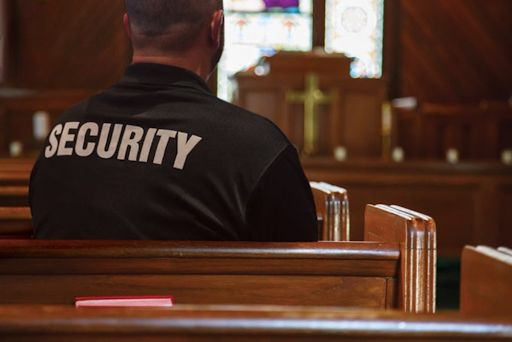
When evil strikes close to home, the question every society must answer is simple but profound: will we stand, or will we surrender to fear?
In the shadow of rising tensions overseas–particularly the escalating conflict involving Iran–Americans are once again confronting a harsh reality: war abroad often fuels violence at home. The nation has witnessed a disturbing series of incidents tied to extremism and domestic terror fears.
A bar shooting in Austin by an Islamic terrorist. Two teenage ISIS sympathizers in New York attempting to detonate homemade bombs during a protest. And now two chilling attacks within hours of each other: a truck ramming and shooting at a Michigan synagogue and a terrorist-style attack at a Virginia university.
These events are sobering reminders that the threats facing America are not just thousands of miles away on distant battlefields. Sometimes they appear in our own cities, campuses, and houses of worship.
But amid the darkness, there were also powerful examples of courage–and important lessons about preparation, vigilance, and the right to defend innocent life.
The Synagogue Attack That Could Have Been Far Worse
At Temple Israel in West Bloomfield, Michigan–one of the largest Reform synagogues in the United States–a man drove a truck through the building’s entrance and opened fire with a rifle. The attack happened while children were present in the synagogue’s early childhood center, sending shockwaves through the community.
The attacker barreled through the entrance and down a hallway, striking a security officer in the process. Soon after, the vehicle burst into flames amid the chaos. But what could have become a horrific mass casualty event was stopped by something critically important: prepared security.
Temple Israel had invested in professional security measures, including armed personnel trained specifically for threats like this. When the attacker began firing, those security personnel engaged and stopped him before he could reach classrooms or crowded areas of the building.
All 140 children in the synagogue’s preschool were safely evacuated. The injured security officer is expected to recover.
That outcome did not happen by accident.
In recent years, many synagogues and churches have taken the painful but necessary step of increasing security. Some have hired trained guards. Others have implemented volunteer security teams. In many cases, these groups work with local law enforcement and federal agencies to rehearse emergency scenarios–including active shooter and terrorist-style attacks.
Reports indicate Temple Israel’s security had recently trained for such scenarios alongside law enforcement, including exercises coordinated with federal authorities. When the moment of crisis arrived, they were ready.
Preparation saved lives.
Heroes Without Weapons
Just hours earlier and hundreds of miles away, another act of terror unfolded at Old Dominion University in Virginia.
A gunman entered a classroom where Reserve Officers’ Training Corps (ROTC) members were gathered. According to investigators, the attacker shouted extremist slogans before opening fire, killing an ROTC instructor and injuring others.
But again, the story did not end with the attacker.
The ROTC students–future military officers–refused to simply wait to be victims.
Despite the fact that they were not armed, several cadets rushed the shooter. During the struggle, they managed to subdue him and ultimately stop the attack by ‘rendering him no longer alive’ according to reports. Investigators say their actions almost certainly prevented additional deaths.
Their bravery came at great cost. One instructor, Lt. Col. Brandon Shah, was killed in the attack. But the actions of the students prevented the gunman from continuing his assault across the campus.
Their instinct to act–rather than freeze–saved lives.
The Principle of Self-Defense
There is an uncomfortable truth that modern society sometimes tries to avoid: evil exists, and sometimes it must be confronted.
In recent years, many institutions have emphasized the “Run, Hide, Fight” principle in active-shooter situations. That guidance is wise. In many circumstances, escaping or hiding is absolutely the safest option.
But the final word in that phrase–fight–exists for a reason.
There may come a moment when escape is impossible. When hiding will not work. When innocent lives depend on someone stepping forward and resisting the attacker.
That moment arrived in Michigan when security personnel defended a synagogue full of children.
It arrived in Virginia when unarmed ROTC students tackled a gunman.
Both incidents remind us that self-defense is not simply a political talking point. It is a fundamental human principle.
Vigilance Without Fear
The rise of domestic terror threats is deeply troubling. Intelligence officials have long warned that international conflicts can inspire attacks within the United States. When global tensions escalate, extremist actors sometimes see an opportunity–or justification–to strike.
But the answer to that danger is not fear.
It is vigilance.
Communities can take practical steps:
Houses of worship can develop security teams and emergency plans.
Schools and campuses can train staff and students in crisis response.
Citizens can stay aware of their surroundings and report suspicious activity.
Preparedness does not mean paranoia. It means responsibility.
Temple Israel’s security team understood that reality. So did the ROTC students who refused to stand by while lives were threatened.
Courage in a Dangerous Age
We live in a world where the threat of violence cannot always be eliminated. But the response to that violence still defines who we are.
Prepared communities. Courageous individuals. Citizens who remain alert but refuse to surrender to fear.
Those qualities are not signs of a fearful society.
They are the marks of a resilient one.
The attacks of the past week are tragic reminders of the dangers we face. Yet they also highlight something equally important: when evil strikes, ordinary people are still capable of extraordinary courage.
And in moments like these, courage–not terror–is what ultimately prevails.
One In Twenty Deaths: Canada’s Assisted Suicide Program Reaches Stunning Levels

As Canada approaches the 10th anniversary of legalizing assisted suicide, the country is rapidly nearing a grim milestone: 100,000 deaths through the practice.
Based on current trends, the government’s “Medical Assistance in Dying” (MAiD) program has become one of the leading contributors to deaths nationwide. Since legalization in 2016, the number of Canadians who have died through assisted suicide has risen dramatically year after year, placing Canada on track to become the first modern nation to surpass 100,000 euthanasia deaths in less than a decade.
The scale of the program is staggering. In 2024 alone, 16,499 Canadians died through MAiD–about 5.1 percent of all deaths in the country, meaning roughly one out of every twenty deaths in Canada now occurs through assisted suicide.
At the current pace–about 45 assisted deaths every day–Canada is expected to pass the 100,000 mark around the June anniversary of the law’s passage.
The number has gained renewed attention following warnings from Kelsi Sheren, a Canadian anti-MAiD activist and military veteran, who argued that the system has drifted far from what Canadians were originally promised.
“MAiD was sold as a narrow option for the terminally ill, a rare mercy,” Sheren wrote in a recent op-ed. “That fiction collapsed long ago. Today, assisted death is a routine outcome for people struggling with disability, isolation, poverty, and mental health challenges–and when the world looked at what we’re doing, it didn’t nod approvingly. It recoiled.”
From “Last Resort” To Expanding System
Assisted dying was legalized by Parliament with the passing of Bill C-14 on June 17, 2016. The law allows adults to seek MAiD if they suffer from a “grievous and irremediable medical condition,” are in an irreversible decline, and experience suffering they deem intolerable.
Originally framed as a compassionate option for those facing imminent death, the law has gradually expanded through court rulings and legislative changes.
In 2021, Canada broadened eligibility through Bill C-7, creating a second category for people whose natural death is not reasonably foreseeable. Since that change, the number of non-terminal cases has steadily increased each year.
Under current law, mental illness alone is not yet an eligible condition. However, legislation passed in 2024 delays but still anticipates that mental illness could qualify for euthanasia beginning March 17, 2027, if certain training and safeguards are implemented.
Critics warn that such expansions could further normalize assisted death in situations far removed from terminal illness.
Cases Raising Alarm
Concerns intensified following the case of Kiano Vafaeian, a 26-year-old Canadian suffering from Type 1 diabetes, vision problems, and seasonal depression, who ended his life through the MAiD program in December 2025.
His family says they were shocked that doctors approved the request.
“We never thought there would be a chance that any doctor would approve a 22- or 23-year-old at that time for MAiD because of diabetes or blindness,” his mother said.
Cases like Vafaeian’s have fueled growing debate over whether vulnerable individuals–including those facing disability, chronic illness, or emotional distress–are being steered toward death rather than receiving greater medical or social support.
Government reports have acknowledged that factors such as loneliness, isolation, and loss of independence are frequently cited among those requesting assisted death.
For critics, this raises troubling questions about whether the system is addressing suffering–or simply eliminating the sufferer.
Canada Far Ahead Of The World
Canada’s numbers dwarf those of other nations with legalized euthanasia.
Switzerland, which has permitted assisted suicide for roughly two decades, has recorded fewer than 9,000 deaths from the practice. Belgium has experienced roughly 33,000 deaths across more than 20 years.
Even in the United States–where assisted suicide is legal in several states–the total number of deaths across more than two decades is estimated at just over 5,000.
Only the Netherlands has a higher share of deaths by euthanasia, with roughly 5.8 percent of all deaths, compared with Canada’s 5.1 percent. Yet Canada’s rapid rise in absolute numbers has stunned many observers.
Some analysts now say Canada has become the fastest adopter of euthanasia in the world, reaching levels that took other countries far longer to achieve.
A Profound Ethical Turning Point
Supporters of MAiD argue the program offers compassionate relief for those enduring unbearable suffering and preserves personal autonomy at the end of life.
But opponents–including disability advocates, religious leaders, and medical ethicists–warn that Canada may be crossing a dangerous threshold where assisted suicide becomes normalized within healthcare itself.
What began as a narrow exception for extreme end-of-life suffering is increasingly viewed by critics as a broader social solution to pain, disability, and despair.
As Canada approaches its 100,000th assisted death, the country is confronting a sobering question:
Is this the fulfillment of compassionate medicine–or the quiet redefinition of how a society values life itself?
Trump’s ‘Board of Peace’ Needs To Ask A Few Hard Questions About Gaza

As US President Donald J. Trump and members of his “Board of Peace” pledged billions of dollars for “relief and reconstruction” in the Gaza Strip, two recent public opinion polls show that most Palestinians are still concerned about widespread corruption in Palestinian society.
This concern should sound alarm bells for the Trump Administration and donor countries if they are about to invest billions of dollars in the Gaza Strip. The Palestinians are loudly warning international donors that Palestinian leaders are not trustworthy in handling money.
According to polls conducted by the Coalition for Integrity and Accountability — a Palestinian civil society organization that seeks to combat corruption and promote integrity, transparency and accountability in Palestinian society — 57% of the Palestinians in the Gaza Strip expect the level of corruption to remain or increase in the aftermath of the war that Hamas launched on October 7, 2023.
The polls found that 90% of the Palestinians consider so-called anti-corruption efforts (by the Palestinian Authority and Hamas) insufficient. They attributed this failure primarily to weak transparency in state institutions, weak political will to hold corrupt individuals accountable, the weak deterrent effect of applied penalties, and the absence of officials serving as role models in upholding integrity and safeguarding public resources. Sixty-one percent of the Palestinians, in addition, said they believed that the level of corruption increased in 2025, and expected it to rise in 2026.
The results of the latest surveys do not come as a surprise. Other polls conducted by the Palestinian Center for Policy and Survey Research have consistently shown that more than 80% of the Palestinians in the West Bank and Gaza Strip believe that there is corruption in institutions of the Palestinian Authority (PA).
This disclosure is important: the Palestinian Authority is expected to play a significant role in the future management of the Gaza Strip. Recently, Nickolay Mladenov, High Representative for the “Board of Peace,” announced the establishment of a “Liaison Office” by the PA for communication and coordination regarding the board’s activities in the Gaza Strip. The newly established National Committee for the Administration of Gaza, which is supposed to be an independent body of apolitical technocrats, is dominated by officials affiliated with the PA and its ruling Fatah faction.
Under PA President Mahmoud Abbas, many Palestinians believe corruption has deepened rather than receded. Common practices include wasta (nepotism/favoritism), misuse of public funds, and the enrichment of a political elite while the general population faces economic hardship. Widespread disenchantment with the PA’s corruption was a primary factor in Hamas’s victory in the Palestinian Legislative Council election of 2006 (the last election held), as the terror group campaigned on a platform of “clean governance” and “reform.”
For the past 33 years, the international community has failed to track the flow and use of aid money donated to the Palestinians, enabling high-level corruption. Tens of billions of dollars in international aid given to the Palestinian Authority and the Hamas regime in the Gaza Strip have been lost to corruption, siphoned off by terror groups or mismanaged by the PA leadership.
Since October 2023 alone, Hamas has reportedly generated an estimated $500 million by seizing humanitarian aid trucks and selling supplies to Gaza residents at inflated prices.
Corruption, mismanagement and diversion of aid have repeatedly undermined reconstruction efforts in the Gaza Strip and played a major role in preventing aid from reaching ordinary Palestinians. Cement and construction materials intended for civilian housing have repeatedly ended up being used for Hamas’s terror tunnels and military infrastructure. Resources that donors believed were helping build homes and schools were instead strengthening Hamas and other terror groups. Much of the donor money has been swallowed by corruption, political patronage, and the militarization of Palestinian society.
The Gaza Strip has become the only place in the world where a terror group can repeatedly wage war — funded by the international community — while that same international community pays to rebuild the battlefield afterward, possibly for the next war.
The people of the Gaza Strip urgently need humanitarian assistance, housing, infrastructure, and economic opportunity. However, pouring money into the territory without strict safeguards will not help those residents.
For decades, the Gaza Strip has been one of the most heavily funded territories in the world in terms of international aid per capita. Yet despite the enormous financial injections, the Gaza Strip remains impoverished, unstable, and dominated by Hamas and other terrorist groups. International aid has empowered a governing system that prioritizes rockets over reconstruction. While donors thought they were funding hospitals and schools, Hamas was appropriating enormous resources and investing them in weapons, military infrastructure, and preparation for the next confrontation with Israel.
If the “Board of Peace” truly wants to help the Palestinians, it must abandon the illusion that money alone will solve the problem. Any serious reconstruction effort must begin with extremely uncompromising conditions: tracking and full transparency over how funds are spent, strict monitoring of construction materials, and a clear demand that Hamas and all other terror groups lay down their weapons and permanently exit the scene. The assumption that writing big checks will somehow produce different results has collapsed in the face of reality.
TruLight Ministries Daily Entertainment

TruLight TV : We Will Serve the Lord
Known for their exquisite family harmonies, flowing instrumentals, and spiritually anointed performances, the Collingsworths have ministered to thousands of fans through their music. Now you have a front-row seat as you listen to ‘He Set Me Free,’ ‘The Love of God,’ ‘Be Thou My Vision,’ ‘God Is Moving,’ ‘The Healer Is Here,’ and more. Track list: I’ve Come Here To Tell You He Set Me Free (Instrumental) If He Hung The Moon We Will Serve The Lord It’s Not Too Late To Pray Living In Love With The Lord It Matters To The Master His Hand In Mine (Instrumental) How Great His Love For Me The Love Of God Be Thou My Vision (Instrumental) Show A LIttle Bit of Love & Kindness Until Then (Instrumental) There Is Healing In His Hands For You God Is Moving The Healer Is Here.
Today on TruLight Radio XM
TruLight Radio XM 24/7
Program
GMT / UTC +2
Monday To Fridays
00:15 Words to Live By Testimonies
01.15 Science Scripture and Salvation
02.15 Ground Works
04.00 Gospel Concert of the Day
05.00 The Daren Streblow Comedy Show
5:55 It is Today devotional
6:00 Gaither Homecoming Morning Show
7:15 Discover the Word
8.15 Destined for Victory
8:55 Science Scripture and Salvation
9:00 Holy Spirit Hour – Normally Sermons
10:15 Hope of the Heart
11:15 Unshackled
11.45 Words to Live By
12:15 Truth for Life
13:15 Living on the Edge with Chip Ingram
14:15 Focus on the Family
15:00 Kids Hour
16:00 In Touch with Dr. Charles Stanley
16:30 Groundwork
17:15 Live in the Light
18:15 Renewing your Mind
19:00 Gaither Homecoming Show
20:15 Growing Hope
21:15 Adventures in Odyssey Radio Drama
21:45 Bible Reading
22:15 Night-sounds
23.00 Good Old Country Gospel / Rhema Gospel Express
VISIT THE WEBSITE
TruLight Ministry News
TruLight Ministries orders from God since 2012 . Teach Them , Comfort Them and Warn Them!
We Starting , the 1st May 2026 . with Our Preachers Diploma Online Platform – TruTheology.co.za . 36 Subjects with between 10 to 15 Lessons per Subject , equivalent to a 3 Year Theology Degree , The Training is Free to Approved Members and Tests Online after Each Lesson , You Determine the Speed of Your Studies . If you are interested registrations will take place from 1 April 2026 .
Healing Truths
End Time Articles
Bonus Teaching for the Child of God !!
We as Humans, Consist of 3 Parts. Body. Soul and Spirit. Body. Mind and Spirit. We need daily food for our Body, Mind and Spirit. Here at TruLight Ministries we feed your spirit with daily manna. You feed your body with food and water. You must feed your mind with information. knowledge and wisdom, educational material. God is in control of your Body, Jesus in control of your Soul / mind and the Holy Spirit in control of your spirit if you have received Him. We as humans must allow the 3 unit to take care of our being. Even when it comes to salvation, Jesus’ blood must cleanse your soul mind with blood baptism iaw Rebirth, God must cleanse your Body with water baptism and your spirit baptize in the Holy Spirit. we need the 3 testimonies to one day receive the rapture after the second coming, and the 3 must also testify for us to one day be taken up into Heaven.
SPIRITUALLY YOU NEED 3 YES’S TO ACHIEVE ETERNITY VIA THE RAPTURE
You Need 3 Yes’s to be raptured after the 2nd Coming of Jesus,
YOU NEED 3 YES’S TO GO TO HEAVEN AND 3 YES’S TO ENTER HEAVEN.
DO YOU HAVE THESE 3 YES’S ?????
1Jn 5:6 This is he who came by water and blood, Jesus Christ; not by water only, but by water and blood. And it is the Spirit that beareth witness, because the Spirit is truth.
1Jn 5:7 For there are three that bear witness in heaven: the Father, the Word, and the Holy Ghost: and these three are one.
1Jn 5:8 And there are three that bear witness in earth: the Spirit, and the water, and the blood: and these three agree in one.
1Jn 5:9 If we receive the witness of men, the witness of God is greater: for this is the witness of God, which he hath testified of his Son.
YES NO 1 HAVE YOU BEEN WASHED IN THE BLOOD OF THE LAMB? ARE YOUR RACES CLEAN AND WHITE?
YES NO 2 HAVE YOU FOLLOWED JESUS IN THE WATER OF BAPTISM?
YES NO 3 HAVE YOU BEEN BAPTIZED WITH THE HOLY SPIRIT. RECEIVE AND USE YOUR FRUIT AND GIFTS OF THE SPIRIT FOR THE BENEFIT OF THE KINGDOM OF HEAVEN?
Share this Feeding of Manna with your Friends and Family. just click on the Social Media icon and share !