SELECT YOUR READING LANGUAGE – BOTTOM LEFT = YOUR DAILY MANNA NOW AVAILABLE IN 103 LANGUAGES
@ TruLight – Daily Manna is not Just a Bible Verse with a Small Prayer . No WE SERVE DAILY Manna for the Whole Day . Breakfast , Lunch , Dinner , Plus tea Times and even Entertainment Manna . Plus News Manna and More , This Daily Manna will keep you Spiritually full for the full 48 Hours and even More to Share with your Friends and Family !!!
The Bible is the Only Remedy for Today !

First, it is important to recognize that this is not a question of whether God still performs miracles today. It would be foolish and unbiblical to claim God does not heal people, speak to people, and perform miraculous signs and wonders today. The question is whether the miraculous gifts of the Spirit, described primarily in 1 Corinthians 12–14, are still active in the church today. This is also not a question of can the Holy Spirit give someone a miraculous gift. The question is whether the Holy Spirit still dispenses the miraculous gifts today. Above all else, we entirely recognize that the Holy Spirit is free to dispense gifts according to His will (1 Corinthians 12:7-11).
In the book of Acts and the Epistles, the vast majority of miracles are performed by the apostles and their close associates. Paul gives us the reason why: “The things that mark an apostle—signs, wonders and miracles—were done among you with great perseverance” (2 Corinthians 12:12). If every believer in Christ was equipped with the ability to perform signs, wonders, and miracles, then signs, wonders, and miracles could in no way be the identifying marks of an apostle. Acts 2:22 tells us that Jesus was “accredited” by “miracles, wonders, and signs.” Similarly, the apostles were “marked” as genuine messengers from God by the miracles they performed. Acts 14:3 describes the gospel message being “confirmed” by the miracles Paul and Barnabas performed.
Chapters 12–14 of 1 Corinthians deal primarily with the subject of the gifts of the Spirit. It seems from that text “ordinary” Christians were sometimes given miraculous gifts (12:8-10, 28-30). We are not told how commonplace this was. From what we learned above, that the apostles were “marked” by signs and wonders, it would seem that miraculous gifts being given to “ordinary” Christians was the exception, not the rule. Beside the apostles and their close associates, the New Testament nowhere specifically describes individuals exercising the miraculous gifts of the Spirit.
It is also important to realize that the early church did not have the completed Bible, as we do today (2 Timothy 3:16-17). Therefore, the gifts of prophecy, knowledge, wisdom, etc. were necessary in order for the early Christians to know what God would have them do. The gift of prophecy enabled believers to communicate new truth and revelation from God. Now that God’s revelation is complete in the Bible, the “revelatory” gifts are no longer needed, at least not in the same capacity as they were in the New Testament.
God miraculously heals people every day. God still does amazing miracles, signs, and wonders and sometimes performs those miracles through a Christian. However, these things are not necessarily the miraculous gifts of the Spirit. The primary purpose of the miraculous gifts was to prove that the gospel was true and that the apostles were truly God’s messengers. The Bible does not say outright that the miraculous gifts have ceased, but it does lay the foundation for why they might no longer occur to the same extent as they did as recorded in the New Testament.

Tea Time Manna
[The Lord said to Israel,] “I am the Lord your God, who brought you out of Egypt, out of the land of slavery. You shall have no other gods before me.”
—Deuteronomy 5:6-7
God had delivered his people from Egypt through the Red Sea, the ten plagues, and led them to this mountain, where he came down to give Moses and his people his Ten Commandments. They didn’t earn God’s presence, deserve his deliverance, and certainly had not earned his affection. However, God had blessed them with deliverance because of his grace and to honor his promises to Abraham. As God, the Lord, is Sovereign, all-powerful, and without rival. Amazingly, throughout the Scriptures, God follows this same pattern. He repeatedly blesses his people with grace; only then does he call his people to worship and obedience. The gods of other religions demanded adherence, sacrifice, and obedience BEFORE they would bless people with their favor. As the Lord, the great “I Am,” revealed to Moses (Exodus 3:4-13), he is worthy of being recognized as God. Having demonstrated his grace, love, mercy, and incomparable glory to Israel, he now calls on them to have no other gods; he alone is to be worshiped!
Prayer
Almighty God, you alone ARE worthy of all honor, worship, and praise. I want my heart always to revere you, respect your glory, and appreciate your grace. Please don’t let me outlive my love and allegiance to you. I pray this in Jesus’ name with all my love and respect. Amen and Amen
Bible Teaching of the Day
LUNCH MANNA =
To be inerrant is to be free from error. Only the original autographs (the original manuscripts written by the apostles, prophets, etc.) are under the divine promise of inspiration and inerrancy. The books of the Bible, as they were originally written under the inspiration of the Holy Spirit (2 Timothy 3:16–17; 2 Peter 1:20–21), were 100 percent inerrant, accurate, authoritative, and true. There is no biblical promise that copies of the original manuscripts would be equally inerrant or free from errors. As the Bible has been copied thousands of times over thousands of years, some copyist errors have likely occurred.
It is important to remember that the biblical manuscripts we have today are in 99 percent agreement with one another. Yes, there are some minor differences, but the vast majority of the biblical text is identical from one manuscript to another. Most of the differences are in punctuation, word endings, minor grammatical issues, word order, etc.—issues easily explainable as scribal mistakes or changes in spelling rules. No important theological issue is thrown into doubt by any supposed error or contradiction. Biblical manuscripts from the fifteenth century agree completely with manuscripts from the third century. We can have absolute confidence that the Bible we have today is almost exactly identical to what the apostles and prophets wrote 2,000-plus years ago.
We should not be quick to say, “Oh, that is just a scribal error.” The Bible’s “errors” can be explained in a logical and believable manner. Discrepancies that cannot be explained—or are very difficult to explain—could very well have an answer that we simply do not know at this point. Just because we cannot find a solution does not mean that a solution doesn’t exist. Believing there to be a scribal error must be the absolute last resort in clearing up any supposed Bible “error.”
It is possible that minor errors have crept into our modern manuscripts and translations of the Bible. Copyists and translators are human beings, and they make mistakes. The fact that the Bible we have today is incredibly accurate is a testimony to its inspiration and preservation by God.
Can we still trust the Bible? Absolutely! Modern Bible translations are God’s Word. The Bible today is just as authoritative as it was in the first century AD. We can completely trust the Bible as being God’s message to us. Yes, the biblical promises of inspiration and inerrancy only apply directly to the original manuscripts. But that does not impact our modern Bible’s accuracy and authority. God’s Word endures forever, despite the occasional failings and mistakes of copyists and translators.
Today’s Devotional
DINNER MANNA =
“Jesus is the answer” is a popular slogan. Missing is the question. Jesus is the answer to what? What are people trying to convey when they claim that Jesus is the answer?
Jesus is the answer to our broken relationship with God. When God created Adam and Eve, they enjoyed perfect fellowship with Him. But Adam sinned by disobeying God, thereby bringing death into the world (Genesis 3:8–19; Romans 5:12; 6:23; 1 Corinthians 15:21–22). A significant part of that death is spiritual death. Humanity’s relationship with God is broken. God provided a covering for Adam and Eve (Genesis 3:21) and promised a Redeemer who would defeat Satan and reconcile God and man (Genesis 3:15). The Old Testament narrative gradually reveals God’s plan to save people. The New Testament shows us that Jesus is the promised Redeemer. Jesus atoned for our sin and restores the possibility of relationship with God.
Jesus said, “I am the way and the truth and the life. No one comes to the Father except through me” (John 14:6). Jesus is the answer—the only answer—to our broken relationship with God. Apart from Him there is no salvation (Acts 4:12; 1 Timothy 2:5–6). The biblical term for God’s act of making peace with sinful humanity is reconciliation (see 2 Corinthians 5:18). Romans 5:10 reminds us that, in Christ, God’s enemies were made His friends and given life: “If, while we were God’s enemies, we were reconciled to him through the death of his Son, how much more, having been reconciled, shall we be saved through his life!”
Jesus is the answer to the problem of our estrangement from God. It is Jesus who makes it possible for our sins to be forgiven and for us to be children of God (John 1:12–13). It is Jesus who mends our relationship with God so that we can fellowship with Him during our lifetimes as well as eventually live with Him for eternity.
Jesus is the answer to our guilty consciences. Even after we are saved, we still sin and experience the temporal consequences of sin. Sin keeps us from fellowshipping with God fully. But we have God’s promise: “If we confess our sins, he is faithful and just and will forgive us our sins and purify us from all unrighteousness” (1 John 1:9). Jesus is the One who “washes our feet” of daily impurities, even after we have been “fully bathed” (see John 13:10). Jesus is the reason we can receive forgiveness and be purified. He is the answer to our sin problem both now and for eternity.
Jesus is the answer to our broken relationships with each other. When Adam and Eve sinned, not only did they break their relationship with God, but they also damaged their relationship with each other (see Genesis 3:12, 16). Humans have been struggling in relationship to one another ever since (see Genesis 4:8). This relational breakdown manifests in various ways, including the walls we erect between races. In the New Testament era, there was a major division between Gentiles and Jews. Jesus is the answer to all types of disharmony: “For he himself is our peace, who has made the two groups [Jew and Gentile] one and has destroyed the barrier, the dividing wall of hostility. . . . His purpose was to create in himself one new humanity out of the two, thus making peace, and in one body to reconcile both of them to God through the cross, by which he put to death their hostility. He came and preached peace to you [Gentiles] who were far away and peace to those [Jews] who were near. For through him we both have access to the Father by one Spirit” (Ephesians 2:14–18; cf. Galatians 3:26–29).
Jesus instructed His followers to love one another humbly and sacrificially (John 13:34–35). Jesus prayed for unity among His followers (John 17), a unity embraced by the early church (Acts 8 and 10). Because we have received forgiveness in Jesus, we can forgive others. Jesus is the answer for our relational turmoil.
Jesus is the answer to a meaningless existence. The writer of Ecclesiastes bewails the meaninglessness of worldly pursuits apart from God. When we are spiritually dead, life is ultimately empty. Nothing in this world will fully satisfy the deepest longings of our hearts (see Psalm 73:25). But, in Jesus, we have purpose. He said, “The thief comes only to steal and kill and destroy; I have come that they may have life, and have it to the full” (John 10:10). The Christian life is a fruitful life. We are invited to be part of God’s work in the world, tasked with sharing the gospel and making disciples (Matthew 28:18–20). We can do nothing apart from Jesus, but in Him we bear much fruit (John 15:5).
Jesus is the answer to our worries and doubts. Life involves hardship, and with hardship come worries, fears, and doubts. Jesus told His followers, “I have told you these things, so that in me you may have peace. In this world you will have trouble. But take heart! I have overcome the world” (John 16:33). Jesus reminded us of God’s love and care (Matthew 6:24–33). Jesus also gave us the Holy Spirit to live with us forever (John 14:15–21; 16:7–15). Jesus is the reason we are not alone. Jesus is the answer to our fears and heartaches. He is able to sympathize with us because He has lived a human life in this broken world (Hebrews 4:15–16). Jesus gives us peace and equips us to endure, and even rejoice in, the hardships of this life (James 1:2–5).
Jesus is the answer to the problems of the world. Experience tells us that the world is broken and in need of repair—sometimes its brokenness is rather obvious. Jesus is the answer. He has a plan to fix this broken world: “The government will be on his shoulders. And he will be called Wonderful Counselor, Mighty God, Everlasting Father, Prince of Peace. Of the greatness of his government and peace there will be no end. He will reign on David’s throne and over his kingdom, establishing and upholding it with justice and righteousness from that time on and forever. The zeal of the LORD Almighty will accomplish this” (Isaiah 9:6–7). World peace has proved an elusive goal in our war-torn world, but one day Jesus will set all things right, and the Prince of Peace will rule in true justice, ushering in a time of blessing and bounty the world has never seen (Isaiah 11). Revelation 21 predicts a new heaven and new earth: “Look! God’s dwelling place is now among the people, and he will dwell with them. They will be his people, and God himself will be with them and be their God. ‘He will wipe every tear from their eyes. There will be no more death’ or mourning or crying or pain, for the old order of things has passed away” (Revelation 21:3–5).
A day is coming when the world’s problems will be solved; everything will be made new, and peace will reign. This is because of Jesus. We eagerly await His return, trusting that “the Lord is not slow in keeping his promise, as some understand slowness. Instead he is patient with you, not wanting anyone to perish, but everyone to come to repentance” (2 Peter 3:9).
No matter what our individual needs, Jesus is the answer for our lives today, and He promises a better future to come.

NEWS MANNA –
Bible Prophecy, Signs of the Times and Gog and Magog Updates with Articles in the News
100 000 humanoid robot, NEO’s by 2027

Unprecedented Disruption Is Coming With Mass Production Of Humanoid Robots
The future has a way of arriving quietly–until suddenly, it doesn’t. And with the announcement of a full-scale humanoid robot factory in California set to produce up to 100,000 units by the end of 2027, that future is no longer theoretical. It is being assembled, tested, and prepared for delivery into American homes.
U.S.-based company 1X has taken a decisive step forward with its new facility in Hayward ( a 2nd facility in San Carlos is coming online later this year), aiming to mass-produce its humanoid robot, NEO. These machines are not specialized industrial arms hidden away in factories. They are designed to walk among us–inside homes–assisting with everyday tasks, interacting with people, and learning in real time.
Powered by advanced AI systems from NVIDIA, including the Jetson Thor platform and Isaac simulation tools, NEO represents a merging of robotics and artificial intelligence that has long been promised but never fully realized at scale.
And yet, the question is no longer whether humanoid robots are coming. The question is: what happens when they arrive?
From a technological standpoint, this leap is staggering. The robots are being trained in virtual environments through reinforcement learning, enabling them to adapt, improve, and respond dynamically to real-world conditions. Their ability to process information locally–without relying heavily on cloud systems–means they can react in real time, making them more autonomous and more capable than previous generations of machines. This is not automation as we have known it. This is embodiment–intelligence placed into physical form.
But the deeper story is not about what these robots can do. It is about what their presence will change.
Start with work.
For decades, automation has chipped away at repetitive and industrial jobs. But humanoid robots introduce a new variable: flexibility. A robot that can move like a human, adapt like a human, and learn like a human is no longer confined to one task. It can clean, assist the elderly, stock shelves, deliver packages, and even perform basic caregiving functions. The implications are immediate and profound. Entire sectors–home health care, retail support, logistics, and even entry-level service jobs–could face unprecedented disruption.
The economic argument will be familiar: increased efficiency, reduced labor costs, and higher productivity. Companies will embrace humanoid robots because they do not call in sick, demand wages, or require benefits. But beneath that efficiency lies a more unsettling question–what happens to the millions of people whose roles become optional?
History shows that technological revolutions often create new jobs even as they eliminate old ones. But this time may be different. When the machine is no longer just a tool but a general-purpose worker, the scope of displacement expands dramatically. The speed of this transition–accelerated by AI learning and mass production–may outpace society’s ability to adapt.
Then there is the cultural shift.
For the first time, machines will not just be tools we use–they will be entities we live alongside. A humanoid robot in the home is not like a dishwasher or a smartphone. It moves, responds, and interacts in ways that mimic human behavior. Over time, people may begin to form attachments, dependencies, or even emotional connections. This raises difficult questions about identity, relationships, and what it means to be human in a world where imitation becomes increasingly convincing.
Will children grow up seeing robots as companions? Will the elderly rely on machines for comfort and care instead of human interaction? Will society slowly trade authentic relationships for convenient ones?
There is also the question of control.
With vertically integrated manufacturing and AI systems that continuously learn and update, companies like 1X are not just building hardware–they are building ecosystems. The data collected, the behaviors learned, and the decisions made by these machines will all be shaped by the entities that design them. That raises concerns about privacy, influence, and the potential centralization of power in the hands of a few tech companies.
And yet, despite these concerns, demand is already surging. The company reports that its first-year production batch of 10,000 sold out in just five days. That kind of response suggests something deeper than curiosity–it suggests readiness. Or perhaps, inevitability.
Because at its core, this is not just a technological development. It is a turning point.
Humanoid robots represent the convergence of decades of innovation into a single, tangible reality. They promise convenience, efficiency, and a new standard of living. But they also challenge long-standing assumptions about work, value, and human uniqueness.
By the end of 2026, the first of these machines are estimated to begin entering homes and while the world may not look dramatically different overnight, the trajectory will be set. A society that once revolved around human labor will begin to reorganize itself around artificial capability.
And the most important question will not be how advanced these robots become.
It will be whether we have fully considered what we are becoming alongside them.
17 000 000 ( 17 Million ) Abortions to Date in the Past 15 Years in USA alone.
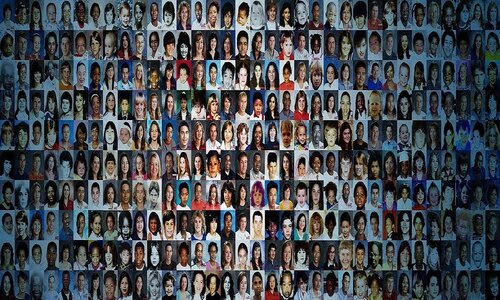
The Generation That Never Was: Vast Numbers Of Generation Z Lost To Abortion
17 000 000 Murders by Mothers – something to think of this Mothers Day !!!
Seventeen million is not just a number–it is a silence.
It is the empty desks that were never filled, the voices that were never heard, the lives that never had the chance to begin. However one arrives at the statistics, the baseline reality is sobering: tens of millions of pregnancies in the United States alone have ended in abortion over the past several decades. That is not a marginal figure. It is not a rounding error in history. It is a population-scale absence–one that forces a difficult but necessary question: what has been lost?
The claim, discussed by Rachel Wilson on the Jack Neel Podcast, frames the issue in generational terms–suggesting as much as one-third of Generation Z (those born between 1997-2012) never made it to birth. While exact percentages can be debated endlessly, the broader implication does not require mathematical precision to understand. When the numbers reach into the tens of millions, the impact is no longer theoretical. It becomes civilizational.
Start with the most obvious dimension: human potential.
Seventeen million lives represent more than just individuals–they represent possibility multiplied across time. Within that number could have been doctors who discovered treatments, engineers who built new technologies, teachers who shaped future leaders, and parents who raised the next generation. The loss is not just immediate; it compounds. Each life that never begins also means future families that never form, grandchildren who are never born, and contributions that never materialize.
It is a ripple effect that stretches far beyond a single generation.
Economically, the consequences are becoming increasingly visible. Many developed nations, including the United States, are grappling with declining birthrates and aging populations. Fewer young people entering the workforce means fewer taxpayers supporting social systems, fewer innovators driving growth, and fewer hands to sustain the infrastructure of society. In response, governments often turn to immigration as a way to stabilize labor markets and economic output.
That solution may be practical, but it raises an uncomfortable question: what if the need for replacement had been less urgent in the first place?
This is not about assigning blame as much as it is about recognizing cause and effect. A society that reduces its own birthrate–whether through cultural shifts, economic pressures, or policy decisions–will inevitably face the downstream consequences of that choice. Labor shortages, demographic imbalance, and social strain do not emerge in isolation. They are the natural outcome of fewer people being born.
But beyond economics lies something deeper–something harder to quantify.
There is a cultural and emotional cost to absence. A generation is not just a collection of individuals; it is a shared identity shaped by relationships, experiences, and collective memory. Remove millions from that equation, and what remains is not simply smaller–it is different. Entire networks of friendships, communities, and families are missing. The world we know today is not just the result of who is here, but also who is not.
From a Christian perspective, this absence carries profound spiritual weight.
The Bible speaks consistently of life as intentional and known by God. In Psalm 139, the image is vivid: each person “fearfully and wonderfully made,” formed with purpose and care. If that is true, then every lost life is not just a statistical reduction, but a story that was never told–a calling that was never fulfilled.
And yet, any honest conversation must also acknowledge the realities that surround abortion.
Behind every number is a woman facing a decision–often under pressure, uncertainty, or fear. Economic hardship, lack of support, and cultural messaging all shape these moments. If society is troubled by the scale of abortion, it must also confront the conditions that make it seem like the only option for so many. Addressing the outcome without addressing the causes will always fall short.
Still, the scale itself demands reflection.
Seventeen million. Even if one were to set aside debates over percentages or generational labels, that number alone is enough to pause. It represents a population larger than many countries–a vast, unseen absence that has quietly reshaped the trajectory of a nation.
What would those lives have added to the world? How would they have influenced culture, economy, faith, and family?
We cannot know.
But we can recognize that something significant has been lost.
The conversation around abortion is often framed in terms of rights, law, and personal autonomy. Those are important considerations. But there is another dimension that is too often overlooked–the cumulative impact over time. When decisions that affect individual lives are multiplied across millions, they do not remain individual. They become generational.
And generations shape history.
The world we inhabit today is not only defined by the people who are here, building, creating, and living–it is also defined by those who are not. The absence is invisible, but its effects are not. They are felt in the economy, in culture, in communities, and perhaps most deeply, in the quiet recognition that an entire generation of possibility never had the chance to unfold.
That is not a small thing.
It is a silence measured in millions.
Trump makes history: First U.S. president to call the nation to Shabbat – a Christian ZIONISM Shabbat

For the first time in American history, a sitting president has called on the entire nation to observe Shabbat. In a White House proclamation signed May 4, 2026, as part of Jewish American Heritage Month, President Donald Trump designated the period from sundown Friday, May 15, through nightfall Saturday, May 16, as a national Shabbat, dubbed “Shabbat 250”, in honor of the 250th anniversary of American independence. The move sent shockwaves through Jewish and Christian communities alike, and for those who know their Talmud, the implications stretch far beyond a single weekend.
Invoking President George Washington’s celebrated 1790 letter to the Hebrew Congregation in Newport, Rhode Island, in which Washington wrote that the United States “gives to bigotry no sanction, to persecution no assistance,” Trump tied the founding promise of America directly to its Jewish citizens.
“In special honor of 250 glorious years of American independence and on the weekend of Rededicate 250 — a national jubilee of prayer, praise, and thanksgiving — Jewish Americans are encouraged to observe a national Sabbath,” Trump wrote. “From sundown on May 15 to nightfall on May 16, friends, families, and communities of all backgrounds may come together in gratitude for our great Nation. This day will recognize the sacred Jewish tradition of setting aside time for rest, reflection, and gratitude to the Almighty.”
Trump also paid tribute to Haym Salomon, the Revolutionary War–era financier who rallied support for independence and, as the proclamation put it, “gave everything to the success of the American Revolution.” The proclamation declares: “Like so many Jewish Americans who follow in his footsteps, Salomon’s legacy stands as a testament to the unshakable belief in the American promise.”
In a direct rebuke of the rising tide of antisemitism on college campuses and beyond, Trump wrote: “Under my leadership, we are aggressively fighting the violence against Jewish Americans that increased under my predecessor, prosecuting hateful criminals to the fullest extent of the law, and working to end the scourge of anti-Semitism throughout our institutions.”
The proclamation closes with a direct call: “I further call on all Americans to celebrate their faith and freedom throughout this year, during this month, and especially on Shabbat to celebrate our 250th year. DONALD J. TRUMP.”
TruLight Ministries Daily Entertainment Manna

TruLight TV : CPR Improv Comedy
CPR (Carl, Pete, Ringo) Bananas Comedy Performance
Today on TruLight Radio XM
TruLight Radio XM 24/7
Program
GMT / UTC +2
Monday To Fridays
00:15 Words to Live By Testimonies
01.15 Science Scripture and Salvation
02.15 Ground Works
04.00 Gospel Concert of the Day
05.00 The Daren Streblow Comedy Show
5:55 It is Today devotional
6:00 Gaither Homecoming Morning Show
7:15 Discover the Word
8.15 Destined for Victory
8:55 Science Scripture and Salvation
9:00 Holy Spirit Hour – Normally Sermons
10:15 Hope of the Heart
11:15 Unshackled
11.45 Words to Live By
12:15 Truth for Life
13:15 Living on the Edge with Chip Ingram
14:15 Focus on the Family
15:00 Kids Hour
16:00 In Touch with Dr. Charles Stanley
16:30 Groundwork
17:15 Live in the Light
18:15 Renewing your Mind
19:00 Gaither Homecoming Show
20:15 Growing Hope
21:15 Adventures in Odyssey Radio Drama
21:45 Bible Reading
22:15 Night-sounds
23.00 Good Old Country Gospel / Rhema Gospel Express
VISIT THE WEBSITE
https://trulightradioxm.org.za
TruLight Ministry News – EXTRA MANNA
TruLight Ministries orders from God since 2012 . Teach Them , Comfort Them and Warn Them!
Healing Truths.
https://trulightradioxm.org.za/healing-articles/the-spiritual-reason-behind-bladder-cancer
End Time Articles.
https://trulightradioxm.org.za/end-time-articles-2/the-wrath-of-god-vs-the-wrath-of-the-lamb
Bonus Teaching for the Child of God !!
Our understanding of anyone’s situation is limited, of course, but when a “Christian” leaves the faith or renounces belief in God, we do have some general guidelines for how to respond. In many cases of high-profile individuals leaving the faith, we observe that their departures from the faith were not “de-conversions” as much as “realizations.”
As individuals who leave their faith behind tell their stories, we often see that they gradually grew uncomfortable with and eventually rejected aspects of Christian culture and belief. They knew for quite a while that they were going through the motions and simply “playing along” with Christianity. After a while, these individuals accepted that they lacked a deep or connected sense of truth. They didn’t change their ideology, per se, only their identification.
For most of those who turn their backs on God, losing faith really means recognizing they never had faith to begin with. What they had was a vague intellectual agreement with some of the tenets of the gospel, some family traditions, some social connections, and (in the high-profile cases) a bright career path. But, when questions arose, they didn’t have actual faith or trust in the Savior. By and large, that’s the reason people who once identified as Christians change their minds. It’s not that they were true believers, then stopped; it’s that they came to embrace the fact that they were never true believers at all.
Jesus’ parable of the four soils illustrates what happens in the hearts of those who fall away from the faith (Matthew 13:1–23). The seed springs up in the stony ground, and for a while things look good, but there was never any root. Lacking true depth, plants wither and die; lacking a true change of heart, so-called faith disappears.
But there is another legitimate possibility to explain the behavior of those who leave the faith—in another of Jesus’ parables. It could be that those who seem to fall away are undergoing a prodigal-type experience (see Luke 15:11–32). If they are truly saved, then what we see as their departure from the faith is a tragic victory of sin in their lives. Such willfulness will be resolved, eventually. Legitimate Christians can sin, and they can struggle with doubt, but they will come out of it, often after a time of divine discipline (see Galatians 6:1–5 and Hebrews 12:4–13).
Either way—whether those who leave the faith are like the stony ground or like the prodigal son—the situations are heartbreaking. Such instances should be addressed with love and honesty. It’s almost impossible for us to know, for certain, what’s happening in anyone’s heart (1 Samuel 16:7). But Scripture is clear that those who are born again cannot lose that status (John 10:28). It is also clear that even those who are saved can risk serious consequences for disobedience (see 1 Corinthians 5:5 and Galatians 6:7).
The best thing to do when we have doubts is recognize that God allows us the space to express them (Mark 9:24; Habakkuk 1:2–4). He knows we will struggle with our experiences (John 16:32–33). It’s critical to know that He provides answers when we seek them (Matthew 7:7–8). Scripture (John 20:31; 2 Peter 1:16; Luke 1:1–4) and nature (Romans 1:18–20; Psalm 19:1) both serve to provide evidence and reasons to believe. That does not make the answers simple, but they are there (1 John 4:1). We can and should seek the advice of those with more experience and wisdom to help us answer those questions (Proverbs 11:14; Philippians 3:14–15). Perhaps more than anything, it’s essential to remember that “I don’t understand” is not the same as “this cannot be true.” Most people who “de-convert” reach a crisis point where they do not agree with God and refuse to accept that they could be wrong; on the basis of that, they decide God does not exist. Sooner or later, what a person wants to believe becomes more important than any evidence to the contrary (see John 5:39–40).
Some questions are hard, and not all have happy answers. But there are answers. Many seekers and skeptics have found them (1 Peter 3:15). Our prayer is that those who leave the faith will come back to the truth. If they don’t, it only proves that merely saying, “I am a Christian,” is not self-authenticating, even when a person is sincere (Matthew 7:21–23; Mark 13:13).
Share this Feeding of Manna with your Friends and Family. just click on the Social Media icon and share !