Hosted by TruLight Ministries – The Place of Truth
SELECT YOUR READING LANGUAGE – BOTTOM LEFT = YOUR DAILY MANNA NOW AVAILABLE IN 103 LANGUAGES
@ TruLight – Daily Manna is not Just a Bible Verse with a Small Prayer . No WE SERVE DAILY Manna for the Whole Day . Breakfast , Lunch , Dinner , Plus tea Times and even Entertainment Manna . Plus News Manna and More , This Daily Manna will keep you Spiritually full for the full 48 Hours and even More to Share with your Friends and Family !!!
Don’t Drag along all by Yourself , Give it to Jesus !!!

Matthew 11:28 is one of the most comforting verses in the Gospels. There, Jesus says, “Come to me, all you who are weary and burdened, and I will give you rest.” This is an open invitation, extended to those who are willing to come.
The entire chapter is set in the time after Jesus sent the disciples out on a mission (Matthew 11:1). He first had an interaction with John the Baptist’s disciples. Apparently, John was having doubts, which Jesus assuaged. Jesus then addressed the crowd regarding John, who was the messenger sent to prepare the way for the Messiah (verse 10).
Tragically, many in that generation rejected both John and Jesus. They called John demon-possessed and Jesus a drunkard. As a result of this rejection, Jesus pronounces judgment on some towns that had witnessed divine miracles (Matthew 11:20–24). Next, He affirms His oneness with the Father, stating clearly that no one can know God except through Him. Finally, He offers an invitation to the weary and burdened. Those willing to come to Him have this promise: “I will give you rest.”
Jesus is eager to reveal the Father to those who are willing. The “weariness” of those who needed to come was likely a result of futile, man-made efforts to reach the Father. Elsewhere, Jesus denounced the religious leaders of His day for placing unnecessary burdens on people (Matthew 23:4, 13–15; Luke 11:46). In addition to strict adherence to the law, the religious leaders added various traditions of their own (Matthew 15:3–6; Mark 7:8–9). Jesus presents a better way. His yoke is easy and His burden is light, unlike that of the Pharisees (Matthew 11:29–30).
In ancient times, a yoke was placed on the neck of two animals working together in a field. Taking Jesus’ yoke is coming into union with Him. This opens up a life of discipleship where the willing learn from Christ and are guided by His humble and gentle self. The humility of Christ is unlike the self-righteousness of the religious leaders.
The “burden” Jesus speaks of refers to what Jesus expects of His followers. He has teachings and commandments, but, unlike the onerous requirements of the Pharisees, Jesus’ burden is light. John affirms this in 1 John 5:3, “Loving God means keeping his commandments, and his commandments are not burdensome” (NLT). Even better, God works in the believer to bring about obedience (Philippians 2:13).
In light of Scripture’s teaching, the “rest” Jesus gives also entails being free from the burden of sin. Sin is a brutal slave-master, and its slavery leads to death, while obeying God leads to freedom and righteous living (Romans 6:16–18). Christ’s redemptive work on the cross saved us from the penalty of sin and broke its power in our lives (Romans 6:10).
Another passage dealing with Jesus’ rest is Hebrews 4. The epistle of Hebrews was written to distraught Christians who were tempted to revert to the old Jewish system, and the writer emphasizes the superiority of the New Covenant over the Old. In this context, we find that God’s rest is associated with trusting in Christ.
Thank God for His grace! Everyone burdened by sin and striving to earn salvation through works should heed Christ’s invitation and accept His rest, breaking free from sin and placing all hope in His death and resurrection. Also, believers should recognize that Christ’s yoke is easy. We follow His humble guidance by obeying His teachings, knowing that His way is better than both legalism and licentiousness. How different the way of Christ is from the way of the legalists, who “tie up heavy, cumbersome loads and put them on other people’s shoulders, but they themselves are not willing to lift a finger to move them” (Matthew 23:4).
Finally, because Jesus gives us rest, Christian leaders should avoid adding more burdens to their flock. They are to proclaim God’s message of grace and truth, not load God’s people down with human traditions.

Tea Time Manna
Finally, brothers, whatever is true, whatever is noble, whatever is right, whatever is pure, whatever is lovely, whatever is admirable — if anything is excellent or praiseworthy — think about such things.
—Philippians 4:8
Let’s get our minds out of the gutter and get our hearts focused on God’s glory. Let’s get our minds out of the focus on problems, difficulties, and horrible things we see in our world today and remind ourselves of God’s goodness and the glorious things that pertain to him. If “we become what we behold,” then let’s choose to focus our gaze on:
…whatever is true, whatever is noble, whatever is right, whatever is pure, whatever is lovely, whatever is admirable — if anything is excellent or praiseworthy — think about such things.
Prayer
Righteous and Holy God, you are marvelous and glorious, perfect in every way and beyond my comprehension. Please awaken the character of your holiness within me through the power of your Holy Spirit. I don’t want minor changes, but the Spirit’s transformation to become more like Jesus. Please help me see and focus upon the good and glorious things that reflect your nature and not the divisiveness, sleeze, and fluff of my world. In Jesus’ name, I pray for your help to rise above the meaningless, vain, and nasty things of my world and focus on you and your glory so I can bring others to you. Amen and Amen
Bible Teaching of the Day
LUNCH MANNA =
The expression trust in Jesus holds multi-layered meaning. In one sense, trusting in Jesus means believing in Him for salvation (John 3:16). We believe who He is—God in human form—and put our faith in Him as Savior. And we believe what He has done—that He died for our sins and rose from the dead. Since we cannot save ourselves from sin and death (Romans 3:10–20), we trust in Jesus to save us (John 11:25). We cannot receive eternal life and live forever in the presence of God until we’ve trusted in Jesus as Savior and accepted His forgiveness (Ephesians 1:7).
Subsequent to salvation, trusting in Jesus means committing or dedicating ourselves entirely to Him. When we are born again, we become followers of Jesus Christ. As His followers, we put complete confidence in Him and His Word. To trust in Jesus means to believe everything He said and accept His Word as true: “So Jesus said to the Jews who had believed him, ‘If you abide in my word, you are truly my disciples, and you will know the truth, and the truth will set you free’” (John 8:31–32, ESV). The more we know and abide in the words of Jesus, the more we will obey Him, and the more our confidence in Him will grow as we experience freedom in Christ.
A trustworthy promise Jesus gave us in His Word was to come to Him to find rest: “Come to me, all you who are weary and burdened, and I will give you rest. Take my yoke upon you and learn from me, for I am gentle and humble in heart, and you will find rest for your souls. For my yoke is easy and my burden is light” (Matthew 11:28–30). A yoke is a wooden harness used to join the necks of two draft animals. Together, the beasts can more effectively pull a heavy load. In the time when Jesus spoke these words, farmers would often pair a young, inexperienced, but vigorous animal with an older, weaker, but seasoned animal. The younger animal would learn from the more experienced one, and the older would benefit from the younger one’s strength to help carry the load.
Rest, another way of expressing trust, is a state of leaning on Jesus for strength and learning from Him. He shares the load as we journey together. When we are tired and overburdened, we can come alongside Jesus and find rest for our souls. In this way, we trust in Jesus, by relying on Him for everything in our lives, especially when we are weary and burdened down. Jesus is the believer’s Sabbath-rest (Hebrews 4:1–11).
Jesus understands our weaknesses and knows we will struggle to trust in Him. That is why Scripture says, “Do not be anxious about anything, but in every situation, by prayer and petition, with thanksgiving, present your requests to God. And the peace of God, which transcends all understanding, will guard your hearts and your minds in Christ Jesus” (Philippians 4:6–7). When we take our anxious hearts to God in prayer, He offers us peace. His presence is peace. The passage does not say He’ll always give us what we’re asking for, but it does promise peace to guard our hearts and minds. To trust in Jesus means to come to Him and believe He has good and trustworthy plans for our lives and our future. We don’t have to fret about tomorrow. When we trust in Jesus, He pours out His peace on us.
Our trust in Jesus grows through experience (2 Corinthians 1:10) as we see God working all things in our lives—both the good and bad—for His purpose (Romans 8:28). Jesus wants us to live by faith in Him (2 Corinthians 5:7; Galatians 2:20), and so the Christian life becomes a testing and training ground in trust: “Consider it pure joy, my brothers and sisters, whenever you face trials of many kinds, because you know that the testing of your faith produces perseverance. Let perseverance finish its work so that you may be mature and complete, not lacking anything” (James 1:2-4).
Jesus said, “Do not let your hearts be troubled. Trust in God; trust also in me” (John 14:1). We may know that Jesus loves us and promises always to be with us (Matthew 28:20), but we can’t see Him, and, during times of trouble, doubt and fear can creep in and make it difficult to apply that knowledge. Peter encourages us that we can trust in Jesus even when we cannot see Him: “In all this you greatly rejoice, though now for a little while you may have had to suffer grief in all kinds of trials. These have come so that the proven genuineness of your faith—of greater worth than gold, which perishes even though refined by fire—may result in praise, glory and honor when Jesus Christ is revealed. Though you have not seen him, you love him; and even though you do not see him now, you believe in him and are filled with an inexpressible and glorious joy” (1 Peter 1:6–8).
Even though we can’t see Jesus with our physical eyes, the Holy Spirit enables us to see Jesus with the eyes of our hearts (Ephesians 1:18–20). Ultimately, our inability to see Jesus physically makes our trust in Him even more secure. That is why Jesus said, “Blessed are those who have not seen and yet have believed” (John 20:29).
The apostle Paul captured what it means for a believer to trust in Jesus: “For our light and momentary troubles are achieving for us an eternal glory that far outweighs them all. So we fix our eyes not on what is seen, but on what is unseen, since what is seen is temporary, but what is unseen is eternal” (2 Corinthians 4:17–18).
Jesus is teaching us to trust Him in all things at all times with all of our heart (Proverbs 3:5–6) so that our faith becomes unshakeable: “Trust in the LORD forever, for the LORD, the LORD himself, is the Rock eternal” (Isaiah 26:4). As we learn to trust in Jesus more, we identify more with the psalmist’s description of a believer at rest in the arms of God: “I have calmed and quieted myself, I am like a weaned child with its mother; like a weaned child I am content” (Psalm 131:2).
Today’s Devotional
DINNER MANNA =
The saying “my yoke is easy and my burden is light” is part of a larger passage (Matthew 11:28–30), in which Jesus tells all who are weary and burdened to come to Him for rest. He isn’t speaking here of physical burdens. Rather, it was the heavy burden of the system of works that the Pharisees laid on the backs of the people that Jesus was offering to relieve. Later on in Matthew’s Gospel, Jesus will rebuke the Pharisees for laying heavy burdens on the shoulders of the people (Matthew 23:4).
The “yoke of the Pharisees” is the burdensome yoke of self-righteousness and legalistic law-keeping. It has been said by biblical scholars that the Pharisees had added over 600 regulations regarding what qualified as “working” on the Sabbath. That is a heavy burden! Recall the story of the lawyer who asked Jesus what was the greatest commandment of the Law (Matthew 22:36). You can almost read between the lines of the man’s question: “What law, of all the laws we have, do I absolutely have to keep?”
Jesus was saying that any kind of law-keeping is burdensome and amounts to a “heavy yoke” of oppression because no amount of law-keeping can bridge the gap between our sinfulness and God’s holiness. God says through the mouth of the prophet Isaiah that all of our righteous deeds are like a “polluted garment,” and Paul reiterated to the Romans that “no one will be declared righteous in his sight by observing the law” (Romans 3:20). The good news is that Jesus promises to all who come to Him that He will give them rest from the heavy burden of trying to earn their way into heaven and rest from the oppressive yoke of self-righteousness and legalism. Jesus encourages those who are “heavy laden” to take His yoke upon them, and in so doing they will find rest for their souls. The yoke of Jesus is light and easy to carry because it is the yoke of repentance and faith followed by a singular commitment to follow Him. As the apostle John says, “For this is the love of God, that we keep his commandments. And his commandments are not burdensome” (1 John 5:3).
This is what Jesus says in Matthew 11:30. His yoke is easy and His burden light. Now, we might think that there is really no difference between the commandments of Jesus and the Jewish Law. Isn’t the same God responsible for both? Technically speaking, yes. If anything, one might argue that the commands of Jesus are even more burdensome because His reformulation of the Mosaic Law in the Sermon on the Mount (Matthew 5—7) actually goes above and beyond a mere outward conformity to the Law and deals instead with the inner person.
What makes Jesus’ yoke easy and His burden light is that in Jesus’ own active obedience (i.e., His perfect fulfillment of the Law of God), He carried the burden that we were meant to carry. His perfect obedience is applied (imputed) to us through faith, just as His righteousness was exchanged for our sin at the cross (2 Corinthians 5:21). Our obedience to Jesus then becomes our “spiritual worship” (Romans 12:1). Furthermore, we are indwelt by the Holy Spirit who works in our lives to mold us into the image of Christ, thereby making the yoke of Jesus easy and His burden light. The life lived by faith is a much lighter yoke and a much easier burden to carry than the heavy and burdensome yoke of self-righteousness under which some continually strive to make themselves acceptable to God through works.

NEWS MANNA –
Bible Prophecy, Signs of the Times and Gog and Magog Updates with Articles in the News
Trump Halts Iran Negotiation Mission; Pressures Iran With Sanctions, Maritime Enforcement
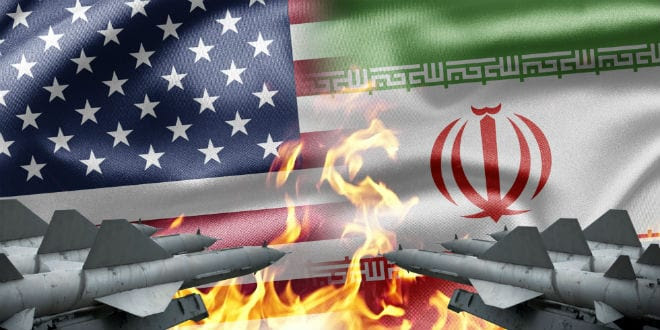
President Trump has abruptly halted a planned diplomatic push toward Iran, ordering senior U.S. envoys not to travel to Pakistan for backchannel negotiations and declaring that Tehran “can call us anytime they want.” The decision lands in the middle of a widening regional crisis, as sanctions intensify, maritime routes tighten under military pressure, and the Israel–Hezbollah front remains under a fragile, newly extended ceasefire.
Trump confirmed in a social media post that he cancelled the trip of U.S. representatives to Islamabad after telling Fox News he instructed negotiators Steve Witkoff and Jared Kushner to stand down. He wrote, “I just cancelled the trip of my representatives going to Islamabad,” adding that there was “too much time wasted on traveling, too much work.” He also stated that “nobody knows who is in charge” inside Iran, reflecting a hardening U.S. position toward the Islamic Republic’s leadership structure. Two Pakistani officials told the Associated Press that Iranian Foreign Minister Abbas Araghchi had already left Pakistan without meeting U.S. officials.
The diplomatic rupture comes as the Trump administration escalates economic pressure on Iran’s energy lifelines. On Friday, Washington imposed sanctions on a major China-based oil refinery alongside roughly 40 shipping companies and tankers involved in transporting Iranian crude. The measures expand secondary sanctions targeting entities that continue doing business with Tehran, aimed directly at constraining Iran’s primary revenue stream.
At the same time, the Middle East conflict environment has widened. Airlines across multiple countries have begun cancelling flights due to disrupted jet fuel supplies and rising prices tied to instability across regional shipping lanes. The Strait of Hormuz, a critical artery for global oil transport, has become a flashpoint in an intensifying maritime confrontation. U.S. military operations have included boarding vessels linked to Iranian oil smuggling, while Iranian-linked forces have seized commercial ships and attacked others in the region. Reports from the theater indicate that mine-laying activity and naval harassment have effectively constrained commercial movement through the waterway.
Trump has also tied diplomatic developments to military de-escalation efforts elsewhere. He announced that Israel and Lebanon agreed to extend their ceasefire involving Hezbollah by three weeks following White House discussions, marking the second high-level negotiation between the two countries within a week. The initial 10-day ceasefire had been set to expire Monday but was extended after renewed rocket fire and interception operations in northern Israel.
Against this backdrop of diplomacy and coercion, the United States and Iran remain locked in a long-running confrontation that has evolved across decades. Since the 1980s, U.S. personnel have been targeted by Iran-backed groups, beginning with proxy warfare in Lebanon and continuing through Iraq, Syria, and the Gulf. Thirteen U.S. service members have been killed in the current cycle of regional escalation linked to Iranian-aligned forces, with additional noncombat fatalities also reported in the broader theater. Western intelligence assessments have long attributed attacks on U.S. forces in Iraq, including those by Kataib Hezbollah and similar militias, to the Islamic Revolutionary Guard Corps (IRGC) Quds Force network.
Iran’s regional military posture has expanded through missile development, drone warfare, and proxy forces across multiple countries. Iranian-aligned groups have launched repeated missile and drone attacks toward Israel in recent escalatory cycles, while the IRGC’s broader network has been implicated in large-scale strikes, including coordinated barrages involving hundreds of projectiles in recent regional confrontations. In maritime domains, Iranian-linked forces have been tied to ship seizures, sabotage operations, and disruption of commercial traffic through the Strait of Hormuz, a chokepoint through which a significant portion of global oil supply flows.
Iranian officials and international monitors have cited thousands of deaths across Iran, Lebanon, Israel, and neighboring Gulf states since the most recent escalation cycle began, including reported civilian casualties and combat fatalities across multiple theaters. The scale of destruction has intensified political pressure on all parties as energy markets, aviation routes, and shipping lanes absorb the shock.
The United States–Iran confrontation has remained defined by sanctions, proxy warfare, and intermittent diplomatic openings since the 1979 Islamic Revolution. Episodes such as the 1983 Beirut barracks bombing, the Iraq War insurgency period, and repeated sanctions regimes have shaped a pattern of pressure without a formal peace framework. Trump’s current posture reflects a continuation of maximum pressure strategy combined with selective disengagement from diplomatic intermediaries.
At the center of this moment is a tightening of strategic options: diplomacy is being slowed, sanctions expanded, and maritime security increasingly enforced through direct military action.
Israel’s Ongoing Ingathering And The Echo of Ancient Prophecy

The scene at Ben Gurion Airport on April 23 carried a significance that stretched far beyond a routine arrival. As 240 members of the Bnei Menashe community stepped onto Israeli soil, many wept, embraced relatives, and lifted prayers of thanksgiving. Their journey–from remote regions of northeastern India to the modern state of Israel–was not merely geographic. For many, it marked the culmination of generations of longing tied to identity, history, and faith.
This latest arrival, part of “Operation Wings of Dawn,” represents the beginning of a broader effort to bring thousands more from this community home. The Bnei Menashe trace their lineage to the biblical tribe of Manasseh, one of the “lost tribes” of ancient Israel. While scholars debate aspects of that claim, what is beyond dispute is their persistent preservation of Jewish customs across centuries and continents. Their Aliyah–the Hebrew term for immigration to Israel–reflects a powerful combination of cultural continuity and spiritual conviction.
Yet this story is not unfolding in isolation. It is part of a much larger and ongoing movement. Even amid the conflicts with Hamas, Hezbollah, and Iran, Jewish immigration to Israel has not slowed–it has, in some respects, intensified.
Recent figures underscore this reality. According to data from The Jewish Agency for Israel and Israel’s Ministry of Aliyah and Integration, approximately 47,000 Jewish immigrants arrived in Israel in 2023. While that number dipped slightly in 2024 due to the war, tens of thousands still made the journey.
France, Russia, Ukraine, and the United States remain among the top countries of origin, with notable increases from Western Europe. In France alone, where concerns about antisemitism have surged in recent years, thousands of Jews have chosen to relocate annually.
This trend reflects a sobering reality. Across parts of Europe, antisemitic incidents have risen sharply, particularly following the October 7 attacks and the subsequent war in Gaza. Jewish communities in cities like Paris, Berlin, and London have reported increased harassment, threats, and violence. For many families, the decision to move to Israel is no longer just ideological–it is deeply personal and rooted in a desire for security and belonging.
At the same time, Israel continues to position itself as a refuge and homeland for Jews worldwide, even under the strain of war. Programs designed to assist new immigrants–housing, language training, employment support–have expanded despite national security challenges. Cities like Nof HaGalil and others in the north are preparing to absorb new arrivals, including the Bnei Menashe families who will soon begin rebuilding their lives.
For observers who view these developments through a biblical lens, the implications are profound. The prophet Ezekiel wrote of a time when God would gather the people of Israel “from the nations” and bring them back into their own land. Passages such as Ezekiel 36 and 37 describe not only a physical return but a broader restoration–national, spiritual, and covenantal.
For centuries, such prophecies were read as distant or symbolic, particularly during long periods when the Jewish people lived dispersed across the globe. Yet the establishment of the modern State of Israel in 1948–and the steady waves of immigration since–have caused many to revisit those ancient texts with renewed attention.
The arrival of communities like the Bnei Menashe adds a striking dimension to this narrative. Their story suggests that the regathering is not limited to well-known Jewish populations but may extend even to groups long separated by geography and time. Each flight landing in Israel becomes, for some, more than a demographic statistic–it becomes a moment that appears to echo ancient promises.
Despite war, despite global uncertainty, and despite rising hostility in parts of the diaspora, Jewish immigration to Israel continues. Families are still packing their lives into suitcases, boarding planes, and choosing a future in a land that remains both contested and deeply meaningful.
The sight at Ben Gurion Airport was, in many ways, a microcosm of this larger story. Tears, prayers, and reunions marked not just the end of a journey, but the continuation of one–an unfolding chapter in the long and complex history of a people and their land.
Whether viewed through the lens of history, geopolitics, or faith, one thing is clear: the ingathering of the Jewish people is not merely a relic of the past. It is happening now, in real time, with each arrival carrying echoes of both ancient identity and modern urgency.
TruLight Ministries Daily Entertainment Manna

TruLight TV : Musically Driven
Sometimes in order for us to be like Jesus, we have to do what we don’t want to do. The Bible talks about the power of sharing a meal with someone. Do you have a neighbor, family member, or friend to whom God’s nudging you to extend an invitation? Today on the Josh & Ashley show, includes a guest appearance by Shadrix Trio – From Northwest Georgia, The Shadrix is a young, exciting, anointed ministry that has been traveling throughout the United States as many as 250 concerts per year. They have appeared in such areas as Russia, Mexico, El Salvador and the Bahama Islands. Proven to be a main-stay in the Southern Gospel Arena, the Shadrix has performed and ministered for more than eighteen years, Enjoy and thanks for watching.
Today on TruLight Radio XM
TruLight Radio XM 24/7
Program
GMT / UTC +2
Monday To Fridays
00:15 Words to Live By Testimonies
01.15 Science Scripture and Salvation
02.15 Ground Works
04.00 Gospel Concert of the Day
05.00 The Daren Streblow Comedy Show
5:55 It is Today devotional
6:00 Gaither Homecoming Morning Show
7:15 Discover the Word
8.15 Destined for Victory
8:55 Science Scripture and Salvation
9:00 Holy Spirit Hour – Normally Sermons
10:15 Hope of the Heart
11:15 Unshackled
11.45 Words to Live By
12:15 Truth for Life
13:15 Living on the Edge with Chip Ingram
14:15 Focus on the Family
15:00 Kids Hour
16:00 In Touch with Dr. Charles Stanley
16:30 Groundwork
17:15 Live in the Light
18:15 Renewing your Mind
19:00 Gaither Homecoming Show
20:15 Growing Hope
21:15 Adventures in Odyssey Radio Drama
21:45 Bible Reading
22:15 Night-sounds
23.00 Good Old Country Gospel / Rhema Gospel Express
VISIT THE WEBSITE
TruLight Ministry News – EXTRA MANNA

TruLight Ministries orders from God since 2012 . Teach Them , Comfort Them and Warn Them!
THIS YEAR STUDIES STARTS 1ST MAY 2026 – REGISTER TODAY .
We Starting , the 1st May 2026 . with Our Preachers Diploma Online Platform – TruTheology.co.za . 36 Subjects with between 10 to 15 Lessons per Subject , equivalent to a 3 Year Theology Degree , The Training is Free to Approved Members and Tests Online after Each Lesson , You Determine the Speed of Your Studies . If you are interested registrations will take place from 1 April 2026 .
Healing Truths.
End Time Articles;
Bonus Teaching for the Child of God !!
Galatians 6:2 says, “Bear one another’s burdens, and so fulfill the law of Christ.” The word burden here means “a weight of personal and eternal significance.” It can refer to a character flaw, a struggle, or a moral requirement. Some have wondered at the meaning of this verse as it compares to Galatians 6:5, which says, “Each one should bear his own load.” Are these verses contradictory? How can we bear someone else’s burdens if we are each supposed to carry our own loads?
The Greek word translated “load” in Galatians 6:5 is phortion, which refers to an individual burden that is not transferable. We each have certain obligations for which we alone are responsible. For example, God has given each of us responsibilities for our families (1 Timothy 5:8), our churches (1 Corinthians 12:18), and our personal holiness (1 Peter 1:15–16). We cannot assume the responsibility for someone else’s behavior. We can, however, bear other burdens; we can come alongside a struggling brother or sister and help shoulder the weight of a trial or temptation that threatens to pull him under.
We can illustrate the idea of bearing one another’s burdens with the picture of a man staggering beneath a heavy load of grain. He must somehow get this grain home to his family, but he is about to crumble beneath its weight. A brother sees his distress and rushes to his aid, lifting a part of the burden and thereby easing the weight of it. Although the supportive one does not assume the whole load, his help allows the struggling one to carry on to his destination.
The church at Antioch is an example of believers bearing one another’s burdens. Acts 11:27–30 records that the church learned of a coming famine in Judea. Though they did not personally know the ones who would be affected by this difficulty, they took up collections to send to them by way of traveling apostles. The Antioch church did not assume responsibility for total provision, but their generosity lightened the load for those who would be suffering.
We are each responsible before God for the gifts and resources He has entrusted to us (Romans 14:12; 2 Corinthians 5:10). We cannot blame others, shift responsibility, or make excuses about why we were unfaithful with the assignments we’ve been given—we must bear our own loads. But there are also times when life threatens to overwhelm. A spouse dies. A child is injured. A job folds or a house burns down. As part of the family of God, we are to come to the aid of our brothers and sisters in need (Philippians 2:3–4). When a load suddenly becomes too heavy for one person, we are to bear one another’s burdens. The added strength and encouragement of others is often the difference between pressing on and giving up.
Unfortunately, there are a few who isolate Galatians 6:2 and make a career out of asking for help. They misuse God’s command to bear one another’s burdens to avoid their own responsibilities and habitually harass their church families with expectations of aid. Walking in the light of God’s Word is a delicate balance between selfless giving and responsible boundaries. If we err too far on one side, we become self-focused and overly independent. But erring too far the other way leads to assuming responsibility for other people’s messes. When we aim to bear our own loads, while always being available to bear the burdens of others as the Lord leads, we will strike that perfect balance.
Share this Feeding of Manna with your Friends and Family. just click on the Social Media icon and share !