Hosted by TruLight Ministries – The Place of Truth
SELECT YOUR READING LANGUAGE – BOTTOM LEFT = YOUR DAILY MANNA NOW AVAILABLE IN 103 LANGUAGES
@ TruLight – Daily Manna is not Just a Bible Verse with a Small Prayer . No WE SERVE DAILY Manna for the Whole Day . Breakfast , Lunch , Dinner , Plus tea Times and even Entertainment Manna . Plus News Manna and More , This Daily Manna will keep you Spiritually full for the full 48 Hours and even More to Share with your Friends and Family !!!
God is real in My Life !
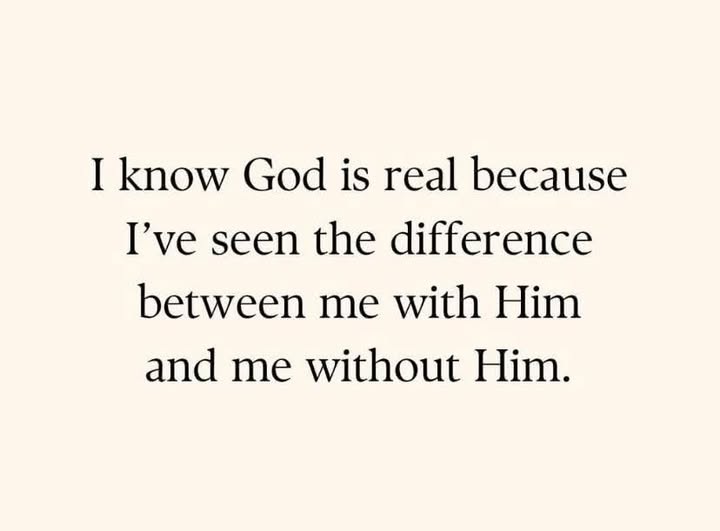
We know that God is real because He has revealed Himself to us in three ways: in creation, in His Word, and in His Son, Jesus Christ.
The most basic proof of God’s existence is simply what He has made. “For since the creation of the world God’s invisible qualities—his eternal power and divine nature—have been clearly seen, being understood from what has been made, so that men are without excuse” (Romans 1:20). “The heavens declare the glory of God; the skies proclaim the work of his hands.” (Psalm 19:1).
If I found a wristwatch in the middle of a field, I would not assume that it just “appeared” out of nowhere or that it had always existed. Based on the watch’s design, I would assume it had a designer. But there is far greater design and precision in the world around us. Our measurement of time is not based on wristwatches, but on God’s handiwork—the regular rotation of the earth (and the radioactive properties of the cesium-133 atom). The universe displays great design, and this argues for a Great Designer.
If I found an encoded message, I would seek out a cryptographer to help break the code. My assumption would be that there is an intelligent sender of the message, someone who created the code. How complex is the DNA “code” that we carry in every cell of our bodies? Does not the complexity and purpose of DNA argue for an Intelligent Writer of the code?
Not only has God made an intricate and finely tuned physical world; He has also instilled a sense of eternity in the heart of every person (Ecclesiastes 3:11). Mankind has an innate perception that there is more to life than meets the eye, that there is an existence higher than this earthly routine. Our sense of eternity manifests itself in at least two ways: law-making and worship.
Every civilization throughout history has valued certain moral laws, which are surprisingly similar from culture to culture. For example, the ideal of love is universally esteemed, while the act of lying is universally condemned. This common morality—this global understanding of right and wrong—points to a Supreme Moral Being who gave us such scruples.
In the same way, people all over the world, regardless of culture, have always cultivated a system of worship. The object of worship may vary, but the sense of a “higher power” is an undeniable part of being human. Our propensity to worship accords with the fact that God created us “in His own image” (Genesis 1:27).
God has also revealed Himself to us through His Word, the Bible. Throughout Scripture, the existence of God is treated as a self-evident fact (Genesis 1:1; Exodus 3:14). When Benjamin Franklin wrote his autobiography, he did not waste time trying to prove his own existence. Likewise, God does not spend much time proving His existence in His book. The life-changing nature of the Bible, its integrity, and the miracles which accompanied its writing should be enough to warrant a closer look.
The third way in which God revealed Himself is through His Son, Jesus Christ (John 14:6-11). “In the beginning was the Word: the Word was with God, and the Word was God. The Word became flesh and made his dwelling among us. We have seen his glory, the glory of the One and Only, who came from the Father, full of grace and truth” (John 1:1,14; see also Colossians 2:9).
In Jesus’ amazing life, He kept the entire Old Testament law perfectly and fulfilled the prophecies concerning the Messiah (Matthew 5:17). He performed countless acts of compassion and public miracles to authenticate His message and bear witness to His deity (John 21:24-25). Then, three days after His crucifixion, He rose from the dead, a fact affirmed by hundreds of eyewitnesses (1 Corinthians 15:6). The historical record abounds with “proof” of who Jesus is. As the Apostle Paul said, this thing “was not done in a corner” (Acts 26:26).
We realize that there will always be skeptics who have their own ideas concerning God and will read the evidence accordingly. And there will be some whom no amount of proof will convince (Psalm 14:1). It all comes down to faith (Hebrews 11:6).

Tea Time Manna
Jesus is able to save completely those who come to God through him, because he always lives to intercede for them.
—Hebrews 7:25
Jesus didn’t just come and die for us. Jesus wasn’t just raised from the dead to give us life. As incredible as those gifts are, Jesus adds another blessing to all he has done and is doing for us: he lives for us in the Father’s presence, interceding for us. Jesus, as our intercessor, knows what it is like to be mortal and to face the struggles we face. So, dear friend in Jesus, until Jesus returns to take us home to our Father in heaven, know that Jesus is in the Father’s presence in heaven for our good, always there to ask God for grace to help us in our times of need. Jesus is not only our Savior; he is also our defender, intercessor, friend, brother, and constant presence at the Father’s side (Hebrews 2:10-11, 14-18, 4:14-16).
Prayer
Precious Savior, Lord Jesus, O how I love you. You sacrificed heaven for me. You gave up dignity to redeem me on the cross. You destroyed death to assure me of my life with you forever. Today, dear Lord, I am most thankful and deeply aware that with every prayer I offer and every step I take, you are in the Father’s presence, for me. Thank you for your constant intercession so I can pray in the authority and grace of your name. Amen and Amen
Bible Teaching of the Day
LUNCH MANNA =
Whether God exists is one of the most basic and important questions any person can consider. Opinions about God abound, but answering the question does God exist? demands more than a few seconds of attention and involves a wide range of ideas and evidence. Ultimately, what we see in human experience, science, logic, and history leads to a confident answer: yes, God exists.
Often, this question is posed as “Can you prove God exists?” The problem is that, while truth itself is absolute, there are virtually zero instances of absolute proof outside of pure logic and mathematics. For that reason, courtrooms don’t require absolute proof to reach a verdict; rather, they seek to dispel “reasonable doubt” and consider what’s “most probable.”
Demanding “proof” of God that no one could ever reject is unreasonable. Neither evidence nor people function that way in the real world. “Encountering” facts and “accepting” them are profoundly different. Airtight, sound arguments will remain unconvincing to those determined to disbelieve. For the resolute skeptic, it’s not “proof,” even if it would convince almost anyone else. A person’s intent is more influential than any evidence encountered.
That means a certain amount of “faith” is necessary—and not just regarding God’s existence. Perfect knowledge is beyond our ability. Bias and prejudice cloud our views. There will always be a gap between what we can “know” and what we “believe.” This applies equally to skeptics and believers. We cannot possibly know every detail involved every time we sit in a chair, eat food, or climb stairs. Such actions all express a measure of faith. We act, despite what we don’t know, because of what we do know. That’s the essence of biblical faith, including faith in the existence of God. We trust in what is known, leading us to action, despite a less-than-absolute understanding (Hebrews 11:6).
Whether or not one acknowledges God, the decision involves faith. Belief in God does not require blind faith (John 20:29), but neither can it overcome malicious resistance (John 5:39–40). Bolstering faith are human experience, logic, and empirical evidence, all of which help answer the question does God exist?
Does God Exist? — Human Experience
Discussing the existence of God usually starts with logical arguments. That makes sense, but it’s not how human beings normally operate. No one starts devoid of all perspective, waiting to follow a robotically rational path before forming an opinion. People interpret life based on the world around them. So, looking at the existence of God ought to start with experiences. Afterwards, we can use logic to assess those views.
Evidence of God exists in daily human experiences (Romans 1:19–20; Psalm 19:1; Ecclesiastes 3:11). This includes our innate sense of morality. It applies to the apparent design of the universe around us. Human life compels belief that truth, deception, love, hate, goodness, evil, etc., are real and meaningful. The overwhelming majority of people throughout history have been inclined to believe in a reality greater than the physical.
Our experiences are not conclusive evidence, of course. Instead, God uses general revelation as an invitation (Revelation 3:20). Common experiences are meant to emphasize that we ought to seek further answers (Matthew 7:7–8). Those who ignore or disdain God’s invitation don’t have the excuse of ignorance (Romans 1:18; Psalm 14:1).
Does God Exist? — Human Logic
Three of the more powerful logical suggestions of God’s existence are the cosmological, teleological, and moral arguments.
The cosmological argument considers the principle of cause and effect. Each effect is the result of some cause, and each cause is the effect of a prior cause. However, that chain of causes cannot go on infinitely into the past, or else the chain would never actually start. Logic demands something eternally existent and that is not itself the effect of anything else. Our universe, clearly, is not eternal or uncaused. Logic points to God: the uncreated, eternal measure of all other things, the First Cause of our reality.
The teleological argument examines the structure of the universe. The largest galactic configurations, our solar system, our DNA, subatomic particles—everything gives the appearance of having been purposefully arranged. This trait is so strong that even hardened atheists have difficulty explaining away the appearance of design.
Nothing about subatomic particles or forces indicates they must be arranged as they are. Yet, if they were not exactly as they are, complex matter—and life—would be impossible. Dozens of universal constants coordinate with mind-boggling precision just to make life possible, let alone actual. Science has never observed or explained life arising from non-life, yet it also shows a sudden onset of complex organisms. A team of archaeologists who saw the words I am here on a cave wall would universally assume intelligent action. Meanwhile, human DNA represents a coding structure beyond the ability of the best human engineers. The weight of this evidence, logically, favors the idea of an Intelligent Designer—God—as an explanation.
The moral argument points to concepts like good and evil, ethics, and so forth. It’s notable that these are discussions of “what should be,” not merely “what is.” Moral principles are drastically disconnected from the ruthless, selfish reasoning that one would expect of a creature randomly evolved to survive at any cost. The very idea that human beings think in non-physical, moral terms is striking. Beyond that, the fundamental content of human morals remains constant throughout history and across cultures.
Further, discussion of moral ideas leads inevitably to a crossroads. Either moral ideas are completely subjective, and therefore meaningless, or they must be grounded in some unchanging standard. Human experience doesn’t support the conclusion that morals mean nothing. The most reasonable explanation for why people think in moral terms and share moral ideals is a real moral law provided by a Moral Lawgiver, i.e., God.
Does God Exist? — Human Science
The logical arguments above are inspired by observations. Concepts such as the Big Bang Theory demonstrate, at the very least, the scientific validity of a created, non-eternal universe. Likewise for the structure of DNA. Empirical data lends credibility to the idea of a biblical Creator and contradicts alternative explanations, such as an eternal universe or abiogenesis.
Archaeology also lends support to the Bible. People, events, and places depicted in Scripture have repeatedly been confirmed by secular discoveries. Many of these discoveries came after skeptics implied the Bible’s accounts were fictional.
History and literature, for their part, also support the existence of God. The preservation of the Bible is one example: our ability to trace the existing text of Scripture to a time so close to the original events supports the Bible’s reliability. Judeo-Christian influence on culture, morality, human rights, and the birth of modern science also strongly indicates an approach aligned with truth.
Does God Exist? — God in Us
Each of the prior categories is an entire field of study and the subject of thousands of books. Yet the existence of God is demonstrated most profoundly, for most people, in personal experience. It may be impossible to “prove” to others that you’re happy, for instance, but that doesn’t change the fact that you are. That’s not to say internal perspective outweighs objective truth, but complex truths are often powerfully supported by individual experiences. Changed lives, reformed attitudes, and answers to prayer are all part of our personal perception that God exists.
A personal sense of truth is a compelling way we know God exists, and it’s God’s intent for all people to experience that sense. God came to earth personally, as a human being (2 Corinthians 4:6), so we could have a personal relationship with Him (John 14:6). Those who sincerely seek God will find Him (Matthew 7:7–8), resulting in the abiding presence of the Holy Spirit (John 14:26–27).
The question does God exist?, therefore, cannot be answered with absolute proof, but we can point to the weight of evidence that suggests He does exist. Accepting the existence of God is not a blind-faith leap into the dark. It’s a trusting step out of the dark into a well-lit room where many things are made clear.
Today’s Devotional
DINNER MANNA =
There is evidence for the existence of God. Not everyone finds that evidence compelling or convincing; this does not mean such evidence is nonexistent. Most who deny evidence for God demand forms of proof—or levels of certainty—that are either irrelevant or unreasonable. Looking at logic, experience, and empirical observations, there is much evidence for the existence of God.
Assessing evidence includes properly categorizing it. Some balk at the idea of “evidence” for a God who is invisible and immaterial. However, even hardened skeptics accept the meaningful existence of many such things, such as the laws of logic. Logic is neither material nor visible, yet it’s legitimately considered “real” and can be both perceived and examined. One cannot see logic or mechanically quantify it, but this does not justify any useful claim that logic does not exist. The same is true, to varying degrees, with other concepts such as morality.
This point also establishes that logic and philosophy are relevant when discussing evidence for the existence of God. As demonstrated in the case of the laws of logic, even if empirical proof is unconvincing, that does not mean the subject in question cannot be “real.” The probability that God exists is in no way reduced simply because empirical evidence is subject to interpretation; it is at least possible that something intangible, non-material, and meaningful actually exists.
With that in mind, there are several broad categories of evidence for the existence of God. None are self-sufficient to prove that God exists or that the Bible’s description of Him is accurate. Combined, however, they form a compelling argument that the God described in Scripture is real.
Human beings have a natural “sense” of God. Historians and anthropologists alike recognize belief in some supernatural reality as common to almost all human beings who have ever lived. The number of people who categorically reject every form of higher power or spirit is vanishingly small. This is true even in profoundly “secular” cultures. Even further, secular fields of study such as cognitive science of religion suggest that such beliefs are ingrained in the natural state of the human mind. At the very least, this suggests there is something real to be perceived, just as senses like sight and hearing are targeted at actual phenomena.
Logic points to the existence of God. There are several logic-based arguments indicating that God exists. Some, like the ontological argument, are not considered especially convincing, though they’re hard to refute. Others, such as the kalam cosmological argument, are considered much more robust. Continuing along the same spectrum, concepts such as intelligent design—teleological arguments—make logical inferences from observations to argue for the existence of God.
General observations support the existence of God. Teleological arguments arise because so many aspects of reality appear to be deliberately arranged. That evidence, in and of itself, is often extremely indicative of a Creator. The Big Bang is a classic example. This theory was initially resisted by atheists for being too “religious.” And yet the idea of a non-eternal universe, as demonstrated by secular science, is strongly supportive of the claims made in the early chapters of the Bible.
History, literature, and archaeology support the existence of God. Whether critics like it or not, the Bible is a valid form of evidence for the existence of God. Not merely “because the Bible says so,” but because the Bible has proved to be so reliable. Dismissing it as biased, simply because it says things skeptics do not accept, is not a rational response. That would be as irrational as dismissing every book describing Julius Caesar and then claiming there are no records describing Julius Caesar. The reliability of the Bible and its coordination with secular history and archaeology are reasonable points to raise when it comes to discussing the existence of God.
Personal experiences support the existence of God. Obviously, these are compelling only for those particular persons. Yet many people have come to know and understand God in a deeply personal way. So far as those experiences coordinate with other evidence, they’re reasonable to consider as part of the evidence for the existence of God.
Evidence will never overcome obstinance. Perhaps the weakest response to evidence of God’s existence is ignoring it: claiming “there is no evidence.” Closely related is the suggestion that a skeptic finds the evidence uncompelling. This kind of claim often comes with an ever-shifting threshold for proof. As happened with the Big Bang Theory, even when a position is effectively “proved,” the committed skeptic can always pivot to claim that this proof actually supports his fundamental views. Just as one person’s belief is not hard evidence regarding God’s existence, one person’s disbelief is not hard evidence of the opposite. This is especially true given that God’s existence touches on issues like personal morality and autonomy. Both in Scripture and in daily life, it’s common to see examples of those presented with more than enough evidence, yet who choose to stubbornly ignore it (Romans 1:18–20; Psalm 19:1; John 5:39–40; Luke 16:19–31; James 2:19).
Combining what we know of experience, logic, history, science, and other disciplines, there is more than enough evidence that God exists. Thankfully, we aren’t expected to find all that evidence in order to have a right relationship with Him. Rather, we are obligated to absorb what we can see and understand and follow the process of “ask . . . seek . . . knock” (Matthew 7:7–8).

NEWS MANNA –
Bible Prophecy, Signs of the Times and Gog and Magog Updates with Articles in the News
Not Just Noah’s Ark – New Advances To Find The The Ark of The Covenant
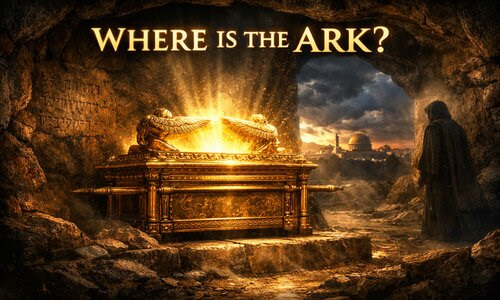
The ancient world is stirring again.
From the rugged slopes near Mount Ararat to the buried secrets beneath Jerusalem, a renewed wave of archaeological curiosity is sweeping across biblical history. Recent reports surrounding possible structural anomalies linked to Noah’s Ark have reignited global fascination–not just with one ancient relic, but with the broader question: What else might still be hidden?
Now, attention is shifting to something even more sacred, more mysterious, and arguably more significant–the long-lost Ark of the Covenant.
And for the first time in generations, serious researchers believe we may be closer than ever to finding it.
A Mystery Buried Beneath Time–and Stone
According to the Bible, the Ark of the Covenant was constructed under the direction of Moses around the 13th century BC. Overlaid with gold and designed to house the Ten Commandments, it represented nothing less than the physical manifestation of God’s covenant with Israel.
For centuries, it resided in the Holy of Holies within Solomon’s Temple–until history went dark.
When Babylon destroyed Jerusalem in 586 BC, the Ark vanished.
What followed has been one of history’s greatest mysteries.
Now, archaeologist Dr. Chris McKinny is proposing a compelling new direction: the Ark may still lie hidden beneath the ancient landscape of the City of David, just south of the Temple Mount.
But this isn’t a theory driven by shovels and guesswork. It’s powered by cutting-edge science.
Technology Meets Scripture
Unlike past generations of explorers, today’s researchers are turning to tools that border on science fiction.
Muon detectors–devices that track subatomic particles created by cosmic rays–are now being used to peer deep beneath the earth without disturbing it. These detectors can reveal hidden voids, chambers, and even dense materials like gold.
Early scans in Jerusalem have already uncovered previously unknown underground structures.
That matters.
Because if the Ark still exists–and if it remains gold-plated as described–it could, in theory, be detected without ever turning a single stone.
Alongside muon imaging, researchers are increasingly relying on ground-penetrating radar, seismic scanning, and electrical resistivity tomography. These tools are opening up what McKinny calls one of archaeology’s greatest blind spots: the forbidden underground world beneath the Temple Mount.
It’s a place too politically and religiously sensitive for traditional excavation.
But technology is changing the rules.
Ancient Clues, Modern Direction
While science is advancing, the roadmap may still lie in ancient texts.
McKinny highlights three enduring traditions, each offering a different possible fate for the Ark.
The first, often called the Mount Legend, suggests it was hidden beneath the Temple Mount itself–concealed in tunnels by priests before the Babylonian invasion.
The second, tied to the prophet Jeremiah, describes the Ark being hidden in a remote rocky location between mountains–a theory sometimes linked to wilderness regions near Jerusalem.
The third, claims Jeremiah transported the Ark to a cave on Mount Nebo–the very mountain associated with Moses’ death.
Different paths. Different locations.
But one striking consistency.
All three traditions insist the Ark was not destroyed.
It was hidden–intentionally, carefully, and with purpose.
Why This Moment Matters
It would be easy to dismiss all of this as speculation. After all, countless expeditions have chased the Ark before.
But something is different now.
The same technological advancements helping researchers identify possible remains of Noah’s Ark are now being applied to Jerusalem–arguably the most archaeologically complex and restricted site on earth.
And beyond McKinny’s work, other researchers are echoing similar optimism. Studies using remote sensing in Israel have already uncovered hidden tunnels and chambers dating back thousands of years. Meanwhile, independent teams continue to explore Ethiopian traditions claiming the Ark resides in Aksum–guarded and hidden in plain sight.
No single theory has won the day.
But the convergence of ancient testimony, modern technology, and renewed global interest is creating something we haven’t seen before:
Momentum.
More Than a Discovery
If the Ark of the Covenant were found, it wouldn’t just be an archaeological breakthrough.
It would be a spiritual earthquake.
This is not merely a relic. It is a symbol of divine law, covenant, and presence. It represents a moment when heaven and earth intersected in a tangible way.
And perhaps that’s why its story has endured.
Because deep down, the search for the Ark isn’t just about finding gold beneath the ground.
It points to something far deeper than history alone.
It confronts a truth that refuses to stay buried:
What if these discoveries are not just revealing the past–but calling this generation to account?
A Final Thought
From the frozen ridges tied to Noah’s Ark to the hidden chambers beneath Jerusalem, a pattern is emerging that is difficult to dismiss.
History is not fading.
It is resurfacing.
And with it comes a quiet but undeniable tension–one that suggests these ancient accounts are not merely stories, but signals.
Whether the Ark of the Covenant lies beneath the Temple Mount, rests in a sealed cave near Mount Nebo, or remains hidden beyond current understanding, one truth stands firm–
This search is no longer just about discovery.
It is about revelation.
Not only of what was.
But of what still is.
And perhaps… what is still to come.
What Is Going To Happen When The Oil Reserves Run Out And Tankers Stop Arriving

A lot of people out there seem to think that the crisis in the Strait of Hormuz is not that big of a deal, and that is because we aren’t feeling the consequences yet. By the end of this month, the last oil tankers that left the Persian Gulf before the war with Iran began will have arrived at their destinations.
And right now nations all over the globe are running through their strategic energy reserves. Some nations have months of oil left, and some nations only have weeks of oil left.
As those reserves start to run dry, we are going to witness a supply crunch that is absolutely unprecedented.
If you don’t believe me, perhaps you will believe the head of the International Energy Agency.
He is warning that we are “facing the biggest energy security threat in history”…
“We are facing the biggest energy security threat in history,” Fatih Birol, the head of the International Energy Agency, or IEA, told CNBC on Thursday.
“As of today, we’ve lost 13 million barrels per day of oil … and there are major disruptions in vital commodities,” he told Steve Sedgwick virtually at CNBC’s CONVERGE LIVE in Singapore.
Birol has previously warned that the Iran war and ongoing closure of the Strait of Hormuz would result in “the largest energy crisis we have ever faced” and urged governments to bolster their resilience with alternative energy sources.
For now, we are only witnessing limited rationing and limited shortages around the world because everyone is running through their strategic reserves.
And so it feels like we are going to come through this okay.
But the truth is that we aren’t.
Global supplies of oil and natural gas will get steadily tighter during the months ahead.
The Iranians are hardly letting any commercial vessels get through the Strait of Hormuz, and even if they suddenly changed their minds tomorrow we are being told that it could take up to six months to clear all of the mines out of the Strait of Hormuz…
It may take up to six months to completely clear the Strait of Hormuz of Iranian mines, according to a new report.
A Defense Department official relayed the estimate to lawmakers during a closed-door congressional briefing on Tuesday, three sources familiar with the matter told The Washington Post.
The assessment points to potentially long-lasting economic consequences, as the strait — now subject to dueling U.S. and Iranian blockades — is a critical trade artery that carried 20 percent of the world’s oil before the war.
It appears that Iran has been using this temporary ceasefire to lay more mines in the Strait.
And clearing them will not even begin until the end of the war…
Any efforts to remove the mines won’t even begin until the war ends, the official warned.
The Iranian navy began placing mines in the Strait of Hormuz in March, as US-Israeli forces continued their joint attacks on the country.
Meanwhile, Donald Trump is promising that the U.S. blockade of Iranian ports will continue until Iran finally agrees to make a deal.
I am convinced that Trump is quite serious about this.
According to CENTCOM, more than 30 vessels have been redirected by the U.S. Navy since the blockade was initiated…
The last update by CENTCOM, on Wednesday night, said 31 ships had been redirected since the start of the blockade.
Iran has called the blockade a violation of the ceasefire agreement, while the U.S. says it will remain in place as a condition of negotiations.
With Iran and the U.S. both blocking traffic, barely anything is getting out of the Persian Gulf.
It is a ticking time bomb for the entire global economy, and we are potentially facing catastrophic supply disruptions…
The scale of these observed and potential supply disruptions is without precedent. The 1973 oil embargo wiped roughly 7 percent of global oil production off the market but was politically reversible. The present crisis has reduced 13 percent of global supply, at least temporarily, and it is a physical disruption.
The recovery of damaged infrastructure will take months or even years. Finally, the Middle East accounts for about 30 percent of total global oil supply; in a worst-case scenario, virtually all these volumes could be at risk.
The nations that will be the least affected are those that either do not need to import oil or that have accumulated large reserves.
For example, China possesses the largest strategic oil reserves in the entire world…
New data from the US government released this week shows just how aggressively China added to its oil reserves ahead of the war in Iran.
The US Energy Information Administration estimates China ended 2025 with nearly 1.4 billion barrels of oil stocked away, compared to 1.2 billion barrels among the 32 members of the International Energy Agency (IEA), which includes 413 million barrels in US coffers.
And the US has been drawing down its stockpile, with the latest US reserve levels showing about 405 million barrels following the sale of over 8 million barrels in the first half of April.
Even though the Chinese buy more oil and natural gas from the Middle East than anyone else, they will be able to function normally for many months.
Other countries will not have that luxury.
Before the war, it was being projected that the strategic reserves that the UK is holding can only last for about 90 days…
As of February 26, according to the UK Department of Energy Security and Net Zero, the UK holds about 38 million barrels of crude oil and 30 million barrels of refined products, as strategic reserves. The reserves are thought to be able to last around 90 days.
Other European countries are in even tougher positions.
Shortages of jet fuel will probably start to show up first.
At this point, we are being told that Europe only has about six weeks of jet fuel left…
Jet fuel prices have risen even faster, doubling in price to almost $200 a barrel. And as the war drags on, jet fuel is getting harder to come by for countries that don’t produce it or have limited supplies.
“In Europe, we have maybe six weeks or so (of) jet fuel left,” the International Energy Agency’s executive director, Fatih Birol, told the Associated Press on April 16.
It appears to be inevitable that flights will be canceled and planes will be grounded on a widespread basis.
In fact, Lufthansa has already announced that it will be eliminating about 20,000 short-haul flights…
Lufthansa is cutting roughly 20,000 short-haul flights this summer, citing a spike in jet fuel prices that has rendered many routes “unprofitable” as the global aviation industry grapples with rising costs.
The German carrier said Tuesday the cuts, which will run through October, are expected to save about 40,000 metric tons of jet fuel. The airline noted that fuel prices have roughly doubled since the outbreak of the Iran war.
“In total, 20,000 short-haul flights will be removed from the schedule through October, equivalent to approximately 40,000 metric tons of jet fuel, the price of which has doubled since the outbreak of the Iran conflict,” the company said in a statement. “The schedule adjustments reduce the number of unprofitable short-haul flights across the Lufthansa Group network.”
If the Strait of Hormuz is not opened soon, this will only be just the very beginning.
David Roche can see what is happening, and he is suggesting that a worst case scenario is ahead of us…
Irishman David Roche see’s what’s coming:
“We are going to run out of fuel in the global economy”
“The markets are in cloud cuckoo land”
“We are moving beyond initial inflationary affects to the second stage where there is no gas to price”
“Within a few months we will be in an economy which has to adjust downwards to eliminate demand for fuel that’s not there”
Sadly, if we can’t get the Strait of Hormuz opened we really will experience a global nightmare.
It is so frustrating to me that so many people out there do not seem to understand this.
Just because we aren’t experiencing the full consequences of this crisis today does not mean that those consequences are not coming.
It is going to take time for the strategic oil reserves to run dry.
But once they do, things are going to get really crazy.
Slippery Slope: UK Police Continue Efforts To Criminalize Public Preaching
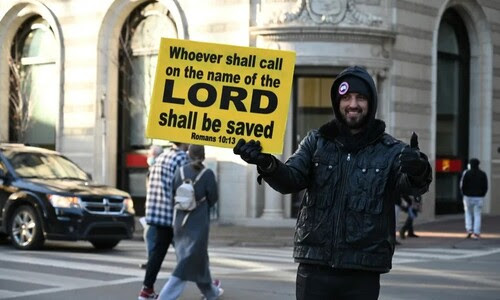
Bread of Life Community Church in Essex has been issued with a Community Protection Notice (CPN) that could criminalise its pastor and members for preaching the Christian gospel in Colchester city centre.
This is believed to be an unprecedented use of public‑order powers against a whole church, rather than individual Christian street preachers and further seeking to criminalise the content of the message rather than just the manner of preaching.
The CPN, served following months of pressure from council wardens, prohibits the church’s use of amplification during its weekly outreach. Breaching the notice is a criminal offence, meaning Pastor Stephen Clayden and his council could face prosecution simply for continuing their long‑standing ministry.
Pastor Clayden, who establishes and oversees all outreach activity, strongly denies that he or any member of his team has acted unlawfully. He says the church intends to challenge the notice in court and resist any attempt by the authorities to silence the gospel.
The church has now formally appealed the notice, and the case will be heard at Colchester Magistrates’ Court on 1 May 2026, in a hearing expected to have wide‑ranging implications for freedom of religion and expression in the UK.
The appeal is supported by the Christian Legal Centre.
From Volume Restrictions To Attempted Content Control
Until recently, the church’s outreach in Colchester had never attracted formal complaints. The team preaches, sings hymns, hands out literature and Bibles, and speaks to members of the public, many of whom express appreciation for the support, prayer, and hope offered by the evangelists.
However, correspondence with the council reveals a steady escalation, including street wardens repeatedly demanding cessation or reduction of amplification, despite the current Public Space Protection Order (PSPO) containing no prohibition on amplified sound.
A Community Protection Warning was issued in November 2025, followed by threats of fines.
Wardens then raised concerns not only about volume, but about the content of the preaching, including theological references to judgment and hell, which the council claimed might distress some listeners.
As well as using amplification, the CPN accuses the church of using ‘religious messaging’ which mentions ‘hell’ that causes ‘harassment, alarm and distress.’
The notice continues by saying that wardens have ‘tried to educate’ the preachers, but the preaching is ‘unreasonable’ and having a ‘detrimental effect on the community’.
The church provides a regular food bank collection to the local community and also when church members are preaching, they have in the past bought warm clothes for people who need them. The church has also purchased hot meals for the homeless.
This marks a significant shift from regulating noise to attempting to regulate Christian doctrine expressed in public.
Supported by the Christian Legal Centre, Bread of Life Community Church argues that the issue is not disturbance but discomfort with the message itself, something expressly protected under Articles 9 and 10 of the Human Rights Act.
‘The Legal Test For A CPN Is Not Met’
In its formal appeal under section 46 of the Anti‑social Behaviour, Crime and Policing Act 2014, Bread of Life Community Church argues that the CPN is unlawful and should be quashed in its entirety.
The church contends that the conduct alleged in the notice did not take place. It denies engaging in threatening, harassing or intimidating behaviour and says that describing biblical teaching about hell as “intimidation” is a serious mischaracterisation of routine Christian evangelism. All outreach activity is livestreamed and recorded, and the church says no evidence exists of threats or harassment.
The appeal further argues that the council has failed to demonstrate any genuine detrimental effect on the quality of life of those in the locality, as required by law.
Preaching takes place outside a closed retail unit, not near active businesses, and no objective evidence of harm has been produced. On the contrary, the church says many members of the public respond positively.
The church also denies that its conduct was persistent, unreasonable, or something it could reasonably be expected to stop. Use of a loudspeaker for preaching, it argues, is a normal and lawful aspect of public religious expression, expressly protected by Articles 9, 10 and 11 of the Human Rights Act. The local PSPO contains no ban on amplification, despite repeated claims by wardens that it does.
Crucially, the appeal argues that the CPN is vague and disproportionate, particularly in its prohibition on undefined “intimidating behaviour”.
The church says that attempting to restrict doctrinal statements, such as warnings about judgment amounts to unlawful content‑based censorship of protected religious speech.
The appeal also raises concerns about procedural and factual errors, including the absence of documented incidents, evidence, or specific complaints supporting the council’s allegations.
Essex Magistrates’ Court has confirmed that the appeal will be heard on 1 May 2026 at 2:00pm at Colchester Magistrates’ Court, where the church will ask the court to cancel the CPN in full or, alternatively, strike out requirements which unlawfully restrict protected religious expression.
Not An Isolated Case
Similar attempts to suppress Christian outreach are appearing elsewhere in the UK, with several cases being resolved by Christian Legal Centre lawyers. This has included in Uxbridge, West London, where a church was forced to legally challenge and ultimately overturn a council ban on its outreach ministry.
Also in Aldershot town centre, a council attempted to secure an injunction that could have criminalised Christian street preaching, even Christmas carols, before retreating under legal pressure.
These incidents demonstrate a growing trend of local authorities exceeding their powers to restrict peaceful Christian witness in public spaces.
Despite the CPN and threats of enforcement, Bread of Life Community Church says it will continue preaching within the law and will challenge any unlawful or discriminatory action taken against them.
Pastor Stephen Clayden, Bread of Life Community Church, said: “We have preached the Bible lawfully and peacefully in Colchester for six years. We have harmed no one. We will not be intimidated into abandoning the Great Commission.
“We respect the law. But we cannot and will not stop preaching the gospel of Jesus Christ. No council has the authority to silence the Church.”
A Dangerous National Precedent
The use of a Community Protection Notice against a church for preaching raises serious concerns about mission creep in the use of local authority powers.
Andrea Williams, chief executive of the Christian Legal Centre, which is supporting Pastor Clayden, said: “This is a deeply alarming development. Public‑order powers designed to address genuine anti‑social behaviour are now being used to clamp down on Christian preaching. Today it is amplification; tomorrow it is the content of the message itself. We are seeing a slippery slope from managing noise to policing theology.”
She added: “Preaching and public witness are central to the Christian faith and protected by law. If a church can be criminalised simply for proclaiming the gospel, then freedom of religion and speech in the UK are in serious jeopardy. This Church is at the centre of bringing Good News of Jesus Christ to the heart of this community and we will support the church as it challenges the notice.”
TruLight Ministries Daily Entertainment Manna

TruLight TV : Seek the kingdom of God
Want to know the secret of getting what you want? Seek the kingdom of God. Remember that your heavenly Father knows what you seek and what you want, and because He does, you can leave those desires in His hands with peace. He will give you what you need. and later Today, guest artist on Gospel Music USA, Danny Funderburk – One of the most distinctive and beloved voices in all of Gospel music is that of Danny Funderburk. For more than 45 years, people across the country have fallen in love with his incredible talent, as he performed with The Singing Americans, Perfect Heart, Mercy’s Way, and most notably, the prestigious Cathedral Quartet. Enjoy today’s show and thanks for watching.
Today on TruLight Radio XM
TruLight Radio XM 24/7
Program
GMT / UTC +2
Monday To Fridays
00:15 Words to Live By Testimonies
01.15 Science Scripture and Salvation
02.15 Ground Works
04.00 Gospel Concert of the Day
05.00 The Daren Streblow Comedy Show
5:55 It is Today devotional
6:00 Gaither Homecoming Morning Show
7:15 Discover the Word
8.15 Destined for Victory
8:55 Science Scripture and Salvation
9:00 Holy Spirit Hour – Normally Sermons
10:15 Hope of the Heart
11:15 Unshackled
11.45 Words to Live By
12:15 Truth for Life
13:15 Living on the Edge with Chip Ingram
14:15 Focus on the Family
15:00 Kids Hour
16:00 In Touch with Dr. Charles Stanley
16:30 Groundwork
17:15 Live in the Light
18:15 Renewing your Mind
19:00 Gaither Homecoming Show
20:15 Growing Hope
21:15 Adventures in Odyssey Radio Drama
21:45 Bible Reading
22:15 Night-sounds
23.00 Good Old Country Gospel / Rhema Gospel Express
VISIT THE WEBSITE
TruLight Ministry News – EXTRA MANNA
TruLight Ministries orders from God since 2012 . Teach Them , Comfort Them and Warn Them!
THIS YEAR STUDIES STARTS 1ST MAY 2026 – REGISTER TODAY .
We Starting , the 1st May 2026 . with Our Preachers Diploma Online Platform – TruTheology.co.za . 36 Subjects with between 10 to 15 Lessons per Subject , equivalent to a 3 Year Theology Degree , The Training is Free to Approved Members and Tests Online after Each Lesson , You Determine the Speed of Your Studies . If you are interested registrations will take place from 1 April 2026 .
Healing Truths.
End Time Articles;
Bonus Teaching for the Child of God !!
“God told me to tell you…” “I have a word from the Lord for you.” “I am a prophet of God.” “I know what the Bible says, but God spoke to me and…”
Claims like the above are increasingly common these days. Sadly, most people who say them do not understand how dangerous they are. Claiming direct revelation from God is essentially putting yourself in a place of equal authority with the Word of God. If God speaks, it is always going to be 100% inerrant, authoritative, true, holy, and perfect. If God truly told you to tell me something, I better listen or I am in direct rebellion against God.
The problem with this idea that God is directly speaking to people, and through people, today, is the fact that the messages attributed to Him are everything but inerrant, authoritative, and true. They are almost always a jumbled mess of confusion, inconsistencies, and outright contradictions of the Word of God. Far too often, “God told me…” is in reality, “I think…and I think God would agree with me…therefore, I am going to tell you that God told me…”
In response to this, many argue that God no longer speaks outside of His Word. Period. Never. The Bible is the complete and sufficient Word of God that gives us everything we need to be saved and walk with God (2 Timothy 3:16-17; Hebrews 4:12). Therefore, there is no need for any further revelation from God. God does not speak. Rather, God has spoken.
This is the viewpoint I was taught in Bible College and Seminary. This is still the viewpoint that I strongly lean towards. Admittedly, it is a very comforting position. It means I can ignore all the claimed messages from God. It frees me from having to use biblically informed discernment in separating truth from error in supposed messages from God. The problem for me is … I do not see solid biblical evidence on which to claim God NEVER speaks today.
Interestingly, even those who hold the “God never speaks” position seem to allow for exceptions to the rule. For example, stories of people in closed countries having dreams/visions that result in them coming to faith in Christ seem to be accepted, even rejoiced over. Accounts of people in third world countries being told to go to such and such a place at such and such a time to speak with God’s messenger, only to bump into a missionary at the exact place and time, are accepted as amazing miracles of God. The justification for the exception is usually something along the lines of, “Well, God only does stuff like that in places where they don’t have access to the Bible.”
Hmm. Where does the Bible say that God works differently based on whether a person has access to the Bible? And, the fact that the United States has tens of millions more Bibles than Yemen does not mean the average American is significantly more biblically literate than the average Yemeni. One could argue that with the massive amount of false doctrine being propagated in the United States that the United States is more in need of corrective direct revelation from God than most third world countries. I just don’t see a solid biblical or reasonable basis for the “God only does stuff like that over there” argument.
So, where does that leave us? To be honest, I am not completely sure.
I firmly believe that the Bible is the perfect and complete Word of God. It contains everything we need to know to follow God’s will for our lives. While it does not give specific instructions related to the personal situations and decisions we face, it does provide all the wisdom we need to be able to make right judgments in those situations and decisions.
With that in mind, I do not see any reason for God to “supplement” His Word with additional revelation. But, at the same time, there is nothing in the Bible that indicates God NEVER speaks today. I do not know the mind of God, and therefore I do not claim to know every reason why God might say something to someone (Isaiah 55:8-9; Romans 11:34).
What I do know is this: if God were to speak today, what He said would be in perfect agreement with His Word. God does not contradict Himself. God does not change His mind. Compare any supposed message from God with God’s Word, and if the message in any way is in contradiction or disharmony with God’s Word, reject the message. If you think God has spoken to you, but are unsure about it, ask Him for confirmation (Judges 6:36-40; 1 Samuel 3:1-10). Seek wise counsel from men and women of God whom you respect and trust (Proverbs 11:14; 15:22).
Above all, understand that God speaking is a miracle, not a normal. Even in the Bible, God speaking directly to people, whether through an audible voice or a “still small voice,” is rare. We would all benefit from spending far more time on what God has said instead of on what God might be saying.
Share this Feeding of Manna with your Friends and Family. just click on the Social Media icon and share !