SELECT YOUR READING LANGUAGE – BOTTOM LEFT = YOUR DAILY MANNA NOW AVAILABLE IN 103 LANGUAGES
@ TruLight – Daily Manna is not Just a Bible Verse with a Small Prayer . No WE SERVE DAILY Manna for the Whole Day . Breakfast , Lunch , Dinner , Plus tea Times and even Entertainment Manna . Plus News Manna and More , This Daily Manna will keep you Spiritually full for the full 48 Hours and even More to Share with your Friends and Family !!!
FOR THE NEXT FEW DAYS WE WILL DO SOME BIBLE STUDY ON THE TABERNACLE / TEMPLE / HEART as the New Temple
The Old Salvation Plan is still the Same Steps to Salvation in the New Covenant / Testament
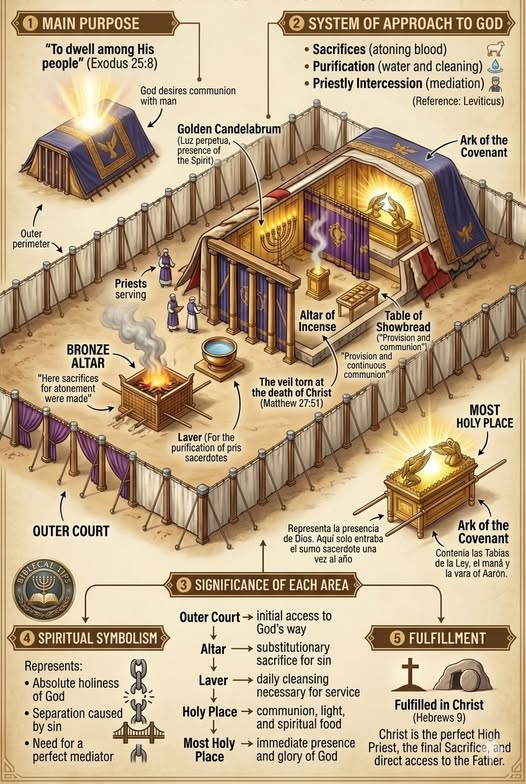
The tabernacle of Moses was the temporary place of worship that the Israelites built according to God’s specifications while wandering the desert and used until King Solomon built a temple. The word tabernacle is a translation of the Hebrew mishkan, which means “dwelling-place.” The Feast of Tabernacles commemorates this time of wandering before the Israelites entered the land of Canaan.
The overall shape of the tabernacle of Moses followed traditional structures of the time. It consisted of an outer court, approximately seventy-five feet wide by one hundred and fifty feet long, with a fifteen-foot by forty-five-foot structure in the back (Exodus 27:9–19). The court walls consisted of linen curtains attached by bronze hooks to a series of pillars. The pillars were supported on the bottom by bronze sockets and possibly held in place with rope that attached to bronze rings. The gate, always facing east, was about thirty feet of blue, purple, and scarlet woven into a curtain of linen. The altar of burnt offering and the bronze laver that the priests purified themselves in sat in the courtyard.
The actual tabernacle of Moses sat in the back of the courtyard (Exodus 26). The sides and back were made of gold-covered acacia boards, about twenty-eight inches wide and fifteen feet high. Each board had two tenons, projections, which fit into silver sockets. Gold rings held five bars that ran the length of the boards, holding them tight. The east side was comprised of five pillars covered with a screen similar to that for the courtyard.
The tent was divided into two rooms: the Holy Place, where the table of showbread, the golden lampstand, and the altar of incense sat; and the Holy of Holies, where the Ark of the Covenant was placed. The rooms were separated by a veil, similar to the entry screen, embroidered with cherubim and hung from four gold-covered acacia posts by gold clasps.
The exact shape of the tabernacle of Moses is unclear. It may have been a room with a slant-sided cover, somewhat like a rain fly. We do know it was covered in layers: fine linen, a fabric made of goat’s hair, a covering of rams’ skins, and a final layer of an undetermined, waterproof hide. The linen covered the entire tent, the panels connected by latching loops into gold clasps. The curtain of goat’s hair was connected with bronze clasps and hung over the sides and back of the structure.
Although the tabernacle was heavy and had many parts, it was surprisingly portable. Priests carried the Ark and the altars on their shoulders, but the rest fit in ox-drawn carts.
The purpose of the tabernacle of Moses was to provide a place where the people could properly worship God. Priests sacrificed animals on the altar in the outer court. The bread of the presence, the continually burning lampstand, and the offering of incense were all in the Holy Place. And once a year, the high priest would enter the Holy of Holies as part of the ceremony of the Day of Atonement (Leviticus 16). At no other time was anyone to enter the Holy of Holies, as the presence of God dwelt with the Ark of the Covenant. When Jesus was crucified, the veil between the Holy Place and the Holy of Holies in the temple ripped from top to bottom (Matthew 27:51). Just as He fulfilled for all time the sacrificial requirements, He ushered us into the presence of God.
Tea Time Manna
I know that my Redeemer lives, and that in the end he will stand upon the earth.
—Job 19:25
Beyond what these words originally conveyed in Job’s day, we know today that our Redeemer will return as the Rider on the white horse in triumph and give us God’s victory forever (Revelation 19:11-16). Hallelujah, what a day! Every knee will bow, and every tongue confess that Jesus Christ is Lord to the glory of God the Father (Philippians 2:10-11). Then the world truly WILL KNOW that Jesus Christ, our Savior, brother, and friend, is Lord of all! As the messenger of God dressed in white promised Jesus’ amazed disciples at his glorious ascension (Acts 1:9-10):
“This same Jesus, who has been taken from you into heaven, will come back in the same way you have seen him go into heaven.”
Yes! We know that our Redeemer lives and will stand upon the earth and take us home with him!
Prayer
Conquering King, Immortal God, I look forward to the day of your ultimate triumph in our world. Until that day, I pray that your Kingdom may be reflected in my life, my family, and my ministry to others. Through the Rider on the white horse that is coming, I confidently pray. Amen and Amen
Bible Teaching of the Day
LUNCH MANNA =
Aaron’s rod, or staff, played an important part in God’s plan to lead the Israelites out of Egypt and into the Promised Land. In ancient Israelite culture, a rod was a symbol of authority. Shepherds used rods to guide and correct their flocks (Psalm 23:4). When God called the shepherd Moses to lead the Israelites out of Egypt, He demonstrated His power by performing miracles using Moses’ rod (Exodus 4:1–5; Numbers 20:11). God also chose Moses’ brother, Aaron, to perform miracles with his own rod (Exodus 7:19; 8:5, 16).
Aaron’s rod was the one that turned into a snake in Pharaoh’s court; when the Egyptian magi also turned their staffs into snakes, the snake that had been Aaron’s rod swallowed theirs up (Exodus 7:8–10). It was Aaron’s rod that God used to turn the water of Egypt into blood (Exodus 7:19–21). And it was Aaron’s rod that summoned the plagues of the frogs (Exodus 8:5–6) and gnats (verses 16–17). After Moses and Aaron had led the Israelites out of captivity, God set apart Aaron and his sons as priests (Exodus 28:1; Numbers 18:1). The rest of the Levites were to minister to the Lord in the tabernacle, offer sacrifices, and hear from God for the good of the whole nation.
The most famous story of Aaron’s rod begins with a few of the Levites becoming disgruntled about the extra authority given to Moses and Aaron. In Numbers 16, Korah, who was also a Levite, joined with two others, Dathan and Abiram, to incite a rebellion against Moses and Aaron. In verse 3 Korah says to Moses, “You have gone too far! The whole community of Israel has been set apart by the Lord, and he is with all of us. What right do you have to act as though you are greater than the rest of the Lord’s people?” Because of this defiance of the Lord’s authority, God caused the earth to open up and swallow these three men and their families (verses 28–33).
However, rather than submit to the Lord, the other tribal leaders jointed the revolt. Numbers 16:41 says, “But the very next morning the whole community of Israel began muttering again against Moses and Aaron, saying, ‘You have killed the Lord’s people!’” The Lord desired to wipe out the whole company, but Moses and Aaron fell on their faces and pleaded with Him not to destroy them. God relented and, instead, sent a plague throughout the company of rebellious Israel; the plague killed 14,700 of them (verse 49).
To put an end to the unrest, God once again used Aaron’s rod for a miracle. God commanded Moses to have the leader of each tribe of Israel bring his rod or staff to the tent of meeting, with Aaron’s rod representing the tribe of Levi. Each of the twelve leaders was to have his name inscribed on his rod. The Lord told Moses, “Buds will sprout on the staff belonging to the man I choose. Then I will finally put an end to the people’s murmuring and complaining against you” (Numbers 17:5). They left their rods before the Lord, and in the morning “Aaron’s staff, representing the tribe of Levi, had sprouted, budded, blossomed, and produced ripe almonds” (verse 8). Aaron’s rod didn’t just sprout buds; it brought forth flowers and fruit, a clear demonstration of the power of the One who gives life. Verse 10 says, “And the Lord said to Moses: ‘Place Aaron’s staff permanently before the Ark of the Covenant to serve as a warning to rebels. This should put an end to their complaints against me and prevent any further deaths.’”
Hebrews 9:4 tells us that Aaron’s rod remained in the Ark of the Covenant as a testimony of God’s choice of Aaron and Moses to lead His people. Aaron’s rod was also a reminder that God does not put up with rebellion against Himself or His chosen representatives on earth (1 Corinthians 10:10). Those who murmur, complain, and cause division within the Body of Christ are to be rebuked (James 5:9; 1 Timothy 5:20; 2 Timothy 2:23). God’s plans on this earth are far beyond any single human being. He desires that we work together, in one accord, to obey Him and reflect His glory.
Today’s Devotional
DINNER MANNA =
he tabernacle built by Moses and, later, Solomon’s temple were divided into the Holy Place and the Most Holy Place (or Holy of Holies). To understand these places, it will help if we first understand the concept of “holy.” At its most basic meaning, holy simply means “set apart” or even “different.” God is holy because He is absolutely different, completely set apart from everything else. He is completely different from all other things that are called “gods.” He is also completely set apart from sin, which is probably the concept that most people associate with God’s holiness. This example may help explain the concept further: the word bible is simply from the Latin for “book.” Although the word Bible has become a technical (or semi-technical) term for the Word of God, the term itself just means “book.” There are many books in the world. That is why on the cover or the title page we often see the official title as “Holy Bible.” In other words, there are many bibles (books), but this Book (Bible) is holy; that is, it is different, set apart from all other books, because it is the Word of God.
The Holy Place and the Most Holy Place were first and foremost places that were set apart. They were completely different from any other place on Earth, because the presence of God was uniquely present there. The Israelites were forbidden from making any images to represent God (Exodus 20:4–5). However, human beings are physical and visual, so God did give the Israelites an object that would help them sense His presence among them—the tabernacle (a tent that served as a portable temple), which was later replaced by a grand temple in Jerusalem. The Holy Place and Most Holy Place function the same in both settings.
The whole tabernacle was holy in that it was set apart for worship and sacrifices to God. However, the tabernacle was separated into 3 areas, the Outer Court, the Holy Place, and the Most Holy Place (or Holy of Holies). Priests and Levites ministered in the Outer Court as they offered sacrifices for sin and guilt as well as the other sacrifices. In the center of the Outer Court was a tent that only the priests could enter. This place was set apart—it was holy.
The tabernacle had only one entrance. Upon entering, a priest would be in the Holy Place, where there were three articles of furniture. One was the golden lampstand, which was to be kept burning continually, giving light to the Holy Place. The second article of furniture in the Holy Place was the table for the bread of presence (or the table of showbread). This bread was baked fresh every week, and only the priests were allowed to eat of it as it was holy as well. Jesus claimed to be the fulfillment of both of these symbols as the Light of the World (John 8:12) and the Bread of Life (John 6:35). The final article in the Holy Place was the altar of incense. Special incense was to be burned each morning and evening as an offering to the Lord. The Holy Place was set apart (holy) because it was a special representation and reminder of the presence of God.
At the back of the Holy Place was a smaller chamber called the Holy of Holies or Most Holy Place. In this smaller room was the ark of the covenant. On top of the ark was a special area called the mercy seat. This was seen as the throne of God. While God is omnipresent, this location was seen as a special place for God to dwell in the middle of His people. This second chamber could only be entered by the high priest on one day of the year, the Day of Atonement, and only with a blood sacrifice. The high priest would enter the Most Holy Place with smoke (from the altar of incense) to help shield his view and sprinkle blood on the ark of the covenant to atone for the sins of the people. Anyone who entered this chamber when he was not supposed to would be killed.
The tabernacle and the temple emphasized the presence of God in the midst of His people. God was always there and accessible. At the same time, the Holy Place and Most Holy Place emphasized God’s holiness and His inaccessibility due to the sins of the people.
When Jesus died on the cross, three Gospels report that the curtain of the temple, that barrier between the Holy Place and Most Holy Place, was supernaturally torn in two (see Matthew 27:51; Mark 15:38; and Luke 23:45). The torn curtain symbolized that the way to God was now open to all through the death of Christ. The blood of an animal was no longer needed. Hebrews 10:19–22a explains, “Therefore, brothers and sisters, since we have confidence to enter the Most Holy Place by the blood of Jesus, by a new and living way opened for us through the curtain, that is, his body, and since we have a great priest over the house of God, let us draw near to God with a sincere heart and with the full assurance that faith brings.”
NEWS MANNA –
Bible Prophecy, Signs of the Times and Gog and Magog Updates with Articles in the News
A World Preparing For War – Global Military Spending Surges
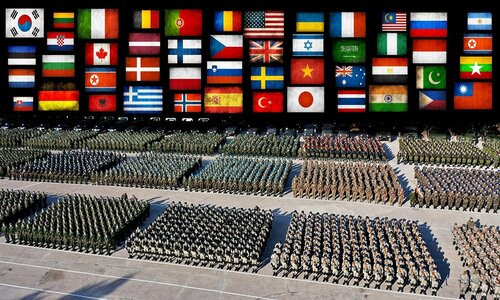
There are moments in history when numbers stop being abstract–and start telling a story. The latest report from Stockholm International Peace Research Institute does exactly that. At first glance, a 2.9% rise in global military spending might not sound like much. But step back, and the picture sharpens: nearly $2.9 trillion poured into defense in a single year, representing 2.5% of the entire global economy–the highest share since 2009. That’s not just a budget trend. It’s a signal.
And the signal is hard to ignore: the world is preparing, quietly but unmistakably, for conflict.
The raw numbers alone are staggering. The United States continues to dominate with $954 billion in spending, followed by China at $336 billion and Russia at $190 billion. But the more revealing story isn’t just who spends the most–it’s who is accelerating the fastest.
Across Europe, defense budgets surged 14% in just one year, the sharpest increase since the early Cold War era. Countries like Belgium, Spain, and Norway posted increases nearing or exceeding 50%. Germany, long cautious about military expansion, now ranks fourth globally.
These are not routine adjustments. They are generational shifts.
Why now? Because the global order feels less certain than it has in decades. The war in Ukraine continues to grind on, consuming resources at a historic pace. Ukraine itself is dedicating an astonishing 40% of its GDP to defense–an economic posture that reflects not strategy, but survival. Russia, meanwhile, is committing 7.5% of its GDP, reinforcing the reality that this conflict is far from contained.
But Europe’s surge isn’t just about Ukraine. It’s about something deeper: a growing realization that long-standing assumptions about security–particularly reliance on the United States–may no longer be guaranteed. NATO allies are rearming not just because they want to, but because they feel they must.
The same pattern is unfolding in Asia.
Japan, historically restrained in its military posture, has reached its highest defense spending as a share of GDP since 1958. Taiwan is boosting its budget at the fastest pace in decades. China, meanwhile, has increased military spending for 31 consecutive years, with a fresh 7.4% jump in 2025 alone. That’s not just modernization–it’s momentum.
And then there are the quieter, less headline-grabbing regions. Africa saw an 8.5% increase in military spending. India boosted its defense budget by nearly 9%, driven by tensions with Pakistan. Even in the Middle East, where spending dipped slightly in some areas, underlying realities–like Iran’s off-the-books funding mechanisms–suggest the true numbers may be higher than reported.
In other words, this isn’t isolated. It’s global.
One of the most telling insights from the SIPRI report is what happens when you remove the United States from the equation. Without U.S. spending, global defense expenditures didn’t just rise–they surged by 9.2%. That means the rest of the world is ramping up even faster than the headline figures suggest.
This matters because it points to a broader psychological shift. Nations aren’t just reacting to current conflicts–they’re preparing for future ones. Defense budgets are, in many ways, a reflection of fear, expectation, and anticipation. And right now, those expectations appear to be leaning toward instability.
Even more concerning is what lies ahead. The U.S. has already approved over $1 trillion in defense spending for 2026, with proposals reaching $1.5 trillion for 2027. Ongoing conflicts, including a costly war involving Iran, are accelerating that trajectory. According to projections, 2026 could see even steeper increases worldwide.
So what does this mean for the average person?
It means we are living in a time where governments–across continents, across political systems–are prioritizing military readiness at a scale not seen in years. That doesn’t guarantee war. But it does suggest that leaders believe the risk of major conflict is rising, not falling.
History offers a sobering lesson: large-scale military buildups rarely happen in isolation. They tend to cluster in periods of uncertainty, rivalry, and shifting power balances. Sometimes they act as deterrents. Other times, they become preludes.
Right now, it’s too early to say which path the world is on. But the direction is clear.
A world spending nearly $3 trillion on defense isn’t just maintaining peace–it’s bracing for what might come next.
The Media Would Like To Dismiss It But End Times Beliefs Have Gone Mainstream
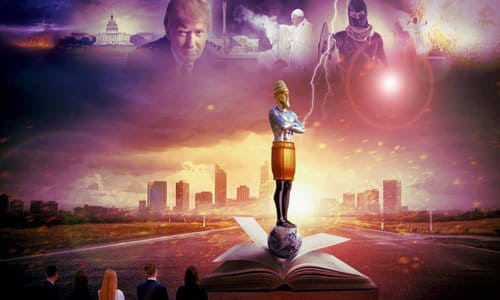
The New York times recently ran a column called “The Apocalypse Goes Mainstream” asking why so many adults believe we are living in the “End Times”. They tried to be polite in examining the issue but essentially suggested that those who hold to such beliefs have been brainwashed by books such as “The Late Great Planet Earth” by Hal Lindsey for the older generation and The Left Behind Series for the more recent generation.
About 40 percent of American adults believe that we are living in the “end times,” according to polling. The New York Times wants to know where did that idea come from?
Despite beliefs to the contrary explored in the article, belief in the end times did not begin with modern paperbacks or 20th-century theology. It began with Scripture itself–anchored in the words of Jesus, the prophets, and the apostles. What we are witnessing today is not the rise of a fringe idea, but the reawakening of an ancient one.
- The Words of Jesus Demand Watchfulness, Not Dismissal
In the Gospels, Jesus did not speak vaguely about the future–He gave detailed warnings about the conditions preceding His return: global conflict, deception, moral decay, and widespread fear. He described a world marked by “wars and rumors of wars,” lawlessness increasing, and truth growing cold.
These are not abstract ideas–they are observable realities.
To suggest that modern believers are simply projecting meaning onto current events ignores the fact that Jesus explicitly instructed His followers to watch. Not speculate wildly–but remain alert. If millions today see alignment between His warnings and our present moment, that is not irrational–it is obedience.
- Biblical Prophecy Has a Track Record of Accuracy
Skeptics often treat prophecy as vague or symbolic guesswork. But history tells a different story. The Bible contains hundreds of fulfilled prophecies–many of them precise, specific, and historically verifiable.
From the rise and fall of empires described in the Book of Daniel to the detailed prophecies surrounding the life, death, and resurrection of Christ, Scripture has demonstrated a level of predictive consistency unmatched by any other religious text.
If past prophecies have been fulfilled with such clarity, why should future ones suddenly be dismissed as fantasy?
That’s not skepticism–that’s selective reasoning.
- The Modern World Uniquely Mirrors Prophetic Conditions
For most of human history, certain biblical prophecies seemed impossible. A global economy? Instant worldwide communication? The ability to control buying and selling on a massive scale?
Today, those are not just possible–they are actively being built.
Digital currencies, biometric identification, artificial intelligence, and centralized global systems are no longer theoretical. They are here. What once sounded symbolic now reads like a literal blueprint of emerging reality.
This is not about fear–it’s about recognition. The infrastructure described in prophecy is no longer distant. It is forming in real time.
- Israel’s Central Role Cannot Be Ignored
One of the most compelling pieces of prophetic evidence is the nation of Israel itself. Scattered for nearly 2,000 years and then reestablished in 1948, Israel stands at the center of global attention–politically, militarily, and spiritually.
Biblical prophecy repeatedly places Israel at the heart of end-times events. The fact that this small nation dominates international headlines, shapes foreign policy debates, and remains the focal point of global tension is not coincidence.
It is consistency–with Scripture.
To argue for a purely “rational” foreign policy detached from Israel’s prophetic significance is to ignore the very forces shaping geopolitical reality. Whether one believes in prophecy or not, leaders across the world clearly recognize that Israel is not just another nation.
- The Moral and Cultural Landscape Matches Prophetic Warnings
The Bible describes a time when truth would be inverted, when good would be called evil and evil good. A time when society would reject foundational truths and embrace confusion as virtue.
Look around.
The erosion of moral clarity, the celebration of what was once universally condemned, and the hostility toward faith–especially Christianity–are not isolated trends. They are defining characteristics of our age.
This isn’t about nostalgia or cultural preference. It’s about alignment with a prophetic description written thousands of years ago.
Rebutting the Critics
The claim that beliefs about the end times are rooted primarily in modern teachings like premillennial dispensationalism is historically incomplete. While theological frameworks have developed over time–as all fields of study do–the core concepts of Christ’s return, judgment, and the culmination of history are deeply embedded in Scripture and early Christian teaching.
Early church fathers wrote extensively about the return of Christ and the final judgment.The expectation of His coming was not a fringe doctrine–it was central to the faith.
As for the idea that prophecy “re-enchants the news in a dangerous way,” this argument misunderstands the role of belief. For millions, prophecy does not distort reality–it provides a framework for understanding it. It encourages vigilance, moral responsibility, and hope–not chaos.
The real danger is not that people see meaning in world events.
The real danger is a culture so committed to materialism that it refuses to see meaning at all.
A Call to Confidence, Not Apology
To those who feel dismissed, labeled, or ridiculed for believing in biblical prophecy–this moment should not weaken your faith. It should strengthen it.
Scripture itself warned that in the last days, there would be scoffers. That belief in Christ’s return would be mocked. That watchfulness would be ridiculed as ignorance.
And yet, here we are.
Not deceived. Not uninformed. Not clinging to fantasy–but standing on a foundation that has endured for thousands of years.
The question is no longer whether people believe in the end times.
The question is why so many are beginning to see it now.
And perhaps the answer is simpler than critics would like to admit:
Because the signs are no longer subtle.
Your Car (Ai Smart Car ) Will pull the Kill Switch when You as Christian becomes the Enemy of the State
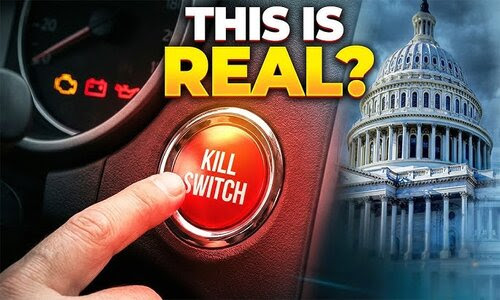
Your Car Will No Longer Be Your Own – New Vehicles Will Soon Have AI Kill Switch
Imagine that you just received a very alarming phone call and you are in a panic to get home. Unfortunately, since your eyes are wide and full of alarm because of the phone call that you just received, the AI kill switch in your vehicle will not allow you to drive anywhere.
This is not a scenario which may or may not happen someday. This is already federal law. Section 24220 of the 2021 Infrastructure Investment and Jobs Act that was signed by Joe Biden directed the NHTSA to establish permanent standards for impaired driving safety equipment on all new vehicles within three years.
Fortunately, Congress gave the NHTSA some more time in 2024, but now another deadline is looming. If Congress does not act, very soon all new vehicles in the U.S. will come equipped with systems that determine who gets to drive and who does not get to drive.
Automakers are arguing that the technology still isn’t ready because it makes way too many mistakes.
Some drivers just naturally have eye or head movements that make them appear to be impaired in some way.
Of course others are extremely upset about this dystopian law because of how extremely intrusive it is.
Do we really want AI to track our eye and head movements every time we enter our vehicles?
Unfortunately, even though it has been on the books since 2021, most Americans have never even heard about this very alarming law…
The measure, often referred to as the Halt Drunk Driving Act, anticipated that as early as this year, auto companies would be required to roll out technology to “passively” detect when drivers are drunk or impaired and prevent their cars from operating. Regulators can choose from a range of options, including air monitors that sample the car’s interior for traces of alcohol, fingertip readers that measure a driver’s blood-alcohol level, or scanners that detect signs of impairment in eye or head movements.
Once the NHTSA sets the final rules, there is no going back.
At that point, it would take an act of Congress to overturn the law.
Recently, there was an effort to remove funding for the implementation of this measure, but that effort was soundly defeated…
A Republican-led effort to remove the Halt Act’s funding was defeated in the U.S. House last month by a 268-164 vote. Another bill to repeal it entirely awaits a committee vote.
Most of the opposition has stemmed from suggestions that the law would require manufacturers to equip cars with a “kill switch”. That would essentially allow them to “be controlled by the government,” Florida Gov. Ron DeSantis posted on the social platform X, drawing comparisons to George Orwell’s dystopian novel “1984.”
I honestly don’t think that Congress is going to do anything.
So we are going to be stuck with this change.
The goal of the law is to reduce the number of accidents caused by impaired drivers, but they are attempting to do this in the most dystopian way possible…
Tucked into a broader federal safety initiative is a requirement for impaired-driving detection technology in all new vehicles. The goal sounds simple enough: reduce crashes caused by drunk or fatigued drivers. It’s a problem that has been around for decades, and lawmakers are trying to address it with new technology.
To do that, automakers will need to install systems that monitor drivers in real time. These systems rely on cameras and sensors that track things like eye movement, head position, and overall attentiveness. It’s not just observing — it’s constantly analyzing what the driver is doing.
Some of us are easily distracted.
And some of us are often tired because we work all the time.
Does that mean that we are too “impaired” to drive our vehicles?
Under the new rules, AI will get to decide that.
In other words, you may be the one making payments on the vehicle, but a computer will decide whether you get to drive it or not…
If the system detects what it believes is impairment, it doesn’t just issue a warning and move on. In some cases, it could prevent the vehicle from starting or limit how it operates once you’re already driving. That means the car itself becomes the decision-maker, not the person in the driver’s seat.
For many drivers, that raises immediate concerns. It introduces a scenario where a machine decides whether you’re allowed to use something you own, based on its interpretation of your behavior.
I don’t want a computer to be interpreting my behavior every time I get behind the wheel of a vehicle.
What kind of “Big Brother” nonsense is that?
Yes, we should certainly be taking steps to prevent people from driving around drunk.
But how much of our freedom and how much of our privacy are we willing to give up for just a little bit more security?
There will be lots of traffic accidents no matter how much we allow AI to track, monitor and control us.
The way that this law is written, each one of us has to pass atest each time we want to operate a vehicle.
That is insanity.
The good news is that even supporters of this new law expect the NHTSA to put off any final decisions until next year, and once the rules are permanently established automakers are expected to get at least a couple of years to fully implement them…
The National Highway Traffic Safety Administration, which is establishing the rules to implement the Halt Act, told the AP in an email that it’s still “assessing developing technologies for potential deployment” and expects to report back to Congress soon. Even supporters predict the agency will push the decision at least into 2027, and auto companies still would have another two to three years to install it.
Needless to say, when automakers start rolling out new vehicles that come equipped with AI kill switches, many Americans won’t even consider purchasing them.
When sales of new vehicles completely tank all over the nation, perhaps many members of Congress will reconsider what they have done.
We don’t want our vehicles to be surveillance machines.
Enough is enough.
If we don’t take a stand now, they will just keep pushing the envelope.
Liberty is such a precious thing.
Once it is gone, it can be so difficult to get it back.
Israel’s “Extend” AI drone swarms are replacing frontline soldiers—autonomously executing high-risk missions with pinpoint precision, reshaping modern warfare.
REVELATION 9 SWARM DRONES
TruLight Ministries Daily Entertainment Manna
TruLight TV :Gaither Vocal Band – Then Came Morning (Live Concert)
Bill Gaither, the founder of one of gospel’s most successful groups, the Gaither Vocal Band, is delighted to showcase his favorite gospel music during “Gaither Gospel Hour”.
Today on TruLight Radio XM
TruLight Radio XM 24/7
Program
GMT / UTC +2
Monday To Fridays
00:15 Words to Live By Testimonies
01.15 Science Scripture and Salvation
02.15 Ground Works
04.00 Gospel Concert of the Day
05.00 The Daren Streblow Comedy Show
5:55 It is Today devotional
6:00 Gaither Homecoming Morning Show
7:15 Discover the Word
8.15 Destined for Victory
8:55 Science Scripture and Salvation
9:00 Holy Spirit Hour – Normally Sermons
10:15 Hope of the Heart
11:15 Unshackled
11.45 Words to Live By
12:15 Truth for Life
13:15 Living on the Edge with Chip Ingram
14:15 Focus on the Family
15:00 Kids Hour
16:00 In Touch with Dr. Charles Stanley
16:30 Groundwork
17:15 Live in the Light
18:15 Renewing your Mind
19:00 Gaither Homecoming Show
20:15 Growing Hope
21:15 Adventures in Odyssey Radio Drama
21:45 Bible Reading
22:15 Night-sounds
23.00 Good Old Country Gospel / Rhema Gospel Express
VISIT THE WEBSITE
TruLight Ministry News – EXTRA MANNA
TruLight Ministries orders from God since 2012 . Teach Them , Comfort Them and Warn Them!
THIS YEAR STUDIES STARTS 1ST MAY 2026 – REGISTER TODAY .
We Starting , the 1st May 2026 . with Our Preachers Diploma Online Platform – TruTheology.co.za . 36 Subjects with between 10 to 15 Lessons per Subject , equivalent to a 3 Year Theology Degree , The Training is Free to Approved Members and Tests Online after Each Lesson , You Determine the Speed of Your Studies . If you are interested registrations will take place from 1 April 2026 .
Healing Truths’.’
End Time Articles,
Bonus Teaching for the Child of God !!
Typology is a special kind of symbolism. (A symbol is something that represents something else.) We can define a type as a “prophetic symbol” because all types are representations of something yet future. More specifically, a type in Scripture is a person or thing in the Old Testament that foreshadows a person or thing in the New Testament. For example, the flood of Noah’s day (Genesis 6—7) is used as a type of baptism in 1 Peter 3:20–21. The word for “type” that Peter uses is figure.
When we say that someone is a type of Christ, we are saying that a person in the Old Testament behaves in a way that corresponds to Jesus’ character or actions in the New Testament. When we say that something is “typical” of Christ, we are saying that an object or event in the Old Testament can be viewed as representative of some quality of Jesus.
Scripture itself identifies several Old Testament events as types of Christ’s redemption, including the tabernacle, the sacrificial system, and the Passover. The Old Testament tabernacle is identified as a type in Hebrews 9:8-9: “The first tabernacle . . . which was a figure for the time then present.” The high priest’s entrance into the holiest place once a year prefigured the mediation of Christ, our High Priest. Later, the veil of the tabernacle is said to be a type of Christ (Hebrews 10:19-20) in that His flesh was torn, (as the veil was when He was crucified) in order to provide entrance into God’s presence for those who are covered by His sacrifice.
The whole sacrificial system is seen as a type in Hebrews 9:19-26. The articles of the “first testament” were dedicated with the blood of sacrifice; these articles are called “the patterns of things in the heavens” and “figures of the true” (verses 23-24). This passage teaches that the Old Testament sacrifices typify Christ’s final sacrifice for the sins of the world. The Passover is also a type of Christ, according to 1 Corinthians 5:7, “Christ our passover is sacrificed for us.” Discovering exactly what the events of the Passover teach us about Christ is a rich and rewarding study.
We should point out the difference between an illustration and a type. A type is always identified as such in the New Testament. A Bible student finding correlations between an Old Testament story and the life of Christ is simply finding illustrations, not types. In other words, typology is determined by Scripture. The Holy Spirit inspired the use of types; illustrations and analogies are the result of man’s study. For example, many people see parallels between Joseph (Genesis 37-45) and Jesus. The humiliation and subsequent glorification of Joseph seem to correspond to the death and resurrection of Christ. However, the New Testament never uses Joseph as a model of Christ; therefore, Joseph’s story is properly called an illustration, but not a type, of Christ.
Share this Feeding of Manna with your Friends and Family. just click on the Social Media icon and share !