Hosted by TruLight Ministries – The Place of Truth
SELECT YOUR READING LANGUAGE – BOTTOM LEFT = YOUR DAILY MANNA NOW AVAILABLE IN 103 LANGUAGES
The Last day of this 13 Day Study
The Symbols of the Word of God
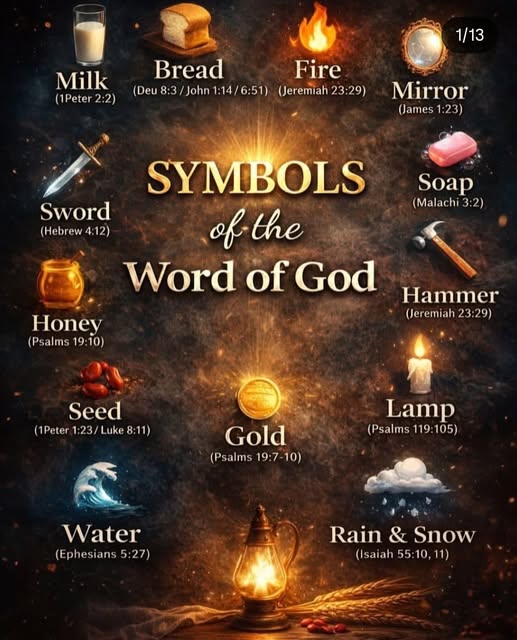
Rain and Snow !
Isaiah 55:10–11 says, “As the rain cometh down, and the snow from heaven, . . . So shall my word be that goeth forth out of my mouth: it shall not return unto me void” (KJV). The word void means “empty.” The remainder of verse 11 explains what it means to “not return void,” saying that God’s Word “will accomplish what I desire and achieve the purpose for which I sent it.”
Rain and snow are part of a cyclical water process. Precipitation comes upon the earth, drains into the land, and produces great benefit in the growth of crops, the refreshment of souls, and the sustaining of life. Rain and snow come from above and do not return back above without accomplishing their purpose. God compares His Word to the rain and snow because, like the precipitation, God’s Word always fulfills His good purposes.
When God says that His Word will not return to Him void, we can know that He has an intention for His Word. God’s Word is from above. He “breathed out” His words to us, and they were recorded in the Bible (2 Timothy 3:16). Every word He gave humanity is purposeful and was given for a reason. Like the rain and snow, God’s words bring forth life (John 6:63) and produce good fruit in our lives. Through His Word, we know that God loves us and that Jesus died to free us from sin and death; we also learn how to live in light of those truths.
When God says that His Word will not return to Him void, we are encouraged to abide in His Word, allowing it to absorb into our lives, soaking it up as the ground soaks up the rain and snow. The truth will not return void as our hearts are changed. God’s Word rebukes us and corrects us when we are wrong, and it trains us in godly living (2 Timothy 3:16–17). His Word is a light guiding us in this dark world (Psalm 119:105). It is relevant to every pressing and practical problem. God’s Word will always accomplish what He desires, whether it is teaching, correcting, training, leading us to Him, revealing our sin, or some other good and profitable end.
When God says that His Word will not return to Him void, we understand that God is sovereign. The promise is that God’s Word will accomplish what He wants it to, not necessarily what we want it to. We may share the Word with the purpose of changing someone’s mind—and the person’s mind doesn’t change. Was God’s Word void? No, but our personal goals may have been different from God’s. Like the wind that “blows wherever it pleases,” the Holy Spirit moves in mysterious ways (John 3:8). And God may use His Word in surprising ways, at surprising times, and in surprising people. We can’t predict exactly how God will use His Word any more than meteorologists can predict with certitude the rainfall and snowfall.
God’s Word will not return void. It is too powerful. When God said, “Let there be light,” the immediate result was that “there was light” (Genesis 1:3). When Jesus said, “Peace! Be still!” the wind ceased and the sea calmed (Mark 4:39). God’s Word will always prosper; God will succeed, and those who receive His Word will be overcomers as well (1 John 5:4).
Bible Verse and Prayer for Today
Be strong in the Lord and in his mighty power. Put on the full armor of God so that you can take your stand against the devil’s schemes.
—Ephesians 6:10-11
Many of the struggles in our lives are not mere accidents! Many of them are not put there by God. Our challenges often come from the hand of our enemy, the evil one, the liar and murderer from the beginning (John 8:44). He is always prowling about looking for the best scheme (2 Corinthians 2:11) to knock us down and devour us as he weakens our commitment to and relationship with the Lord Jesus (1 Peter 5:8). We are in a war with this evil one — a struggle not with flesh and blood, but against spiritual powers (Ephesians 6:12). By placing ourselves firmly in the hands of the Lord and using his tools of warfare enables us overcome our enemy in the name of Jesus and by the blood of his cross (Colossians 1:20), because Jesus humiliated the evil one and his minions in the triumph over evil at the cross (Colossians 2:12-15). Be strong in the Lord because the strength is with him.
Prayer
Strengthen me, O God, that I may stand against my evil foe and triumph by the power of your Spirit. I want to bring honor and glory to my conquering Savior, Jesus, who will return one day and take me home in victory. In the name of Jesus, the victorious Rider on the White Horse (Revelation 6:1-2, 19:11-16), I pray. Amen and Amen
Bible Teaching of the Day
The book of Hosea gives us a beautiful portrait of God’s grace. The prophet’s mission included experiencing the betrayal of an unfaithful wife. God used that broken relationship as an analogy. God is Hosea. Hosea’s wife’s sexual infidelity represents Israel’s spiritual adultery through idol worship and abandoning God’s holy laws. Through Hosea, God promises to remain faithful, first disciplining His people and then graciously restoring them to intimacy with Himself: “Then I will heal you of your faithlessness; my love will know no bounds, for my anger will be gone forever. I will be to Israel like a refreshing dew from heaven. Israel will blossom like the lily; it will send roots deep into the soil like the cedars in Lebanon” (Hosea 14:4–5, NLT).
Dew results from moisture condensation as warm air mixes with the cool night air. It appears as tiny droplets or a fine mist blanketing the ground, plants, and other surfaces. In ancient Israel’s arid climate, dew provided an essential source of moisture for successfully growing and harvesting plants.
God is like the dew in that He sends down refreshment, nourishment, healing, and new life to the wayward children of Israel. The people had been dead in sin, but God promised that they would bloom again like the beautiful lilies because He would water their dry and thirsty souls. The Lord’s healing, heaven-sent dew would cause the new plant to grow healthy and strong. The nation would be established again, sending deep roots down into fertile soil like the great cedars in Lebanon. Israel would be rebuilt on a solid, unshakable foundation.
Elsewhere in Scripture, God is like the dew in that His teachings “fall like rain” and His words “descend like dew, like showers on new grass, like abundant rain on tender plants” (Deuteronomy 32:2). The prophet Isaiah affirms the life-giving quality of God’s Word: “The rain and snow come down from the heavens and stay on the ground to water the earth. They cause the grain to grow, producing seed for the farmer and bread for the hungry. It is the same with my word. I send it out, and it always produces fruit. It will accomplish all I want it to, and it will prosper everywhere I send it” (Isaiah 55:10–11, NLT).
God is like the dew in that He consistently and mysteriously provides for our daily needs. When God sustained Israel in the wilderness, He nourished them with manna, the miraculous bread from heaven (Exodus 16:13–21). The historical record associates manna with dew: “When the dew settled on the camp at night, the manna also came down” (Numbers 11:9).
In Isaiah 18:4, the Lord looked down from heaven and prepared the nations for his harvest “as quietly as the heat rises on a summer day, or as the morning dew forms during the harvest” (NLT). Just as the dew causes new life to sprout from the ground, so God will raise the dead out of the earth: “But your dead will live, LORD; their bodies will rise—let those who dwell in the dust wake up and shout for joy—your dew is like the dew of the morning; the earth will give birth to her dead” (Isaiah 26:19).
Since dew is a source of refreshing and revitalization for plant life, it symbolizes refreshment and blessing throughout the Scriptures. In Psalm 133:1–3, King David likened the dew of Mount Hermon falling on the mountains of Zion to the blessing of God’s people dwelling together in harmony. When Isaac blessed Jacob, he prayed, “May God give you heaven’s dew and earth’s richness—an abundance of grain and new wine” (Genesis 27:28). Dew is also a sign of renewal and prosperity in the Bible (Micah 5:7; Job 29:19). In wisdom literature, God’s infinite knowledge covers the whole realm of creation like dew, yet remains a mystery to humans (Job 38:28; Proverbs 3:20; Psalm 147:8; Jeremiah 14:22; Job 36:28). The king’s favor was “like dew on the grass” (Proverbs 19:12).
God is like the dew, pouring out His grace and blanketing our lives with His great faithfulness. His steadfast love and tender mercies appear anew every morning, exactly like the dew (Lamentations 3:22).
Today’s Devotional
The writer of Hebrews informs readers that God’s Word is more than simply a historical record of events and people: “For the word of God is living and active. Sharper than any double-edged sword, it penetrates even to dividing soul and spirit, joints and marrow; it judges the thoughts and attitudes of the heart” (Hebrews 4:12).
In this passage, Word of God refers to His revelation in a general sense, meaning any method God uses to communicate with humans. Our primary exposure is through His written Word, the Bible. We learn in Scripture that the Word of God is alive and active—it not only lives but works. Let’s explore these two characteristics of God’s revelation to humankind.
The original Greek word translated here as “living” means “to have life” or “alive.” The Word of God is alive because God is a living God (Hebrews 3:12). Jesus said, “The very words I have spoken to you are spirit and life” (John 6:63, NLT). In the parable of the sower, Jesus compared God’s Word to seed (Matthew 13:1–23). Seed, like the Word, is a living organism that, when spread and planted in fertile soil, produces abundant life.
Christians are made alive spiritually and eternally because we are “born again, not of perishable seed, but of imperishable, through the living and enduring Word of God” (1 Peter 1:23). Believers “enter God’s eternal rest” (receive God’s free gift of salvation by grace through faith alone and not by self-effort, Ephesians 2:8–9) through the life-giving power of God’s Word. This truth is the main point the writer of Hebrews has been driving home in the previous verses (Hebrew 4:1–11), that no one can enter God’s true rest except those in whom God’s message has taken deep root and complete control. God does the work of salvation by the power of His Word when we submit to God’s dominion and trust Him to save us through Christ’s sacrifice on the cross.
The term active in Hebrews 4:12 means “effective, powerful, producing or capable of producing an intended result.” The Word of God is vibrant, dynamic, energizing, and productive. It is not static or idle in the lives of genuine believers. The apostle Paul explained that the Word of God is “at work in you who believe” (1 Thessalonians 2:13).
God’s Word is powerful, not only to give life, but also to deliver warnings and bring judgment and punishment to the disobedient: “Is not my Word like fire, declares the LORD, and like a hammer that breaks the rock in pieces?” (Jeremiah 23:29, ESV).
God’s living Word is not something to read or listen to passively and then forget. James taught Christians to look “intently into the perfect law that gives freedom” and to focus on it by doing what it says (James 1:23–25). Paul told Timothy, “All Scripture is inspired by God and is useful to teach us what is true and to make us realize what is wrong in our lives. It corrects us when we are wrong and teaches us to do what is right. God uses it to prepare and equip his people to do every good work” (2 Timothy 3:16–17, NLT). If we let God’s message do its work deep inside, it will change our character and behavior.
Astonishing, life-generating things happen when God’s Word goes forth. It is fully capable of accomplishing its purpose: “The rain and snow come down from the heavens and stay on the ground to water the earth. They cause the grain to grow, producing seed for the farmer and bread for the hungry. It is the same with my word. I send it out, and it always produces fruit. It will accomplish all I want it to, and it will prosper everywhere I send it” (Isaiah 55:11, NLT). On the Day of Pentecost, when Peter preached the message of salvation in Jesus Christ, those who heard it “were cut to the heart” (Acts 2:37), and about three thousand people were saved (Acts 2:41).
The author of Hebrews described the Word of God as “sharper than any double-edged sword.” Paul called it “the sword of the Spirit, which is the Word of God” (Ephesians 6:17). This sword imagery also appears in Isaiah 49:2, Revelation 1:16, and Revelation 2:12. As a sharp, double-bladed sword, the Word of God is our definitive offensive weapon against the assaults of a spiritual enemy. When Satan tempted our Lord in the wilderness, Jesus wielded the sword of God’s Word to counter the devil’s attacks (Matthew 4:4). His example teaches us to do the same.
The vital power of God’s message exists in its ability to pierce and penetrate the innermost depths of the human soul. It can cut through any obstacle to access and inspect our unspoken thoughts and hidden secrets (Matthew 10:26; Luke 8:17; 12:2; Mark 4:22). It can cross-examine and judge the attitudes of our hearts.
Because the Word of God is living and active, Peter encouraged Christians to pay close attention to it (2 Peter 1:19). May we let it be a lamp to guide our feet and a light to illuminate our path through this life (Psalm 119:105).
Bible Prophecy, Signs of the Times and Gog and Magog Updates with Articles in the News
Are The USA and Israel On The Brink Of A Major Escalation In their War With Iran?
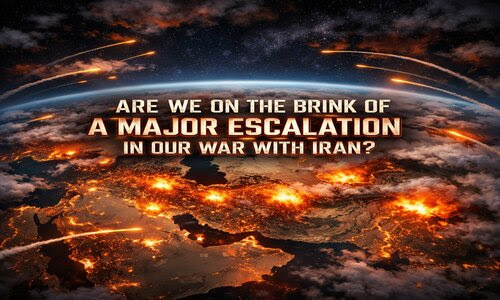
Instead of backing down, it appears that both sides are preparing to take the showdown in the Middle East to the next level. Of course we have already witnessed some absolutely stunning escalations during this past week.
After Israel bombed the South Pars gas field in Iran, the Iranians responded by pummeling Qatar’s Ras Laffan natural gas complex. The damage that Israel and Iran caused in just 24 hours will set the global economy back for years. But the escalations that are ahead may dwarf anything that we have seen so far.
If the U.S. puts boots on the ground inside Iranian territory, that would be an absolutely massive escalation.
In response, the Iranians would likely totally freak out and there is no telling what they might do.
Ominously, CBS News is reporting that U.S. military officials “have made detailed preparations for deploying U.S. ground forces into Iran”…
Pentagon officials have made detailed preparations for deploying U.S. ground forces into Iran, multiple sources briefed on the discussions told CBS News.
Senior military commanders have submitted specific requests aimed at preparing for such an option as President Trump weighs moves in the U.S.-Israel-led conflict with Iran, the sources said.
Mr. Trump has been deliberating whether to position ground forces in the region, sources said on condition of anonymity because they were not authorized to speak publicly. It was unclear under what circumstances he would authorize the use of troops on the ground.
Just because “detailed preparations” are being made does not mean that President Trump will pull the trigger.
But we do know that lots of U.S. Marines are being sent to the Middle East.
In fact, ABC News is telling us that it appears that yet another group of Marines is going to be headed for the region…
Three Navy ships carrying 2,200 Marines left San Diego earlier this week for a previously scheduled deployment to the Indo-Pacific, but two U.S. officials tell ABC News their ultimate destination is likely the Middle East.
The 11th Marine Expeditionary Unit (MEU) is aboard the USS Boxer, the USS Comstock and the USS Portland — along with 2,000 sailors.
If this group of Marines ends up in the Middle East, it will bring the grand total that have been deployed in recent days to about 9,000…
If it receives final orders to the Middle East, joining the 31st MEU, it will be an increase of close to 9,000 additional forces to the region.
The 31st MEU is still on its way to the Middle East from Asia after receiving orders from the Pentagon last Friday. Those Marines and ships are likely to arrive in the region sometime next week.
There are a number of important Iranian islands in the Persian Gulf that the Marines could be used to take.
At the top of that list would be Kharg Island, and we are being told that President Trump is “considering” a ground operation there…
Donald Trump is considering invading Iran’s Kharg Island to pressure Tehran into reopening the Strait of Hormuz.
Three separate marine units, trained for amphibious assaults, have been deployed to the Middle East, with the Pentagon considering sending more to reinforce Operation Epic Fury.
Kharg Island, located 15 miles off Iran’s coast in the Persian Gulf, is the country’s main oil export terminal and critical to its fragile economy.
It could be argued that Kharg Island is the most critical piece of real estate the Iran controls.
Since approximately 90 percent of Iran’s oil exports go through Kharg Island, the goal would be to grab it and use it as leverage…
“Kharg Island, 90% of their oil comes through there. So you’ve got really two choices,” said retired Gen. Frank McKenzie, the former commander of U.S. Central Command. “You can destroy the oil infrastructure, which would give irrevocable damage to the Iranian economy and the global economy, or you could seize it to use as a bargaining chip, which doesn’t then permanently degrade the world economy.”
But I don’t think that we will see an operation to seize Kharg Island just yet, because it is going to take some time to get the Marines that are now being deployed into position.
And an anonymous source has told Axios that the U.S. military will “need about a month to weaken the Iranians more with strikes” before conditions will be right for an invasion of the island…
However, such an operation – which would leave US troops exposed to Iranian missiles and drones – would only be launched once Iran’s coastal military capabilities have been further degraded, sources told Axios.
“We need about a month to weaken the Iranians more with strikes, take the island and then get them by the balls and use it for negotiations,” one source said.
Invading Kharg Island would instantly eliminate about 90 percent of Iranian oil exports.
But it would not reopen the Strait of Hormuz, and that is what the world really needs at this point.
I think that U.S. officials are hoping that hitting Iran where it really hurts will force them to end the war on our terms.
But instead it could just cause the Iranians to lash out even more wildly.
On Thursday, Iranian Foreign Minister Abbas Araghchi warned that the next time we attack Iran’s energy infrastructure they will show “zero restraint”…
Here’s what Iranian Foreign Minister Abbas Araghchi posted to X on Thursday: “Our response to Israel’s attack on our infrastructure employed FRACTION of our power. The ONLY reason for restraint was respect for requested de-escalation. ZERO restraint if our infrastructures are struck again. Any end to this war must address damage to our civilian sites.”
An invasion of Kharg Island would certainly qualify as an attack on Iran’s energy infrastructure.
So what would “zero restraint” look like?
Needless to say, if Iran does even more damage to Qatar’s Ras Laffan natural gas complex it will be catastrophic for the global economy.
But could it be possible that Araghchi was referring to something else?
At this stage, Iranian leaders are openly threatening to attack “parks, recreational areas and tourist destinations” all over the world…
Iran’s top military spokesman warned Friday that “parks, recreational areas and tourist destinations” worldwide won’t be safe for Tehran’s enemies.
Gen. Abolfazl Shekarchi made the threat as Iran continues to be hit by American and Israeli airstrikes. It renewed concerns that Iran may revert to using militant attacks beyond the Middle East as a pressure tactic in the war.
They would like for us to believe that nowhere is safe.
But there is only so much that they could do with conventional weapons.
My concern is that the Iranians could end up using some of the unconventional weapons that they have been holding back.
Interestingly, the World Health Organization is publicly admitting that they are extremely concerned about the potential for a “nuclear incident” in the Middle East…
Officials at the World Health Organization have admitted that they are preparing for a “worst-case scenario” nuclear threat if the U.S.-Israeli war with Iran escalates.
Hanan Balkhy, WHO regional director for the eastern Mediterranean, said that staff remain “vigilant” for a nuclear incident following President Donald Trump’s decision to bomb Iran in a joint campaign with Israel.
“The worst-case scenario is a nuclear incident, and that’s something that worries us the most,” Balkhy told Politico. “As much as we prepare, there’s nothing that can prevent the harm that will come … the region’s way — and globally if this eventually happens — and the consequences are going to last for decades.”
If Iran is pushed too far, I think that they will throw everything that they have left at us.
And if any unconventional weapons are used against Israel, I am convinced that they won’t show any restraint either.
We have reached such a dangerous moment in human history.
Both sides are absolutely determined to win this war, and a “point of no return” could be just around the corner.
Experts Warn of Homegrown Jihadism And Spread Of Sharia Law
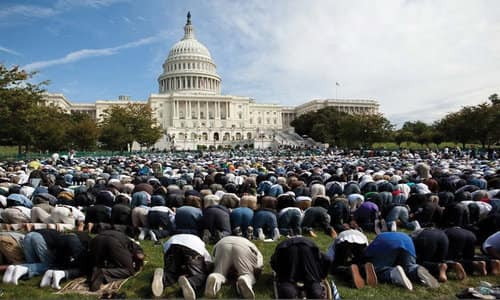
As terrorist attacks perpetrated by Islamist extremists continue to proliferate across the U.S., experts and lawmakers are raising the alarm over the increase in homegrown jihadist views and activism to implement Sharia law in America, which directly contradict the tenets of the U.S. Constitution.
In the weeks following the Trump administration’s strike on Iran on February 28, four terrorist attacks were carried out by Islamist radicals across four different states. In the early morning hours of March 3, Senegalese national Ndiaga Diagne killed three and wounded 14 others after he opened fire at a bar in Austin, Texas before he was killed by police. Diagne was wearing a sweatshirt with the words “Property of Allah,” and a search of his car and home found a Quran, an Iranian flag, and pictures of Iranian leaders.
Four days later on March 7, Emir Balat and Ibrahim Kayumi attempted to detonate explosive devices full of metal shrapnel near a protest occurring at Gracie Mansion in New York City. They later professed their allegiance to the Islamic State terror group after being arrested. Then on March 12, Lebanese national Ayman Mohamad Ghazali rammed a truck through the front entrance of a synagogue in West Bloomfield Township, Michigan, exchanged gunfire with a security guard, and set off fireworks before killing himself.
It later came to light that Ghazali’s brother was a Hezbollah commander in Lebanon. The next day, Mohamed Bailor Jalloh, a former Virginia National Guard member, shot and killed ROTC instructor Lt. Col. Brandon Shah at Old Dominion University in Virginia and injured two others before being subdued and killed by ROTC members. Jalloh “previously served prison time for attempting to aid the terrorist group ISIS.”
Experts like Robert Spencer, who serves as director of Jihad Watch and as a Shillman Fellow at the David Horowitz Freedom Center, say that it is no coincidence that the reoccurring pattern of terrorist acts are being carried out by extremist practitioners of Islam.
“These recent attacks come after 49,000 jihad terror attacks around the world since 9/11,” he pointed out during Tuesday’s edition of “Washington Watch.” “Now people like to say, ‘Oh, every religion has extremists,’ but in Christianity, Judaism, Hinduism, Buddhism, you don’t see people who hold to those religions carrying out terror attacks at all, much less 49,000 of them in 25 years. … Islam has a developed doctrine and theology and legal system mandating warfare against unbelievers. No other religion has anything like that.”
Spencer went on to highlight what undergirds the jihadist mentality within Islam.
“Jihad means struggle,” he explained. “There are a lot of struggles in Arabic, just like there are in English. You know, you can have a great struggle between civilizations, but also struggle to lose weight or quit smoking or something like that, and it’s the same thing in Arabic. But the primary meaning of jihad in Islamic theology and law is warfare against non-Muslims to establish Islamic law over them. And Islamic law denies basic rights to non-Muslims.
It mandates a second-class status that denies the freedom of speech, denies equality of rights to women, discriminates against non-Muslims in all kinds of ways. As a matter of fact, to this day, Christians in Pakistan are colloquially in the country known as sweepers, because all the kinds of jobs they get are things like sweeping the streets, because they’re not allowed to hold authority over Muslims. That’s part of Islamic law. They can only hold the most menial jobs in society. Part of the mandate of Islamic law for Christians and others is humiliation, so that they will realize the cost of rejecting Islam.”
Spencer further noted that “every major sect — Sunni and Shia and then also the Wahhabis in Saudi Arabia — every last major group of Muslims of Islam … with the exception of some tiny groups, they all teach warfare against unbelievers and the necessity to subjugate them as second class under the rule of Islamic law.”
Spencer recognized that there are “a lot of peaceful Muslims, there’s no doubt about that. But there’s no peaceful form of Islam. … Unfortunately, there are violent teachings and supremacist teachings of Islam that Islamic jihadis can and do point to to make recruits among peaceful Muslims, or at least to keep the peaceful Muslims off balance and afraid to speak up because they’re the ones who are not the good Muslims by the likes of the Quran. And that’s why we don’t see massive Muslim opposition to jihad violence.”
Meanwhile, a growing cohort of lawmakers on Capitol Hill are raising concerns over signs that Sharia law, the Islamic legal code, is being implemented within some U.S. communities. Republicans in the House of Representatives recently organized the Sharia-Free America Caucus, which has so far been joined by 43 members. Senators John Cornyn (R-Texas) and Tommy Tuberville (R-Ala.) have also introduced legislation tohalt the spread of Sharia Law in the U.S., which House Speaker Mike Johnson (R-La.) recently pointed out is the “opposite” of the freedom of religion that is promised to every American by the U.S. Constitution.
Spencer concurred. “You ‘kill the infidel.’ … That’s said four times in the Quran. ‘Kill them wherever you find them.’ And one of those four says very clearly, ‘Kill the polytheists wherever you find them.’ … In the Islamic scheme of things, Christians and pretty much everybody who’s not Muslim is a polytheist. But there is also the other possibility that the non-Muslims submit to the rule of Islamic law and are subjugated, and that is acceptable. … But there is no possibility in Islamic law for non-Muslims and Muslims to live together as equals in a secular society. … With the rising Muslim population, you’re also going to have a rising population of people who believe they have a command from the only God to impose Islamic law over this country by violence, if necessary, and by stealth.”
But as Spencer observed, many Americans on the Left “decided long ago … that to talk about Islam’s violent supremacist aspects is racist and bigoted and Islamophobic. Now that’s a lot of nonsense. … But the Left completely bought into that. So did many on the Right as well. And many people to this day have been conditioned to think, ‘Well, I can’t talk about jihad violence. I can’t talk about Sharia oppression of women and non-Muslims, because that would be Islamophobic.'”
Spencer concluded by arguing that the tenets of Sharia law are incompatible with the Constitution.
“Religious freedom is not some kind of a license or get out of jail free card to break all the other laws and ignore everything else that makes our society free,” he contended. “And so, we have to recover a real sense of what religious freedom actually is and say, ‘You’re perfectly free to live as Muslims here and practice your religion. You’re just not free to wage jihad. You’re not free to oppress women. You’re not free to do the other aspects of Islamic law that contradict U.S. constitutional laws.'”
Unthinkable: Britain Advances Law For Abortion Up To Birth
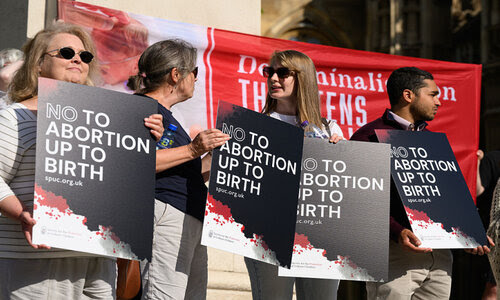
A decision made behind the historic walls of Britain’s Parliament has sent shockwaves far beyond London–and for many, it feels like a line has been crossed that cannot easily be uncrossed. This week, the House of Lords advanced legislation that pro-life leaders are calling not just controversial, but catastrophic. What has unfolded is not a minor policy shift. It is, in their view, a moral earthquake–one that strikes at the very foundation of how a society defines life, dignity, and justice.
At the center of the storm is Clause 208 of the Crime and Policing Bill, a provision that states that “no offense is committed by a woman acting in relation to her own pregnancy.” On its surface, it is framed as protection–shielding women from prosecution. But critics warn that beneath that language lies something far more sweeping and far more dangerous. According to Right to Life UK, this clause effectively removes any legal deterrent against self-administered abortion at any stage of pregnancy–up to and including the moment of birth–and for any reason.
Pause and consider that reality. For generations, even amid fierce debate, there remained at least some legal acknowledgment that late-term life carried weight–that it demanded caution, oversight, restraint. Now, pro-life advocates argue, that last line of defense is being erased.
“This is one of the most extreme pieces of legislation ever,” said Catherine Robinson of Right to Life UK. And as stark as that claim sounds, it is being echoed across denominational lines. Christian leaders–often cautious in their public language–are speaking with unusual urgency, warning that the consequences of this moment could echo for decades.
John Sherrington did not mince words when he warned that the clause could lead to abortion being effectively decriminalized “for any reason, up to the point of birth.” He called it a “radical departure” from Britain’s legal tradition, particularly from the Abortion Act 1967, which–however imperfectly–placed guardrails around the practice, including a general 24-week limit and the involvement of medical professionals.
Those guardrails are now at risk of collapsing.
And when guardrails collapse, the consequences are not theoretical–they are real, immediate, and often irreversible.
Sarah Mullally issued a warning that should not be easily dismissed: even if lawmakers claim the 24-week limit remains, the removal of enforcement mechanisms “undoubtedly risks eroding the safeguards” that give that limit meaning. Laws, after all, are only as strong as their ability to be upheld. Strip away accountability, and what remains is not protection, but permission.
This is where the urgency deepens. Because this debate is not only about unborn children–though they remain the most voiceless and vulnerable–it is also about women who may now be left more isolated than ever. Without requirements for in-person medical consultation, without meaningful legal boundaries, there is growing concern that women could be pushed–by fear, by pressure, by circumstance–into making life-altering decisions alone, outside the safety of clinical care.
What is being presented as compassion may, in reality, become abandonment.
Baroness Monckton and others attempted to halt or amend the clause, warning that removing legal deterrents could expose women to coercion, abuse, and serious medical risk. Those efforts failed. Amendments were voted down. Safeguards were stripped away. And perhaps most alarming of all, this transformation of British abortion law advanced with astonishing speed–after just 46 minutes of debate in the House of Commons.
Forty-six minutes.
In less than an hour, lawmakers moved forward on a change that touches the most profound questions a society can face: When does life matter? Who is protected? And who is not?
Supporters of the bill, including groups like the College of Sexual and Reproductive Healthcare, insist the intent is limited–that the goal is simply to prevent criminalizing women. But for pro-life advocates, intent cannot outweigh outcome. If the result is a system where abortion up to birth carries no legal consequence, then the moral and legal landscape has fundamentally shifted–regardless of how carefully the language is framed.
And that shift raises a haunting question: if a society removes protection from life at its most vulnerable stage, what does that say about its understanding of human worth?
For centuries, the belief that every human life carries intrinsic value has shaped not only Christian teaching but the very structure of Western law. Leaders within the Church of England have warned that this principle is now under direct threat. When the “infinite value of human life” is no longer clearly reflected in law, something deeper begins to erode–not just policy, but conscience.
This is not a distant issue. It is not abstract. It is immediate. It is unfolding now.
The bill will continue through Parliament, and there is still time for scrutiny, for debate, for reconsideration. But that window is narrowing. And the voices raising concern are growing louder–not out of political instinct, but out of a conviction that something precious is being lost.
History will remember this moment. The only question is how.
Will it be remembered as a turning point where a nation paused and chose to protect both mother and child with greater care and compassion? Or will it be remembered as the moment when, quietly but decisively, the final safeguards for the unborn were swept away?
For those watching with shock and dismay, the answer matters deeply–because once a society redefines the value of life, the consequences are not easily contained.
WATCH: Missile Strikes Near Israel’s Top-Secret Nuclear Site
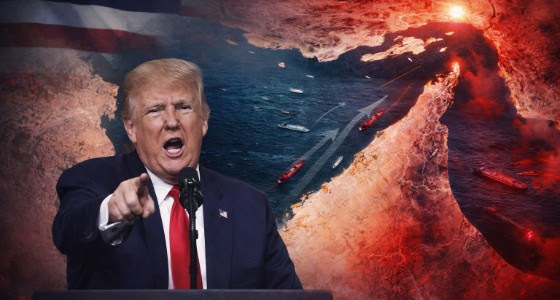
Trump’s Hormuz Ultimatum to Iran – Reopen or Total Devastation
22 Countries are Ready to Help Trump Secure Strait of Hormuz.
TruLight Ministries Daily Entertainment

TruLight TV : The Good Shepherd
A child-like faith is something to admire, and there’s nothing more inspiring than a child who clearly loves Jesus. Whether you’re a guardian, grandparent, aunt, uncle, or even a caregiver, ask God to show you how to share His Word with the children in your life. He will use them to do great things. And our sermon today from Dr. Charles Stanley (The Good Shepherd) – Why is it so difficult for us to believe that God loves us and that He cares for us as individuals? Learn to avoid the kind of dangerous thinking that robs us of the security and joy found in our relationship with Christ. learn more by watching today’s program. Enjoy!
Today on TruLight Radio XM
TruLight Radio XM 24/7
Program
GMT / UTC +2
Monday To Fridays
00:15 Words to Live By Testimonies
01.15 Science Scripture and Salvation
02.15 Ground Works
04.00 Gospel Concert of the Day
05.00 The Daren Streblow Comedy Show
5:55 It is Today devotional
6:00 Gaither Homecoming Morning Show
7:15 Discover the Word
8.15 Destined for Victory
8:55 Science Scripture and Salvation
9:00 Holy Spirit Hour – Normally Sermons
10:15 Hope of the Heart
11:15 Unshackled
11.45 Words to Live By
12:15 Truth for Life
13:15 Living on the Edge with Chip Ingram
14:15 Focus on the Family
15:00 Kids Hour
16:00 In Touch with Dr. Charles Stanley
16:30 Groundwork
17:15 Live in the Light
18:15 Renewing your Mind
19:00 Gaither Homecoming Show
20:15 Growing Hope
21:15 Adventures in Odyssey Radio Drama
21:45 Bible Reading
22:15 Night-sounds
23.00 Good Old Country Gospel / Rhema Gospel Express
VISIT THE WEBSITE
TruLight Ministry News
TruLight Ministries orders from God since 2012 . Teach Them , Comfort Them and Warn Them!
Your Invited . TO WHAT? WHERE? and WHEN?
We Starting , the 1st May 2026 . with Our Preachers Diploma Online Platform – TruTheology.co.za . 36 Subjects with between 10 to 15 Lessons per Subject , equivalent to a 3 Year Theology Degree , The Training is Free to Approved Members and Tests Online after Each Lesson , You Determine the Speed of Your Studies . If you are interested registrations will take place from 1 April 2026 .
Have fun and test your Bible knowledge with a Bible quiz! Take the Bible quiz now and share your results with your friends!
Healing Truths
End Time Articles
Bonus Teaching for the Child of God !!
Mount Hermon (or “sacred mountain”) is the highest mountain in ancient Israel, boasting majestic, snowcapped peaks rising just over 9,000 feet above the sea. Mount Hermon may have been the site of Jesus Christ’s transfiguration.
Known today by its Arabic name, Jabal el-Shaiykh, meaning “snowy mountain,” Mount Hermon’s three distinct peaks are covered with snow most of the year. In Bible times, Mount Hermon was also called Sirion by the Sidonians and Senir by the Amorites (Deuteronomy 3:9; Psalm 29:6). These two names mean “breastplate,” likely referring to the mountain’s rounded, snow-topped crests that gleam in the sunlight.
Visible from great distances, the mountain range is nearly 30 miles in length and about 15 miles wide. Mount Hermon is located at the northeastern boundary of Israel, on the border between Syria and Lebanon. Along with melting snow and the abundant rainfall on Mount Hermon, large springs at the base of the mountain form the main headwaters of the Jordan River.
Mount Hermon was significant in the Bible for a few reasons. Mount Hermon marked the northern limits of the Promised Land conquered by Joshua (Deuteronomy 3:8; Joshua 11:17; 12:1; 13:5). Mount Hermon also formed the northern boundary of the territory inherited by the half-tribe of Manasseh as well as the northern border of Israel in general (1 Chronicles 5:23).
Mount Hermon has always been considered a sacred mountain. Worshipers from the earliest of times were drawn to its isolated heights. Several ruins of ancient sanctuaries have been found on Mount Hermon’s peaks and slopes and at its base. Judges 3:3 calls the mountain Baal Hermon, meaning “Lord of Hermon” (see also 1 Chronicles 5:23). Some of the psalms praise Mount Hermon for its loftiness and majesty (Psalm 42:6; 89:11–12).
King David compared God’s people living together in unity to the dew of Mount Hermon falling on Mount Zion (Psalm 133:1–3). This illustration is fitting, since the slopes of Mount Hermon, in the north, receive profuse amounts of dew. Mount Zion, in the south, is much drier. David compared the refreshing dew of Hermon to the blessings of unity in Israel, from north to south. Harmony among God’s people is life-giving. Mount Hermon is also noted for its wildlife in the Bible (Song of Solomon 4:8).
Some scholars believe Mount Hermon was the site of Jesus’ transfiguration, a supernatural event in which Christ appeared in His true glory as the Son of God, revealing His identity as Messiah and fulfilling the law and the prophets (Matthew 17:1–8; see also 2 Peter 1:16–18). At the transfiguration, Peter, James, and John—the members of Jesus’ inner circle—were eyewitnesses to the Lord’s preexistent glory.
Both the accounts of Mathew and Mark specify that Jesus led Peter, James, and John up a “high mountain.” The traditional site for the Mount of Transfiguration is Mount Tabor. However, Matthew’s gospel places events leading up to the transfiguration in the district of Caesarea Philippi, making Mount Hermon the closer site. Also, in those days, the summit of Mount Tabor was inhabited and surrounded by a wall, according to the historian Josephus. On the other hand, Mount Hermon afforded privacy and seclusion “where they were all alone” (Mark 9:2).
Share this Feeding of Manna with your Friends and Family. just click on the Social Media icon and share !