Hosted by TruLight Ministries – The Place of Truth
SELECT YOUR READING LANGUAGE – BOTTOM LEFT = YOUR DAILY MANNA NOW AVAILABLE IN 103 LANGUAGES
If you are LIGHT, you Take NO PART in Darkness!
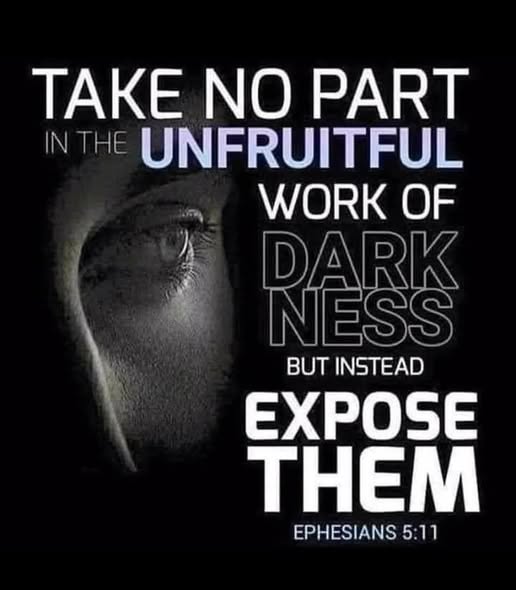
In Ephesians 4:17—5:21, the apostle Paul gives practical yet challenging instruction in holy living. The path to holiness includes imitating God (like children imitating a parent) by walking in love (verses 5:1–2) and walking as “children of light” (verses 5:8–9). The opposite of holy living is characterized in the Bible as “walking in darkness” (Isaiah 9:2; see also Proverbs 2:13), which is why Paul warns, “Take no part in the unfruitful works of darkness, but instead expose them” (Ephesians 5:11, ESV).
Throughout Scripture, darkness symbolizes sin and its effects (Proverbs 2:12–15; Matthew 6:23; Isaiah 5:20; Isaiah 29:15). The word unfruitful in Ephesians 5:11 means “having no beneficial use, unproductive.” The works of darkness are unfruitful because they end in death, but the fruit of righteousness “leads to holiness, and the result is eternal life” (Romans 6:20–22).
By telling the Ephesians what behaviors to avoid, Paul outlines the unfruitful works of darkness: “But among you there must not be even a hint of sexual immorality, or of any kind of impurity, or of greed, because these are improper for God’s holy people. Nor should there be obscenity, foolish talk or coarse joking, which are out of place, but rather thanksgiving. For of this you can be sure: No immoral, impure or greedy person—such a person is an idolater—has any inheritance in the kingdom of Christ and of God” (Ephesians 5:3–5).
Paul advised the Romans to “cast off the works of darkness and put on the armor of light.” Then he listed other dark deeds such as “orgies and drunkenness, . . . sexual immorality and sensuality, . . . quarreling and jealousy” (Romans 13:12–13, ESV).
To the Corinthians, Paul explained that light and darkness could not mix: “How can light live with darkness? What harmony can there be between Christ and the devil? How can a believer be a partner with an unbeliever? And what union can there be between God’s temple and idols? For we are the temple of the living God. . . . Let us cleanse ourselves from everything that can defile our body or spirit. And let us work toward complete holiness because we fear God” (2 Corinthians 6:14—7:1, NLT).
Paul described people before salvation as being “dead because of your disobedience and your many sins. You used to live in sin, just like the rest of the world, obeying the devil—the commander of the powers in the unseen world. He is the spirit at work in the hearts of those who refuse to obey God” (Ephesians 2:1–2, NLT). In this dead state, “their minds are full of darkness; they wander far from the life God gives because they have closed their minds and hardened their hearts against him” (Ephesians 4:17–18, NLT). Jesus said, “Whoever walks in the dark does not know where they are going” (John 12:35). Unbelievers wander about in the darkness until their eyes are opened “so they may turn from darkness to light and from the power of Satan to God. Then they will receive forgiveness for their sins and be given a place among God’s people” (Acts 26:18, NLT).
God’s people are made alive as children of light (1 Thessalonians 5:4–5). They avoid unfruitful works of darkness because they have been rescued “from the dominion of darkness and brought” into the kingdom of Christ’s light (Colossians 1:13).
Jesus said, “I am the light of the world. Whoever follows me will never walk in darkness, but will have the light of life” (John 8:12). The unsaved person walks in darkness, performing unfruitful works of darkness, while the child of God puts on the armor of light and works toward complete holiness as Jesus directed: “You are the light of the world—like a city on a hilltop that cannot be hidden. No one lights a lamp and then puts it under a basket. Instead, a lamp is placed on a stand, where it gives light to everyone in the house. In the same way, let your good deeds shine out for all to see, so that everyone will praise your heavenly Father” (Matthew 5:14–16, NLT).
Paul told the Ephesians to expose the unfruitful works of darkness. He may have been speaking about the sins of fellow members of Christ’s body. Jesus taught believers to hold one another accountable for how they live and to work to restore those who get entangled in sin (Matthew 18:15–20; Luke 17:3; see also Galatians 6:1; Psalm 141:5; Hebrews 12:13; James 5:19–20; 1 Thessalonians 5:14).
But Paul may also have been referring to exposing the sins of disobedient non-believers. Jesus stated, “All who do evil hate the light and refuse to go near it for fear their sins will be exposed. But those who do what is right come to the light so others can see that they are doing what God wants” (John 3:20–21, NLT). We expose unfruitful works of darkness by shining the light of God’s truth into a dark world. The apostle John explained, “This is the message we have heard from him and declare to you: God is light; in him there is no darkness at all. If we claim to have fellowship with him and yet walk in the darkness, we lie and do not live out the truth. But if we walk in the light, as he is in the light, we have fellowship with one another, and the blood of Jesus, his Son, purifies us from all sin” (1 John 1:5–7).
Darkness cannot remain in the light of God’s truth. Whether we expose unfruitful works of darkness in the church or shine light into a lost and dying world, we are fulfilling our mission on earth—transforming darkness into light as those living in darkness become people of the light (Isaiah 42:6–7; John 12:46; 2 Corinthians 4:6; 1 Peter 2:9; 2 Peter 1:19).
Bible Verse and Prayer for Today
The wages of sin is death, but the gift of God is eternal life in Christ Jesus our Lord.
—Romans 6:23
When we face death because of sin, we’re only being paid what we’ve earned. Sin is rebellion against God — the Father who loves us and the Son who gave up glory to endure the cross to redeem us from sin! Praise God, the Father’s gift of eternal life is a free gift offered to us by grace, which we accept through faith in Jesus as our Savior and Lord! We could not earn it, deserve it, or demand it. God not only provided us with this gift, but also offered it to us in love. For us to spurn it or not receive it with passionate faith is to choose to receive what we’ve earned:
Prayer
Thank you, God, for loving me when no one else could or would. Thank you for sacrificing the most precious gift of heaven so I could join you there as your child, your beloved child, just like my Savior Jesus. Of all the gifts I’ve ever received, yours is the best. I offer this praise in the name of one whose gift has given me life! Amen and Amen
Bible Teaching of the Day
Ephesians 5:11 delivers a clear directive: “Have nothing to do with the fruitless deeds of darkness, but rather expose them.” The first part of this command urges Christians to avoid sinful deeds, that is, everything contrary to God’s commands. This includes sexual immorality, greed, and foul language (Ephesians 5:3–4). However, adhering to Christian conduct extends beyond mere avoidance of sin; we are also called to expose sin where it is hidden in the darkness. Understanding what it means to expose the works of darkness becomes our responsibility.
In the preceding verse, Paul urged his readers to “find out what pleases the Lord” (Ephesians 5:10), which serves as an initial step. To expose the works of darkness, we must discern the difference between what pleases the Lord and what doesn’t. God defines what’s right and wrong, not we, and not societal norms. Once we’ve established the parameters of right and wrong from God’s perspective, we take a public stand for righteousness and denounce evil deeds. In contemporary culture, defining right and wrong can be perceived as judgmental, particularly when God’s standards clash with worldly values. Nevertheless, God commands us not to ignore evil but rather to unveil its dangers and encourage others to steer clear of it.
In a post-Christian culture, Christians live like Israelites in Babylon. Much of what is celebrated in our world is abhorrent by biblical standards. That is why we must be aligned with Scripture; to lose sight of Scripture is to risk operating out of a faulty view of morality influenced by the media and the world system. To expose the works of darkness, we must avoid falling in love with those works or the system that produces them. As the apostle John wrote, “Do not love the world or anything in the world. If anyone loves the world, love for the Father is not in them. For everything in the world—the lust of the flesh, the lust of the eyes, and the pride of life—comes not from the Father but from the world. The world and its desires pass away, but whoever does the will of God lives forever” (1 John 2:15–17).
Exposing the works of darkness also entails radiating the light of Christ through our words and actions. Merely labelling an act as wrong is insufficient; a diagnosis is incomplete without solution. The act of exposing darkness must always be coupled with a call to repentance—a change of mind about Christ, sin, and salvation—and faith in Christ’s offer of perfect forgiveness. Only the light can dispel the darkness.
The principle of exposing the works of darkness can likewise be applied in our interactions with our Christian brothers and sisters. We should hold ourselves accountable (Luke 17:3; Galatians 6:1; 1 Thessalonians 5:14), which includes the compassionate confrontation of a fellow believer who may be straying. James goes a step further, encouraging us to strive for the restoration of those who have wandered from the truth, saying that “whoever turns a sinner from the error of their way will save them from death and cover over a multitude of sins” (James 5:19–20).
Today’s Devotional
Ephesians 5:8 describes followers of Christ and exhorts them: “You are light in the Lord. Live as children of light.” From the beginning, the Bible develops and explores the theme of moral dualism, or “good versus evil,” using the contrasting elements of light and darkness. God created light from darkness (Genesis 1:2–3). His presence, goodness, and life are represented as light, whereas His absence, evil, and death are pictured as darkness (see Job 33:28; Psalm 56:13; cf. Job 18:5; Psalm 49:18–19; Jeremiah 13:16). In the New Testament, the symbolism of light focuses sharply on Jesus Christ as Messiah and incarnate revelation of God.
The Gospel writers cited Old Testament Scripture to declare that Jesus Christ’s arrival brought the presence of God to earth: “The people who sat in darkness have seen a great light. And for those who lived in the land where death casts its shadow, a light has shined” (Matthew 4:16, NLT; see also Luke 1:79; Luke 2:32; cf. Psalm 23:4; 107:10; Isaiah 9:2; 42:7). John’s Gospel offers the most thorough development of the light and darkness theme. Jesus is the Light that “shines in the darkness, and the darkness can never extinguish it” (John 1:5, NLT). Jesus presented Himself as “the light of the world. Whoever follows me will never walk in darkness, but will have the light of life” (John 8:12).
Naturally, God’s children—those who belong to Jesus Christ—would be called people of light. The apostle Paul told the Ephesian Christians not to behave like the unsaved people of the world: “For you were once darkness, but now you are light in the Lord. Live as children of light (for the fruit of the light consists in all goodness, righteousness and truth) and find out what pleases the Lord” (Ephesians 5:8–10). Since “God is light” and “in him there is no darkness at all” (1 John 1:5), God’s children are meant to be “light in the Lord.” Believers are to “take no part in the worthless deeds of evil and darkness” but instead, “expose them . . . for the light makes everything visible” (Ephesians 5:11–14), NLT).
The “real life” of every Christian is said to be “hidden with Christ in God” (Colossians 3:3, NLT; see also Ephesians 2:13). Jesus is our life (Colossians 3:4), our light, and our salvation (Psalm 27:1). God through Jesus is the source of our light (Psalm 34:5; Isaiah 60:19–20). Therefore, “we walk in the light, as he is in the light” (1 John 1:7, ESV).
Light represents the righteousness of God (2 Corinthians 6:14), and therefore, believers are the righteousness of God in Jesus Christ (2 Corinthians 5:21). We are “light in the Lord” to a lost and dying world (Ephesians 5:8). Jesus taught His followers, “You are the light of the world. A town built on a hill cannot be hidden. Neither do people light a lamp and put it under a bowl. Instead they put it on its stand, and it gives light to everyone in the house. In the same way, let your light shine before others, that they may see your good deeds and glorify your Father in heaven” (Matthew 5:14–16). As lighthouses pointing the way to the Father and beacons of His truth, we must be careful to “live clean, innocent lives as children of God, shining like bright lights in a world full of crooked and perverse people” (Philippians 2:15, NLT).
As Jesus neared the hour of His death, He told His disciples, “My light will shine for you just a little longer. Walk in the light while you can, so the darkness will not overtake you. Those who walk in the darkness cannot see where they are going. Put your trust in the light while there is still time; then you will become children of the light” (John 12:35–36, NLT).
The Lord appointed Paul as a light to the Gentiles: “To open their eyes and turn them from darkness to light, and from the power of Satan to God, so that they may receive forgiveness of sins” (Acts 26:18). Later, Paul wrote, “The night is almost gone; the day of salvation will soon be here. So remove your dark deeds like dirty clothes, and put on the shining armor of right living” (Romans 13:12, NLT). He urged Christians to stay alert: “For you are all children of the light and of the day; we don’t belong to darkness and night. So be on your guard, not asleep like the others” (1 Thessalonians 5:5–6, NLT).
Being light in the Lord means being an imitator of Jesus Christ (1 Corinthians 11:1), following in His footsteps (Hebrews 12:1–2; 1 Peter 2:21), and living in a way that honors, glorifies, and reflects God’s life in everything we do (Ephesians 4:1; 5:2; Colossians 1:10; 3:17 1 Corinthians 10:31; 1 Peter 4:11).
Bible Prophecy, Signs of the Times and Gog and Magog Updates with Articles in the News
AI Bias In Action: When Machines Quietly Shape What We Trust

A troubling reminder surfaced this week that artificial intelligence is not the neutral referee many assume it to be–it is, in fact, a reflection of human decisions, human data, and human blind spots.
According to New York Post, a “technical error” led OpenAI’s ChatGPT to flag links to WinRed, the official Republican Party donation platform, as potentially unsafe, while links to ActBlue, the primary Democratic campaign fundraising platform, did not generate similar warnings.
The company has said this was not intentional. But whether accidental or not, the incident exposes something deeper–and more concerning–than a simple glitch. It reveals how fragile trust in AI can be, and how easily bias–subtle or overt–can creep into systems that millions rely on for information.
This is not just about politics. It is about power: who shapes the tools, who feeds them data, and who decides what is seen–or unseen.
1. Bias in Source Data
At the foundation of every AI system is data. Massive amounts of it. But data is never neutral–it reflects the world it was gathered from. If the majority of training data leans toward certain viewpoints, narratives, or cultural assumptions, the AI will naturally echo those patterns.
If one political perspective dominates news articles, academic research, or online discourse within the dataset, the AI may unknowingly prioritize or validate that perspective more often. Over time, this creates an uneven playing field–not because the AI “chooses” sides, but because it learned from an imbalanced source.
The WinRed vs. ActBlue incident raises an important question: what kinds of signals in the training data might influence how risk or trust is assessed?
2. Bias in Filters and Safety Systems
AI models are not just trained–they are constrained. Filters and safety layers are added to prevent harm, misinformation, or malicious use. But these filters are designed by humans, and humans carry assumptions.
What qualifies as “unsafe”? What gets flagged? What is allowed through?
In this case, one fundraising platform triggered warnings while another did not. Even if caused by a technical error, it highlights how filtering systems can produce uneven results. A slight difference in how rules are applied–or interpreted–can create the appearance of bias, even when the intention is neutrality.
3. Algorithmic Bias
Beyond data and filters lies the algorithm itself–the mathematical framework that determines how information is processed and prioritized.
Algorithms are built with objectives: maximize relevance, reduce harm, increase engagement, ensure accuracy. But how those goals are weighted matters.
If an algorithm is tuned to be overly cautious in certain contexts, it may flag content more aggressively in one area than another. If it is tuned differently elsewhere, the outcome changes. These are not random outcomes–they are the result of design decisions.
The public rarely sees these decisions, yet they shape what billions of people experience.
4. The Power of Omission: What’s Left Out
Perhaps the most overlooked form of bias is not what is shown–but what is missing.
AI doesn’t just present information; it selects it. It summarizes, ranks, and filters. In doing so, it inevitably leaves things out.
What if warnings are shown for one type of link but not another? What if certain perspectives are simply absent from the results? The user may never know what they weren’t shown.
This “silent bias” can be more powerful than overt bias, because it operates invisibly. People trust what they see, rarely questioning what has been excluded.
5. Who Decides the Data and Design?
At the center of all of this is a critical question: who decides?
Who selects the training data? Who defines the safety rules? Who tunes the algorithms?
These decisions are made by teams–often well-intentioned–but still limited by their own experiences, perspectives, and institutional cultures. Even without malicious intent, unconscious bias can influence outcomes.
The incident reported by the New York Post underscores why transparency matters. When something goes wrong, the explanation often points to a “technical issue.” But behind every technical system are human choices.
A Necessary Warning for the Future
Artificial intelligence is rapidly becoming a gatekeeper of information. It helps people decide what to read, what to believe, and even what to trust.
That power demands scrutiny.
The lesson here is not to reject AI–but to approach it with discernment. Users must remain aware that these systems are not infallible. They are tools, shaped by imperfect inputs and imperfect design.
Moments like this should not be dismissed as minor glitches. They should serve as wake-up calls.
Because if something as simple as a fundraising link can be unevenly flagged, what else might be quietly influenced beneath the surface?
And perhaps the most important question of all: if we do not question the systems guiding us, who will?
The Mouth of the Lion Speaks Islam ? A Nation Divided: Shocking Poll Reveals UK Muslim Support For Iran
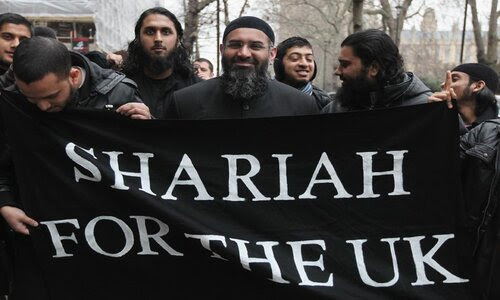
As Western forces launched strikes against Iran, most expected tensions to rise in the Middle East. Few expected a different kind of shockwave–one rippling through the streets, communities, and polling data of Britain itself. Yet that is exactly what has emerged: not just disagreement, but a deep and widening divide over who the enemy is–and who deserves support.
New polling conducted between March 2nd and 13th–during the opening phase of the American-Israeli military operation against Iran–reveals something far more serious than policy disagreement. It suggests that a significant portion of Britain’s Muslim population did not simply question the West’s actions. They instinctively opposed them, even as those actions targeted one of the world’s most openly hostile regimes.
Around 39% of British Muslims expressed a favorable view of Iran, compared to just 8% of the general public. Even more striking, half said the U.S.-Israeli strikes were “definitely wrong,” a number nearly three times higher than the broader population.
This wasn’t measured in hindsight.
This wasn’t the result of years of reflection.
This was real-time sentiment–revealed in the heat of conflict.
And it points to something deeper than politics.
A Pattern That Can No Longer Be Ignored
If this were an isolated reaction to one war, it might be explained away. But the data tells a different story–one that has been building for years.
Previous surveys have shown:
– Nearly half of British Muslims expressing sympathy for Hamas, a recognized terrorist organization
– Large numbers unwilling to acknowledge atrocities committed on October 7
– Roughly one-third supporting the idea of Sharia law being implemented in the UK
– Elevated favorable views toward Russia and China, regimes that openly oppose Western values
Taken together, this is not a collection of random opinions.
It is a coherent pattern of alignment–one that consistently places significant segments of Britain’s Muslim population at odds with the moral, political, and strategic framework of the West.
The Timing Changes the Meaning
The Iran polling matters not just because of what it shows–but when it shows it.
These views hardened as the West acted against Iran.
That suggests something far more concerning than disagreement. It suggests a reflexive opposition–a worldview in which Western action is assumed to be wrong, and Western adversaries are viewed with suspicion’s opposite: sympathy.
Iran is not a neutral actor. It is a regime known for sponsoring terrorism, suppressing dissent, and threatening regional–and global–stability.
And yet, in the moment it was confronted, support for it surged among a large segment of the population inside a Western nation.
That is not just troubling.
It is destabilizing.
What Happens When Worldviews Collide?
Every nation depends on a shared understanding of basic truths:
Who are our allies?
What is justice?
What constitutes evil?
When those answers begin to diverge–especially along cultural or religious lines–the foundation of unity begins to crack.
Britain is now facing that reality.
1. Social Cohesion Is Fracturing
Two in five Britons already believe global conflicts like the Iran war are worsening internal tensions. That is not surprising. When communities respond to the same event with completely different moral interpretations, mistrust follows.
2. Politics Will Not Remain Untouched
Democracy amplifies beliefs.
If large voting blocs consistently reject Western alliances, oppose Israel, and sympathize with rival powers, political leaders will eventually respond. Policies will shift. Alliances may weaken. The ripple effects could extend far beyond Britain.
3. Security Risks Grow in the Shadows
Iran’s reach is not theoretical. Western intelligence agencies have repeatedly warned about influence operations, radicalization pathways, and direct threats linked to hostile regimes.
When ideological sympathy exists within a country, it creates vulnerabilities–sometimes subtle, sometimes severe.
4. The Collapse of Moral Clarity
Perhaps the most alarming trend is not geopolitical–it is moral.
When large numbers of people:
Deny or minimize acts of terror
Sympathize with extremist groups
Embrace alternative legal systems over democratic law
…it becomes increasingly difficult to maintain a shared sense of right and wrong.
Without that, a nation does not just disagree.
It drifts apart.
Not “All”–But More Than Enough
It must be said clearly: not all Muslims in Britain hold these views.
But that is no longer the critical question.
The question is whether enough do to reshape the culture, influence politics, and strain the fabric of society.
On that question, the data is becoming harder to ignore.
A nation does not unravel because every citizen changes.
It unravels when a critical mass moves in a different direction.
A Christian Response: Eyes Open, Hearts Steady
For Christians, this moment demands both courage and clarity.
We are called to love our neighbors–without exception. That includes Muslims. Every person bears the image of God.
But love does not mean silence in the face of dangerous ideas.
Christians must be willing to:
Speak truth about ideologies that justify violence or reject fundamental freedoms
Stand firmly against antisemitism and moral relativism
Defend the values of truth, justice, and human dignity
And yet, we must also resist the pull of fear or hatred.
Because this is not merely a political struggle.
It is a spiritual one.
The Question That Cannot Be Avoided
As Britain navigates rising tensions abroad, it now faces a quieter–but potentially more enduring–challenge at home:
What happens when a significant portion of a nation sees the world through a completely different moral and geopolitical lens–especially in moments of crisis?
That question is no longer theoretical.
It is unfolding in real time.
And how Britain–and the broader West–chooses to respond may determine not only its political future, but whether it can remain a unified society at all.
Trump praises US-Iran talks to end war, says Israel will be ‘very happy’

“There’s got to be a good deal, and it’s got to be no more wars, no more nuclear weapons. They’re not going to have nuclear weapons anymore,” Trump said.
The United States and Iran have been engaged in peace talks over the past two days, President Donald Trump revealed on Monday, after laying out a 48-hour ultimatum for Iran to end its closure of the Strait of Hormuz.
Late Sunday night, Trump wrote a cryptic message on his Truth Social account: “Peace through strength, to put it mildly!”
The next morning, the president posted that the US and Iran are in the midst of peace talks.
Without providing details on the nature of the talks or how far they have progressed, Trump touted the talks as “productive” and “detailed.”
“I am pleased to report that the United States of America, and the country of Iran, have had, over the last two days, very good and productive conversations regarding a complete and total resolution of our hostilities in the Middle East,” Trump wrote.
In order to foster goodwill during the peace talks, Trump continued, the US will hold off on striking Iranian energy infrastructure and power plants for five days, adding that the pause on such strikes would be directly linked to progress in the talks with Iran.
“Based on the tenor and tone of these in depth, detailed, and constructive conversations, which will continue throughout the week, I have instructed the Department of War to postpone any and all military strikes against Iranian power plants and energy infrastructure for a five-day period, subject to the success of the ongoing meetings and discussions.”
Trump told reporters that Iran had reached out to the United States seeking to “make a deal” and bring the conflict to a diplomatic resolution.
He noted that discussions covered 15 key points, including a firm condition that Iran would never be allowed to obtain nuclear weapons.
“There’s got to be a good deal, and it’s got to be no more wars, no more nuclear weapons,” he said. “They’re not going to have nuclear weapons anymore.”
Trump added that Israel would be “very happy” with such an agreement.
He did not disclose which Iranian officials were involved in the talks but said that negotiations were being led by his special envoy, Steve Witkoff, along with his son-in-law Jared Kushner.
President Trump has given mixed signals over the past few days regarding the future of the Mideast war.
On Friday, Trump told reporters at the White House that the US is not seeking a truce with Iran.
“I don’t want to do a ceasefire,” Trump said. “You know, you don’t do a ceasefire when you are literally obliterating the other side.”
Hours later, however, Trump wrote on his Truth Social account that the US is considering “winding down” its air campaign against Iran.
“We are getting very close to meeting our objectives as we consider winding down our great Military efforts in the Middle East with respect to the Terrorist Regime of Iran.”
Just a day later, the president issued a 48-hour ultimatum to Iran, warning that the US will “hit and obliterate their various POWER PLANTS, STARTING WITH THE BIGGEST ONE FIRST” if the Strait of Hormuz is not opened.
TruLight Ministries Daily Entertainment

TruLight TV : God’s Stunning Creation – Port-Cros National Park
Life comes with a lot of unknowns. But as followers of Jesus we don’t have to let the pressures and anxieties of life weigh us down. Feel confident to go to Jesus with whatever’s on your heart and He will give you peace. and later a Nature Documentary in title (Mission Caulerpa – Diving for dangerous seaweed in Port-Cros National Park) – The Mediterranean Sea is one of the most battered marine environments in the world. Oil pollution, garbage and overfishing have left catastrophic traces. In the Port-Cros National Park, the oldest marine protected area in Europe, rangers like Céline Obadia and Hervé Bergère are fighting against the destruction of nature. Once a year, more than 60 divers gather on the small Mediterranean island of Port-Cros to work with the rangers against the so-called “killer algae” Caulerpa taxifolia. The algae were introduced from the Pacific and are a serious threat to the native underwater world of southern France. The point of this Nature Documentary is based on the Bible Verse in Psalm 91;1 – The Heavens Declare the Glory of God; The Skies Proclaim the Work of His Hands. Enjoy today’s show and thanks for watching.
Today on TruLight Radio XM
TruLight Radio XM 24/7
Program
GMT / UTC +2
Monday To Fridays
00:15 Words to Live By Testimonies
01.15 Science Scripture and Salvation
02.15 Ground Works
04.00 Gospel Concert of the Day
05.00 The Daren Streblow Comedy Show
5:55 It is Today devotional
6:00 Gaither Homecoming Morning Show
7:15 Discover the Word
8.15 Destined for Victory
8:55 Science Scripture and Salvation
9:00 Holy Spirit Hour – Normally Sermons
10:15 Hope of the Heart
11:15 Unshackled
11.45 Words to Live By
12:15 Truth for Life
13:15 Living on the Edge with Chip Ingram
14:15 Focus on the Family
15:00 Kids Hour
16:00 In Touch with Dr. Charles Stanley
16:30 Groundwork
17:15 Live in the Light
18:15 Renewing your Mind
19:00 Gaither Homecoming Show
20:15 Growing Hope
21:15 Adventures in Odyssey Radio Drama
21:45 Bible Reading
22:15 Night-sounds
23.00 Good Old Country Gospel / Rhema Gospel Express
VISIT THE WEBSITE
TruLight Ministry News
TruLight Ministries orders from God since 2012 . Teach Them , Comfort Them and Warn Them!
Your Invited . TO WHAT? WHERE? and WHEN?
We Starting , the 1st May 2026 . with Our Preachers Diploma Online Platform – TruTheology.co.za . 36 Subjects with between 10 to 15 Lessons per Subject , equivalent to a 3 Year Theology Degree , The Training is Free to Approved Members and Tests Online after Each Lesson , You Determine the Speed of Your Studies . If you are interested registrations will take place from 1 April 2026 .
Have fun and test your Bible knowledge with a Bible quiz! Take the Bible quiz now and share your results with your friends!
Healing Truths
End Time Articles
Bonus Teaching for the Child of God !!
Many Christians assume that to “abstain from all appearance of evil” (1 Thessalonians 5:22, KJV) is to avoid any behavior anyone might perceive as being evil. Not only do we flee from that which is evil, we flee from that which appears to be evil. For instance, a pastor should not be seen frequenting a bar because someone may think he is getting drunk. However, the actual meaning of this verse is a matter of some debate within Christendom.
Depending on the Bible version you use, 1 Thessalonians 5:22 refers to the “appearance of evil” (KJV), “every kind of evil” (NIV and NLT), or “every form of evil” (NRSV, NKJV, and ESV). Each is a good translation. The Greek word translated “appearance,” “form,” or “kind” can mean any of these things. The same word is used in 2 Corinthians 5:7 and translated as “sight.”
Obviously, the difference in translations can lead to a difference in application. Is it the appearance of evil we should be concerned with, or is it staying away from all forms of evil?
One problem with emphasizing the appearance of evil is that it can make us slaves to the perceptions of others. There will always be someone who thinks that something you are doing is wrong, or that it looks wrong to him. So, rather than spending our time getting to know God and serving Him, we worry about the possibility that someone, somewhere, might misconstrue our actions. In the same letter that he wrote about avoiding evil, Paul wrote, “Just as we have been approved by God to be entrusted with the gospel, so we speak, not to please man, but to please God who tests our hearts” (1 Thessalonians 2:4). Our goal is to live righteously before God, not to comply with others’ arbitrary standards of conduct.
At the same time, we are instructed not to allow our Christian freedom to become a stumbling block to others (1 Corinthians 8:9). We are also instructed to be salt and light in the world (Matthew 5:13-16). Christians have been set apart (2 Corinthians 6:17).
Perhaps looking at the broader context of 1 Thessalonians 5:22 will prove instructive. The verses immediately preceding Paul’s exhortation state, “We ask you, brothers, to respect those who labor among you and are over you in the Lord and admonish you, and to esteem them very highly in love because of their work. Be at peace among yourselves. And we urge you, brothers, admonish the idle, encourage the fainthearted, help the weak, be patient with them all. See that no one repays anyone evil for evil, but always seek to do good to one another and to everyone. Rejoice always, pray without ceasing, give thanks in all circumstances; for this is the will of God in Christ Jesus for you. Do not quench the Spirit. Do not despise prophecies, but test everything; hold fast what is good” (1 Thessalonians 5:12-21). This is a quick rundown of how the Thessalonians should be living, “in a manner worthy of God” (1 Thessalonians 2:12).
So, what is our conclusion? To avoid the appearance of evil, or every form of evil, means to stay far away from evil. We need not become legalistic regarding what others may perceive to be evil. But we do need to remain cognizant of our witness to the world and of our duty to support fellow believers. We should also be aware of our own tendencies toward sin. Rather than flirting with what could lead us into sin, we avoid evil altogether. It is important not to judge others without first judging our own hearts and motives (Matthew 7:1-5).
Avoiding the appearance of evil, or abstaining from every form of evil, means to live in God’s light by the power of the Holy Spirit. We “take no part in the unfruitful works of darkness, but instead expose them” (Ephesians 5:11). We worry not about the perceptions of others but about the integrity of our own walk with Christ. When we avoid every kind of evil, we “make no provision for the flesh, to gratify its desires” (Romans 13:14, ESV).
Share this Feeding of Manna with your Friends and Family. just click on the Social Media icon and share !