Hosted by TruLight Ministries – The Place of Truth
SELECT YOUR READING LANGUAGE – BOTTOM LEFT = YOUR DAILY MANNA NOW AVAILABLE IN 103 LANGUAGES
The spirit of Fear ! IS NOT FROM GOD!!!
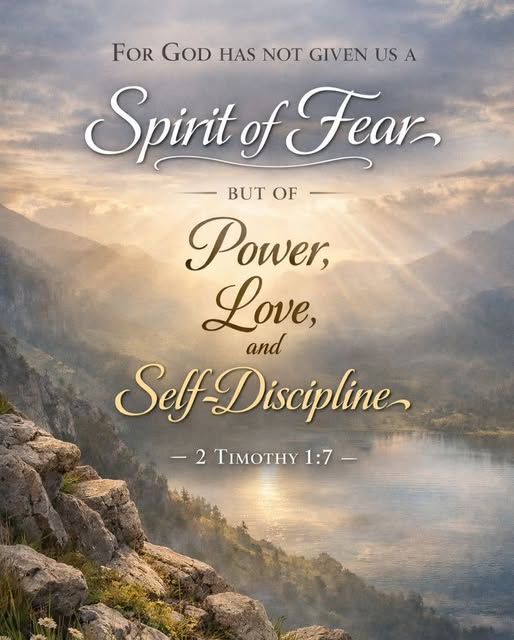
Before Paul’s death, Paul writes a letter of encouragement and exhortation to Timothy, his beloved protégé. Timothy has a shy personality and feels uneasy about his weighty responsibilities. Paul does not want fear to stifle Timothy’s ministry or his gift from God, so he addresses Timothy’s spirit of fear.
Paul says, “For God has not given us a spirit of fear, but of power and of love and of a sound mind” (2 Timothy 1:7, NKJV). The Greek word for “fear” in this verse does not refer to reverential fear that is often associated with fear of the Lord. Rather, the word refers to cowardice or timidity. Matthew 25:14–30 provides an example of this type of fear. A master entrusts three servants with gold before embarking on a journey, and only two of the servants increase the master’s wealth during his absence. The third servant fears the master and buries his gold. The master responds to the servant’s cowardice by taking back the gold and giving it to the servant with the most gold. The servant’s fearful spirit hindered his full devotion to the master and his ability to make wise decisions.
In the context of 2 Timothy 1:7, Paul speaks of fear in sharing the gospel amidst persecution. The frightening circumstances surrounding Timothy’s calling to share the gospel add additional anxiety to his already timid personality. Paul encourages Timothy by reminding him of his heritage of faith. His grandmother Lois and mother Eunice provided an example of devout faithfulness to God throughout Timothy’s life. They likely taught him the Jewish Scriptures and showed him how to be an honorable man of God. Paul writes that Lois and Eunice’s sincere faith lives inside Timothy. Paul’s motivation in addressing Timothy’s spirit of fear is not that he doubts Timothy’s sincerity of faith. Rather, he desires to restore Timothy’s courage. Paul goes on to exhort Timothy to fan into flame his God-given gift. Gifts flourish when surrendered to God, and they decay when we allow fear to paralyze us. Fear can hinder a gift’s effectiveness, and Paul says that power, love, and a sound mind will aid Timothy’s flourishing and work toward God’s glory.
As Paul reminds Timothy that God has not given us a spirit of fear, he focuses on the Spirit who gives us “power, love and self-discipline” (2 Timothy 1:7, NLT). The spirit of power produces bravery and the resolution necessary to face and endure danger and difficulty. The spirit of love fuels sacrificial service toward God and mankind. Lastly, a sound mind cultivates self-control, alertness, and truth. Paul does not want fear of man or fear of death to keep Timothy from sharing the gospel. For the rest of 2 Timothy, Paul continues to prepare Timothy for a bold, gospel-focused life.
We should not give in to a spirit of fear. When we focus on our anxiety or on our own ability to obey and follow Christ, fear and timidity are the result. Yielding to the Spirit who gives us power, love, and alertness refocuses and calms us. It is only through God’s strength that we can boldly, lovingly, and accurately share the gospel. May we never allow fear to hinder us from sharing the gospel, but instead rely on God to give us courage!

Bible Verse and Prayer for Today
God made him who had no sin to be sin for us, so that in him we might become the righteousness of God.
—2 Corinthians 5:21
Righteousness! That’s what we are. We are not just righteous. No, it is much bigger than that. We are God’s righteousness. Before Jesus, and without Jesus, no one is righteous (Romans 3:21-24). Now, however, we find our righteousness in him (Philippians 3:9). We are the testimony of how holy and gracious God truly is because of Jesus (Ephesians 2:1-9). God provided the sacrifice for our sins, and now his righteousness has re-created us in Christ Jesus to do good works for him in our broken world (2 Corinthians 5:17; Ephesians 2:10). Altogether, this is God’s righteousness, and that’s what he has made us, his righteousness in Jesus!
Prayer
Thank You, Almighty God, for making me righteous by the blood of your Son’s death. May people see a reflection of your holiness, justice, and mercy in me, as I try to share your grace with them. By the authority of Jesus and his sacrifice for my sins, I pray with confidence. Amen and Amen
Bible Teaching of the Day
The Bible mentions two specific types of fear. The first type is beneficial and is to be encouraged. The second type is a detriment and is to be overcome. The first type of fear is fear of the Lord. This type of fear does not necessarily mean to be afraid of something. Rather, it is a reverential awe of God, a reverence for His power and glory. However, it is also a proper respect for His wrath and anger. In other words, the fear of the Lord is a total acknowledgement of all that God is, which comes through knowing Him and His attributes.
Fear of the Lord brings with it many blessings and benefits. It is the beginning of wisdom and leads to good understanding (Psalm 111:10). Only fools despise wisdom and discipline (Proverbs 1:7). Furthermore, fear of the Lord leads to life, rest, peace, and contentment (Proverbs 19:23). It is the fountain and life (Proverbs 14:27) and provides a security and a place of safety for us (Proverbs 14:26).
Thus, one can see how fearing God should be encouraged. However, the second type of fear mentioned in the Bible is not beneficial at all. This is the “spirit of fear” mentioned in 2 Timothy 1:7: “For God has not given us a spirit of fear, but of power and of love and of a sound mind” (NKJV). A spirit of fearfulness and timidity does not come from God.
However, sometimes we are afraid, sometimes this “spirit of fear” overcomes us, and to overcome it we need to trust in and love God completely. “There is no fear in love. But perfect love drives out fear, because fear has to do with punishment. The one who fears is not made perfect in love” (1 John 4:18). No one is perfect, and God knows this. That is why He has liberally sprinkled encouragement against fear throughout the Bible. Beginning in the book of Genesis and continuing throughout the book of Revelation, God reminds us to “Fear not.”
For example, Isaiah 41:10 encourages us, “Do not fear, for I am with you; Do not anxiously look about you, for I am your God I will strengthen you, surely I will help you, Surely I will uphold you with My righteous right hand.” Often we fear the future and what will become of us. But Jesus reminds us that God cares for the birds of the air, so how much more will He provide for His children? “So don’t be afraid; you are worth more than many sparrows” (Matthew 10:31). Just these few verses cover many different types of fear. God tells us not to be afraid of being alone, of being too weak, of not being heard, and of lacking physical necessities. These admonishments continue throughout the Bible, covering the many different aspects of the “spirit of fear.”
In Psalm 56:11 the psalmist writes, “In God I trust; I will not be afraid. What can man do to me?” This is an awesome testimony to the power of trusting in God. Regardless of what happens, the psalmist will trust in God because he knows and understands the power of God. The key to overcoming fear, then, is total and complete trust in God. Trusting God is a refusal to give in to fear. It is a turning to God even in the darkest times and trusting Him to make things right. This trust comes from knowing God and knowing that He is good. As Job said when he was experiencing some of the most difficult trials recorded in the Bible, “Though he slay me, yet will I trust in him” (Job 13:15 NKJV).
Once we have learned to put our trust in God, we will no longer be afraid of the things that come against us. We will be like the psalmist who said with confidence “…let all who take refuge in you be glad; let them ever sing for joy. Spread your protection over them, that those who love your name may rejoice in you” (Psalm 5:11).
Today’s Devotional
The Spirit of Power !
In 2 Timothy 1:7, the apostle Paul reminds Timothy that “God gave us a spirit not of fear but of power and love and self-control” (ESV). The spirit that Paul refers to is the Holy Spirit, the third person of the Trinity. The Spirit is omnipotent, and He graciously imparts power, love, and self-control to every believer. In this article, we will focus on the meaning of the word power and how having the spirit of power affects our daily lives.
In 2 Timothy 1:7, the word power refers to divine enablement and empowerment, signifying the strength imparted to believers through the Holy Spirit. This power allows us to proclaim the gospel boldly (Acts 4:29), face challenges courageously (1 Corinthians 16:13), and fulfill our calling in Christ (Colossians 4:17). Left to our own strength, we could not accomplish these things. That is why we must yield to the sovereign power of the Holy Spirit, who enables us to perform seemingly impossible things.
It is crucial for us believers to acknowledge the source of our strength because it reminds us that we are not alone. God is always present, guiding and sustaining us through every circumstance that we face. As the Lord told Paul, “My grace is sufficient for you, for my power is made perfect in weakness” (2 Corinthians 12:9, ESV). To which Paul said, “Therefore, I will boast all the more gladly of my weaknesses, so that the power of Christ may rest upon me” (ESV).
The basic idea is that mere human strength cannot meet the demands and challenges of discipleship. We must accept, then, that it is “God working in [us], giving [us] the desire and the power to do what pleases him” (Philippians 2:13, NLT).
In 2 Timothy 1:7, Paul contrasts a spirit of fear with the spirit of power. Although fear is a natural emotion, it can keep us from carrying out God’s will for our lives. The Holy Spirit does not make us fearful or timid. The spirit of power, however, breaks the chains of fear, empowering us to be bold and confident in the face of adversity (2 Corinthians 3:12; Ephesians 3:12).
In frightening and uncertain times, we need to be reminded of the power available to us. This was especially true for Timothy, who faced opposition from false teachers (see 2 Timothy 2:25–26). The false teachers caused many problems for Pastor Timothy, but they were no match for the almighty power of God. Regardless of the opponent, we can rely on God’s power to deliver us from trouble and strengthen us with courage (Psalm 34:4).
In 2 Timothy 1:7, power is connected to love and self-control. It is through the power of God that we can love selflessly and exercise self-control. Love is not a feeling; it is an action. In other words, we demonstrate our love for God and others through what we do and how we serve (Matthew 22:37–39; 1 John 4:7–8).
In Galatians 5:23, self-control is listed as a fruit of the Spirit. Through the power of God, we have self-control over our sinful desires, impulses, and actions. In times of weakness, the Holy Spirit helps us to remain disciplined, obedient, and holy.
As we reflect on 2 Timothy 1:7, may we be encouraged to rely on the spirit of power in our daily lives. Instead of being bound by and consumed with fear, we can live boldly, love selflessly, exercise self-control, and confront the challenges of life with confidence.

Bible Prophecy, Signs of the Times and Gog and Magog Updates with Articles in the News
When The Bible Becomes ‘Hate Speech’: A Wake Up Call For Christians

There are moments in a nation’s history when a law reveals far more than legal intent. It exposes the moral direction of a country. This week may prove to be one of those moments for Canada.
The passage of Bill C-9 through the House of Commons is not just another legislative development buried in the churn of parliamentary procedure. It is a flashing warning sign. For many Christians across Canada, it feels like something deeper is being put on trial — not merely “hate,” as the bill is framed, but biblical conviction itself.
Canadian MPs passed Bill C-9, the so-called “Combatting Hate Act,” in a 186-137 vote, sending it to the Senate after fierce opposition from Conservatives, the NDP, and the Green Party. Critics say the legislation removes long-standing safeguards that protected religious expression, particularly the ability to discuss or quote Scripture in good faith on contested moral issues.
Even the Canadian Conference of Catholic Bishops warned that removing the religious-text defense could create a “chilling effect” on clergy, educators, and believers who fear traditional biblical teaching could be interpreted as hate.
And that is exactly the concern.
This is not ultimately about whether Christians should be hateful — they should not. The Gospel is not a license for cruelty. Christians are commanded to speak the truth in love, not with contempt. But modern governments increasingly do not distinguish between hatred and disagreement, between abuse and belief, between malice and moral conviction. That is where this becomes dangerous.
Because once a government begins to treat historic Christian teaching as socially harmful by default, the path ahead becomes disturbingly clear.
What happens when a pastor preaches from Romans 1? What happens when a Christian school teaches that marriage is between one man and one woman? What happens when a youth leader tells a confused teenager that God created humanity male and female? What happens when a parent, counselor, or Christian teacher takes a biblical stand on sexuality or gender in a culture that increasingly considers such views beyond the pale?
For generations, those beliefs were not considered radical. They were mainstream Christian doctrine. Today, they are being recast as suspicious, intolerant, or even dangerous.
That is the real issue with bills like this. They often arrive wearing the language of compassion, safety, and public order. But once written into law, they can become tools for selective punishment. The text of a law may speak in broad terms, but its enforcement is often shaped by ideology, bureaucracy, activist pressure, and the political mood of the moment. Christians do not need to imagine a future where biblical speech is stigmatized — they are already living in the early stages of it.
And no, this does not mean every sermon will suddenly become a criminal case. That would be too simplistic. The greater threat may be subtler and, in some ways, more effective: self-censorship.
That is how freedom often dies in modern democracies — not first with prison cells, but with silence.
Silence from churches afraid of complaints. Silence from Christian teachers afraid of losing jobs. Silence from parents afraid of school boards. Silence from ministries afraid of being investigated, deplatformed, defunded, or dragged through expensive legal battles. When the state creates enough ambiguity around what can be said, many people stop saying anything at all.
And if Christians can no longer freely proclaim what Scripture teaches about sin, repentance, identity, marriage, and salvation, then the Gospel itself begins to be fenced in by the state.
That is not a small matter.
Christianity is not merely a private spirituality built around vague kindness. It is a truth claim. It declares that Jesus Christ is Lord, that all people are called to repent, and that God — not government, not culture, not popular consensus — defines what is good, holy, and true. That means Christianity will inevitably collide with any political system that demands moral conformity to state-approved beliefs.
And that collision now appears to be intensifying in Canada.
None of this means Christians should respond with panic or rage. But they should respond with clarity.
The church has survived emperors, censorship, exile, mockery, and persecution before. It can survive Parliament too. But survival is not the same as passivity. This is a moment for Christians in Canada to understand what is at stake and refuse to be intimidated into theological surrender.
Because once believers begin softening the Bible to remain legally comfortable, they are no longer defending religious liberty — they are negotiating away truth.
There is also a broader national cost here. A society that criminalizes or suppresses deeply held religious conviction is not becoming more tolerant. It is simply replacing one moral framework with another and using state power to enforce it. That is not pluralism. That is coercion dressed in modern language.
A free nation must allow its citizens to say things the ruling class finds offensive, especially when those beliefs are rooted in centuries-old religious tradition and expressed without violence or malice. If Canada loses that principle, Christians will not be the only ones eventually affected. Once governments gain the power to police moral speech, the circle of forbidden opinion rarely stays small.
Today it may be biblical teaching on marriage and gender.
Tomorrow it may be something else entirely.
This is why so many believers are not merely disappointed by Bill C-9 — they are deeply troubled by what it represents. It is not just a policy disagreement. It is another signal that biblical Christianity is increasingly being treated not as a protected faith, but as a problem to be managed.
And Christians should not ignore that.
The bill now heads to Canada’s rubber-stamp Senate for review — a chamber filled largely with unelected, Liberal-appointed senators who hold immense power without ever facing voters, making the outcome feel all but predetermined.
The question now is whether the church will bend with that pressure — or stand.
Because a Gospel that cannot speak clearly is not being protected.
It is being contained.
A Church Chasing Relevance Has Lost Its Reason To Exist
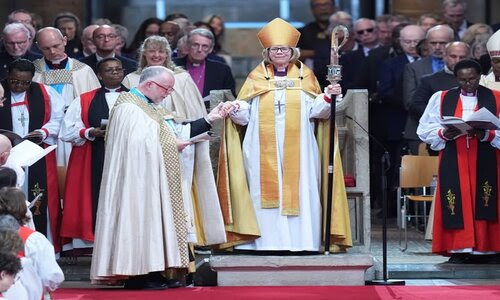
The installation of Sarah Mullally as Archbishop of Canterbury was supposed to project dignity, history, and hope. Instead, it exposed, once again, just how far the Church of England has drifted from biblical Christianity — and why so many believers now view the institution less as a church and more as a fading religious bureaucracy desperately trying to keep up with the age.
Sarah Mullally became the 106th Archbishop of Canterbury and the first woman ever to hold the office, in a ceremony staged with all the grandeur of Anglican tradition and all the theological confusion of modern liberal Protestantism.
That contradiction lies at the heart of the problem. The Church of England still dresses itself in the robes of historic Christianity, still speaks in the language of apostolic continuity, still places its leaders in ancient chairs and surrounds them with centuries-old ritual — yet increasingly empties those symbols of their original meaning. It wants the authority of tradition while simultaneously rejecting the authority that tradition was supposed to preserve: the Word of God.
Dame Sarah Mullally’s supporters will frame this as a triumph of progress, inclusion, and “representation.” That is precisely the issue. In Scripture, the Church is never told to organise itself around representation politics or cultural symbolism. It is told to order itself according to God’s revealed will. For many Bible-believing Christians, this installation was not a breakthrough but a public declaration that the Church of England now believes cultural validation matters more than biblical fidelity.
And if anyone doubted the direction of travel, the ceremony itself made it unmistakably clear.
Reports from the service noted a carefully choreographed display of multicultural and ecumenical inclusivity: prayers in Urdu, music in Xhosa, and broad gestures toward the Church’s global and interfaith-facing identity. Even a Bible reading was delivered by the Roman Catholic Archbishop of Westminster, while Mullally wore the episcopal ring once given to Michael Ramsey by Pope Paul VI — a deeply symbolic gesture for anyone who understands the theological fault lines of the Reformation.
To some, those details will seem harmless, even beautiful. But to many evangelicals and Protestants who still care about doctrinal clarity, they signal something far more troubling: a church more interested in theatrical unity and institutional image than in truth. Biblical unity is not built on shared ceremonies, symbolic accessories, or carefully managed optics. It is built on shared submission to the truth of God. When a church begins to confuse pageantry with faithfulness, decline is not far behind.
Then there was the ceremony’s internal symbolism — arguably even more revealing than its ecumenical flourishes.
A particularly striking feature of the day was the prominent role played by the Dean of Canterbury, the Very Rev. David Monteith, who formally helped lead the cathedral proceedings surrounding the archbishop’s transition and installation. Canterbury Cathedral itself has openly noted his senior role in the cathedral’s governance and ceremonial life, and it was Monteith who previously oversaw the formal election process that moved Mullally toward this office.
Why does that matter? Because Monteith’s own appointment was controversial among orthodox Anglicans precisely because he is in a same-sex civil partnership, something publicly acknowledged by Canterbury Cathedral at the time of his appointment.
That fact should not be mentioned as a cheap personal jab, but it is profoundly relevant to the theological symbolism of the moment. For conservative Christians, the ceremony was not merely about a woman being installed as Archbishop of Canterbury. It was also another visible reminder that the Church of England’s senior leadership culture has become increasingly detached from historic Christian sexual ethics and increasingly comfortable showcasing that detachment at the very center of Anglican life.
That is why so many believers no longer see these events as isolated controversies. They see a pattern.
A female archbishop. A cathedral establishment comfortable elevating leaders in same-sex partnerships. An institution that has spent years bending over backward to signal modernity while simultaneously collapsing in moral authority. This is not about one personality or one ceremony. It is about a church hierarchy that appears far more concerned with elite approval than with repentance, holiness, and the proclamation of the Gospel.
And while all of this was unfolding, the shadow of scandal still hung over the day.
Mullally’s inaugural message included solemn words about abuse, victims, and the Church’s failures — words that, in themselves, were necessary and right. She spoke of truth, compassion, justice, and action. But those phrases now land in a church environment where trust has already been badly shattered. Her predecessor, JustinWelby, resigned under heavy criticism over his handling of abuse-related failures, and Mullally now inherits an institution still deeply damaged by its safeguarding crisis.
That is another reason why the triumphalism surrounding this installation rings hollow. The Church of England is not in a season that calls for self-congratulation. It is in a season that calls for sackcloth and ashes. It does not need another carefully branded “historic first.” It needs repentance, courage, and a willingness to stop lying to itself about why it has become so spiritually anemic.
And that brings us to the larger issue: relevance.
The modern Church of England elite keeps behaving as if the great crisis of our age is that Christianity might appear too narrow, too traditional, too doctrinal, too male, too old, too Western, or too certain. So it keeps remodeling itself to look more palatable to a post-Christian culture. But that strategy has failed for decades. It has not produced renewal. It has produced collapse.
Britain is not starving for a more fashionable church. Britain is starving for truth.
Young people are not ultimately searching for a more curated liturgy or a more “inclusive” ecclesiastical brand. They are asking the deepest questions human beings can ask: Why am I here? What is truth? What is wrong with the world? Is there judgment? Is there forgiveness? Is there hope beyond death? The answer to those questions will never be found in institutional reinvention. They will only be found in Jesus Christ and the unchanging authority of His Word.
That is why this ceremony felt so empty to so many Christians watching from the outside. It had grandeur, symbolism, and history. But it lacked the one thing that could have made it matter: unmistakable submission to Christ above the spirit of the age.
If the Church of England truly wanted to be relevant, it would stop chasing relevance.
It would preach repentance instead of self-expression. Holiness instead of accommodation. Obedience instead of aspiration. Christ instead of cultural applause.
Until then, ceremonies like this will continue to make headlines — and continue to prove just how spiritually irrelevant the Anglican establishment has become.
Pentagon planning for extended ground operation in Iran

The US Defense Department is reportedly drafting plans for weeks of ground combat in Iran as thousands of Marines arrive in the region.
The United States Defense Department has drafted plans for a possible ground campaign in Iran that could last for weeks, even as President Donald Trump has not yet decided whether to authorize any such escalation, according to American officials familiar with the deliberations.
In a report published by The Washington Post, officials speaking on condition of anonymity said that the plans under consideration do not involve a full-scale invasion, but instead rely on limited operations such as raids by Special Operations forces and conventional infantry units.
Officials said the preparations have been underway for weeks and are intended to give Trump a wide range of military options as the war enters a potentially more dangerous phase.
Any US ground operation in Iran would inevitably expose American forces to major risks, including Iranian drones, missiles, ground fire and improvised explosives. Among the scenarios reportedly being discussed inside the administration are the seizure of Kharg Island, Iran’s main oil export hub in the Persian Gulf, and raids on coastal military sites near the Strait of Hormuz, with the aim of destroying weapons that threaten commercial and military shipping.
Satellite imagery shows heavy damage at Khamenei compound
The White House has emphasized that planning does not mean a final decision has been made. Press secretary Karoline Leavitt said it is the Pentagon’s job to prepare options for the commander in chief, while emphasizing that Trump has not committed to a course of action.
The administration’s messaging in recent days has been decidedly mixed.
On the one hand, Trump and senior administration officials have suggested that the war may be nearing its end and signaled interest in negotiating a ceasefire.
On the other, American officials have warned that the United States could sharply intensify its response if Tehran refuses to abandon its nuclear ambitions and threats against the US and its allies.
Secretary of State Marco Rubio said Friday that the conflict is not expected to become prolonged and argued that Washington can achieve its goals without deploying ground troops.
Trump himself said earlier this month that he was not planning to send troops into Iran, while adding that he would not publicly disclose such a move in advance if he were.
Despite the ambiguous public stance of US officials, the American military presence in the region has grown.
Thousands of additional personnel have arrived in recent weeks, including the 31st Marine Expeditionary Unit, a force of roughly 2,200 sailors and Marines with the capacity to conduct rapid assault missions.
TruLight Ministries Daily Entertainment

TruLight TV : God Is at Work
Being a follower of Christ doesn’t exempt you from experiencing bad things in life. But it does mean that even the bad things work out for your good! Watch today’s video to learn how. And our sermon today from Dr. Charles Stanley (Why Our Needs Remain Unmet) – If you know what your needs are, have prayed about them, and still feel they’re going unmet, do not worry. In this message, Dr. Stanley reassures listeners that God knows their needs and delights in meeting them. learn more by watching today’s program. Enjoy!
Today on TruLight Radio XM
TruLight Radio XM 24/7
Program
GMT / UTC +2
Monday To Fridays
00:15 Words to Live By Testimonies
01.15 Science Scripture and Salvation
02.15 Ground Works
04.00 Gospel Concert of the Day
05.00 The Daren Streblow Comedy Show
5:55 It is Today devotional
6:00 Gaither Homecoming Morning Show
7:15 Discover the Word
8.15 Destined for Victory
8:55 Science Scripture and Salvation
9:00 Holy Spirit Hour – Normally Sermons
10:15 Hope of the Heart
11:15 Unshackled
11.45 Words to Live By
12:15 Truth for Life
13:15 Living on the Edge with Chip Ingram
14:15 Focus on the Family
15:00 Kids Hour
16:00 In Touch with Dr. Charles Stanley
16:30 Groundwork
17:15 Live in the Light
18:15 Renewing your Mind
19:00 Gaither Homecoming Show
20:15 Growing Hope
21:15 Adventures in Odyssey Radio Drama
21:45 Bible Reading
22:15 Night-sounds
23.00 Good Old Country Gospel / Rhema Gospel Express
VISIT THE WEBSITE
TruLight Ministry News
TruLight Ministries orders from God since 2012 . Teach Them , Comfort Them and Warn Them!
Your Invited . TO WHAT? WHERE? and WHEN?
We Starting , the 1st May 2026 . with Our Preachers Diploma Online Platform – TruTheology.co.za . 36 Subjects with between 10 to 15 Lessons per Subject , equivalent to a 3 Year Theology Degree , The Training is Free to Approved Members and Tests Online after Each Lesson , You Determine the Speed of Your Studies . If you are interested registrations will take place from 1 April 2026 .
Have fun and test your Bible knowledge with a Bible quiz! Take the Bible quiz now and share your results with your friends!
Healing Truths
End Time Articles
Bonus Teaching for the Child of God !!
A SOUND MIND ?
We encounter the expression sound mind in 2 Timothy 1:7: “For God hath not given us the spirit of fear; but of power, and of love, and of a sound mind” (KJV). The original Greek word translated “sound mind” here is sophronismos, and it appears in the Bible only this one time.
In other Bible translations, the word sophronismos is rendered “self-control” (ESV), “self-discipline” (NIV, NLT), “discipline” (NASB), “good judgment” (GW), and “sound judgment” (CSB). These various interpretations seem to convey different meanings. What exactly does sophronismos mean? And what is Paul referring to when he tells Timothy that God has given us the spirit of a sound mind?
Paul is writing to Timothy from prison. Knowing the time of his execution is drawing near, Paul pens Timothy this profoundly intimate letter filled with love, concern, and encouragement. Timothy would need courage and determination to carry on the enormous responsibility of his calling to lead the church in spreading the gospel. In the preceding verse, Paul reminds Timothy of the indwelling gift of the Holy Spirit and encourages him to “fan that gift into flames” (2 Timothy 1:6).
Paul knows Timothy will need to counter his natural tendency toward quiet timidity by remembering that the Spirit of God lives within him. That Spirit will empower Timothy with boldness rather than fear, and with love and a sound mind. Timothy will rely on God’s Spirit to enable him to do whatever God requires. Timothy, being filled with God’s Spirit of love—the defining characteristic of Christians—will be capable of loving God and loving others. And Timothy will possess God’s Spirit of a sound mind.
The influence of the Spirit of God is required to produce a genuinely sound mind. The sound mind Paul speaks of is a mind under the control of God’s Holy Spirit. In the sense of self-discipline, the word sophronismos denotes careful, rational, sensible thinking. Having a sound mind requires a thought process based on the wisdom and clarity that God imparts rather than being manipulated by fear.
Today, as in Timothy’s day, fear is a driving force in the world. Fear inspires the news headlines, motivates advertising campaigns, and stirs up social media frenzies. Fear is one of Satan’s favorite devices to confuse our minds, cause irrational thoughts, misunderstandings, and derail us from the will of God. For this reason, the Word of God encourages us to cultivate a healthy, renewed mind that can process right-thinking based on God’s truth: “Do not conform to the pattern of this world, but be transformed by the renewing of your mind. Then you will be able to test and approve what God’s will is—his good, pleasing and perfect will” (Romans 12:2).
A sound mind is a stable, healthy mind. A healthy mind is linked to our attitude and outlook as believers. A sound mind is not overly concerned with the cares and problems of this life but is set on God and His Kingdom (Colossians 1:1–2). A sound mind is alert and sober, focused on the eternal hope we have in Jesus Christ (1 Peter 1:13). A sound mind recognizes who we are in Christ, and does not depend on human wisdom and strength (2 Corinthians 10:3–5). A sound mind is guarded through prayer and purity: “Do not be anxious about anything, but in every situation, by prayer and petition, with thanksgiving, present your requests to God. And the peace of God, which transcends all understanding, will guard your hearts and your minds in Christ Jesus. Finally, brothers and sisters, whatever is true, whatever is noble, whatever is right, whatever is pure, whatever is lovely, whatever is admirable—if anything is excellent or praiseworthy—think about such things” (Philippians 4:6–8).
A sound mind stabilizes our entire inner world. When Paul says God has given us the spirit of a sound mind (or self-control, discipline, and sound judgment), he doesn’t mean we’ll be able to train harder, eat better, or study more. Paul recognizes that God’s Spirit yields obedience, right living, and moral judgment. From the inside out, the Holy Spirit reshapes and transforms not just how we think, but who we are.
Share this Feeding of Manna with your Friends and Family. just click on the Social Media icon and share !