Hosted by TruLight Ministries – The Place of Truth
SELECT YOUR READING LANGUAGE – BOTTOM LEFT = YOUR DAILY MANNA NOW AVAILABLE IN 103 LANGUAGES
WAYS TO SHOW OUR CHRISTIAN LOVE

Many Christians use the cliché “Love the sinner; hate the sin.” This saying is not found in the Bible in so many words; however, Jude 1:22–23 contains a similar idea: “Be merciful to those who doubt; save others by snatching them from the fire; to others show mercy, mixed with fear—hating even the clothing stained by corrupted flesh.” According to this, our evangelism should be characterized by mercy for the sinner and a healthy hatred of sin and its effects.
We are to have compassion on sinners for whom Christ died, and we are also to keep ourselves “from being polluted by the world”—part of what constitutes “pure and faultless” religion (James 1:27). But we also realize that we are imperfect human beings and that the difference between us and God in regard to loving and hating is vast. Even as Christians, we cannot love perfectly, nor can we hate perfectly (i.e., without malice). But God can do both of these perfectly, because He is God. God can hate without any sinful intent. Therefore, He can hate the sin and the sinner in a perfectly holy way and still lovingly forgive the sinner at the moment of repentance and faith (Malachi 1:3; Revelation 2:6; 2 Peter 3:9).
The Bible clearly teaches that God is love. First John 4:8–9 says, “Whoever does not love does not know God, because God is love. This is how God showed his love among us: He sent his one and only Son into the world that we might live through him.” Mysterious but true is the fact that God can perfectly love and hate a person at the same time. This means He can love him as someone He created and can redeem, as well as hate him for his unbelief and sinful lifestyle. We, as imperfect human beings, cannot do this; thus, we must remind ourselves to “love the sinner; hate the sin.”
How exactly does that work? We hate sin by recognizing it for what it is, refusing to take part in it, and condemning it as contrary to God’s nature. Sin is to be hated, not excused or taken lightly. We love sinners by showing them respect (1 Peter 2:17), praying for them (1 Timothy 2:1), and witnessing to them of Christ. It is a true act of love to treat someone with respect and kindness even though you do not approve of his or her lifestyle or sinful choices.
It is not loving to allow a person to remain stuck in sin. It is not hateful to tell a person he or she is in sin. In fact, the exact opposites are true. Sin leads to death (James 1:15), and we love the sinner by speaking the truth in love (Ephesians 4:15). We hate the sin by refusing to condone, ignore, or excuse it.

Bible Verse and Prayer for Today
Now, brothers, I want to remind you of the gospel I preached to you, which you received and on which you have taken your stand.
—1 Corinthians 15:1
The pure Gospel of Jesus Christ is our hope, salvation, and foundation for faith. The first century apostles passed on this Gospel to early believers as eyewitnesses of Jesus. Many backed up their testimony with their lives. We must regularly remind ourselves of this early faith centered on Jesus’ death, burial, and resurrection (1 Corinthians 15:1-7). With such a pure and clear Gospel, we can joyously live the words of the old hymn, Rock of Ages: “Nothing in my hands I bring, Simply to Thy Cross I cling.” We take our stand with the apostle Paul when he stated to the Corinthians:
For what I received I passed on to you as of first importance: that Christ died for our sins according to the Scriptures, that he was buried, that he was raised on the third day according to the Scriptures, and that he appeared to Cephas, and then to the Twelve. After that, he appeared to more than five hundred of the brothers and sisters at the same time, most of whom are still living, though some have fallen asleep. Then he appeared to James, then to all the apostles, and last of all he appeared to me also, as to one abnormally born (1 Corinthians 15:3-7).
Prayer
Almighty and Precious Father, I love you. I cannot begin to thank you enough for your love and grace, which you displayed so powerfully to me in Jesus. I know the basis of my hope and the foundation on which I build my life is the Gospel of your dear Son. Thank you for giving me something so simple, steadfast, and sure based on the eyewitness testimony, people willing to back up their words with their lives. In Jesus’ name, I thank you. Amen and Amen

Bible Teaching of the Day
a Feast of Love – A love feast or agape feast was a fellowship meal eaten by Christians in the early church. There is biblical evidence for the practice of these communal meals, during which Christians gathered not just for the sake of sustenance and socializing, but for the sake of fellowship (Acts 2:46–47; 1 Corinthians 11:17–34). The term love feast appears in the Bible in the book of Jude. The author of the epistle is talking about false teachers who come into the believers’ fellowship, pretending—they are wolves in sheep’s clothing. These false teachers are described as “blemishes at your love feasts” (Jude 1:12). The ESV calls the pretenders “hidden reefs,” pointing up the dangerous nature of false teachers and their potential to shipwreck Christians.
Hippolytus of Rome and Tertullian both wrote about communal meals, though Hippolytus does not use the term agape but calls the meals simply “love feasts.” In some traditions, these meals became associated with other rituals, such as the Eucharist. It is possible that the term agape feast fell out of usage because it became associated with certain abuses that were taking place during the feasts—including gluttony and favoritism, which Paul addresses in 1 Corinthians 11:17–34. However, Christians have always practiced communal meals of various kinds. Communion, or the Lord’s Table, is an ordinance that Jesus gave the church, commanding that we partake of the bread and the cup in remembrance of Him. This was done in the early church at the love feasts (Luke 22:19). In the context of 1 Corinthians 11, it is clear that Paul equates communal meals with remembering Christ in this way, and that is one of the reasons why abusing the communal meal was so offensive (1 Corinthians 11:20–34).
Today, love feasts are still observed by the Moravians, Church of the Brethren, Old German Baptists, Dunkard Brethren, and some other denominations. In some cases, the fellowship includes a foot-washing ceremony, a meal, and the observance of communion. Some house churches have attempted to revive the practice of the love feast, though it is not always called a love feast. Sharing a meal can have spiritual significance because of the Last Supper that Jesus ate with His disciples, where He taught them to serve one another. Food brings nourishment, and wine brings gladness (Psalm 104:15; Ecclesiastes 9:7), and they can be symbols of the free gift of Christ, who is the bread of life and the giver of joy (John 6:35; Romans 14:17).
Today’s Devotional
The Bible says that “love is of God” and “God is love” (1 John 4:7–8); in other words, love is a fundamental characteristic of who God is. Everything God does is impelled and influenced by His love.
The Bible uses several different words for “love” in the Hebrew and Greek, interchanging them depending on context. Some of these words mean “affectionate love”; others indicate “friendship”; and still others, “erotic, sexual love.” There is also a distinct word for the type of love that God displays. In the Greek, this word is agape, and it refers to a benevolent and charitable love that seeks the best for the loved one.
The Bible gives many examples of love: the caring provision of Boaz for Ruth; the deep friendship of David and Jonathan; the poetic, passionate love of Solomon and the Shulamite; the enduring commitment of Hosea to Gomer; the fatherly love of Paul for Timothy and John for the church; and, of course, the sacrificial, saving love of Christ for the elect.
Agape, the benevolent, selfless love that God shows, is mentioned often in the New Testament, including in the “love chapter,” 1 Corinthians 13. There, love’s characteristics are listed: love is patient and kind; love doesn’t envy, boast, or dishonor others; love is not proud or self-seeking; love is not easily angered, doesn’t keep a record of wrongs, and doesn’t delight in evil; rather, love rejoices with the truth; love always protects, trusts, hopes, and perseveres; love never fails (1 Corinthians 13:4–8). Of the greatest of God’s gifts, faith, hope, and love, “the greatest . . . is love” (verse 13).
The Bible says that God was motivated by love to save the world (John 3:16). God’s love is best seen in the sacrifice of Christ on our behalf (1 John 4:9). And God’s love does not require us to be “worthy” to receive it; His love is truly benevolent and gracious: “God demonstrates his own love for us in this: While we were still sinners, Christ died for us” (Romans 5:8).
The Bible says that, since true love is part of God’s nature, God is the source of love. He is the initiator of a loving relationship with us. Any love we have for God is simply a response to His sacrificial love for us: “This is love: not that we loved God, but that he loved us and sent his Son as an atoning sacrifice for our sins” (1 John 4:10). Our human understanding of love is flawed, weak, and incomplete, but the more we look at Jesus, the better we understand true love.
The Bible says that God’s love for us in Christ has resulted in our being brought into His family: “See what great love the Father has lavished on us, that we should be called children of God! And that is what we are!” (1 John 3:1). Just as the father in the parable showed love to his prodigal son (Luke 15:11–32), so our Heavenly Father receives us with joy when we come to Him in faith. He makes us “accepted in the Beloved” (Ephesians 1:6, NKJV).
The Bible says that we are to love others the way that God loves us. We are to love the family of God (1 Peter 2:17). We are to love our enemies—that is, we are to actively seek what is best for them (Matthew 5:44). Husbands are to love their wives as Christ loves the church (Ephesians 5:25). As we show benevolent, selfless love, we reflect God’s love to a lost and dying world. “We love because he first loved us” (1 John 4:19).
The Bible says that our love for God is related to our obedience of Him: “For this is the love of God, that we keep his commandments: and his commandments are not burdensome” (1 John 5:3; cf. John 14:15). We serve God out of love for Him. And God’s love for us enables us to obey Him freely, without the burden of guilt or the fear of punishment.
First John 4:18 says that “perfect love drives out fear” (this is again the word agape). The dismissal of the fear of condemnation is one of the main functions of God’s love. The person without Christ is under judgment and has plenty to fear (John 3:18), but once a person is in Christ, the fear of judgment is gone. Part of understanding the love of God is knowing that God’s judgment fell on Jesus at the cross so we can be spared. Jesus described Himself as the Savior: “God did not send his Son into the world to condemn the world, but in order that the world might be saved through him” (John 3:17). The very next verse reminds us that the only person who must fear judgment is the one who rejects Jesus Christ.
The Bible says that nothing can separate the believer from the love of God in Christ (Romans 8:38–39). God’s love does not wax and wane; it is not a fickle, emotional sensation. God’s love for sinners is why Christ died on the cross. God’s love for those who trust in Christ is why He holds them in His hand and promises never to let them go (John 10:29).

Bible Prophecy, Signs of the Times and Gog and Magog Updates with Articles in the News
NATO to release Turkey , Turkey to Join BRICS and then Gog and Magog are Ready for Biblical Attack
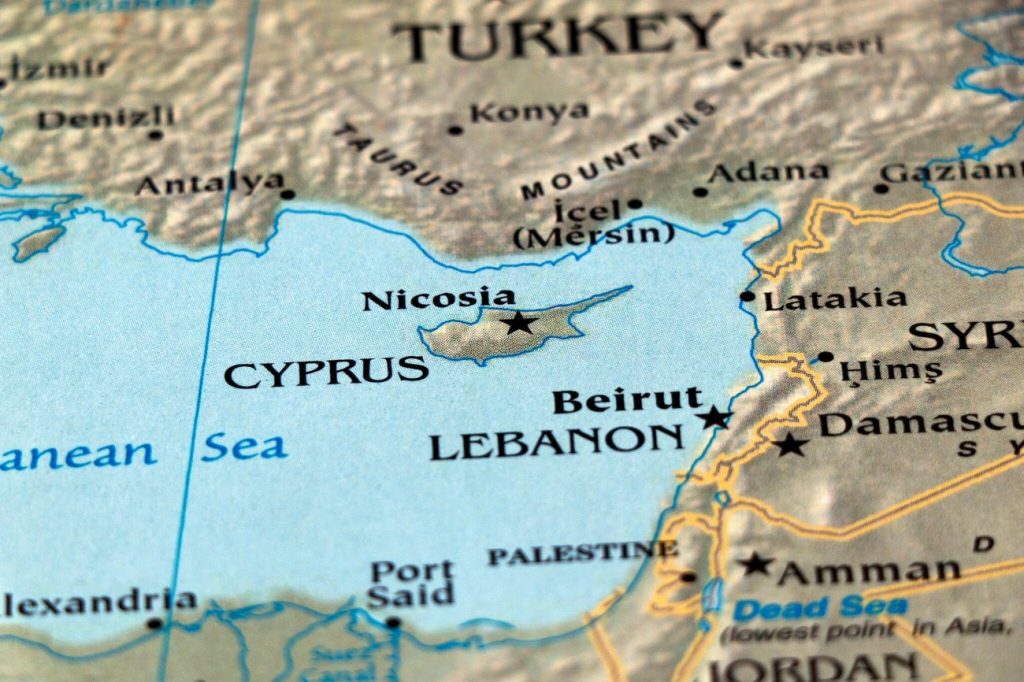
Expel Turkey from the NATO alliance and bring in Cyprus and Israel as members.
“I’m so disappointed in NATO, because this was a test for NATO,” said President Trump on March 26 while speaking about the Iran war.
While President Trump has long criticized the UN and NATO, there is a major difference between the tremendous failings of the two organizations. A quick review of their structures shows that while the U.N. is probably impossible to course-correct, NATO is a very different story.
The U.N. is bloated, paralyzed, and utterly incapable of meeting the challenges of the world today. NATO, on the other hand, is much smaller and has a mission that is vastly more important to U.S. interests. So what can be done to make NATO better? One step that would send a clear signal to Europe that Washington is serious about reforming NATO would be to advocate expelling Turkey.
In July 1974, Turkey invaded Cyprus, and thousands died. To this day, a Turkish puppet state occupies 36% to 37% of the island nation. NATO member Greece, along with Cyprus and Israel, has grown increasingly concerned about Turkey’s extremism and its close relationship with Iran.
Turkey has already signaled that it has moved on from NATO. As a dialogue partner of the Shanghai Cooperation Organisation, it has shifted directly into the orbit of SCO members that include such American adversaries as Iran, China, and Russia.
If Turkey were to leave NATO, a natural result could be Cyprus and Israel joining it.
If Cyprus and Israel were brought into NATO, it would strengthen the alliance. Israel’s presence would add the proven, real-world experience with missile defense systems that NATO lacks. As long as Turkey is part of NATO, it is against Israel’s best interests to share this technology.
NATO member Greece, along with Cyprus and Israel, has grown increasingly concerned about Turkey’s extremism, as well as its close relationship with Iran.
At a summit in Jerusalem on Dec. 22, Greece, Cyprus, and Israel adopted a strident tone and agreed to strengthen trilateral cooperation in the Mediterranean. Israeli Prime Minister Benjamin Netanyahu, Greek Prime Minister Kyriakos Mitsotakis, and Cypriot President Nikos Christodoulides signed a joint declaration to advance an energy deal and pledged to “reinforce our ongoing trilateral cooperation on security, defense, and military matters.”
Clearly addressing Turkey and its president, Recep Tayyip Erdoğan, during a joint press conference, Netanyahu stated: “To those who fantasize they can re-establish their empires and their dominion over our lands, I say: Forget it. It’s not going to happen. Don’t even think about it.”
Erdoğan responded by sharply criticizing Israel and Cyprus. “We will not permit the violation of the rights and interests of Turkish Cypriots,” he said. About Israel, he added: “Turkey … will not back down, we will not stay silent, we will not forget; we will never leave Gaza alone.”
It is also worthwhile to consider who might come after Erdoğan.
Turkish Foreign Minister Hakan Fidan is often mentioned as a possible successor and has repeatedly condemned Israeli actions. On Nov. 30, while in Iran, he described Israel as “the biggest threat to stability in the Middle East,” even as he touted expanded Turkish cooperation with Iran on energy, trade, border security, and regional security matters.
In August, Fidan said that “Israel’s reckless attacks on Gaza, Lebanon, Yemen, Syria, [and] Iran are the clearest sign of a terrorist-state mentality defying international order,” and accused Israel of “committing genocide in Gaza for the past two years, ignoring basic humanitarian values right before the world’s eyes.”
For years, Turkey has described Hamas as a “liberation movement” and has not formally designated it as a terrorist organization. Hamas has used Turkish territory as a base for coordination, recruitment, and financial operations linked to terrorism. U.S. and allied security services have repeatedly warned about networks tied to Hamas activities on Turkish soil.
Since at least 2023, senior Hamas leaders have had connections with Turkey. Ismail Haniyeh, the former head of Hamas’s political bureau, was killed in Tehran in July 2024, and Turkey publicly mourned his death.
Turkey’s ruling party, the AKP, and Hamas share ideological roots in the broader Muslim Brotherhood movement. Erdoğan has been a vocal critic of Israel’s response to the Hamas-led terrorist attacks in southern Israel on October 7, 2023, and has used his international platform to offer political support to Hamas. He has also consistently rejected characterizing Hamas as a terrorist organization.
The sooner NATO is reformed—and without Turkey—the safer Europe, the Mediterranean, and the Middle East will be.
Trump: We’ll ‘take out’ all of Iran Today, ‘destroy every bridge and power plant’

The warning followed Tehran’s formal rejection of a proposed ceasefire in the five-week conflict with the United States and Israel.
President Donald Trump on Monday threatened to destroy key Iranian infrastructure within hours if Tehran refuses US demands, after Iran rejected ceasefire proposals and instead called for a permanent end to the war.
At a White House briefing, Trump said the United States was prepared to launch sweeping strikes targeting bridges and power facilities across Iran by Tuesday.
“Every bridge in Iran will be decimated,” he said, adding that “every power plant in Iran will be out of business, burning, exploding and never to be used again.”
“It will happen over a period of four hours—if we want it to,” Trump said. “We don’t want that to happen.”
The warning followed Tehran’s formal rejection of a proposed ceasefire in the five-week conflict with the United States and Israel.
Iranian officials, speaking through the state-run IRNA news agency, said their response outlined broader conditions aimed at ending the war entirely.
“In this response, which consists of ten paragraphs, Iran, based on previous experiences, while rejecting a ceasefire, emphasized the need for a permanent end to the war while respecting Iran’s considerations,” IRNA reported.
The report said Iran’s position includes demands for “an end to conflicts in the region, a protocol for safe passage through the Strait of Hormuz, reconstruction [reparation of war damages], and lifting sanctions.”
Trump said military escalation could be avoided if Iran meets US conditions, which include halting its nuclear program, ending ballistic missile development, ceasing support for proxy groups and reopening the Strait of Hormuz. “We’re never going to let Iran have a nuclear weapon,” he said, calling Iranian leadership “mentally disturbed people.”
Iran has already moved to restrict access through the Strait of Hormuz, a vital corridor between the Persian Gulf and the Gulf of Oman that carries roughly one-fifth of the world’s oil supply, in response to ongoing US and Israeli strikes.
Despite previously suggesting the conflict could conclude within two to three weeks, Trump signaled uncertainty about its trajectory. Asked whether the war was de-escalating or intensifying, he said, “I can’t tell you. It depends on what they do.”
During the briefing, Trump’s Middle East envoy Steve Witkoff, who has been involved in negotiations with Iran, was present but did not speak.
‘Secret Muslim:’ King Charles blasted for giving Ramadan message while refusing same for Easter

Other royal analysts pointed to historical context, noting that Easter messages have rarely been issued by British monarchs.
King Charles III’s decision not to issue an Easter message this year has drawn criticism from some Christian observers in the United Kingdom, with royal commentators saying the move surprised many and raised questions about the monarch’s public messaging.
Buckingham Palace said the absence of a message does not break with royal protocol, telling GB News that an Easter address is not a fixed annual tradition like the Christmas broadcast.
Even so, some commentators said the decision stood out, particularly after the king publicly marked Ramadan earlier this year.
In February, Charles shared a message wishing Muslims a “blessed and happy Ramadan” on social media.
Royal commentator Neil Sean told Fox News Digital that the lack of an Easter message “came as a shock to most U.K. Christians.”
“We expect a message from the monarch,” Sean said.
He added, “It’s not clear why he’s decided to not offer a message up, which is why the British people are angry… but more so when he made video contributions filmed inside royal palaces for Eid and Ramadan.”
Netanyahu wishes Christians ‘a blessed and joyful Easter’
Sean said the criticism has gone further in some quarters, with accusations emerging that Charles is a “secret Muslim.”
Other royal analysts pointed to historical context, noting that Easter messages have rarely been issued by British monarchs.
Richard Fitzwilliams told Fox News Digital that Queen Elizabeth II delivered just one such message during the COVID-19 pandemic.
“Queen Elizabeth only gave one Easter message, during the COVID-19 pandemic, which has justly become famous as it was so beautifully crafted,” Fitzwilliams said. “The king did give an Easter message last year and a Royal Maundy message in 2024.”
The royal household did acknowledge the holiday through its official Instagram account, posting an image of a cross alongside the message: “Happy Easter. He is risen!”
The caption read: “Wishing you a joyous Easter Sunday to Christians celebrating in the UK, the Commonwealth and around the world today.”
Ian Pelham Turner said the decision could spark unnecessary controversy, describing it as a move likely to generate backlash among some audiences.
TruLight Ministries Daily Entertainment

TruLight TV – Clean Christian Comedy Jeff Allen
Jeff Allen Bananas Comedy Performance (2 of 2)
Today on TruLight Radio XM
TruLight Radio XM 24/7
Program
GMT / UTC +2
Monday To Fridays
00:15 Words to Live By Testimonies
01.15 Science Scripture and Salvation
02.15 Ground Works
04.00 Gospel Concert of the Day
05.00 The Daren Streblow Comedy Show
5:55 It is Today devotional
6:00 Gaither Homecoming Morning Show
7:15 Discover the Word
8.15 Destined for Victory
8:55 Science Scripture and Salvation
9:00 Holy Spirit Hour – Normally Sermons
10:15 Hope of the Heart
11:15 Unshackled
11.45 Words to Live By
12:15 Truth for Life
13:15 Living on the Edge with Chip Ingram
14:15 Focus on the Family
15:00 Kids Hour
16:00 In Touch with Dr. Charles Stanley
16:30 Groundwork
17:15 Live in the Light
18:15 Renewing your Mind
19:00 Gaither Homecoming Show
20:15 Growing Hope
21:15 Adventures in Odyssey Radio Drama
21:45 Bible Reading
22:15 Night-sounds
23.00 Good Old Country Gospel / Rhema Gospel Express
VISIT THE WEBSITE
TruLight Ministry News

TruLight Ministries orders from God since 2012 . Teach Them , Comfort Them and Warn Them!
THIS YEAR STUDIES STARTS 1ST MAY 2026 – REGISTER TODAY .

We Starting , the 1st May 2026 . with Our Preachers Diploma Online Platform – TruTheology.co.za . 36 Subjects with between 10 to 15 Lessons per Subject , equivalent to a 3 Year Theology Degree , The Training is Free to Approved Members and Tests Online after Each Lesson , You Determine the Speed of Your Studies . If you are interested registrations will take place from 1 April 2026 .

Healing Truths
End Time Articles
Bonus Teaching for the Child of God !!
In John 13:34 Jesus taught, “A new command I give you: Love one another. As I have loved you, so you must love one another.” Then He added, “By this everyone will know that you are my disciples, if you love one another” (verse 35). How do we do this? What does it mean to love one another?
The “one another” in these verses is a reference to fellow believers. A distinguishing mark of being a follower of Christ is a deep, sincere love for brothers and sisters in Christ. The apostle John reminds us of this fact elsewhere: “He has given us this command: Anyone who loves God must also love their brother and sister” (1 John 4:21).
In giving this command, Jesus did something the world had never seen before—He created a group identified by one thing: love. There are many groups in the world, and they identify themselves in any number of ways: by skin color, by uniform, by shared interest, by alma mater, etc. One group has tattoos and piercings; another group abstains from meat; yet another group wears fezzes—the ways people categorize themselves are endless. But the church is unique. For the first and only time in history, Jesus created a group whose identifying factor is love. Skin color doesn’t matter. Native language doesn’t matter. There are no rules about diet or uniforms or wearing funny hats. Followers of Christ are identified by their love for each other.
The early church demonstrated the type of love Jesus was talking about. There were people in Jerusalem from all over the known world (Acts 2:9–11). Those who were saved got together and immediately began meeting each other’s needs: “All the believers were together and had everything in common. They sold property and possessions to give to anyone who had need” (Acts 2:44–45). This was love in action, and you can be sure it made an impression on the people of that city.
Jesus’ statements in John 13:34–35 raise a couple of other questions that may be good to answer. First, how does Jesus love? He loves unconditionally (Romans 5:8), sacrificially (2 Corinthians 5:21), with forgiveness (Ephesians 4:32), and eternally (Romans 8:38–39). At the same time, Jesus’ love is holy—characterized by transcendent moral purity—because He is holy (Hebrews 7:26). The culmination of Christ’s amazing love for us is His death on the cross, burial, and bodily resurrection (1 John 4:9–10). Believers are to love each other like that.
Second, how then can the believer in Christ love as Christ loved? The believer in Christ has the Holy Spirit living within him (1 Corinthians 6:19–20). By obeying the Spirit, through the Word of God, the believer can love like Christ does. He shows that unconditional, sacrificial, forgiving love to fellow believers, but it doesn’t stop there. He also shows the love of Christ to friends, to family members, to coworkers, etc. (Ephesians 5:18–6:4; Galatians 5:16, 22–23). Even enemies are the recipients of Christ’s love (see Matthew 5:43–48).
Christ’s love displayed through the believer is unlike the “love” generated by the flesh, which can be selfish, egotistical, unforgiving, and insincere. First Corinthians 13:4–8 gives a wonderful description of what Christ’s love will be like in and through the believer who walks in the Spirit.
People don’t naturally love with a 1 Corinthians 13-type love. To love like that, there must be a change of heart. A person must realize that he is a sinner before God and understand that Christ died on the cross and rose again to provide him forgiveness; then he must make the decision to accept Christ as his personal Savior. At that point he is forgiven by Christ and receives God’s gift of eternal life—in fact, he becomes a participant in the divine nature (2 Peter 1:4). In Christ he knows that he is genuinely loved by God. The new life the believer receives includes a new capacity to love like Christ loves, for the believer now has living within him the unconditional, sacrificial, forgiving, eternal, and holy love of God (Romans 5:5).
To love one another is to love fellow believers as Christ loves us. Those who love like Christ in the Holy Spirit’s power will give evidence that they are disciples, or learners, of Jesus Christ.
Share this Feeding of Manna with your Friends and Family. just click on the Social Media icon and share !