Hosted by TruLight Ministries – The Place of Truth
SELECT YOUR READING LANGUAGE – BOTTOM LEFT = YOUR DAILY MANNA NOW AVAILABLE IN 103 LANGUAGES
@ TruLight – Daily Manna is not Just a Bible Verse with a Small Prayer . No WE SERVE DAILY Manna for the Whole Day . Breakfast , Lunch , Dinner , Plus tea Times and even Entertainment Manna . Plus News Manna and More , This Daily Manna will keep you Spiritually full for the full 48 Hours and even More to Share with your Friends and Family !!!
Anchor Your Heart in the Word of God !!!
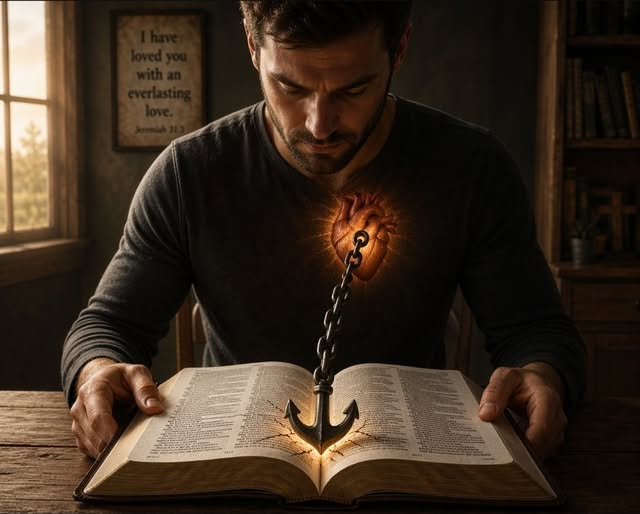
Anchors are nautical devices that provide stability to ships during harsh storms, protecting them from being tossed around at sea. Throughout history, anchors have served as a much-needed device for sailors. In the Bible, an anchor is used as a symbol of our hope in Jesus that gives us stability and steadfastness in life. In ancient days, the anchor was used in artwork and engravings as a symbol of Christianity. Anchors appear in the Roman catacombs on the tombs of Christians, showing the Christians’ steadfast hope in eternal life.
The word anchor is mentioned only in the New Testament. It refers to a literal anchor in some passages but is used as a metaphor in others. Anchors are mentioned in the account of Paul’s voyage to Rome during a severe storm and subsequent shipwreck (Act 27:13, 17, 29–30, 40). Jesus and His disciples are also said to have anchored their boat in Gennesaret (Mark 6:53).
The Bible uses an anchor figuratively to depict the hope we have as the anchor of our soul: “Because God wanted to make the unchanging nature of his purpose very clear to the heirs of what was promised, he confirmed it with an oath. God did this so that, by two unchangeable things in which it is impossible for God to lie, we who have fled to take hold of the hope set before us may be greatly encouraged. We have this hope as an anchor for the soul, firm and secure. It enters the inner sanctuary behind the curtain, where our forerunner, Jesus, has entered on our behalf. He has become a high priest forever, in the order of Melchizedek” (Hebrews 6:17–20). According to the Bible Knowledge Commentary, sailors would often carry the anchor in a smaller boat away from the ship to where it could be dropped (Victor, 1983, p. 797), and this is a good image of Jesus, our forerunner, who has entered heaven and made our hope secure. Instead of an anchor that reaches down into the sea, the Christian’s anchor reaches up into heaven where Jesus continually intercedes for us (Hebrews 6:20; Romans 8:34). We are anchored to the Holy of Holies.
According to Hebrews 6:19, the anchor of our souls is our hope of God’s inheritance in Christ. Unlike the feelings-based, doubt-infused definition of hope common in our world, the Christian’s hope is “a strong and trustworthy anchor” (NLT). Our hope is “firm and secure” because it is based on Jesus and the promises of God. Our hope anchors us during the stormy seasons of life. We have been given an anchor for the soul, a lasting hope “both sure and unshakable” (BLB). All else is fleeting and changing, but Jesus remains the same (Hebrews 13:8).
When the storms of life flood the Christian with fear, worry, or doubt, he or she can hold onto God’s promises and find stability in the salvation Jesus has provided. No matter what happens, God’s promises remain. He does not want His children to be set adrift; He wants them to be fixed in a secure place. Just as an anchor grounds a ship to protect it from going adrift at sea, so also does our hope in Jesus keep us grounded and secure during the difficult, uncertain, and often painful tempests of life.
Tea Time Manna
It is written, “As surely as I live,” says the Lord, “every knee will bow before me; every tongue will confess to God.”
—Romans 14:11
We live in anticipation of the day when every knee in heaven and on earth and under the earth, and every tongue acknowledge that Jesus Christ is Lord, to the glory of God the Father” (Philippians 2:10-11). Until that day, let’s do all we can to influence as many as we can to receive the grace of God through faith in Jesus. We want them to bow before Jesus now as their Savior and Lord, today, so on that great future day, they can join with the host of heaven in joy, not in regret or fear, and acknowledge Jesus for who he is: Lord of all!
Prayer
Father, I thank you for saving me. May my anticipation of the day of Jesus’ victory move me to be your agent of reconciliation so that others are ready for that day and will welcome it and our Savior with joy. Give me eyes to see those who need to come to Jesus today and confess that Jesus’ Lord. Through him I pray. Amen and Amen
Bible Teaching of the Day
LUNCH MANNA =
In Hebrews 6:16–20, the biblical writer intends to instill steadfast hope in his readers to keep them from drifting about aimlessly through the Christian life. He does so by identifying three wholly reliable sources of hope as an anchor for the soul: God’s Word, God’s character, and God’s Son.
The Lord not only gives us the promise of salvation and eternal life (John 3:16), but He reinforces it by binding Himself with an oath “so that those who received the promise could be perfectly sure that he would never change his mind” (Hebrews 6:17, NLT). God’s Word and nature are rock solid. He is trustworthy, and “it is impossible for God to lie” (Hebrews 6:18). The dependability of God’s promise and His character bolster our faith so that we can “take hold of the hope set before us” and “be greatly encouraged” (verse 18).
“We have this hope as an anchor for the soul, firm and secure. It enters the inner sanctuary behind the curtain, where our forerunner, Jesus, has entered on our behalf. He has become a high priest forever, in the order of Melchizedek” (Hebrews 6:19–20). God’s Son, our Savior Jesus Christ, is a powerful and dependable anchor for our souls.
Our hope-inspired encouragement is based on the finished work of Christ. As our high priest, Jesus “has entered that greater, more perfect Tabernacle in heaven. . . . With his own blood—not the blood of goats and calves—he entered the Most Holy Place once for all time and secured our redemption forever” (Hebrews 9:11–12, NLT). Through his life, death, and resurrection, Jesus Christ has won the ultimate victory over sin and death for us (Colossians 2:14–15; Romans 6:9; 1 John 5:4). Because of Him, we have the promise of eternal life (1 John 2:25).
The anchor has been a symbol of hope among Christians since the days of the early church. (A Dictionary of Christian Antiquities, Vol. I, W. Smith & S. Cheetham, ed., London: John Murray, 1875, p. 81). The anchor metaphor emphasizes the stability and safety of Christ as our hope. The writer describes this hope as an anchor that is “firm and secure” (NIV), “sure and steadfast” (ESV), “strong and trustworthy” (NLT). A ship’s anchor allows the vessel to remain fixed and unmoving regardless of the conditions at sea. Our faith in Jesus Christ keeps us from becoming “like a wave of the sea, blown and tossed by the wind” (James 1:6).
Just as an anchor stops a ship from drifting with the winds and currents, keeping our eyes on the hope of heaven (2 Corinthians 4:16–18) and the “pioneer and perfector of our faith” (Hebrews 12:2), who is Jesus Christ, will prevent our souls from wavering and wandering in times of pressure and turmoil. God has “caused us to be born again to a living hope through the resurrection of Jesus Christ from the dead, to an inheritance that is imperishable, undefiled, and unfading, kept in heaven for you, who by God’s power are being guarded through faith for a salvation ready to be revealed in the last time. In this you rejoice, though now for a little while, if necessary, you have been grieved by various trials” (1 Peter 1:3–6, ESV).
As believers, we have “a living hope” and “hope as an anchor” that holds secure because it is tethered to the steadfast Word of God and the unchanging, reliable character of God. He is faithful, and His promises are true (Joshua 21:45; Psalm 33:4; Hebrews 10:23). One commentator imagines the anchor’s rope extending “from heaven’s heights back down to earth, where faithful people can ‘seize the hope set before us.’ Like rock climbers scaling an imposing height, Christians steady themselves by trusting God’s promises, holding on for dear life to this cord of hope” (Long, T., Hebrews, John Knox Press, 1997, p. 78). With Jesus Christ as our anchor, no power of darkness and no earthly opposition can harm us (Romans 8:31–34).
We live with hope because we possess the Holy Spirit inside us as a guarantee of our redemption and full adoption as sons and daughters of God (Romans 8:23–25; Ephesians 1:11–14). When this “earthly tent we live in is destroyed, we have a building from God, an eternal house in heaven, not built by human hands. Meanwhile we groan, longing to be clothed instead with our heavenly dwelling . . . so that what is mortal may be swallowed up by life. Now the one who has fashioned us for this very purpose is God, who has given us the Spirit as a deposit, guaranteeing what is to come” (2 Corinthians 5:1–5).
The hope set before us as an anchor of our soul is that Jesus Christ has already gone before us into the holy of holies where God dwells in glory. God’s Word promises that we will be with Him there one day. That future reality is already secured by the finished work of Jesus, our High Priest. He is also our Great Shepherd who “through the blood of the eternal covenant” equips us “with everything good for doing his will” while we are on earth (Hebrews 13:20–21; see also Ephesians 2:8–10). This hope as an anchor holds us steady in this life and secure in the future because it is firmly attached to the eternal throne of God.
Today’s Devotional
DINNER MANNA =
Life, along with its joys and wonders, also contains difficulties. Frustrations occur, illnesses come, and our health deteriorates with time. Our bodies bear the signs that life on earth is not perfect and that we are not meant to be in this state for eternity. Realizing that “my flesh and my heart may fail” (Psalm 73:26), we know that life is but a vapor (James 4:14). Although all people will experience hardships in this life, and death is inevitable, there is hope for the believer for eternity and for our lives on earth.
In Psalm 73, the psalmist Asaph laments the unfairness he sees in the wicked prospering (Psalm 73:3), seeming to have no struggles (Psalm 73:4), and being free of care (Psalm 73:12). Asaph’s heart failed within him as he couldn’t understand God’s ways (Psalm 73:21–22). Many today also become frustrated at God for allowing good things to happen to bad people. But they must, like the psalmist, realize that their perspective is off. When Asaph “entered the sanctuary of God; then [he] understood their final destiny” (Psalm 73:17). While some people appear to prosper without God, there are consequences for the wicked: eternal life in hell and earthly costs, too. Having an eternal perspective gives us hope even when “my heart may fail” in disappointment or frustration.
Life reminds us that our flesh may also fail. Good health is not guaranteed. Cancer, illnesses, long-term disabilities, and other ailments remind us that life on this earth is not perfect. Our flesh will fail; each of us will have to face death. Yet the believer has hope for eternity. Christian hope is rooted in the salvation and eternal life available through Christ (John 3:16). This hope does not disappoint (Romans 5:5) because nothing can take our salvation and hope away, regardless of life’s circumstances. Job knew God would not fail him even when his life should end: “For I know that my Redeemer lives, and at the last he shall stand upon the earth. And after my skin has been destroyed, yet in my flesh I shall see God” (Job 19:25–26). “My flesh and my heart may fail,” but hope is found because “God is the strength of my heart and my portion forever” (Psalm 73:26).
The believer has hope even though “my flesh and my heart may fail.” Our eternal salvation fuels our hope as we live on this earth. Believers have hope that nothing can separate us from God’s love (Romans 8:28–29). We know that this world is not all there is. We have comfort in knowing that God is with us through our difficulties (Isaiah 41:10; Deuteronomy 31:6; Matthew 28:20). Our “living hope” (1 Peter 1:3) through Christ is an anchor for our souls (Hebrews 6:19), regardless of the storms we face in life. By contrast, those who do not place their trust in God are said to be without hope (Ephesians 2:12; 1 Thessalonians 4:13).
When our hearts ache or illness deteriorates our bodies, we see that “my flesh and my heart may fail.” Yet God is our strength and our hope and our reward. A literal rendering of Psalm 73:26 is that God is “the rock of my heart.” For believers, our eternity is secure, and this gives us hope, although life may leave us feeling helpless. No matter what we face, “we do not lose heart. Though outwardly we are wasting away, yet inwardly we are being renewed day by day. For our light and momentary troubles are achieving for us an eternal glory that far outweighs them all. So we fix our eyes not on what is seen, but on what is unseen, since what is seen is temporary, but what is unseen is eternal” (2 Corinthians 4:16–18).
NEWS MANNA –
Bible Prophecy, Signs of the Times and Gog and Magog Updates with Articles in the News
12 Steps To The Mark Of The Beast – The Iran War Is Just The Trigger
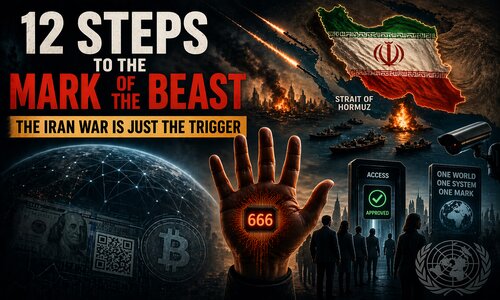
What’s happening right now is one of the most significant global events in recent memory – magnitudes greater than the 2020 pandemic shutdowns.
Yet, a good portion of the world remains ignorant. Here in the United States of America, the average citizen has no idea how significant the U.S.-Israel-Iran war is. Or, to more accurately describe it – they have no idea what a big deal the prolonged closure of the Strait of Hormuz is.
This goes far beyond higher prices at the gas station. Its impact trickles down into every aspect of the global economy.
A shrinking global economy is already a certainty. The only question remaining is this… How severe will the global depression be?
If it’s bad enough, it will topple over our already fragile debt-based global monetary system and usher in an entirely new era.
This new era will be based on assets, digital tokens, and digital surveillance.
More importantly, it will bring a new global monetary system online – one that’s indistinguishable in capability and function from the mark of the beast system we read about in Revelation 13.
So if you’re a Christian, pay attention! This coming system is yet another indication of the times in which we live. And Jesus said:
“So when all these things begin to happen, stand and look up, for your salvation is near!” Luke 21:28 (NLT)
How will this happen from one conflict in the Middle East?
Here’s a step-by-step overview of the process which could play out in the months and years ahead:
STEP #1 – Significant Loss of Crude Oil & Liquified Natural Gas
The world is now without a minimum of 12% of global crude oil production and 21% of global LNG production.
And even if the Strait of Hormuz reopens today, mathematically, the global economy has to endure at least 17 weeks without that energy.
This is because only 5% of the normal shipping traffic has passed through the Strait of Hormuz for more than 7 weeks now. And once shipping returns to normal, it will take a minimum of 10 weeks to restore energy flows because of shipping logistics, shut-in oil production, and damaged oil and gas facilities.
No combination of alternative sources can replace those missing supplies in a timely manner.
This is critical to understand. What’s happened means more than just higher oil and LNG prices. The supply that never reached the global market is simply unavailable to customers at any price.
STEP #2 – Significant Loss of Crude Oil & LNG Derivatives
The world has lost almost 11 million bpd of crude oil production and more than a fifth of LNG production as a result of the closure of the Strait of Hormuz. In addition, Ukrainian attacks on Russian oil export facilities have take another 2 million+ bpd off the global market.
But this means more than a loss of crude oil and LNG. Here’s all the byproducts of those energy sources which normally come out of the Strait of Hormuz along with the percentage of global seaborne trade for each commodity now taken offline:
Gasoline ~16%
Diesel ~10%
Jet fuel ~19%
Bunker fuel ~15%
Propane ~20%
Butane ~20%
Sulfur ~47%
Sulfuric Acid ~35%
Urea ~48%
Ammonia ~30%
Phosphate fertilizers ~27%
Ethylene ~20%
Propylene ~20%
Helium ~30%
Aluminum ~9%
STEP #3 – Factories Produce Less or Go Idle
With less gasoline, diesel, jet fuel, bunker fuel, and liquified petroleum gas, fewer things will move in the global economy from individual cars and trucks to entire factories.
With less LNG, urea, ammonia, and phosphate fertilizers, global crop yields will be lower.
With less ethylene and propylene, fewer plastics will be manufactured. With less helium and aluminum, fewer products will be made.
For example, if European airlines have 30% less jet fuel than they normally do, then it stands to reason they’ll have to fly 30% fewer miles than normal.
If a factory manufacturing a consumer product requires ethylene to produce the product, and they’re only able to procure 80% of the ethylene they normally do, then it stands to reason they’ll have to produce 20% fewer product units than they normally do.
STEP #4 – Mass Corporate / Small Business Insolvency
When a company produces fewer units of a core product, they typically receive less revenue for doing so. In a world where corporate debt exceeds $59 trillion, such an abrupt disruption to expected revenue and profit projections will make it impossible for many companies to meet their debt obligations.
Again, take the airline industry as an example. The airline industry as whole is highly indebted. Most airlines buy jets on credit and pay back those loans through anticipated flight revenues. But what happens in a world where a shortage of jet fuel causes 20% or 30% of airline’s flights to be cancelled? What happens to the profitability of the remaining flights in a world where jet fuel price double (which they have)?
In short, many such businesses will find themselves unable to make their debt payments.
STEP #5 – Mass Layoffs
As a result of lost revenues and the inability to make debt payments, many companies will be forced to make mass layoffs or institute furloughs. This means the same pressures that broke those businesses will now exert themselves on individual households.
What happens when households experience higher costs for daily living expenses, and then experience a job loss? They immediately cut all unnecessary spending, which further pressures businesses dependent on consumer discretionary spending.
In such circumstances, many households will find it difficult to make payments on the mortgage, the car loan, the credit card, the student loan, the home equity line of credit, etc. What can’t be paid won’t be paid. So many households declare bankruptcy and default on these loans.
STEP #6 – The Debt-Based Monetary System Implodes
In our debt-based monetary system, when someone defaults on a debt, it shrinks the currency supply.
The way our monetary system is designed, it requires an ever-growing amount of debt to be taken on in order to prevent collapse of the system (much like a Ponzi scheme). Currency (dollars, euro, yen, etc.) are not so much printed as they are “loaned into existence.”
Each time a loan is made, it expands the currency supply. Over time, as that loan is paid off, it shrinks the currency supply. But in order to provide enough currency to pay off the principal of the loan as well as the interest, new loans elsewhere must be made to expand the currency supply.
If debt defaults exceed debt expansion (new loans), the system begins to implode. If new currency can not be created faster than old currency is extinguished (through debt default), a deflationary spiral hits. This is what happened during the Great Depression.
STEP #7 – Bank Runs
As this deflationary spiral leads to further job losses and bankruptcies, it will eventually spark a panic in financial markets. During this phase, expect to see bank runs in major industrialized economies. Banks all around the world are already under enormous stress. For instance, in the United states, over 1,788 banks are at greater risk of failure due to their commercial real estate exposure. And according to the FDIC, the United states banking system is currently sitting on 300 billion dollars in unrealized losses.
Many people try to explain this away. “No need to worry,” they say. “These are unrealized losses.” And that’s true. But it’s only true until the unrealized losses become realized losses. This is what happened in the spring of 2023, when customers demanded their cash deposits from Silicon Valley Bank, Signature Bank, and First Republic – causing all three banks to fail. Those failures amounted to the 2nd, 3rd, and 4th largest bank failures in U.S. history. After the fact, Former Treasury Secretary Janet Yellen said she feared “a run on the banking system — to the huge detriment to our economy and to hardworking Americans and businesses.”
Once bank runs like these re-emerge, central banks will take the same measures they took in March 2023. They’ll panic and pledge to guarantee all deposits in an effort to prevent further bank runs. Unfortunately, this will only increase risk in the system as customers keep their deposits at institutions that are due to fail. All this will do is temporarily delay the inevitable and create the conditions that lead to the greatest run on banks since the Great Depression.
STEP #8 – A Massive Government / Central Bank Response
Fearing a repeat of the Great Depression and staring into the void of a deflationary spiral, governments and central banks across the globe will spend and print as much as they can in a desperate attempt to avoid a prolonged depression. In recent crises, these types of efforts managed to kick the can down the road and avoid the much-dreaded deflationary spiral and unraveling of the financial system.
At some point during their policy response, governments and central banks will do something truly novel – they’ll follow the law (something they didn’t do during the 2023 bank failures).
Under the Dodd-Frank Wall Street Reform and Protection Act as well as other post-Great Financial Crisis legislation and regulatory changes, failed banks are supposed to be “bailed-in” by depositors rather than “bailed-out” by taxpayers. To “bail-in” a bank means depositors are forced to recapitalize the bank with their own deposits.
All cash deposits above the FDIC limit are used to rescue the bank and save it from collapse. In exchange, depositors receive equity (an ownership interest) in the failing bank. Unfortunately, that equity has a market value much less than what the original cash deposit was worth.
At some point, expect Fed officials to allow a bank to fail and be “bailed-in.” Any businesses exclusively banking at this “bailed-in” bank will lose everything above the $250k limit – causing many of those businesses to fail.
Businesses all over the United States, and all over the world, will panic. That single attempt – and that’s all it will take, one attempt – to “bail-in” a bank will spark a panic run on all but the largest banks. As individuals and businesses move their cash deposits above the FDIC insured threshold to larger, “too-big-to-fail” banks such as JP Morgan and Wells Fargo, regional banks and smaller banks will fail in mass. In the end, only a handful of banks will control the overwhelming majority of deposits.
STEP #9 – Something Big Will Blow Up
As the largest bank run in history spreads across the globe, years and years of central planning and economic mismanagement will surface in the form of smaller implosions throughout the global economy. Think of a leaky boat where the occupants frantically rush to plug the leaks, but for every hole they plug, three new leaks spring forth. These implosions will include major problems in the global derivatives market – estimated at somewhere between $1 and $4 quadrillion dollars.
According to the Office of the Comptroller of the Currency, four banks – just four – hold “87.6% of the total banking industry notional amount of derivatives.” That means the failure of just one of those banks will be enough to collapse the entire global financial system (i.e. those banks won’t be allowed to fail).
Also, as we saw during the Great Financial Crisis, this crisis will expose fraudulent activity. In 2008, Bernie Madoff was exposed for running the biggest Ponzi scheme in history. Expect to see more Bernie Madoffs. In addition, expect to see several hedge funds, high-net worth individuals, and/or other financial entities outside of the traditional regulatory system exposed as frauds for pledging the same collateral to multiple financial institutions.
On Wall Street, expect to see several major failures of brokerage houses and, more importantly, intermediaries responsible for the stock settlement process. Their failure will expose a fatal flaw in the system. When someone “shorts” a security, they “borrow” it from someone who owns it, sell it into the open market and promise to buy it back later (they hope at a lower price, pocketing the difference).
When this happens, two people think they own the same security. This is called naked short selling, and it’s illegal in most countries. Nevertheless, it still happens. And we won’t know to what extent the law has been flaunted until the system breaks. When it does, many people will learn they don’t own what they thought they owned.
When these financial entities fail, contagion will spread throughout the global financial system. The threat of counterparty risk will cause global credit markets to freeze as distrust spreads throughout the system. This is the moment when the entire system will “break.”
STEP #10 – Bank Holiday
At that point, the global economy will come to an immediate, grinding halt. With credit markets frozen, trucks will stop making deliveries, factories will stop producing widgets, and every node in the global supply chain will freeze. In response, governments will announce “a bank holiday.” Global financial markets will close. All banks will close, and all electronic financial transactions will cease.
A bank holiday last occurred in the United States in March 1933 at the height of the Great Depression. Markets and banks will remain closed until government regulators implement new measures to jumpstart credit markets and restore the orderly functioning of the financial system.
STEP #11 – Roll Out the New System
How will they manage to do this? How will they restore credit markets and the orderly functioning of the financial system? Once the system breaks, “the solution” will be conveniently “found” waiting in the wings. They’re already preparing and testing it now. All that’s necessary is the proper crisis to drive its implementation. The “solution” they will roll out has three elements:
1) CBDC / Stablecoins – The first of these elements is digital currency. Governments are currently pushing two types – central bank digital currencies (CBDC) and stablecoins. CBDC is centralized, digital fiat currency. Stablecoins are digital tokens issued by a private entity which are backed by a fixed amount of dollars or U.S. treasuries.
Unlike the currencies of the past, CBDCs and stablecoins are fully programmable. This means governments and central banks can manipulate them in real-time. They’ll have the ability to raise and lower interest rates on those currencies in real-time. They’ll have the ability to put restrictions on those currencies in real-time, such as where it can be spend and on what.
Also with CBDCs and stablecoins, governments will have unprecedented surveillance powers. They’ll have full insight into every financial transaction you make. And they’ll control them accordingly. Under the GENIUS Act, the law in the United States says, “All stablecoin issuers must possess the technical capability to seize, freeze, or burn payment stablecoins when legally required and must comply with lawful orders to do so.”
So both CBDCs and stablecoins give governments and central banks power over every buy/sell decision made with those currencies.
Before you say, “People will never agree to that,” know this – people will demand it. They’ll claim it’s necessary to prevent another crisis like the one that just unfolded. They’ll claim that to prevent 21st Century bank runs, they need 21st Century regulatory tools. They’ll claim CBDCs and stablecoins will enable law enforcement to identify criminals like Bernie Madoff instantly, because they’ll know in real-time if bad actors embezzle or misallocate funds.
They’ll claim CBDCs and stablecoins will give regulators much needed insight into the “shadow banking system” and systemically important non-bank financial institutions (entities that don’t currently fall under the same regulatory standards as banks). And with this new oversight, such a crisis will “never happen again.” Ultimately, the public will embrace CBDCs and stablecoins as a “safeguard” against future financial crises. It’s an empty promise.
2) Tokenized Assets – The second element of the new system will be tokenized assets. Every asset on earth will be digitized. This includes stocks, bonds, precious metals, art, real estate, and anything else of value which can be catalogued, tracked, and traded.
Again, the public will embrace tokenized assets. They’ll claim they’re necessary to prevent another financial crisis like the one that just unfolded. Remember, when the system breaks, many people will realize for the first time that they didn’t really own the stocks they thought they owned.
The failure of several Wall Street brokerages and settlement entities will reveal an epic game of financial music chairs where concepts such as naked short selling led to multiple people thinking they own the same share of stock. By definition, only one can be the owner. The others will lose out.
Many retirements accounts will be devastated. The solution? Tokenized assets – a transparent method for tracking ownership in real-time on a public-facing blockchain. In the aftermath of a market crash, where so many people lose out, they’ll claim tokenized assets will prevent future fraud and abuse of financial regulations.
3) Digital IDs – The third element of the new system will be digital ID. Governments will roll out digital ID’s as a means to verify the identities of those transacting in CBDCs, stablecoins, and tokenized assets. They’ll claim digital ID’s will prevent fraud and abuse. But because they’ll centralize all information associated with an individual, they make a person more vulnerable to identity theft.
A single hack, and every aspect of your life will be compromised. In reality, digital ID isn’t about what’s best for you – it’s about what’s best for government. By centralizing all information associated with you as an individual, it streamlines their ability to surveil your life.
If that’s the case, why will anyone go along with the digital ID system? Simple. They’ll make digital ID a requirement to receive CBDC, stablecoins, and/or tokenized assets. And people will gladly adopt the first two elements of the new system in order to avoid financial ruin.
Want your uninsured bank deposits from the bank that failed? You can have them. But only in CBDC or stablecoin.
Those stocks you lost when the brokerages and settlement houses defaulted? You can have them back, but only as “secure” tokenized assets. If you’re on board, the government will deposit the cash equivalent of the lost assets to your digital wallet. You can then use CBDC or stablecoin to “buy back” your lost assets. Don’t want CBDCs or stablecoins? Then your lost deposits and assets remain out of reach.
And what about those who had no cash or assets to begin with? They’ll be on board too. The government will offer everyone “free cash” to jumpstart the economy and avoid social unrest. Simply claim your digital wallet, and $10,000 will be waiting for you. Still not convinced? How about $25,000? Or $50,000? This offer will prove irresistible for many. We’ve already seen similar offers roll out in Thailand.
STEP #12 – The New System Becomes “Mandatory”
With all these incentives, adoption of the new system will take place rapidly. In the aftermath of the greatest financial and economic crisis in history, many people who have lost their homes, retirement accounts, and cash deposits will gladly accept the offer of the new digital system in order to restore their lost fortunes. They’ll willingly accept CBDCs, stablecoins, and digital IDs as a form of “21st Century convenience.”
In a relatively short period of time, the number of people in the system will reach critical mass. At that point, any remaining holdouts who refuse to take part in the new system will simply be forced into the system. This will happen when governments drive the final nail in the coffin of the old system and ban the use of physical cash. They’ll claim cash needs to be outlawed because “only drug lords, money launderers, and terrorists use it.”
Anyone who objects based on privacy concerns will receive the standard mantra, “If you’ve got nothing to hide, then what are you afraid of?” Once they force the last holdouts into the system, the door to the cage will slam shut. The entire world will be locked into a new economic system, one that gives governments and central banks unprecedented power over every individual on the face of the planet.
While this new system will not be the mark of the beast system, it will be indistinguishable in capability and function from the mark of the beast system foretold in the Bible. Regardless of whether or not this new system is initially abused or not, the infrastructure will be in place for the mark of the beast system to appear at the midpoint of the seven-year Tribulation.
The Mark of the Beast System Rolls Out
Once the world reaches the midpoint of the Tribulation, the Antichrist and the false prophet will roll out the mark of the beast system. As the Book of Revelation reveals, they will require everyone on the face of the earth to receive a mark on the right hand or on the forehead and no one will be able to buy or sell without that mark:
“He required everyone — small and great, rich and poor, free and slave — to be given a mark on the right hand or on the forehead. And no one could buy or sell anything without that mark, which was either the name of the beast or the number representing his name.” Revelation 13:16-17
When the Antichrist and the false prophet make their move to implement the mark of the beast system, they won’t have to scramble to create it. The basic system will already exist. All they’ll have to do is “flip the switch.” And this is how the world will go from the current conflict in the Middle East to the mark of the beast system.
The time between these steps will vary, and some are likely to occur simultaneously, but keep in mind, all 12 steps won’t be complete in a day or a week. It will likely take years for all of these steps to fully play out.
We’re only beginning to experience the full effect of Step #1 right now, and it will likely take until the end of the year to reach Step #5.
I hope this article helps you to understand how we’re most likely to get from where we are today to where the world will be in the years to come. Most important, know this coming system is only one of the many signs the Bible says will appear in the end times.
Jesus and the prophets pointed to dozens of signs, and our generation is witness to the emergence and convergence of those signs. No other generation can say the same. Most important, Jesus said:
“So when all these things begin to happen, stand and look up, for your salvation is near!” Luke 21:28
Christians Will Need Discernment And Discipline To Prosper In The Age Of AI
Randall Christopher Niles has been leveraging information technology to share the Gospel, proclaim truth, and counter lies for a few decades now. Through GotQuestions and AllAboutGod, he has used the internet as a tool to point people to Christ. Recently, he tackled the question of AI. How he described its perils and promises is something every Christian needs to hear. Here’s Randall:
Every generation is shaped by its tools. The Industrial Revolution replaced muscle with machines and reshaped labor, cities, families, and time itself. Steam engines led to factories. Factories led to mass production. Mass production led to modern economies. Then came radio–the first technology to speak to millions at once. For the first time in history, a single voice could enter every living room, shape public opinion, unify nations . . . or divide them.
Movies followed. Then television. Those behind the images learned how to move us. Those behind the stories learned how to scale. Culture became centralized. Reality became curated.
And then, the internet. A decentralized miracle with instant access to information and the promise of global connection. Knowledge was no longer guarded by gatekeepers. Anyone could publish, and anyone could speak. Then came smartphones. In an instant, the internet wasn’t something we visited–it was something we carried. A screen was in our hands from the moment we woke to the moment we fell asleep.
With smartphones came social media. It didn’t just connect us, it trained us. It rewarded outrage, amplified fear, affirmed dysfunction, and monetized attention. Truth became negotiable, identity became performative, and algorithms quietly learned what made us tick.
Then, in November of 2022, a tool called ChatGPT was released to the public. No press conferences. No fanfare. Just a simple chat box. Within five days, it reached one million users–faster than any consumer technology in history. Within two months, over 100 million people were using it. Faster adoption than Facebook, Instagram, or TikTok.
Artificial intelligence (AI) didn’t feel like science fiction had predicted. It was personal. You could talk to it and ask it questions. You could watch it write, summarize, and create. However, this isn’t just another tool. Something bigger is happening.
For decades, AI had existed behind the scenes, powering search engines, smartphone maps, and digital ads. But now, AI was front-facing and could think out loud. What followed was not slow adoption but sparked an “arms race” unmatched in history. Trillions of dollars in investment. Massive data centers rising across the globe. Energy demands rivaling small nations. The largest infrastructure build-out in human history isn’t for roads, bridges, ports, or cities. It’s for intelligence itself.
The goal? Agentic AI, or systems that can plan, reason, act, and improve themselves. Beyond that? Artificial general intelligence (AGI), or machines that can outperform humans at all cognitive tasks. And beyond that? Artificial super intelligence (ASI), or disembodied intellects we can no longer meaningfully comprehend, let alone control.
Driving the AI race are the most powerful nations, the most influential technologists, and the most well-funded elites in human history are.
Sam Altman, leader of OpenAI, speaks openly about systems that may surpass human intelligence–and the need to “align” them before it’s too late:
This will be the most significant technology humanity has yet developed. In some sense, ChatGPT is already more powerful than any human who has ever lived. We’re past the event horizon–the takeoff has started. This changes the human story.
Elon Musk has compared advanced AI to,
. . . summoning a demon . . .. AI is likely to either be the best or worst thing to happen to humanity. The biggest risk we face as a civilization . . .. The danger of AI is much greater than the danger of nuclear warheads. By a lot.
Dario Amodei, CEO of Anthropic, says AI may eliminate “50% of entry-level white-collar jobs within five years,” creating a “permanent underclass of unemployed or low-wage workers.” He says AI will act as a “general labor substitute for humans,” causing long-term employment disruption that will be “unusually painful.”
Geoffrey Hinton, “the Godfather of AI,” left Google in May 2023, citing his concerns about AI safety:
We don’t understand what we’ve built. We have no experience of what it’s like to have things smarter than us. I console myself with the normal excuse: If I hadn’t done it, somebody else would have.
Mark Zuckerberg, founder of Meta, envisions AI companions, digital identities, and immersive virtual worlds–“a personal superintelligence that empowers everyone.”
Demis Hassabis, CEO of Google DeepMind, sees AGI as “civilization-level technology,” as “big as the discovery of fire or electricity.”
Jeff Bezos, founder of Amazon, sees AI automation as the engine of limitless efficiency and “civilizational abundance.”
In a nutshell, ultra-influential, mega-wealthy elites are driving towards technology’s greatest triumph while warning it could be humanity’s last great achievement. Different eccentric personalities. Different worldview visions. But a shared belief, that this cannot be stopped.
Many say we should trust the builders. After all, they’re brilliant and well-intentioned, and they’ve brought us this far. But the concerns are deep, and not merely generated by “doomers” and conspiracy theorists. Alarm bells are sounding from the builders themselves–in their own speeches, warnings, and admissions.
They speak of a coming crisis of truth, the erosion of human agency, the loss of control, and the possibility that intelligence itself may no longer belong to humans. Yet, the race accelerates because to slow down is to lose, and to lose is unthinkable.
In the next five years, the builders project:
Tens of millions of jobs disrupted or replaced.
Entire professions redefined or erased.
Synthetic media indistinguishable from reality.
AI companions replacing human relationships.
Digital selves that outlive biological ones.
For Big Tech elites, all of this is necessary and inevitable. In the transhumanist dream, humanity merges with the machine, to evolve our species beyond biological limits into a new golden age. Along the way, they promise world-changing innovation, medical cures, economic abundance, and a renewed planet.
But who is asking the more important (and ancient) question: What does this do to us? To vocation. To family. To identity. To meaning. To truth. Soon, our workplaces will change, our children’s education will change, our economy will change, and our sense of reality will change. And none of us were ever consulted.
Shouldn’t an orchestrated attempt at human evolution (and societal revolution) involve some level of individual choice? But no choice is being offered. This transition is happening to us. Opting out isn’t an option.
We may be approaching the greatest societal change in the history of humanity. Not merely incremental. Not another economic cycle. But a shift so profound it will alter how we work, how we relate, how we understand truth, and how we define identity, meaning, and purpose. And it’s not far off. It’s coming quickly.
We are at a crossroads unlike any in history. Not a political revolution or military conflict, but a civilizational transformation–one that will reshape what it means to be human.
What do thoughtful humans do? The answer is not panic or withdrawal. It’s formation. Throughout history, whenever civilizations faced upheaval, like wars, plagues, empires rising and falling, those who endured did not do so by controlling the moment. They endured because they were rooted. Rooted in faith. Rooted in truth. Rooted in practices that form resilient souls.
For Christian families, this moment calls us not to loosen our grip, but to double down. To double down on faith that is lived, not outsourced. To double down on prayer, Scripture, and worship–those things that shape hearts and not just schedules. To double down on the belief that human beings are not accidents, not data points, not upgradeable hardware. Humans are the image-bearers of a living God.
In a world chasing AI, we must recover wisdom. In a culture optimized for speed, we must choose steadfast patience. In an economy obsessed with automation, we must reclaim work–not merely as productivity, but as purpose. We must teach our children not just how to consume, but how to steward, create, and build. Not just how to perform but how to serve. Not just how to navigate screens but how to face reality.
This is also a moment to rebuild community. Not digital crowds or algorithmic tribes, but real community–neighbors who know one another, churches that gather in person, families that eat together, friends who look each other in the eye. AI cannot replace human presence. It cannot replace shared laughter, shared suffering, shared worship, or shared responsibility.
It’s time to be honest about what our families are facing. Behind many entertaining and immersive screens is a form of cognitive warfare–systems designed to capture attention, shape desires, alter behavior, and even destroy souls. Not accidentally, but intentionally. If we do not guard our kids’ minds, others will gladly train them.
Does that mean rejecting technology entirely? No, it means discernment and discipline. Boundaries. Sabbaths. Silence. It means teaching our children that their worth does not come from likes, metrics, avatars, or artificial affirmation, but from being known and loved by God and by people who are truly present in their lives.
In an age when truth can be generated on demand, we must cling to truth that is received, not invented. Biblical truth. Moral clarity. Identity grounded not in self-creation but in divine calling. As machines start to simulate empathy, we must practice real compassion. As reality becomes malleable, we must become people who love what is real–even when it’s difficult.
This moment doesn’t just belong to wealthy oligarchs and elite technologists. It also belongs to parents, pastors, teachers, craftsmen, and families at kitchen tables. History will not only remember who built the machines, but who formed the people living alongside them. We can’t stop the acceleration, but we can decide what kind of people we will be within it.
In the end, perhaps our greatest resistance in this AI age will not be protest, but presence. Being fully human. Fully attentive. Fully alive. Teaching our children to pray, work with their hands, read deeply, think clearly, love sacrificially, and know who they are before a machine tries to tell them.
The Debate Over “Just War”
The latest clash between Pope Leo XIV and U.S. President Donald Trump follows a familiar script: A religious leader warns against the moral dangers of war, and a political figure responds with characteristic bluntness, if not outright derision.
This is not a new dynamic. From Pope John Paul II’s opposition to the Iraq War, to Pope Francis’s clashes with Trump during his first term, religious leaders have often warned against the moral dangers of conflict–only to be brushed aside or openly challenged by political leaders focused on security and power.
But beneath the predictable exchange lies a far more serious question–one that neither side seems willing to confront with precision:
What, exactly, is a “just war”?
Pope Leo, echoing a long tradition of Catholic teaching, has expressed deep skepticism that modern conflicts–particularly, those involving Iran and Israel–can meet the moral threshold required to justify war. Trump, for his part, dismissed the critique in typically offhand fashion, reducing a complex moral framework to something closer to a punchline.
One leans heavily on moral caution. The other brushes it aside. Neither approach is sufficient.
The concept of “just war” traces back to thinkers like St. Augustine and St. Thomas Aquinas, who sought to impose moral limits on the use of force. Their framework was demanding: A just war must have a legitimate cause; be declared by proper authority; be fought as a last resort; and be conducted with proportionality and discrimination.
By those standards, “just war” is not a slogan. It is a burden.
Yet in modern discourse, it is too often treated as a rhetorical device–invoked to oppose war in the abstract or to justify it in the moment, but rarely applied with rigor.
Even those arguing for military action are not always making the case clearly. A recent Wall Street Journal editorial argued that there are “excellent reasons” to take military action against Iran–citing the regime’s record of repression, terrorism and regional aggression–yet faulted Trump for failing to articulate a sustained case to the American public.
That gap matters. If a war is to be justified–not only strategically, but morally–it cannot rest on instinct, impulse or implication. It requires explanation. It requires standards. It requires a framework the public can understand and evaluate.
The Christian tradition is not alone in grappling with these questions. And here, the conversation becomes more pointed.
Jewish law approaches the issue differently. Rather than asking whether war can ever be “just,” it distinguishes between wars that are discretionary and those that are obligatory. A war of self-defense–a milchemet mitzvah–is not merely permitted, but required.
That distinction shifts the moral burden. The question is no longer simply whether force can be justified, but whether failing to act in the face of mortal danger constitutes a moral failure of its own.
This is not theoretical. It has shaped the thinking of Israeli leaders across generations. Figures like Israeli premiers Golda Meir and Benjamin Netanyahu have long argued that when a nation faces enemies openly committed to its destruction, the duty to defend its citizens is not optional.
And that brings us back to the present.
When a state confronts adversaries–whether terrorist organizations or state sponsors like Iran–who openly declare their intention to destroy it, the luxury of abstraction disappears. The debate over “just war” is no longer philosophical. It becomes existential.
Does a nation have the right to defend its citizens from annihilation?
If the answer is no, then the doctrine of “just war” collapses into a form of pacifism that few would accept when confronted with real danger. If the answer is yes, then we must acknowledge an uncomfortable truth: Some wars, however tragic, are not only justified. They are necessary.
That does not make them clean. It does not remove their moral cost. It does not absolve those who wage them of responsibility.
But it does mean that restraint, in certain circumstances, is not a virtue. It is a failure.
This is where the current debate falls short. Pope Leo gestures toward a moral ideal without fully confronting the realities that make war unavoidable. Meanwhile, Trump dismisses moral scrutiny without offering any coherent standard of his own.
One offers principle without application. The other offers instinct without principle.
Both miss the harder truth.
The real test of moral seriousness is not whether one can denounce war in the abstract or defend it in the heat of the moment. It is whether one can recognize the moment when the defense of innocent life is no longer a choice, but an obligation.
That is the clarity Jewish law provides–and one too often absent from contemporary debate. Because when moral language is reduced to a talking point, it ceases to restrain power. But when it is stripped of the willingness to act, it ceases to defend life.
And a moral framework that cannot defend life is not moral at all.
TruLight Ministries Daily Entertainment Manna
TruLight TV : Not Being Jealous of Others
In this episode, the group learn about loving yourself and not being jealous of others. Through Two By 2, young children can begin learning the wonderful stories and messages of the Bible.
Today on TruLight Radio XM
TruLight Radio XM 24/7
Program
GMT / UTC +2
Monday To Fridays
00:15 Words to Live By Testimonies
01.15 Science Scripture and Salvation
02.15 Ground Works
04.00 Gospel Concert of the Day
05.00 The Daren Streblow Comedy Show
5:55 It is Today devotional
6:00 Gaither Homecoming Morning Show
7:15 Discover the Word
8.15 Destined for Victory
8:55 Science Scripture and Salvation
9:00 Holy Spirit Hour – Normally Sermons
10:15 Hope of the Heart
11:15 Unshackled
11.45 Words to Live By
12:15 Truth for Life
13:15 Living on the Edge with Chip Ingram
14:15 Focus on the Family
15:00 Kids Hour
16:00 In Touch with Dr. Charles Stanley
16:30 Groundwork
17:15 Live in the Light
18:15 Renewing your Mind
19:00 Gaither Homecoming Show
20:15 Growing Hope
21:15 Adventures in Odyssey Radio Drama
21:45 Bible Reading
22:15 Night-sounds
23.00 Good Old Country Gospel / Rhema Gospel Express
VISIT THE WEBSITE
TruLight Ministry News – EXTRA MANNA
TruLight Ministries orders from God since 2012 . Teach Them , Comfort Them and Warn Them!
THIS YEAR STUDIES STARTS 1ST MAY 2026 – REGISTER TODAY .
We Starting , the 1st May 2026 . with Our Preachers Diploma Online Platform – TruTheology.co.za . 36 Subjects with between 10 to 15 Lessons per Subject , equivalent to a 3 Year Theology Degree , The Training is Free to Approved Members and Tests Online after Each Lesson , You Determine the Speed of Your Studies . If you are interested registrations will take place from 1 April 2026 .
Healing Truths
End Time Articles
Bonus Teaching for the Child of God !!
Jesus’ disciples were greatly distressed about His impending departure (John 14:1; cf. John 16:6, 22). For this reason, Jesus set aside His own agony (John 12:27 and John 13:21) and took an extended moment to lend emotional support to His disciples (John 14—16). Is there a greater example of putting others before ourselves?
John 14 is linked with John 13 in two important ways. First, there is an implicit connection to Peter, who Jesus said would deny Him three times (John 13:36–38). If Peter would deny the Lord, would the other disciples remain steadfast in their faith?
Second, because Jesus sensed the inner turmoil of His disciples, He thought it necessary to address the implications of His departure (John 13:33, 36).
To calm their troubled hearts (John 14:1), Jesus issues an imperative: “Believe in God; believe also in me” (ESV). The word for “believe” can also be translated as “trust” (as the NLT renders John 14:1). Here, we discover the real problem—a lack of trust. The disciples did not fully trust God, nor did they fully trust Jesus. If they trusted God, they would also trust Jesus, who “proceeded forth and came from God” (John 8:42, KJV). The implication is that there is an indissoluble union between the Father and Son (cf. John 10:30 and John 17:21), a union that would be more fully explained in John 14:7–12.
D. A. Carson, a professor of New Testament at Trinity Evangelical Divinity School, has this to say about the union between the Father and Son:
For thoughtful readers of the Gospel, however, the link is almost inevitable. If Jesus invariably speaks the words of God and performs the acts of God (5:19 ff.), should he not be trusted like God? If he tells his followers not to let their hearts be troubled, must it not be because he has ample and justifiable reason?
The Gospel According to John, Eerdmans, 1991, p. 488.
It is not simply the fact that Jesus should be trusted like God. Jesus is God (John 1:1, 14; 5:18). Therefore, He can be trusted to provide the solution to every problem that we face (see Matthew 11:28–30).
The disciples did not understand that Jesus’ departure was for their benefit. Not only would Jesus leave to prepare a place for them, but He would also come back for them (John 14:2–3). Should this not have been sufficient reason for the disciples to rejoice?
In John 14:2, my Father’s house refers to heaven, where there are many rooms or dwelling-places. Jesus’ point is not that every believer will receive a “mansion” (as the KJV renders John 14:2). Rather, it is an assurance that ample provision has been made to secure space for all believers in heaven. This is yet another reason why the disciples should not let their hearts be troubled about Jesus’ departure.
By going to the cross, Jesus prepared a place in heaven for His disciples (cf. John 12:32). Thus, He is our forerunner or precursor:
“We have this as a sure and steadfast anchor of the soul, a hope that enters into the inner place behind the curtain, where Jesus has gone as a forerunner on our behalf, having become a high priest forever after the order of Melchizedek” (Hebrews 6:19–20 emphasis added).
Our hope for an eternal resting place in heaven is sure and steadfast because it is grounded in the finished work of Christ (John 19:30).
Share this Feeding of Manna with your Friends and Family. just click on the Social Media icon and share !