Hosted by TruLight Ministries – The Place of Truth
SELECT YOUR READING LANGUAGE – BOTTOM LEFT = YOUR DAILY MANNA NOW AVAILABLE IN 103 LANGUAGES
a New Study : for the Next 3 Daily Manna Days
The Symbols of the Word of God
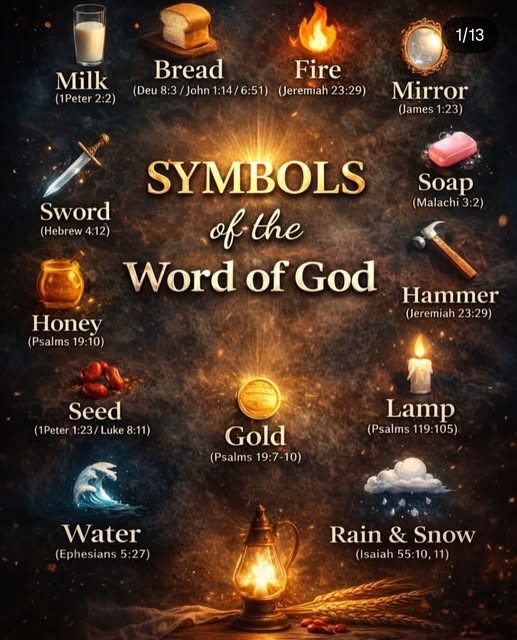
Symbols in the Word of God = Lamp
Jesus said, “The eye is the lamp of the body. If your eyes are good, your whole body will be full of light” (Matthew 6:22). Here our Lord describes the eye as a lamp which lights the entire body. Our eyes are the entrance to our hearts and minds and, as such, they provide a doorway to our very souls. When He referred to “good” eyes, He meant eyes that not only see well, but also perceive well. It is not only what we see, but how we perceive what we see that makes the difference between godliness and ungodliness, between light and darkness. Bad eyes lead to bad perception, but if our eyes are good, our whole person will be illuminated. If we are in a lighted room, we see everything clearly. We can move around obstacles and locate whatever we’re looking for. But walking in darkness results in stumbling, falling, and groping for some secure thing to hang on to.
Our eyes can be used to see that which is good or evil, that which is beneficial or harmful, and the things we see and perceive affect our whole being. If we perceive goodness, that will radiate outward from within our hearts and minds. But if we allow our eyes to linger on evil, we are so affected by what we see that darkness actually begins to emanate from within and can corrupt us and those around us.
The Bible tells us that Satan disguises himself as an angel of light. That’s his great deception—to make people think they’ve found the light when in fact it’s the darkness of false light (2 Corinthians 11:14). His intention is to blind us to truth and corrupt our minds, and he uses our eyes to gain entrance to our hearts. He parades before us all manner of evil, from the deluge of pornography on the internet to the endless barrage of the world’s goods that appeal to our materialistic impulses. He deludes us into believing that these things will make us happy, fulfilled people, when all the while they are robbing us of the very joy we long for. He wants us to allow more and more darkness into our minds through the books we read, the movies we watch, and the images we allow our eyes to linger upon. In that way, the light of the glory of God shining in the face of Jesus Christ is obscured to us. Although the light is everywhere, like the sun at noonday—blazing, blinding light—if our eyes are continually focusing on sin, the light we perceive is no light at all. If we want to be filled with the true light, we have to turn from sin, repent, and ask God to forgive us, cleanse us, and open our spiritual eyes. Then we must commit to being careful where we allow our eyes to go. We guard our hearts and souls by guarding our eyes.

Bible Verse and Prayer for Today
The fruit of the Spirit is love, joy, peace, patience, kindness, goodness, faithfulness, gentleness, self-control. Against such things there is no law.
—Galatians 5:22-23
Many religious groups offer various ways to know whether you have the Holy Spirit. Jesus has one simple answer: “By their fruit you will know them” (Matthew 7:16). Paul gives us the definition of God’s holy fruit — LOVE, JOY, PEACE, PATIENCE, KINDNESS, GOODNESS, FAITHFULNESS, GENTLENESS, SELF-CONTROL. These qualities come to life in us as good fruit that comes as a sign of the Spirit’s work in our lives. Now, why not repeat them out loud and ask the Lord to make this fruit yours in full measure through the power of the Holy Spirit, the gift the Father gives to those who ask (Luke 11:13).
Prayer
Abba Father, through the Spirit, I call upon you, knowing you are interceding for me, O Holy Spirit (Romans 8:26-27). Please fulfill in me the character you possess and the fruit that displays your presence in my life. O Abba Father, I want to exhibit the qualities of your Son and my Savior, Jesus, in whose name I pray. Amen and Amen
Bible Teaching of the Day
Psalm 119 is a long acrostic poem dedicated singularly to honoring and proclaiming the value of God’s Word. In verse 105, the psalmist declares to the Lord, “Your word is a lamp to my feet and a light to my path” (ESV). Just as a lamp brightens a path for our feet to walk, God’s Word provides the illumination and guidance we need to walk in this world.
The word translated “lamp” in this passage is ner in the original Hebrew. It refers to a small clay lantern with a solitary wick. The psalmist describes the Word of God as a lamp carried on his journey to distinguish the way and keep him from stumbling off course and going astray. The light of God’s Word allows us to see the right direction. It is God’s guidance for our travels through life on earth.
Proverbs 6:23 offers a companion thought: “For this command is a lamp, this teaching is a light, and correction and instruction are the way to life.” The guidance referred to by the biblical writers is not the advice of career counselors or pop magazines but rock-solid truth for navigating difficult moral choices in a dark and fallen world.
Ideas like moral relativism, situational ethics, and subjectivism make staying on the right path all the more challenging and perplexing. Worldly voices claim, “There are many paths to God,” “There’s no such thing as absolute truth,” and “Just do what feels right to you.” If we aren’t careful about the choices we make, if we listen to these voices rather than rely on God’s illuminating truth to guide us on the right roads, we will quickly encounter grief and ruin.
Only God’s Word provides the direction we need. Second Peter 1:19 describes it as a reliable lamp shining in a dark place: “We also have the prophetic message as something completely reliable, and you will do well to pay attention to it, as to a light shining in a dark place, until the day dawns and the morning star rises in your hearts.”
The apostle Paul told his young protégé, Timothy, “All Scripture is inspired by God and is useful to teach us what is true and to make us realize what is wrong in our lives. It corrects us when we are wrong and teaches us to do what is right. God uses it to prepare and equip his people to do every good work” (2 Timothy 3:16–17, NLT). If we study God’s Word frequently and diligently, if we give it our full attention, it will provide us with the direction, correction, and wisdom we need to succeed in life and do the Lord’s work.
Obeying God’s Word brings blessings and rewards: “Oh, the joys of those who do not follow the advice of the wicked, or stand around with sinners, or join in with mockers. But they delight in the law of the LORD, meditating on it day and night. They are like trees planted along the riverbank, bearing fruit each season. Their leaves never wither, and they prosper in all they do” (Psalm 1:1–3, NLT; see also Exodus 15:26; Psalm 128:1; James 1:22–25). On his deathbed, King David told his son Solomon, “Keep the charge of the LORD your God, walking in his ways and keeping his statutes, his commandments, his rules, and his testimonies, as it is written in the Law of Moses, that you may prosper in all that you do and wherever you turn” (1 Kings 2:3, ESV).
God’s Word has extraordinary power, says Hebrews 4:12: “For the word of God is alive and active. Sharper than any double-edged sword, it penetrates even to dividing soul and spirit, joints and marrow; it judges the thoughts and attitudes of the heart.” The Word of God is alive because He is a living God (Hebrews 3:12; 2 Corinthians 6:16). His words are full of energy, life, power, and productivity—they cause things to happen (Psalm 33:9). If we allow it to, if we don’t ignore it, God’s Word will take an active presence in our lives. We can trust the Word of God to accomplish whatever purpose God intends for it and to prosper wherever He sends it (Isaiah 55:11). For this reason, we ought to study it (2 Timothy 2:15), meditate on it (Psalm 119:97), hold firmly to it (Philippians 2:16), and hide it in our hearts (Psalm 119:11).
Christians can say to God, “Your word is a lamp to my feet and a light to my path” because the Word of God is the living energy that actively provides illumination, insight, direction, and guidance for our pilgrimage through a dark and sinful world.
Today’s Devotional
After Jesus was rejected by the Jewish religious leaders in Mark 3, He began to speak in parables. In Mark 4:21–23, He gives an object lesson: “Is a lamp brought in to be put under a basket, or under a bed, and not on a stand? For nothing is hidden except to be made manifest; nor is anything secret except to come to light. If anyone has ears to hear, let him hear” (ESV).
The idea of hiding a light under a basket (or “a bushel,” KJV) makes for a fun children’s Sunday school song, but there is a profound meaning behind the illustration. Jesus explains in the following verse: “Whatever is hidden is meant to be disclosed, and whatever is concealed is meant to be brought out into the open” (Mark 4:22). He then warns His listeners that those who have ears to hear should hear—they should listen carefully and heed what He is saying (Mark 4:23). Truth is not to be hidden. It is to be received and heeded.
Earlier, Jesus had told the parable of the sower, which presents several examples of truth being poorly received. The seed sown beside the road was snatched up and taken away (Mark 4:15). The seed sown on the rocky places was initially well-received but never took firm root (Mark 4:16). The seed sown among thorns took root initially but then was choked out by the thorns (Mark 4:18). Each of these examples is similar to hiding a light under a basket.
The “seed” in Jesus’ parable is the Word of God (Mark 4:14). The Word in some cases is snatched away by Satan (Mark 4:15). In other cases the Word does not take root, for the rocks of affliction and difficulty get in the way (Mark 4:16). In other cases the Word is received, but the worries of the world choke it out before it becomes fruitful (Mark 4:18). In each case, the Word is given to bear fruit, but sometimes it does not. Similarly, a lamp is meant to give light, but there are conditions that prevent the light from shining. How foolish it is to put a light under a basket, where no one can see it and the light cannot illuminate the room. The light should be exposed, allowing it to function as designed—to bring illumination.
Jesus’ illustration of hiding a light under a basket also shows that secrets will not stay secret and things hidden will not stay hidden. The light will eventually do its job. Elsewhere Jesus explains that He is the Light of the world, and anyone who follows Him will not walk in the darkness but have the light of life (John 8:12). He would not be a light under a basket; as long as He was on earth, He would be the Light of the world (John 9:5).
Jesus also calls His listeners the light of the world (Matthew 5:14). Like a city on a hill that cannot be hidden, Jesus’ followers will stand out. A light is not put under a basket but on a lampstand to give light to the whole house (Matthew 5:15). Jesus’ followers should let their light shine among men so that people would see their good works, done in heaven’s name, and glorify the Father (Matthew 5:16).
Light serves several purposes in the teaching of Jesus: to expose that which is in secret, to provide a contrast with the darkness, and to illuminate the darkness. In each of these purposes, those who would follow Jesus have a responsibility to let their light shine. Paul similarly challenges believers in Christ to show themselves blameless and innocent even in the midst of a crooked and perverse generation, among whom believers “shine as lights in the world” (Philippians 2:15, ESV). Our light is not intended to be put under a basket but to illuminate the whole house.
Bible Prophecy, Signs of the Times and Gog and Magog Updates with Articles in the News
The Silence In The Pulpit: When Pastors Stop Preaching On Bible Prophecy
Across much of the modern church landscape, a curious silence has settled over the pulpit. It is not the silence of reverence or reflection, but the silence of avoidance. Entire portions of Scripture–especially those dealing with the future–are quietly bypassed, rarely explained, and almost never preached through in a systematic way. Topics such as the Rapture, the Tribulation, the Antichrist, the coming Kingdom, and the return of Christ have gradually disappeared from many Sunday morning sermons.
For generations of believers, this silence would have been almost unimaginable. Earlier pastors regularly preached through prophetic books such as Daniel, Ezekiel, Zechariah, and Revelation. Entire sermon series were devoted to the signs of the times and the promises of Christ’s return. The expectation of the Lord’s coming was not viewed as fringe theology–it was central to the Christian hope.
Today, however, many pastors avoid prophecy altogether.
In some churches, prophetic passages are simply skipped when preaching through books of the Bible. In others, the subject is acknowledged but treated as too controversial or too complicated to address publicly. Still others dismiss prophecy as speculative theology that distracts from what they consider more “practical” aspects of Christian living.
The result is that many believers now sit in churches for years without ever hearing a sermon on the prophetic portions of Scripture.
This shift is significant because prophecy is not a minor theme in the Bible. Scholars often note that roughly one-third of Scripture contains prophetic material. From Genesis to Revelation, God repeatedly reveals His plans for the future. The biblical story moves toward a climactic conclusion in which Christ returns, judges evil, and establishes His kingdom.
Yet in many congregations, this massive portion of God’s Word remains largely unexplored.
The silence surrounding prophecy raises an important question: why are so many pastors no longer preaching it?
The answer reveals much about the current condition of the church–and perhaps something about the spiritual climate of the last days.
Why Many Pastors Avoid Prophecy
If such a large portion of the Bible deals with prophecy, why do so many pastors avoid it? The reasons vary from church to church, but several common factors appear repeatedly.
One of the most significant is the fear of controversy. Bible prophecy often involves interpretations that differ among sincere believers. Discussions about the timing of the Rapture, the nature of the Millennium, or the identity of prophetic figures like the Antichrist can quickly become heated debates. In an age when many churches are striving to maintain unity and avoid conflict, some pastors conclude that it is safer simply to avoid the subject altogether.
Rather than risk division within the congregation, they choose to focus on topics they believe will be less controversial.
Another factor is the perceived complexity of prophecy. Books like Daniel, Ezekiel, and Revelation contain symbolic imagery, apocalyptic language, and prophetic timelines that can appear intimidating to both pastors and congregations. Some church leaders feel ill-equipped to explain these passages confidently, especially if they did not receive strong training in prophetic interpretation during their theological education.
As a result, they often default to preaching from passages that feel more straightforward and easier to apply.
There is also the influence of modern church-growth philosophy. In many ministry circles, pastors are encouraged to focus on messages that are immediately practical and relevant to everyday life. Sermons on relationships, finances, emotional health, and personal fulfillment are often seen as more accessible to modern audiences.
Prophecy, by contrast, is sometimes viewed as abstract or speculative–something that may interest theologians but not the average church attendee.
When pastors adopt this mindset, prophetic teaching can gradually disappear from the preaching calendar.
Cultural pressure also plays a role. In an increasingly skeptical and secular society, some church leaders worry that preaching about the end times will make Christianity appear extreme or sensational. Discussions about divine judgment, global upheaval, and the rise of the Antichrist do not fit comfortably within a culture that prefers optimism and stability.
To avoid appearing alarmist or out of touch, some pastors simply choose not to address these topics at all.
Over time, these factors combine to create an environment where prophecy is quietly sidelined. It is not necessarily rejected outright–it is simply ignored. Entire books of Scripture remain unopened, and entire themes of biblical teaching are left unexplored.
But when pastors stop preaching prophecy, something important is lost. The church loses more than information about the future–it loses a vital perspective on the present.
And that loss carries serious consequences for the spiritual health of the church.
What Happens When Prophecy Disappears
When prophecy disappears from the pulpit, the consequences reach far beyond the loss of an interesting theological topic. Bible prophecy shapes how believers understand history, culture, and the future. Without it, the church gradually loses its sense of spiritual urgency.
One of the first casualties is the expectation of Christ’s return.
For the early church, the promise that Jesus could return at any moment was not a distant theological concept. It was a living hope that shaped daily life. The apostles frequently reminded believers to remain watchful and ready.
Paul wrote to the Thessalonians:
“For the Lord Himself will descend from heaven with a shout… and the dead in Christ will rise first.” (1 Thessalonians 4:16)
To Titus he described the Christian life as one of anticipation:
“Looking for the blessed hope and the appearing of the glory of our great God and Savior, Christ Jesus.” (Titus 2:13)
When prophecy is regularly taught, believers are reminded that history is moving toward a divine conclusion. Christ will return. Evil will be judged.
But when prophecy disappears from preaching, the church slowly loses this forward-looking perspective. Christianity begins to focus almost entirely on the present life rather than the coming kingdom.
Another consequence is the loss of discernment. Prophecy provides a framework for understanding the spiritual and geopolitical movements of the world. It reminds believers that deception, global turmoil, and moral decline are not random developments but realities Scripture warned about long ago.
Jesus Himself cautioned His followers:
“Take heed that no one deceives you.” (Matthew 24:4)
Without prophetic teaching, believers may struggle to interpret the signs of the times. Cultural trends, technological changes, and geopolitical events can appear confusing or overwhelming. The prophetic lens that once helped Christians navigate these developments is missing.
The church also loses a powerful motivation for holy living. Throughout the New Testament, the expectation of Christ’s return is closely connected to personal holiness.
The apostle John wrote:
“And everyone who has this hope fixed on Him purifies himself, just as He is pure.” (1 John 3:3)
Prophecy was never intended to be mere speculation about the future. It was meant to inspire watchfulness, faithfulness, and perseverance.
When the church forgets that Christ could return at any moment, spiritual complacency often follows. The urgency to live for eternity begins to fade.
In this way, the silence surrounding prophecy does more than leave a gap in biblical teaching. It subtly reshapes the mindset of the church itself.
And that may be one of the most revealing indicators of the spiritual condition of our time.
Prophecy Was Never Meant to Be Optional
One of the greatest misconceptions in the modern church is the idea that Bible prophecy is optional. Some view it as a secondary doctrine–interesting perhaps, but not essential to Christian teaching. Others treat it as a niche subject reserved for theologians or prophecy conferences.
But Scripture presents a very different picture.
From the opening chapters of Genesis to the final pages of Revelation, the Bible unfolds as a prophetic story. God does not merely reveal what has happened in the past or what believers should do in the present. He also reveals what will happen in the future.
Through the prophet Isaiah, the Lord declared:
“Declaring the end from the beginning, and from ancient times things which have not been done, saying, ‘My purpose will be established, and I will accomplish all My good pleasure.'” (Isaiah 46:10)
God is not reacting to history–He is directing it. Long before kingdoms rise or fall, before empires appear on the world stage, and before the final chapters of human history unfold, the Lord has already revealed the outcome.
This is one of the unique characteristics of the Bible. No other religious text contains the same level of detailed, predictive prophecy. Throughout Scripture, God repeatedly demonstrated His authority by revealing future events long before they occurred. When those events unfolded exactly as foretold, His Word was vindicated.
The first coming of Jesus Christ provides the clearest example of this. Centuries before His birth, the prophets described the circumstances of the Messiah’s arrival. Micah foretold that He would be born in Bethlehem (Micah 5:2). Isaiah described the suffering servant who would bear the sins of many (Isaiah 53). Zechariah predicted that the Messiah would enter Jerusalem riding on a donkey (Zechariah 9:9) and that He would be betrayed for thirty pieces of silver (Zechariah 11:12-13).
These were not vague predictions. They were precise declarations that came to pass exactly as God had spoken.
The life, death, and resurrection of Jesus fulfilled dozens of prophecies written centuries earlier. From His birthplace to His crucifixion, the events of the Gospel unfolded according to the prophetic Scriptures. This pattern establishes an important principle: if the prophecies concerning Christ’s first coming were fulfilled literally and precisely, there is every reason to expect that the prophecies concerning His second coming will be fulfilled in the same way.
Yet this is precisely where many churches hesitate.
While the first coming of Christ is celebrated and preached regularly, the prophetic promises surrounding His return are often neglected. The same Scriptures that foretold His birth, death, and resurrection also speak extensively about His return, the Tribulation, the rise of the Antichrist, the judgment of the nations, and the establishment of Christ’s kingdom.
To treat those passages as optional is to overlook a significant portion of God’s revealed Word.
Even more striking is the fact that Jesus Himself spoke frequently about the future. Entire sections of the Gospels are devoted to His prophetic teaching. In the Olivet Discourse, recorded in Matthew 24-25, Mark 13, and Luke 21, Jesus described the conditions that would characterize the last days. He warned of deception, wars, earthquakes, persecution, and global upheaval. He spoke of the coming Tribulation and of His visible return to the earth in power and glory.
These were not obscure or incidental remarks. They were central elements of His teaching.
In fact, Jesus often connected prophecy directly to the spiritual readiness of His followers. Over and over again He urged believers to remain watchful and prepared.
“Therefore be on the alert, for you do not know which day your Lord is coming.” (Matthew 24:42)
The apostles carried this same emphasis into their teaching. Paul described believers as those who are “looking for the blessed hope and the appearing of the glory of our great God and Savior, Christ Jesus” (Titus 2:13). Peter urged believers to live holy and godly lives as they anticipate “the coming of the day of God” (2 Peter 3:12).
Even the final book of the Bible opens with a remarkable promise concerning prophecy itself:
“Blessed is he who reads and those who hear the words of the prophecy, and heed the things which are written in it; for the time is near.” (Revelation 1:3)
Notice that the blessing is not limited to scholars or theologians. It is given to those who read it, hear it, and take it seriously.
In other words, God never intended prophecy to remain hidden in the background of church life. It was meant to be proclaimed, understood, and embraced by believers.
When pastors avoid preaching prophetic passages, they are not merely skipping over a few difficult verses. They are leaving unexplored a significant portion of the biblical narrative. The grand story of redemption moves toward a future climax when Christ returns to judge evil and establish His kingdom.
Without prophecy, that story feels incomplete.
The church is left with a gospel that looks backward to the cross but rarely looks forward to the crown. Yet the full message of Scripture points to both. The same Savior who came once in humility will come again in glory.
Prophecy reminds believers that history is not spiraling out of control. It is moving toward the fulfillment of God’s plan.
And for that reason, prophecy was never meant to be optional. It is woven into the very fabric of Scripture itself–and it remains one of the clearest reminders that the God who spoke in the past will also bring His promises for the future to pass.
The OIL and FERTILIZER War : The New Middle East Battlefield: Energy Infrastructure
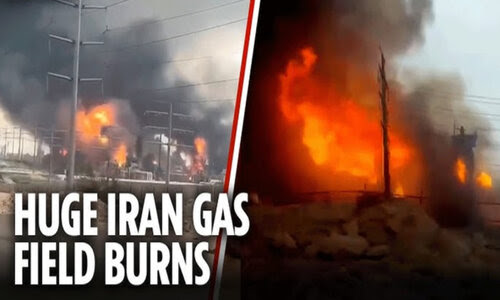
Prior to the war with Iran, the world had more than enough oil and gas, and as a result it was very inexpensive. Now we have transitioned into a time when that is no longer true at all. Both sides in this war are now specifically targeting oil and gas infrastructure, and that is going to have devastating consequences. Even if the war ended tomorrow and the Strait of Hormuz was immediately reopened, there is no way that conditions would return to how they were just before the war any time soon.
Oil and gas facilities that have been damaged could take many months to repair. Oil and gas facilities that have been completely destroyed could take years to rebuild. What this means is that oil and gas prices are going to remain at elevated levels for an extended period of time, and that is really bad news because our entire way of life is based on cheap energy.
On Wednesday, a stunning series of airstrikes absolutely pummeled the South Pars gas field in Iran…
Iran said the US and Israel struck its giant South Pars gas field in the Persian Gulf, the latest attack on energy assets in the region-wide conflict.
Oil prices jumped after Iranian state TV reported the airstrike, which raised fears of further risks to global crude and gas supplies. Gulf producers have significantly reduced output during the 19-day war, particularly due to the effective shuttering of the Strait of Hormuz.
If confirmed, the assault would mark the first time the US and Israel have targeted Iran’s upstream oil and gas facilities since starting the war on Feb. 28.
This was an enormous escalation.
Up to this point, the U.S. and Israel had left the South Pars gas field alone.
As a result of the airstrikes, production at two of the primary refineries at South Pars came to a screeching halt…
The attack effectively halted production at two of the field’s refineries, which typically put out about 100 million cubic meters of gas a day, according to state media.
It would be difficult for me to overstate how important this is.
South Pars is the home of “the largest known gas reserve in the world”, and it normally produces approximately 70 percent of all natural gas used in Iran…
The South Pars/North Dome mega-field is the largest known gas reserve in the world. The field supplies around 70 percent of Iran’s domestic natural gas. Iran, which shares the massive field with energy giant Qatar, has been developing its side since the late 1990s.
So now Iran will be immediately facing an unprecedented domestic energy crisis.
There simply won’t be enough energy for everyone, and this is going to have a huge impact on Iran’s ability to keep fighting…
The South Pars attack signals a shift in the conduct of the war toward degrading Iran’s economic infrastructure and curbing its ability to continue fighting, according to Hamidreza Azizi, a visiting fellow at the German Institute for International and Security Affairs in Berlin.
“South Pars is central to Iran’s gas supply and, by extension, to electricity generation and industrial activity,” Azizi said by email. “Even limited or temporary disruptions can translate into power shortages, industrial slowdowns, and broader economic strain.”
Needless to say, the Iranians are extremely angry about what has just happened.
In response, they are threatening to attack oil and gas infrastructure in Saudi Arabia, Qatar and the United Arab Emirates…
Iranian state media issued a new warning Wednesday urging civilians living near major oil and gas facilities in Saudi Arabia, Qatar and the United Arab Emirates to leave immediately, saying the sites will be targeted “in the coming hours.”
In a Telegram post, the semi‑official Tasnim news agency listed several facilities it said were at risk. The sites included the Samref refinery and Jubail petrochemical complex in Saudi Arabia; the Mesaieed petrochemical complex, Mesaieed Holding Company and Ras Laffan refinery in Qatar; and the Al Hosn gas field in the UAE.
Tasnim said the facilities had become “direct and legitimate targets” and urged residents, workers and nearby communities to move to a safe distance without delay.
Saudi Arabia, Qatar and the United Arab Emirates are apparently taking these threats quite seriously, because it is being reported that oil and gas facilities in those countries are being hastily evacuated…
Energy sites across the Middle East were being evacuated on Wednesday as Iran threatened strikes on facilities “in the coming hours”.
The price of oil surged by more than 5pc to $110 a barrel after Iran urged staff to leave sites in Saudi Arabia, the United Arab Emirates and Qatar ahead of a possible strike, according to state media.
Such an assault would further cripple global oil and gas supplies, with Brent crude reaching the highest level in 10 days amid fears of a growing shortage.
As I write this article, reports are circulating on social media that indicate that targets have been hit in Saudi Arabia.
In the cominghours, we shall see if those reports are confirmed or not.
I think that the Saudis are rapidly losing patience with Iran.
In fact, a Saudi analyst just told CBC News that if Saudi Arabia joins the war it “will activate its bilateral defence agreement with Pakistan”…
If Saudi Arabia joins the US-Israeli war on Iran, it will activate its mutual defence pact with Pakistan and potentially lean on the South Asian country’s nuclear arsenal, a Saudi Arabian analyst told Canada’s CBC News.
“If the Saudis were to decide to enter with complete force…Iran is going to be the biggest loser because Saudi Arabia will activate its bilateral defence agreement with Pakistan,” Salman al-Ansari, a Saudi Arabian geopolitical researcher, said in an interview.
“We can say it literally that there is a nuclear umbrella over Saudi Arabia,” he added.
We are in such dangerous territory now.
If the Iranians are backed into a corner, there is no telling what they might do.
But there is no turning back now. A number of Gulf states are actually encouraging the Trump administration to finish the job because they don’t want Iran to ever be in a position to do something like this again…
Battered by Iranian strikes and the disruption of the Strait of Hormuz, the United Arab Emirates and some fellow Persian Gulf states have come to view Iran’s theocracy as an existential enemy. They now want the regime they once courted to be neutered, if not dismantled, when the conflict ends–so the ordeal is never repeated.
The U.A.E. has borne the brunt of Iranian attacks: more than 2,000 drones and missiles have been fired at the country since the U.S. and Israel launched the war on Feb. 28.
Of course it would take quite some time to do what they are asking.
Even a military operation that would be designed to take control of the Strait of Hormuz would extend the duration of this war by months…
A number of sources told The Jerusalem Post that if President Donald Trump decides to launch a military operation to take control of the Strait of Hormuz – an operation intended to ensure freedom of navigation – it could significantly prolong the war “by weeks, if not months.”
“This could extend the war by as much as two months,” one source familiar with the discussions said.
If taking control of the Strait of Hormuz would take “months”, how long would full-blown regime change take?
It is becoming clear that this isn’t going to be a short war.
And the longer this war persists, the more damage we will see to oil and gas infrastructure throughout the Middle East.
Energy prices are just going to keep on rising, and the global economy and the global financial system are not going to be able to handle that.
Will the Real MAGOG please Rise !! Iran’s Islamic Crescent May Be Over But Guess Who Is Waiting In The Wings
Tehran’s infamous “doomsday clock” was designed to count down to the annihilation of Israel in the year 2040. Instead, it appears finally to have ceased operating at the 2026 mark, along with many leaders of Iran’s extremist Islamic regime.
The irony of Iran’s rout by its two most-hated enemies — the “Great Satan” United States and the “Little Satan” Israel — must be seismic in Iran’s major centers, where much of the civilian population openly celebrates, not the end of Israel as intended by Shia clerics, but, instead, the hoped-for final days of an apparently much-hated regime.
Israel long sought to destroy the clock’s prominence in Tehran’s Palestine Square, and has now succeeded in eliminating most of Iran’s military and propaganda infrastructure.
Israel and the US have thwarted Iran’s plans to liquidate Israel and the US from the Earth and have stopped the late despotic “Supreme Leader” Ali Khamenei’s dream of a Shia Islamic Caliphate dominating the Middle East and beyond.
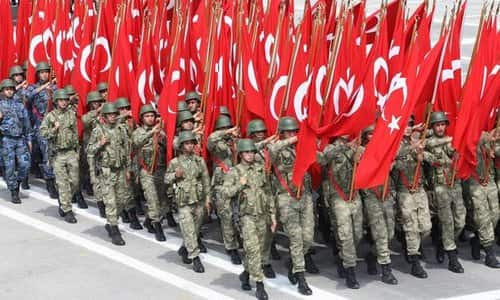
While it is safe to say Iran’s intended Caliphate is now a passing dream, the ideological void will doubtless be filled by Turkey, which seems to hanker for either a resurrected Ottoman Empire or a neo-Ottoman form of national Islamist dominance. The former version — in essence a Turkish Empire — endured for 400 years before being finally vanquished in the early 20th century as a result of efforts by Mustafa Kemal Atatürk in Turkey’s War of Independence, ending in 1924.
In 1924, the Ottoman Caliphate was officially abolished and, under Atatürk leadership, the secular Republic of Turkey was founded. Islam was removed as the official state religion.
Today, however, a strict form of Sunni Islamism has taken hold in Turkey, inevitably giving vent to escalating anti-Israel sentiments. Turkish President Recep Tayyip Erdogan supports Israel’s enemies and utters threatening sentiments against Israel itself.
During his lengthy term of office, Erdogan has endeavored to reframe Turkey as the rightful heir to “a grand imperial civilization whose cultural, religious, and strategic influence stretched from the Balkans to the Arabian Peninsula.” In short, he appears to champion the reemergence of a dominant Islamic civilization with himself as its destined leader. Antonio Bhardwaj of the Foreign Affairs Forum explains that “it is unequivocal that Erdogan aims to position himself as a modern-day Caliph or to resurrect a neo-Ottoman caliphate.”
As if that were not a lofty enough objective, Erdogan, from his comments, seems to consider himself the rightful leader of the entire Muslim world. In the interim, he evidently sees himself as “the Middle East’s next great power broker, claiming leadership while chaos reigns.”
Bhardwaj adds:
“Erdoğan’s tenure has seen a systematic shift toward Islamization within Turkey. His government has expanded religious education, restricted alcohol sales, and promoted conservative social policies.
“These measures, coupled with the suppression of secular institutions, align with his stated goal of raising a ‘pious generation.'”
Clearly, Erdogan seems to consider Turkey as the true home of a “renewed Muslim civilizational core, a hub of political Islam, and a cultural beacon rooted in centuries of imperial history.”
This is nothing new or covert. In the media outlets controlled by Erdogan’s AKP party, public calls have been made for the establishment of a Caliphate. During 2020, for instance, “the government-linked magazine Gercek Hayat urged Turks to ‘get ready for the caliphate,’ with its cover implicitly addressing Erdogan.”
When Erdogan criticizes the Israeli and US attacks on Iran, he reveals what appears to be a duplicity. First, Turkey is an important member of the Western NATO alliance, yet Erdogan has aligned himself with enemies of the West, specifically Iran’s repressive regime and jihadist proxies such as Hamas in Gaza and the Houthis in Yemen – both of which have sworn to destroy Israel and America. It is no secret that members of Hamas’s leadership have long been ensconced in Turkey.
Second, Erdogan seemingly intends to create a future Sunni-dominated Caliphate headquartered in Istanbul – where the historic Ottoman Caliphate was based.
According to political analyst Sinan Ciddi:
“While Washington searches for ways to weaken Iran’s murderous rulers, our supposed NATO ally Turkey is working overtime to keep the mullahs alive — and in power….
“For Erdogan, a crippled Islamist regime in Tehran is far more useful than a democratic one that might align with the West….
“For Erdogan, preserving a weakened Islamic Republic serves one overriding purpose: blocking the emergence of a US-Israeli security order that would sideline Turkey’s ambitions.”
Once it is understood Erdogan and his political party, the AKP, have their ideological roots in Muslim Brotherhood dogma, which “advocates for a global caliphate governed by Sharia law.”
The founding Supreme Leader of the Islamic Republic of Iran, the Ayatollah Ruhollah Khomeini, adopted militant doctrines that were hitherto neglected by established Shiite precepts — which he absorbed from the Sunni Muslim Brotherhood movement. Primarily, these doctrines focused on a “revival of the pan-Islamic Caliphate with the mission of spreading Islam, by any means necessary, including violence.” In this context, there is little difference between Erdogan’s Islamist stance and that of earlier leaders of Shia Iran and Sunni Turkey: Both came to embrace the same Muslim Brotherhood worldview.
Erdogan’s close relationship with the Muslim Brotherhood extends over a 50-year period, and it is known that Muslim Brotherhood members have been granted refuge in Turkey. According to a report from the Counter Extremism Project, “analysts have also suggested that Turkey has supplied weapons and activists to the Muslim Brotherhood for its activities in Egypt.”
Erdogan aims not only for political relevance in the Muslim sphere; he openly desires a leadership role. As the European Times reports:
“Its neo-Ottoman posture aims to revive Turkey’s role as a civilizational core, a hub of political Islam, and a cultural beacon rooted in centuries of imperial history.”
Erdogan’s various interventions in Syria, Libya, and the South Caucasus, while cooperating with autocratic Qatar — the primary supporter of the Muslim Brotherhood — reflect his reach into former Ottoman lands. It is ironic that “Iran’s state-affiliated Kayhan newspaper accused Erdogan in 2024 of seeking to ‘revive the Ottoman caliphate,’ citing his support for Syrian rebels and territorial ambitions.”
Now, just as Israel is overcoming its primary enemy, the Iranian regime, which seeks to wipe Israel off the map and then establish a Caliphate under Sharia law in the region — along comes yet another Muslim extremist of a similar kind, Turkey’s Erdogan.
To highlight his claim to prominence in the Islamic world, in March 2025, Erdogan doubled down on his anti-Israel rhetoric:
“[I]n Turkey’s largest mosque, he reportedly told a crowd of worshippers: ‘May Allah, for the sake of his name, Al-Qahhar’–the Vanquisher–‘destroy and devastate Israel.'”
There is little difference in rhetoric between Iran’s verbal hostility and that emanating from Turkey towards Israel. Turkey, it seems, will become Iran’s successor in continuing venomous anti-Israel threats in the Muslim sphere, with “Death to Israel” voiced even in the Turkish parliament.
Ex-CIA analyst Reuel Marc Gerecht, in an article presciently titled “Erdoğan Sets His Sights on Israel,” wrote last year:
“While Erdoğan consolidates power at home and prepares to project it abroad, he has set the stage for a clash with Israel. Indeed, Turkey has quickly emerged as perhaps the greatest danger to the Jewish state in the Middle East, escalating the threat of a conflict he won’t be able to avoid.”
Perhaps only when Turkey’s leader openly declares, “Death to America” will the US realize that the Islamist monster it has naively supported has simply been stringing the West along. Then, and only then, might the US, in conjunction with Israel, consider reining Turkey in to ensure that no future “doomsday clock” ever counts down against Israel again.
AI, Lasers And Satellites: Technological Innovation In The 2026 Iran War
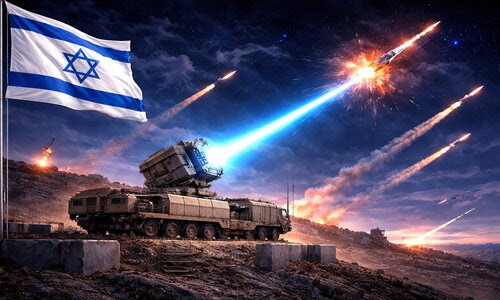
The coordinated military campaigns launched by Israel and the United States against the Islamic Republic of Iran represent a watershed moment in the evolution of modern warfare.
Operating under the respective codenames “Operation Roaring Lion” and “Operation Epic Fury,” allied forces initiated a massive preemptive offensive on Feb. 28, executing nearly 900 strikes in just the first 12 hours of the conflict.
Beyond the immediate shockwaves and the systematic dismantling of military infrastructure, the 2026 conflict is emerging as a laboratory for a new era of warfare, one driven by generational technological advances across multiple domains.
Offensive systems
The opening phase of the conflict introduced novel offensive weapons that have significantly altered how strikes are delivered. The most widely debated escalation is Iran’s operational deployment of the Fattah-2. Tehran claims the weapon is a hypersonic glide vehicle–a missile designed to travel at 15 times the speed of sound while dynamically maneuvering through the atmosphere to evade interceptors.
Because independent verification is lacking, however, experts suggest Iran may actually be using older ballistic missiles upgraded with maneuverable warheads rather than true hypersonic technology.
“While Iran previously tried to pass along a maneuvering re-entry vehicle as a hypersonic ballistic missile, the move toward developing a hypersonic glide vehicle should not be ignored,” Behnam Ben Taleblu, a senior fellow at the Foundation for Defense of Democracies, explained.
In contrast, the United States saw the successful combat debut of its Precision Strike Missile (PrSM). The next-generation tactical weapon uses advanced seekers and navigation systems to achieve extreme accuracy at ranges of up to 500 kilometers (310 miles), deploying specialized warheads to rapidly dismantle dispersed targets across the battlefield.
At the same time, the Israeli Air Force introduced a highly specialized “agent defeat” munition designed to target subterranean infrastructure. The previously undisclosed 2,000-pound smart bomb delivers a dual payload of conventional high explosives and incendiary material, engineered to penetrate deep underground and ignite massive high-temperature fires capable of incinerating fortified targets.
The theater has also been dominated by the mass deployment of autonomous drone swarms. The skies are crowded with networked unmanned aerial vehicles ranging from Iran’s heavy long-range Arash-2 to the newly deployed American Low-Cost Unmanned Combat Attack System (LUCAS).
In a rare instance of technological emulation, the United States reverse-engineered the LUCAS from captured Iranian Shahed-136 drones.
“The LUCAS is indispensable. This was an original Iranian drone design. We captured it, pulled the guts out, sent it back to America, put a little ‘Made in America’ on it, brought it back here, and we’re shooting it at the Iranians,” Adm. Brad Cooper, commander of U.S. Central Command, said in a recent briefing.
The American platform retains the low cost of its predecessor while integrating commercial satellite networks that allow unjammable, beyond-line-of-sight operations and advanced cooperative swarming tactics.
Air defense
The threat posed by highly maneuverable ballistic missiles and UAVs has also driven major advances in air defense systems. Defense companies are increasingly integrating artificial intelligence directly into fire-control algorithms.
This technological shift is accelerating the development of next-generation interceptors such as Israel’s Arrow 4 system, which is expected to enter deployment within months. By utilizing AI processors capable of calculating thousands of potential evasive flight paths per second, the system is expected to achieve unprecedented interception rates.
“When we develop a new system, we focus on solutions for future threats, not current threats. This is how we stay ahead of the ever-evolving threats,” Boaz Levy, president and CEO of Israel Aerospace Industries, noted about the upcoming platform.
Parallel development is also underway on the Arrow 5 system, which is focused on deep-space interception before threats reenter the atmosphere.
The economic reality of intercepting $35,000 drones with multi-million-dollar missiles poses a strategic challenge in prolonged conflicts. This has accelerated efforts to operationalize directed-energy weapons.
These systems rely on continuous electrical energy to destroy missiles and UAVs at the speed of light, creating what analysts describe as a virtually infinite magazine at negligible cost per engagement.
Yet the current conflict has exposed significant limitations. Despite high expectations, reports indicate that Israel’s Iron Beam laser system remains largely unused and is not yet ready for regular operational deployment against the current Iranian and Hezbollah missile and drone threats.
Deployed systems such as the U.S. Army’s 50-kilowattDE M-SHORAD (“SGT Stout”) have also revealed physical constraints. Environmental conditions common in the Middle East–including humidity, dust and sea spray–can scatter and diffuse laser beams, significantly reducing their effective range.
Beyond direct interception, the geographic scale of the conflict has required instantaneous regional coordination rather than isolated national defenses. Allied forces have therefore prioritized integrating early-warning radars across multiple countries into a unified system under U.S. Central Command.
Through new software architectures, sensors across the region are connected into a single network. An early-warning radar in a Gulf state can detect a launch and instantly transmit that data to cue interceptors fired from a U.S. naval vessel or another allied platform.
Naval warfare
The aerial war has been mirrored by significant naval engagements.
A major milestone occurred in international waters off Sri Lanka, where a U.S. Navy submarine sank the Iranian frigate “IRIS Dena” with a single Mark 48 Advanced Capability torpedo–the first time since World War II that an American submarine has destroyed an enemy surface vessel.
The engagement demonstrated the destructive efficiency of modern naval munitions. The Mark 48 torpedo is wire-guided, trailing a communication tether that allows continuous steering from the launch vessel before activating its own sonar for final targeting.
Rather than striking the ship directly, the weapon detonates beneath the target’s keel. The explosion creates a massive high-pressure gas bubble that lifts the ship before a vacuum effect drops it, effectively snapping the vessel in half.
Meanwhile, in the Strait of Hormuz, Iran has deployed unmanned surface vehicles–explosive-laden drone boats designed to detonate on impact–in an attempt to disrupt international shipping.
On March 1, 2026, an Iranian USV struck the Marshall Islands-flagged oil tanker MKD VYOM in the Gulf of Oman, marking the first confirmed state-led deployment of explosive drone boats against commercial shipping.
Cameron Chell, CEO of drone technology company Draganfly, explained the unique technological challenge posed by such systems.
“They can have one person controlling a swarm of 10 boats,” he said, noting that these systems can be used for “autonomous swarming where they might have 10 boats that can act with a large level of independence, because they’re pre-programmed.”
Cyber warfare
The effort to cripple physical infrastructure has been mirrored by deep incursions into digital networks.
In the opening hours of the war, the Israel Defense Forces and U.S. Cyber Command carried out disabling operations against Iranian military telecommunications networks, delaying and disrupting Iranian counter-offensives.
Israeli cyber units also conducted intelligence and psychological operations. According to multiple reports, operators gained long-term access to Tehran’s municipal traffic cameras months before the war began, allowing analysts to collect “pattern-of-life” data tracking the daily movements of targeted Iranian officials.
In a parallel operation, Israeli cyber units reportedly hijacked the Iranian prayer app BadeSaba, which has more than five million downloads, broadcasting anti-government messages and encouraging Iranian soldiers to defect.
Iran has responded with an asymmetric cyber campaign designed to blur the line between state-sponsored attacks and criminal activity.
State-backed hacking groups including Void Manticore and Handala have deployed ransomware-style attacks, as well as distributed denial-of-service and “wiper” attacks designed to permanently destroy data on servers.
AI warfare
Perhaps the most consequential technological development of the war has been the integration of artificial intelligence directly into the targeting process.
U.S. Central Command has reportedly used the Palantir Artificial Intelligence Platform together with the Pentagon’s Maven Smart System to analyze massive streams of battlefield data.
These systems allow intelligence analysts to query large language models to summarize reports, analyze intelligence or simulate combat scenarios.
The IDF is also believed to rely on proprietary AI systems during its targeting process, including platforms known as “The Gospel” and “Lavender.”
The Gospel functions as a rapid target-generation system for structural targets such as buildings and bunkers, processing drone footage and signals intelligence to identify likely strike locations. Lavender analyzes digital footprints and behavioral patterns to assign “suspicion scores” to individual operatives.
The integration of AI into the targeting “kill chain” has enabled an unprecedented scale of aerial operations. Allied forces have struck more than 15,000 targets since the start of the war–an average of more than 1,000 strikes per day.
Despite the scale of the campaign, only one publicly reported case of a misidentified target has emerged so far.
Space warfare
The speed and scale of the conflict have also underscored the central role of space-based systems in modern warfare.
The U.S. Space Force has emerged as a critical provider of real-time missile warning data across the region. Orbital sensors detect the infrared heat signatures of Iranian ballistic missile launches within milliseconds, allowing automated defense systems to calculate interception trajectories.
A defining feature of this domain has been the integration of commercial satellite networks such as SpaceX’s Starlink and Starshield.
These low-Earth-orbit constellations provide high-bandwidth, unjammable communications, enabling continuous control of autonomous drone swarms even in heavily contested electronic environments.
Israel has also relied on its Ofek-class reconnaissance satellites for high-resolution imaging and radar surveillance.
Taken together, these technological developments suggest the 2026 Iran war may mark a turning point–not only in Middle Eastern security, but in the future of warfare itself.
TruLight Ministries Daily Entertainment

TruLight TV : Popcorn & Movie Time : Indivisible.
The extraordinary true story of Army Chaplain Darren Turner and his wife Heather. When war etches battle scars on their hearts, they face one more battle: the fight to save their marriage. One marriage, one family, under God.
Today on TruLight Radio XM
TruLight Radio XM 24/7
Program
GMT / UTC +2
Monday To Fridays
00:15 Words to Live By Testimonies
01.15 Science Scripture and Salvation
02.15 Ground Works
04.00 Gospel Concert of the Day
05.00 The Daren Streblow Comedy Show
5:55 It is Today devotional
6:00 Gaither Homecoming Morning Show
7:15 Discover the Word
8.15 Destined for Victory
8:55 Science Scripture and Salvation
9:00 Holy Spirit Hour – Normally Sermons
10:15 Hope of the Heart
11:15 Unshackled
11.45 Words to Live By
12:15 Truth for Life
13:15 Living on the Edge with Chip Ingram
14:15 Focus on the Family
15:00 Kids Hour
16:00 In Touch with Dr. Charles Stanley
16:30 Groundwork
17:15 Live in the Light
18:15 Renewing your Mind
19:00 Gaither Homecoming Show
20:15 Growing Hope
21:15 Adventures in Odyssey Radio Drama
21:45 Bible Reading
22:15 Night-sounds
23.00 Good Old Country Gospel / Rhema Gospel Express
VISIT THE WEBSITE
TruLight Ministry News
TruLight Ministries orders from God since 2012 . Teach Them , Comfort Them and Warn Them!
Your Invited . TO WHAT? WHERE? and WHEN?
We Starting , the 1st May 2026 . with Our Preachers Diploma Online Platform – TruTheology.co.za . 36 Subjects with between 10 to 15 Lessons per Subject , equivalent to a 3 Year Theology Degree , The Training is Free to Approved Members and Tests Online after Each Lesson , You Determine the Speed of Your Studies . If you are interested registrations will take place from 1 April 2026 .
5 minute na die Dood, Waar maak ek my oë oop? Deur Pastoor Dirk
Have fun and test your Bible knowledge with a Bible quiz! Take the Bible quiz now and share your results with your friends!
Healing Truths
End Time Articles
Bonus Teaching for the Child of God !!
The lamp of the wicked, also referred to as “the light of the wicked” (Job 18:5, ESV), signifies the prosperity that is enjoyed by many evil people in this world. The lamp of the wicked is that which causes them to “shine” in the world; it is a poetic description of their happiness, wealth, honor, and respected status. Their spiritual condition is dark, but they enjoy a spark of glory despite their evil hearts. The lamp of the wicked is also mentioned in Job 21:17, Proverbs 13:9, and Proverbs 24:20.
Sadly, the light of the lamp of the wicked man’s wealth and success will eventually go out, revealing the utter hopelessness of his condition. Proverbs 13:9 contrasts the lamp of the wicked to the light and life of the righteous:
“The light of the righteous shines brightly,
but the lamp of the wicked is snuffed out.”
The contrast between the righteous and the wicked could not be plainer: the glory and success of the righteous will last, as opposed to the fleeting splendor of the wicked. An evil man may enjoy his “fifteen minutes of fame,” but the godly will celebrate a triumph that lasts into perpetuity. The Amplified Bible brings out the contrast more strongly:
“The light of the righteous [within him—grows brighter and] rejoices,
But the lamp of the wicked [is a temporary light and] goes out.”
We have a treasure in earthen vessels, “for God, who said, ‘Let light shine out of darkness,’ made his light shine in our hearts to give us the light of the knowledge of God’s glory displayed in the face of Christ” (2 Corinthians 4:6). Those who have the light of the gospel shining in their hearts and the illumination of spiritual knowledge have a light of joy that will never be extinguished. Their light will shine eternally, a light like that of the sun, bright with warmth. But the light of the wicked is dim and dull by comparison. Their prosperity is short-lived, their joys momentary, and the pleasures derived from sin but for a season. The ultimate end of the righteous is to live eternally in the New Jerusalem, which “does not need the sun or the moon to shine on it, for the glory of God gives it light, and the Lamb is its lamp” (Revelation 21:23). The lamp of wicked, however, will be extinguished, leaving them forever in “outer darkness” (Matthew 8:12).
Job, in his argument with his “comforters,” notes that often evil men live and prosper just as long as righteous men, and their evil deeds are not always recompensed in this life: “How often is the lamp of the wicked snuffed out? How often does calamity come upon them, the fate God allots in his anger?” (Job 21:17). Job is saying that God withholds His wrath upon the wicked, and many may prosper in this life. The answer to Job’s question “how often is the lamp of the wicked snuffed out?” is “not always.” Many continue to prosper in this life, but Scripture promises that justice will prevail (see Psalm 73).
Therefore, Proverbs 24:19–20 tells us, we are not to despair when we see evildoers prosper in this life:
“Do not fret because of evildoers
or be envious of the wicked,
for the evildoer has no future hope,
and the lamp of the wicked will be snuffed out.”
The wicked have no hope of everlasting happiness, a condition for which they should be pitied, not resented. They have their good things now, but their just rewards lie ahead (see Luke 16:25). They are not to be envied. The lamp of the wicked is of short duration. The godly are in a much more blessed condition:
“You, LORD, keep my lamp burning;
my God turns my darkness into light” (Psalm 18:28).
Share this Feeding of Manna with your Friends and Family. just click on the Social Media icon and share !