SELECT YOUR READING LANGUAGE – BOTTOM LEFT = YOUR DAILY MANNA NOW AVAILABLE IN 103 LANGUAGES
@ TruLight – Daily Manna is not Just a Bible Verse with a Small Prayer . No WE SERVE DAILY Manna for the Whole Day . Breakfast , Lunch , Dinner , Plus tea Times and even Entertainment Manna . Plus News Manna and More , This Daily Manna will keep you Spiritually full for the full 48 Hours and even More to Share with your Friends and Family !!!
The Difference between Wheat and Chaff
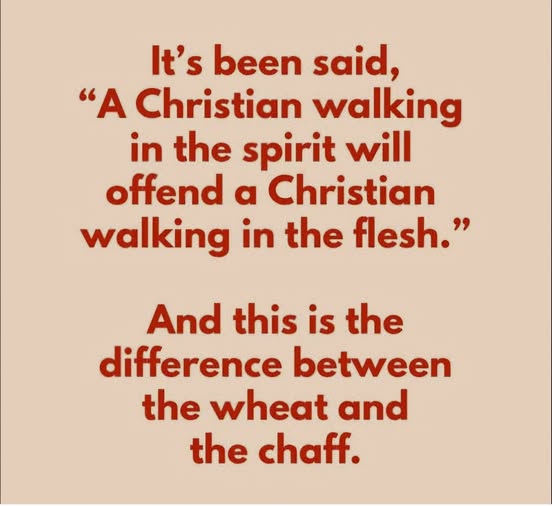
Wheat are Not Christian and Chaff not Worldly People . No Wheat is Spirit Filled Children of God and Chaf , the Balance of Carnal Christians !
Chaff is the loose, outer covering on wheat and other grains that must be separated in the threshing and winnowing process of harvesting grain. In Bible times, grain was threshed, or trampled, crushed, and beaten, on outdoor threshing floors to separate out the inedible parts of the grain, called chaff. The lightweight chaff would blow away on the wind or sometimes was burned as fuel. In the winnowing process, the grain was then tossed into the air, allowing the wind to further separate any remaining bits of the husk from the wheat. These bits, called chaff, would be carried away in fine particles like dust. In a few instances in Scripture, chaff also refers to dried grass or hay (Isaiah 5:24; 33:11).
Threshing and winnowing by hand were common in ancient times, allowing for vivid biblical imagery. Separating the worthless chaff from the valuable grain was a ready symbol for separating good from evil or showing the difference between God’s treatment of the godly versus the wicked. In Psalm 1:1–4, the people of God are blessed and firmly established, but “not so the wicked! They are like chaff that the wind blows away” (verse 4).
In Isaiah 33, the righteous people of God survive judgment while the wicked nations are consumed. Speaking of the Assyrians, Isaiah says, “You conceive chaff, you give birth to straw; your breath is a fire that consumes you” (verse 11).
According to Hosea, God’s way of dealing with wickedness in Israel was to remove the idolaters like chaff swirling away on the wind: “Therefore they will be like the morning mist, like the early dew that disappears, like chaff swirling from a threshing floor, like smoke escaping through a window” (Hosea 13:3). The powerlessness of wicked people and nations against the judgment of God is compared to chaff floating on the wind: “Although the peoples roar like the roar of surging waters, when he rebukes them they flee far away, driven before the wind like chaff on the hills, like tumbleweed before a gale” (Isaiah 17:13; see also Zephaniah 2:2).
In Nebuchadnezzar’s dream, the ungodly nations of the world, represented as a statue constructed of various elements, disintegrate and disperse like chaff before the victorious kingdom of God: “Then the iron, the clay, the bronze, the silver and the gold were all broken to pieces and became like chaff on a threshing floor in the summer. The wind swept them away without leaving a trace. But the rock that struck the statue became a huge mountain and filled the whole earth” (Daniel 2:35).
In the New Testament, the Messiah, Jesus Christ, is portrayed by John the Baptist as the winnower or harvester of grain: “I baptize you with water for repentance. But after me comes one who is more powerful than I, whose sandals I am not worthy to carry. He will baptize you with the Holy Spirit and fire. His winnowing fork is in his hand, and he will clear his threshing floor, gathering his wheat into the barn and burning up the chaff with unquenchable fire” (Matthew 3:11–12; see also Luke 3:17). Jesus came the first time to save, but the second time He will come to judge the world with righteousness. The chaff—the wicked, the ungodly, the faithless, the unbelieving, the unfruitful—He will separate from the godly and consign to a horrible fate. Therefore, “be always on the watch, and pray that you may be able to escape all that is about to happen, and that you may be able to stand before the Son of Man” (Luke 21:36).

Tea Time Manna
Be joyful always; pray continually; give thanks in all circumstances, for this is God’s will for you in Christ Jesus.
—1 Thessalonians 5:16-18
Where does your heart live? That’s what these verses remind us to ask ourselves. They challenge us to notice where we spend the most time and what we focus on most in our hearts. Is there a constant awareness in our lives that God is present? Is he the unseen but always present companion in all our ups and downs? Or is God with us when it is convenient and gone when things are busy, or you feel that everything is going well? Joy comes from knowing we are never alone. Prayer is the ongoing conversation we have, spirit to Spirit, child to Abba, human with God. Thanksgiving and joy are great reminders that we have been lavishly blessed, regardless of what our temporary outward circumstances suggest. Being joyful, praying continually, and giving thanks in all situations is God’s will for us. Why? Because practicing these three things orients us away from the momentary challenges that don’t compare to the glory that he in us with Jesus (Romans 8:18-19).
Prayer
Precious and Righteous Father, thank you for being with me, always. Please, dear Abba, use the Spirit to nourish in me a deeper appreciation and a more profound awareness of your presence. May my life reflect the joy you have given me by saving me through your grace. And may my heart always give thanks for my home with you in anticipation of the day when that home is fully realized. Through the name of Jesus, my Savior and friend, I pray. Amen and Amen
Bible Teaching of the Day
LUNCH MANNA =
The Parable of the Wheat and the Weeds, or Tares, is filled with spiritual significance and truth. But, in spite of the clear explanation of the parable that Jesus gave (Matthew 13:36-43), this parable is very often misinterpreted. Many commentaries and sermons have attempted to use this story as an illustration of the condition of the church, noting that there are both true believers (the wheat) and false professors (the weeds) in both the church at large and individual local churches. While this may be true, Jesus distinctly explains that the field is not the church; it is the world (v. 38).
Even if He hadn’t specifically told us the world is the setting of the story, it would still be obvious. The landowner tells the servants not to pull up the weeds in the field, but to leave them until the end of the age. If the field were the church, this command would directly contradict Jesus’ teaching in Matthew 18, which tells us how to deal with unrepentant sinners in the church: they are to be put out of the fellowship and treated as unbelievers. Jesus never instructed us to let impenitent sinners remain in our midst until the end of the age. So, Jesus is teaching here about “the kingdom of heaven” (v. 24) in the world.
In the agricultural society of Christ’s time, many farmers depended on the quality of their crops. An enemy sowing weeds would have sabotaged a business. The tares in the parable were likely darnel because that weed, until mature, appears as wheat. Without modern weed killers, what would a wise farmer do in such a dilemma? Instead of tearing out the wheat with the tares, the landowner in this parable wisely waited until the harvest. After harvesting the whole field, the tares could be separated and burned. The wheat would be saved in the barn.
In the explanation of the parable, Christ declares that He Himself is the sower. He spreads His redeemed seed, true believers, in the field of the world. Through His grace, these Christians bear the fruit of the Spirit (Galatians 5:22-24). Their presence on earth is the reason the “kingdom of heaven” is like the field of the world. When Jesus said, “The kingdom of heaven is at hand” (Matthew 3:2; 4:17), He meant the spiritual realm which exists on earth side by side with the realm of the evil one (1 John 5:19). When the kingdom of heaven comes to its fruition, heaven will be a reality and there will be no “weeds” among the “wheat.” But for now, both good and bad seeds mature in the world.
The enemy in the parable is Satan. The field is the world. The devil tries to destroy Christ’s work by placing wicked people and false believers in the world to work unrighteousness. But the church’s job is not to rid the world of sinners (except through conversion) any more than it is the wheat’s job to pluck up the tares. In the parable, Christ allows the tares to remain until His return. At that time, angels will separate the just from the unjust and the true from false believers. Judgment is coming; in the meantime, God takes steps to ensure that His children are not adversely affected by His judgment on the wicked. God does not want to “uproot the wheat,” no matter how many tares there are (Matthew 13:29).
Tares, especially in the early stages of growth, resemble wheat. Likewise, a false believer may resemble a true believer, at least superficially. In Matthew 7:22, Jesus warned that many profess faith but do not know Him. Thus, each person should examine his or her own relationship with Christ (2 Corinthians 13:5). The book of 1 John is an excellent test of salvation.
Jesus Christ will one day establish true righteousness. After He raptures the church out of this world, God will pour out His righteous wrath on the world. During that tribulation, He will draw others to saving faith in Jesus Christ. At the end of the tribulation, all unbelievers will be judged for their sin and unbelief; then they will be removed from God’s presence. True followers of Christ will reign with Him. The “wheat” will be gathered into God’s “barn” (Matthew 13:30). What a glorious future for the “wheat”!
Today’s Devotional
DINNER MANNA =
There are dozens of references to a “threshing floor” in the Bible, some literal and some symbolic. In biblical days there was no machinery, so after the harvest, the grain was separated from the straw and husks by beating it manually. First there had to be a flat surface that was smooth and hard, and this was known as the threshing floor. The process of threshing was performed generally by spreading the sheaves on the threshing floor and causing oxen and cattle to tread repeatedly over them, loosening the edible part of cereal grain (or other crop) from the scaly, inedible chaff that surrounds it (Deuteronomy 25:4; Isaiah 28:28). On occasion, flails or sticks were used for this purpose (Ruth 2:17; Isaiah 28:27). Then winnowing forks were used to throw the mixture into the air so the wind could blow away the chaff, leaving only the good grain on the floor.
Both the Old and New Testaments refer to the threshing floor as a symbol of judgment. Hosea prophesied that, because Israel has repeatedly turned from God to false idols, His judgment upon them would scatter them to the winds as the chaff from the threshing floor. “Therefore they will be like the morning mist, like the early dew that disappears, like chaff swirling from a threshing floor, like smoke escaping through a window” (Hosea 13:3). Jeremiah pronounces a similar fate on the Babylonians who persecuted Israel, likening their fate to the trampled sheaves on the threshing floor (Jeremiah 51:33).
John the Baptist uses the imagery of the threshing floor to describe the coming Messiah who would separate the true believers from the false. The true followers of Christ will be gathered into the kingdom of God just as grain is gathered into barns, while those who reject Christ will be burned up “with unquenchable fire,” just as the worthless chaff is burned (Matthew 3:12; Luke 3:17). The wicked are often described as chaff that the wind drives away (Psalm 1:4; Isaiah 17:13). Similar imagery of the good grain being separated from the worthless weeds appears in the parable of the wheat and the tares (Matthew 13:36–43).
NEWS MANNA –
Bible Prophecy, Signs of the Times and Gog and Magog Updates with Articles in the News
Scandalous: Why Is A Church Promoting a UNFORGIVEN Sin called Assisted Suicide?
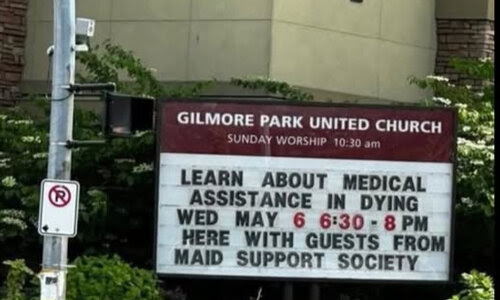
The story out of Richmond, British Columbia should stop every Christian in their tracks–not because it is surprising, but because it confirms a troubling trajectory that has been building for years.
A church–a church–planned to host a speaker promoting what is politely branded as “MAID” (Medical Assistance in Dying), but what is, in plain terms, assisted suicide. The event, scheduled for May 6 at Gilmore Park United Church, was quietly canceled after public backlash. No clear explanation. No public repentance. Just silence.
And that silence speaks volumes.
Because the real scandal is not that the event was canceled. It’s that it was ever scheduled in the first place.
When a Church Forgets What Life Is
Christianity, at its core, is built on the sacredness of life. From Genesis to Revelation, life is not treated as disposable, conditional, or subject to personal convenience. It is God-given, God-breathed, and God-owned.
So how does a church arrive at a place where it invites someone to advocate for ending that life?
MAID is often wrapped in soft language–“compassion,” “dignity,” “choice.” But strip away the branding, and the reality is stark: it is the intentional ending of a human life. There is no theological framework within historic Christianity that can reconcile this with the commandment, “You shall not murder,” or with the belief that suffering, while painful, is not meaningless.
Yet here we are.
A congregation not merely tolerating this worldview, but platforming it.
A Nation Sliding Further Down the Slope
Canada’s expansion of MAID is not theoretical–it is measurable, accelerating, and deeply alarming.
Since legalization in 2016, the number of Canadians who have died through assisted suicide has risen dramatically year after year, placing Canada on track to become the first modern nation to surpass 100,000 euthanasia deaths in less than a decade.
The scale of the program is staggering. In 2024 alone, 16,499 Canadians died through MAiD–about 5.1 percent of all deaths in the country, meaning roughly one out of every twenty deaths in Canada now occurs through assisted suicide.
At the current pace–about 45 assisted deaths every day–Canada is expected to pass the 100,000 mark around the June anniversary of the law’s passage.
Let that settle in.
And the push is not slowing down. Advocates continue to push for broader eligibility: not just terminal illness, but chronic conditions. Not just physical suffering, but mental health struggles. Not just adults, but–eventually–consenting minors.
This is not a stable endpoint. It is a moving line.
And when a church begins hosting conversations that normalize this trajectory, it is no longer standing apart from the culture–it is actively participating in its moral collapse.
Even the Faithful Are Not Spared
Perhaps one of the most chilling recent accounts comes from a Catholic priest in Canada who revealed he was offered MAID–not once, but twice–despite clearly stating his identity as a priest and his moral opposition to such actions.
Think about that.
A man devoted to preserving life, to shepherding souls, to upholding the sanctity of God’s creation–offered death as a solution.
Twice.
If that does not reveal how deeply embedded this mindset has become within the medical system, what will?
And if the broader culture is drifting this far, the role of the church should be to stand firm–not to drift alongside it.
The United Church of Canada: A Long Pattern
To understand how this moment became possible, you have to look at the broader theological direction of the United Church of Canada.
This is not an isolated incident. It is the fruit of decades of doctrinal drift.
The denomination has long embraced positions that depart from historic Christian teaching, including:
– Support for abortion rights, framing it as a matter of personal autonomy rather than moral gravity.
– Full affirmation of LGBTQ+ identities and same-sex marriage, including ordination of openly gay clergy.
– Active promotion of transgender ideology, including affirming gender transition as compatible with faith.
– Rejection of biblical inerrancy, treating Scripture as a human document open to reinterpretation rather than the authoritative Word of God.
At each step, the justification has been similar: compassion, inclusion, modern relevance.
But taken together, the pattern is unmistakable.
When a church begins to redefine Scripture, it eventually redefines sin. When it redefines sin, it redefines morality. And when morality becomes fluid, nearly anything can be justified–including, it seems, the endorsement of assisted suicide.
A Social Club Wearing Sacred Clothing
What remains, then, is something that resembles Christianity in form but not in substance.
There are hymns, sermons, and community gatherings. There is language about love and justice. There is a desire to “do good” and be seen as compassionate.
But without a firm foundation in biblical truth, it becomes something else entirely–a spiritualized social club, offering emotional comfort without moral clarity.
It is a version of Christianity that asks nothing, challenges nothing, and ultimately stands for nothing.
And that is precisely why it can host an event promoting something as serious as assisted suicide without recognizing the contradiction.
The Deeper Danger
The real danger is not just one canceled event in one Canadian church.
It is the normalization of a worldview where life is negotiable.
Where suffering is something to eliminate rather than endure.
Where death is presented not as an enemy, but as a solution.
And most troubling of all–where the church, which should be the last line of moral resistance, becomes a participant in that narrative.
A Line That Must Be Drawn
There are moments in history when institutions reveal what they truly believe–not through statements, but through actions.
This was one of those moments.
A church chose to invite a speaker to promote assisted suicide. Only public backlash stopped it. Not internal conviction. Not theological clarity. External pressure.
That should concern anyone who still believes the church is meant to be a light in the darkness–not a mirror reflecting it.
Because if the place that is supposed to defend life begins to question its value, then the question is no longer about one event.
It is about how far we have already fallen–and how much further we are willing to go.
The USA Experienced The Driest First Three Months Of A Year In U.S. History
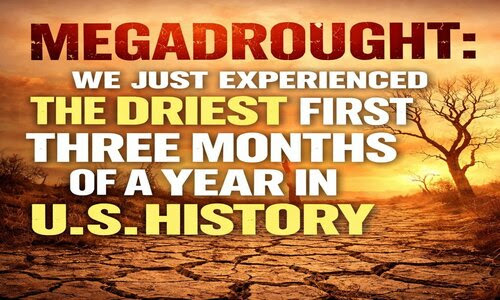
January, February and March were insanely dry. In fact, in all of U.S. history conditions have never been so dry during the first three months of the year. Just think about that for a moment. Not even during the Dust Bowl days of the 1930s were conditions this dry. Many were hoping that 2026 would be the year when our multi-year drought would finally break. Needless to say, that hasn’t happened.
Scientists are telling us that the southwestern U.S. is in the midst of the worst multi-year drought in at least 1,200 years. We really are experiencing a “megadrought”, and this is something that experts such as Steve Quayle and Dane Wigington have been talking about for a long time. Unfortunately, it appears that our seemingly endless “megadrought” has gone to an entirely new level in 2026.
If it simply doesn’t rain, there is not much that farmers and ranchers can do.
Right now approximately 63 percent of the continental United States is experiencing at least some level of drought, and the first quarter of this year was one for the record books…
Winter wheat is dying in Kansas fields that should be green by now. Ranchers in New Mexico are selling cattle they cannot afford to feed. Reservoir levels along the Colorado River system are dropping weeks ahead of the season when mountain snowmelt is supposed to refill them. Across roughly 63% of the contiguous United States, drought rated moderate to exceptional on the federal scale has taken hold, and the first three months of 2026 were the driest the nation has recorded in 131 years of continuous measurement.
This isn’t just a crisis.
This is catastrophic.
It appears that the winter wheat crop in the U.S. is going to be a disaster.
At this stage, more than 81 percent of the Southern Plains is experiencing drought…
Heading into the harvesting season for the key winter wheat crop, much of the western side of the U.S. Plains are locked in drought. Over 81% of Southern Plains is experiencing some form of drought, according to the latest data from the U.S. Drought Monitor. Nearly 20% of the region is experiencing either “extreme” or “exceptional” drought.
Only 30% of U.S. winter wheat is in either good or excellent condition as of the start of this week, according to the most recent weekly Crop Progress report from the Department of Agriculture. By comparison, 49% of the crop was good-or-excellent at this point last year.
The situation is particularly dire in the state of Oklahoma.
Last year, the state produced 101.1 million bushels of red winter wheat.
Thanks to the drought, it is being projected that the state will produce less than half of that total this year…
At the 2026 Oklahoma Grain and Feed Association meeting, crop scouts, extension specialists, and grain elevator representatives painted a sobering picture of this year’s hard red winter wheat crop. Their estimates say the 2026 crop is roughly half the size of the previous two years, with production projected at 48.9 million bushels compared to 101.1 million bushels in 2025. The outlook is based on an average yield of 23.93 bushels per acre across an expected 2.043 million harvested acres, highlighting the significant downturn facing Oklahoma wheat producers.
When there is a lot less wheat to go around, prices will go up.
It is simply a matter of supply and demand.
One farmer that grows winter wheat in Kansas is saying that his farm has only had a quarter of an inch of precipitation since last fall…
Southwest Kansas farmer Gary Millershaski says his area has only received a quarter-of-an-inch of precipitation since last fall. “For us to get a 30-bushel crop, you’ve really got to be optimistic and believe in prayer. That’s a fact.”
He has done everything right, but the sky has been silent.
What is he supposed to do?
So far in 2026, Chicago wheat futures are up about 30 percent…
Chicago wheat futures have gained nearly 30% since the start of the year — the biggest gain among row crop futures — due to the combination of U.S. drought, global fertilizer shortages and a looming El Niño.
If this crisis in the Middle East is not resolved, this will only be just the beginning.
Once upon a time, the U.S. was absolutely swimming in wheat, but now we are moving into a time when it will be considered a “luxury grain”.
Of course beef is already considered to be a “luxury meat”.
When I was growing up, my mother would feed us beef constantly because it was so inexpensive.
But now beef prices have skyrocketed, and some of the prices that we are seeing at the meat counters in our grocery stores are absolutely absurd.
I never thought that I would see beef prices get this high.
But this is the reality that we are living in now.
And it appears that beef prices will continue to remain elevated because the size of the U.S. cattle herd is the smallest that it has been since 1951…
The US cattle herd remained the smallest since 1951 at the start of the year, in the latest signal that consumer beef prices will remain near records.
There were about 86.2 million cattle and calves in the US as of Jan. 1, the US Department of Agriculture said in a Friday report. The tally is nearly unchanged from 2025, providing no relief to the ongoing cattle shortage.
The lack of improvement comes as ranchers keep selling animals to slaughter amid high beef demand, rather than retaining the animals to grow their herds. The downsizing — which began years prior when ranchers shrunk their herds due to high production costs and droughts — has sent consumer beef prices to all-time highs.
It is really hard to feed cattle when conditions are bone dry.
Sadly, they could get even drier in the months ahead…
Meanwhile, there’s a 62% chance of the world’s climate shifting from neutral to El Niño between June and August, according to NOAA’s Climate Prediction Center forecast. The European Center for Medium-Range Weather Forecasts said that this El Niño could be the strongest on record, with peak intensity hitting in October.
El Niño typically results in hot and dry weather in many growing areas, including the U.S. Corn Belt and in Australia. With fertilizer supplies thin, this may further compound production losses for world wheat.
We are being told that we could soon be experiencing a “super El Niño”, and meteorologist Ryan Maue is warning that the long-term forecast for the second half of this year is “off the charts” with extreme temperatures on the horizon.
I have been repeatedly warning my readers that global weather patterns are going nuts, and I was not exaggerating one bit.
We really are facing a historic long-term crisis with no end in sight.
As I discussed last week, for the upcoming season U.S. farmers are planting the fewest acres of wheat that we have seen since records began in 1919.
In 1919, there were 104 million people living in the United States.
Today, there are 341 million people living in the United States.
It doesn’t take a genius to figure out that we have a major problem on our hands.
Many of us have been warning about this crisis for years, and now we really have reached a breaking point.
The Dangerous Illusion: When A Handful of Stocks Carry The Entire Market – The Stock Market Controlled by Social Media

There’s a quiet tension beneath the surface of today’s booming stock market–one that most investors don’t see when they open their 401(k) statements and celebrate another day of gains. The S&P 500 continues to notch record highs, projecting strength, resilience, and confidence. But look closer, and a more fragile reality emerges: this rally is being driven not by the many, but by the very few.
In fact, the market’s surge increasingly resembles a narrow bridge supported by a handful of pillars. And if even one begins to crack, the consequences could ripple across nearly every investor in America.
A Rally Built on a Thin Foundation
Recent market data reveals a striking imbalance. Nearly 40% of the S&P 500’s total value is concentrated in just ten companies–an unprecedented level of dominance. Even more concerning, market breadth–the number of stocks actually participating in the rally–has sharply declined.
In April, only 23% of companies in the index outperformed it, one of the weakest readings in decades. Meanwhile, the median stock remains about 13% below its highs. This is not the picture of a healthy, broad-based rally. It is, as some strategists have described, “disturbingly narrow.
Much of the growth is being powered by mega-cap technology and semiconductor firms, including Nvidia, Alphabet Inc., Intel, and Advanced Micro Devices. These companies are delivering real earnings growth, unlike the speculative names of the late 1990s–but their outsized influence introduces a different kind of risk.
When a single company like Nvidia can account for more than 10% of the index’s monthly gains, the market stops being a reflection of the economy and becomes a reflection of a trend.
Echoes of the Dot-Com Bubble
For seasoned investors, this environment feels eerily familiar.
During the Dot-com bubble, a small cluster of tech stocks drove massive gains, masking underlying weakness across the broader market. Eventually, reality caught up. Many of those high-flying companies collapsed, and the broader market followed.
Today, the comparison is not perfect–today’s leaders are profitable and deeply embedded in the global economy. But the structural similarities are hard to ignore. Narrow leadership, stretched valuations, and investor overconfidence are all present once again.
History offers a sobering reminder: even dominant companies can fall. Cisco Systems was once the crown jewel of the internet age. After the bubble burst, its stock plunged nearly 80% and never returned to its peak. The lesson isn’t that today’s giants will collapse–but that concentration risk has consequences.
The “Everyone Owns the Same Stocks” Problem
Perhaps the most underappreciated danger isn’t just concentration at the index level–it’s concentration across portfolios.
Through retirement accounts, index funds, and investment apps, millions of Americans are effectively holding the same handful of stocks. What appears to be diversification is often an illusion. Owning an S&P 500 index fund may feel broad, but if nearly half of its value is tied to ten companies, the reality is far different.
This creates a critical vulnerability: when everyone owns the same assets, market stability depends on continuous buying. But what happens when sentiment shifts?
As one strategist put it, if everyone is already “long” the same stocks, where do new buyers come from when prices begin to fall?
That question strikes at the heart of systemic risk. In a downturn, selling can become crowded, fast, and self-reinforcing. Without sufficient buyers to absorb the pressure, declines can accelerate rapidly–turning a correction into a cascade.
Sector Overlap and Domino Effects
The risks are amplified by sector concentration. Many of the top-performing companies sit within the same industries–technology, communications, and semiconductors. This creates overlapping exposure across portfolios.
A disruption in one area–say, a slowdown in AI spending or stricter regulation–could impact multiple companies simultaneously. Because these firms are so heavily weighted, the effects would extend far beyond a single sector.
This interconnectedness turns isolated risks into systemic ones. It’s not just about one company missing earnings–it’s about the possibility of a chain reaction.
Why This Matters Now
Markets can remain imbalanced longer than expected. Optimism around artificial intelligence, strong earnings from mega-cap firms, and years of easy monetary policy have fueled the current rally. But conditions are shifting.
Interest rates are higher. Inflation pressures persist. Global growth is uneven. Yet valuations remain elevated, and investor positioning remains crowded.
Historically, periods of narrowing breadth have often preceded market drawdowns. Analysis suggests that after sharp declines in breadth, the S&P 500 has experienced average drawdowns of around 10% within the following year. That’s not a prediction–it’s a warning pattern.
The Bigger Picture: Fragility Behind Strength
What makes this moment so deceptive is how strong everything appears on the surface. Index levels are high. Corporate profits are solid. Investor confidence remains elevated.
But strength built on concentration is inherently fragile.
It’s the financial equivalent of a skyscraper supported by a few central beams instead of a distributed foundation. It may stand tall–but it is far more vulnerable to shock.
A Market at a Crossroads
None of this guarantees an imminent crash. Markets evolve, and today’s leaders may continue to grow. Some strategists even argue that narrow rallies can broaden over time if economic conditions improve.
But the risks are real–and increasingly visible.
The current market structure leaves little margin for error. A stumble in a few key companies could reverberate across the entire system, impacting retirement accounts, institutional portfolios, and everyday investors alike.
The lesson is not panic–it’s awareness.
Because when everyone owns the same stocks, the market stops being a diversified ecosystem and becomes a crowded trade. And crowded trades don’t unwind slowly.
They break all at once.
TruLight Ministries Daily Entertainment Manna

TruLight TV : Popcorn & Movie Time – The Case for Christ
In 1980, Lee Strobel’s (Mike Vogel) award-winning, investigative reporting earns him a promotion to legal editor at the Chicago Tribune. Things at home aren’t going nearly as well. His wife Leslie’s (Erika Christensen) newfound faith in Christ compels Lee to utilize his journalistic and legal training to try and disprove the claims of Christianity, pitting his resolute atheism against her growing faith.
Today on TruLight Radio XM
TruLight Radio XM 24/7
Program
GMT / UTC +2
Monday To Fridays
00:15 Words to Live By Testimonies
01.15 Science Scripture and Salvation
02.15 Ground Works
04.00 Gospel Concert of the Day
05.00 The Daren Streblow Comedy Show
5:55 It is Today devotional
6:00 Gaither Homecoming Morning Show
7:15 Discover the Word
8.15 Destined for Victory
8:55 Science Scripture and Salvation
9:00 Holy Spirit Hour – Normally Sermons
10:15 Hope of the Heart
11:15 Unshackled
11.45 Words to Live By
12:15 Truth for Life
13:15 Living on the Edge with Chip Ingram
14:15 Focus on the Family
15:00 Kids Hour
16:00 In Touch with Dr. Charles Stanley
16:30 Groundwork
17:15 Live in the Light
18:15 Renewing your Mind
19:00 Gaither Homecoming Show
20:15 Growing Hope
21:15 Adventures in Odyssey Radio Drama
21:45 Bible Reading
22:15 Night-sounds
23.00 Good Old Country Gospel / Rhema Gospel Express
VISIT THE WEBSITE
TruLight Ministry News – EXTRA MANNA
TruLight Ministries orders from God since 2012 . Teach Them , Comfort Them and Warn Them!
Healing Truths.
End Time Articles.
Bonus Teaching for the Child of God !!
In Matthew 3:12, John the Baptist gives a powerful description of Jesus’ role in judgment: “His winnowing fork is in his hand, and he will clear his threshing floor and gather his wheat in to the barn, but the chaff he will burn with unquenchable fire” (ESV). The phrase unquenchable fire highlights the severity and finality of divine judgment. To better understand the meaning of this phrase, we must examine both the Old and New Testaments.
First, it is important to understand the agricultural metaphor used by John the Baptist. The winnowing process involves using a fork-like tool to toss harvested wheat into the air, allowing the wind to separate the worthless chaff from the valuable wheat. In this metaphor, the wheat represents the righteous, who are safely gathered. The chaff, on the other hand, represents the wicked, who are destined for “unquenchable fire.” Being unquenchable, this fire continues to burn and cannot be extinguished, indicating everlasting torment.
The concept of an “unquenchable fire” is rooted in Old Testament imagery. For instance, Isaiah 66:24 mentions a fire that “shall not be quenched” (ESV), referring to the fate of the wicked. Likewise, Jeremiah 17:27 warns of an unquenchable fire that will consume the people in Jerusalem if they do not keep the Sabbath holy. Both Isaiah 66:24 and Jeremiah 17:27 understand the “unquenchable fire” as God’s wrath and judgment that is relentless and all-consuming. John the Baptist uses the same imagery in Matthew 3:12 to stress the seriousness of the coming judgment, when Jesus will separate the righteous from the unrighteous.
The idea of unquenchable fire is also found in other New Testament passages. In Mark 9:48, Jesus warns that it is better to enter heaven without any limbs than to be thrown into hell, “where their worm does not die, and the fire is not quenched” (ESV). Mark 9:48 reinforces the idea that the “unquenchable fire” represents the eternal punishment awaiting the unrighteous. This is the unfortunate reality for everyone who chooses to remain in sin rather than submit to Christ in faith.
The book of Revelation also provides a vivid description of final judgment, where those whose names are not written in the book of life are thrown into the lake of fire (Revelation 20:15). This lake of fire is the “unquenchable fire” that John the Baptist mentions in Matthew 3:12. The fire refers to an eternal state of punishment for the wicked. There will be no reformation or restoration of the wicked; the fire of their punishment burns eternally.
The mention of “unquenchable fire,” then, is a call to repentance, which is the essence of John the Baptist’s ministry. The urgency of this message is clear: the time to repent is now, before judgment comes. Sinners must awaken to the truth of eternal punishment, turning from sin and to God. As 2 Peter 3:9 states, “The Lord is not slow to fulfill his promise, as some count slowness, but is patient toward you, not wishing that any should perish, but that all should reach repentance” (ESV). God’s patience, however, should not be taken for granted, since the “unquenchable fire” remains an impending reality for those who do not heed His call to repent.
The “unquenchable fire” is also a reminder of God’s holiness and justice, which demands that sin be dealt with in an appropriate manner. The fire of God is how ultimate justice is served, reflecting the Lord’s righteous indignation against sin and His commitment to eradicating it. In Hebrews 12:29, God is described as a “consuming fire,” emphasizing the purity of His nature, which cannot coexist with sin. For believers, this truth compels us to live in a manner worthy of the gospel, always mindful of God’s righteous judgment.
Share this Feeding of Manna with your Friends and Family. just click on the Social Media icon and share !