SELECT YOUR READING LANGUAGE – BOTTOM LEFT = YOUR DAILY MANNA NOW AVAILABLE IN 103 LANGUAGES
@ TruLight – Daily Manna is not Just a Bible Verse with a Small Prayer . No WE SERVE DAILY Manna for the Whole Day . Breakfast , Lunch , Dinner , Plus tea Times and even Entertainment Manna . Plus News Manna and More , This Daily Manna will keep you Spiritually full for the full 48 Hours and even More to Share with your Friends and Family !!!
Truth , I want it , But cannot swallow It !!!

“The truth will set you free” is a common saying in academic circles that want to promote academic freedom and the power of learning. Many universities have this statement emblazoned on a sign near the entrance of a building. But “the truth will set you free” did not originate in academia; Jesus said it in John 8:32. In context, Jesus’ statement has nothing to do with classroom learning. In fact, John 8:32 speaks of a higher form of knowledge than is capable of being learned in a classroom.
Jesus had just finished a speech at the temple where He delineated differences between Himself and His listeners. “You are from below; I am from above. You are of this world; I am not of this world. I told you that you would die in your sins; if you do not believe that I am he, you will indeed die in your sins” (John 8:23–24). The result of Jesus’ message was that “even as he spoke, many believed in him” (verse 30). Then, in verse 31, Jesus begins to speak just to those who had believed.
“Jesus said, ‘If you hold to my teaching, you are really my disciples’” (John 8:31). True discipleship is more than intellectual assent; those who are “really” followers of Christ will “hold to” His Word. That means they will not only accept His teachings as truth, but they will also obey His teachings. Action is proof of faith (cf. James 2:17).
True disciples of Jesus believe that He speaks the truth about God and the Scriptures. They also know that He is who He claims to be. Back in verse 25, the people asked Jesus who He was, and He responded, “Just what I have been telling you from the beginning.” There may be a tinge of exasperation in His response; He had repeatedly made known that He was the Messiah, the one they had anticipated for many years.
Verse 32 begins with, “Then you will know the truth.” “You” refers to those who are true disciples of Jesus. True disciples will know the truth. More than that, their eyes are opened to a greater understanding of the truth (cf. 1 John 5:20).
The truth Jesus’ disciples receive brings with it freedom. Jesus continues, “And the truth will set you free” (verse 32). At that point in history, the Jews were under the rule of the Roman government. Even though Rome gave them an exceptional amount of autonomy, they were keenly aware of the Roman presence around them in the form of soldiers, governors, and empirically appointed kings. When Jesus said the truth would set them free, however, He was not talking about political freedom (though the following verses indicate that’s how the Jews took it). Jesus provides the best commentary for His own statement in verse 34. Jesus explains, “Very truly I tell you, everyone who sins is a slave to sin.” Being a slave to sin is the ultimate bondage.
The freedom Jesus offers is a spiritual freedom from the bondage of sin—that is, release from the lifestyle of habitual lawlessness. He continues with an analogy: “Now a slave has no permanent place in the family, but a son belongs to it forever” (verse 35). The people would have understood Jesus to mean that they were not members of God’s family, despite their biological relationship to Abraham (verse 37), because they were slaves to sin. If they were to become disciples of Jesus, they would know the truth of their condition and the truth about Christ, and Jesus would set them free. Believers would be freed from their bondage and brought into the family of God.
Jesus is the Truth (John 14:6). Knowing the Truth will set one at liberty—free from sin, free from condemnation, and free from death (Romans 6:22; 8:1–2). Jesus came to proclaim liberty to the captives (Luke 4:18). “Live as people who are free, not using your freedom as a cover-up for evil, but living as servants of God” (1 Peter 2:16, ESV).

Tea Time Manna
Be kind and compassionate to one another, forgiving each other, just as in Christ God forgave you.
—Ephesians 4:32
Be kind and compassionate? These two qualities seem to be in short supply these days as we look at social media, politics, and people’s personal agendas. Maybe it’s because we hold up the wrong heroes? Maybe it is because we haven’t let the Holy Spirit rule in our hearts? Unfortunately, kindness and compassion are two qualities often seen as signs of weakness rather than strength. To forgive as God forgave us requires great courage and great strength, two resources the Holy Spirit can supply if we pray for that strength, and pray for that strength in our brothers and sisters (Ephesians 3:14-21). So, let’s pray for each other to be strong and courageous, and display those qualities through our kindness and compassion! Let’s forgive each other, as God in Christ has forgiven us.
Prayer
Holy God, there is no way I can adequately thank you for sacrificing so much to forgive me and lavish me with your loving compassion. Today, I ask the Holy Spirit to help me as I pledge to be more like Jesus: to share more of his kindness and compassion with those who have wronged me. Father, please forgive them. Today, I ask you to help me forgive and release my bitterness toward _. I also ask that you bless each of those people with your kindness and grace. By the power of the Holy Spirit, and because of Jesus’ example, I pray to grow in these graces of kindness and compassion, forgiving others as you have forgiven me. Amen and Amen
Bible Teaching of the Day
LUNCH MANNA =
Jesus stated plainly that the mark of a true disciple of Christ is that he remains faithful to His teachings. He told the Jews who believed in Him, “If you abide in my word, you are truly my disciples, and you will know the truth, and the truth will set you free” (John 8:31–32, ESV).
The word know in John 8:32 is translated from a Greek verb that means “to know experientially.” Understanding something with the mind or intellect, often called “head knowledge,” is different than knowing something experientially. We can know that something is bad for us yet still do it. But when we take Jesus at His word and practice “the truth that comes from him,” then we will “throw off [our] old sinful nature and [our] former way of life” and “let the Spirit renew [our] thoughts and attitudes” so that the truth we live by sets us free “to be like God—truly righteous and holy” (Ephesians 4:20–24).
We shall know the truth in a way that sets us free from our old sinful way of life when we know Jesus experientially, in word, deed, and truth (see Colossians 3:17; 1 John 3:18). “Our actions will show that we belong to the truth” (1 John 3:19, NLT).
Knowing the truth means experiencing Jesus Christ by accepting His teachings as absolute truth and then living in faithful obedience to them. We receive the message of the gospel and the teachings of Christ, and then we abide by them. The apostle John often framed the concept of true discipleship as knowing the truth of Christ experientially: “And we can be sure that we know him if we obey his commandments” (1 John 2:3, NLT; see also 1 John 2:29; 3:16, 24).
Knowing the truth is a rock-steady way of life. John 8:32 upholds the biblical concept that truth is the only dependable foundation for constructing one’s life (see also Psalm 26:3). Jesus taught, “Anyone who listens to my teaching and follows it is wise, like a person who builds a house on solid rock. Though the rain comes in torrents and the floodwaters rise and the winds beat against that house, it won’t collapse because it is built on bedrock. But anyone who hears my teaching and doesn’t obey it is foolish, like a person who builds a house on sand. When the rains and floods come and the winds beat against that house, it will collapse with a mighty crash” (Matthew 7:24–27, NLT). If we plant our feet firmly on Christ’s truth and follow the path of His teachings, nothing can shake, derail, or destroy us.
Jesus is the personification of truth (John 14:6). Only He embodies the truth that sets us free (Galatians 5:1; Romans 6:18; John 8:36). Those who know the truth are born-again believers who live in fellowship with God through a relationship with Jesus Christ: “And we know that the Son of God has come, and he has given us understanding so that we can know the true God. And now we live in fellowship with the true God because we live in fellowship with his Son, Jesus Christ. He is the only true God, and he is eternal life” (1 John 5:20, NLT).
You will know the truth also expresses the moral commitment of genuine disciples to do the will of God (John 7:17; 14:21, 23; James 1:25). We know the truth in the person of Jesus Christ, who prayed to the Father for us to be “made holy” by His truth and gave His own life as the sacrifice that made it possible for us to live out that truth (see John 17:14–19). Moreover, Jesus asked the Father to send us “the Holy Spirit, who leads into all truth” (John 14:16–17, NLT; see also Ephesians 1:13).
When Jesus said, “You will know the truth, and the truth shall make you free,” He was telling His followers that obedience to God is the only way to experience true liberation—spiritual freedom from sin. The freedom Jesus offers is restored fellowship with the Father, who is the source of all true life. And the mark of one who has received this life is to remain faithful to His teachings.
Today’s Devotional
DINNER MANNA =
In John 13 Jesus begins teaching His faithful disciples in what has come to be known as His “Upper Room Discourse.” In that great discourse, Jesus tells the disciples that the Holy Spirit would guide them into all the truth (John 16:13). Many wonder whether this is something that applies to us as well or simply to the disciples. In the context, Jesus helps us understand His promise that the Holy Spirit, the Spirit of truth, will “guide you into all truth” (John 16:13, NKJV).
First, it is worth noting that some English translations have “all truth,” while the Greek New Testament actually includes the definite article, so a more precise way to translate what Jesus said is that the Holy Spirit would guide them into “all the truth.” There is a specific truth to which He is referring, and the Holy Spirit would guide them into that. Specifically, the Spirit would reveal what the Son and the Father would have Him disclose (John 16:13–15)—things about Jesus (John 16:14).
Jesus had already told the disciples that He would send the Holy Spirit—the Helper—who would teach them and bring to their remembrance all that Jesus had said to them (John 14:26). Jesus’ later reference (in John 16:13) to the coming of the Holy Spirit and His work of guiding them into all the truth was fulfilled literally. Peter later said that God moved the writers of Scripture, and they spoke from God (2 Peter 1:21). When Matthew wrote his Gospel, for example, Matthew didn’t need to borrow from anyone; he was in the room when Jesus said that the Holy Spirit would guide them into all truth. It seems that Mark, who served alongside Peter for some time, wrote down Peter’s account, as church historian Eusebius suggests (Church History, vol 2, chapter XV, 1–2). Luke researched reliable sources (presumably including the twelve disciples) as he wrote his account of Jesus’ ministry (Luke 1:1–4). John, another eyewitness, wrote his own Gospel, stating that what he had written provided sufficient information for people to believe in Jesus and have life in His name (John 20:30–31).
Before the disciples began their ministry, they were to wait in Jerusalem for the promised Holy Spirit (Acts 1:4). After the Holy Spirit came, the disciples were equipped for their work, and they started to powerfully proclaim the gospel of Jesus Christ (note Peter’s boldness in Acts 2—4). The Holy Spirit had indeed guided them into the truth and brought to their remembrance what Jesus had said to them (John 14:26).
The work of the Holy Spirit in the lives of the apostles was to empower them, gift them, remind them of Jesus’ words, and clarify for them the events of His life and death. Throughout their ministries, the apostles evinced a heavenly wisdom in linking Jesus’ accomplishments to Old Testament prophecies and explaining the profound ways that Jesus changes us. In the lives of all Christian believers today, the Holy Spirit continues to empower, gift, and provide insight that can’t be expected from those without His influence (1 Corinthians 2:10, 14).
We benefit greatly from the Holy Spirit guiding the apostles into all the truth. And we are thankful for the Holy Spirit’s ongoing work of illumination (see 1 Corinthians 2:10–16). As we open the inspired Scriptures and read with humble, receptive hearts, the Spirit Himself will be our instructor: “But the anointing that you received from him abides in you, and you have no need that anyone should teach you. But as his anointing teaches you about everything, and is true, and is no lie” (1 John 2:27, ESV).

NEWS MANNA –
Bible Prophecy, Signs of the Times and Gog and Magog Updates with Articles in the News
Kings Of The East On The Horizon? The Euphrates River Is Drying Up
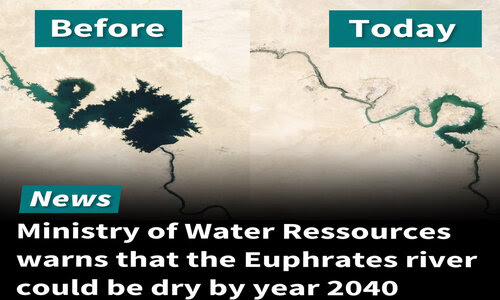
The slow but measurable decline of the Euphrates River has begun to capture attention far beyond environmental and geopolitical circles. Once a lifeline of ancient civilizations and a defining boundary of empires, the river is now increasingly viewed through a more symbolic lens—especially among those who study biblical prophecy. For some observers, the shrinking waters are not just an ecological warning sign, but a potential alignment with ancient predictions found in the Book of Revelation.
A recent report warning that the Euphrates could be at risk of significant depletion by 2040 has intensified concern. Satellite data suggests the basin has already lost more than 34 cubic miles of freshwater since the early 2000s—an astonishing volume equivalent to roughly 13 million Olympic-sized swimming pools. The causes are well documented: prolonged drought, rising temperatures, heavy damming upstream, and increasing water demands from multiple nations that rely on the river for survival.
And yet, for those who view current events through a prophetic framework, the data carries an additional layer of meaning.
In the Book of Revelation, chapter 16 describes a striking moment: “The sixth angel poured out his bowl on the great river Euphrates, and its water was dried up to prepare the way for the kings from the East.” In ancient context, the Euphrates was more than a river—it was a geopolitical boundary, a natural defense line that separated the ancient Near East from eastern powers. The imagery of it drying up symbolized the removal of a barrier, allowing massive movements of forces toward a final conflict often associated with Armageddon.
For modern readers who take biblical prophecy seriously, the imagery is difficult to ignore. The idea that a literal drying of the Euphrates could one day allow military or political powers from the East to move freely into the region has become a recurring point of discussion in prophecy circles. The phrase “kings of the East” is often interpreted broadly to represent coalitions of nations or regional powers that may one day play a decisive role in end-times events.
China is often considered a leading candidate for representing the Kings of The East as it is one of the few armies in the world that could muster an army of 200 million that Revelation talks about. However it could also be a coalition of nations, we cannot say with absolute certainty except that they come from the East of Jerusalem.
So how should this be understood today?
There are two competing frameworks shaping the conversation. The first is literal and gradual: that environmental degradation, climate change, and geopolitical water disputes could continue weakening the Euphrates until it reaches a critically low or even dry state. In this view, what once seemed like a distant prophetic symbol becomes a slow-moving convergence of environmental stress and human activity. If current trends continue unchecked, the river’s decline may indeed reach a point where historical geography is dramatically altered.
The second framework is more sudden and theological: that the language in Revelation describes not a centuries-long environmental decline, but a divinely orchestrated, rapid event occurring at a specific moment in prophetic fulfillment. In this interpretation, the drying of the Euphrates is not the result of gradual ecological processes, but a sudden act that coincides with other dramatic end-times events described in the same chapter.
Both perspectives acknowledge an important tension: the present reality shows measurable decline, but the prophetic text describes an accelerated, purpose-driven outcome. That gap between slow environmental change and sudden prophetic fulfillment is where much of the modern debate resides.
What makes the Euphrates particularly significant is its historical and strategic weight. Flowing through the region historically known as Mesopotamia—the “cradle of civilization”—the river has sustained empires, agriculture, trade routes, and population centers for thousands of years. Its importance is not symbolic alone; it is deeply practical. Any significant reduction in its flow reshapes agriculture, energy production, and political stability across multiple nations.
Today, that stability is already under pressure. Competing dam projects in Turkey, Syria, and Iraq have altered downstream flow. Extended droughts across the Middle East have reduced snowpack and rainfall feeding the river. In some stretches, once-wide channels have narrowed into shallow, fragmented streams. Entire agricultural zones are struggling to survive.
For those studying prophecy, this is where observation and interpretation begin to overlap. Is the world witnessing the early stages of a long environmental decline that happens to resemble ancient language? Or is it possible that human systems are unknowingly moving toward conditions described thousands of years ago?
What is clear is that the Euphrates is no longer a static backdrop of ancient history. It is a living, changing system under stress. Whether one interprets that through the lens of climate science, geopolitics, or biblical prophecy, the implications are profound.
If current trends continue, the question may not simply be whether the Euphrates will continue to decline, but what its decline will mean for the balance of power in the Middle East. And for those who study end-times prophecy, the deeper question remains: are these developments a slow unfolding of natural history—or early indicators of a far more dramatic chapter yet to come?
In either case, the world is watching a river that once defined the rise of civilization now become a symbol of its uncertainty.
A Church Without Enough Leaders: Decline, Division, And The Future Of The Pulpit
The United States is experiencing a quiet but profound shift in spiritual leadership—one that is reshaping who leads congregations, how they lead, and whether many churches will have leaders at all.
Across denominations, the data points in one direction: fewer people are entering pastoral ministry, more are leaving it, and those who remain are carrying heavier emotional, financial, and cultural burdens than ever before. At the same time, the face of leadership is changing, with women now representing an all-time high share of clergy in the United States, which for many conservatives shows a much deeper theological and institutional rupture.
What is no longer in question is that the pastoral pipeline is shrinking.
Recent data reported through the Association of Theological Schools (ATS) shows Master of Divinity enrollment has fallen roughly 14% between 2020 and 2024. At institutions connected to the Center for Applied Research in the Apostolate at Georgetown University, Catholic seminary enrollment has also declined significantly in the 2024–2025 academic year. Meanwhile, Black Protestant enrollment in ATS Master of Divinity and professional programs dropped about 31% between 2000 and 2020.
The long-term trend is even more striking: fewer people are preparing for ministry at the exact moment churches say they need them most.
The result is what many researchers now describe as a pastoral vacancy crisis. According to data cited by the Hartford Institute for Religion Research and reported by Associated Press, more than 4 in 10 clergy surveyed in 2023 said they had seriously considered leaving ministry since 2020. That period—marked by pandemic disruption, political polarization, and rising cultural hostility toward institutions—has accelerated what was already a slow erosion of pastoral stability.
Burnout is not a side issue. It is becoming the defining condition of modern ministry.
Research from the Barna Group has repeatedly highlighted elevated levels of stress, emotional exhaustion, and vocational discouragement among pastors. Many report feeling isolated in leadership, under-resourced in their churches, and overwhelmed by expectations that extend far beyond preaching and teaching—now including counseling mental health crises, navigating political divisions, and managing digital-era criticism in real time.
Social media has amplified every failure. A pastor’s mistake that once might have remained local can now become national news within hours. Scandals—financial misconduct, moral failure, or leadership abuse—are not new in church history, but their visibility is unprecedented. What once unfolded quietly in denominational reports now circulates weekly across platforms, reinforcing public skepticism and deepening distrust.
This is part of a broader erosion of confidence in spiritual authority. The pastor’s role, once among the most trusted civic positions in American life, now competes with a fragmented landscape of influencers, podcasters, political commentators, and algorithm-driven content streams. Increasingly, spiritual formation is happening outside the local church altogether.
And that raises a deeper concern: if traditional spiritual leadership is weakening, what replaces it?
Even in decline, the need for guidance does not disappear. It shifts.
In the absence of trusted pastoral authority, people still look for meaning, direction, and moral framing—but they are now just as likely to turn to media personalities, ideological communities, or even artificial intelligence tools for answers to spiritual questions. The vacuum does not stay empty; it is filled by whatever voice is most accessible, persuasive, or emotionally satisfying.
This is why the current moment is not just about church attendance or seminary enrollment. It is about authority itself.
There is also a significant demographic transformation underway. Research led by scholars including Eileen Campbell-Reed of Vanderbilt Divinity School and organizations such as Good Faith Media shows that women now represent approximately 23.7% of all U.S. clergy—a historic high. In 1960, women were estimated at just 2.3% of clergy; by 2016 that number had risen to 20.7%, and it continues to climb.
The result is a widening gap not just in leadership style, but in how different parts of American Christianity understand authority itself.
At the institutional level, the strain is visible. The Diocese of Oakland recently announced the closure of 13 churches amid financial pressures and declining attendance, citing an “all-time low” in priest assignments across its parishes. Similar closures have affected rural Protestant congregations, where one pastor may now serve multiple churches or where communities lose clergy entirely.
The broader consequences extend beyond religion. Churches have historically functioned as informal social infrastructure—providing food assistance, childcare, disaster relief, and elder care. When they close or weaken, those networks often disappear with them, especially in rural and underserved urban areas.
Even in growing sectors such as Pentecostalism—where the Assemblies of God reports continued attendance and membership growth—the leadership pipeline remains uneven, suggesting that growth in congregations does not automatically translate into sustainable pastoral development.
The tension at the center of all this is not simply institutional decline versus growth. It is the question of trust: who will people allow to shape their moral imagination?
A declining interest in pastoral leadership does not eliminate spiritual hunger. It disperses it.
And that may be the most important takeaway. Whether through traditional clergy, emerging female leadership, digital influencers, or algorithmic recommendation systems, spiritual authority will be exercised somewhere. The only question is whether it will be grounded in accountable community or outsourced to voices with no pastoral responsibility at all.
In that sense, the current crisis is not just about the church losing leaders. It is about what happens when leadership itself becomes fragmented, unstable, and increasingly unrecognizable.
When AI Becomes The Pastor: Christians Turning To Algorithms For Spiritual Truth
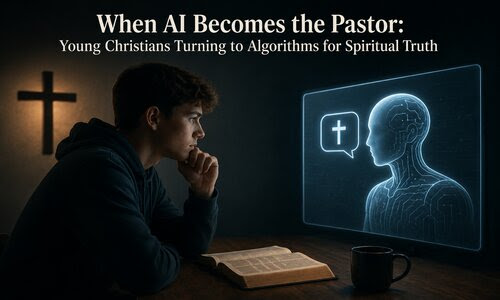
The rise of artificial intelligence was supposed to change how we work, shop, search and communicate. Few imagined it would also begin reshaping how young people pray, seek wisdom and understand God. Yet that is exactly where society now finds itself.
A growing number of young Christians are no longer just using AI to summarize homework assignments or generate social media captions — they are turning to it for spiritual counsel, moral guidance and even emotional reassurance once sought from pastors, parents or Scripture itself.
And the numbers are startling.
New research from the Barna Group found that nearly one-third of practicing Christians believe spiritual advice from AI is as trustworthy as advice from a pastor. Among Gen Z and Millennials, that number climbs to roughly 40%. The study also found that four in ten Christians say AI has already helped them with prayer, Bible study or spiritual growth.
This is more than a technology story. It is a spiritual and cultural warning sign.
Artificial intelligence can be useful for organizing information or quickly finding Bible verses. But there is a dangerous difference between using AI as a tool and treating it as a spiritual authority. Many young people are beginning to blur that line.
The greatest danger is that AI sounds confident even when it is wrong. Chatbots present answers instantly, smoothly and persuasively. For younger users raised in a digital world, confidence often feels like truth. But AI systems do not possess wisdom, discernment, conviction or spiritual maturity. They are predictive algorithms trained on enormous amounts of internet data — including biased information, contradictory theology, false teachings and outright misinformation.
In other words, AI does not “know” God. It predicts what a human might want to hear about God.
That distinction matters enormously.
Researchers studying AI and spirituality have warned that modern AI systems are not worldview-neutral. One recent academic paper examining AI and Christianity found that many systems default toward what researchers called “procedural secularism,” producing answers that often lack theological coherence and drift away from historic Christian teaching.
This creates a subtle but serious spiritual problem. AI often adapts itself to the user. If someone wants affirmation, the algorithm tends to provide affirmation. If someone wants progressive theology, legalism, universalism or moral compromise, the AI can often generate responses that reinforce those preferences. Instead of challenging the heart, it mirrors it.
That is not discipleship. That is digital self-confirmation.
Historically, spiritual growth required accountability, correction, community and wisdom passed through real relationships. Pastors, mentors and mature believers could recognize emotional struggles, spiritual confusion or destructive thinking patterns. AI cannot truly do that. It can simulate empathy, but simulation is not the same as discernment.
Even more concerning is how emotionally attached some young users are becoming to AI systems. Around the world, researchers are increasingly studying how people form emotional dependence on conversational AI tools. For lonely or spiritually searching young people, an always-available chatbot can become a substitute for authentic Christian fellowship. Unlike a pastor, mentor or trusted friend, AI never gets tired, never disagrees too strongly and never truly knows the user beyond data patterns.
That convenience can become spiritually corrosive.
There is also the issue of algorithmic bias. AI models are trained primarily on internet content, media narratives and dominant cultural assumptions. Those assumptions frequently lean secular, politically progressive or morally relative. Over time, repeated exposure to those frameworks can slowly shape the spiritual thinking of young believers without them even realizing it.
The danger is rarely immediate apostasy. It is gradual drift.
A young Christian asks an AI about sexuality, suffering, judgment, salvation or sin. The answer sounds compassionate, modern and intelligent. But beneath the polished language may be subtle distortions of biblical truth. Because the answer arrived instantly and sounded authoritative, it carries emotional weight. Multiply that process thousands of times across millions of young users, and churches may eventually face a generation discipled more by algorithms than Scripture.
Ironically, even many pastors admit uncertainty about how to respond. The Barna research found that while many Christians want guidance about AI from church leaders, only a small percentage of pastors feel equipped to teach about it.
That leadership vacuum matters.
If churches ignore AI, younger believers will navigate it alone. And Silicon Valley will happily become the new digital priesthood.
None of this means AI must be rejected entirely. Technology can assist Bible study, language translation, research and communication. But Christians — especially young Christians — must remember that information is not wisdom, and prediction is not truth. A chatbot cannot replace prayer, biblical literacy, Christian community or the work of the Holy Spirit.
The Church now faces an urgent challenge: teach young believers how to use technology without surrendering spiritual discernment to it.
Because once algorithms become trusted spiritual authorities, society risks creating a generation that no longer asks, “What does God say?” but instead asks, “What does the machine predict I want to hear?”
Magog / Turkey Now Has Israel In Its Crosshairs: New Missile Can Reach Tel Aviv
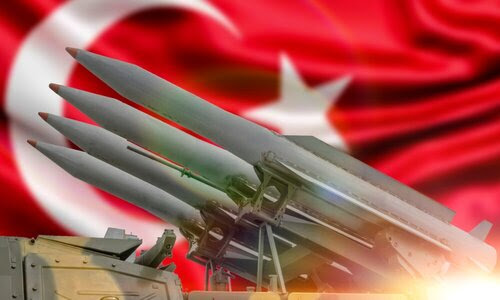
For decades, modern Turkey was viewed by Israel and the West as one of the few stable Muslim-majority nations that could bridge East and West. It was a NATO ally, a strategic military partner, and at times even a quiet friend to Jerusalem. But today, under the leadership of Recep Tayyip Erdoğan, Turkey has transformed into something far more dangerous — an increasingly militant regional power openly hostile toward Israel and deeply driven by neo-Ottoman ambitions.
What once seemed unthinkable is now openly discussed in Turkish political and religious circles: the idea of leading the Islamic world against Jerusalem.
That is no longer rhetoric confined to obscure extremists. Erdoğan himself has repeatedly escalated anti-Israel language, accusing Israel of genocide, comparing Israeli leaders to dictators, and positioning Turkey as the defender of the Muslim world against the Jewish state. At the same time, Ankara has deepened ties with Islamist movements, provided shelter to Hamas leadership, and supported factions in Syria tied to radical Islamist ideologies.
Now a new development is raising alarms far beyond the Middle East.
Turkey’s unveiling of the Yildirimhan (“Thunderhammer”) missile represents more than another military achievement. With reported speeds approaching Mach 25 and a range of roughly 6,000 kilometers, the missile symbolizes Turkey’s arrival as a strategic power capable of threatening not only regional rivals, but entire continents. Most significantly for Israel, Tel Aviv now sits directly within range of an advanced Turkish missile system.
The implications are enormous.
For years, Israel’s greatest conventional threats were believed to come from Iran and its proxy network — Hezbollah in Lebanon, Hamas in Gaza, and militias scattered throughout Syria and Iraq. That has all changed dramaically in the past few months and while Iran still has some capabilities, it is nothing like it once was. But Turkey represents a very different kind of challenge. Unlike Iran, Turkey is a NATO member with one of the largest militaries in the world, a massive industrial base, growing defense manufacturing capabilities, and increasing influence across the Sunni Muslim world.
Iran operates through proxies and shadow warfare. Turkey increasingly projects organized state power.
This is what makes the current moment so historically significant. Turkey is no longer merely criticizing Israel diplomatically. It is building the military, ideological, and geopolitical framework necessary to become a direct regional challenger to Jerusalem itself.
The shift has happened gradually enough that much of the West still struggles to recognize it. Erdoğan has spent years cultivating what many analysts describe as a neo-Ottoman vision — reviving Turkish influence across lands once ruled by the Ottoman Empire. That includes Syria, Iraq, Libya, the eastern Mediterranean, and critically, Jerusalem.
The Ottoman Empire controlled Jerusalem for nearly 400 years before its collapse after World War I. For some within Turkey’s Islamist political movement, that loss still carries deep historical and spiritual significance. Erdoğan has repeatedly invoked Ottoman imagery and legacy in speeches, portraying Turkey not merely as a nation-state, but as the rightful guardian of Islamic civilization.
This is where geopolitics begins intersecting with Bible prophecy in ways many Christians are increasingly watching closely.
The Bible repeatedly warns that Jerusalem would become the focal point of international conflict in the last days. The prophet Book of Zechariah declared that Jerusalem would become “a burdensome stone for all people,” while nations would gather against it. The prophet Book of Ezekiel described a future coalition of nations rising against Israel from the north.
For years, many prophecy teachers focused primarily on Russia and Iran when discussing these passages. But Turkey’s increasingly aggressive posture is causing some to relook at those passages. Many of the ancient regions mentioned in Ezekiel’s prophecies are often associated by scholars with areas located in modern-day Turkey.
No one can claim with certainty exactly how future prophetic events will unfold. History has humbled many who tried to force current events too neatly into biblical timelines. Yet it is impossible to ignore the broader trajectory unfolding before the world’s eyes.
Turkey is moving away from secular nationalism and toward religious nationalism. Away from cooperation with Israel and toward confrontation. Away from Western moderation and toward Islamist populism.
And unlike many of Israel’s enemies, Turkey possesses the infrastructure, economy, military sophistication, and geographic position to become a truly transformational regional force.
That reality should concern not only Christians watching prophecy, but policymakers watching geopolitics.
Because history repeatedly shows that civilizations often fail to recognize major threats until they fully emerge. The world once assumed Russia would permanently integrate into the Western order after the Cold War. It assumed China’s economic rise would liberalize its politics. It assumed the Middle East was becoming less ideological and more pragmatic.
Now another assumption may be collapsing: that Turkey would remain permanently anchored to the West.
Instead, the nation that once stood as a bridge between civilizations increasingly appears to be choosing a side.
And Jerusalem remains at the center of it all.
TruLight Ministries Daily Entertainment Manna

TruLight TV : Run to God when you’re happy, when you’re hurt. when life gets weary
When our stress levels are high, or we’re in an unknown season, our Heavenly Father cares deeply and wants to help us when we feel we have reached our max. Take comfort in this video that our Heavenly Father is always there to help us. and later Today’s guest artist on Gospel Music USA (Legacy Five) – Legacy Five is a Southern gospel quartet founded by former Cathedral Quartet members Roger Bennett and Scott Fowler in 2000, after the owners of the Cathedral Quartet, Glen Payne and George Younce, decided to retire in 1999. They have been nominated over 70 Singing News Fan Awards, including Best Traditional Male Quartet in 2004, and have won or been nominated for an award nearly every year. At the 2004 Fan Awards, the group won in the categories of Traditional Quartet, Baritone, Bass and Pianist. Enjoy today’s show and thanks for watching.
Today on TruLight Radio XM
TruLight Radio XM 24/7
Program
GMT / UTC +2
Monday To Fridays
00:15 Words to Live By Testimonies
01.15 Science Scripture and Salvation
02.15 Ground Works
04.00 Gospel Concert of the Day
05.00 The Daren Streblow Comedy Show
5:55 It is Today devotional
6:00 Gaither Homecoming Morning Show
7:15 Discover the Word
8.15 Destined for Victory
8:55 Science Scripture and Salvation
9:00 Holy Spirit Hour – Normally Sermons
10:15 Hope of the Heart
11:15 Unshackled
11.45 Words to Live By
12:15 Truth for Life
13:15 Living on the Edge with Chip Ingram
14:15 Focus on the Family
15:00 Kids Hour
16:00 In Touch with Dr. Charles Stanley
16:30 Groundwork
17:15 Live in the Light
18:15 Renewing your Mind
19:00 Gaither Homecoming Show
20:15 Growing Hope
21:15 Adventures in Odyssey Radio Drama
21:45 Bible Reading
22:15 Night-sounds
23.00 Good Old Country Gospel / Rhema Gospel Express
VISIT THE WEBSITE
TruLight Ministry News – EXTRA MANNA

TruLight Ministries orders from God since 2012 . Teach Them , Comfort Them and Warn Them!
Healing Truths.
End Time Articles.
Bonus Teaching for the Child of God !!
A scriptural understanding of truth encompasses more than simple honesty. The Bible reveals truth as a moral concept rooted in God’s character (Psalm 43:3; 25:5; 26:3; 86:11; Isaiah 65:16). He is the “God of truth” (Isaiah 65:16, NLT), and His truthfulness embraces His steadfastness, trustworthiness, and eternal faithfulness (Psalm 117:2).
Most commonly, discussions of truth have to do with speaking the truth (Psalm 15:2; Proverbs 12:17). Lying is the opposite of telling the truth (Jeremiah 9:3), and God never lies (Titus 1:2). The Bible says that God is not only truthful, but He Himself is the essence of truth. The reliability and trustworthiness of His being were highly significant to the biblical writers in expressing God’s truthfulness. When Scripture speaks of truth, it refers to a completeness of moral integrity that influences how one thinks and behaves (Psalm 86:11; 119:30, 43–44; Malachi 2:6).
God demonstrates that He is truth in the faithfulness and dependability of His words, actions, and dealings: “God is not a man, so he does not lie. He is not human, so he does not change his mind. Has he ever spoken and failed to act? Has he ever promised and not carried it through?” (Numbers 23:19, NLT; see also 1 Samuel 15:29). God’s Word holds true, and we can trust everything He does (Psalm 33:4). He is completely reliable (Psalm 31:5). The Lord is a rock-solid, trustworthy foundation for life because He is entirely reliable and consistent in His character (Deuteronomy 32:4; Psalm 145:13; 2 Timothy 2:13).
God’s laws and instructions outline the way of truth that is meant to lead people to Him (Psalm 19:7; 119:30, 42–45; Malachi 2:6–7). The Bible says God’s Word is truth: “The entirety of Your word is truth” (Psalm 119:160, HCSB). As the Logos—the living, incarnate Word of God—Jesus Christ is truth (John 1:14, 17; John 6:32). Jesus Himself said, “I am the way and the truth and the life. No one comes to the Father except through me” (John 14:6).
Scripture also says that the gospel message is truth (Galatians 2:5, 14; Ephesians 1:13). That message is the good news of salvation—that Jesus is the only way to everlasting life with God. Through Jesus, “we can know the true God. And now we live in fellowship with the true God because we live in fellowship with his Son, Jesus Christ. He is the only true God, and he is eternal life” (1 John 5:20, NLT). Likewise, the Holy Spirit is the “Spirit of truth” who dwells within believers and leads them “into all truth” (John 14:17, NLT; see also John 15:26; 16:13; 1 John 5:6).
The truth of God’s Word also holds sanctifying power for the believer. In His High Priestly Prayer, Jesus asked the Father, “Make them holy by your truth; teach them your word, which is truth” (John 17:17, NLT). Since the Bible is truth, Christians ought to study it, working hard to understand and correctly apply it to their lives (2 Timothy 2:15; 3:16–17). As we deepen our knowledge and insight into God’s Word, its truth will set us free (John 8:32).
God desires His followers to be people of the truth (Ephesians 4:25). He loves those who tell the truth and detests those who lie (Proverbs 12:22; 6:16–19). The Lord underscores the importance of truth by presenting us with “the belt of truth” as the first piece of our spiritual armor (Ephesians 6:10–17). The rest of our armor is held secure when the truth is wrapped around us. Otherwise, we are defenseless against the lies of our adversary, the devil, who is the father of lies (John 8:44).
The Bible says that God delights in truth. “The Lord is close to all who call on him, yes, to all who call on him in truth,” declares the psalmist (Psalm 145:18, NLT). Because of truth’s high value, Solomon counsels, “Buy the truth and do not sell it—wisdom, instruction and insight as well” (Proverbs 23:23). God takes pleasure in seeing His truth reflected in the character of His children (Psalm 15:1–5; 51:6). He calls believers to worship Him in truth (John 4:24), love others in truth (1 John 3:18), and always speak the truth (Ephesians 4:15, 25; Zechariah 8:16).
Share this Feeding of Manna with your Friends and Family. just click on the Social Media icon and share !