SELECT YOUR READING LANGUAGE – BOTTOM LEFT = YOUR DAILY MANNA NOW AVAILABLE IN 103 LANGUAGES
@ TruLight – Daily Manna is not Just a Bible Verse with a Small Prayer . No WE SERVE DAILY Manna for the Whole Day . Breakfast , Lunch , Dinner , Plus tea Times and even Entertainment Manna . Plus News Manna and More , This Daily Manna will keep you Spiritually full for the full 48 Hours and even More to Share with your Friends and Family !!!
Your Testimony can become a Teaching !!!

Like Great Characters of the Bible, with their testimony! Your testimony may become a wonderful story!
An effective testimony is one that conveys both your own experience and the Gospel of Christ so that someone else has the information about the process of salvation. (1) Start by writing down the details of how you came to trust in Christ to save you. Answering the following questions to help you: a) Who told me about Christ? b) What events led up to me trusting or believing in Christ? c) When did I trust in Christ? d) Where was I when I first believed? e) How has faith in Christ been a blessing to me?
(2) Next write this out so that it flows well as a story. Try to be as concise as possible. As a goal, try to make the length of your testimony so that it can be effectively shared in three minutes or less.
(3) Make sure you have included the appropriate Scriptures in your testimony. Remember that it is Scripture that is authoritative because it is God’s Word. As an example, your testimony should consist of your becoming aware that you were separated from God by your sin (Romans 3:23), the realization that you would spend eternity away from God if you did not receive forgiveness (Romans 6:23), the understanding that God sent His only perfect Son Jesus to die and pay for your sin (Romans 5:8), and finally your receiving forgiveness by trusting alone in Christ’s payment for sin (Acts 16:31).
As an example, below is my testimony of how I came to trust in Christ as my Savior.
Though as a child and teenager I spoke with a pastor three or four times about how I might go to heaven when I died, I never really understood the Gospel of Christ until I was a young adult in my mid 20s. Over the course of a few years, I began reading the Bible, listening to a couple of good conservative Bible teachers on television, and discussing what I had heard with Christians at work. Through this, I came to realize that I was sinner separated from God and deserved to be eternally separated from God. This was based on Romans 3:23 “all have sinned and come short of the glory of God” and Romans 6:23 “the wages of sin is death.” I also came to understand that God loves me so much that He sent His Son Jesus, and Jesus came to earth specifically to die for my sins (and the sins of the whole world) so that I could be forgiven (Romans 5:8; John 3:16).
Finally, I came to understand that there was no way I could be good enough or work my way to heaven. Romans 3:10 says there is none who does good and Ephesians 2:8-10 declares that salvation is a gift of God, not something earned, and it is received only by faith, which is to simply trust in or rely completely on the death, burial, and resurrection of Christ as payment for my sin. After I came to understand these truths from Scripture, I had a sense of assurance that since I could not work for my salvation, I could not lose it either since it is a gift from God.
There was a great sense of relief in knowing that I was forgiven and that God was on my side and wanted and still wants what is best for me. Since beginning my life with Christ, He has, by the power of the Holy Spirit who lives in my heart, continued to sanctify me through His Word and His working in my life. This forgiveness and security that I have from God can be yours too if you will trust Christ alone for the forgiveness of your sins.

Tea Time Manna
You created my inmost being; you knit me together in my mother’s womb. I praise you because I am fearfully and wonderfully made; your works are wonderful, I know that full well.
—Psalm 139:13-14
You are made by God. Just as surely as ANYone has been made by God, we have been made by God. He knew us before anyone knew we were in the womb. He knew us before our mother had even felt our flutter inside of her. God had plans for us before anyone even planned our arrival. He fashioned us for his purpose with plans for our lives. He made us purposely, faithfully, and he made us wonderfully. We are wonderfully made by a loving Creator!
Prayer
God Almighty, my Savior and Redeemer, thank you for knowing me before I was able to know. Thank you for choosing my life and giving it to me. Thank you for giving me the gifts, abilities, and talents that you have given me. Now, dear Father, please help me to live with a reverential awareness that you fashioned me and knew me before my mother knew I was in her womb. O, Father, and please reawaken me to the sanctity and sacredness of every other person I meet, realizing that you fashioned and knew them from their conception, too! Through Jesus, I pray and thank you that I am fearfully and wonderfully made. Amen and Amen
Bible Teaching of the Day
LUNCH MANNA =
Possible causes of fear in relation to witnessing include shyness; past or perceived rejection or humiliation; an inability to articulate our personal testimony; a lack of knowledge of Scripture; a failure to trust in the Lord; and an ignorance of why men reject the gospel. Determining the actual cause of fear may be difficult, and understanding the reason may not dispel our fear. But we are commanded to be bold for Jesus (Ephesians 6:19), so we may simply have to persevere, one step at a time. In the meantime we can apply some basic principles and sharpen our skills, since fear can be overcome by preparation (2 Timothy 3:16-17).
If we are not walking with Christ, we will not be able to witness for Christ effectively, so we certainly need to be living a consistent, Christian life. “Let your light shine before men” (Matthew 5:16). If at all possible, we should be attending a Bible-teaching church. Also, we can always improve our knowledge of Scripture, and we should study well the book of John.
Our Lord shared the gospel with many different people. He understood Nicodemus and the woman at the well, and He used that knowledge in drawing them to Himself (John chapters 3 and 4). Our approach, too, should be personally tailored. As we speak with an unbeliever, we should try to ascertain what is keeping him from salvation. Generally speaking, there are three factors that keep people from belief: ambivalence about God, fear of God, and hatred toward God, which includes despising His teachings and His Son.
A study of the Gospel of John will show that the key to successful witnessing is love. Jesus loved people to the point of accepting the cross and separation from the Father. With the help of the Holy Spirit, we can learn to love people more. When we do, we will be more motivated to share the gospel, since our desire to save people from eternal punishment will grow. Love compels us to communicate the good news. The Holy Spirit will open doors for us by convicting people of their sin and stirring up a desire for salvation, and He will arrange for our paths to cross. Our job is simply to speak with people and explain that salvation is available to every sinner, and to present the good news of salvation.
Speaking is what many find troubling, as did Moses (Exodus 4:10). However, if we are walking as Christians; if we study and plan; if we rely on the Holy Spirit, the One who convicts and regenerates (John 16:8; Titus 3:5); if we realize that failure is acceptable and that God blesses us when we are rejected (Luke 6:22); and if we truly love people and want to help guide them to heaven, we should be able to find a witnessing approach that works for us.
One method to consider is to prepare and memorize a simple testimony of what Jesus did for us, and this should include several keywords. We also should memorize a few key verses that relate to the gospel and to our testimony. Then, when any one of our keywords arises in a conversation, in a context that can be related to the things of God, we can discuss our testimony or recite a verse and explain the meaning. If we are asked any relevant questions, we can proceed with the confidence that the Holy Spirit has opened a heart. If the other person expresses no interest, we can simply continue the original conversation without anxiety. At the very least, we will have planted a seed.
Study the Word, live the Christian life, let the Holy Spirit do His work (John 3:8), and look for opportunities to share the gospel. It is a privilege to be a part of spreading God’s good news to the world. As we fulfill the Great Commission, we have Jesus’ wonderful promise, “Surely I am with you always” (Matthew 28:20). What have we to fear?
Today’s Devotional
DINNER MANNA =
The “testimony for Jesus” in view here would be a lifestyle and words that openly acknowledge our personal experience of following Jesus Christ. A testimony must be public because its purpose is to tell others what has taken place. In the Christian experience, our regeneration should be a testament (evidence) to other people that Jesus is alive and is changing lives. We testify by our words and actions. If our lives are a testimony for Jesus Christ, then they should be reflections of Christ as we “follow in his steps” (1 Peter 2:21).
In Acts 4:33, the apostles give their testimony in words: “And with great power the apostles were giving their testimony to the resurrection of the Lord Jesus.” The apostles, testifying of the resurrection, were telling others what they had seen with their own eyes, heard with their own ears, and touched with their own hands—they gave a personal, eyewitness account of Christ’s resurrection. In the same way, believers today are commanded to tell others of what they have witnessed firsthand. We haven’t had a face-to-face experience with Jesus as the apostles did, but our conversion experience is no less genuine and no less proof of God’s supernatural work in our lives. We should eagerly share with boldness and humility the change that has taken place in our hearts.
Revelation 12:11 says that believers “triumphed over [Satan] by the blood of the Lamb and by the word of their testimony; they did not love their lives so much as to shrink from death.” Notice the “word” of their testimony, meaning these triumphant ones spoke verbally, without shame or fear. Some believe that Christians ought not verbalize their testimony but should simply live it out in their daily lives. But it’s not an either-or proposition. Living the gospel message is important, but it’s no more important than our verbal testimony, since God has chosen “hearing” the Word as the means of producing faith (Romans 10:17; see also John 4:39).
A life dedicated to Christ is a powerful testimony. Paul describes such a life in 2 Corinthians 1:12, “We have conducted ourselves in the world, and especially in our relations with you, with integrity and godly sincerity. We have done so, relying not on worldly wisdom but on God’s grace.” When our actions of godly living match the words coming from our lips, our testimony will be seen as true.
In the Beatitudes, Jesus provided a list of those who are blessed: “the poor in spirit . . . those who mourn [over their sin] . . . the meek . . . those who hunger and thirst for righteousness . . . the merciful . . . the pure in heart . . . the peacemakers” (Matthew 5:3–9). Jesus summed up a godly life with two commands: “‘Love the Lord your God with all your heart and with all your soul and with all your mind.’ This is the first and greatest commandment. And the second is like it: ‘Love your neighbor as yourself’” (Matthew 22:37–39). A Christian who wants to live his life as a testimony for Jesus will love God above all else and love others above himself. When a believer shares what Jesus has done in his life and serves God and others in tangible ways, he will increasingly reflect the life-giving power of Christ into a dark and dismal world.

NEWS MANNA –
Bible Prophecy, Signs of the Times and Gog and Magog Updates with Articles in the News
Could Elon Musk’s Empire Be Paving The Way For End-Times Technologies?

Is Elon Musk constructing the beast system the Antichrist will use to enslave the world?
It certainly seems that way.
Even if Elon’s companies and systems aren’t the exact tools which enable the Antichrist’s rule, he’s no doubt helping to pioneer the technologies the Antichrist will rely on to enslave humanity.
Let’s take a look at just a few of the components Elon Musk is building:
1) Starlink
Starlink is a satellite internet constellation operated by SpaceX, one of the many companies Elon Musk founded. It provides high-speed, low-latency broadband to over 150 countries and uses thousands of satellites in Low Earth Orbit (LEO) to deliver Internet to remote and rural areas.
In essence, it enables voice and video streaming from any location on the planet.
As you can see on this website, Starlink provides satellite coverage of the entire earth.
There’s literally no place on earth where you can’t link to a Starlink satellite.
That’s great if you’re adrift on a raft in the Pacific Ocean, and you can call someone to come rescue you.
But it has a distinct downside as well…
There’s literally no place on earth where you can get away from a Starlink satellite.
Total coverage of the planet means the ability to surveil the whole world. It means the ability to connect and communicate with the whole world. And it means the ability to issue orders to control the whole world.
With Starlink, it’s easy to see how this can happen
“And for three and a half days, all peoples, tribes, languages, and nations will stare at their bodies. No one will be allowed to bury them.” Revelation 11:9 (NLT)
This verse recounts the deaths of God’s two witnesses during the Tribulation. After they’re killed, the whole world stares at their bodies for three and a half days.
When John first wrote the Book of Revelation, this was impossible outside of the supernatural. Today, with Starlink and the proliferation of smartphones, this becomes possible.
Furthermore, when John first wrote the Book of Revelation, the idea of a truly global empire was absurd. Governance would have been impossible. The fastest man could travel on land was by horse, and communication from a central hub like Rome took longer and longer the further the empire expanded.
Nevertheless, the Book of Revelation made this bold statement:
“And he was given authority to rule over every tribe and people and language and nation.” Revelation 13:7 (NLT)
The Bible foretold a time when one man will rule over the entire world. Starlink shows us how he could issue his orders, but another Elon Musk creation shows us how he could handle the task of governing the entire world.
2) xAI
xAI, now an internal division of Elon Musk’s SpaceX, is a unit focused on the development of advanced artificial intelligence. It’s signature product is the “Grok” chatbot. The latest iteration, Grok 4, is considered one of the world’s most sophisticated A.I. models, boasting top-tier performance in academic reasoning and real-time data analysis. It’s widely considered to have PhD-level expertise across many subjects and often scores high on A.I. intelligence benchmarks.
Think of the power A.I. gives to government. With it, the ability to “see” and “hear” almost everything will become even easier.
Already, most people voluntarily reveal the most intimate details of their lives. They upload pictures of themselves and their friends to social media. They reveal personal information on public websites. And they set up Siri- and Alexa-enabled devices in their homes. These devices respond to voice commands and make life easier. But they also spy on you. By definition, they’re always listening. If you have one, that means you voluntarily placed a listening device in your home. In some cases, you placed a camera in your home as well.
All this data collection gives governments access to information Cold War intelligence agencies could only dream of. But this massive collection of data presents a problem.
How can the government sift through all this data? It would take legions of 20th Century intelligence analysts a century or more to listen to just one day of global conversations. But A.I.?
Artificial intelligence can sift through mountains of video, audio, and data feeds. It can search for specific phrases and “undesirable” language. It can search for patterns in behavior. With such technology, governments will soon have the ability to “listen” to every conversation on earth. No one will escape the ever watchful eye of “Big Brother.”
Is it any wonder the Antichrist will be able to control “every tribe and people and language and nation” (Revelation 13:7)?
3) Neuralink
Neuralink is a brain-computer interface (BCI) company founded by Elon Musk. It develops implantable, wireless BCIs with a stated aim of restoring autonomy for people with paralysis or neurological disorders. It currently enables users to control computers, smartphones, and robotic limbs using only their thoughts.
With the rise of advanced technologies such as Neuralink, it’s easy to envision the end result. It’s an era in which “the blind will see, the deaf will hear, the lame will walk, the mute will speak, and the sick will be healed” (Isaiah 35:5-6).
The Bible tells us the arrival of the Antichrist will come “with counterfeit power and signs and miracles,” and he will use “every kind of evil deception to fool those on their way to destruction” (2 Thessalonians 2:9-10). It’s easy to see how Neuralink could play a role in that deception.
But the purpose of Neuralink goes beyond helping the disabled. Its ultimate purpose is to enhance the human body.
For example, in this article from The Guardian, we read the following:
“In his authorized biography of Musk, Walter Isaacson describes how the billionaire first began thinking about implanting chips in brains in 2016, when he was travelling in a car with his chief of staff, Sam Teller, and became frustrated by how long it took for him to type a message on his iPhone. ‘Imagine if you could think into the machine,’ Musk said, ‘like a high-speed connection directly between your mind and your machine.’ Musk immediately asked Teller to find him a neuroscientist who could help him understand BCIs…
Musk hopes the enhanced human brain will be able to keep one step ahead of – or at least keep up with – computers. ‘If we can find good commercial uses to fund Neuralink, then in a few decades, we will get to our ultimate goal of protecting us against evil AI by tightly coupling the human world to our digital machinery,’ he told Isaacson.”
Elon’s stated goal is to stay “one step ahead of computers.” How? By merging with them.
Elon says this is what he plans to do.
This 2022 CNBC article has a headline which reads, “Elon Musk shows off updates to his brain chips and says he’s going to install one in himself when they are ready.”
If the Antichrist merges with artificial intelligence through a brain-computer interface, he could control all the systems governing the world. And one man could easily exercise authority “over every tribe and people and language and nation” (Revelation 13:7).
4) XMoney
In addition to the technologies cited above, Elon Musk has also shared his vision for X as an “everything app,” including the prospect of using X to make digital payments.
As CBS News reports:
“Elon Musk is planning to launch a new payments platform, called XMoney, in beta form to select users in April.
In announcing a planned partnership between XMoney and Visa more than a year ago, then X CEO Linda Yaccarino referred to the platform as a so-called “Everything App” — a reference to the kind of all-in-one digital products that combine messaging, social networking, shopping, payments and other services in a single app, such as China’s WeChat.
In a brief post on social media Tuesday, Musk, also the chief executive of Tesla and SpaceX, didn’t specify when the first users will be offered early access to XMoney, which Musk previously described as a platform “intended to be the place where all the money is.”
Digital currency is one of the greatest threats to freedom and liberty we face. It creates a system of programmable currency which can be used to surveil, reward, and punish individuals with little recourse.
And Elon Musk wants X to be the place “where all the money is.”
Right now, almost every nation in the world is pursuing some form of digital currency, whether it’s central bank digital currency (CBDC) or stablecoin. And that should be alarming to everyone on the planet, because the goal of these digital currencies is to assert control over everyone who uses them.
Here’s an excerpt from a White House press release touting the Genius Act, which passed into law last year:
“All stablecoin issuers must possess the technical capability to seize, freeze, or burn payment stablecoins when legally required and must comply with lawful orders to do so.”
This means under U.S. law, stablecoin issuers must make their coins programmable. Why? So they can “comply with lawful orders” to “seize, freeze, or burn” your stablecoin.
The Book of Revelation describes an end times financial system with these exact same requirements and capabilities. It’s often referred to as “the mark of the beast system”:
“He required everyone — small and great, rich and poor, free and slave — to be given a mark on the right hand or on the forehead. And no one could buy or sell anything without that mark, which was either the name of the beast or the number representing his name.” Revelation 13:16-17 (NLT)
The construction of a digital currency system identical to the mark of the beast system in both capability and function is underway right now.
And Elon Musk is at the forefront when it comes to designing it.
Paving the Way for the Antichrist
In the meantime, it appears Elon Musk is paving the way for the Antichrist through his various efforts to develop advanced technologies.
Some people speculate Elon himself is the Antichrist. That’s not the case, for reasons we discuss in this video.
But, whether he knows it or not, Elon Musk is putting the infrastructure and technologies in place which will likely be used by the Antichrist to rule over the world during the seven-year Tribulation.
And in all likelihood, one of the people the Antichrist will rule over will be Elon Musk himself. Oddly, Elon hinted at this possibility over a decade ago.
As Silicon reported back in 2014:
“Speaking at the Massachusetts Institute of Technology (MIT) AeroAstro Centennial Symposium last week, Musk told an interviewer that his recent investments in AI research were made with the intent of ‘keeping an eye on what’s going on’ rather than with the expectation of commercial development.
‘I think we should be very careful about artificial intelligence,’ he said. ‘If I had to guess at what our biggest existential threat is, it’s probably that.’
Musk said there should be ‘regulatory oversight’ of AI research at a national or international level, ‘just to make sure that we don’t do something very foolish.’
He compared the construction of artificial minds to the calling up of unknown forces that could easily go beyond the inventor’s control.
‘With artificial intelligence we’re summoning the demon,’ he said. ‘You know those stories where there’s the guy with the pentagram, and the holy water, and … he’s sure he can control the demon? Doesn’t work out.’”
Twelve years later, Elon appears to be ignoring his own warning. He’s sure he can “control the demon,” but in all likelihood, the Antichrist will end up controlling him and the rest of the world – in part, through technologies Elon helped put in place.
But regardless of where Elon fits into end times events, you can be certain of one thing – the seven-year Tribulation and the global reign of the Antichrist will occur. The Bible makes it clear.
If your trust is in Jesus Christ, you can take comfort in this promise:
“Because you have obeyed my command to persevere, I will protect you from the great time of testing that will come upon the whole world to test those who belong to this world.” Revelation 3:10 (NLT)
The Leopard with the 10 Heads = Germany Rearms, Spain Demands EU Army: Is Europe Entering A New Strategic Era?

Spain’s renewed push for a European Union army has reopened one of Brussels’ most persistent–and unresolved–strategic debates: whether Europe can, or should, transform its economic bloc into a unified military power capable of acting independently from both NATO and the United States.
Speaking recently, Spanish Foreign Minister José Manuel Albares called for the creation of an EU army that would eventually replace reliance on NATO for core security guarantees. His argument reflects a growing unease in parts of Europe that transatlantic security can no longer be assumed, particularly with Washington’s shifting priorities under Donald Trump. Madrid has even found itself directly in the political crossfire, with threats of tariffs and reduced military cooperation tied to Spain’s resistance to higher defense spending targets and alignment with broader U.S. strategic positions.
Albares framed the issue in stark terms: Europe, he argued, should not wake up “wondering what the U.S. will do next.” His comments capture a wider sentiment gaining traction inside the European Union–one that sees Europe as economically powerful but strategically dependent, and increasingly vulnerable to decisions made outside its control.
Over the past two decades, proposals for an EU army or a deeper “European Defense Union” have surfaced repeatedly. France has long advocated strategic autonomy, particularly under Emmanuel Macron. Germany has periodically supported stronger EU defense coordination.
Even smaller member states have backed the idea in principle after crises such as Russia’s annexation of Crimea in 2014 exposed Europe’s reliance on U.S. military capability. Yet despite these recurring calls, institutional progress has remained limited. The European Union still lacks unified command structures, defense procurement remains fragmented, and national militaries remain politically sensitive symbols of sovereignty.
The Ukraine war, however, has fundamentally altered the tone of the debate. Russia’s invasion has forced European governments to confront the return of large-scale conventional warfare on the continent. Defense spending is rising across Europe, though unevenly, and the focus has shifted toward artillery stockpiles, air defense systems, and long-range strike capabilities that had been neglected for decades.
Nowhere is this shift more visible than in Germany. After decades of chronic underinvestment in defense, Chancellor Friedrich Merz has pledged to build Europe’s “strongest conventional army.” Berlin has launched a historic expansion of the Bundeswehr, targeting the recruitment of roughly 80,000 additional soldiers by 2035. Germany is also accelerating procurement of modern air defense systems, expanding cyber warfare capabilities, and investing in rapid deployment infrastructure designed to strengthen NATO’s eastern flank.
This shift is not only military but psychological. For a country historically defined by post-war restraint, Germany’s rearmament signals a broader European acceptance that deterrence now requires scale, industrial depth, and sustained military readiness.
Yet Europe’s defense debate is driven by more than Russia alone. A growing factor is the widening divergence between European foreign policy and that of the United States. The Iran question is one example: while Washington has often pursued a more confrontational approach, several European governments have favored diplomacy and nuclear agreement frameworks. These differences have reinforced the perception in Brussels that Europe is often reactive–adjusting to U.S. decisions rather than shaping global outcomes independently.
That sense of dependency is precisely what Spain and others are now challenging. But the push for autonomy collides with a structural reality: Europe’s military fragmentation. Even though 24 EU member states belong to NATO, there is still no single European command capable of replacing it. The EU does maintain a mutual defense clause–Article 42.7–but most analysts acknowledge it lacks the operational depth to function as a true deterrent against a major military power.
As a result, many European leaders continue to favor strengthening defense within NATO rather than replacing it outright. NATO provides integrated command structures, logistics, intelligence-sharing, and above all, U.S. military capacity that Europe cannot yet match. Still, political momentum toward “strategic autonomy” continues to grow, even if institutional reality lags behind rhetoric.
The Prophetic Interpretation: A Revived Roman Order
Beyond geopolitics, some observers interpret Europe’s gradual integration through a theological and symbolic lens rooted in biblical prophecy. In this framework, references in the books of Daniel and Revelation are often cited as the foundation for the idea of a “revived Roman Empire.”
In Daniel 2, the prophet interprets King Nebuchadnezzar’s vision of a great statue composed of successive materials–gold, silver, bronze, iron, and finally iron mixed with clay. The final stage is commonly understood by prophecy scholars as a divided but enduring political order following the ancient Roman Empire. The iron is frequently associated with Rome’s historical strength, while the clay symbolizes fragmentation and instability.
This imagery is expanded in Daniel 7, where a fourth beast represents a dominant empire unlike the others in strength and reach. Many interpreters identify this fourth kingdom as Rome due to its historical dominance over the Mediterranean world and its lasting institutional influence on Western civilization.
From this interpretive tradition emerges the concept of a “revived” Roman system–not a literal restoration of ancient Rome, but a modern continuation of its political and cultural legacy. Because the European continent inherited Roman legal traditions, governance structures, and geographic centrality, it is often viewed by prophecy scholars as the most plausible setting for such a continuation.
The symbolism becomes more specific in the book of Revelation, where a coalition of ten kings is described as receiving authority for a short period alongside a central governing figure often referred to as “the beast.” Many interpreters link this imagery to the “ten toes” of Daniel 2’s statue–iron mixed with clay–representing a final configuration of power – with some believing the mixture of clay and iron symbolizing strong and weak nations with the alliance.
Within this framework, modern European integration–particularly moves toward deeper fiscal coordination, foreign policy alignment, and potential defense integration–is sometimes seen as a reflection of this long-anticipated pattern. Not as fulfillment, but as convergence with a recurring historical structure: fragmented nations gradually bound together under a supranational system of governance.
The persistence of the “revived Roman Empire” interpretation reflects a deeper fascination with Europe’s evolving identity. The European Union has consistently expanded its scope–from trade bloc to political union, and now increasingly toward strategic and defense cooperation. Each stage naturally invites renewed reflection on what kind of power structure Europe is becoming.
The central irony is that Europe may achieve the very thing it has long struggled to define: strategic independence in a fragmented global order. But whether that results in stability and balance–or the concentration of power into a system of unprecedented centralized authority–remains an open question.
For now, Spain’s call for an EU army is less a finished blueprint than a symptom of a continent reassessing its place between Washington, Moscow, and its own internal ambitions. The debate is no longer theoretical. It is unfolding in real time, shaped by war, shifting alliances, and a renewed conviction in parts of Europe that the continent can no longer assume others will secure its future.
Some News Headlines
The Eagle Wings and the Dragon Meet – Trump and Xi Open Beijing Summit with Calls for Cooperation
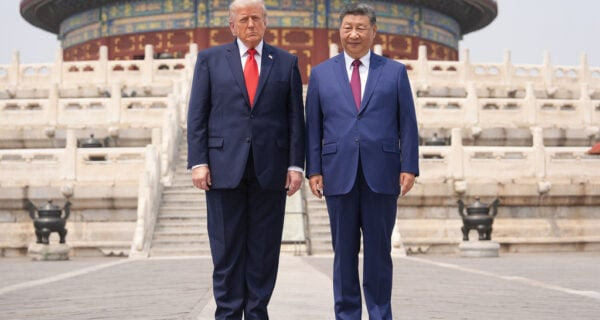
The Dragon / Chinese Firms Considering Covert Arms Transfers to Iran / Magog / King of the North

Magog / Iran ‘Frighteningly Close’ to Getting Nukes, Warns Energy Sec.
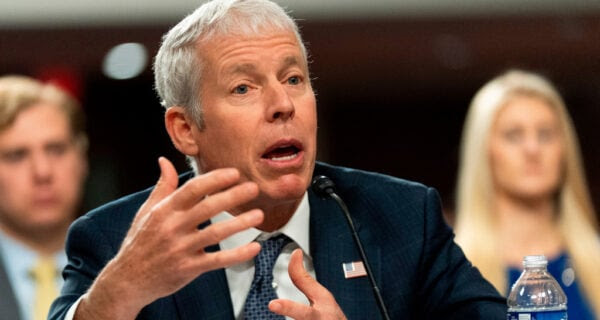
TruLight Ministries Daily Entertainment Manna

TruLight TV & Kids TV : A Better Life in Tumbleweed Canyon
Dallas, who had just been appointed as the sheriff of Rowdy Town, found herself in a precarious situation last week when she stumbled upon some troubling information about the town mayor. Realizing that the well-being of the town’s residents was at stake, Dallas teamed up with her cousin, Dusty, and devised a plan to seek refuge in Tumbleweed Canyon, located far out west, in hopes of finding a better life for themselves and the people of Rowdy Town. Tune in now to witness the thrilling turn of events that unfold! The kids at Konnect HQ are gearing up to throw a surprise birthday bash for their friend Luke, and the excitement is palpable. However, things take an unexpected turn when everyone wants to take charge of making the birthday cake, resulting in a chaotic and messy situation. Join us for an hour filled with laughter, surprises, and a whole lot of fun as we navigate through the hilarious mishaps and ultimately celebrate Luke’s special day in style!
Today on TruLight Radio XM
TruLight Radio XM 24/7
Program
GMT / UTC +2
Monday To Fridays
00:15 Words to Live By Testimonies
01.15 Science Scripture and Salvation
02.15 Ground Works
04.00 Gospel Concert of the Day
05.00 The Daren Streblow Comedy Show
5:55 It is Today devotional
6:00 Gaither Homecoming Morning Show
7:15 Discover the Word
8.15 Destined for Victory
8:55 Science Scripture and Salvation
9:00 Holy Spirit Hour – Normally Sermons
10:15 Hope of the Heart
11:15 Unshackled
11.45 Words to Live By
12:15 Truth for Life
13:15 Living on the Edge with Chip Ingram
14:15 Focus on the Family
15:00 Kids Hour
16:00 In Touch with Dr. Charles Stanley
16:30 Groundwork
17:15 Live in the Light
18:15 Renewing your Mind
19:00 Gaither Homecoming Show
20:15 Growing Hope
21:15 Adventures in Odyssey Radio Drama
21:45 Bible Reading
22:15 Night-sounds
23.00 Good Old Country Gospel / Rhema Gospel Express
VISIT THE WEBSITE
TruLight Ministry News – EXTRA MANNA
TruLight Ministries orders from God since 2012 . Teach Them , Comfort Them and Warn Them!
Healing Truths.
End Time Articles.
Bonus Teaching for the Child of God !!
Revelation 12:17 states, “Then the dragon became furious with the woman and went off to make war on the rest of her offspring, on those who keep the commandments of God and hold to the testimony of Jesus. And he stood on the sand of the sea” (ESV). Much can be said about this verse and the surrounding text, but our focus is on the question What does it mean to hold to the testimony of Jesus?
The testimony of Jesus refers to the gospel, the good news that encompasses the person and work of Christ. It is the central message of Christianity, without which we wouldn’t have the Christian faith and no one would be saved. The gospel declares that God took on human flesh in the person of Jesus to usher in His kingdom and redeem us from our sin. Humanity and the rest of creation is broken because of sin. Thus, we need redemption, brought by Jesus.
The gospel also declares Jesus to be the long-awaited Messiah who came to free His people from slavery to sin and darkness. In the gospel, we find hope for a renewed future. To hold on to the testimony of Jesus is to remain faithful to the gospel. It transcends mere intellectual assent, calling for total commitment.
In Revelation 12, those who hold to the testimony of Jesus are targeted by the dragon (Satan) during the future tribulation period. These believers will be faithful unto death as they reject the Antichrist, keep God’s commandments, and bear witness to the truth of the gospel. This time of persecution is also predicted in Daniel 7:25, as the “little horn” on the beast will “oppress the holy people of the Most High” (NLT; see also Daniel 7:21).
Today, we hold to the testimony of Jesus when we witness to others in words and deeds. This involves evangelism, discipleship, and proper Christian conduct that arises from God’s grace. We are called to build our lives on Jesus (Matthew 7:24–25; Colossians 2:6–7), seeking to become more like Him as the Spirit sanctifies us (Romans 8:28; 2 Corinthians 3:18). In Revelation 12:17, keeping the testimony of Jesus is linked to keeping God’s command, showing the relationship between both in a Christian’s life. The gospel motivates us to love God by keeping His commandments.
Holding to the testimony of Jesus also involves steadfastness in the face of trials. John wrote the book of Revelation to persecuted Christians, and his imagery reveals the devil as the source of this persecution. The renewed earth that God promises will be free from suffering, pain, and tears. However, in this present age we will face trials. We are called to persevere, depending on the Holy Spirit for steadiness through the storm.
Our holding to the testimony of Jesus is not in vain. Not only do we find peace in trials and joy beyond circumstance, but we also walk toward a utopia only God can give.
Share this Feeding of Manna with your Friends and Family. just click on the Social Media icon and share !