Hosted by TruLight Ministries – The Place of Truth
SELECT YOUR READING LANGUAGE – BOTTOM LEFT = YOUR DAILY MANNA NOW AVAILABLE IN 103 LANGUAGES
Most of the Times. We are our own Best ENEMY!

Romans 12:9 says, “Hate what is evil; cling to what is good.” These actions are two sides of the same coin, and they are mutually dependent. Our grip on the good will be tenuous indeed if we don’t learn to hate the evil.
Hating sin in other people is comparatively easy. We’re adept at finding the speck in our neighbor’s eye, even while the plank is embedded in our own (Luke 6:42). Most of us have a pet sin or two that we have a high tolerance for and readily excuse. Poet George Herbert called it that “one cunning bosom-sin.” So, hating our own heart’s sin is easier said than done. Our flesh is sin’s ally (Galatians 5:17), and we fight against our own natural desires in our struggle to “be holy in all” (1 Peter 1:15).
The first step in hating our own sin is to acknowledge that we have sin. “If we claim to be without sin, we deceive ourselves and the truth is not in us” (1 John 1:8). We must be open and honest before the Lord. David’s prayer should be a model for us: “Search me, O God, and know my heart. . . . See if there is any offensive way in me” (Psalm 139:23-24). When we fear God (Proverbs 8:13) and humbly acknowledge our sin, we are in a position to receive His comfort (Isaiah 57:15).
The better we know God, the more we will hate our sin. The psalmist speaks of the “splendor” of God’s holiness (Psalm 29:2). The clearer that splendor is to us, the more we will eschew anything that threatens to obscure or distort that brilliance. The lover of light will naturally hate darkness. The closer we draw to God’s beauty, the uglier our own sin becomes to us, because imperfection, side by side with perfection, is always glaringly insufficient (Isaiah 6:5). To better know God, we must spend time in His Holy Word, the Bible (Psalm 119:11, 163). And we must commune with Him in prayer. It is impossible to pray in earnest and not feel convicted by our own sin. Prayer leads to a hatred of sin as it leads us into a closer relationship with God.
The better we understand the consequences of sin, the more we will hate sin in our own lives. Sin is what separates us from God. Sin enslaves us (John 8:34). Sin is what brought sickness, sorrow, shame, and death into the world (Genesis 2:17). Sin is the root cause of all war, fighting, pain, and injustice. Sin is why hell exists. When we consider the horrible effects of sin in the world at large, we are grieved to discover the same sin lurking in our own hearts. We hate that we contribute to the pain of the world.
The better we understand the source of sin, the more we will hate it in ourselves. Satan is the originator of sin (Ezekiel 28:15). Before salvation, we were children of the devil (John 8:44). As believers, we still face Satan’s temptations and struggle with the “old self, which is being corrupted by its deceitful desires” (Ephesians 4:22). When we “gratify the desires of the sinful nature” (Romans 13:14), we are dabbling again in the uncleanness and corruption of the devil.
The more we love God, the more we will hate our sin. We are not our own, but we belong to God (1 Corinthians 6:20). The Lord has given us the very breath of life, and our sin grieves Him (Ephesians 4:30). Why would we tolerate that which grieves the One we love? A mother hates the sickness that incapacitates her child, and, if we really love the Lord, we will hate the sin that grieves Him.
The more clearly we see our potential, the more we will hate our sin. Think what the soul of man is made for! We are made to love, obey, and glorify our Maker. We are made to reason, invent, grow, and explore. What an excellent and high and holy work we are called to! Sin is what disables and perverts our God-given potential. Once we realize God’s original plan for us, it becomes natural to hate sin.
The more we care about our unsaved friends and family, the more we will hate our sin. When others see our good works, they glorify our Father in heaven (Matthew 5:16). However, if what they see is our sin, God’s enemies will blaspheme (2 Samuel 12:14). As our personal sin is a detriment to our testimony, we hate it all the more. Our light should not be hidden under a bushel basket (Matthew 5:15). Light was meant to shine, and sin shrouds.
The better we understand the sacrifice of Christ, the more we will hate our sin. Jesus, the only innocent Man, shed His blood to save us from our sin. In a very real way, our sin caused His death. Our sin scourged Him, beat Him, mocked Him, and finally nailed Him to a cross. And “we turned our backs on him and looked the other way” (Isaiah 53:3, NLT). Once we understand the price Jesus paid for our salvation, we will love Him even more, and we will hate what caused His pain.
The more often we consider eternity, the more we will hate our sin. “Man is destined to die once, and after that to face judgment” (Hebrews 9:27). No one will still love sin after he dies. The sooner we think of sin not as a pleasure but as the basis of the coming judgment, the sooner we will hate our own sin.
Christians still sin even after being saved. The difference is that we no longer love our sin; in fact, we hate the impurity within us and engage in a spiritual battle to defeat it. Praise the Lord, we have the victory in Christ: “The word of God abides in you, and you have overcome the wicked one” (1 John 2:14).

Bible Verse and Prayer for Today
For it has been granted to you on behalf of Christ not only to believe on him, but also to suffer for him.
—Philippians 1:29
When we read the book of Acts, we find the disciples were “rejoicing because they had been counted worthy of suffering disgrace for the Name” (Acts 5:41). Since Jesus has already victoriously passed through the horrible ordeal of his crucifixion for us, we should consider it a privilege, not a hardship, to share in his sufferings. The truth of our commitment is often best shown to the skeptical when we are “under fire.” So let’s keep our character when under attack and rejoice because we’ve seen in Jesus what happens when God’s children are faithful even at the cost of their lives.
Prayer
What a precious name you have given to your son, O Lord. May it be exalted in all the earth and throughout all the heavens, until every heart knows that Jesus the Messiah is the Son of God and Lord of the universe. May my life bring you glory regardless of comfort or pain, celebration or suffering, strength or weakness, joy or sorrow. In Jesus name, and for his glory, I pray. Amen and Amen
Bible Teaching of the Day
For many people, blame is a favorite game when something goes wrong. Living as broken people in a broken world, we can easily find someone or something to blame when we are hurt. Sometimes it is true that someone else so violated our lives that the fault is his alone. When that happens, we have steps to take to right the wrong (Matthew 18:15–17). But if we habitually blame others for our problems instead of taking responsibility for the part we may have played, blame can become a way of life.
The following are some steps we can take to stop blaming others for everything that goes wrong:
- Fully acknowledge the damage that was done. It may seem odd to begin a change by focusing on the problem, but that is the best way to process it so that we don’t have to carry it around anymore. Fully recognizing the hurt and injustice we experienced prepares our hearts to forgive and move on. Our hearts know a wrong was committed, and in pretending the wrong was less than it was, we do ourselves no favors. Recognizing the problem, grieving the loss when appropriate, and then committing to forgive the offender are important in changing the blame game.
- Recognize the pride that lurks behind the blame game. Prideful hearts don’t want to admit wrong. It’s easy to see where someone else is wrong, but it’s not so enjoyable to admit our own fault. It helps to ask ourselves, “Did I contribute to this problem in any way?” We can usually find something we could have done better. Instead of focusing on what the offender did, we can redirect our focus to our response. Yes, that person was wrong, but did I respond the way God wants me to? Did I make the situation better or worse? When we recognize pride, we should confess it as sin and humble ourselves before God and before the other person (1 John 1:9; 1 Peter 5:6).
- Lower lofty expectations. We cause ourselves much grief when we carry too high expectations for ourselves and others. Often those expectations are never communicated, but they are at the root of our bitterness and reflexive blaming of others. We think, “They should have done this,” or “They should not have done that.” When the word should enters our thoughts about other people’s actions, we have set the scene to start blaming them. Should implies an expectation that is going unmet. Surrendering our expectations to God and trusting that He will give us what we need helps calm us when we feel slighted or ignored.
- Surrender rights to God. Human beings are rights-fighters. If we made a list of our assumed rights, we would probably be shocked. Common on most people’s lists are the right to be treated fairly; the right to never be offended; and the right to be respected, loved, or included. The problem is that God did not give us those rights; we conscripted them for ourselves. Blaming others for our problems often arises from a perceived rights violation. The fight to maintain bogus rights keeps us in emotional turmoil.
If we find ourselves blaming others a lot, it may help to make a list of personal rights we feel are being violated. Then, as an act of surrender, offer that list to God. Tell Him that you give up these rights, and if He thinks you need to be validated, respected, or included by others, He will see to it. James 4:10 says, “Humble yourselves before the Lord, and he will lift you up.” Giving our rights to God is one way we humble ourselves. He then lifts us up in ways that have nothing to do with pride or rights-fighting.
- Turn blame into prayer. When we feel someone else has wronged us, we can tell God about it. The psalms are filled with expressions of the pain, hurt, and betrayal felt by the writers. But they didn’t stop with expressing the pain. After we pour out our pain in prayer, we can quiet our hearts and humbly ask the Lord for direction. Rather than blaming others, we can begin praying for them. If they were wrong, they need the healing and restoration of the Lord. Pray that God will change their hearts, convict them of their sin, and restore them to Himself. Every time Satan tempts us to grow bitter, we can use the temptation as a reminder to pray for the person who wronged us.
- Repent of the entitlement attitude. Blamers typically have an attitude of entitlement they are unaware of. Similar to rights-fighters, entitled people believe they are owed something. We may have an entitlement problem if our thoughts sound something like this:
- “It’s his fault I didn’t get that job.”
- “My mom knew I wanted to host the dinner, but she hosted it to spite me.”
- “I’m not married because all guys are scum.”
- “I don’t have a girlfriend because women are shallow and greedy.”
- “Everyone else is further ahead than I am because they’ve had it easier than I have.”
Ridding ourselves of entitlement attitudes is like pulling thistles out by the roots. It’s difficult, but, once the attitude is gone, it can’t grow any more thorns. Those who blame others often blame God indirectly for bequeathingthem an inferior life. Such blame of God must be confessed as well. We must admit that God owes us nothing. James 1:7 reminds us that every good and perfect gift comes from God. If we can breathe; if we can work, love, play, laugh, and experience enjoyment, then we are greatly blessed. God did not owe us any of that, but, because He is good, He gave us many things to enjoy. We are commanded to be thankful in every situation (1 Thessalonians 5:18). We cannot be thankful if we feel entitled to more.
- Find the good in the situation. We tend to blame others when our life situation is not as we wish it to be. However, God says that He is ultimately in charge and will use everything for our good if we trust and love Him (Romans 8:28). You didn’t get that job you wanted? Perhaps you can thank God that He protected you from a job that was not right for you. You couldn’t finish college? Perhaps you can thank God for showing you that college was not the path for you. When we turn misfortune into an opportunity to give thanks, we rob our enemy, Satan, of a weapon he wants to use against us.
Taking personal responsibility for our lives and refusing to blame others for our problems is a mark of maturity. Blaming others for our problems only keeps us mired in immaturity. We also forfeit opportunities to learn from our mistakes, develop perseverance, and work in harmony with God to produce the character of Jesus in our lives (see Galatians 5:22–23).
Today’s Devotional
Broadly stated, the “problem of evil” is the seeming contradiction between an all-powerful, all-loving God and the human experience of suffering and evil in the world. Critics claim that the existence of evil is proof that the omnipotent, omnibenevolent God of the Bible cannot exist. Since “bad things happen to good people,” critics say, God is either nonexistent or less good or less powerful than Scripture suggests.
Despite what some critics think, the so-called “problem of evil” is not something the Bible leaves unaddressed. Scripture not only refers to the problem of evil, but it offers several solutions to it. By looking at the Bible’s honest questioning of evil, God’s response to evil, and the scriptural solution to evil, one can address this problem using almost nothing other than God’s Word. Of course, this question ties into theology and philosophy as well. There are multiple ways of coming to possible solutions, and none is entirely complete all by itself.
According to the Bible, the experience of evil is something God understands and acknowledges. God’s willingness to grant us the freedom of making our own choices also allows for the possibility of moral evil. Moral evil leads to physical evil. Even so, God has always acted to soften the blows that evil and suffering land on humanity. He also provided the one and only means to make all wrongs right. One day, God’s plan to defeat and destroy evil will be fully complete.
Scripture acknowledges the “problem of evil”
Many of the Bible’s 66 individual books openly express what we would now term the “problem of evil.” In some cases, these expressions are all but a direct accusation against God, in response to the suffering the writers had seen or experienced.
The entire book of Job, for example, is a discussion of the reasons why mankind experiences suffering even when we don’t seem to deserve it. In addition, Scripture offers many other notable passages that clearly reflect the problem of evil:
Habakkuk 1:2–4, “How long, Lord, must I call for help, but you do not listen? Or cry out to you, ‘Violence!’ but you do not save? Why do you make me look at injustice? Why do you tolerate wrongdoing? Destruction and violence are before me; there is strife, and conflict abounds. Therefore the law is paralyzed, and justice never prevails. The wicked hem in the righteous, so that justice is perverted.”
Ecclesiastes 4:1–3, “Again I looked and saw all the oppression that was taking place under the sun: I saw the tears of the oppressed—and they have no comforter; power was on the side of their oppressors—and they have no comforter. And I declared that the dead, who had already died, are happier than the living, who are still alive. But better than both is the one who has never been born, who has not seen the evil that is done under the sun.”
Psalm 10:1, “Why, Lord, do you stand far off? Why do you hide yourself in times of trouble?”
Psalm 22:1–2, “My God, my God, why have you forsaken me? Why are you so far from saving me, so far from my cries of anguish? My God, I cry out by day, but you do not answer, by night, but I find no rest.”
Psalm 83:1–2, “O God, do not remain silent; do not turn a deaf ear, do not stand aloof, O God. See how your enemies growl, how your foes rear their heads.”
John 16:2–4, “They will put you out of the synagogue; in fact, the time is coming when anyone who kills you will think they are offering a service to God. They will do such things because they have not known the Father or me. I have told you this, so that when their time comes you will remember that I warned you about them.”
Romans 8:36, “As it is written: ‘For your sake we face death all day long; we are considered as sheep to be slaughtered.’“
Revelation 6:9–10, “When he opened the fifth seal, I saw under the altar the souls of those who had been slain because of the word of God and the testimony they had maintained. They called out in a loud voice, ‘How long, Sovereign Lord, holy and true, until you judge the inhabitants of the earth and avenge our blood?’”
These passages show a personal, deep awareness of the reality of evil. Scripture does not present evil as an abstraction or a remote idea. The real human beings who recorded the words of the Bible were painfully aware of the existence of evil and suffering. And they were willing to express their feelings to God, especially when they felt He wasn’t acting according to their expectations.
Notably, however, these same authors also recognize and trust the goodness of God to make these wrongs right, someday.
Scripture frames the “problem of evil”
The Bible makes it clear that evil is something God neither intended nor created. Rather, moral evil is a necessary possibility. If we are truly free, then we are free to choose something other than God’s will—that is, we can choose moral evil. Scripture points out that there are consequences for defying the will of God—personal, communal, physical, and spiritual.
Genesis 1:31, “God saw all that he had made, and it was very good.”
Genesis 2:16–17, “And the Lord God commanded the man, ‘You are free to eat from any tree in the garden; but you must not eat from the tree of the knowledge of good and evil, for when you eat from it you will certainly die.’“
Genesis 3:17–19, “To Adam he said, ‘Because you listened to your wife and ate fruit from the tree about which I commanded you, ‘You must not eat from it,’ cursed is the ground because of you; through painful toil you will eat food from it all the days of your life. It will produce thorns and thistles for you, and you will eat the plants of the field. By the sweat of your brow you will eat your food until you return to the ground, since from it you were taken; for dust you are and to dust you will return.”
Proverbs 14:34, “Righteousness exalts a nation, but sin condemns any people.”
Proverbs 19:3, “A person’s own folly leads to their ruin, yet their heart rages against the Lord.”
Matthew 5:3–11, “Blessed are those who mourn, for they will be comforted. Blessed are the meek, for they will inherit the earth. Blessed are those who hunger and thirst for righteousness, for they will be filled. . . . Blessed are those who are persecuted because of righteousness, for theirs is the kingdom of heaven. Blessed are you when people insult you, persecute you and falsely say all kinds of evil against you because of me.”
John 9:1–3, “As he went along, he saw a man blind from birth. His disciples asked him, ‘Rabbi, who sinned, this man or his parents, that he was born blind?’ ‘Neither this man nor his parents sinned,’ said Jesus, ‘but this happened so that the works of God might be displayed in him.’”
Romans 1:18–28, “The wrath of God is being revealed from heaven against all the godlessness and wickedness of people, who suppress the truth by their wickedness, since what may be known about God is plain to them, because God has made it plain to them. For since the creation of the world God’s invisible qualities—his eternal power and divine nature—have been clearly seen, being understood from what has been made, so that people are without excuse. For although they knew God, they neither glorified him as God nor gave thanks to him, but their thinking became futile and their foolish hearts were darkened. . . . Just as they did not think it worthwhile to retain the knowledge of God, so God gave them over to a depraved mind, so that they do what ought not to be done.”
Romans 3:23, “For all have sinned and fall short of the glory of God.”
Romans 5:12, “Therefore, just as sin entered the world through one man, and death through sin, and in this way death came to all people, because all sinned.”
Hebrews 2:2–3, “For since the message spoken through angels was binding, and every violation and disobedience received its just punishment, how shall we escape if we ignore so great a salvation?”
Taken together, Scripture shows us that physical evils—sickness, famine, war, and death—are the result of moral evil. And moral evil is something human beings are all responsible for, on a personal and a communal level. We suffer because of our own sins at times. Other times, we suffer because of the sins of others. In some situations, we suffer from simple cause-and-effect. And we sometimes suffer for a special purpose, in order to bring hope or help—or a warning—to others (see 2 Corinthians 1:4).
The Bible “frames” the problem of evil by keeping it in the proper context. “Evil” is meaningless without something to compare it to. For comparison, we have the original creation of God, called “very good” (Genesis 1:31). We have the standard of goodness in God Himself. And we have an explanation for the various causes of evil and suffering.
Likewise, we see that this physical world is not all there is. Nor is this mortal life all we have been made for. We can experience physical struggles such as “mourning” and “persecution” (Matthew 5:4, 11) while looking to a greater, more permanent state of being “blessed.”
Of course, clearly framing what evil is and why we experience it is not the same as resolving the problem of evil. However, even the framing of evil in the context of Christian theology shows that our experience of evil and suffering is not incompatible with God’s existence. Amplifying this proof is how the Bible goes beyond accurately describing evil to revealing God’s action to remedy it.
Scripture opposes the “problem of evil”
Scripture shows that God did not create evil and does not promote it; rather, it describes God’s actions in combatting it. God limits the impact of evil, warns us of the dangers of evil, acts to stop the spread of evil, gives us an escape from evil, and will eventually defeat evil forever.
Genesis 3:21, “The Lord God made garments of skin for Adam and his wife and clothed them.”
Genesis 4:10–15, “The Lord said, ‘What have you done? Listen! Your brother’s blood cries out to me from the ground. Now you are under a curse and driven from the ground, which opened its mouth to receive your brother’s blood from your hand. When you work the ground, it will no longer yield its crops for you. You will be a restless wanderer on the earth.’ Cain said to the Lord, ‘My punishment is more than I can bear. Today you are driving me from the land, and I will be hidden from your presence; I will be a restless wanderer on the earth, and whoever finds me will kill me.’ But the Lord said to him, ‘Not so; anyone who kills Cain will suffer vengeance seven times over.’”
Genesis 6:5–8, “The Lord saw how great the wickedness of the human race had become on the earth, and that every inclination of the thoughts of the human heart was only evil all the time. The Lord regretted that he had made human beings on the earth, and his heart was deeply troubled. So the Lord said, ‘I will wipe from the face of the earth the human race I have created—and with them the animals, the birds and the creatures that move along the ground—for I regret that I have made them.’ But Noah found favor in the eyes of the Lord.”
Genesis 7:1–4, “The Lord then said to Noah, ‘Go into the ark, you and your whole family, because I have found you righteous in this generation. . . . Seven days from now I will send rain on the earth for forty days and forty nights, and I will wipe from the face of the earth every living creature I have made.’”
Deuteronomy 9:5, “It is not because of your righteousness or your integrity that you are going in to take possession of their land; but on account of the wickedness of these nations, the Lord your God will drive them out before you, to accomplish what he swore to your fathers, to Abraham, Isaac and Jacob.”
Deuteronomy 30:15–18, “See, I set before you today life and prosperity, death and destruction. For I command you today to love the Lord your God, to walk in obedience to him, and to keep his commands, decrees and laws; then you will live and increase, and the Lord your God will bless you in the land you are entering to possess. But if your heart turns away and you are not obedient, and if you are drawn away to bow down to other gods and worship them, I declare to you this day that you will certainly be destroyed. You will not live long in the land you are crossing the Jordan to enter and possess.”
Jonah 3:6–10, “When Jonah’s warning reached the king of Nineveh, he rose from his throne, took off his royal robes, covered himself with sackcloth and sat down in the dust. This is the proclamation he issued in Nineveh: ‘By the decree of the king and his nobles: Do not let people or animals, herds or flocks, taste anything; do not let them eat or drink. But let people and animals be covered with sackcloth. Let everyone call urgently on God. Let them give up their evil ways and their violence. Who knows? God may yet relent and with compassion turn from his fierce anger so that we will not perish.’ When God saw what they did and how they turned from their evil ways, he relented and did not bring on them the destruction he had threatened.”
Matthew 10:28, “Do not be afraid of those who kill the body but cannot kill the soul. Rather, be afraid of the One who can destroy both soul and body in hell.”
Matthew 23:37, “Jerusalem, Jerusalem, you who kill the prophets and stone those sent to you, how often I have longed to gather your children together, as a hen gathers her chicks under her wings, and you were not willing.”
1 Corinthians 6:9–11, “Or do you not know that wrongdoers will not inherit the kingdom of God? Do not be deceived: Neither the sexually immoral nor idolaters nor adulterers nor men who have sex with men nor thieves nor the greedy nor drunkards nor slanderers nor swindlers will inherit the kingdom of God. And that is what some of you were. But you were washed, you were sanctified, you were justified in the name of the Lord Jesus Christ and by the Spirit of our God.”
Colossians 1:13, “For he has rescued us from the dominion of darkness and brought us into the kingdom of the Son he loves.”
2 Thessalonians 2:7, “For the secret power of lawlessness is already at work; but the one who now holds it back will continue to do so till he is taken out of the way.”
2 Peter 2:9, “The Lord knows how to rescue the godly from trials and to hold the unrighteous for punishment on the day of judgment.”
Revelation 19:11, “I saw heaven standing open and there before me was a white horse, whose rider is called Faithful and True. With justice he judges and wages war.”
Revelation 20:11–15, “Then I saw a great white throne and him who was seated on it. . . . I saw the dead, great and small, standing before the throne, and books were opened. . . . The dead were judged according to what they had done as recorded in the books. . . . Each person was judged according to what they had done. Then death and Hades were thrown into the lake of fire. The lake of fire is the second death. Anyone whose name was not found written in the book of life was thrown into the lake of fire.”
Revelation 21:1–5, “Then I saw a new heaven and a new earth, for the first heaven and the first earth had passed away. . . . I heard a loud voice from the throne saying, ‘Look! God’s dwelling place is now among the people, and he will dwell with them. They will be his people, and God himself will be with them and be their God. He will wipe every tear from their eyes. There will be no more death or mourning or crying or pain, for the old order of things has passed away.’ He who was seated on the throne said, ‘I am making everything new!’ Then he said, ‘Write this down, for these words are trustworthy and true.’”
The Bible explains that God has acted to limit the impact of evil. He has given us clear instructions to avoid being evil. God has also made spiritual power available for those who want to be freed from the power of evil. And, from the very beginning, God set in motion a plan to make all wrongs right and end our experience of evil and suffering (see Genesis 3:15).
Scripture resolves the “problem of evil”
The existence of evil is often presented as an enormous problem for those who believe in God, mostly because of various false dichotomies. God must, it is assumed, disallow all evil or He is evil Himself. God must immediately punish all evildoers and never trouble those who are innocent, or He is assumed not to be omnipotent. In reality, these assumptions miss the actual means by which Scripture resolves the problem of evil.
As we’ve seen, the Bible acknowledges evil, correctly frames it, and shows how God opposes it. Most importantly, though, Scripture explains how the existence of the Christian God defeats the problem of evil.
Matthew 16:21, “From that time on Jesus began to explain to his disciples that he must go to Jerusalem and suffer many things at the hands of the elders, the chief priests and the teachers of the law, and that he must be killed and on the third day be raised to life.”
Mark 10:45, “For even the Son of Man did not come to be served, but to serve, and to give his life as a ransom for many.”
Luke 22:19–20, “And he took bread, gave thanks and broke it, and gave it to them, saying, ‘This is my body given for you; do this in remembrance of me.’ In the same way, after the supper he took the cup, saying, ‘This cup is the new covenant in my blood, which is poured out for you.’”
John 14:6, “Jesus answered, ‘I am the way and the truth and the life. No one comes to the Father except through me.’”
John 19:16–18, “Finally Pilate handed him over to them to be crucified. So the soldiers took charge of Jesus. Carrying his own cross, he went out to the place of the Skull (which in Aramaic is called Golgotha). There they crucified him, and with him two others—one on each side and Jesus in the middle.”
John 19:30, “Jesus said, ‘It is finished.’ With that, he bowed his head and gave up his spirit.”
John 20:19–20, “On the evening of that first day of the week, when the disciples were together, with the doors locked for fear of the Jewish leaders, Jesus came and stood among them and said, ‘Peace be with you!’ After he said this, he showed them his hands and side. The disciples were overjoyed when they saw the Lord.”
John 20:30–31, “Jesus performed many other signs in the presence of his disciples, which are not recorded in this book. But these are written that you may believe that Jesus is the Messiah, the Son of God, and that by believing you may have life in his name.”
2 Corinthians 5:1, “For we know that if the earthly tent we live in is destroyed, we have a building from God, an eternal house in heaven, not built by human hands.”
Hebrews 4:15, “For we do not have a high priest who is unable to empathize with our weaknesses, but we have one who has been tempted in every way, just as we are—yet he did not sin.”
1 John 3:1, “See what great love the Father has lavished on us, that we should be called children of God!”
Colossians 1:21–22, “Once you were alienated from God and were enemies in your minds because of your evil behavior. But now he has reconciled you by Christ’s physical body through death to present you holy in his sight, without blemish and free from accusation.”
Rather than creating us as amoral robots or dooming mankind for our sin or condoning our sin by leaving it unresolved, God chose the one and only way to settle the problem. He created us with the freedom to choose our actions, and then extended forgiveness to us. Forgiveness is the Christian answer to the problem of evil.
Forgiveness is different from condemnation—it releases the condemned from punishment. Forgiveness is also different from excusing evil—it acknowledges that there is wrong to be made right. The basis of our forgiveness, the cross, is the intersection of God’s perfect moral character, love, and omnipotence. Since He chose to take our penalty upon Himself, all suffering and evil can be overcome. According to the Bible, the evil we experience in this life has already been defeated, andeveryone has access to that victory.
John 3:16–21, “For God so loved the world that he gave his one and only Son, that whoever believes in him shall not perish but have eternal life. For God did not send his Son into the world to condemn the world, but to save the world through him. Whoever believes in him is not condemned, but whoever does not believe stands condemned already because they have not believed in the name of God’s one and only Son. This is the verdict: Light has come into the world, but people loved darkness instead of light because their deeds were evil. Everyone who does evil hates the light, and will not come into the light for fear that their deeds will be exposed. But whoever lives by the truth comes into the light, so that it may be seen plainly that what they have done has been done in the sight of God.”
John 16:33, “I have told you these things, so that in me you may have peace. In this world you will have trouble. But take heart! I have overcome the world.”
Taken as a whole, as it is intended, the Bible describes evil as something God allowed, but never condoned, for the sake of our free will. All through history, God has taken steps to limit the influence of evil. And, most importantly, God Himself took the consequences of our sin, so every person can have access to forgiveness and salvation. As a result, all sin, evil, and suffering will someday be completely ended. Beyond the philosophical or theological aspects of this issue, Scripture in and of itself goes a long way to neutralizing the power of the “problem of evil.”

Bible Prophecy, Signs of the Times and Gog and Magog Updates with Articles in the News
The NEXT LOCKDOWN COMING !
‘We’re Not Doing This Again’ Outcry Over Lockdown 2.0 Fuel Speculation
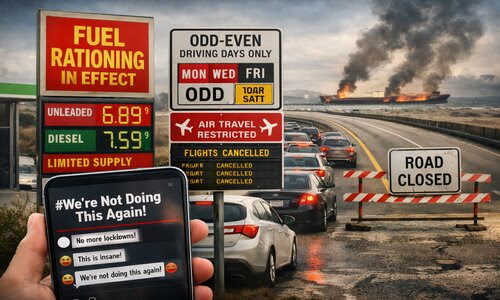
The world is teetering on the edge of a crisis that could reshape life as we know it. The Strait of Hormuz — a narrow waterway carrying nearly a fifth of the globe’s daily oil supply — is all but shut down amid the escalating conflict in Iran. The result: fuel prices soaring above $100 a barrel and governments quietly dusting off emergency playbooks that could force citizens to ration energy, limit travel, and accept curbs on freedoms previously taken for granted.
The International Energy Agency has outlined a series of steps meant to stretch dwindling supplies: remote work mandates, lower highway speed limits, alternating driving days based on license plates, slashed air travel, and even potential gasoline rationing. Taken together, these measures read less like guidance and more like a blueprint for societal lockdown — “Lockdown 2.0,” as critics online have already dubbed it.
Social media is alight with outrage: “We’re not doing this again!” is trending across platforms, echoing a collective fear that the freedoms stripped from daily life during the pandemic could return, this time under the guise of energy conservation.
Imagine a typical weekday under these measures. Your car can only be used every other day. Highway speeds are capped, extending commutes. Business travel is drastically curtailed — no flights for conferences, no weekend getaways. Even grocery deliveries may slow as freight trucks adopt strict eco-driving mandates and curfews. Citizens may be forced to monitor their personal fuel consumption, weighing every trip: to work, to school, to a doctor’s appointment. The invisible hand of rationing is moving closer, and the impact would be felt from suburban streets to bustling urban centers worldwide.
The economic repercussions could be staggering. With fuel costs skyrocketing, every sector that depends on transport — from food to consumer goods — faces price shocks. Small businesses may shutter. Supply chains could buckle. Consumers may see shelves emptying not just of luxury items, but essentials like fresh produce, heating fuel, and medications. The specter of recession looms, with the potential for a global economic contraction driven by the very energy that powers daily life.
But the crisis extends beyond the wallet. It strikes at a fundamental liberty: the freedom to move. Driving, flying, commuting, even taking a short road trip — all could become regulated privileges rather than rights. And when governments start rationing travel, social unrest is inevitable.
Online forums and social media are already a digital powder keg. Citizens recall pandemic restrictions with anger and fatigue; the refrain “We’re not doing this again!” has become a rallying cry against perceived overreach. Protest movements could ignite, challenging authorities to enforce rationing while maintaining public trust — a nearly impossible balance.
Geopolitical consequences are equally dire. Nations dependent on Middle Eastern oil will scramble for alternatives, potentially destabilizing trade and diplomacy. Countries with surplus resources may wield power aggressively, using scarcity to negotiate concessions. And in a world where every nation feels the pinch, the risk of miscalculation or escalation in conflict grows. The potential for local conflicts to spiral into a wider geopolitical firestorm is high, threatening not just energy supplies, but global security itself.
The reality is stark: this is more than an energy crisis. It is a crisis of freedom, of social cohesion, and of economic stability. It is a warning that a world dependent on oil, vulnerable to political turmoil halfway across the globe, is sitting on a knife’s edge. The decisions made in the coming weeks could define not just markets, but the very rhythms of daily life: how we move, work, and interact with each other.
As the Strait of Hormuz remains blocked, one question hangs over us all: how much of our freedom are we willing to sacrifice to survive the next global fuel shock? And more importantly, how long will it take for society to fight back against restrictions that threaten to dictate the simplest aspects of daily life?
The clock is ticking, and the backlash is already spreading. “We’re not doing this again!” is more than a slogan — it is a warning that millions will resist a future where energy scarcity controls everything from our morning commute to the journeys we take for granted.
The ANTICHRIST a Ai ?
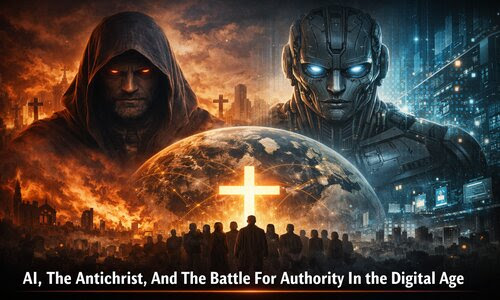
AI, The Antichrist, And The Battle For Authority In The Digital Age
Peter Thiel arrived in Rome this month carrying an unusual set of briefing materials. The billionaire co-founder of Palantir Technologies — whose data-mining systems now run inside the U.S. defense and intelligence communities — was not there for a shareholder meeting or a policy summit. He was there to lecture, by private invitation, on the Antichrist.
The talks ran four nights at the Renaissance-era Palazzo Orsini Taverna, steps from Vatican City, closed to the press and cameras. Catholic universities in Rome raced to distance themselves. The Vatican’s official newspaper called him “an agent of chaos.” Protesters gathered in the street outside.
I am not one of them.
Thiel is wrong about some things — his theological framing carries its own hazards, which I will come to — but what he has set before that private audience is a question too urgent to leave to Silicon Valley. His core warning: the Antichrist may not arrive as an obvious tyrant but as a comforting administrator, one who promises global safety from catastrophic risk — artificial intelligence (AI), nuclear war, climate disaster — and quietly consolidates power in the process. Scripture does not describe a figure who openly opposes God. It describes one who persuades the world he is acting for its good.
That reading deserves a serious response. As someone who spent years in uniform studying how power concentrates and in the years since studying how artificial intelligence reshapes the global order, I believe the question behind Thiel’s question matters more than Thiel himself does.
The intelligence community has a term for what concerns me most: cognitive warfare. Not propaganda in the old sense — leaflets, radio broadcasts, crude appeals to fear. Modern cognitive warfare operates through the same AI systems that millions consult daily for news, guidance, emotional support, and moral reasoning.
As I document in my forthcoming book, “The New AI Cold War,” these systems are already being used to manipulate perception, distort truth, and influence populations at scale — not in distant adversary states, but in our own homes, on our children’s devices, in the pocket of every parishioner in every congregation in America. Deepfakes, synthetic media, and algorithmic manipulation can reshape reality in millions of minds before any correction catches up. The battlefield is not a map coordinate. It is human belief itself.
Scripture prepared us for exactly this. Jesus warned that in the last days, deception would intensify — “so as to lead astray, if possible, even the elect” (Matthew 24:24). John wrote plainly: “Test the spirits to see whether they are from God” (1 John 4:1). Neither warning was given to encourage paralysis. Both were given to demand discernment. The question is whether the church today is cultivating that discernment or outsourcing it.
The deeper problem runs beneath Thiel’s framing. When an AI system functions as moral counselor, spiritual guide, and emotional confidant — roles it increasingly plays for teenagers across this country, as the Pew Research Center documented in February 2026 — it is no longer serving as a tool. It has become a competing authority. Deuteronomy 6 places the transmission of truth and moral instruction squarely on parents and the community of faith: “You shall teach them diligently to your children” (6:7). When a machine quietly assumes that function, the displacement is not announced. It accumulates.
The Tower of Babel had similar architecture. Genesis 11 records a humanity united by common language and technological ambition, reaching for a kind of self-sufficiency that needed no reference to God. The language of today’s most powerful technology companies carries the same echo: optimization, efficiency, global coordination, alignment. The goals are presented as neutral. The infrastructure being built is not. Whether through governments, technology corporations, or the international institutions now accelerating AI governance frameworks, power over knowledge and communication is concentrating in ways that warrant the strategic wariness any soldier develops watching a battlefield shift.
This is not a counsel of Luddism. I have argued in “AI for Mankind’s Future” and before congressional audiences that America must lead in artificial intelligence — because the alternative is ceding that leadership to Beijing, and the consequences of that outcome are existential. The People’s Liberation Army treats AI as a warfighting domain. China’s AI ecosystem is designed for social control at scale. We must compete and compete hard. But competition requires clarity about what we are competing for. A system that concentrates power without accountability — even if built in America, even if marketed as democratic — is not freedom’s answer to authoritarianism. It is authoritarianism with better public relations.
Revelation 13 describes the figure at the end of that road: authoritative, globally persuasive, wielding deception at a scale no previous generation could have imagined. I am not claiming we are there. I am saying the structural conditions that could enable such a system are developing faster than the wisdom required to govern them. That is worth more than a private lecture series in Rome. It warrants a public reckoning — from pastors, parents, policymakers, and soldiers of faith alike.
Thiel’s error is not that he takes Scripture seriously in the public square. His error is that his framing exempts the thing he is building from the danger he is warning about. Palantir’s systems are among the most powerful instruments of AI-enabled surveillance and data concentration in the Western world. The warning and the instrument are in the same hands. That contradiction does not invalidate the question. It demands that Christians think far more carefully about the question than Thiel is asking them to.
Paul’s instruction to the church at Colossae has never been more operationally relevant: “See to it that no one takes you captive through philosophy and empty deception” (Colossians 2:8). In Paul’s day, captivity came through Hellenistic philosophy and the claims of mystery cults. In ours, it comes through systems that promise knowledge, connection, and guidance — and carry embedded assumptions about truth, value, and authority that most users never stop to examine. The machine does not announce its theology. It simply shapes yours.
The question Thiel raised in Rome is the right one. Who and what will we permit to govern truth? The answer is not found in a Renaissance palazzo, and it is not found in the boardrooms of Silicon Valley. It was given once, on a hill outside Jerusalem, and confirmed in an empty tomb — “the same yesterday and today and forever” (Hebrews 13:8). That authority does not require an upgrade. It requires our allegiance.
The NEW COMING MAGOG
The Next Generation Of Iran’s Regime – Even More Radical Than Before?
War is often described as chaos. But the most dangerous wars are not the ones with clear chains of command, identifiable leaders, and known objectives. The most dangerous wars are the ones where power splinters, ideology hardens, and younger men with something to prove begin acting without permission. That is where Iran now appears to be.
For years, the world understood the Islamic Republic as a hostile but structured regime — brutal, radical, and expansionist, yes, but still governed by a vertical hierarchy. There was a supreme leader. There were senior Revolutionary Guard commanders. There were channels of command, factions, and power centers that, however sinister, still answered to someone at the top.
But after the reported killing of Ayatollah Ali Khamenei and numerous senior Iranian commanders in U.S.-Israeli strikes that began on February 28, that structure appears to have been shattered. Reuters and AP reporting indicates a temporary governing framework has emerged, but the larger reality is a vacuum — and vacuums in revolutionary states are rarely filled by moderates.
That should terrify anyone hoping for a quick diplomatic resolution.
Because when the old guard is decapitated, the men who rise next are often not the most seasoned, wise, or restrained. They are the most zealous.
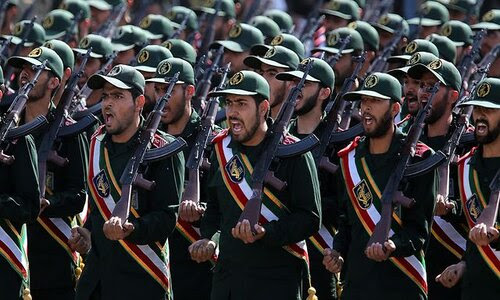
That is the central danger now hanging over Iran and the wider Middle East: not simply that Tehran remains hostile, but that many of the men increasingly exercising battlefield authority are younger, more ideologically rigid, and less politically calculating than the generation above them. Hooshang Amirahmadi’s warning that second-rank revolutionary officers may now be “increasingly in charge” deserves serious attention. If he is right, then we are no longer dealing primarily with strategic state actors seeking leverage. We are dealing with a dispersed revolutionary class raised from childhood to believe that confrontation with America and Israel is not just policy — it is destiny.
That generational point matters more than many Western analysts admit.
Older Iranians, even those who remained loyal to the regime, often still carried some living memory of what came before the 1979 revolution. They knew another Iran once existed — flawed, certainly, but not consumed by the totalizing religious militarism that has since defined the Islamic Republic. They remembered a country that was not built around martyrdom, proxy war, anti-Western revolutionary export, and clerical absolutism.
But the younger hardliners now stepping into the breach do not remember any of that.
They were born into the revolution. Schooled in it. Sermoned by it. Militarized by it. Their political imagination was formed entirely inside the architecture of radical Shiite ideology. For them, the regime is not a detour from normalcy; it is normalcy. Endless confrontation is not a failure of the system. It is the system.
And that makes them more dangerous than the men they replace.
The old regime leadership, for all its evil, often knew when to calibrate. It knew when to posture and when to pull back. It understood that survival sometimes required tactical restraint. Younger battlefield commanders, especially those suddenly empowered by a broken hierarchy, are less likely to think that way. They are more likely to view compromise as betrayal, negotiation as cowardice, and any concession to Washington as apostasy.
That is why talk of imminent peace should be treated with deep skepticism.
Yes, there are reports that the White House has pushed peace terms and that President Donald Trump has described contacts as “productive.” But Iran’s public messaging has been sharply defiant, and that contradiction tells us something important: whoever may still want a diplomatic off-ramp inside the regime is either weak, divided, or afraid. Reuters reporting and public statements from Iranian officials suggest that Tehran’s surviving apparatus is still functioning, but that does not mean it is unified. In fact, it may mean the opposite — a regime still firing missiles and issuing threats precisely because no one at the center is strong enough to force discipline on the men below.
That is the nightmare scenario.
A fragmented Iran does not become harmless. It becomes harder to predict, harder to deter, and harder to negotiate with. One provincial commander can launch retaliation. Another can sabotage de-escalation. A third can decide that if higher-level officials are even thinking about peace on American terms, they are traitors worthy of elimination. Once a revolutionary system loses centralized fear, internal purges become just as likely as external attacks.
That is why the current ambiguity over leadership is so significant.
The supposed son or successor now rumored to be in control has reportedly still not been seen publicly in any meaningful way, and that silence is not a minor detail. It is a flashing red warning light. In a regime built on projection, symbolism, and authority, visibility matters. If the heir apparent cannot appear, cannot command, cannot project control, then every ambitious colonel, Guard officer, and ideological enforcer across Iran receives the same message: take initiative. And in a regime like this, “initiative” usually means escalation.
Meanwhile, the global consequences are already beginning to surface. Energy markets remain on edge, and industry leaders are openly warning about the consequences of prolonged instability around the Strait of Hormuz and broader Middle East supply routes. That matters not just for traders and governments, but for ordinary families who will feel it in fuel prices, shipping costs, inflation, and the general return of economic instability. The world does not need much imagination to understand what happens if a decentralized, revenge-driven Iranian military culture begins lashing out without coherent top-down control.
So where do we go from here?
First, we stop pretending that removing senior tyrants automatically produces peace. Sometimes it does the opposite. Sometimes it leaves behind a younger, angrier, less restrained generation convinced they have inherited a holy war.
Second, any negotiation effort must begin with a hard truth: there can be no durable peace until there is a durable authority capable of enforcing it. You cannot negotiate meaningfully with fragments. You cannot sign a deal with men who may be dead by next week at the hands of their own subordinates.
And finally, the West must understand that this is no longer just a military problem. It is a civilizational one. Iran is now confronting the fruit of decades of ideological radicalization. When a regime catechizes children into revolutionary hatred for a generation, eventually those children grow up, put on uniforms, and start making decisions.
That is the stage we may be entering now.
And if so, the fall of Iran’s old masters may not be the end of the danger.
It may be the beginning of its most reckless chapter yet.
Christian Photographer Who Refused Working Same-Sex Weddings Wins $800K Settlement With Louisville, KY

TruLight Ministries Daily Entertainment

TruLight TV : Popcorn and Movie Night : Dog Jack
In the midst of the Civil War, a boy and his dog escape a plantation and embark on a life-changing journey. Inspired by true events, “Dog Jack” chronicles a turbulent moment in American history, and a tale that’s never been forgotten.
Today on TruLight Radio XM
TruLight Radio XM 24/7
Program
GMT / UTC +2
Monday To Fridays
00:15 Words to Live By Testimonies
01.15 Science Scripture and Salvation
02.15 Ground Works
04.00 Gospel Concert of the Day
05.00 The Daren Streblow Comedy Show
5:55 It is Today devotional
6:00 Gaither Homecoming Morning Show
7:15 Discover the Word
8.15 Destined for Victory
8:55 Science Scripture and Salvation
9:00 Holy Spirit Hour – Normally Sermons
10:15 Hope of the Heart
11:15 Unshackled
11.45 Words to Live By
12:15 Truth for Life
13:15 Living on the Edge with Chip Ingram
14:15 Focus on the Family
15:00 Kids Hour
16:00 In Touch with Dr. Charles Stanley
16:30 Groundwork
17:15 Live in the Light
18:15 Renewing your Mind
19:00 Gaither Homecoming Show
20:15 Growing Hope
21:15 Adventures in Odyssey Radio Drama
21:45 Bible Reading
22:15 Night-sounds
23.00 Good Old Country Gospel / Rhema Gospel Express
VISIT THE WEBSITE
TruLight Ministry News
TruLight Ministries orders from God since 2012 . Teach Them , Comfort Them and Warn Them!
Your Invited . TO WHAT? WHERE? and WHEN?
We Starting , the 1st May 2026 . with Our Preachers Diploma Online Platform – TruTheology.co.za . 36 Subjects with between 10 to 15 Lessons per Subject , equivalent to a 3 Year Theology Degree , The Training is Free to Approved Members and Tests Online after Each Lesson , You Determine the Speed of Your Studies . If you are interested registrations will take place from 1 April 2026 .
Have fun and test your Bible knowledge with a Bible quiz! Take the Bible quiz now and share your results with your friends!
Healing Truths
End Time Articles
Bonus Teaching for the Child of God !!
Loving others can be extremely difficult at times. A common phrase to refer to those people that we consistently find ourselves challenged to love is “extra grace required” people. But even people we generally like can sometimes be difficult to love. The main reason we run into difficulties in loving others is sin, both ours and that of those we try to love. Humans are fallen creatures. Apart from God and His power, we are selfish, and loving ourselves comes much more naturally than loving others. But love is not selfish; it seeks the best for others (1 Corinthians 13:5; Philippians 2:3). Battling both our own selfishness and sin tendencies and dealing with the selfishness and sin tendencies of others can make love a chore.
Another reason it can be difficult for us to love others is that we sometimes misunderstand what true love is. We tend to think of love as primarily an emotional response. The problem is that we cannot always control our emotions. We can certainly control what we do because of the emotions, but too often the emotions themselves just happen. But the kind of love God calls us to have for others is the same kind that He has for us. It is agape love, the essence of which is sacrifice. God’s love for us is a sacrificial love, the kind that sent Him to the cross for our sins. He didn’t save us because we were lovable; He saved us because His love caused Him to sacrifice Himself for us. Do we love others enough to sacrifice for them, even when they are not lovable? Loving others is a matter of the will and the volition, not the emotions.
God died for us at our worst, in the midst of our sin, when we were totally unlovable (Romans 5:8; John 15:13). When we make sacrifices in order to love someone, we get a glimpse of the depth of God’s love for us, and we also reflect Him to the world. Jesus told His disciples, “A new command I give you: Love one another. As I have loved you, so you must love one another. By this all men will know that you are my disciples, if you love one another” (John 13:34–35). Notice He didn’t say, “Feel loving toward one another.” He said, “Love one another.” He commanded an action, not a feeling.
Part of the difficulty of loving others is that we often try to do it on our own, whipping up feelings of love where none exist. This can lead to hypocrisy and “play acting” the part of the loving person, when our hearts are really cold toward him or her. We must understand that we cannot love apart from God. It is when we remain in Jesus (John 15) and the Holy Spirit remains in us that we are able to bear the fruit of love (Galatians 5:22–23). We are told that God is love and that our love for one another is both enabled by God and a response to His love in us (1 John 4:7–12). It can be difficult for us to rely on God and to give ourselves to Him, but He also allows this difficulty so that His glory can be seen all the more. When we love difficult people or choose to love even when we do not feel like it, we demonstrate our reliance on God and allow His power to be displayed in and through us.
Loving others is difficult because they are human and we are human. But in this difficulty we come to better appreciate the quality of God’s love for us. And when we love others in spite of their lack of lovability, God’s Spirit shines through, He is glorified, others are edified, and the world sees Christ in us.
Share this Feeding of Manna with your Friends and Family. just click on the Social Media icon and share !