SELECT YOUR READING LANGUAGE – BOTTOM LEFT = YOUR DAILY MANNA NOW AVAILABLE IN 103 LANGUAGES
@ TruLight – Daily Manna is not Just a Bible Verse with a Small Prayer . No WE SERVE DAILY Manna for the Whole Day . Breakfast , Lunch , Dinner , Plus tea Times and even Entertainment Manna . Plus News Manna and More , This Daily Manna will keep you Spiritually full for the full 48 Hours and even More to Share with your Friends and Family !!!
The devil looks for Cracks in your Armor !!!
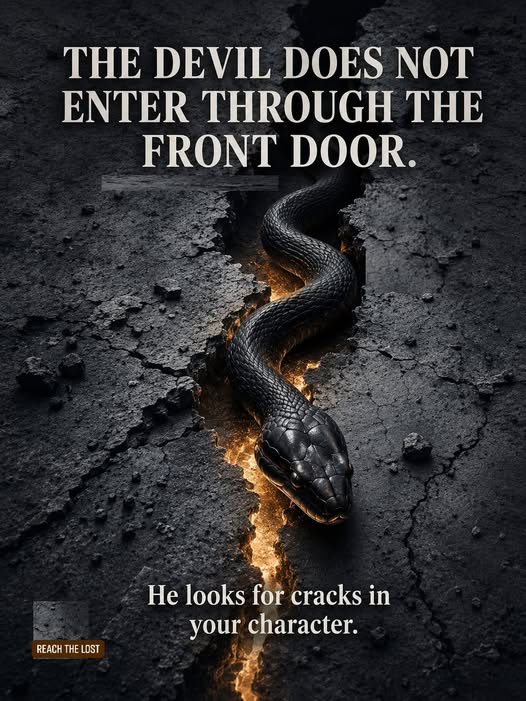
First Peter 5:8 states, “Be sober-minded; be watchful. Your adversary the devil prowls around like a roaring lion, seeking someone to devour” (ESV). This verse appears in the final chapter of the book and is followed by Peter’s appeal to his readers to resist the devil and stand firm. As we focus on obeying God, we must also understand why the devil is our adversary and how to handle his attacks.
One reason that Satan, whose very name means “adversary” or “one who opposes,” is described as our adversary is that he is God’s enemy. While the Bible does not provide a comprehensive account of the events that transpired between God and the devil in eternity past, Isaiah 14:12–14 and Ezekiel 28:12–18 give some clues. These passages suggest that the angel we now call the devil rebelled against God, and other angels joined the rebellion, leading to their exile from God’s presence. Having no power against the All-Powerful, the devil turns his attention to humanity, God’s cherished creation.
This raises uncomfortable questions. We may wonder why God permitted the rebellion or why He created Satan in the first place. Since there are no explicit biblical answers to these questions, we find ourselves like toddlers attempting to understand quantum physics. What we do know is that God created everything with a purpose, including the angel that became the devil (Revelation 4:11).
It is important to remember that God originally made Satan as a holy angel before the latter rebelled. Furthermore, just because God possesses foreknowledge of an event does not mean that He causes that event to happen. At most, we can only inquire why He created anything at all. Similar to reading a suspense novel, understanding the ways of God may only come at the end when God restores all things (Revelation 21:1–6).
Until the grand denouement, we live with unanswered questions in the middle of the ultimate suspense story. There is more to be said about our adversary. The term devil originates from the Greek word diabolos, which means “slanderer” or “accuser.” This notion is conveyed in Revelation 12:10, which portrays the devil seeking to accuse us as guilty before the Ultimate Judge, like he did to Job (Job 1:6–12; 2:1–6) and Joshua the high priest (Zechariah 3:1).
The devil is also known as the “father of lies” (John 8:44) and is responsible for leading the world astray (Revelation 12:9). He deceived Eve into rebelling against God (Genesis 3:1–7), and he continues to feed the world lies. The devil even attempted to deceive Jesus (Matthew 4:1–11).
The widespread persecution of Christians, both in the past and present, can also be attributed to our adversary, the devil. First Peter 5:9 mentions suffering, and the entire letter was written to encourage persecuted believers. The devil uses persecution as a means to discourage Christians. The assault is emphasized in Revelation 2:10, where the church of Smyrna is warned that “the devil is about to throw some of you into prison to test you.” Also, Revelation 12:17 predicts that the dragon will wage war against “those who keep God’s commands and hold fast their testimony about Jesus.”
The devil is our adversary because he opposes all that God is and does. Humans are created in God’s image (Genesis 1:27), humans represent the pinnacle of God’s creation, and humans are the object of God’s love (John 3:16). Further, Satan opposes even more vehemently all those who are bound to Christ. Our battle is not against politicians, new atheists, or anyone else who combats Christianity; it is fundamentally a spiritual conflict (Ephesians 6:11–12). Like vigilant soldiers, we must remain alert and armed with spiritual weapons.
Our armor against our adversary the devil comprises God’s truth, His gift of righteousness, salvation, the peace of the gospel, the unshakable Word of God, and our faith in Christ (Ephesians 6:14–17).

Tea Time Manna
As you do not know the path of the wind, or how the body is formed in a mother’s womb, so you cannot understand the work of God, the Maker of all things.
—Ecclesiastes 11:5
“I don’t know!”
This sure seems to be one of the hardest phrases for us to say. When thinking about God and his ways, especially his work on us and plans for us made when we were in the womb, that’s really all we can say. “I don’t know!” The truths we know about God and his ways with us when we were in the womb are only what he has chosen to reveal to us. He is the Mystery of mysteries. He is the supreme unknowable Knowable. Yet what we do know of him, what he has revealed to us in Jesus, is not only mighty and awesome, but loving, tender, and merciful. We know his love is willing to sacrifice for us, so we could seek after him and find his grace. So in reverence, we kneel to pray to the Father we cannot fully know — at least not yet, but will one day (1 John 3:1-3) — but can be fully assured that he loves us and wants us near to him.
Prayer
To you, O Lord God, I offer my wonder and awe. When I consider the vastness of the universe in which our tiny blue planet spins through its existence, I am humbled by your wonderfully complex and expansive sovereignty, often expressed in tender mercy. As I ponder your greatness, dear Abba Father, I also treasure your nearness. You are the good Father who transcends space and time, yet you also are the almighty God who is ever near. Thank you for being accessible while being sovereign, available while not controllable. I thank you and praise you in the name of Jesus as I draw near to experience you more fully. Amen and Amen

Bible Teaching of the Day
LUNCH MANNA =
Wiles are tricks or manipulations designed to deceive someone. The tongue-in-cheek phrase a woman’s wiles refers to the seductiveness of femme fatales in using charm or sex appeal to elicit a desired response from men. Wiles of the devil are those clever schemes used by Satan to ensnare us through temptation, threat, or intimidation. Ephesians 6:11 warns us to “put on the whole armour of God, that ye may be able to stand against the wiles of the devil” (KJV). Other Bible versions speak of the “devil’s schemes,” “strategies,” or “evil tricks” rather than “wiles.” Scripture gives us insight into our enemy’s tactics: “We are not unaware of his schemes” (2 Corinthians 2:11), and we are wise to heed its warnings.
Here are some of the devil’s wiles we see in Scripture:
- Challenging God’s Word. Genesis 3 gives us a detailed look into this tactic of our enemy. It led to the first human sin, and Satan still uses it because it works so well. The first recorded words of the devil, through the serpent, were these: “Did God really say?” (Genesis 3:1). With those words, the devil invited the woman to reconsider what she understood God to have said. By adding her human interpretation, she convinced herself that God’s Word was far too restrictive.
By suggesting that we should reexamine the clear teaching of God’s Word, Satan invites us to add our own interpretation and thereby nullify God’s stated will. Entire church denominations are falling prey to these wiles of the devil. “Did God really say that homosexuality is wrong?” he hisses, and churches crumble. “Did God really say there are only two genders?” he suggests, inviting us to put our own spin on reality, making ourselves gods in place of the Lord. Ephesians 6:11 says that we need to be clothed in the whole armor of God to withstand such wiles.
- Challenging our identity. Luke 4:1–13 gives insight into several of the devil’s wiles. Satan came against Jesus to tempt Him in the wilderness. On two different occasions, Satan began his temptations with these words: “If you are the Son of God.” Satan knew exactly who Jesus was (Mark 1:34). Jesus was there when Satan fell “like lightning from heaven” (Luke 10:18). Significantly, the devil chose a time when Jesus was physically weak and hungry to attack His identity.
Satan does the same with us. To make his wiles more effective, he hits us during a crisis or a spiritual struggle and suggests, “If you were a child of God, this wouldn’t happen. If you were actually a Christian, God would help you right now.” Again, we need the “helmet of salvation” firmly in place to withstand such attacks against our identity and God’s character (Ephesians 6:17).
- Twisting Scripture. Another of the wiles the devil used against Jesus was to quote Scripture, but with a twist. In Luke 4:10–11, Satan quotes Psalm 91:11–12 in an effort to persuade Jesus to act in the flesh rather than follow the Spirit (see Galatians 5:16, 25). But Satan failed to complete the thought of the psalm. The next verse, Psalm 91:13, says, “You will tread on the lion and the cobra; you will trample the great lion and the serpent.” Those animal references are metaphors for fierce and dangerous enemies—and the devil is likened to both a lion and a serpent in Scripture (Genesis 3:15; Revelation 20:2; 1 Peter 5:8; cf. Romans 16:20). The true meaning of the passage in Psalm 91 is that God will protect and empower His servants as they overcome the enemy, Satan. One of the wiles of the devil is to leave out key parts of Scripture in order to twist its meaning to fit his agenda.
We see these wiles of the devil in action today, as prosperity teachers and false prophets quote Scripture in selfish and misleading ways. They use enough of God’s Word to sound authoritative, but they twist it to fit their personal agendas. Cherry-picking the Bible for verses that affirm whatever we want to believe or do is a widespread problem, and most participants have no idea they have fallen victim to one of the wiles of the devil.
- Offering a tempting alternative to obedience. Another scheme or wile of the devil used in the temptation of Jesus was to suggest another path, avoiding strict obedience to God’s will. Cunningly, Satan knew better than to suggest that Jesus forget the whole salvation plan and go back to heaven. Instead, he offered an alternative. In Luke 4:5–7, “the devil led him up to a high place and showed him in an instant all the kingdoms of the world. And he said to him, ‘I will give you all their authority and splendor; it has been given to me, and I can give it to anyone I want to. If you worship me, it will all be yours.’” This temptation was aimed at the humanity of the Son of Man. Jesus now knew what it felt like to be in the flesh. He knew what spikes would feel like in His hands and feet. He knew what rejection and mockery would feel like when He was stripped naked and paraded before the crowds. Satan was offering Him a compromise. What if Jesus could “save the world” without having to suffer crucifixion? What if He could take a shortcut and possess all the world’s kingdoms now?
- One of the most sinister wiles of the devil involves his ability to offer a religiously tainted compromise. He knows he can’t come at mature believers with a frontal attack on their values and convictions. So he slides in the back door, posing as a friend with a reasonable alternative: “Well, yes, technically it might be wrong for someone to move in with a boyfriend, but you can witness to him better as he watches you live out your faith.” Or this: “You don’t need to go to church to be spiritual. You connect better with God alone in the woods. Those people are all hypocrites anyway, and you are too righteous to associate with them.” We must beware of the devil’s wiles when he offers something other than total obedience to God’s will.
- The New Testament writers often pointed out the wiles of the devil to those in the church who were falling for them, and we should take note. The presence of false prophets (1 Timothy 6:3–5), busybodies (1 Peter 4:15), adulterers (1 Timothy 1:9–10), and seducers (Revelation 2:20) are all part of Satan’s masterplan to undermine the church from within.
- To combat the wiles of the devil, followers of Christ must stay clothed in the armor of God. We must stay immersed in His Word so that we recognize deception. And when we realize we have been caught in the wiles of the devil, we must quickly repent and seek godly accountability. Psalm 37:23–24 encourages those who desire to live godly lives: “The steps of a man are established by the LORD, when he delights in his way; though he fall, he shall not be cast headlong, for the LORD upholds his hand.” When the Lord holds our hand, the devil’s wiles cannot harm us.
Today’s Devotional
DINNER MANNA =
Ephesians 6:11 exhorts believers to “put on the whole armor of God” in order to stand firm against the attacks of our enemy, Satan (2 Corinthians 10:4; Ephesians 6:12). Verses 14 through 17 say, “Stand firm then, with the belt of truth buckled around your waist, with the breastplate of righteousness in place, and with your feet fitted with the readiness that comes from the gospel of peace. In addition to all this, take up the shield of faith, with which you can extinguish all the flaming arrows of the evil one. Take the helmet of salvation and the sword of the Spirit, which is the word of God.”
The imagery is of an armed Roman or Israelite soldier, prepared for battle. A typical armed soldier wore a breastplate made of bronze or chain mail. It covered the vital organs, namely, the heart, and was fitted with loops or buckles that attached it to a thick belt. If the belt was loosened, the breastplate slipped right off.
When Paul compares the armor of God with military gear, each piece represents a part of God’s strength that He extends to us when we become His children. The breastplate of righteousness refers to the righteousness purchased for us by Jesus at the cross (2 Corinthians 5:21). At salvation, a “breastplate” is issued to each repentant sinner. It is specially designed by God to protect our heart and soul from evil and deception. Our own righteous acts are no match for Satan’s attacks (Isaiah 64:6). The breastplate of righteousness has Christ’s name stamped on it, as though He said, “Your righteousness isn’t sufficient to protect you. Wear mine.”
We are instructed to “put on” this armor, which implies that we do not automatically wear it all the time. Putting on the armor of God requires a decision on our part. To put on the breastplate of righteousness, we must first have the belt of truth firmly in place. Without truth, our righteousness will be based upon our own attempts to impress God. This leads to legalism or self-condemnation (Romans 8:1). We choose instead to acknowledge that, apart from Him, we can do nothing (John 15:5). We see ourselves as “in Christ” and that, regardless of our failures, His righteousness has been credited to our account.
We “put it on” by seeking God and His righteousness above everything else (Matthew 6:33). We make Him and His ways our dwelling place (Psalm 91:1). We delight in His commands and desire for His ways to become our ways (Psalm 37:4; 119:24, 111; Isaiah 61:10). When God reveals an area of change to us, we obey and allow Him to work in us. At the point where we say “no” to God, we open a little crack in the armor where Satan’s arrows can get through (Ephesians 6:16).
As we wear Christ’s breastplate of righteousness, we begin to develop a purity of heart that translates into actions. Wearing this breastplate creates a lifestyle of putting into practice what we believe in our hearts. As our lives become conformed to the image of Christ (Romans 8:29), our choices become more righteous, and these godly choices also protect us from further temptation and deception (Proverbs 8:20; Psalm 23:3).
When armor is abused or worn incorrectly, it can malfunction. Likewise, there are several factors that can interfere with the effectiveness of our spiritual breastplate. Carelessness (1 Peter 5:8), unbelief (Hebrews 3:12), abusing grace (Romans 6:1–2), or disobedience (1 John 3:4; Hebrews 4:6) can hinder our ability to stand firm and defeat the enemy in our lives. When we tolerate sin, refuse to forgive (2 Corinthians 2:10–11), rely on personal righteousness (Titus 3:5), or allow earthly concerns to crowd out time for an intimate relationship with God, we, in effect, take off the breastplate of righteousness, minimizing its power to protect us.
We need our breastplate of righteousness in place in order to gain the victory specified in 2 Corinthians 10:5: “We are destroying speculations and every lofty thing raised up against the knowledge of God and we are taking every thought captive to the obedience of Christ.” When we quickly reject heretical ideas, idolatry, and the “counsel of the ungodly” (Psalm 1:1) and instead “keep our eyes on Jesus, the author and finisher of our faith” (Hebrews 12:2), we keep our breastplate securely fastened.

NEWS MANNA –
Bible Prophecy, Signs of the Times and Gog and Magog Updates with Articles in the News
China Fears The One Thing It Cannot Control-The Explosive Growth Of Christianity in China
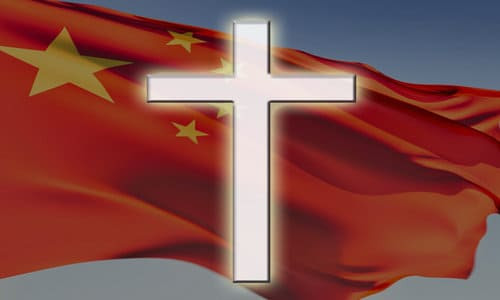
As the world watches Donald Trump engage with China on trade, military power, artificial intelligence, and global influence, another story remains buried beneath the headlines — the relentless and systematic persecution of the Christian church inside China. While diplomats shake hands and cameras flash, millions of Chinese believers continue to worship under surveillance, face imprisonment for their faith, and watch as the Communist Party attempts something few regimes in history have dared to do: rewrite the Bible itself.
For decades, the Chinese Communist Party has viewed Christianity not merely as a religion, but as a rival authority. The issue has never been theology alone. It is control. Any institution capable of commanding higher loyalty than the state is viewed as a threat. And with estimates now placing the number of Christians in China as high as 130 million — surpassing the membership of the Chinese Communist Party itself — the government’s anxiety has only intensified.
What makes this remarkable is that Christianity in China has exploded despite decades of persecution. Underground house churches continue to multiply. Secret prayer meetings continue behind locked apartment doors. Rural revivals continue in hidden villages. The harder the state has tried to crush Christianity, the more the church has grown.
That growth has now triggered a far more aggressive campaign.
The Chinese government is no longer satisfied with tearing down crosses, arresting pastors, or shutting churches. It is now attempting to reshape Christianity into a state-approved ideology loyal first and foremost to communism. Under President Xi Jinping, the Communist Party has aggressively pushed what it calls the “Sinicization” of religion — a movement demanding that Christianity conform to “socialist values” and absolute loyalty to the Party.
One of the most chilling examples is the regime’s effort to alter Scripture itself.
A Communist Party-approved textbook rewrote the story of the woman caught in adultery from John chapter 8. In the authentic biblical account, Jesus tells the crowd, “He who is without sin among you, let him cast the first stone.” The accusers leave, and Jesus forgives the woman. But in the Party’s revised version, Jesus stones the woman Himself and declares, “I am also a sinner.”
It is difficult to overstate how shocking such a distortion is to Christians worldwide. This is not interpretation. It is ideological replacement. The goal is not simply to censor Christianity but to transform Jesus into a political servant of the state.
Tina Ramirez of Hardwired Global warned that China has “taken it to a new level” by attempting to rewrite Scripture itself in order to confuse believers and prevent conversions.
The campaign against Christianity extends far beyond rewritten texts.
Children under 18 are banned from attending many churches in parts of China. Sunday schools and youth ministries have been raided or shut down. In several provinces, minors have reportedly been forbidden from entering church buildings entirely. Christian summer camps have been canceled. Youth Bible education has been heavily restricted. Authorities understand a simple reality: if children cannot learn Christianity young, the Party can better control the next generation.
Meanwhile, digital censorship has intensified. Bible apps have disappeared from Chinese app stores. Online Christian bookstores have been shut down. Some believers have resorted to secretly sharing downloaded PDF copies of Scripture because legally accessible versions have become harder to obtain.
The state-approved churches that remain open often function less like churches and more like political extensions of the Communist Party. Patriotic slogans praising communism hang beside crosses. Sermons are expected to promote loyalty to the state. Some churches have reportedly been instructed to sing songs celebrating the Communist Party before worship services begin.
Pastors who refuse compliance often disappear into prison.
Wang Yi, pastor of the underground Early Rain Covenant Church, was sentenced to nine years in prison after publicly criticizing government interference in Christianity. Members of his church were arrested alongside him. Others have faced house arrest, surveillance, intimidation, or economic punishment.
In provinces like Zhejiang, authorities have removed crosses from church rooftops and demolished church buildings entirely. Facial-recognition cameras have reportedly been installed inside some churches to monitor worshippers. In certain areas, Christians have been pressured to replace images of Jesus with portraits of Xi Jinping.
And yet, despite all of this, the underground church continues to grow.
That may be the most astonishing part of the story.
History repeatedly shows that persecution often strengthens the very faith governments seek to destroy. The Soviet Union failed to eradicate Christianity. North Korea has not eliminated it entirely despite horrific repression. And now China — armed with AI surveillance, censorship technology, and enormous state power — is discovering the same reality.
One Chinese pastor reportedly summarized it best: “The rulers have chosen an enemy that can never be imprisoned. They are doomed to lose.”
As global leaders focus on tariffs, trade deals, and military strategy during Trump’s visit, the spiritual battle unfolding inside China deserves equal attention. Beneath the economic superpower is a government terrified of faith it cannot fully control.
And despite surveillance cameras, rewritten Bibles, imprisoned pastors, banned children, and state propaganda, millions of Chinese Christians continue to gather quietly, pray faithfully, and believe defiantly.
The Communist Party may control the streets, the schools, the media, and the prisons. But history suggests something it cannot easily control: a church willing to suffer for what it believes.
TruLight Ministries Daily Entertainment Manna

TruLight TV : Gaither Gospel Series – Rocky Mountain Homecoming
The majestic splendor of Colorado’s Rocky Mountains provide a dramatic backdrop for the Gaither Vocal Band-hosted Rocky Mountain Homecoming, taped at Red Rocks Amphitheatre, one of the world’s most spectacular natural wonders. Bill and Gloria Gaither’s Homecoming Friends, along with Gaither Vocal Band members Guy Penrod, David Phelps, and Russ Taff pay tribute in song and spoken word to the beauty of America’s west.
Today on TruLight Radio XM
TruLight Radio XM 24/7
Program
GMT / UTC +2
Monday To Fridays
00:15 Words to Live By Testimonies
01.15 Science Scripture and Salvation
02.15 Ground Works
04.00 Gospel Concert of the Day
05.00 The Daren Streblow Comedy Show
5:55 It is Today devotional
6:00 Gaither Homecoming Morning Show
7:15 Discover the Word
8.15 Destined for Victory
8:55 Science Scripture and Salvation
9:00 Holy Spirit Hour – Normally Sermons
10:15 Hope of the Heart
11:15 Unshackled
11.45 Words to Live By
12:15 Truth for Life
13:15 Living on the Edge with Chip Ingram
14:15 Focus on the Family
15:00 Kids Hour
16:00 In Touch with Dr. Charles Stanley
16:30 Groundwork
17:15 Live in the Light
18:15 Renewing your Mind
19:00 Gaither Homecoming Show
20:15 Growing Hope
21:15 Adventures in Odyssey Radio Drama
21:45 Bible Reading
22:15 Night-sounds
23.00 Good Old Country Gospel / Rhema Gospel Express
VISIT THE WEBSITE
TruLight Ministry News – EXTRA MANNA
TruLight Ministries orders from God since 2012 . Teach Them , Comfort Them and Warn Them!
Healing Truths.
End Time Articles.
Bonus Teaching for the Child of God !!
Several times in his instruction to Timothy, Paul introduces content as “a trustworthy statement” (1 Timothy 1:15; 3:1; 4:9; 2 Timothy 2:11). The “trustworthy” designation highlights what follows as an important and reliable principle. Shortly after such an introduction, Paul remarks that God cannot deny Himself (2 Timothy 2:13).
In 2 Timothy 2:11 Paul introduces what reads like a poetic verse from a hymn that includes four couplets. The words may have already been familiar to Timothy, or Paul may have been simply providing new content. Literally rendered, the passage reads like this: “Since together we died, also together we will live;
since we are enduring, also together we will reign;
if we will deny, He will also deny us;
if we are not faithful, He remains faithful, for to deny Himself He cannot” (2 Timothy 2:11–13).
In the first couplet (2 Timothy 2:11), Paul acknowledges that, because we have died together with Christ (as in Colossians 2:20 and 3:3), we will live together with Him. We will enjoy life everlasting with Christ. Paul states this as fact (using the first class condition in the Greek)—this is not merely an “if” but a “since.” It is a fact that we have died together (Paul uses the aorist tense, denoting the action is completed), and it is a certainty that in the future we will live together with Christ.
Next, Paul encourages believers that, since we are enduring (also assumed as fact, using the first class conditional), then we will reign together with Him and each other (2 Timothy 2:12a). As John explained it in Revelation, believers overcome through Christ who has Himself overcome (compare Revelation 2:7, 11; 3:5; 21:7, etc., with Revelation 5:5). This is an encouragement for believers to persevere—and, assuming their endurance, reminding that there is a future of reward and meaningful activity in store.
The third couplet (2 Timothy 2:12b) changes the tense of the (protasis) action from present (as was used on the first two couplets) to future, rendering the first part of the couplet, “if we deny in the future.” If there is such a denial, then He will also deny us. Jesus used similar terminology when He explained that, if people denied Him before men, He would deny them before the Father (Matthew 10:33). It is important to note that Jesus was talking to His twelve disciples (Matthew 10:5; 11:1). He explains that the Spirit would be speaking through them (Matthew 10:20), and He warns them of the need to be faithful in confessing Him before men and not denying Him—He is challenging them to be faithful messengers for Him. There was reward for confessing Him before men (Matthew 10:32) and consequences for denying Him before men (Matthew 10:33).
In 2 Timothy 2, Paul is challenging Timothy to endure and fulfill his ministry, which included doing the work of a good-news proclaimer, or evangelist (2 Timothy 4:5). Paul challenges Timothy with the importance of confessing and not denying Jesus.
When Paul says that Jesus will deny us, he is not talking about loss of salvation or change in positional standing before God. Much like Jesus warned His twelve disciples, Paul reminds Timothy that there are consequences to unfaithfulness in ministry. Paul had explained earlier in this context the importance of engaging like a good soldier, an athlete competing according to the rules, and a hard-working farmer (2 Timothy 2:3–6).
Paul had elsewhere explained that he was working hard to be faithful so he would not be disqualified from ministry (1 Corinthians 9:23–27). He refers to faithfulness in practice, not loss of salvation—as he explains after the fourth couplet in 2 Timothy 2:13: God “cannot deny Himself” (NKJV). To ensure that people rightly understood the rewards and consequences of faithfulness in the Christian life, Paul told the Corinthians that the works of all believers would one day be assessed at Christ’s judgment seat. If those works stand the test, the believer will be rewarded (1 Corinthians 3:14). If the works are burned up, then the believer will lose out on the reward, but he would not lose salvation (1 Corinthians 3:15). Paul’s warning to Timothy that Jesus would deny those who deny Him has nothing to do with their position in Christ, as we see in the fourth couplet: “If we are unfaithful, he remains faithful, for he cannot deny who he is” (2 Timothy 2:13, NLT).
Even if we are unfaithful, or lacking faith, faithful He remains, for God cannot deny Himself. Once a person is in Christ (by belief in Him), God remains faithful to that person—He keeps His word. The one who believes has eternal life from the moment of faith (e.g., John 6:47; Romans 8:29–31). Nothing can separate a child of God from the love of God (Romans 8:38–39), because He is faithful to keep His promise.
God cannot deny Himself. If He were to break His promise to those who have believed in Him, that would be a denial of Himself and His righteous character. To those who fear that God is standing over them waiting to cast them out if they deny Him or if they fail to have enough belief or if they are unfaithful in their ministries, Paul says that God always remains faithful. His faithfulness is a matter of His own character—God cannot deny Himself (2 Timothy 2:13).
Scripture doesn’t ever manipulate us to action based on the potential loss of our position in Christ. Instead, we are exhorted to act because God is faithful and the promises He makes are certain.
Share this Feeding of Manna with your Friends and Family. just click on the Social Media icon and share !