SELECT YOUR READING LANGUAGE – BOTTOM LEFT = YOUR DAILY MANNA NOW AVAILABLE IN 103 LANGUAGES
@ TruLight – Daily Manna is not Just a Bible Verse with a Small Prayer . No WE SERVE DAILY Manna for the Whole Day . Breakfast , Lunch , Dinner , Plus tea Times and even Entertainment Manna . Plus News Manna and More , This Daily Manna will keep you Spiritually full for the full 48 Hours and even More to Share with your Friends and Family !!!
Conviction VS Condemnation
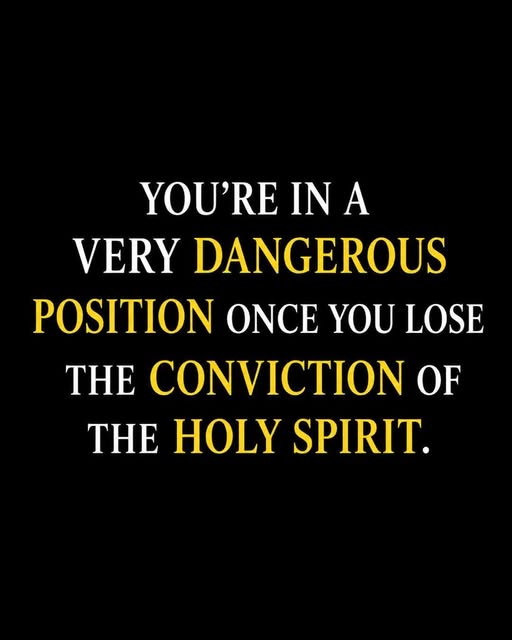
I am going to be applying tough love by addressing areas of sin in your life because I want to see you healed and set free. I’m going to touch the very fabric of your lives and will be addressing issues where you are most sensitive and vulnerable. I trust that as you read and learn about your disease, the conviction of the Holy Spirit will come. If you feel conviction, that’s good! That’s the Holy Spirit, don’t ignore it! It is God knocking on the door of your heart and talking to you and that is exciting because it means He is about to do a work in your life. When you feel convicted, do you know that you are so close to victory because you are about to defeat your disease or prevent a disease developing that was heading your way?
If you don’t feel conviction, you are in trouble because that means that the Holy Spirit has withdrawn from you. In his prayer of repentance in Psalm 51, King David said “Take not Your Holy Spirit from me!” Why did David say that? Because he had seen what had happened to his predecessor King Saul. Saul hardened his heart to the conviction of the Holy Spirit and refused to repent. As a result the Holy Spirit withdrew from him. When the spirit of God departed from King Saul, a spirit of insanity came and King Saul went mad.
The Holy Spirit brings conviction because God loves you and wants to see you set free from sin so you can enjoy the abundant life, which includes divine health, that Jesus paid such a high price to give you.
Hebrews 12 v 5-6 and 10-11: ”5My son, do not think lightly or scorn to submit to the correction and discipline of the Lord, nor loose courage and give up and faint when you are reproved or corrected by Him; 6 For the Lord corrects and disciplines everyone whom He loves, and He punishes, even scourges, every son whom He accepts and cherishes… 10 For [our earthly fathers] disciplined us for only a short period of time and chastised us as seemed proper and good to them; but He disciplines us for our good, that we may become sharers in His holiness. 11 For the time being no discipline brings joy, but seems grievous and painful; but afterwards it yields a peaceful fruit of righteousness to those who have been trained by it [a harvest of fruit which consists in righteousness – in conformity to God’s will in purpose, thought, and action, resulting in right living and right standing with God].”
When the Word is taught, the Holy Spirit brings conviction which is letting you know that an area of your life and thinking needs to be changed. However, the devil then likes to come in and use that conviction which was meant for your good and he beats you over the head with it as condemnation.
The Bible says that the devil is the accuser of the brethren.
Revelations 12 v 10: “The accuser of our brethren, he who keeps bringing before our God charges against them day and night, has been cast out!” As you read through this book there may be sin in your life that is going to be brought to your attention but please do not respond to that by feeling judged and condemned. Condemnation comes from the devil.
It is important to understand the difference between conviction and condemnation. God brings the conviction of the Holy Spirit and that conviction goes something like this, “Daughter or son, I want to show you something in your life.” And when you look at it you go, “Oh! I see it! I understand it, help me!”
But condemnation comes like this, “Look at what you are doing! You sinner! You Scum! I thought you were a Christian! You better fix that!” Condemnation brings with it feelings of worthlessness and failure and makes us want to give up. Condemnation drives us away from God because it makes us feel unworthy.
If you feel conviction, God is knocking on the door of your heart and
talking to you. That is exciting because it means He is about to do a work in your life.
Conviction reaffirms our value in God and brings to the place of wanting to get right with God. Conviction makes us want to be closer to Him. One thing you must understand about the Bible is that it sets the standard of what we should grow into, but don’t be condemned by the standard. I want to help you understand that nothing is black or white – everything is grey.
I am grey and you are grey. White represents perfection as far as God is concerned.
Black represents everything that is negative or evil as far as the devil is concerned. People get caught in this black or white where they feel so bad about themselves because they are not all white and they become condemned with their black.
When you were saved you were a dark shade of grey – you had a little white in you, but a lot of black. When it comes to black paint, the more white you add to it, the more grey it becomes and that is what sanctification is all about. White which represents God’s nature and character is being added as the darkness in your life is removed by a work of the Holy Spirit, as long as you co operate with Him. If you find some black in your life or you are a dark shade of grey at the moment, don’t be hard on yourself and feel guilty. That is the devil accusing you to yourself – he is reminding you that he is there and then blaming you for it.
It’s ok to see your sin list but then you roll it back up and give it back to God and say, “OK, when You’re ready Father, I’m ready to work with You to get this out of my life.” But the enemy will say, “Today you better deal with every single thing and boy you better do it or else!” That is not God. That’s the enemy trying to drive you where the Holy Spirit is not leading you. The voice of the Holy Spirit is gentle because He is a gentleman. He leads us and He guides us but the devil drives us. So if you feel driven today to get rid of whatever sin it is, that is not God. However, if you have this tugging, excitement and hope then know that God is working with you. That is the hope that spurs in your heart the faith that is going to kick that sin out of your life.
Most Diseases are a Result of Sin and Separation on One of Three Levels Isaiah 59 v 2: “But your iniquities have made a separation between you and your God, and your sins have hidden His face from you, so that He will not hear.”
We see from Isaiah 59 v 2 that sin separates us from God. Most of the time disease can be traced back to sin and thus separation on one of the following three levels:
1. Separation from God.
2. Separation from yourself.
3. Separation from others.
These are the three main roots or sin issues that cause most of disease known to mankind and which manifest through the human body in various ways. The foundation of the Kingdom of God is relationship.
Therefore the foundation of satan’s attack is to destroy your relationship with God, yourself and others. These are the three areas where satan destroys our peace. When you are not at peace, you are not at ease – you are in a state of dis-ease which eventually leads to disease.

Tea Time Manna
You, my brothers, were called to be free. But do not use your freedom to indulge the sinful nature; rather, serve one another in love.
—Galatians 5:13
Our freedom as followers of Jesus, the freedom to live by the power of the Spirit and not by law (Romans 8:1-4; Galatians 5:1), is a wonderful gift, especially when it is handled with responsibility and grace (Romans 14:13; 1 Peter 2:16). Not being under law is such a sweet grace, but we want to pass that sweetness on to each other through service, kindness, and care (Romans 13:10). Just because we are free to do something doesn’t mean doing it is beneficial to our brothers and sisters in Christ or to those we are trying to influence toward Jesus. Freedom gives us the opportunity to do things in love, not just because we are commanded to do them. Love should be, could be, and must mean more than law.
Prayer
O Great God of Deliverance, thank you for rescuing Israel from Pharaoh’s grasp, David from the sword of Goliath, and Daniel from the mouths of lions. But O Great Deliverer, thank you most of all for the triumph of Jesus over sin, hell, and the law at Calvary. Thank you for his victory over death at the empty tomb. I long to see you face-to-face and thank you for my freedom, won by Jesus and fulfilled in me through the transformation of the Holy Spirit at work within me (2 Corinthians 3:17-18). May my love for others and for you mean more than any law could mean toward me being a blessing. Until the day Jesus returns, please Father, guide me as I use this gift of freedom to serve your children and live for you. In Jesus’ name, I pray. Amen and Amen
Bible Teaching of the Day
LUNCH MANNA =
The Bible tells us that the Holy Spirit will convict the world of sin (John 16:8). To help us understand what the conviction of sin is, we can look at what it is not. First, it is not simply a guilty conscience or even shame over sin. Such feelings are naturally experienced by almost everyone. But this is not true conviction of sin.
Second, conviction of sin is not a sense of trepidation or a foreboding of divine punishment. These feelings, too, are commonly experienced in the hearts and minds of sinners. But, again, true conviction of sin is something different.
Third, conviction of sin is not merely knowledge of right and wrong; it is not an assent to Scripture’s teaching about sin. Many people read the Bible and are fully aware that the wages of sin is death (Romans 6:23). They may know that “no immoral, impure or greedy person . . . has any inheritance in the kingdom of Christ and of God” (Ephesians 5:5). They may even agree that “the wicked go down to the realm of the dead, all the nations that forget God” (Psalm 9:17). Yet, for all their knowledge, they continue to live in sin. They understand the consequences, but they’re far from being convicted of their sins.
The truth is, if we experience nothing more than a pang of conscience, anxiety at the thought of judgment, or an academic awareness of hell, then we have never truly known the conviction of sin. So, what is real conviction, the kind the Bible speaks of?
The word convict is a translation of the Greek word elencho, which means “to convince someone of the truth; to reprove; to accuse, refute, or cross-examine a witness.” The Holy Spirit acts as a prosecuting attorney who exposes evil, reproves evildoers, and convinces people that they need a Savior.
To be convicted is to feel the sheer loathsomeness of sin. This happens when we’ve seen God’s beauty, His purity and holiness, and when we recognize that sin cannot dwell with Him (Psalm 5:4). When Isaiah stood in the presence of God, he was immediately overwhelmed by his own sinfulness: “Woe to me! . . . I am ruined! For I am a man of unclean lips . . . and my eyes have seen the King, the LORD Almighty” (Isaiah 6:5).
To be convicted is to experience an utter dreadfulness of sin. Our attitude toward sin becomes that of Joseph who fled temptation, crying out, “How could I do this great evil and sin against God?” (Genesis 39:9).
We are convicted when we become mindful of how much our sin dishonors God. When David was convicted by the Holy Spirit, he cried out, “Against you, you only, have I sinned and done what is evil in your sight” (Psalm 51:4). David saw his sin primarily as an affront to a holy God.
We are convicted when we become intensely aware of the wrath it exposes to our souls (Romans 1:18; Romans 2:5). When the Philippian jailer fell at the apostles’ feet and cried, “Sirs, what must I do to be saved?” he was under conviction (Acts 16:30). He was certain that, without a Savior, he would die.
When the Holy Spirit convicts people of their sin, He represents the righteous judgment of God (Hebrews 4:12). There is no appeal of this verdict. The Holy Spirit not only convicts people of sin, but He also brings them to repentance (Acts 17:30; Luke 13:5). The Holy Spirit brings to light our relationship to God. The convicting power of the Holy Spirit opens our eyes to our sin and opens our hearts to receive His grace (Ephesians 2:8).
We praise the Lord for the conviction of sin. Without it, there could be no salvation. No one is saved apart from the Spirit’s convicting and regenerating work in the heart. The Bible teaches that all people are by nature rebels against God and hostile to Jesus Christ. They are “dead in trespasses and sins” (Ephesians 2:1). Jesus said, “No one can come to Me unless the Father who sent Me draws him” (John 6:44). Part of that “draw” to Jesus is the conviction of sin.
Today’s Devotional
DINNER MANNA =
In John 16:8, Jesus promised to send the Holy Spirit: “When [the Spirit] comes, he will convict the world concerning sin and righteousness and judgment” (ESV). In this verse, we see a three-fold ministry the Spirit will perform in relation to the unsaved world. He will “convict” the world; that is, He will reprove it or show it to be wrong. This reproof will target three areas in which the world needs admonishing: sin, righteousness, and judgment.
Jesus went on to explain: “Concerning sin, because they do not believe in me; concerning righteousness, because I go to the Father, and you will see me no longer; concerning judgment, because the ruler of this world is judged” (John 16:9–11, ESV).
The world is a sinful place, and one of the Holy Spirit’s tasks is to convict the world of its sin. No amount of preaching, pleading, or pointing of fingers will bring about the conviction of sin, unless the Holy Spirit is at work in the sinner’s heart. It is the Spirit’s job to convict. And what is the most basic sin of which the world is guilty? Jesus specifies it as unbelief. The convicting power of the Holy Spirit is at work in the world “because they believe not in [Christ].” Once a person responds to the Spirit’s conviction and turns to faith in Christ, the other sins he practiced will be taken care of. It is the sin of unbelief—a refusal to trust in Jesus—that is primary.
The world must also be convicted of righteousness, and this, too, is something the Holy Spirit does. There is a righteous standard we are all held to, despite the world’s stubborn denial of absolute truth. And who is the standard-bearer of righteousness? Jesus points to Himself as that standard: “Because I go to the Father.” There is only one Person who came down from heaven, lived a life of sinless perfection, and who ascended back to heaven—the Son of Man, who lives to be our Intercessor (John 3:13; 1 Timothy 2:5). The righteousness that the world tries to deny is found demonstrated in Christ. Everything He ever said and did was the consummate expression of God the Father (John 8:28; Colossians 2:9). He is righteousness personified, and none can measure up to Him (Romans 3:23).
The world is facing judgment, and the Holy Spirit also convicts them of this truth. There is a day of reckoning scheduled—a day in which the holy God will mete out justice and rid His creation of sin. In fact, this judgment has already begun. With whom did it begin? Jesus identifies Satan as the one on whom judgment fell: “Because the ruler of this world is cast out.” Jesus had earlier indicated that His death on the cross was when “the prince of this world will be driven out” (John 12:31). It was on the cross that Jesus redeemed sinners for God and utterly vanquished Satan. “That by his death he might break the power of him who holds the power of death—that is, the devil” (Hebrews 2:14). Three days later Jesus rose from the dead, showing to all the world that Satan’s rule has been overthrown. All who reject Christ and remain in their sin will be condemned along with Satan, and this is the warning that the Holy Spirit sounds in the hearts of the unsaved.
The influence of the Holy Spirit in an unsaved person’s life will lead that person to the realization that he is guilty, that God is just, and that all sinners are deserving of judgment. Once a sinner has been awakened to his soul’s great need, the Spirit will point him to Christ, the one and only Savior and Refuge from judgment (John 16:14). In all of this, the Spirit uses His “sword,” the Word of God (Ephesians 6:17), and the result is a regenerated heart. “Faith comes from hearing the message, and the message is heard through the word about Christ” (Romans 10:17).

NEWS MANNA –
Bible Prophecy, Signs of the Times and Gog and Magog Updates with Articles in the News
Fuel / Gas Prices Were Just The Beginning – Food Costs Are Next

For most people, the price of gasoline is the most obvious consequence of the war in the Middle East. As I write this article, the average price of a gallon of gasoline in the United States is $4.56. Of course in some parts of the country consumers are paying much more than that.
This is a big story, and the truth is that gasoline prices are going to go even higher in the months ahead. But if you think that the price of gasoline is bad, just wait until you see what eventually happens to food prices.
The price of diesel has been rising even faster than the price of regular gasoline, and fertilizer prices have been absolutely skyrocketing. Those costs will get passed along to the rest of us. It is just a matter of time. Meanwhile, our farmers are dealing with drought conditions that are unprecedented and now a “Super El Niño” is coming.
What all of this means is that food prices will rise to very painful levels.
So even though everyone is complaining about rising gasoline prices at the moment, one prominent economist is warning that “the next story is food”…
The cost of food in the U.S. appears poised to rise sharply alongside oil prices, as war-related supply disruptions put pressure on the companies and farmers who keep the country’s shelves stocked.
“The big story right now is oil,” economist Justin Wolfers told MS NOW on Tuesday. “The next story is food.”
Oil prices have risen over 50 percent since the conflict began on February 28, pushing gas prices to a nationwide average of over $4.50 for the first time since 2022.
Can you imagine what would happen if food prices were to rise another 50 percent from current levels?
Over the past year, many of the most common items that Americans purchase at the grocery store have already become much more expensive…
When compared to the same time last year, fruits and vegetables have seen some of the biggest price hikes. Tomatoes are 40% more expensive now than they were this time last year. Bad growing weather, tariffs, and rising fuel prices have all contributed to the huge change in tomato prices, reports the New York Times.
Coffee, another imported product, is 19% more expensive than it was last spring.
You’re also likely seeing inflated prices at the butcher counter. Meat is up 9% overall, but beef has grown even more expensive. Ground beef is about 15% pricier, beef roasts are 18% more, and steak is up 16%.
We can blame the war with Iran for the recent price hikes that we have been experiencing, because the war has made diesel much more expensive.
And diesel is used to transport most of what we eat…
What’s contributing to the price spikes? Fuel prices have soared while the Iran war prevents cargo ships from passing through the Strait of Hormuz, a vital corridor for global oil supplies. Diesel fuel powers fishing boats, tractors and the trucks that ship 83% of U.S. agricultural products.
Just as you’re paying more at the pump, so are truckers who transport goods all around the country. Some vendors and suppliers are adding fuel surcharges to make up for the increased cost of transporting and delivering their goods.
In addition, fertilizer prices have gone absolutely haywire, and those costs will be passed along to us once harvest season arrives.
The solution to this crisis would be for the Strait of Hormuz to reopen.
But Iran isn’t willing to do that.
Proposed Global Ai Body: Another Step Toward One-World Governance?

The rise of artificial intelligence has sparked legitimate fears about cyberwarfare, mass surveillance, deepfakes, economic disruption, and even autonomous weapons. In response, a growing number of world leaders, tech executives, and international organizations are now calling for a centralized global body to regulate AI development. On the surface, it sounds responsible. After all, who wouldn’t want safeguards against dangerous technology?
But beneath the polished language about “global cooperation” and “shared standards” lies something far larger: another accelerating step toward global governance, where unelected international bodies gain increasing authority over nations, economies, speech, and eventually human behavior itself.
This week, OpenAI openly backed the creation of a U.S.-led global AI governance organization that would include communist China as a member. Chris Lehane, OpenAI’s vice president of global affairs, suggested the body could function similarly to the International Atomic Energy Agency, which establishes international standards around nuclear energy.
The proposal is being framed as a way to create “safer” and “more resilient” AI systems worldwide. Yet history teaches that international institutions rarely remain neutral guardians of freedom. Instead, they often become political tools shaped by ideological pressure, global elites, and shifting cultural agendas.
Americans have already watched this happen repeatedly with the United Nations itself.
For decades, the UN has faced accusations of extraordinary bias against Israel, despite Israel being one of the world’s leading democracies and one of the most innovative technology powers on earth. UN bodies have issued countless condemnations against Israel while often remaining comparatively silent toward authoritarian regimes with horrific human rights records. Many Christians and Jews have increasingly viewed these global institutions not as defenders of truth or justice, but as ideologically captured organizations hostile to biblical values and national sovereignty.
Now imagine those same global dynamics applied to artificial intelligence.
AI is not merely another technology. It is rapidly becoming the infrastructure layer for society itself. Whoever controls AI standards may eventually influence banking access, digital communications, online speech, employment systems, military applications, healthcare decisions, surveillance networks, and even what information populations are allowed to see or share.
That is why the push for a global AI authority deserves intense scrutiny.
The language surrounding these proposals often sounds eerily familiar: “collective security,” “global coordination,” “shared responsibility,” and “harmonized standards.” These phrases may appear harmless, but they almost always involve shifting power away from individual nations and toward centralized international frameworks. Americans should ask a simple question: who ultimately decides what constitutes “safe” AI?
Would biblical views on gender, marriage, or human life eventually be classified by global AI systems as “harmful” or “dangerous misinformation”? Would pro-Israel perspectives be deprioritized by international moderation standards shaped by anti-Israel governments? Would Christian ministries someday find themselves digitally restricted by algorithms trained under “global consensus” rules?
Those concerns are no longer theoretical.
Around the world, governments are already experimenting with digital censorship systems, biometric surveillance, facial recognition databases, and online speech controls. China’s infamous social credit system has shown how technology can be used to monitor and shape human behavior on a national scale. Western nations, meanwhile, increasingly pressure social media companies to suppress content deemed “harmful” or “misleading.”
AI dramatically amplifies those capabilities.
An advanced global AI governance structure could eventually become the nervous system for a new era of centralized control — one capable of tracking financial activity, monitoring communications, identifying dissidents, and restricting access to digital systems with unprecedented precision.
For Christians familiar with Bible prophecy, these developments carry chilling implications.
Scripture describes a future world system under the rule of the Antichrist that exercises extraordinary global authority over commerce, allegiance, and human behavior. The book of Revelation specifically warns of a time when people will be required to receive a mark in the right hand or forehead in order to buy or sell.
For years, skeptics mocked such warnings as impossible. How could any government realistically control all global commerce or monitor billions of people?
Today, the technological pieces are rapidly falling into place.
Digital IDs are spreading across multiple nations. Central bank digital currencies are actively being explored worldwide. Biometric payment systems already allow individuals to pay using fingerprints, facial scans, or palm recognition. Artificial intelligence can analyze enormous amounts of behavioral data in real time. Surveillance cameras paired with AI can identify individuals instantly in crowded cities. Financial systems are increasingly becoming fully digital and programmable.
What once sounded futuristic now feels disturbingly plausible.
Another Child Taken By The State When Parents Refuse To Support Transition

A growing number of parents across America are finding themselves trapped in an unimaginable nightmare: lose your child emotionally, or lose your child legally.
From California to Ohio, from Chicago to Texas, custody battles involving children who identify as transgender are increasingly ending with one consistent outcome — the parent who refuses to affirm the transition is often pushed out of the child’s life entirely.
The latest heartbreaking case comes from California, where Orthodox Christian mother Alexandra Lyashchenko says the state seized her teenage daughter after she refused to consent to testosterone treatments and a gender transition. According to interviews she gave to NTD, California authorities have now moved toward permanently separating the child from her family and placing her up for adoption.
The allegations surrounding the case are deeply disturbing. Lyashchenko says her daughter was housed with boys in foster care because of her “gender identity,” and she believes her daughter was sexually assaulted while in the system. Her family has reportedly fled California and is now hiding in Florida out of fear the state could target their younger son next.
We are rapidly entering an era where government institutions, school systems, therapists, courts, and child protective agencies increasingly operate under one ideological assumption: affirmation is mandatory.
If parents disagree, they may be treated not as loving guardians making medical and moral decisions for their children, but as threats.
That shift represents one of the most dramatic transformations of parental rights in modern American history.
In another nationally known case, Texas father Jeff Younger spent years fighting to stop the medical transition of his young son James, whom the boy’s mother began presenting publicly as a girl called “Luna” at just three years old. Court rulings eventually stripped Younger of significant parental authority, and he warned that relocation to California could allow his ex-wife to bypass previous Texas restrictions regarding puberty blockers and transition procedures.
Again and again, the pattern appears similar. One parent affirms. One parent hesitates or objects. The affirming parent gains favor with courts and evaluators, while the dissenting parent is portrayed as emotionally dangerous or psychologically harmful.
In Chicago, mother Jeannette Cooper lost custody of her daughter after refusing to affirm her child’s transgender identity. Public filings reportedly found no abuse. Yet Cooper was still effectively removed from her daughter’s life because she would not embrace the idea that her daughter had been “born transgender.”
The emotional devastation is impossible to ignore.
“People who are imprisoned have more communication with their child than I do,” Cooper said after missing years of birthdays, school photos, and ordinary family moments.
Perhaps most chilling is how ordinary disagreement over a deeply controversial medical issue is increasingly being reframed as neglect or abuse.
For decades, parents were expected to question major medical interventions involving children. They were expected to ask difficult questions, seek second opinions, weigh risks, and proceed cautiously. But on gender transition, many institutions now appear to demand immediate affirmation and unquestioning compliance.
And the stakes are enormous.
The transition pathway often begins with social transition — new names, pronouns, clothing, and identity changes — followed by puberty blockers, cross-sex hormones, and in some cases irreversible surgeries later on. Critics argue that many of these interventions remain experimental for minors and carry serious long-term consequences, including infertility, loss of sexual function, cardiovascular risks, bone-density issues, and lifelong medical dependence.
Even some European nations that once aggressively embraced pediatric gender medicine are now retreating from it. Countries such as Sweden, Finland, and the United Kingdom have reassessed aspects of youth gender treatment after growing concerns over weak evidence, mental health outcomes, and irreversible harm.
Yet in parts of America, skepticism itself is becoming punishable.
California’s SB 107 law strengthened the state’s ability to assert jurisdiction in cases involving youth seeking so-called “gender-affirming care.” Critics warned at the time that the law could turn California into a sanctuary state not just for transitioning minors, but for custody disputes involving parents who object.
Those warnings no longer seem hypothetical.
TruLight Ministries Daily Entertainment Manna

TruLight TV – Popcorn & Movie Time – My Son, My Savior, Mary Mother of Jesus
Only one woman had the unique privilege to call Jesus her son. Mary was blessed to be the mother of the Savior who was sent by God to rescue the world from sin and death. Watch as Mary experiences the miracle of Jesus’ coming and humbly grows in the understanding that her son is also her Savior. Enjoy this short film Approved for age 12+
Today on TruLight Radio XM
TruLight Radio XM 24/7
Program
GMT / UTC +2
Monday To Fridays
00:15 Words to Live By Testimonies
01.15 Science Scripture and Salvation
02.15 Ground Works
04.00 Gospel Concert of the Day
05.00 The Daren Streblow Comedy Show
5:55 It is Today devotional
6:00 Gaither Homecoming Morning Show
7:15 Discover the Word
8.15 Destined for Victory
8:55 Science Scripture and Salvation
9:00 Holy Spirit Hour – Normally Sermons
10:15 Hope of the Heart
11:15 Unshackled
11.45 Words to Live By
12:15 Truth for Life
13:15 Living on the Edge with Chip Ingram
14:15 Focus on the Family
15:00 Kids Hour
16:00 In Touch with Dr. Charles Stanley
16:30 Groundwork
17:15 Live in the Light
18:15 Renewing your Mind
19:00 Gaither Homecoming Show
20:15 Growing Hope
21:15 Adventures in Odyssey Radio Drama
21:45 Bible Reading
22:15 Night-sounds
23.00 Good Old Country Gospel / Rhema Gospel Express
VISIT THE WEBSITE
TruLight Ministry News – EXTRA MANNA
TruLight Ministries orders from God since 2012 . Teach Them , Comfort Them and Warn Them!
Healing Truths.
End Time Articles.
Bonus Teaching for the Child of God !!
Personal Conviction
You come to a fork in the road, a decision that needs to be made. Do you turn left or right? Do you stay where you are and not choose a side? If you have personal convictions on the matter, you know what you have to do. A person with personal convictions is convinced that something is true and stands on principle, regardless of the situation and regardless of the consequences. Personal convictions reveal a lot about who a person is.
Having personal convictions is important to keep us from being swayed by the opinions of others or automatically obeying them. Someone with no personal convictions will be wishy-washy, indecisive, and easily led astray. When the crowd says, “Let’s all disobey God,” it takes someone with personal convictions to stand up and say, “No.” Shadrach, Meshach, and Abednego had personal convictions against worshiping false gods, and they held their ground against the Babylonian tide, standing firm even in the face of the king’s wrath (Daniel 3).
Everyone has opinions and preferences, but a person with conviction does not form his ideas based on selfish desires or for selfish gain. A person with personal convictions has thought through the issues and lives with purpose. Such people are sure of what they believe, and they are convinced of the things that matter most. The apostle Paul looked forward to a time when believers will reach spiritual maturity: “We will no longer be infants, tossed back and forth by the waves, and blown here and there by every wind of teaching and by the cunning and craftiness of people in their deceitful scheming” (Ephesians 4:14). Part of maturity is having enough personal conviction to recognize and withstand the false teachings of the day.
Personal convictions should be formed using the Bible as the touchstone. What the Bible promotes, we should have a personal conviction in favor of. What the Bible forbids, we should have a personal conviction against. In this way, the Word of God informs our conscience and is a light to our path (Psalm 119:105). Personal convictions should never be based solely on what we “feel” about a matter: “Those who trust in themselves are fools, but those who walk in wisdom are kept safe” (Proverbs 28:26).
Of course, the Bible does not deal directly with every situation. Forming personal convictions on issues not specified in Scripture requires us to search out the guiding principles in the Word (2 Timothy 3:16–17; James 1:5). The Bible does not mention abortion, per se, but it does speak clearly about matters such as murder and the protection of the innocent. When we study and submit to the Word of God, we learn what God says is right or wrong (Hebrews 5:14). As we mature in wisdom and judgment, our personal convictions will align with those things that are excellent to God (Philippians 1:9–11; Romans 12:1–2).
Since we’re dealing with personal convictions, there are some issues on which different believers may have different convictions. Not all issues are black and white, and not all issues can be traced back to a biblical guideline. In such cases, we must let the law of love rule. Paul tells us to not quarrel “over disputable matters” (Romans 14:1) such as the eating of certain foods or holding one day more sacred than other days. We should have personal convictions: “Each . . . should be fully convinced in their own mind” (verse 5), but should also leave room for the convictions of others: “Who are you to judge someone else’s servant? To their own master, servants stand or fall. . . . Whoever regards one day as special does so to the Lord. Whoever eats meat does so to the Lord, for they give thanks to God; and whoever abstains does so to the Lord and gives thanks to God” (verses 4 and 6).
Personal convictions are important because they help us stand firm when this world is uncertain and changing. We need more men and women with a “moral center” in the midst of the moral chaos surrounding us. Personal convictions keep us on point and remind us of what matters most. They help us to endure temptation without compromise. They refine and prove our faith.
Share this Feeding of Manna with your Friends and Family. just click on the Social Media icon and share !