Hosted by TruLight Ministries – The Place of Truth
SELECT YOUR READING LANGUAGE – BOTTOM LEFT = YOUR DAILY MANNA NOW AVAILABLE IN 103 LANGUAGES
JESUS CHRIST IS THE ONE TRUE KING !!!
Because we live in a world with many competing truth claims—and many so-called gods—the identity of the one true God matters. The one true God is distinguished from all the false gods that have been foisted upon mankind by evil spirits and deluded men. Gods that are fashioned by the imaginations and hands of men are absolutely worthless (Isaiah 44:9–10), but the one true God is full of glory, grace, and truth (John 1:14).
The Bible says that the one true God is the sovereign, self-existent Creator of the universe (Isaiah 42:5; Ephesians 1:11). He is spirit (John 4:24), He is eternal (Psalm 90:2), and He is personal (Deuteronomy 34:10). The one true God possesses all knowledge (Isaiah 46:10) and all power (Matthew 19:26), is present in all places (Psalm 139:7–10), and is unchanging (James 1:17). There are many false gods—Hinduism alone supposedly recognizes as many as 330 million gods—but none of them possess the attributes of the one true God.
The Bible says that God is just (Acts 17:31), loving (Ephesians 2:4–5), truthful (Numbers 23:19), and holy (Isaiah 6:3). God shows compassion (2 Corinthians 1:3), mercy (Romans 9:15), and grace (Romans 5:17). God judges sin (Psalm 5:5), but He also offers forgiveness (Psalm 130:4). Any god that is not just, loving, truthful, holy, compassionate, merciful, gracious, and forgiving is not the one true God.
The one true God exists in tri-unity. The Bible speaks of three divine Persons who share the same nature and essence in one God. Father, Son, and Holy Spirit are three in one (Matthew 3:16–17; 28:19). This characteristic of the one true God separates Him from all other gods of monotheistic religions: Islam, for example, teaches one god (Allah), but it is a false god, since Allah is not triune. Any concept of God that excludes Jesus Christ is faulty. As Scripture says, “No one who denies the Son has the Father; whoever acknowledges the Son has the Father also” (1 John 2:23).
The one true God wants to be known. He has revealed His power and glory in creation (Romans 1:20). He revealed Himself to Abram in Mesopotamia, calling him to a new life of faith and making of him a new nation (Genesis 12:1–3). The one true God later identified Himself as the “the God of Abraham, the God of Isaac and the God of Jacob” (Exodus 3:6) and revealed Himself to Moses in Midian (verses 1–5). Using Moses, the one true God began to reveal Himself more clearly through His written Word, the Bible. And, finally, the one true God has given us the ultimate revelation of Himself in the Lord Jesus: “In the past God spoke to our ancestors through the prophets at many times and in various ways, but in these last days he has spoken to us by his Son” (Hebrews 1:1–2). Jesus is “the exact representation of [God’s] being” (verse 3). Jesus is the Word of God made flesh who “made his dwelling among us” (John 1:14).
We all have a choice of whom to worship. Joshua told the Israelites it was time for them to choose the one true God over the gods of the Amorites (Joshua 24:15). Elijah told the people on top of Mt. Carmel that they could no longer stay ambivalent concerning God: “How long will you waver between two opinions? If the LORD is God, follow him; but if Baal is God, follow him” (1 Kings 18:21). Today, people worship some of the same pagan gods mentioned in the Old Testament; or they worship more recent false gods such as Mami Wata and Cernunnos; or they worship themselves. But the worship of false deities leads only to death in the end. “This is eternal life: that they know you, the only true God, and Jesus Christ, whom you have sent” (John 17:3). May we be like Ruth, who chose the one true God over the idols of Moab (Ruth 1:16).

Bible Verse and Prayer for Today
I have been crucified with Christ and I no longer live, but Christ lives in me. The life I live in the body, I live by faith in the Son of God, who loved me and gave himself for me.
—Galatians 2:20
When we were baptized into Christ, we shared in his crucifixion and burial, and were raised to be a new person through our faith in the power of God (Romans 6:3-7; Colossians 2:12-15). Christ is not only alive in us, but our life and future are joined with him in his glory (Colossians 3:1-4). The real challenge is for us to be Christ’s presence to our broken world!
How do we do this? We do this as we live by faith in Jesus, who gave himself for us.
Our motivation to do this? It is not to earn our salvation, which has already been given to us by grace, and we received it by faith. Now, we do it to honor him who sacrificed his all to save us.
We can say with the apostle Paul:
I have been crucified with Christ and I no longer live, but Christ lives in me. The life I live in the body, I live by faith in the Son of God, who loved me and gave himself for me.
Prayer
Thank you, God, for loving me and sending Jesus to redeem me from my sin. I commit to you today that I will live by faith in your Son, who gave himself so I can spend eternity with you. I ask for the Holy Spirit’s power and help so that Jesus’ presence comes alive in me. Through Jesus, I pray and seek to live for your glory. Amen and Amen
Bible Teaching of the Day
The name Faithful and True expresses the total trustworthiness, reliability, and constancy of Jesus Christ. The title reveals His character and makes known His words and works.
In Revelation 19:11, John sees a vision of Jesus as the exalted King of kings leaving heaven to return to earth: “I saw heaven standing open and there before me was a white horse, whose rider is called Faithful and True. With justice he judges and wages war.” This picture of Christ’s second coming at the end of the age shows Jesus no longer as the peaceful, humble servant riding on a lowly donkey (John 12:12–15). Now He is the victorious King, charging forth like a conquering war general, leading His troops into battle (Revelation 19:14).
In this vivid portrayal, John identifies Jesus by four different titles, beginning with Faithful and True. It is the first and only time this name of Jesus appears in Scripture. The second title is unknown to us (Revelation 19:12); the third is the Word of God (verse 13); the fourth is King of kings and Lord of lords (verse 16).
The word for “Faithful” in the original language means “characterized by steadfast affection or allegiance,” and the word translated “True” means “truthful or characterized by expressing the truth.” The nature of Jesus Christ—His whole being—exudes faithfulness and truth. Earlier, in Revelation 3:14, Jesus called Himself the “faithful and true witness” in His letter to the church in Laodicea. Faithful and True is who Jesus Christ is.
In His first coming to earth, Jesus proved Himself to be faithful to the mission and will of God His Father: “I have brought you glory on earth by finishing the work you gave me to do” (John 17:4; see also John 5:30; Hebrews 3:6; Luke 4:43). Never once did the Lord give in to the temptation to sin (Hebrews 4:15–16), from the time Satan tempted Him in the wilderness (Matthew 4:1–11; Mark 1:12–13; Luke 4:1–13) until His death on the cross (Matthew 16:21–23; 26:36–44; Mark 8:31–33; 14:32–42; Luke 22:40–46).
From the day Isaiah foretold His coming, Christ’s faithfulness was known (Isaiah 11:5; 42:3). As a young man (Luke 2:49) and throughout His ministry, Jesus was a faithful and obedient servant to His Father God (John 4:34; 6:38; 8:29; 12:27; 14:31). Jesus is consistently the same “yesterday and today and forever” (Hebrews 13:8). Others will wear out, change, or perish, but Jesus Christ remains the same for all eternity (Hebrews 1:11–12).
Jesus, who said, “I am the way and the truth and the life,” is the very embodiment of truth (John 14:6). He came from His Father “full of grace and truth” (John 1:14). And His promise of eternal life is true: “Truly, truly, I say to you, whoever hears my word and believes him who sent me has eternal life. He does not come into judgment, but has passed from death to life” (John 5:24, ESV; see also John 6:47).
Because of the fidelity inherent in His character, Jesus is faithful toward His followers in every circumstance. “If we are faithless, he remains faithful, for he cannot disown himself,” declares 2 Timothy 2:13 (see also Matthew 28:20; 2 Thessalonians 3:3; Hebrews 10:23).
Faithful and True is a fitting title for Jesus Christ our King, and He calls His followers to emulate His faithfulness and truth (Revelation 14:12; Hebrews 10:23). The entire book of Revelation conveys a message to the church of Jesus Christ to be faithful and true, just as He is Faithful and True.
In Revelation 19:11, when John sees the gates of heaven open, the One who has been Faithful and True from ages past appears at the end of time to wage His final battle. Jesus Christ comes with justice to judge and wage war, and He will triumph over the enemies of God! The outcome is sure because He is Faithful and True. He will do what He has promised to do. He shall defeat the devil once and for all. He will destroy the power of death, wiping away every sorrow, tear, and pain from the hearts of His devoted followers (Isaiah 25:8; 1 Corinthians 15:54; Hebrews 2:14; Revelation 20:14).
Today’s Devotional
We know there is only one Lord God, but sometimes the Bible references other gods and lords. For example, in Deuteronomy 10:17 we find, “The LORD your God is God of gods and Lord of lords, the great God, mighty and awesome.” Whoever these other “gods” and “lords” are, they cannot compete with the “great God, mighty and awesome.”
The emphasis in this verse is God’s supremacy. The focus is on God’s greatness and might. When He is called “God of gods,” we understand it as a reference to the God who is more powerful and greater than any other so-called god. The verse does not teach the existence of other real gods. Rather, God says, “I am the LORD, and there is no other; apart from me there is no God” (Isaiah 45:5). See also Isaiah 43:11. Being the “God of gods,” the One True God towers over anything else that might be worshiped. He alone is worthy of worship (Deuteronomy 10:21).
Idols have no power: “All the gods of the nations are worthless” (1 Chronicles 16:26, NET; cf. Psalm 96:5). Psalm 97:7 adds, “All who worship images are put to shame, those who boast in idols.” These and many other passages note that there is only one God. To worship any other God is useless.
What about the title “Lord of lords”? A “lord” (lower case l) often referred to a leader. To call the Lord the “Lord of lords” emphasizes God’s greatness above all other leaders or anyone who holds power. As a result, the psalmist writes, “Give thanks to the Lord of lords, for his steadfast love endures forever” (Psalm 136:3, ESV).
In the New Testament, we find the phrase “Lord of lords” used on three occasions in reference to Jesus. Paul teaches that Jesus is “he who is the blessed and only Sovereign, the King of kings and Lord of lords” (1 Timothy 6:15, ESV). Revelation 17:14 speaks of Jesus’ return, saying, “He is Lord of lords and King of kings.” Revelation 19:16 adds, “On his robe and on his thigh he has this name written: king of kings and lord of lords.”
Interestingly, the title “Lord of lords” affirms the unique power of God and provides insight into the triune nature of God. While God the Father is the One called “Lord of lords” in Deuteronomy 10:17 and in Psalms, the New Testament writers use the same title to refer to God the Son, Jesus Christ. The Triune God—Father, Son, and Holy Spirit—is the King of kings and Lord of lords. Outside of this God, there is no other.
Bible Prophecy, Signs of the Times and Gog and Magog Updates with Articles in the News
Bill Gates, Mexico, And the Global Push To Digitize Your Identity
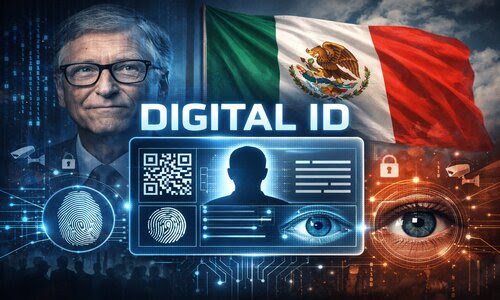
It always begins with a promise. A promise of convenience. A promise of safety. A promise of efficiency.
A promise that this new system will make life easier, smoother, smarter, more secure.
But history has taught us something governments and global elites rarely admit: the most dangerous systems of control are almost never introduced as tools of oppression. They are introduced as tools of progress.
That is exactly what we are watching unfold right now with the worldwide push for digital ID.
What is being sold to the public as modernization is, in reality, the construction of something far more powerful and far more dangerous: a system capable of tying your identity, your finances, your communications, your health records, your employment, and eventually your access to society itself into one trackable, manageable, enforceable framework.
Call it digital identity. Call it digital public infrastructure. Call it modernization.
But at its core, it is the architecture of control.
And increasingly, some of the most influential voices in the world are no longer hiding just how expansive they want that architecture to become.
Bill Gates has once again championed digital identity as a foundational pillar for the future in a recent discussion, openly describing a framework that begins with identity, bank accounts, and payments — and then expands outward into agriculture, health records, and even climate policy.
That should stop people in their tracks.
Because once identity is tied to your money, and then connected to your medical history, your food systems, your land use, your energy consumption, and your compliance with state or institutional rules, you are no longer dealing with a simple ID card. You are dealing with a digital leash.
And this is not the first time Gates has promoted such a vision.
In 2022, the Bill & Melinda Gates Foundation argued that digital ID, digital payments, and interoperable data-sharing should function together as the three “foundational systems” of what it calls digital public infrastructure. That may sound technical and harmless, but the implications are enormous. In plain language, it means creating a society where proving who you are digitally becomes the gateway to participating in everyday life — whether that means getting paid, receiving benefits, opening a bank account, accessing health care, or interacting with the government.
Then in 2024, Gates expanded on that same worldview, again praising systems that combine digital identity, payment rails, and interoperable records as a model for the future.
And even earlier, in 2018, he publicly praised India’s Aadhaar system — one of the largest biometric identity programs in the world — and brushed aside privacy concerns. That praise now looks especially troubling, given the years of controversy surrounding Aadhaar over surveillance fears, exclusion, and data vulnerabilities.
That is the deeper issue here: digital ID never stays in its original lane.
It is never just for “verification.” It is never just for “security.” It is never just for “convenience.”
Once governments and institutions have a durable, biometric-linked identity system, the temptation to connect it to everything else becomes overwhelming.
Banking. Health care. Employment. Taxes. Travel. Welfare. Education. Telecommunications. Licensing. Public benefits.
Access to digital services. Authentication for everyday life. That is not paranoia. That is the natural logic of the system.
And perhaps no country illustrates that danger more clearly right now than Mexico.
Mexico is rolling out what is known as the CURP Biométrica, a major expansion of its existing population registry. What was once an 18-character alphanumeric identity code is being transformed into something much more invasive and much more personal.
Under this new system, the government collects fingerprints, iris scans, facial photographs, and a digital signature, packaging all of that into a QR-enabled identity credential tied directly to your body.
This is not simply a paper ID digitized. This is your biological identity being absorbed into a state-managed system.
To register, citizens must go to RENAPO and Civil Registry offices, where staff scan all ten fingerprints, both irises, take a facial image, and record a digital signature. They must also provide a valid photo ID, a certified CURP, and an original or certified birth certificate just to complete the process.
The Mexican government has framed this expansion primarily as a response to the country’s devastating crisis of forced disappearances. That is the emotional justification being offered. Officials say the system will help identify missing persons and improve coordination between databases.
But the actual structure being built goes far beyond that stated purpose.
The biometric data is being fed into a Unified Identity Platform that links the National Population Registry with the National Forensic Data Bank and records held by prosecutors, intelligence agencies, and other government bodies. In other words, this is not merely a missing persons tool. It is an integrated state identity system with wide surveillance potential and broad institutional access.
And here is the part many people will miss unless they look closely: the law reportedly does not require authorities to notify citizens when their data is accessed.
So if law enforcement, intelligence agencies, or the National Guard pull your biometric or personal information, you may never know. You will not know who looked. You will not know why. You will not know how often. And you will have little meaningful ability to challenge it.
That should terrify any society that still claims to value civil liberty.
But the coercive element in Mexico becomes even more alarming when you look at what is happening with mobile phones.
By July 2026, every one of Mexico’s roughly 130 million mobile phone lines must be linked to a biometric-backed national identity credential. Existing mobile lines must be brought into compliance by June 30, and beginning July 1, unregistered numbers are subject to suspension.
Think about what that means in practical terms.
You can say the system is “voluntary” all you want. But if refusing to enroll means losing your phone, then it is not voluntary at all.
It is coercion.
That includes prepaid and postpaid lines, physical SIM cards and eSIMs. Carriers are required to verify subscriber identity against the national system. Anonymous or privately held mobile access — something that has long mattered for journalists, abuse survivors, political dissidents, whistleblowers, and ordinary privacy-conscious citizens — is being steadily erased.
And this is not even Mexico’s first attempt at doing this.
It is the third.
Mexico’s first cell phone registry, RENAUT, was launched in 2008 and required users to register their numbers with their CURP. It quickly became a scandal. Within months, private data from millions of users was reportedly leaked and even allegedly sold. The program was abandoned by 2012.
Then came PANAUT, a second attempt that expanded toward biometric registration, including fingerprints and facial recognition. Civil liberties advocates and digital rights groups challenged it, and in 2022 Mexico’s Supreme Court struck it down as unconstitutional, citing privacy and rights concerns.
Now, just a few years later, the same basic idea is back — only bigger, more invasive, and tied into a much larger government identity ecosystem.
That should be one of the biggest warning signs of all.
When governments fail with centralized identity databases, the damage is not minor. If your password leaks, you can change it. If your credit card is compromised, you can cancel it.
But if your fingerprints leak?
If your iris scans are copied?
If your facial biometrics are compromised?
You cannot reset your body.
That is the irreversible danger of biometric identity systems. Once your biological markers are collected, digitized, and networked, the stakes are permanent.
And this is not just a Latin American story.
The United Kingdom is moving in the same general direction.
In Britain, digital identity is increasingly being pushed into the world of work. The UK government has announced plans to make digital right-to-work checks mandatory by the end of Parliament, meaning employment verification is moving toward a system where legal work status is increasingly tied to digital identity compliance.
That may sound bureaucratic and harmless at first glance, but it carries enormous implications.
Because once the ability to work is tied to a digital verification structure, “voluntary” identity systems quickly become functionally mandatory.
You may not technically be forced to sign up.
But if you cannot get hired without it, what exactly is the difference?
That is one of the most deceptive aspects of digital ID policy around the world. Governments often avoid the politically explosive move of saying, “You must enroll.”
Instead, they simply build a society where opting out becomes practically impossible.
You can refuse — but then you lose your phone. You can refuse — but then you struggle to work.
You can refuse — but then you cannot access services. You can refuse — but then you are locked out of modern life.
That is not freedom. That is managed compliance.
And beyond Mexico and the UK, there are at least two more major global examples that reveal just how broad this push has become.
The first is India.
India’s Aadhaar system is frequently celebrated by global technocrats as a model for digital governance. It is one of the largest biometric identity systems ever created, and it has become deeply embedded in everyday life.
Supporters say it improves access and efficiency. But critics have long warned that when a biometric identity system becomes the key to financial services, telecoms, government benefits, and public access, it creates a society where exclusion, surveillance, and dependency become structural features of the system itself.
Aadhaar is often presented as a success story. But it is also a warning.
Because once identity becomes the access layer for modern life, errors become catastrophic, privacy becomes fragile, and centralized power becomes normalized.
The second example is the European Union.
The EU’s Digital Identity Wallet is being marketed as secure, convenient, and citizen-friendly. On paper, it is “voluntary.” But the direction is unmistakable: a continent-wide digital identity framework designed to authenticate citizens across services, records, documents, and interactions.
That may sound sleek and futuristic. But it also raises the exact same civil liberties concerns seen elsewhere.
When one digital identity framework begins to touch banking, records, government services, credentials, and cross-border interactions, it creates the possibility of transaction linkability, profiling, behavioral mapping, and mass data correlation at an unprecedented scale.
And once such systems become normalized, they rarely shrink. They expand.
That is the lesson every free society should remember.
Because digital ID is not just about proving who you are.
It is about creating a control layer over life itself.
It enables transaction traceability, where your spending and financial behavior can be linked to your identity.
It enables behavioral profiling, where your health, work, communications, travel, and records can be connected into one comprehensive profile.
It enables conditional access, where institutions can increasingly decide whether you are approved, flagged, delayed, or denied.
It enables automated exclusion, where a bureaucratic error, expired credential, mismatch, or algorithmic decision can suddenly lock you out of essential services.
And it enables surveillance at scale, because once all major databases are tied together through a single identity spine, governments no longer need old-fashioned mass surveillance in the way people once imagined it.
They do not need someone following you on every street corner.
They simply need the system.
A system that knows who you are. A system that knows where you bank. A system that knows how you communicate. A system that knows where you travel. A system that knows what services you use.
A system that can increasingly decide what you can access. That is why this issue matters so much more than many people realize.
This is not just a technology debate. It is not just a policy debate. It is not just a paperwork debate.
It is a freedom debate.
Because the deeper question beneath all of this is simple:
Will citizens remain free human beings with rights — or will they become permissioned users inside a digitally managed system?
That is the future being built right now, piece by piece, country by country, policy by policy, database by database.
And the public is being told it is all for their own good.
But if your face becomes your password, your fingerprints become your access key, your phone becomes a state-linked identity node, your bank account becomes tethered to your digital profile, and your ability to work depends on digital verification,
then freedom has not been strengthened.
It has been redesigned.
And in the process, it may be quietly disappearing.
THE KING IS ISLAM ??? King Charles Just Confirmed Fears Over The UK’s Drift Away From Christianity
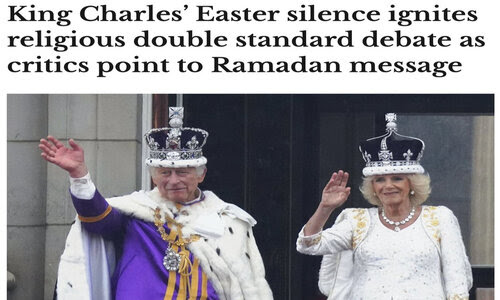
Britain did not become Britain by accident.
Its laws, customs, language, moral instincts, and even its deepest ideas about justice and human dignity were not built in a vacuum. They were forged in a civilization shaped–however imperfectly–by Christianity. From cathedrals that still dominate ancient skylines to the very idea that rulers themselves are accountable to a higher authority, the Christian faith once stood at the center of British life.
That is why King Charles III’s absent Easter message struck such a nerve.
To many, it was not simply about whether a monarch is required to issue a formal statement every Easter. That is the sort of technical argument people use when they want to avoid the bigger issue. The deeper problem is what his silence symbolized.
At a time when Britain is morally fractured, spiritually confused, and increasingly detached from the faith that once anchored it, the head of the Church of England went quiet on the holiest day in the Christian calendar.
And millions noticed.
For many Christians, this was not a minor communications decision. It felt like one more unmistakable sign that Britain’s Christian identity is no longer being guarded, honored, or even confidently acknowledged by the very institutions once entrusted to uphold it.
That is not paranoia. It is pattern recognition.
Britain has been drifting away from Christianity for decades, and the consequences are no longer theoretical. This is no longer simply about empty pews or declining baptisms. It is about the collapse of a shared moral framework.
For generations, Christianity gave Britain a moral vocabulary. It taught the dignity of the individual, the sacredness of truth, the value of sacrifice, the duty of charity, the importance of self-restraint, and the sobering truth that freedom without virtue eventually becomes chaos.
That framework is now eroding before our eyes.
What replaces it has not been some enlightened moral upgrade. Instead, Britain increasingly looks like a nation unsure of what it believes, what it stands for, or what it is even trying to preserve. It has become a country of rising loneliness, collapsing trust, ideological tribalism, bureaucratic moral confusion, and elite institutions that seem far more comfortable managing decline than confronting it.
And perhaps most revealing of all, even many non-churchgoing Britons seem to understand that something precious has been lost.
A recent poll found that a majority of Britons are concerned that drifting further from the nation’s Christian heritage could harm future generations. That should stop people in their tracks. These are not just committed churchgoers talking. These are ordinary people sensing that when a civilization severs itself from the roots that gave it coherence, it does not become stronger. It becomes disoriented.
People can feel the loss even if they cannot always name it.
And that is what made the King’s Easter silence so unsettling.
Because Easter is not a niche observance. It is not just another holiday on the calendar. Easter is the central claim of Christianity–the resurrection of Jesus Christ, the triumph of life over death, hope over despair, truth over darkness. If the King can publicly acknowledge and celebrate a range of faith traditions and causes throughout the year, but cannot clearly and confidently mark Easter, what message does that send about the faith he is sworn to defend?
That question becomes even more troubling when placed alongside the current condition of the Church of England itself.
The church should be a stabilizing force in a collapsing culture. It should be the one institution willing to speak eternal truth into national confusion. It should be able to call a drifting society back to repentance, moral clarity, courage, and hope.
Instead, too often, it feels like the Church of England is drifting right along with the culture.
Which brings us to Sarah Mullally.
For some in the media and political class, her elevation has been framed as historic, modern, and even inspiring. But for many ordinary Christians, especially those already weary of the Church of England’s long slide into weakness, her appointment has not inspired confidence. It has deepened concern.
And the reasons are not hard to understand.
Many believers are not upset because they are reflexively hostile to change. They are frustrated because the church’s leadership increasingly appears chosen for its ability to navigate institutions, signal cultural acceptability, and maintain establishment respectability–not for bold theological conviction, spiritual seriousness, or a burning urgency to call the nation back to Christ.
That frustration has been building for years.
The Church of England has hemorrhaged relevance not because it has been “too Christian,” but because it has often seemed embarrassed by Christianity’s sharper edges. Instead of offering moral clarity, it frequently offers carefully managed ambiguity. Instead of sounding like a church grieved by sin and hungry for revival, it often sounds like a committee trying not to offend anyone.
And people are tired of it.
Mullally, for many critics, represents more of that same managerial churchmanship–polished, institutional, socially acceptable, and profoundly unlikely to spark any meaningful spiritual awakening in a nation desperate for one. Her style is seen by critics as emblematic of a church leadership class that is comfortable talking about process, inclusion, structures, and public messaging, while seeming far less urgent about repentance, holiness, salvation, biblical authority, and the person of Jesus Christ.
That is the real complaint.
The concern is not merely about one appointment. It is about what the appointment represents: a church establishment that appears increasingly detached from the spiritual emergency unfolding around it.
Britain does not need a church that knows how to survive headlines.
It needs a church that still believes hell is real, truth matters, sin destroys, grace saves, and Christ is King.
That may sound too blunt for modern Britain. But perhaps modern Britain is in such trouble precisely because it has spent too long softening every truth that once had the power to save it.
And this is where the monarchy matters too.
The British Crown has never been just about pageantry. At its best, it has symbolized continuity, duty, sacred order, and the recognition that a nation must be accountable to something higher than fashion, polling, and political convenience. When that symbolism grows weaker, the loss is not merely religious. It is civilizational.
King Charles may not have intended to ignite this conversation by saying nothing at Easter.
But that is exactly what happened.
His silence became a mirror. And what many Christians saw reflected back was deeply troubling: a Britain increasingly hesitant to honor the faith that built it, a monarchy increasingly cautious about clearly affirming Christianity, and a national church that too often looks more prepared to accommodate decline than confront it.
Still, this does not have to be the end of the story.
History is full of moments when spiritual collapse created the conditions for revival. Sometimes nations only rediscover what is sacred after they have spent years proving that secular substitutes cannot carry the weight.
And Britain may be closer to that moment than many realize.
Because beneath the institutional weakness, the cultural confusion, and the elite embarrassment over Christianity, there remains a quiet but unmistakable truth: people are starving for meaning. They are starving for moral clarity. They are starving for transcendence. They are starving for something sturdier than slogans, identity politics, and empty modern spirituality.
What Britain needs now is not a softer Christianity or a more diluted church.
It needs a bolder one.
It needs leaders who are not ashamed of the gospel. It needs churches that are more concerned with faithfulness than applause. It needs a monarchy willing to honor the Christian inheritance it still formally claims. And it needs a people willing to admit that perhaps the old faith was not the problem after all.
Because when a nation forgets the God who shaped it, it does not become neutral.
It becomes lost.
And King Charles’ Easter silence only made that loss harder to ignore.
Canadian Woman With Back Pain Goes To ER, Gets Offered DEATH!

Be careful about reporting a pain, a physical problem, maybe even a broken nail, in one nation.
You might get offered the help you need to kill yourself.
Just that has happened in the so-called modern nation of Canada, where Miriam Lancaster, 84, went to Vancouver General Hospital last year with back pain, which turned out to be a fractured sacrum at the base of the spine, a common injury for elderly.
“I was approached by a young lady doctor whose very first words out of her mouth is we would like to offer you euthanasia,’ Lancaster said.
According to a report from the New York Post, which urged, “Just die already,” The woman had awakened with a serious back pain and went for help, only to be “shocked when a doctor offered to help her die instead.”
Medical Assistance in Dying is Canada’s “voluntary” euthanasia program that gradually is being expanded so that just about anyone can die at any time for any reason, if they choose.
Lancaster confirmed the pain was serious, but she hadn’t been hoping to die.
“I was taken aback. That was the last thing on my mind. I just wanted to find out why I was in pain — I did not want to die.”
She has since been treated, recovered, and has traveled to Cuba, Mexico and Guatemala since.
“To be offered euthanasia right off the bat for a non-life-threatening condition? It was a matter of pain management,” she explained. “Just because someone is 84 does not mean they’re ready to go on the scrap heap of life.”
It actually was, she charged, an “insult to seniors.”
After she firmly rejected the death agenda of the hospital, doctors eventually offered her rehab, but warned it was “a long road, and it will be very difficult.”
She spent 10 days in the hospital and then three weeks in a rehab program, and only weeks later, walked her daughter down the aisel at her wedding.
Lancaster shared death had also been urged by physicians when her late husband, John, was fighting cancer in 2023.
“Of course, he turned it down. We are churchgoers. We both are ready to go when the Lord calls us, and that’s what happened to him,” she said.
Pro-Israel Christians Are Now In The Crosshairs Of Europe’s Rising Antisemitism
On Friday evening, a manhunt was launched in the Netherlands to track down suspects responsible for a bombing attack targeting Christians supportive of the Jewish State.
The explosive was planted at the front doors of a building belonging to a Dutch Christian organization (Christenen voor Israel), which seeks to stand “in solidarity with Israel and combat all forms of antisemitism.” The group frequently features Pro-Israel lectures and sells Israeli-made products, helping to support the Jewish community, combat false information against the Jewish State, and counteract anti-Israel boycotts.
While the attack sparked outrage among officials in the nation, the most pointed comments came from the Israeli Ambassador to the Netherlands, Zvi Vapni, who warned that the bombing was “not an isolated incident.
“First, Jews were intimidated and attacked in the Netherlands. Now Christians who support Israel are being targeted too,” he emphasized, urging police to swiftly track down the person(s) accountable.
The rise of antisemitism in the Netherlands was on full display, especially among the Muslim population, in November of 2024, when Israeli soccer fans in Amsterdam became the victims of a horrific pogrom. Jews were chased and brutally attacked in the streets by mobs, while others hid in nearby shops, awaiting the emergency planes en route from Israel to evacuate them.
In the eyes of many, it was a turning point in Europe’s increasingly antisemitic landscape–closely and disturbingly echoing the Jewish experience in the early 20th century. As the Israeli ambassador detailed, the bombing of a Pro-Israel Christian organization is another bone-chilling step for the nation and continent.
Antisemitism expert, Olivier Melnick, refers to it as “Collateral Antisemitism,” highlighting, “you no longer need to be Jewish to be a target of Jew-hatred.”
Melnick recounted another disturbing recent incident in Europe, in which Pro-Palestinian activists in England went door-to-door recording the names of those who refused to support a Boycott, Divestment, and Sanctions (BDS) against Israel.
“This is not activism; this is intimidation,” Melnick stressed. “We are again seeing the 1930s and 40s being reenacted in front of our eyes. Supporters of the Jews and Israel are taking a stand and understanding the risk in doing so.”
Trusted ministry leaders such as Pastor Gary Hamrick of Cornerstone Chapel are urging Christians to choose boldness over silence, taking a Biblical stand to defend and support Israel and the Jewish people–no matter the risk and opposition.
“The Israeli people have been the target of hate, oppression, murder, and genocide throughout history,” Hamrick underscored. “Hitler’s attempted annihilation of the Jews during World War II took an estimated 6 million Jewish lives. Satan has been inciting nations and people to hate Israel ever since the tiny Jewish nation became the conduit for God’s redemptive plan for mankind.
“Make no mistake–this is a spiritual battle,” he wrote. “Satan incites antisemitism, and antisemitism is satanic. And no one bears more responsibility in the fight against antisemitism than the church.”
Melnick further shared a similar conclusion, stating: “Collateral antisemitism is a real thing. It might be the price to pay for those who stand with Israel, but knowing that standing with Israel means we stand with God, why should Christians have it any other way?”
More than 1,000 American evangelical pastors and Christian influencers who visited Israel in December 2025 for a high-profile solidarity trip were targeted by a “coordinated wave of online harassment” upon their return to the U.S.
PASTOR DIRK SAYS
CHRISTIANS THAT STAND WITH ZIONISM IS CALLED CHRISTIAN ZIONISM AND CHRISTIAN ZIONISM IS A DOCTRINE OF DEMONS
Listen Here , The Sheriff of the Church reproofs the Patriot Believe of the Republican Christian Zionism Faith that is supported by the White House
TruLight Ministries Daily Entertainment

TruLight TV – Clean Christian Comedy Jeff Allen
Jeff Allen Bananas Comedy Performance (1 of 2)
Today on TruLight Radio XM
TruLight Radio XM 24/7
Program
GMT / UTC +2
Monday To Fridays
00:15 Words to Live By Testimonies
01.15 Science Scripture and Salvation
02.15 Ground Works
04.00 Gospel Concert of the Day
05.00 The Daren Streblow Comedy Show
5:55 It is Today devotional
6:00 Gaither Homecoming Morning Show
7:15 Discover the Word
8.15 Destined for Victory
8:55 Science Scripture and Salvation
9:00 Holy Spirit Hour – Normally Sermons
10:15 Hope of the Heart
11:15 Unshackled
11.45 Words to Live By
12:15 Truth for Life
13:15 Living on the Edge with Chip Ingram
14:15 Focus on the Family
15:00 Kids Hour
16:00 In Touch with Dr. Charles Stanley
16:30 Groundwork
17:15 Live in the Light
18:15 Renewing your Mind
19:00 Gaither Homecoming Show
20:15 Growing Hope
21:15 Adventures in Odyssey Radio Drama
21:45 Bible Reading
22:15 Night-sounds
23.00 Good Old Country Gospel / Rhema Gospel Express
VISIT THE WEBSITE
TruLight Ministry News
TruLight Ministries orders from God since 2012 . Teach Them , Comfort Them and Warn Them!
THIS YEAR STUDIES STARTS 1ST MAY 2026 – REGISTER TODAY .
We Starting , the 1st May 2026 . with Our Preachers Diploma Online Platform – TruTheology.co.za . 36 Subjects with between 10 to 15 Lessons per Subject , equivalent to a 3 Year Theology Degree , The Training is Free to Approved Members and Tests Online after Each Lesson , You Determine the Speed of Your Studies . If you are interested registrations will take place from 1 April 2026 .
Healing Truths
End Time Articles
Bonus Teaching for the Child of God !!
The Lion of the tribe of Judah is a symbol found in Genesis and Revelation. In Genesis, Jacob blesses his son Judah, referring to him and his future tribe as a lion’s cub and a lion (Genesis 49:9). In Revelation, this symbol is seen again when the Lion of the tribe of Judah is declared to have triumphed and is worthy to open the scroll and its seven seals (Revelation 5:5). Jesus is the One who is worthy to open the scroll (see John 5:22). Therefore, Jesus is the Lion of the tribe of Judah.
In Genesis, as Jacob blesses his children, he promises Judah that his brothers will praise him and that they will bow down to him. Jacob also tells Judah, “You are a lion’s cub, Judah; you return from the prey, my son. Like a lion he crouches and lies down, like a lioness—who dares to rouse him?” (Genesis 49:9). Jacob says that in the future the scepter and ruler’s staff will not depart from Judah “until he to whom it belongs shall come and the obedience of the nations shall be His” (Genesis 49:10). This messianic prophecy points forward to the second coming of the Lord Jesus, the descendant of Judah who will rule the earth (Revelation 19:11–16).
Based on Jacob’s blessing, the lion is a symbol of the tribe of Judah, which is known as the kingly tribe (King David was of the tribe of Judah). Lions symbolize power, fierceness, and majesty. Lions are the king of the beasts, and the Lion of the tribe of Judah is the king of everything. In the Old Testament, God is sometimes described as being like a lion. In Isaiah 31:4, just “as a lion growls, a great lion over its prey—and though a whole band of shepherds is called together against it, it is not frightened by their shouts . . . so the LORD Almighty will come down to do battle on Mount Zion and on its heights.” The Lord is not afraid of His enemies. He protects His people and does not allow them to be conquered. In Hosea, God is angry at Israel because they became proud and forgot Him. God says, “I will be like a lion to them. . . . like a lion I will devour them. . . . You are destroyed, Israel, because you are against me, against your helper” (Hosea 13:7–9). It is better to experience the help and protection of the Lion than to deny His kingship and face His fierceness.
In Revelation 5, Jesus is the long-awaited Lion of the tribe of Judah. John weeps because no one was found worthy to open the scroll of God’s judgment or even to look inside it. Then one of the elders says to John, “Do not weep! See, the Lion of the tribe of Judah, the Root of David, has triumphed. He is able to open the scroll and its seven seals” (Revelation 5:4–5). Both of the genealogies in Matthew and Luke record that Jesus is a descendant of the tribe of Judah. When Jesus is revealed as the promised Lion of the tribe of Judah, it reveals His deity. He is the true king and the One to whom belongs the long-awaited obedience of nations. Yet it is not His fierceness or the force of His power that makes Him worthy. The Lion has triumphed because He became a Lamb (Revelation 5:6–10; cf. John 1:29). Jesus Christ is worthy because He lived a perfect, sinless life and in shedding His blood defeated sin and death. His death and resurrection have resulted in a protection for His people and an eternal kingdom that will honor and worship God. Ruling this kingdom will be Jesus, the Lion of the tribe of Judah.
Share this Feeding of Manna with your Friends and Family. just click on the Social Media icon and share !