Hosted by TruLight Ministries – The Place of Truth
SELECT YOUR READING LANGUAGE – BOTTOM LEFT = YOUR DAILY MANNA NOW AVAILABLE IN 103 LANGUAGES
Don’t DIE without Been Saved !!!
This is an all-too-common question among Christians. Many people doubt their salvation because of feelings or the lack of them. The Bible has much to say about salvation, but nothing to say about “feeling saved.” Salvation is a process by which the sinner is delivered from “wrath,” that is, from God’s judgment against sin (Romans 5:9; 1 Thessalonians 5:9). Specifically, it was Jesus’ death on the cross and subsequent resurrection that achieved our salvation (Romans 5:10; Ephesians 1:7).
Our part in the salvation process is that we are saved by faith. First, we must hear the gospel—the good news of Jesus’ death and resurrection (Ephesians 1:13). Then, we must believe—fully trust the Lord Jesus (Romans 1:16) and His sacrifice alone. We have no confidence in works of the flesh to achieve salvation. This faith—which is a gift from God, not something we produce on our own (Ephesians 2:8-9)—involves repentance, a changing of mind about sin and Christ (Acts 3:19), and calling on the name of the Lord (Romans 10:9-10, 13). Salvation results in a changed life as we begin to live as the new creation (2 Corinthians 5:17).
We live in a feeling-oriented society and, sadly, that has spilled over into the church. But feelings are unreliable. Emotions are untrustworthy. They ebb and flow like the tides of the sea that bring in all kinds of seaweed and debris and deposit them on the shore, then go back out, eroding the ground we stand on and washing it out to sea. Such is the state of those whose emotions rule their lives. The simplest circumstances—a headache, a cloudy day, a word thoughtlessly spoken by a friend—can erode our confidence and send us “out to sea” in a fit of despair. Doubt and discouragement, particularly about the Christian life, are the inevitable result of trying to interpret our feelings as though they were truth. They are not.
But the Christian who is forewarned and well armed is a person not governed by feelings but by the truth he knows. He does not rely on his feelings to prove anything to him. Relying on feelings is precisely the error most people make in life. They are so introspective that they become preoccupied with themselves, constantly analyzing their own feelings. They will continually question their relationship with God. “Do I really love God?” “Does He really love me?” “Am I good enough?” What we need to do is stop thinking about ourselves and focusing on our feelings and instead redirect our focus to God and the truth we know about Him from His Word.
When we are controlled by subjective feelings centered on ourselves rather than by objective truth centered on God, we live in a constant state of defeat. Objective truth centers on the great doctrines of the faith and their relevance to life: the sovereignty of God, the high priestly intercession of Christ, the promise of the Holy Spirit, and the hope of eternal glory. Understanding these great truths, centering our thoughts on them, and rehearsing them in our minds will enable us to reason from truth in all of life’s trials, and our faith will be strong and vital. Reasoning from what we feel about ourselves—rather than what we know about God—is the sure path to spiritual defeat. The Christian life is one of death to self and rising to “walk in the newness of life” (Romans 6:4), and that new life is characterized by thoughts about Him who saved us, not thoughts about the feelings of the dead flesh that has been crucified with Christ. When we are continually thinking about ourselves and our feelings, we are essentially obsessing about a corpse, full of rottenness and death.
God promised to save us if we come to Him in faith. He never promised that we would feel saved.

Bible Verse and Prayer for Today
At just the right time, when we were still powerless, Christ died for the ungodly. Very rarely will anyone die for a righteous man, though for a good man someone might possibly dare to die. But God demonstrates his own love for us in this: While we were still sinners, Christ died for us.
—Romans 5:6-8
Jesus did not die for us because he had some high hopes for who we are. He certainly didn’t die for us because of what we had done in the past that merited his sacrifice. No, he died for us because he knew exactly who we are and where we would be without him. Praise be to God; we are now God’s righteousness because Jesus took our sin upon himself and gave us God’s grace and righteousness in place of our sin (2 Corinthians 5:17-21).
Prayer
Holy God, thank you for Jesus, my Savior. No words are adequate to express my love and devotion to you for such an incredible and gracious gift! Through him, I give and live all my thanks to you. Amen and Amen

Bible Teaching of the Day
To receive eternal life, a person is required to receive Jesus Christ as Savior. The message of the gospel is exclusive. Jesus is the only way of salvation, and those who have never heard about Him are in dire need of hearing the message and believing it.
The apostles preached the exclusive nature of the gospel that saves: “Salvation is found in no one else, for there is no other name under heaven given to mankind by which we must be saved” (Acts 4:12). Jesus Himself emphasized that He alone is the way to be saved: “I am the way and the truth and the life. No one comes to the Father except through Me” (John 14:6; cf. 1 Timothy 2:5 and 1 John 5:11–12).
God’s universal requirement is that people have faith in His Son: “This is his command: to believe in the name of his Son, Jesus Christ” (1 John 3:23). If there were no need to believe in the name of Jesus Christ, then the Great Commission was unnecessary, and the apostles wasted their lives making His name known.
Paul addresses the issue of those who have not yet heard the gospel, making the point that faith in Christ is absolutely necessary:
“Everyone who calls on the name of the Lord will be saved.” How, then, can they call on the one they have not believed in? And how can they believe in the one of whom they have not heard? And how can they hear without someone preaching to them? And how can anyone preach unless they are sent? . . . Consequently, faith comes from hearing the message, and the message is heard through the word about Christ. (Romans 10:13–15, 17)
What’s most important is that a person exercises faith in “the word about Christ.” That word only comes through the preaching of the message by those who are sent. There is no other means of salvation, so hearing the message of Christ is imperative.
Apart from Christ, all people are condemned as sinners. “There is none righteous” (Romans 3:10). God has clearly revealed Himself in nature (Romans 1:20) and in the hearts of people (Ecclesiastes 3:11). The problem is that sinners naturally reject this knowledge of God and rebel against Him (Romans 1:21–23). Sinners actively “suppress the truth” (Romans 1:18) and “are without excuse” (Romans 1:20). Pastor Matt Smethurst puts it this way: “Will God condemn the innocent tribesman who has never heard the name of Christ? No, because there are no innocent tribesmen” (www.thegospelcoalition.org/article/what-happens-to-those-who-never-hear-gospel, accessed 1/5/26). All people are responsible to God for what God has already revealed to them.
The centurion Cornelius in Acts 10 is a good example of someone who needed to hear the word about Christ. The Bible says that Cornelius was “devout and God-fearing; he gave generously to those in need and prayed to God regularly” (Acts 10:2). While he was praying one day, an angel appeared to him and told him to send for Peter, who would have a message for him. Cornelius sent for Peter, and upon his arrival, Peter immediately spoke of the death and resurrection of “Jesus Christ, who is Lord of all” (Acts 10:32). It was only then—after Cornelius heard the name of Christ—that he received the Holy Spirit and was saved (verse 44).
Note that Cornelius, although others considered him a “righteous” man (Acts 10:22), still needed to hear and believe the gospel of Christ.
- Cornelius believed in God—but that was not enough to save him.
- Cornelius was “devout and God-fearing”—that was not enough.
- Cornelius prayed regularly—that was not enough.
- Cornelius gave to the poor—that was not enough.
But the gospel was enough. Cornelius needed to hear the message of the gospel from an evangelist. He was not saved by his sincere religious works but through his faith in the message about Jesus. God required that he hear the name of Christ in order to be saved.
We, as Christians, should be doing our best to make sure that all people hear the gospel. We should share Paul’s ambition “to preach the gospel where Christ [is] not known” (Romans 15:20). We should, like Paul, “have a great sense of obligation to [preach the gospel to] people in both the civilized world and the rest of the world, to the educated and uneducated alike” (Romans 1:14, NLT). People need the Lord, and we need to share Him.
Today’s Devotional
For the believer, the death of an unsaved loved one is tragic and difficult to process. In some cases, it seems we will never find comfort or peace of mind when we know the destiny awaiting the unsaved.
When a saved loved one dies, we miss him or her, but we do not grieve “as others who have no hope” (1 Thessalonians 4:13, NKJV) because we know we will be reunited in heaven one day. But when loved ones die without Christ, we know we will not see them again, and finding comfort in that situation may seem hopeless.
Believers who have taken pains to communicate gospel truths to their loved ones feel an additional pain that asks “why?” As Christians, we wonder how anyone could refuse a gift as precious as salvation. Our joy in the Lord moves us to want that same joy for others. But the truth is that, even though the invitation is open to all, not all will receive the gift. We can take comfort that, even though we may never see our unsaved loved ones again, God is always faithful and just. God gave them the opportunity to turn to Him. God is so patient, and He leaves the door open for so long.
“Will not the Judge of all the earth do right?” (Genesis 18:25). The answer is, of course, that God does do what is right, and this is a great comfort to those who are unsure of the destination of a loved one’s soul. God is a sovereign judge of righteousness. He is full of grace and mercy to all who call upon Him. It is His very justice that offers a way for all to escape judgment, and it is in that justice that we must rest. It is grace that saves us, and it is grace in which we stand when we go through the double grief of the death of an unsaved loved one. We yearn for the unsaved to choose Christ, but some will not. Those who have passed into eternity without Christ have made their choice, but it was God’s grace that gave them a choice to begin with.
Although we may have pain in the remembrance of that loved one, there will come a time when each born-again believer will be with the Lord. In that day “God shall wipe away all tears from their eyes; and there shall be no more death, neither sorrow, nor crying, neither shall there be any more pain: for the former things are passed away” (Revelation 21:4, KJV). Even if we cannot comprehend such a time, the promise should be enough to bring comfort and encouragement. When we see the Lord, the sorrow we have now will disappear: “Now is your time of grief, but I will see you again and you will rejoice, and no one will take away your joy” (John 16:22). As we wait for the day when sorrow will be no more, we can lean on the everlasting arms of God, who feels our pain and comforts us with His great love and mercy.

Bible Prophecy, Signs of the Times and Gog and Magog Updates with Articles in the News
NATO At The Crossroads: What Now?
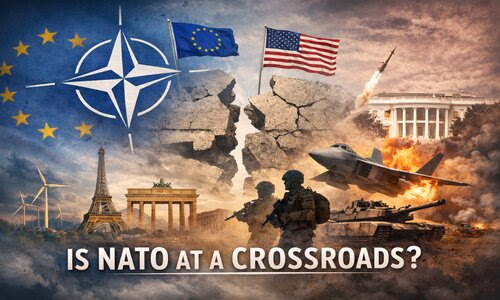
For decades, NATO has been the cornerstone of transatlantic security. The United States has been the alliance’s engine, supplying funding, troops, and strategic reach that no other member can match. In return, Europe promised partnership — not perfect alignment, but reliability.
That compact was tested, and in many ways strained, during Operation Epic Fury in Iran. As U.S. forces prepared to act, several European allies restricted access to bases, limited overflights, or imposed operational conditions. Some stayed on the sidelines, arguing that Iran was not their war. From Washington’s perspective, it looked like allies had abandoned the United States at the very moment it needed support. From European capitals, the hesitation reflected domestic politics, public opinion, and a long-standing debate about when Europe should intervene militarily abroad.
The tension is real, and it goes beyond rhetoric. The U.S. spends roughly 3.2% of GDP on defense, vastly outpacing most NATO members. Germany, France, and the U.K., despite their political clout, typically hover near the 2% guideline. For decades, American policymakers have urged Europe to spend more, modernize forces, and assume a larger share of operational responsibility. Yet even with gradual improvements, frustration in Washington has reached a boiling point.
So, what does the U.S. get out of the alliance? A lot. Forward bases across Europe give American forces rapid access to multiple theaters — the Middle East, Africa, the Mediterranean, and Eastern Europe. NATO allows the U.S. to share intelligence, train with allies, and maintain interoperability that multiplies operational effectiveness. These advantages are real, tangible, and critical for both deterrence and global power projection.
Yet the Iran episode raises a thorny question: should an ally be expected to fully support every operation, even one outside their immediate interest, or is partnership more about reliability in principle than agreement in every detail? Europe said “this is not our war,” but in another context, these same countries expect U.S. support in conflicts like Ukraine. The dissonance illustrates a fundamental tension in alliances: partners may not always agree on objectives, but they are expected to stand together when stakes are high.
Now comes the speculation everyone is waiting for: what happens next? Washington is reportedly considering several options. One is strategic realignment — reducing U.S. troop presence in countries perceived as less supportive while bolstering forces in reliable allies such as Poland, Romania, the Baltics, and perhaps Greece. Bases in Spain, Germany, or Italy could face closures, repurposing, or reduced operational access. These moves would send a clear signal about expectations and reliability, without severing the alliance entirely.
There are clear benefits and risks on both sides. Maintaining U.S. forces across all of Europe keeps deterrence strong, ensures rapid response capability, and preserves diplomatic cohesion. Pulling back from some regions could incentivize greater European defense spending and more thoughtful burden-sharing, but it risks eroding trust, creating operational gaps, and signaling vulnerability to adversaries.
A more extreme scenario — a partial or full U.S. withdrawal from NATO — would be seismic. NATO without America is still an organization of armies and flags, but it loses the overwhelming logistical backbone, intelligence networks, and strategic credibility that only the U.S. provides. That could embolden adversaries and force Europe to reassess its own capabilities in ways that are politically and militarily fraught.
At the same time, Europe is not the enemy. Its caution is rooted in domestic politics including the reality of a growing Muslim population, historical experience, and a desire to avoid unnecessary conflict. Allies have legitimate reasons to differentiate between threats that directly endanger them and operations that are more peripheral. The challenge is reconciling those perspectives with America’s expectations of alliance reliability.
NATO’s Next Move: Three Possible Futures
- Status Quo – Keep the Footprint, Accept Frustrations
What Happens: U.S. forces remain stationed across Europe as they are now. Operations continue with the same European allies, even if some are hesitant.
Pros: Maintains deterrence; preserves bases, intelligence networks, and rapid response; keeps diplomatic channels open.
Cons: Frustration in Washington grows; U.S. continues to bear the lion’s share of costs; operational flexibility may be limited if allies impose restrictions in future conflicts.
Speculative What-Ifs: Iran-like scenarios repeat, forcing U.S. troops to act largely alone; Russia tests NATO’s eastern flank; China expands influence in Africa and the Middle East with limited European pushback.
- Strategic Realignment – Focus on Cooperative Allies
What Happens: The U.S. shifts troops to countries with strong operational support (Poland, Romania, the Baltics, Greece). Bases in Germany, Italy, or Spain face reduced roles or closures.
Pros: Encourages burden-sharing; rewards countries that actively support U.S. operations; increases flexibility and responsiveness.
Cons: Could create perception gaps in less supportive countries; risks operational disruption during realignment; may strain political ties without careful diplomacy.
Speculative What-Ifs: Allies seeing U.S. realignment accelerate defense spending; potential political tension with France, Germany, or Spain; new regional defense pacts emerge in response.
- Partial Withdrawal – Rethink NATO Reliance
What Happens: The U.S. scales back its presence significantly, relying more on allies to step up or form regional defense arrangements. NATO’s structure becomes less U.S.-centric.
Pros: Forces Europe to take more responsibility; reduces U.S. overextension; may reset expectations about shared risk.
Cons: Weakens NATO’s deterrence credibility; could embolden adversaries; risks long-term diplomatic fallout; reduces rapid-response capabilities in critical regions.
Speculative What-Ifs: Europe struggles to coordinate without U.S. leadership; adversaries exploit gaps; U.S. pivot toward the Indo-Pacific accelerates, leaving a leadership vacuum in Europe.
Ultimately, the U.S. faces a critical choice: continue carrying the alliance in its current form, reshaping it quietly but pragmatically, or take bolder steps that force Europe to shoulder more of the burden — whether through spending, capability, or political alignment. Each path carries risk, but inaction is not risk-free. America cannot continue operating as NATO’s guarantor while frustration, disappointment, and strategic misalignment grow.
The Iran operation may be remembered not just as a test of military readiness, but as a reckoning for the transatlantic partnership itself. NATO may remain intact on paper, but the trust that binds it — the trust that ensures collective defense when stakes are high — will need deliberate rebuilding.
The question now is simple: can an alliance survive when partners do not fully agree on every mission, yet still rely on each other in moments of crisis? The answer will shape U.S.-European relations for decades, and define whether NATO remains a pillar of shared security — or becomes a relic of assumptions the modern world no longer tolerates.
The World Wants Calm – But Israel Already Sees The Next War Coming
There is a dangerous difference between peace and pause — and Israel knows it.
That is the real story behind the latest ceasefire confusion involving the United States, Iran, and the growing pressure surrounding Israel’s military campaign. On paper, the world is once again talking about de-escalation. Diplomats are using familiar words. Negotiators are floating frameworks. Leaders are speaking in the language of restraint. But beneath all of it lies a far more serious truth: Israel is not looking at this moment as the end of a war. It is looking at it as a countdown to the next one.
And that is why Lebanon matters so much.
As new ceasefire terms and contradictory interpretations swirl around Washington, Tehran, and regional intermediaries, one issue is quickly becoming unavoidable: Iran wants Israel stopped in Lebanon. Israel refuses. That disagreement is not a side issue. It may be the single clearest sign that this “ceasefire” is far less stable than many want to admit.
Because if Iran is willing to threaten the entire arrangement over Israeli strikes on Hezbollah, then it tells us something critical: Hezbollah is not a side asset to Iran. It is central to Iran’s future war plans.
That is exactly why Israel is moving with such speed and intensity.
In one breathtaking wave of action, Israel reportedly struck more than 100 Hezbollah sites in just 10 minutes. That kind of operation is not only about military capability — though it certainly demonstrates that. It is also about urgency. It is about a nation acting like it knows the diplomatic clock may soon run out. It is about a military that understands global pressure can close operational windows before strategic goals are finished.
Israel appears to be operating with a hard reality in mind: if the world forces a pause too early, Hezbollah survives to fight another day.
And for Israel, that is no longer acceptable.
For years, much of the international community treated Hezbollah’s presence on Israel’s northern border as a manageable problem. Rockets were stockpiled. Tunnels were dug. command centers expanded. Precision missile projects advanced. Iranian influence deepened. Yet the expectation was that Israel should simply absorb the threat, deter it, and hope that another full-scale war could be postponed.
That “stability” was always an illusion.
What the world often called restraint, Israel increasingly saw as strategic decay — a slow normalization of an enemy army sitting on its border under the protection of diplomatic ambiguity and international hesitation.
That is over now.
Israel is not going back to the old arrangement where Hezbollah builds, arms, embeds, threatens, and waits. It is not going back to a border where Iranian-backed terror infrastructure is tolerated as long as it doesn’t explode all at once. The old status quo was not peace. It was a loaded gun left on the table.
And after everything that has unfolded in this region, Israel clearly believes that leaving that gun there again would be suicidal.
This is where many outside observers still miss the bigger picture. Hezbollah matters to Iran not just because it is useful in the present, but because it is essential to the future.
Iran has long relied on layers of proxy power to project force beyond its borders. Hezbollah is perhaps the most important of all of them. It is not merely a militia. It is not simply a regional ally. It is a forward operating arm of Iranian strategy — one that allows Tehran to pressure Israel, threaten escalation, surround its enemies, and maintain a second battlefield without directly exposing itself first.
In plain terms, Hezbollah is one of Iran’s insurance policies against Israel.
That matters even more now.
If Iran’s nuclear ambitions have been significantly disrupted or delayed, then Tehran’s need for its proxy network only increases. If Iran cannot move toward its long-term strategic goals as quickly through nuclear leverage, it will need missiles, militias, terror infrastructure, and regional alliances all the more.
That means Hezbollah becomes even more valuable.
This is the part many in the West still seem reluctant to say out loud: if Iran cannot get the bomb when it wants it, it will need its terror network for the next attempt at regional domination. And if that day comes, Hezbollah will not just be a supporting actor. It will likely be one of the lead weapons.
That is why Iran is so desperate to preserve it.
And that is why any attempt to force Israel to stop short in Lebanon carries enormous consequences.
If Israel is pressured into halting its campaign before Hezbollah is meaningfully dismantled, the result will not be peace. It will be regeneration. Hezbollah will regroup. It will rebuild logistics. It will restore command channels. It will replenish positions. It will once again disappear into civilian infrastructure, political complexity, and international excuses — only to emerge later stronger, more disciplined, and even more dangerous.
That is not a theory. That is the pattern.
This is what makes the current moment so consequential. The world wants calm because calm feels morally clean. Calm sounds responsible. Calm polls well. Calm lowers oil panic and diplomatic stress. Calm allows leaders to tell their people the crisis is under control.
But calm without resolution can be a trap.
And Israel knows it.
Israel is acting like a nation that believes it may have one of its last real opportunities to fundamentally alter the military map on its northern front. It is acting like a country that understands something many outside powers do not: you do not defeat long-term threats by preserving them for future negotiations.
You remove them.
That may sound harsh to foreign ears. It may sound escalatory to Western analysts and deeply uncomfortable to governments eager to avoid a wider regional war. But Israel’s calculation is rooted in a brutally simple question: If Hezbollah survives this moment intact enough to rearm, what exactly has been solved?
Nothing meaningful.
Only delayed.
And that is the heart of the problem with so many ceasefire discussions in the Middle East. They are often built around the assumption that time itself is healing. But time is not always healing. Sometimes time is what your enemy uses to reload.
Iran understands that.
Israel understands that too.
And that may be why this moment feels so combustible. The United States may be trying to carve out a diplomatic lane. Gulf states may be calculating what comes next. Iran may be trying to preserve room to negotiate, regroup, and survive. But Israel is staring at something far more immediate and existential: the possibility that the world is once again trying to freeze a conflict before the root danger has been removed.
That is why this is not simply about Lebanon. And it is not just about Hezbollah.
It is about whether the world is willing to admit that Iran’s ambitions did not begin and end with uranium.
Iran’s regional strategy has always depended on more than one tool. Nuclear leverage is one arm of the threat. Proxy warfare is the other. If one is damaged, the other becomes even more important. And if the international community chooses to protect the proxy arm in the name of “stability,” then it may be preserving the very mechanism through which the next war will be launched.
That is what Israel sees.
While others see a pause, Israel sees preparation.
While others see de-escalation, Israel sees unfinished danger.
While the world wants calm, Israel already sees the next war coming.
And after everything it has learned, it is increasingly clear that it has no intention of waiting politely for that war to arrive.
The Great Divorce Continues – Massive Migration From Democrat Counties

The past five years have seen a massive migration of Americans out of heavily Democratic counties and into ones where Donald Trump won majorities in each of the past three elections. That’s according to an exclusive analysis by Issues & Insights of the latest Census Bureau and election data.
Most analyses of internal migration patterns look only at state-level data. And what they show is that blue states are losing population to red states, and have been for many years.
I&I wanted to go deeper, so we used the latest Census data on migration between counties and compared that with how these counties voted in the past three presidential elections.
What we found was that millions aren’t just moving out of blue states, but are moving out of blue counties within states.
Trump won 2,589 counties in each of the past three elections. From 2020 to 2025, those counties gained 5.4 million people due to net migration—which measures how many people move into and out of an area. The 433 counties where Hillary Clinton, Joe Biden, and Kamala Harris carried the day saw a net loss of 5.43 million people.
And the 121 counties in which Trump won at least one of the past three elections saw a net gain of 29,000 people over those years.
I&I has been tracking these migration trends for years. In 2023, we found that Biden-voting counties had lost 2.6 million people from 2020 to 2022. We did the analysis again in 2024, and the number had swelled to 3.7 million. The exodus clearly has continued.
The latest data show that of the 10 counties with the biggest gains in population, only one was deep blue. Trump won the rest in each of the three past presidential elections. (See the chart below.)
The 10 counties with the biggest loss of population from 2020 to 2025 were all heavily Democratic — they voted for Hillary Clinton, Biden, and Harris.

Even if you go further down the list, the pattern remains.
Of the 50 counties with the biggest net gain of population, all but four voted for Trump in the past three elections. Of the 50 counties with the biggest losses due to net migration, all but five are solid blue.
Other findings:
Blue counties lost population even in states that had big gains. The five Florida counties where Trump lost in his three election bids lost 150,000 people due to net migration over the past five years. This is a state that saw an overall net gain of 890,000.
The three heavily Democratic counties in Tennessee lost more than 81,000 people, while the state overall gained 293,000.
Only five counties in Utah lost population from 2020 to 2025, and three of them voted for both Biden and Harris.
At the other end of the spectrum, California lost almost 1.7 million people to net migration. But the few counties that consistently voted for Trump saw a slight gain of 3,024.
New Jersey’s seven solidly pro-Trump counties gained almost 25,000 people during the years that solidly Democratic counties lost more than 214,000.
Virginia’s blue counties lost nearly 160,000 to net migration, while its solidly red ones gained more than 122,000.

We keep hearing how unpopular Trump and his policies are. While that might be what people tell pollsters, their own actions – picking up and moving to a new county or a different state – speak much louder.
Millions of Americans would rather live among Trump supporters than those voting for the likes of Kamala Harris.
Iran’s secret revolution: the crown prince who says Christianity is exploding underground

Reza Pahlavi, the son of Mohammad Reza Pahlavi, the last Shah of Iran, has been working for most of his life to replace the oppressive Islamist regime of Iran. Pahlavi walked onto the stage at Liberty University this week and told thousands of young American Christians something the Islamic Republic desperately does not want the world to know: the faith it has spent 46 years trying to eradicate is not dying in Iran. It is multiplying. The nation that once sheltered the Jewish people under Cyrus and helped the Jews return from exile and rebuild the Temple in Jerusalem is today sheltering the Christian faith in its own basements and living rooms, at mortal risk, and its crown prince came to Lynchburg, Virginia, to bear witness.
Pahlavi is the son of Mohammad Reza Pahlavi, the last Shah of Iran, whose monarchy was toppled by the Islamist revolution of 1979. He has lived in exile ever since, training as the youngest fighter pilot in Iranian history at Reese Air Force Base in Texas before studying political science at the University of Southern California. For more than four decades, he has been the most prominent voice of Iran’s opposition, uniting his people from exile. This week, Liberty University President Dondi Costin introduced him as “a freedom fighter.”
“Good morning and thank you for having me at convocation today on the beginning of Passover and on the cusp of Easter,” Pahlavi began. “I stand before you not only as an Iranian, but as a witness on behalf of millions of my compatriots whose voices have been silenced, whose names you may never hear, but whose courage is reshaping the future of my country. I come to you as the voice of a nation that has been silenced.”
Pahlavi’s cause has become a light in the darkness of despair that has swallowed his country. Between January 8 and 9 alone, more than 30,000 protesters were killed by the regime. Women were beaten to death in the streets. Students were dragged from classrooms and executed. Families were forced to pay for the bullets that killed their own children. The youngest victim whose name he read aloud was three years old.
For 33 days, 90 million Iranians lived without internet, deliberately blinded by a government trying to strangle a revolution before the world could see it.
“We speak often in this world about injustice. You are charged by your professors and your pastors to fight against it. But what is happening in Iran demands a stronger word; evil,” he told the students. Because what else do you call a system that murders its own children? What else do you call a regime that wages war both on enemies abroad and on its own people? In recent years, tens of thousands of Iranians have been killed in wave after wave of repression.”
Pahlavi went on to describe some of the horrors in detail, charging the students to support the fight against the Islamist regime. He framed the conflict as a Christian imperative.
“For those of you grounded in faith, there is another truth,” he said. “In Iran today, Christianity is not fading. It is rising quietly, powerfully underground. In homes, in whispers, in hidden gatherings, Iranians are finding faith at great cost. Pastors are imprisoned. Bibles are confiscated. Believers are hunted. Converts are threatened with execution. Families are torn apart. But still they gather.
“Still, they pray. Still, they believe,” Pahlavi said. “Because faith that survives persecution is unbreakable. Because the light shines brightest in the darkest places.”
Christianity is indeed growing in Iran. Multiple ministry organizations tracking Iran report it has one of the fastest-growing Christian populations on earth, with millions of secret believers meeting in homes across the country. The regime knows it, and the arrests and executions of Iranian Christians have accelerated in recent years precisely because the authorities are terrified of what they cannot stop.
“You study stories of persecution in history,” Pahlavi told the students. “Christians have often faced this. In Iran, they are happening every day. There was a time when Iran stood for something very different. Over 2500 years ago, Cyrus the Great, a Persian king, freed the Jewish people from captivity. He restored their rights. He respected their faith. He is remembered in scripture not as a tyrant but as a liberator. This is Iran’s true legacy. A nation of tolerance, a nation of dignity, a nation that once stood on the side of freedom.”
“The regime that rules Iran today has betrayed that legacy. It does not represent the Iranian people. It fears them and it will fall because of them. The Iranian people are doing their part. They are risking everything. They are leading this fight. But they cannot and should not stand alone.”
Pahlavi’s vision for a free Iran includes a formal peace with Israel, which he has called the Cyrus Accords. It is an expansion of the Abraham Accords that would immediately recognize the State of Israel and build a new alliance between a democratic Iran, Israel, and the Arab world. He has pledged to dismantle Iran’s nuclear program and cut all funding to Hamas terrorists and Hezbollah.
He asked the students to show moral clarity as Americans and stand with the Iranian people.
“America must be clear,” he said. “There is no negotiating with evil. There is no reforming a system built on brutality. There is only one path forward: the end of this regime. To the people and leaders of this nation, do not waver. Do not retreat. Do not legitimize those who murder their own people. Stay the course. Finish the job. Stand firmly with the people of Iran, not their oppressors. Because when America stands with moral clarity, it gives strength to those fighting in the shadows.
The Islamic Republic built its entire identity on crushing religion, whether Jewish, Christian, or ultimately the authentic spiritual conscience of its own Muslim citizens. It is losing that war. The crown prince of Iran stood at the world’s largest Christian university and delivered the news: the underground church in Persia is alive, it is growing, and it will outlast every Ayatollah who has tried to extinguish it.
TruLight Ministries Daily Entertainment

TruLight TV – Popcorn & Movie Time – Play the Flute
Faced with an indifferent youth group, a new youth Pastor (Brett Varvel) tries to motivate his students to read God’s Word and get serious about their faith.
Today on TruLight Radio XM
TruLight Radio XM 24/7
Program
GMT / UTC +2
Monday To Fridays
00:15 Words to Live By Testimonies
01.15 Science Scripture and Salvation
02.15 Ground Works
04.00 Gospel Concert of the Day
05.00 The Daren Streblow Comedy Show
5:55 It is Today devotional
6:00 Gaither Homecoming Morning Show
7:15 Discover the Word
8.15 Destined for Victory
8:55 Science Scripture and Salvation
9:00 Holy Spirit Hour – Normally Sermons
10:15 Hope of the Heart
11:15 Unshackled
11.45 Words to Live By
12:15 Truth for Life
13:15 Living on the Edge with Chip Ingram
14:15 Focus on the Family
15:00 Kids Hour
16:00 In Touch with Dr. Charles Stanley
16:30 Groundwork
17:15 Live in the Light
18:15 Renewing your Mind
19:00 Gaither Homecoming Show
20:15 Growing Hope
21:15 Adventures in Odyssey Radio Drama
21:45 Bible Reading
22:15 Night-sounds
23.00 Good Old Country Gospel / Rhema Gospel Express
Saturday
6:00 Wake up with the Lord
8:15 Principals of Living
9:15 Hope of the Heart
10:15 Dacus Report
11:15 Growing Hope
12:15 Unshackled
13:15 Living on the Edge with Chip Ingram
14:00 Knowing Jesus Christ
15:15 Live in the Light
16:15 Renewing my Mind
17:00 The TruLight Top 10 hosted by Dilize Light
18:00 In Touch with Dr. Charles Stanley
19:00 Gaither Homecoming Show
20:00 God will Provide Testimonies
21:00 The Daren Streblow Comedy Show
21:30 Good Old Country Gospel
21:45 Bible Reading
22:00 Nightsounds
Programming will Continue 24/7
VISIT THE WEBSITE
TruLight Ministry News

TruLight Ministries orders from God since 2012 . Teach Them , Comfort Them and Warn Them!
THIS YEAR STUDIES STARTS 1ST MAY 2026 – REGISTER TODAY .

We Starting , the 1st May 2026 . with Our Preachers Diploma Online Platform – TruTheology.co.za . 36 Subjects with between 10 to 15 Lessons per Subject , equivalent to a 3 Year Theology Degree , The Training is Free to Approved Members and Tests Online after Each Lesson , You Determine the Speed of Your Studies . If you are interested registrations will take place from 1 April 2026 .
Healing Truths
End Time Articles
Bonus Teaching for the Child of God !!
While the idea of a second chance for salvation after death is appealing, the Bible says that death is the end of all chances. According to Hebrews 9:27, when we die, we then face judgment. So, as long as a person is alive, he has a “second chance” to accept Christ and be saved—and a third, fourth, fifth, etc., chance (see John 3:16; Romans 10:9–10; Acts 16:31). Once a person dies, however, there are no more chances.
Only faith in Christ can save us, and all who reject this salvation will go to eternal punishment. Revelation 20:11–15, which describes the final judgment, provides some insight into the finality of our decision to follow or reject Christ. At the great white throne, two books are opened. All whose names are not found in the Lamb’s book of life (Revelation 21:27) are condemned to the lake of fire. Those who are not in the book of life have rejected Christ’s offer of salvation and are judged according to their own deeds. Revelation 20:12 says that “the dead were judged according to what they had done as recorded in the books.”
Not even a person’s “good” deeds and law-keeping will avail without faith in Christ, for “no one will be declared righteous in God’s sight by the works of the law” (Romans 3:20). Therefore, all who are judged according to their own works are condemned to hell. All have broken the law at some point—no one measures up to God’s standard of holiness. Believers in Christ, on the other hand, are not judged the same way because their names are written in the book of life. These are the ones who have believed on the Lord Jesus. Jesus paid the penalty for their sin and fulfilled the requirements of the law on their behalf, and they alone will be allowed to enter heaven.
Concerning those who die in a state of unbelief, wouldn’t they repent and believe if they were given a second chance in hell? The answer is “no,” they would not. The heart is not changed simply because a person dies. The heart and mind are still at enmity against God, even in hell. In the story of the rich man and Lazarus in Luke 16:19–31, the rich man is in torment in hell. But he does not repent. He does not ask for a second chance. He only asks that Abraham send Lazarus back to earth to warn his brothers so they wouldn’t have to suffer the same fate. There was no repentance in his heart, only regret for where he found himself. Abraham’s answer is notable: “If they do not listen to Moses and the Prophets, they will not be convinced even if someone rises from the dead” (Luke 16:31). In other words, the witness of the Scriptures is sufficient for salvation for everyone alive, and no other revelation will bring salvation to those who refuse to hear.
No one goes to hell because he or she did not have enough chances to be saved. No one needs a “second chance” once he is in hell. We trust the goodness and wisdom of God, that He gives sufficient light to everyone to believe. Jesus is “the true light that gives light to everyone” (John 1:9). If a person fails to trust Christ before he dies, then he would not have come to Christ even if he had lived longer. God knows exactly what we need—including how many chances we need to hear the gospel. In His mercy, God gives every person ample time and sufficient opportunity to be saved.
One day, everyone will bow before Jesus and recognize that He is the Lord and Savior (Philippians 2:10–11). At that point, though, it will be too late for salvation. After death, all that remains for the unbeliever is judgment (Revelation 20:14–15). For this reason, we must trust in Jesus in this life. “I tell you, now is the time of God’s favor, now is the day of salvation” (2 Corinthians 6:2).
Share this Feeding of Manna with your Friends and Family. just click on the Social Media icon and share !