Hosted by TruLight Ministries – The Place of Truth
SELECT YOUR READING LANGUAGE – BOTTOM LEFT = YOUR DAILY MANNA NOW AVAILABLE IN 103 LANGUAGES
@ TruLight – Daily Manna is not Just a Bible Verse with a Small Prayer . No WE SERVE DAILY Manna for the Whole Day . Breakfast , Lunch , Dinner , Plus tea Times and even Entertainment Manna . Plus News Manna and More , This Daily Manna will keep you Spiritually full for the full 48 Hours and even More to Share with your Friends and Family !!!
Get Away from Me , I never Knew You !!!
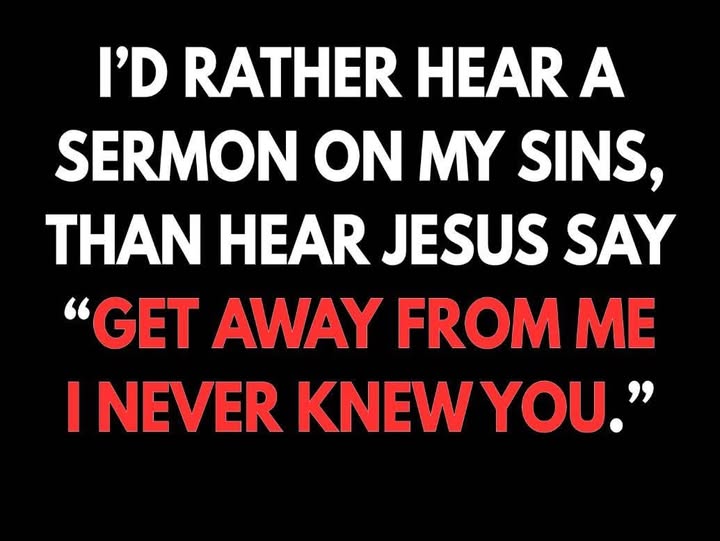
Knowing Jesus vs. knowing about Jesus—what is the difference?
Fan sites and magazines help us answer this question. Adoring fans of movie, TV, music, or sports stars spend money and time obtaining information, photos, and tidbits about their favorite stars. After poring over such material, the fans feel as if they really know their heroes. But do they? They may know certain facts about their chosen hero. They may be able to cite birth date, favorite color, and childhood pets, but, if they were to meet that person face to face, what would the hero say? Does the fan really know the hero?
Jesus responded to this question in Matthew 7:21–23: “Not everyone who says to me, ‘Lord, Lord,’ will enter the kingdom of heaven, but only the one who does the will of my Father who is in heaven. Many will say to me on that day, ‘Lord, Lord, did we not prophesy in your name and in your name drive out demons and in your name perform many miracles?’ Then I will tell them plainly, ‘I never knew you. Away from me, you evildoers!’” There were people in Jesus’ day who thought they were friends of His because they knew the Law, made strict rules for themselves (and for others), and listened to His teaching. They followed Him, applauded the miracles, and liked some of what He said. But Jesus calls them “evildoers” and states, “I never knew you.”
Today there are thousands who know about Jesus—that is, they know some facts about Him, they might commit some Bible verses to memory, and perhaps they even attend church. But they have never allowed the facts to become their personal reality. They hold knowledge in their heads without allowing the truth to penetrate their hearts. Jesus explained the problem: “These people honor me with their lips, but their hearts are far from me. They worship me in vain; their teachings are merely human rules” (Matthew 15:8–9; Mark 7:6).
It can be easy to substitute religion for a real relationship with Jesus. We often think that, if we are doing “Christian things,” that’s all that counts. We can appreciate the facts of Jesus’ death and resurrection, but until we have made Him our Lord, the facts do us no good (John 3:16–18; Acts 10:43; Romans 10:9). There is a difference between intellectual assent and saving faith. Knowing Jesus means we have accepted His sacrifice on our behalf (2 Corinthians 5:21). We ask Him to be the Lord of our lives (John 1:12; Acts 2:21). We identify with Him in His death and consider our old selves to have died with Him (Colossians 3:3; Romans 6:2, 5; Galatians 6:14; 2:20). We accept His forgiveness and cleansing from sin and seek to know Him in intimate fellowship through His Holy Spirit (John 17:3; Philippians 3:10; 1 John 2:27).
When we repent of our sin and surrender our lives to Him, Jesus gives us the Holy Spirit (Acts 2:38; John 14:26; 16:13). The Holy Spirit comes to live inside us, changing us forever (1 Corinthians 6:19; 1 John 3:9). The facts we know about Jesus come alive as we get to know Him personally. Let’s say you’ve read that your favorite movie star has green eyes and a dimple in her chin. Those traits are merely facts on paper until you meet her face to face. Then, suddenly, those green eyes are looking at you, and the dimple springs to her chin when she smiles. She tells you about her day, her fears, and her inner thoughts. You may recall that you had heard those facts before, but now you are experiencing them. You knew about her before, but now you know her. The abstract has become concrete. Things you thought you knew start to make sense as you enter into a relationship.
Jesus is a Person. To know Him is to enter into a relationship. The greatest commandment is to “love the Lord your God with all your heart, soul, mind, and strength” (Matthew 22:37; Mark 12:30; Luke 10:27). It’s hard to love someone you don’t know. Loving Him starts with surrendering to His plan for your life. That’s what it means to make Him Lord (Matthew 6:33; Romans 10:9–10; Psalm 16:8). The nature of God is so vast and complex that no human being can fully know everything there is to know about Him. But life is about continually seeking Him, learning more about Him, and enjoying His fellowship (Jeremiah 29:13; Philippians 3:8).

Tea Time Manna
Be devoted to one another in brotherly love. Honor one another above yourselves.
—Romans 12:10
Being “devoted to another in brotherly love” requires that our church talk — we’re family, brothers and sisters, children of God — be more than mere words. We must enter into each other’s lives, getting to know one another so that we can serve, love, and bless one another. The many “one another” commands of the New Testament remind us that this is the heart of being followers of Jesus. Each of us needs to ask ourselves: “What have I done lately to get more involved in the lives of my fellow Christians?” Devotion to others follows a commitment to know and be known by them, so that we can honor each other appropriately, love each other fully, and bless each other based on each person’s needs.
Prayer
Father, thank you for giving me a worldwide family. Thank you for loving me so completely. Father, I ask that you help me be more open with myself and my time with those in your family. Give me a heart that burns to bless and be blessed by those you have made your children. Through our older brother, Jesus, I pray. Amen and Amen

Bible Teaching of the Day
LUNCH MANNA =
The Bible teaches that a mere outward show of faith is very different from true, saving faith. The Old Testament records many times when the ancient Israelites demonstrated that their heart wasn’t with God despite seeming to follow the rituals of the Mosaic law (Mallachi 1:8). Time and again, God’s prophets warned and condemned Judah and Israel for the hardness of their hearts (Isaiah 29:13; Micah 6:8). Jesus often did the same in the New Testament against the religious leaders who exalted themselves rather than God. An example of this is the last section of Matthew 7, which contrasts true faith with insincere shows of faith. Jesus illustrated the difference by using the metaphor of the type of fruit a tree produces—either good or bad. With this, He taught how to recognize true believers (Matthew 7:15–20). But He goes on to explain that even those whose actions seem right may be hiding a hard heart. Jesus warned against such false prophets who claim to be believers, who may say all the right things or have displayed miraculous power, but don’t truly belong to God (Matthew 7:15). Our omniscient Lord can read hearts, and will eventually separate the sheep from the goats (Matthew 25:32–33). Those who love the Lord will not have to hear Him say on judgment day, “‘I never knew you; depart from me, you workers of lawlessness” (Matthew 7:22–23).
from the old testament
In Isaiah 29:13, the Lord calls out the hypocrisy of those who put on a show of following Him but who do not love Him: “And the Lord said: ‘Because this people draw near with their mouth and honor me with their lips, while their hearts are far from me, and their fear of me is a commandment taught by men.” The Lord called out Judah for not honoring God in their hearts.
Micah 6:8 reveals what the Lord wants from His people: “He has told you, O man, what is good; and what does the Lord require of you but to do justice, and to love kindness, and to walk humbly with your God?” The nation of Israel thought the rituals they performed would make up for their immorality. But underlying the Mosaic law was a moral code that revealed God’s holiness and called His people to live in a way that reflects this. The Israelites’ rituals meant nothing because they weren’t following the spirit of the moral code.
from the new testament
In Matthew 7:22–23 after warning of false prophets, Jesus says of judgment day, “On that day many will say to me, ‘Lord, Lord, did we not prophesy in your name, and cast out demons in your name, and do many mighty works in your name?’ And then will I declare to them, ‘I never knew you; depart from me, you workers of lawlessness.’” Our omniscient Lord knows all, so when Jesus said “I never knew you,” He meant “know” in a relational sense. Jesus has no relationship with those who merely claim to be working in His name but who do not have a saving faith in Him.
When we love God, we are known by Him. In Mark 12:29–30, responding to a scribe’s question, Jesus presents love as the greatest commandment: “The most important is, ‘Hear, O Israel: The Lord our God, the Lord is one. And you shall love the Lord your God with all your heart and with all your soul and with all your mind and with all your strength.” Loving the Lord means knowing and obeying Him. Those who love the Lord will never hear the words “I never knew you” (Matthew 7:23).
In Romans 8:1, Paul asserts, “There is therefore now no condemnation for those who are in Christ Jesus.” Those who walk “according to the Spirit” are true children of God. Regardless of how many good deeds we do, our deeds do not save us. God, who reads hearts, truly “knows” His children.
implications for today
In the competitive career world, job seekers often hear “It’s who you know.” That’s bad news for those who don’t have connections; they probably won’t get the job even if they’re qualified for it. In an immeasurably more positive way, in Christianity, it’s also Who you know—as long as Who you know is Jesus as Lord and Savior. Our entry into heaven isn’t based on our qualifications either (Thank God! We’d never make it). But what does “knowing Jesus” look like in our lives? To start, it’s on a different plane than “knowing” a friend of a friend at the job you’re applying to. A big difference is the awareness that Jesus knows us. We can’t hide our flaws behind a polished professional profile. Our omniscient Creator reads the intent of our hearts. Mercifully, we can come before Him to confess our sins—including those of our hearts—and Our Heavenly Father will welcome us into relationship with Him. Prayer, confession of sin, daily Bible reading, and fellowship with other believers—those are some of the ways Christians can come to know the One who already knows us. Those who love the Lord will not have to hear Him say on judgment day, “‘I never knew you; depart from me, you workers of lawlessness” (Matthew 7:22–23).
Today’s Devotional
DINNER MANNA =
The two questions most frequently asked about Matthew 7:21-23 come about because the verses seem to contradict two strongly held beliefs—one cannot lose his salvation and anyone who performs miracles must be from God. As we will see, one of these beliefs is based on scriptural truth and the other is not. While the true believer cannot lose his salvation, not all miracles are performed by true believers.
Jesus is speaking here near the end of His Sermon on the Mount (chapters 5—7). Beginning in verse 13, Jesus discourses at length on the subject of true faith vs. false professions, using the technique of contrast and comparison. Verses 13-14 describe two paths on which people walk through life, the broad road that leads to eternal destruction and the narrow path that leads to eternal life. He introduces here the concept of the “many” and the “few” that He will return to in verses 21-23.
In Matthew 7:15–18, He again contrasts the two types of people by using imagery well known to those in an agrarian culture—sheep/wolves, grapes/figs, thorn bushes/thistles, good trees/bad trees, and good fruit/bad fruit. Having established the idea of dichotomy in the minds of His hearers, He goes on to apply these truths to the spiritual state of all within His hearing. Jesus presents the two types of people who will come to Him on “that day,” meaning the last day, the day of judgment, the great day fixed by God and unknown to angels and men and which will be terrible to some and joyful to others. All will be seeking to enter the kingdom of heaven, but some will be turned away and will react in utter confusion and disappointment as what they thought was their “ticket” to heaven turns out to be worthless. These are those who prophesied in the name of Jesus, meaning either foretelling things to come or preaching the Word in His name. They have even performed miraculous acts such as driving out demons and perhaps healings and other miracles, but all to no avail. Their works were done for their own glory, not His, and were nothing more than “filthy rags” (Isaiah 64:6). In contrast, those who will enter heaven will not do so based on their miraculous achievements and accomplishments or works of any sort. They will have eternal life solely on the basis of obedience to the will of God (Matthew 7:21)—which is to believe in God’s Son.
But who are these unfortunate people and how can they do miracles unless they are doing them by God’s power? We know several things about them from the text. First, we know there are many of them, because it is many who are on the broad road to eternal death, as compared to the relative few who have found the narrow path to eternal life. Second, they claim the name of Christ. These are not Muslims, Buddhists, or atheists. These are those who would gladly say, “I am a Christian.” They work their works in Jesus’ name. They pray and heal in Jesus’ name. They preach and teach in Jesus’ name. They build huge churches and ministries in Jesus’ name. They claim a relationship with Him. But they are none of His. In fact, He sends them away, not with commendation for their good works in His name (and many good works are done in Jesus’ name by false professors), but by disowning their every deed and word. He “never” knew them, nor did they ever truly know Him. They weren’t Christians who lost their salvation. They were never part of the elect of God, chosen before the foundation of the world (Ephesians 1:4), set apart and sanctified by the Spirit (1 Corinthians 6:11; 2 Timothy 2:21), and justified by faith (Ephesians 2:8-9). The ones Christ puts away from Himself with harsh words of condemnation, calling them doers of evil, never came to Him in faith, despite their outward good works and miracles.
Then if these do not belong to God and never did, how do we explain their ability to perform miracles? Can those who do not have the Spirit actually cast out demons and perform miraculous healings and spectacular signs and wonders? There are two possible explanations for the ability of the ungodly to perform such acts. One is that some miracles are done by the power of Satan and his demonic host. We know that Satan is very crafty. Could there be times when Satan “stages” an exorcism in which an unbeliever commands a demon to leave, and the demon pretends to comply, for the purpose of creating fear in onlookers and causing them to trust in herbs, incantations, talismans, holy water, and relics, rather than in God? Could it be that the doomed men in Matthew 7 had been convinced, in their own minds, that they were serving Christ based on the (satanically orchestrated) “successes”? That the demon they thought they had authority over were only playing a game with them? That they considered themselves demon slayers, when all the while they were nothing more than demons’ dupes? Not all miracles come from God, and not all who perform miracles in the name of Jesus are truly His. The Lord calls the men in Matthew 7 “evildoers” because the miracles they performed had evil as their source, and they had been too blind to see it. Jesus warns us to be on guard against deception as the end times draw near (Matthew 24:24).
Second, it’s possible that God, in His sovereign will and for His purposes, will empower unbelievers to perform miraculous deeds. An example is Judas Iscariot who, along with the other disciples, preached the gospel and we assume healed the sick and performed other miracles. There is nothing to indicate that Judas didn’t have the same power as the other eleven, although he was never a true disciple of Christ. He was a deceiver and the “son of perdition” (John 17:12). If Judas did perform miracles, it was only because God saw fit to use him for His own glory, despite the condition of Judas’s heart.
Jesus goes on to describe those who will be able to call upon His name on the day of judgment. It will be those who hear His words and put them into practice, the same ones referred to in verse 21 as those who obediently do the will of the Father in heaven. True believers are the good trees that produce good fruit (Galatians 5:22-23), the true sheep who look to Christ, depend on Him, commit themselves to Him, trust in Him, and believe on Him for righteousness, salvation, and eternal life. These are the ones who will enter into the kingdom of heaven.

NEWS MANNA –
Bible Prophecy, Signs of the Times and Gog and Magog Updates with Articles in the News
13 Arrested on Temple Mount as Jews Attempt to “Sacrifice” Shavuot Bread Offering

Israeli police arrested 13 people Friday after they broke through security barriers and forced their way onto the Temple Mount in Jerusalem’s Old City, attempting to perform the Biblically mandated grain offering to mark the festival of Shavuot. The arrests came hours before the holiday began at sundown, and initial reports misidentified the ritual items as preparation for an animal sacrifice. What the group actually carried onto the holy site were two loaves of bread.
The suspects breached security and ran into the compound in an attempt to perform the ritual before being stopped by authorities, police said. No animals were present. According to the Ynet news site, the group brought loaves of chametz — leavened bread — made from freshly harvested wheat, the centerpiece of the Shavuot grain offering.
Iran’s parliament votes to put a price on Trump’s head, and it’s not the first time

A senior Iranian lawmaker announced Thursday that Iran’s parliament is advancing legislation to offer a €50 million ($58.13 million) government reward for the assassination of President Donald Trump. Ebrahim Azizi, chairman of the parliament’s National Security and Foreign Policy Committee, told Iranian state television that the bill is part of a broader package of military and security countermeasures developed since the outbreak of the March war. The measure, if passed, would legally obligate the Iranian government to pay the reward to any person or organization that kills Trump.
Azizi named two additional targets alongside Trump: Israeli Prime Minister Benjamin Netanyahu and the commander of US Central Command.
“We believe the vile president of the United States, the ominous and disgraceful Zionist prime minister, and the CENTCOM commander must be targeted and subjected to reciprocal action,” Azizi said. He framed the proposed bounty in explicitly religious terms: “Just as our Imam was martyred, the president of the United States must be dealt with by any Muslim or free person.”
The legislation states that “if any natural or legal person carries out this religious and ideological mission, the government is obliged to pay €50 million as a reward.”
This is a formal legislative proposal, advanced by the chairman of the parliament’s national security committee, broadcast on state television, and framed as both state policy and religious duty.
TruLight Ministries Daily Entertainment Manna

TruLight TV – Knowing God as Our Father
Would you describe yourself as a people pleaser? It warms our hearts to know our actions please others, but what if God calls you to do something that won’t please others? Watch this video and determine whose approval you’re more interested in. And our sermon today from Dr. Charles Stanley (Knowing God as Our Father) – There is only one true God, but the Bible teaches that He has many titles and roles in your life. Dr. Stanley highlights the encouraging privilege of calling God by His most comforting name—Father. You can know God as your perfect heavenly Father who loves you unconditionally. learn more by watching today’s program. Enjoy!
Today on TruLight Radio XM
TruLight Radio XM 24/7
Program
GMT / UTC +2
Monday To Fridays
00:15 Words to Live By Testimonies
01.15 Science Scripture and Salvation
02.15 Ground Works
04.00 Gospel Concert of the Day
05.00 The Daren Streblow Comedy Show
5:55 It is Today devotional
6:00 Gaither Homecoming Morning Show
7:15 Discover the Word
8.15 Destined for Victory
8:55 Science Scripture and Salvation
9:00 Holy Spirit Hour – Normally Sermons
10:15 Hope of the Heart
11:15 Unshackled
11.45 Words to Live By
12:15 Truth for Life
13:15 Living on the Edge with Chip Ingram
14:15 Focus on the Family
15:00 Kids Hour
16:00 In Touch with Dr. Charles Stanley
16:30 Groundwork
17:15 Live in the Light
18:15 Renewing your Mind
19:00 Gaither Homecoming Show
20:15 Growing Hope
21:15 Adventures in Odyssey Radio Drama
21:45 Bible Reading
22:15 Night-sounds
23.00 Good Old Country Gospel / Rhema Gospel Express
VISIT THE WEBSITE
TruLight Ministry News – EXTRA MANNA

TruLight Ministries orders from God since 2012 . Teach Them , Comfort Them and Warn Them!
Healing Truths.
End Time Articles.
Bonus Teaching for the Child of God !!
Before we look at what the Bible says about an individual, we need to dismantle a concept that is growing in popularity within modern Christianity. A misleading message, espoused by various media preachers, best-selling authors, and prosperity teachers, is that it is ALL about me. God is about me. The Bible is about me. The universe is about me. Within this ideology is the misguided idea that God exists for me. Instead of God creating man in His image, we have tried to recreate God in our image.
God has much to say about us as a human race, though, and there is much we can learn about ourselves as individuals in the Bible. When we read what the Bible says about us, we must use the lenses of reverence and humility. God’s decision to communicate with us is not a cause for arrogance on our part but of infinite gratitude. In order to understand what God says about me, I must understand what God says about Himself. Otherwise, it doesn’t matter. Unless God is who He says He is, then it matters little who He says I am.
One thing that God says about me is that I am created in His image (Genesis 1:27). God spoke most of creation into being, but when He created mankind, He did it differently. He got down in the dirt, formed a man from the clay He had created, and then breathed His own life into that man. At that moment, man became “a living soul” (Genesis 2:7). God later fashioned a woman from the man’s rib and joined the man and woman together as husband and wife (Genesis 2:21–24). These human beings were separate from the animals and plants that also had life. The man and woman had the breath of God in their lungs. They were given an eternal spirit, just as God has. Those spirits would live forever, and it was God’s plan that they exist eternally in fellowship with Him.
Another thing that God says about me is that I am a sinner, separated from God. Adam and Eve disobeyed God, and that act brought sin into God’s perfect world (Genesis 2:16–17; Genesis 3). From that time on, all human beings are born with their first parents’ sin nature (Romans 5:12). The sin nature that we inherit—and the sin that we personally commit—separates us from God’s holy presence (Romans 3:23; 6:23).
Another thing that God says about me is that my Creator loves me. He does not have to. But His very nature is love (1 John 4:8), and He sets His love upon us. In His love, God actively works for our lasting good, even to the point of sacrificing Himself to save us (Romans 5:8).
Another thing that God says about me is that He designed me to fulfill a unique purpose (Psalm 139:13–16). God has made each of us exactly the way He wants for His glory and to bring about His will. Even our struggles and frailties exist to accentuate His grace and cause us to cling to Him (see Exodus 4:11).
Then God demonstrated His love in the most generous act the world will ever know. He sent His own Son, Jesus, to earth to take the punishment our sins deserve (John 3:16–18; Colossians 2:14; 2 Corinthians 5:21).
Something else that God says about me is that I belong to one of two groups: the children of God or the children of the devil (1 John 3:7–10). The children of God are those who have faith in Jesus’ death and resurrection. They have received a full pardon, the forgiveness of sin, and eternal life (John 1:12). They are adopted into God’s family (Romans 10:9–13). The children of the devil are those who reject Christ and His offer of salvation. They are still in their sins and under the condemnation of God. Colossians 3:1–17 explains the difference between those under the wrath of God and those who have been restored by God.
So, what God says about me depends upon my standing with Christ. To those who reject Him, He says, “Repent and turn to Me” (see Acts 3:19). To those who receive Him, He says, “Friend, your sins are forgiven” (Luke 5:20) and “Be holy as I am holy” (1 Peter 1:15–16). God’s children are already adopted, justified, and dearly loved. But He wants His children to take on a family resemblance. He saves us so that He can conform us into the likeness of Jesus (Romans 8:29).
When I have been adopted by God as His child, He has much to say about me. I have a new identity (John 3:3). I am no longer a child of wrath (Ephesians 2:3), destined for an eternity without God (Matthew 25:41). I am “in Christ,” covered by His righteousness and fully accepted by God (Philippians 1:1). God says that I am no longer under condemnation (Romans 8:1); He no longer sees my imperfections; He sees the righteousness of His Son instead (Ephesians 2:13; Hebrews 8:12). God says that I am more than a conqueror “through Him who loved us” (Romans 8:37). He says that I “may participate in the divine nature, having escaped the corruption in the world caused by evil desires” (2 Peter 1:4).
On Judgment Day, what God says about me will make all the difference for eternity. God’s words to people on that Day will be either, “I never knew you. Away from me, you evildoers!” (Matthew 7:23) or, “Well done, good and faithful servant! . . . Come and share your master’s happiness!” (Matthew 25:23). When we stand before God, what He says about us will be determined by our relationship, by faith, to Jesus Christ (John 3:18). God sent His one and only Son to pay the price we owed. We must answer this question: “What will I do with Christ?”
Share this Feeding of Manna with your Friends and Family. just click on the Social Media icon and share !