Hosted by TruLight Ministries – The Place of Truth
SELECT YOUR READING LANGUAGE – BOTTOM LEFT = YOUR DAILY MANNA NOW AVAILABLE IN 103 LANGUAGES
@ TruLight – Daily Manna is not Just a Bible Verse with a Small Prayer . No WE SERVE DAILY Manna for the Whole Day . Breakfast , Lunch , Dinner , Plus tea Times and even Entertainment Manna . Plus News Manna and More , This Daily Manna will keep you Spiritually full for the full 48 Hours and even More to Share with your Friends and Family !!!
For the Next 2 week we will look at the Fruits of the Flesh !
IDOLATRY !!!
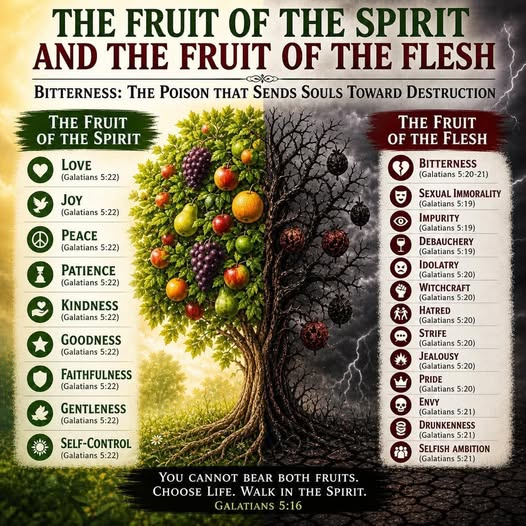
Idolatry in the Church ?
Broadly speaking, religious iconography is the artistic depiction of religious figures, often using symbolism. In Christianity, iconography features subjects such as Christ, Mary, or the saints. An icon is an image, usually painted on wood, that is to be venerated as a sacred object. Icons can also be engravings, mosaics, or embroideries. Although people who use icons in their worship would deny that they are practicing idolatry, it is difficult to see how “venerating” an object as “sacred” is different from idolatry.
Although Catholics also venerate religious images, iconography is most often associated with the Eastern or Orthodox Church, which teaches that the use of icons during prayer helps the worshiper know God, be united with the holy saints, and develop the fruit of the Spirit. When an Orthodox Christian enters his church, he lights a candle, makes the sign of the cross, and then kisses the icons of Christ, the Theotokos (Mary), and the saints. The church sanctuary will contain many other “Holy Icons,” as they’re called. Orthodox Christians are to have icons at home, too, and the place where the icons are kept is where family prayers are offered. Icons are seen as an illustration of the Incarnation of Christ, who left His spiritual abode to dwell in a material world. The devout also believe that an icon is a window into heaven, and their veneration passes straight to heaven, where it is received by the person depicted in the icon. Some claim that icons have facilitated miracles.
John Calvin and the other Protestant Reformers were iconoclasts; that is, they demanded the removal of icons from churches and homes. According to the Reformers, the veneration of icons and other religious artifacts was idolatry, and they were right. Any kissing of, bowing down before, or praying toward an icon is certainly idolatrous. Members of the Orthodox Church insist that they are not worshiping the paint and wood, but they admit that they give veneration, adoration, and reverence to the saints and Mary depicted in the icons. They pray to men and women; they ascribe to the icons a spiritual power that it does not possess. This is unbiblical.
There is nothing wrong with producing or enjoying religious art, per se. Viewing a painting of a biblical scene in an art gallery and admiring the artist’s technique cannot be considered idolatry. Having a picture of Jesus or of angels in one’s home may not be idolatry, either. Iconography can be studied as an art form, and icons can be viewed as fascinating examples of historical religious art. But using icons to aid one’s worship or viewing them as a “window to heaven” is definitely idolatry.
The Bible strictly forbids idolatry (Leviticus 26:1; Deuteronomy 5:9). God alone deserves to be bowed down to and worshiped. Icons are not intercessors before the throne of grace, and neither are the saints they represent. People in heaven do not have the power to hear our prayers or grant our requests. Only Jesus Christ and the Holy Spirit can intercede for us before the Father (Romans 8:26–27, 34). We should stay as far away as we can from anything that could possibly lead to idolatry.

Tea Time Manna
Be still, and know that I am God; I will be exalted among the nations, I will be exalted in the earth.
—Psalm 46:10
David’s example as God’s poet and psalmist King tells me that the promise of this verse is true (Psalm 37:7).
Jesus’ example shows that this is true (Luke 5:16).
Faith helps me trust that this promise is true.
Reverent silences, as we pause amid the hectic rush of our busy lives, can daily remind us that this promise is as true today as it was centuries ago. So, let’s make this promise a spiritual principle we bring into our daily lives. Let’s be still, and know that God is God, not us!
Prayer
O Father in heaven, may your name be reverenced and held holy in my life and my world today. May your will be done, may your reign on earth come with power, might, and finality in my life, and please help me usher it into my world. I want it to come just as it is already real in heaven with you. As I yield my busyness and fretfulness to you, please create the yearning in my heart to be still in your presence and be nourished in the quiet silence of reverent stillness. In Jesus’ name, and to be more like Jesus my Savior, I pray. Amen and Amen.
Bible Teaching of the Day
LUNCH MANNA =
All the various forms of modern idolatry have one thing at their core: self. Most of the world no longer explicitly bows down to idols and images. Instead we worship at the altar of the god of self. This brand of modern idolatry takes various forms.
First, we worship at the altar of materialism which feeds our need to build our egos through the acquisition of more “stuff.” Our homes are filled with all manner of possessions. We build bigger and bigger houses with more closets and storage space in order to house all the things we buy, much of which we haven’t even paid for yet. Most of our stuff has “planned obsolescence” built into it, making it useless in no time, and so we consign it to the garage or other storage space. Then we rush out to buy the newest item, garment or gadget and the whole process starts over. This insatiable desire for more, better, and newer stuff is nothing more than covetousness. The tenth commandment tells us not to fall victim to coveting: “You shall not covet your neighbor’s house. You shall not covet your neighbor’s wife, or his manservant or maidservant, his ox or donkey, or anything that belongs to your neighbor” (Exodus 20:17). God doesn’t just want to rain on our buying sprees. He knows we will never be happy indulging our materialistic desires because it is Satan’s trap to keep our focus on ourselves and not on God.
Second, we worship at the altar of our own pride and ego. This often takes the form of obsession with careers and jobs. Millions of men—and increasingly more women—spend 60-80 hours a week working. Even on the weekends and during vacations, our laptops are humming and our minds are whirling with thoughts of how to make our businesses more successful, how to get that promotion, how to get the next raise, how to close the next deal. In the meantime, our children are starving for attention and love. We fool ourselves into thinking we are doing it for them, to give them a better life. But the truth is we are doing it for ourselves, to increase our self-esteem by appearing more successful in the eyes of the world. This is folly. All our labors and accomplishments will be of no use to us after we die, nor will the admiration of the world, because these things have no eternal value. As King Solomon put it, “For a man may do his work with wisdom, knowledge and skill, and then he must leave all he owns to someone who has not worked for it. This too is meaningless and a great misfortune. What does a man get for all the toil and anxious striving with which he labors under the sun? All his days his work is pain and grief; even at night his mind does not rest. This too is meaningless” (Ecclesiastes 2:21-23).
Third, we idolize mankind through naturalism and the power of science. We cling to the illusion that we are lords of our world and build our self-esteem to godlike proportions. We reject God’s Word and His description of how He created the heavens and the earth, and we accept the nonsense of atheistic evolution and naturalism. We embrace the goddess of environmentalism and fool ourselves into thinking we can preserve the earth indefinitely when God has declared that this current age will have an end: “But the day of the Lord will come like a thief. The heavens will disappear with a roar; the elements will be destroyed by fire, and the earth and everything in it will be laid bare. Since everything will be destroyed in this way, what kind of people ought you to be? You ought to live holy and godly lives as you look forward to the day of God and speed its coming. That day will bring about the destruction of the heavens by fire, and the elements will melt in the heat. But in keeping with his promise we are looking forward to a new heaven and a new earth, the home of righteousness” (2 Peter 3:10–13). As this passage states, our focus should not be on worshiping the environment but on living holy lives as we wait eagerly for the return of our Lord and Savior. He alone deserves worship.
Finally, and perhaps most destructively, we worship at the altar of self-aggrandizement or the fulfillment of the self to the exclusion of all others and their needs and desires. This manifests itself in self-indulgence through alcohol, drugs, sexual sins, and food. Those in affluent countries have unlimited access to alcohol, drugs (prescription drug use is at an all-time high, even among children), and food. Obesity rates in the U.S. have skyrocketed, and childhood diabetes brought on by overeating is epidemic. The self-control we so desperately need is spurned in our insatiable desire to eat, drink, and medicate more and more. We resist any effort to get us to curb our appetites, and we are determined to make ourselves the god of our lives. This has its origin in the Garden of Eden where Satan tempted Eve to eat of the tree with the words “you will be like God” (Genesis 3:5). This has been man’s desire ever since—to be god and, as we have seen, the worship of self is the basis of all modern idolatry.
All idolatry of self has at its core the three lusts found in 1 John 2:16: “For all that is in the world, the lust of the flesh, and the lust of the eyes, and the pride of life, is not of the Father, but is of the world.” If we are to escape modern idolatry, we have to admit that it is rampant and reject it in all its forms. It is not of God, but of Satan, and in it we will never find fulfillment. This is the great lie and the same one Satan has been telling since he first lied to Adam and Eve. Sadly, we are still falling for it. Even more sadly, many churches are propagating it in the preaching of the health, wealth, and prosperity gospel built on the idol of self-esteem. But we will never find happiness focusing on ourselves. Our hearts and minds must be centered on God and on others. This is why when asked what is the greatest commandment, Jesus replied, “Love the Lord your God with all your heart and with all your soul and with all your mind” (Matthew 22:37). When we love the Lord and others with everything that is in us, there will be no room in our hearts for idolatry.
Today’s Devotional
DINNER MANNA =
The Bible is absolutely clear that we are to worship God alone. The only instances of anyone other than God receiving worship in the Bible are false gods, which are Satan and his demons. All followers of the Lord God refuse worship. Peter and the apostles refused to be worshiped (Acts 10:25–26; 14:13–14). The holy angels refuse to be worshiped (Revelation 19:10; 22:9). The response is always the same, “Worship God!”
Roman Catholics attempt to “bypass” these clear Scriptural principles by claiming they do not “worship” Mary or saints, but rather that they only “venerate” Mary and the saints. Using a different word does not change the essence of what is being done. A definition of “venerate” is “to regard with respect or reverence.” Nowhere in the Bible are we told to revere anyone but God alone. There is nothing wrong with respecting those faithful Christians who have gone before us (see Hebrews chapter 11). There is nothing wrong with honoring Mary as the earthly mother of Jesus. The Bible describes Mary as “highly favored” by God (Luke 1:28). At the same time, there is no instruction in the Bible to revere those who have gone to heaven. We are to follow their example, yes, but worship, revere, or venerate, no!
When forced to admit that they do, in fact, worship Mary, Catholics will claim that they worship God through her, by praising the wonderful creation that God has made. Mary, in their minds, is the most beautiful and wonderful creation of God, and by praising her, they are praising her Creator. For Catholics, this is analogous to directing praise to an artist by praising his sculpture or painting. The problem with this is that God explicitly commands against worshiping Him through created things. We are not to bow down and worship the form of anything in heaven above or earth below (Exodus 20:4–5). Romans 1:25 could not be more clear: “They exchanged the truth of God for a lie, and worshiped and served created things rather than the Creator—who is forever praised. Amen.” Yes, God has created wonderful and amazing things. Yes, Mary was a godly woman who is worthy of our respect. No, we absolutely are not to worship God “vicariously” by praising things (or people) He has created. Doing so is blatant idolatry.
The major way Catholics “venerate” Mary and the saints is by praying to them. But prayer to anyone other than God alone is anti-biblical. Whether Mary and/or the saints are prayed to, or whether they are petitioned for their prayers—neither practice is biblical. Prayer is an act of worship. When we pray to God, we are admitting that we need His help. Directing our prayers to anyone other than God is robbing God of the glory that is His alone.
Another way Catholics “venerate” Mary and the saints is by creating statues and images of them. Many Catholics use images of Mary and/or the saints as “good luck charms.” Any cursory reading of the Bible will reveal this practice as blatant idolatry (Exodus 20:4–6; 1 Corinthians 12:1–2; 1 John 5:21). Rubbing rosary beads is idolatry. Lighting candles before a statue or portrayal of a saint is idolatry. Burying a Joseph statue in hopes of selling your home (and countless other Catholic practices) is idolatry.
The terminology is not the issue. Whether the practice is described as “worship” or “veneration” or any other term, the problem is the same. Any time we ascribe something that belongs to God to someone else, it is idolatry. The Bible nowhere instructs us to revere, pray to, rely on, or “idolize” anyone other than God. We are to worship God alone. Glory, praise, and honor belong to God alone. Only God is worthy to “receive glory and honor and power” (Revelation 4:11). God alone is worthy to receive our worship, adoration, and praise (Nehemiah 9:6; Revelation 15:4).

NEWS MANNA –
Bible Prophecy, Signs of the Times and Gog and Magog Updates with Articles in the News


THERE WILL BE WARS AND RUMORS OF WARS = JESUS CHRIST


Why the “Two-State Solution” Would Eliminate Christianity From the Middle East
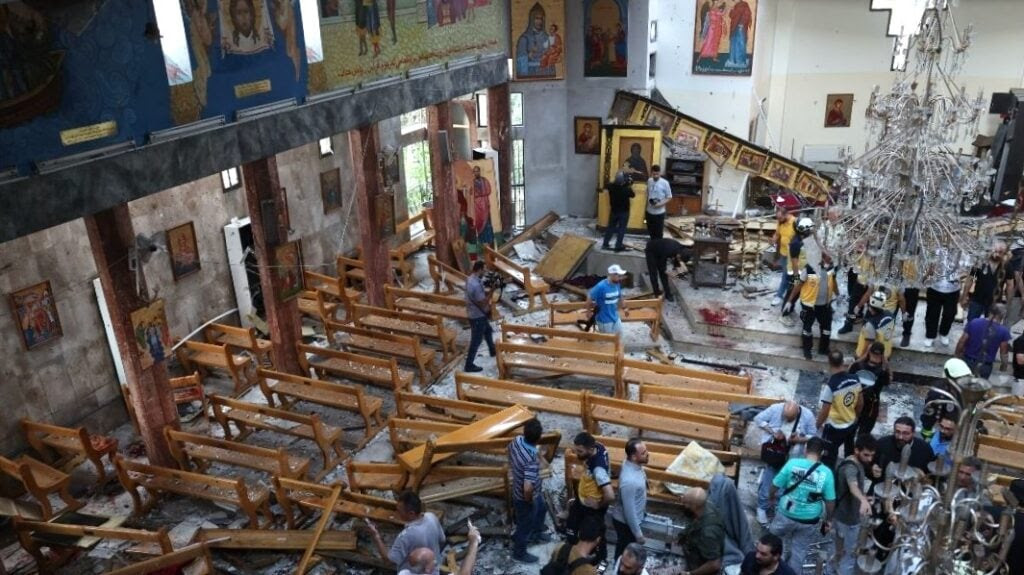
a “two-state solution” would endanger Israel, but it would also mark the end of Christianity in this part of the world, the region where Jesus was born.
When Iran launched ballistic missiles at Israel this week to punish Jerusalem for striking a Hezbollah command center in Beirut, most of the world’s media treated it as a story about missiles and military escalation. It is actually a story about something far larger: the systematic Islamist takeover of a region that was once home to flourishing Christian, Jewish, and pluralist civilizations and Israel’s role as the last line standing against that tide.
The nations now arrayed against Israel were not always what they are today. Within living memory, they were something else entirely.
Lebanon: The Paris on the Mediterranean
Until the 1970s, Beirut was rightly called the “Paris of the Middle East,” with Swiss banks, American and French universities, beaches at Jounieh, and wines competing with Bordeaux. After World War II, Lebanon was a wealthy country, a peaceful, multiethnic, multireligious nation under a Christian majority.
Lebanon was a majority-Christian country from the first century CE through the mid-20th century. When Lebanon gained independence from French rule in 1943, the Maronite Christian community held major political and social power, making Lebanon the only Christian-majority nation in the Middle East. The confessional power-sharing system enshrined this reality: a Maronite Christian as president, a Sunni prime minister, a Shia speaker of parliament.
Then came the demographic and military assault. Throughout the 20th century, Lebanon was deliberately used as a destination for refugees by neighboring Muslim-majority countries seeking to shift the religious balance. After the creation of Israel in 1948, the Palestinian exodus brought a large influx of predominantly Muslim refugees into Lebanon, a migration supported by regional powers with the intent of weakening Lebanon’s Christian majority. During the 1970s, both Jordan and Syria played roles in this process.
The 1975-1990 civil war was not primarily a religious war. It was a demographic referendum conducted at gunpoint. The Lebanese civil war began with shots fired at a Maronite church on April 13, 1975. Arafat’s Palestinian Arab terrorists turned Beirut into a military stronghold. Christians did not lose militarily because the Phalange held out to the end, but they lost politically and numerically.
Palestinian Fatah fighters in Beirut in 1979. By Tiamat, cleanup and re-up by Jaakobou via Wikipedia
Then Iran moved in. Hezbollah, created and funded by the Islamic Revolutionary Guard Corps, finished what the civil war started. Today, Lebanon is 61.62% Muslim and only 38.22% Christian. Christians who can leave take the first plane to Montreal or Sydney.
Four out of every five Maronite Christians have left Lebanon. The country that was once a model of Christian-Arab pluralism is now a platform for Iranian missiles pointed at the Jewish state. Hezbollah does not govern Lebanon by popular mandate. It governs Lebanon by force, funded by Tehran, and the Lebanese government is powerless to stop it, as Lebanese President Joseph Aoun himself acknowledged this week when he told Iran directly: “It’s not your country, it’s our country.”
Egypt: The Oldest Christian Community in the World, Under Siege
Egypt was Christian before it was anything else. The Coptic Church traces its founding to St. Mark the Evangelist in the first century CE. The word Copt derives from the Greek Aigyptos, Egypt itself. The Copts are not a foreign minority in Egypt. They are the Egyptians, the direct descendants of the pharaonic civilization that predates Islam by more than 3,000 years.
Throughout Arab, Circassian, and Ottoman rule, the Coptic population was persecuted by its Muslim rulers. Churches were destroyed, books burnt, and elders imprisoned. By the time the British took Egypt in 1882, Copts had been reduced to one-tenth of the population, mainly as a result of centuries of forced conversion to Islam.
The 20th century brought no relief. When Arab nationalism rose under Gamal Abdel Nasser, Egypt was declared a Muslim country, and Copts were systematically pushed out of political and economic life. There are approximately 10 million Copts in Egypt — the largest Christian minority in the entire Middle East. While the everyday average Copt is not necessarily subjected to overt persecution, everyday forms of discrimination are common: only Muslims get hired for the best jobs. And attacks on churches, the kind of persecution that occurred centuries ago, are on the rise, unsurprisingly so, considering the overall Islamization of Egypt in recent decades.
The Arab Spring of 2011 made everything worse. Persecution increased dramatically in 2011 during the Arab Spring, which popularized the long-suppressed Muslim Brotherhood. Many Christians in Egypt subsequently suffered at the hands of ISIS. When the military ousted Muslim Brotherhood President Mohammed Morsi in 2013, retaliation came swiftly against Christian churches and police stations across Egypt. When the smoke cleared, more than 40 churches had been damaged or destroyed, most in fiercely Islamist areas of southern Egypt.
The Muslim Brotherhood, the ideological parent of Hamas, was born in Egypt in 1928. Its explicit goal was and remains the restoration of the Islamic Caliphate and the imposition of Sharia law across the Arab world. Egypt suppressed it for decades, but it never went away. In the 2011 parliamentary elections following the fall of Mubarak, two Islamist parties ran and were the big winners. Three-quarters of the parliament belonged to Islamist movements. The Copts, who had been building civilization in the Nile Valley while the ancestors of the Muslim Brotherhood were still pagans, found themselves politically voiceless in their own ancestral homeland.
Egyptian Youth Protesting Against Muslim Brotherhood – Alexandria, Sidi Gaber, Egypt 30 June 2013 (Source: Shutterstock)
Syria: Islamists Inherit the Ruins
Syria was never a Christian-majority country like Lebanon, but it had a substantial and ancient Christian population, with communities going back to the first century CE, the very soil on which Paul of Tarsus was struck blind on the road to Damascus. Before the civil war, Syria was home to approximately 2.5 million Christians. Today, the Christian population has fallen to somewhere between 500,000 and one million, a reduction of up to 80 percent.
The Assad regime was secular and brutal. Christians, as a minority that needed the regime’s protection from Sunni Islamists, largely accommodated themselves to it. During the Syrian Civil War, many Syrian Christians in Damascus, Homs, and Aleppo preferred Assad’s government to rebel administrations because rebel groups were dominated by extremist factions such as al-Qaeda’s affiliate Hayat Tahrir al-Sham, the Islamic State, and the Syrian National Army, all of which committed atrocities against Christians in areas under their control.
When Assad fell in December 2024, those fears proved entirely justified. Syria’s transitional government and its security forces have been dominated by fighters from Hayat Tahrir al-Sham, a jihadist group that attacked Christians throughout the civil war, and whose leader, Ahmad al-Sharaa, was previously on the FBI’s Most Wanted List from 2013 through 2024 for his role in Sunni Islamist regional terror.
The Antiochian Patriarchate reported in September 2025 that “for days now in Syria there has been a systematic and unprecedented massacre of Christians, the killing of monks, the burning of monasteries, the looting and burning of entire Orthodox villages, while the authorities in Syria are doing nothing to prevent it.”
An al-Qaeda-affiliated organization now controls Damascus. This is not speculation; it is the documented reality on the ground, while the world’s diplomats speak politely of “transitional governance.”
Iran: The Most Instructive Collapse of All
Iran is the most instructive case, because the transformation was the sharpest, the fastest, the most deliberately engineered, and Iran is now the engine driving every other front in this war.
Before 1979, Iran under Shah Mohammad Reza Pahlavi was a functioning modern state with deep ties to the West and to Israel. Under the Shah’s rule, Iran’s economy and educational opportunities expanded. He pushed the country to adopt Western-oriented secular modernization, allowing cultural freedom. Women gained the right to vote in the mid-1960s, and the first female representatives were elected to parliament. Iran and Israel maintained quiet but substantive cooperation in intelligence, agriculture, and commerce.
Jews had lived in Iran for 2,700 years, since the Assyrian exile of 722 BCE. The Book of Esther is set in the Persian court. Cyrus the Great, king of Persia, issued the decree that sent the Jewish exiles home from Babylon and funded the rebuilding of the Beit HaMikdash (the Temple) in Jerusalem. The Jewish connection to Persia is written into the Bible itself.
Before the 1979 Islamic Revolution, Iran was home to more than 120,000 Jews. Today, that number has fallen to approximately 9,000, a decline of over 92%. One of the earliest signals of what was coming was the arrest, sham trial, and execution of Habib Elghanian, a prominent Jewish industrialist and community leader. Imprisoned shortly after the revolution, he was accused of “corruption” and ties to Israel. Following a swift, staged one-hour proceeding before a revolutionary court in which no defense was permitted, Elghanian was executed by firing squad in May 1979. He was one of 17 Iranian Jews executed as spies since the revolution.
Following the Twelve-Day War in June 2025 and repeated Iranian failures to strike Jewish targets in Europe, Tehran redirected its hostility toward its own Jewish citizens. More than 30 Iranian Jews were arrested on espionage charges, numerous Jewish leaders were interrogated, and members of the country’s small Jewish community were pressed to express public support for Khamenei and the regime.
Since 1979, the Islamic Republic has imposed a theocratic order subordinating all of Iran’s diverse communities to an extremist interpretation of Shiism. The Baha’i, Iran’s largest non-Muslim minority, have been subjected to mass arrests, property confiscation, and systematic erasure. Christians who proselytize face revolutionary courts. Sunni Muslims are second-class citizens in a Shia state. The Iran that launched missiles at Israel this week is not an ancient civilization defending itself. It is a 46-year-old revolutionary theocracy that has spent those 46 years dismantling everything that came before it.
Israeli security and rescue forces at the scene where a ballistic missile fired from Iran hit and caused damage in Tel Aviv, June 22, 2025. Photo by Chaim Goldberg/Flash90
Israel: The Exception That Proves the Rule
There is one country in the Middle East where the Christian population has not declined. Where Jews have not been expelled. Where the Druze serve in the army, where Bedouin are elected to the Knesset, where an Arab judge sits on the Supreme Court. That country is Israel.
In the last 50 years, Christian populations across the region have dropped significantly in every country except Israel.
This is not a coincidence. Israel is the only country in the Middle East governed by a non-Islamic framework that is indigenous to the region. It is not imported from the West, but rooted in the same land, the same Bible, and the same covenant (brit) that predates Islam by more than a thousand years. Israel does not merely coexist with religious minorities out of liberal tolerance. Israel’s foundational text, the Hebrew Bible, commands the protection of the ger (the stranger who dwells among you) with the same force it commands Shabbat.
The Contrast No One Talks About: Christians in Israel vs. Christians Under Palestinian Rule
The proof of Palestinian intent to eradicate Christianity was graphically illustrated when a Palestinian flag was displayed at a Christian event in Bethlehem in the early 1990s. It carried a message the visiting South African pastor almost certainly never saw coming — written in Arabic across its face was a declaration of murderous intent: “On Saturdays, we will murder the Jews. On Sundays, we will murder the Christians.” Nadia Matar, co-chair of the Sovereignty Movement, brought the flag to the Israel365 offices this week as a visual exhibit in an argument she believes the Western world can no longer afford to ignore.
For Matar, the flag’s inscription is not a relic of the past but a roadmap for the present. “People have to understand that the war here in Israel is not about Gaza,” she said. “It is not about the settlements. It is a war by the Islamo-fascists who have a clear plan — they want to first destroy and kill the ‘Saturday people,’ the Jews, and then go on to kill the ‘Sunday people,’ the Christians in Europe and America.” Her warning was direct: “They will come out and do October 7 to you — in London, in Brussels, in New York, in Florida. So be against a Palestinian state for the sake of Western civilization.”
The most telling evidence of what Israel represents comes from a direct comparison that the mainstream media systematically ignores. In Israel proper, the Christian population is growing. Israel’s Christians account for 1.9% of the country’s population and grew by 0.7% from 2023 to 2024, according to Israel’s Central Bureau of Statistics. Some 6,700 Christian students attended higher education institutions in 2024/25, representing 2.2% of all students, outperforming their share of the population. Church bells ring in Nazareth, Haifa, and Jerusalem. Christian Arabs sit in the Knesset. Arab Christian enlistment in the IDF has increased threefold in the past year alone.
These are the statistics of a community that has found a home.
Cross the line into Palestinian Authority-controlled territory, and the picture inverts completely. Violence and coercion have resulted in up to a 90% decline in the Christian population in areas under Hamas or Palestinian Authority control. In 1922, Christians constituted 11% of the population in those areas. Today, they are just 1%. In 1950, Bethlehem and the surrounding villages were 86% Christian. By 2017, Bethlehem’s Christian population had dwindled to 10%. Bethlehem, the city where, according to Christian tradition, Jesus was born, has been effectively emptied of its Christian population since the Palestinian Authority took control in 1994. The last census showed Bethlehem at 10% Christian families, with many leaving due to systemic discrimination, harassment of Christian clergy by Muslim Palestinians, and policies imposed by the Islam-dominated Palestinian Authority.
How a Palestinian State is a Lie That Threatens to Eradicate Christianity in This Part of the World
Gaza tells the same story in sharper relief. The Christian population in Gaza shrank from 5,000 before Hamas took over the area to only 1,000 by October 2023. Kamal Tarazi, a Christian who fled Gaza in 2007, described what Hamas rule meant in practice: “The moment they took control, they started persecuting us, ruining our churches, and forcing Christians to convert to Islam.” He added, “Do you know what a Hamas prison is? It is pure torture.”
A recent Jerusalem Center for Security and Foreign Affairs report found that Christians in the Palestinian Authority area fear reporting hate incidents against them for fear of arrest or worse. Christians in Bethlehem, the birthplace of Christianity itself, live in fear of their Muslim neighbors and their own governing authority, while Christians in Haifa and Nazareth serve in Israel’s military, study at its universities, and raise their children in safety.
This is not a coincidence of history. It is a direct consequence of governance. Israel, governed by the framework of the Hebrew Bible, which commands forty-six times that the stranger dwelling among the people of Israel must be treated justly, protects its minorities. The Palestinian Authority and Hamas, governed by an Islamist framework that classifies non-Muslims as dhimmis (second-class subjects) at best, drive them out. The numbers are not ambiguous. The only question is why the world refuses to read them.
For over four decades, the Middle East policy of Europe and the US has been based on an anti-Israel “land-for-peace” policy, which has failed. It is based on the Two-State Solution, which would create an unprecedented militarized Arab state inside Israel’s borders, one ethnically cleansed of Jews, with its capital in an exclusively Muslim Jerusalem. This would require a return to the ceasefire lines drawn up after the defensive 1967 Six-Day War that are considered to be indefensible against an Arab threat. The UN resolution violates the Oslo Accords, which require any resolution concerning Judea and Samaria to be the result of bilateral negotiations between Israel and the Palestinians. The two-state solution is based on the disastrous land-for-peace process, which inevitably leads to war.
The two-state argument always rested on the assumption that Palestinians wanted a state alongside Israel, not instead of it. That assumption has never been reliably true. According to an analysis by the Palestinian Center for Policy and Survey Research polling over multiple years, an average of 53% of Palestinians rejected the two-state outcome across the full period under review, with rejection peaking at 71% in March 2023, shortly before October 7. When West Bank Palestinians were asked to choose between territorial alternatives in a September 2025 survey, 28% backed a single Palestinian state from the Jordan River to the Mediterranean Sea, excluding Jews. A separate INSS survey from March 2025 found that 24% of the Israeli public supports a two-state solution, while 24% supports full annexation of the territories without granting Palestinian residents civil rights.
Advocates of the two-state solution in the West spent decades arguing that Palestinian rejection was the product of Israeli occupation, and that a generous offer would unlock a deal. The data does not support that argument. It never did.
Toward this end of the creation of a fictional Palestinian state, the United Nations Relief and Works Agency for Palestine Refugees in the Near East (UNRWA) was established in 1949 solely to “support the relief and human development of Palestinian refugees.” At the time of its establishment, UNRWA defined a Palestinian refugee as “persons whose regular place of residence was Palestine during the period 1 June 1946 to 15 May 1948, and who lost both home and means of livelihood as a result of the 1948 conflict.” This was later amended to include the 1967 refugees. Even later, this was amended to include the descendants of Palestine refugee males, including adopted children.
Palestinians are the only nationality for which refugee status is ancestral. It is important to note that the UNHCR definition states that if a person fleeing persecution has acquired citizenship or the rights of citizenship in a country in which they have sought refuge, they would not be eligible to receive refugee status. Under the UNHCR definition, almost all of the people served by UNRWA would lose their refugee status.
Iran fired missiles at Israel this week to defend Hezbollah. What it was really defending is a vision of the Middle East with no room for anyone who is not a Shia revolutionary, a Sunni jihadist, or a dhimmi, a second-class religious minority living by the sufferance of an Islamist state.
Israel is not just fighting for its own survival. It is the last remaining evidence that the Middle East was once something very different, and could be again.
Why The AI Age Needs More Bereans
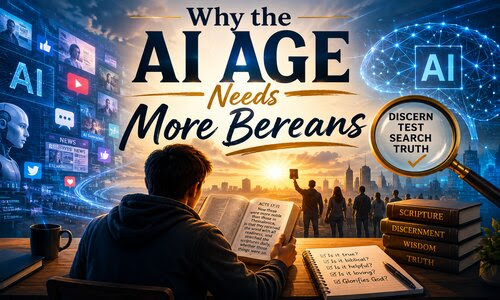
Nearly 2,000 years ago, the Apostle Paul arrived in the Macedonian city of Berea and began preaching in the local synagogue. The people who heard him were, Luke tells us, “more noble than those in Thessalonica” because they “received the word with all eagerness, examining the Scriptures daily to see if these things were so” (Acts 17:11 ESV). Rather than accept what they were told, they tested it against the standard of truth and formed their own conclusions. It is a discipline America is in danger of losing.
Over the past year, I have spoken with church groups, educators, parents, and radio audiences across the country about artificial intelligence. Most questions focus on jobs, national security, or the race with China. Few people ask the more fundamental question: What happens when a generation grows accustomed to accepting answers without examining them?
Researchers at the University of Pennsylvania’s Wharton School have given that concern a name: “cognitive surrender,” the tendency to adopt AI-generated answers with minimal scrutiny, bypassing both intuition and deliberate reasoning. In their experiments, participants frequently followed AI recommendations even when those recommendations were wrong. As researcher Steven Shaw describes it, cognitive surrender occurs when AI “is not just doing a specialized task but making the decision, and the person adopts that decision as their own without recognizing the transfer has occurred.”
New research from Oregon State University makes the classroom consequences concrete. Graduate researcher Rudrajit Choudhuri and faculty advisor Anita Sarma found that students who rely heavily on AI begin using it as a replacement for learning rather than a support for it. The declines they measured were striking: a 66% drop in reflection, a 41% decline in critical thinking, and a 21% drop in students’ belief that grasping the underlying concepts was even necessary. Sarma called the pattern a “cognitive crutch.” One finding challenged common assumptions: tech-savvy students were more likely to experience the negative effects, not less, suggesting that familiarity with AI accelerates dependence rather than moderating it.
For centuries, literacy meant far more than reading words on a page. It enabled people to evaluate ideas, compare arguments, and discern truth from error. The Protestant Reformation itself depended upon ordinary believers reading Scripture for themselves. The AI age presents a quieter temptation in that same tradition: why wrestle with a difficult problem when a chatbot provides an instant answer? Why read an entire book when software summarizes it in 30 seconds? The convenience is real, and so is the cost, because every time the reasoning is outsourced, the capacity for it quietly diminishes.
That diminishment carries strategic consequences. In “The New AI Cold War,” I document how China and other adversaries are deliberately cultivating human analytical capacity while investing in AI, not as a substitute for it. A nation’s long-term position in the AI competition depends not only on the sophistication of its systems but on the judgment of the people directing them.
Machines optimized to automate thinking can weaken the very human faculties that give those machines their strategic value. A workforce that has learned to prompt rather than reason cannot reliably catch an error, contest a false conclusion, or exercise the independent judgment that military and civilian leadership require across every professional domain where consequential decisions are made.
A Spiritual Obligation
Christians should recognize that this concern is also a spiritual one. Scripture commands believers to exercise discernment, and those commands assume an active mind. Paul instructed the Thessalonians: “Test everything; hold fast what is good” (1 Thessalonians 5:21 ESV). He urged believers not to be “conformed to this world but be transformed by the renewal of your mind” (Romans 12:2 ESV).
Solomon warned that “the simple believes everything, but the prudent gives thought to his steps” (Proverbs 14:15 ESV). Each of those passages assumes a believer who reads, evaluates, questions, and judges. The Berean model, in other words, is not a personality type. It is a scriptural expectation.
Artificial intelligence can be a genuinely useful instrument. I use it regularly in my own research and writing. But usefulness and faithfulness are different standards. No AI can fulfill the biblical responsibility to test, examine, discern, and judge. Those remain uniquely human obligations, and they are not optional. The believer who outsources his thinking outsources part of his faithfulness.
What Families, Churches, and Schools Must Do
That discipline is formed at home before it is exercised anywhere else. Parents are not simply moderating screen time when they require a child to think through a problem before reaching for a chatbot. They are practicing what the Bereans modeled: receive, then examine. Ask children not only what they believe but how they arrived at it, and whether they can defend it without the AI open. Applied consistently, that practice shapes the kind of mind that can hold its own when the machine provides a confident answer that happens to be wrong.
The church has a particular responsibility here because the Berean model is not only an intellectual virtue but a congregational one. Bible studies that reward passive consumption are not producing Bereans. Pastors who encourage their congregations to search the Scriptures and question what they are taught are forming people who can resist manipulation and hold fast to what is genuinely good. Congregations that practice active examination are better equipped for an age that makes intellectual passivity easy.
Schools should take the Oregon State researchers’ findings seriously. Their proposed remedy, “useful friction” built into AI tools that requires students to engage with a problem before receiving an answer, points in the right direction. But it is not enough to redesign software. Schools must deliberately teach critical thinking, logic, and source verification as core disciplines, not elective enrichment. The goal is students who know how to examine, not just how to prompt.
The Bereans were praised because they did not surrender their judgment to others, not even to an apostle. They listened carefully, and they verified. That discipline built strong believers and, in turn, healthy communities. America’s deeper challenge today is that a generation may gradually surrender the habit of thinking for itself without recognizing what is being lost. If AI displaces the God-given obligation to reason, discern, and pursue truth, what is exchanged is not merely a skill but a birthright. The AI age has not diminished the need for Bereans. It has made them indispensable.
Can A Judge Prevent A Child From Attending Church?
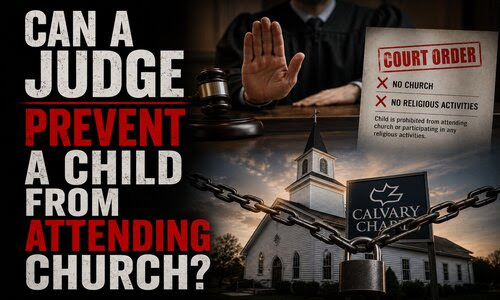
What happens when a government court decides that a child can no longer attend her church?
That question is now at the center of one of the most extraordinary religious liberty cases unfolding in America.
For nearly 18 months, a 13-year-old Maine girl has been prohibited from attending Calvary Chapel in Portland, Maine–the church she regularly attended with her mother and where many of her closest friends worshipped. The ruling effectively severed her from her church community, youth activities, Bible studies, Christian fellowship, holiday celebrations, and many of the relationships that had become central to her spiritual life.
The case involves Ava Bickford and her mother, Emily Bickford, who have spent the past year and a half fighting a court order that many religious liberty advocates believe strikes at the heart of the First Amendment.
The restrictions were imposed in late 2024 during a custody dispute between Ava’s parents and remain in place while Maine’s Supreme Judicial Court considers an appeal that could have ramifications far beyond a single family.
For many Christians, the case raises a troubling question: If a court can prevent a child from attending a Bible-believing church because of concerns about the church’s teachings, where does that authority end?
This is not a case involving abuse, neglect, criminal activity, or physical danger.
Instead, the controversy centers on whether a court can restrict a parent’s ability to raise a child in the Christian faith based on claims that exposure to certain biblical teachings may be causing emotional distress.
The dispute intensified after Ava expressed a desire to be baptized at Calvary Chapel.
Her father objected, arguing that teachings she was hearing at church were contributing to anxiety and emotional stress. Court filings referenced concerns that Ava had become worried about spiritual matters, including discussions surrounding salvation and the return of Christ.
To support those concerns, the court relied heavily on testimony from a sociologist presented as a “cult expert,” who characterized Calvary Chapel as exhibiting cult-like characteristics.
Among the beliefs cited were doctrines familiar to virtually every Christian denomination: belief in heaven and hell, angels and demons, salvation through Jesus Christ, and pastors who teach Scripture verse-by-verse and chapter-by-chapter.
That alone should give Americans pause.
If belief in heaven and hell is evidence of a dangerous religious environment, then much of historic Christianity suddenly finds itself under suspicion.
If teaching the Bible systematically becomes a warning sign, then countless evangelical, Baptist, Pentecostal, Lutheran, Presbyterian, Catholic, and Orthodox congregations could theoretically face similar accusations.
That concern is precisely why Liberty Counsel, a national religious liberty legal organization, became involved in the case.
The organization rarely enters ordinary custody disputes. Attorneys say they viewed this case differently because it raised profound constitutional questions regarding parental rights and religious freedom.
The court ultimately granted Ava’s father final authority over her religious upbringing and prohibited her attendance at Calvary Chapel.
That distinction matters.
The case is often described simply as a dispute over church attendance. In reality, Calvary Chapel was not merely a building Ava visited on Sunday mornings. It was her faith community. It was where she attended Bible studies, youth activities, fellowship gatherings, holiday celebrations, and spent time with many of her closest friends.
By removing her from the church, the order effectively disconnected her from nearly every aspect of the Christian community she had come to know.
The emotional cost has extended far beyond missing a weekly worship service.
According to her mother, Ava repeatedly struggled to understand why she was no longer allowed to attend church. She missed youth events, Bible studies, Christian fellowship, and regular interaction with the friends she once saw every week.
As months turned into more than a year, some of those relationships naturally changed. Some friends moved away. Others drifted apart as happens when young people no longer share the same community.
Those losses cannot simply be restored by a future court ruling.
Religious liberty advocates argue that the broader implications are even more concerning.
Across America, millions of divorced or separated parents share custody arrangements. Religious differences between parents are common. Historically, courts have generally allowed each parent to expose a child to their chosen faith during their parenting time.
If this ruling is allowed to stand, critics fear it could create a pathway for courts to restrict Christian parents whenever a judge believes biblical teachings are contributing to emotional discomfort.
That should concern believers across denominational lines.
After all, Christianity contains difficult truths. The Bible speaks of sin, judgment, repentance, salvation, heaven, and hell. For two thousand years, many people have found those teachings challenging.
Yet the answer in a free society has never been government censorship of religious belief.
The First Amendment exists specifically to prevent government officials from deciding which religious doctrines are acceptable and which are not.
During oral arguments before Maine’s high court, some justices appeared to wrestle with that very issue.
At one point, questions arose regarding whether courts were effectively evaluating the validity of religious teachings themselves rather than simply examining the facts of a custody dispute.
That concern goes to the heart of the matter.
Once courts begin deciding that certain sermons are too intense, certain doctrines too troubling, or certain biblical teachings too emotionally challenging for children, where does it stop?
Could preaching about judgment become problematic?
Could teaching salvation through Christ alone be viewed as harmful?
Could discussing the Book of Revelation someday become grounds for restricting parental rights?
Those questions may seem dramatic, but many observers would have considered the current case unimaginable just a few years ago.
The reality is that this case is no longer simply about one church in Maine.
It has become a test of whether Christian parents retain the right to raise their children according to their faith without government interference.
Perhaps the most heartbreaking aspect of the entire story is that even if the appeal succeeds, some of the damage cannot be undone.
A court may be able to restore legal rights with the stroke of a pen.
It cannot restore eighteen months of missed Bible studies.
It cannot restore youth gatherings that never happened.
It cannot restore Christian holidays celebrated apart from a church family.
And it cannot fully restore the friendships and community connections that slowly faded while one young girl was kept away from the church she loved.
The Maine Supreme Judicial Court’s decision will determine more than the future of one family.
It may help determine whether America’s courts continue to protect the free exercise of religion–or whether judges increasingly assume the authority to decide when a child’s exposure to biblical Christianity has gone too far.
America’s New Sacred Symbol Being Raised Across The Land: The Pride Flag
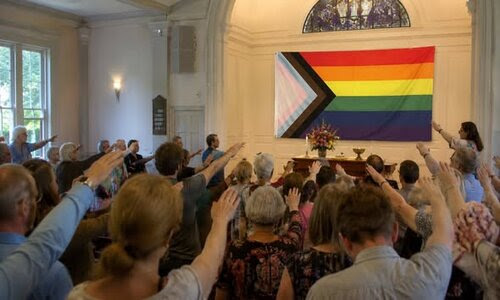
There was a time when flags represented nations, causes, or communities. Today, however, some flags appear to have taken on a far deeper role. They are no longer merely symbols to be displayed. They are objects to be celebrated, honored, blessed, and in some cases treated with a level of reverence once reserved for religious icons.
Two recent events illustrate just how far this transformation has gone.
In one gathering at a church, people literally stretched out their hands toward a Pride flag and prayed over it. They declared:
“Let this banner be a symbol of hope, a blanket of protection, and a cape of power.”
Pause for a moment and consider those words.
A blanket of protection.
A cape of power.
These are not merely political statements. They are spiritual declarations. They assign supernatural significance to a piece of fabric. They attribute qualities to a symbol that Christians have historically attributed to God alone.
This is what happens when a culture abandons biblical faith but still possesses a deep human desire to worship.
Human beings were created to worship something. If they reject God, they do not stop worshipping. They simply redirect their devotion elsewhere. History is filled with examples. Ancient civilizations worshipped statues. Modern societies worship celebrities, governments, ideologies, money, and movements.
Today, many appear willing to elevate sexual identity and political causes into something resembling a substitute religion.
The Pride movement increasingly contains many of the elements traditionally associated with faith. It has sacred symbols. It has approved doctrines. It has heresies that cannot be questioned. It has public rituals. It has annual festivals. It even has forms of excommunication for those who refuse to affirm its teachings.
Most troubling of all, some churches have eagerly joined the movement.
Rather than calling people to repentance and transformation through Christ, certain congregations now devote themselves to affirming whatever cultural trend happens to dominate the moment. In doing so, they are creating a new theology where acceptance becomes the highest virtue and affirmation becomes the greatest commandment.
The result is a faith that may use Christian language while abandoning Christian authority.
When church leaders stretch out their hands toward a Pride flag and ask for blessings upon it, they are revealing a deeper problem. The issue is not merely sexuality. The issue is authority.
Who defines truth?
Who determines right and wrong?
Who deserves worship?
For Christians, the answer has always been God and His Word. Once that foundation is abandoned, almost anything can become sacred.
The second event is equally disturbing, though for different reasons.
In Somerville, Massachusetts, city officials held a Pride flag-raising ceremony at City Hall. But rather than asking elected officials, veterans, or community leaders to raise the flag, organizers called children to the front.
One by one, the children lined up and helped hoist the Pride banner above the government building.
The symbolism could not have been clearer.
This was not simply a celebration of adults making personal choices. It was a public ceremony involving government institutions and children as the central participants.
Supporters will undoubtedly insist that this was merely about inclusion and kindness. Yet the staging itself raises serious questions.
Why are children so frequently placed at the center of these events?
Why do political and ideological movements consistently seek validation through the participation of minors?
The answer is uncomfortable but important.
Children possess tremendous symbolic power. They create emotional protection around ideas that might otherwise face greater scrutiny. Questioning a political movement becomes far more difficult when smiling children are placed at the center of its public presentation.
Parents increasingly notice a recurring pattern. Schools, libraries, municipal governments, entertainment companies, and activist organizations repeatedly insist that conversations about sexuality and gender must involve children at younger and younger ages.
At the same time, many parents find themselves excluded from those conversations.
A child is considered old enough to participate in public advocacy campaigns. Old enough to stand before cameras and promote ideological causes. Old enough to become the face of a movement.
Yet somehow parents are often treated as obstacles rather than primary decision-makers.
This inversion of authority should concern everyone regardless of political affiliation.
Children deserve protection from becoming instruments in adult political battles.
They deserve time to mature, develop, and understand complex issues without being recruited into causes they may not fully comprehend.
Most importantly, they deserve parents who remain the primary influence in their moral and spiritual formation.
For Christians, these two stories point to a larger cultural reality.
The battle is no longer merely political. It is spiritual.
One story reveals a movement increasingly treated with religious devotion. The other reveals how aggressively children are being drawn into that movement’s public rituals and celebrations.
Neither development should be ignored.
Flags cannot save souls.
Banners cannot provide protection.
Political movements cannot offer redemption.
Only Christ can do that.
As Western culture drifts further from its biblical foundations, we should not be surprised to see substitute religions emerge. The real question is whether Christians will have the courage to recognize them for what they are–and remain faithful to the truth even when the culture demands otherwise.
Walking Away From Church Over Politics?
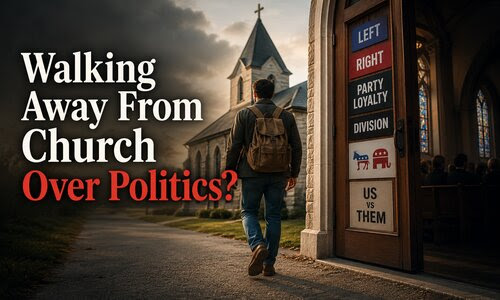
The Democratic nominee for Congress in New Jersey’s 7th Congressional District is making waves over remarks she made at a campaign stop in February, where she admitted that she had “stopped going to church” over Trump voters. The remark says volumes not only about the health of America’s political parties, but also about the interaction of religion and politics.
Navy veteran Rebecca Bennett stated:
“I grew up in the Presbyterian Church. And after Trump got elected, I stopped going to church for the first time in my life, because I was like, ‘I cannot sit in this room of people.’ At the time, I was stationed somewhere that was pretty conservative. I was still in the military at the time. I was like, ‘I cannot sit in this church full of people who voted for Trump.’ And then, ultimately, I decided, they do not get to decide what Christianity looks like.”
Before digging further into these remarks, let’s first pause to lament the fact that they are even coherent. That is, nearly every American adult has a mental image of a “conservative Trump voter” sitting in church, and he or she likely also feels pre-rational impulses interpreting that image in positive or negative ways. Additionally, nearly every American adult can imagine an anti-Trump Christian, who is associated with a very different image. Furthermore, we can understand why the anti-Trump Christian would not want to associate with a congregation full of Trump voters.
How sad! Yes, this might be the fallen state of the American church, but what a tragic state it is! Since when was the church of Jesus Christ divided into red and blue teams? Since when were Christians living in the same place and time so radically divided over how to apply their faith to their world?
It was not always so. The early second century was a dangerous time for Christians in the Roman Empire. Based on slanderous rumors, public opinion branded them as depraved cultists and traitors, and Christians were sometimes persecuted to death. In a letter written while he was governor of Bithynia (northwest Turkey), the Roman senator Pliny the Younger described how someone anonymously published a list of accused Christians, leading to arrests, interrogation, and either forced recantation or execution.
Amid this fearsome environment, Christians had to be loyal to Jesus Christ above all, and that meant being united to one another. The earliest Christian communities were knit together from two very different cultures — monotheistic Jews, with their idiosyncratic traditions and laws, and formerly pagan gentiles. The groups had been “alienated” from one another (Ephesians 2:12) and had every (human) reason to judge or despise one another (Romans 14).
Yet Paul, the Jewish apostle to the Gentiles, instructed them on a radically new way of life, a radical new unity in Christ. “So then you are no longer strangers and aliens, but you are fellow citizens with the saints and members of the household of God” (Ephesians 2:19). Through a supernatural work of the Holy Spirit, God has given his people a unity that defies all human explanation and transcends all human barriers, “so that through the church the manifold wisdom of God might now be made known to the rulers and authorities in the heavenly places” (Ephesians 3:10).
So, if that’s true, what went wrong? If God’s people are to be united in love across cultural divides, how has the American church descended so low that some people simply stop coming to church over politics? The question does not allow for a simple answer. For one thing, this alarming condition is not universal; there are many churches where brothers and sisters in Christ continue to love one another across political differences.
Rather, the decision to stop attending church may have said more about the condition of Bennett’s own heart than the church with which she became uncomfortable. (Perhaps other church members were at fault for wearing their conservative politics too prominently; there isn’t enough information to say.) This is not to single out Bennett, but rather to use her recent comments as an illustration of a danger to which all Christians are susceptible, especially in America (my own heart, for example, became overly invested in the 2020 election). That danger is to promote politics into an idol.
In the Sermon on the Mount, Jesus warned against heart idolatry, using money as an example. “Do not lay up for yourselves treasures on earth, where moth and rust destroy and where thieves break in and steal, but lay up for yourselves treasures in heaven, where neither moth nor rust destroys and where thieves do not break in and steal. For where your treasure is, there your heart will be also” (Matthew 6:19-21).
This last statement is both a wise maxim about money and a helpful litmus test for evaluating our own hearts. It also provides a blueprint for searching out other sorts of idols. Swap out the word “treasure” for “time,” “attention,” or other such terms, and it shows how our heart may be directed to non-monetary idols. If a person spends every spare moment surfing the news, catching up on the latest political controversies, and indulging in social media outrage at the latest dumb comment, he shows that his heart is tied up in politics.
Jesus continues with the kicker, “No one can serve two masters, for either he will hate the one and love the other, or he will be devoted to the one and despise the other. You cannot serve God and money” (Matthew 6:24). What Jesus says about money applies to politics, too. You cannot serve God and politics. And if you stop going to church over politics, you might just be showing that politics is an idol in your heart.
It would not be responsible to conclude from Bennett’s story that she still neglects church. The climax of her story was a realization that likely brought other changes along with it. (The most plausible outcome is that Bennett found a rainbow Presbyterian church to attend instead.)
But it is worth analyzing the realization Bennett offered, “they [Trump supporters] do not get to decide what Christianity looks like.” This is technically true, if she allows that she herself doesn’t get to decide what Christianity looks like either. Only God can claim that authority. The Christian church is God’s new creation, Christ’s body, and the work of the Holy Spirit. It exists according to the promises God made thousands of years ago, which are found in his word.
That said, God often chooses to work through the corporate body of the church, which is why it is foolish, dangerous, and rebellious for a Christian to claim they can find their way without the church. If an individual posits his or her own wisdom against the entire church, in almost every case, the church will be closer to God’s word.
But churches are not always right, and all Christians should approach one another in humility and love. When Christians disagree, even about important questions like many political issues, they should not just instinctively break fellowship with one another.
What, then, is the solution? The remedy should begin with having conversations. Perhaps if Bennett had stayed to talk with some of those Trump supporters, she would have come to understand that they were not endorsing Trump’s personal morality, but rather calculating that his overall governance would result in less opposition to Christianity than a Harris administration (or Clinton administration — the timeframe is unspecified). Perhaps if Bennett had stayed to talk with some of those Trump supporters, she would have felt understood and loved, and her personal opposition to Trump would have felt like a legitimate position in church.
Perhaps — these are (hopefully rational) speculations about alternative futures. We can only change our actions going forward. What is certain is that the remedy for religious reconciliation can bear fruit in politics, too.
Indeed, politics was the point of Bennett’s church story all along. She was answering a questioner, who wondered why Bennett could call herself a “patriot,” since that is such “a right-coded way of presenting yourself.” (What radicalism feels free to express itself in Democratic primaries!)
After making her point, “they do not get to decide what Christianity looks like,” Bennett added, “and to me, it’s the same thing about [how] they do not get to decide what patriotism is. You do not get to wrap yourself in the flag while you are literally murdering Americans in broad daylight.”
I have no idea what Bennett is talking about. Certainly, she falls prey to the classic blunder: using the word “literally” non-literally. But what alleged murders of Americans she refers to is unclear (perhaps a slanted interpretation of the Alex Pretti incident?). In any event, it’s good to see some on the Left still embracing the title of “patriot.” See, we can find something to agree on, even if it isn’t everything.
TruLight Ministries Daily Entertainment Manna

TruLight TV – Kingdom Kidz TV = Kids Hour – God only wants your best
Today in Konnect HQ – Mike and Harper have their hands full when a new neighbor stops by Konnect HQ to visit with Darius. And Later Suzanna is going to lead you and your child through worship and guide you as you learn that God only wants your best and not perfection.
Today on TruLight Radio XM
TruLight Radio XM 24/7
Program
GMT / UTC +2
Monday To Fridays
00:15 Words to Live By Testimonies
01.15 Science Scripture and Salvation
02.15 Ground Works
04.00 Gospel Concert of the Day
05.00 The Daren Streblow Comedy Show
5:55 It is Today devotional
6:00 Gaither Homecoming Morning Show
7:15 Discover the Word
8.15 Destined for Victory
8:55 Science Scripture and Salvation
9:00 Holy Spirit Hour – Normally Sermons
10:15 Hope of the Heart
11:15 Unshackled
11.45 Words to Live By
12:15 Truth for Life
13:15 Living on the Edge with Chip Ingram
14:15 Focus on the Family
15:00 Kids Hour
16:00 In Touch with Dr. Charles Stanley
16:30 Groundwork
17:15 Live in the Light
18:15 Renewing your Mind
19:00 Gaither Homecoming Show
20:15 Growing Hope
21:15 Adventures in Odyssey Radio Drama
21:45 Bible Reading
22:15 Night-sounds
23.00 Good Old Country Gospel / Rhema Gospel Express
VISIT THE WEBSITE
TruLight Ministry News – EXTRA MANNA
TruLight Ministries orders from God since 2012 . Teach Them , Comfort Them and Warn Them!
Healing Truths.
End Time Articles.
Bonus Manna = Bonus Teaching for the Child of God !!
Making your Ministry your Idol
An idol is anything that replaces the one, true God in our lives. Normally, we think of idolatry as involving statues, bank accounts, or some type of material possession. But even our service to the Lord can become an idol. If we allow our work for the Lord to become more important than our fellowship with the Lord, we are guilty of ministry idolatry.
Martyn Lloyd-Jones defined ministry idolatry this way: “To love the ‘work of the Lord’ more than the ‘Lord of the work’ is ministry idolatry.” This type of idolatry is subtle and difficult to fight. Those who serve the Lord naturally find joy and satisfaction in their service. The problem comes when we begin to find more joy and satisfaction in the work than in Christ. Our love for Jesus cools, while we still do “Christian work” fervently.
Jesus spoke about the peril of losing our first love in His rebuke of the church at Ephesus: “You have persevered and have endured hardships for my name, and have not grown weary. Yet I hold this against you: You have forsaken the love you had at first” (Revelation 2:3–4). Was the Ephesian church guilty of ministry idolatry?
In Luke 10, when the 70 disciples return from witnessing in nearby villages, they are filled with joy as they recount the wonderful things that they had done in “the Lord’s work”; even the demons had been subject to their commands. Jesus cautions them: “Do not rejoice that the spirits submit to you, but rejoice that your names are written in heaven” (Luke 10:17–20). In other words, their focus needed to be on the Lord’s work for them, not their work for the Lord. Where was their joy coming from? From their experience of serving Jesus, or from simply knowing Jesus? We, along with the 70, must guard against the encroachment of ministry idolatry.
The story of Mary and Martha could also be an illustration of ministry idolatry. Martha was busy serving the Lord by readying things for supper, an activity that she seemed to find great satisfaction in. Her sister, Mary, was quite satisfied to sit at Jesus’ feet and listen to Him talk. When Martha grew impatient with Mary’s seeming inattention to all that needed to be done, Jesus took Mary’s side: “Mary has chosen what is better, and it will not be taken away from her” (Luke 10:42). A relationship with Christ takes precedence over ministry for Christ.
Ministry idolatry is the unguarded heart wandering from the “Lord of the work” to embrace the “work of the Lord.” How does it happen? Ministry idolatry occurs when we delight more in what God is doing through us than what He has done, is doing, and will do in glory (see Romans 8:28–30). Christ is not just a person we serve; He is our very life (Colossians 3:4)!
To help guard against ministry idolatry, here is five questions we can ask ourselves
1) How much of my contentment is connected to the tide of my ministry influence?
2) Do my prayers reflect that I am more thankful for the salvation He has provided for me or for the ministry He has given me?
3) If I had to choose, which would I prefer: a closer walk with Jesus or a more “effective ministry”?
4) If my ministry were suddenly taken from me, would I still rejoice?
5) Do I seek God only for His blessing and direction, or do I also seek God for Him?
In the end, the cure for ministry idolatry is to get back to the gospel. We are saved by grace, because of what Jesus Christ did on our behalf. Jesus and His work is the ultimate basis of our joy, and nothing should be allowed to eclipse the glory of Christ in our hearts.
Share this Feeding of Manna with your Friends and Family. just click on the Social Media icon and share !