Hosted by TruLight Ministries – The Place of Truth
SELECT YOUR READING LANGUAGE – BOTTOM LEFT = YOUR DAILY MANNA NOW AVAILABLE IN 103 LANGUAGES
@ TruLight – Daily Manna is not Just a Bible Verse with a Small Prayer . NO ::: WE SERVE DAILY Manna for the ENTIRE Day . Breakfast , Lunch , Dinner , Plus tea Times and even Entertainment Manna . Plus News Manna and More , This Daily Manna will keep you Spiritually full for the full 48 Hours and even More to Share with your Friends and Family !!!
For this week we will look at the Fruits of the Flesh !
DRUNKENNESS !!!
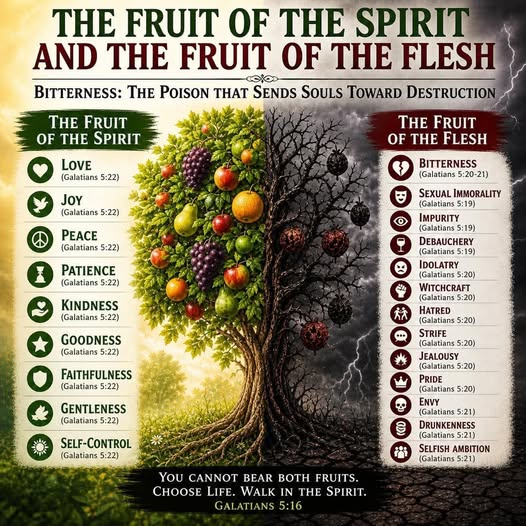
Alcoholism is just one of many addictions that can take control of someone’s life. Because its effects are obvious, drunkenness can appear to be a worse sin than others. However, the Bible makes no such distinctions. It often equates the sin of drunkenness with sins we would consider “less important,” such as envy and selfish ambition (Galatians 5:19; 1 Corinthians 6:10). It is easy to pass judgment on someone who is falling-down drunk, while secretly excusing sins of the heart that God considers equally repulsive. The right response is to view people as God sees them and agree with Him that we are all sinners in need of saving.
The Bible is clear that drunkenness is sin (Isaiah 5:11; Proverbs 23:20–21; Habakkuk 2:15). Proverbs 20:1 says, “Wine is a mocker, strong drink a brawler, and whoever is intoxicated by it is not wise.” Ephesians 5:18 says, “Do not be drunk with wine, but be filled with the Holy Spirit.” It is interesting that this verse contrasts the power of alcohol with the power of the Holy Spirit. It is saying that if we want to be controlled by the Spirit of God we cannot also be controlled by alcohol. The two cannot simultaneously hold sway. When we choose one, we eliminate the influence of the other. As Christians, we are to always “walk in the Spirit” (Galatians 5:16, 25; Romans 8:1, 14). So drunkenness for a Christian is never an option on any occasion because there is no occasion when we should not be walking in the Spirit.
Alcoholism is a form of idolatry, as is any addiction. Anything we are using besides God to meet or medicate deep heart needs is an idol. When we rely on ourselves, someone else, or something else to meet our needs for value, worth, or significance, we have erected an idol that takes the place of the real God in our lives. God views it as such and has strong words for idol worshipers (Exodus 20:3; 34:14; 1 John 5:21; 1 Corinthians 12:2).
Followers of Christ should strive to love their neighbors as themselves, regardless of the problems or addictions those neighbors may have (Matthew 22:29). But contrary to our modern idea that equates love with tolerance, real love does not tolerate or excuse the very sin that is destroying someone (James 5:20). To enable or excuse alcohol addiction in someone we love is to tacitly participate in their sin.
There are several ways Christians can respond in Christlike love to alcoholics:
- We can encourage the alcoholics in our lives to get help. A person caught in the trap of addiction needs help and accountability. There are many Christ-centered recovery programs such as Celebrate Recovery that are helping thousands of people break free from the chains of addiction.
- We can set boundaries in order not to in any way condone the drunkenness. Minimizing the consequences that alcohol abuse brings is not helping. Sometimes the only way addicts will seek help is when they reach the end of their options.
- We can be careful not to cause others to stumble by limiting our own alcohol use while in the presence of those struggling with it (1 Corinthians 8:9–13). It is for this reason that many Christians choose to abstain from all alcohol consumption in order to avoid any appearance of evil (1 Thessalonians 5:22, KJV) and to not put a stumbling block in a brother’s way. Since alcohol in its many forms has such a negative association in our culture, the potential for causing offense in weaker Christians is great. We must weigh our freedom against the possibility of causing others to sin or confusing unbelievers who associate alcohol with their own sinful lifestyles.
We must show compassion to everyone, including those whose choices have led them into strong addiction. However, we do alcoholics no favors by excusing or justifying their addiction. Jesus said we cannot serve two masters (Luke 16:13). Even though the context of His statement is money, the same principle applies to anything that controls us other than God. We must do everything we can to help people break free of whatever sin stronghold binds them so that they can serve and worship God with their whole heart.

Tea Time Manna
Husbands, love your wives, just as Christ loved the church and gave himself up for her to make her holy.
—Ephesians 5:25-26
For husbands, there is sacrificial love in our purpose with our wives, and purpose in our sacrifice as we give up our wills to help our wives as they are molded to become more like Christ by the Holy Spirit (2 Corinthians 3:18) . We are to give up ourselves to actively love our wives. Jesus is our example here, and he gave up everything to serve and bless us (Mark 10:45). His example demonstrates our purpose in our relationship with our wives. Just as Jesus sought to make us holy and beautiful in God’s sight, so also we should love our wives with that same purpose. Our motives are to be equally as sacrificial and pure in surrendering our rights to bless and love our wives (Philippians 2:6-9). As Paul reminds all believers, and specifically husbands in their relationship with their wives, that we, too, are to submit ourselves to bless our wives. This does not mean, however, spinelessness; it means service and sacrifice to bless and bring glory to Christ in how we love and serve the ladies in our lives!
Prayer
Holy God, help our families to be full of love. May this loving service begin with me, today, in my family. In Jesus’ name, I pray. Amen and Amen
Bible Teaching of the Day
LUNCH MANNA =
The Bible really has quite a bit to say about alcohol. The word wine appears 232 times in the Bible. The phrase fermented drink, in reference to more powerful alcoholic beverages, is mentioned around 20 times. Thus, let’s take an overview of this topic.
For the ancient Israelites, possessing lots of wine and new wine was a sign of God’s blessing. In Deuteronomy 7:13, as the people are faithfully obedient to the Lord, He promises to bless them and bring them material prosperity, including “new wine.” In Proverbs 3, loving faithfulness to the Lord is, again, rewarded with overflowing barns and vats brimming over with new wine (verse 10). These verses and others clearly state having wine is a sign of God’s blessing and is meant to be enjoyed. When the Israelites traveled to Jerusalem for the various feasts, they were instructed to bring or purchase wine or other fermented drink and to enjoy it and rejoice in the presence of the Lord (Deuteronomy 14:26). Jesus Himself was not opposed to drinking wine, as seen at the wedding feast in Cana (John 2:1–10). Paul encourages Timothy to “take a little wine” to help his stomach ailments (1 Timothy 5:23). These passages, as well as others, declare that God has a favorable view of wine and that it is to be enjoyed.
Wine was also to be given in the various offerings commanded by God. Numbers 15:1–10 is a representative passage. As wine is offered to the Lord in loving, faithful obedience, it is accepted as “an aroma pleasing to the Lord” (Numbers 15:7).
Balancing out the above statements, the Bible contains extremely strong warnings against drunkenness and addiction, both by example and precept. Genesis 9:20–27 and 19:30–38 are the accounts, respectively, of Noah and Lot getting drunk and the horrible consequences that ensued. Proverbs 20:1 gives this strong warning: “Wine is a mocker and beer a brawler; whoever is led astray by them is not wise.” Proverbs 23:29 and 30 also gives a strong warning: “Who has woe? Who has sorrow? Who has strife? Who has complaints? Who has needless bruises? Who has bloodshot eyes? Those who linger long over wine, who go to sample bowls of mixed wine.” Further, in verse 32, we are warned that wine “bites like a snake and poisons like a viper.” The Christian is instructed by Paul in Ephesians 5:18 to “not get drunk on wine, which leads to debauchery. Instead, be filled with the Spirit.” According to 1 Timothy 3, if a man would be qualified to be a deacon or pastor/elder in the local church, he must “not be given to drunkenness” (verse 3) and not indulge “in much wine” (verse 8).
So, the Bible speaks at length about alcohol. To bring it all together, Christians can live holy, obedient lives before the Lord and drink alcohol in moderation. However, the biblical warnings and cautions against addiction and drunkenness are strong. A Christian cannot maintain a life of loving obedience and service to the Lord while engaging in the abuse of alcohol. Thus, if a Christian decides to consume alcohol, he or she is free to do so. However, if doing so puts the Christian in danger of addiction and drunkenness, wisdom requires abstention. We are also admonished to be considerate of the needs others when we are choosing to consume alcohol (Romans 14:19–21).
In closing, a helpful admonition is found in 1 Corinthians 10:31: “So whether you eat or drink or whatever you do, do it all for the glory of God.” If you choose to enjoy alcohol, enjoy it wisely, enjoy it in limited amounts, enjoy it in consideration of others, and make sure to enjoy it for the glory of God.
Today’s Devotional
DINNER MANNA =
The Bible warns against drunkenness and addiction, which are the two primary risks with alcohol. But, to the question at hand: is it a sin to drink alcohol? The best answer I can give is: it depends.
The question would be so much easier if it were: is it a sin to get drunk on alcohol? To that question, the answer is a resounding yes (Proverbs 23:29-35; Ephesians 5:18). Drunkenness results in a diminished ability to think clearly and make wise decisions. The Bible teaches that we be the exact opposite of what drunkenness causes (Titus 2:6; 1 Peter 1:13). This makes it extremely questionable whether hard liquor should ever be consumed. While beer and wine can be consumed in small quantities with no ill effects, hard liquor can have an impact with as little as one shot.
The question would also be much easier if it were: is it a sin to be addicted to alcohol? It is a sin to be addicted to anything (1 Corinthians 6:12; 2 Peter 2:19). We are not to allow ourselves to be enslaved to anything. God is to be our only master. Alcoholism is a cruel taskmaster. It destroys marriages, families, friendships, businesses, and ultimately, the life of the alcoholic. Obviously, avoiding alcohol entirely is the easiest way to avoid alcoholism.
However, the abuse of alcohol, in the forms of drunkenness and addiction, do not necessarily make alcohol itself sinful. The abuse of alcohol is the cause of much of the legalism many Christians employ when approaching the question of alcohol. People see alcohol lead to drunkenness and addiction, which are definitely sins, and apply the “sin” tag to alcohol itself. The problem with this is that it is not biblical. Some Bible verses speak about alcohol in positive terms (Psalm 104:14-16; Ecclesiastes 9:7; Isaiah 55:1; Amos 9:14; 1 Timothy 5:23). Jesus changed water into wine (yes, it was wine, not grape juice). So, alcohol itself is not the sin. It is the abuse of alcohol that is the sin.
There is also the issue of “not causing anyone to stumble” (1 Corinthians 8:13; 10:32). You may have the conviction that it is allowable to drink alcohol in moderation. But, if other people see you drinking or purchasing alcohol, and by that are led to go against their convictions and/or drink alcohol in excess, you have violated the biblical principle of not causing anyone to stumble. We should not do anything that could encourage someone else to sin. We should always sacrifice our Christian freedom if exercising it may result in someone else stumbling.
With the sins of addiction and drunkenness in mind, and with the need to not stumble others in view, for many people, it just makes sense to abstain from alcohol entirely. Can you drink alcohol without it being a sin? Yes. Does the drinking of alcohol very easily lead to sin? Yes. Is alcohol inherently sinful? No. While my answer to the question “is it a sin to drink alcohol?” is still “it depends,” my personal conviction on the question is that, for most people and in most instances, it is best to not drink alcohol at all, to avoid the temptation to sin and the appearance of sin.

NEWS MANNA –
The Birth Of A New Red Heifer In Israel Has Prophecy Watchers Buzzing

A red heifer calf born recently in Israel has once again captured the attention of Jews, Christians, and Bible prophecy observers around the world. The calf, named Temimah–a Hebrew word meaning “perfect” or “without blemish”–was born on a dairy farm in the Galilee and reportedly displayed a remarkably uniform red coat.
Soon after birth, she was examined by Rabbi Azaria Ariel, a prominent figure involved in Temple preparations. Reports from those monitoring the animal have fueled excitement among religious Jews who believe the restoration of Temple worship in Jerusalem is drawing closer.
To many outside the biblical world, the birth of a red cow may seem insignificant. Yet for students of Scripture, the red heifer occupies a unique place in both Jewish tradition and biblical prophecy.
Why the Red Heifer Matters
The importance of the red heifer originates in Numbers 19, where God instructed Israel regarding a special purification ritual. The ashes of a flawless red heifer were to be mixed with water and used for ceremonial cleansing from ritual impurity, particularly impurity associated with death.
According to traditional Jewish understanding, a future restoration of Temple worship would require a biblically qualified red heifer. Without its ashes, many religious authorities believe the full purification process necessary for Temple service cannot be properly restored.
This explains why every reported red heifer birth receives intense scrutiny. The requirements are strict. The animal must be entirely red, free from blemishes, never have been used for labor, and remain qualified through maturity. Many candidates have initially appeared promising only to later develop disqualifying characteristics.
Temimah initially received an ear tag for several days and while it was quickly removed and is healing – there is great debate now among scholars as to whether she is still qualified or not due to any potential blemish.
Temimah’s supporters hope she may eventually meet all the requirements. Even if she does not, her birth is viewed as another encouraging sign that qualified animals may emerge in the future.
The Temple Institute’s Preparations Continue
The red heifer story is only one piece of a much larger effort underway in Israel.
For decades, the Temple movement–led primarily by organizations such as the Temple Institute and supported by various rabbinical groups–has been actively preparing for the possibility of a Third Temple.
Among the preparations already completed or currently underway are:
1. Temple Vessels Have Been Recreated
The Temple Institute has invested years recreating many of the sacred vessels described in Scripture. These include priestly instruments, ceremonial utensils, trumpets, incense tools, and other items required for Temple worship.
2. Priestly Garments Have Been Produced
Special garments for the priesthood have been designed and manufactured according to biblical specifications. These include clothing for ordinary priests as well as garments associated with the High Priest.
3. Priests Are Being Trained
Men who can trace their lineage to the priestly tribe are receiving instruction in Temple rituals and sacrificial procedures. Training programs continue to expand as interest grows.
4. Levites Are Being Prepared for Service
In addition to priests, Levites historically served important functions in Temple worship, including music, administration, and assistance in ceremonies. Educational programs have been developed to prepare future Levites for these roles.
5. The Sanhedrin Has Been Revived in Limited Form
Although not universally recognized within Judaism, efforts have been made to re-establish a functioning Sanhedrin, the ancient Jewish governing and religious council. Various committees continue discussing practical issues related to Temple worship and national religious life.
6. Educational Programs for Youth Continue Growing
Reports indicate that increasing numbers of young Israelis are studying Temple-related laws and traditions. Supporters see this as creating a future generation prepared for Temple service should the opportunity arise.
7. Architectural and Construction Planning Exists
Various Temple organizations have spent years studying the dimensions and requirements of the biblical Temple. Models, blueprints, and educational exhibits have been developed to demonstrate what a future Temple could look like.
Taken together, these developments reveal something important: many religious Jews are not merely talking about a future Temple–they are actively preparing for one.
Why the Temple Matters So Deeply to Jews
For observant Jews, the Temple represents far more than a building.
It was the place where God’s presence uniquely dwelt among His people. It was the center of national worship, sacrifice, prayer, repentance, and covenant identity.
The First Temple, built by King Solomon, stood as the glory of ancient Israel until its destruction by Babylon. The Second Temple was later rebuilt and expanded before being destroyed by Rome in A.D. 70.
Since that time, Jewish prayers have repeatedly expressed longing for restoration. For many believers, rebuilding the Temple would represent a significant step toward national and spiritual renewal.
The Christian Prophetic Perspective
While many Christians find these developments fascinating, most Bible prophecy teachers approach them with both excitement and caution.
Why?
Because Scripture indicates that a future Temple will indeed exist during the end times. However, the New Testament also warns that this Temple will eventually become the scene of one of history’s greatest acts of rebellion against God.
The Apostle Paul writes in 2 Thessalonians 2 that the coming “man of lawlessness” will enter the Temple and exalt himself as divine. Jesus referred to a future “abomination of desolation,” echoing the prophecy of Daniel.
Many prophecy scholars have interpreted these passages as evidence that a Third Temple must exist during the future Tribulation period.
According to this understanding, the Antichrist initially presents himself as a peacemaker. At some point, however, he breaks his covenant with Israel, enters the Temple, and demands worship for himself. This event marks a dramatic turning point in the Tribulation and unleashes unprecedented persecution.
From this perspective, preparations for a Temple are prophetically significant–not because Christians expect Temple sacrifices to replace Christ’s sacrifice, but because such developments may be setting the stage for events Scripture says will occur before Christ’s return.
The birth of Temimah does not prove prophetic fulfillment is imminent. Previous red heifer candidates have come and gone. The Temple Mount remains one of the most politically sensitive locations on earth, and enormous obstacles remain before any Temple could be constructed.
Yet the broader trend is difficult to ignore.
A generation ago, discussion of a Third Temple was largely theoretical. Today there are trained priests, recreated Temple vessels, educational programs, organized institutions, and now another potential red heifer candidate attracting worldwide attention.
Whether Temimah ultimately qualifies or not, her birth serves as another reminder that developments once viewed as impossible are steadily moving from theory toward reality.
For Christians who take biblical prophecy seriously, that reality should not produce fear but vigilance. Jesus instructed believers to watch the signs of the times and to remain spiritually prepared. And few signs attract more attention among prophecy watchers than preparations surrounding the Temple in Jerusalem.
Jail Sentence For Homeschooling Children?

Brazilian parents Audato and Ieda Denardi are appealing a lower court’s ruling that sentenced them to 50 days in prison for homeschooling their daughters. Homeschooling has no clear legal framework in the nation and is often treated as an administrative offense, so the Denardis are the first parents in Brazil to face criminal conviction for homeschooling. The prison sentence handed down from a São Paulo court in April 2026 is suspended while ADF International appeals the ruling to the state’s highest court.
The judge found the parents guilty of “intellectual neglect” because their home education curriculum lacked instruction on “gender and sex education” and “tolerance and diversity” to match the curriculum found in public schools. Apparently, the intellects of young Brazilians cannot develop properly unless subjected to transgender indoctrination and instruction that amounts to Marxist-infused racism.
The judge also found that the home curriculum failed to educate the girls (aged 15 and 11) in cultural diversity because they did not like “trap” or “sertanejo” (folk) music. Specifically, the “fifteen-year-old said she finds some music lyrics morally questionable,” said Julio Pohl, ADF International legal counsel for Latin America. However, the girls could both play the piano and speak multiple languages, suggesting that they had a sort of cultural education — just not the low-brow type the judge expected.
The judge’s verdict was even more outrageous as it came even after the prosecutor recommended acquittal. The judicial process involved testimony from witnesses and an evaluation of the girls’ social and academic development, which convinced the prosecutor that the girls had not been neglected. The judge, however, was either not convinced by the same evidence that had persuaded the prosecutor or chose to pursue an ideological agenda with flagrant disregard for the evidence.
The Denardises’ case is complicated by the fact that Brazil has no clear legal framework for homeschooling, which means there is no textual standard — either statutory or judicial — to which both homeschooling parents and judges must conform. This does not mean that homeschooling is strictly illegal.
“In 2019, the Brazilian Supreme Court ruled that homeschooling did not contravene the Constitution, but required a federal law to regulate it,” ADF International explained. “Homeschooling parents have relied on international law to defend their right to direct the education of their children.” However, “the lack of a federal law on the issue has left them in legal limbo and under constant threat of sanction.” A homeschooling bill passed Brazil’s lower legislative chamber in 2022 but stalled in the upper chamber.
ADF International estimates that more than 70,000 children are currently being homeschooled in Brazil.
This legal gray area laid the groundwork for the absurd ruling against the Denardis.
“The prosecutor examined the witnesses and recommended for acquittal. An independent educational psychologist found no sign of neglect. The girls themselves described rigorous daily education,” Pohl proclaimed. “The judge convicted anyway — because a fifteen-year-old said she finds some music lyrics morally questionable, and because the curriculum didn’t include state-approved content on gender. A parent has been sentenced to prison not for failing to educate her children, but for educating them according to her own values.”
Indeed, the judge’s left-wing ideology bleeds through in the opinion, which accuses the parents of “using their daughters as pawns in an ideological struggle, subjecting them to a form of unregulated education, the effectiveness and quality of which lack adequate metrics within the Brazilian legal system, while completely excluding the State’s involvement.”
How dare someone obtain an “unregulated education”? What right do parents have to raise their children “while completely excluding the State’s involvement”?
The arrogant statism in these words is richer than a chocolate cheesecake. It channels the same attitude that Virginia gubernatorial candidate and Democrat Terry McAuliffe rode to defeat in 2021, when he declared, “I don’t think parents should be telling schools what they should teach.” The fact is, parents have a natural right to direct the education and upbringing of their children for the simple and unalterable reason that the children are their own. With few exceptions, parents will be more concerned about the welfare and future success of their children than any public functionary.
But McAuliffe, one Brazilian judge, and any number of progressive activists believe that “the nanny state knows best.”
Even in the United States, homeschooling families experience government harassment for not subjecting their children to state-directed indoctrination. According to a report by the Trump administration’s Task Force to Eradicate Anti-Christian Bias, the Biden State Department “targeted Christian homeschool parents who were federal employees with inspector general investigations, IRS referrals, and threats of criminal charges and disciplinary action.”
Progressives love to claim that they are merely seeking the best interest of children and are trying to secure them against cases of parental abuse. There are cases of abuse disguised as “homeschooling,” but these are both obvious and rare.
In a 2025 survey of adults aged 25-39, students who were educated at home for at least eight years reported the lowest levels of depression and anxiety, were the least likely to say they “feel helpless dealing with life’s problems,” and “exhibited the highest levels of optimism, gratitude, and life satisfaction.” Long-term homeschoolers were 50% more likely than their counterparts to be married and half as likely to be divorced, and their average number of children was one-third higher.
When government officials pompously try to stamp out homeschooling, this is the type of social success they are trying to sabotage. What game are they playing? Are they trying to cover up the failures of their precious public school systems? Or simply trying to drag homeschoolers into their race to the bottom — to create a society of shallow thinkers who are easily led?
The Denardi family’s personal experience matched the statistics. After observing shortcomings in public education during the COVID-era days of forced learning-at-home, the Denardis gave homeschooling a try. When they made the switch, they saw significant improvement in their daughter’s academic performance and appreciated the flexibility to incorporate religious and moral instruction, which should be present in any education but are often lacking in a public school setting.
“As a mother, I cannot conceive a more dictatorial state than the one that wants me in jail because I chose to exercise my right to direct the education and upbringing of my daughters,” said Ieda Denardi. “My husband and I are hopeful the court will recognize our right to choose the best education for our children and overturn this unjust conviction.”
CANADA BANS THE BIBLE :

“This week was a dark day in Canadian history. The House has passed Bill C-9—an assault on religious freedom that removes longstanding protections for Canadians expressing sincerely held beliefs. Conservatives fought this bill every step of the way—and we will keep fighting until religious freedom is restored.” -Conservative MP, Brad Redekopp
(Ottawa, Ontario) — [LifeSiteNews.com] A final attempt to stop Bill C-9 was defeated, meaning that the bill, which threatens to criminalize quoting parts of the Bible, including on homosexuality, has officially passed Canada’s Parliament and will soon become law. (Image: Created by Grok X AI)
On Wednesday, June 17, a majority of MPs voted down an attempt by Conservative MP Andrew Lawton to stop Bill C-9 “once and for all.”
“The Liberals and Bloc Québécois voted down my motion to withdraw the divisive and toxic Bill C-9 to stand up for freedom of expression and freedom of religion,” wrote Lawton in an X post.
Lawton thanked Green and NDP MPs for voting in opposition to Bill C-9, noting that “opposition to this bill has come from the political left and right, from civil liberties groups and a range of faith organizations.”
“With the adoption of the Senate’s amendment criminalizing the noose as a hate symbol, Bill C-9 will soon receive royal assent and become law.”
As reported by LifeSiteNews, Canadian senators voted recently to approve the Liberals’ Bill C-9 or “An Act to amend the Criminal Code (hate propaganda, hate crime, and access to religious or cultural places).”
However, because the last-minute amendment adding the noose was made, the bill had to go back to the House of Commons before it was sent to the Governor General for Royal Assent to become law.
As reported by LifeSiteNews, Canadian senators last week voted down a recent proposed amendment to Bill C-9 that would have criminalized “residential school denialism.”

TruLight TV – Popcorn & Movie Time – Soul Surfer
A natural talent in the sport of surfing, teenager Bethany Hamilton (AnnaSophia Robb) loses an arm in a shark attack. Bolstered by the love of her parents (Helen Hunt, Dennis Quaid) and refusing to give up, she plans to return to competition, although questions about her future continue to trouble her. Upon seeing the devastation in Thailand caused by the 2004 tsunami, Bethany discovers a greater purpose: to make a difference in the lives of others.
Today on TruLight Radio XM
TruLight Radio XM 24/7
Program
GMT / UTC +2
Monday To Fridays
00:15 Words to Live By Testimonies
01.15 Science Scripture and Salvation
02.15 Ground Works
04.00 Gospel Concert of the Day
05.00 The Daren Streblow Comedy Show
5:55 It is Today devotional
6:00 Gaither Homecoming Morning Show
7:15 Discover the Word
8.15 Destined for Victory
8:55 Science Scripture and Salvation
9:00 Holy Spirit Hour – Normally Sermons
10:15 Hope of the Heart
11:15 Unshackled
11.45 Words to Live By
12:15 Truth for Life
13:15 Living on the Edge with Chip Ingram
14:15 Focus on the Family
15:00 Kids Hour
16:00 In Touch with Dr. Charles Stanley
16:30 Groundwork
17:15 Live in the Light
18:15 Renewing your Mind
19:00 Gaither Homecoming Show
20:15 Growing Hope
21:15 Adventures in Odyssey Radio Drama
21:45 Bible Reading
22:15 Night-sounds
23.00 Good Old Country Gospel / Rhema Gospel Express
VISIT THE WEBSITE
TruLight Ministry News – EXTRA MANNA

TruLight Ministries orders from God since 2012 . Teach Them , Comfort Them and Warn Them!
The Sheriff of the Church address the Hyper Grace Church in this Audio Movie
Healing Truths.
End Time Articles.
Bonus Manna = Bonus Teaching for the Child of God !!
There is only one group of people who are explicitly told in the Bible to never drink wine/alcohol, and that is the Nazirites (Numbers 6:1–4). Jesus was not a Nazirite; He was a “Nazarene,” a native of the town of Nazareth (Luke 18:37). Jesus never took the Nazirite vow.
Christ’s first miracle of turning water into wine at the wedding at Cana almost certainly involved a fermented beverage. According to Jewish wedding tradition, fermented wine was always served at weddings; if Jesus had provided only grape juice, the master of the feast would have complained. Instead, he said the wine was better than what was previously served; it was apparently a “fine” wine (John 2:10–11).
The Greek word for “drunk” in John 2:10 is methuo, which means “to be drunken” or intoxicated. It is the same word used in Acts 2:15 where Peter is defending the apostles against accusations of drunkenness. The testimony of the master of the feast is that the wine Christ produced was able to intoxicate.
Of course, just because Jesus turned water into wine doesn’t prove that He drank the wine at the wedding, but it would have been normal for Him to do so. What it does prove is that Jesus doesn’t condemn drinking wine any more than He condemns eating bread. Sinful people abuse what is not inherently sinful. Bread and wine are not sinful, but gluttony and drunkenness are (Proverbs 23:2; Ephesians 5:18).
In Luke 7:33–34, Jesus said, “For John the Baptist has come eating no bread and drinking no wine, and you say, ‘He has a demon.’ The Son of Man has come eating and drinking, and you say, ‘Look at him! A glutton and a drunkard, a friend of tax collectors and sinners!’” (emphasis added). In verse 33 Jesus is making a contrast between John the Baptist’s “drinking no wine” and His own practice. Jesus goes on to say the religious leaders accused Him (falsely) of being a drunkard. Jesus was never a drunkard, any more than He was a glutton. He lived a completely sinless life (1 Peter 2:22); however, Luke 7 strongly suggests that Jesus did indeed partake of alcoholic wine.
The Passover celebration would also have commonly included fermented wine. The Scriptures use the term “fruit of the vine” (Matthew 26:27–29; Mark 14:23–25; Luke 22:17–18). Of course, Christ participated in drinking from the Passover cup (Mark 14:23).
All Christians would agree drunkenness is sinful, and Christ Himself warns against it (Luke 12:45). However, a biblical view of wine is that it is given as something to delight in (Psalm 104:14–15). There are plenty of warnings against alcohol abuse, in texts like Proverbs 20:1, because sinful men are more likely to abuse wine than to use it in moderation. Those who try to use Jesus’ probable use of wine to excuse their drunkenness should heed the warning in Luke 12:45. Christians who want to keep a biblical view of drinking wine should either drink in moderation, never to drunkenness, or abstain totally.
Share this Feeding of Manna with your Friends and Family. just click on the Social Media icon and share !