Hosted by TruLight Ministries – The Place of Truth
SELECT YOUR READING LANGUAGE – BOTTOM LEFT = YOUR DAILY MANNA NOW AVAILABLE IN 103 LANGUAGES
@ TruLight – Daily Manna is not Just a Bible Verse with a Small Prayer . No WE SERVE DAILY Manna for the Whole Day . Breakfast , Lunch , Dinner , Plus tea Times and even Entertainment Manna . Plus News Manna and More , This Daily Manna will keep you Spiritually full for the full 48 Hours and even More to Share with your Friends and Family !!!
For the Next 2 week we will look at the Fruits of the Flesh !
IMPURITY !!!
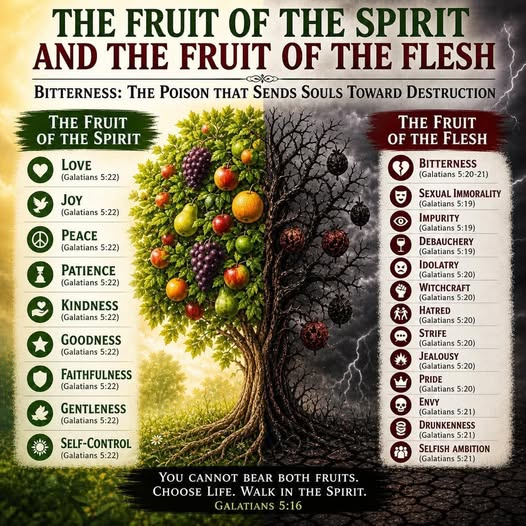
Impurity is the condition of being defiled in some sense. The word impurity can also refer to the contaminant itself: an unwanted substance that makes something unclean. The concepts of purity and impurity are important in the Bible’s presentation of holiness.
Under the rituals of the Old Testament Law, the Israelites were often confronted with the ideas of ritual or ceremonial purity and impurity. Many things could make an Israelite ritually unclean or impure: e.g., menstruation, childbirth, nocturnal emissions, touching a corpse, and certain types of skin diseases. Eating an unclean food would make one impure (see Acts 10:14). Impurity could be ceremonially passed to others: any personal contact with someone unclean would make a person unclean himself. There were so many ways one could become unclean that every Israelite, male and female alike, was sure to spend at least some time in a state of ceremonial impurity.
When someone had a ceremonial impurity and was declared unclean, he or she was separated from the community and not allowed to worship at the temple during the period of the impurity or uncleanness (Numbers 5:1–4). God’s Law provided a path to restore purity, however. The process of purification depended on the degree of impurity and ranged from physical washing to offering an animal sacrifice to atone for the uncleanness. The Law’s insistence on purity and its quarantine of impurity laid stress on the fact that God expected holiness in His people. He had chosen Israel to be in special relationship with Him. God is holy, and He demands holiness of the people who follow Him. “A little leaven leavens the whole lump” (Galatians 5:9, ESV); a little impurity negates integrity; a little sin destroys holiness.
In the Bible, ceremonial impurity can illustrate moral impurity. One vivid example of this is leprosy—one of the skin diseases that rendered a person ceremonially impure or unclean. Because there was no cure for leprosy, a person who contracted leprosy was often permanently unclean. Lepers were outcasts for life. They were not permitted to associate with others due to the contagiousness of their disease; they could not live with their families or worship at the temple or work at jobs. Their impurity was so severe that, if they were in a public area, they were required to identify themselves by shouting, “Unclean! Unclean!” so that others could clear out and avoid any contact with them (Leviticus 13:45). Lepers had to resort to begging, relying on the mercy of others to spare them food and other daily necessities. The impurity of leprosy is like sin in that it isolates us from our communities, separates us from God, and eventually leads to death. And this is why Jesus’ approach to the outcast lepers in His day was so startling. He didn’t turn away from them, He didn’t clear out of the way, and He didn’t draw back in horror or disdain; He reached out His hand and touched them. And instead of their leprosy making Jesus unclean, His holiness overcame their impurity and made them clean (Matthew 8:1–4; Luke 17:11–16). Jesus’ power is such that He can rid us of all impurity: physical, moral, and spiritual.
When we think of impurity, we often think of sexual sin. Sexual immorality is certainly included in the Bible’s idea of impurity, but there is more to it than that. Impurity really includes all kinds of sin and encompasses any activity, thought, word, or action that does not conform to God’s will for our lives. “God did not call us to be impure, but to live a holy life” (1 Thessalonians 4:7).
The Bible teaches that impurity is the default state for human beings, post-fall. We are all born as unclean sinners (Psalm 51:5; Romans 3:23), and we must be cleansed if we are to see God. No one but God is perfect; all of us have been polluted through the impurity of sin. The slightest sin is still a lethal contaminant in our souls, and this is bad news for us: “Of this you can be sure: No immoral, impure or greedy person . . . has any inheritance in the kingdom of Christ and of God” (Ephesians 5:5; cf. Revelation 21:27). Like lepers, we are all in desperate need of God’s mercy and grace to reach out and cleanse us from the impurities that defile us. We need Jesus’ touch and the gift of His righteousness (1 Corinthians 1:30). “Blessed is the one whose sin the LORD does not count against them” (Psalm 32:2).
The glory of the gospel is that God can make what is impure, pure; and what is unclean, clean. To our eternal joy, God desires to do just that, for Christ’s sake: “If we confess our sins, he is faithful and just and will forgive us our sins and purify us from all unrighteousness” (1 John 1:9).

Tea Time Manna
Jesus said, “Wide is the gate and broad is the road that leads to destruction, and many enter through it. But small is the gate and narrow the road that leads to life, and only a few find it.”
—Matthew 7:13-14
Most people in the world want a Savior but not a Lord. The New Testament is clear, a Savior who is not Lord is no Savior and no friend. If the Old Testament showed us anything, it is that God’s truth was written not for his fascination but for his people’s preservation. Many people today, maybe even most, believe they are saved because they think their good deeds outweigh their bad ones. Jesus, however, is very clear: Most are lost and will not find their own way to salvation (Matthew 7:13-27). Only Jesus is the way to God (John 14:6), and no one can be saved except through Jesus (Acts 4:12). While Jesus longs to be the Savior of all people (John 4:42), he emphasizes that for him to be our Savior, we must also choose to live with him as our Lord. That means we are bearing fruit that displays his righteous character, gracious compassion, and faithful lovingkindness in our lives (Galatians 3:22-23). So, let’s live that kind of life, enter through that narrow gate, and produce Jesus’ style of holy fruit as we trust in him as our Savior and Lord!
Prayer
Holy Lord Jesus, please take control of my life and my will. I long to be wholly yours. I want you as my Savior and my Lord. I want to honor you, not just in word, but also in thought, word, and deed. Trusting you as my Savior and Lord, I offer you my heart, my life, and my all as I confess this before the Father and pray through you, Lord Jesus. Amen and Amen

Bible Teaching of the Day
LUNCH MANNA =
Purity is freedom from anything that contaminates. Purity is the quality of being faultless, uncompromised, or unadulterated. Pure water is free from any other substances. Pure gold has been refined to such a degree that all dross has been removed. And a pure life is one in which sin no longer determines the choices one makes.
Purity is important to God, who alone is truly pure. Purity is often used in Scripture as a means to communicate holiness or perfection. When Moses was building the tabernacle, God specified that the lampstand and other items inside the Holy Place be made “of pure gold” (Exodus 25:31; cf. 37:2, 16). The oil used in the tabernacle was to be pure, as was the frankincense (Leviticus 24:2, 7). The Lord has “pure” eyes (Habakkuk 1:13) and speaks “pure” words (Psalm 12:6). The New Jerusalem is described as a “city of pure gold, as pure as glass” (Revelation 21:18).
When God created the heavens and the earth (Genesis 1 — 2), everything was pure. There was no death, decay, pollution, or sin. God creates pure things because He is pure. In Him, there is no confusion, contradiction, or compromise. Everything He does is good (Psalm 18:30; 145:17). He created human beings to reflect His image and to live in pure, unbroken communion with Him (Genesis 1:27). However, sin is the corruptor of purity (Psalm 14:3). Impurity is often listed as one factor that will keep us away from the presence of God (Colossians 3:5–6; Galatians 5:19–21; 1 Corinthians 6:9–10). Impurity renders a person or a nation unfit for entrance into God’s presence (Joshua 3:5; Revelation 21:27; Ephesians 5:5; James 4:8). In order to have fellowship with a holy God, we must reclaim the purity that He originally intended for us: “Who may ascend the mountain of the Lord? Who may stand in his holy place? The one who has clean hands and a pure heart” (Psalm 24:3–4).
In the Old Testament, people reclaimed purity by sacrificing animals in the way God specified. God had declared that He would purify them (Leviticus 22:32) if they kept all His commands (Leviticus 22:31), His Sabbaths (Leviticus 26:2), and His sacrifices (Exodus 8:27). Repentance and faith in a coming Savior, as shown in their obedience to the Law, were sufficient for God to pronounce people righteous. In the New Testament, purity is reclaimed by placing our faith in the perfect sacrifice of the Lord Jesus Christ (Romans 6:3–7). We cannot be pure enough on our own to see God (Romans 3:23). We must have Christ’s righteousness credited to our accounts (2 Corinthians 5:21). That’s what it means to be a Christian.
The term purity is often used today in relation to sexuality. Sexual purity is freedom from immorality or perversion. Girls sometimes wear purity rings to indicate their commitment to saving sex for marriage. Purity is closely related to holiness, and those who walk in holiness will keep themselves sexually pure: abstinent before marriage and monogamous within marriage.
When we have been born again through faith in Jesus (John 3:3), we desire to live in purity (1 Peter 1:15–16). That purity is not limited to our sexuality, although that is important (Ephesians 5:2; 1 Corinthians 6:18). God desires that we live purely in all our dealings with others (Ezekiel 45:10; Luke 6:31). Purity should define our thought life (2 Corinthians 10:5), our words (Ephesians 4:29), and our actions (1 Corinthians 10:31). Jesus said, “Blessed are the pure in heart, for they shall see God” (Matthew 5:8). When our hearts are clouded with impurities, we cannot experience God’s presence or hear His voice. But when our claim to righteousness is based on what Jesus has done (Titus 3:5), we will strive to forsake sin (1 John 3:9) and live in purity of heart, enjoying fellowship with the God of purity.
Today’s Devotional
DINNER MANNA =
God gave man and woman the joy and pleasure of sexual relations within the bounds of marriage, and the Bible is clear about the importance of maintaining sexual purity within the boundaries of that union between man and wife (Ephesians 5:31). Humans are well aware of the pleasing effect of this gift from God but have expanded it well beyond marriage and into virtually any circumstance. The secular world’s philosophy of “if it feels good, do it” pervades cultures, especially in the West, to the point where sexual purity is seen as archaic and unnecessary.
Yet look at what God says about sexual purity. “You should be sanctified: that you should avoid sexual immorality; that each of you should learn to control his own body in a way that is holy and honorable, not in passionate lust like the heathen, who do not know God. . . . For God did not call us to be impure, but to live a holy life” (1 Thessalonians 4:3–5, 7). This passage outlines God’s reasons for calling for sexual purity in the lives of His children.
First, we are “sanctified,” and for that reason we are to avoid sexual immorality. The Greek word translated “sanctified” means literally “purified, made holy, consecrated [unto God].” As Christians, we are to live a purified life because we have been made holy by the exchange of our sin for the righteousness of Christ on the cross and have been made completely new creations in Christ (2 Corinthians 5:17–21). Our old natures, with all their impurities, sexual and otherwise, have died, and now the life we live, we live by faith in the One who died for us (Galatians 2:20). To continue in sexual impurity (fornication) is to deny that, and doing so is, in fact, a legitimate reason to question whether we have ever truly been born again. Sanctification, the process by which we become more and more Christlike, is an essential evidence of the reality of our salvation.
We also see in 1 Thessalonians 4:3–5 the necessity of controlling our bodies. When we give in to sexual immorality, we give evidence that the Holy Spirit is not filling us because we do not possess one of the fruits of the Spirit—self-control. All believers display the fruit of the Spirit (Galatians 5:22–23) to a greater or lesser degree depending on whether or not we are allowing the Spirit to have control. Uncontrolled “passionate lust” is a work of the flesh (Galatians 5:19), not of the Spirit. So controlling our lusts and living sexually pure lives is essential to anyone who professes to know Christ. In doing so, we honor God with our bodies (1 Corinthians 6:18–20).
We know God’s rules and discipline reflect His love for us. Following what He says can only help us during our time on earth. By maintaining sexual purity before marriage, we avoid emotional entanglements that may negatively affect future relationships and marriages. Further, by keeping the marriage bed pure (Hebrews 13:4), we can experience unreserved love for our mates, which is surpassed only by God’s enormous love for us.

NEWS MANNA –
Bible Prophecy, Signs of the Times and Gog and Magog Updates with Articles in the News
Canadian Bill Puts Bible In The Crosshairs: Sermons Could Become A Hate Crime?
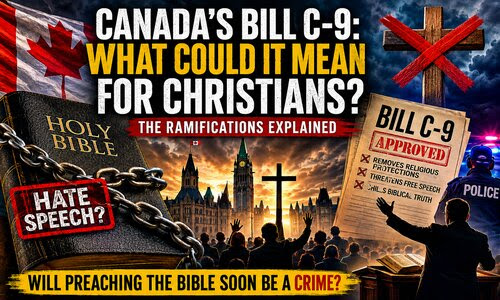
For generations, Canadians have enjoyed a reputation for being among the freest people in the world. Freedom of speech, freedom of religion, and the ability to openly debate moral and social issues have long been considered foundational rights. That is why the advancement of Bill C-9 through Canada’s Senate has generated such intense concern among Christian leaders, constitutional experts, and faith communities across the nation.
Supporters of the legislation argue that it is necessary to combat hatred and protect vulnerable groups from targeted abuse. Few would dispute the importance of protecting citizens from violence, harassment, or genuine threats. The concern, however, is not whether hatred should be opposed. The concern is whether the government is redefining biblical beliefs themselves as hateful.
At the center of the controversy is Bill C-9’s removal of Section 319(3)(b) of Canada’s Criminal Code. That provision has historically protected individuals who express religious beliefs in good faith based on sacred texts such as the Bible. Critics warn that removing this safeguard creates a legal environment where long-held Christian teachings could become vulnerable to criminal complaints.
The legislation is now headed back to the House Of Commons where it is expected to clear Parliament and become law before the summer recess.
Many Christians are asking a simple question: What happens next?
The answer is that nobody knows exactly how the law will be enforced. Yet history shows that laws often begin with narrow promises before gradually expanding through court rulings, government interpretations, and activist pressure campaigns. Christians therefore have reason to examine not only what the legislation says today but also what it could enable tomorrow.
Consider a pastor preaching through Romans 1, where the Apostle Paul describes same-sex relationships as sinful. For two thousand years, this has been a standard Christian teaching shared by the Christian church. Under previous protections, a pastor could confidently teach that passage knowing the law recognized the legitimacy of religious expression.
Under the new framework, critics fear that a complaint could be filed claiming such preaching promotes hatred against a protected group.
Perhaps the complaint would ultimately fail. Perhaps charges would never be laid. But even an investigation can become punishment. Churches could face legal expenses, reputational attacks, media scrutiny, and pressure to self-censor.
This is how speech restrictions often evolve—not necessarily through dramatic arrests, but through intimidation.
Imagine a Christian school teaching students that marriage is between one man and one woman. A teacher quotes Jesus’ words from the Gospel of Matthew. A parent objects and files a complaint. Suddenly administrators must consult lawyers, revise policies, and determine whether biblical instruction exposes them to liability.
Even if the school eventually prevails, the message to other institutions becomes clear: avoid controversy, soften doctrine, and stay silent.
The chilling effect becomes the real victory.
Christian Counseling and Pastoral Care
Another area of concern involves Christian counselors, pastors, and church leaders who provide spiritual guidance. Imagine a young adult seeking advice from a pastor regarding questions about sexuality, gender identity, or biblical morality. If the pastor responds by explaining traditional Christian teachings and encouraging the individual to align his or her life with those beliefs, critics worry that such conversations could eventually become the subject of complaints.
Perhaps no charges would ever be laid. Perhaps a court would ultimately side with the pastor. But once legal uncertainty enters the picture, many ministries may begin avoiding these conversations altogether. Some pastors could decide that discussing certain topics simply carries too much risk. The result would be a chilling effect on one of the church’s most important functions: providing biblical counsel to people seeking spiritual guidance.
Employment Standards and Church Leadership
Many churches require pastors, elders, youth leaders, and ministry staff to affirm statements of faith and live according to the church’s understanding of biblical morality. Critics of Bill C-9 fear that maintaining such standards could become increasingly difficult if traditional Christian beliefs are portrayed as hateful or discriminatory.
Consider a church that requires youth leaders to affirm biblical teachings regarding marriage and sexuality. A rejected volunteer or former employee could potentially file a complaint alleging that such standards promote hatred toward a protected group. Even if the church eventually prevailed, it could face significant legal costs, public controversy, and pressure to abandon long-standing doctrinal requirements.
For many believers, the concern is not merely whether churches would win such cases. The concern is whether years of investigations, legal battles, and public scrutiny would gradually pressure Christian institutions to soften or abandon biblical convictions in order to avoid conflict altogether.
Another practical concern involves online ministry. Many Canadian pastors now reach thousands of people through YouTube, Facebook, podcasts, and livestreams. If authorities begin viewing certain biblical teachings as potentially hateful, online content could become a prime target.
Will pastors begin avoiding certain passages altogether?
Will ministries remove sermons from their archives?
Will Christian publishers stop printing books that address controversial moral issues?
These questions may sound alarmist to some, but similar patterns have already emerged in parts of Europe where speech laws have increasingly collided with religious expression.
The deeper issue extends beyond homosexuality.
Once government authorities gain greater power to determine which religious beliefs are acceptable, every unpopular biblical doctrine becomes vulnerable. Christian teaching on gender, marriage, sexual morality, exclusivity of salvation through Christ, and even certain pro-life arguments could eventually come under scrutiny.
The problem is not merely what today’s government believes. Governments change. Cultural standards change. What one administration considers protected speech, another may classify as harmful expression.
Christians understand this principle because church history is filled with examples.
Throughout history, governments have often tolerated Christianity until biblical teaching collided with prevailing social values. The conflict rarely begins with a direct ban on Christianity. Instead, authorities typically insist that believers may continue worshiping privately so long as they refrain from publicly expressing certain convictions.
That distinction matters.
Freedom of worship is not the same as freedom of religion.
Freedom of worship means Christians can gather inside church buildings and conduct services. Freedom of religion means believers can live out and proclaim their faith in public life without fear of government punishment.
Many critics argue that Bill C-9 pushes Canada closer toward the former model while weakening the latter.
Even Alberta Premier Danielle Smith has voiced concerns about authorities monitoring church services. Such warnings would have seemed unthinkable in Canada only a few years ago. Yet they are now being discussed openly by elected officials.
For Canadian Christians, the response should not be panic, but preparation.
Churches should educate congregations about their constitutional rights. Ministries should seek competent legal counsel. Christian organizations should strengthen partnerships with religious liberty groups prepared to challenge unconstitutional applications of the law.
Most importantly, believers should resist the temptation to retreat into silence.
The New Testament was written largely by men who lived under governments hostile to Christian teaching. The apostles repeatedly affirmed that believers must speak truth with both courage and love, even when doing so carries personal cost.
Christians should never use the Bible as a weapon to demean or mistreat others. Genuine hatred has no place in Christian witness. At the same time, Christians cannot abandon biblical truth simply because society increasingly labels it offensive.
That is the tension Bill C-9 brings into sharp focus.
The coming years may determine whether Canada continues to protect robust religious freedom or moves toward a model where certain biblical convictions are tolerated only when kept private. For many believers, this debate is no longer merely political or legal.
It is becoming a test of whether Christians will remain free to openly proclaim what they believe God has already spoken.
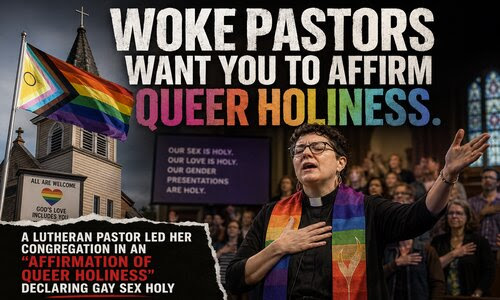
Woke Pastors Want You To Affirm Queer Holiness
Every generation of Christians faces the same fundamental question: Will the church conform to the world, or will it call the world to conform to Christ?
That question was on full display recently when a pastor at an ELCA Lutheran church stood before her congregation and led them in what she called an “Affirmation of Queer Holiness.”
“The first time another pastor told me that my gay sex was holy, I cried,” she told the congregation.
Then came the congregational liturgy:
“Our sex is holy. Our love is holy. Our gender presentations are holy.”
For many Christians watching the video, it was difficult to believe they were listening to a church service rather than a political rally wrapped in religious language.
Yet this is not an isolated incident. It is part of a much larger transformation taking place across portions of the American church. Pride flags now fly outside thousands of church buildings. Entire denominations dedicate Sundays to celebrating sexual identities. Church websites proudly advertise themselves as “affirming.” Sermons increasingly focus on validating personal identities rather than proclaiming repentance, redemption, and reconciliation with God.
What was once considered fringe has become commonplace.
The troubling aspect of this trend is not merely that churches are discussing homosexuality. The church has always wrestled with difficult moral questions. The deeper issue is that many pastors are no longer arguing for tolerance, compassion, or even coexistence. They are declaring something much more profound.
They are declaring holiness.
That distinction matters.
Historically, Christianity has taught that holiness belongs to God. Holiness is not something human beings define for themselves. It is not determined by our desires, preferences, feelings, or experiences. Scripture consistently presents holiness as God’s standard, God’s character, and God’s design.
When Moses encountered God at the burning bush, the ground became holy because of God’s presence.
When Isaiah encountered God in the temple, the angels cried out, “Holy, holy, holy is the Lord Almighty.”
The biblical story has never been about humanity declaring itself holy. It is about sinners being transformed by a holy God.
Yet in many progressive churches today, that order has been reversed.
Instead of asking whether our desires align with God’s will, the question becomes whether God can be redefined to affirm our desires.
Instead of bringing our lives under Scripture, Scripture is reinterpreted to accommodate our lives.
Instead of repentance, affirmation.
Instead of transformation, validation.
Instead of Christ-centered worship, self-centered spirituality.
That is why so many Christians reacted strongly to the phrase “queer holiness.” The controversy is not merely about sexuality. It is about authority.
Who gets to define what is holy?
The church or God?
Culture or Scripture?
Feelings or revelation?
These questions help explain why so many mainline Protestant denominations have experienced dramatic membership declines over the last several decades.
The ELCA itself provides a revealing example. Once numbering roughly 5 million members, the denomination has lost millions over the past generation. While many factors contribute to church decline, there is a growing body of evidence suggesting that churches which become increasingly indistinguishable from secular culture often struggle to convince people they offer anything unique.
After all, if the church simply echoes the same messages already being promoted by corporations, universities, Hollywood, government agencies, social media influencers, and activist organizations, why attend church at all?
If Christianity merely baptizes whatever culture currently celebrates, then it ceases to function as a prophetic voice.
The irony is striking.
Many progressive church leaders embraced these changes believing they would make Christianity more relevant to modern society. Instead, many congregations have continued shrinking while conservative and orthodox churches often show greater stability and, in some cases, growth.
People do not generally seek out churches because they want cultural affirmation.
They can get that everywhere.
People come to church searching for truth, meaning, forgiveness, purpose, hope, and answers to life’s deepest questions.
They come looking for God.
The church’s mission was never to place a divine stamp of approval on every human desire. It was to proclaim the Gospel.
That Gospel begins with the uncomfortable reality that every person is a sinner in need of grace.
Not just some sinners.
All sinners.
Every Christian has desires, temptations, habits, and inclinations that must be surrendered to Christ. The call of discipleship has always involved denying ourselves, taking up our cross, and following Him.
That message is not popular.
It never has been.
But Christianity was never designed to be a mirror reflecting society’s latest values back at itself. It was intended to be a light shining into darkness, even when that light exposes uncomfortable truths.
This is why the growing trend of churches raising Pride flags outside sanctuaries deserves serious attention. The flag itself has become more than a symbol of hospitality or welcome. For many churches, it functions as a theological statement — a declaration that traditional Christian teachings on sexuality have been abandoned in favor of a new moral framework.
That shift is reshaping entire denominations.
The question facing Christians today is not whether they should love their neighbors. Scripture commands that unequivocally.
The question is whether love requires affirming everything a culture celebrates.
Historically, Christianity has answered that question with a clear no.
Love tells the truth.
Love warns.
Love calls people toward God’s design, not away from it.
As the Apostle Paul warned nearly two thousand years ago:
“For the time will come when people will not put up with sound doctrine. Instead, to suit their own desires, they will gather around them a great number of teachers to say what their itching ears want to hear.”
What Happens When Machines Become The Majority On The Internet?

For decades, the internet was fundamentally a human creation. Every website, every comment, every search, every purchase, and every viral trend ultimately traced back to a real person sitting behind a keyboard. That reality has now changed.
According to Cloudflare, one of the largest internet infrastructure companies in the world, automated bot traffic has officially surpassed human traffic online. More than 57 percent of requests hitting the websites it monitors now come from bots, AI agents, and automated systems, while less than 43 percent come from actual people.
That milestone may sound like a technical curiosity reserved for programmers and network engineers. In reality, it could represent one of the most significant transformations in the history of the internet—and one that will eventually affect everyone.
For years, discussions about artificial intelligence focused primarily on what AI could create. Could it write articles? Generate images? Produce videos? Answer questions?
Now we are entering a new phase.
AI is no longer simply creating content. It is becoming an active participant in the internet itself.
Imagine a human shopper browsing five websites before making a purchase. An AI shopping assistant might scan 5,000 websites in seconds. AI research agents can visit thousands of pages while gathering information. Automated systems can monitor prices, compare products, collect data, generate reports, and interact with websites continuously without human intervention.
The result is an internet increasingly populated by machines talking to machines.
That raises a much bigger question: What happens when humans are no longer the primary audience online?
For the average person, the most immediate impact may be the quality of information itself.
Much of today’s internet already suffers from fake reviews, clickbait articles, manipulated social media engagement, and AI-generated spam. As bot traffic grows, distinguishing between genuine human experiences and machine-generated content could become even more difficult.
When you read product reviews, are they written by customers or AI agents? When a story trends on social media, are real people discussing it or thousands of automated accounts amplifying it? When search engines rank information, are they prioritizing human value or machine-generated popularity?
Trust—already in short supply online—could become even harder to find.
The economic consequences may be equally profound.
The modern internet is largely funded through advertising. Websites publish content, attract visitors, and earn revenue when those visitors view or click advertisements.
But as Cloudflare CEO Matthew Prince pointed out, bots don’t click ads.
If AI agents increasingly consume information on behalf of humans, the traditional advertising model begins to break down. News organizations, blogs, independent creators, and countless websites could find themselves losing revenue even as their traffic appears to increase.
The internet may eventually shift toward subscriptions, paywalls, licensing agreements, and direct payments from AI companies seeking access to content.
That transition could dramatically reshape which websites survive and which disappear.
There is also a deeper concern that many people instinctively recognize.
Human interaction may become increasingly diluted.
The internet was originally designed to connect people. Social media, forums, blogs, and discussion boards were all built around human conversation. But if a growing percentage of traffic comes from machines generating content for other machines to consume, the internet could begin feeling less like a global community and more like an automated ecosystem operating largely without us.
This is where the so-called “Dead Internet Theory” enters the discussion. While many of its more extreme claims remain speculative, the core fear resonates with people: that authentic human participation could eventually be drowned out by endless streams of AI-generated content.
Even if that never fully happens, there is another practical concern.
Security.
Every new AI agent represents another automated system crawling websites, gathering data, testing services, and interacting with online platforms. While many uses are legitimate, the same technology can be weaponized by cybercriminals, foreign governments, scammers, and malicious actors.
Future cyberattacks may not be launched by human hackers typing commands but by armies of autonomous AI systems operating around the clock.
The internet could become increasingly difficult to secure.
Yet there is another side to this story.
AI is also allowing millions of people to create websites, videos, software, and businesses who previously lacked the technical skills to do so. Content creation has become dramatically more accessible. Small businesses can compete with larger organizations. Individuals can launch projects that once required teams of developers.
In that sense, AI is expanding human creativity even as it transforms the environment in which that creativity exists.
The challenge moving forward will be ensuring that the internet remains fundamentally human-centered.
Technology should serve people—not replace them.
The internet was built as a tool to connect human beings, share ideas, conduct business, and build communities. If bots become the dominant participants online, society will face an important choice: whether to allow the web to evolve into a machine-to-machine ecosystem or to deliberately preserve spaces where authentic human interaction remains at the center.
The bots may now outnumber us online.
The real question is whether humans will continue to matter most.
TruLight Ministries Daily Entertainment Manna

TruLight TV – The Wilburn Family’s Musical Impact
Today’s guest artist on Josh and Ashley Show, Wilburn & Wilburn -The name Wilburn has been a part of the music industry for several years. It seems as though when you mention this family, people recognize that you are talking about music. Not just any music, but Gospel Music, that is sang from the heart. and later a Testimony from Deanna – Deanna was over the moon when the pregnancy test was positive. But when genetic testing indicated the little girl growing inside her had Down syndrome, Deanna was certain that God had gotten it all wrong. “There was a storm inside me. I felt like all my dreams were gone,” Deanna said. “My mind went to a very dark place wondering, ‘Why me?’” But God knows what we need, and He gave Deanna the perfect gift to understand the depths of His love.
Today on TruLight Radio XM
TruLight Radio XM 24/7
Program
GMT / UTC +2
Monday To Fridays
00:15 Words to Live By Testimonies
01.15 Science Scripture and Salvation
02.15 Ground Works
04.00 Gospel Concert of the Day
05.00 The Daren Streblow Comedy Show
5:55 It is Today devotional
6:00 Gaither Homecoming Morning Show
7:15 Discover the Word
8.15 Destined for Victory
8:55 Science Scripture and Salvation
9:00 Holy Spirit Hour – Normally Sermons
10:15 Hope of the Heart
11:15 Unshackled
11.45 Words to Live By
12:15 Truth for Life
13:15 Living on the Edge with Chip Ingram
14:15 Focus on the Family
15:00 Kids Hour
16:00 In Touch with Dr. Charles Stanley
16:30 Groundwork
17:15 Live in the Light
18:15 Renewing your Mind
19:00 Gaither Homecoming Show
20:15 Growing Hope
21:15 Adventures in Odyssey Radio Drama
21:45 Bible Reading
22:15 Night-sounds
23.00 Good Old Country Gospel / Rhema Gospel Express
VISIT THE WEBSITE
TruLight Ministry News – EXTRA MANNA
TruLight Ministries orders from God since 2012 . Teach Them , Comfort Them and Warn Them!
Healing Truths.
End Time Articles.
Bonus Manna = Bonus Teaching for the Child of God !!
Purification is the process of becoming clean or pure in a physical, moral, or spiritual sense. In Scripture, God calls us to be pure, casting off anything that is unlike Him. Thus, purification is essential for those who draw near to God; it is important in worship, daily living, and becoming more Christlike.
In the Old Testament, purification was associated with ceremonial cleanliness. The Law of Moses included numerous rituals and sacrifices to achieve purification from physical and spiritual impurities. For example, Leviticus 14 describes the purification process for people healed of leprosy. This ritual involved a priest, two live clean birds, cedarwood, scarlet yarn, and hyssop. One bird was sacrificed, while the other was set free, symbolizing both the cleansing and liberation from impurity. The idea is that, after a time of corruption, purification is necessary to restore fellowship with God and the religious community.
Purification was also prominent in the context of the tabernacle and the temple. Priests underwent rigorous purification rituals before performing their duties, as noted in Exodus 30:17–21, where God instructed Moses to make a bronze basin for washing. Aaron and his sons were to wash their hands and feet before approaching the altar, ensuring their ceremonial cleanliness. This act of purification signified respect for the holiness of God and the sanctity of their service to Him.
The New Testament transitions from an emphasis on ceremonial cleanliness to spiritual cleanliness. The ministry of John the Baptist, for example, included a baptism of repentance for the forgiveness of sins, signifying purification of the heart. In Matthew 3:11, John says, “I baptize you with water for repentance, but he who is coming after me is mightier than I, whose sandals I am not worthy to carry. He will baptize you with the Holy Spirit and fire” (ESV). Here, purification by water is not merely an outward sign but a reflection of a cleansed heart.
Jesus also taught the importance of purification. In Mark 7:18–23, Jesus explains that it is not what goes into a person that defiles him, but what comes out of his heart. Jesus lists things like evil thoughts, sexual immorality, theft, and others sins as impurities that corrupt from within. Purification, according to Jesus, involves a radical transformation of mind, heart, and spirit (see John 3:3, 5).
Purification is also significant in the writings of the apostles. In 1 John 1:7, the apostle John declares, “If we walk in the light, as he is in the light, we have fellowship with one another, and the blood of Jesus his Son cleanses us from all sin” (ESV). Faith in the sacrificial death of Christ is how sinners are purified from all impurity, enabling them to stand justified before a holy God.
In 2 Corinthians 7:1, Paul urges believers to “cleanse [themselves] from every defilement of body and spirit, bringing holiness to completion in the fear of God” (ESV). To bring “holiness to completion,” believers must actively put away sin in cooperation with the Holy Spirit: “If we live by the Spirit, let us also keep in step with the Spirit” (ESV).
The book of Revelation shows that entrance to the New Jerusalem requires purification: “Blessed are those who wash their robes, that they may have the right to the tree of life and may go through the gates into the city” (Revelation 22:14). Earlier, John had seen “a great multitude that no one could count, from every nation, tribe, people and language, standing before the throne and before the Lamb. They were wearing white robes” (Revelation 7:9). One of the elders tells John how their robes came to be so white: “They have washed their robes and made them white in the blood of the Lamb” (Revelation 7:14).
Purification before a holy God is an important theme in the Bible. From the rituals of the Old Testament to the regeneration of the Holy Spirit, purification is essential for salvation from sin and fellowship with God. Believers are called to live in holiness, experiencing God’s cleansing (1 John 1:9), and striving to reflect the character of Christ.
Share this Feeding of Manna with your Friends and Family. just click on the Social Media icon and share !