Hosted by TruLight Ministries – The Place of Truth
SELECT YOUR READING LANGUAGE – BOTTOM LEFT = YOUR DAILY MANNA NOW AVAILABLE IN 103 LANGUAGES
@ TruLight – Daily Manna is not Just a Bible Verse with a Small Prayer . NO ::: WE SERVE DAILY Manna for the ENTIRE Day . Breakfast , Lunch , Dinner , Plus tea Times and even Entertainment Manna . Plus News Manna and More , This Daily Manna will keep you Spiritually full for the full 48 Hours and even More to Share with your Friends and Family !!!
For this week we will look at the Fruits of the Flesh !
ENVY !!!
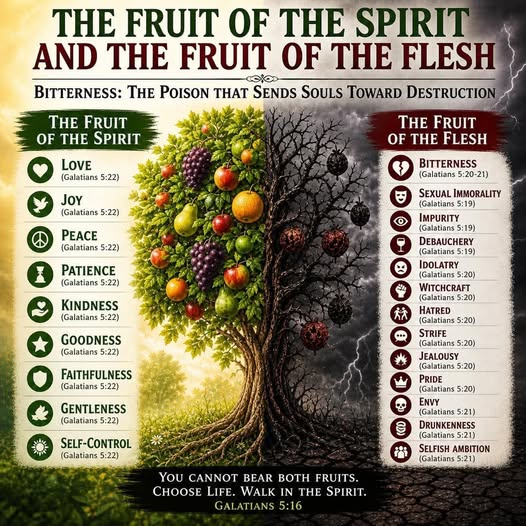
First Corinthians 13 offers one of the Bible’s richest expositions regarding love. Verse 4 notes that love “does not envy.” So, selfish jealousy is at odds with God’s type of love.
The Greek word translated “envy” means “to burn with zeal.” Literally, the sense is “to be heated or to boil over with envy, hatred, or anger.” In the context of 1 Corinthians 13, the idea is that love does not focus on personal desires. It is not eager to increase possessions. God’s type of love is selfless, not selfish.
Envy is the opposite of God’s command not to covet (Exodus 20:17; Deuteronomy 5:21). “Love is the fulfillment of the law” (Romans 13:10). The one who truly loves will be in conformity to the Ten Commandments, and envy will be excluded.
In contrast to God’s command, the Corinthian believers were ranking some spiritual gifts as more important than others and envying those who had the “best” gifts. In chapter 12, Paul points out that the different gifts are meant to serve one another and build up the church. No one person has all the gifts, but each child of God has at least one, and love demands that each gift be used to serve others rather than self.
“Envy rots the bones” (Proverbs 14:30). When we crave what someone else has rather than being grateful for what God has given, we hurt ourselves. Instead of envying others, we are called to love them.
True love—God’s love—rejoices when others are blessed. There is no room for envy. Love does not seek to benefit itself and it is content with what it has, because its focus is on meeting the needs of the loved one.

Tea Time Manna
Fathers, do not exasperate your children, instead, bring them up in the training and instruction of the Lord.
—Ephesians 6:4
It seems that many mothers have an inside track with their children because of the bonding that occurs in a child’s earliest days and weeks of life with her, both in the womb as they hear her voice and feel her comfort, and after delivery, as she nurses and suckles her child. So, I find it interesting that God commands fathers to be about the work of spiritual nurture with their children, yet they are to do it without exasperating the child with overly harsh discipline. I don’t believe Paul means to exclude mothers, but he emphasizes the importance of a strong, gentle guiding hand from a man who is not overly harsh, but still has expectations. No, I think Paul assumes most moms will do their part in training and instructing children. However, the father’s influence and intentional training of each child are also essential for the child to know the father’s love and see that both parents support the proper direction the child should take in behavior, faith, and life. Dads, we have the awesome opportunity to help our child know a father’s love so they can come to know the love of our Father in heaven.
Prayer
Abba Father, may my children come to find your love in the way that I instruct, nurture, discipline, and train them. Thank you for providing your church family, which can offer support, love, nurture, and help when a child does not have the blessing of two loving and godly parents. No matter who is raising a child, we pray that they can lead them and love them in the way that points them to you, our Father. In Jesus’ name, I pray. Amen and Amen

Bible Teaching of the Day
LUNCH MANNA =
In James 3:13–18, the Bible challenges us as believers to demonstrate genuine, godly “wisdom that comes from heaven” (verse 17) in how we live and behave. James mentions another kind of wisdom, which is false, worldly wisdom: “But if you harbor bitter envy and selfish ambition in your hearts, do not boast about it or deny the truth. Such ‘wisdom’ does not come down from heaven but is earthly, unspiritual, demonic” (verse 14). Worldly wisdom produces bitter envy, selfish ambition, “disorder and every evil practice” (verse 16). But God’s pure wisdom is “peace-loving, considerate, submissive, full of mercy and good fruit, impartial and sincere” (verse 17).
The word translated as “bitter” in James 3:14 is pikron in the original Greek. This adjective expresses a hostile, acrid, malignant kind of jealousy that comes from and exhibits extreme animosity. The noun “envy” (zēlon in Greek) is also translated as “jealousy.” It refers to a greedy or prideful longing for something that belongs to another, even something intangible, such as a skill. Bitter envy can also be understood as “fanatical, zealous jealousy” that fiercely desires to promote one’s opinion or position to the exclusion of all others.
The Sadducees were filled with bitter envy when their religious ideas were challenged (see Acts 5:17; 13:45). However, zealous envy is not always portrayed negatively in Scripture. Jesus displayed the same passion for God’s house when He chased the moneychangers from the temple (John 2:17; see also Romans 10:2; 2 Corinthians 7:11; 9:2; 11:2).
James insists that a believer’s life and behavior are a litmus test: “If you are wise and understand God’s ways, prove it by living an honorable life, doing good works with the humility that comes from wisdom” (James 3:13, NLT). If a Christian holds bitter envy and selfish ambition in the heart, in essence, he is living a lie contrary to the wisdom of God.
True wisdom from God flows from a place of humility. It seeks to magnify and glorify the Lord alone (1 Corinthians 1:17–31). It does not seek self-promotion. It rejoices when a brother or sister in Christ succeeds and graciously strives to live in harmony with others (see Romans 12:15–16; Philippians 2:3). On the other hand, worldly wisdom is based on the carnal need to exalt oneself. It secretly envies and critiques others. It causes a person to boast, deny the truth, and harbor bitter envy in his heart.
When earthly wisdom seeps into the church, it can manifest as selfish, flesh-driven promotion and a desire for personal gain and glorification. An excellent analogy for bitter envy in the body of Christ is sibling rivalry. A person who harbors bitter envy may see himself as zealous for the truth, but, in reality, he is bitter, angry, and full of personal pride. God and others around him can see how far he is from the truth. Bitter envy breeds contention, destroys unity, and brings disorder to the church (see 1 Corinthians 3:3; 2 Corinthians 12:20; Galatians 5:20).
Bitter envy arises from sin in the heart (Mark 7:21–23). It is profoundly destructive: “A heart at peace gives life to the body, but envy rots the bones” (Proverbs 14:30; see also Job 5:2; Proverbs 27:4; Ecclesiastes 9:5–6). The Bible calls Christians to examine their hearts to see if they are pure and to test their actions to see if they are in the faith, living according to God’s wisdom (2 Corinthians 13:5; cf. 1 Corinthians 11:28; Galatians 6:4). We must get rid of fleshly sins such as hatred, jealousy, envy, discord, and selfish ambition (Galatians 5:19–21; Romans 13:13) and “always be zealous for the fear of the Lord” (Proverbs 23:17). If we don’t, these sins will lead to our downfall (Psalm 37:1–2).
God’s love “does not envy, it does not boast, it is not proud. It does not dishonor others, it is not self-seeking” (1 Corinthians 13:4–5). When God saves us, He gives us new life through the Holy Spirit, freeing us from lives “full of evil and envy” (Titus 3:3–5).
Today’s Devotional
DINNER MANNA =
Both envy and jealousy are listed in the Bible as sins to avoid along with greed, slander, and anger (2 Corinthians 12:20; Galatians 5:20–21; Mark 7:21–23). Although similar, and although they are often experienced together, envy and jealousy are not exactly synonymous.
In some contexts, envy and jealousy are interchangeable terms, because both relate to covetousness. The same word translated “envious” in the NASB in Matthew 20:15 is translated “jealous” in the NLT. When we want something that belongs to someone else, we can be described as either “envious” or “jealous.” For example, saying “I envy my neighbor’s new fence” is the same as saying “I am jealous of my neighbor’s new fence.”
The difference between envy and jealousy is a fine one. Envy always has an outward focus: we desire some item, person, or attribute possessed by someone else, and we are discontent or resentful about not having it. Jealousy is often found in a more restricted context of the protection of one’s own items or relationships, especially romantic relationships (Proverbs 6:34). You can envy someone else for his girlfriend, but someone flirting with your own girlfriend makes you jealous, not envious. In fact, the word jealous can carry the meaning of “zealous vigilance” (Merriam-Webster Online Dictionary, 2015).
First Kings 21:1–16 relates the story of King Ahab and his coveting the property of his neighbor, Naboth. Whether we call Ahab’s sin envy or jealousy, the result was the same: Naboth was murdered, and Ahab was held to account (verses 17–19).
The tenth commandment addresses envy and jealousy by forbidding covetousness (Exodus 20:17). In contrast to the sin of envy or jealousy, 1 Timothy 6:6 says that “godliness with contentment is great gain.” Envy or jealousy is the enemy of contentment because we cannot live in grateful contentment when focused on what we don’t have.
The biblical difference between envy and jealousy is that, in certain circumstances, jealousy can be a positive thing. Envy is never presented as positive. The type of jealousy defined as “zealous vigilance” is the unhappy or angry feeling caused when what rightfully belongs to us is being threatened. This is the type of jealousy mentioned by the bride in Song of Solomon 8:6: “Love is as strong as death, its jealousy unyielding as the grave. It burns like blazing fire, like a mighty flame.” It is the type of jealousy Paul wrote of in 2 Corinthians 11:2: “I am jealous for you with a godly jealousy. I promised you to one husband, to Christ, so that I might present you as a pure virgin to him.” Paul saw the Corinthian believers slipping in their devotion to Christ, and, as a loving husband would jealously guard his wife’s affections, so Paul jealously guarded the hearts of his spiritual children. The Bible also portrays God as having loving jealousy over His children (Psalm 78:58; Zechariah 8:2).
Envy and jealousy, when viewed as synonyms, are sins. Psalm 73:1–3 reminds us of the dangers of envying the wicked. Acts 7:9 identifies jealousy as the root cause of Jacob’s sons’ mistreatment of their brother Joseph. When we desire what God has not given us, our hearts harden toward Him. Envy or jealousy can blind us to reality and make us believe the lie, as Eve did, that God is holding out on us (Genesis 3). Envy unchecked can result in walking away from God in order to meet our desires in our own way. Jealousy unchecked can result in bitterness toward those God has called us to love (John 13:34; 1 Peter 1:22; Hebrews 12:15). Both envy and jealousy are dangerous to our well-being and to our fruitfulness for God’s kingdom (John 15:1–8).

NEWS MANNA –
Trump’s Latest Comments Reveal A Hard Truth About Israel’s Future

President Donald Trump has long been regarded as one of the strongest supporters of Israel ever to occupy the White House.
His recognition of Jerusalem as Israel’s capital, the relocation of the U.S. embassy, recognition of Israeli sovereignty over the Golan Heights, and support during some of Israel’s most challenging moments earned him widespread admiration among Israelis and evangelical Christians alike.
That is why many Christian supporters of Israel were surprised by a series of recent comments regarding Israel’s war against Hezbollah in Lebanon.
Speaking about the conflict, Trump criticized Israel’s military operations, saying that “Israel is fighting Hezbollah too long, and too many people are being killed.”
He went on to suggest that Israel’s approach was excessive, stating, “You don’t have to knock down an apartment house every time you’re looking for somebody. There are a lot of people in those apartment houses and they’re not all Hezbollah.”
Trump also revealed that he had privately expressed dissatisfaction with Israeli strikes in Beirut.
“I did not like that, I let them know that,” he said, referring to one attack that he described as “too much.”
Perhaps most surprising was his suggestion that Syria could potentially deal with Hezbollah more effectively.
“I suggested to Israel to let Syria take care of Hezbollah,” Trump said. “If Israel can’t do the job without killing everyone else, he’ll do the job, Syria will do the job.”
He further stated that Israeli Prime Minister Benjamin Netanyahu “has to be more responsible with respect to Lebanon” and added, “I’m not happy with the way Israel has handled themselves with Lebanon, and with Hezbollah.”
Yet it was another remark that generated perhaps the most concern among many evangelical supporters of Israel.
“Israel would have been blown up a long time ago, had I not gotten involved,” Trump declared. Elsewhere he stated, “Without me, there would be no Israel.”
To be fair, there is a practical truth behind some of these comments.
The United States has been Israel’s most important ally for decades. American military aid, intelligence cooperation, diplomatic support, and strategic deterrence have undoubtedly strengthened Israel’s ability to defend itself.
President Trump’s own policies also contributed significantly to Israel’s security position in the region.
But there is a vast difference between acknowledging America’s importance and suggesting that Israel’s existence depends upon any single political leader.
For Christians who understand God’s covenant relationship with Israel, that distinction matters.
Israel’s survival did not begin with Donald Trump.
Nor did it begin with America.
Israel survived Egypt, Assyria, Babylon, Persia, Greece, Rome, the Islamic caliphates, the Crusades, centuries of exile, the Holocaust, and repeated attempts by neighboring nations to destroy it.
Why?
Because Scripture presents Israel’s preservation as an act of divine faithfulness rather than geopolitical luck.
God has often used nations and leaders as instruments of protection. America may very well be one of those instruments.
But instruments are not the source.
God is.
That is why statements suggesting that Israel would not exist without a particular leader make many Christians uncomfortable. They unintentionally place human accomplishment in a position Scripture reserves for God alone.
Beyond the theological concerns lies a practical one.
Trump’s comments regarding Lebanon reflect a growing frustration within portions of the American political establishment regarding Israel’s military campaign against Hezbollah.
Yet critics often ignore a reality that Israeli military planners have dealt with for decades.
Hezbollah intentionally embeds itself among civilians.
Its weapons are hidden in neighborhoods.
Its fighters operate near schools.
Its command infrastructure is woven into apartment complexes, mosques, hospitals, and civilian districts.
This is not an accident. It is a deliberate military strategy.
When Israel strikes these targets, international headlines frequently focus on the destruction while paying less attention to why those military assets were located there in the first place.
The uncomfortable reality is that Hezbollah benefits from civilian casualties because they increase diplomatic pressure on Israel.
Israel did not place rockets in apartment buildings.
Israel did not establish missile depots beside schools.
Israel did not choose to use civilians as shields.
Hezbollah did.
And history has repeatedly demonstrated what happens when these networks are left intact.
They rebuild.
They rearm.
And eventually they attack again.
The suggestion that Syria could somehow replace Israel as the force responsible for containing Hezbollah raises additional questions.
The current Syrian leadership may present a different face than the Assad regime, but many of its leaders emerged from Islamist backgrounds deeply hostile toward Israel. Reports continue regarding pressure against Druze communities and other minorities.
Why should Israel assume Syria’s interests align with its own?
More importantly, why should anyone believe Syria would be more committed to dismantling Hezbollah than Israel itself?
What may be emerging is a reality that Bible students have anticipated for decades.
America still supports Israel.
But America’s interests are not always identical to Israel’s interests.
Washington increasingly seeks stability, ceasefires, and conflict reduction.
Israel seeks survival.
Sometimes those goals overlap. Sometimes they do not.
For Christians, this moment serves as an important reminder.
Political leaders come and go. Alliances shift. Governments change.
But God’s covenant promises do not.
The Bible predicts a future in which Israel becomes increasingly isolated from the nations around her. It describes a world that eventually turns against Jerusalem rather than defending it.
Whether today’s developments represent part of that trend remains to be seen.
But one lesson is already clear.
Christians can appreciate political leaders who support Israel.
They can be grateful for allies.
They can celebrate wise policies.
But they should never confuse God’s instrument with God’s sovereignty.
Because according to Scripture, when Israel ultimately stands alone, it will not be Washington that saves her.
It will be God.
Australian Parents Are Being Told How To Pray For Their Children
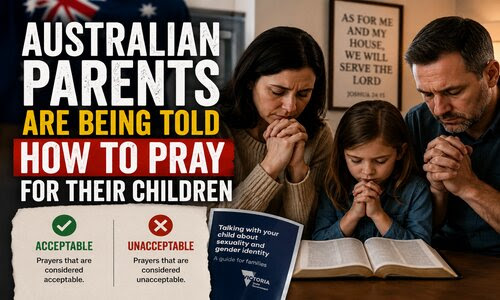
Imagine sitting down with your son or daughter, bowing your head in prayer, and wondering whether the government would approve of the words you are about to speak.
That may sound like something from a dystopian novel. Yet in the Australian state of Victoria, government guidance is now telling parents which prayers for their children are considered acceptable—and which are not.
The guidance, issued as part of the state’s approach to sexuality and gender identity, insists that people who identify as LGBTQA are not “sick or broken” and do not need to be “fixed.” It then reassures parents that they remain free to share their beliefs and values with their children.
But there is a catch.
According to the guidance, some forms of prayer may be considered harmful. The government has even outlined examples of prayers it considers acceptable and unacceptable.
Prayers for guidance, peace, reassurance, and reminders of God’s love are permitted.
Prayers asking God for a change in desires, for strength not to act on attractions, discussions of repentance, or prayers encouraging celibacy are not.
Pause and consider what that means.
This is no longer merely a debate about sexuality or gender identity. It is a debate about authority. Who gets the final say in the spiritual formation of a child—parents, God, or the state?
For Christians, the answer has always been clear.
God never intended parents to be mere providers of food, shelter, and education. He entrusted them with something far greater: the spiritual formation of the next generation.
In Deuteronomy 6, parents are commanded to teach God’s truth diligently to their children—to talk about it at home, on the road, in the morning, and at night. The family was designed to be the primary place where faith is taught, nurtured, and passed on.
That biblical responsibility does not disappear when a government agency publishes new guidance.
Yet what is happening in Victoria should concern believers far beyond Australia’s borders.
The issue is not simply whether one agrees with the government’s position. The larger concern is the growing belief throughout much of the Western world that governments should play an increasing role in determining which religious beliefs may be expressed, taught, or practiced.
The language is almost always the same: safety, inclusion, harm prevention, and protection. These goals may sound noble, but they often come with a hidden assumption—that the state has the authority to decide which moral convictions are acceptable and which are not.
Parents are told they have rights, but only within government-approved boundaries.
Churches are told they have freedom, but only if their teachings align with prevailing cultural values.
Christians are told they can practice their faith, but increasingly they are expected to do so quietly and without challenging the assumptions of the age.
History teaches that whoever shapes the next generation shapes the future. That is why the battle for children has become one of the defining struggles of our time.
The pressure comes through schools, media, technology, entertainment, legislation, and now, in some cases, guidance about family prayer itself.
Australia may simply be showing the rest of the Western world where these debates are heading.
For Christian parents, the challenge is not to respond with fear but with conviction. God has not delegated the responsibility of discipling children to bureaucrats, politicians, or cultural influencers. He has entrusted that responsibility first to mothers and fathers.
And that is why this story matters.
Because the real question is not whether governments can recommend what parents should say to their children.
The real question is whether parents will surrender a role that God Himself gave them.
The battle for the next generation is no longer on the horizon.
It has already arrived at the family dinner table.

TruLight TV – Kids Hour – What Does It Mean To Have Joy!
It’s time for Amazonia! This amazing survival show will follow six teams as they spend six days in the Amazon rainforest competing in challenges to win medallions. Each week, a team will be eliminated until only one remains! Along the way, we’ll follow two contestants, Ace and Cruz, as they explore the rainforest and learn more about the character of God. and later Your preschooler will join Olive on Farmer Fred’s farm as she completes chores, sings, plays games, and learns about the fruit of the Spirit. This week, Olive learns what it means to have joy! This and plus some stunning gospel kids’ songs. Enjoy!
Today on TruLight Radio XM
TruLight Radio XM 24/7
Program
GMT / UTC +2
Monday To Fridays
00:15 Words to Live By Testimonies
01.15 Science Scripture and Salvation
02.15 Ground Works
04.00 Gospel Concert of the Day
05.00 The Daren Streblow Comedy Show
5:55 It is Today devotional
6:00 Gaither Homecoming Morning Show
7:15 Discover the Word
8.15 Destined for Victory
8:55 Science Scripture and Salvation
9:00 Holy Spirit Hour – Normally Sermons
10:15 Hope of the Heart
11:15 Unshackled
11.45 Words to Live By
12:15 Truth for Life
13:15 Living on the Edge with Chip Ingram
14:15 Focus on the Family
15:00 Kids Hour
16:00 In Touch with Dr. Charles Stanley
16:30 Groundwork
17:15 Live in the Light
18:15 Renewing your Mind
19:00 Gaither Homecoming Show
20:15 Growing Hope
21:15 Adventures in Odyssey Radio Drama
21:45 Bible Reading
22:15 Night-sounds
23.00 Good Old Country Gospel / Rhema Gospel Express
VISIT THE WEBSITE
TruLight Ministry News – EXTRA MANNA

TruLight Ministries orders from God since 2012 . Teach Them , Comfort Them and Warn Them!
The Sheriff of the Church address the Calvinist Church in this Audio Movie
Healing Truths.
End Time Articles.
Bonus Manna = Bonus Teaching for the Child of God !!
What are some Bible verses about envy?
Proverbs 14:30
A tranquil heart gives life to the flesh, but envy makes the bones rot.
Exodus 34:14
(for you shall worship no other god, for the Lord, whose name is Jealous, is a jealous God),
Proverbs 23:17
Let not your heart envy sinners, but continue in the fear of the Lord all the day.
Galatians 5:26
Let us not become conceited, provoking one another, envying one another.
Galatians 5:19-21
Now the works of the flesh are evident: sexual immorality, impurity, sensuality, idolatry, sorcery, enmity, strife, jealousy, fits of anger, rivalries, dissensions, divisions, envy, drunkenness, orgies, and things like these. I warn you, as I warned you before, that those who do such things will not inherit the kingdom of God.
James 3:16
For where jealousy and selfish ambition exist, there will be disorder and every vile practice.
1 Peter 2:1
So put away all malice and all deceit and hypocrisy and envy and all slander.
1 Corinthians 13:4
Love is patient and kind; love does not envy or boast; it is not arrogant
Proverbs 24:1
Be not envious of evil men, nor desire to be with them,
Titus 3:3
For we ourselves were once foolish, disobedient, led astray, slaves to various passions and pleasures, passing our days in malice and envy, hated by others and hating one another.
Mark 7:20-23
And he said, “What comes out of a person is what defiles him. For from within, out of the heart of man, come evil thoughts, sexual immorality, theft, murder, adultery, coveting, wickedness, deceit, sensuality, envy, slander, pride, foolishness. All these evil things come from within, and they defile a person.”
1 Timothy 6:4
He is puffed up with conceit and understands nothing. He has an unhealthy craving for controversy and for quarrels about words, which produce envy, dissension, slander, evil suspicions,
Proverbs 24:19
Fret not yourself because of evildoers, and be not envious of the wicked,
Proverbs 27:4
Wrath is cruel, anger is overwhelming, but who can stand before jealousy?
Romans 1:29
They were filled with all manner of unrighteousness, evil, covetousness, malice. They are full of envy, murder, strife, deceit, maliciousness. They are gossips,
Ecclesiastes 4:4
Then I saw that all toil and all skill in work come from a man’s envy of his neighbor. This also is vanity and a striving after wind.
Job 5:2
Surely vexation kills the fool, and jealousy slays the simple.
1 Corinthians 3:3
For you are still of the flesh. For while there is jealousy and strife among you, are you not of the flesh and behaving only in a human way?
Mark 15:10
For he perceived that it was out of envy that the chief priests had delivered him up.
Ezekiel 35:11
Therefore, as I live, declares the Lord God, I will deal with you according to the anger and envy that you showed because of your hatred against them. And I will make myself known among them, when I judge you.
Share this Feeding of Manna with your Friends and Family. just click on the Social Media icon and share !