Hosted by TruLight Ministries – The Place of Truth
SELECT YOUR READING LANGUAGE – BOTTOM LEFT = YOUR DAILY MANNA NOW AVAILABLE IN 103 LANGUAGES
@ TruLight Daily Manna is not Just a Bible Verse with a Small Prayer . NO ::: WE SERVE DAILY Manna for the ENTIRE Day . Breakfast , Lunch , Dinner , Plus tea Times and even Entertainment Manna . Plus News Manna and More , This Daily Manna will keep you Spiritually full for the full 48 Hours and even More to Share with your Friends and Family !!!
BRIDE OF CHRIST , PREPARE FOR THE FEAST OF THE LAMB !!!
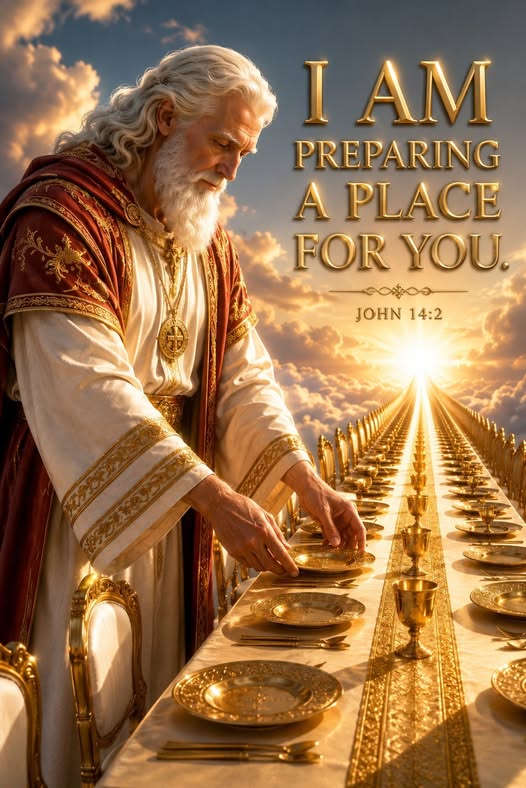
In his vision in Revelation 19:7–10, John saw and heard the heavenly multitudes praising God because the wedding feast of the Lamb—literally, the “marriage supper”—was about to begin. The concept of the marriage supper is better understood in light of the wedding customs in the time of Christ.
These wedding customs had three major parts. First, a marriage contract was signed by the parents of the bride and the bridegroom, and the parents of the bridegroom or the bridegroom himself would pay a dowry to the bride or her parents. This began what was called the betrothal period—what we would today call the engagement. This period was the one Joseph and Mary were in when she was found to be with child (Matthew 1:18; Luke 2:5).
The second step in the process usually occurred much later, when the bridegroom, accompanied by his male friends, went to the house of the bride. If he came in the night, he and his companions would create a torchlight parade through the streets. The bride would be ready with her maidens, and when the bridegroom arrived, they would all join the parade and end up at the bridegroom’s home. This custom is the basis of the parable of the ten virgins in Matthew 25:1–13. The third phase was the marriage supper itself, which might go on for days, as illustrated by the wedding at Cana in John 2:1–2.
What John’s vision in Revelation pictures is the wedding feast of the Lamb (Jesus Christ) and His bride (the Church) in its third phase. The implication is that the first two phases have already taken place. The first phase was completed on earth when each individual believer placed his or her faith in Christ as Savior. The dowry paid by the bridegroom’s parent (God the Father) would be the blood of Christ shed on the Bride’s behalf. The Church on earth today, then, is “betrothed” to Christ, and, like the wise virgins in the parable, all believers should be watching and waiting for the appearance of the Bridegroom (2nd Coming). The second phase symbolizes the rapture of the Church, when Christ comes to claim His bride and take her to the Father’s house. The marriage supper then follows as the third and final step.
Attending the wedding feast will be not only the Church as the Bride of Christ, but others as well. The “others” include the Old Testament saints—they will not have been resurrected yet, but their souls/spirits will be in heaven with us. As the angel told John to write, “Blessed are those who are invited to the marriage supper of the Lamb” (Revelation 19:9). The marriage supper of the Lamb is a glorious celebration of all who are in Christ!

Tea Time Manna
The heart is deceitful above all things and beyond cure. Who can understand it? “I the Lord search the heart and examine the mind, to reward a man according to his conduct, according to what his deeds deserve.”
—Jeremiah 17:9-10
Jesus told us that what is in our hearts ultimately works its way out into our public lives (Luke 6:43-45). The wise man of Proverbs told us to guard our hearts because the heart is the wellspring of our lives (Proverbs 4:23). Jeremiah wants us to know that God knows our hearts. At Heartlight.org and verseoftheday.com, we want to stress the importance of what goes into our hearts because it really makes a difference in what goes on inside our hearts and heads, and what comes out in our lives as behaviors. Please, invite the Lord into what you do, plan, think, read, scroll, swipe, watch, and hear. Ask the Lord to remove deceit from you. Ask the Spirit to help you see if what you are doing is truly worthy of your time and interest as a child of God and one who lives for the Kingdom of heaven.
Prayer
Righteous Father, please help me guard my heart. Help me be wise enough not to place things into it that would rob it of its purity and devotion to you. I want to be holy through and through — body, soul, mind, and spirit. Please search me and help me remove everything that would steal my devotion from you and that would ruin my influence with others for you. In the name of Jesus, I pray. Amen and Amen
Bible Teaching of the Day
LUNCH MANNA =
Jesus told the Parable of the Wedding Feast in Matthew 22:1-14. This parable is similar in some ways to the Parable of the Great Banquet (Luke 14:15-24), but the occasion is different, and it has some important distinctions. To better understand the context of this story, it is important to know some basic facts about weddings in Jesus’ day.
In Jewish society, the parents of the betrothed generally drew up the marriage contract. The bride and groom would meet, perhaps for the first time, when this contract was signed. The couple was considered married at this point, but they would separate until the actual time of the ceremony. The bride would remain with her parents, and the groom would leave to prepare their home. This could take quite a while. When the home was all was ready, the groom would return for his bride without notice. The marriage ceremony would then take place, and the wedding banquet would follow.
The wedding banquet was one of the most joyous occasions in Jewish life and could last for up to a week. In His parable, Jesus compares heaven to a wedding banquet that a king had prepared for his son (Matthew 22:2). Many people had been invited, but when the time for the banquet came and the table was set, those invited refused to come (verses 4-5). In fact, the king’s servants who brought the joyful message were mistreated and even killed (verse 6).
The king, enraged at the response of those who had been invited, sent his army to avenge the death of his servants (verse 7). He then sent invitations to anyone his servants could find, with the result that the wedding hall was filled (verses 8-10).
During the feast the king noticed a man “who was not wearing wedding clothes” (verse 11). When asked how he came to be there without the furnished attire, the man had no answer and was promptly ejected from the feast “outside, into the darkness, where there will be weeping and gnashing of teeth” (verses 12-13). Jesus then ends the parable with this statement: “For many are invited, but few are chosen” (verse 14).
The king is God the Father, and the son who is being honored at the banquet is Jesus Christ, who “came to that which was his own, but his own did not receive him” (John 1:11). Israel held the invitation to the kingdom, but when the time actually came for the kingdom to appear (see Matthew 3:1), they refused to believe it. Many prophets, including John the Baptist, had been murdered (Matthew 14:10). The king’s reprisal against the murderers can be interpreted as a prophecy of Jerusalem’s destruction in A.D. 70 at the hands of the Romans (cf. Luke 21:5). More broadly, the king’s vengeance speaks of the desolation mentioned in the book of Revelation. God is patient, but He will not tolerate wickedness forever (Obadiah 1:15). His judgment will come upon those who reject His offer of salvation. Considering what that salvation cost Jesus, is not this judgment well deserved (see Hebrews 10:29-31)?
Note that it is not because the invited guests could not come to the wedding feast, but that they would not come (see Luke 13:34). Everyone had an excuse. How tragic, and how indicative of human nature, to be offered the blessings of God and to refuse them because of the draw of mundane things!
The wedding invitation is extended to anyone and everyone, total strangers, both good and bad. This refers to the gospel being taken to the Gentiles. This portion of the parable is a foreshadowing of the Jews’ rejection of the gospel in Acts 13. Paul and Barnabas were in Pisidian Antioch, where the Jewish leaders strongly opposed them. The apostle’s words echo the king’s estimation that those invited to the wedding “did not deserve to come”: “We had to speak the word of God to you first. Since you reject it and do not consider yourselves worthy of eternal life, we now turn to the Gentiles” (Acts 13:46). The gospel message, Jesus taught, would be made available to everyone.
The matter of the wedding garment is instructive. It would be a gross insult to the king to refuse to wear the garment provided to the guests. The man who was caught wearing his old clothing learned what an offense it was as he was removed from the celebration.
This was Jesus’ way of teaching the inadequacy of self-righteousness. From the very beginning, God has provided a “covering” for our sin. To insist on covering ourselves is to be clad in “filthy rags” (Isaiah 64:6). Adam and Eve tried to cover their shame, but they found their fig leaves to be woefully scant. God took away their handmade clothes and replaced them with skins of (sacrificed) animals (Genesis 3:7, 21). In the book of Revelation, we see those in heaven wearing “white robes” (Revelation 7:9), and we learn that the whiteness of the robes is due to their being washed in the blood of the Lamb (verse 14). We trust in God’s righteousness, not our own (Philippians 3:9).
Just as the king provided wedding garments for his guests, God provides salvation for mankind. Our wedding garment is the righteousness of Christ, and unless we have it, we will miss the wedding feast. When the religions of the world are stripped down to their basic tenets, we either find man working his way toward God, or we find the cross of Christ. The cross is the only way to salvation (John 14:6).
For his crime against the king, the improperly attired guest is thrown out into the darkness. For their crimes against God, there will be many who will be consigned to “outer darkness”—existence without God for eternity. Christ concludes the parable with the sad fact that “many are invited, but few are chosen.” In other words, many people hear the call of God, but only a few heed it.
To summarize the point of the Parable of the Wedding Feast, God sent His Son into the world, and the very people who should have celebrated His coming rejected Him, bringing judgment upon themselves. As a result, the kingdom of heaven was opened up to anyone who will set aside his own righteousness and by faith accept the righteousness God provides in Christ. Those who spurn the gift of salvation and cling instead to their own “good” works will spend eternity in hell.
The self-righteous Pharisees who heard this parable did not miss Jesus’ point. In the very next verse, “the Pharisees went out and laid plans to trap him in his words” (Matthew 22:15). The Parable of the Wedding Feast is also a warning to us, to make sure we are relying on God’s provision of salvation, not on our own good works or religious service.
Today’s Devotional
DINNER MANNA =
Psalm 23 is the well-known Psalm that begins, “The LORD is my shepherd; I shall not want.” (Psalm 23:1). That line opens the first section (Psalm 23:1–4), which portrays the LORD as a shepherd who leads David through life, protecting and caring for him even in times of great danger. Verse 5, which starts with “You prepare a table before me,” abruptly changes the scene. It moves from God as Shepherd to God as an abundant and rich provider for His faithful people.
A banquet indicates a feast of abundance. However, David has more in mind than God’s generosity alone. He says that God has given him that feast “in the presence of my enemies.” In the Ancient Near East, a host would “prepare a table” for guests and then protect them by preventing their enemies from entering. In this illustration, God is the host, with David’s enemies forced to stand outside and watch David eat. Combined, this is a picture of God vindicating David’s faithfulness and trust in Him by rewarding him while, at the same time, shaming his enemies by making them stand to one side as God heaps favor on David. Psalm 23 is a source of great hope, reminding us that God is with us in this life and that our enemies and pain will end. For the believer, we can look forward to the future when David’s figurative banquet with God becomes reality!
from the old testament
Psalm 23 is well known for its shepherd imagery in the first half (vv. 1–4). There, David illustrates how God both protects (staff) and corrects (rod) him, guiding him through life.
However, the last two verses of Psalm 23 present a different illustration: God as the generous and protective host. The background for understanding these verses is the Ancient Near East practice of hosting a banquet for a guest. The host would prepare a table and a feast, then extend protection so the guest could rest and eat, safe from enemies.
Psalm 23:5 reads, “You prepare a table before me in the presence of my enemies; you anoint my head with oil; my cup overflows.” This is a picture of God being a generous host. However, David means more than simply that God is generous. He’s saying how God has or will vindicate him over the charges of his enemies.
As the impartial judge, God knows and judges everything. By setting out a banquet for David, God is executing justice by vindicating David over his enemies. God lavishly pours out blessings on David because he has trusted in the LORD, while simultaneously heaping shame on the enemies who are forced to stand outside and watch.
This banquet imagery echoes a future banquet when the LORD will vindicate His people at the end times: “On this mountain the LORD of hosts will make for all peoples a feast of rich food, a feast of well-aged wine, of rich food full of marrow, of aged wine well refined” (Isaiah 25:6). At that time, those who have trusted in the LORD will be invited, while His their enemies’ song will be “put down” (Isaiah 25:5).
from the new testament
Jesus is the good Shepherd (John 10), fulfilling Old Testament imagery of the LORD as the Shepherd, as in Psalm 23.
Before His death, He also prepared a table for His disciples (Luke 22:29–30), echoing Psalm 23:5. He then instituted the Lord’s Supper as a memorial for believers to partake of as they look forward to His return (1 Corinthians 11:26).
At that return the eschatological banquet found in Isaiah 25 will come to pass. The angel said, “Blessed are those who are invited to the marriage supper of the Lamb” (Revelation 19:9) because those who are not invited, Jesus’ enemies, will be destroyed to become a banquet for the birds (Revelation 19:17–18). At that time, Jesus will vindicate His people and shame His enemies.
implications for today
When life feels like opposition is closing in—with misunderstanding, rejection, injustice, or spiritual attack, for example—Psalm 23:5 reminds us that we are not scrambling for survival; we are seated at a table prepared by God Himself. Our identity and security are not defined by who stands against us, but by the God who hosts us, provides for us, and ultimately vindicates us in His perfect timing.
So instead of constantly stressing about proving ourselves, defending ourselves, or clapping back at every wrong, we can actually breathe. We can continue and not grow weary in doing good and let God handle what people say about us or do to us. No matter what others say or do, God says we always have a seat at His table—and that changes how we walk through everything.
Psalm 23 is the most famous psalm for good reason: it perfectly summarizes the Christian life as one of ongoing hardship yet with a bright hope in the future. Let us look forward to Jesus’ return and being seated at His banquet table (Revelation 19:9), and let us allow that to give us hope even now as we “walk through the valley of the shadow of death.”

NEWS MANNA –
It’s time: Red Heifer organization calls for national Temple movement

A red heifer born last month in the hills of the Galilee, sired by imported American semen and born to a black-coated mother, has reignited a coordinated national campaign among Israeli rabbis, breeders, and educators to restore the lost laws of ritual purity to the Jewish people. The campaign arrives at a moment when public appetite for Temple-related preparation appears to be surging: a recent survey found 55 percent of Israeli Jews now support rebuilding the Holy Temple on the Temple Mount, and a report published this week put the number of men enrolled in Temple service training at 150,000, out of a planned 200,000. “This is not a private event or private issue,” declared Yehuda Ben Tzvi, head of programming at the Mikdash Educational Center, in an interview with Joseph Good of Hatikva Ministries. The calf, he announced, is only one piece of a six-point national strategy the organization has spent the past year building, one Ben Tzvi insists must become “a national historical event” rather than the work of a small circle of activists.
The campaign’s appeal to ordinary Israelis is no longer confined to grassroots circles. On Sunday, Israel365 News published an editorial by Yosef Eitan reporting that the government has quietly called for training 200,000 men in the procedures of Temple service, with 150,000 already enrolled. The Israeli government itself has not formally endorsed the broader Temple movement, but the figures Eitan cited suggest the Israeli public increasingly has. Last week, Israel365 News reported on a new survey commissioned by the Temple Mount Heritage Foundation and conducted by the Direct Polls Institute, which found that support among Israeli Jews for rebuilding the Beit HaMikdash (Holy Temple) on Har HaBayit (the Temple Mount) now stands at 55 percent.
Ben Tzvi, who lives in Jerusalem overlooking the Temple Mount and descends from a family of Leviim (Levites), opened the conversation by describing his life’s work. “I spend my nights and days reminding myself, the Jewish people, and the rest of the world to love Jerusalem, never forget Jerusalem,” he said, before turning to what he called “an epic historic two years” for the Jewish people. “It’s not all about arms and strength and the military effort,” Ben Tzvi said, “but it’s also about faith, about the inner strength, remembering who we are, why we are here, what is the destiny of the Jewish people.”
“Tip to Toe 100 Percent Pure”
The centerpiece of the interview is the new calf, discovered by a team member of the National Red Heifer Institute who works at a breeding farm using semen imported from the United States. “Fascinatingly enough,” Ben Tzvi said, “a beautiful red heifer was born around a month ago, and she was, funnily enough, discovered by one of our team members from the National Red Heifer Institute.” He emphasized the unlikely genetics involved. “A red heifer born from a black Angus, but she was tip to toe 100 percent pure.” The calf has been named Tamima, meaning whole or unblemished. “We named her Tamima in a prayer that she will remain Tamim, whole, both in body and in redness of her coat,” Ben Tzvi said.
The law of the red heifer, parah adumah in Hebrew, comes directly from the book of Numbers: “This is the statute of the law which the Lord has commanded, saying, Speak to the children of Israel, that they bring you a red heifer without spot, in which is no blemish, and on which never came a yoke” (Numbers 19:2).
Ben Tzvi explained why an animal that sounds common is, in practice, nearly impossible to produce. “A red heifer is not so rare,” he said. “It’s actually something which is found throughout, for example, Canada, hundreds of thousands of red Angus are bred throughout in huge pastures.” The disqualifying factor is the ear tag. “By law, you must place an ear tag upon birth upon the newborn calf, which practically makes 99 percent of cattle, which you reach over a week’s age, not worthy for the ritual, because they have a blemish, a hole in their ear.” When the Galilee calf was found already tagged, Ben Tzvi acted immediately. “I said to Shahi, immediately get those tags out of there,” he recalled. “The next day, eight years of age,” referring to days old, “she already didn’t have any tags, and we are now waiting to see if the blemish will heal 100 percent.”
The second obstacle is color retention. “He has to keep it 100 percent red coat until it’s two years of age,” Ben Tzvi said, “plus most red Angus grow white hairs” within a year and a half. “We spent months researching the subject.” Even five red Angus cattle brought to Shiloh years earlier failed the test. “They’ve also grown white hairs in their tails.” Rabbi Azariah Ariel, head of the Halacha Institute, has proposed a laser-based solution. “He brought forward a proposition to use a laser to burn the stems of the white hairs,” Ben Tzvi said, “in order we will definitely be sure that they will not grow white or black hairs instead of the red.”
Good identified Rabbi Ariel’s lineage on air. “His father has been the leading sage on the Holy Temple since 1987,” Good said, “and actually, he was one of the paratroopers in 1967 when the Temple Mount went back to the people.”
“Even More Rare Than the Red Heifer”
The second of the six components, Ben Tzvi said, is harder to secure than the heifer itself: a ritually pure kohen (priest). “Any kohen today, at least the people in the synagogue, is considered a kohen,” he said, “but a pure kohen is nearly unheard of, because he has to be born outside the hospital.” Contact with death, even indirect, disqualifies. “Any closeness to a dead body, whether by touch, like a graveyard, or with a tomb, or in a vicinity in a hospital where somebody passed away, that would turn the entire body within the hospital impure.”
A small number of families have raised sons under these conditions from birth. “They have had their son born at home,” Ben Tzvi said, “and throughout his life have made the effort that he would never step, not in a hospital, definitely not in a graveyard, and over every trip they would ask and consult of an expert, is this area considered an impure zone, or is it clear.”
He described how easily the effort can collapse. “One family had four sons who, when they’re teenagers, one day somebody passed away in the building, and the whole family were considered impure,” Ben Tzvi said. “We had nothing we could do.”
Despite the risk, the institute now has a candidate. “Thank God, there is a pure Cohen who we definitely keep in secret,” Ben Tzvi said. He recounted a recent close call. “Just a while ago, our kohen, who, again, is 100 percent pure, went to visit a family in the hospital. He didn’t enter the hospital himself, but he drove into the car park to allow his wife to enter.” The team scrambled to determine whether the parking lot counted as part of the impure zone. “We went through severely to understand, was there a dead body in the vicinity or not? And thank God, the hospital was free of any impurity at the time, but it could have so easily been otherwise.”
A Balcony Over the Mount of Olives
The third required component is the precise spot where the heifer must be burned, a location requiring direct line of sight to the site of the Temple itself. “The Cohen stands facing this point, where his eye can see clearly the place of the temple,” Ben Tzvi said, “and there he sprinkles seven times in the blood of the heifer, and only there can the ritual be done.” That requirement points to the Mount of Olives, the only ground east of the Temple Mount high enough for the sightline. The historical site, Ben Tzvi said, now sits beneath a church partway down the mount, a location he doubts will be made available. As an alternative, he raised a recent proposal. “Why don’t we build a balcony on the eastern side of Temple Mount?” he said, describing it as a platform that could host the ritual without requiring entry onto the holy site itself.
View of the Golden Gate, as the sun rises over the Old City of Jerusalem from the Mount of Olives, on August 5, 2019. Photo by Hadas Parush/Flash90
“It’s a National Institute. It’s a National Effort.”
Ben Tzvi was blunt about why three working components are not sufficient. “This is not enough,” he said. “It’s a national institute. It’s a national effort, which needs three more components.”
The fourth is halachic backing built on national consensus. The institute has assembled twenty rabbis devoted to resolving questions left unanswered for two thousand years. “They are taking ten or more important selected dilemmas, which we need to reach conclusions to give practical guidance to the program, and they are step by step reaching conclusions by democratic resolution,” Ben Tzvi said. In their first month and a half, the panel reached conclusions on three subjects, one of which directly addressed whether a reconstituted Sanhedrin is required before the ritual can proceed. “Although until the Sanhedrin are reestablished in Israel, it is not obligatory to have their presence recreating the red heifer ritual,” Ben Tzvi said, “but a great effort must be done to make it a national event. We are not representing ourselves, we are representing the entire sides of the Jewish people of the nation.”
The fifth component is public awareness, built through media, an expanding educational park at Mini Israel between Tel Aviv and Jerusalem, and direct outreach. “Anybody interested in making more videos or interviews is welcome to make contact,” Ben Tzvi said. He also warned against a widely circulated story from the previous July describing an alleged red heifer rehearsal. “It was 100 percent far from being anything up to standard,” he said. “It was far away from Jerusalem, nowhere close. The Cohen wasn’t 100 percent pure at the time. He drove in a car from the spring to the actual point. It finished long after dusk.” He praised Good directly for his role in countering such misinformation.“You are definitely a trustworthy source, which I very much appreciate.”
The sixth component is funding, and on this point, Ben Tzvi was emphatic that the campaign will not accept money from non-Jews at this stage. “We are not asking for funding from any non-Jewish pocket,” he said, “because we believe that first and foremost the t=Temple and our covenant with God stems from the relationship between the Jewish people and God.” He described the project in concentric terms, beginning with the Jewish people and expanding outward. “Once its temple is built, the circles can resound. Once we’ve made the inner circle, it can stand to the outer circle, all creating God’s presence within the Jewish people, bringing blessing to the nations… around the world.”
“Why Does Anybody Care So Much About a Red Heifer?”
Toward the close of the interview, Ben Tzvi addressed the deeper purpose behind the campaign. “It’s all about the relationship and the closeness between us and God,” he said. “How are we able as human beings to have His presence dwell within us?” He framed the return to the land of Israel as setting the stage for this next step. “Once the Jewish people have moved from after 2,000 years of exile to a new step in the life and the story of the Jewish people, creating a homeland and a nation here in Israel, it makes a great change where we can aspire to create a nation [in] which God dwells in our midst.”
He described the Temple’s structure in intimate terms. “The Temple is drafted just like a home. We have the lantern, we have a table. The Holy of Holies is twice named in the Bible, the bedroom, the intimate close connection between God and the Jewish people.” At the same time, he stressed its universal reach. “The courtyards around the temple in the Temple Mount can definitely encompass all humanity, Muslim, Christian, Hindu, any God-fearing person asking to stand for his maker and praying to God.”
Ben Tzvi closed with a direct call to action. “Please purify your hearts, be righteous, care for the people around you,” he said, “and please God, as humanity, we will have the merit of having God dwell within us and of the full redemption.” He ended the interview looking ahead to the calf’s second birthday. “Please God, we are to from here in Jerusalem declare the victory of life, recreating purity here in Jerusalem.”
Israel scrambled fighter jets after accidental hijack alert on Warsaw-Tel Aviv flight

The flight has been redirected and is now diverting to Burgas Airport in Bulgaria (the airline’s home base) instead of Cyprus or continuing to Ben Gurion.
Israel scrambled fighter jets and diverted a passenger flight bound for Ben Gurion Airport to Cyprus on Tuesday.
The pilot of a Bulgarian Electra Airways flight from Warsaw pressed a hijack alert button in the cockpit before quickly clarifying that the alert had been triggered by mistake, according to a first report by N12.
The pilot of the Electra flight, traveling from Warsaw to Tel Aviv, pressed the emergency button in the cockpit signaling a hijacking in progress.
He then announced shortly afterward that everything was fine and that he had made a mistake.
Despite the clarification, Israeli authorities responded with full precaution, scrambling fighter jets and ordering the diversion of the flight, carrying 180 passengers, away from its planned route to Cyprus.
The flight has been redirected and is now diverting to Burgas Airport in Bulgaria (the airline’s home base) instead of Cyprus or continuing to Ben Gurion.
The IDF stated:
“A short time ago, two Israeli Air Force fighter jets were scrambled toward a civilian aircraft over the Mediterranean Sea after a report of lost contact with the plane.

TruLight TV & Kingdom Kidz TV = Kids Hour – Gentleness & Self-Control
It’s farm time, friends! First up, we’re going to check in with Up and Adam and learn what the Bible says about gentleness and self-control. Next, we’ll head over to Allgood Acres to check in with what’s going on! It looks like the farm has been sold to no one else than CJ’s father. Unfortunately, he has plans to turn it into a cat food factory. Will CJ be able to control herself when she talks to her dad? and later on KONNECT HQ – Walt’s fis a little unsure about love and what it really means. So Dot helps him figure out what it looks like to love others God’s way. This and plus some stunning gospel kids’ songs.
Today on TruLight Radio XM
TruLight Radio XM 24/7
Program
GMT / UTC +2
Monday To Fridays
00:15 Words to Live By Testimonies
01.15 Science Scripture and Salvation
02.15 Ground Works
04.00 Gospel Concert of the Day
05.00 The Daren Streblow Comedy Show
5:55 It is Today devotional
6:00 Gaither Homecoming Morning Show
7:15 Discover the Word
8.15 Destined for Victory
8:55 Science Scripture and Salvation
9:00 Holy Spirit Hour – Normally Sermons
10:15 Hope of the Heart
11:15 Unshackled
11.45 Words to Live By
12:15 Truth for Life
13:15 Living on the Edge with Chip Ingram
14:15 Focus on the Family
15:00 Kids Hour
16:00 In Touch with Dr. Charles Stanley
16:30 Groundwork
17:15 Live in the Light
18:15 Renewing your Mind
19:00 Gaither Homecoming Show
20:15 Growing Hope
21:15 Adventures in Odyssey Radio Drama
21:45 Bible Reading
22:15 Night-sounds
23.00 Good Old Country Gospel / Rhema Gospel Express
VISIT THE WEBSITE
TruLight Ministry News – EXTRA MANNA

TruLight Ministries orders from God since 2012 . Teach Them , Comfort Them and Warn Them!
Healing Truths.
End Time Articles.
Bonus Manna = Bonus Teaching for the Child of God !!
The word hallelujah is most familiar in the context of the “Hallelujah Chorus” from Handel’s Messiah. Hallelujah is a Hebrew word meaning “praise ye YAH (Yahweh).” Hallelujah, as a transliteration, appears four times in the NIV and NASB (Revelation 19:1–6)—it takes the form “alleluia” in the King James Version. In modern parlance, both hallelujah and alleluia mean “praise the Lord,” a phrase that appears, in English, over fifty times in the Old Testament and once in the New Testament.
The word hallelujah in Revelation 19 is used in heaven, where a great multitude has gathered before the throne in the immediate presence of God Himself. It is the wedding supper of the Lamb. The enemies of God have been overthrown, and the gospel has triumphed. In a victory celebration, all heaven renders praise, a song of thanksgiving uttered by all holy beings united. Reasons for this glorious outpouring of praise are God’s righteous victory over His enemies (Revelation 19:1–3), His sovereignty (verses 4–6), and His eternal communion with His people (verse 7). The sound of the outpouring of praise and worship is so overwhelming that the apostle John can only describe it as “like a great multitude, like the roar of rushing waters and like loud peals of thunder” (verse 6).
So great is the rejoicing by God’s people at the wedding feast of the Bridegroom (Christ) and the bride (the church) that hallelujah is the only word grand enough to express it. Handel’s version of the great chorus in heaven, as glorious as that music is, is only a feeble foreshadowing of the magnificence that will be expressed by the heavenly chorus as we sing, “Hallelujah, for the Lord God omnipotent reigns!”
Share this Feeding of Manna with your Friends and Family. just click on the Social Media icon and share !